Tag: Market Outlook

  • Powering the Future: onsemi Navigates a Pivotal Shift in the EV and Industrial Semiconductor Landscape

    Powering the Future: onsemi Navigates a Pivotal Shift in the EV and Industrial Semiconductor Landscape

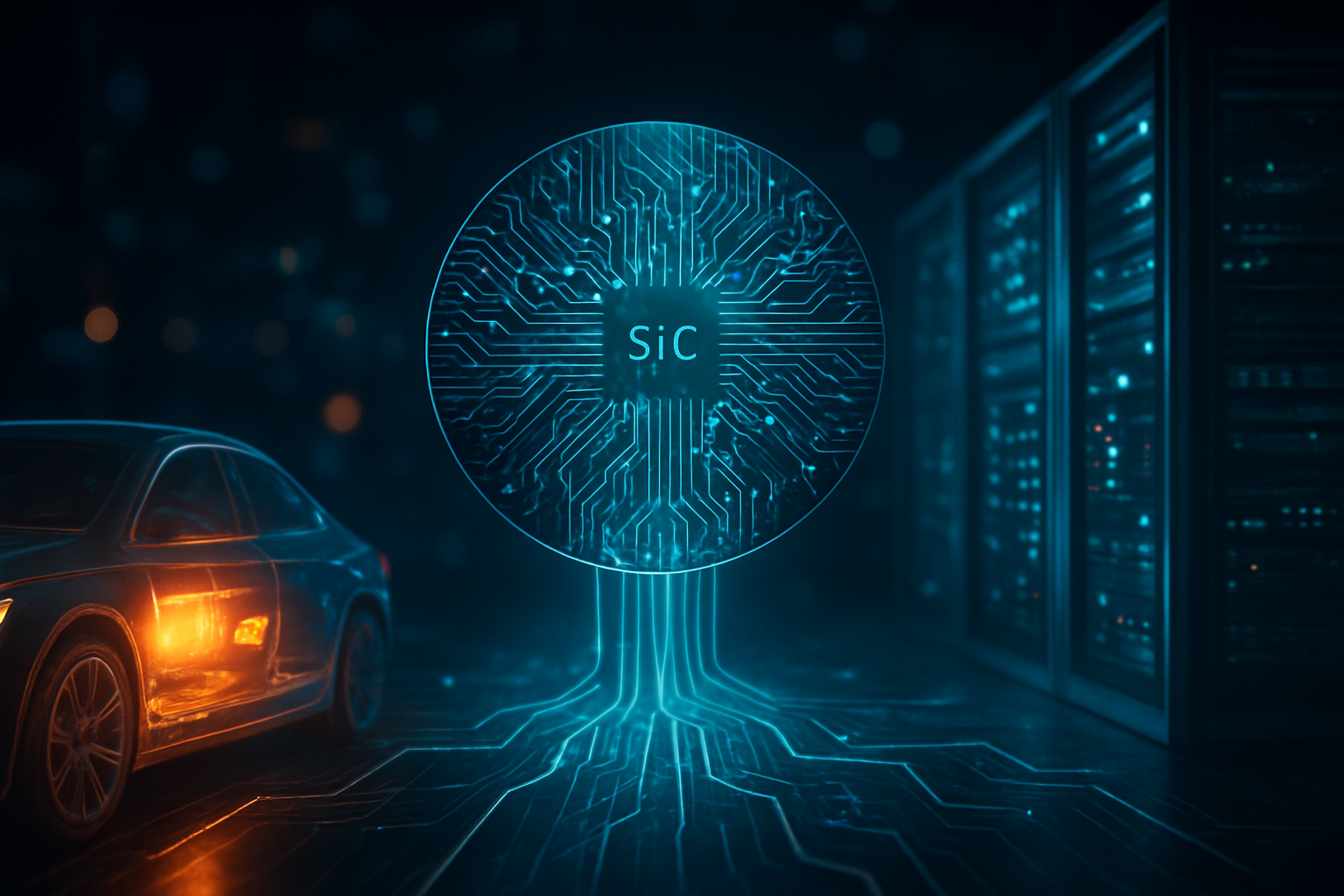
    As of December 19, 2025, ON Semiconductor (NASDAQ: ON), commonly known as onsemi, finds itself at a critical juncture in the global semiconductor market. After navigating a challenging 2024 and a transitional 2025, the company is emerging as a stabilizing leader in the power semiconductor space. While the broader automotive and industrial sectors have faced a prolonged "inventory digestion" phase, onsemi's strategic pivot toward high-growth AI data center power solutions and its aggressive vertical integration in Silicon Carbide (SiC) have caught the attention of Wall Street analysts.

    The immediate significance of onsemi’s current position lies in its resilience. Despite a cyclical downturn that saw revenue contract year-over-year, the company has maintained steady gross margins in the high 30% range and recently authorized a massive $6 billion share repurchase program. This move, combined with a flurry of analyst price target adjustments, signals a growing confidence that the company has reached its "trough" and is poised for a significant recovery as it scales its next-generation 200mm SiC manufacturing capabilities.

    Technical Milestones and the 200mm SiC Transition

    The technical narrative for onsemi in late 2025 is dominated by the transition from 150mm to 200mm (8-inch) Silicon Carbide wafers. This shift is not merely a change in size but a fundamental leap in manufacturing efficiency and cost-competitiveness. By moving to larger wafers, onsemi expects to significantly increase the number of chips per wafer, effectively lowering the cost of high-voltage power semiconductors essential for 800V electric vehicle (EV) architectures. The company has confirmed it is on track to begin generating meaningful revenue from 200mm production in early 2026, a milestone that industry experts view as a prerequisite for maintaining its roughly 24% share of the global SiC market.

    In addition to SiC, onsemi has made significant strides in its Field Stop 7 (FS7) IGBT technology. These devices are designed for high-power industrial applications, including solar inverters and energy storage systems. The FS7 platform offers lower switching losses and higher power density compared to previous generations, allowing for more compact and efficient energy infrastructure. Initial reactions from the industrial research community have been positive, noting that these advancements are crucial for the global transition toward renewable energy grids that require robust, high-efficiency power management.

    Furthermore, onsemi’s "Fab Right" strategy—a multi-year effort to consolidate manufacturing into fewer, more efficient, vertically integrated sites—is beginning to pay technical dividends. By controlling the entire supply chain from substrate growth to final module assembly, the company has achieved a level of quality control and supply assurance that few competitors can match. This vertical integration is particularly critical in the SiC market, where material scarcity and processing complexity have historically been major bottlenecks.

    Competitive Dynamics and the AI Data Center Pivot

    While the EV market has seen a slower-than-expected recovery in North America and Europe throughout 2025, onsemi has successfully offset this weakness by aggressively entering the AI data center market. In a landmark collaboration announced earlier this year with NVIDIA (NASDAQ: NVDA), onsemi is now supporting 800VDC power architectures for next-generation AI server racks. These high-voltage systems are designed to minimize energy loss as power moves from the grid to the GPU, a critical factor for data centers that are increasingly constrained by power availability and cooling costs.

    This pivot has placed onsemi in direct competition with other power giants like STMicroelectronics (NYSE: STM) and Infineon Technologies (OTCMKTS: IFNNY). While STMicroelectronics currently leads the SiC market by a small margin, onsemi’s recent deal with GlobalFoundries (NASDAQ: GFS) to develop 650V Gallium Nitride (GaN) power devices suggests a broadening of its portfolio. GaN technology is particularly suited for the ultra-compact power supply units (PSUs) used in AI servers, providing a complementary offering to its high-voltage SiC products.

    The competitive landscape is also being reshaped by onsemi’s focus on the Chinese EV market. Despite geopolitical tensions, onsemi has secured several major design wins with leading Chinese OEMs who are leading the charge in 800V vehicle adoption. By positioning itself as a key supplier for the most technologically advanced vehicles, onsemi is creating a strategic moat that protects its market share against lower-cost competitors who lack the high-voltage expertise and integrated supply chain of the Arizona-based firm.

    Wider Significance for the AI and Energy Landscape

    The evolution of onsemi reflects a broader trend in the technology sector: the convergence of AI and energy efficiency. As AI models become more computationally intensive, the demand for sophisticated power management has shifted from a niche industrial concern to a primary driver of the semiconductor industry. onsemi’s ability to double its AI-related revenue year-over-year in 2025 highlights how critical power semiconductors have become to the "AI Gold Rush." Without the efficiency gains provided by SiC and GaN, the energy requirements of modern data centers would be unsustainable.

    This development also underscores the changing nature of the EV market. The "hype phase" of 2021-2023 has given way to a more mature, performance-oriented market where efficiency is the primary differentiator. onsemi’s focus on 800V systems aligns with the industry’s shift toward faster charging and longer range, proving that the underlying technology is still advancing even if consumer adoption rates have hit a temporary plateau.

    However, the path forward is not without concerns. Analysts have pointed to the risks of overcapacity as onsemi, Wolfspeed (NYSE: WOLF), and others all race to bring massive SiC manufacturing hubs online. The Czech Republic hub and the expansion in Korea represent multi-billion-dollar bets that demand will eventually catch up with supply. If the EV recovery stalls further or if AI power needs are met by alternative technologies, these capital-intensive investments could pressure the company’s balance sheet in the late 2020s.

    Future Developments and Market Outlook

    Looking ahead to 2026 and beyond, the primary catalyst for onsemi will be the full-scale ramp of its 200mm SiC production. This transition is expected to unlock a new level of profitability, allowing the company to compete more aggressively on price while maintaining its premium margins. Experts predict that as the cost of SiC modules drops, we will see a "trickle-down" effect where high-efficiency power electronics move from luxury EVs and high-end AI servers into mid-range consumer vehicles and broader industrial automation.

    Another area to watch is the expansion of the onsemi-GlobalFoundries partnership. The integration of GaN technology into onsemi’s "EliteSiC" ecosystem could create a "one-stop shop" for power management, covering everything from low-power consumer electronics to megawatt-scale industrial grids. Challenges remain, particularly in the yield rates of 200mm SiC and the continued geopolitical complexities of the semiconductor supply chain, but onsemi’s diversified approach across AI, automotive, and industrial sectors provides a robust buffer.

    In the near term, the market will be closely watching onsemi’s Q4 2025 earnings report and its initial guidance for 2026. If the company can demonstrate that its AI revenue continues to scale while its automotive business stabilizes, the consensus price target of $59.00 may prove to be conservative. Many analysts believe that as the "inventory digestion" cycle ends, onsemi could see a rapid re-rating of its stock price, potentially reaching the $80-$85 range as investors price in the 2026 recovery.

    Summary of the Power Semiconductor Landscape

    In conclusion, ON Semiconductor has successfully navigated one of the most volatile periods in recent semiconductor history. By maintaining financial discipline through its $6 billion buyback program and "Fab Right" strategy, the company has prepared itself for the next leg of growth. The shift from a purely automotive-focused story to a diversified power leader serving the AI data center market is a significant milestone that redefines onsemi’s role in the tech ecosystem.

    As we move into 2026, the key takeaways for investors and industry observers are the company’s technical leadership in the 200mm SiC transition and its critical role in enabling the energy-efficient AI infrastructure of the future. While risks regarding global demand and manufacturing yields persist, onsemi’s strategic positioning makes it a bellwether for the broader health of the power semiconductor market. In the coming weeks, all eyes will be on the company’s execution of its manufacturing roadmap, which will ultimately determine its ability to lead the next generation of energy-efficient technology.


    This content is intended for informational purposes only and represents analysis of current AI and semiconductor developments.

    TokenRing AI delivers enterprise-grade solutions for multi-agent AI workflow orchestration, AI-powered development tools, and seamless remote collaboration platforms.
    For more information, visit https://www.tokenring.ai/.

  • Truist Securities Elevates MACOM Technology Solutions Price Target to $180 Amidst Strong Performance and Robust Outlook

    Truist Securities Elevates MACOM Technology Solutions Price Target to $180 Amidst Strong Performance and Robust Outlook

    New York, NY – November 6, 2025 – In a significant vote of confidence for the semiconductor industry, Truist Securities today announced an upward revision of its price target for MACOM Technology Solutions (NASDAQ:MTSI) shares, increasing it from $158.00 to $180.00. The investment bank also reiterated its "Buy" rating for the company, signaling a strong belief in MACOM's continued growth trajectory and market leadership. This move comes on the heels of MACOM's impressive financial performance and an optimistic outlook for the coming fiscal year, providing a clear indicator of the company's robust health within a dynamic technological landscape.

    The immediate significance of Truist's updated target underscores MACOM's solid operational execution and its ability to navigate complex market conditions. For investors, this adjustment translates into a positive signal regarding the company's intrinsic value and future earnings potential. The decision by a prominent financial institution like Truist Securities to not only maintain a "Buy" rating but also substantially increase its price target suggests a deep-seated confidence in MACOM's strategic direction, product portfolio, and its capacity to capitalize on emerging opportunities in the high-performance analog and mixed-signal semiconductor markets.

    Unpacking the Financial and Operational Drivers Behind the Upgrade

    Truist Securities' decision to elevate MACOM's price target is rooted in a comprehensive analysis of the company's recent financial disclosures and future projections. A primary driver was MACOM's strong third-quarter results, which laid the groundwork for a highly positive outlook for the fourth quarter. This consistent performance highlights the company's operational efficiency and its ability to meet or exceed market expectations in a competitive sector.

    Crucially, the upgrade acknowledges significant improvements in MACOM's gross profit margin, a key metric indicating the company's profitability. These improvements have effectively mitigated prior challenges associated with the recently acquired RTP fabrication facility, demonstrating MACOM's successful integration and optimization efforts. With a healthy gross profit margin of 54.76% and an impressive 33.5% revenue growth over the last twelve months, MACOM is showcasing a robust financial foundation that sets it apart from many peers.

    Looking ahead, Truist's analysis points to a robust early 2026 outlook for MACOM, aligning with the firm's existing model that projects a formidable $4.51 earnings per share (EPS) for calendar year 2026. The new $180 price target itself is based on a 40x multiple, which incorporates a notable 12x premium over recently elevated peers in the sector. Truist justified this premium by highlighting MACOM's consistent execution, its solid baseline growth trajectory, and significant potential upside across its various end markets, including data center, telecom, and industrial applications. Furthermore, the company's fourth-quarter earnings for fiscal year 2025 surpassed expectations, achieving an adjusted EPS of $0.94 against a forecasted $0.929, and revenue of $261.2 million, slightly above the anticipated $260.17 million.

    Competitive Implications and Market Positioning

    This positive re-evaluation by Truist Securities carries significant implications for MACOM Technology Solutions (NASDAQ:MTSI) and its competitive landscape. The increased price target and reiterated "Buy" rating not only boost investor confidence in MACOM but also solidify its market positioning as a leader in high-performance analog and mixed-signal semiconductors. Companies operating in similar spaces, such as Broadcom (NASDAQ:AVGO), Analog Devices (NASDAQ:ADI), and Qorvo (NASDAQ:QRVO), will undoubtedly be observing MACOM's performance and strategic moves closely.

    MACOM's consistent execution and ability to improve gross margins, particularly after integrating a new facility, demonstrate a strong operational discipline that could serve as a benchmark for competitors. The premium valuation assigned by Truist suggests that MACOM is viewed as having unique advantages, potentially stemming from its specialized product offerings, strong customer relationships, or technological differentiation in key growth areas like optical networking and RF solutions. This could lead to increased scrutiny on how competitors are addressing their own operational efficiencies and market strategies.

    For tech giants and startups relying on advanced semiconductor components, MACOM's robust health ensures a stable and innovative supply chain partner. The company's focus on high-growth end markets means that its advancements directly support critical infrastructure for AI, 5G, and cloud computing. Potential disruption to existing products or services within the broader tech ecosystem is more likely to come from MACOM's continued innovation, rather than a decline, as its enhanced financial standing allows for greater investment in research and development. This strategic advantage positions MACOM to potentially capture more market share and influence future technological standards.

    Wider Significance in the AI Landscape

    MACOM's recent performance and the subsequent analyst upgrade fit squarely into the broader AI landscape and current technological trends. As artificial intelligence continues its rapid expansion, the demand for high-performance computing, efficient data transfer, and robust communication infrastructure is skyrocketing. MACOM's specialization in areas like optical networking, RF and microwave, and analog integrated circuits directly supports the foundational hardware necessary for AI's advancement, from data centers powering large language models to edge devices performing real-time inference.

    The company's ability to demonstrate strong revenue growth and improved margins in this environment highlights the critical role of specialized semiconductor companies in the AI revolution. While AI development often focuses on software and algorithms, the underlying hardware capabilities are paramount. MACOM's products enable faster, more reliable data transmission and processing, which are non-negotiable requirements for complex AI workloads. This financial milestone underscores that the "picks and shovels" providers of the AI gold rush are thriving, indicating a healthy and expanding ecosystem.

    Comparisons to previous AI milestones reveal a consistent pattern: advancements in AI are inextricably linked to breakthroughs in semiconductor technology. Just as earlier generations of AI relied on more powerful CPUs and GPUs, today's sophisticated AI models demand increasingly advanced optical and RF components for high-speed interconnects and low-latency communication. MACOM's success is a testament to the ongoing synergistic relationship between hardware innovation and AI progress, demonstrating that the foundational elements of the digital world are continuously evolving to meet the escalating demands of intelligent systems.

    Exploring Future Developments and Market Trajectories

    Looking ahead, MACOM Technology Solutions (NASDAQ:MTSI) is poised for continued innovation and expansion, driven by the escalating demands of its core markets. Experts predict a near-term focus on enhancing its existing product lines to meet the evolving specifications for 5G infrastructure, data center interconnects, and defense applications. Long-term developments are likely to include deeper integration of AI capabilities into its own design processes, potentially leading to more optimized and efficient semiconductor solutions. The company's strong financial position, bolstered by the Truist upgrade, provides ample capital for increased R&D investment and strategic acquisitions.

    Potential applications and use cases on the horizon for MACOM's technology are vast. As AI models grow in complexity and size, the need for ultra-fast and energy-efficient optical components will intensify, placing MACOM at the forefront of enabling the next generation of AI superclusters and cloud architectures. Furthermore, the proliferation of edge AI devices will require compact, low-power, and high-performance RF and analog solutions, areas where MACOM already holds significant expertise. The company may also explore new markets where its core competencies can provide a competitive edge, such as advanced autonomous systems and quantum computing infrastructure.

    However, challenges remain. The semiconductor industry is inherently cyclical and subject to global supply chain disruptions and geopolitical tensions. MACOM will need to continue diversifying its manufacturing capabilities and supply chains to mitigate these risks. Competition is also fierce, requiring continuous innovation to stay ahead. Experts predict that MACOM will focus on strategic partnerships and disciplined capital allocation to maintain its growth trajectory. The next steps will likely involve further product announcements tailored to specific high-growth AI applications and continued expansion into international markets, particularly those investing heavily in digital infrastructure.

    A Comprehensive Wrap-Up of MACOM's Ascent

    Truist Securities' decision to raise its price target for MACOM Technology Solutions (NASDAQ:MTSI) to $180.00, while maintaining a "Buy" rating, marks a pivotal moment for the company and a strong affirmation of its strategic direction and operational prowess. The key takeaways from this development are clear: MACOM's robust financial performance, characterized by strong revenue growth and significant improvements in gross profit margins, has positioned it as a leader in the high-performance semiconductor space. The successful integration of the RTP fabrication facility and a compelling outlook for 2026 further underscore the company's resilience and future potential.

    This development holds significant weight in the annals of AI history, demonstrating that the foundational hardware providers are indispensable to the continued advancement of artificial intelligence. MACOM's specialized components are the unseen engines powering the data centers, communication networks, and intelligent devices that define the modern AI landscape. The market's recognition of MACOM's value, reflected in the premium valuation, indicates a mature understanding of the symbiotic relationship between cutting-edge AI software and the sophisticated hardware that enables it.

    Looking towards the long-term impact, MACOM's enhanced market confidence and financial strength will likely fuel further innovation, potentially accelerating breakthroughs in optical networking, RF technology, and analog integrated circuits. These advancements will, in turn, serve as catalysts for the next wave of AI applications and capabilities. In the coming weeks and months, investors and industry observers should watch for MACOM's continued financial reporting, any new product announcements targeting emerging AI applications, and its strategic responses to evolving market demands and competitive pressures. The company's trajectory will offer valuable insights into the health and direction of the broader semiconductor and AI ecosystems.


    This content is intended for informational purposes only and represents analysis of current AI developments.

    TokenRing AI delivers enterprise-grade solutions for multi-agent AI workflow orchestration, AI-powered development tools, and seamless remote collaboration platforms.
    For more information, visit https://www.tokenring.ai/.