Tag: Masayoshi Son

  • SoftBank’s $6.5 Billion Ampere Acquisition: The Dawn of the AI Silicon Trinity

    SoftBank’s $6.5 Billion Ampere Acquisition: The Dawn of the AI Silicon Trinity

    The global landscape of artificial intelligence infrastructure shifted decisively this week as SoftBank Group Corp. (OTC: SFTBY) finalized its $6.5 billion acquisition of Ampere Computing. The deal, which officially closed on November 25, 2025, represents the latest and perhaps most critical piece in Masayoshi Son’s ambitious "Artificial Super Intelligence" (ASI) roadmap. By bringing the world’s leading independent ARM-based server chip designer under its roof, SoftBank has effectively transitioned from a venture capital powerhouse into a vertically integrated industrial giant capable of controlling the hardware that will power the next decade of AI evolution.

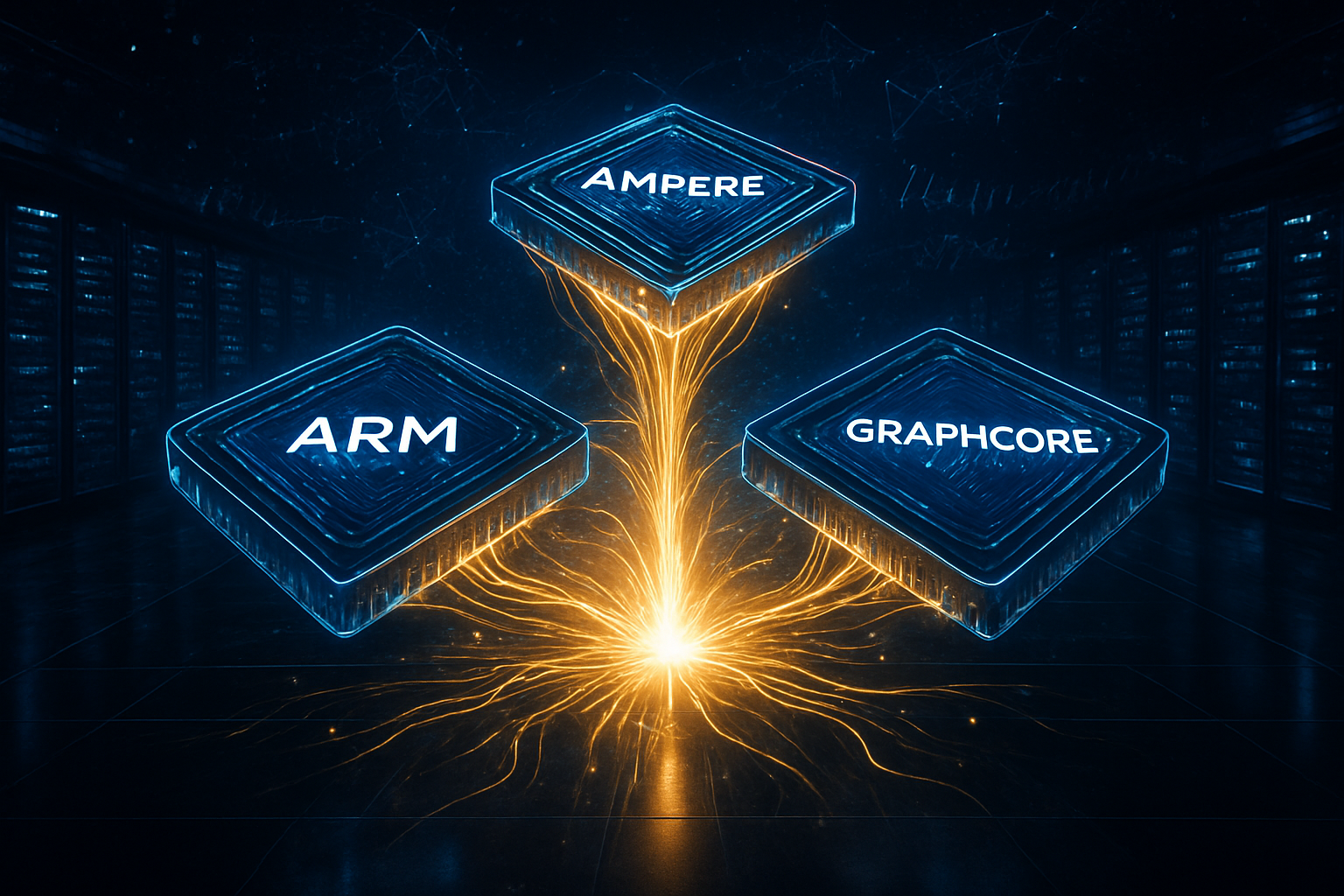
    The acquisition marks a strategic pivot for SoftBank, which has spent the last year consolidating its grip on the semiconductor supply chain. With the addition of Ampere, SoftBank now owns a formidable "Silicon Trinity" consisting of Arm Holdings plc (Nasdaq: ARM) for architecture, the recently acquired Graphcore for AI acceleration, and Ampere for server-side processing. This integration is designed to solve the massive power and efficiency bottlenecks currently plaguing hyperscale data centers as they struggle to meet the insatiable compute demands of generative AI and emerging autonomous systems.

    The Technical Edge: 512 Cores and the Death of x86 Dominance

    At the heart of this acquisition is Ampere’s revolutionary "cloud-native" processor architecture. Unlike traditional incumbents like Intel Corporation (Nasdaq: INTC) and Advanced Micro Devices, Inc. (Nasdaq: AMD), which have spent decades refining the x86 architecture for general-purpose computing, Ampere built its chips from the ground up using the ARM instruction set. The technical crowning jewel of the deal is the "AmpereOne Aurora," a massive 512-core processor slated for widespread deployment in 2026. This chip utilizes custom-designed cores that prioritize predictable performance and high-density throughput, allowing data centers to pack more processing power into a smaller physical footprint.

    The technical distinction lies in Ampere’s ability to handle "AI inference" workloads—the process of running trained AI models—with significantly higher efficiency than traditional CPUs. While NVIDIA Corporation (Nasdaq: NVDA) GPUs remain the gold standard for training large language models, those GPUs require powerful, energy-efficient CPUs to act as "host" processors to manage data flow. Ampere’s ARM-based designs eliminate the "IO bottleneck" often found in x86 systems, ensuring that expensive AI accelerators aren't left idling while waiting for data.

    Industry experts have noted that the AmpereOne Aurora’s performance-per-watt is nearly double that of current-generation x86 server chips. In an era where power availability has become the primary constraint for AI expansion, this efficiency is not just a cost-saving measure but a fundamental requirement for scaling. The AI research community has largely reacted with optimism, noting that a standardized ARM-based server platform could simplify software development for AI researchers who are increasingly moving away from hardware-specific optimizations.

    A Strategic Masterstroke in the AI Arms Race

    The market implications of this deal are profound, particularly for the major cloud service providers. Oracle Corporation (NYSE: ORCL), an early backer of Ampere, has already integrated these chips deeply into its cloud infrastructure, and the acquisition ensures a stable, SoftBank-backed roadmap for other giants like Microsoft Corporation (Nasdaq: MSFT) and Alphabet Inc. (Nasdaq: GOOGL). By controlling Ampere, SoftBank can now offer a unified hardware-software stack that bridges the gap between the mobile-centric ARM ecosystem and the high-performance computing required for AI.

    For competitors like Intel and AMD, the SoftBank-Ampere alliance represents a direct existential threat in the data center market. For years, x86 was the undisputed king of the server room, but the AI boom has exposed its limitations in power efficiency and multi-core scalability. SoftBank’s ownership of Arm Holdings allows for "deep taping out" synergies, where the architectural roadmap of ARM can be co-developed with Ampere’s physical chip implementations. This creates a feedback loop that could allow SoftBank to bring AI-optimized silicon to market months or even years faster than traditional competitors.

    Furthermore, the acquisition positions SoftBank as a key player in "Project Stargate," the rumored $500 billion infrastructure initiative aimed at building the world's largest AI supercomputers. With Ampere chips serving as the primary compute host, SoftBank is no longer just a supplier of intellectual property; it is the architect of the physical infrastructure upon which the future of AI will be built. This strategic positioning gives Masayoshi Son immense leverage over the direction of the entire AI industry.

    Energy, Sovereignty, and the Broader AI Landscape

    Beyond the balance sheets, the SoftBank-Ampere deal addresses the growing global concern over energy consumption in the AI era. As AI models grow in complexity, the carbon footprint of the data centers that house them has come under intense scrutiny. Ampere’s "Sustainable Compute" philosophy aligns with a broader industry trend toward "Green AI." By reducing the power required for inference, SoftBank is positioning itself as the "responsible" choice for governments and corporations under pressure to meet ESG (Environmental, Social, and Governance) targets.

    This acquisition also touches on the sensitive issue of "technological sovereignty." As nations race to build their own domestic AI capabilities, the ability to access high-performance, non-x86 hardware becomes a matter of national security. SoftBank’s global footprint and its base in Japan provide a neutral alternative to the US-centric dominance of Intel and NVIDIA, potentially opening doors for massive infrastructure projects in Europe, the Middle East, and Asia.

    However, the consolidation of such critical technology under one roof has raised eyebrows among antitrust advocates. With SoftBank owning the architecture (ARM), the server chips (Ampere), and the accelerators (Graphcore), there are concerns about a "walled garden" effect. Critics argue that this level of vertical integration could stifle innovation from smaller chip startups that rely on ARM licenses but now find themselves competing directly with their licensor’s parent company.

    The Horizon: From Inference to Autonomy

    Looking ahead, the integration of Ampere into the SoftBank ecosystem is expected to accelerate the development of "Edge AI"—bringing powerful AI capabilities out of the data center and into robots, autonomous vehicles, and industrial IoT devices. The near-term focus will be on the 2026 rollout of the 512-core Aurora chips, but the long-term vision involves a seamless compute fabric where a single architecture scales from a smartwatch to a massive AI supercluster.

    The biggest challenge facing SoftBank will be the execution of this integration. Merging the corporate cultures of a British IP firm (ARM), a British AI startup (Graphcore), and a Silicon Valley chip designer (Ampere) under a Japanese conglomerate is a monumental task. Furthermore, the industry is watching closely to see how SoftBank manages its relationship with other ARM licensees who may now view the company as a direct competitor rather than a neutral partner.

    A New Era for AI Hardware

    The acquisition of Ampere Computing for $6.5 billion is more than just a line item in SoftBank’s portfolio; it is a declaration of intent. It marks the end of the "software-first" era of AI and the beginning of the "infrastructure-first" era. By securing the most efficient server technology on the market, SoftBank has insured itself against the volatility of the AI software market and anchored its future in the physical reality of silicon and power.

    As we move into 2026, the industry will be watching for the first "Trinity" systems—servers that combine ARM architecture, Ampere CPUs, and Graphcore accelerators into a single, optimized unit. If Masayoshi Son’s gamble pays off, the "Silicon Trinity" could become the standard blueprint for the AI age, fundamentally altering the power dynamics of the technology world for decades to come.


    This content is intended for informational purposes only and represents analysis of current AI developments.

    TokenRing AI delivers enterprise-grade solutions for multi-agent AI workflow orchestration, AI-powered development tools, and seamless remote collaboration platforms.
    For more information, visit https://www.tokenring.ai/.
  • Masayoshi Son’s Grand Gambit: SoftBank Completes $6.5 Billion Ampere Acquisition to Forge the Path to Artificial Super Intelligence

    Masayoshi Son’s Grand Gambit: SoftBank Completes $6.5 Billion Ampere Acquisition to Forge the Path to Artificial Super Intelligence

    In a move that fundamentally reshapes the global semiconductor landscape, SoftBank Group Corp (TYO: 9984) has officially completed its $6.5 billion acquisition of Ampere Computing. This milestone marks the final piece of Masayoshi Son’s ambitious "Vertical AI" puzzle, integrating the high-performance cloud CPUs of Ampere with the architectural foundations of Arm Holdings (NASDAQ: ARM) and the specialized acceleration of Graphcore. By consolidating these assets, SoftBank has transformed from a sprawling investment firm into a vertically integrated industrial powerhouse capable of designing, building, and operating the infrastructure required for the next era of computing.

    The significance of this consolidation cannot be overstated. For the first time, a single entity controls the intellectual property, the processor design, and the AI-specific accelerators necessary to challenge the current market dominance of established titans. This strategic alignment is the cornerstone of Son’s "Project Stargate," a $500 billion infrastructure initiative designed to provide the massive computational power and energy required to realize his vision of Artificial Super Intelligence (ASI)—a form of AI he predicts will be 10,000 times smarter than the human brain within the next decade.

    The Silicon Trinity: Integrating Arm, Ampere, and Graphcore

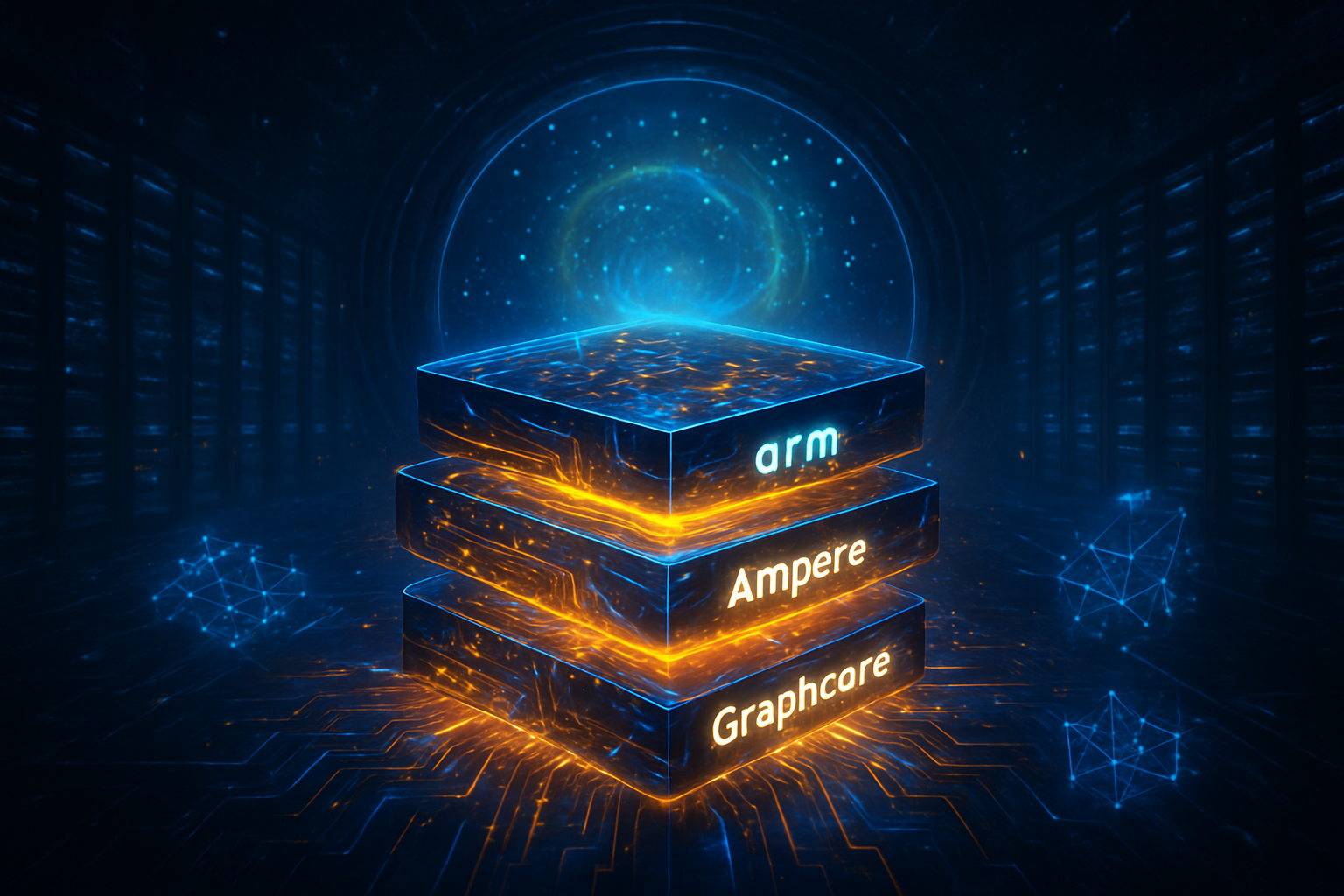
    The technical core of SoftBank’s new strategy lies in the seamless integration of three distinct but complementary technologies. At the base is Arm, whose energy-efficient instruction set architecture (ISA) serves as the blueprint for modern mobile and data center chips. Ampere Computing, now a wholly-owned subsidiary, utilizes this architecture to build "cloud-native" CPUs that boast significantly higher core counts and better power efficiency than traditional x86 processors from Intel and AMD. By pairing these with Graphcore’s Intelligence Processing Units (IPUs)—specialized accelerators designed specifically for the massive parallel processing required by large language models—SoftBank has created a unified "CPU + Accelerator" stack.

    This vertical integration differs from previous approaches by eliminating the "vendor tax" and hardware bottlenecks associated with mixing disparate technologies. Traditionally, data center operators would buy CPUs from one vendor and GPUs from another, often leading to inefficiencies in data movement and software optimization. SoftBank’s unified architecture allows for a "closed-loop" system where the Ampere CPU and Graphcore IPU are co-designed to communicate with unprecedented speed, all while running on the highly optimized Arm architecture. This synergy is expected to reduce the total cost of ownership for AI data centers by as much as 30%, a critical factor as the industry grapples with the escalating costs of training trillion-parameter models.

    Initial reactions from the AI research community have been a mix of awe and cautious optimism. Dr. Elena Rossi, a senior silicon architect at the AI Open Institute, noted that "SoftBank is effectively building a 'Sovereign AI' stack. By controlling the silicon from the ground up, they can bypass the supply chain constraints that have plagued the industry for years." However, some experts warn that the success of this integration will depend heavily on software. While NVIDIA (NASDAQ: NVDA) has its robust CUDA platform, SoftBank must now convince developers to migrate to its proprietary ecosystem, a task that remains the most significant technical hurdle in its path.

    A Direct Challenge to the NVIDIA-AMD Duopoly

    The completion of the Ampere deal places SoftBank in a direct collision course with NVIDIA and Advanced Micro Devices (NASDAQ: AMD). For the past several years, NVIDIA has enjoyed a near-monopoly on AI hardware, with its H100 and B200 chips becoming the gold standard for AI training. However, SoftBank’s new vertical stack offers a compelling alternative for hyperscalers who are increasingly wary of NVIDIA’s high margins and closed ecosystem. By offering a fully integrated solution, SoftBank can provide customized hardware-software packages that are specifically tuned for the workloads of its partners, most notably OpenAI.

    This development is particularly disruptive for the burgeoning market of AI startups and sovereign nations looking to build their own AI capabilities. Companies like Oracle Corp (NYSE: ORCL), a former lead investor in Ampere, stand to benefit from a more diversified hardware market, potentially gaining access to SoftBank’s high-efficiency chips to power their cloud AI offerings. Furthermore, SoftBank’s decision to liquidate its entire $5.8 billion stake in NVIDIA in late 2025 to fund this transition signals a definitive end to its role as a passive investor and its emergence as a primary competitor.

    The strategic advantage for SoftBank lies in its ability to capture revenue across the entire value chain. While NVIDIA sells chips, SoftBank will soon be selling everything from the IP licensing (via Arm) to the physical chips (via Ampere/Graphcore) and even the data center capacity itself through its "Project Stargate" infrastructure. This "full-stack" approach mirrors the strategy that allowed Apple to dominate the smartphone market, but on a scale that encompasses the very foundations of global intelligence.

    Project Stargate and the Quest for ASI

    Beyond the silicon, the Ampere acquisition is the engine driving "Project Stargate," a massive $500 billion joint venture between SoftBank, OpenAI, and a consortium of global investors. Announced earlier this year, Stargate aims to build a series of "hyperscale" data centers across the United States, starting with a 10-gigawatt facility in Texas. These sites are not merely data centers; they are the physical manifestation of Masayoshi Son’s vision for Artificial Super Intelligence. Son believes that the path to ASI requires a level of compute and energy density that current infrastructure cannot provide, and Stargate is his answer to that deficit.

    This initiative represents a significant shift in the AI landscape, moving away from the era of "model-centric" development to "infrastructure-centric" dominance. As models become more complex, the primary bottleneck has shifted from algorithmic ingenuity to the sheer availability of power and specialized silicon. By acquiring DigitalBridge in December 2025 to manage the physical assets—including fiber networks and power substations—SoftBank has ensured it controls the "dirt and power" as well as the "chips and code."

    However, this concentration of power has raised concerns among regulators and ethicists. The prospect of a single corporation controlling the foundational infrastructure of super-intelligence brings about questions of digital sovereignty and monopolistic control. Critics argue that the "Stargate" model could create an insurmountable barrier to entry for any organization not aligned with the SoftBank-OpenAI axis, effectively centralizing the future of AI in the hands of a few powerful players.

    The Road Ahead: Power, Software, and Scaling

    In the near term, the industry will be watching the first deployments of the integrated Ampere-Graphcore systems within the Stargate data centers. The immediate challenge will be the software layer—specifically, the development of a compiler and library ecosystem that can match the ease of use of NVIDIA’s CUDA. SoftBank has already begun an aggressive hiring spree, poaching hundreds of software engineers from across Silicon Valley to build out its "Izanagi" software platform, which aims to provide a seamless interface for training models across its new hardware stack.

    Looking further ahead, the success of SoftBank’s gambit will depend on its ability to solve the energy crisis facing AI. The 7-to-10 gigawatt targets for Project Stargate are unprecedented, requiring the development of dedicated modular nuclear reactors (SMRs) and massive battery storage systems. Experts predict that if SoftBank can successfully integrate its new silicon with sustainable, high-density power, it will have created a blueprint for "Sovereign AI" that nations around the world will seek to replicate.

    The ultimate goal remains the realization of ASI by 2035. While many in the industry remain skeptical of Son’s aggressive timeline, the sheer scale of his capital deployment—over $100 billion committed in 2025 alone—has forced even the harshest critics to take his vision seriously. The coming months will be a critical testing ground for whether the Ampere-Arm-Graphcore trinity can deliver on its performance promises.

    A New Era of AI Industrialization

    The acquisition of Ampere Computing and its integration into the SoftBank ecosystem marks the beginning of the "AI Industrialization" era. No longer content with merely funding the future, Masayoshi Son has taken the reins of the production process itself. By vertically integrating the entire AI stack—from the architecture and the silicon to the data center and the power grid—SoftBank has positioned itself as the indispensable utility provider for the age of intelligence.

    This development will likely be remembered as a turning point in AI history, where the focus shifted from software breakthroughs to the massive physical scaling of intelligence. As we move into 2026, the tech world will be watching closely to see if SoftBank can execute on this Herculean task. The stakes could not be higher: the winner of the infrastructure race will not only dominate the tech market but will likely hold the keys to the most powerful technology ever devised by humanity.

    For now, the message from SoftBank is clear: the age of the general-purpose investor is over, and the age of the AI architect has begun.


    This content is intended for informational purposes only and represents analysis of current AI developments.

    TokenRing AI delivers enterprise-grade solutions for multi-agent AI workflow orchestration, AI-powered development tools, and seamless remote collaboration platforms.
    For more information, visit https://www.tokenring.ai/.