Tag: MCP

  • The “USB-C of AI”: How Model Context Protocol (MCP) Unified the Fragmented Enterprise Landscape

    The “USB-C of AI”: How Model Context Protocol (MCP) Unified the Fragmented Enterprise Landscape

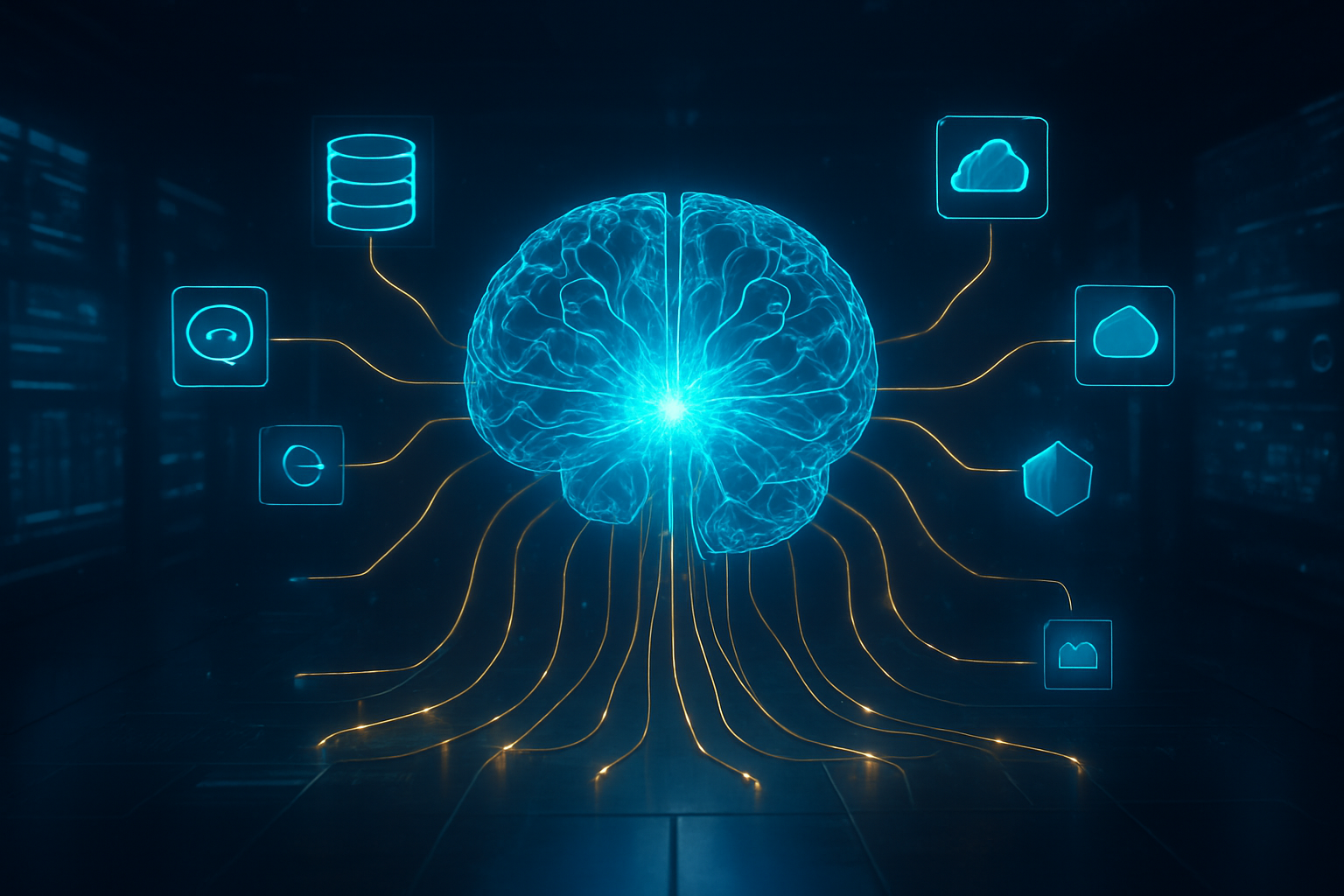
    The artificial intelligence industry has reached a pivotal milestone with the widespread adoption of the Model Context Protocol (MCP), an open standard that has effectively solved the "interoperability crisis" that once hindered enterprise AI deployment. Originally introduced by Anthropic in late 2024, the protocol has evolved into the universal language for AI agents, allowing them to move beyond isolated chat interfaces and seamlessly interact with complex data ecosystems including Slack, Google Drive, and GitHub. By January 2026, MCP has become the bedrock of the "Agentic Web," providing a secure, standardized bridge between Large Language Models (LLMs) and the proprietary data silos of the modern corporation.

    The significance of this development cannot be overstated; it marks the transition of AI from a curiosity capable of generating text to an active participant in business workflows. Before MCP, developers were forced to build bespoke, non-reusable integrations for every unique combination of AI model and data source—a logistical nightmare known as the "N x M" problem. Today, the protocol has reduced this complexity to a simple plug-and-play architecture, where a single MCP server can serve any compatible AI model, regardless of whether it is hosted by Anthropic, OpenAI, or Google.

    Technical Architecture: Bridging the Model-Data Divide

    Technically, MCP is a sophisticated framework built on a client-server architecture that utilizes JSON-RPC 2.0-based messaging. At its core, the protocol defines three primary primitives: Resources, which are URI-based data streams like a specific database row or a Slack thread; Tools, which are executable functions like "send an email" or "query SQL"; and Prompts, which act as pre-defined workflow templates that guide the AI through multi-step tasks. This structure allows AI applications to act as "hosts" that connect to various "servers"—lightweight programs that expose specific capabilities of an underlying software or database.

    Unlike previous attempts at AI integration, which often relied on rigid API wrappers or fragile "plugin" ecosystems, MCP supports both local communication via standard input/output (STDIO) and remote communication via HTTP with Server-Sent Events (SSE). This flexibility is what has allowed it to scale so rapidly. In late 2025, the protocol was further enhanced with the "MCP Apps" extension (SEP-1865), which introduced the ability for servers to deliver interactive UI components directly into an AI’s chat window. This means an AI can now present a user with a dynamic chart or a fillable form sourced directly from a secure enterprise database, allowing for a collaborative, "human-in-the-loop" experience.

    The initial reaction from the AI research community was overwhelmingly positive, as MCP addressed the fundamental limitation of "stale" training data. By providing a secure way for agents to query live data using the user's existing permissions, the protocol eliminated the need to constantly retrain models on new information. Industry experts have likened the protocol’s impact to that of the USB-C standard in hardware or the TCP/IP protocol for the internet—a universal interface that allows diverse systems to communicate without friction.

    Strategic Realignment: The Battle for the Enterprise Agent

    The shift toward MCP has reshaped the competitive landscape for tech giants. Microsoft (NASDAQ: MSFT) was an early and aggressive adopter, integrating native MCP support into Windows 11 and its Copilot Studio by mid-2025. This allowed Windows itself to function as an MCP server, giving AI agents unprecedented access to local file systems and window management. Similarly, Salesforce (NYSE: CRM) capitalized on the trend by launching official MCP servers for Slack and Agentforce, effectively turning every Slack channel into a structured data source that an AI agent can read from and write to with precision.

    Alphabet (NASDAQ: GOOGL) and Amazon (NASDAQ: AMZN) have also realigned their cloud strategies around this standard. Google’s Gemini models now utilize MCP to interface with Google Workspace, while Amazon Web Services has become the primary infrastructure provider for hosting the estimated 10,000+ public and private MCP servers now in existence. This standardization has significantly reduced "vendor lock-in." Enterprises can now swap their underlying LLM provider—moving from a Claude model to a GPT model, for instance—without having to rewrite the complex integration logic that connects their AI to their internal CRM or ERP systems.

    Startups have also found a fertile ground within the MCP ecosystem. Companies like Block (NYSE: SQ) and Cloudflare (NYSE: NET) have contributed heavily to the open-source libraries that make building MCP servers easier for small-scale developers. This has led to a democratic expansion of AI capabilities, where even niche software tools can become "AI-ready" overnight by deploying a simple MCP-compliant server.

    A Global Standard: The Agentic AI Foundation

    The broader significance of MCP lies in its governance. In December 2025, in a move to ensure the protocol remained a neutral industry standard, Anthropic donated MCP to the newly formed Agentic AI Foundation (AAIF) under the umbrella of the Linux Foundation. This move placed the future of AI interoperability in the hands of a consortium that includes Microsoft, OpenAI, and Meta, preventing any single entity from monopolizing the "connective tissue" of the AI economy.

    This milestone is frequently compared to the standardization of the web via HTML/HTTP. Just as the web flourished once browsers and servers could communicate through a common language, the "Agentic AI" era has truly begun now that models can interact with data in a predictable, secure manner. However, the rise of MCP has not been without concerns. Security experts have pointed out that while MCP respects existing user permissions, the sheer "autonomy" granted to agents through these connections increases the surface area for potential prompt injection attacks or data leakage if servers are not properly audited.

    Despite these challenges, the consensus is that MCP has moved the industry past the "chatbot" phase. We are no longer just talking to models; we are deploying agents that can navigate our digital world. The protocol provides a structured way to audit what an AI did, what data it accessed, and what tools it triggered, providing a level of transparency that was previously impossible with fragmented, ad-hoc integrations.

    Future Horizons: From Tools to Teammates

    Looking ahead to the remainder of 2026 and beyond, the next frontier for MCP is the development of "multi-agent orchestration." While current implementations typically involve one model connecting to many tools, the AAIF is currently working on standards that allow multiple AI agents—each with their own specialized MCP servers—to collaborate on complex projects. For example, a "Marketing Agent" might use its MCP connection to a creative suite to generate an ad, then pass that asset to a "Legal Agent" with an MCP connection to a compliance database for approval.

    Furthermore, we are seeing the emergence of "Personal MCPs," where individuals host their own private servers containing their emails, calendars, and personal files. This would allow a personal AI assistant to operate entirely on the user's local hardware while still possessing the contextual awareness of a cloud-based system. Challenges remain in the realm of latency and the standardization of "reasoning" between different agents, but experts predict that within two years, the majority of enterprise software will be shipped with a built-in MCP server as a standard feature.

    Conclusion: The Foundation of the AI Economy

    The Model Context Protocol has successfully transitioned from an ambitious proposal by Anthropic to the definitive standard for AI interoperability. By providing a universal interface for resources, tools, and prompts, it has solved the fragmentation problem that threatened to stall the enterprise AI revolution. The protocol’s adoption by giants like Microsoft, Salesforce, and Google, coupled with its governance by the Linux Foundation, ensures that it will remain a cornerstone of the industry for years to come.

    As we move into early 2026, the key takeaway is that the "walled gardens" of data are finally coming down—not through the compromise of security, but through the implementation of a better bridge. The impact of MCP is a testament to the power of open standards in driving technological progress. For businesses and developers, the message is clear: the era of the isolated AI is over, and the era of the integrated, agentic enterprise has officially arrived. Watch for an explosion of "agent-first" applications in the coming months as the full potential of this unified ecosystem begins to be realized.


    This content is intended for informational purposes only and represents analysis of current AI developments.

    TokenRing AI delivers enterprise-grade solutions for multi-agent AI workflow orchestration, AI-powered development tools, and seamless remote collaboration platforms.
    For more information, visit https://www.tokenring.ai/.
  • The Universal Language of Intelligence: How the Model Context Protocol (MCP) Unified the Global AI Agent Ecosystem

    The Universal Language of Intelligence: How the Model Context Protocol (MCP) Unified the Global AI Agent Ecosystem

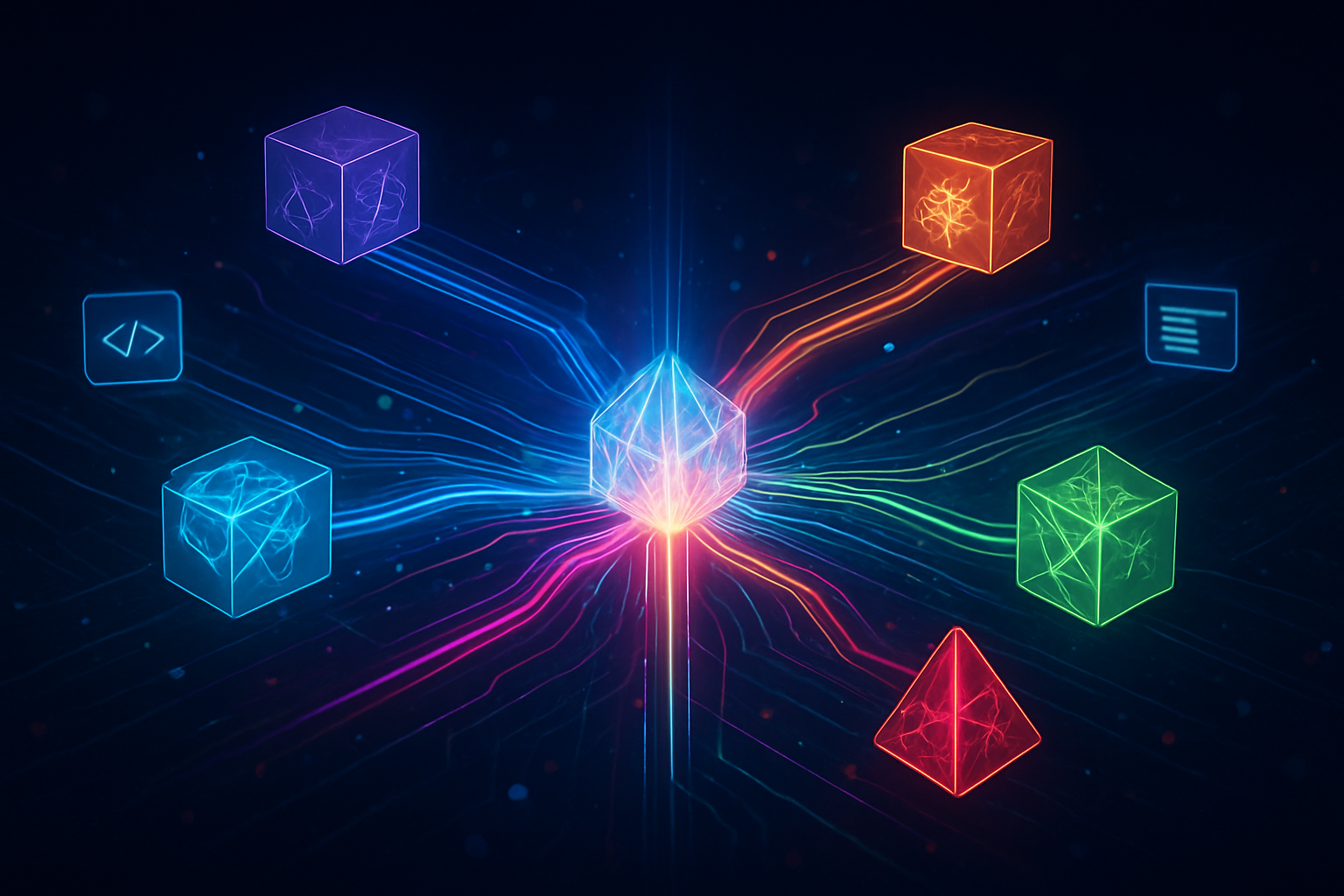
    As of January 2026, the artificial intelligence industry has reached a watershed moment. The "walled gardens" that once defined the early 2020s—where data stayed trapped in specific platforms and agents could only speak to a single provider’s model—have largely crumbled. This tectonic shift is driven by the Model Context Protocol (MCP), a standardized framework that has effectively become the "USB-C port for AI," allowing specialized agents from different providers to work together seamlessly across any data source or application.

    The significance of this development cannot be overstated. By providing a universal standard for how AI connects to the tools and information it needs, MCP has solved the industry's most persistent fragmentation problem. Today, a customer support agent running on a model from OpenAI can instantly leverage research tools built for Anthropic’s Claude, while simultaneously accessing live inventory data from a Microsoft (NASDAQ: MSFT) database, all without writing a single line of custom integration code. This interoperability has transformed AI from a series of isolated products into a fluid, interconnected ecosystem.

    Under the Hood: The Architecture of Universal Interoperability

    The Model Context Protocol is a client-server architecture built on top of the JSON-RPC 2.0 standard, designed to decouple the intelligence of the model from the data it consumes. At its core, MCP operates through three primary actors: the MCP Host (the user-facing application like an IDE or browser), the MCP Client (the interface within that application), and the MCP Server (the lightweight program that exposes specific data or functions). This differs fundamentally from previous approaches, where developers had to build "bespoke integrations" for every new combination of model and data source. Under the old regime, connecting five models to five databases required 25 different integrations; with MCP, it requires only one.

    The protocol defines four critical primitives: Resources, Tools, Prompts, and Sampling. Resources provide models with read-only access to files, database rows, or API outputs. Tools enable models to perform actions, such as sending an email or executing a code snippet. Prompts offer standardized templates for complex tasks, and the sophisticated "Sampling" feature allows an MCP server to request a completion from the Large Language Model (LLM) via the client—essentially enabling models to "call back" for more information or clarification. This recursive capability has allowed for the creation of nested agents that can handle multi-step, complex workflows that were previously impossible to automate reliably.

    The v1.0 stability release in late 2025 introduced groundbreaking features that have solidified MCP’s dominance in early 2026. This includes "Remote Transport" and OAuth 2.1 support, which transitioned the protocol from local computer connections to secure, cloud-hosted interactions. This update allows enterprise agents to access secure data across distributed networks using Role-Based Access Control (RBAC). Furthermore, the protocol now supports multi-modal context, enabling agents to interpret video, audio, and sensor data as first-class citizens. The AI research community has lauded these developments as the "TCP/IP moment" for the agentic web, moving AI from isolated curiosities to a unified, programmable layer of the internet.

    Initial reactions from industry experts have been overwhelmingly positive, with many noting that MCP has finally solved the "context window" problem not by making windows larger, but by making the data within them more structured and accessible. By standardizing how a model "asks" for what it doesn't know, the industry has seen a marked decrease in hallucinations and a significant increase in the reliability of autonomous agents.

    The Market Shift: From Proprietary Moats to Open Bridges

    The widespread adoption of MCP has rearranged the strategic map for tech giants and startups alike. Microsoft (NASDAQ: MSFT) and Alphabet Inc. (NASDAQ: GOOGL) have pivotally integrated MCP support into their core developer tools, Azure OpenAI and Vertex AI, respectively. By standardizing on MCP, these giants have reduced the friction for enterprise customers to migrate workloads, betting that their massive compute infrastructure and ecosystem scale will outweigh the loss of proprietary integration moats. Meanwhile, Amazon.com Inc. (NASDAQ: AMZN) has launched specialized "Strands Agents" via AWS, which are specifically optimized for MCP-compliant environments, signaling a move toward "infrastructure-as-a-service" for agents.

    Startups have perhaps benefited the most from this interoperability. Previously, a new AI agent company had to spend months building integrations for Salesforce (NYSE: CRM), Slack, and Jira before they could even prove their value to a customer. Now, by supporting a single MCP server, these startups can instantly access thousands of pre-existing data connectors. This has shifted the competitive landscape from "who has the best integrations" to "who has the best intelligence." Companies like Block Inc. (NYSE: SQ) have leaned into this by releasing open-source agent frameworks like "goose," which are powered entirely by MCP, allowing them to compete directly with established enterprise software by offering superior, agent-led experiences.

    However, this transition has not been without disruption. Traditional Integration-Platform-as-a-Service (iPaaS) providers have seen their business models challenged as the "glue" that connects applications is now being handled natively at the protocol level. Major enterprise players like SAP SE (NYSE: SAP) and IBM (NYSE: IBM) have responded by becoming first-class MCP server providers, ensuring their proprietary data is "agent-ready" rather than fighting the tide of interoperability. The strategic advantage has moved away from those who control the access points and toward those who provide the most reliable, context-aware intelligence.

    Market positioning is now defined by "protocol readiness." Large AI labs are no longer just competing on model benchmarks; they are competing on how effectively their models can navigate the vast web of MCP servers. For enterprise buyers, the risk of vendor lock-in has been significantly mitigated, as an MCP-compliant workflow can be moved from one model provider to another with minimal reconfiguration, forcing providers to compete on price, latency, and reasoning quality.

    Beyond Connectivity: The Global Context Layer

    In the broader AI landscape, MCP represents the transition from "Chatbot AI" to "Agentic AI." For the first time, we are seeing the emergence of a "Global Context Layer"—a digital commons where information and capabilities are discoverable and usable by any sufficiently intelligent machine. This mirrors the early days of the World Wide Web, where HTML and HTTP allowed any browser to view any website. MCP does for AI actions what HTTP did for text and images, creating a "Web of Tools" that agents can navigate autonomously to solve complex human problems.

    The impacts are profound, particularly in how we perceive data privacy and security. By standardizing the interface through which agents access data, the industry has also standardized the auditing of those agents. Human-in-the-Loop (HITL) features are now a native part of the MCP protocol, ensuring that high-stakes actions, such as financial transactions or sensitive data deletions, require a standardized authorization flow. This has addressed one of the primary concerns of the 2024-2025 period: the fear of "rogue" agents performing irreversible actions without oversight.

    Despite these advances, the protocol has sparked debates regarding "agentic drift" and the centralization of governance. Although Anthropic donated the protocol to the Agentic AI Foundation (AAIF) under the Linux Foundation in late 2025, a small group of tech giants still holds significant sway over the steering committee. Critics argue that as the world becomes increasingly dependent on MCP, the standards for how agents "see" and "act" in the world should be as transparent and democratized as possible to avoid a new form of digital hegemony.

    Comparisons to previous milestones, like the release of the first public APIs or the transition to mobile-first development, are common. However, the MCP breakthrough is unique because it standardizes the interaction between different types of intelligence. It is not just about moving data; it is about moving the capability to reason over that data, marking a fundamental shift in the architecture of the internet itself.

    The Autonomous Horizon: Intent and Physical Integration

    Looking ahead to the remainder of 2026 and 2027, the next frontier for MCP is the standardization of "Intent." While the current protocol excels at moving data and executing functions, experts predict the introduction of an "Intent Layer" that will allow agents to communicate their high-level goals and negotiate with one another more effectively. This would enable complex multi-agent economies where an agent representing a user could "hire" specialized agents from different providers to complete a task, automatically negotiating fees and permissions via MCP-based contracts.

    We are also on the cusp of seeing MCP move beyond the digital realm and into the physical world. Developers are already prototyping MCP servers for IoT devices and industrial robotics. In this near-future scenario, an AI agent could use MCP to "read" the telemetry from a factory floor and "invoke" a repair sequence on a robotic arm, regardless of the manufacturer. The challenge remains in ensuring low-latency communication for these real-time applications, an area where the upcoming v1.2 roadmap is expected to focus.

    The industry is also bracing for the "Headless Enterprise" shift. By 2027, many analysts predict that up to 50% of enterprise backend tasks will be handled by autonomous agents interacting via MCP servers, without any human interface required. This will necessitate new forms of monitoring and "agent-native" security protocols that go beyond traditional user logins, potentially using blockchain or other distributed ledgers to verify agent identity and intent.

    Conclusion: The Foundation of the Agentic Age

    The Model Context Protocol has fundamentally redefined the trajectory of artificial intelligence. By breaking down the silos between models and data, it has catalyzed a period of unprecedented innovation and interoperability. The shift from proprietary integrations to an open, standardized ecosystem has not only accelerated the deployment of AI agents but has also democratized access to powerful AI tools for developers and enterprises worldwide.

    In the history of AI, the emergence of MCP will likely be remembered as the moment when the industry grew up—moving from a collection of isolated, competing technologies to a cohesive, functional infrastructure. As we move further into 2026, the focus will shift from how agents connect to what they can achieve together. The "USB-C moment" for AI has arrived, and it has brought with it a new era of collaborative intelligence.

    For businesses and developers, the message is clear: the future of AI is not a single, all-powerful model, but a vast, interconnected web of specialized intelligences speaking the same language. In the coming months, watch for the expansion of MCP into vertical-specific standards, such as "MCP-Medical" or "MCP-Finance," which will further refine how AI agents operate in highly regulated and complex industries.


    This content is intended for informational purposes only and represents analysis of current AI developments.

    TokenRing AI delivers enterprise-grade solutions for multi-agent AI workflow orchestration, AI-powered development tools, and seamless remote collaboration platforms.
    For more information, visit https://www.tokenring.ai/.
  • Google Unveils Managed MCP Servers: Building the Industrial Backbone for the Global Agent Economy

    Google Unveils Managed MCP Servers: Building the Industrial Backbone for the Global Agent Economy

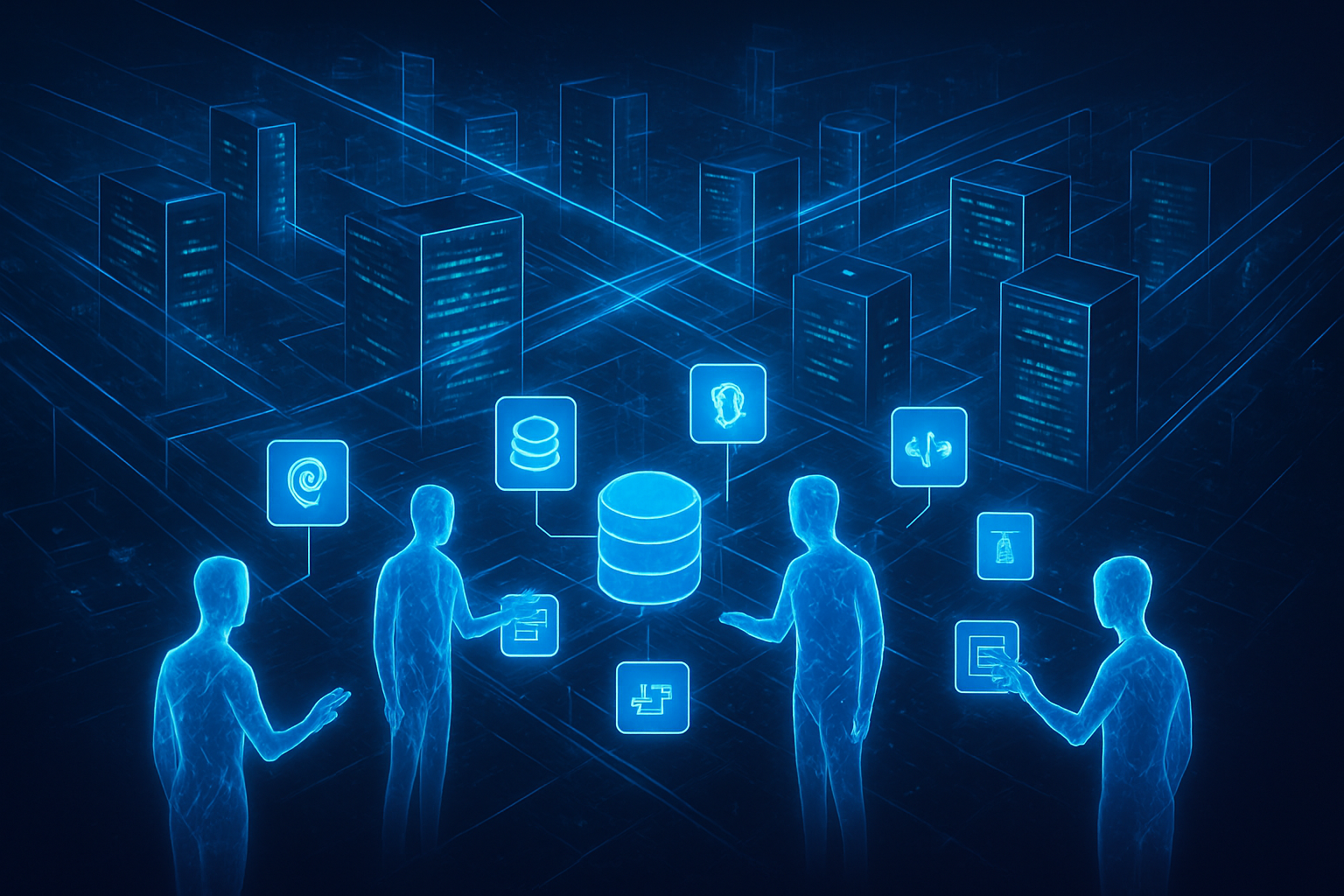
    In a move that signals the transition from experimental AI to a fully realized "Agent Economy," Alphabet Inc. (NASDAQ: GOOGL) has announced the general availability of its Managed Model Context Protocol (MCP) Servers. This new infrastructure layer is designed to solve the "last mile" problem of AI development: the complex, often fragile connections between autonomous agents and the enterprise data they need to function. By providing a secure, hosted environment for these connections, Google is positioning itself as the primary utility provider for the next generation of autonomous software.

    The announcement comes at a pivotal moment as the tech industry moves away from simple chat interfaces toward "agentic" workflows—systems that can independently browse the web, query databases, and execute code. Until now, developers struggled with local, non-scalable methods for connecting these agents to tools. Google’s managed approach replaces bespoke "glue code" with a standardized, enterprise-grade cloud interface, effectively creating a "USB-C port" for the AI era that allows any agent to plug into any data source with minimal friction.

    Technical Foundations: From Local Scripts to Cloud-Scale Orchestration

    At the heart of this development is the Model Context Protocol (MCP), an open standard originally proposed by Anthropic to govern how AI models interact with external tools and data. While early iterations of MCP relied heavily on local stdio transport—limiting agents to the machine they were running on—Google’s Managed MCP Servers shift the architecture to a remote-first, serverless model. Hosted on Google Cloud, these servers provide globally consistent HTTP endpoints, allowing agents to access live data from Google Maps, BigQuery, and Google Compute Engine without the need for developers to manage underlying server processes or local environments.

    The technical sophistication of Google’s implementation lies in its integration with the Vertex AI Agent Builder and the new "Agent Engine" runtime. This managed environment handles the heavy lifting of session management, long-term memory, and multi-agent coordination. Crucially, Google has introduced "Agent Identity" through its Identity and Access Management (IAM) framework. This allows every AI agent to have its own unique security credentials, ensuring that an agent tasked with analyzing a BigQuery table has the permission to read data but lacks the authority to delete it—a critical requirement for enterprise-level deployment.

    Furthermore, Google has addressed the "hallucination" and "jailbreak" risks inherent in autonomous systems through a feature called Model Armor. This security layer sits between the agent and the MCP server, scanning every tool call for prompt injections or malicious commands in real-time. By combining these security protocols with the scalability of Google Kubernetes Engine (GKE), developers can now deploy "fleets" of specialized agents that can scale up or down based on workload, a feat that was previously impossible with local-first MCP implementations.

    Industry experts have noted that this move effectively "industrializes" agent development. By offering a curated "Agent Garden"—a centralized library of pre-built, verified MCP tools—Google is lowering the barrier to entry for developers. Instead of writing custom connectors for every internal API, enterprises can use Google’s Apigee integration to transform their existing legacy infrastructure into MCP-compatible tools, making their entire software stack "agent-ready" almost overnight.

    The Market Shift: Alphabet’s Play for the Agentic Cloud

    The launch of Managed MCP Servers places Alphabet Inc. (NASDAQ: GOOGL) in direct competition with other cloud titans vying for dominance in the agent space. Microsoft Corporation (NASDAQ: MSFT) has been aggressive with its Copilot Studio and Azure AI Foundry, while Amazon.com, Inc. (NASDAQ: AMZN) has leveraged its Bedrock platform to offer similar agentic capabilities. However, Google’s decision to double down on the open MCP standard, rather than a proprietary alternative, may give it a strategic advantage in attracting developers who fear vendor lock-in.

    For AI startups and mid-sized enterprises, this development is a significant boon. By offloading the infrastructure and security concerns to Google Cloud, these companies can focus on the "intelligence" of their agents rather than the "plumbing" of their data connections. This is expected to trigger a wave of innovation in specialized agent services—what many are calling the "Microservices Moment" for AI. Just as Docker and Kubernetes revolutionized how software was built a decade ago, Managed MCP is poised to redefine how AI services are composed and deployed.

    The competitive implications extend beyond the cloud providers. Companies that specialize in integration and middleware may find their traditional business models disrupted as standardized protocols like MCP become the norm. Conversely, data-heavy companies stand to benefit immensely; by making their data "MCP-accessible," they can ensure their services are the first ones integrated into the emerging ecosystem of autonomous AI agents. Google’s move essentially creates a new marketplace where data and tools are the currency, and the cloud provider acts as the exchange.

    Strategic positioning is clear: Google is betting that the "Agent Economy" will be larger than the search economy. By providing the most reliable and secure infrastructure for these agents, they aim to become the indispensable backbone of the autonomous enterprise. This strategy not only protects their existing cloud revenue but opens up new streams as agents become the primary users of cloud compute and storage, often operating 24/7 without human intervention.

    The Agent Economy: A New Paradigm in Digital Labor

    The broader significance of Managed MCP Servers cannot be overstated. We are witnessing a shift from "AI as a consultant" to "AI as a collaborator." In the previous era of AI, models were primarily used to generate text or images based on human prompts. In the 2026 landscape, agents are evolving into "digital labor," capable of managing end-to-end workflows such as supply chain optimization, autonomous R&D pipelines, and real-time financial auditing. Google’s infrastructure provides the "physical" framework—the roads and bridges—that allows this digital labor to move and act.

    This development fits into a larger trend of standardizing AI interactions. Much like the early days of the internet required protocols like HTTP and TCP/IP to flourish, the Agent Economy requires a common language for tool use. By backing MCP, Google is helping to prevent a fragmented landscape where different agents cannot talk to different tools. This interoperability is essential for the "Multi-Agent Systems" (MAS) that are now becoming common in the enterprise, where a "manager agent" might coordinate a "researcher agent," a "coder agent," and a "legal agent" to complete a complex project.

    However, this transition also raises significant concerns regarding accountability and "workslop"—low-quality or unintended outputs from autonomous systems. As agents gain the ability to execute real-world actions like moving funds or modifying infrastructure, the potential for catastrophic error increases. Google’s focus on "grounded" actions—where agents must verify their steps against trusted data sources like BigQuery—is a direct response to these fears. It represents a shift in the industry's priority from "raw intelligence" to "reliable execution."

    Comparisons are already being made to the "API Revolution" of the 2010s. Just as APIs allowed different software programs to talk to each other, MCP allows AI to "talk" to the world. The difference is that while APIs required human programmers to define every interaction, MCP-enabled agents can discover and use tools autonomously. This represents a fundamental leap in how we interact with technology, moving us closer to a world where software is not just a tool we use, but a partner that acts on our behalf.

    Future Horizons: The Path Toward Autonomous Enterprises

    Looking ahead, the next 18 to 24 months will likely see a rapid expansion of the MCP ecosystem. We can expect to see "Agent-to-Agent" (A2A) protocols becoming more sophisticated, allowing agents from different companies to negotiate and collaborate through these managed servers. For example, a logistics agent from a shipping firm could autonomously negotiate terms with a warehouse agent from a retailer, with Google’s infrastructure providing the secure, audited environment for the transaction.

    One of the primary challenges that remains is the "Trust Gap." While the technical infrastructure for agents is now largely in place, the legal and ethical frameworks for autonomous digital labor are still catching up. Experts predict that the next major breakthrough will not be in model size, but in "Verifiable Agency"—the ability to prove exactly why an agent took a specific action and ensure it followed all regulatory guidelines. Google’s investment in audit logs and IAM for agents is a first step in this direction, but industry-wide standards for AI accountability will be the next frontier.

    In the near term, we will likely see a surge in "Vertical Agents"—AI systems deeply specialized in specific industries like healthcare, law, or engineering. These agents will use Managed MCP to connect to highly specialized, secure data silos that were previously off-limits to general-purpose AI. As these systems become more reliable, the vision of the "Autonomous Enterprise"—a company where routine operational tasks are handled entirely by coordinated agent networks—will move from science fiction to a standard business model.

    Industrializing the Future of AI

    Google’s launch of Managed MCP Servers represents a landmark moment in the history of artificial intelligence. By providing the secure, scalable, and standardized infrastructure needed to host AI tools, Alphabet Inc. has effectively laid the tracks for the Agent Economy to accelerate. This is no longer about chatbots that can write poems; it is about a global network of autonomous systems that can drive economic value by performing complex, real-world tasks.

    The key takeaway for businesses and developers is that the "infrastructure phase" of the AI revolution has arrived. The focus is shifting from the models themselves to the systems and protocols that surround them. Google’s move to embrace and manage the Model Context Protocol is a powerful signal that the future of AI is open, interoperable, and, above all, agentic.

    In the coming weeks and months, the tech world will be watching closely to see how quickly developers adopt these managed services and whether competitors like Microsoft and Amazon will follow suit with their own managed MCP implementations. The race to build the "operating system for the Agent Economy" is officially on, and with Managed MCP Servers, Google has just taken a significant lead.


    This content is intended for informational purposes only and represents analysis of current AI developments.

    TokenRing AI delivers enterprise-grade solutions for multi-agent AI workflow orchestration, AI-powered development tools, and seamless remote collaboration platforms. For more information, visit https://www.tokenring.ai/.
  • The ‘USB-C for AI’: How Anthropic’s MCP and Enterprise Agent Skills are Standardizing the Agentic Era

    The ‘USB-C for AI’: How Anthropic’s MCP and Enterprise Agent Skills are Standardizing the Agentic Era

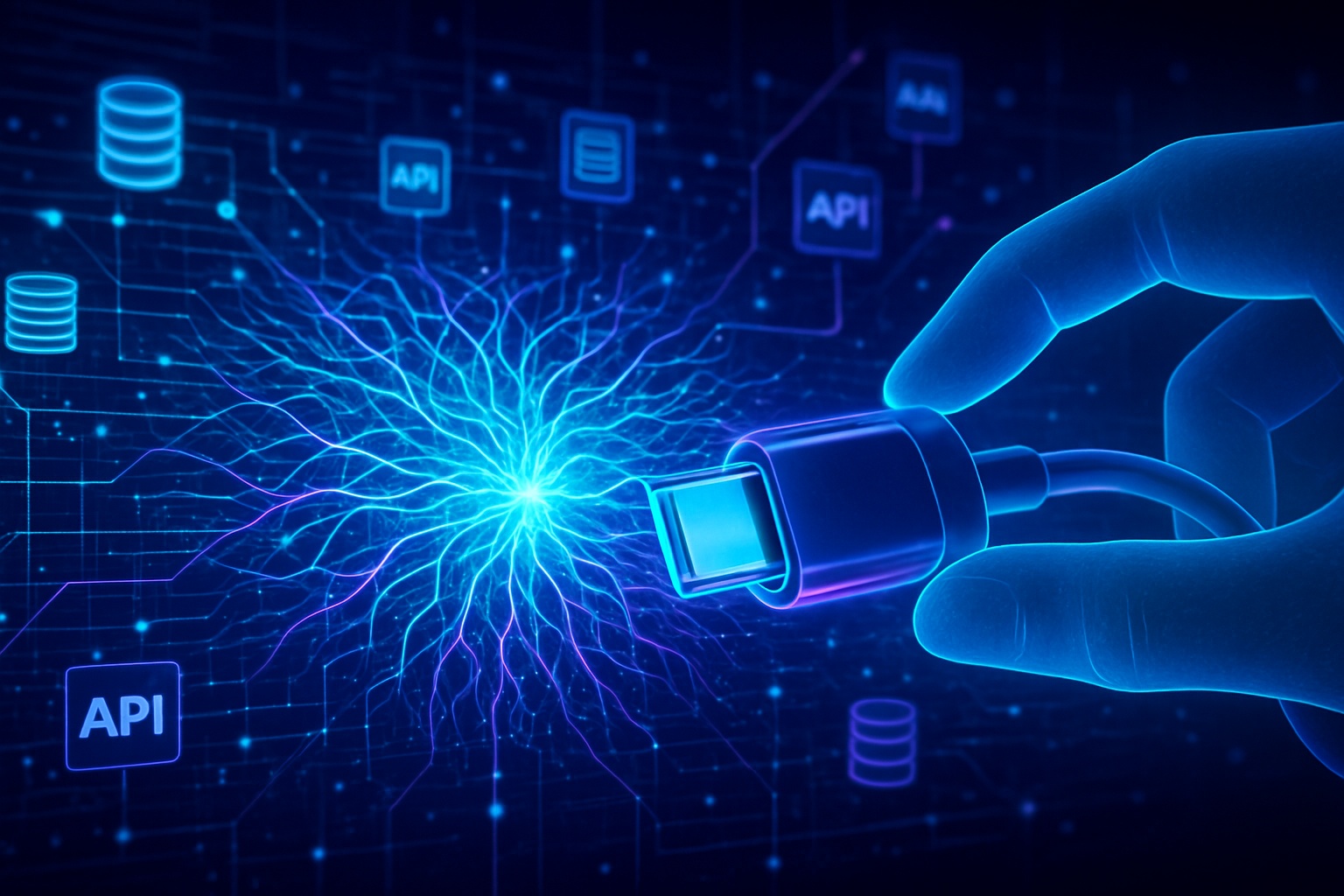
    As of early 2026, the artificial intelligence landscape has shifted from a race for larger models to a race for more integrated, capable agents. At the center of this transformation is Anthropic’s Model Context Protocol (MCP), a revolutionary open standard that has earned the moniker "USB-C for AI." By creating a universal interface for AI models to interact with data and tools, Anthropic has effectively dismantled the walled gardens that previously hindered agentic workflows. The recent launch of "Enterprise Agent Skills" has further accelerated this trend, providing a standardized framework for agents to execute complex, multi-step tasks across disparate corporate databases and APIs.

    The significance of this development cannot be overstated. Before the widespread adoption of MCP, connecting an AI agent to a company’s proprietary data—such as a SQL database or a Slack workspace—required custom, brittle code for every unique integration. Today, MCP acts as the foundational "plumbing" of the AI ecosystem, allowing any model to "plug in" to any data source that supports the standard. This shift from siloed AI to an interoperable agentic framework marks the beginning of the "Digital Coworker" era, where AI agents operate with the same level of access and procedural discipline as human employees.

    The Model Context Protocol (MCP) operates on a sleek client-server architecture designed to solve the "fragmentation problem." At its core, an MCP server acts as a translator between an AI model and a specific data source or tool. While the initial 2024 launch focused on basic connectivity, the 2025 introduction of Enterprise Agent Skills added a layer of "procedural intelligence." These Skills are filesystem-based modules containing structured metadata, validation scripts, and reference materials. Unlike simple prompts, Skills allow agents to understand how to use a tool, not just that the tool exists. This technical specification ensures that agents follow strict corporate protocols when performing tasks like financial auditing or software deployment.

    One of the most critical technical advancements within the MCP ecosystem is "progressive disclosure." To prevent the common "Lost in the Middle" phenomenon—where LLMs lose accuracy as context windows grow too large—Enterprise Agent Skills use a tiered loading system. The agent initially only sees a lightweight metadata description of a skill. It only "loads" the full technical documentation or specific reference files when they become relevant to the current step of a task. This dramatically reduces token consumption and increases the precision of the agent's actions, allowing it to navigate terabytes of data without overwhelming its internal memory.

    Furthermore, the protocol now emphasizes secure execution through virtual machine (VM) sandboxing. When an agent utilizes a Skill to process sensitive data, the code can be executed locally within a secure environment. Only the distilled, relevant results are passed back to the large language model (LLM), ensuring that proprietary raw data never leaves the enterprise's secure perimeter. This architecture differs fundamentally from previous "prompt-stuffing" approaches, offering a scalable, secure, and cost-effective way to deploy agents at the enterprise level. Initial reactions from the research community have been overwhelmingly positive, with many experts noting that MCP has effectively become the "HTTP of the agentic web."

    The strategic implications of MCP have triggered a massive realignment among tech giants. While Anthropic pioneered the protocol, its decision to donate MCP to the Agentic AI Foundation (AAIF) under the Linux Foundation in late 2025 was a masterstroke that secured its future. Microsoft (NASDAQ: MSFT) was among the first to fully integrate MCP into Windows 11 and Azure AI Foundry, signaling that the standard would be the backbone of its "Copilot" ecosystem. Similarly, Alphabet (NASDAQ: GOOGL) has adopted MCP for its Gemini models, offering managed MCP servers that allow enterprise customers to bridge their Google Cloud data with any compliant AI agent.

    The adoption extends beyond the traditional "Big Tech" players. Amazon (NASDAQ: AMZN) has optimized its custom Trainium chips to handle the high-concurrency workloads typical of MCP-heavy agentic swarms, while integrating the protocol directly into Amazon Bedrock. This move positions AWS as the preferred infrastructure for companies running massive fleets of interoperable agents. Meanwhile, companies like Block (NYSE: SQ) have contributed significant open-source frameworks, such as the Goose agent, which utilizes MCP as its primary connectivity layer. This unified front has created a powerful network effect: as more SaaS providers like Atlassian (NASDAQ: TEAM) and Salesforce (NYSE: CRM) launch official MCP servers, the value of being an MCP-compliant model increases exponentially.

    For startups, the "USB-C for AI" standard has lowered the barrier to entry for building specialized agents. Instead of spending months building integrations for every popular enterprise app, a startup can build one MCP-compliant agent that instantly gains access to the entire ecosystem of MCP-enabled tools. This has led to a surge in "Agentic Service Providers" that focus on fine-tuning specific skills—such as legal discovery or medical coding—rather than building the underlying connectivity. The competitive advantage has shifted from who has the data to who has the most efficient skills for processing that data.

    The rise of MCP and Enterprise Agent Skills fits into a broader trend of "Agentic Orchestration," where the focus is no longer on the chatbot but on the autonomous workflow. By early 2026, we are seeing the results of this shift: a move away from the "Token Crisis." Previously, the cost of feeding massive amounts of data into an LLM was a major bottleneck for enterprise adoption. By using MCP to fetch only the necessary data points on demand, companies have reduced their AI operational costs by as much as 70%, making large-scale agent deployment economically viable for the first time.

    However, this level of autonomy brings significant concerns regarding governance and security. The "USB-C for AI" analogy also highlights a potential vulnerability: if an agent can plug into anything, the risk of unauthorized data access or accidental system damage increases. To mitigate this, the 2026 MCP specification includes a mandatory "Human-in-the-Loop" (HITL) protocol for high-risk actions. This allows administrators to set "governance guardrails" where an agent must pause and request human authorization before executing an API call that involves financial transfers or permanent data deletion.

    Comparatively, the launch of MCP is being viewed as a milestone similar to the introduction of the TCP/IP protocol for the internet. Just as TCP/IP allowed disparate computer networks to communicate, MCP is allowing disparate "intelligence silos" to collaborate. This standardization is the final piece of the puzzle for the "Agentic Web," a future where AI agents from different companies can negotiate, share data, and complete complex transactions on behalf of their human users without manual intervention.

    Looking ahead, the next frontier for MCP and Enterprise Agent Skills lies in "Cross-Agent Collaboration." We expect to see the emergence of "Agent Marketplaces" where companies can purchase or lease highly specialized skills developed by third parties. For instance, a small accounting firm might "rent" a highly sophisticated Tax Compliance Skill developed by a top-tier global consultancy, plugging it directly into their MCP-compliant agent. This modularity will likely lead to a new economy centered around "Skill Engineering."

    In the near term, we anticipate a deeper integration between MCP and edge computing. As agents become more prevalent on mobile devices and IoT hardware, the need for lightweight MCP servers that can run locally will grow. Challenges remain, particularly in the realm of "Semantic Collisions"—where two different skills might use the same command to mean different things. Standardizing the vocabulary of these skills will be a primary focus for the Agentic AI Foundation throughout 2026. Experts predict that by 2027, the majority of enterprise software will be "Agent-First," with traditional user interfaces taking a backseat to MCP-driven autonomous interactions.

    The evolution of Anthropic’s Model Context Protocol into a global open standard marks a definitive turning point in the history of artificial intelligence. By providing the "USB-C" for the AI era, MCP has solved the interoperability crisis that once threatened to stall the progress of agentic technology. The addition of Enterprise Agent Skills has provided the necessary procedural framework to move AI from a novelty to a core component of enterprise infrastructure.

    The key takeaway for 2026 is that the era of "Siloed AI" is over. The winners in this new landscape will be the companies that embrace openness and contribute to the growing ecosystem of MCP-compliant tools and skills. As we watch the developments in the coming months, the focus will be on how quickly traditional industries—such as manufacturing and finance—can transition their legacy systems to support this new standard.

    Ultimately, MCP is more than just a technical protocol; it is a blueprint for how humans and AI will interact in a hyper-connected world. By standardizing the way agents access data and perform tasks, Anthropic and its partners in the Agentic AI Foundation have laid the groundwork for a future where AI is not just a tool we use, but a seamless extension of our professional and personal capabilities.


    This content is intended for informational purposes only and represents analysis of current AI developments.

    TokenRing AI delivers enterprise-grade solutions for multi-agent AI workflow orchestration, AI-powered development tools, and seamless remote collaboration platforms.
    For more information, visit https://www.tokenring.ai/.
  • The Great Unification: Model Context Protocol (MCP) Becomes the Universal ‘USB-C for AI’

    The Great Unification: Model Context Protocol (MCP) Becomes the Universal ‘USB-C for AI’

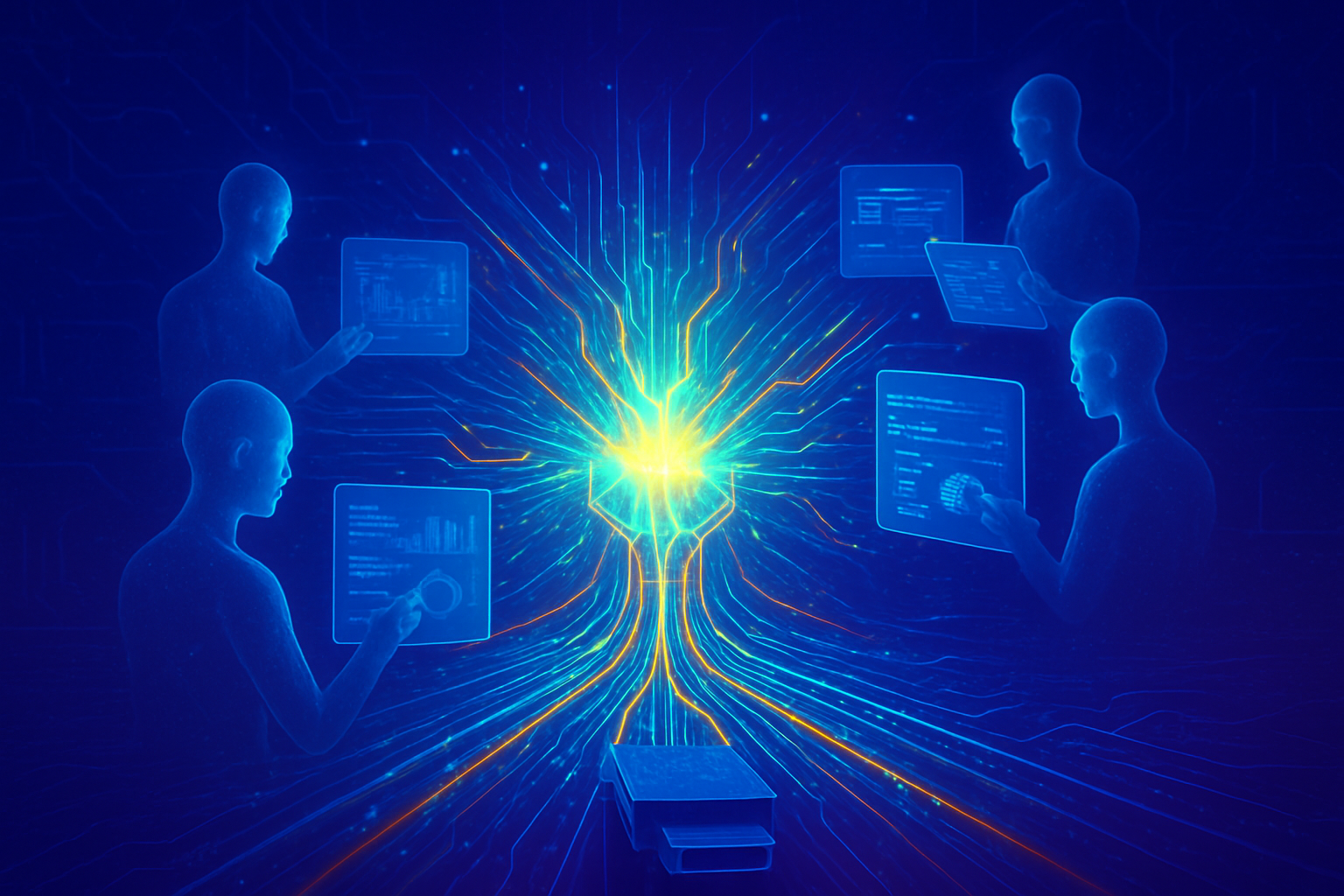
    As the calendar turns to 2026, the artificial intelligence landscape has reached a pivotal milestone that many are calling the "Kubernetes moment" for the agentic era. The Model Context Protocol (MCP), an open-source standard originally introduced by Anthropic in late 2024, has officially transitioned from a promising corporate initiative to the bedrock of the global AI ecosystem. Following the formal donation of the protocol to the Agentic AI Foundation (AAIF) under the Linux Foundation in December 2025, the industry has seen a tidal wave of adoption that effectively ends the era of proprietary, siloed AI integrations.

    This development marks the resolution of the fragmented "N×M" integration problem that plagued early AI development. Previously, every AI application had to build custom connectors for every data source or tool it intended to use. Today, with MCP serving as a universal interface, a single MCP server can provide data and functionality to any AI model—be it from OpenAI, Google (NASDAQ: GOOGL), or Microsoft (NASDAQ: MSFT)—instantly and securely. This shift has dramatically reduced developer friction, enabling a new generation of interoperable AI agents that can traverse diverse enterprise environments with unprecedented ease.

    Standardizing the Agentic Interface

    Technically, the Model Context Protocol is built on a client-server architecture utilizing JSON-RPC 2.0 for lightweight, standardized messaging. It provides a structured way for AI models (the "hosts") to interact with external systems through three core primitives: Resources, Tools, and Prompts. Resources allow models to pull in read-only data like database records or live documentation; Tools enable models to perform actions such as executing code or sending messages; and Prompts provide the templates that guide how a model should interact with these capabilities. This standardized approach replaces the thousands of bespoke API wrappers that developers previously had to maintain.

    One of the most significant technical advancements integrated into the protocol in late 2025 was the "Elicitation" feature. This allows MCP servers to "ask back"—enabling a tool to pause execution and request missing information or user clarification directly through the AI agent. Furthermore, the introduction of asynchronous task-based workflows has allowed agents to trigger long-running processes, such as complex data migrations, and check back on their status later. This evolution has moved AI from simple chat interfaces to sophisticated, multi-step operational entities.

    The reaction from the research community has been overwhelmingly positive. Experts note that by decoupling the model from the data source, MCP allows for "Context Engineering" at scale. Instead of stuffing massive amounts of irrelevant data into a model's context window, agents can now surgically retrieve exactly what they need at the moment of execution. This has not only improved the accuracy of AI outputs but has also significantly reduced the latency and costs associated with long-context processing.

    A New Competitive Landscape for Tech Giants

    The widespread adoption of MCP has forced a strategic realignment among the world’s largest technology firms. Microsoft (NASDAQ: MSFT) has been among the most aggressive, integrating MCP as a first-class standard across Windows 11, GitHub, and its Azure AI Foundry. By positioning itself as "open-by-design," Microsoft is attempting to capture the developer market by making its ecosystem the easiest place to build and deploy interoperable agents. Similarly, Google (NASDAQ: GOOGL) has integrated native MCP support into its Gemini models and SDKs, ensuring that its powerful multimodal capabilities can seamlessly plug into existing enterprise data.

    For major software providers like Salesforce (NYSE: CRM), SAP (NYSE: SAP), and ServiceNow (NYSE: NOW), the move to MCP represents a massive strategic advantage. These companies have released official MCP servers for their respective platforms, effectively turning their vast repositories of enterprise data into "plug-and-play" context for any AI agent. This eliminates the need for these companies to build their own proprietary LLM ecosystems to compete with the likes of OpenAI; instead, they can focus on being the premium data and tool providers for the entire AI industry.

    However, the shift also presents challenges for some. Startups that previously built their value proposition solely on "connectors" for AI are finding their moats evaporated by the universal standard. The competitive focus has shifted from how a model connects to data to what it does with that data. Market positioning is now defined by the quality of the MCP servers provided and the intelligence of the agents consuming them, rather than the plumbing that connects the two.

    The Global Significance of Interoperability

    The rise of MCP is more than just a technical convenience; it represents a fundamental shift in the AI landscape away from walled gardens and toward a collaborative, modular future. By standardizing how agents communicate, the industry is avoiding the fragmentation that often hinders early-stage technologies. This interoperability is essential for the vision of "Agentic AI"—autonomous systems that can work across different platforms to complete complex goals without human intervention at every step.

    Comparisons to previous milestones, such as the adoption of HTTP for the web or SQL for databases, are becoming common. Just as those standards allowed for the explosion of the internet and modern data management, MCP is providing the "universal plumbing" for the intelligence age. This has significant implications for data privacy and security as well. Because MCP provides a standardized way to handle permissions and data access, enterprises can implement more robust governance frameworks that apply to all AI models interacting with their data, rather than managing security on a model-by-model basis.

    There are, of course, concerns. As AI agents become more autonomous and capable of interacting with a wider array of tools, the potential for unintended consequences increases. The industry is currently grappling with how to ensure that a standardized protocol doesn't also become a standardized vector for prompt injection or other security vulnerabilities. The transition to foundation-led governance under the Linux Foundation is seen as a critical step in addressing these safety and security challenges through community-driven best practices.

    Looking Ahead: The W3C and the Future of Identity

    The near-term roadmap for MCP is focused on even deeper integration and more robust standards. In April 2026, the World Wide Web Consortium (W3C) is scheduled to begin formal discussions regarding "MCP-Identity." This initiative aims to standardize how AI agents authenticate themselves across the web, essentially giving agents their own digital passports. This would allow an agent to prove its identity, its owner's permissions, and its safety certifications as it moves between different MCP-compliant servers.

    Experts predict that the next phase of development will involve "Server-to-Server" MCP communication, where different data sources can negotiate with each other on behalf of an agent to optimize data retrieval. We are also likely to see the emergence of specialized MCP "marketplaces" where developers can share and monetize sophisticated tools and data connectors. The challenge remains in ensuring that the protocol remains lightweight enough for edge devices while powerful enough for massive enterprise clusters.

    Conclusion: A Foundation for the Agentic Era

    The adoption of the Model Context Protocol as a global industry standard is a watershed moment for artificial intelligence. By solving the interoperability crisis, the industry has cleared the path for AI agents to become truly useful, ubiquitous tools in both personal and professional settings. The transition from a proprietary Anthropic tool to a community-governed standard has ensured that the future of AI will be built on a foundation of openness and collaboration.

    As we move further into 2026, the success of MCP will be measured by its invisibility. Like the protocols that power the internet, the most successful version of MCP is one that developers and users take for granted. For now, the tech world should watch for the upcoming W3C identity standards and the continued growth of the MCP server registry, which has already surpassed 10,000 public integrations. The era of the siloed AI is over; the era of the interconnected agent has begun.


    This content is intended for informational purposes only and represents analysis of current AI developments.

    TokenRing AI delivers enterprise-grade solutions for multi-agent AI workflow orchestration, AI-powered development tools, and seamless remote collaboration platforms.
    For more information, visit https://www.tokenring.ai/.
  • The USB-C of AI: Anthropic Donates Model Context Protocol to Linux Foundation to Standardize the Agentic Web

    The USB-C of AI: Anthropic Donates Model Context Protocol to Linux Foundation to Standardize the Agentic Web

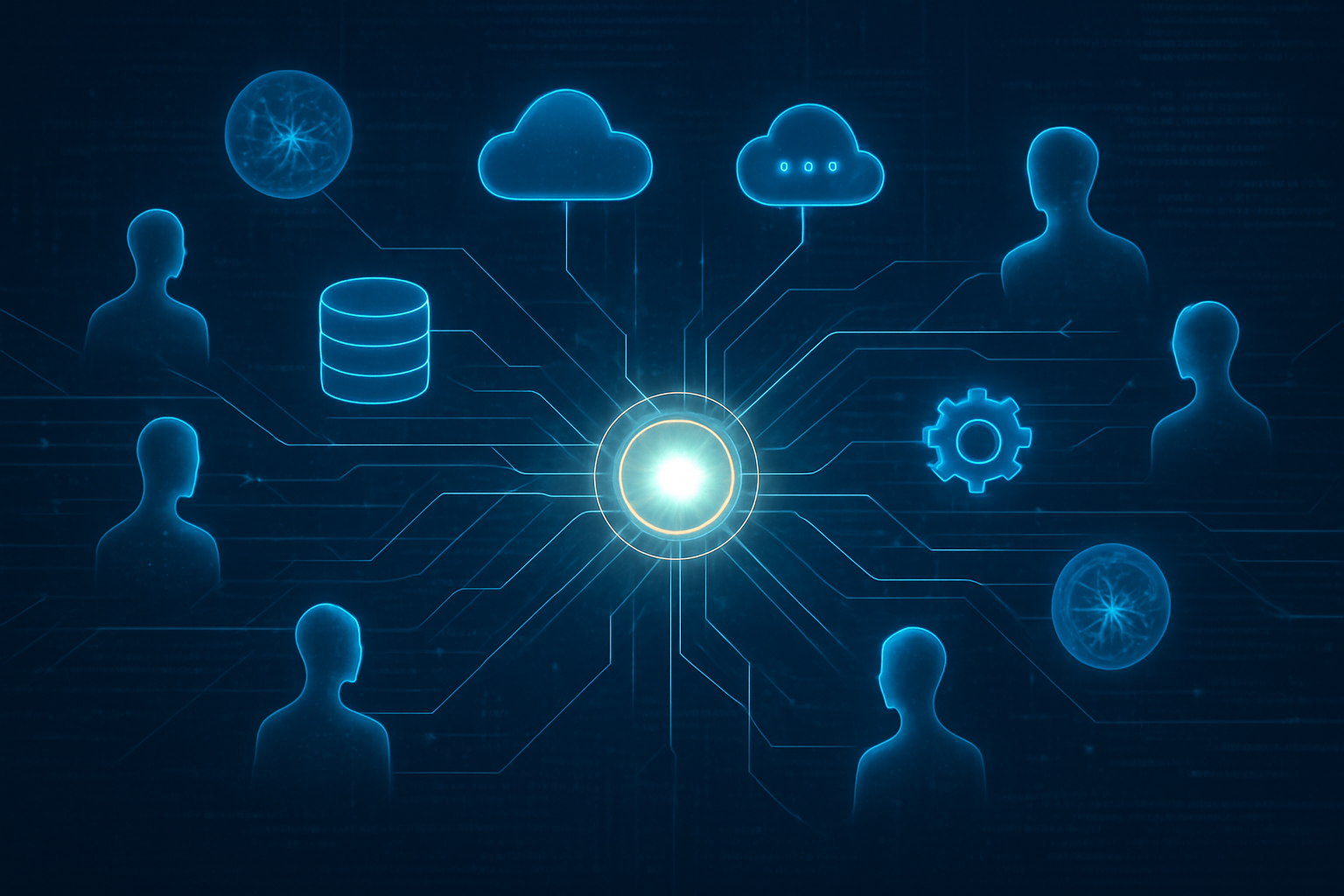
    In a move that signals a definitive end to the "walled garden" era of artificial intelligence, Anthropic announced earlier this month that it has officially donated its Model Context Protocol (MCP) to the newly formed Agentic AI Foundation (AAIF) under the Linux Foundation. This landmark contribution, finalized on December 9, 2025, establishes MCP as a vendor-neutral open standard, effectively creating a universal language for how AI agents communicate with data, tools, and each other.

    The donation is more than a technical hand-off; it represents a rare "alliance of rivals." Industry giants including OpenAI, Alphabet Inc. (NASDAQ: GOOGL), Microsoft Corporation (NASDAQ: MSFT), and Amazon.com, Inc. (NASDAQ: AMZN) have all joined the AAIF as founding members, signaling a collective commitment to a shared infrastructure. By relinquishing control of MCP, Anthropic has paved the way for a future where AI agents are no longer confined to proprietary ecosystems, but can instead operate seamlessly across diverse software environments and enterprise data silos.

    The Technical Backbone of the Agentic Revolution

    The Model Context Protocol is designed to solve the "fragmentation problem" that has long plagued AI development. Historically, connecting an AI model to a specific data source—like a SQL database, a Slack channel, or a local file system—required custom, brittle integration code. MCP replaces this with a standardized client-server architecture. In this model, "MCP Clients" (such as AI chatbots or IDEs) connect to "MCP Servers" (lightweight programs that expose specific data or functionality) using a unified interface based on JSON-RPC 2.0.

    Technically, the protocol operates on three core primitives: Resources, Tools, and Prompts. Resources provide agents with read-only access to data, such as documentation or database records. Tools allow agents to perform actions, such as executing a shell command or sending an email. Prompts offer standardized templates that provide models with the necessary context for specific tasks. This architecture is heavily inspired by the Language Server Protocol (LSP), which revolutionized the software industry by allowing a single code editor to support hundreds of programming languages.

    The timing of the donation follows a massive technical update released on November 25, 2025, which introduced "Asynchronous Operations." This capability allows agents to trigger long-running tasks—such as complex data analysis or multi-step workflows—without blocking the connection, a critical requirement for truly autonomous behavior. Additionally, the new "Server Identity" feature enables AI clients to discover server capabilities via .well-known URLs, mirroring the discovery mechanisms of the modern web.

    A Strategic Shift for Tech Titans and Startups

    The institutionalization of MCP under the Linux Foundation has immediate and profound implications for the competitive landscape. For cloud providers like Amazon (NASDAQ: AMZN) and Google (NASDAQ: GOOGL), supporting an open standard ensures that their proprietary data services remain accessible to any AI model a customer chooses to use. Both companies have already integrated MCP support into their respective cloud consoles, allowing developers to deploy "agent-ready" infrastructure at enterprise scale.

    For Microsoft (NASDAQ: MSFT), the adoption of MCP into Visual Studio Code and Microsoft Copilot reinforces its position as the primary platform for AI-assisted development. Meanwhile, startups and smaller players stand to benefit the most from the reduced barrier to entry. By building on a standardized protocol, a new developer can create a specialized AI tool once and have it immediately compatible with Claude, ChatGPT, Gemini, and dozens of other "agentic" platforms.

    The move also represents a tactical pivot for OpenAI. By joining the AAIF and contributing its own AGENTS.md standard—a format for describing agent capabilities—OpenAI is signaling that the era of competing on basic connectivity is over. The competition has shifted from how an agent connects to data to how well it reasons and executes once it has that data. This "shared plumbing" allows all major labs to focus their resources on model intelligence rather than integration maintenance.

    Interoperability as the New Industry North Star

    The broader significance of this development cannot be overstated. Industry analysts have already begun referring to the donation of MCP as the "HTTP moment" for AI. Just as the Hypertext Transfer Protocol enabled the explosion of the World Wide Web by allowing any browser to talk to any server, MCP provides the foundation for an "Agentic Web" where autonomous entities can collaborate across organizational boundaries.

    The scale of adoption is already staggering. As of late December 2025, the MCP SDK has reached a milestone of 97 million monthly downloads, with over 10,000 public MCP servers currently in operation. This rapid growth suggests that the industry has reached a consensus: interoperability is no longer a luxury, but a prerequisite for the enterprise adoption of AI. Without a standard like MCP, the risk of vendor lock-in would have likely stifled corporate investment in agentic workflows.

    However, the transition to an open standard also brings new challenges, particularly regarding security and safety. As agents gain the ability to autonomously trigger "Tools" across different platforms, the industry must now grapple with the implications of "agent-to-agent" permissions and the potential for cascading errors in automated chains. The AAIF has stated that establishing safe, transparent practices for agentic interactions will be its primary focus heading into the new year.

    The Road Ahead: SDK v2 and Autonomous Ecosystems

    Looking toward 2026, the roadmap for the Model Context Protocol is ambitious. A stable release of the TypeScript SDK v2 is expected in Q1 2026, which will natively support the new asynchronous features and provide improved horizontal scaling for high-traffic enterprise applications. Furthermore, Anthropic’s recent decision to open-source its "Agent Skills" specification provides a complementary layer to MCP, allowing developers to package complex, multi-step workflows into portable folders that any compliant agent can execute.

    Experts predict that the next twelve months will see the rise of "Agentic Marketplaces," where verified MCP servers can be discovered and deployed with a single click. We are also likely to see the emergence of specialized "Orchestrator Agents" whose sole job is to manage a fleet of subordinate agents, each specialized in a different MCP-connected tool. The ultimate goal is a world where an AI agent can independently book a flight, update a budget spreadsheet, and notify a team on Slack, all while navigating different APIs through a single, unified protocol.

    A New Chapter in AI History

    The donation of the Model Context Protocol to the Linux Foundation marks the end of 2025 as the year "Agentic AI" moved from a buzzword to a fundamental architectural reality. By choosing collaboration over control, Anthropic and its partners have ensured that the next generation of AI will be built on a foundation of openness and interoperability.

    As we move into 2026, the focus will shift from the protocol itself to the innovative applications built on top of it. The "plumbing" is now in place; the industry's task is to build the autonomous future that this standard makes possible. For enterprises and developers alike, the message is clear: the age of the siloed AI is over, and the era of the interconnected agent has begun.


    This content is intended for informational purposes only and represents analysis of current AI developments.

    TokenRing AI delivers enterprise-grade solutions for multi-agent AI workflow orchestration, AI-powered development tools, and seamless remote collaboration platforms.
    For more information, visit https://www.tokenring.ai/.

  • Grasshopper Bank Becomes First Community Bank to Launch Conversational AI Financial Analysis via Anthropic’s MCP

    Grasshopper Bank Becomes First Community Bank to Launch Conversational AI Financial Analysis via Anthropic’s MCP

    In a significant leap for the democratization of high-end financial technology, Grasshopper Bank has officially become the first community bank in the United States to integrate Anthropic’s Model Context Protocol (MCP). This move allows the bank’s business clients to perform complex, natural language financial analysis directly through AI assistants like Claude. By bridging the gap between live banking data and large language models (LLMs), Grasshopper is transforming the traditional banking dashboard into a conversational partner capable of real-time cash flow analysis and predictive modeling.

    The announcement, which saw its initial rollout in August 2025 and has since expanded to include multi-model support, represents a pivotal shift in how small-to-medium businesses (SMBs) interact with their capital. Developed in partnership with the digital banking platform Narmi, the integration utilizes a secure, read-only data bridge that empowers founders and CFOs to ask nuanced questions about their finances without the need for manual data exports or complex spreadsheet formulas. This development marks a milestone in the "agentic" era of banking, where AI does not just display data but understands and interprets it in context.

    The Technical Architecture: Beyond RAG and Traditional APIs

    The core of this innovation lies in the Model Context Protocol (MCP), an open-source standard pioneered by Anthropic to solve the "integration tax" that has long plagued AI development. Historically, connecting an AI to a specific data source required bespoke, brittle API integrations. MCP replaces this with a universal client-server architecture, often described as the "USB-C port for AI." Grasshopper’s implementation utilizes a custom MCP server built by Narmi, which acts as a secure gateway. When a client asks a question, the AI "host" (such as Claude) communicates with the MCP server using JSON-RPC 2.0, discovering available "Tools" and "Resources" at runtime.

    Unlike traditional Retrieval-Augmented Generation (RAG), which often involves pre-indexing data into a vector database, the MCP approach is dynamic and "surgical." Instead of flooding the AI’s context window with potentially irrelevant chunks of transaction history, the AI uses specific MCP tools to query only the necessary data points—such as a specific month’s SaaS spend or a vendor's payment history—based on its own reasoning. This reduces latency and significantly improves the accuracy of the financial insights provided. The system is built on a "read-only" architecture, ensuring that while the AI can analyze data, it cannot initiate transactions or move funds, maintaining a strict security perimeter.

    Furthermore, the implementation utilizes OAuth 2.1 for permissioned access, meaning the AI assistant never sees or stores a user’s banking credentials. The technical achievement here is not just the connection itself, but the standardization of it. By adopting MCP, Grasshopper has avoided the "walled garden" approach of proprietary AI systems. This allows the bank to remain model-agnostic; while the service launched with Anthropic’s Claude, it has already expanded to support OpenAI’s ChatGPT and is slated to integrate Google’s Gemini, a product of Alphabet (NASDAQ: GOOGL), by early 2026.

    Leveling the Playing Field: Strategic Implications for the Banking Sector

    The adoption of MCP by a community bank with approximately $1.4 billion in assets sends a clear message to the "Too Big to Fail" institutions. Traditionally, advanced AI-driven financial insights were the exclusive domain of giants like JPMorgan Chase or Bank of America, who possess the multi-billion dollar R&D budgets required to build in-house proprietary models. By leveraging an open-source protocol and partnering with a nimble FinTech like Narmi, Grasshopper has bypassed years of development, effectively "leapfrogging" the traditional innovation cycle.

    This development poses a direct threat to the competitive advantage of larger banks' proprietary "digital assistants." As more community banks adopt open standards like MCP, the "sticky" nature of big-bank ecosystems may begin to erode. Startups and SMBs, who often prefer the personalized service of a community bank but require the high-tech tools of a global firm, no longer have to choose between the two. This shift could trigger a wave of consolidation in the FinTech space, as providers who do not support open AI protocols find themselves locked out of an increasingly interconnected financial web.

    Moreover, the strategic partnership between Anthropic and Amazon (NASDAQ: AMZN), which has seen billions in investment, provides a robust cloud infrastructure that ensures these MCP-driven services can scale rapidly. As Microsoft (NASDAQ: MSFT) continues to push its own AI "Copilots" into the enterprise space, the move by Grasshopper to support multiple models ensures they are not beholden to a single tech giant’s roadmap. This "Switzerland-style" neutrality in model support is likely to become a preferred strategy for regional banks looking to maintain autonomy while offering cutting-edge features.

    The Broader AI Landscape: From Chatbots to Financial Agents

    The significance of Grasshopper’s move extends far beyond the balance sheet of a single bank; it signals a transition in the broader AI landscape from "chatbots" to "agents." In the previous era of AI, users were responsible for bringing data to the model. In this new era, the model is securely brought to the data. This integration is a prime example of "Agentic Banking," where the AI is granted a persistent, contextual understanding of a user’s financial life. This mirrors trends seen in other sectors, such as AI-powered IDEs for software development or autonomous research agents in healthcare.

    However, the democratization of such powerful tools does not come without concerns. While the current read-only nature of the Grasshopper integration mitigates immediate risks of unauthorized fund transfers, the potential for "hallucinated" financial advice remains a hurdle. If an AI incorrectly categorizes a major expense or miscalculates a burn rate, the consequences for a small business could be severe. This highlights the ongoing need for "Human-in-the-Loop" systems, where the AI provides the analysis but the human CFO makes the final decision.

    Comparatively, this milestone is being viewed by industry experts as the "Open Banking 2.0" moment. Where the first wave of open banking focused on the portability of data via APIs (facilitated by companies like Plaid), this second wave is about the interpretability of that data. The ability for a business owner to ask, "Will I have enough cash to hire a new engineer in October?" and receive a data-backed response in seconds is a fundamental shift in the utility of financial services.

    The Road Ahead: Autonomous Banking and Write-Access

    Looking toward 2026, the roadmap for MCP in banking is expected to move from "read" to "write." While Grasshopper has started with read-only analysis to ensure safety, the next logical step is the integration of "Action Tools" within the MCP framework. This would allow an AI assistant to not only identify an upcoming bill but also draft the payment for the user to approve with a single click. Experts predict that "Autonomous Treasury Management" will become a standard offering for SMBs, where AI agents automatically move funds between high-yield savings and operating accounts to maximize interest while ensuring liquidity.

    The near-term developments will likely focus on expanding the "context" the AI can access. This could include integrating with accounting software like QuickBooks or tax filing services, allowing the AI to provide a truly holistic view of a company’s financial health. The challenge will remain the standardization of these connections; if every bank and software provider uses a different protocol, the vision of a seamless AI agent falls apart. Grasshopper’s early bet on MCP is a gamble that Anthropic’s standard will become the industry’s "lingua franca."

    Final Reflections: A New Era for Financial Intelligence

    Grasshopper Bank’s integration of the Model Context Protocol is more than just a new feature; it is a blueprint for the future of community banking. By proving that a smaller institution can deliver world-class AI capabilities through open standards, Grasshopper has set a precedent that will likely be followed by hundreds of other regional banks in the coming months. The era of the static bank statement is ending, replaced by a dynamic, conversational interface that puts the power of a full-time financial analyst into the pocket of every small business owner.

    In the history of AI development, 2025 may well be remembered as the year that protocols like MCP finally allowed LLMs to "touch" the real world in a secure and scalable way. As we move into 2026, the industry will be watching closely to see how users adopt these tools and how "Big Tech" responds to the encroachment of open-standard AI into their once-proprietary domains. For now, Grasshopper Bank stands at the forefront of a movement that is making financial intelligence more accessible, transparent, and actionable than ever before.


    This content is intended for informational purposes only and represents analysis of current AI developments.

    TokenRing AI delivers enterprise-grade solutions for multi-agent AI workflow orchestration, AI-powered development tools, and seamless remote collaboration platforms.
    For more information, visit https://www.tokenring.ai/.