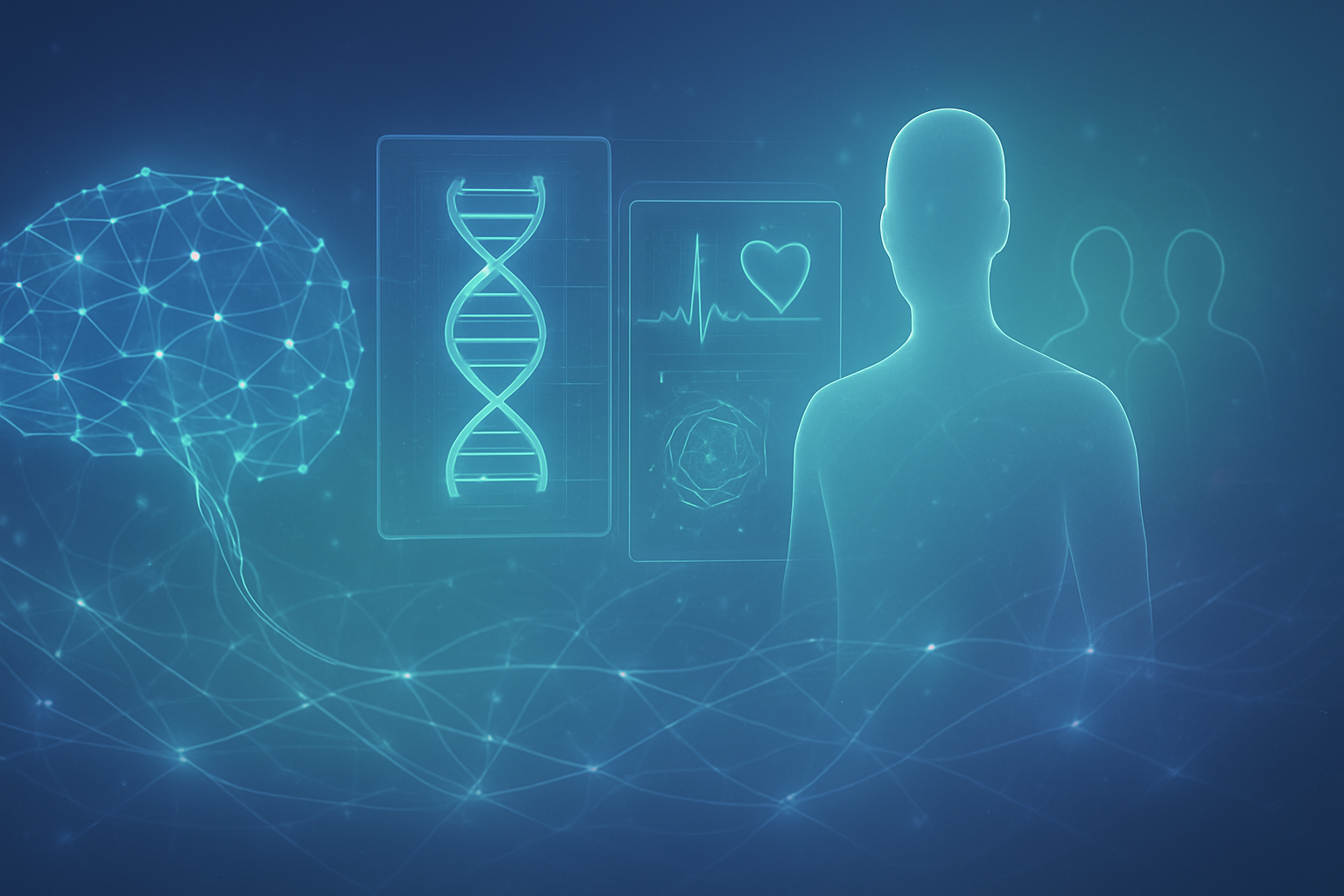
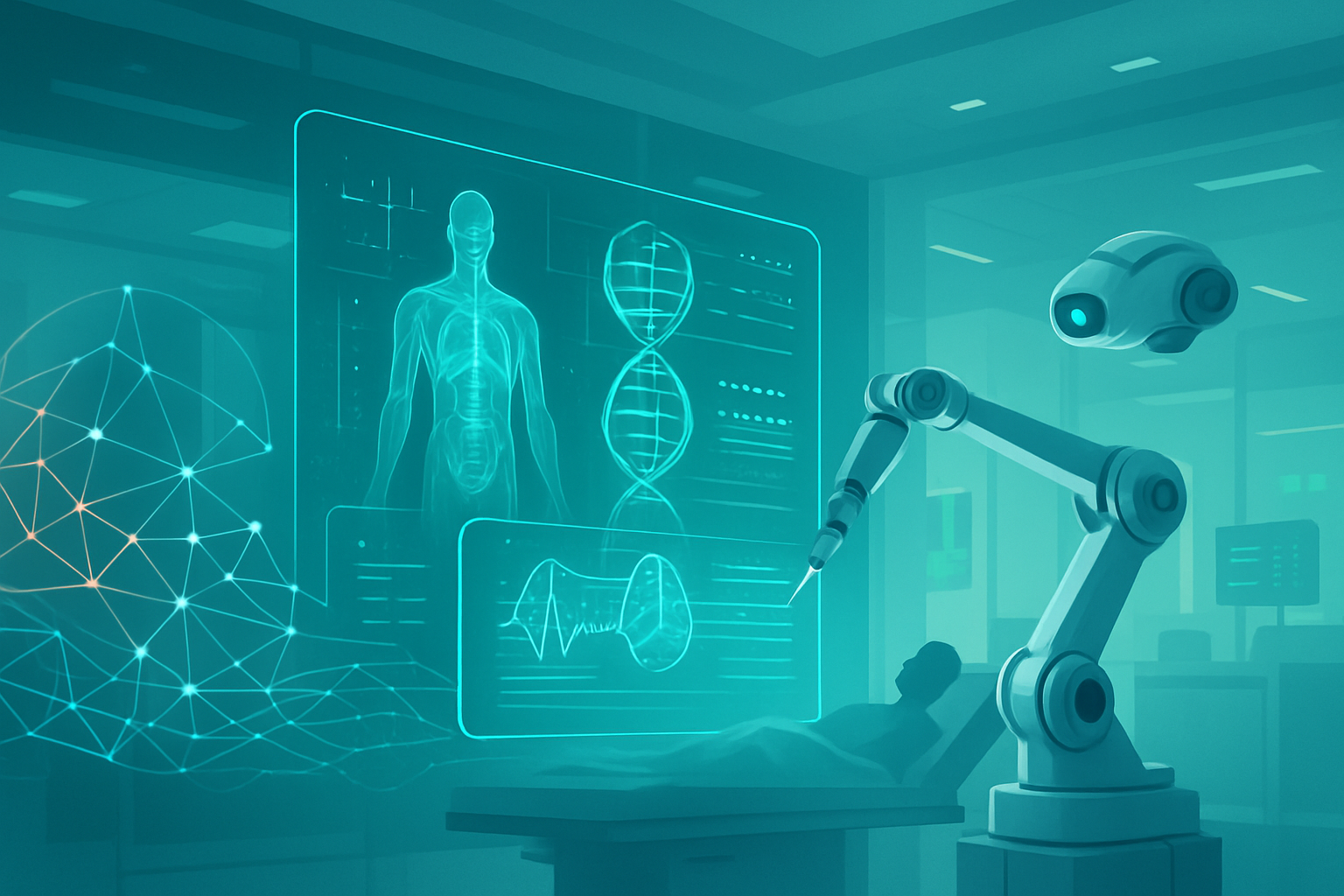
Artificial intelligence is fundamentally reshaping how patients first interact with the healthcare system, moving beyond traditional physical and phone-based interactions to a sophisticated digital 'front door.' This transformative shift is democratizing access to medical knowledge, once largely the domain of physicians, and placing unprecedented information directly into the hands of patients. While promising a future of more accessible, personalized, and efficient care, this paradigm shift immediately raises profound questions about patient trust, the evolving power dynamics between patients and providers, and the very nature of empathetic care. This development marks a significant breakthrough in the application of AI in medicine, offering a glimpse into a future where healthcare is truly patient-centric.
The immediate significance of this transformation lies in its potential to empower patients like never before. AI-powered virtual assistants, symptom checkers, and personalized health portals provide 24/7 access to information, guidance, and administrative support. Patients can now independently assess symptoms, understand medical terminology, schedule appointments, and manage their health records, fostering a more proactive and engaged approach to their well-being. However, this empowerment comes with a crucial caveat: the need to build unwavering trust in AI systems. The effectiveness and adoption of these tools hinge on their transparency, accuracy, and the confidence patients place in their recommendations. Furthermore, the shift in knowledge and control prompts a re-evaluation of the traditional patient-physician relationship, pushing healthcare providers to adapt to a more collaborative model where patients are active participants, not passive recipients, of care.
The Technical Backbone: How AI Powers the Digital Front Door
At the core of this redefinition are sophisticated AI advancements, primarily in Natural Language Processing (NLP), machine learning (ML), and robust data integration. These technologies enable healthcare systems to offer intelligent, interactive, and personalized patient experiences that far surpass previous approaches.
Modern NLP, driven by transformer-based models like Google's BERT and OpenAI's GPT variants, is the engine behind conversational AI assistants and symptom checkers. Introduced in 2017, these models utilize attention mechanisms to understand context bidirectionally, leading to highly nuanced interpretations of patient inquiries. They excel at intent recognition (e.g., "schedule an appointment"), entity extraction (identifying symptoms, medications), sentiment analysis, and medical text summarization. This represents a significant leap from earlier NLP models like "bag-of-words" or simpler recurrent neural networks (RNNs), which struggled with complex semantic structures and long-range dependencies, often relying on static rule-based systems. Transformers enable human-like conversational flows, providing more flexible and accurate interpretations of patient needs.
Machine learning models, particularly deep learning architectures, are crucial for personalized care and operational efficiency. These algorithms analyze vast datasets—including Electronic Health Records (EHRs), lab results, wearables data, and social determinants of health—to identify patterns, predict risks, and continuously improve. ML powers predictive analytics to anticipate patient no-shows, optimize appointment slots, and identify individuals at risk of specific conditions, enabling proactive interventions. AI symptom checkers, like those from Ada Health and Babylon, leverage ML to assess patient inputs and provide differential diagnoses and care recommendations with diagnostic accuracy comparable to physicians for common ailments. This differs from previous approaches that relied on manual data interpretation and static rule-based systems, as ML models automatically learn from data, uncovering subtle patterns impossible for humans to detect, and adapt dynamically.
Effective AI at the front door also necessitates seamless data integration. Healthcare data is notoriously fragmented, residing in silos across disparate systems. AI-powered solutions address this through Knowledge Graphs (KGs), which are structured representations connecting entities like diseases, symptoms, and treatments using graph databases and semantic web technologies (e.g., RDF). KGs enable personalized treatment plans by linking patient records and providing evidence-based recommendations. Furthermore, AI systems are increasingly built to integrate with interoperability standards like HL7 FHIR (Fast Healthcare Interoperability Resources), facilitating secure data exchange. This contrasts with historical, laborious, and error-prone manual integration processes, offering a scalable and semantic approach to a holistic patient view.
Finally, user interfaces (UIs) are being transformed by AI to be more intuitive and personalized. Conversational AI, delivered via chatbots and voice assistants, uses NLP, speech-to-text, and text-to-speech technologies to offer 24/7 assistance for scheduling, reminders, and health advice. Adaptive interfaces leverage AI to tailor content and interactions based on patient history and real-time data. Unlike static, form-heavy traditional UIs or limited rule-based chatbots, AI-powered interfaces provide a dynamic, interactive, and personalized experience, significantly improving patient engagement and reducing administrative friction.
Initial reactions from the AI research community and industry experts are largely positive, acknowledging the immense potential for increased efficiency, accessibility, and improved patient experience. However, significant concerns persist regarding algorithmic bias (AI models perpetuating health disparities), data privacy and security (given the sensitive nature of health data), explainability (XAI) (the "black box" nature of complex AI models hindering trust), and the critical need for rigorous clinical validation to ensure accuracy and safety. Experts also caution against the potential for over-reliance on AI to de-humanize care, emphasizing the necessity of clear communication that users are interacting with a machine.
Reshaping the Corporate Landscape: AI's Impact on Tech Giants and Startups
The redefinition of healthcare's 'front door' by AI is creating a dynamic competitive landscape, offering unprecedented opportunities for specialized AI companies and startups while solidifying the strategic positions of tech giants. The global AI in healthcare market, projected to reach $208.2 billion by 2030, underscores the scale of this transformation.
AI companies and startups are at the forefront of developing highly specialized solutions. Companies like Hippocratic AI are building AI clinical assistants for remote patient monitoring, while Commure offers AI Call Centers for real-time patient updates. Ada Health provides AI platforms for health insights and treatment recommendations. Others, such as Notable, focus on AI-powered digital front door solutions integrating with EHRs, and Abridge and Augmedix specialize in automating clinical documentation. These agile entities benefit by addressing specific pain points in patient access and administrative burden, often through deep domain expertise and rapid innovation. Their strategic advantage lies in niche specialization, seamless integration capabilities with existing healthcare IT, and a strong focus on user experience and patient trust.
Tech giants like Google (NASDAQ: GOOGL) (Google Health, DeepMind), Microsoft (NASDAQ: MSFT) (Azure Health Bot), Amazon (NASDAQ: AMZN) (AWS), and Apple (NASDAQ: AAPL) are leveraging their immense resources to play a dominant role. They provide foundational cloud-based platforms and AI development tools that power many healthcare solutions. Their vast computing power, established ecosystems (e.g., Apple's health-focused wearables), and extensive user data enable them to develop and scale robust AI models. Microsoft's Azure Health Bot, for instance, is expanding to triage patients and schedule appointments, while Amazon's acquisitions of PillPack and One Medical signal direct involvement in healthcare service delivery. These companies benefit from leveraging their scale, vast data access, and ability to attract top-tier AI talent, creating high barriers to entry for smaller competitors. Their competitive strategy often involves strategic partnerships and acquisitions to integrate specialized AI capabilities into their broader platforms.
This shift is poised to disrupt existing products and services. Manual administrative processes—traditional phone calls, faxes, and manual data entry for scheduling and inquiries—are being replaced by AI-powered conversational agents and automated workflows. Generic, non-AI symptom checkers will be outpaced by intelligent tools offering personalized recommendations. The necessity for some initial in-person consultations for basic triage is diminishing as AI-driven virtual care and remote monitoring offer more agile alternatives. AI scribes and NLP tools are automating medical documentation, streamlining clinician workflows. Furthermore, the "old digital marketing playbook" for patient acquisition is becoming obsolete as patients increasingly rely on AI-driven search and health apps to find providers.
For companies to establish strong market positioning and strategic advantages, they must prioritize clinical validation, ensure seamless integration and interoperability with existing EHRs, and build intuitive, trustworthy user experiences. Tech giants will continue to leverage platform dominance and data-driven personalization, while startups will thrive through niche specialization and strategic partnerships. Healthcare providers themselves must adopt a "digital-first mindset," empowering staff with AI solutions to focus on higher-value patient care, and continuously iterate on their AI implementations.
Wider Significance: Reshaping Healthcare's Landscape and Ethical Frontiers
The redefinition of healthcare's 'front door' by AI is not merely a technological upgrade; it signifies a profound shift within the broader AI landscape and holds immense societal implications. This evolution aligns with several major AI trends, including the rise of sophisticated conversational AI, advanced machine learning for predictive analytics, and the increasing demand for seamless data integration. It also fits squarely within the larger digital transformation of industries, particularly the consumerization of healthcare, where patient expectations for convenient, 24/7 digital experiences are paramount.
This AI-driven transformation is poised to have significant societal impacts. For many, it promises improved access and convenience, potentially reducing wait times and administrative hurdles, especially in underserved areas. It empowers patients with greater control over their health journey through self-service options and personalized information, fostering a more informed and engaged populace. Crucially, by automating routine tasks, AI can alleviate clinician burnout, allowing healthcare professionals to dedicate more time to complex patient care and empathetic interactions.
However, this progress is not without potential concerns, particularly regarding ethical dilemmas, equity, and privacy. Ethical concerns include algorithmic bias, where AI systems trained on unrepresentative data can perpetuate or exacerbate existing health disparities, leading to unequal access or skewed recommendations for vulnerable populations. The "black box" nature of some AI algorithms raises issues of transparency and explainability, making it difficult to understand why a recommendation was made, hindering trust and accountability. Questions of liability for AI errors and ensuring truly informed consent for data usage are also critical. Furthermore, an over-reliance on AI could potentially dehumanize care, eroding the personal touch that is vital in healthcare.
Privacy concerns are paramount, given the sensitive nature of patient data. AI systems require vast amounts of information, making them targets for cyberattacks and data breaches. Ensuring robust data security, strict compliance with regulations like HIPAA and GDPR, and transparent communication about data usage are non-negotiable.
Comparing this to previous AI milestones in medicine, such as early diagnostic imaging AI or drug discovery platforms, highlights a distinct evolution. Earlier AI applications were often "back-office" or highly specialized clinical tools, assisting medical professionals in complex tasks. The current wave of AI at the "front door" is uniquely patient-facing, directly addressing patient navigation, engagement, and administrative burdens. It democratizes information, allowing patients to assert more control over their health, a trend that began with internet search and medical websites, but is now significantly accelerated by personalized, interactive AI. This brings AI into routine, everyday interactions, acting as a "connective tissue" that links smarter access with better experiences.
A critical dimension of the wider significance is its impact on health equity and the digital divide. While AI theoretically offers the potential to improve access, particularly in rural and underserved areas, and for non-native speakers, its implementation must contend with the existing digital divide. Many vulnerable populations lack reliable internet access, smartphones, or the digital literacy required to fully utilize these tools. If not implemented thoughtfully, AI at the front door could exacerbate existing disparities, creating a "tech gap" that correlates with wealth and education. Patients without digital access may face longer waits, poorer communication, and incomplete health data. To mitigate this, strategies must include robust bias mitigation in AI development, co-designing solutions with affected communities, developing digital literacy programs, prioritizing accessible technology (e.g., voice-only options), and ensuring a human-in-the-loop option. Investing in broadband infrastructure is also essential to close fundamental connectivity gaps.
In essence, AI redefining healthcare's front door marks a significant step towards a more accessible, efficient, and personalized healthcare system. However, its ultimate success and positive societal impact depend on meticulously addressing the inherent challenges related to ethics, privacy, and, most importantly, ensuring health equity for all.
The Horizon: Future Developments in Healthcare's AI Front Door
The trajectory of AI in redefining healthcare's 'front door' points towards an increasingly sophisticated, integrated, and proactive future. Experts envision both near-term enhancements and long-term transformations that will fundamentally alter how individuals manage their health.
In the near term, we can expect a refinement of existing AI applications. This includes more intelligent AI-powered chatbots and virtual assistants capable of managing complex patient journeys, from initial symptom assessment and smart triage to comprehensive appointment scheduling and follow-up reminders. Digital check-ins and pre-visit forms will become more seamless and personalized, significantly reducing administrative overhead and patient wait times. The focus will be on creating highly integrated digital experiences that offer 24/7 access and instant support, moving beyond simple information retrieval to proactive task completion and personalized guidance.
The long-term vision is far more ambitious, moving towards an era of "8 billion doctors," where every individual has a personalized AI health assistant embedded in their daily lives. This future entails AI systems that proactively predict health trends, offer preventative recommendations before conditions escalate, and provide continuous health monitoring through advanced remote patient monitoring (RPM) and sophisticated wearable technologies. The emphasis will shift from reactive treatment to proactive health management and prevention, with AI enabling early detection of conditions through real-time data analysis. Potential applications include highly personalized engagement for medication adherence and chronic care support, as well as AI-driven accessibility enhancements that cater to diverse patient needs, including those with disabilities or language barriers.
A crucial development on the horizon is multimodal AI. This technology integrates diverse data sources—textual, visual, auditory, and sensor-based—to build a unified and intelligent understanding of a patient's condition in real-time. For instance, multimodal AI could enhance medical imaging interpretation by combining images with patient history and lab results, optimize emergency room triage by analyzing intake notes, vital signs, and historical records, and power more natural, empathetic virtual health assistants that can interpret tone of voice and facial expressions alongside verbal input. This comprehensive data synthesis will lead to more accurate diagnoses, personalized treatment plans, and a more holistic approach to patient care.
However, several challenges need to be addressed for these future developments to materialize effectively. Building patient trust and comfort remains paramount, as many patients express concerns about losing the "human touch" and the reliability of AI in clinical decisions. Addressing data quality, integration, and silos is critical, as AI's effectiveness hinges on access to comprehensive, high-quality, and interoperable patient data. Overcoming healthcare literacy and adoption gaps will require significant efforts to "socialize" patients with digital tools and ensure ease of use. Furthermore, careful operational and workflow integration is necessary to ensure AI solutions genuinely support, rather than burden, healthcare staff. Persistent challenges around bias and equity, as well as liability and accountability for AI errors, demand robust ethical frameworks and regulatory clarity.
Experts predict a continued exponential growth in AI adoption across healthcare, with generative AI, in particular, expected to expand faster than in any other industry. The market for AI in healthcare is projected to reach $491 billion by 2032, with generative AI alone reaching $22 billion by 2027. This growth will be fueled by the imperative for regulatory evolution, with a strong emphasis on clear guardrails, legal frameworks, and ethical guidelines that prioritize patient data privacy, algorithmic transparency, and bias mitigation. The consensus is that AI will augment, not replace, human care, by alleviating administrative burdens, improving diagnostic accuracy, and enabling healthcare professionals to focus more on patient relationships and complex cases. The goal is to drive efficiency, improve patient outcomes, and reduce costs across the entire care journey, ultimately leading to a healthcare system that is more responsive, personalized, and proactive.
Comprehensive Wrap-Up: A New Dawn for Patient-Centric Healthcare
The integration of Artificial Intelligence is not merely incrementally improving healthcare's 'front door'; it is fundamentally redesigning it. This profound transformation is shifting initial patient interactions from often inefficient traditional models to a highly accessible, personalized, and proactive digital experience. Driven by advancements in conversational AI, virtual assistants, and predictive analytics, this evolution promises a future of healthcare that is truly patient-centric and remarkably efficient.
The key takeaways from this revolution are clear: patients are gaining unprecedented self-service capabilities and access to virtual assistance for everything from scheduling to personalized health guidance. AI is enhancing symptom checking and triage, leading to more appropriate care routing and potentially reducing unnecessary emergency visits. For providers, AI automates mundane administrative tasks, freeing up valuable human capital for direct patient care. Crucially, this shift empowers a move towards proactive and preventative healthcare, allowing for early detection and intervention.
In the history of AI, this development marks a significant milestone. While AI has been present in healthcare since the 1960s with early diagnostic systems like MYCIN, the current wave brings AI directly to the patient's doorstep. This represents AI's transition from a backend tool to a ubiquitous, interactive, and public-facing solution. It showcases the maturation of natural language processing and multimodal generative AI, moving beyond rule-based systems to enable nuanced, contextual, and increasingly empathetic interactions that redefine entire user experiences.
The long-term impact on healthcare and society will be transformative. Healthcare is evolving towards a more preventative, personalized, and data-driven model, where AI augments human care, leading to safer and more effective treatments. It promises enhanced accessibility, potentially bridging geographical barriers and addressing global healthcare worker shortages. Most significantly, this marks a profound shift of knowledge to patients, continuing a trend of democratizing medical information that empowers individuals with greater control over their health decisions. However, this empowerment comes hand-in-hand with critical questions of trust and care. Patients value empathy and express concerns about losing the human touch with increased AI integration. The success of this transformation hinges on building unwavering trust through transparency, robust data privacy safeguards, and clear communication about AI's capabilities and limitations. Societally, it necessitates a more informed public and robust ethical frameworks to address algorithmic bias, privacy, and accountability.
In the coming weeks and months, several key areas warrant close observation. Expect continued evolution of regulatory frameworks (like HIPAA and GDPR), with new guidelines specifically addressing AI's ethical use, data privacy, and legal accountability in healthcare. Watch for significant advancements in generative AI and multimodal systems, leading to more sophisticated virtual assistants capable of managing entire patient journeys by integrating diverse data sources. A strong focus on trust-building measures—including "human-in-the-loop" systems, ongoing bias audits, and comprehensive education for both patients and providers—will be paramount for adoption. The imperative for interoperability and seamless integration with existing EHRs and CRM platforms will drive unified solutions. Furthermore, investment in workforce adaptation and training will be crucial to ensure healthcare professionals effectively utilize and trust these new AI tools. Ultimately, the industry will be closely monitoring quantifiable improvements in patient outcomes, satisfaction, cost reduction, and operational efficiency as the tangible benefits of AI investments.
AI is poised to fundamentally redesign healthcare's first point of contact, promising a more efficient, accessible, and personalized experience. Yet, the true success of this revolution will be determined by how meticulously the industry addresses the critical issues of patient trust, the preservation of empathetic care, and the establishment of robust ethical and regulatory guardrails. The coming months will be pivotal in shaping how these powerful technologies are integrated responsibly into the very first steps of a patient's healthcare journey, forever changing the face of medicine.
This content is intended for informational purposes only and represents analysis of current AI developments.
TokenRing AI delivers enterprise-grade solutions for multi-agent AI workflow orchestration, AI-powered development tools, and seamless remote collaboration platforms.
For more information, visit https://www.tokenring.ai/.