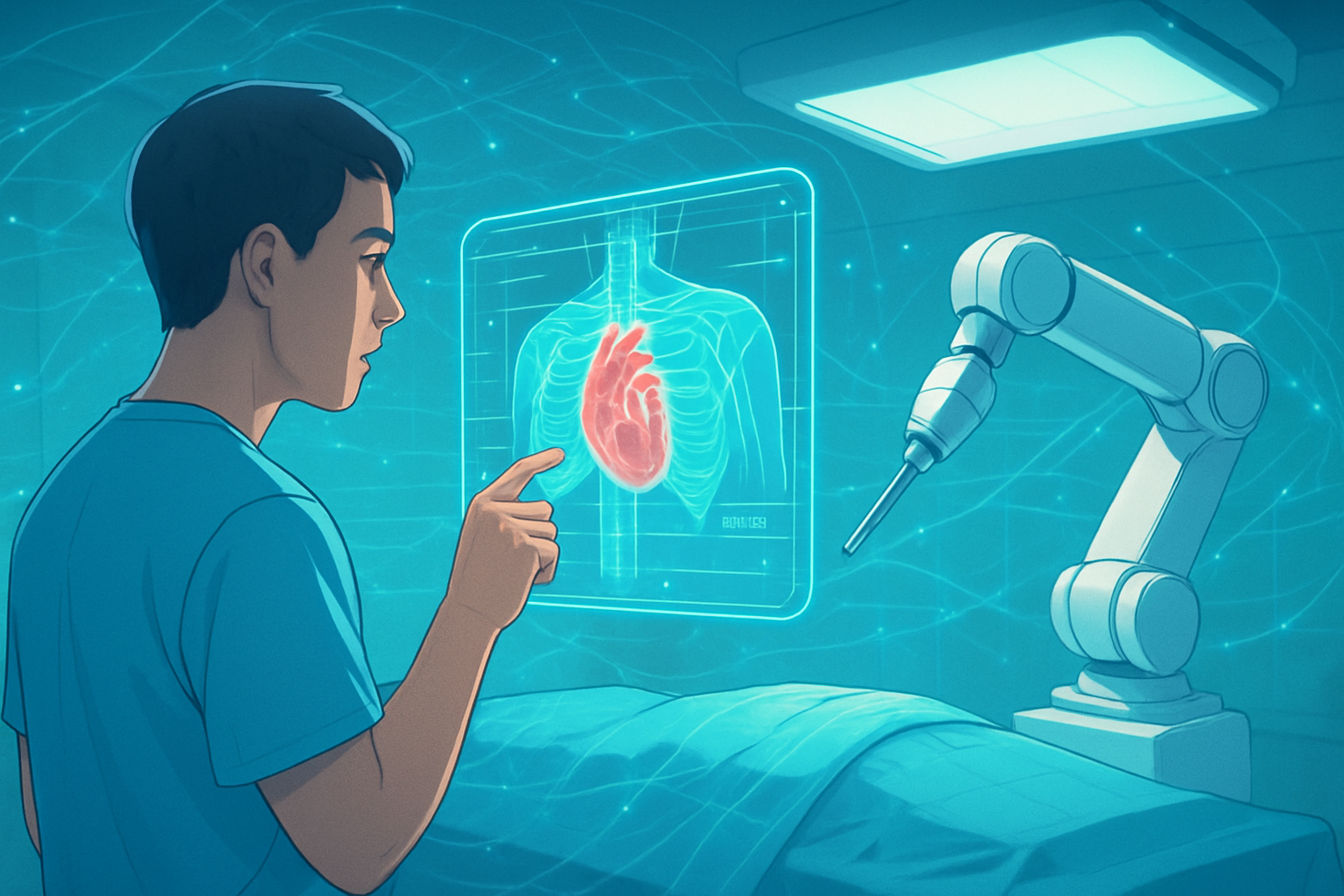
As of late 2025, Artificial Intelligence (AI) is rapidly emerging as a transformative "substitute teacher" in medical education, fundamentally reshaping how aspiring surgeons acquire and refine their skills. This groundbreaking integration of AI, particularly in coaching surgical techniques, carries immediate and profound implications for the healthcare landscape, offering a potent solution to the persistent and escalating global surgeon shortage. By providing personalized, objective, and scalable instruction, AI-powered platforms are not merely supplementing traditional training methods but are becoming indispensable tools in forging a new generation of highly proficient medical professionals.
The promise of AI in surgical training extends beyond mere efficiency; it heralds an era of standardized, accessible, and accelerated skill development. Through sophisticated simulations, real-time feedback mechanisms, and objective performance analytics, AI systems are empowering medical students to master complex procedures with unprecedented precision and speed. This paradigm shift is poised to alleviate the immense pressure on existing surgical faculty, democratize access to world-class training, and ultimately, enhance patient safety and outcomes by ensuring a more consistently skilled surgical workforce.
The Intelligent Mentor: Unpacking AI's Surgical Coaching Prowess
The evolution of AI into a sophisticated surgical coach is underpinned by remarkable advancements in machine learning, computer vision, and advanced sensor technologies, fundamentally redefining the methodologies of surgical training. As of late 2025, these intelligent systems offer more than just basic simulations; they provide real-time, personalized, and highly granular feedback, pushing the boundaries of what's possible in medical skill acquisition.
At the heart of these advancements are sophisticated AI models that enable real-time intraoperative guidance and visualization. AI systems now seamlessly integrate preoperative imaging data with cutting-edge light-field and depth-sensor technologies. This allows for the precise, real-time visualization of intricate anatomical structures, accurate tumor identification, and meticulous blood vessel mapping, both within simulated environments and increasingly in live-assisted procedures. Convolutional Neural Networks (CNNs) are pivotal here, processing and interpreting vast amounts of complex visual data from various imaging modalities (MRI, CT scans) and intraoperative feeds, often overlaying segmented 3D images onto a surgeon's view using augmented reality (AR). This level of visual fidelity and intelligent interpretation far surpasses previous static models or human-only observational feedback.
Furthermore, autonomous robotic assistance and instrument guidance are becoming increasingly refined. While human surgeons maintain ultimate oversight, AI-powered robotic systems can perform autonomous tasks and offer unparalleled precision in instrument control. Machine learning algorithms, meticulously trained on extensive datasets of expert surgical movements and their outcomes, enable these robots to predict tissue motion and guide instrument paths, such as the precise placement of sutures. Robotic instruments are now equipped with miniature, high-quality internal sensors that provide haptic (force) feedback, allowing surgeons to "feel" tissue resistance with unprecedented detail, a critical element often lacking in earlier robotic platforms. Companies like Intuitive Surgical (NASDAQ: ISRG) with their da Vinci 5 system, leveraging AI chips from NVIDIA (NASDAQ: NVDA), are showcasing a dramatic increase in processing power—reportedly 10,000 times more than prior generations—enabling these real-time AI/ML capabilities.
The core of AI's coaching ability lies in its intelligent performance assessment and feedback mechanisms. AI software continuously scans live video feeds of surgical exercises, employing single-pass object detection computer vision models like YOLO (You Only Look Once) to identify specific surgical maneuvers. It then assesses performance metrics, pinpoints errors, and delivers immediate, personalized feedback through visual and auditory cues. Long Short-Term Memory (LSTM) based neural networks are instrumental in assessing manual performance at extremely short intervals (e.2-second intervals) during simulations, offering detailed coaching and risk assessments for critical metrics. This contrasts sharply with traditional methods, which rely on infrequent, subjective human observation, and older AI systems that could only track predefined movements without deep analytical interpretation. Modern AI also integrates predictive analytics, continuously learning and refining techniques based on accumulated data from countless procedures, moving towards "predictive surgery."
Initial reactions from the AI research community and industry experts are largely enthusiastic, though tempered with a healthy dose of caution. There's a consensus that AI will become an integral "augmenter" or "co-pilot" for surgeons, enhancing capabilities and improving training, rather than replacing human expertise. Reports highlight measurable benefits, including reduced operative times and a decrease in intraoperative complications by up to 30%. However, concerns about "de-skilling" if trainees become overly reliant on AI, along with significant ethical and regulatory challenges—particularly regarding accountability for AI-induced errors and ensuring transparency and bias mitigation in algorithms—remain paramount. The scarcity of high-quality, real-world surgical data for training these complex models also poses a practical hurdle, underscoring the ongoing need for robust human-AI collaboration for optimal outcomes.
AI's Economic Impact: Shaking Up the Med-Tech Landscape
The integration of AI into surgical coaching is not just a pedagogical shift; it's a seismic event reverberating across the med-tech landscape, profoundly reshaping the competitive dynamics for AI companies, tech giants, and nimble startups alike. As of late 2025, this technological evolution promises not only enhanced surgical precision and training methodologies but also significant shifts in market positioning and product development strategies.
AI companies, particularly those specializing in machine learning, computer vision, and Explainable AI (XAI), are experiencing an unprecedented surge in demand and innovation. Their core technologies, crucial for analyzing surgical videos, tracking intricate hand movements, and delivering real-time, personalized feedback, are becoming indispensable. Firms like Caresyntax, Activ Surgical, Asensus Surgical (NYSE: ASXC), and Brainlab AG are deeply entrenched in this burgeoning market, with companies such as Theator specializing in converting operating room (OR) video into actionable surgical intelligence for training and quality improvement. The imperative for XAI, which can not only identify errors but also elucidate why they occurred, is driving significant R&D, making explainability a key differentiator for these specialized AI solution providers.
Tech giants, with their vast R&D capabilities, robust cloud infrastructures, and established healthcare divisions, are strategically positioning themselves to dominate the broader surgical AI market, including coaching. Intuitive Surgical (NASDAQ: ISRG), with its ubiquitous da Vinci system and a database of over 10 million surgical procedures, holds a significant "competitive moat" for developing and refining AI algorithms that enhance precision and provide real-time insights. Similarly, Medtronic (NYSE: MDT), with its Hugo RAS platform and Touch Surgery™ ecosystem, and Johnson & Johnson (NYSE: JNJ), with its MONARCH® Platform and OTTAVA™ System, are heavily investing in integrating AI into their robotic surgery platforms. Beyond robotics, infrastructure providers like NVIDIA (NASDAQ: NVDA) are becoming crucial partners, supplying the high-performance computing necessary for training complex AI models and powering surgical robots, thereby enabling enhanced response speed and control accuracy.
For startups, the AI surgical coaching space presents a dual landscape of immense opportunity and formidable challenges. Niche innovators can thrive by focusing on specialized areas, such as highly specific simulation platforms, advanced AR/VR-enhanced training tools, or AI tailored for particular surgical sub-specialties. Companies like SS Innovations and Aether Biomedical are examples of those developing AI-enhanced robotic surgery systems, often with a focus on more cost-effective or portable solutions that can democratize access to advanced training. While digital health funding in mid-2025 shows AI-powered startups attracting significant investment, surgical AI specifically is still maturing in terms of investor funding, as the development cycles are longer and regulatory hurdles higher. However, the agility of startups to rapidly integrate cutting-edge AI advancements, such as generative AI, could allow them to outmaneuver larger, more bureaucratic organizations in specialized niches.
The competitive landscape is increasingly defined by data access, with companies possessing vast, high-quality surgical data (like Intuitive Surgical) holding a formidable advantage. The complexity and capital intensity of surgical AI also favor partnerships, with tech giants collaborating with specialized AI firms or medtech companies bundling hardware with advanced AI software. Regulatory hurdles, demanding rigorous validation and transparent algorithms, create significant barriers to entry, often favoring established players. This intense environment is disrupting traditional surgical training models, replacing manual analytics with AI-driven precision, and pushing older robotic systems towards obsolescence in favor of intelligent, adaptive platforms. Companies are strategically positioning themselves as integrated solution providers, specialized AI platforms, or training and simulation experts, all while emphasizing AI as an augmentation tool for surgeons rather than a replacement, to build trust and ensure adoption.
Beyond the Operating Room: AI's Broader Societal and Ethical Implications
The emergence of AI as a surgical coach in late 2025 transcends a mere technological upgrade; it signifies a pivotal moment in the broader AI landscape, deeply aligning with trends in personalized learning, advanced simulation, and real-time decision support within healthcare. This advancement promises profound impacts on surgical proficiency, patient outcomes, and healthcare accessibility, while simultaneously demanding careful consideration of critical ethical and societal concerns.
This specialized application of AI fits seamlessly into the overarching trend of personalized and adaptive learning. Unlike traditional, standardized curricula, AI surgical coaches leverage individual performance data to craft tailored learning paths and deliver real-time feedback, adapting to a trainee's unique progress and refining specific skills. This mirrors the broader push for individualized education across various domains. Furthermore, AI's role in creating highly realistic and complex simulation and virtual reality (VR) environments is paramount. These AI-powered platforms, including sophisticated robotic simulators, allow surgeons-in-training to practice intricate procedures in a controlled, risk-free setting, complete with tactile feedback and guidance on technique, speed, and decision-making. This level of immersive, interactive training represents a significant evolution from earlier, less dynamic simulation tools.
The impact of AI surgical coaching is multifaceted. Most notably, it promises improved surgical skills and patient outcomes by enabling repetitive, risk-free practice and providing objective, real-time, and personalized feedback. This accelerates the learning curve, reduces errors, and ultimately enhances patient safety. Critically, it offers a scalable solution to the escalating surgeon shortage, standardizing education across institutions and democratizing access to high-quality training. AI also brings enhanced efficiency to medical education, freeing up experienced surgeons from routine instructional duties for more complex, context-dependent mentorship. This shift also ushers in standardization and objective assessment, moving beyond subjective evaluations to ensure a consistent level of competency among surgeons globally.
However, the widespread adoption of AI surgical coaching is not without its challenges and ethical quandaries. Data privacy and security are paramount concerns, given the reliance on vast amounts of sensitive patient data and performance metrics. The potential for algorithmic bias and fairness also looms large; if AI models are trained on datasets reflecting historical disparities, they could inadvertently perpetuate or even amplify these biases, leading to unequal training or assessment outcomes. A significant ethical dilemma revolves around accountability and liability when errors occur in AI-assisted training or procedures, raising questions about the responsibility of the AI developer, the surgeon, or the institution. Furthermore, there is a risk of over-reliance and deskilling among trainees who might become overly dependent on AI guidance, potentially diminishing their ability to perform independently or adapt to unforeseen complications. Maintaining the invaluable human interaction, mentorship, and empathy crucial for a surgeon's holistic development remains a delicate balance.
Comparing AI surgical coaching to previous AI milestones in medicine reveals a clear progression. Earlier AI applications often focused on passive diagnostics, such as interpreting medical images or flagging early disease markers. Surgical coaching, however, propels AI into a more active, real-time, and interactive role in skill development and procedural guidance. This represents a qualitative leap from earlier robotic systems that performed predefined motions to current AI that offers real-time feedback and adaptive learning. The influence of recent breakthroughs in generative AI and Large Language Models (LLMs), which gained prominence around 2022-2023, is also evident, allowing for more nuanced feedback, complex scenario generation, and even the creation of bespoke patient case scenarios for practice—capabilities far beyond earlier AI forms. This evolution underscores a shift from AI as a mere analytical tool to an intelligent, collaborative "coach" that actively augments human abilities and works as a helper in critical skill acquisition.
The Horizon of Surgical AI: What Comes Next?
The trajectory of AI as a surgical coach is one of rapid acceleration, with both near-term and long-term developments poised to further revolutionize medical education and clinical practice. As of late 2025, the immediate future will see AI systems becoming even more sophisticated in delivering personalized, data-driven feedback and creating highly immersive training environments.
In the near term (late 2025-2026), expect to see the widespread adoption of personalized and real-time feedback systems, such as those developed at Johns Hopkins University, which offer granular advice on complex tasks like suturing, pinpointing deviations from expert technique. Enhanced simulation-based training with XR (Extended Reality) will become standard, with AI generating dynamic, patient-specific anatomical models within VR and AR platforms, offering unparalleled realism for surgical rehearsal. Advanced video-based assessment will continue to evolve, with AI and computer vision objectively analyzing surgical videos to annotate critical moments, identify procedural steps, and compare individual performance against benchmarks. Furthermore, predictive analytics for skill development will allow AI to forecast a trainee's progression, optimizing curricula and identifying those needing additional support. By 2026, ambient AI or "digital scribes" are expected to be seamlessly integrated into operating rooms, automating clinical documentation and significantly reducing administrative burdens on surgeons. Crucially, AI is anticipated to provide real-time intraoperative decision support, processing live imaging data to identify vital structures and even predicting the next 15-30 seconds of an operation, allowing surgeons to proactively prevent complications.
Looking further ahead, the long-term vision for AI in surgery is even more transformative. By 2030, some experts predict the advent of fully autonomous surgical units for routine operations, fundamentally shifting the surgeon's role from manual execution to supervision and management of AI-driven systems. This will be coupled with the development of self-learning robotic systems that continuously refine their skills based on vast amounts of surgical data. The concept of AI-powered surgical metaverses is also gaining traction, blending AI with XR to provide hyper-realistic hands-on training and real-time 3D guidance for complex procedures. Deeper integration with electronic medical records (EMRs) will see AI serving as sophisticated clinician assist tools for image guidance and preoperative planning. Emerging technologies like quantum computing are expected to accelerate complex surgical planning, while personalized digital avatars will simulate procedures with patient-specific precision.
The potential applications and use cases are extensive, ranging from objective skill assessment and personalized training curricula to preoperative planning, intraoperative guidance, and remote training. AI's ability to provide customized learning pathways and facilitate self-directed learning, especially for complex procedures like laparoscopic and robotic surgery, will be critical in addressing the global surgeon shortage and enhancing patient safety by reducing errors.
However, significant challenges remain. The scarcity of high-quality, standardized surgical data for training AI systems is a primary hurdle. Ethical considerations surrounding data privacy, algorithmic bias, and accountability for AI-assisted decisions demand robust frameworks. Resistance to adoption from experienced surgeons and traditional educational institutions, coupled with high implementation costs, could impede widespread integration. The "black box" problem of some complex AI algorithms also raises concerns about transparency and trust. Experts emphasize that while AI offers immense benefits, it must be effectively combined with human mentorship, as studies suggest personalized expert instruction informed by AI data is more effective than AI feedback alone. The nuanced aspects of surgery, such as complex decision-making, patient communication, and adaptability to unpredictable intraoperative events, are still difficult for AI to fully replicate.
Despite these challenges, experts predict a pivotal period for AI in healthcare, with 2025 marking a significant acceleration in its traction. AI will increasingly serve as a "decision augmentation" tool, enhancing human capabilities and providing context-sensitive solutions. Mathias Unberath, an expert in AI-assisted medicine, highlights AI's crucial role in alleviating the surgeon shortage. The role of surgeons will evolve, becoming more akin to "pilots" supervising highly reliable autonomous systems. By 2030, some predictions suggest over 50% of all surgeries will involve AI assistance, underscoring the growing importance of AI literacy for medical professionals who must adapt to understand, engage with, and optimally interpret these AI-driven tools.
The Future is Now: AI's Indelible Mark on Surgical Excellence
The advent of AI as a 'substitute teacher' for medical students in surgical training marks a profound and irreversible shift in medical education and healthcare delivery. We are witnessing a pivotal moment where intelligent systems are not just assisting but actively coaching, guiding, and refining the skills of future surgeons. The key takeaways from this revolution are clear: AI offers unprecedented personalization, objective assessment, and scalability in surgical training, directly addressing the critical global surgeon shortage and promising a future of enhanced patient safety and outcomes.
This development stands as one of the most significant AI milestones in healthcare, moving beyond diagnostic support to active, real-time skill development and procedural guidance. It represents a paradigm shift from traditional apprenticeship models, which are often limited by human resources and subjective feedback, towards a data-driven, highly efficient, and standardized approach to surgical mastery. The long-term impact is poised to reshape surgical roles, curriculum design, and ultimately, the very definition of surgical excellence.
In the coming weeks and months, we should watch for continued advancements in explainable AI, enabling even clearer feedback and understanding of AI's decision-making. The development of more sophisticated haptic feedback systems, further blurring the lines between virtual and physical surgical experiences, will also be crucial. Furthermore, expect intensified discussions and efforts around establishing robust ethical frameworks and regulatory guidelines to ensure responsible AI deployment, safeguard data privacy, and address accountability in AI-assisted procedures. The synergy between human expertise and AI's analytical prowess will define the next era of surgical training, promising a future where cutting-edge technology empowers surgeons to achieve unprecedented levels of precision and care.
This content is intended for informational purposes only and represents analysis of current AI developments.
TokenRing AI delivers enterprise-grade solutions for multi-agent AI workflow orchestration, AI-powered development tools, and seamless remote collaboration platforms.
For more information, visit https://www.tokenring.ai/.