Tag: Medical Research

  • AI Unleashes a New Era in Medicine: Revolutionizing Heart Attack Prediction and Cancer Therapy

    AI Unleashes a New Era in Medicine: Revolutionizing Heart Attack Prediction and Cancer Therapy

    Artificial intelligence is rapidly ushering in a transformative era for medical research and treatment, offering unprecedented capabilities to tackle some of humanity's most formidable health challenges. Recent breakthroughs, particularly in the analysis of vast heart attack datasets and the discovery of novel cancer therapy pathways using advanced AI models like Google's Gemma, underscore a profound shift in how we understand, diagnose, and combat critical diseases. This technological leap promises not only to accelerate the pace of medical discovery but also to usher in an age of highly personalized and proactive healthcare, fundamentally reshaping patient outcomes and the global healthcare landscape.

    The Algorithmic Scalpel: Precision and Prediction in Medical Science

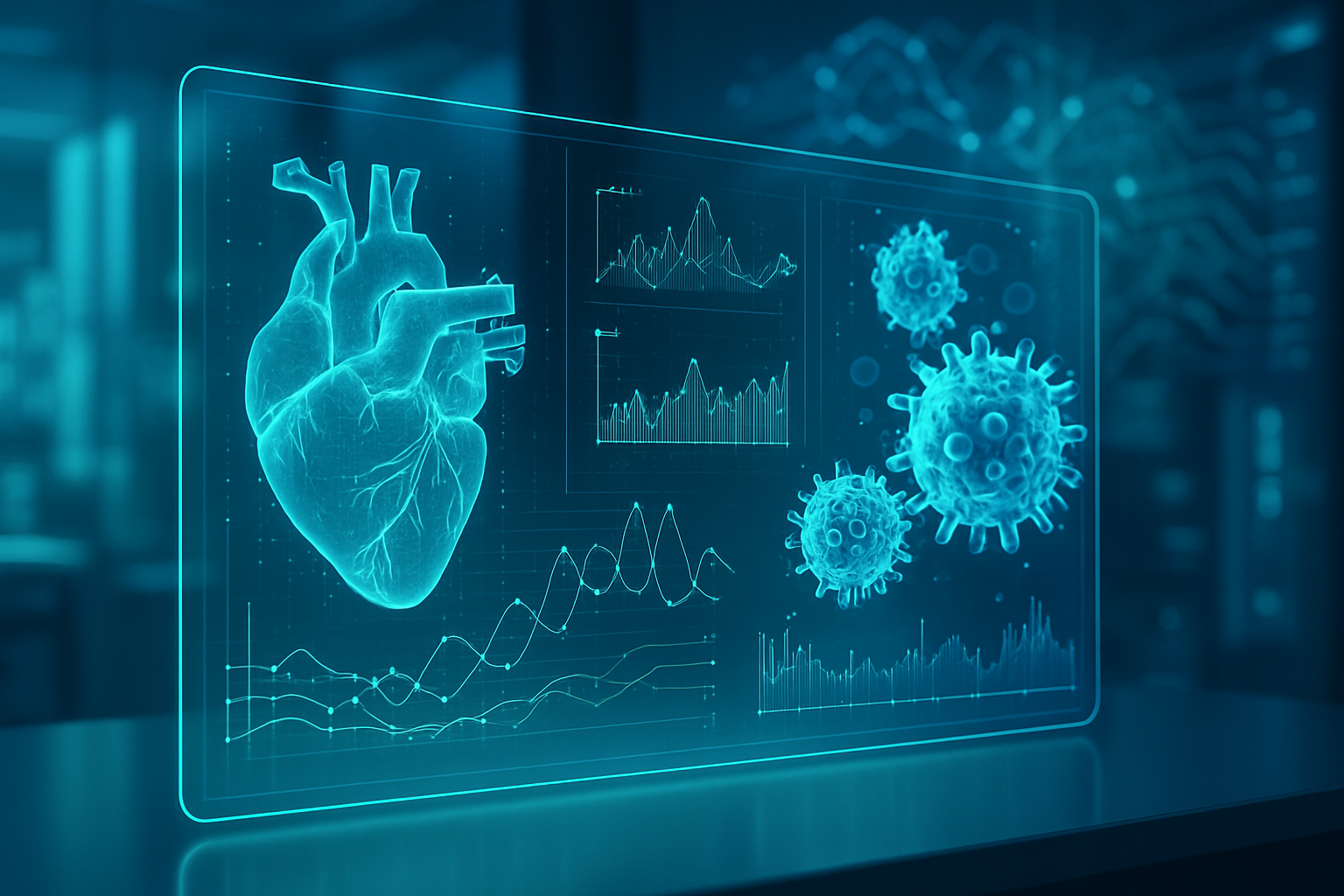
    The latest advancements in AI are providing medical professionals with tools of extraordinary precision, far surpassing traditional analytical methods. In cardiovascular health, AI is revolutionizing heart attack prevention and diagnosis. Recent studies demonstrate AI's ability to analyze routine cardiac CT scans, identifying subtle signs of inflammation and scarring in perivascular fatty tissue—indicators invisible to the human eye—to predict a patient's 10-year risk of a fatal heart attack, even in cases where traditional diagnostics show no significant arterial narrowing. This marks a significant departure from previous risk assessment models, which often relied on more overt symptoms or established risk factors, potentially missing early, critical warning signs. An AI tool in its initial real-world trial improved treatment for up to 45% of patients and is projected to lead to over 20% fewer heart attacks if widely adopted. Furthermore, AI models trained on electrocardiogram (ECG) data have shown diagnostic capabilities for blocked coronary arteries on par with troponin T testing, and in some cases, superior to expert clinicians, significantly reducing diagnosis and treatment times for acute myocardial infarction patients. This capability is a game-changer for conditions like non-ST elevation myocardial infarction (NSTEMI), which are notoriously difficult to diagnose quickly.

    In the realm of oncology, Google (NASDAQ: GOOGL) DeepMind's collaboration with Yale University has leveraged its Cell2Sentence-Scale 27B (C2S-Scale) foundation model, built on the Gemma framework, to achieve a monumental breakthrough. This AI, trained on over a billion single-cell profiles, effectively "understands" the "language" of individual cells. It successfully generated and validated a novel hypothesis: the drug silmitasertib can significantly boost antigen presentation in cancer cells. This discovery effectively makes "cold" tumors—those that typically evade immune detection—more visible to the immune system, opening a promising new pathway for advanced cancer immunotherapies. This AI-driven hypothesis generation, followed by experimental validation in living human cells, represents a paradigm shift from traditional, often laborious, and serendipitous drug discovery processes. The initial reactions from the AI research community and oncologists have been overwhelmingly positive, highlighting the potential for AI to not only optimize existing therapies but to uncover entirely new biological mechanisms and therapeutic strategies at an unprecedented speed. These advancements represent a qualitative leap from earlier AI applications in medicine, which were often limited to image recognition or data classification, showcasing a new era of AI as a true scientific co-pilot capable of complex hypothesis generation and validation.

    Reshaping the AI and Biotech Landscape: Corporate Implications

    These groundbreaking AI developments are poised to profoundly reshape the competitive dynamics within the AI, biotech, and pharmaceutical sectors. Tech giants like Google (NASDAQ: GOOGL), with its DeepMind division and open-source MedGemma models, stand to benefit immensely. Their investment in foundational AI models capable of understanding complex biological data positions them as key enablers and direct contributors to medical breakthroughs. The MedGemma collection, built on the Gemma 3 architecture, offers open-source AI models specifically designed for health AI development, empowering a vast ecosystem of developers and startups. This strategy not only enhances Google's market positioning in healthcare AI but also fosters innovation across the industry by providing accessible, powerful tools for medical text and image comprehension, clinical decision support, and patient triaging.

    Pharmaceutical companies and biotech startups are also set to experience significant disruption and opportunity. Companies that swiftly integrate AI into their drug discovery pipelines, clinical trial optimization, and precision medicine initiatives will gain a substantial competitive advantage. AI's ability to accelerate drug development, reduce costs, and identify novel therapeutic targets could dramatically shorten time-to-market for new drugs, potentially disrupting the traditional, lengthy, and expensive R&D cycles. Startups specializing in AI-driven diagnostics, personalized treatment platforms, and AI-powered drug discovery engines are likely to attract significant investment and partnerships. This shift could lead to a consolidation of expertise around AI-first approaches, challenging companies that rely solely on conventional research methodologies. Furthermore, the development of personalized therapies, as enabled by AI, could create entirely new market segments, fostering intense competition to deliver highly tailored medical solutions that were previously unimaginable.

    Broader Implications: A New Dawn for Human Health

    The wider significance of AI's burgeoning role in medical research and treatment cannot be overstated. These breakthroughs fit perfectly into the broader AI landscape, which is increasingly moving towards specialized, domain-specific models capable of complex reasoning and hypothesis generation, rather than just data processing. This trend signifies a maturation of AI, transitioning from general-purpose intelligence to highly impactful, targeted applications. The impacts are far-reaching: a future where diseases are detected earlier, treatments are more effective and personalized, and life-saving breakthroughs occur at an accelerated pace. This could lead to a significant reduction in mortality rates for leading causes of death like heart disease and cancer, improving global public health and extending human lifespans.

    However, these advancements also bring potential concerns. Ethical considerations around data privacy, algorithmic bias in diagnostic tools, and the equitable distribution of these advanced treatments will need careful navigation. Ensuring that AI models are trained on diverse datasets to avoid perpetuating health disparities is paramount. The regulatory frameworks for AI-driven medical devices and therapies will also need to evolve rapidly to keep pace with innovation. Comparing this to previous AI milestones, such as AlphaFold's protein folding predictions, these latest developments underscore AI's growing capacity to not just analyze but discover fundamental biological truths and therapeutic pathways, moving beyond optimization to true scientific generation. This represents a significant step towards AI acting as a true scientific partner, not just a tool.

    The Horizon of Health: Anticipating Future AI-Driven Medical Marvels

    Looking ahead, the near-term and long-term developments in AI-driven medicine are nothing short of revolutionary. In the near term, we can expect to see wider adoption of AI for early disease detection, particularly in cardiology and oncology, leading to more proactive healthcare. AI-powered diagnostic tools will become more integrated into clinical workflows, assisting radiologists and pathologists in identifying subtle anomalies with greater accuracy and speed. We will also likely see the first wave of AI-discovered or optimized drugs entering advanced clinical trials, especially in areas like immunotherapy and rare diseases, where traditional research has struggled. The open-source nature of models like MedGemma will accelerate this by fostering a collaborative environment for medical AI development.

    In the long term, experts predict a future where AI acts as a continuous learning system within healthcare, constantly analyzing real-world patient data, refining diagnostic models, and proposing new treatment strategies tailored to individual genetic, environmental, and lifestyle factors. Potential applications on the horizon include AI-designed personalized vaccines, highly precise robotic surgery guided by real-time AI analysis, and AI systems capable of predicting disease outbreaks and managing public health responses. Challenges that need to be addressed include establishing robust validation frameworks for AI-generated hypotheses, developing explainable AI models to build trust among clinicians, and creating global data-sharing protocols that respect patient privacy while enabling collaborative research. Experts predict that AI will not replace human doctors but will augment their capabilities, transforming them into "super-clinicians" armed with unparalleled insights and predictive power, leading to a profound redefinition of medical practice.

    A New Chapter in Human Health: The AI Imperative

    In summary, the recent breakthroughs in AI, particularly in heart attack data analysis and cancer therapy discovery with models like Google's Gemma, mark a pivotal moment in the history of medicine. These advancements signify AI's evolution from a data processing tool to a powerful engine of scientific discovery and personalized care. The ability of AI to uncover hidden patterns in vast datasets, generate novel hypotheses, and accelerate drug development is fundamentally altering the landscape of medical research and treatment. It promises a future where diseases are detected earlier, therapies are more effective and tailored to the individual, and the overall burden of chronic illness is significantly reduced.

    The significance of these developments in AI history is comparable to the advent of antibiotics or genetic sequencing, heralding a new chapter in human health. What to watch for in the coming weeks and months includes the further integration of AI tools into clinical practice, the announcement of new AI-driven drug candidates entering clinical trials, and the ongoing dialogue around the ethical and regulatory frameworks required to govern this rapidly advancing field. The journey has just begun, but AI is undeniably poised to be the most transformative force in medicine for generations to come.


    This content is intended for informational purposes only and represents analysis of current AI developments.

    TokenRing AI delivers enterprise-grade solutions for multi-agent AI workflow orchestration, AI-powered development tools, and seamless remote collaboration platforms.
    For more information, visit https://www.tokenring.ai/.
  • HHS Unleashes AI Power: Doubling Childhood Cancer Research Funds to Accelerate Cures

    HHS Unleashes AI Power: Doubling Childhood Cancer Research Funds to Accelerate Cures

    Washington D.C. – October 2, 2025 – In a landmark move poised to revolutionize the fight against pediatric cancer, the Department of Health and Human Services (HHS) has announced a dramatic increase in funding for childhood cancer research, specifically targeting projects that leverage the transformative power of artificial intelligence. Effective September 30, 2025, the National Institutes of Health's (NIH) Childhood Cancer Data Initiative (CCDI) will see its budget doubled from $50 million to an unprecedented $100 million, signaling a robust federal commitment to harnessing AI for life-saving breakthroughs.

    This significant financial injection arrives on the heels of a presidential executive order, "Unlocking Cures for Pediatric Cancer with Artificial Intelligence," which underscores a strategic national imperative to integrate cutting-edge AI technologies into every facet of pediatric oncology. The immediate significance of this announcement is profound, offering renewed hope to countless families battling this devastating disease. Pediatric cancer remains the leading cause of disease-related death among children in the United States, with incidence rates having climbed by over 40% since 1975. This substantial investment is a direct response to the urgent need for more effective diagnostics, smarter clinical trial designs, and highly personalized treatments, marking a pivotal moment in medical research and AI's role within it.

    AI at the Forefront: A New Era in Pediatric Oncology Research

    The core of HHS's expanded initiative is to strategically deploy AI across a multi-faceted approach to combat childhood cancer. A primary focus is on advanced data integration and analysis, where AI will be instrumental in linking and scrutinizing vast quantities of electronic health records (EHR) and claims data. This unprecedented aggregation and analysis of patient information are expected to provide critical insights, informing research directions and enabling the design of more effective, targeted clinical trials. Furthermore, the initiative is actively seeking to forge robust private-sector partnerships with leading AI firms, aiming to bolster discovery pipelines, enhance clinical research, and refine trial methodologies, thereby cultivating a collaborative ecosystem for rapid innovation.

    Beyond data management, AI is slated to play a crucial role in enhancing diagnostic capabilities and developing proactive prevention strategies. By leveraging AI algorithms, researchers anticipate earlier and more precise identification of cancer risks, aligning with recommendations from the Make American Healthy Again (MAHA) Commission Strategy Report. A significant technical leap involves strengthening data interoperability, where AI will ensure that researchers can learn from every patient encounter while rigorously upholding patient privacy and family control over health information. This is a critical departure from previous, more siloed data approaches, promising a holistic view of patient journeys.

    Perhaps one of the most ambitious technical components involves the construction of a comprehensive database of genetic information from pediatric cancer patients. AI tools will then be unleashed upon this massive dataset to identify intricate patterns, predict disease progression with greater accuracy, and ultimately facilitate the development of highly personalized treatments tailored to an individual child's genetic makeup. Federal agencies are also directed to utilize AI to refine clinical trial designs, enhance predictive modeling capabilities for treatment responses, and analyze complex biological systems, thereby dramatically accelerating the pace of scientific discovery in a field where every moment counts. This shift represents a move from simply collecting data to actively deriving actionable insights and predictive power through AI, promising answers that were previously out of reach.

    Reshaping the AI Landscape: Opportunities and Disruptions

    The HHS's doubled funding for AI-driven childhood cancer research is set to create significant ripples across the artificial intelligence industry, presenting both immense opportunities and potential disruptions. AI companies specializing in healthcare data analytics, machine learning for genomics, medical imaging, and clinical trial optimization stand to benefit tremendously. Startups focused on precision medicine, predictive diagnostics, and drug discovery platforms, particularly those leveraging deep learning and natural language processing (NLP) for medical text analysis, will likely see a surge in demand for their technologies and expertise. This initiative could also spark a new wave of venture capital investment into these specialized AI domains.

    Major tech giants with established AI research divisions, such as Alphabet (NASDAQ: GOOGL)'s DeepMind, Microsoft (NASDAQ: MSFT)'s AI for Health, and IBM (NYSE: IBM)'s Watson Health (or its successors), are strategically positioned to secure substantial grants and partnerships. Their existing infrastructure, computational power, and extensive talent pools make them ideal candidates for large-scale data integration, complex genomic analysis, and the development of advanced AI models. This federal push could intensify the competitive landscape among these companies, driving them to further innovate in healthcare AI and potentially re-align their research priorities towards pediatric oncology.

    The potential disruption extends to traditional pharmaceutical and biotech companies, which may find themselves increasingly reliant on AI partnerships for accelerated drug discovery and clinical development. Companies that fail to integrate advanced AI capabilities into their research pipelines risk falling behind. This initiative could also spur the development of new AI-powered diagnostic tools and therapeutic platforms, potentially disrupting existing markets for conventional diagnostic tests and treatment modalities. Furthermore, the emphasis on data interoperability and privacy could set new industry standards, influencing how AI companies handle sensitive medical data and fostering a more ethical and secure AI development environment in healthcare.

    Broader Implications: AI's Expanding Role in Public Health

    This substantial investment in AI for childhood cancer research fits squarely within the broader trend of artificial intelligence becoming an indispensable tool across the healthcare landscape. It signifies a critical pivot point, moving beyond theoretical applications to concrete, federally backed initiatives aimed at solving one of humanity's most pressing health crises. The initiative underscores AI's growing recognition as a force multiplier in scientific discovery, capable of processing and interpreting data at scales and speeds impossible for human researchers alone. It reinforces the idea that AI is not just for efficiency or entertainment, but a vital component in the quest for medical breakthroughs.

    The impacts of this development are multifaceted. Beyond the direct benefits to pediatric cancer patients, the methodologies and AI models developed under this initiative could serve as blueprints for tackling other rare diseases and complex medical conditions. It fosters a culture of data-driven medicine, pushing for greater interoperability and standardization of health data, which will have cascading positive effects across the entire healthcare system. However, potential concerns also arise, particularly regarding data privacy, algorithmic bias, and the ethical deployment of AI in sensitive medical contexts. Ensuring equitable access to these AI-driven advancements and preventing potential disparities in care will be paramount.

    Comparisons to previous AI milestones, such as AI's success in image recognition or natural language processing, highlight a maturation of the technology. Here, AI is not merely performing a task but actively assisting in hypothesis generation, biomarker identification, and personalized treatment planning—functions that were once solely the domain of human experts. This initiative represents a significant stride towards AI's role as a true collaborative partner in scientific endeavor, echoing the promise of precision medicine and ushering in an era where AI is a central pillar in public health strategies, moving from a niche tool to an integral part of the national health infrastructure.

    The Horizon: Anticipating AI's Next Breakthroughs in Cancer Care

    Looking ahead, the doubling of funding for AI in childhood cancer research promises a rapid acceleration of developments in the near and long term. In the immediate future, we can expect to see a surge in grant applications and partnerships, leading to the rapid development of advanced AI models for predictive diagnostics, particularly for early detection of high-risk cases. There will likely be an increased focus on AI-driven drug repurposing, where existing medications are screened for efficacy against pediatric cancers using sophisticated algorithms, potentially shortening the drug development timeline. The establishment of the comprehensive genetic database, coupled with AI analysis, will also quickly yield new insights into the molecular underpinnings of various childhood cancers.

    On the longer horizon, the potential applications and use cases are even more transformative. Experts predict AI will enable truly personalized treatment regimens that adapt in real-time based on a patient's response and evolving genomic profile, moving beyond static treatment protocols. We could see AI-powered virtual clinical trials, significantly reducing the cost and time associated with traditional trials. Furthermore, AI will likely enhance the development of novel immunotherapies and gene therapies, identifying optimal targets and predicting patient responses with unprecedented accuracy. The integration of AI with wearable sensors and continuous monitoring could also lead to proactive intervention and improved quality of life for young patients.

    However, significant challenges remain. Addressing the ethical implications of AI in healthcare, particularly concerning data ownership, consent, and algorithmic transparency, will be crucial. Overcoming data fragmentation across different healthcare systems and ensuring the generalizability of AI models across diverse patient populations will also require sustained effort. Experts predict that the next wave of innovation will involve not just more powerful AI, but more interpretable AI, where the rationale behind diagnostic or treatment recommendations can be clearly understood by clinicians and families. The focus will also shift towards robust, secure, and privacy-preserving AI systems to build trust and facilitate widespread adoption.

    A New Chapter in the Fight Against Childhood Cancer

    The Department of Health and Human Services' decision to double its funding for AI-based childhood cancer research marks an indelible moment in both medical science and the evolution of artificial intelligence. It underscores a powerful conviction that AI is not merely a technological trend but a critical weapon in humanity's ongoing battle against disease. The key takeaways from this announcement are clear: a significant financial commitment, a presidential mandate for AI integration, and a strategic focus on leveraging advanced analytics, genomics, and private-sector collaboration to accelerate cures.

    This development holds immense significance in AI history, showcasing the technology's maturation from theoretical promise to practical, life-saving application. It sets a precedent for how federal initiatives can strategically harness emerging technologies to address urgent public health challenges, potentially inspiring similar investments in other disease areas. The long-term impact promises a future where childhood cancer diagnoses are swifter, treatments are more precise, and the journey for young patients and their families is imbued with greater hope.

    In the coming weeks and months, the tech and medical communities will be watching for the specific allocation of these new funds, the formation of key public-private partnerships, and the initial breakthroughs emerging from these AI-powered projects. The race to unlock cures for pediatric cancer has just received an unprecedented boost, powered by the boundless potential of artificial intelligence.

    This content is intended for informational purposes only and represents analysis of current AI developments.
    TokenRing AI delivers enterprise-grade solutions for multi-agent AI workflow orchestration, AI-powered development tools, and seamless remote collaboration platforms.
    For more information, visit https://www.tokenring.ai/.