Tag: MeitY

  • India’s Green Revolution: Meity Pushes Rare-Earth Magnet Recycling into PLI Scheme for Critical Mineral Security

    India’s Green Revolution: Meity Pushes Rare-Earth Magnet Recycling into PLI Scheme for Critical Mineral Security

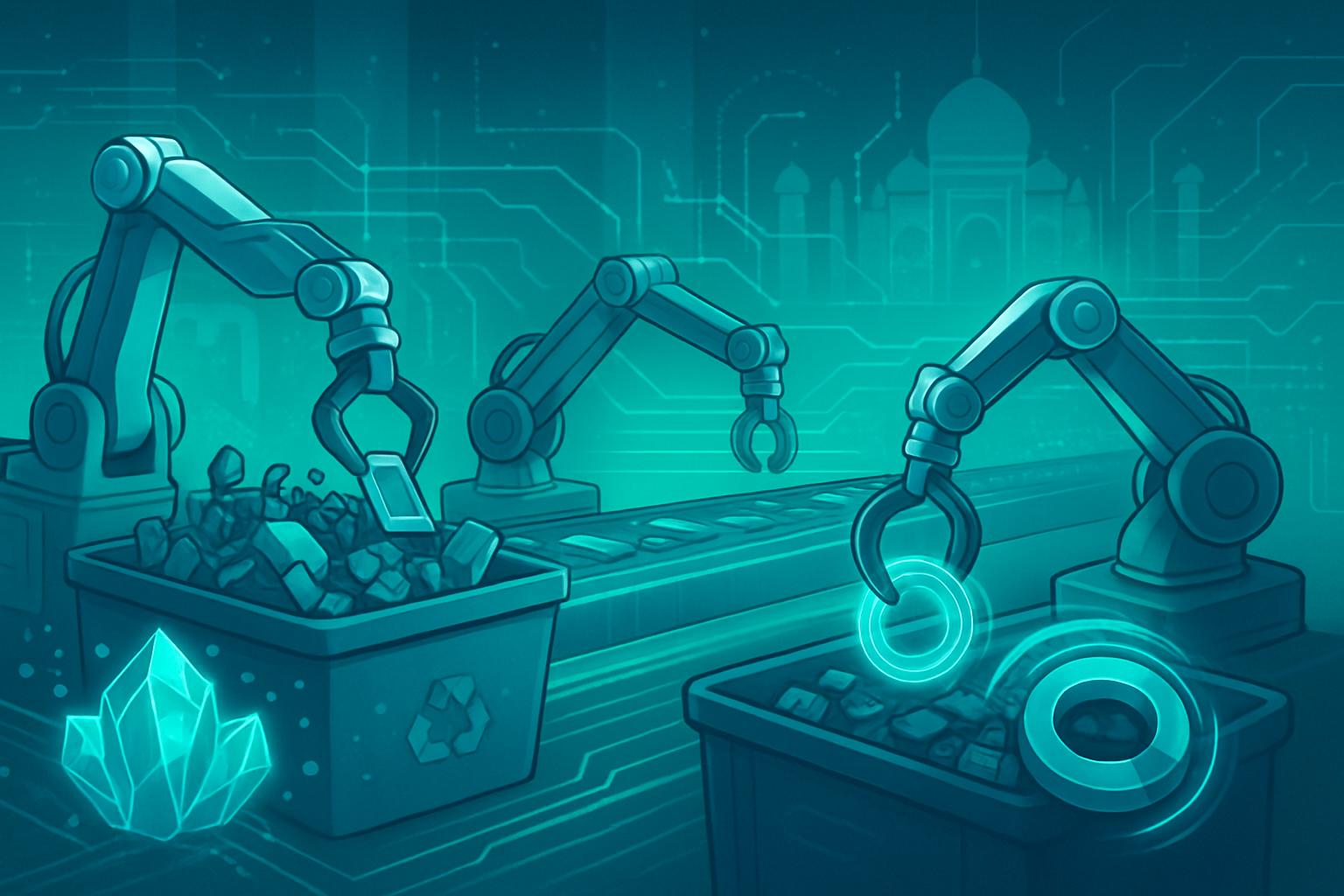
    New Delhi, India – October 21, 2025 – In a landmark move poised to redefine India's strategic materials landscape, the Ministry of Electronics and Information Technology (Meity) has formally proposed the inclusion of rare-earth magnet recycling within India's ambitious Production-Linked Incentive (PLI) scheme. This pivotal suggestion underscores India's commitment to fortifying its critical mineral supply chains, fostering a robust circular economy, and diminishing its pronounced reliance on global imports, particularly from geopolitical rivals. The initiative aims to transform India's burgeoning electronic waste (e-waste) into a strategic national asset, securing essential components for the nation's rapidly expanding electric vehicle (EV), renewable energy, and defense sectors.

    The proposal comes at a critical juncture, as global supply chain vulnerabilities, exacerbated by geopolitical tensions and concentrated production hubs, highlight the urgent need for domestic resilience in critical minerals. Rare-earth magnets, indispensable for a myriad of high-tech applications, are currently almost entirely imported by India. By incentivizing their recycling, Meity seeks to establish a sustainable, indigenous source of these vital materials, mitigating economic and strategic risks while championing environmental stewardship.

    Catalyzing Domestic Critical Mineral Autonomy through Advanced Recycling

    Meity's suggestion is rooted in a comprehensive strategy to leverage India's vast e-waste generation as an "urban mine" for rare-earth elements. The PLI scheme, a proven mechanism for boosting domestic manufacturing across various sectors, will now extend its financial incentives to companies investing in the infrastructure and technology required for rare-earth magnet recycling. This includes processes like solvent-extraction technologies and advanced plasma furnaces, such as those developed by the Bhabha Atomic Research Centre (BARC), which can efficiently extract rare-earth elements from end-of-life products.

    This approach marks a significant departure from India's traditional reliance on primary extraction and imports. Instead of solely focusing on mining virgin rare-earth ores, the emphasis shifts to secondary resource recovery – a more environmentally friendly and economically sustainable pathway. The process involves collecting discarded electronics, wind turbine components, and EV motors, then employing sophisticated metallurgical and chemical processes to separate and purify the rare-earth elements. These recovered materials can then be re-manufactured into new magnets (short-loop recycling) or reprocessed into metals or metal oxides for new magnet production (long-loop recycling). Initial reactions from the AI research community and industry experts have been overwhelmingly positive, viewing this as a pragmatic and forward-thinking step towards technological sovereignty and environmental responsibility. The India Cellular and Electronics Association (ICEA) has notably welcomed the government's proactive stance, recognizing the long-term benefits for the electronics manufacturing ecosystem.

    Reshaping the Competitive Landscape for Indian Tech and Manufacturing

    The inclusion of rare-earth magnet recycling in the PLI scheme is set to create significant opportunities and competitive shifts within India's industrial landscape. Domestic recycling companies, such as BatX Energies, Attero India, Lohum, and Recyclekaro, stand to gain substantial benefits, receiving financial incentives to scale their operations and invest in cutting-edge recycling technologies. These firms are positioned to become key players in India's emerging critical mineral supply chain.

    Furthermore, Indian magnet manufacturers like Kumar Magnet Industries, Ashvini Magnets, Dura Magnets, and Magnetic Solutions will benefit from a more stable and domestically sourced supply of rare-earth materials, reducing their vulnerability to international price fluctuations and supply disruptions. This move is also expected to positively impact major players in strategic sectors, including electric vehicle manufacturers like Mahindra & Mahindra (NSE: M&M) and Tata Motors (NSE: TATAMOTORS), as well as wind turbine manufacturers, who rely heavily on rare-earth magnets for their motors and generators. By reducing dependence on overseas suppliers, particularly from China, the scheme aims to level the playing field and foster indigenous innovation. This strategic advantage could disrupt existing import-heavy supply chains, leading to increased domestic value addition and job creation across the manufacturing and recycling sectors.

    A Cornerstone of India's Circular Economy and Geopolitical Strategy

    This initiative extends far beyond mere economic incentives; it represents a foundational pillar in India's broader strategy for a circular economy and enhanced national security. Rare-earth elements are vital for modern technologies, from the powerful magnets in electric vehicle motors and wind turbines to those in smartphones, defense systems, and medical devices. Securing a domestic source through recycling directly addresses geopolitical vulnerabilities, particularly given China's dominant position in the global rare-earth supply chain and its recent tightening of export controls.

    By promoting recycling, India is not only mitigating environmental damage associated with primary rare-earth mining but also transforming its growing e-waste problem into an economic opportunity. The scheme aligns perfectly with global trends towards sustainable resource management and critical mineral independence, positioning India as a leader in urban mining. The environmental benefits are substantial, as recycling can reduce the carbon footprint by up to 80% compared to virgin production, preventing toxic waste and conserving natural resources. This move is comparable to similar efforts by nations and blocs like the European Union and the United States, which are also striving to build resilient critical mineral supply chains and embrace circular economy principles.

    The Road Ahead: Pilot Plants, Technology Transfer, and Strategic Growth

    The immediate future will see significant progress on several fronts. Pilot plants for rare-earth magnet recycling, such as the one being developed through a collaboration between BatX Energies and Rocklink GmbH, are expected to become operational within the next year. These pilot projects will be crucial for refining recycling processes and demonstrating commercial viability. Concurrently, the government plans to facilitate the transfer of advanced permanent magnet processing technology, developed by institutions like the Non-Ferrous Materials Technology Development Centre (NFTDC) and BARC's plasma furnace technology, to private factories, accelerating the indigenous manufacturing capability.

    Looking further ahead, a dedicated PLI scheme for rare-earth permanent magnets, potentially valued between ₹3,500 crore and ₹5,000 crore, is anticipated to be formally notified. This will provide long-term impetus for both manufacturing and recycling. The broader National Critical Mineral Mission (NCMM), active from 2024–25 to 2030–31, will also play a crucial role in integrating rare-earth recycling into a holistic strategy for critical mineral security. Challenges remain, including the need to develop more cost-effective and efficient recycling technologies at scale, establish robust e-waste collection mechanisms, and ensure a consistent supply of end-of-life products. However, experts predict that with sustained government support and private sector investment, India is poised to become a significant global player in secondary rare-earth production, enhancing its economic resilience and technological self-reliance.

    A Defining Moment for India's Sustainable Industrial Future

    Meity's suggestion to integrate rare-earth magnet recycling into the PLI scheme is a strategic masterstroke, marking a defining moment in India's journey towards sustainable industrialization and critical mineral security. This initiative is a clear testament to India's foresight in addressing global supply chain vulnerabilities, promoting environmental sustainability, and fostering domestic economic growth. By transforming waste into a valuable resource, India is not only securing its future access to essential materials but also establishing itself as a leader in the global circular economy transition.

    The coming weeks and months will be crucial as the proposed PLI scheme moves through inter-ministerial reviews and formal notification. The progress of pilot projects, the rate of technology transfer to the private sector, and the level of investment from both domestic and international players will be key indicators to watch. This development represents a pivotal step in India's pursuit of 'Atmanirbhar Bharat' (self-reliant India), promising a more secure, sustainable, and technologically advanced future for the nation.


    This content is intended for informational purposes only and represents analysis of current AI developments.

    TokenRing AI delivers enterprise-grade solutions for multi-agent AI workflow orchestration, AI-powered development tools, and seamless remote collaboration platforms.
    For more information, visit https://www.tokenring.ai/.
  • India’s Electronics Manufacturing Renaissance: A Global Powerhouse in the Making

    India’s Electronics Manufacturing Renaissance: A Global Powerhouse in the Making

    India's ambition to become a global electronics manufacturing hub is rapidly transforming from vision to reality, propelled by an "overwhelming response" to government initiatives and strategic policy frameworks. At the forefront of this monumental shift is the Ministry of Electronics and Information Technology (MeitY), whose forward-thinking programs like the foundational Electronics Components and Semiconductor Manufacturing Program (SPECS) and the more recent, highly impactful Electronics Components Manufacturing Scheme (ECMS) have ignited unprecedented investment and growth. As of October 2025, the nation stands on the cusp of a manufacturing revolution, with robust domestic production significantly bolstering its economic resilience and reshaping global supply chains. The immediate significance is clear: India is not just assembling, but is now poised to design, innovate, and produce core electronic components, signaling a new era of technological self-reliance and global contribution.

    Catalyzing Growth: The Mechanics of India's Manufacturing Surge

    The genesis of India's current manufacturing prowess can be traced back to the National Policy on Electronics 2019 (NPE 2019), which laid the groundwork for schemes like the Scheme for Promotion of Manufacturing of Electronic Components and Semiconductors (SPECS). Notified on April 1, 2020, SPECS offered a crucial 25% capital expenditure incentive for manufacturing a wide array of electronic goods, including components, semiconductor/display fabrication units, and Assembly, Testing, Marking, and Packaging (ATMP) units. This scheme, which concluded on March 31, 2024, successfully attracted 49 investments totaling approximately USD 1.6 billion, establishing a vital foundation for the ecosystem.

    Building upon SPECS's success, the Electronics Components Manufacturing Scheme (ECMS), approved by the Union Cabinet in March 2025 and notified by MeitY in April 2025, represents a significant leap forward. Unlike its predecessor, ECMS adopts a more comprehensive approach, supporting the entire electronics supply chain from components and sub-assemblies to capital equipment. It also introduces hybrid incentives linked to employment generation, making it particularly attractive. The scheme's technical specifications aim to foster high-value manufacturing, enabling India to move beyond basic assembly to complex component production, including advanced materials and specialized sub-assemblies. This differs significantly from previous approaches that often prioritized finished goods assembly, marking a strategic shift towards deeper value addition and technological sophistication.

    The industry's reaction has been nothing short of extraordinary. As of October 2025, ECMS has garnered an "overwhelming response," with investment proposals under the scheme reaching an astounding ₹1.15 lakh crore (approximately USD 13 billion), nearly doubling the initial target. The projected production value from these proposals is ₹10.34 lakh crore (USD 116 billion), more than double the original goal. MeitY Secretary S Krishnan has lauded this "tremendous" interest, which includes strong participation from Micro, Small, and Medium Enterprises (MSMEs) and significant foreign investment, as a testament to growing trust in India's stable policy environment and robust growth trajectory. The first "Made-in-India" chips are anticipated to roll off production lines by late 2025, symbolizing a tangible milestone in this journey.

    Competitive Landscape: Who Benefits from India's Rise?

    India's electronics manufacturing surge, particularly through the ECMS, is poised to reshape the competitive landscape for both domestic and international players. Indian electronics manufacturing services (EMS) companies, along with component manufacturers, stand to benefit immensely from the enhanced incentives and expanded ecosystem. Companies like Dixon Technologies (NSE: DIXON) and Amber Enterprises India (NSE: AMBER) are likely to see increased opportunities as the domestic supply chain strengthens. The influx of investment and the focus on indigenous component manufacturing will also foster a new generation of Indian startups specializing in niche electronic components, design, and advanced materials.

    Globally, this development offers a strategic advantage to multinational corporations looking to diversify their manufacturing bases beyond traditional hubs. The "China + 1" strategy, adopted by many international tech giants seeking supply chain resilience, finds a compelling destination in India. Companies such as Samsung (KRX: 005930), Foxconn (TPE: 2354), and Pegatron (TPE: 4938), already with significant presences in India, are likely to deepen their investments, leveraging the incentives to expand their component manufacturing capabilities. This could lead to a significant disruption of existing supply chains, shifting a portion of global electronics production to India and reducing reliance on a single geographic region.

    The competitive implications extend to market positioning, with India emerging as a vital alternative manufacturing hub. For companies investing in India, the strategic advantages include access to a large domestic market, a growing pool of skilled labor, and substantial government support. This move not only enhances India's position in the global technology arena but also creates a more balanced and resilient global electronics ecosystem, impacting everything from consumer electronics to industrial applications and critical infrastructure.

    Wider Significance: A New Era of Self-Reliance and Global Stability

    India's electronics manufacturing push represents a pivotal moment in the broader global AI and technology landscape. It aligns perfectly with the prevailing trend of supply chain diversification and national self-reliance, especially in critical technologies. By aiming to boost domestic value addition from 18-20% to 30-35% within the next five years, India is not merely attracting assembly operations but cultivating a deep, integrated manufacturing ecosystem. This strategy significantly reduces reliance on imports for crucial electronic parts, bolstering national security and economic stability against geopolitical uncertainties.

    The impact on India's economy is profound, promising substantial job creation—over 1.4 lakh direct jobs from ECMS alone—and driving economic growth. India is positioning itself as a global hub for Electronics System Design and Manufacturing (ESDM), fostering capabilities in developing core components and chipsets. This initiative compares favorably to previous industrial milestones, signaling a shift from an agrarian and service-dominated economy to a high-tech manufacturing powerhouse, reminiscent of the industrial revolutions witnessed in East Asian economies decades ago.

    Potential concerns, however, include the need for continuous investment in research and development, particularly in advanced semiconductor design and fabrication. Ensuring a steady supply of highly skilled labor and robust infrastructure development will also be critical for sustaining this rapid growth. Nevertheless, India's proactive policy framework contributes to global supply chain stability, a critical factor in an era marked by disruptions and geopolitical tensions. The nation's ambition to contribute 4-5% of global electronics exports by 2030 underscores its growing importance in the international market, transforming it into a key player in advanced technology.

    Charting the Future: Innovations and Challenges Ahead

    The near-term and long-term outlook for India's electronics and semiconductor sector is exceptionally promising. Experts predict that India's electronics production is set to reach USD 300 billion by 2026 and an ambitious USD 500 billion by 2030-31, with the semiconductor market alone projected to hit USD 45-50 billion by the end of 2025 and USD 100-110 billion by 2030-31. This trajectory suggests a continuous evolution of the manufacturing landscape, with a strong focus on advanced packaging, design capabilities, and potentially even domestic fabrication of leading-edge semiconductor nodes.

    Potential applications and use cases on the horizon are vast, ranging from next-generation consumer electronics, automotive components, and medical devices to critical infrastructure for AI and 5G/6G technologies. Domestically manufactured components will power India's digital transformation, fostering innovation in AI-driven solutions, IoT devices, and smart city infrastructure. The emphasis on self-reliance will also accelerate the development of specialized components for defense and strategic sectors.

    However, challenges remain. India needs to address the scarcity of advanced R&D facilities and attract top-tier talent in highly specialized fields like chip design and materials science. Sustaining the momentum will require continuous policy innovation, robust intellectual property protection, and seamless integration into global technological ecosystems. Experts predict further policy refinements and incentive structures to target even more complex manufacturing processes, potentially leading to the emergence of new Indian champions in the global semiconductor and electronics space. The successful execution of these plans could solidify India's position as a critical node in the global technology network.

    A New Dawn for Indian Manufacturing

    In summary, India's electronics manufacturing push, significantly bolstered by the overwhelming success of initiatives like the Electronics Components and Semiconductor Manufacturing Program (SPECS) and the new Electronics Components Manufacturing Scheme (ECMS), marks a watershed moment in its industrial history. MeitY's strategic guidance has been instrumental in attracting massive investments and fostering an ecosystem poised for exponential growth. The key takeaways include India's rapid ascent as a global manufacturing hub, significant job creation, enhanced self-reliance, and a crucial role in diversifying global supply chains.

    This development's significance in AI history is indirect but profound: a robust domestic electronics manufacturing base provides the foundational hardware for advanced AI development and deployment within India, reducing reliance on external sources for critical components. It enables the nation to build and scale AI infrastructure securely and efficiently.

    In the coming weeks and months, all eyes will be on MeitY as it scrutinizes the 249 applications received under ECMS, with approvals expected soon. The rollout of the first "Made-in-India" chips by late 2025 will be a milestone to watch, signaling the tangible results of years of strategic planning. The continued growth of investment, the expansion of manufacturing capabilities, and the emergence of new Indian tech giants in the electronics sector will define India's trajectory as a global technological powerhouse.


    This content is intended for informational purposes only and represents analysis of current AI developments.

    TokenRing AI delivers enterprise-grade solutions for multi-agent AI workflow orchestration, AI-powered development tools, and seamless remote collaboration platforms.
    For more information, visit https://www.tokenring.ai/.