
Tag: Meta Compute

  • The Gigawatt Era: Inside Mark Zuckerberg’s ‘Meta Compute’ Manifesto

    The Gigawatt Era: Inside Mark Zuckerberg’s ‘Meta Compute’ Manifesto

    In a landmark announcement that has sent shockwaves through both Silicon Valley and the global energy sector, Meta Platforms, Inc. (NASDAQ: META) has unveiled "Meta Compute," a massive strategic pivot that positions physical infrastructure as the company’s primary engine for growth. CEO Mark Zuckerberg detailed a roadmap that moves beyond social media and into the realm of "Infrastructure Sovereignty," with plans to deploy tens of gigawatts of compute power this decade and hundreds of gigawatts in the years to follow. This initiative is designed to provide the raw horsepower necessary to train future generations of the Llama model family and sustain a global AI-driven advertising machine that now serves over 3.5 billion users.

    The announcement, made in early January 2026, signals a definitive end to the era of software-only moats. Meta’s capital expenditure for 2026 is projected to skyrocket to between $115 billion and $135 billion, a figure that rivals the national budgets of mid-sized countries. By securing its own energy sources and designing its own silicon, Meta is attempting to insulate itself from the supply chain bottlenecks and energy shortages that have hamstrung its competitors. Zuckerberg’s vision is clear: in the race for artificial general intelligence (AGI), the winner will not be the one with the best code, but the one with the most power.

    Technical Foundations: Prometheus, Hyperion, and the Rise of MTIA v3

    At the heart of Meta Compute are two "super-clusters" that redefine the scale of modern data centers. The first, dubbed "Prometheus," is a 1-gigawatt facility in Ohio scheduled to come online later in 2026, housing an estimated 1.3 million H200 and Blackwell GPUs from NVIDIA Corporation (NASDAQ: NVDA). However, the crown jewel is "Hyperion," a $10 billion, 5-gigawatt campus in Louisiana. Spanning thousands of acres, Hyperion is effectively a self-contained city of silicon, powered by a dedicated energy mix of 2.25 GW of natural gas and 1.5 GW of solar energy, designed to operate independently of the aging U.S. electrical grid.

    To manage the staggering costs of this expansion, Meta is aggressively scaling its custom silicon program. While the company remains a top customer for Nvidia, the new MTIA v3 ("Santa Barbara") chip is set for a late 2026 debut. Built on the 3nm process from Taiwan Semiconductor Manufacturing Company (NYSE: TSM), the MTIA v3 features a sophisticated 8×8 matrix computing architecture optimized specifically for the transformer-based workloads of the Llama 5 and Llama 6 models. By moving nearly 30% of its inference workloads to in-house silicon by the end of the year, Meta aims to bypass the "Nvidia tax" and improve the energy efficiency of its AI-driven ad-ranking systems.

    Industry experts have noted that Meta’s approach differs from previous cloud expansions by its focus on "Deep Integration." Unlike earlier data centers that relied on municipal power, Meta is now an energy developer in its own right. The company has secured deals for 6.6 GW of nuclear power by 2035, partnering with Vistra Corp. (NYSE: VST) for existing nuclear capacity and funding "Next-Gen" projects with Oklo Inc. (NYSE: OKLO) and TerraPower. This move into nuclear energy is a direct response to the "energy wall" that many AI labs hit in 2025, where traditional grids could no longer support the exponential growth in training requirements.

    The Infrastructure Moat: Reshaping the Big Tech Competitive Landscape

    The launch of Meta Compute places Meta in a direct "arms race" with Microsoft Corporation (NASDAQ: MSFT) and its "Project Stargate" initiative. While Microsoft has focused on a partnership-heavy approach with OpenAI, Meta’s strategy is fiercely vertically integrated. By owning the chips, the energy, and the open-source Llama models, Meta is positioning itself as the "Utility of Intelligence." This development is particularly beneficial for the energy sector and specialized chip manufacturers, but it poses a significant threat to smaller AI startups that cannot afford the "entry fee" of a billion-dollar compute cluster.

    For companies like Alphabet Inc. (NASDAQ: GOOGL) and Amazon.com, Inc. (NASDAQ: AMZN), the Meta Compute initiative forces a recalibration of their own infrastructure spending. Google’s "System of Systems" approach has emphasized distributed compute hubs, but Meta’s centralized, gigawatt-scale campuses offer economies of scale that are hard to match. The market has already reacted to this shift; Meta’s stock surged 10% following the announcement, as investors bet that the company’s massive CapEx will eventually translate into a lower cost-per-query for AI services, giving them a pricing advantage in the enterprise and consumer markets.

    However, the strategy is not without critics. Some analysts warn of a "Compute Bubble," suggesting that the hardware may depreciate faster than Meta can extract value from it. IBM CEO Arvind Krishna famously referred to this as an "$8 trillion math problem," questioning whether the revenue generated by AI agents and hyper-personalized ads can truly justify the environmental and financial cost of burning gigawatts of power. Despite these concerns, Meta’s leadership remains undeterred, viewing the "Front-loading" of infrastructure as the only way to survive the transition to an AI-first economy.

    Global Implications: Energy Sovereignty and the Compute Divide

    The wider significance of Meta Compute extends far beyond the tech industry, touching on national security and global sustainability. As Meta begins to consume more electricity than many small nations, the concept of "Infrastructure Sovereignty" takes on a geopolitical dimension. By building its own power plants and satellite backhaul networks, Meta is effectively creating a "Digital State" that operates outside the constraints of traditional public utilities. This has raised concerns about the "Compute Divide," where a handful of trillion-dollar companies control the physical capacity to run advanced AI, leaving the rest of the world dependent on their infrastructure.

    From an environmental perspective, Meta’s move into nuclear and renewable energy is a double-edged sword. While the company is funding the deployment of Small Modular Reactors (SMRs) and massive solar arrays, the sheer scale of its energy demand could delay the decarbonization of public grids by hogging renewable resources. Comparisons are already being drawn to the Industrial Revolution; just as the control of coal and steel defined the powers of the 19th century, the control of gigawatts and GPUs is defining the 21st.

    The initiative also represents a fundamental bet on the "Scaling Laws" of AI. Meta is operating under the assumption that more compute and more data will continue to yield more intelligent models without hitting a point of diminishing returns. If these laws hold, Meta’s gigawatt-scale clusters could produce "Personal Superintelligences" capable of reasoning and planning at a human level. If they fail, however, the strategy could face a "Hard Landing," leaving Meta with the world’s most expensive collection of cooling fans and copper wire.

    Future Horizons: From Tens to Hundreds of Gigawatts

    Looking ahead, the "tens of gigawatts" planned for this decade are merely the prelude to a "hundreds of gigawatts" future. Zuckerberg has hinted at a long-term goal where AI compute becomes a commodity as ubiquitous as electricity or water. Near-term developments will likely focus on the integration of Llama 5 into the Meta glasses and "Orion" AR platforms, which will require massive real-time inference capacity. By 2027, experts predict Meta will begin testing subsea data centers and high-altitude "compute balloons" to bring low-latency AI to regions with poor terrestrial infrastructure.

    The transition to hundreds of gigawatts will require breakthroughs in energy transmission and cooling. Meta is reportedly investigating liquid-immersion cooling at scale and the use of superconducting materials to reduce energy loss in its data centers. The challenge will be as much political as it is technical; Meta will need to navigate complex regulatory environments as it becomes one of the largest private energy producers in the world. The company has already hired former government officials to lead its "Infrastructure Diplomacy" arm, tasked with negotiating with sovereign funds and national governments to permit these massive projects.

    Conclusion: The New Architecture of Intelligence

    The Meta Compute initiative marks a turning point in the history of the digital age. It represents a transition from the "Information Age"—defined by data and software—to the "Intelligence Age," defined by power and physical infrastructure. By committing hundreds of billions of dollars to gigawatt-scale compute, Meta is betting its entire future on the idea that the physical world is the final frontier for AI.

    Key takeaways from this development include the aggressive move into nuclear energy, the rapid maturation of custom silicon like MTIA v3, and the emergence of "Infrastructure Sovereignty" as a core corporate strategy. In the coming months, the industry will be watching closely for the first training runs on the Hyperion cluster and the regulatory response to Meta's massive energy land-grab. One thing is certain: the era of "Big AI" has officially become the era of "Big Power," and Mark Zuckerberg is determined to own the switch.


    This content is intended for informational purposes only and represents analysis of current AI developments.

    TokenRing AI delivers enterprise-grade solutions for multi-agent AI workflow orchestration, AI-powered development tools, and seamless remote collaboration platforms.
    For more information, visit https://www.tokenring.ai/.
  • Meta Unveils ‘Meta Compute’: A Gigawatt-Scale Blueprint for the Era of Superintelligence

    Meta Unveils ‘Meta Compute’: A Gigawatt-Scale Blueprint for the Era of Superintelligence

    In a move that signals the dawn of the "industrial AI" era, Meta Platforms (NASDAQ: META) has officially launched its "Meta Compute" initiative, a massive strategic overhaul of its global infrastructure designed to power the next generation of frontier models. Announced on January 12, 2026, by CEO Mark Zuckerberg, the initiative unifies the company’s data center engineering, custom silicon development, and energy procurement under a single organizational umbrella. This shift marks Meta's transition from an AI-first software company to a "sovereign-scale" infrastructure titan, aiming to deploy hundreds of gigawatts of power over the next decade.

    The immediate significance of Meta Compute lies in its sheer physical and financial scale. With an estimated 2026 capital expenditure (CAPEX) set to exceed $100 billion, Meta is moving away from the "reactive" scaling of the past three years. Instead, it is adopting a "proactive factory model" that treats AI compute as a primary industrial output. This infrastructure is not just a support system for the company's social apps; it is the engine for what Zuckerberg describes as "personal superintelligence"—AI systems capable of surpassing human performance in complex cognitive tasks, seamlessly integrated into consumer devices like Meta Glasses.

    The Prometheus Cluster and the Rise of the 'AI Tent'

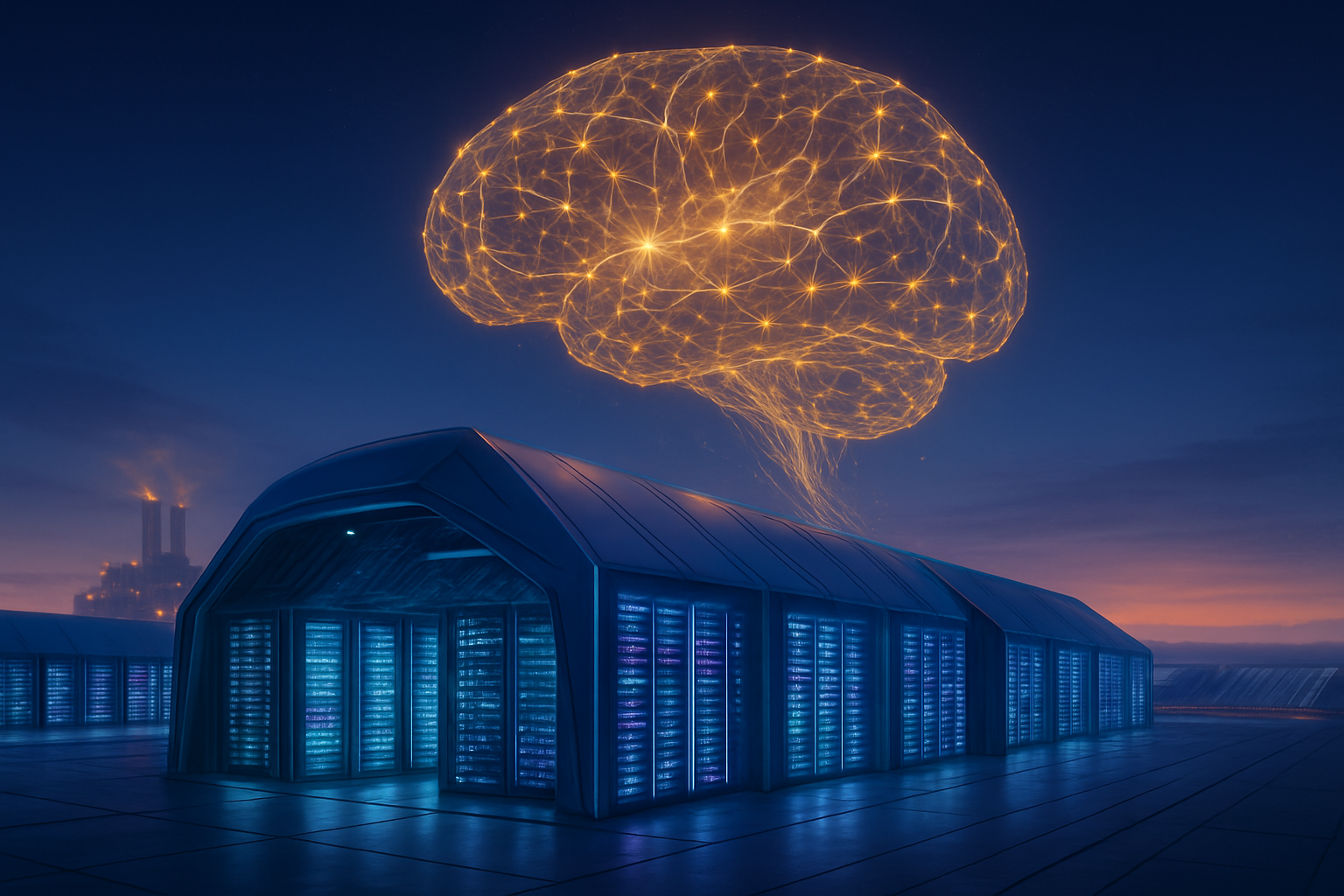
    At the heart of the Meta Compute initiative is the newly completed "Prometheus" facility in New Albany, Ohio. This site represents a radical departure from traditional data center architecture. To bypass the lengthy 24-month construction cycles of concrete facilities, Meta utilized modular, hurricane-proof "tent-style" structures. This innovative "fast-build" approach allowed Meta to bring 1.02 gigawatts (GW) of IT power online in just seven months. The Prometheus cluster is projected to house a staggering 500,000 GPUs, featuring a mix of NVIDIA (NASDAQ: NVDA) GB300 "Clemente" and GV200 "Catalina" systems, making it one of the most powerful concentrated AI clusters in existence.

    Technically, the Meta Compute infrastructure is built to handle the extreme heat and networking demands of Blackwell-class silicon. Each rack houses 72 GPUs, pushing power density to levels that traditional air cooling can no longer manage. Meta has deployed Air-Assisted Liquid Cooling (AALC) and closed-loop direct-to-chip systems to stabilize these massive workloads. For networking, the initiative relies on a Disaggregated Scheduled Fabric (DSF) powered by Arista Networks (NYSE: ANET) 7808 switches and Broadcom (NASDAQ: AVGO) Jericho 3 and Ramon 3 ASICs, ensuring that data can flow between hundreds of thousands of chips with minimal latency.

    This infrastructure is the direct predecessor to the hardware currently training the upcoming Llama 5 model family. While Llama 4—released in April 2025—was trained on clusters exceeding 100,000 H100 GPUs, Llama 5 is expected to utilize the full weight of the Blackwell-integrated Prometheus site. Initial reactions from the AI research community have been split. While many admire the engineering feat of the "AI Tents," some experts, including those within Meta's own AI research labs (FAIR), have voiced concerns about the "Bitter Lesson" of scaling. Rumors have circulated that Chief Scientist Yann LeCun has shifted focus away from the scaling-law obsession, preferring to explore alternative architectures that might not require gigawatt-scale power to achieve reasoning.

    The Battle of the Gigawatts: Competitive Moats and Energy Wars

    The Meta Compute initiative places Meta in direct competition with the most ambitious infrastructure projects in history. Microsoft (NASDAQ: MSFT) and OpenAI are currently developing "Stargate," a $500 billion consortium project aimed at five major sites across the U.S. with a long-term goal of 10 GW. Meanwhile, Amazon (NASDAQ: AMZN) has accelerated "Project Rainier," a 2.2 GW campus in Indiana focused on its custom Trainium 3 chips. Meta’s strategy differs by emphasizing "speed-to-build" and vertical integration through its Meta Training and Inference Accelerator (MTIA) silicon.

    Meta's MTIA v3, a chiplet-based design prioritized for energy efficiency, is now being deployed at scale to reduce the "Nvidia tax" on inference workloads. By running its massive recommendation engines and agentic AI models on in-house silicon, Meta aims to achieve a 40% improvement in "TOPS per Watt" compared to general-purpose GPUs. This vertical integration provides a significant market advantage, allowing Meta to offer its Llama models at lower costs—or entirely for free via open-source—while its competitors must maintain high margins to recoup their hardware investments.

    However, the primary constraint for these tech giants has shifted from chip availability to energy procurement. To power Prometheus and future sites, Meta has entered into historic energy alliances. In January 2026, the company signed major agreements with Vistra (NYSE: VST) and natural gas firm Williams (NYSE: WMB) to build on-site generation facilities. Meta has also partnered with nuclear innovators like Oklo (NYSE: OKLO) and TerraPower to secure 24/7 carbon-free power, a necessity as the company's total energy consumption begins to rival that of mid-sized nations.

    Sovereignty and the Broader AI Landscape

    The formation of Meta Compute also has a significant political dimension. By hiring Dina Powell McCormick, a former U.S. Deputy National Security Advisor, as President and Vice Chair of the division, Meta is positioning its infrastructure as a national asset. This "Sovereign AI" strategy aims to align Meta’s massive compute clusters with U.S. national interests, potentially securing favorable regulatory treatment and energy subsidies. This marks a shift in the AI landscape where compute is no longer just a business resource but a form of geopolitical leverage.

    The broader significance of this move cannot be overstated. We are witnessing the physicalization of the AI revolution. Previous milestones, like the release of GPT-4, were defined by algorithmic breakthroughs. The milestones of 2026 are defined by steel, silicon, and gigawatts. However, this "gigawatt race" brings potential concerns. Critics like Gary Marcus have pointed to the astronomical CAPEX as evidence of a "depreciation bomb," noting that if model architectures shift away from the Transformers for which these clusters are optimized, billions of dollars in hardware could become obsolete overnight.

    Furthermore, the environmental impact of Meta’s 100 GW ambition remains a point of contention. While the company is aggressively pursuing nuclear and solar options, the immediate reliance on natural gas to bridge the gap has drawn criticism from environmental groups. The Meta Compute initiative represents a bet that the societal and economic benefits of "personal superintelligence" will outweigh the immense environmental and financial costs of building the infrastructure required to host it.

    Future Horizons: From Clusters to Personal Superintelligence

    Looking ahead, Meta Compute is designed to facilitate the leap from "Static AI" to "Agentic AI." Near-term developments include the deployment of thousands of specialized MTIA-powered sub-models that can run simultaneously on edge devices and in the cloud to manage a user’s entire digital life. On the horizon, Meta expects to move toward "Llama 6" and "Llama 7," which experts predict will require even more radical shifts in data center design, potentially involving deep-sea cooling or orbital compute arrays to manage the heat of trillion-parameter models.

    The primary challenge remaining is the "data wall." As compute continues to scale, the supply of high-quality human-generated data is becoming exhausted. Meta’s future infrastructure will likely be dedicated as much to generating synthetic training data as it is to training the models themselves. Experts predict that the next two years will determine whether the scaling laws hold true at the gigawatt level or if we will reach a point of diminishing returns where more power no longer translates to significantly more intelligence.

    Closing the Loop on the AI Industrial Revolution

    The launch of the Meta Compute initiative is a defining moment for Meta Platforms and the AI industry at large. It represents the formalization of the "Bitter Lesson"—the idea that the most effective way to improve AI is to simply add more compute. By restructuring the company around this principle, Mark Zuckerberg has doubled down on a future where AI is the primary driver of all human-digital interaction.

    Key takeaways from this development include Meta’s pivot to modular, high-speed construction with its "AI Tents," its deepening vertical integration with MTIA silicon, and its emergence as a major player in the global energy market. As we move into the middle of 2026, the tech industry will be watching closely to see if the "Prometheus" facility can deliver on the promise of Llama 5 and beyond. Whether this $100 billion gamble leads to the birth of true superintelligence or serves as a cautionary tale of infrastructure overreach, it has undeniably set the pace for the next decade of technological competition.


    This content is intended for informational purposes only and represents analysis of current AI developments.

    TokenRing AI delivers enterprise-grade solutions for multi-agent AI workflow orchestration, AI-powered development tools, and seamless remote collaboration platforms.
    For more information, visit https://www.tokenring.ai/.