
Tag: Michigan Economy

  • Wixom’s Medical Technology Sector Soars with 107 New Jobs as Innovative Remote Monitoring Takes Center Stage

    Wixom’s Medical Technology Sector Soars with 107 New Jobs as Innovative Remote Monitoring Takes Center Stage

    Wixom, Michigan – The medical technology landscape in Wixom is experiencing a significant surge, marked by a pivotal expansion project that promises to inject over 100 new high-tech jobs into the region. On October 30, 2025, ptMantra Inc. and Youngsoft Inc., both established players in the local tech scene, announced a collaborative initiative poised to revolutionize remote patient care through cutting-edge therapeutic monitoring systems. This development not only underscores Michigan's growing prominence in the medical device sector but also signals a robust economic boost for the Wixom community, driven by innovation and strategic investment.

    The joint venture, supported by a substantial $2.35 million capital investment, is specifically aimed at developing and deploying a first-of-its-kind Remote Therapeutic Monitoring (RTM) system alongside an advanced remote patient management platform. This ambitious project is projected to create at least 107 new jobs, offering highly skilled opportunities within the burgeoning digital health space. The timing of this announcement, coinciding with a broader trend of technological advancement in healthcare, positions Wixom as a key hub for future medical innovation.

    Technical Prowess Driving the Future of Patient Care

    At the heart of this expansion is the development of an innovative Remote Therapeutic Monitoring (RTM) system. Unlike traditional remote patient monitoring (RPM) which primarily tracks physiological data like blood pressure or heart rate, RTM focuses on monitoring therapeutic response and adherence to rehabilitation plans. ptMantra Inc., established in Wixom in 2021 with a specialization in RTM technology, is leading the charge on this front, leveraging its expertise in this niche yet critical area of digital health. Youngsoft Inc., a seasoned technology firm founded in 1996 and also based in Wixom, brings its extensive experience in software development and system integration to build a robust, secure, and mobile-based platform.

    The system will integrate AI-powered analytics to process patient data, providing real-time insights into treatment efficacy and patient engagement. This intelligent approach allows healthcare providers to monitor patients' progress from the comfort of their homes, ensuring adherence to prescribed therapies and enabling timely interventions. This significantly differs from previous approaches that often relied on periodic in-person check-ups or less sophisticated data collection methods, which could lead to gaps in care and reduced patient compliance. The secure, mobile-based nature of the platform ensures accessibility and convenience for patients while maintaining strict data privacy and security protocols. Initial reactions from the medical research community and industry experts have been overwhelmingly positive, highlighting the potential for RTM systems to improve patient outcomes, reduce healthcare costs, and expand access to specialized care, particularly for those in remote areas or with mobility challenges.

    Strategic Implications for AI and Med-Tech Companies

    The expansion by ptMantra and Youngsoft carries significant implications for AI companies, tech giants, and startups operating in the healthcare sector. Both companies stand to benefit immensely, with ptMantra solidifying its position as a leader in RTM technology and Youngsoft expanding its portfolio in the high-growth digital health market. This collaboration exemplifies a growing trend where specialized medical technology firms partner with established IT solution providers to bring complex, integrated healthcare platforms to fruition.

    From a competitive standpoint, this development intensifies the race in the remote patient monitoring and digital therapeutics space. Major AI labs and tech companies, many of whom are already investing heavily in healthcare AI, will likely view this as a benchmark for advanced RTM capabilities. The integration of AI for therapeutic monitoring could disrupt existing services that rely on less intelligent data analysis or more manual oversight, pushing competitors to accelerate their own AI integration efforts. For startups, this creates both a challenge and an opportunity: the challenge of competing with increasingly sophisticated solutions, and the opportunity to innovate in niche areas or offer complementary services. Market positioning will increasingly favor companies that can demonstrate robust, secure, and intelligent remote monitoring capabilities that genuinely enhance patient engagement and clinical outcomes.

    Wider Significance in the AI and Healthcare Landscape

    This expansion in Wixom fits perfectly into the broader AI landscape and the accelerating trend of digital transformation in healthcare. The move towards AI-powered RTM systems is a crucial step in the evolution of personalized medicine and value-based care. By enabling continuous, intelligent monitoring of therapeutic responses, it empowers healthcare providers to deliver more tailored and effective treatments, moving away from a one-size-all approach. This aligns with global trends emphasizing preventative care, chronic disease management, and patient empowerment through technology.

    The impacts are multi-faceted: improved patient adherence to treatment plans, reduced hospital readmissions, and enhanced efficiency for healthcare systems. However, potential concerns include data privacy, the equitable distribution of such technologies across diverse socioeconomic groups, and the need for robust regulatory frameworks to ensure safety and efficacy. Comparisons to previous AI milestones, such as early diagnostic AI or AI-driven drug discovery, reveal a maturation of the field, where AI is now moving beyond data analysis to direct, real-time intervention and management of patient care. This represents a significant shift from AI as a background tool to AI as an integral part of the patient care pathway, especially in rehabilitation and chronic condition management.

    Charting Future Developments in Remote Care

    Looking ahead, the expansion in Wixom signals the beginning of an exciting era for remote therapeutic monitoring and AI in healthcare. Near-term developments are expected to focus on refining the AI algorithms for even greater accuracy in predicting patient adherence and therapeutic effectiveness. We can anticipate broader integration with electronic health records (EHRs) and other healthcare platforms, creating a more seamless data flow for clinicians. Long-term, the potential applications are vast, extending to highly personalized rehabilitation programs, predictive analytics for preventing relapses in chronic conditions, and even AI-guided self-management tools for patients.

    Challenges that need to be addressed include establishing clear reimbursement policies for RTM services, overcoming technological barriers in areas with limited internet access, and ensuring healthcare professionals are adequately trained to utilize these sophisticated systems. Experts predict that RTM will become a standard component of care for a wide range of conditions, from post-surgical recovery to neurological rehabilitation. The continuous feedback loop provided by AI-powered RTM systems is expected to drive iterative improvements in therapeutic protocols, leading to a new paradigm of adaptive and responsive healthcare delivery.

    A New Chapter for Michigan's Med-Tech Prowess

    The ptMantra Inc. and Youngsoft Inc. expansion in Wixom represents a significant milestone in Michigan's medical technology history and the broader evolution of AI in healthcare. The creation of 107 new jobs, coupled with the development of an advanced AI-powered Remote Therapeutic Monitoring system, underscores the region's commitment to fostering innovation and economic growth. This initiative not only brings tangible benefits to the local economy but also positions Michigan at the forefront of digital health solutions that promise to transform patient care globally.

    The key takeaways are clear: intelligent remote monitoring is no longer a futuristic concept but a present reality, driven by strategic investments and collaborative efforts. This development highlights the increasing convergence of AI, mobile technology, and healthcare delivery, setting a new standard for patient engagement and therapeutic efficacy. In the coming weeks and months, industry watchers will be keen to observe the deployment of this RTM system, its initial impact on patient outcomes, and how it influences competitive strategies in the rapidly expanding digital health market. This is more than just a local expansion; it's a testament to the transformative power of technology in shaping a healthier future.


    This content is intended for informational purposes only and represents analysis of current AI developments.

    TokenRing AI delivers enterprise-grade solutions for multi-agent AI workflow orchestration, AI-powered development tools, and seamless remote collaboration platforms.
    For more information, visit https://www.tokenring.ai/.
  • Michigan’s Multi-Billion Dollar Battery Dream Crumbles: Gotion Plant Abandoned Amidst Controversy

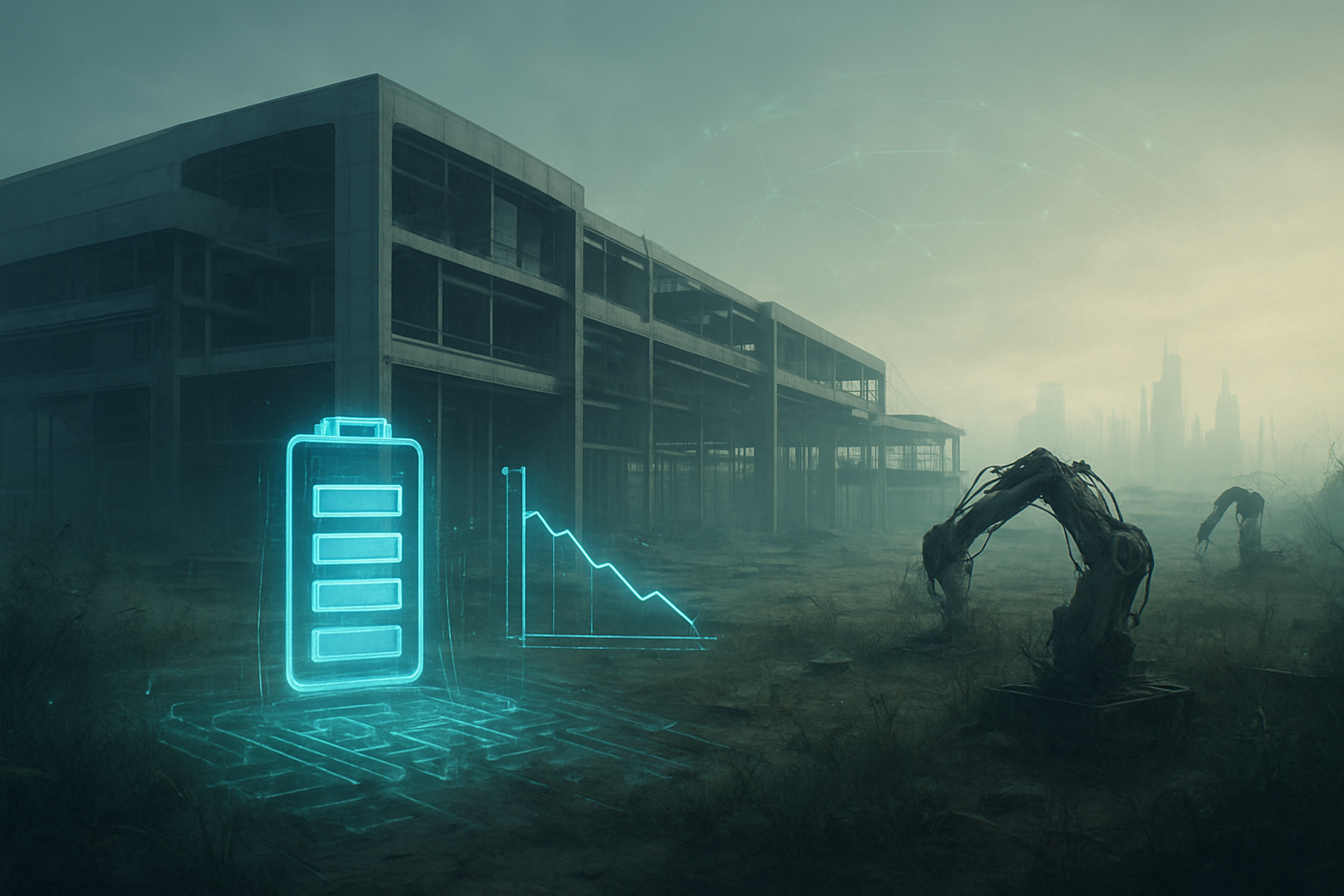
    Michigan’s Multi-Billion Dollar Battery Dream Crumbles: Gotion Plant Abandoned Amidst Controversy

    Big Rapids, MI – October 23, 2025 – What was once heralded as the largest economic development project in Northern Michigan’s history has officially collapsed. The State of Michigan today announced the abandonment of Gotion Inc.'s proposed $2.4 billion electric vehicle (EV) battery plant in Green Charter Township, Mecosta County. This decision marks the termination of a highly controversial endeavor, intended to create 2,350 jobs, and underscores the complex interplay of economic ambition, local opposition, and geopolitical tensions.

    The Michigan Strategic Fund (MSF) declared Gotion Inc., a subsidiary of China-based Gotion High-Tech Co. Ltd., in default of its 2022 grant agreement obligations. This move renders the project ineligible for substantial state incentives, including a $125 million Critical Industry Program grant that was never disbursed. Furthermore, Michigan is now seeking to recover nearly $23.7 million already provided to Gotion for land acquisition. The abrupt end to the project sends ripples through the burgeoning U.S. EV battery manufacturing sector and leaves a significant void in Michigan's economic development landscape.

    The Unraveling of a Gigafactory: A Deep Dive into the Abandonment

    The abandonment stems from a confluence of factors, with the State of Michigan citing Gotion's cessation of "eligible activities" at the property for over 120 consecutive days, coupled with the detrimental impact of at least two related lawsuits. Gotion, however, through its attorney Mark Heusel, has vehemently disputed the state's claims, expressing shock at the declaration and asserting that it was the community, not the company, that abandoned the project. Heusel pointed to "immense challenges," "racist and ethnically charged stereotypes," and "politically motivated attacks" as the true architects of the project's downfall.

    The project's timeline reveals a tumultuous journey. Announced in October 2022, the Gotion plant quickly became a flashpoint. While the Michigan Legislature and Senate Appropriations Committee approved $175 million in state funding by April 2023, local sentiment in Green Charter Township soured. By November 2023, a successful recall election ousted five pro-plant board members, replacing them with officials openly against the development. The newly elected board subsequently rescinded its support and, crucially, voted to withdraw access to water lines essential for the plant's operations. This led Gotion to file a breach of contract lawsuit against the township in March 2024. Despite a federal judge's injunction in May 2024 requiring the township to abide by the original agreement, the township appealed, and Gotion paused its state permitting applications and environmental studies. By late 2024 and early 2025, Mecosta County also revoked its support, culminating in the MSF's default notice in September 2025 and today's public announcement of abandonment.

    Beyond local politics, national security concerns played a significant role. Republican lawmakers and various political figures, including U.S. Rep. John Moolenaar and former Ambassadors Joseph Cella and Peter Hoekstra, voiced strong opposition due to Gotion's (SHE:002074) ties to the Chinese government and the Chinese Communist Party. These concerns amplified the local backlash, creating a politically charged environment that ultimately proved insurmountable for the project. Gotion, for its part, maintained that professional fees, property taxes, maintenance, and utility costs constituted "capital expenditures" and thus qualified as "eligible activities," directly refuting the state's claim of inactivity.

    Fallout and Repercussions: A Blow to EV Battery Manufacturing and Local Hopes

    The abandonment of the Gotion project delivers a significant blow to the burgeoning EV battery manufacturing landscape in the United States. The Biden administration has championed domestic battery production as a cornerstone of its clean energy agenda and a critical component of national economic security. This project, with its promised 2,350 jobs and substantial investment, was intended to be a key piece of that puzzle. Its failure highlights the formidable challenges of establishing large-scale manufacturing facilities, particularly those involving foreign investment, in an era of heightened geopolitical scrutiny and localized opposition.

    For Michigan, a state that has aggressively pursued EV manufacturing investments, the Gotion withdrawal represents a lost opportunity and a substantial setback. The project was expected to inject billions into the local economy of Mecosta County and provide high-paying jobs, diversifying a region historically reliant on other industries. The recovery of the $23.7 million already disbursed to Gotion will be a complex process, and the lingering legal disputes between Gotion and Green Charter Township will continue to drain resources and attention. The incident could also make future foreign investors wary of similar large-scale projects in regions with strong local opposition or political sensitivities, potentially diverting investment to other states or countries perceived as more stable or welcoming.

    The broader EV battery market, while still experiencing rapid growth, is also navigating a period of recalibration. Reports of "waning EV enthusiasm" in some segments of the U.S. market, alongside supply chain complexities and intense competition, add another layer of uncertainty to such massive undertakings. While major players like General Motors (NYSE:GM), Ford (NYSE:F), and Stellantis (NYSE:STLA) continue to invest heavily in domestic battery production, the Gotion case serves as a stark reminder that even well-funded projects with significant state backing are not immune to failure, especially when entangled in political and community controversies.

    Wider Implications: Geopolitics, Local Autonomy, and the Green Transition

    The Gotion saga transcends a mere failed business deal; it is a microcosm of broader trends shaping the global economy and the green transition. The project’s demise is deeply intertwined with escalating U.S.-China tensions, particularly concerning critical technologies and supply chains. While the U.S. seeks to de-risk its supply chains from China, the Gotion case illustrates the difficulty of disentangling economic ties when Chinese companies are key players in essential industries like EV batteries. The national security concerns raised by lawmakers reflect a growing apprehension about foreign influence in strategic sectors, setting a precedent for increased scrutiny on similar future investments.

    Furthermore, the events in Green Charter Township highlight the potent force of local autonomy and community activism. The successful recall of township board members and the subsequent withdrawal of critical local support demonstrate that even projects with significant state-level endorsement can be derailed by grassroots opposition. This underscores a critical challenge for large-scale industrial developments: the need for genuine community buy-in and effective communication, beyond just economic incentives. It also raises questions about the balance between state-driven economic development goals and the rights of local communities to determine their own future.

    Comparisons to previous industrial milestones reveal a stark contrast. Historically, large manufacturing plants often faced environmental concerns but rarely the level of geopolitical and local political opposition that Gotion encountered. This incident marks a significant shift, indicating that the landscape for foreign direct investment in critical industries has become far more complex and fraught with non-economic risks. The failure of the Gotion plant will undoubtedly be studied as a cautionary tale, influencing how future large-scale projects, particularly those with international ties, are planned, presented, and executed in the United States.

    The Road Ahead: Navigating Legal Battles and Investment Uncertainty

    The immediate future for the Gotion project site in Michigan will be dominated by legal proceedings. Gotion's lawsuit against Green Charter Township for breach of contract is expected to continue, with the company likely seeking damages. Concurrently, the State of Michigan will pursue the recovery of the $23.7 million already provided to Gotion, potentially leading to further legal skirmishes. These battles will not only be costly but will also cast a long shadow over any immediate prospects for the site's redevelopment or alternative use.

    Looking further ahead, experts predict increased caution from both foreign investors and U.S. states when considering large-scale manufacturing projects, especially those with perceived national security implications. There will likely be a heightened emphasis on due diligence regarding community engagement and a more robust vetting process for international partnerships. While the push for domestic EV battery production remains strong, future projects may favor companies with less controversial ownership structures or those that can demonstrate an exceptionally strong local benefit and minimal geopolitical risk. Challenges include finding alternative developers for the Mecosta County site and restoring confidence in Michigan as a reliable partner for such significant investments.

    What to watch for in the coming months includes the outcomes of the ongoing legal disputes, which could set important precedents for future development projects. Additionally, observe how Michigan’s economic development agencies adapt their strategies to attract and retain large-scale manufacturing, particularly in the EV sector, in light of this high-profile failure. The Gotion abandonment serves as a powerful lesson in the intricate dance between global economics, national policy, and local community sentiment, a dance that will undoubtedly continue to shape the landscape of American industry.

    Comprehensive Wrap-Up: A Cautionary Tale in the AI Era

    The abandonment of Gotion's $2.4 billion battery plant in Michigan represents a multi-faceted failure, born from a complex interplay of local opposition, national security concerns, and legal disputes. Key takeaways include the significant power of grassroots movements to influence large-scale development, the increasing scrutiny of foreign investment in critical U.S. industries, and the inherent challenges in navigating a rapidly evolving geopolitical landscape. This event underscores that even with substantial state incentives and a clear economic need, projects can falter when community trust and political alignment are absent.

    In the annals of AI history, this development might seem tangential, but its significance lies in the broader context of advanced manufacturing and strategic technologies. The ability to produce critical components like EV batteries domestically is vital for the U.S. to maintain technological leadership and national security, areas increasingly intertwined with AI's role in optimizing production, logistics, and innovation. The Gotion case serves as a cautionary tale for any large-scale technology investment – even those seemingly unrelated to AI – highlighting the need for robust stakeholder engagement and a clear understanding of the political and social environment.

    The long-term impact will likely include a more conservative approach to foreign direct investment in sensitive sectors and a renewed focus on securing local community buy-in for major industrial projects. For Michigan, it's a moment to reassess its economic development strategies and perhaps prioritize projects with fewer geopolitical entanglements. In the coming weeks and months, all eyes will be on the legal battle between Gotion and Green Charter Township, as well as on how the state moves to recover its funds and re- envision the future of the Mecosta County site. This saga is a powerful reminder that even in an era of rapid technological advancement, fundamental human and political dynamics remain paramount.


    This content is intended for informational purposes only and represents analysis of current AI developments.

    TokenRing AI delivers enterprise-grade solutions for multi-agent AI workflow orchestration, AI-powered development tools, and seamless remote collaboration platforms.
    For more information, visit https://www.tokenring.ai/.