
Tag: Micron

  • Breaking the Memory Wall: HBM4 and the $20 Billion AI Memory Revolution

    Breaking the Memory Wall: HBM4 and the $20 Billion AI Memory Revolution

    As the artificial intelligence "supercycle" enters its most intensive phase, the semiconductor industry has reached a historic milestone. High Bandwidth Memory (HBM), once a niche technology for high-end graphics, has officially exploded to represent 23% of the total DRAM market revenue as of early 2026. This meteoric rise, confirmed by recent industry reports from Gartner and TrendForce, underscores a fundamental shift in computing: the bottleneck is no longer just the speed of the processor, but the speed at which data can be fed to it.

    The significance of this development cannot be overstated. While HBM accounts for less than 8% of total DRAM wafer volume, its high value and technical complexity have turned it into the primary profit engine for memory manufacturers. At the Consumer Electronics Show (CES) 2026, held just last week, the world caught its first glimpse of the next frontier—HBM4. This new generation of memory is designed specifically to dismantle the "memory wall," the performance gap that threatens to stall the progress of Large Language Models (LLMs) and generative AI.

    The Leap to HBM4: Doubling Down on Bandwidth

    The transition to HBM4 represents the most significant architectural overhaul in the history of stacked memory. Unlike its predecessors, HBM4 doubles the interface width from a 1,024-bit bus to a massive 2,048-bit bus. This allows a single HBM4 stack to deliver bandwidth exceeding 2.6 TB/s, nearly triple the throughput of early HBM3e systems. At CES 2026, industry leaders showcased 16-layer (16-Hi) HBM4 stacks, providing up to 48GB of capacity per cube. This density is critical for the next generation of AI accelerators, which are expected to house over 400GB of memory on a single package.

    Perhaps the most revolutionary technical change in HBM4 is the integration of a "logic base die." Historically, the bottom layer of a memory stack was manufactured using standard DRAM processes. However, HBM4 utilizes advanced 5nm and 3nm logic processes for this base layer. This allows for "Custom HBM," where memory controllers and even specific AI acceleration logic can be moved directly into the memory stack. By reducing the physical distance data must travel and utilizing Through-Silicon Vias (TSVs), HBM4 is projected to offer a 40% improvement in power efficiency—a vital metric for data centers where a single GPU can now consume over 1,000 watts.

    The New Triumvirate: SK Hynix, Samsung, and Micron

    The explosion of HBM has ignited a fierce three-way battle among the world’s top memory makers. SK Hynix (KRX: 000660) currently maintains a dominant 55-60% market share, bolstered by its "One-Team" alliance with Taiwan Semiconductor Manufacturing Company (NYSE: TSM). This partnership allows SK Hynix to leverage TSMC’s leading-edge foundry nodes for HBM4 base dies, ensuring seamless integration with the upcoming NVIDIA (NASDAQ: NVDA) Rubin platform.

    Samsung Electronics (KRX: 005930), however, is positioning itself as the only "one-stop shop" in the industry. By combining its memory expertise with its internal foundry and advanced packaging capabilities, Samsung aims to capture the burgeoning "Custom HBM" market. Meanwhile, Micron Technology (NASDAQ: MU) has rapidly expanded its capacity in Taiwan and Japan, showcasing its own 12-layer HBM4 solutions at CES 2026. Micron is targeting a production capacity of 15,000 wafers per month by the end of the year, specifically aiming to challenge SK Hynix’s stronghold on the NVIDIA supply chain.

    Beyond the Silicon: Why 23% is Just the Beginning

    The fact that HBM now commands nearly a quarter of the DRAM market revenue signals a permanent change in the data center landscape. The "memory wall" has long been the Achilles' heel of high-performance computing, where processors sit idle while waiting for data to arrive from relatively slow memory modules. As AI models grow to trillions of parameters, the demand for bandwidth has become insatiable. Data center operators are no longer just buying "servers"; they are building "AI factories" where memory performance is the primary determinant of return on investment.

    This shift has profound implications for the wider tech industry. The high average selling price (ASP) of HBM—often 5 to 10 times that of standard DDR5—is driving a reallocation of capital within the semiconductor world. Standard PC and smartphone memory production is being sidelined as manufacturers prioritize HBM lines. While this has led to supply crunches and price hikes in the consumer market, it has provided the necessary capital for the semiconductor industry to fund the multi-billion dollar research required for sub-3nm manufacturing.

    The Road to 2027: Custom Memory and the Rubin Ultra

    Looking ahead, the roadmap for HBM4 extends far into 2027 and beyond. NVIDIA’s CEO Jensen Huang recently confirmed that the Rubin R100/R200 architecture, which will utilize between 8 and 12 stacks of HBM4 per chip, is moving toward mass production. The "Rubin Ultra" variant, expected in late 2026 or early 2027, will push pin speeds to a staggering 13 Gbps. This will require even more advanced cooling solutions, as the thermal density of these stacked chips begins to approach the limits of traditional air cooling.

    The next major hurdle will be the full realization of "Custom HBM." Experts predict that within the next two years, major hyperscalers like Amazon (NASDAQ: AMZN) and Google (NASDAQ: GOOGL) will begin designing their own custom logic dies for HBM4. This would allow them to optimize memory specifically for their proprietary AI chips, such as Trainium or TPU, further decoupling themselves from off-the-shelf hardware and creating a more vertically integrated AI stack.

    A New Era of Computing

    The rise of HBM from a specialized component to a dominant market force is a defining moment in the AI era. It represents the transition from a compute-centric world to a data-centric one, where the ability to move information is just as valuable as the ability to process it. With HBM4 on the horizon, the "memory wall" is being pushed back, enabling the next generation of AI models to be larger, faster, and more efficient than ever before.

    In the coming weeks and months, the industry will be watching closely as HBM4 enters its final qualification phases. The success of these first mass-produced units will determine the pace of AI development for the remainder of the decade. As 23% of the market today, HBM is no longer just an "extra"—it is the very backbone of the intelligence age.


    This content is intended for informational purposes only and represents analysis of current AI developments.

    TokenRing AI delivers enterprise-grade solutions for multi-agent AI workflow orchestration, AI-powered development tools, and seamless remote collaboration platforms.
    For more information, visit https://www.tokenring.ai/.

  • Silicon Empire: Micron Prepares for Historic Groundbreaking on $100 Billion New York Megafab

    Silicon Empire: Micron Prepares for Historic Groundbreaking on $100 Billion New York Megafab

    As the global race for artificial intelligence supremacy intensifies, Micron Technology (NASDAQ: MU) is set to reach a monumental milestone. On January 16, 2026, the company will officially break ground on its $100 billion "Megafab" in Clay, New York. This project represents the largest private investment in New York State history and the most ambitious semiconductor manufacturing endeavor ever attempted on American soil. Positioned as a direct response to the "Memory Wall" that currently bottlenecks large language models and generative AI, this facility is designed to secure a domestic supply of the high-speed memory essential for the next decade of computing.

    The groundbreaking ceremony, scheduled for next week, follows years of rigorous environmental reviews and federal negotiations. Once completed, the site will house four massive cleanroom modules, totaling 2.4 million square feet—roughly the size of 40 football fields. This "Megafab" is more than just a factory; it is the cornerstone of a new American "Silicon Heartland," intended to shift the center of gravity for memory production away from East Asia and back to the United States. With the AI industry’s demand for High-Bandwidth Memory (HBM) reaching unprecedented levels, the New York facility is being hailed by industry leaders and government officials as a critical safeguard for national security and economic competitiveness.

    The Technical Frontier: 1-Gamma Nodes and High-NA EUV

    The New York Megafab is not merely about scale; it is about pushing the physical limits of semiconductor physics. Micron has confirmed that the facility will be the primary production hub for its most advanced Dynamic Random Access Memory (DRAM) architectures, specifically the 1-gamma process node. This node utilizes Extreme Ultraviolet (EUV) lithography to etch features smaller than ten nanometers, a level of precision required to pack more data into smaller, more power-efficient chips. Unlike previous generations of DRAM, the 1-gamma node is optimized for the massive parallel processing required by AI accelerators.

    A key differentiator for the New York site is the planned integration of High-NA (Numerical Aperture) EUV tools from ASML (NASDAQ: ASML). These machines, which cost approximately $400 million each, allow for even finer resolution in the lithography process. By being among the first to deploy this technology at scale for memory production, Micron aims to leapfrog competitors in the production of HBM4—the next-generation standard for AI memory. HBM4 stacks DRAM vertically to provide the massive bandwidth that processors from NVIDIA (NASDAQ: NVDA) and AMD (NASDAQ: AMD) require to feed their hungry AI cores.

    Initial reactions from the semiconductor research community have been overwhelmingly positive. Dr. Sarah Jenkins, a senior analyst at the Global Chip Institute, noted that "the New York Megafab solves the latency and throughput issues that have plagued AI development. By producing 12-high and 16-high HBM stacks domestically, Micron is effectively removing the single biggest physical constraint on AI scaling." This technical shift represents a departure from traditional planar memory, focusing instead on 3D stacking and vertical interconnects that drastically reduce power consumption—a critical factor for the world's energy-hungry data centers.

    Strategic Advantage for the AI Ecosystem

    The implications of this $100 billion investment ripple across the entire tech sector. For AI giants like NVIDIA and cloud providers like Microsoft (NASDAQ: MSFT) and Alphabet (NASDAQ: GOOGL), the New York Megafab offers a stabilized, domestic source of the most expensive component in an AI server: the memory. Currently, the supply chain for HBM is heavily concentrated in South Korea and Taiwan, leaving U.S. tech firms vulnerable to geopolitical tensions and logistics disruptions. A domestic "Megafab" provides a reliable buffer, ensuring that the next generation of AI clusters can be built and maintained without foreign dependency.

    Competitive pressure is also mounting on Micron’s primary rivals, Samsung and SK Hynix. While these firms have dominated the HBM market for years, Micron’s aggressive move into the 1-gamma node and its strategic partnership with the U.S. government through the CHIPS and Science Act give it a unique advantage. The facility is expected to help Micron capture 30% of the global HBM4 market by the end of the decade. This shift could disrupt the existing market hierarchy, positioning Micron as the preferred partner for U.S.-based AI hardware developers who prioritize supply chain resilience and proximity to R&D.

    Furthermore, the New York project is expected to catalyze a broader ecosystem of suppliers and startups. Companies specializing in advanced packaging, thermal management, and chiplet interconnects are already scouting locations near the Syracuse site. This cluster effect will likely lower the barriers to entry for smaller AI hardware startups, who can benefit from a localized supply of high-grade memory and the specialized workforce that the Megafab will attract.

    The CHIPS Act and the Broader Geopolitical Landscape

    The New York Megafab is the "crown jewel" of the CHIPS and Science Act, a federal initiative designed to restore American leadership in semiconductor manufacturing. Micron’s project is supported by a massive financial package, including $6.165 billion in direct federal grants and $7.5 billion in federal loans. New York State has also contributed $5.5 billion in "Green CHIPS" tax credits, which are contingent on Micron meeting strict milestones for job creation and environmental sustainability. This public-private partnership is unprecedented in its scope and reflects a strategic pivot toward "industrial policy" in the United States.

    In the broader AI landscape, this development signifies a move toward "sovereign AI" capabilities. By controlling the production of the most advanced memory chips, the U.S. secures its position at the top of the AI value chain. This is particularly relevant as AI becomes central to national defense, cybersecurity, and economic productivity. The Megafab serves as a physical manifestation of the shift from a globalized, "just-in-time" supply chain to a "just-in-case" model that prioritizes security and reliability over the lowest possible cost.

    However, the project is not without its challenges. Critics have raised concerns about the environmental impact of such a massive industrial footprint, specifically regarding water usage and energy consumption. Micron has countered these concerns by committing to 100% renewable energy and advanced water recycling systems. Additionally, the sheer scale of the 20-year build-out means that the project will have to navigate multiple economic cycles and shifts in political leadership, making its long-term success dependent on sustained bipartisan support for the semiconductor industry.

    The Road to 2030 and Beyond

    While the groundbreaking is a historic moment, the road ahead is long. Construction of the first fabrication module (Fab 1) will continue through 2028, with the first production wafers expected to roll off the line in early 2030. In the near term, the focus will be on massive site preparation, including the leveling of land and the construction of specialized power substations. As the facility scales, it is expected to create 9,000 direct Micron jobs and over 40,000 indirect jobs in the surrounding region, fundamentally transforming the economy of Upstate New York.

    Experts predict that by the mid-2030s, the New York Megafab will be the epicenter of a "Memory Corridor" that links research at the Albany NanoTech Complex with high-volume manufacturing in Clay. This integration of R&D and production is seen as the key to maintaining a competitive edge over international rivals. Future applications for the chips produced here extend beyond today's LLMs; they will power autonomous vehicles, advanced medical diagnostics, and the next generation of edge computing devices that require high-performance memory in a small, efficient package.

    The primary challenge moving forward will be the "talent war." To staff a facility of this magnitude, Micron and the State of New York are investing heavily in workforce development programs at local universities and community colleges. The success of the Megafab will ultimately depend on the ability to train thousands of specialized technicians and engineers capable of operating some of the most complex machinery on the planet.

    A New Chapter in American Innovation

    The groundbreaking of Micron’s New York Megafab marks a definitive turning point in the history of American technology. It is a $100 billion bet that the future of artificial intelligence will be built on American soil, using American-made components. By addressing the critical need for advanced memory, Micron is not just building a factory; it is building the foundation for the next era of human intelligence and economic growth.

    As we look toward the ceremony on January 16, the significance of this moment cannot be overstated. It represents the successful execution of a national strategy to reclaim technological sovereignty and the beginning of a multi-decade project that will define the industrial landscape of the 21st century. In the coming months, all eyes will be on the Town of Clay as the first steel beams rise, signaling the start of a new chapter in the AI revolution.


    This content is intended for informational purposes only and represents analysis of current AI developments.

    TokenRing AI delivers enterprise-grade solutions for multi-agent AI workflow orchestration, AI-powered development tools, and seamless remote collaboration platforms.
    For more information, visit https://www.tokenring.ai/.

  • The HBM4 Memory Supercycle: The Trillion-Dollar War Powering the Next Frontier of AI

    The HBM4 Memory Supercycle: The Trillion-Dollar War Powering the Next Frontier of AI

    The artificial intelligence revolution has reached a critical hardware inflection point as 2026 begins. While the last two years were defined by the scramble for high-end GPUs, the industry has now shifted its gaze toward the "memory wall"—the bottleneck where data processing speeds outpace the ability of memory to feed that data to the processor. Enter the HBM4 (High Bandwidth Memory 4) supercycle, a generational leap in semiconductor technology that is fundamentally rewriting the rules of AI infrastructure. This week, the competition reached a fever pitch as the world’s three dominant memory makers—SK Hynix, Samsung, and Micron—unveiled their final production roadmaps for the chips that will power the next decade of silicon.

    The significance of this transition cannot be overstated. As large language models (LLMs) scale toward 100 trillion parameters, the demand for massive, ultra-fast memory has transitioned HBM from a specialized component into a strategic, custom asset. With NVIDIA (NASDAQ: NVDA) recently detailing its HBM4-exclusive "Rubin" architecture at CES 2026, the race to supply these chips has become the most expensive and technologically complex battle in the history of the semiconductor industry.

    The Technical Leap: 2 TB/s and the 2048-Bit Frontier

    HBM4 represents the most significant architectural overhaul in the history of high-bandwidth memory, moving beyond incremental speed bumps to a complete redesign of the memory interface. The most striking advancement is the doubling of the memory interface width from the 1024-bit bus used in HBM3e to a massive 2048-bit bus. This allows individual HBM4 stacks to achieve staggering bandwidths of 2.0 TB/s to 2.8 TB/s per stack—nearly triple the performance of the early HBM3 modules that powered the first wave of the generative AI boom.

    Beyond raw speed, the industry is witnessing a shift toward extreme 3D stacking. While 12-layer stacks (36GB) are the baseline for initial mass production in early 2026, the "holy grail" is the 16-layer stack, providing up to 64GB of capacity per module. To achieve this within the strict 775µm height limit set by JEDEC, manufacturers are thinning DRAM wafers to roughly 30 micrometers—about one-third the thickness of a human hair. This has necessitated a move toward "Hybrid Bonding," a process where copper pads are fused directly to copper without the use of traditional micro-bumps, significantly reducing stack height and improving thermal dissipation.

    Furthermore, the "base die" at the bottom of the HBM stack has evolved. No longer a simple interface, it is now a high-performance logic die manufactured on advanced foundry nodes like 5nm or 4nm. This transition marks the first time memory and logic have been so deeply integrated, effectively turning the memory stack into a co-processor that can handle basic data operations before they even reach the main GPU.

    The Three-Way War: SK Hynix, Samsung, and Micron

    The competitive landscape for HBM4 is a high-stakes triangle between three giants. SK Hynix (KRX: 000660), the current market leader with over 50% market share, has solidified its position through a "One-Team" alliance with TSMC (NYSE: TSM). By leveraging TSMC’s advanced logic dies and its own Mass Reflow Molded Underfill (MR-MUF) bonding technology, SK Hynix aims to begin volume shipments of 12-layer HBM4 by the end of Q1 2026. Their 16-layer prototype, showcased earlier this month, is widely considered the frontrunner for NVIDIA's high-end Rubin R100 GPUs.

    Samsung Electronics (KRX: 005930), after trailing in the HBM3e generation, is mounting a massive counter-offensive. Samsung’s unique advantage is its "turnkey" capability; it is the only company capable of designing the DRAM, manufacturing the logic die in its internal 4nm foundry, and handling the advanced 3D packaging under one roof. This vertical integration has allowed Samsung to claim industry-leading yields for its 16-layer HBM4, which is currently undergoing final qualification for the 2026 Rubin launch.

    Meanwhile, Micron Technology (NASDAQ: MU) has positioned itself as the performance leader, claiming its HBM4 stacks can hit 2.8 TB/s using its proprietary 1-beta DRAM process. Micron’s strategy has been focused on energy efficiency, a critical factor for massive data centers facing power constraints. The company recently announced that its entire HBM4 capacity for 2026 is already sold out, highlighting the desperate demand from hyperscalers like Google, Meta, and Microsoft who are building their own custom AI accelerators.

    Breaking the Memory Wall and Market Disruption

    The HBM4 supercycle is more than a hardware upgrade; it is the solution to the "Memory Wall" that has threatened to stall AI progress. By providing the massive bandwidth required to feed data to thousands of parallel cores, HBM4 enables the training of models with 10 to 100 times the complexity of GPT-4. This shift is expected to accelerate the development of "World Models" and sophisticated agentic AI systems that require real-time processing of multimodal data.

    However, this focus on high-margin HBM4 is causing significant ripples across the broader tech economy. To meet the demand for HBM4, manufacturers are diverting massive amounts of wafer capacity away from traditional DDR5 and mobile memory. As of January 2026, standard PC and server RAM prices have spiked by nearly 300% year-over-year, as the industry prioritizes the lucrative AI market. This "wafer cannibalization" is making high-end gaming PCs and enterprise servers significantly more expensive, even as AI capabilities skyrocket.

    Furthermore, the move toward "Custom HBM" (cHBM) is disrupting the traditional relationship between memory makers and chip designers. For the first time, major AI labs are requesting bespoke memory configurations with specific logic embedded in the base die. This shift is turning memory into a semi-custom product, favoring companies like Samsung and the SK Hynix-TSMC alliance that can offer deep integration between logic and storage.

    The Horizon: Custom Logic and the Road to HBM5

    Looking ahead, the HBM4 era is expected to last until late 2027, with "HBM4E" (Extended) already in the research phase. The next major milestone will be the full adoption of "Logic-on-Memory," where specific AI kernels are executed directly within the memory stack to minimize data movement—the most energy-intensive part of AI computing. Experts predict this will lead to a 50% reduction in total system power consumption for inference tasks.

    The long-term roadmap also points toward HBM5, which is rumored to explore even more exotic materials and optical interconnects to break the 5 TB/s barrier. However, the immediate challenge remains manufacturing yield. The complexity of thinning wafers and hybrid bonding is so high that even a minor defect can ruin an entire 16-layer stack worth thousands of dollars. Perfecting these manufacturing processes will be the primary focus for engineers throughout the remainder of 2026.

    A New Era of Silicon Synergy

    The HBM4 supercycle represents a fundamental shift in how we build computers. For decades, the processor was the undisputed king of the system, with memory serving as a secondary, commodity component. In the age of generative AI, that hierarchy has dissolved. Memory is now the heartbeat of the AI cluster, and the ability to produce HBM4 at scale has become a matter of national and corporate security.

    As we move into the second half of 2026, the industry will be watching the rollout of NVIDIA’s Rubin systems and the first wave of 16-layer HBM4 deployments. The winner of this "Memory War" will not only reap tens of billions in revenue but will also dictate the pace of AI evolution for the next decade. For now, SK Hynix holds the lead, Samsung has the scale, and Micron has the efficiency—but in the volatile world of semiconductors, the crown is always up for grabs.


    This content is intended for informational purposes only and represents analysis of current AI developments.

    TokenRing AI delivers enterprise-grade solutions for multi-agent AI workflow orchestration, AI-powered development tools, and seamless remote collaboration platforms.
    For more information, visit https://www.tokenring.ai/.

  • American Silicon: Micron’s Groundbreaking New York Megafab Secures the Future of AI Memory

    American Silicon: Micron’s Groundbreaking New York Megafab Secures the Future of AI Memory

    The global race for artificial intelligence supremacy has officially shifted its center of gravity to the American heartland. As of January 8, 2026, the domestic semiconductor landscape has reached a historic milestone with Micron Technology, Inc. (NASDAQ: MU) preparing to break ground on its massive New York "megafab" in Clay, New York. This project, alongside the rapidly advancing construction of its leading-edge facility in Boise, Idaho, represents a seismic shift in the production of High Bandwidth Memory (HBM)—the specialized silicon essential for powering the world’s most advanced AI data centers.

    This "Made in USA" memory push is more than just a construction project; it is a strategic realignment of the global supply chain. For years, the HBM market was dominated by South Korean giants, leaving American AI leaders vulnerable to geopolitical shifts and logistical bottlenecks. Backed by billions in federal support from the CHIPS and Science Act, Micron’s expansion is designed to ensure that the "brains" of the AI revolution are not only designed in the U.S. but manufactured and packaged on American soil, providing a stable foundation for the next decade of computing.

    Scaling the Heights: From HBM3E to the HBM4 Revolution

    The technical specifications of these new facilities are staggering. The New York site, which will see its official groundbreaking on January 16, 2026, is a $100 billion multi-decade investment designed to eventually house four massive fabrication plants. Meanwhile, the Boise, Idaho, fab—which broke ground in late 2022—is already nearing completion of its exterior structure. By fiscal year 2027, the Boise site is expected to begin volume production of DRAM using Micron’s proprietary 1-beta and upcoming 1-gamma nodes. These facilities are specifically optimized for HBM, which stacks multiple layers of DRAM vertically to achieve the massive data throughput required by modern GPUs.

    As the industry transitions from HBM3E to the next-generation HBM4 standard in early 2026, Micron has positioned itself as a leader in power efficiency. While competitors like SK Hynix Inc. (KRX: 000660) and Samsung Electronics Co., Ltd. (KRX: 005930) have historically held larger market shares, Micron’s 12-high (12-Hi) HBM3E stacks have gained significant traction by offering 30% lower power consumption than the industry average. This efficiency is critical for data center operators who are increasingly constrained by thermal limits and energy costs. The upcoming HBM4 transition will double the interface width to 2048-bit, pushing bandwidth beyond 2.0 TB/s, a requirement for the next generation of AI architectures.

    Reshaping the Competitive Landscape for AI Giants

    The implications for the broader tech industry are profound. For AI heavyweights like NVIDIA Corporation (NASDAQ: NVDA) and Advanced Micro Devices, Inc. (NASDAQ: AMD), a domestic source of HBM reduces the "single-source" risk associated with relying almost exclusively on overseas suppliers. NVIDIA, which qualified Micron’s HBM3E for its Blackwell Ultra GPUs in late 2024, stands to benefit from a more resilient supply chain that can better withstand regional conflicts or trade disruptions. By having high-volume memory production co-located in the same hemisphere as the primary chip designers, the industry can expect faster iteration cycles and more integrated co-design of memory and logic.

    However, this shift also intensifies the rivalry between the "Big Three" memory makers. SK Hynix currently maintains a dominant 55-60% share of the HBM market, leveraging its Mass Reflow Molded Underfill (MR-MUF) bonding technology. Samsung has also made a massive push, recently announcing mass production of HBM4 using its "1c" process. Micron’s strategic advantage lies in its aggressive adoption of the CHIPS Act incentives to build the most modern, automated fabs in the world. Micron aims to capture 30% of the HBM4 market by the end of 2026, a goal that would significantly erode the current duopoly held by its Korean rivals.

    The CHIPS Act as a Catalyst for AI Sovereignty

    The rapid progress of these facilities would likely have been impossible without the $6.165 billion in direct funding and $7.5 billion in loans finalized under the CHIPS and Science Act in late 2024. This federal intervention represents a pivot toward "AI Sovereignty"—the idea that a nation’s economic and national security depends on its ability to produce the fundamental building blocks of artificial intelligence domestically. By subsidizing the high capital expenditures of these fabs, the U.S. government is effectively de-risking the transition to a more localized manufacturing model.

    Beyond the immediate economic impact, the Micron expansion addresses a critical vulnerability in the AI landscape: advanced packaging. Historically, even if chips were designed in the U.S., they often had to be sent to Asia for the complex stacking and bonding required for HBM. Micron’s new facilities will include advanced packaging capabilities, closing the "missing link" in the domestic ecosystem. This fits into a broader global trend of "techno-nationalism," where regions like the EU and Japan are also racing to subsidize their own semiconductor hubs to prevent being left behind in the AI-driven industrial revolution.

    The Horizon: HBM4 and the Path to 2030

    Looking ahead, the next 18 to 24 months will be defined by the mass production of HBM4. While the New York megafab is a long-term play—with initial production now projected for late 2030 due to the immense scale of the project—the Boise facility will serve as the immediate vanguard for U.S.-made memory. Industry experts predict that by 2027, the synergy between Micron’s R&D headquarters and its new Boise fab will allow for "lab-to-fab" transitions that are months faster than the current industry standard.

    The primary challenges remaining are labor and infrastructure. Building and operating these facilities requires tens of thousands of highly skilled engineers and technicians. Micron has already launched massive workforce development initiatives in New York and Idaho, but the talent gap remains a significant concern for the 2030 timeline. Furthermore, the transition to sub-10nm DRAM nodes will require the successful integration of High-NA EUV lithography, a technical hurdle that will test the limits of Micron’s engineering prowess as it seeks to maintain its power-efficiency lead.

    A New Chapter in Semiconductor History

    Micron’s groundbreaking in New York and the progress in Idaho mark the beginning of a new chapter in American industrial history. By successfully leveraging public-private partnerships, the U.S. is on a path to reclaim its position as a manufacturing powerhouse for the most critical components of the digital age. The goal of producing 40% of the company’s global DRAM in the U.S. by the mid-2030s is an ambitious target that, if achieved, will fundamentally alter the economics of the AI industry.

    In the coming weeks, all eyes will be on the official New York groundbreaking on January 16. This event will serve as a symbolic "go" signal for one of the largest construction projects in human history. As these fabs rise, they will not only produce silicon but also provide the essential infrastructure needed to sustain the current AI boom. For investors, policymakers, and tech leaders, the message is clear: the future of AI memory is being forged in America.


    This content is intended for informational purposes only and represents analysis of current AI developments.

    TokenRing AI delivers enterprise-grade solutions for multi-agent AI workflow orchestration, AI-powered development tools, and seamless remote collaboration platforms.
    For more information, visit https://www.tokenring.ai/.

  • The HBM4 Memory War: SK Hynix, Samsung, and Micron Clash at CES 2026 to Power NVIDIA’s Rubin Revolution

    The HBM4 Memory War: SK Hynix, Samsung, and Micron Clash at CES 2026 to Power NVIDIA’s Rubin Revolution

    The 2026 Consumer Electronics Show (CES) in Las Vegas has transformed from a showcase of consumer gadgets into the primary battlefield for the most critical component in the artificial intelligence era: High Bandwidth Memory (HBM). As of January 8, 2026, the industry is witnessing the eruption of the "HBM4 Memory War," a high-stakes conflict between the world’s three largest memory manufacturers—SK Hynix (KRX: 000660), Samsung Electronics (KRX: 005930), and Micron Technology (NASDAQ: MU). This technological arms race is not merely about storage; it is a desperate sprint to provide the massive data throughput required by NVIDIA’s (NASDAQ: NVDA) newly detailed "Rubin" platform, the successor to the record-breaking Blackwell architecture.

    The significance of this development cannot be overstated. As AI models grow to trillions of parameters, the bottleneck has shifted from raw compute power to memory bandwidth and energy efficiency. The announcements made this week at CES 2026 signal a fundamental shift in semiconductor architecture, where memory is no longer a passive storage bin but an active, logic-integrated component of the AI processor itself. With billions of dollars in capital expenditure on the line, the winners of this HBM4 cycle will likely dictate the pace of AI advancement for the remainder of the decade.

    Technical Frontiers: 16-Layer Stacks and the 1c Process

    The technical specifications unveiled at CES 2026 represent a monumental leap over the previous HBM3E standard. SK Hynix stole the early headlines by debuting the world’s first 16-layer 48GB HBM4 module. To achieve this, the company utilized its proprietary Advanced Mass Reflow Molded Underfill (MR-MUF) technology, thinning individual DRAM wafers to a staggering 30 micrometers to fit within the strict 775µm height limit set by JEDEC. This 16-layer stack delivers an industry-leading data rate of 11.7 Gbps per pin, which, when integrated into an 8-stack system like NVIDIA’s Rubin, provides a system-level bandwidth of 22 TB/s—nearly triple that of early HBM3E systems.

    Samsung Electronics countered with a focus on manufacturing sophistication and efficiency. Samsung’s HBM4 is built on its "1c" nanometer process (the 6th generation of 10nm-class DRAM). By moving to this advanced node, Samsung claims a 40% improvement in energy efficiency over its competitors. This is a critical advantage for data center operators struggling with the thermal demands of GPUs that now exceed 1,000 watts. Unlike its rivals, Samsung is leveraging its internal foundry to produce the HBM4 logic base die using a 10nm logic process, positioning itself as a "one-stop shop" that controls the entire stack from the silicon to the final packaging.

    Micron Technology, meanwhile, showcased its aggressive capacity expansion and its role as a lead partner for the initial Rubin launch. Micron’s HBM4 entry focuses on a 12-high (12-Hi) 36GB stack that emphasizes a 2048-bit interface—double the width of HBM3E. This allows for speeds exceeding 2.0 TB/s per stack while maintaining a 20% power efficiency gain over previous generations. The industry reaction has been one of collective awe; experts from the AI research community note that the shift from memory-based nodes to logic nodes (like TSMC’s 5nm for the base die) effectively turns HBM4 into a "custom" memory solution that can be tailored for specific AI workloads.

    The Kingmaker: NVIDIA’s Rubin Platform and the Supply Chain Scramble

    The primary driver of this memory frenzy is NVIDIA’s Rubin platform, which was the centerpiece of the CES 2026 keynote. The Rubin R100 and R200 GPUs, built on TSMC’s (NYSE: TSM) 3nm process, are designed to consume HBM4 at an unprecedented scale. Each Rubin GPU is expected to utilize eight stacks of HBM4, totaling 288GB of memory per chip. To ensure it does not repeat the supply shortages that plagued the Blackwell launch, NVIDIA has reportedly secured massive capacity commitments from all three major vendors, effectively acting as the kingmaker in the semiconductor market.

    Micron has responded with the most aggressive capacity expansion in its history, targeting a dedicated HBM4 production capacity of 15,000 wafers per month by the end of 2026. This is part of a broader $20 billion capital expenditure plan that includes new facilities in Taiwan and a "megaplant" in Hiroshima, Japan. By securing such a large slice of the Rubin supply chain, Micron is moving from its traditional "third-place" position to a primary supplier status, directly challenging the dominance of SK Hynix.

    The competitive implications extend beyond the memory makers. For AI labs and tech giants like Google (NASDAQ: GOOGL), Meta (NASDAQ: META), and Microsoft (NASDAQ: MSFT), the availability of HBM4-equipped Rubin GPUs will determine their ability to train next-generation "Agentic AI" models. Companies that can secure early allocations of these high-bandwidth systems will have a strategic advantage in inference speed and cost-per-query, potentially disrupting existing SaaS products that are currently limited by the latency of older hardware.

    A Paradigm Shift: From Compute-Centric to Memory-Centric AI

    The "HBM4 War" marks a broader shift in the AI landscape. For years, the industry focused on "Teraflops"—the number of floating-point operations a processor could perform. However, as models have grown, the energy cost of moving data between the processor and memory has become the primary constraint. The integration of logic dies into HBM4, particularly through the SK Hynix and TSMC "One-Team" alliance, signifies the end of the compute-only era. By embedding memory controllers and physical layer interfaces directly into the memory stack, manufacturers are reducing the physical distance data must travel, thereby slashing latency and power consumption.

    This development also brings potential concerns regarding market consolidation. The technical complexity and capital requirements of HBM4 are so high that smaller players are being priced out of the market entirely. We are seeing a "triopoly" where SK Hynix, Samsung, and Micron hold all the cards. Furthermore, the reliance on advanced packaging techniques like Hybrid Bonding and MR-MUF creates a new set of manufacturing risks; any yield issues at these nanometer scales could lead to global shortages of AI hardware, stalling progress in fields from drug discovery to climate modeling.

    Comparisons are already being drawn to the 2023 "GPU shortage," but with a twist. While 2023 was about the chips themselves, 2026 is about the interconnects and the stacking. The HBM4 breakthrough is arguably more significant than the jump from H100 to B100, as it addresses the fundamental "memory wall" that has threatened to plateau AI scaling laws.

    The Horizon: Rubin Ultra and the Road to 1TB Per GPU

    Looking ahead, the roadmap for HBM4 is already extending into 2027 and beyond. During the CES presentations, hints were dropped regarding the "Rubin Ultra" refresh, which is expected to move to 16-high HBM4e (Extended) stacks. This would effectively double the memory capacity again, potentially allowing for 1 terabyte of HBM memory on a single GPU package. Micron and SK Hynix are already sampling these 16-Hi stacks, with mass production targets set for early 2027.

    The next major challenge will be the move to "Custom HBM" (cHBM), where AI companies like OpenAI or Tesla (NASDAQ: TSLA) may design their own proprietary logic dies to be manufactured by TSMC and then stacked with DRAM by SK Hynix or Micron. This level of vertical integration would allow for AI-specific optimizations that are currently impossible with off-the-shelf components. Experts predict that by 2028, the distinction between "processor" and "memory" will have blurred so much that we may begin referring to them as unified "AI Compute Cubes."

    Final Reflections on the Memory-First Era

    The events at CES 2026 have made one thing clear: the future of artificial intelligence is being written in the cleanrooms of memory fabs. SK Hynix’s 16-layer breakthrough, Samsung’s 1c process efficiency, and Micron’s massive capacity ramp-up for NVIDIA’s Rubin platform collectively represent a new chapter in semiconductor history. We have moved past the era of general-purpose computing into a period of extreme specialization, where the ability to move data is as important as the ability to process it.

    As we move into the first quarter of 2026, the industry will be watching for the first production yields of these HBM4 modules. The success of the Rubin platform—and by extension, the next leap in AI capability—depends entirely on whether these three memory giants can deliver on their ambitious promises. For now, the "Memory War" is in full swing, and the spoils of victory are nothing less than the foundation of the global AI economy.


    This content is intended for informational purposes only and represents analysis of current AI developments.

    TokenRing AI delivers enterprise-grade solutions for multi-agent AI workflow orchestration, AI-powered development tools, and seamless remote collaboration platforms.
    For more information, visit https://www.tokenring.ai/.

  • The HBM4 Memory War: SK Hynix, Micron, and Samsung Race to Power NVIDIA’s Rubin Revolution

    The HBM4 Memory War: SK Hynix, Micron, and Samsung Race to Power NVIDIA’s Rubin Revolution

    The artificial intelligence industry has officially entered a new era of high-performance computing following the blockbuster announcements at CES 2026. As NVIDIA (NASDAQ: NVDA) pulls back the curtain on its next-generation "Vera Rubin" GPU architecture, a fierce "memory war" has erupted among the world’s leading semiconductor manufacturers. SK Hynix (KRX: 000660), Micron Technology (NASDAQ: MU), and Samsung Electronics (KRX: 005930) are now locked in a high-stakes race to supply the High Bandwidth Memory (HBM) required to prevent the world’s most powerful AI chips from hitting a "memory wall."

    This development marks a critical turning point in the AI hardware roadmap. While HBM3E served as the backbone for the Blackwell generation, the shift to HBM4 represents the most significant architectural leap in memory technology in a decade. With the Vera Rubin platform demanding staggering bandwidth to process 100-trillion parameter models, the ability of these three memory giants to scale HBM4 production will dictate the pace of AI innovation for the remainder of the 2020s.

    The Architectural Leap: From HBM3E to the HBM4 Frontier

    The technical specifications of HBM4, unveiled in detail during the first week of January 2026, represent a fundamental departure from previous standards. The most transformative change is the doubling of the memory interface width from 1024 bits to 2048 bits. This "widening of the pipe" allows HBM4 to move significantly more data at lower clock speeds, directly addressing the thermal and power efficiency challenges that plagued earlier high-performance systems. By operating at lower frequencies while delivering higher throughput, HBM4 provides the energy efficiency necessary for data centers that are now managing GPUs with power draws exceeding 1,000 watts.

    NVIDIA’s new Rubin GPU is the primary beneficiary of this advancement. Each Rubin unit is equipped with 288 GB of HBM4 memory across eight stacks, achieving a system-level bandwidth of 22 TB/s—nearly triple the performance of early Blackwell systems. Furthermore, the industry has successfully moved from 12-layer to 16-layer vertical stacking. SK Hynix recently demonstrated a 48 GB 16-layer HBM4 module that fits within the strict 775µm height requirement set by JEDEC. Achieving this required thinning individual DRAM wafers to approximately 30 micrometers, a feat of precision engineering that has left the AI research community in awe of the manufacturing tolerances now possible in mass production.

    Industry experts note that HBM4 also introduces the "logic base die" revolution. In a strategic partnership with Taiwan Semiconductor Manufacturing Company (NYSE: TSM), SK Hynix has begun manufacturing the base die of its HBM stacks using advanced 5nm and 12nm logic processes rather than traditional memory nodes. This allows for "Custom HBM" (cHBM), where specific logic functions are embedded directly into the memory stack, drastically reducing the latency between the GPU's processing cores and the stored data.

    A Three-Way Battle for AI Dominance

    The competitive landscape for HBM4 is more crowded and aggressive than any previous generation. SK Hynix currently holds the "pole position," maintaining an estimated 60-70% share of NVIDIA’s initial HBM4 orders. Their "One-Team" alliance with TSMC has given them a first-mover advantage in integrating logic and memory. By leveraging its proprietary Mass Reflow Molded Underfill (MR-MUF) technology, SK Hynix has managed to maintain higher yields on 16-layer stacks than its competitors, positioning it as the primary supplier for the upcoming Rubin Ultra chips.

    However, Samsung Electronics is staging a massive comeback after a period of perceived stagnation during the HBM3E cycle. At CES 2026, Samsung revealed that it is utilizing its "1c" (10nm-class 6th generation) DRAM process for HBM4, claiming a 40% improvement in energy efficiency over its rivals. Having recently passed NVIDIA’s rigorous quality validation for HBM4, Samsung is ramping up capacity at its Pyeongtaek campus, aiming to produce 250,000 wafers per month by the end of the year. This surge in volume is designed to capitalize on any supply bottlenecks SK Hynix might face as global demand for Rubin GPUs skyrockets.

    Micron Technology is playing the role of the aggressive expansionist. Having skipped several intermediate steps to focus entirely on HBM3E and HBM4, Micron is targeting a 30% market share by the end of 2026. Micron’s strategy centers on being the "greenest" memory provider, emphasizing lower power consumption per bit. This positioning is particularly attractive to hyperscalers like Google (NASDAQ: GOOGL) and Microsoft (NASDAQ: MSFT), who are increasingly constrained by the power limits of their existing data center infrastructure.

    Breaking the Memory Wall and the Future of AI Scaling

    The shift to HBM4 is more than just a spec bump; it is a vital response to the "Memory Wall"—the phenomenon where processor speeds outpace the ability of memory to deliver data. As AI models grow in complexity, the bottleneck has shifted from raw FLOPs (Floating Point Operations per Second) to memory bandwidth and capacity. Without the 22 TB/s throughput offered by HBM4, the Vera Rubin architecture would be unable to reach its full potential, effectively "starving" the GPU of the data it needs to process.

    This memory race also has profound geopolitical and economic implications. The concentration of HBM production in South Korea and the United States, combined with advanced packaging in Taiwan, creates a highly specialized and fragile supply chain. Any disruption in HBM4 yields could delay the deployment of the next generation of Large Language Models (LLMs), impacting everything from autonomous driving to drug discovery. Furthermore, the rising cost of HBM—which now accounts for a significant portion of the total bill of materials for an AI server—is forcing a strategic rethink among startups, who must now weigh the benefits of massive model scaling against the escalating costs of memory-intensive hardware.

    The Road Ahead: 16-Layer Stacks and Beyond

    Looking toward the latter half of 2026 and into 2027, the focus will shift from initial production to the mass-market adoption of 16-layer HBM4. While 12-layer stacks are the current baseline for the standard Rubin GPU, the "Rubin Ultra" variant is expected to push per-GPU memory capacity to over 500 GB using 16-layer technology. The primary challenge remains yield; the industry is currently transitioning toward "Hybrid Bonding" techniques, which eliminate the need for traditional bumps between layers, allowing for even more layers to be packed into the same vertical space.

    Experts predict that the next frontier will be the total integration of memory and logic. We are already seeing the beginnings of this with the SK Hynix/TSMC partnership, but the long-term roadmap suggests a move toward "Processing-In-Memory" (PIM). In this future, the memory itself will perform basic computational tasks, further reducing the need to move data back and forth across a bus. This would represent a fundamental shift in computer architecture, moving away from the traditional von Neumann model toward a truly data-centric design.

    Conclusion: The Memory-First Era of Artificial Intelligence

    The "HBM4 war" of 2026 confirms that we have entered the era of the memory-first AI architecture. The announcements from NVIDIA, SK Hynix, Samsung, and Micron at the start of this year demonstrate that the hardware constraints of the past are being systematically dismantled through sheer engineering will and massive capital investment. The transition to a 2048-bit interface and 16-layer stacking is a monumental achievement that provides the necessary runway for the next three years of AI development.

    As we move through the first quarter of 2026, the industry will be watching yield rates and production ramps closely. The winner of this memory war will not necessarily be the company with the fastest theoretical speeds, but the one that can reliably deliver millions of HBM4 stacks to meet the insatiable appetite of the Rubin platform. For now, the "One-Team" alliance of SK Hynix and TSMC holds the lead, but with Samsung’s 1c process and Micron’s aggressive expansion, the battle for the heart of the AI data center is far from over.


    This content is intended for informational purposes only and represents analysis of current AI developments.

    TokenRing AI delivers enterprise-grade solutions for multi-agent AI workflow orchestration, AI-powered development tools, and seamless remote collaboration platforms.
    For more information, visit https://www.tokenring.ai/.
  • The HBM4 Revolution: How Massive Memory Investments Are Redefining the AI Supercycle

    The HBM4 Revolution: How Massive Memory Investments Are Redefining the AI Supercycle

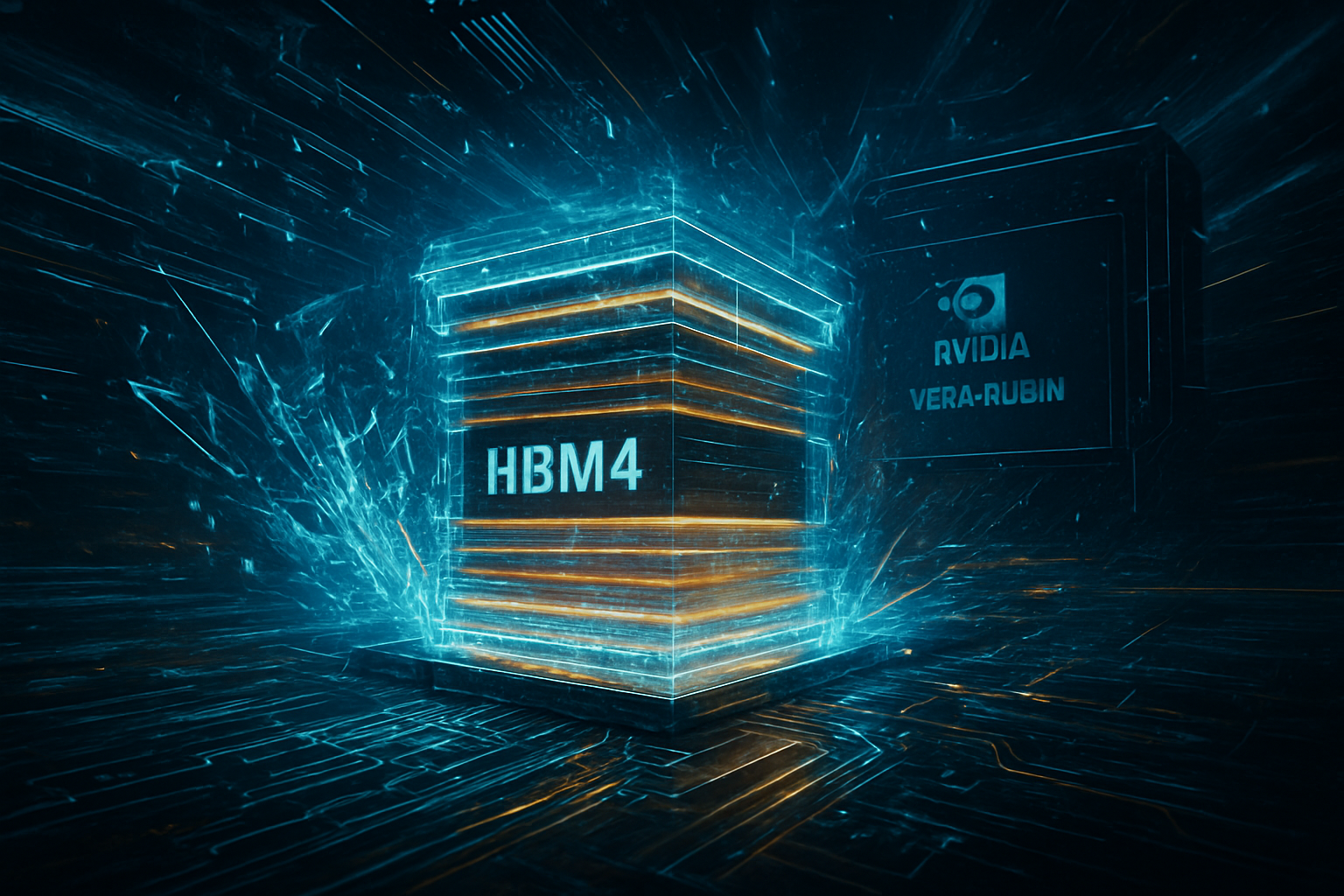
    As the doors closed on the 2026 Consumer Electronics Show (CES) in Las Vegas this week, the narrative of the artificial intelligence industry has undergone a fundamental shift. No longer is the conversation dominated solely by FLOPS and transistor counts; instead, the spotlight has swung decisively toward the "Memory-First" architecture. With the official unveiling of the NVIDIA Corporation (NASDAQ:NVDA) "Vera Rubin" GPU platform, the tech world has entered the HBM4 era—a transition fueled by hundreds of billions of dollars in capital expenditure and a desperate race to breach the "Memory Wall" that has long threatened to stall the progress of Large Language Models (LLMs).

    The significance of this moment cannot be overstated. For the first time in the history of computing, the memory layer is no longer a passive storage bin for data but an active participant in the processing pipeline. The transition to sixth-generation High-Bandwidth Memory (HBM4) represents the most significant architectural overhaul of semiconductor memory in two decades. As AI models scale toward 100 trillion parameters, the ability to feed these digital "brains" with data has become the primary bottleneck of the industry. In response, the world’s three largest memory makers—SK Hynix Inc. (KRX:000660), Samsung Electronics Co., Ltd. (KRX:005930), and Micron Technology, Inc. (NASDAQ:MU)—have collectively committed over $60 billion in 2026 alone to ensure they are not left behind in this high-stakes arms race.

    The technical leap from HBM3e to HBM4 is not merely an incremental speed boost; it is a structural redesign. While HBM3e utilized a 1024-bit interface, HBM4 doubles this to a 2048-bit interface, allowing for a massive surge in data throughput without a proportional increase in power consumption. This doubling of the "bus width" is what enables NVIDIA’s new Rubin GPUs to achieve an aggregate bandwidth of 22 TB/s—nearly triple that of the previous Blackwell generation. Furthermore, HBM4 introduces 16-layer (16-Hi) stacking, pushing individual stack capacities to 64GB and allowing a single GPU to house up to 288GB of high-speed VRAM.

    Perhaps the most radical departure from previous generations is the shift to a "logic-based" base die. Historically, the base die of an HBM stack was manufactured using a standard DRAM process. In the HBM4 generation, this base die is being fabricated using advanced logic processes—specifically 5nm and 3nm nodes from Taiwan Semiconductor Manufacturing Company (NYSE:TSM) and Samsung’s own foundry. By integrating logic into the memory stack, manufacturers can now perform "near-memory processing," such as offloading Key-Value (KV) cache tasks directly into the HBM. This reduces the constant back-and-forth traffic between the memory and the GPU, significantly lowering the "latency tax" that has historically slowed down LLM inference.

    Initial reactions from the AI research community have been electric. Industry experts note that the move to Hybrid Bonding—a copper-to-copper connection method that replaces traditional solder bumps—has allowed for thinner stacks with superior thermal characteristics. "We are finally seeing the hardware catch up to the theoretical requirements of the next generation of foundational models," said one senior researcher at a major AI lab. "HBM4 isn't just faster; it's smarter. It allows us to treat the entire memory pool as a unified, active compute fabric."

    The competitive landscape of the semiconductor industry is being redrawn by these developments. SK Hynix, currently the market leader, has solidified its position through a "One-Team" alliance with TSMC. By leveraging TSMC’s advanced CoWoS (Chip-on-Wafer-on-Substrate) packaging and logic dies, SK Hynix has managed to bring HBM4 to mass production six months ahead of its original 2026 schedule. This strategic partnership has allowed them to capture an estimated 70% of the initial HBM4 orders for NVIDIA’s Rubin rollout, positioning them as the primary beneficiary of the AI memory supercycle.

    Samsung Electronics, meanwhile, is betting on its unique position as the world's only company that can provide a "turnkey" solution—designing the DRAM, fabricating the logic die in its own 4nm foundry, and handling the final packaging. Despite trailing SK Hynix in the HBM3e cycle, Samsung’s massive $20 billion investment in HBM4 capacity at its Pyeongtaek facility signals a fierce comeback attempt. Micron Technology has also emerged as a formidable contender, with CEO Sanjay Mehrotra confirming that the company's 2026 HBM4 supply is already fully booked. Micron’s expansion into the United States, supported by billions in CHIPS Act grants, provides a strategic advantage for Western tech giants looking to de-risk their supply chains from East Asian geopolitical tensions.

    The implications for AI startups and major labs like OpenAI and Anthropic are profound. The availability of HBM4-equipped hardware will likely dictate the "training ceiling" for the next two years. Companies that secured early allocations of Rubin GPUs will have a distinct advantage in training models with 10 to 50 times the complexity of GPT-4. Conversely, the high cost and chronic undersupply of HBM4—which is expected to persist through the end of 2026—could create a wider "compute divide," where only the most well-funded organizations can afford the hardware necessary to stay at the frontier of AI research.

    Looking at the broader AI landscape, the HBM4 transition is the clearest evidence yet that we have moved past the "software-only" phase of the AI revolution. The "Memory Wall"—the phenomenon where processor performance increases faster than memory bandwidth—has been the primary inhibitor of AI scaling for years. By effectively breaching this wall, HBM4 enables the transition from "dense" models to "sparse" Mixture-of-Experts (MoE) architectures that can handle hundreds of trillions of parameters. This is the hardware foundation required for the "Agentic AI" era, where models must maintain massive contexts of data to perform complex, multi-step reasoning.

    However, this progress comes with significant concerns. The sheer cost of HBM4—driven by the complexity of hybrid bonding and logic-die integration—is pushing the price of flagship AI accelerators toward the $50,000 to $70,000 range. This hyper-inflation of hardware costs raises questions about the long-term sustainability of the AI boom and the potential for a "bubble" if the ROI on these massive investments doesn't materialize quickly. Furthermore, the concentration of HBM4 production in just three companies creates a single point of failure for the global AI economy, a vulnerability that has prompted the U.S., South Korea, and Japan to enter into unprecedented "Technology Prosperity" deals to secure and subsidize these facilities.

    Comparisons are already being made to previous semiconductor milestones, such as the introduction of EUV (Extreme Ultraviolet) lithography. Like EUV, HBM4 is seen as a "gatekeeper technology"—those who master it define the limits of what is possible in computing. The transition also highlights a shift in geopolitical strategy; the U.S. government’s decision to finalize nearly $7 billion in grants for Micron and SK Hynix’s domestic facilities in late 2025 underscores that memory is now viewed as a matter of national security, on par with the most advanced logic chips.

    The road ahead for HBM is already being paved. Even as HBM4 begins its first volume shipments in early 2026, the industry is already looking toward HBM4e and HBM5. Experts predict that by 2027, we will see the integration of optical interconnects directly into the memory stack, potentially using silicon photonics to move data at the speed of light. This would eliminate the electrical resistance that currently limits bandwidth and generates heat, potentially allowing for 100 TB/s systems by the end of the decade.

    The next major challenge to be addressed is the "Power Wall." As HBM stacks grow taller and GPUs consume upwards of 1,000 watts, managing the thermal density of these systems will require a transition to liquid cooling as a standard requirement for data centers. We also expect to see the rise of "Custom HBM," where companies like Google (Alphabet Inc. – NASDAQ:GOOGL) or Amazon (Amazon.com, Inc. – NASDAQ:AMZN) commission bespoke memory stacks with specialized logic dies tailored specifically for their proprietary AI chips (TPUs and Trainium). This move toward vertical integration will likely be the next frontier of competition in the 2026–2030 window.

    The HBM4 transition marks the official beginning of the "Memory-First" era of computing. By doubling bandwidth, integrating logic directly into the memory stack, and attracting tens of billions of dollars in strategic investment, HBM4 has become the essential scaffolding for the next generation of artificial intelligence. The announcements at CES 2026 have made it clear: the race for AI supremacy is no longer just about who has the fastest processor, but who can most efficiently move the massive oceans of data required to make those processors "think."

    As we look toward the rest of 2026, the industry will be watching the yield rates of hybrid bonding and the successful integration of TSMC’s logic dies into SK Hynix and Samsung’s stacks. The "Memory Supercycle" is no longer a theoretical prediction—it is a $100 billion reality that is reshaping the global economy. For AI to reach its next milestone, it must first overcome its physical limits, and HBM4 is the bridge that will take it there.


    This content is intended for informational purposes only and represents analysis of current AI developments.

    TokenRing AI delivers enterprise-grade solutions for multi-agent AI workflow orchestration, AI-powered development tools, and seamless remote collaboration platforms.
    For more information, visit https://www.tokenring.ai/.
  • The HBM3E and HBM4 Memory War: How SK Hynix and Micron are racing to supply the ‘fuel’ for trillion-parameter AI models.

    The HBM3E and HBM4 Memory War: How SK Hynix and Micron are racing to supply the ‘fuel’ for trillion-parameter AI models.

    As of January 2026, the artificial intelligence industry has hit a critical juncture where the silicon "brain" is only as fast as its "circulatory system." The race to provide High Bandwidth Memory (HBM)—the essential fuel for the world’s most powerful GPUs—has escalated into a full-scale industrial war. With the transition from HBM3E to the next-generation HBM4 standard now in full swing, the three dominant players, SK Hynix (KRX: 000660), Micron Technology (NASDAQ: MU), and Samsung Electronics (KRX: 005930), are locked in a high-stakes competition to capture the majority of the market for NVIDIA (NASDAQ: NVDA) and its upcoming Rubin architecture.

    The significance of this development cannot be overstated: as AI models cross the trillion-parameter threshold, the "memory wall"—the bottleneck caused by the speed difference between processors and memory—has become the primary obstacle to progress. In early 2026, the industry is witnessing an unprecedented supply crunch; as manufacturers retool their lines for HBM4, the price of existing HBM3E has surged by 20%, even as demand for NVIDIA’s Blackwell Ultra chips reaches a fever pitch. The winners of this memory war will not only see record profits but will effectively control the pace of AI evolution for the remainder of the decade.

    The Technical Leap: HBM4 and the 2048-Bit Revolution

    The technical specifications of the new HBM4 standard represent the most significant architectural shift in memory technology in a decade. Unlike the incremental move from HBM3 to HBM3E, HBM4 doubles the interface width from 1024-bit to 2048-bit. This allows for a massive leap in aggregate bandwidth—reaching up to 3.3 TB/s per stack—while operating at lower clock speeds. This reduction in clock speed is critical for managing the immense heat generated by AI superclusters. For the first time, memory is moving toward a "logic-in-memory" approach, where the base die of the HBM stack is manufactured on advanced logic nodes (5nm and 4nm) rather than traditional memory processes.

    A major point of contention in the research community is the method of stacking these chips. Samsung is leading the charge with "Hybrid Bonding," a copper-to-copper direct contact method that eliminates the need for traditional micro-bumps between layers. This allows Samsung to fit 16 layers of DRAM into a 775-micrometer package, a feat that requires thinning wafers to a mere 30 micrometers. Meanwhile, SK Hynix has refined its "Advanced MR-MUF" (Mass Reflow Molded Underfill) process to maintain high yields for 12-layer stacks, though it is expected to transition to hybrid bonding for its 20-layer roadmap in 2027. Initial reactions from industry experts suggest that while SK Hynix currently holds the yield advantage, Samsung’s vertical integration—using its own internal foundry—could give it a long-term cost edge.

    Strategic Positioning: The Battle for the 'Rubin' Crown

    The competitive landscape is currently dominated by the "Big Three," but the hierarchy is shifting. SK Hynix remains the incumbent leader, with nearly 60% of the HBM market share and its 2026 capacity already pre-booked by NVIDIA and OpenAI. However, Samsung has staged a dramatic comeback in early 2026. After facing delays in HBM3E certification throughout 2024 and 2025, Samsung recently passed NVIDIA’s rigorous qualification for 12-layer HBM3E and is now the first to announce mass production of HBM4, scheduled for February 2026. This resurgence was bolstered by a landmark $16.5 billion deal with Tesla (NASDAQ: TSLA) to provide HBM4 for their next-generation Dojo supercomputer chips.

    Micron, though holding a smaller market share (projected at 15-20% for 2026), has carved out a niche as the "efficiency king." By focusing on power-per-watt leadership, Micron has become a secondary but vital supplier for NVIDIA’s Blackwell B200 and GB300 platforms. The strategic advantage for NVIDIA is clear: by fostering a three-way war, they can prevent any single supplier from gaining too much pricing power. For the AI labs, this competition is a double-edged sword. While it drives innovation, the rapid transition to HBM4 has created a "supply air gap," where HBM3E availability is tightening just as the industry needs it most for mid-tier deployments.

    The Wider Significance: AI Sovereignty and the Energy Crisis

    This memory war fits into a broader global trend of "AI Sovereignty." Nations and corporations are realizing that the ability to train massive models is tethered to the physical supply of HBM. The shift to HBM4 is not just about speed; it is about the survival of the AI industry's growth trajectory. Without the 2048-bit interface and the power efficiencies of HBM4, the electricity requirements for the next generation of data centers would become unsustainable. We are moving from an era where "compute is king" to one where "memory is the limit."

    Comparisons are already being made to the 2021 semiconductor shortage, but with higher stakes. The potential concern is the concentration of manufacturing in East Asia, specifically South Korea. While the U.S. CHIPS Act has helped Micron expand its domestic footprint, the core of the HBM4 revolution remains centered in the Pyeongtaek and Cheongju clusters. Any geopolitical instability could immediately halt the development of trillion-parameter models globally. Furthermore, the 20% price hike in HBM3E contracts seen this month suggests that the cost of "AI fuel" will remain a significant barrier to entry for smaller startups, potentially centralizing AI power among the "Magnificent Seven" tech giants.

    Future Outlook: Toward 1TB Memory Stacks and CXL

    Looking ahead to late 2026 and 2027, the industry is already preparing for "HBM4E." Experts predict that by 2027, we will see the first 1-terabyte (1TB) memory configurations on a single GPU package, utilizing 16-Hi or even 20-Hi stacks. Beyond just stacking more layers, the next frontier is CXL (Compute Express Link), which will allow for memory pooling across entire racks of servers, effectively breaking the physical boundaries of a single GPU.

    The immediate challenge for 2026 will be the transition to 16-layer HBM4. The physics of thinning silicon to 30 micrometers without introducing defects is the "moonshot" of the semiconductor world. If Samsung or SK Hynix can master 16-layer yields by the end of this year, it will pave the way for NVIDIA's "Rubin Ultra" platform, which is expected to target the first 100-trillion parameter models. Analysts at TokenRing AI suggest that the successful integration of TSMC (NYSE: TSM) logic dies into HBM4 stacks—a partnership currently being pursued by both SK Hynix and Micron—will be the deciding factor in who wins the 2027 cycle.

    Conclusion: The New Foundation of Intelligence

    The HBM3E and HBM4 memory war is more than a corporate rivalry; it is the construction of the foundation for the next era of human intelligence. As of January 2026, the transition to HBM4 marks the moment AI hardware moved away from traditional PC-derived architectures toward something entirely new and specialized. The key takeaway is that while NVIDIA designs the brains, the trio of SK Hynix, Samsung, and Micron are providing the vital energy and data throughput that makes those brains functional.

    The significance of this development in AI history will likely be viewed as the moment the "Memory Wall" was finally breached, enabling the move from generative chatbots to truly autonomous, trillion-parameter agents. In the coming weeks, all eyes will be on Samsung’s Pyeongtaek campus as mass production of HBM4 begins. If yields hold steady, the AI industry may finally have the fuel it needs to reach the next frontier.


    This content is intended for informational purposes only and represents analysis of current AI developments.

    TokenRing AI delivers enterprise-grade solutions for multi-agent AI workflow orchestration, AI-powered development tools, and seamless remote collaboration platforms.
    For more information, visit https://www.tokenring.ai/.

  • Breaking the Memory Wall: 3D DRAM Breakthroughs Signal a New Era for AI Supercomputing

    Breaking the Memory Wall: 3D DRAM Breakthroughs Signal a New Era for AI Supercomputing

    As of January 2, 2026, the artificial intelligence industry has reached a critical hardware inflection point. For years, the rapid advancement of Large Language Models (LLMs) and generative AI has been throttled by the "Memory Wall"—a performance bottleneck where processor speeds far outpace the ability of memory to deliver data. This week, a series of breakthroughs in high-density 3D DRAM architecture from the world’s leading semiconductor firms has signaled that this wall is finally coming down, paving the way for the next generation of trillion-parameter AI models.

    The transition from traditional planar (2D) DRAM to vertical 3D architectures is no longer a laboratory experiment; it has entered the early stages of mass production and validation. Industry leaders Samsung Electronics (KRX: 005930), SK Hynix (KRX: 000660), and Micron Technology (NASDAQ: MU) have all unveiled refined 3D roadmaps that promise to triple memory density while drastically reducing the energy footprint of AI data centers. This development is widely considered the most significant shift in memory technology since the industry-wide transition to 3D NAND a decade ago.

    The Architecture of the "Nanoscale Skyscraper"

    The technical core of this breakthrough lies in the move from the traditional 6F² cell structure to a more compact 4F² configuration. In 2D DRAM, memory cells are laid out horizontally, but as manufacturers pushed toward sub-10nm nodes, physical limits made further shrinking impossible. The 4F² structure, enabled by Vertical Channel Transistors (VCT), allows engineers to stack the capacitor directly on top of the source, gate, and drain. By standing the transistors upright like "nanoscale skyscrapers," manufacturers can reduce the cell area by roughly 30%, allowing for significantly more capacity in the same physical footprint.

    A major technical hurdle addressed in early 2026 is the management of leakage and heat. Samsung and SK Hynix have both demonstrated the use of Indium Gallium Zinc Oxide (IGZO) as a channel material. Unlike traditional silicon, IGZO has an extremely low leakage current, which allows for data retention times of over 450 seconds—a massive improvement over the milliseconds seen in standard DRAM. Furthermore, the debut of HBM4 (High Bandwidth Memory 4) has introduced a 2048-bit interface, doubling the bandwidth of the previous generation. This is achieved through "hybrid bonding," a process that eliminates traditional micro-bumps and bonds memory directly to logic chips using copper-to-copper connections, reducing the distance data travels from millimeters to microns.

    A High-Stakes Arms Race for AI Dominance

    The shift to 3D DRAM has ignited a fierce competitive struggle among the "Big Three" memory makers and their primary customers. SK Hynix, which currently holds a dominant market share in the HBM sector, has solidified its lead through a strategic alliance with Taiwan Semiconductor Manufacturing Company (NYSE: TSM) to refine the hybrid bonding process. Meanwhile, Samsung is leveraging its unique position as a vertically integrated giant—spanning memory, foundry, and logic—to offer "turnkey" AI solutions that integrate 3D DRAM directly with their own AI accelerators, aiming to bypass the packaging leads held by its rivals.

    For chip giants like NVIDIA (NASDAQ: NVDA) and Advanced Micro Devices (NASDAQ: AMD), these breakthroughs are the lifeblood of their 2026 product cycles. NVIDIA’s newly announced "Rubin" architecture is designed specifically to utilize HBM4, targeting bandwidths exceeding 2.8 TB/s. AMD is positioning its Instinct MI400 series as a "bandwidth king," utilizing 3D-stacked DRAM to offer a projected 30% improvement in total cost of ownership (TCO) for hyperscalers. Cloud providers like Amazon (NASDAQ: AMZN), Microsoft (NASDAQ: MSFT), and Alphabet (NASDAQ: GOOGL) are the ultimate beneficiaries, as 3D DRAM allows them to cram more intelligence into each rack of their "AI Superfactories" while staying within the rigid power constraints of modern electrical grids.

    Shattering the Memory Wall and the Sustainability Gap

    Beyond the technical specifications, the broader significance of 3D DRAM lies in its potential to solve the AI industry's looming energy crisis. Moving data between memory and processors is one of the most energy-intensive tasks in a data center. By stacking memory vertically and placing it closer to the compute engine, 3D DRAM is projected to reduce the energy required per bit of data moved by 40% to 70%. In an era where a single AI training cluster can consume as much power as a small city, these efficiency gains are not just a luxury—they are a requirement for the continued growth of the sector.

    However, the transition is not without its concerns. The move to 3D DRAM mirrors the complexity of the 3D NAND transition but with much higher stakes. Unlike NAND, DRAM requires a capacitor to store charge, which is notoriously difficult to stack vertically without sacrificing stability. This has led to a "capacitor hurdle" that some experts fear could lead to lower manufacturing yields and higher initial prices. Furthermore, the extreme thermal density of stacking 16 or more layers of active silicon creates "thermal crosstalk," where heat from the bottom logic die can degrade the data stored in the memory layers above. This is forcing a mandatory shift toward liquid cooling solutions in nearly all high-end AI installations.

    The Road to Monolithic 3D and 2030

    Looking ahead, the next two to three years will see the refinement of "Custom HBM," where memory is no longer a commodity but is co-designed with specific AI architectures like Google’s TPUs or AWS’s Trainium chips. By 2028, experts predict the arrival of HBM4E, which will push stacking to 20 layers and incorporate "Processing-in-Memory" (PiM) capabilities, allowing the memory itself to perform basic AI inference tasks. This would further reduce the need to move data, effectively turning the memory stack into a distributed computer.

    The ultimate goal, expected around 2030, is Monolithic 3D DRAM. This would move away from stacking separate finished dies and instead build dozens of memory layers on a single wafer from the ground up. Such an advancement would allow for densities of 512GB to 1TB per chip, potentially bringing the power of today's supercomputers to consumer-grade devices. The primary challenge remains the development of "aspect ratio etching"—the ability to drill perfectly vertical holes through hundreds of layers of silicon without a single micrometer of deviation.

    A Tipping Point in Semiconductor History

    The breakthroughs in 3D DRAM architecture represent a fundamental shift in how humanity builds the machines that think. By moving into the third dimension, the semiconductor industry has found a way to extend the life of Moore's Law and provide the raw data throughput necessary for the next leap in artificial intelligence. This is not merely an incremental update; it is a re-engineering of the very foundation of computing.

    In the coming weeks and months, the industry will be watching for the first "qualification" reports of 16-layer HBM4 stacks from NVIDIA and the results of Samsung’s VCT verification phase. As these technologies move from the lab to the fab, the gap between those who can master 3D packaging and those who cannot will likely define the winners and losers of the AI era for the next decade. The "Memory Wall" is falling, and what lies on the other side is a world of unprecedented computational scale.


    This content is intended for informational purposes only and represents analysis of current AI developments.

    TokenRing AI delivers enterprise-grade solutions for multi-agent AI workflow orchestration, AI-powered development tools, and seamless remote collaboration platforms.
    For more information, visit https://www.tokenring.ai/.

  • Silicon Sovereignty: India’s Semiconductor Revolution Hits Commercial Milestone in 2026

    Silicon Sovereignty: India’s Semiconductor Revolution Hits Commercial Milestone in 2026

    As of January 2, 2026, the global technology landscape is witnessing a historic shift as India officially transitions from a software powerhouse to a hardware heavyweight. This month marks the commencement of high-volume commercial production at several key semiconductor facilities across the country, signaling the realization of India’s ambitious "Silicon Shield" strategy. With the India Semiconductor Mission (ISM) successfully anchoring over $18 billion in cumulative investments, the nation is no longer just a design hub for global giants; it is now a critical manufacturing node in the global supply chain.

    The arrival of 2026 has brought the much-anticipated "ramp-up" phase for industry leaders. Micron Technology (NASDAQ: MU) has begun high-volume commercial exports of DRAM and NAND memory products from its Sanand, Gujarat facility, while Kaynes Technology India (NSE: KAYNES) has officially entered full-scale production this week. These milestones represent a definitive break from decades of import dependency, positioning India as a resilient alternative in a world increasingly wary of geopolitical volatility in the Taiwan Strait and East Asia.

    From Blueprints to Silicon: Technical Milestones of 2026

    The technical landscape of India’s semiconductor rise is characterized by a strategic focus on "workhorse" mature nodes and advanced packaging. At the heart of this revolution is the Tata Electronics mega-fab in Dholera, a joint venture with Powerchip Semiconductor Manufacturing Corp (TWSE: 6770). While the fab is currently in the intensive equipment installation phase, it is on track to roll out India’s first indigenously manufactured 28nm to 110nm chips by December 2026. These nodes are essential for the automotive, telecommunications, and power electronics sectors, which form the backbone of the modern industrial economy.

    In the Assembly, Test, Marking, and Packaging (ATMP) segment, the progress is even more immediate. Micron Technology’s Sanand plant has validated its 500,000-square-foot cleanroom space and is now processing advanced memory modules for global distribution. Similarly, Kaynes Semicon achieved a technical breakthrough in late 2025 by shipping India’s first commercially manufactured Multi-Chip Modules (MCM) to Alpha & Omega Semiconductor (NASDAQ: AOS). This capability to package complex power semiconductors locally is a significant departure from previous years, where Indian firms were limited to circuit board assembly.

    Initial reactions from the global semiconductor community have been overwhelmingly positive. Experts at the 2025 SEMICON India summit noted that the speed of construction in the Dholera and Sanand clusters has rivaled that of traditional hubs like Hsinchu or Arizona. By focusing on 28nm and 40nm nodes, India has avoided the "bleeding edge" risks of sub-5nm logic, instead capturing the high-demand "foundational" chip market that caused the most severe supply chain bottlenecks during the early 2020s.

    Corporate Maneuvers and the "China Plus One" Strategy

    The commercialization of Indian chips is fundamentally altering the strategic calculus for tech giants and startups alike. For companies like Renesas Electronics (TYO: 6723), which partnered with CG Power and Industrial Solutions (NSE: CGPOWER), the Indian venture provides a vital de-risking mechanism. Their joint OSAT facility in Sanand, which began pilot runs in late 2025, is now transitioning to commercial production of chips for the 5G and electric vehicle (EV) sectors. This move has allowed Renesas to diversify its manufacturing base away from concentrated clusters in East Asia, a strategy now widely termed "China Plus One."

    Major AI and consumer electronics firms stand to benefit significantly from this localization. With Foxconn (TWSE: 2317) and HCL Technologies (NSE: HCLTECH) receiving approval for their own OSAT facility in Uttar Pradesh in mid-2025, the synergy between chip manufacturing and device assembly is reaching a tipping point. Analysts predict that by late 2026, the "Made in India" iPhone or Samsung device will not just be assembled in the country but will also contain memory and power management chips fabricated or packaged within Indian borders.

    However, the journey has not been without its corporate casualties. The high-profile $11 billion fab proposal by the Adani Group and Tower Semiconductor (NASDAQ: TSEM) remains in a state of strategic pause as of January 2026, failing to secure the necessary central subsidies due to disagreements over financial commitments. Similarly, the entry of software giant Zoho into the fab space was shelved in early 2025. These developments highlight the brutal capital intensity and technical rigor required to succeed in the semiconductor arena, where only the most committed players survive.

    Geopolitics and the Quest for Tech Sovereignty

    Beyond the corporate balance sheets, India’s semiconductor rise is a cornerstone of its "Tech Sovereignty" doctrine. In a world where technology and trade are increasingly weaponized, the ability to manufacture silicon is equivalent to national security. Union Minister Ashwini Vaishnaw recently remarked that the "Silicon Shield" is now extending to the Indian subcontinent, providing a layer of protection against global supply shocks. This sentiment is echoed by the Indian government’s commitment to "ISM 2.0," a second phase of the mission focusing on localizing the supply of specialty chemicals, gases, and substrates.

    This shift has profound implications for the global AI landscape. As AI workloads migrate to the edge—into cars, appliances, and industrial robots—the demand for mature-node chips and advanced packaging (like the Integrated Systems Packaging at Tata’s Assam plant) is skyrocketing. India’s entry into this market provides a much-needed pressure valve for the global supply chain, which has remained precariously dependent on a few square miles of territory in Taiwan.

    Potential concerns remain, particularly regarding the environmental impact of large-scale fabrication and the immense water requirements of the Dholera cluster. However, the Indian government has countered these fears by mandating "Green Fab" standards, utilizing recycled water and solar power for the new facilities. Compared to previous industrial milestones like the software revolution of the 1990s, the semiconductor rise of 2026 is a far more capital-intensive and physically tangible transformation of the Indian economy.

    The Horizon: ISM 2.0 and the Talent Pipeline

    Looking toward the near-term future, the focus is shifting from building factories to building a comprehensive ecosystem. By early 2026, India has already trained over 60,000 semiconductor engineers toward its goal of 85,000, effectively mitigating the talent shortages that have plagued fab projects in the United States and Europe. The next 12 to 24 months will likely see a surge in "Design-Linked Incentive" (DLI) startups, as Indian engineers move from designing chips for Western firms to creating indigenous IP for the global market.

    On the horizon, we expect to see the first commercial production of Silicon Carbide (SiC) wafers in Odisha by RIR Power Electronics by March 2026. This will be a game-changer for the EV industry, as SiC chips are significantly more efficient than traditional silicon for high-voltage applications. Challenges remain in the "chemical localization" space, but experts predict that the presence of anchor tenants like Micron and Tata will naturally pull the entire supply chain—including equipment manufacturers and raw material suppliers—into the Indian orbit by 2027.

    A New Era for the Global Chip Industry

    The events of January 2026 mark a definitive "before and after" moment in India's industrial history. The transition from pilot lines to commercial shipping manifests a level of execution that many skeptics doubted only three years ago. India has successfully navigated the "valley of death" between policy announcement and hardware production, proving that it can provide a stable, high-tech alternative to traditional manufacturing hubs.

    As we look forward, the key to watch will be the "yield rates" of the Tata-PSMC fab and the successful scaling of the Assam ATMP facility. If these projects hit their targets by the end of 2026, India will firmly establish itself as the fourth pillar of the global semiconductor industry, alongside the US, Taiwan, and South Korea. For the tech world, the message is clear: the future of silicon is no longer just in the East or the West—it is increasingly in the heart of the Indian subcontinent.


    This content is intended for informational purposes only and represents analysis of current AI and semiconductor developments.

    TokenRing AI delivers enterprise-grade solutions for multi-agent AI workflow orchestration, AI-powered development tools, and seamless remote collaboration platforms.
    For more information, visit https://www.tokenring.ai/.