
Tag: Micron

  • Geopolitical Fault Lines Reshape Global Chip Landscape: Micron’s China Server Chip Exit Signals Deeper Tech Divide

    Geopolitical Fault Lines Reshape Global Chip Landscape: Micron’s China Server Chip Exit Signals Deeper Tech Divide

    The intricate web of the global semiconductor industry is undergoing a profound re-evaluation as escalating US-China tech tensions compel major chipmakers to recalibrate their market presence. This strategic realignment is particularly evident in the critical server chip sector, where companies like Micron Technology (NASDAQ: MU) are making significant shifts, indicative of a broader fragmentation of the technology ecosystem. The ongoing rivalry, characterized by stringent export controls and retaliatory measures, is not merely impacting trade flows but is fundamentally altering long-term investment strategies and supply chain resilience across the AI and high-tech sectors. As of October 17, 2025, these shifts are not just theoretical but are manifesting in concrete business decisions that will shape the future of global technology leadership.

    This geopolitical tug-of-war is forcing a fundamental rethinking of how advanced technology is developed, manufactured, and distributed. For AI companies, which rely heavily on cutting-edge chips for everything from training large language models to powering inference engines, these market shifts introduce both challenges and opportunities. The re-evaluation by chipmakers signals a move towards more localized or diversified supply chains, potentially leading to increased costs but also fostering domestic innovation in key regions. The implications extend beyond economics, touching upon national security, technological sovereignty, and the pace of AI advancement globally.

    Micron's Strategic Retreat: A Deep Dive into Server DRAM and Geopolitical Impact

    Micron Technology's reported decision to exit the server chip business in mainland China marks a pivotal moment in the ongoing US-China tech rivalry. This strategic shift is a direct consequence of a 2023 Chinese government ban on Micron's products in critical infrastructure, citing "cybersecurity risks"—a move widely interpreted as retaliation for US restrictions on China's semiconductor industry. At the heart of this decision are server DRAM (Dynamic Random-Access Memory) chips, which are essential components for data centers, cloud computing infrastructure, and, crucially, the massive server farms that power AI training and inference.

    Server DRAM differs significantly from consumer-grade memory due to its enhanced reliability, error correction capabilities (ECC – Error-Correcting Code memory), and higher density, designed to operate continuously under heavy loads in enterprise environments. Micron, a leading global producer of these advanced memory solutions, previously held a substantial share of the Chinese server memory market. The ban effectively cut off a significant revenue stream for Micron in a critical sector within China. Their new strategy involves continuing to supply Chinese customers operating data centers outside mainland China and focusing on other segments within China, such as automotive and mobile phone memory, which are less directly impacted by the "critical infrastructure" designation. This represents a stark departure from their previous approach of broad market engagement within China's data center ecosystem. Initial reactions from the tech industry have underscored the severity of the geopolitical pressure, with many experts viewing it as a clear signal that companies must increasingly choose sides or at least bifurcate their operations to navigate the complex regulatory landscapes. This move highlights the increasing difficulty for global chipmakers to operate seamlessly across both major economic blocs without facing significant political and economic repercussions.

    Ripple Effects Across the AI and Tech Landscape

    Micron's strategic shift, alongside similar adjustments by other major players, has profound implications for AI companies, tech giants, and startups alike. Companies like NVIDIA (NASDAQ: NVDA), which designs AI accelerators, and major cloud providers such as Amazon (NASDAQ: AMZN) Web Services, Microsoft (NASDAQ: MSFT) Azure, and Alphabet's (NASDAQ: GOOGL) Google Cloud, all rely heavily on a stable and diverse supply of high-performance memory and processing units. The fragmentation of the chip market introduces supply chain complexities and potential cost increases, which could impact the scaling of AI infrastructure.

    While US-based AI companies might see a push towards more secure, domestically sourced components, potentially benefiting companies like Intel (NASDAQ: INTC) with its renewed foundry efforts, Chinese AI companies face an intensified drive for indigenous solutions. This could accelerate the growth of domestic Chinese memory manufacturers, albeit with potential initial performance gaps compared to global leaders. The competitive landscape for major AI labs is shifting, with access to specific types of advanced chips becoming a strategic advantage or bottleneck. For instance, TSMC (NYSE: TSM) diversifying its manufacturing to the US and Europe aims to mitigate geopolitical risks for its global clientele, including major AI chip designers. Conversely, companies like Qualcomm (NASDAQ: QCOM) and ASML (NASDAQ: ASML), deeply integrated into global supply chains, face ongoing challenges in balancing market access with compliance to various national regulations. This environment fosters a "de-risking" mentality, pushing companies to build redundancy and resilience into their supply chains, potentially at the expense of efficiency, but with the long-term goal of geopolitical insulation.

    Broader Implications for the AI Ecosystem

    The re-evaluation of market presence by chipmakers like Micron is not an isolated event but a critical symptom of a broader trend towards technological decoupling between the US and China. This trend fits into the larger AI landscape by creating distinct regional ecosystems, each striving for self-sufficiency in critical technologies. The impacts are multifaceted: on one hand, it stimulates significant investment in domestic semiconductor manufacturing and R&D in both regions, potentially leading to new innovations and job creation. For instance, the US CHIPS Act and similar initiatives in Europe and Asia are direct responses to these geopolitical pressures, aiming to onshore chip production.

    However, potential concerns abound. The bifurcation of technology standards and supply chains could stifle global collaboration, slow down the pace of innovation, and increase the cost of advanced AI hardware. A world with two distinct, less interoperable tech stacks could lead to inefficiencies and limit the global reach of AI solutions. This situation draws parallels to historical periods of technological competition, such as the Cold War space race, but with the added complexity of deeply intertwined global economies. Unlike previous milestones focused purely on technological breakthroughs, this era is defined by the geopolitical weaponization of technology, where access to advanced chips becomes a tool of national power. The long-term impact on AI development could mean divergent paths for AI ethics, data governance, and application development in different parts of the world, leading to a fragmented global AI landscape.

    The Road Ahead: Navigating a Fragmented Future

    Looking ahead, the near-term will likely see further consolidation of chipmakers' operations within specific geopolitical blocs, with increased emphasis on "friend-shoring" and regional supply chain development. We can expect continued government subsidies and incentives in the US, Europe, Japan, and other allied nations to bolster domestic semiconductor capabilities. This could lead to a surge in new fabrication plants and R&D centers outside of traditional hubs. For AI, this means a potential acceleration in the development of custom AI chips and specialized memory solutions tailored for regional markets, aiming to reduce reliance on external suppliers for critical components.

    In the long term, experts predict a more bifurcated global technology landscape. Challenges will include managing the economic inefficiencies of duplicate supply chains, ensuring interoperability where necessary, and preventing a complete divergence of technological standards. The focus will be on achieving a delicate balance between national security interests and the benefits of global technological collaboration. What experts predict is a sustained period of strategic competition, where innovation in AI will be increasingly tied to geopolitical advantage. Future applications might see AI systems designed with specific regional hardware and software stacks, potentially impacting global data sharing and collaborative AI research. Watch for continued legislative actions, new international alliances around technology, and the emergence of regional champions in critical AI hardware and software sectors.

    Concluding Thoughts: A New Era for AI and Global Tech

    Micron's strategic re-evaluation in China is more than just a corporate decision; it is a potent symbol of the profound transformation sweeping through the global technology industry, driven by escalating US-China tech tensions. This development underscores a fundamental shift from a globally integrated semiconductor supply chain to one increasingly fragmented along geopolitical lines. For the AI sector, this means navigating a new era where access to cutting-edge hardware is not just a technical challenge but a geopolitical one.

    The significance of this development in AI history cannot be overstated. It marks a departure from a purely innovation-driven competition to one heavily influenced by national security and economic sovereignty. While it may foster domestic innovation and resilience in certain regions, it also carries the risk of increased costs, reduced efficiency, and a potential slowdown in the global pace of AI advancement due to duplicated efforts and restricted collaboration. In the coming weeks and months, the tech world will be watching for further strategic adjustments from other major chipmakers, the evolution of national semiconductor policies, and how these shifts ultimately impact the cost, availability, and performance of the advanced chips that fuel the AI revolution. The future of AI will undoubtedly be shaped by these geopolitical currents.


    This content is intended for informational purposes only and represents analysis of current AI developments.

    TokenRing AI delivers enterprise-grade solutions for multi-agent AI workflow orchestration, AI-powered development tools, and seamless remote collaboration platforms.
    For more information, visit https://www.tokenring.ai/.
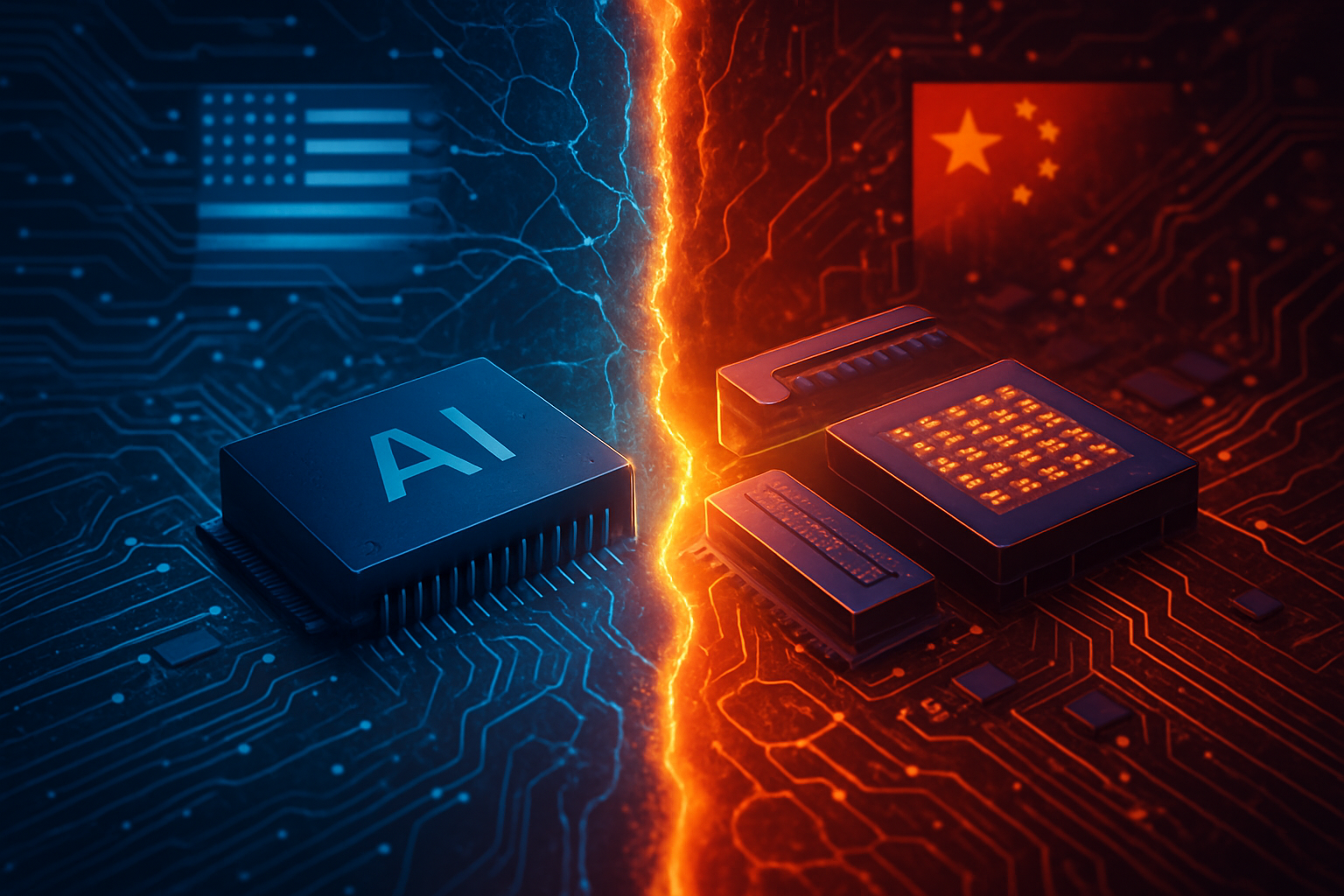
  • Geopolitical Fallout: Micron Exits China’s Server Chip Business Amid Escalating Tech War

    Geopolitical Fallout: Micron Exits China’s Server Chip Business Amid Escalating Tech War

    San Jose, CA & Beijing, China – October 17, 2025 – Micron Technology (NASDAQ: MU), a global leader in memory and storage solutions, is reportedly in the process of fully withdrawing from the server chip business in mainland China. This strategic retreat comes as a direct consequence of a ban imposed by the Chinese government in May 2023, which cited "severe cybersecurity risks" posed by Micron's products to the nation's critical information infrastructure. The move underscores the rapidly escalating technological decoupling between the United States and China, transforming the global semiconductor industry into a battleground for geopolitical supremacy and profoundly impacting the future of AI development.

    Micron's decision, emerging more than two years after Beijing's initial prohibition, highlights the enduring challenges faced by American tech companies operating in an increasingly fractured global market. While the immediate financial impact on Micron is expected to be mitigated by surging global demand for AI-driven memory, particularly High Bandwidth Memory (HBM), the exit from China's rapidly expanding data center sector marks a significant loss of market access and a stark indicator of the ongoing "chip war."

    Technical Implications and Market Reshaping in the AI Era

    Prior to the 2023 ban, Micron was a critical supplier of essential memory components for servers in China, including Dynamic Random-Access Memory (DRAM), Solid-State Drives (SSDs), and Low-Power Double Data Rate Synchronous Dynamic Random-Access Memory (LPDDR5) tailored for data center applications. These components are fundamental to the performance and operation of modern data centers, especially those powering advanced AI workloads and large language models. The Chinese government's blanket ban, without disclosing specific technical details of the alleged "security risks," left Micron with little recourse to address the claims directly.

    The technical implications for China's server infrastructure and burgeoning AI data centers have been substantial. Chinese server manufacturers, such as Inspur Group and Lenovo Group (HKG: 0992), were reportedly compelled to halt shipments containing Micron chips immediately after the ban. This forced a rapid adjustment in supply chains, requiring companies to qualify and integrate alternative memory solutions. While competitors like South Korea's Samsung Electronics (KRX: 005930) and SK Hynix (KRX: 000660), alongside domestic Chinese memory chip manufacturers such as Yangtze Memory Technologies Corp (YMTC) and Changxin Memory Technologies (CXMT), have stepped in to fill the void, ensuring seamless compatibility and equivalent performance remains a technical hurdle. Domestic alternatives, while rapidly advancing with state support, may still lag behind global leaders in terms of cutting-edge performance and yield.

    The ban has inadvertently accelerated China's drive for self-sufficiency in AI chips and related infrastructure. China's investment in computing data centers surged ninefold to 24.7 billion yuan ($3.4 billion) in 2024, an expansion from which Micron was conspicuously absent. This monumental investment underscores Beijing's commitment to building indigenous AI capabilities, reducing reliance on foreign technology, and fostering a protected market for domestic champions, even if it means potential short-term compromises on the absolute latest memory technologies.

    Competitive Shifts and Strategic Repositioning for AI Giants

    Micron's withdrawal from China's server chip market creates a significant vacuum, leading to a profound reshaping of competitive dynamics within the global AI and semiconductor industries. The immediate beneficiaries are clearly the remaining memory giants and emerging domestic players. Samsung Electronics and SK Hynix stand to gain substantial market share in China's data center segment, leveraging their established manufacturing capabilities and existing relationships. More critically, Chinese domestic chipmakers YMTC and CXMT are expanding aggressively, bolstered by strong government backing and a protected domestic market, accelerating China's ambitious drive for self-sufficiency in key semiconductor technologies vital for AI.

    For Chinese AI labs and tech companies, the competitive landscape is shifting towards a more localized supply chain. They face increased pressure to "friend-shore" their memory procurement, relying more heavily on domestic Chinese suppliers or non-U.S. vendors. While this fosters local industry growth, it could also lead to higher costs or potentially slower access to the absolute latest memory technologies if domestic alternatives cannot keep pace with global leaders. However, Chinese tech giants like Lenovo can continue to procure Micron chips for their data center operations outside mainland China, illustrating the complex, bifurcated nature of the global market.

    Conversely, for global AI labs and tech companies operating outside China, Micron's strategic repositioning offers a different advantage. The company is reallocating resources to meet the robust global demand for AI and data center technologies, particularly in High Bandwidth Memory (HBM). HBM, with its significantly higher bandwidth, is crucial for training and running large AI models and accelerators. Micron, alongside SK Hynix and Samsung, is one of the few companies capable of producing HBM in volume, giving it a strategic edge in the global AI ecosystem. Companies like Microsoft (NASDAQ: MSFT) are already accelerating efforts to relocate server production out of China, indicating a broader diversification of supply chains and a global shift towards resilience over pure efficiency.

    Wider Geopolitical Significance: A Deepening "Silicon Curtain"

    Micron's exit is not merely a corporate decision but a stark manifestation of the deepening "technological decoupling" between the U.S. and China, with profound implications for the broader AI landscape and global technological trends. This event accelerates the emergence of a "Silicon Curtain," leading to fragmented and regionalized AI development trajectories where nations prioritize technological sovereignty over global integration.

    The ban on Micron underscores how advanced chips, the foundational components for AI, have become a primary battleground in geopolitical competition. Beijing's action against Micron was widely interpreted as retaliation for Washington's tightened restrictions on chip exports and advanced semiconductor technology to China. This tit-for-tat dynamic is driving "techno-nationalism," where nations aggressively invest in domestic chip manufacturing—as seen with the U.S. CHIPS Act and similar EU initiatives—and tighten technological alliances to secure critical supply chains. The competition is no longer just about trade but about asserting global power and controlling the computing infrastructure that underpins future AI capabilities, defense, and economic dominance.

    This situation draws parallels to historical periods of intense technological rivalry, such as the Cold War era's space race and computer science competition between the U.S. and the Soviet Union. More recently, the U.S. sanctions against Huawei (SHE: 002502) served as a precursor, demonstrating how cutting off access to critical technology can force companies and nations to pivot towards self-reliance. Micron's ban is a continuation of this trend, solidifying the notion that control over advanced chips is intrinsically linked to national security and economic power. The potential concerns are significant: economic costs due to fragmented supply chains, stifled innovation from reduced global collaboration, and intensified geopolitical tensions from reduced global collaboration, and intensified geopolitical tensions as technology becomes increasingly weaponized.

    The AI Horizon: Challenges and Predictions

    Looking ahead, Micron's exit and the broader U.S.-China tech rivalry are set to shape the near-term and long-term trajectory of the AI industry. For Micron, the immediate future involves leveraging its leadership in HBM and other high-performance memory to capitalize on the booming global AI data center market. The company is actively pursuing HBM4 supply agreements, with projections indicating its full 2026 capacity is already being discussed for allocation. This strategic pivot towards AI-specific memory solutions is crucial for offsetting the loss of the China server chip market.

    For China's AI industry, the long-term outlook involves an accelerated pursuit of self-sufficiency. Beijing will continue to heavily invest in domestic chip design and manufacturing, with companies like Alibaba (NYSE: BABA) boosting AI spending and developing homegrown chips. While China is a global leader in AI research publications, the challenge remains in developing advanced manufacturing capabilities and securing access to cutting-edge chip-making equipment to compete at the highest echelons of global semiconductor production. The country's "AI plus" strategy will drive significant domestic investment in data centers and related technologies.

    Experts predict that the U.S.-China tech war is not abating but intensifying, with the competition for AI supremacy and semiconductor control defining the next decade. This could lead to a complete bifurcation of global supply chains into two distinct ecosystems: one dominated by the U.S. and its allies, and another by China. This fragmentation will complicate trade, limit market access, and intensify competition, forcing companies and nations to choose sides. The overarching challenge is to manage the geopolitical risks while fostering innovation, ensuring resilient supply chains, and mitigating the potential for a global technological divide that could hinder overall progress in AI.

    A New Chapter in AI's Geopolitical Saga

    Micron's decision to exit China's server chip business is a pivotal moment, underscoring the profound and irreversible impact of geopolitical tensions on the global technology landscape. It serves as a stark reminder that the future of AI is inextricably linked to national security, supply chain resilience, and the strategic competition between global powers.

    The key takeaways are clear: the era of seamlessly integrated global tech supply chains is waning, replaced by a more fragmented and nationalistic approach. While Micron faces the challenge of losing a significant market segment, its strategic pivot towards the booming global AI memory market, particularly HBM, positions it to maintain technological leadership. For China, the ban accelerates its formidable drive towards AI self-sufficiency, fostering domestic champions and reshaping its technological ecosystem. The long-term impact points to a deepening "Silicon Curtain," where technological ecosystems diverge, leading to increased costs, potential innovation bottlenecks, and heightened geopolitical risks.

    In the coming weeks and months, all eyes will be on formal announcements from Micron regarding the full scope of its withdrawal and any organizational impacts. We will also closely monitor the performance of Micron's competitors—Samsung, SK Hynix, YMTC, and CXMT—in capturing the vacated market share in China. Further regulatory actions from Beijing or policy adjustments from Washington, particularly concerning other U.S. chipmakers like Nvidia (NASDAQ: NVDA) and Intel (NASDAQ: INTC) who have also faced security accusations, will indicate the trajectory of this escalating tech rivalry. The ongoing realignment of global supply chains and strategic alliances will continue to be a critical watch point, as the world navigates this new chapter in AI's geopolitical saga.


    This content is intended for informational purposes only and represents analysis of current AI developments.

    TokenRing AI delivers enterprise-grade solutions for multi-agent AI workflow orchestration, AI-powered development tools, and seamless remote collaboration platforms.
    For more information, visit https://www.tokenring.ai/.

  • Micron Soars: AI Memory Demand Fuels Unprecedented Stock Surge and Analyst Optimism

    Micron Soars: AI Memory Demand Fuels Unprecedented Stock Surge and Analyst Optimism

    Micron Technology (NASDAQ: MU) has experienced a remarkable and sustained stock surge throughout 2025, driven by an insatiable global demand for high-bandwidth memory (HBM) solutions crucial for artificial intelligence workloads. This meteoric rise has not only seen its shares nearly double year-to-date but has also garnered overwhelmingly positive outlooks from financial analysts, firmly cementing Micron's position as a pivotal player in the ongoing AI revolution. As of mid-October 2025, the company's stock has reached unprecedented highs, underscoring a dramatic turnaround and highlighting the profound impact of AI on the semiconductor industry.

    The catalyst for this extraordinary performance is the explosive growth in AI server deployments, which demand specialized, high-performance memory to efficiently process vast datasets and complex algorithms. Micron's strategic investments in advanced memory technologies, particularly HBM, have positioned it perfectly to capitalize on this burgeoning market. The company's fiscal 2025 results underscore this success, reporting record full-year revenue and net income that significantly surpassed analyst expectations, signaling a robust and accelerating demand landscape.

    The Technical Backbone of AI: Micron's Memory Prowess

    At the heart of Micron's (NASDAQ: MU) recent success lies its technological leadership in high-bandwidth memory (HBM) and high-performance DRAM, components that are indispensable for the next generation of AI accelerators and data centers. Micron's CEO, Sanjay Mehrotra, has repeatedly emphasized that "memory is very much at the heart of this AI revolution," presenting a "tremendous opportunity for memory and certainly a tremendous opportunity for HBM." This sentiment is borne out by the company's confirmed reports that its entire HBM supply for calendar year 2025 is completely sold out, with discussions already well underway for 2026 demand, and even HBM4 capacity anticipated to be sold out for 2026 in the coming months.

    Micron's HBM3E modules, in particular, are integral to cutting-edge AI accelerators, including NVIDIA's (NASDAQ: NVDA) Blackwell GPUs. This integration highlights the critical role Micron plays in enabling the performance benchmarks of the most powerful AI systems. The financial impact of HBM is substantial, with the product line generating $2 billion in revenue in fiscal Q4 2025 alone, contributing to an annualized run rate of $8 billion. When combined with high-capacity DIMMs and low-power (LP) server DRAM, the total revenue from these AI-critical memory solutions reached $10 billion in fiscal 2025, marking a more than five-fold increase from the previous fiscal year.

    This shift underscores a broader transformation within the DRAM market, with Micron projecting that AI-related demand will constitute over 40% of its total DRAM revenue by 2026, a significant leap from just 15% in 2023. This is largely due to AI servers requiring five to six times more memory than traditional servers, making DRAM a paramount component in their architecture. The company's data center segment has been a primary beneficiary, accounting for a record 56% of company revenue in fiscal 2025, experiencing a staggering 137% year-over-year increase to $20.75 billion. Furthermore, Micron is actively developing HBM4, which is expected to offer over 60% more bandwidth than HBM3E and align with customer requirements for a 2026 volume ramp, reinforcing its long-term strategic positioning in the advanced AI memory market. This continuous innovation ensures that Micron remains at the forefront of memory technology, differentiating it from competitors and solidifying its role as a key enabler of AI progress.

    Competitive Dynamics and Market Implications for the AI Ecosystem

    Micron's (NASDAQ: MU) surging performance and its dominance in the AI memory sector have significant repercussions across the entire AI ecosystem, impacting established tech giants, specialized AI companies, and emerging startups alike. Companies like NVIDIA (NASDAQ: NVDA), a leading designer of GPUs for AI, stand to directly benefit from Micron's advancements, as high-performance HBM is a critical component for their next-generation AI accelerators. The robust supply and technological leadership from Micron ensure that these AI chip developers have access to the memory necessary to power increasingly complex and demanding AI models. Conversely, other memory manufacturers, such as Samsung (KRX: 005930) and SK Hynix (KRX: 000660), face heightened competition. While these companies also produce HBM, Micron's current market traction and sold-out capacity for 2025 and 2026 indicate a strong competitive edge, potentially leading to shifts in market share and increased pressure on rivals to accelerate their own HBM development and production.

    The competitive implications extend beyond direct memory rivals. Cloud service providers (CSPs) like Amazon (NASDAQ: AMZN) Web Services, Microsoft (NASDAQ: MSFT) Azure, and Google (NASDAQ: GOOGL) Cloud, which are heavily investing in AI infrastructure, are direct beneficiaries of Micron's HBM capabilities. Their ability to offer cutting-edge AI services is intrinsically linked to the availability and performance of advanced memory. Micron's consistent supply and technological roadmap provide stability and innovation for these CSPs, enabling them to scale their AI offerings and maintain their competitive edge. For AI startups, access to powerful and efficient memory solutions means they can develop and deploy more sophisticated AI models, fostering innovation across various sectors, from autonomous driving to drug discovery.

    This development potentially disrupts existing products or services that rely on less advanced memory solutions, pushing the industry towards higher performance standards. Companies that cannot integrate or offer AI solutions powered by high-bandwidth memory may find their offerings becoming less competitive. Micron's strategic advantage lies in its ability to meet the escalating demand for HBM, which is becoming a bottleneck for AI expansion. Its market positioning is further bolstered by strong analyst confidence, with many raising price targets and reiterating "Buy" ratings, citing the "AI memory supercycle." This sustained demand and Micron's ability to capitalize on it will likely lead to continued investment in R&D, further widening the technological gap and solidifying its leadership in the specialized memory market for AI.

    The Broader AI Landscape: A New Era of Performance

    Micron's (NASDAQ: MU) recent stock surge, fueled by its pivotal role in the AI memory market, signifies a profound shift within the broader artificial intelligence landscape. This development is not merely about a single company's financial success; it underscores the critical importance of specialized hardware in unlocking the full potential of AI. As AI models, particularly large language models (LLMs) and complex neural networks, grow in size and sophistication, the demand for memory that can handle massive data throughput at high speeds becomes paramount. Micron's HBM solutions are directly addressing this bottleneck, enabling the training and inference of models that were previously computationally prohibitive. This fits squarely into the trend of hardware-software co-design, where advancements in one domain directly enable breakthroughs in the other.

    The impacts of this development are far-reaching. It accelerates the deployment of more powerful AI systems across industries, from scientific research and healthcare to finance and entertainment. Faster, more efficient memory means quicker model training, more responsive AI applications, and the ability to process larger datasets in real-time. This can lead to significant advancements in areas like personalized medicine, autonomous systems, and advanced analytics. However, potential concerns also arise. The intense demand for HBM could lead to supply chain pressures, potentially increasing costs for smaller AI developers or creating a hardware-driven divide where only well-funded entities can afford the necessary infrastructure. There's also the environmental impact of manufacturing these advanced components and powering the energy-intensive AI data centers they serve.

    Comparing this to previous AI milestones, such as the rise of GPUs for parallel processing or the development of specialized AI accelerators, Micron's contribution marks another crucial hardware inflection point. Just as GPUs transformed deep learning, high-bandwidth memory is now redefining the limits of AI model scale and performance. It's a testament to the idea that innovation in AI is not solely about algorithms but also about the underlying silicon that brings those algorithms to life. This period is characterized by an "AI memory supercycle," a term coined by analysts, suggesting a sustained period of high demand and innovation in memory technology driven by AI's exponential growth. This ongoing evolution of hardware capabilities is crucial for realizing the ambitious visions of artificial general intelligence (AGI) and ubiquitous AI.

    The Road Ahead: Anticipating Future Developments in AI Memory

    Looking ahead, the trajectory set by Micron's (NASDAQ: MU) current success in AI memory solutions points to several key developments on the horizon. In the near term, we can expect continued aggressive investment in HBM research and development from Micron and its competitors. The race to achieve higher bandwidth, lower power consumption, and increased stack density will intensify, with HBM4 and subsequent generations pushing the boundaries of what's possible. Micron's proactive development of HBM4, promising over 60% more bandwidth than HBM3E and aligning with a 2026 volume ramp, indicates a clear path for sustained innovation. This will likely lead to even more powerful and efficient AI accelerators, enabling the development of larger and more complex AI models with reduced training times and improved inference capabilities.

    Potential applications and use cases on the horizon are vast and transformative. As memory bandwidth increases, AI will become more integrated into real-time decision-making systems, from advanced robotics and autonomous vehicles requiring instantaneous data processing to sophisticated edge AI devices performing complex tasks locally. We could see breakthroughs in areas like scientific simulation, climate modeling, and personalized digital assistants that can process and recall vast amounts of information with unprecedented speed. The convergence of high-bandwidth memory with other emerging technologies, such as quantum computing or neuromorphic chips, could unlock entirely new paradigms for AI.

    However, challenges remain. Scaling HBM production to meet the ever-increasing demand is a significant hurdle, requiring massive capital expenditure and sophisticated manufacturing processes. There's also the ongoing challenge of optimizing the entire AI hardware stack, ensuring that the improvements in memory are not bottlenecked by other components like interconnects or processing units. Moreover, as HBM becomes more prevalent, managing thermal dissipation in tightly packed AI servers will be crucial. Experts predict that the "AI memory supercycle" will continue for several years, but some analysts caution about potential oversupply in the HBM market by late 2026 due to increased competition. Nevertheless, the consensus is that Micron is well-positioned, and its continued innovation in this space will be critical for the sustained growth and advancement of artificial intelligence.

    A Defining Moment in AI Hardware Evolution

    Micron's (NASDAQ: MU) extraordinary stock performance in 2025, driven by its leadership in high-bandwidth memory (HBM) for AI, marks a defining moment in the evolution of artificial intelligence hardware. The key takeaway is clear: specialized, high-performance memory is not merely a supporting component but a fundamental enabler of advanced AI capabilities. Micron's strategic foresight and technological execution have allowed it to capitalize on the explosive demand for HBM, positioning it as an indispensable partner for companies at the forefront of AI innovation, from chip designers like NVIDIA (NASDAQ: NVDA) to major cloud service providers.

    This development's significance in AI history cannot be overstated. It underscores a crucial shift where the performance of AI systems is increasingly dictated by memory bandwidth and capacity, moving beyond just raw computational power. It highlights the intricate dance between hardware and software advancements, where each pushes the boundaries of the other. The "AI memory supercycle" is a testament to the profound and accelerating impact of AI on the semiconductor industry, creating new markets and driving unprecedented growth for companies like Micron.

    Looking forward, the long-term impact of this trend will be a continued reliance on specialized memory solutions for increasingly complex AI models. We should watch for Micron's continued innovation in HBM4 and beyond, its ability to scale production to meet relentless demand, and how competitors like Samsung (KRX: 005930) and SK Hynix (KRX: 000660) respond to the heightened competition. The coming weeks and months will likely bring further analyst revisions, updates on HBM production capacity, and announcements from AI chip developers showcasing new products powered by these advanced memory solutions. Micron's journey is a microcosm of the broader AI revolution, demonstrating how foundational hardware innovations are paving the way for a future shaped by intelligent machines.


    This content is intended for informational purposes only and represents analysis of current AI developments.

    TokenRing AI delivers enterprise-grade solutions for multi-agent AI workflow orchestration, AI-powered development tools, and seamless remote collaboration platforms.
    For more information, visit https://www.tokenring.ai/.

  • The Silicon Backbone: How Chip Innovation Fuels the Soaring Valuations of AI Stocks

    The Silicon Backbone: How Chip Innovation Fuels the Soaring Valuations of AI Stocks

    In the relentless march of artificial intelligence, a fundamental truth underpins every groundbreaking advancement: the performance of AI is inextricably linked to the prowess of the semiconductors that power it. As AI models grow exponentially in complexity and capability, the demand for ever more powerful, efficient, and specialized processing units has ignited an "AI Supercycle" within the tech industry. This symbiotic relationship sees innovations in chip design and manufacturing not only unlocking new frontiers for AI but also directly correlating with the market capitalization and investor confidence in AI-focused companies, driving their stock valuations to unprecedented heights.

    The current landscape is a testament to how silicon innovation acts as the primary catalyst for the AI revolution. From the training of colossal large language models to real-time inference at the edge, advanced chips are the indispensable architects. This dynamic interplay underscores a crucial investment thesis: to understand the future of AI stocks, one must first grasp the cutting-edge developments in semiconductor technology.

    The Microscopic Engines Driving Macro AI Breakthroughs

    The technical bedrock of today's AI capabilities lies in a continuous stream of semiconductor advancements, far surpassing the general-purpose computing of yesteryear. At the forefront are specialized architectures like Graphics Processing Units (GPUs), pioneered by companies like NVIDIA (NASDAQ: NVDA), which have become the de facto standard for parallel processing in deep learning. Beyond GPUs, the rise of Tensor Processing Units (TPUs), Neural Processing Units (NPUs), and Application-Specific Integrated Circuits (ASICs) marks a significant evolution, purpose-built to optimize specific AI workloads for both training and inference, offering unparalleled efficiency and lower power consumption. Intel's Core Ultra processors, integrating NPUs, exemplify this shift towards specialized edge AI processing.

    These architectural innovations are complemented by relentless miniaturization, with process technologies pushing transistor sizes down to 3nm and even 2nm nodes. This allows for higher transistor densities, packing more computational power into smaller footprints, and enabling increasingly complex AI models to run faster and more efficiently. Furthermore, advanced packaging techniques like chiplets and 3D stacking are revolutionizing how these powerful components interact, mitigating the 'von Neumann bottleneck' by integrating layers of circuitry and enhancing data transfer. Companies like Broadcom (NASDAQ: AVGO) are deploying 3.5D XDSiP technology to create GenAI infrastructure with direct memory connections, dramatically boosting performance.

    Crucially, High Bandwidth Memory (HBM) is evolving at a breakneck pace to meet the insatiable data demands of AI. Micron Technology (NASDAQ: MU), for instance, has developed HBM3E chips capable of delivering bandwidth up to 1.2 TB/s, specifically optimized for AI workloads. This is a significant departure from previous memory solutions, directly addressing the need for rapid data access that large AI models require. The AI research community has reacted with widespread enthusiasm, recognizing these hardware advancements as critical enablers for the next generation of AI, allowing for the development of models that were previously computationally infeasible and accelerating the pace of discovery across all AI domains.

    Reshaping the AI Corporate Landscape

    The profound impact of semiconductor innovation reverberates throughout the corporate world, creating clear winners and challengers among AI companies, tech giants, and startups. NVIDIA (NASDAQ: NVDA) stands as the undisputed leader, with its H100, H200, and upcoming Blackwell architectures serving as the pivotal accelerators for virtually all major AI and machine learning tasks. The company's stock has seen a meteoric rise, surging over 43% in 2025 alone, driven by dominant data center sales and its robust CUDA software ecosystem, which locks in developers and reinforces its market position.

    Taiwan Semiconductor Manufacturing Company (NYSE: TSM), as the world's largest contract chipmaker, is an indispensable architect of this revolution. Its technological prowess in producing advanced chips on leading-edge 3-nanometer and upcoming 2-nanometer process nodes is critical for AI models developed by giants like NVIDIA and Apple (NASDAQ: AAPL). TSMC's stock has gained over 34% year-to-date, reflecting its central role in the AI chip supply chain and the surging demand for its services. Advanced Micro Devices (NASDAQ: AMD) is emerging as a significant challenger, with its own suite of AI-specific hardware driving substantial stock gains and intensifying competition in the high-performance computing segment.

    Beyond the chip designers and manufacturers, the "AI memory supercycle" has dramatically benefited companies like Micron Technology (NASDAQ: MU), whose stock is up 65% year-to-date in 2025 due to the surging demand for HBM. Even intellectual property providers like Arm Holdings (NASDAQ: ARM) have seen their valuations soar as companies like Qualcomm (NASDAQ: QCOM) embrace their latest computing architectures for AI workloads, especially at the edge. This intense demand has also created a boom for semiconductor equipment manufacturers such as ASML (NASDAQ: ASML), Lam Research Corp. (NASDAQ: LRCX), and KLA Corp. (NASDAQ: KLAC), who supply the critical tools for advanced chip production. This dynamic environment is forcing tech giants to either innovate internally or strategically partner to secure access to these foundational technologies, leading to potential disruptions for those relying on older or less optimized hardware solutions.

    The Broader AI Canvas: Impacts and Implications

    These semiconductor advancements are not just incremental improvements; they represent a foundational shift that profoundly impacts the broader AI landscape. They are the engine behind the "AI Supercycle," enabling the development and deployment of increasingly sophisticated AI models, particularly in generative AI and large language models (LLMs). The ability to train models with billions, even trillions, of parameters in a reasonable timeframe is a direct consequence of these powerful chips. This translates into more intelligent, versatile, and human-like AI applications across industries, from scientific discovery and drug development to personalized content creation and autonomous systems.

    The impacts are far-reaching: faster training times mean quicker iteration cycles for AI researchers, accelerating innovation. More efficient inference capabilities enable real-time AI applications on devices, pushing intelligence closer to the data source and reducing latency. However, this rapid growth also brings potential concerns. The immense power requirements of AI data centers, despite efficiency gains in individual chips, pose environmental and infrastructural challenges. There are also growing concerns about supply chain concentration, with a handful of companies dominating the production of cutting-edge AI chips, creating potential vulnerabilities. Nevertheless, these developments are comparable to previous AI milestones like the ImageNet moment or the advent of transformers, serving as a critical enabler that has dramatically expanded the scope and ambition of what AI can achieve.

    The Horizon: Future Silicon and Intelligent Systems

    Looking ahead, the pace of semiconductor innovation shows no signs of slowing. Experts predict a continued drive towards even smaller process nodes (e.g., Angstrom-scale computing), more specialized AI accelerators tailored for specific model types, and further advancements in advanced packaging technologies like heterogeneous integration. The goal is not just raw computational power but also extreme energy efficiency and greater integration of memory and processing. We can expect to see a proliferation of purpose-built AI chips designed for specific applications, ranging from highly efficient edge devices for smart cities and autonomous vehicles to ultra-powerful data center solutions for the next generation of AI research.

    Potential applications on the horizon are vast and transformative. More powerful and efficient chips will unlock truly multimodal AI, capable of seamlessly understanding and generating text, images, video, and even 3D environments. This will drive advancements in robotics, personalized healthcare, climate modeling, and entirely new forms of human-computer interaction. Challenges remain, including managing the immense heat generated by these powerful chips, the escalating costs of developing and manufacturing at the bleeding edge, and the need for robust software ecosystems that can fully harness the hardware's capabilities. Experts predict that the next decade will see AI become even more pervasive, with silicon innovation continuing to be the primary limiting factor and enabler, pushing the boundaries of what is possible.

    The Unbreakable Link: A Concluding Assessment

    The intricate relationship between semiconductor innovation and the performance of AI-focused stocks is undeniable and, indeed, foundational to the current technological epoch. Chip advancements are not merely supportive; they are the very engine of AI progress, directly translating into enhanced capabilities, new applications, and, consequently, soaring investor confidence and market valuations. Companies like NVIDIA (NASDAQ: NVDA), TSMC (NYSE: TSM), AMD (NASDAQ: AMD), and Micron (NASDAQ: MU) exemplify how leadership in silicon technology directly translates into economic leadership in the AI era.

    This development signifies a pivotal moment in AI history, underscoring that hardware remains as critical as software in shaping the future of artificial intelligence. The "AI Supercycle" is driven by this symbiotic relationship, fueling unprecedented investment and innovation. In the coming weeks and months, industry watchers should closely monitor announcements regarding new chip architectures, manufacturing process breakthroughs, and the adoption rates of these advanced technologies by major AI labs and cloud providers. The companies that can consistently deliver the most powerful and efficient silicon will continue to dominate the AI landscape, shaping not only the tech industry but also the very fabric of society.


    This content is intended for informational purposes only and represents analysis of current AI developments.

    TokenRing AI delivers enterprise-grade solutions for multi-agent AI workflow orchestration, AI-powered development tools, and seamless remote collaboration platforms.
    For more information, visit https://www.tokenring.ai/.

  • AI’s Insatiable Memory Appetite Ignites Decade-Long ‘Supercycle,’ Reshaping Semiconductor Industry

    AI’s Insatiable Memory Appetite Ignites Decade-Long ‘Supercycle,’ Reshaping Semiconductor Industry

    The burgeoning field of artificial intelligence, particularly the rapid advancement of generative AI and large language models, has developed an insatiable appetite for high-performance memory chips. This unprecedented demand is not merely a transient spike but a powerful force driving a projected decade-long "supercycle" in the memory chip market, fundamentally reshaping the semiconductor industry and its strategic priorities. As of October 2025, memory chips are no longer just components; they are critical enablers and, at times, strategic bottlenecks for the continued progression of AI.

    This transformative period is characterized by surging prices, looming supply shortages, and a strategic pivot by manufacturers towards specialized, high-bandwidth memory (HBM) solutions. The ripple effects are profound, influencing everything from global supply chains and geopolitical dynamics to the very architecture of future computing systems and the competitive landscape for tech giants and innovative startups alike.

    The Technical Core: HBM Leads a Memory Revolution

    At the heart of AI's memory demands lies High-Bandwidth Memory (HBM), a specialized type of DRAM that has become indispensable for AI training and high-performance computing (HPC) platforms. HBM's superior speed, efficiency, and lower power consumption—compared to traditional DRAM—make it the preferred choice for feeding the colossal data requirements of modern AI accelerators. Current standards like HBM3 and HBM3E are in high demand, with HBM4 and HBM4E already on the horizon, promising even greater performance. Companies like SK Hynix (KRX: 000660), Samsung (KRX: 005930), and Micron (NASDAQ: MU) are the primary manufacturers, with Micron notably having nearly sold out its HBM output through 2026.

    Beyond HBM, high-capacity enterprise Solid State Drives (SSDs) utilizing NAND Flash are crucial for storing the massive datasets that fuel AI models. Analysts predict that by 2026, one in five NAND bits will be dedicated to AI applications, contributing significantly to the market's value. This shift in focus towards high-value HBM is tightening capacity for traditional DRAM (DDR4, DDR5, LPDDR6), leading to widespread price hikes. For instance, Micron has reportedly suspended DRAM quotations and raised prices by 20-30% for various DDR types, with automotive DRAM seeing increases as high as 70%. The exponential growth of AI is accelerating the technical evolution of both DRAM and NAND Flash, as the industry races to overcome the "memory wall"—the performance gap between processors and traditional memory. Innovations are heavily concentrated on achieving higher bandwidth, greater capacity, and improved power efficiency to meet AI's relentless demands.

    The scale of this demand is staggering. OpenAI's ambitious "Stargate" project, a multi-billion dollar initiative to build a vast network of AI data centers, alone projects a staggering demand equivalent to as many as 900,000 DRAM wafers per month by 2029. This figure represents up to 40% of the entire global DRAM output and more than double the current global HBM production capacity, underscoring the immense scale of AI's memory requirements and the pressure on manufacturers. Initial reactions from the AI research community and industry experts confirm that memory, particularly HBM, is now the critical bottleneck for scaling AI models further, driving intense R&D into new memory architectures and packaging technologies.

    Reshaping the AI and Tech Industry Landscape

    The AI-driven memory supercycle is profoundly impacting AI companies, tech giants, and startups, creating clear winners and intensifying competition.

    Leading the charge in benefiting from this surge is Nvidia (NASDAQ: NVDA), whose AI GPUs form the backbone of AI superclusters. With its H100 and upcoming Blackwell GPUs considered essential for large-scale AI models, Nvidia's near-monopoly in AI training chips is further solidified by its active strategy of securing HBM supply through substantial prepayments to memory chipmakers. SK Hynix (KRX: 000660) has emerged as a dominant leader in HBM technology, reportedly holding approximately 70% of the global HBM market share in early 2025. The company is poised to overtake Samsung as the leading DRAM supplier by revenue in 2025, driven by HBM's explosive growth. SK Hynix has formalized strategic partnerships with OpenAI for HBM supply for the "Stargate" project and plans to double its HBM output in 2025. Samsung (KRX: 005930), despite past challenges with HBM, is aggressively investing in HBM4 development, aiming to catch up and maximize performance with customized HBMs. Samsung also formalized a strategic partnership with OpenAI for the "Stargate" project in early October 2025. Micron Technology (NASDAQ: MU) is another significant beneficiary, having sold out its HBM production capacity through 2025 and securing pricing agreements for most of its HBM3E supply for 2026. Micron is rapidly expanding its HBM capacity and has recently passed Nvidia's qualification tests for 12-Hi HBM3E. TSMC (NYSE: TSM), as the world's largest dedicated semiconductor foundry, also stands to gain significantly, manufacturing leading-edge chips for Nvidia and its competitors.

    The competitive landscape is intensifying, with HBM dominance becoming a key battleground. SK Hynix and Samsung collectively control an estimated 80% of the HBM market, giving them significant leverage. The technology race is focused on next-generation HBM, such as HBM4, with companies aggressively pushing for higher bandwidth and power efficiency. Supply chain bottlenecks, particularly HBM shortages and the limited capacity for advanced packaging like TSMC's CoWoS technology, remain critical challenges. For AI startups, access to cutting-edge memory can be a significant hurdle due to high demand and pre-orders by larger players, making strategic partnerships with memory providers or cloud giants increasingly vital. The market positioning sees HBM as the primary growth driver, with the HBM market projected to nearly double in revenue in 2025 to approximately $34 billion and continue growing by 30% annually until 2030. Hyperscalers like Microsoft (NASDAQ: MSFT), Alphabet (NASDAQ: GOOGL), Amazon (NASDAQ: AMZN), and Meta (NASDAQ: META) are investing hundreds of billions in AI infrastructure, driving unprecedented demand and increasingly buying directly from memory manufacturers with multi-year contracts.

    Wider Significance and Broader Implications

    AI's insatiable memory demand in October 2025 is a defining trend, highlighting memory bandwidth and capacity as critical limiting factors for AI advancement, even beyond raw GPU power. This has spurred an intense focus on advanced memory technologies like HBM and emerging solutions such as Compute Express Link (CXL), which addresses memory disaggregation and latency. Anticipated breakthroughs for 2025 include AI models with "near-infinite memory capacity" and vastly expanded context windows, crucial for "agentic AI" systems that require long-term reasoning and continuity in interactions. The expansion of AI into edge devices like AI-enhanced PCs and smartphones is also creating new demand channels for optimized memory.

    The economic impact is profound. The AI memory chip market is in a "supercycle," projected to grow from USD 110 billion in 2024 to USD 1,248.8 billion by 2034, with HBM shipments alone expected to grow by 70% year-over-year in 2025. This has led to substantial price hikes for DRAM and NAND. Supply chain stress is evident, with major AI players forging strategic partnerships to secure massive HBM supplies for projects like OpenAI's "Stargate." Geopolitical tensions and export restrictions continue to impact supply chains, driving regionalization and potentially creating a "two-speed" industry. The scale of AI infrastructure buildouts necessitates unprecedented capital expenditure in manufacturing facilities and drives innovation in packaging and data center design.

    However, this rapid advancement comes with significant concerns. AI data centers are extraordinarily power-hungry, contributing to a projected doubling of electricity demand by 2030, raising alarms about an "energy crisis." Beyond energy, the environmental impact is substantial, with data centers requiring vast amounts of water for cooling and the production of high-performance hardware accelerating electronic waste. The "memory wall"—the performance gap between processors and memory—remains a critical bottleneck. Market instability due to the cyclical nature of memory manufacturing combined with explosive AI demand creates volatility, and the shift towards high-margin AI products can constrain supplies of other memory types. Comparing this to previous AI milestones, the current "supercycle" is unique because memory itself has become the central bottleneck and strategic enabler, necessitating fundamental architectural changes in memory systems rather than just more powerful processors. The challenges extend to system-level concerns like power, cooling, and the physical footprint of data centers, which were less pronounced in earlier AI eras.

    The Horizon: Future Developments and Challenges

    Looking ahead from October 2025, the AI memory chip market is poised for continued, transformative growth. The overall market is projected to reach $3079 million in 2025, with a remarkable CAGR of 63.5% from 2025 to 2033 for AI-specific memory. HBM is expected to remain foundational, with the HBM market growing 30% annually through 2030 and next-generation HBM4, featuring customer-specific logic dies, becoming a flagship product from 2026 onwards. Traditional DRAM and NAND will also see sustained growth, driven by AI server deployments and the adoption of QLC flash. Emerging memory technologies like MRAM, ReRAM, and PCM are being explored for storage-class memory applications, with the market for these technologies projected to grow 2.2 times its current size by 2035. Memory-optimized AI architectures, CXL technology, and even photonics are expected to play crucial roles in addressing future memory challenges.

    Potential applications on the horizon are vast, spanning from further advancements in generative AI and machine learning to the expansion of AI into edge devices like AI-enhanced PCs and smartphones, which will drive substantial memory demand from 2026. Agentic AI systems, requiring memory capable of sustaining long dialogues and adapting to evolving contexts, will necessitate explicit memory modules and vector databases. Industries like healthcare and automotive will increasingly rely on these advanced memory chips for complex algorithms and vast datasets.

    However, significant challenges persist. The "memory wall" continues to be a major hurdle, causing processors to stall and limiting AI performance. Power consumption of DRAM, which can account for up to 30% or more of total data center power usage, demands improved energy efficiency. Latency, scalability, and manufacturability of new memory technologies at cost-effective scales are also critical challenges. Supply chain constraints, rapid AI evolution versus slower memory development cycles, and complex memory management for AI models (e.g., "memory decay & forgetting" and data governance) all need to be addressed. Experts predict sustained and transformative market growth, with inference workloads surpassing training by 2025, making memory a strategic enabler. Increased customization of HBM products, intensified competition, and hardware-level innovations beyond HBM are also expected, with a blurring of compute and memory boundaries and an intense focus on energy efficiency across the AI hardware stack.

    A New Era of AI Computing

    In summary, AI's voracious demand for memory chips has ushered in a profound and likely decade-long "supercycle" that is fundamentally re-architecting the semiconductor industry. High-Bandwidth Memory (HBM) has emerged as the linchpin, driving unprecedented investment, innovation, and strategic partnerships among tech giants, memory manufacturers, and AI labs. The implications are far-reaching, from reshaping global supply chains and intensifying geopolitical competition to accelerating the development of energy-efficient computing and novel memory architectures.

    This development marks a significant milestone in AI history, shifting the primary bottleneck from raw processing power to the ability to efficiently store and access vast amounts of data. The industry is witnessing a paradigm shift where memory is no longer a passive component but an active, strategic element dictating the pace and scale of AI advancement. As we move forward, watch for continued innovation in HBM and emerging memory technologies, strategic alliances between AI developers and chipmakers, and increasing efforts to address the energy and environmental footprint of AI. The coming weeks and months will undoubtedly bring further announcements regarding capacity expansions, new product developments, and evolving market dynamics as the AI memory supercycle continues its transformative journey.


    This content is intended for informational purposes only and represents analysis of current AI developments.

    TokenRing AI delivers enterprise-grade solutions for multi-agent AI workflow orchestration, AI-powered development tools, and seamless remote collaboration platforms. For more information, visit https://www.tokenring.ai/.

  • India’s Chip Ambition: From Design Hub to Global Semiconductor Powerhouse, Backed by Industry Giants

    India’s Chip Ambition: From Design Hub to Global Semiconductor Powerhouse, Backed by Industry Giants

    India is rapidly ascending as a formidable player in the global semiconductor landscape, transitioning from a prominent design hub to an aspiring manufacturing and packaging powerhouse. This strategic pivot, fueled by an ambitious government agenda and significant international investments, is reshaping the global chip supply chain and drawing the attention of industry behemoths like ASML (AMS: ASML), the Dutch lithography equipment giant. With developments accelerating through October 2025, India's concerted efforts are setting the stage for it to become a crucial pillar in the world's semiconductor ecosystem, aiming to capture a substantial share of the trillion-dollar market by 2030.

    The nation's aggressive push, encapsulated by the India Semiconductor Mission (ISM), is a direct response to global supply chain vulnerabilities exposed in recent years and a strategic move to bolster its technological sovereignty. By offering robust financial incentives and fostering a conducive environment for manufacturing, India is attracting investments that promise to bring advanced fabrication (fab), assembly, testing, marking, and packaging (ATMP) capabilities to its shores. This comprehensive approach, combining policy support with skill development and international collaboration, marks a significant departure from previous, more fragmented attempts, signaling a serious and sustained commitment to building an end-to-end semiconductor value chain.

    Unpacking India's Semiconductor Ascent: Policy, Investment, and Innovation

    India's journey towards semiconductor self-reliance is underpinned by a multi-pronged strategy that leverages government incentives, attracts massive private investment, and focuses heavily on indigenous skill development and R&D. The India Semiconductor Mission (ISM), launched in December 2021 with an initial outlay of approximately $9.2 billion, serves as the central orchestrator, vetting projects and disbursing incentives. A key differentiator of this current push compared to previous efforts is the scale and commitment of financial support, with the Production Linked Incentive (PLI) Scheme offering up to 50% of project costs for fabs and ATMP facilities, potentially reaching 75% with state-level subsidies. As of October 2025, this initial allocation is nearly fully committed, prompting discussions for a second phase, indicating the overwhelming response and rapid progress.

    Beyond manufacturing, the Design Linked Incentive (DLI) Scheme is fostering indigenous intellectual property, supporting 23 chip design projects by September 2025. Complementing these, the Electronics Components Manufacturing Scheme (ECMS), approved in March 2025, has already attracted investment proposals exceeding $13 billion by October 2025, nearly doubling its initial target. This comprehensive policy framework differs significantly from previous, less integrated approaches by addressing the entire semiconductor value chain, from design to advanced packaging, and by actively engaging international partners through agreements with the US (TRUST), UK (TSI), EU, and Japan.

    The tangible results of these policies are evident in the significant investments pouring into the sector. Tata Electronics, in partnership with Taiwan's Powerchip Semiconductor Manufacturing Corp (PSMC), is establishing India's first wafer fabrication facility in Dholera, Gujarat, with an investment of approximately $11 billion. This facility, targeting 28 nm and above nodes, expects trial production by early 2027. Simultaneously, Tata Electronics is building a state-of-the-art ATMP facility in Jagiroad, Assam, with a $27 billion investment, anticipated to be operational by mid-2025. US-based memory chipmaker Micron Technology (NASDAQ: MU) is investing $2.75 billion in an ATMP facility in Sanand, Gujarat, with Phase 1 expected to be operational by late 2024 or early 2025. Other notable projects include a tripartite collaboration between CG Power (NSE: CGPOWER), Renesas, and Stars Microelectronics for a semiconductor plant in Sanand, and Kaynes SemiCon (a subsidiary of Kaynes Technology India Limited (NSE: KAYNES)) on track to deliver India's first packaged semiconductor chips by October 2025 from its OSAT unit. Furthermore, India inaugurated its first centers for advanced 3-nanometer chip design in May 2025, pushing the boundaries of innovation.

    Competitive Implications and Corporate Beneficiaries

    India's emergence as a semiconductor hub carries profound implications for global tech giants, established AI companies, and burgeoning startups. Companies directly investing in India, such as Micron Technology (NASDAQ: MU), Tata Electronics, and CG Power (NSE: CGPOWER), stand to benefit significantly from the substantial government subsidies, a rapidly growing domestic market, and a vast, increasingly skilled talent pool. For Micron, its ATMP facility in Sanand not only diversifies its manufacturing footprint but also positions it strategically within a burgeoning electronics market. Tata's dual investment in a fab and an ATMP unit marks a monumental step for an Indian conglomerate, establishing it as a key domestic player in a highly capital-intensive industry.

    The competitive landscape is shifting as major global players eye India for diversification and growth. ASML (AMS: ASML), a critical enabler of advanced chip manufacturing, views India as attractive due to its immense talent pool for engineering and software development, a rapidly expanding market for electronics, and its role in strengthening global supply chain resilience. While ASML currently focuses on establishing a customer support office and showcasing its lithography portfolio, its engagement signals future potential for deeper collaboration, especially as India's manufacturing capabilities mature. For other companies like Intel (NASDAQ: INTC), AMD (NASDAQ: AMD), and NVIDIA (NASDAQ: NVDA), which already have significant design and R&D operations in India, the development of local manufacturing and packaging capabilities could streamline their supply chains, reduce lead times, and potentially lower costs for products targeted at the Indian market.

    This strategic shift could disrupt existing supply chain dependencies, particularly on East Asian manufacturing hubs, by offering an alternative. For startups and smaller AI labs, India's growing ecosystem, supported by schemes like the DLI, provides opportunities for indigenous chip design and development, fostering local innovation. However, the success of these ventures will depend on continued government support, access to cutting-edge technology, and the ability to compete on a global scale. The market positioning of Indian domestic firms like Tata and Kaynes Technology is being significantly enhanced, transforming them from service providers or component assemblers to integrated semiconductor players, creating new strategic advantages in the global tech race.

    Wider Significance: Reshaping the Global AI and Tech Landscape

    India's ambitious foray into semiconductor manufacturing is not merely an economic endeavor; it represents a significant geopolitical and strategic move that will profoundly impact the broader AI and tech landscape. The most immediate and critical impact is on global supply chain diversification and resilience. The COVID-19 pandemic and geopolitical tensions have starkly highlighted the fragility of a highly concentrated semiconductor supply chain. India's emergence offers a crucial alternative, reducing the world's reliance on a few key regions and mitigating risks associated with natural disasters, trade disputes, or regional conflicts. This diversification is vital for all tech sectors, including AI, which heavily depend on a steady supply of advanced chips for training models, running inference, and developing new hardware.

    This development also fits into the broader trend of "friend-shoring" and de-risking in global trade, particularly in critical technologies. India's strong democratic institutions and strategic partnerships with Western nations make it an attractive location for semiconductor investments, aligning with efforts to build more secure and politically stable supply chains. The economic implications for India are transformative, promising to create hundreds of thousands of high-skilled jobs, attract foreign direct investment, and significantly boost its manufacturing sector, contributing to its goal of becoming a developed economy. The growth of a domestic semiconductor industry will also catalyze innovation in allied sectors like AI, IoT, automotive electronics, and telecommunications, as local access to advanced chips can accelerate product development and deployment.

    Potential concerns, however, include the immense capital intensity of semiconductor manufacturing, the need for consistent policy support over decades, and challenges related to infrastructure (reliable power, water, and logistics) and environmental regulations. While India boasts a vast talent pool, scaling up the highly specialized workforce required for advanced fab operations remains a significant hurdle. Technology transfer and intellectual property protection will also be crucial for securing partnerships with leading global players. Comparisons to previous AI milestones reveal that access to powerful, custom-designed chips has been a consistent driver of AI breakthroughs. India's ability to produce these chips domestically could accelerate its own AI research and application development, similar to how local chip ecosystems have historically fueled technological advancement in other nations. This strategic move is not just about manufacturing chips; it's about building the foundational infrastructure for India's digital future and its role in the global technological order.

    Future Trajectories and Expert Predictions

    Looking ahead, the next few years are critical for India's semiconductor ambitions, with several key developments expected to materialize. The operationalization of Micron Technology's (NASDAQ: MU) ATMP facility by early 2025 and Tata Electronics' (in partnership with PSMC) wafer fab by early 2027 will be significant milestones, demonstrating India's capability to move beyond design into advanced manufacturing and packaging. Experts predict a phased approach, with India initially focusing on mature nodes (28nm and above) and advanced packaging, gradually moving towards more cutting-edge technologies as its ecosystem matures and expertise deepens. The ongoing discussions for a second phase of the PLI scheme underscore the government's commitment to continuous investment and expansion.

    The potential applications and use cases on the horizon are vast, spanning across critical sectors. Domestically produced chips will fuel the growth of India's burgeoning smartphone market, automotive sector (especially electric vehicles), 5G infrastructure, and the rapidly expanding Internet of Things (IoT) ecosystem. Crucially, these chips will be vital for India's burgeoning AI sector, enabling more localized and secure development of AI models and applications, from smart city solutions to advanced robotics and healthcare diagnostics. The development of advanced 3nm chip design centers also hints at future capabilities in high-performance computing, essential for cutting-edge AI research.

    However, significant challenges remain. Ensuring a sustainable supply of ultra-pure water and uninterrupted power for fabs is paramount. Attracting and retaining top-tier global talent, alongside upskilling the domestic workforce to meet the highly specialized demands of semiconductor manufacturing, will be an ongoing effort. Technology transfer and intellectual property protection will also be crucial for securing partnerships with leading global players. Experts predict that while India may not immediately compete with leading-edge foundries like TSMC (TPE: 2330) or Samsung (KRX: 005930) in terms of process nodes, its strategic focus on mature nodes, ATMP, and design will establish it as a vital hub for diversified supply chains and specialized applications. The next decade will likely see India solidify its position as a reliable and significant contributor to the global semiconductor supply, potentially becoming the "pharmacy of the world" for chips.

    A New Era for India's Tech Destiny: A Comprehensive Wrap-up

    India's determined push into the semiconductor sector represents a pivotal moment in its technological and economic history. The confluence of robust government policies like the India Semiconductor Mission, substantial domestic and international investments from entities like Tata Electronics and Micron Technology, and a concerted effort towards skill development is rapidly transforming the nation into a potential global chip powerhouse. The engagement of industry leaders such as ASML (AMS: ASML) further validates India's strategic importance and long-term potential, signaling a significant shift in the global semiconductor landscape.

    This development holds immense significance for the AI industry and the broader tech world. By establishing an indigenous semiconductor ecosystem, India is not only enhancing its economic resilience but also securing the foundational hardware necessary for its burgeoning AI research and application development. The move towards diversified supply chains is a critical de-risking strategy for the global economy, offering a stable and reliable alternative amidst geopolitical uncertainties. While challenges related to infrastructure, talent, and technology transfer persist, the momentum generated by current initiatives and the strong political will suggest that India is well-positioned to overcome these hurdles.

    In the coming weeks and months, industry observers will be closely watching the progress of key projects, particularly the operationalization of Micron's ATMP facility and the groundbreaking developments at Tata's fab and ATMP units. Further announcements regarding the second phase of the PLI scheme and new international collaborations will also be crucial indicators of India's continued trajectory. This strategic pivot is more than just about manufacturing chips; it is about India asserting its role as a key player in shaping the future of global technology and innovation, cementing its position as a critical hub in the digital age.

    This content is intended for informational purposes only and represents analysis of current AI developments.

    TokenRing AI delivers enterprise-grade solutions for multi-agent AI workflow orchestration, AI-powered development tools, and seamless remote collaboration platforms.
    For more information, visit https://www.tokenring.ai/.

  • AI Fuels Semiconductor Boom: A Deep Dive into Market Performance and Future Trajectories

    AI Fuels Semiconductor Boom: A Deep Dive into Market Performance and Future Trajectories

    October 2, 2025 – The global semiconductor industry is experiencing an unprecedented surge, primarily driven by the insatiable demand for Artificial Intelligence (AI) chips and a complex interplay of strategic geopolitical shifts. As of Q3 2025, the market is on a trajectory to reach new all-time highs, nearing an estimated $700 billion in sales, marking a "multispeed recovery" where AI and data center segments are flourishing while other sectors gradually rebound. This robust growth underscores the critical role semiconductors play as the foundational hardware for the ongoing AI revolution, reshaping not only the tech landscape but also global economic and political dynamics.

    The period from late 2024 through Q3 2025 has been defined by AI's emergence as the unequivocal primary catalyst, pushing high-performance computing (HPC), advanced memory, and custom silicon to new frontiers. This demand extends beyond massive data centers, influencing a refresh cycle in consumer electronics with AI-driven upgrades. However, this boom is not without its complexities; supply chain resilience remains a key challenge, with significant transformation towards geographic diversification underway, propelled by substantial government incentives worldwide. Geopolitical tensions, particularly the U.S.-China rivalry, continue to reshape global production and export controls, adding layers of intricacy to an already dynamic market.

    The Titans of Silicon: A Closer Look at Market Performance

    The past year has seen varied fortunes among semiconductor giants, with AI demand acting as a powerful differentiator.

    NVIDIA (NASDAQ: NVDA) has maintained its unparalleled dominance in the AI and accelerated computing sectors, exhibiting phenomenal growth. Its stock climbed approximately 39% year-to-date in 2025, building on a staggering 208% surge year-over-year as of December 2024, reaching an all-time high around $187 on October 2, 2025. For Q3 Fiscal Year 2025, NVIDIA reported record revenue of $35.1 billion, a 94% year-over-year increase, primarily driven by its Data Center segment which soared by 112% year-over-year to $30.8 billion. This performance is heavily influenced by exceptional demand for its Hopper GPUs and the early adoption of Blackwell systems, further solidified by strategic partnerships like the one with OpenAI for deploying AI data center capacity. However, supply constraints, especially for High Bandwidth Memory (HBM), pose short-term challenges for Blackwell production, alongside ongoing geopolitical risks related to export controls.

    Intel (NASDAQ: INTC) has experienced a period of significant turbulence, marked by initial underperformance but showing signs of recovery in 2025. After shedding over 60% of its value in 2024 and continuing into early 2025, Intel saw a remarkable rally from a 2025 low of $17.67 in April to around $35-$36 in early October 2025, representing an impressive near 80% year-to-date gain. Despite this stock rebound, financial health remains a concern, with Q3 2024 reporting an EPS miss at -$0.46 on revenue of $13.3 billion, and a full-year 2024 net loss of $11.6 billion. Intel's struggles stem from persistent manufacturing missteps and intense competition, causing it to lag behind advanced foundries like TSMC. To counter this, Intel has received substantial U.S. CHIPS Act funding and a $5 billion investment from NVIDIA, acquiring a 4% stake. The company is undertaking significant cost-cutting initiatives, including workforce reductions and project halts, aiming for $8-$10 billion in savings by the end of 2025.

    AMD (NASDAQ: AMD) has demonstrated robust performance, particularly in its data center and AI segments. Its stock has notably soared 108% since its April low, driven by strong sales of AI accelerators and data center solutions. For Q2 2025, AMD achieved a record revenue of $7.7 billion, a substantial 32% increase year-over-year, with the Data Center segment contributing $3.2 billion. The company projects $9.5 billion in AI-related revenue for 2025, fueled by a robust product roadmap, including the launch of its MI350 line of AI chips designed to compete with NVIDIA’s offerings. However, intense competition and geopolitical factors, such as U.S. export controls on MI308 shipments to China, remain key challenges.

    Taiwan Semiconductor Manufacturing Company (NYSE: TSM) remains a critical and highly profitable entity, achieving a 30.63% Return on Investment (ROI) in 2025, driven by the AI boom. TSMC is doubling its CoWoS (Chip-on-Wafer-on-Substrate) advanced packaging capacity for 2025, with NVIDIA set to receive 50% of this expanded supply, though AI demand is still anticipated to outpace supply. The company is strategically expanding its manufacturing footprint in the U.S. and Japan to mitigate geopolitical risks, with its $40 billion Arizona facility, though delayed to 2028, set to receive up to $6.6 billion in CHIPS Act funding.

    Broadcom (NASDAQ: AVGO) has shown strong financial performance, significantly benefiting from its custom AI accelerators and networking solutions. Its stock was up 47% year-to-date in 2025. For Q3 Fiscal Year 2025, Broadcom reported record revenue of $15.952 billion, up 22% year-over-year, with non-GAAP net income growing over 36%. Its Q3 AI revenue growth accelerated to 63% year-over-year, reaching $5.2 billion. Broadcom expects its AI semiconductor growth to accelerate further in Q4 and announced a new customer acquisition for its AI application-specific integrated circuits (ASICs) and a $10 billion deal with OpenAI, solidifying its position as a "strong second player" after NVIDIA in the AI market.

    Qualcomm (NASDAQ: QCOM) has demonstrated resilience and adaptability, with strong performance driven by its diversification strategy into automotive and IoT, alongside its focus on AI. Following its Q3 2025 earnings report, Qualcomm's stock exhibited a modest increase, closing at $163 per share with analysts projecting an average target of $177.50. For Q3 Fiscal Year 2025, Qualcomm reported revenues of $10.37 billion, slightly surpassing expectations, and an EPS of $2.77. Its automotive sector revenue rose 21%, and the IoT segment jumped 24%. The company is actively strengthening its custom system-on-chip (SoC) offerings, including the acquisition of Alphawave IP Group, anticipated to close in early 2026.

    Micron (NASDAQ: MU) has delivered record revenues, driven by strong demand for its memory and storage products, particularly in the AI-driven data center segment. For Q3 Fiscal Year 2025, Micron reported record revenue of $9.30 billion, up 37% year-over-year, exceeding expectations. Non-GAAP EPS was $1.91, surpassing forecasts. The company's performance was significantly boosted by all-time-high DRAM revenue, including nearly 50% sequential growth in High Bandwidth Memory (HBM) revenue. Data center revenue more than doubled year-over-year, reaching a quarterly record. Micron is well-positioned in AI-driven memory markets with its HBM leadership and expects its HBM share to reach overall DRAM share in the second half of calendar 2025. The company also announced an incremental $30 billion in U.S. investments as part of a long-term plan to expand advanced manufacturing and R&D.

    Competitive Implications and Market Dynamics

    The booming semiconductor market, particularly in AI, creates a ripple effect across the entire tech ecosystem. Companies heavily invested in AI infrastructure, such as cloud service providers (e.g., Amazon (NASDAQ: AMZN), Microsoft (NASDAQ: MSFT), Google (NASDAQ: GOOGL)), stand to benefit immensely from the availability of more powerful and efficient chips, albeit at a significant cost. The intense competition among chipmakers means that AI labs and tech giants can potentially diversify their hardware suppliers, reducing reliance on a single vendor like NVIDIA, as evidenced by Broadcom's growing custom ASIC business and AMD's MI350 series.

    This development fosters innovation but also raises the barrier to entry for smaller startups, as the cost of developing and deploying cutting-edge AI models becomes increasingly tied to access to advanced silicon. Strategic partnerships, like NVIDIA's investment in Intel and its collaboration with OpenAI, highlight the complex interdependencies within the industry. Companies that can secure consistent supply of advanced chips and leverage them effectively for their AI offerings will gain significant competitive advantages, potentially disrupting existing product lines or accelerating the development of new, AI-centric services. The push for custom AI accelerators by major tech companies also indicates a desire for greater control over their hardware stack, moving beyond off-the-shelf solutions.

    The Broader AI Landscape and Future Trajectories

    The current semiconductor boom is more than just a market cycle; it's a fundamental re-calibration driven by the transformative power of AI. This fits into the broader AI landscape as the foundational layer enabling increasingly complex models, real-time processing, and scalable AI deployment. The impacts are far-reaching, from accelerating scientific discovery and automating industries to powering sophisticated consumer applications.

    However, potential concerns loom. The concentration of advanced manufacturing capabilities, particularly in Taiwan, presents geopolitical risks that could disrupt global supply chains. The escalating costs of advanced chip development and manufacturing could also lead to a widening gap between tech giants and smaller players, potentially stifling innovation in the long run. The environmental impact of increased energy consumption by AI data centers, fueled by these powerful chips, is another growing concern. Comparisons to previous AI milestones, such as the rise of deep learning, suggest that the current hardware acceleration phase is critical for moving AI from theoretical breakthroughs to widespread practical applications. The relentless pursuit of better hardware is unlocking capabilities that were once confined to science fiction, pushing the boundaries of what AI can achieve.

    The Road Ahead: Innovations and Challenges

    Looking ahead, the semiconductor industry is poised for continuous innovation. Near-term developments include the further refinement of specialized AI accelerators, such as neural processing units (NPUs) in edge devices, and the widespread adoption of advanced packaging technologies like 3D stacking (e.g., TSMC's CoWoS, Micron's HBM) to overcome traditional scaling limits. Long-term, we can expect advancements in neuromorphic computing, quantum computing, and optical computing, which promise even greater efficiency and processing power for AI workloads.

    Potential applications on the horizon are vast, ranging from fully autonomous systems and personalized AI assistants to groundbreaking medical diagnostics and climate modeling. However, significant challenges remain. The physical limits of silicon scaling (Moore's Law) necessitate new materials and architectures. Power consumption and heat dissipation are critical issues for large-scale AI deployments. The global talent shortage in semiconductor design and manufacturing also needs to be addressed to sustain growth and innovation. Experts predict a continued arms race in AI hardware, with an increasing focus on energy efficiency and specialized architectures tailored for specific AI tasks, ensuring that the semiconductor industry remains at the heart of the AI revolution for years to come.

    A New Era of Silicon Dominance

    In summary, the semiconductor market is experiencing a period of unprecedented growth and transformation, primarily driven by the explosive demand for AI. Key players like NVIDIA, AMD, Broadcom, TSMC, and Micron are capitalizing on this wave, reporting record revenues and strong stock performance, while Intel navigates a challenging but potentially recovering path. The shift towards AI-centric computing is reshaping competitive landscapes, fostering strategic partnerships, and accelerating technological innovation across the board.

    This development is not merely an economic uptick but a pivotal moment in AI history, underscoring that the advancement of artificial intelligence is inextricably linked to the capabilities of its underlying hardware. The long-term impact will be profound, enabling new frontiers in technology and society. What to watch for in the coming weeks and months includes how supply chain issues, particularly HBM availability, resolve; the effectiveness of government incentives like the CHIPS Act in diversifying manufacturing; and how geopolitical tensions continue to influence trade and technological collaboration. The silicon backbone of AI is stronger than ever, and its evolution will dictate the pace and direction of the next generation of intelligent systems.

    This content is intended for informational purposes only and represents analysis of current AI developments.

    TokenRing AI delivers enterprise-grade solutions for multi-agent AI workflow orchestration, AI-powered development tools, and seamless remote collaboration platforms.
    For more information, visit https://www.tokenring.ai/.