Tag: Microsoft AI

  • The Silent Sentinel: How AI is Detecting Cancer Years Before the Human Eye Can See It

    The Silent Sentinel: How AI is Detecting Cancer Years Before the Human Eye Can See It

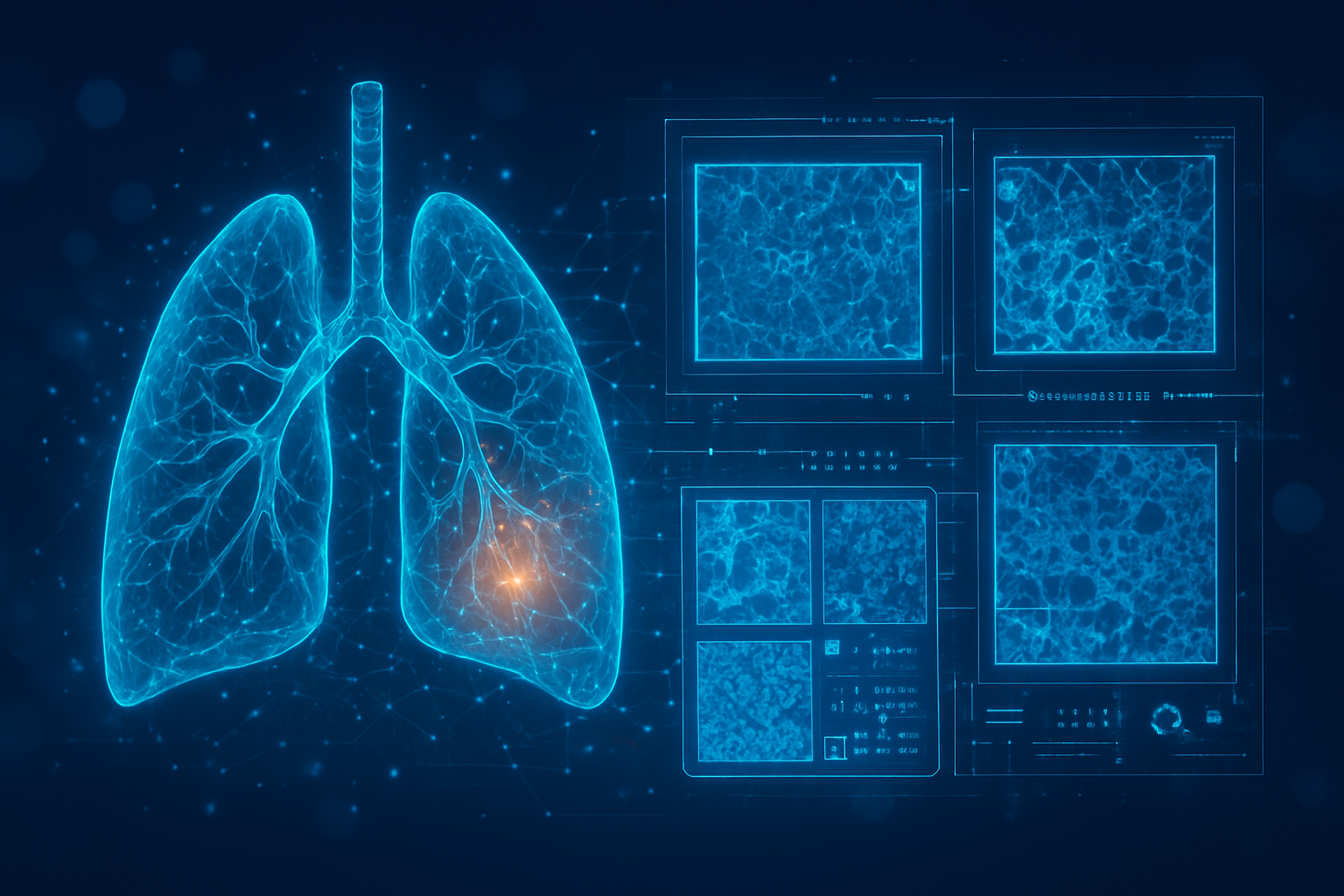
    The landscape of oncology is undergoing a seismic shift as 2026 begins, driven by a new generation of artificial intelligence that identifies malignancy not by looking for tumors, but by predicting their inevitability. Two groundbreaking developments—the Sybil algorithm for lung cancer and the Prov-GigaPath foundation model for pathology—have moved from research laboratories into clinical validation, proving that AI can detect the biological signatures of cancer up to six years before they become visible on a standard scan or a microscope slide.

    This evolution from reactive to predictive medicine marks a turning point in global health. By identifying "high-risk biological trajectories," these models allow clinicians to intervene during a "window of opportunity" that previously did not exist. For patients, this means the difference between a preventative procedure and a late-stage battle, potentially saving millions of lives through early detection that bypasses the inherent limitations of human perception.

    Technical Deep Dive: Beyond Human Perception

    The technical architecture of these breakthroughs represents a departure from traditional computer-aided detection (CAD). Sybil, developed by researchers at the MIT Jameel Clinic and Mass General Brigham, utilizes a 3D Convolutional Neural Network (CNN) to analyze the entire volumetric data of a low-dose CT (LDCT) scan. Unlike earlier systems that required human-annotated labels of visible nodules, Sybil operates autonomously, identifying subtle textural changes in lung tissue that indicate a high probability of future cancer. As of early 2026, Sybil has demonstrated an Area Under the Curve (AUC) of 0.94 for one-year predictions, successfully flagging patients who would otherwise be cleared by a human radiologist.

    In parallel, Prov-GigaPath, a collaboration between Microsoft (NASDAQ: MSFT), Providence, and the University of Washington, has set a new benchmark for digital pathology. It is the first large-scale foundation model for whole-slide imaging, utilizing a Vision Transformer (ViT) with LongNet-based dilated self-attention. This allows the model to process a gigapixel pathology slide—containing tens of thousands of image tiles—as a single, contextual sequence. Trained on a staggering 1.3 billion image tiles, Prov-GigaPath can identify genetic mutations, such as EGFR variants in lung cancer, directly from standard H&E stained slides, bypassing the need for time-consuming and expensive molecular sequencing.

    These advancements differ from previous technology by their scale and predictive window. While older AI could confirm a radiologist's suspicion of an existing mass, Sybil can predict cancer risk six years into the future with a C-index of up to 0.81. This "pre-clinical" detection capability has stunned the research community, with experts at the 2025 World Conference on Lung Cancer noting that AI is now effectively seeing "the invisible architecture of disease" before the disease has even fully manifested.

    Industry & Market Impact: The Enterprise Infrastructure Race

    The commercial implications of these breakthroughs are reshaping the medical technology sector. Microsoft (NASDAQ: MSFT) has solidified its position as the infrastructure backbone of the AI-driven clinic by releasing Prov-GigaPath as an open-weight model on the Azure Model Catalog. This strategic move encourages widespread adoption while positioning Azure as the primary cloud environment for the massive datasets required for digital pathology. Meanwhile, GE HealthCare (NASDAQ: GEHC) continues to dominate the regulatory landscape, recently surpassing 100 FDA clearances for AI-enabled devices. Their 16-year partnership with Nvidia (NASDAQ: NVDA) to develop autonomous imaging systems suggests a future where the AI isn't just an add-on, but an integrated part of the hardware's operating system.

    Major medical device players like Siemens Healthineers (OTC: SMMNY) are also feeling the pressure to integrate these high-precision models. Siemens has responded by embedding AI clinical pathways into its photon-counting CT scanners, which provide the high-resolution data that models like Sybil require to function optimally. This has created a competitive "arms race" in the imaging market, where hardware sales are increasingly driven by the software's ability to provide predictive analytics. Startups in the Multi-Cancer Early Detection (MCED) space, such as Freenome and Grail, are also benefiting, as they partner with Nvidia to use its Blackwell GPU architecture to accelerate the identification of cancer signals in cell-free DNA.

    The disruption is most evident in the diagnostic workflow. PathAI and other digital pathology leaders have seen their roles expand as the FDA granted new clearances in late 2025 for primary AI-driven diagnosis. This shift threatens the traditional business models of diagnostic labs that rely on manual slide reviews, forcing a rapid transition to digital-first environments where AI foundation models perform the heavy lifting of initial screening and mutation prediction.

    Broader Significance: Shifting the Paradigm of Prevention

    Beyond the technical and commercial success, the rise of Sybil and Prov-GigaPath carries immense social and ethical weight. It fits into a broader trend of "foundation models for everything," mirroring the impact that models like AlphaFold had on protein folding. For the first time, the AI landscape is moving toward a "total health" view, where data from radiology, pathology, and genomics are synthesized by multimodal agents to provide a unified patient risk profile. This mirrors the trajectory of Google (NASDAQ: GOOGL) and its "Capricorn" tool, which aims to personalize pediatric oncology through agentic AI.

    However, this shift raises significant concerns regarding overdiagnosis and equity. As AI becomes more sensitive, the medical community must grapple with "incidentalomas"—small anomalies that may never have progressed to clinical disease but lead to patient anxiety and unnecessary invasive procedures. There is also the critical issue of bias; however, recent 2026 validation studies have shown Sybil to be "race- and ethnicity-agnostic," performing with equal accuracy across diverse populations, a significant milestone compared to previous medical algorithms that often failed under-represented groups.

    The potential impact on global health is profound. In regions with a chronic shortage of radiologists and pathologists, these AI models act as "force multipliers." By January 2026, the MIT Jameel Clinic AI Hospital Network had deployed Sybil in 25 hospitals across 11 countries, demonstrating that advanced predictive care can be scaled to underserved populations, potentially narrowing the health equity gap in oncology.

    The Road Ahead: Temporal Tracking and Multi-Modal Integration

    Looking forward, the next frontier for these models is temporal tracking. In December 2025, researchers introduced GigaTIME, an evolution of the Prov-GigaPath model designed to track the evolution of the tumor microenvironment over months or years. This "time-series" approach to pathology will allow doctors to see how a patient’s cancer is responding to treatment in near real-time, adjusting therapies before physical symptoms of resistance emerge. Experts predict that within the next 24 months, the integration of AI into Electronic Medical Records (EMRs) will become standard, with "predictive alerts" automatically appearing for primary care physicians.

    Challenges remain, particularly in data privacy and the integration of these tools into fragmented hospital IT systems. The industry is closely watching for the upcoming FDA decision on blood-based multi-cancer tests, which, when combined with imaging AI like Sybil, could create a "dual-check" system for early detection. The goal is a world where "late-stage cancer" becomes a rare occurrence, replaced by "early-stage interception."

    Conclusion: A New Era in Diagnostic History

    The breakthroughs of Sybil and Prov-GigaPath represent more than just incremental improvements in medical software; they are the harbingers of a new era in human biology. By identifying the fingerprints of cancer years before they are visible to human eyes, AI has effectively expanded the human sensory range, giving us a strategic advantage in a war that has been fought reactively for decades. The transition to this predictive model of care will require new regulatory frameworks and a shift in how we define "diagnosis."

    As we move through 2026, the key developments to watch will be the large-scale longitudinal results from hospitals currently using these models and the potential for a unified foundation model that combines radiology, pathology, and genetics into a single "diagnostic oracle." For now, the silent sentinel of AI is watching, identifying the risks of tomorrow in the scans of today.


    This content is intended for informational purposes only and represents analysis of current AI developments.

    TokenRing AI delivers enterprise-grade solutions for multi-agent AI workflow orchestration, AI-powered development tools, and seamless remote collaboration platforms.
    For more information, visit https://www.tokenring.ai/.
  • Joplin Forges Future of Healthcare with Groundbreaking AI Partnerships

    Joplin Forges Future of Healthcare with Groundbreaking AI Partnerships

    Joplin, MO – In a significant stride towards revolutionizing healthcare delivery, Joplin, Missouri, is rapidly emerging as a focal point for artificial intelligence integration, aiming to enhance services and address critical industry challenges. A landmark partnership between Codefi, a leading technology-based economic development organization, and the Joplin Regional Alliance for Health Care and Health Science (JRAH), announced on September 26, 2025, is set to launch a pioneering HealthTech AI Software Startup Studio. This initiative promises to systematically identify healthcare market opportunities and cultivate AI-powered solutions, particularly targeting digital health, population health management, and health education technology.

    This proactive approach is complemented by existing, robust AI deployments within the region. Mercy, a prominent health system with a substantial presence in Missouri, including Joplin, has been at the forefront of AI adoption through strategic collaborations with tech giants like Microsoft (NASDAQ: MSFT) and specialized AI firms such as Aidoc. These efforts, spanning from generative AI-assisted patient communication to advanced diagnostic imaging, underscore a broader regional commitment to leveraging AI for improved patient outcomes and operational efficiency. The confluence of these new, forward-looking initiatives and established AI integrations positions Joplin as a burgeoning hub for healthcare innovation.

    Technical Foundations: From Startup Studios to System-Wide AI Deployments

    The newly announced Codefi and JRAH HealthTech AI Software Startup Studio represents a distinctive approach to AI development. Instead of merely adopting off-the-shelf solutions, this multi-year partnership will foster an ecosystem where new ventures are systematically built to tackle specific healthcare market gaps. The studio model emphasizes a problem-first methodology, encouraging startups to develop bespoke AI solutions for complex issues like enhancing access to care in rural areas, optimizing patient flow, or personalizing health education. This focused incubation environment is designed to accelerate the creation of innovative digital health platforms, advanced tools for population health analytics, and intelligent systems for health education, thereby closing critical opportunity gaps in the healthcare sector.

    In parallel, Mercy's extensive AI integration provides a glimpse into the immediate, tangible benefits of current AI capabilities. Their partnership with Microsoft, initiated in September 2023, harnesses the power of generative AI and the Microsoft Azure OpenAI Service. This collaboration is exploring over four dozen AI use cases, with early implementations including AI-assisted patient messaging for lab results, intelligent scheduling, and an internal chatbot for employees. Furthermore, Mercy utilizes Microsoft's DAX Copilot for ambient listening during medical visits, significantly reducing the administrative burden of note-taking for clinicians. Complementing this, Mercy's adoption of Aidoc's AI-powered platform across its system, noted in February 2025, exemplifies AI's role in enhancing diagnostic imaging. Aidoc's technology assists radiologists in rapidly detecting critical conditions such as brain hemorrhage, pulmonary embolism, cervical spine fractures, and lung nodules, thereby improving diagnostic accuracy and speed. These established deployments demonstrate a mature application of AI, differing from the studio model by integrating proven, specialized AI solutions rather than incubating new ones from the ground up.

    Competitive Implications and Market Positioning

    The emergence of Joplin as a focal point for AI in healthcare carries significant competitive implications for various players in the tech and healthcare industries. Codefi and JRAH's HealthTech AI Software Startup Studio creates a fertile ground for new AI startups, potentially fostering a wave of innovative companies that could challenge established healthcare technology providers. This model could inspire other regional economic development organizations to replicate similar initiatives, decentralizing AI innovation away from traditional tech hubs. For Codefi and JRAH, this partnership solidifies their reputation as catalysts for technological advancement and regional economic growth.

    Tech giants like Microsoft (NASDAQ: MSFT) stand to benefit from the increased adoption of their cloud and AI services, as healthcare systems like Mercy deepen their reliance on platforms like Azure OpenAI. Similarly, specialized AI companies like Aidoc gain market share and validation for their targeted solutions, demonstrating the efficacy of AI in critical medical applications. The competitive landscape for major AI labs and tech companies will increasingly involve providing foundational AI models and infrastructure that can be customized and deployed by regional partners. This development could disrupt existing products or services by introducing more agile, problem-specific AI solutions tailored to local healthcare needs, potentially putting pressure on larger, more generalized healthcare IT vendors to innovate faster. Joplin's strategic focus on health tech AI could position it as a magnet for talent and investment, offering a unique value proposition in the competitive healthcare innovation market.

    Wider Significance in the AI Landscape

    This concentrated effort in Joplin fits squarely within broader AI landscape trends, particularly the increasing decentralization of AI innovation and its application to address specific societal challenges. The focus on enhancing healthcare services, especially in a region that serves rural communities, highlights AI's potential to bridge healthcare access and quality gaps. This initiative underscores a growing understanding that AI is not just a tool for efficiency but a powerful lever for equitable access to advanced care. The impacts are multifaceted: improved patient outcomes through earlier diagnosis and personalized care, increased operational efficiency for healthcare providers, and significant economic development for the Joplin region through job creation and investment in tech.

    However, the rapid integration of AI also brings potential concerns. Data privacy and security remain paramount, especially with sensitive patient information. Ethical deployment of AI, ensuring fairness and avoiding bias in diagnostic or treatment recommendations, is another critical consideration. While the stated goal is to augment human capabilities, the long-term impact on healthcare employment structures will require careful monitoring and proactive workforce development. Comparing this to previous AI milestones, such as the early adoption of electronic health records (EHRs), this represents a qualitative leap. EHRs digitized information; today's AI not only processes that information but actively derives insights, predicts outcomes, and automates complex tasks, moving healthcare from data management to intelligent decision support and proactive intervention.

    Exploring Future Developments and Horizons

    Looking ahead, the near-term future for AI in Joplin's healthcare sector promises significant activity. The Codefi and JRAH HealthTech AI Software Startup Studio is expected to announce its first cohort of startups, with initial prototypes and pilot programs likely to emerge within the next 12-18 months. These early solutions will likely focus on high-impact, achievable problems in areas like patient engagement, remote monitoring, and administrative automation. Simultaneously, Mercy's ongoing AI journey will see an expansion of its generative AI use cases, potentially extending to areas like clinical decision support and predictive analytics for hospital resource management. The integration of AI into medical education and training programs will also likely accelerate, preparing the future healthcare workforce for an AI-augmented environment.

    In the long term, experts predict that such localized AI innovation hubs could become models for addressing healthcare disparities in other underserved regions. The solutions developed in Joplin could be scaled nationally or even globally, demonstrating the power of targeted, community-driven AI development. Potential applications on the horizon include highly personalized preventative care plans driven by AI, advanced robotic assistance in surgeries, and AI-powered drug discovery tailored to regional health challenges. However, significant challenges remain, including securing sustained funding for startups, attracting and retaining top AI talent to the region, navigating complex healthcare regulations, and ensuring seamless integration of new AI systems with existing legacy IT infrastructure. Experts anticipate a continued trend towards specialized AI applications, emphasizing interoperability and ethical governance as crucial next steps in the broader AI evolution within healthcare.

    A New Chapter in Healthcare AI Innovation

    The synergistic AI initiatives unfolding in Joplin, Missouri, represent a pivotal moment in the application of artificial intelligence to healthcare. The proactive creation of the HealthTech AI Software Startup Studio by Codefi and JRAH, coupled with Mercy's advanced and expanding AI deployments with Microsoft and Aidoc, paints a comprehensive picture of a region committed to leveraging technology for better health outcomes. This dual approach—incubating future solutions while integrating present-day advancements—underscores a strategic vision for localized, problem-driven AI development.

    The significance of this development in AI history lies in its potential to serve as a blueprint for how regional partnerships can foster innovation, address specific community needs, and contribute to the broader AI landscape. It highlights a shift from generalized AI research to targeted, impactful applications that directly benefit patients and healthcare providers. While challenges related to data privacy, ethical deployment, and integration complexities will undoubtedly arise, the foundational work being laid in Joplin offers a compelling vision for the future. In the coming weeks and months, the progress of the startup studio's first cohort, the measurable impact of Mercy's AI tools on patient care and efficiency, and any new partnerships emerging from this vibrant ecosystem will be crucial indicators to watch, as Joplin helps to write the next chapter in healthcare AI innovation.


    This content is intended for informational purposes only and represents analysis of current AI developments.

    TokenRing AI delivers enterprise-grade solutions for multi-agent AI workflow orchestration, AI-powered development tools, and seamless remote collaboration platforms.
    For more information, visit https://www.tokenring.ai/.