Tag: Military AI

  • Air Force Unleashes AI in Advanced Wargaming: A New Era for National Defense

    Air Force Unleashes AI in Advanced Wargaming: A New Era for National Defense

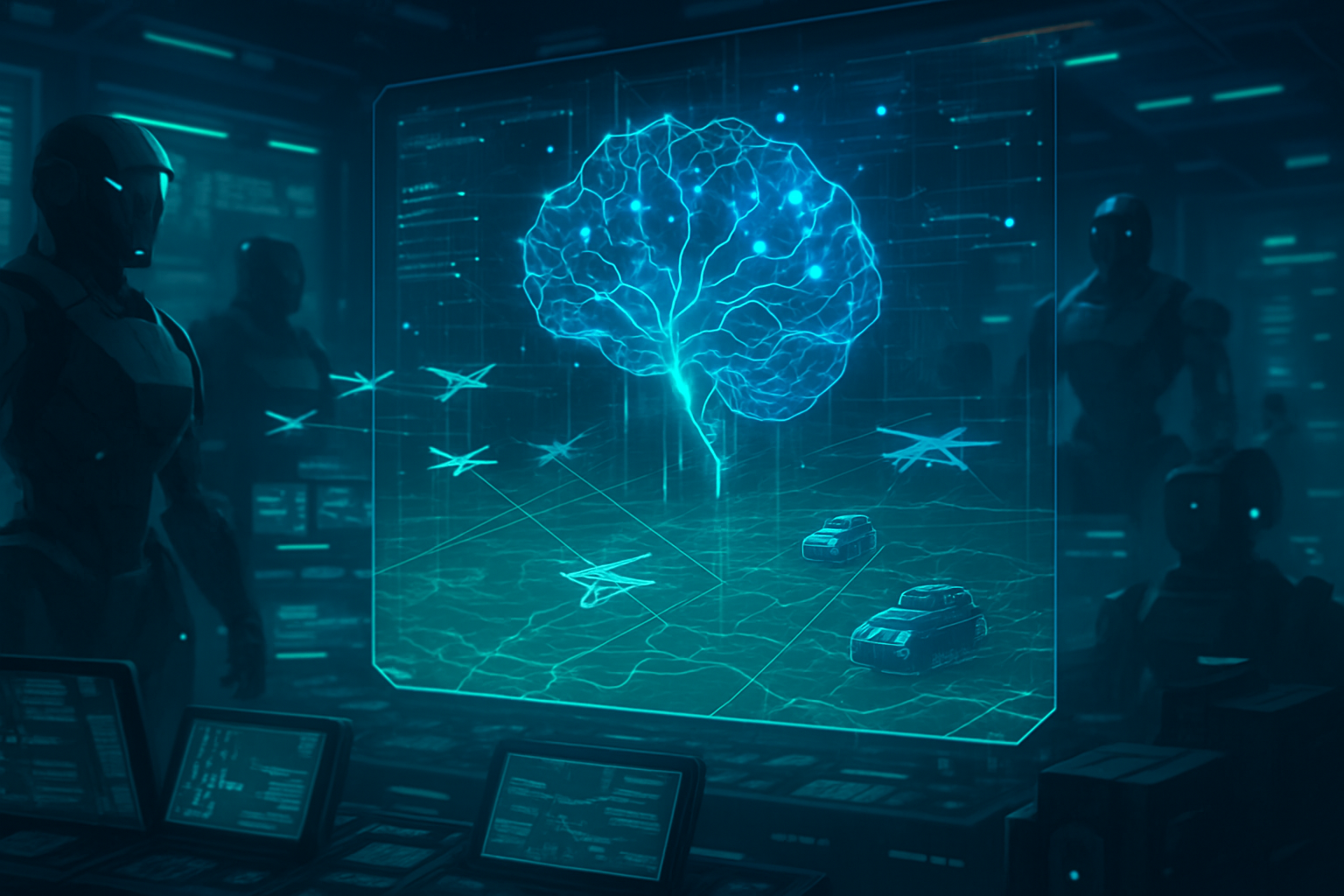
    The United States Air Force is spearheading a transformative initiative to integrate artificial intelligence (AI) into its advanced wargaming and simulations, signaling a pivotal shift towards a more dynamic and scientifically driven approach to national defense strategies. This ambitious undertaking aims to revolutionize military training, strategic planning, and overall decision-making capabilities by moving beyond traditional, static simulations to highly adaptive, AI-driven platforms. The immediate significance lies in the promise of accelerated readiness planning, the development of more realistic adversary simulations, and the ability to explore unconventional strategies at unprecedented speeds.

    The Air Force Futures directorate is actively conducting market research, issuing Requests for Information (RFIs) to identify and acquire cutting-edge AI technologies. This market push underscores a focused effort to leverage AI-enabled Software-as-a-Service (SaaS) wargaming platforms that can create immersive exercises, dynamically adjusting to participant decisions and generating realistic adversary actions. This forward-looking strategy seeks to achieve "Decision Superiority" and an "integrated Force Design," addressing the inherent limitations of analog wargaming methods and positioning the Air Force at the forefront of AI integration in military strategy.

    Technical Prowess: AI's Deep Dive into Strategic Simulations

    The Air Force's integration of AI into wargaming represents a profound technical leap, fundamentally altering the nature and capabilities of military simulations. This initiative is characterized by adaptive wargaming, where scenarios dynamically evolve based on participant decisions and adversary responses, a stark contrast to the pre-scripted, static exercises of the past. Central to this advancement is the development of intelligent adversaries, or "red-teaming," which employs machine learning algorithms and neural networks, particularly reinforcement learning (RL), to mimic realistic enemy behavior. This forces Air Force personnel to adapt in real-time, fostering strategic agility.

    Technically, the initiative leverages sophisticated machine learning methodologies. Reinforcement Learning, including deep neural networks like Proximal Policy Optimization (PPO), is crucial for training AI agents to simulate adversary behavior in multi-agent reinforcement learning (MARL) environments. These systems learn effective tactics by playing adversarial games, aiming for robustness and scalability even with imperfect information. For instance, a Red Force Response (RFR) tool has demonstrated a 91% Red Force win probability in tactical air scenarios after extensive training. Furthermore, the Air Force is seeking event-driven Agent-Based Simulation (ABS) platforms, where every entity – from tanks to satellites – is represented as an autonomous agent reacting to real-time events. Tools like the Analytical Framework for Simulation, Integration, and Modeling (AFSIM), a government-owned, object-oriented platform, are gaining traction, allowing for the easy definition and manipulation of autonomous agents with realistic decision-making behaviors. The advent of generative AI and large language models (LLMs) is also being explored, with initiatives like the Johns Hopkins Applied Physics Laboratory's GenWar Lab (slated for 2026) aiming to transform defense wargaming by accelerating scenario generation and allowing for AI-only wargames.

    This differs significantly from traditional wargaming, which is often human-intensive, time-consuming, expensive, and analytically insufficient. AI automates scenario generation, event injection, and outcome adjudication, enabling "super real-time speeds" – potentially up to 10,000 times faster than real-time. This allows for countless iterations and deeper analytical insights, a capability previously impossible. While initial reactions from the AI research community and industry experts are largely optimistic about AI's potential as a "force multiplier," concerns have been raised regarding "de-skilling" military commanders if AI replaces critical human judgment, the "black box" nature of some AI calculations hindering transparency, and the potential for AI models to "hallucinate" or be limited by biased training data. Experts emphasize that AI should augment human thought processes without replacing the nuance of human judgment.

    Market Dynamics: AI Companies Poised for Defense Sector Boom

    The Air Force's aggressive push into AI wargaming is set to ignite a significant boom in the defense AI market, which is projected to surge from approximately $10.1 billion in 2023 to over $39.1 billion by 2033. This initiative creates unprecedented opportunities for a diverse range of AI companies, from established defense contractors to innovative startups and tech giants. The demand for advanced AI solutions capable of mimicking realistic adversary behavior, enabling rapid decision-making, and generating actionable insights for readiness planning is accelerating.

    Traditional defense contractors like BAE Systems (LON: BA.L), Lockheed Martin (NYSE: LMT), Northrop Grumman (NYSE: NOC), and RTX (NYSE: RTX) are strategically integrating AI into their existing platforms and command-and-control systems. Their deep experience and long-standing relationships with the Department of Defense (DoD) provide a strong foundation for embedding AI/ML into large-scale defense programs. However, the landscape is increasingly competitive with the rise of AI-first innovators and startups. Companies such as Palantir Technologies (NYSE: PLTR), known for its tactical intelligence and decision-making platforms, Anduril Industries, specializing in AI-driven autonomous systems, and Shield AI, developing AI pilots for autonomous operations, and Scale AI, which has secured Pentagon deals for AI-powered wargaming and data processing, are rapidly gaining prominence. Even major tech giants like Amazon Web Services (NASDAQ: AMZN) and, more recently, Google (NASDAQ: GOOGL), OpenAI, Anthropic, and xAI, are being tapped to support the military's broader AI adoption, providing critical cloud infrastructure, large language models (LLMs), and advanced AI research capabilities. xAI, for instance, has launched a U.S. government-specific production line called "Grok for Government."

    This influx of AI into defense is disrupting existing products and services. The obsolescence of static wargaming methods is imminent, replaced by more agile, software-first AI platforms. This signals a shift in procurement priorities, favoring AI-driven software, drones, and robotics over traditional hardware-centric platforms, which could disrupt established supply chains. The Air Force's preference for AI-enabled Software-as-a-Service (SaaS) models indicates a move towards subscription-based, agile software deployment. Competitively, this forces traditional primes to adopt more agile development cadences and form strategic alliances with AI startups to deliver end-to-end AI capabilities. Startups, with their specialized AI expertise and agility, can carve out significant niches, while tech giants provide essential scalable infrastructure and advanced research. The strategic advantage will increasingly go to companies that can demonstrate not only cutting-edge AI but also ethical AI development, robust security, and transparent, explainable AI solutions that align with the military's stringent requirements for data ownership and control.

    Wider Significance: Reshaping the Geopolitical and Ethical Landscape

    The Air Force's AI wargaming initiative is more than a technological upgrade; it's a profound shift that resonates across the broader AI landscape and holds significant implications for military strategy, national security, and global stability. This move aligns with the overarching global trend of integrating AI into complex decision-making processes, leveraging sophisticated AI to create immersive, high-intensity conflict simulations that dynamically adapt to human input, thereby moving away from conventional pre-scripted scenarios.

    Its impact on military strategy and national security is profound. By enhancing strategic readiness, improving training efficiency, and accelerating decision-making speed, AI wargaming provides a holistic understanding of modern multi-domain conflicts (cyber, land, sea, air, and space). The ability to simulate high-attrition combat against advanced adversaries allows the Air Force to stress-test training pipelines and explore sustainment strategies at scales previously unattainable. This capability to rapidly explore numerous courses of action and predict adversary behavior offers a decisive advantage in strategic planning. However, this transformative potential is tempered by significant ethical and operational concerns. There is a risk of over-reliance on AI systems, potentially leading to a "dangerous mirage of knowledge" if human judgment is supplanted rather than augmented. Ethical dilemmas abound, particularly concerning biases in data and algorithms, which could lead to unjust applications of force or unintended civilian harm, especially with autonomous weapons systems. Cybersecurity risks are also paramount, as AI systems become prime targets for adversarial AI development by near-peer competitors. Furthermore, the "black box" nature of some advanced AI systems can obscure decision-making processes, challenging transparency and accountability, and emphasizing the critical need for human operators to maintain positive control and understand why certain outcomes occur. The proliferation of AI in military systems also raises the strategic risk of AI spreading to malicious actors and potentially escalating conflicts.

    This initiative stands as the "next leap" in military education, building upon a long history of technological integration in warfare. While previous AI milestones in defense, such as Project Maven (established in 2017) which used computer vision for autonomous object identification from drone imagery, focused on automating specific tasks and enhancing information processing, the current AI wargaming initiative distinguishes itself through its emphasis on real-time adaptability, autonomous adversaries, and predictive analytics. It moves beyond simple automation to sophisticated simulation of complex adaptive systems, where every entity reacts as an autonomous agent to real-time events, operating at "super real-time speeds." This represents a shift towards more comprehensive and flexible AI applications, enabling the exploration of unconventional strategies and rapid adjustments in plans that traditional linear wargames could not accommodate, ultimately aiming to generate strategy autonomously and out-match adversaries in compressed decision windows.

    Future Horizons: Shaping Tomorrow's Battlefield with AI

    The future of the Air Force's AI wargaming initiative promises a revolutionary transformation in military preparedness, force design, and personnel training. In the near-term (the next few years), the focus will be on the widespread integration of AI-powered Software-as-a-Service (SaaS) platforms, designed for real-time adaptability and dynamic scenario generation. This includes accelerating decision-making for air battle managers and stress-testing training pipelines under high-intensity conflict conditions. The opening of facilities like the GenWar lab in 2026 at the Johns Hopkins Applied Physics Laboratory will leverage large language models (LLMs) to enhance tabletop exercises, allowing for faster strategic experimentation and human interaction with sophisticated computer models.

    Looking further ahead (the next 10-15 years), the long-term vision is to achieve "Decision Superiority" and an "integrated Force Design" through a fully digitized and scientific wargaming system capable of "super real-time speeds" – potentially up to 10,000 times real-time. This will enable a vast number of iterations and the exploration of optimal solutions within a single turn, fundamentally reshaping professional military education (PME) with personalized career mentorship, AI-driven leadership assessments, and advanced multi-domain operational training. The vision even extends to "AI-only wargames," where AI actors play both sides. Potential applications are extensive, ranging from immersive training and education for high-intensity conflicts to strategic analysis, concept development, force design, and advanced adversary simulation. AI will be crucial for evaluating new technologies like collaborative combat aircraft (CCAs) and understanding the doctrinal influence of emerging fields such as quantum sciences on the Air Force of 2035.

    However, significant challenges remain. The need for extensive, high-quality data and robust technical infrastructure is paramount, coupled with addressing issues of AI accuracy and bias, including the tendency of generative AI to "hallucinate." Over-reliance on AI, ethical considerations, and cybersecurity vulnerabilities are ongoing concerns that necessitate careful navigation. Experts, including Lt. Gen. David Harris and Benjamin Jensen, predict that generative AI will fundamentally reshape military wargaming, increasing its speed, scale, and scope, while challenging human biases. Yet, the consensus, as stressed by Maj. Gen. Robert Claude, is that a "human in the loop" will remain essential for the foreseeable future to ensure the viability and ethical soundness of AI-generated recommendations. The integration of AI will extend beyond technical training, playing a crucial role in developing mental resilience by exposing personnel to high-stakes, dynamically evolving scenarios.

    Comprehensive Wrap-up: A New Dawn for Military AI

    The Air Force's initiative to integrate AI into advanced wargaming and simulations marks a seminal moment in both AI history and military strategy. It signifies a decisive move from static, predictable exercises to dynamic, adaptive, and data-driven simulations that promise to revolutionize how military forces prepare for and potentially engage in future conflicts. Key takeaways include the shift to dynamic, adaptive scenarios driven by machine learning, the pursuit of "super real-time speeds" for unparalleled analytical depth, comprehensive stress-testing capabilities, and the generation of data-driven insights to identify vulnerabilities and optimize strategies. Crucially, the emphasis is on human-machine teaming, where AI augments human judgment, providing alternative realities and accelerating decision-making without replacing critical human oversight.

    This development's significance in AI history lies in its push towards highly sophisticated, multi-agent AI systems capable of simulating complex adaptive environments at scale, integrating advanced concepts like reinforcement learning, agent-based simulation, and generative AI. In military strategy, it represents a transformative leap in Professional Military Education, accelerating mission analysis, fostering strategic agility, and enhancing multi-domain operational readiness. The long-term impact is poised to be profound, shaping a generation of military leaders who are more agile, data-driven, and adept at navigating complex, unpredictable environments. The ability to rapidly iterate on strategies and explore myriad "what-if" scenarios will fundamentally enhance the U.S. Air Force's preparedness and decision superiority, but success will hinge on striking a delicate balance between leveraging AI's power and upholding human expertise, leadership, and ethical judgment.

    In the coming weeks and months, observers should watch for continued industry collaboration as the Air Force seeks to develop and refine secure, interoperable AI-powered SaaS wargaming platforms. Further experimentation and integration of advanced AI agents, particularly those capable of realistically simulating adversary behavior, will be key. Expect ongoing efforts in developing robust ethical frameworks, doctrine, and accountability mechanisms to govern the expanding use of AI in military decision-making. The adoption of low-code/no-code tools for scenario creation and the integration of large language models for operational use, such as generating integrated tasking orders and real-time qualitative analysis, will also be crucial indicators of progress. The Air Force's AI wargaming initiative is not merely an upgrade; it is a foundational shift towards a more technologically advanced and strategically adept military force, promising to redefine the very nature of future warfare.


    This content is intended for informational purposes only and represents analysis of current AI developments.

    TokenRing AI delivers enterprise-grade solutions for multi-agent AI workflow orchestration, AI-powered development tools, and seamless remote collaboration platforms.
    For more information, visit https://www.tokenring.ai/.
  • US and Chinese Experts Poised to Forge Consensus on Restricting Military AI

    US and Chinese Experts Poised to Forge Consensus on Restricting Military AI

    As the world grapples with the accelerating pace of artificial intelligence development, a significant, albeit unofficial, step towards global AI governance is on the horizon. Tomorrow, November 19, 2025, experts from the United States and China are expected to converge in Hong Kong, aiming to establish a crucial consensus on limiting the use of AI in the defense sector. This anticipated agreement, while not a binding governmental treaty, signifies a pivotal moment in the ongoing dialogue between the two technological superpowers, highlighting a shared understanding of the inherent risks posed by unchecked AI in military applications.

    The impending expert consensus builds upon a foundation of prior intergovernmental talks initiated in November 2023, when US President Joe Biden and Chinese President Xi Jinping first agreed to launch discussions on AI safety. Subsequent high-level dialogues in May and August 2024 laid the groundwork for exchanging views on AI risks and governance. The Hong Kong forum represents a tangible move towards identifying specific areas for restriction, particularly emphasizing the need for cooperation in preventing AI's weaponization in sensitive domains like bioweapons.

    Forging Guardrails: Specifics of Military AI Limitations

    The impending consensus in Hong Kong is expected to focus on several critical areas designed to establish robust guardrails around military AI. Central to these discussions is the principle of human control over critical functions, with experts advocating for a mutual pledge ensuring affirmative human authorization for any weapons employment, even by AI-enabled platforms, in peacetime and routine military encounters. This move directly addresses widespread ethical concerns regarding autonomous weapon systems and the potential for unintended escalation.

    A particularly sensitive area of focus is nuclear command and control. Building on a previous commitment between Presidents Biden and Xi Jinping in 2024 regarding human control over nuclear weapon decisions, experts are pushing for a mutual pledge not to use AI to interfere with each other's nuclear command, control, and communications systems. This explicit technical limitation aims to reduce the risk of AI-induced accidents or miscalculations involving the most destructive weapons. Furthermore, the forum is anticipated to explore the establishment of "red lines" – categories of AI military applications deemed strictly off-limits. These taboo norms would clarify thresholds not to be crossed, thereby reducing the risks of uncontrolled escalation. Christopher Nixon Cox, a board member of the Richard Nixon Foundation, specifically highlighted bioweapons as an "obvious area" for US-China collaboration to limit AI's influence.

    These proposed restrictions mark a significant departure from previous approaches, which often involved unilateral export controls by the United States (such as the sweeping AI chip ban in October 2022) aimed at limiting China's access to advanced AI hardware and software. While those restrictions continue, the Hong Kong discussions signal a shift towards mutual agreement on limitations, fostering a more collaborative, rather than purely competitive, approach to AI governance in defense. Unlike earlier high-level talks in May 2024, which focused broadly on exchanging views on "technical risks of AI" without specific deliverables, this forum aims for more concrete, technical limitations and mutually agreed-upon "red lines." China's consistent advocacy for global AI cooperation, including a July 2025 proposal for an international AI cooperation organization, finds a specific bilateral platform here, potentially bridging definitional gaps concerning autonomous weapons.

    Initial reactions from the AI research community and industry experts are a blend of cautious optimism and urgent calls for stability. There is a broad recognition of AI's inherent fragility and the potential for catastrophic accidents in high-stakes military scenarios, making robust safeguards imperative. While some US chipmakers have expressed concerns about losing market share in China due to existing export controls – potentially spurring China's domestic chip development – many experts, including former (Alphabet (NASDAQ: GOOGL)) CEO Eric Schmidt, emphasize the critical need for US-China collaboration on AI to maintain global stability and ensure human control. Despite these calls for cooperation, a significant lack of trust between the two nations remains, complicating efforts to establish effective governance. Chinese officials, for instance, have previously viewed US "responsible AI" approaches with skepticism, seeing them as attempts to avoid multilateral negotiations. This underlying tension makes achieving comprehensive, binding agreements "logically difficult," as noted by Tsinghua University's Sun Chenghao, yet underscores the importance of even expert-level consensus.

    Navigating the AI Divide: Implications for Tech Giants and Startups

    The impending expert consensus on restricting military AI, while a step towards global governance, operates within a broader context of intensifying US-China technological competition, profoundly impacting AI companies, tech giants, and startups on both sides. The landscape is increasingly bifurcated, forcing strategic adaptations and creating distinct winners and losers.

    For US companies, the effects are mixed. Chipmakers and hardware providers like (NVIDIA (NASDAQ: NVDA)) have already faced significant restrictions on exporting advanced AI chips to China, compelling them to develop less powerful, China-specific alternatives, impacting revenue and market share. AI firms developing dual-use technologies face heightened scrutiny and export controls, limiting market reach. Furthermore, China has retaliated by banning several US defense firms and AI companies, including TextOre, Exovera, (Skydio (Private)), and (Shield AI (Private)), from its market. Conversely, the US government's robust support for domestic AI development in defense creates significant opportunities for startups like (Anduril Industries (Private)), (Scale AI (Private)), (Saronic (Private)), and (Rebellion Defense (Private)), enabling them to disrupt traditional defense contractors. Companies building foundational AI infrastructure also stand to benefit from streamlined permits and access to compute resources.

    On the Chinese side, the restrictions have spurred a drive for indigenous innovation. While Chinese AI labs have been severely hampered by limited access to cutting-edge US AI chips and chip-making tools, hindering their ability to train large, advanced AI models, this has accelerated efforts towards "algorithmic sovereignty." Companies like DeepSeek have shown remarkable progress in developing advanced AI models with fewer resources, demonstrating innovation under constraint. The Chinese government's heavy investment in AI research, infrastructure, and military applications creates a protected and well-funded domestic market. Chinese firms are also strategically building dominant positions in open-source AI, cloud infrastructure, and global data ecosystems, particularly in emerging markets where US policies may create a vacuum. However, many Chinese AI and tech firms, including (SenseTime (HKEX: 0020)), (Inspur Group (SSE: 000977)), and the Beijing Academy of Artificial Intelligence, remain on the US Entity List, restricting their ability to obtain US technologies.

    The competitive implications for major AI labs and tech companies are leading to a more fragmented global AI landscape. Both nations are prioritizing the development of their own comprehensive AI ecosystems, from chip manufacturing to AI model production, fostering domestic champions and reducing reliance on foreign components. This will likely lead to divergent innovation pathways: US labs, with superior access to advanced chips, may push the boundaries of large-scale model training, while Chinese labs might excel in software optimization and resource-efficient AI. The agreement on human control in defense AI could also spur the development of more "explainable" and "auditable" AI systems globally, impacting AI design principles across sectors. Companies are compelled to overhaul supply chains, localize products, and navigate distinct market blocs with varying hardware, software, and ethical guidelines, increasing costs and complexity. The strategic race extends to control over the entire "AI stack," from natural resources to compute power and data, with both nations vying for dominance. Some analysts caution that an overly defensive US strategy, focusing too heavily on restrictions, could inadvertently allow Chinese AI firms to dominate AI adoption in many nations, echoing past experiences with Huawei.

    A Crucial Step Towards Global AI Governance and Stability

    The impending consensus between US and Chinese experts on restricting AI in defense holds immense wider significance, transcending the immediate technical limitations. It emerges against the backdrop of an accelerating global AI arms race, where both nations view AI as pivotal to future military and economic power. This expert-level agreement could serve as a much-needed moderating force, potentially reorienting the focus from unbridled competition to cautious, targeted collaboration.

    This initiative aligns profoundly with escalating international calls for ethical AI development and deployment. Numerous global bodies, from UNESCO to the G7, have championed principles of human oversight, transparency, and accountability in AI. By attempting to operationalize these ethical tenets in the high-stakes domain of military applications, the US-China consensus demonstrates that even geopolitical rivals can find common ground on responsible AI use. This is particularly crucial concerning the emphasis on human control over AI in the military sphere, especially regarding nuclear weapons, addressing deep-seated ethical and existential concerns.

    The potential impacts on global AI governance and stability are profound. Currently, AI governance is fragmented, lacking universally authoritative institutions. A US-China agreement, even at an expert level, could serve as a foundational step towards more robust global frameworks, demonstrating that cooperation is achievable amidst competition. This could inspire other nations to engage in similar dialogues, fostering shared norms and standards. By establishing agreed-upon "red lines" and restrictions, especially concerning lethal autonomous weapons systems (LAWS) and AI's role in nuclear command and control, the likelihood of accidental or rapid escalation could be significantly mitigated, enhancing global stability. This initiative also aims to foster greater transparency in military AI development, building confidence between the two superpowers.

    However, the inherent dual-use dilemma of AI technology presents a formidable challenge. Advancements for civilian purposes can readily be adapted for military applications, and vice versa. China's military-civil fusion strategy explicitly seeks to leverage civilian AI for national defense, intensifying this problem. While the agreement directly confronts this dilemma by attempting to draw lines where AI's application becomes impermissible for military ends, enforcing such restrictions will be exceptionally difficult, requiring innovative verification mechanisms and unprecedented international cooperation to prevent the co-option of private sector and academic research for military objectives.

    Compared to previous AI milestones – from the Turing Test and the coining of "artificial intelligence" to Deep Blue's victory in chess, the rise of deep learning, and the advent of large language models – this agreement stands out not as a technological achievement, but as a geopolitical and ethical milestone. Past breakthroughs showcased what AI could do; this consensus underscores the imperative of what AI should not do in certain contexts. It represents a critical shift from simply developing AI to actively governing its risks on an international scale, particularly between the world's two leading AI powers. Its importance is akin to early nuclear arms control discussions, recognizing the existential risks associated with a new, transformative technology and attempting to establish guardrails before a full-blown crisis emerges, potentially setting a crucial precedent for future international norms in AI governance.

    The Road Ahead: Challenges and Predictions for Military AI Governance

    The anticipated consensus between US and Chinese experts on restricting AI in defense, while a significant step, is merely the beginning of a complex journey towards effective international AI governance. In the near term, a dual approach of unilateral restrictions and bilateral dialogues is expected to persist. The United States will likely continue and potentially expand its export and investment controls on advanced AI chips and systems to China, particularly those with military applications, as evidenced by a final rule restricting US investments in Chinese AI, semiconductor, and quantum information technologies that took effect on January 2, 2025. Simultaneously, China will intensify its "military-civil fusion" strategy, leveraging its civilian tech sector to advance military AI and circumvent US restrictions, focusing on developing more efficient and less expensive AI technologies. Non-governmental "Track II Dialogues" will continue to explore confidence-building measures and "red lines" for unacceptable AI military applications.

    Longer-term developments point towards a continued bifurcation of global AI ecosystems, with the US and China developing distinct technological architectures and values. This divergence, coupled with persistent geopolitical tensions, makes formal, verifiable, and enforceable AI treaties between the two nations unlikely in the immediate future. However, the ongoing discussions are expected to shape the development of specific AI applications. Restrictions primarily target AI systems for weapons targeting, combat, location tracking, and advanced AI chips crucial for military development. Governance discussions will influence lethal autonomous weapon systems (LAWS), emphasizing human control over the use of force, and AI in command and control (C2) and decision support systems (DSS), where human oversight is paramount to mitigate automation bias. The mutual pledge regarding AI's non-interference with nuclear command and control will also be a critical area of focus.

    Implementing and expanding upon this consensus faces formidable challenges. The dual-use nature of AI technology, where civilian advancements can readily be militarized, makes regulation exceptionally difficult. The technical complexity and "black box" nature of advanced AI systems pose hurdles for accountability, explainability, and regulatory oversight. Deep-seated geopolitical rivalry and a fundamental lack of trust between the US and China will continue to narrow the space for effective cooperation. Furthermore, devising and enforcing verifiable agreements on AI deployment in military systems is inherently difficult, given the intangible nature of software and the dominance of the private sector in AI innovation. The absence of a comprehensive global framework for military AI governance also creates a perilous regulatory void.

    Experts predict that while competition for AI leadership will intensify, there's a growing recognition of the shared responsibility to prevent harmful military AI uses. International efforts will likely prioritize developing shared norms, principles, and confidence-building measures rather than binding treaties. Military AI is expected to fundamentally alter the character of war, accelerating combat tempo and changing risk thresholds, potentially eroding policymakers' understanding of adversaries' behavior. Concerns will persist regarding operational dangers like algorithmic bias and automation bias. Experts also warn of the risks of "enfeeblement" (decreasing human skills due to over-reliance on AI) and "value lock-in" (AI systems amplifying existing biases). The proliferation of AI-enabled weapons is a significant concern, pushing for multilateral initiatives from groups like the G7 to establish global standards and ensure responsible AI use in warfare.

    Charting a Course for Responsible AI: A Crucial First Step

    The impending expert consensus between Chinese and US experts on restricting AI in defense represents a critical, albeit foundational, moment in the history of artificial intelligence. The key takeaway is a shared recognition of the urgent need for human control over lethal decisions, particularly concerning nuclear weapons, and a general agreement to limit AI's application in military functions to foster collaboration and dialogue. This marks a shift from solely unilateral restrictions to a nascent bilateral understanding of shared risks, building upon established official dialogue channels between the two nations.

    This development holds immense significance, positioning itself not as a technological breakthrough, but as a crucial geopolitical and ethical milestone. In an era often characterized by an AI arms race, this consensus attempts to forge norms and governance regimes, akin to early nuclear arms control efforts. Its long-term impact hinges on the ability to translate these expert-level understandings into more concrete, verifiable, and enforceable agreements, despite deep-seated geopolitical rivalries and the inherent dual-use challenge of AI. The success of these initiatives will ultimately depend on both powers prioritizing global stability over unilateral advantage.

    In the coming weeks and months, observers should closely monitor any further specifics emerging from expert or official channels regarding what types of military AI applications will be restricted and how these restrictions might be implemented. The progress of official intergovernmental dialogues, any joint statements, and advancements in establishing a common glossary of AI terms will be crucial indicators. Furthermore, the impact of US export controls on China's AI development and Beijing's adaptive strategies, along with the participation and positions of both nations in broader multilateral AI governance forums, will offer insights into the evolving landscape of military AI and international cooperation.


    This content is intended for informational purposes only and represents analysis of current AI developments.

    TokenRing AI delivers enterprise-grade solutions for multi-agent AI workflow orchestration, AI-powered development tools, and seamless remote collaboration platforms.
    For more information, visit https://www.tokenring.ai/.

  • AI on the Front Lines: How China, Ukraine, and the US are Redefining Modern Warfare

    AI on the Front Lines: How China, Ukraine, and the US are Redefining Modern Warfare

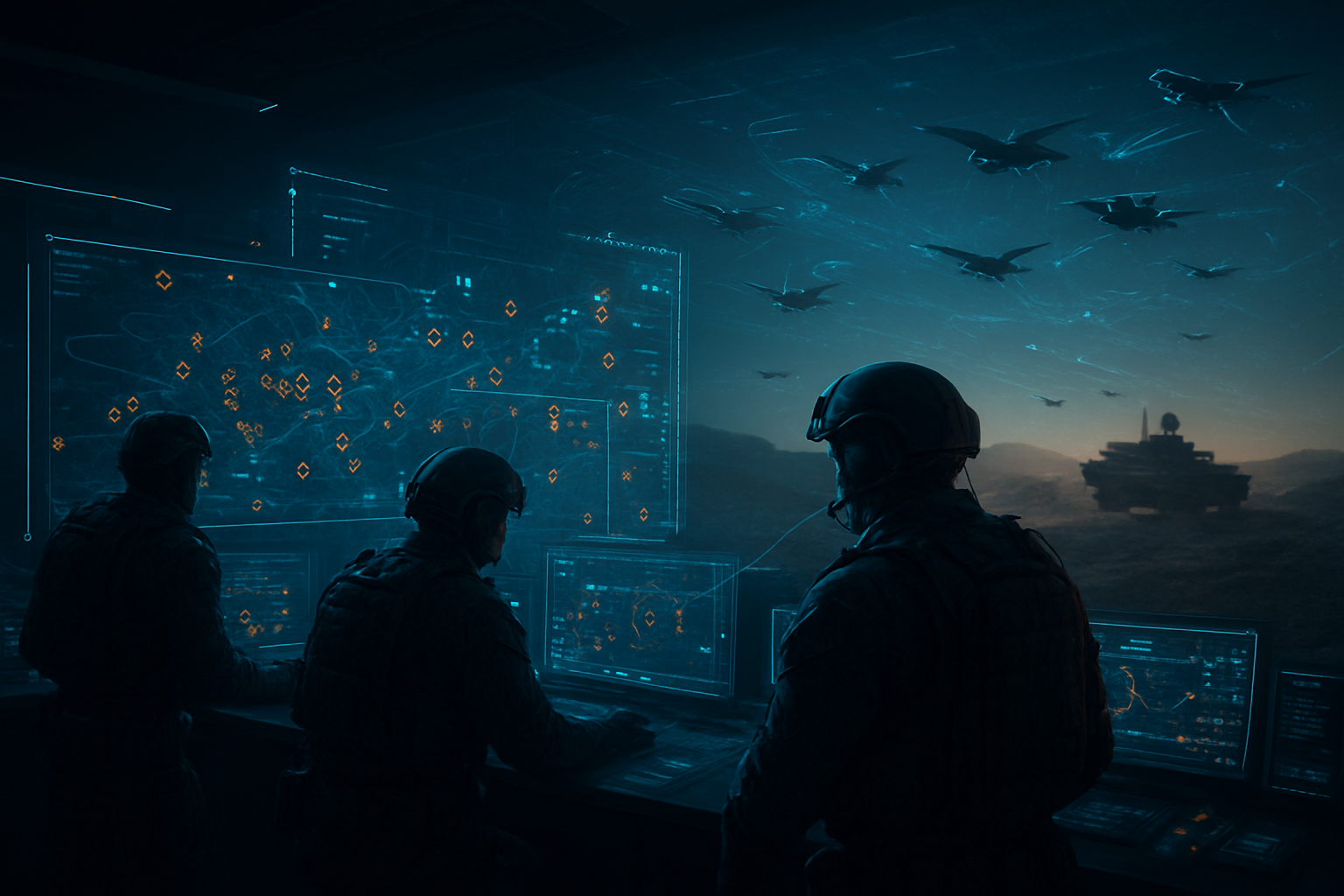
    The landscape of global military power is undergoing a profound transformation, driven by the rapid integration of artificial intelligence into defense systems. As of late 2025, China, Ukraine, and the United States stand at the forefront of this revolution, each leveraging AI with distinct strategies and immediate strategic implications. From autonomous combat vehicles and drone swarms to advanced intelligence analysis and decision-support systems, AI is not merely enhancing existing military capabilities but fundamentally reshaping the tempo and tools of war. This burgeoning reliance on intelligent systems is accelerating decision-making, multiplying force effectiveness through automation, and intensifying an already fierce global competition for technological supremacy.

    The immediate significance of these deployments is multifaceted: AI enables faster processing of vast data streams, providing commanders with real-time insights and dramatically reducing the time from target identification to operational execution. Autonomous and unmanned systems are increasingly deployed to minimize human exposure in high-risk missions, boosting operational efficiency and preserving human lives. However, this rapid technological advancement is simultaneously fueling an intense AI arms race, reshaping global power dynamics and raising urgent ethical questions concerning autonomy, human control, and accountability in lethal decision-making.

    The Technical Edge: A Deep Dive into Military AI Capabilities

    The technical advancements in military AI across China, Ukraine, and the US reveal distinct priorities and cutting-edge capabilities that are setting new benchmarks for intelligent warfare. These developments represent a significant departure from traditional military approaches, emphasizing speed, data analysis, and autonomous action.

    China's People's Liberation Army (PLA) is aggressively pursuing "intelligentized warfare," aiming for global AI military leadership by 2030. Their advancements include the deployment of autonomous combat vehicles, such as those showcased by state-owned Norinco, which can perform combat-support operations using advanced AI models like DeepSeek. The PLA is also investing heavily in sophisticated drone swarms capable of autonomous target tracking and coordinated operations with minimal human intervention, particularly against challenging "low, slow, small" threats. Furthermore, China is developing AI-enabled Intelligence, Surveillance, and Reconnaissance (ISR) systems that fuse data from diverse sources—satellite imagery, signals intelligence, and human intelligence—to provide unprecedented battlefield situational awareness and rapid target detection. A key technical differentiator is China's development of "command brains" and visually immersive command centers, where AI-powered decision-support tools can assess thousands of battlefield scenarios in mere seconds, a task that would take human teams significantly longer. This focus on "algorithmic sovereignty" through domestic AI models aims to reduce reliance on Western technology and consolidate national control over critical digital infrastructure.

    Ukraine, thrust into a real-world testing ground for AI in conflict, has demonstrated remarkable agility in integrating AI-enabled technologies, primarily to augment human capabilities and reduce personnel exposure. The nation has rapidly evolved its unmanned aerial and ground-based drones from mere reconnaissance tools to potent strike platforms. Significant technical progress has been made in autonomous navigation, including GPS-denied navigation and advanced drone swarming techniques. Ukraine has procured and domestically produced millions of AI-enhanced drones in 2024, demonstrating a rapid integration cycle. AI integration has dramatically boosted the strike accuracy of First-Person View (FPV) drones from an estimated 30-50% to around 80%, a critical improvement in combat effectiveness. Beyond direct combat, AI assists in open-source intelligence analysis, helping to identify and counter disinformation campaigns, and strengthens cybersecurity and electronic warfare operations by enhancing data encryption and enabling swifter responses to cyber threats. Ukraine's approach prioritizes a "human-in-the-loop" for lethal decisions, yet the rapid pace of development suggests that the feasibility of full autonomy is growing.

    The United States is strategically investing in AI-powered military systems to maintain its technological edge and deter aggression. The Pentagon's Replicator program, aiming to deploy thousands of AI-driven drones by August 2025, underscores a commitment to autonomous systems across various platforms. Technically, the US is applying AI to optimize supply chains through predictive logistics, enhance intelligence analysis by recognizing patterns beyond human capacity, and develop advanced jamming and communications disruption capabilities in electronic warfare. In cybersecurity, AI is used for automated network penetration and defense. Collaborations with industry leaders are also yielding results: Northrop Grumman (NYSE: NOC) is leveraging physics-based AI with Luminary Cloud to drastically reduce the design time for complex space systems. IBM (NYSE: IBM) is launching a new large language model (LLM) specifically tailored for defense and national security, trained on domain-specific data, to improve decision-making in air-gapped, classified, and edge environments. The U.S. Army is further accelerating its data maturity strategy by rolling out an enterprise AI workspace and democratizing low-code/no-code platforms, empowering soldiers to develop their own AI systems and automate tasks, indicating a shift towards widespread AI integration at the operational level.

    AI's Shifting Sands: Impact on Tech Giants and Startups

    The escalating military AI race is creating significant ripple effects across the technology industry, influencing the strategies of established tech giants, defense contractors, and agile AI startups alike. The demand for advanced AI capabilities is forging new partnerships, intensifying competition, and potentially disrupting traditional market dynamics.

    Major defense contractors like Lockheed Martin (NYSE: LMT), Raytheon Technologies (NYSE: RTX), and Northrop Grumman (NYSE: NOC) stand to benefit immensely from these developments. Their long-standing relationships with government defense agencies, coupled with their expertise in integrating complex systems, position them as prime beneficiaries for developing and deploying AI-powered hardware and software. Northrop Grumman's collaboration with Luminary Cloud on physics-based AI for space system design exemplifies how traditional defense players are leveraging cutting-edge AI for strategic advantage. These companies are investing heavily in AI research and development, acquiring AI startups, and partnering with commercial AI leaders to maintain their competitive edge in this evolving landscape.

    Beyond traditional defense, commercial AI labs and tech giants like IBM (NYSE: IBM), Google (NASDAQ: GOOGL), Microsoft (NASDAQ: MSFT), and Amazon (NASDAQ: AMZN) are finding their advanced AI research increasingly relevant to national security. IBM's development of a specialized large language model for defense and national security highlights a growing trend of commercial AI technologies being adapted for military use. While many commercial tech giants maintain ethical guidelines against direct involvement in autonomous lethal weapons, their foundational AI research in areas like computer vision, natural language processing, and advanced robotics is indispensable for military applications such as intelligence analysis, logistics, and decision support. This creates a delicate balance between commercial interests and national security demands, often leading to partnerships where commercial firms provide underlying AI infrastructure or expertise.

    The landscape is also ripe for disruption by specialized AI startups. Companies focusing on niche areas like autonomous navigation, drone swarm intelligence, advanced sensor fusion, or secure AI for edge computing are finding significant opportunities. Ukraine's wartime innovations, often driven by agile tech companies and volunteer groups, demonstrate how rapid prototyping and deployment of AI solutions can emerge outside traditional procurement cycles. These startups, often backed by venture capital, can quickly develop and iterate on AI solutions, potentially outpacing larger, more bureaucratic organizations. However, they also face challenges in scaling, securing long-term government contracts, and navigating the stringent regulatory and ethical frameworks surrounding military AI. The competitive implications are clear: companies that can develop robust, secure, and ethically sound AI solutions will gain significant market positioning and strategic advantages in the burgeoning military AI sector.

    Wider Significance: Ethical Crossroads and Global Power Shifts

    The rapid integration of AI into military applications by China, Ukraine, and the US carries profound wider significance, pushing the boundaries of ethical considerations, reshaping global power dynamics, and setting new precedents for future conflicts. This development is not merely an incremental technological upgrade but a fundamental shift in the nature of warfare, echoing the transformative impacts of previous military innovations.

    The most pressing concern revolves around the ethical implications of autonomous lethal weapons systems (LAWS). While all three nations publicly maintain a "human-in-the-loop" or "human-on-the-loop" approach for lethal decision-making, the technical capabilities are rapidly advancing towards greater autonomy. The potential for AI systems to make life-or-death decisions without direct human intervention raises critical questions about accountability, bias in algorithms, and the potential for unintended escalation. The US has endorsed a "blueprint for action" on responsible AI use in military settings, advocating for human involvement, particularly concerning nuclear weapons and preventing AI use in weapons of mass destruction by non-state actors. However, the practical application of these principles in the heat of conflict remains a significant challenge, especially given Ukraine's rapid deployment of AI-enhanced drones. China's pursuit of "intelligentized warfare" and the systematic integration of AI suggest a drive for battlefield advantage that could push the boundaries of autonomy, even as Beijing publicly commits to human control.

    This AI arms race fits squarely into broader AI trends characterized by intense geopolitical competition for technological leadership. The computational demands of advanced AI create critical dependencies on semiconductor production, underscoring the strategic importance of key manufacturing hubs like Taiwan. The US has responded to China's advancements with restrictions on investments in China's AI and semiconductor sectors, aiming to limit its military AI development. However, China is accelerating domestic research to mitigate these effects, highlighting a global race for "algorithmic sovereignty" and self-sufficiency in critical AI components. The impact on international stability is significant, as the development of superior AI capabilities could fundamentally alter the balance of power, potentially leading to increased assertiveness from nations with perceived technological advantages.

    Comparisons to previous AI milestones are instructive. Just as the development of precision-guided munitions transformed warfare in the late 20th century, AI-driven systems are now poised to offer unprecedented levels of precision, speed, and analytical capability. However, unlike previous technologies, AI introduces a layer of cognitive autonomy that challenges traditional command and control structures and international humanitarian law. The current developments are seen as a critical inflection point, moving beyond AI as merely an analytical tool to AI as an active, decision-making agent in conflict. The potential for AI to be used in cyber warfare, disinformation campaigns, and electronic warfare further complicates the landscape, blurring the lines between kinetic and non-kinetic conflict and raising new challenges for international arms control and stability.

    The Horizon of Conflict: Future Developments in Military AI

    The trajectory of military AI suggests a future where intelligent systems will become even more deeply embedded in defense strategies, promising both revolutionary capabilities and unprecedented challenges. Experts predict a continuous escalation in the sophistication and autonomy of these systems, pushing the boundaries of what is technically feasible and ethically permissible.

    In the near term, we can expect continued advancements in autonomous drone swarms, with improved coordination, resilience, and the ability to operate in complex, contested environments. These swarms will likely incorporate more sophisticated AI for target recognition, threat assessment, and adaptive mission planning. The Pentagon's Replicator program is a clear indicator of this immediate focus. We will also see further integration of AI into command and control systems, evolving from decision-support tools to more proactive "AI co-pilots" that can suggest complex strategies and execute tasks with minimal human oversight, particularly in time-critical scenarios. The development of specialized large language models for defense, like IBM's initiative, will enhance intelligence analysis, operational planning, and communication in secure environments.

    Long-term developments are likely to involve the proliferation of fully autonomous weapons systems, even as ethical debates continue. The increasing feasibility demonstrated in real-world conflicts, coupled with the strategic imperative to reduce human casualties and gain battlefield advantage, will exert pressure towards greater autonomy. We could see the emergence of AI-powered "robot soldiers" or highly intelligent, networked autonomous platforms capable of complex maneuver, reconnaissance, and even engagement without direct human input. Beyond kinetic applications, AI will play an increasingly critical role in cyber defense and offense, electronic warfare, and sophisticated disinformation campaigns, creating a multi-domain AI arms race. Predictive logistics and maintenance will become standard, optimizing military supply chains and ensuring equipment readiness through advanced data analytics and machine learning.

    However, significant challenges need to be addressed. Ensuring the ethical deployment of AI, particularly concerning accountability and preventing unintended escalation, remains paramount. The development of robust explainable AI (XAI) is crucial for human operators to understand and trust AI decisions. Cybersecurity threats to AI systems themselves, including adversarial attacks that could manipulate or disable military AI, represent a growing vulnerability. Furthermore, the high computational and data requirements of advanced AI necessitate continuous investment in infrastructure and talent. Experts predict that the nation that masters the ethical and secure integration of AI into its military will gain a decisive strategic advantage, fundamentally altering the global balance of power for decades to come. The coming years will be critical in shaping the norms and rules governing this new era of intelligent warfare.

    The Dawn of Intelligent Warfare: A Concluding Assessment

    The current utilization of military AI by China, Ukraine, and the United States marks a pivotal moment in the history of warfare, ushering in an era of intelligent conflict where technological prowess increasingly dictates strategic advantage. The key takeaways from this analysis underscore a global race for AI supremacy, where each nation is carving out its own niche in the application of advanced algorithms and autonomous systems. China's ambitious pursuit of "intelligentized warfare" through domestic AI models and comprehensive integration, Ukraine's agile, battle-tested innovations in unmanned systems, and the US's strategic investments to maintain technological overmatch collectively highlight AI as the critical differentiator in modern military strength.

    This development's significance in AI history cannot be overstated. It represents a transition from AI as a mere analytical tool to an active participant in military operations, profoundly impacting decision-making cycles, force projection, and the protection of human lives. The ethical quandaries surrounding autonomous lethal weapons, the imperative for human control, and the potential for algorithmic bias are now at the forefront of international discourse, demanding urgent attention and the establishment of robust regulatory frameworks. The intensifying AI arms race, fueled by these advancements, is reshaping geopolitical landscapes and accelerating competition for critical resources like semiconductors and AI talent.

    Looking ahead, the long-term impact of military AI will likely be characterized by a continuous evolution of autonomous capabilities, a blurring of lines between human and machine decision-making, and an increasing reliance on networked intelligent systems for multi-domain operations. What to watch for in the coming weeks and months includes further announcements on drone swarm deployments, the development of new AI-powered decision-support tools, and ongoing international discussions on the governance and responsible use of military AI. The ethical framework, particularly regarding the "human-in-the-loop" principle, will be under constant scrutiny as technical capabilities push the boundaries of autonomy. The interplay between commercial AI innovation and military application will also be a critical area to monitor, as tech giants and startups continue to shape the foundational technologies that underpin this new era of intelligent warfare.


    This content is intended for informational purposes only and represents analysis of current AI developments.

    TokenRing AI delivers enterprise-grade solutions for multi-agent AI workflow orchestration, AI-powered development tools, and seamless remote collaboration platforms.
    For more information, visit https://www.tokenring.ai/.

  • The AI Arms Race: Reshaping Global Defense Strategies by 2025

    The AI Arms Race: Reshaping Global Defense Strategies by 2025

    As of October 2025, artificial intelligence (AI) has moved beyond theoretical discussions to become an indispensable and transformative force within the global defense sector. Nations worldwide are locked in an intense "AI arms race," aggressively investing in and integrating advanced AI capabilities to secure technological superiority and fundamentally redefine modern warfare. This rapid adoption signifies a seismic shift in strategic doctrines, operational capabilities, and the very nature of military engagement.

    This pervasive integration of AI is not merely enhancing existing military functions; it is a core enabler of next-generation defense systems. From autonomous weapon platforms and sophisticated cyber defense mechanisms to predictive logistics and real-time intelligence analysis, AI is rapidly becoming the bedrock upon which future national security strategies are built. The immediate implications are profound, promising unprecedented precision and efficiency, yet simultaneously raising complex ethical, legal, and societal questions that demand urgent global attention.

    AI's Technical Revolution in Military Applications

    The current wave of AI advancements in defense is characterized by a suite of sophisticated technical capabilities that are dramatically altering military operations. Autonomous Weapon Systems (AWS) stand at the forefront, with several nations by 2025 having developed systems capable of making lethal decisions without direct human intervention. This represents a significant leap from previous remotely operated drones, which required continuous human control, to truly autonomous entities that can identify targets and engage them based on pre-programmed parameters. The global automated weapon system market, valued at approximately $15 billion this year, underscores the scale of this technological shift. For instance, South Korea's collaboration with Anduril Industries exemplifies the push towards co-developing advanced autonomous aircraft.

    Beyond individual autonomous units, swarm technologies are seeing increased integration. These systems allow for the coordinated operation of multiple autonomous aerial, ground, or maritime platforms, vastly enhancing mission effectiveness, adaptability, and resilience. The U.S. Department of Defense's OFFSET program has already demonstrated the deployment of swarms comprising up to 250 autonomous robots in complex urban environments, a stark contrast to previous single-unit deployments. This differs from older approaches by enabling distributed, collaborative intelligence, where the collective can achieve tasks far beyond the capabilities of any single machine.

    Furthermore, AI is revolutionizing Command and Control (C2) systems, moving towards decentralized models. DroneShield's (ASX: DRO) new AI-driven C2 Enterprise (C2E) software, launched in October 2025, exemplifies this by connecting multiple counter-drone systems for large-scale security, enabling real-time oversight and rapid decision-making across geographically dispersed areas. This provides a significant advantage over traditional, centralized C2 structures that can be vulnerable to single points of failure. Initial reactions from the AI research community highlight both the immense potential for efficiency and the deep ethical concerns surrounding the delegation of critical decision-making to machines, particularly in lethal contexts. Experts are grappling with the implications of AI's "hallucinations" or erroneous outputs in such high-stakes environments.

    Competitive Dynamics and Market Disruption in the AI Defense Landscape

    The rapid integration of AI into the defense sector is creating a new competitive landscape, significantly benefiting a select group of AI companies, established tech giants, and specialized startups. Companies like Anduril Industries, known for its focus on autonomous systems and border security, stand to gain immensely from increased defense spending on AI. Their partnerships, such as the one with South Korea for autonomous aircraft co-development, demonstrate a clear strategic advantage in a burgeoning market. Similarly, DroneShield (ASX: DRO), with its AI-driven counter-drone C2 software, is well-positioned to capitalize on the growing need for sophisticated defense against drone threats.

    Major defense contractors, including General Dynamics Land Systems (GDLS), are also deeply integrating AI. GDLS's Vehicle Intelligence Tools & Analytics & Analytics for Logistics & Sustainment (VITALS) program, implemented in the Marine Corps' Advanced Reconnaissance Vehicle (ARV), showcases how traditional defense players are leveraging AI for predictive maintenance and logistics optimization. This indicates a broader trend where legacy defense companies are either acquiring AI capabilities or aggressively investing in in-house AI development to maintain their competitive edge. The competitive implications for major AI labs are substantial; those with expertise in areas like reinforcement learning, computer vision, and natural language processing are finding lucrative opportunities in defense applications, often leading to partnerships or significant government contracts.

    This development poses a potential disruption to existing products and services that rely on older, non-AI driven systems. For instance, traditional C2 systems face obsolescence as AI-powered decentralized alternatives offer superior speed and resilience. Startups specializing in niche AI applications, such as AI-enabled cybersecurity or advanced intelligence analysis, are finding fertile ground for innovation and rapid growth, potentially challenging the dominance of larger, slower-moving incumbents. The market positioning is increasingly defined by a company's ability to develop, integrate, and secure advanced AI solutions, creating strategic advantages for those at the forefront of this technological wave.

    The Wider Significance: Ethics, Trends, and Societal Impact

    The ascendancy of AI in defense extends far beyond technological specifications, embedding itself within the broader AI landscape and raising profound societal implications. This development aligns with the overarching trend of AI permeating every sector, but its application in warfare introduces a unique set of ethical considerations. The most pressing concern revolves around Autonomous Weapon Systems (AWS) and the question of human control over lethal force. As of October 2025, there is no single global regulation for AI in weapons, with discussions ongoing at the UN General Assembly. This regulatory vacuum amplifies concerns about reduced human accountability for war crimes, the potential for rapid, AI-driven escalation leading to "flash wars," and the erosion of moral agency in conflict.

    The impact on cybersecurity is particularly acute. While adversaries are leveraging AI for more sophisticated and faster attacks—such as AI-enabled phishing, automated vulnerability scanning, and adaptive malware—defenders are deploying AI as their most powerful countermeasure. AI is crucial for real-time anomaly detection, automated incident response, and augmenting Security Operations Center (SOC) teams. The UK's NCSC (National Cyber Security Centre) has made significant strides in autonomous cyber defense, reflecting a global trend where AI is both the weapon and the shield in the digital battlefield. This creates an ever-accelerating cyber arms race, where the speed and sophistication of AI systems dictate defensive and offensive capabilities.

    Comparisons to previous AI milestones reveal a shift from theoretical potential to practical, high-stakes deployment. While earlier AI breakthroughs focused on areas like game playing or data processing, the current defense applications represent a direct application of AI to life-or-death scenarios on a national and international scale. This raises public concerns about algorithmic bias, the potential for AI systems to "hallucinate" or produce erroneous outputs in critical military contexts, and the risk of unintended consequences. The ethical debate surrounding AI in defense is not merely academic; it is a critical discussion shaping international policy and the future of human conflict.

    The Horizon: Anticipated Developments and Lingering Challenges

    Looking ahead, the trajectory of AI in defense points towards even more sophisticated and integrated systems in both the near and long term. In the near term, we can expect continued advancements in human-machine teaming, where AI-powered systems work seamlessly alongside human operators, enhancing situational awareness and decision-making while attempting to preserve human oversight. Further development in swarm intelligence, enabling larger and more complex coordinated autonomous operations, is also anticipated. AI's role in intelligence analysis will deepen, leading to predictive intelligence that can anticipate geopolitical shifts and logistical demands with greater accuracy.

    On the long-term horizon, potential applications include fully autonomous supply chains, AI-driven strategic planning tools that simulate conflict outcomes, and advanced robotic platforms capable of operating in extreme environments for extended durations. The UK's Strategic Defence Review 2025's aim to deliver a "digital targeting web" by 2027, leveraging AI for real-time data analysis and accelerated decision-making, exemplifies the direction of future developments. Experts predict a continued push towards "cognitive warfare," where AI systems engage in information manipulation and psychological operations.

    However, significant challenges need to be addressed. Ethical governance and the establishment of international norms for the use of AI in warfare remain paramount. The "hallucination" problem in advanced AI models, where systems generate plausible but incorrect information, poses a catastrophic risk if not mitigated in defense applications. Cybersecurity vulnerabilities will also continue to be a major concern, as adversaries will relentlessly seek to exploit AI systems. Furthermore, the sheer complexity of integrating diverse AI technologies across vast military infrastructures presents an ongoing engineering and logistical challenge. Experts predict that the next phase will involve a delicate balance between pushing technological boundaries and establishing robust ethical frameworks to ensure responsible deployment.

    A New Epoch in Warfare: The Enduring Impact of AI

    The current trajectory of Artificial Intelligence in the defense sector marks a pivotal moment in military history, akin to the advent of gunpowder or nuclear weapons. The key takeaway is clear: AI is no longer an ancillary tool but a fundamental component reshaping strategic doctrines, operational capabilities, and the very definition of modern warfare. Its immediate significance lies in enhancing precision, speed, and efficiency across all domains, from predictive maintenance and logistics to advanced cyber defense and autonomous weapon systems.

    This development's significance in AI history is profound, representing the transition of AI from a primarily commercial and research-oriented field to a critical national security imperative. The ongoing "AI arms race" underscores that technological superiority in the 21st century will largely be dictated by a nation's ability to develop, integrate, and responsibly govern advanced AI systems. The long-term impact will likely include a complete overhaul of military training, recruitment, and organizational structures, adapting to a future defined by human-machine teaming and data-centric operations.

    In the coming weeks and months, the world will be watching for progress in international discussions on AI ethics in warfare, particularly concerning autonomous weapon systems. Further announcements from defense contractors and AI companies regarding new partnerships and technological breakthroughs are also anticipated. The delicate balance between innovation and responsible deployment will be the defining challenge as humanity navigates this new epoch in warfare, ensuring that the immense power of AI serves to protect, rather than destabilize, global security.


    This content is intended for informational purposes only and represents analysis of current AI developments.

    TokenRing AI delivers enterprise-grade solutions for multi-agent AI workflow orchestration, AI-powered development tools, and seamless remote collaboration platforms.
    For more information, visit https://www.tokenring.ai/.