
Tag: MIT

  • From Prompt to Product: MIT’s ‘Speech to Reality’ System Can Now Speak Furniture into Existence

    From Prompt to Product: MIT’s ‘Speech to Reality’ System Can Now Speak Furniture into Existence

    In a landmark demonstration of "Embodied AI," researchers at MIT’s Computer Science and Artificial Intelligence Laboratory (CSAIL) have unveiled a system that allows users to design and manufacture physical furniture using nothing but natural language. The project, titled "Speech to Reality," marks a departure from generative AI’s traditional digital-only outputs, moving the technology into the physical realm where a simple verbal request—"Robot, make me a two-tiered stool"—can result in a finished, functional object in under five minutes.

    This breakthrough represents a pivotal shift in the "bits-to-atoms" pipeline, bridging the gap between Large Language Models (LLMs) and autonomous robotics. By integrating advanced geometric reasoning with modular fabrication, the MIT team has created a workflow where non-experts can bypass complex CAD software and manual assembly entirely. As of January 2026, the system has evolved from a laboratory curiosity into a robust platform capable of producing structural, load-bearing items, signaling a new era for on-demand domestic and industrial manufacturing.

    The Technical Architecture of Generative Fabrication

    The "Speech to Reality" system operates through a sophisticated multi-stage pipeline that translates high-level human intent into low-level robotic motor controls. The process begins with the OpenAI Whisper API, a product of the Microsoft (NASDAQ: MSFT) partner, which transcribes the user's spoken commands. These commands are then parsed by a custom Large Language Model that extracts functional requirements, such as height, width, and number of surfaces. This data is fed into a 3D generative model, such as Meshy.AI, which produces a high-fidelity digital mesh. However, because raw AI-generated meshes are often structurally unsound, MIT’s critical innovation lies in its "Voxelization Algorithm."

    This algorithm discretizes the digital mesh into a grid of coordinates that correspond to standardized, modular lattice components—small cubes and panels that the robot can easily manipulate. To ensure the final product is more than just a pile of blocks, a Vision-Language Model (VLM) performs "geometric reasoning," identifying which parts of the design are structural legs and which are flat surfaces. The physical assembly is then carried out by a UR10 robotic arm from Universal Robots, a subsidiary of Teradyne (NASDAQ: TER). Unlike previous iterations like 2018's "AutoSaw," which used traditional timber and power tools, the 2026 system utilizes discrete cellular structures with mechanical interlocking connectors, allowing for rapid, reversible, and precise assembly.

    The system also includes a "Fabrication Constraints Layer" that solves for real-world physics in real-time. Before the robotic arm begins its first movement, the AI calculates path planning to avoid collisions, ensures that every part is physically attached to the main structure, and confirms that the robot can reach every necessary point in the assembly volume. This "Reachability Analysis" prevents the common "hallucination" issues found in digital LLMs from translating into physical mechanical failures.

    Impact on the Furniture Giants and the Robotics Sector

    The emergence of automated, prompt-based manufacturing is sending shockwaves through the $700 billion global furniture market. Traditional retailers like IKEA (Ingka Group) are already pivoting; the Swedish giant recently announced strategic partnerships to integrate Robots-as-a-Service (RaaS) into their logistics chain. For IKEA, the MIT system suggests a future where "flat-pack" furniture is replaced by "no-pack" furniture—where consumers visit a local micro-factory, describe their needs to an AI, and watch as a robot assembles a custom piece of furniture tailored to their specific room dimensions.

    In the tech sector, this development intensifies the competition for "Physical AI" dominance. Amazon (NASDAQ: AMZN) has been a frontrunner in this space with its "Vulcan" robotic arm, which uses tactile feedback to handle delicate warehouse items. However, MIT’s approach shifts the focus from simple manipulation to complex assembly. Meanwhile, companies like Alphabet (NASDAQ: GOOGL) through Google DeepMind are refining Vision-Language-Action (VLA) models like RT-2, which allow robots to understand abstract concepts. MIT’s modular lattice approach provides a standardized "hardware language" that these VLA models can use to build almost anything, potentially commoditizing the assembly process and disrupting specialized furniture manufacturers.

    Startups are also entering the fray, with Figure AI—backed by the likes of Intel (NASDAQ: INTC) and Nvidia (NASDAQ: NVDA)—deploying general-purpose humanoids capable of learning assembly tasks through visual observation. The MIT system provides a blueprint for these humanoids to move beyond simple labor and toward creative construction. By making the "instructions" for a chair as simple as a text string, MIT has lowered the barrier to entry for bespoke manufacturing, potentially enabling a new wave of localized, AI-driven craft businesses that can out-compete mass-produced imports on both speed and customization.

    The Broader Significance of Reversible Fabrication

    Beyond the convenience of "on-demand chairs," the "Speech to Reality" system addresses a growing global crisis: furniture waste. In the United States alone, over 12 million tons of furniture are discarded annually. Because the MIT system uses modular, interlocking components, it enables "reversible fabrication." A user could, in theory, tell the robot to disassemble a desk they no longer need and use those same parts to build a bookshelf or a coffee table. This circular economy model represents a massive leap forward in sustainable design, where physical objects are treated as "dynamic data" that can be reconfigured as needed.

    This milestone is being compared to the "Gutenberg moment" for physical goods. Just as the printing press democratized the spread of information, generative assembly democratizes the creation of physical objects. However, this shift is not without its concerns. Industry experts have raised questions regarding the structural safety and liability of AI-generated designs. If an AI-designed chair collapses, the legal framework for determining whether the fault lies with the software developer, the hardware manufacturer, or the user remains dangerously undefined. Furthermore, the potential for job displacement in the carpentry and manual assembly sectors is a significant social hurdle that will require policy intervention as the technology scales.

    The MIT project also highlights the rapid evolution of "Embodied AI" datasets. By using the Open X-Embodiment (OXE) dataset, researchers have been able to train robots on millions of trajectories, allowing them to handle the inherent "messiness" of the physical world. This represents a departure from the "locked-box" automation of 20th-century factories, moving toward "General Purpose Robotics" that can adapt to any environment, from a specialized lab to a suburban living room.

    Scaling Up: From Stools to Living Spaces

    The near-term roadmap for this technology is ambitious. MIT researchers have already begun testing "dual-arm assembly" through the Fabrica project, which allows robots to perform "bimanual" tasks—such as holding a long beam steady while another arm snaps a connector into place. This will enable the creation of much larger and more complex structures than the current single-arm setup allows. Experts predict that by 2027, we will see the first commercial "Micro-Fabrication Hubs" in urban centers, operating as 24-hour kiosks where citizens can "print" household essentials on demand.

    Looking further ahead, the MIT team is exploring "distributed mobile robotics." Instead of a stationary arm, this involves "inchworm-like" robots that can crawl over the very structures they are building. This would allow the system to scale beyond furniture to architectural-level constructions, such as temporary emergency housing or modular office partitions. The integration of Augmented Reality (AR) is also on the horizon, allowing users to "paint" their desired furniture into their physical room using a headset, with the robot then matching the physical build to the digital holographic overlay.

    The primary challenge remains the development of a universal "Physical AI" model that can handle non-modular materials. While the lattice-cube system is highly efficient, the research community is striving toward robots that can work with varied materials like wood, metal, and recycled plastic with the same ease. As these models become more generalized, the distinction between "designer," "manufacturer," and "consumer" will continue to blur.

    A New Chapter in Human-Machine Collaboration

    The "Speech to Reality" system is more than just a novelty for making chairs; it is a foundational shift in how humans interact with the physical world. By removing the technical barriers of CAD and the physical barriers of manual labor, MIT has turned the environment around us into a programmable medium. We are moving from an era where we buy what is available to an era where we describe what we need, and the world reshapes itself to accommodate us.

    As we look toward the final quarters of 2026, the key developments to watch will be the integration of these generative models into consumer-facing humanoid robots and the potential for "multi-material" fabrication. The significance of this breakthrough in AI history cannot be overstated—it represents the moment AI finally grew "hands" capable of matching the creativity of its "mind." For the tech industry, the race is no longer just about who has the best chatbot, but who can most effectively manifest those thoughts into the physical world.


    This content is intended for informational purposes only and represents analysis of current AI developments.

    TokenRing AI delivers enterprise-grade solutions for multi-agent AI workflow orchestration, AI-powered development tools, and seamless remote collaboration platforms.
    For more information, visit https://www.tokenring.ai/.
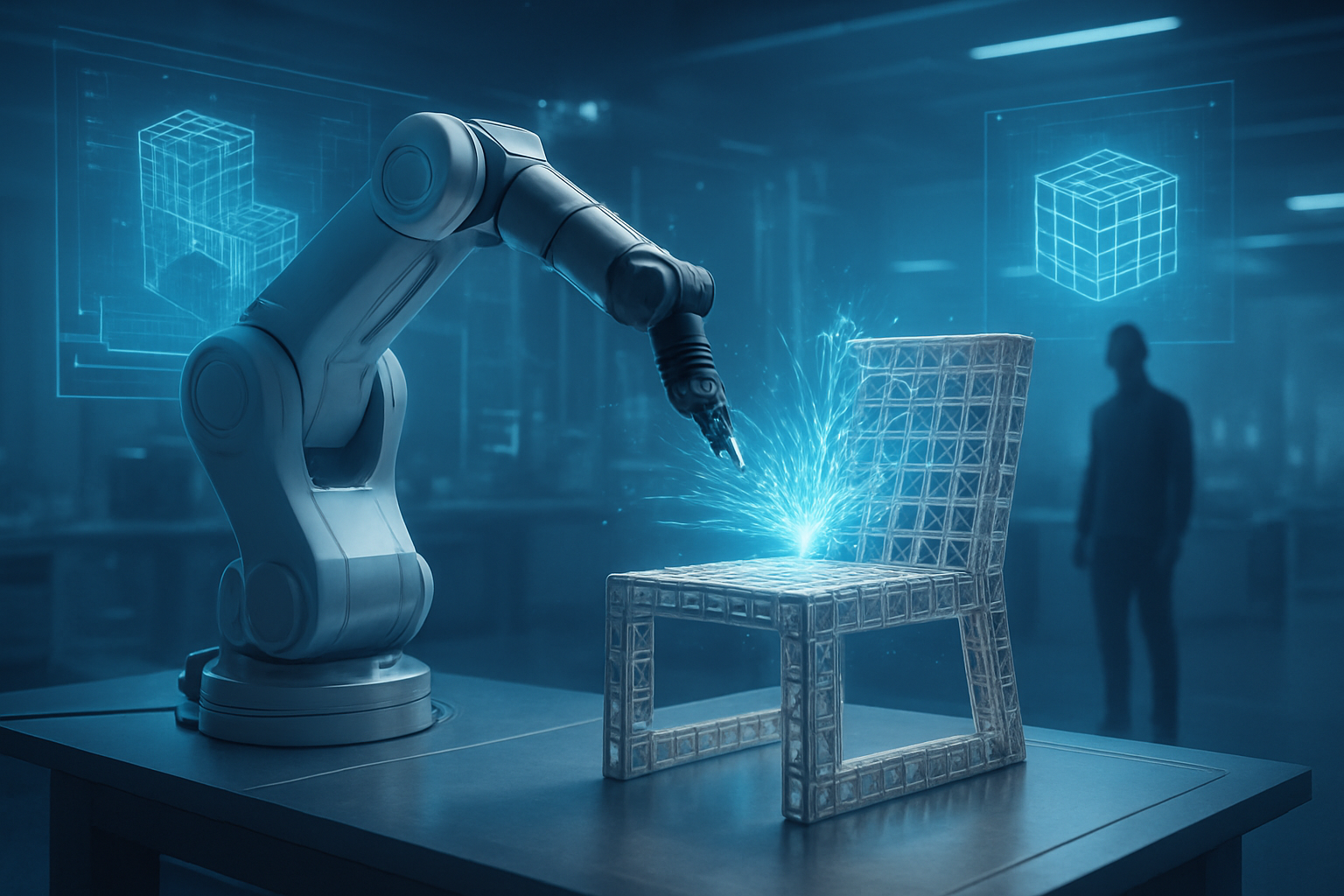
  • From Voice to Matter: MIT’s ‘Speech-to-Reality’ Breakthrough Bridges the Gap Between AI and Physical Manufacturing

    From Voice to Matter: MIT’s ‘Speech-to-Reality’ Breakthrough Bridges the Gap Between AI and Physical Manufacturing

    In a development that feels like it was plucked directly from the bridge of the Starship Enterprise, researchers at the MIT Center for Bits and Atoms (CBA) have unveiled a "Speech-to-Reality" system that allows users to verbally describe an object and watch as a robot builds it in real-time. Unveiled in late 2025 and gaining massive industry traction as we enter 2026, the system represents a fundamental shift in how humans interact with the physical world, moving the "generative AI" revolution from the screen into the physical workshop.

    The breakthrough, led by graduate student Alexander Htet Kyaw and Professor Neil Gershenfeld, combines the reasoning capabilities of Large Language Models (LLMs) with 3D generative AI and discrete robotic assembly. By simply stating, "I need a three-legged stool with a circular seat," the system interprets the request, generates a structurally sound 3D model, and directs a robotic arm to assemble the piece from modular components—all in under five minutes. This "bits-to-atoms" pipeline effectively eliminates the need for complex Computer-Aided Design (CAD) software, democratizing manufacturing for anyone with a voice.

    The Technical Architecture of Conversational Fabrication

    The technical brilliance of the Speech-to-Reality system lies in its multi-stage computational pipeline, which translates abstract human intent into precise physical coordinates. The process begins with a natural language interface—powered by a custom implementation of OpenAI’s GPT-4 architecture—that parses the user's speech to extract design parameters and constraints. Unlike standard chatbots, this model acts as a "physics-aware" gatekeeper, validating whether a requested object is buildable or structurally stable before proceeding.

    Once the intent is verified, the system utilizes a 3D generative model, such as Point-E or Shap-E, to create a digital mesh of the object. However, because raw 3D AI models often produce "hallucinated" geometries that are impossible to fabricate, the MIT team developed a proprietary voxelization algorithm. This software breaks the digital mesh into discrete, modular building blocks (voxels). Crucially, the system accounts for real-world constraints, such as the robot's available inventory of magnetic or interlocking cubes, and the physics of cantilevers to ensure the structure doesn't collapse during the build.

    This approach differs significantly from traditional additive manufacturing, such as that championed by companies like Stratasys (NASDAQ: SSYS). While 3D printing creates monolithic objects over hours of slow deposition, MIT’s discrete assembly is nearly instantaneous. Initial reactions from the AI research community have been overwhelmingly positive, with experts at the ACM Symposium on Computational Fabrication (SCF '25) noting that the system’s ability to "think in blocks" allows for a level of speed and structural predictability that end-to-end neural networks have yet to achieve.

    Industry Disruption: The Battle of Discrete vs. End-to-End AI

    The emergence of Speech-to-Reality has set the stage for a strategic clash among tech giants and robotics startups. On one side are the "discrete assembly" proponents like MIT, who argue that building with modular parts is the fastest way to scale. On the other are companies like NVIDIA (NASDAQ: NVDA) and Figure AI, which are betting on "end-to-end" Vision-Language-Action (VLA) models. NVIDIA’s Project GR00T, for instance, focuses on teaching robots to handle any arbitrary object through massive simulation, a more flexible but computationally expensive approach.

    For companies like Autodesk (NASDAQ: ADSK), the Speech-to-Reality breakthrough poses a fascinating challenge to the traditional CAD market. If a user can "speak" a design into existence, the barrier to entry for professional-grade engineering drops to near zero. Meanwhile, Tesla (NASDAQ: TSLA) is watching these developments closely as it iterates on its Optimus humanoid. Integrating a Speech-to-Reality workflow could allow Optimus units in "Giga-factories" to receive verbal instructions for custom jig assembly or emergency repairs, drastically reducing downtime.

    The market positioning of this technology is clear: it is the "LLM for the physical world." Startups are already emerging to license the MIT voxelization algorithms, aiming to create "automated micro-factories" that can be deployed in remote areas or disaster zones. The competitive advantage here is not just speed, but the ability to bypass the specialized labor typically required to operate robotic manufacturing lines.

    Wider Significance: Sustainability and the Circular Economy

    Beyond the technical "cool factor," the Speech-to-Reality breakthrough has profound implications for the global sustainability movement. Because the system uses modular, interlocking voxels rather than solid plastic or metal, the objects it creates are inherently "circular." A stool built for a temporary event can be disassembled by the same robot five minutes later, and the blocks can be reused to build a shelf or a desk. This "reversible manufacturing" stands in stark contrast to the waste-heavy models of current consumerism.

    This development also marks a milestone in the broader AI landscape, representing the successful integration of "World Models"—AI that understands the physical laws of gravity, friction, and stability. While previous AI milestones like AlphaGo or DALL-E 3 conquered the domains of logic and art, Speech-to-Reality is one of the first systems to master the "physics of making." It addresses the "Moravec’s Paradox" of AI: the realization that high-level reasoning is easy for computers, but low-level physical interaction is incredibly difficult.

    However, the technology is not without its concerns. Critics have pointed out potential safety risks if the system is used to create unverified structural components for critical use. There are also questions regarding the intellectual property of "spoken" designs—if a user describes a chair that looks remarkably like a patented Herman Miller design, the legal framework for "voice-to-object" infringement remains entirely unwritten.

    The Horizon: Mobile Robots and Room-Scale Construction

    Looking forward, the MIT team and industry experts predict that the next logical step is the transition from stationary robotic arms to swarms of mobile robots. In the near term, we can expect to see "collaborative assembly" demonstrations where multiple small robots work together to build room-scale furniture or temporary architectural structures based on a single verbal prompt.

    One of the most anticipated applications lies in space exploration. NASA and private space firms are reportedly interested in discrete assembly for lunar bases. Transporting raw materials is prohibitively expensive, but a "Speech-to-Reality" system equipped with a large supply of universal modular blocks could allow astronauts to "speak" their base infrastructure into existence, reconfiguring their environment as mission needs change. The primary challenge remaining is the miniaturization of the connectors and the expansion of the "voxel library" to include functional blocks like sensors, batteries, and light sources.

    A New Chapter in Human-Machine Collaboration

    The MIT Speech-to-Reality system is more than just a faster way to build a chair; it is a foundational shift in human agency. It marks the moment when the "digital-to-physical" barrier became porous, allowing the speed of human thought to be matched by the speed of robotic execution. In the history of AI, this will likely be remembered as the point where generative models finally "grew hands."

    As we look toward the coming months, the focus will shift from the laboratory to the field. Watch for the first pilot programs in "on-demand retail," where customers might walk into a store, describe a product, and walk out with a physically assembled version of their imagination. The era of "Conversational Fabrication" has arrived, and the physical world may never be the same.


    This content is intended for informational purposes only and represents analysis of current AI developments.

    TokenRing AI delivers enterprise-grade solutions for multi-agent AI workflow orchestration, AI-powered development tools, and seamless remote collaboration platforms.
    For more information, visit https://www.tokenring.ai/.
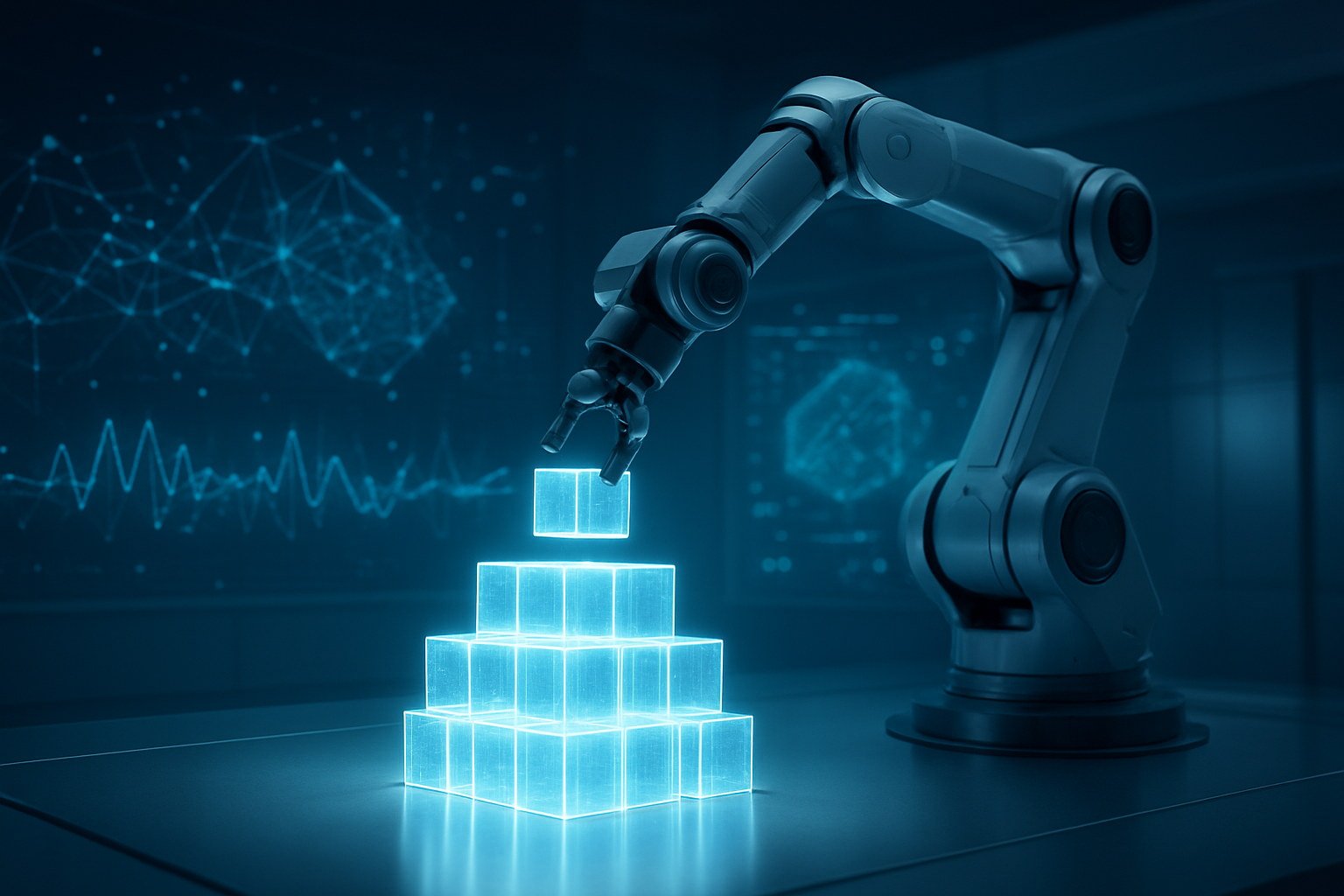
  • Beyond the Transformer: MIT and IBM’s ‘PaTH’ Architecture Unlocks the Next Frontier of AI Reasoning

    Beyond the Transformer: MIT and IBM’s ‘PaTH’ Architecture Unlocks the Next Frontier of AI Reasoning

    CAMBRIDGE, MA — Researchers from MIT and IBM (NYSE: IBM) have unveiled a groundbreaking new architectural framework for Large Language Models (LLMs) that fundamentally redefines how artificial intelligence tracks information and performs sequential reasoning. Dubbed "PaTH Attention" (Position Encoding via Accumulating Householder Transformations), the new architecture addresses a critical flaw in current Transformer models: their inability to maintain an accurate internal "state" when dealing with complex, multi-step logic or long-form data.

    This development, finalized in late 2025, marks a pivotal shift in the AI industry’s focus. While the previous three years were dominated by "scaling laws"—the belief that simply adding more data and computing power would lead to intelligence—the PaTH architecture suggests that the next leap in AI capabilities will come from architectural expressivity. By allowing models to dynamically encode positional information based on the content of the data itself, MIT and IBM researchers have provided LLMs with a "memory" that is both mathematically precise and hardware-efficient.

    The core technical innovation of the PaTH architecture lies in its departure from standard positional encoding methods like Rotary Position Encoding (RoPE). In traditional Transformers, the distance between two words is treated as a fixed mathematical value, regardless of what those words actually say. PaTH Attention replaces this static approach with data-dependent Householder transformations. Essentially, each token in a sequence acts as a "mirror" that reflects and transforms the positional signal based on its specific content. This allows the model to "accumulate" a state as it reads through a sequence, much like a human reader tracks the changing status of a character in a novel or a variable in a block of code.

    From a theoretical standpoint, the researchers proved that PaTH can solve a class of mathematical problems known as $NC^1$-complete problems. Standard Transformers, which are mathematically bounded by the $TC^0$ complexity class, are theoretically incapable of solving these types of iterative, state-dependent tasks without excessive layers. In practical benchmarks like the A5 Word Problems and the Flip-Flop LM state-tracking test, PaTH models achieved near-perfect accuracy with significantly fewer layers than standard models. Furthermore, the architecture is designed to be compatible with high-performance hardware, utilizing a FlashAttention-style parallel algorithm optimized for NVIDIA (NASDAQ: NVDA) H100 and B200 GPUs.

    Initial reactions from the AI research community have been overwhelmingly positive. Dr. Yoon Kim, a lead researcher at MIT’s Computer Science and Artificial Intelligence Laboratory (CSAIL), described the architecture as a necessary evolution for the "agentic era" of AI. Industry experts note that while existing reasoning models, such as those from OpenAI, rely on "test-time compute" (thinking longer before answering), PaTH allows models to "think better" by maintaining a more stable internal world model throughout the processing phase.

    The implications for the competitive landscape of AI are profound. For IBM, this breakthrough serves as a cornerstone for its watsonx.ai platform, positioning the company as a leader in "Agentic AI" for the enterprise. Unlike consumer-facing chatbots, enterprise AI requires extreme precision in state tracking—such as following a complex legal contract’s logic or a financial model’s dependencies. By integrating PaTH-based primitives into its future Granite model releases, IBM aims to provide corporate clients with AI agents that are less prone to "hallucinations" caused by losing track of long-context logic.

    Major tech giants like Microsoft (NASDAQ: MSFT) and Alphabet (NASDAQ: GOOGL) are also expected to take note. As the industry moves toward autonomous AI agents that can perform multi-step workflows, the ability to track state efficiently becomes a primary competitive advantage. Startups specializing in AI-driven software engineering, such as Cognition or Replit, may find PaTH-like architectures essential for tracking variable states across massive codebases, a task where current Transformer-based models often falter.

    Furthermore, the hardware efficiency of PaTH Attention provides a strategic advantage for cloud providers. Because the architecture can handle sequences of up to 64,000 tokens with high stability and lower memory overhead, it reduces the cost-per-inference for long-context tasks. This could lead to a shift in market positioning, where "reasoning-efficient" models become more valuable than "parameter-heavy" models in the eyes of cost-conscious enterprise buyers.

    The development of the PaTH architecture fits into a broader 2025 trend of "Architectural Refinement." For years, the AI landscape was defined by the "Attention is All You Need" paradigm. However, as the industry hit the limits of data availability and power consumption, researchers began looking for ways to make the underlying math of AI more expressive. PaTH represents a successful marriage between the associative recall of Transformers and the state-tracking efficiency of Linear Recurrent Neural Networks (RNNs).

    This breakthrough also addresses a major concern in the AI safety community: the "black box" nature of LLM reasoning. Because PaTH uses mathematically traceable transformations to track state, it offers a more interpretable path toward understanding how a model arrives at a specific conclusion. This is a significant milestone, comparable to the introduction of the Transformer itself in 2017, as it provides a solution to the "permutation-invariance" problem that has plagued sequence modeling for nearly a decade.

    However, the transition to these "expressive architectures" is not without challenges. While PaTH is hardware-efficient, it requires a complete retraining of models from scratch to fully realize its benefits. This means that the massive investments currently tied up in standard Transformer-based "Legacy LLMs" may face faster-than-expected depreciation as more efficient, PaTH-enabled models enter the market.

    Looking ahead, the near-term focus will be on scaling PaTH Attention to the size of frontier models. While the MIT-IBM team has demonstrated its effectiveness in models up to 3 billion parameters, the true test will be its integration into trillion-parameter systems. Experts predict that by mid-2026, we will see the first "State-Aware" LLMs that can manage multi-day tasks, such as conducting a comprehensive scientific literature review or managing a complex software migration, without losing the "thread" of the original instruction.

    Potential applications on the horizon include highly advanced "Digital Twins" in manufacturing and semiconductor design, where the AI must track thousands of interacting variables in real-time. The primary challenge remains the development of specialized software kernels that can keep up with the rapid pace of architectural innovation. As researchers continue to experiment with hybrids like PaTH-FoX (which combines PaTH with the Forgetting Transformer), the goal is to create AI that can selectively "forget" irrelevant data while perfectly "remembering" the logical state of a task.

    The introduction of the PaTH architecture by MIT and IBM marks a definitive end to the era of "brute-force" AI scaling. By solving the fundamental problem of state tracking and sequential reasoning through mathematical innovation rather than just more data, this research provides a roadmap for the next generation of intelligent systems. The key takeaway is clear: the future of AI lies in architectures that are as dynamic as the information they process.

    As we move into 2026, the industry will be watching closely to see how quickly these "expressive architectures" are adopted by the major labs. The shift from static positional encoding to data-dependent transformations may seem like a technical nuance, but its impact on the reliability, efficiency, and reasoning depth of AI will likely be remembered as one of the most significant breakthroughs of the mid-2020s.


    This content is intended for informational purposes only and represents analysis of current AI developments.

    TokenRing AI delivers enterprise-grade solutions for multi-agent AI workflow orchestration, AI-powered development tools, and seamless remote collaboration platforms.
    For more information, visit https://www.tokenring.ai/.

  • Bridging the Gap: How Effective Communication is Revolutionizing the Tech Sector

    Bridging the Gap: How Effective Communication is Revolutionizing the Tech Sector

    In an era defined by rapid technological advancement, particularly in artificial intelligence, the ability to innovate is often celebrated. Yet, increasingly, the tech sector is recognizing that innovation without articulation is a tree falling in a forest with no one to hear it. The crucial role of effective communication, often considered a "soft skill," is now emerging as a hard requirement for success, driving the adoption of specialized initiatives like the MIT Communications Studio. These programs are designed to empower the next generation of technologists to translate their complex research and groundbreaking ideas into engaging, understandable narratives for diverse audiences.

    The MIT Communications Studio, nestled within the esteemed MIT Writing and Communication Center (WCC), stands as a testament to this evolving understanding. Its core mission is to equip students with the professional development tools necessary to verbally share their research with the world, transforming intricate scientific and technological concepts into compelling stories. This focus on clear, confident communication is not merely about presentation; it's about accelerating the impact of academic discovery, fostering collaboration, and ensuring that the benefits of technological progress, especially in AI, are widely understood and embraced by society.

    The Art and Science of Articulation: Inside the MIT Communications Studio

    The MIT Communications Studio employs a sophisticated, multi-faceted approach to hone students' oral presentation and communication skills. It functions as a high-tech, self-service recording and editing facility, providing an environment where students can practice and refine their delivery without the pressure of a live audience. This dedicated space is equipped with quality microphones and user-friendly video recording and editing tools, allowing for meticulous self-analysis.

    A cornerstone of the studio's methodology is its use of simulated audience practice, which offers real-time reactions based on the effectiveness of a student's delivery. This immediate feedback mechanism is further augmented by AI-powered software, specifically PitchVantage. This intelligent tool provides instant, personalized feedback on nine critical elements of presentation delivery: pitch, pace, volume variability, verbal distractors, eye contact, overall volume, engagement, and the strategic use of short and long pauses. Students can watch video replays of their presentations alongside these real-time performance indicators, facilitating a deep dive into their delivery nuances. This differs significantly from traditional communication training, which often relies solely on peer or instructor feedback, offering a more objective, data-driven, and iterative improvement cycle. Beyond the studio's technical tools, the broader WCC offers individual consultations, workshops, and programs addressing a comprehensive range of communication challenges, from grant proposals and thesis defenses to slide design and even psychological barriers like shyness or imposter syndrome.

    Reshaping the Tech Landscape: Benefits for Companies and Startups

    The impact of initiatives like the MIT Communications Studio extends far beyond individual student development, profoundly influencing the dynamics of the tech sector. Companies hiring graduates from institutions like MIT are increasingly recognizing the invaluable asset of employees who can not only conduct cutting-edge research but also articulate its value. This directly benefits tech giants (NASDAQ: GOOGL, NASDAQ: MSFT, NASDAQ: AMZN) and innovative startups alike, accelerating the translation of academic breakthroughs into practical applications and marketable products.

    For startups, the ability to clearly and compellingly pitch an idea to investors, partners, and early adopters is paramount. Graduates equipped with superior communication skills are better positioned to secure crucial funding, articulate their vision, and build collaborative teams. This creates a competitive advantage, as companies with strong communicators can more effectively convey their market positioning and strategic benefits, potentially disrupting existing products or services by clearly demonstrating superior value. Improved internal communication within large tech organizations also fosters better cross-functional collaboration, streamlining product development cycles and enhancing overall operational efficiency. The ability to explain complex AI models, for instance, to non-technical stakeholders can make the difference between a project's success and its failure.

    The Broader Canvas: Communication in the Age of AI

    The rise of AI has amplified the wider significance of effective communication within the broader technological landscape. As AI systems become more sophisticated and integrated into daily life, the public's understanding and trust in these technologies become critical. Initiatives like the MIT Communications Studio are vital in preparing technologists to explain the intricacies, benefits, and ethical implications of AI, thereby fostering a more informed society and mitigating potential concerns around job displacement, bias, or misuse.

    This focus on communication fits into a broader trend where transparency and explainability are becoming non-negotiable aspects of AI development. Poor communication can lead to misinformation, public skepticism, and regulatory hurdles, hindering the adoption of beneficial AI innovations. By equipping future leaders with the skills to demystify AI, these programs help bridge the gap between technical experts and the general public, preventing the creation of an "AI black box" that is both feared and misunderstood. This emphasis on clarity and narrative parallels past technological milestones, such as the internet's early days, where effective communication was key to widespread adoption and integration into society.

    The Horizon of Eloquence: Future Developments

    Looking ahead, the importance of communication in the tech sector is only expected to grow, with initiatives like the MIT Communications Studio serving as a blueprint for future developments. We can anticipate the expansion of such dedicated communication training facilities across more universities and even within corporate environments. The integration of more advanced AI tools for real-time feedback, perhaps leveraging sophisticated natural language processing and computer vision to analyze non-verbal cues with even greater precision, is a likely near-term development. Virtual reality (VR) and augmented reality (AR) could also offer more immersive and realistic practice scenarios, simulating diverse audience reactions and challenging presentation environments.

    Experts predict a continued shift where "soft skills" like communication, critical thinking, and emotional intelligence will be increasingly valued alongside technical prowess. Future applications might include AI-assisted communication coaching tailored to specific industry needs, or public policy communication training to help policymakers understand and regulate emerging technologies responsibly. Challenges will include scaling personalized feedback to a larger audience, keeping pace with evolving communication platforms and trends (e.g., short-form video, interactive presentations), and ensuring these resources are accessible to all students, regardless of their background or initial skill level. The goal will be to cultivate a generation of innovators who are not only brilliant but also profoundly articulate.

    A New Imperative: Communication as a Core Competency

    In summary, the emergence and success of initiatives like the MIT Communications Studio underscore a pivotal shift in the tech sector: effective communication is no longer a peripheral skill but a core competency, as vital as coding or algorithm design. By empowering students to transform complex research into compelling narratives, these programs are directly addressing a critical need to bridge the gap between innovation and understanding. This development is profoundly significant in AI history, as it acknowledges that the true impact of groundbreaking technology hinges on its clear articulation and societal acceptance.

    The long-term impact will be a generation of AI leaders and technologists who are not only capable of building the future but also of explaining it, inspiring trust, and guiding its responsible integration into society. In the coming weeks and months, watch for other leading institutions to adopt similar communication-focused training models, and for the tech industry to increasingly prioritize candidates who can demonstrate exceptional abilities in both technical execution and strategic communication. The future of AI, it seems, will be as much about how we talk about it as what we build.


    This content is intended for informational purposes only and represents analysis of current AI developments.

    TokenRing AI delivers enterprise-grade solutions for multi-agent AI workflow orchestration, AI-powered development tools, and seamless remote collaboration platforms.
    For more information, visit https://www.tokenring.ai/.

  • MIT and Toyota Unleash AI to Forge Limitless Virtual Playgrounds for Robots, Revolutionizing Training and Intelligence

    MIT and Toyota Unleash AI to Forge Limitless Virtual Playgrounds for Robots, Revolutionizing Training and Intelligence

    In a groundbreaking collaboration, researchers from the Massachusetts Institute of Technology (MIT) and the Toyota Research Institute (TRI) have unveiled a revolutionary AI tool designed to create vast, realistic, and diverse virtual environments for robot training. This innovative system, dubbed "Steerable Scene Generation," promises to dramatically accelerate the development of more intelligent and adaptable robots, marking a pivotal moment in the quest for truly versatile autonomous machines. By leveraging advanced generative AI, this breakthrough addresses the long-standing challenge of acquiring sufficient, high-quality training data, paving the way for robots that can learn complex skills faster and with unprecedented efficiency.

    The immediate significance of this development cannot be overstated. Traditional robot training methods are often slow, costly, and resource-intensive, requiring either painstaking manual creation of digital environments or time-consuming real-world data collection. The MIT and Toyota AI tool automates this process, enabling the rapid generation of countless physically accurate 3D worlds, from bustling kitchens to cluttered living rooms. This capability is set to usher in an era where robots can be trained on a scale previously unimaginable, fostering the rapid evolution of robot intelligence and their ability to seamlessly integrate into our daily lives.

    The Technical Marvel: Steerable Scene Generation and Its Deep Dive

    At the heart of this innovation lies "Steerable Scene Generation," an AI approach that utilizes sophisticated generative models, specifically diffusion models, to construct digital 3D environments. Unlike previous methods that relied on tedious manual scene crafting or AI-generated simulations lacking real-world physical accuracy, this new tool is trained on an extensive dataset of over 44 million 3D rooms containing various object models. This massive dataset allows the AI to learn the intricate arrangements and physical properties of everyday objects.

    The core mechanism involves "steering" the diffusion model towards a desired scene. This is achieved by framing scene generation as a sequential decision-making process, a novel application of Monte Carlo Tree Search (MCTS) in this domain. As the AI incrementally builds upon partial scenes, it "in-paints" environments by filling in specific elements, guided by user prompts. A subsequent reinforcement learning (RL) stage refines these elements, arranging 3D objects to create physically accurate and lifelike scenes that faithfully imitate real-world physics. This ensures the environments are immediately simulation-ready, allowing robots to interact fluidly and realistically. For instance, the system can generate a virtual restaurant table with 34 items after being trained on scenes with an average of only 17, demonstrating its ability to create complexity beyond its initial training data.

    This approach significantly differs from previous technologies. While earlier AI simulations often struggled with realistic physics, leading to a "reality gap" when transferring skills to physical robots, "Steerable Scene Generation" prioritizes and achieves high physical accuracy. Furthermore, the automation of diverse scene creation stands in stark contrast to the manual, time-consuming, and expensive handcrafting of digital environments. Initial reactions from the AI research community and industry experts have been overwhelmingly positive. Jeremy Binagia, an applied scientist at Amazon Robotics (NASDAQ: AMZN), praised it as a "better approach," while the related "Diffusion Policy" from TRI, MIT, and Columbia Engineering has been hailed as a "ChatGPT moment for robotics," signaling a breakthrough in rapid skill acquisition for robots. Russ Tedrake, VP of Robotics Research at the Toyota Research Institute (NYSE: TM) and an MIT Professor, emphasized the "rate and reliability" of adding new skills, particularly for challenging tasks involving deformable objects and liquids.

    Industry Tremors: Reshaping the Robotics and AI Landscape

    The advent of MIT and Toyota's virtual robot playgrounds is poised to send ripples across the AI and robotics industries, profoundly impacting tech giants, specialized AI companies, and nimble startups alike. Companies heavily invested in robotics, such as Amazon (NASDAQ: AMZN) in logistics and BMW Group (FWB: BMW) in manufacturing, stand to benefit immensely from faster, cheaper, and safer robot development and deployment. The ability to generate scalable volumes of high-quality synthetic data directly addresses critical hurdles like data scarcity, high annotation costs, and privacy concerns associated with real-world data, thereby accelerating the validation and development of computer vision models for robots.

    This development intensifies competition by lowering the barrier to entry for advanced robotics. Startups can now innovate rapidly without the prohibitive costs of extensive physical prototyping and real-world data collection, democratizing access to sophisticated robot development. This could disrupt traditional product cycles, compelling established players to accelerate their innovation. Companies offering robot simulation software, like NVIDIA (NASDAQ: NVDA) with its Isaac Sim and Omniverse Replicator platforms, are well-positioned to integrate or leverage these advancements, enhancing their existing offerings and solidifying their market leadership in providing end-to-end solutions. Similarly, synthetic data generation specialists such as SKY ENGINE AI and Robotec.ai will likely see increased demand for their services.

    The competitive landscape will shift towards "intelligence-centric" robotics, where the focus moves from purely mechanical upgrades to developing sophisticated AI software capable of interpreting complex virtual data and controlling robots in dynamic environments. Tech giants offering comprehensive platforms that integrate simulation, synthetic data generation, and AI training tools will gain a significant competitive advantage. Furthermore, the ability to generate diverse, unbiased, and highly realistic synthetic data will become a new battleground, differentiating market leaders. This strategic advantage translates into unprecedented cost efficiency, speed, scalability, and enhanced safety, allowing companies to bring more advanced and reliable robotic products to market faster.

    A Wider Lens: Significance in the Broader AI Panorama

    MIT and Toyota's "Steerable Scene Generation" tool is not merely an incremental improvement; it represents a foundational shift that resonates deeply within the broader AI landscape and aligns with several critical trends. It underscores the increasing reliance on virtual environments and synthetic data for training AI, especially for physical systems where real-world data collection is expensive, slow, and potentially dangerous. Gartner's prediction that synthetic data will surpass real data in AI models by 2030 highlights this trajectory, and this tool is a prime example of why.

    The innovation directly tackles the persistent "reality gap," where skills learned in simulation often fail to transfer effectively to the physical world. By creating more diverse and physically accurate virtual environments, the tool aims to bridge this gap, enabling robots to learn more robust and generalizable behaviors. This is crucial for reinforcement learning (RL), allowing AI agents to undergo millions of trials and errors in a compressed timeframe. Moreover, the use of diffusion models for scene creation places this work firmly within the burgeoning field of generative AI for robotics, analogous to how Large Language Models (LLMs) have transformed conversational AI. Toyota Research Institute (NYSE: TM) views this as a crucial step towards "Large Behavior Models (LBMs)" for robots, envisioning a future where robots can understand and generate behaviors in a highly flexible and generalizable manner.

    However, this advancement is not without its concerns. The "reality gap" remains a formidable challenge, and discrepancies between virtual and physical environments can still lead to unexpected behaviors. Potential algorithmic biases embedded in the training datasets used for generative AI could be perpetuated in synthetic data, leading to unfair or suboptimal robot performance. As robots become more autonomous, questions of safety, accountability, and the potential for misuse become increasingly complex. The computational demands for generating and simulating highly realistic 3D environments at scale are also significant. Nevertheless, this development builds upon previous AI milestones, echoing the success of game AI like AlphaGo, which leveraged extensive self-play in simulated environments. It provides the "massive dataset" of diverse, physically accurate robot interactions necessary for the next generation of dexterous, adaptable robots, marking a profound evolution from early, pre-programmed robotic systems.

    The Road Ahead: Charting Future Developments and Applications

    Looking ahead, the trajectory for MIT and Toyota's virtual robot playgrounds points towards an exciting future characterized by increasingly versatile, autonomous, and human-amplifying robotic systems. In the near term, researchers aim to further enhance the realism of these virtual environments by incorporating real-world objects using internet image libraries and integrating articulated objects like cabinets or jars. This will allow robots to learn more nuanced manipulation skills. The "Diffusion Policy" is already accelerating skill acquisition, enabling robots to learn complex tasks in hours. Toyota Research Institute (NYSE: TM) has ambitiously taught robots over 60 difficult skills, including pouring liquids and using tools, without writing new code, and aims for hundreds by the end of this year (2025).

    Long-term developments center on the realization of "Large Behavior Models (LBMs)" for robots, akin to the transformative impact of LLMs in conversational AI. These LBMs will empower robots to achieve general-purpose capabilities, enabling them to operate effectively in varied and unpredictable environments such as homes and factories, supporting people in everyday situations. This aligns with Toyota's deep-rooted philosophy of "intelligence amplification," where AI enhances human abilities rather than replacing them, fostering synergistic human-machine collaboration.

    The potential applications are vast and transformative. Domestic assistance, particularly for older adults, could see robots performing tasks like item retrieval and kitchen chores. In industrial and logistics automation, robots could take over repetitive or physically demanding tasks, adapting quickly to changing production needs. Healthcare and caregiving support could benefit from robots assisting with deliveries or patient mobility. Furthermore, the ability to train robots in virtual spaces before deployment in hazardous environments (e.g., disaster response, space exploration) is invaluable. Challenges remain, particularly in achieving seamless "sim-to-real" transfer, perfectly simulating unpredictable real-world physics, and enabling robust perception of transparent and reflective surfaces. Experts, including Russ Tedrake, predict a "ChatGPT moment" for robotics, leading to a dawn of general-purpose robots and a broadened user base for robot training. Toyota's ambitious goals of teaching robots hundreds, then thousands, of new skills underscore the anticipated rapid advancements.

    A New Era of Robotics: Concluding Thoughts

    MIT and Toyota's "Steerable Scene Generation" tool marks a pivotal moment in AI history, offering a compelling vision for the future of robotics. By ingeniously leveraging generative AI to create diverse, realistic, and physically accurate virtual playgrounds, this breakthrough fundamentally addresses the data bottleneck that has long hampered robot development. It provides the "how-to videos" robots desperately need, enabling them to learn complex, dexterous skills at an unprecedented pace. This innovation is a crucial step towards realizing "Large Behavior Models" for robots, promising a future where autonomous systems are not just capable but truly adaptable and versatile, capable of understanding and performing a vast array of tasks without extensive new programming.

    The significance of this development lies in its potential to democratize robot training, accelerate the development of general-purpose robots, and foster safer AI development by shifting much of the experimentation into cost-effective virtual environments. Its long-term impact will be seen in the pervasive integration of intelligent robots into our homes, workplaces, and critical industries, amplifying human capabilities and improving quality of life, aligning with Toyota Research Institute's (NYSE: TM) human-centered philosophy.

    In the coming weeks and months, watch for further demonstrations of robots mastering an expanding repertoire of complex skills. Keep an eye on announcements regarding the tool's ability to generate entirely new objects and scenes from scratch, integrate with internet-scale data for enhanced realism, and incorporate articulated objects for more interactive virtual environments. The progression towards robust Large Behavior Models and the potential release of the tool or datasets to the wider research community will be key indicators of its broader adoption and transformative influence. This is not just a technological advancement; it is a catalyst for a new era of robotics, where the boundaries of machine intelligence are continually expanded through the power of virtual imagination.


    This content is intended for informational purposes only and represents analysis of current AI developments.

    TokenRing AI delivers enterprise-grade solutions for multi-agent AI workflow orchestration, AI-powered development tools, and seamless remote collaboration platforms.
    For more information, visit https://www.tokenring.ai/.