Tag: Mixture of Experts

  • The Sparse Revolution: How Mixture of Experts (MoE) Became the Unchallenged Standard for Frontier AI

    The Sparse Revolution: How Mixture of Experts (MoE) Became the Unchallenged Standard for Frontier AI

    As of early 2026, the architectural debate that once divided the artificial intelligence community has been decisively settled. The "Mixture of Experts" (MoE) design, once an experimental approach to scaling, has now become the foundational blueprint for every major frontier model, including OpenAI’s GPT-5, Meta’s Llama 4, and Google’s Gemini 3. By replacing massive, monolithic "dense" networks with a decentralized system of specialized sub-modules, AI labs have finally broken through the "Energy Wall" that threatened to stall the industry just two years ago.

    This shift represents more than just a technical tweak; it is a fundamental reimagining of how machines process information. In the current landscape, the goal is no longer to build the largest model possible, but the most efficient one. By activating only a fraction of their total parameters for any given task, these sparse models provide the reasoning depth of a multi-trillion parameter system with the speed and cost-profile of a much smaller model. This evolution has transformed AI from a resource-heavy luxury into a scalable utility capable of powering the global agentic economy.

    The Mechanics of Intelligence: Gating, Experts, and Sparse Activation

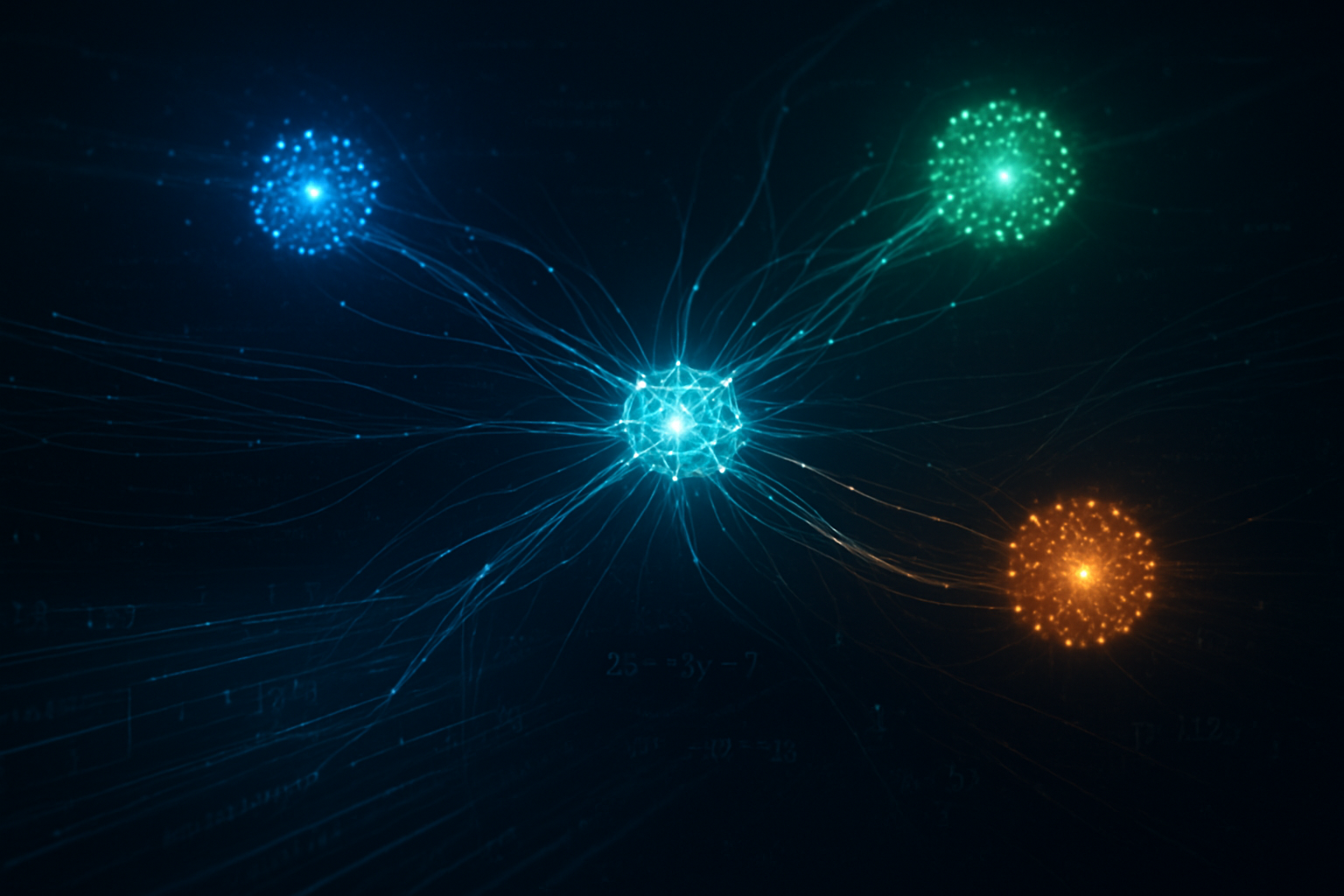
    At the heart of the MoE dominance is a departure from the "dense" architecture used in models like the original GPT-3. In a dense model, every single parameter—the mathematical weights of the neural network—is activated to process every single word or "token." In contrast, MoE models like Mixtral 8x22B and the newly released Llama 4 Scout utilize a "sparse" framework. The model is divided into dozens or even hundreds of "experts"—specialized Feed-Forward Networks (FFNs) that have been trained to excel in specific domains such as Python coding, legal reasoning, or creative writing.

    The "magic" happens through a component known as the Gating Network, or the Router. When a user submits a prompt, this router instantaneously evaluates the input and determines which experts are best equipped to handle it. In 2026’s top-tier models, "Top-K" routing is the gold standard, typically selecting the best two experts from a pool of up to 256. This means that while a model like DeepSeek-V4 may boast a staggering 1.5 trillion total parameters, it only "wakes up" about 30 billion parameters to answer a specific question. This sparse activation allows for sub-linear scaling, where a model’s knowledge base can grow exponentially while its computational cost remains relatively flat.

    The technical community has also embraced "Shared Experts," a refinement that ensures model stability. Pioneers like DeepSeek and Mistral AI introduced layers that are always active to handle basic grammar and logic, preventing a phenomenon known as "routing collapse" where certain experts are never utilized. This hybrid approach has allowed MoE models to surpass the performance of the massive dense models of 2024, proving that specialized, modular intelligence is superior to a "jack-of-all-trades" monolithic structure. Initial reactions from researchers at institutions like Stanford and MIT suggest that MoE has effectively extended the life of Moore’s Law for AI, allowing software efficiency to outpace hardware limitations.

    The Business of Efficiency: Why Big Tech is Betting Billions on Sparsity

    The transition to MoE has fundamentally altered the strategic playbooks of the world’s largest technology companies. For Microsoft (NASDAQ: MSFT), the primary backer of OpenAI, MoE is the key to enterprise profitability. By deploying GPT-5 as a "System-Level MoE"—which routes simple tasks to a fast model and complex reasoning to a "Thinking" expert—Azure can serve millions of users simultaneously without the catastrophic energy costs that a dense model of similar capability would incur. This efficiency is the cornerstone of Microsoft’s "Planet-Scale" AI initiative, aimed at making high-level reasoning as cheap as a standard web search.

    Meta (NASDAQ: META) has used MoE to maintain its dominance in the open-source ecosystem. Mark Zuckerberg’s strategy of "commoditizing the underlying model" relies on the Llama 4 series, which uses a highly efficient MoE architecture to allow "frontier-level" intelligence to run on localized hardware. By reducing the compute requirements for its largest models, Meta has made it possible for startups to fine-tune 400B-parameter models on a single server rack. This has created a massive competitive moat for Meta, as their open MoE architecture becomes the default "operating system" for the next generation of AI startups.

    Meanwhile, Alphabet (NASDAQ: GOOGL) has integrated MoE deeply into its hardware-software vertical. Google’s Gemini 3 series utilizes a "Hybrid Latent MoE" specifically optimized for their in-house TPU v6 chips. These chips are designed to handle the high-speed "expert shuffling" required when tokens are passed between different parts of the processor. This vertical integration gives Google a significant margin advantage over competitors who rely solely on third-party hardware. The competitive implication is clear: in 2026, the winners are not those with the most data, but those who can route that data through the most efficient expert architecture.

    The End of the Dense Era and the Geopolitical "Architectural Voodoo"

    The rise of MoE marks a significant milestone in the broader AI landscape, signaling the end of the "Brute Force" era of scaling. For years, the industry followed "Scaling Laws" which suggested that simply adding more parameters and more data would lead to better models. However, the sheer energy demands of training 10-trillion parameter dense models became a physical impossibility. MoE has provided a "third way," allowing for continued intelligence gains without requiring a dedicated nuclear power plant for every data center. This shift mirrors previous breakthroughs like the move from CPUs to GPUs, where a change in architecture provided a 10x leap in capability that hardware alone could not deliver.

    However, this "architectural voodoo" has also created new geopolitical and safety concerns. In 2025, Chinese firms like DeepSeek demonstrated that they could match the performance of Western frontier models by using hyper-efficient MoE designs, even while operating under strict GPU export bans. This has led to intense debate in Washington regarding the effectiveness of hardware-centric sanctions. If a company can use MoE to get "GPT-5 performance" out of "H800-level hardware," the traditional metrics of AI power—FLOPs and chip counts—become less reliable.

    Furthermore, the complexity of MoE brings new challenges in model reliability. Some experts have pointed to an "AI Trust Paradox," where a model might be brilliant at math in one sentence but fail at basic logic in the next because the router switched to a less-capable expert mid-conversation. This "intent drift" is a primary focus for safety researchers in 2026, as the industry moves toward autonomous agents that must maintain a consistent "persona" and logic chain over long periods of time.

    The Future: Hierarchical Experts and the Edge

    Looking ahead to the remainder of 2026 and 2027, the next frontier for MoE is "Hierarchical Mixture of Experts" (H-MoE). In this setup, experts themselves are composed of smaller sub-experts, allowing for even more granular routing. This is expected to enable "Ultra-Specialized" models that can act as world-class experts in niche fields like quantum chemistry or hyper-local tax law, all within a single general-purpose model. We are also seeing the first wave of "Mobile MoE," where sparse models are being shrunk to run on consumer devices, allowing smartphones to switch between "Camera Experts" and "Translation Experts" locally.

    The biggest challenge on the horizon remains the "Routing Problem." As models grow to include thousands of experts, the gating network itself becomes a bottleneck. Researchers are currently experimenting with "Learned Routing" that uses reinforcement learning to teach the model how to best allocate its own internal resources. Experts predict that the next major breakthrough will be "Dynamic MoE," where the model can actually "spawn" or "merge" experts in real-time based on the data it encounters during inference, effectively allowing the AI to evolve its own architecture on the fly.

    A New Chapter in Artificial Intelligence

    The dominance of Mixture of Experts architecture is more than a technical victory; it is the realization of a more modular, efficient, and scalable form of artificial intelligence. By moving away from the "monolith" and toward the "specialist," the industry has found a way to continue the rapid pace of advancement that defined the early 2020s. The key takeaways are clear: parameter count is no longer the sole metric of power, inference economics now dictate market winners, and architectural ingenuity has become the ultimate competitive advantage.

    As we look toward the future, the significance of this shift cannot be overstated. MoE has democratized high-performance AI, making it possible for a wider range of companies and researchers to participate in the frontier of the field. In the coming weeks and months, keep a close eye on the release of "Agentic MoE" frameworks, which will allow these specialized experts to not just think, but act autonomously across the web. The era of the dense model is over; the era of the expert has only just begun.


    This content is intended for informational purposes only and represents analysis of current AI developments.

    TokenRing AI delivers enterprise-grade solutions for multi-agent AI workflow orchestration, AI-powered development tools, and seamless remote collaboration platforms.
    For more information, visit https://www.tokenring.ai/.

  • The DeepSeek Disruption: How a $5 Million Model Shattered the AI Scaling Myth

    The DeepSeek Disruption: How a $5 Million Model Shattered the AI Scaling Myth

    The release of DeepSeek-V3 has sent shockwaves through the artificial intelligence industry, fundamentally altering the trajectory of large language model (LLM) development. By achieving performance parity with OpenAI’s flagship GPT-4o while costing a mere $5.6 million to train—a fraction of the estimated $100 million-plus spent by Silicon Valley rivals—the Chinese research lab DeepSeek has dismantled the long-held belief that frontier-level intelligence requires multi-billion-dollar budgets and infinite compute. This development marks a transition from the era of "brute-force scaling" to a new "efficiency-first" paradigm that is democratizing high-end AI.

    As of early 2026, the "DeepSeek Shock" remains the defining moment of the past year, forcing tech giants to justify their massive capital expenditures. DeepSeek-V3, a 671-billion parameter Mixture-of-Experts (MoE) model, has proven that architectural ingenuity can compensate for hardware constraints. Its ability to outperform Western models in specialized technical domains like mathematics and coding, while operating on restricted hardware like NVIDIA (NASDAQ: NVDA) H800 GPUs, has forced a global re-evaluation of the AI competitive landscape and the efficacy of export controls.

    Architectural Breakthroughs and Technical Specifications

    DeepSeek-V3's technical architecture is a masterclass in hardware-aware software engineering. At its core, the model utilizes a sophisticated Mixture-of-Experts (MoE) framework, boasting 671 billion total parameters. However, unlike traditional dense models, it only activates 37 billion parameters per token, allowing it to maintain the reasoning depth of a massive model with the inference speed and cost of a much smaller one. This is achieved through "DeepSeekMoE," which employs 256 routed experts and a specialized "shared expert" that captures universal knowledge, preventing the redundancy often seen in earlier MoE designs like those from Google (NASDAQ: GOOGL).

    The most significant breakthrough is the introduction of Multi-head Latent Attention (MLA). Traditional Transformer models suffer from a "KV cache bottleneck," where the memory required to store context grows linearly, limiting throughput and context length. MLA solves this by compressing the Key-Value vectors into a low-rank latent space, reducing the KV cache size by a staggering 93%. This allows DeepSeek-V3 to handle 128,000-token context windows with a fraction of the memory overhead required by models from Anthropic or Meta (NASDAQ: META), making long-context reasoning viable even on mid-tier hardware.

    Furthermore, DeepSeek-V3 addresses the "routing collapse" problem common in MoE training with a novel auxiliary-loss-free load balancing mechanism. Instead of using a secondary loss function that often degrades model accuracy to ensure all experts are used equally, DeepSeek-V3 employs a dynamic bias mechanism. This system adjusts the "attractiveness" of experts in real-time during training, ensuring balanced utilization without interfering with the primary learning objective. This innovation resulted in a more stable training process and significantly higher final accuracy in complex reasoning tasks.

    Initial reactions from the AI research community were of disbelief, followed by rapid validation. Benchmarks showed DeepSeek-V3 scoring 82.6% on HumanEval (coding) and 90.2% on MATH-500, surpassing GPT-4o in both categories. Experts have noted that the model's use of Multi-Token Prediction (MTP)—where the model predicts two future tokens simultaneously—not only densifies the training signal but also enables speculative decoding during inference. This allows the model to generate text up to 1.8 times faster than its predecessors, setting a new standard for real-time AI performance.

    Market Impact and the "DeepSeek Shock"

    The economic implications of DeepSeek-V3 have been nothing short of volatile for the "Magnificent Seven" tech stocks. When the training costs were first verified, NVIDIA (NASDAQ: NVDA) saw a historic single-day market cap dip as investors questioned whether the era of massive GPU "land grabs" was ending. If frontier models could be trained for $5 million rather than $500 million, the projected demand for massive server farms might be overstated. However, the market has since corrected, realizing that the saved training budgets are being redirected toward massive "inference-time scaling" clusters to power autonomous agents.

    Microsoft (NASDAQ: MSFT) and OpenAI have been forced to pivot their strategy in response to this efficiency surge. While OpenAI's GPT-5 remains a multimodal leader, the company was compelled to launch "gpt-oss" and more price-competitive reasoning models to prevent a developer exodus to DeepSeek’s API, which remains 10 to 30 times cheaper. This price war has benefited startups and enterprises, who can now integrate frontier-level intelligence into their products without the prohibitive costs that characterized the 2023-2024 AI boom.

    For smaller AI labs and open-source contributors, DeepSeek-V3 has served as a blueprint for survival. It has proven that "sovereign AI" is possible for medium-sized nations and corporations that cannot afford the $10 billion clusters planned by companies like Oracle (NYSE: ORCL). The model's success has sparked a trend of "architectural mimicry," with Meta’s Llama 4 and Mistral’s latest releases adopting similar latent attention and MoE strategies to keep pace with DeepSeek’s efficiency benchmarks.

    Strategic positioning in 2026 has shifted from "who has the most GPUs" to "who has the most efficient architecture." DeepSeek’s ability to achieve high performance on H800 chips—designed to be less powerful to meet trade regulations—has demonstrated that software optimization is a potent tool for bypassing hardware limitations. This has neutralized some of the strategic advantages held by U.S.-based firms, leading to a more fragmented and competitive global AI market where "efficiency is the new moat."

    The Wider Significance: Efficiency as the New Scaling Law

    DeepSeek-V3 represents a pivotal shift in the broader AI landscape, signaling the end of the "Scaling Laws" as we originally understood them. For years, the industry operated under the assumption that intelligence was a direct function of compute and data volume. DeepSeek has introduced a third variable: architectural efficiency. This shift mirrors previous milestones like the transition from vacuum tubes to transistors; it isn't just about doing the same thing bigger, but doing it fundamentally better.

    The impact on the geopolitical stage is equally profound. DeepSeek’s success using "restricted" hardware has raised serious questions about the long-term effectiveness of chip sanctions. By forcing Chinese researchers to innovate at the software level, the West may have inadvertently accelerated the development of hyper-efficient algorithms that now threaten the market dominance of American tech giants. This "efficiency gap" is now a primary focus for policy makers and industry leaders alike.

    However, this democratization of power also brings concerns regarding AI safety and alignment. As frontier-level models become cheaper and easier to replicate, the "moat" of safety testing also narrows. If any well-funded group can train a GPT-4 class model for a few million dollars, the ability of a few large companies to set global safety standards is diminished. The industry is now grappling with how to ensure responsible AI development in a world where the barriers to entry have been drastically lowered.

    Comparisons to the 2017 "Attention is All You Need" paper are common, as MLA and auxiliary-loss-free MoE are seen as the next logical steps in Transformer evolution. Much like the original Transformer architecture enabled the current LLM revolution, DeepSeek’s innovations are enabling the "Agentic Era." By making high-level reasoning cheap and fast, DeepSeek-V3 has provided the necessary "brain" for autonomous systems that can perform multi-step tasks, code entire applications, and conduct scientific research with minimal human oversight.

    Future Developments: Toward Agentic AI and Specialized Intelligence

    Looking ahead to the remainder of 2026, experts predict that "inference-time scaling" will become the next major battleground. While DeepSeek-V3 optimized the pre-training phase, the industry is now focusing on models that "think" longer before they speak—a trend started by DeepSeek-R1 and followed by OpenAI’s "o" series. We expect to see "DeepSeek-V4" later this year, which rumors suggest will integrate native multimodality with even more aggressive latent compression, potentially allowing frontier models to run on high-end consumer laptops.

    The potential applications on the horizon are vast, particularly in "Agentic Workflows." With the cost per token falling to near-zero, we are seeing the rise of "AI swarms"—groups of specialized models working together to solve complex engineering problems. The challenge remains in the "last mile" of reliability; while DeepSeek-V3 is brilliant at coding and math, ensuring it doesn't hallucinate in high-stakes medical or legal environments remains an area of active research and development.

    What happens next will likely be a move toward "Personalized Frontier Models." As training costs continue to fall, we may see the emergence of models that are not just fine-tuned, but pre-trained from scratch on proprietary corporate or personal datasets. This would represent the ultimate culmination of the trend started by DeepSeek-V3: the transformation of AI from a centralized utility provided by a few "Big Tech" firms into a ubiquitous, customizable, and affordable tool for all.

    A New Chapter in AI History

    The DeepSeek-V3 disruption has permanently changed the calculus of the AI industry. By matching the world's most advanced models at 5% of the cost, DeepSeek has proven that the path to Artificial General Intelligence (AGI) is not just paved with silicon and electricity, but with elegant mathematics and architectural innovation. The key takeaways are clear: efficiency is the new scaling law, and the competitive moat once provided by massive capital is rapidly evaporating.

    In the history of AI, DeepSeek-V3 will likely be remembered as the model that broke the monopoly of the "Big Tech" labs. It forced a shift toward transparency and efficiency that has accelerated the entire field. As we move further into 2026, the industry's focus has moved beyond mere "chatbots" to autonomous agents capable of complex reasoning, all powered by the architectural breakthroughs pioneered by the DeepSeek team.

    In the coming months, watch for the release of Llama 4 and the next iterations of OpenAI’s reasoning models. The "DeepSeek Shock" has ensured that these models will not just be larger, but significantly more efficient, as the race for the most "intelligent-per-dollar" model reaches its peak. The era of the $100 million training run may be coming to a close, replaced by a more sustainable and accessible future for artificial intelligence.


    This content is intended for informational purposes only and represents analysis of current AI developments.

    TokenRing AI delivers enterprise-grade solutions for multi-agent AI workflow orchestration, AI-powered development tools, and seamless remote collaboration platforms.
    For more information, visit https://www.tokenring.ai/.