Tag: Motorola

  • Lenovo Unveils Qira: The AI ‘Neural Thread’ Bridging the Divide Between Windows and Android

    Lenovo Unveils Qira: The AI ‘Neural Thread’ Bridging the Divide Between Windows and Android

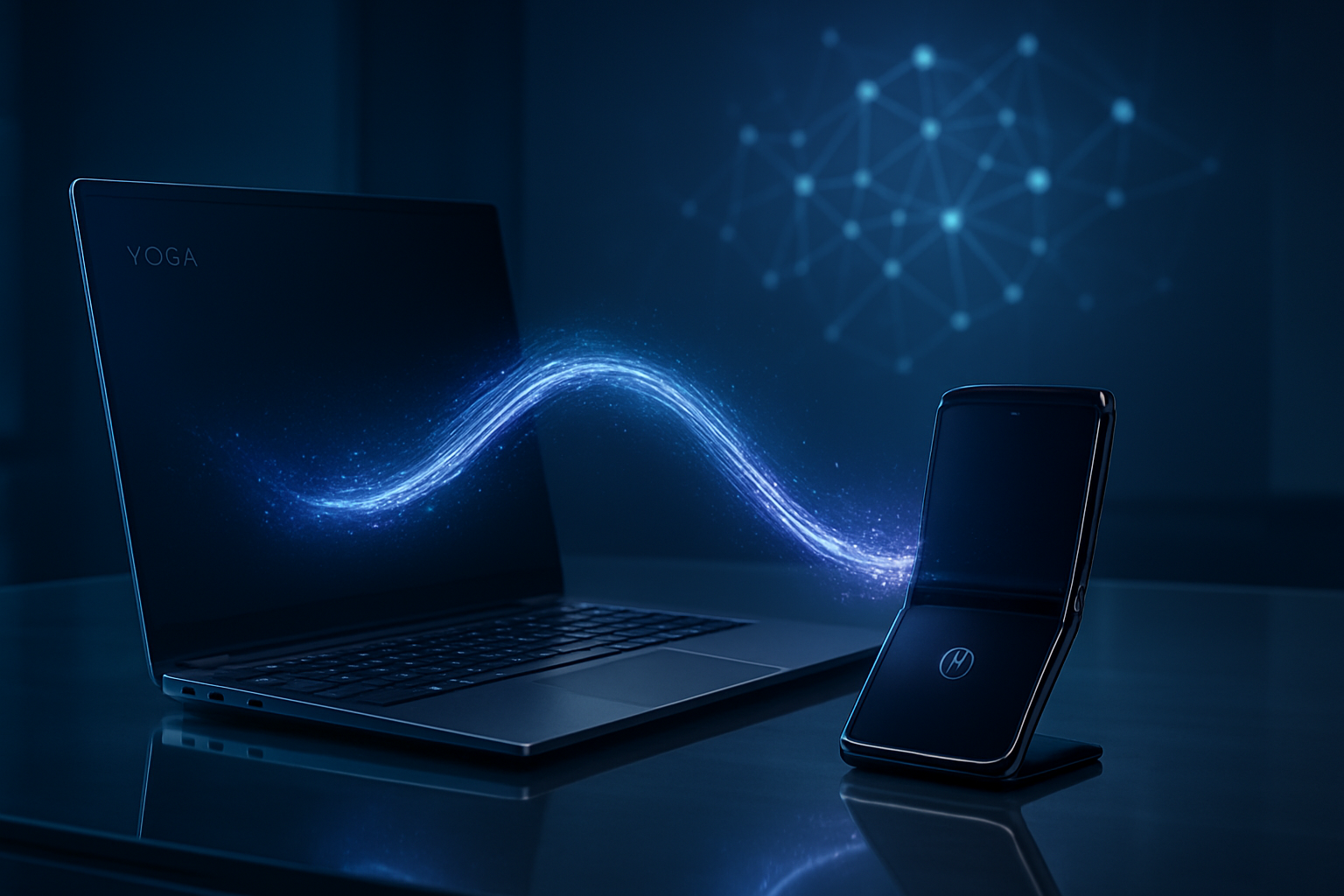
    At the 2026 Consumer Electronics Show (CES) in Las Vegas, Lenovo (HKG: 0992) has officially unveiled Qira, a groundbreaking "Personal Ambient Intelligence System" that promises to solve one of the most persistent friction points in modern computing: the lack of continuity between laptops and smartphones. By leveraging a hybrid architecture of local and cloud-based models, Qira (pronounced "keer-ah") creates a system-level intelligence layer that follows users seamlessly from their Lenovo Yoga or ThinkPad laptops to their Motorola mobile devices.

    The announcement marks a significant shift for Lenovo, moving the company from a hardware-centric manufacturer to a systems-intelligence architect. Unlike traditional AI chatbots that live inside specific applications, Qira is integrated at the operating system level, acting as a "Neural Thread" that synchronizes user context, files, and active workflows across the Windows and Android ecosystems. This development aims to provide the same level of deep integration found in the Apple (NASDAQ: AAPL) ecosystem but across a more diverse and open hardware landscape.

    The Architecture of Continuity: How Qira Redefines Hybrid AI

    Technically, Qira represents a sophisticated implementation of Hybrid AI. To ensure privacy and low latency, Lenovo utilizes Small Language Models (SLMs), such as Microsoft’s (NASDAQ: MSFT) Phi-4 mini, to run locally on the device’s Neural Processing Unit (NPU). For more complex reasoning tasks—such as drafting long-form reports or planning multi-stage travel itineraries—the system intelligently offloads processing to a "Neural Fabric" in the cloud. This orchestration happens invisibly to the user, with the system selecting the most efficient model based on the complexity of the task and the sensitivity of the data.

    The standout feature of this new system is the "Next Move" capability. By maintaining a "Fused Knowledge Base"—a secure, local index of a user’s documents, messages, and browsing history—Qira can anticipate user needs during device transitions. For example, if a user is researching market trends on their Motorola Razr during a commute, Qira will recognize the active session. The moment the user opens their Lenovo laptop, a "Next Move" prompt appears, offering to restore the exact workspace and even suggesting the next logical step, such as summarizing the researched articles into a draft document.

    To support these intensive AI operations, Lenovo has established a new hardware baseline. All Qira-enabled devices must feature NPUs capable of at least 40 Trillion Operations Per Second (TOPS). This requirement aligns with the latest silicon from Intel (NASDAQ: INTC), specifically the "Panther Lake" architecture, and Qualcomm (NASDAQ: QCOM) Snapdragon X2 chips. On the hardware interface side, Lenovo is introducing a dedicated "Qira Key" on its PC keyboards and a "Persistent Pill" dynamic UI element on Motorola smartphones to provide constant, glanceable access to the AI’s status.

    Shaking Up the Ecosystem: A New Challenge to the Walled Gardens

    Lenovo’s Qira launch is a direct shot across the bow of both Apple and Microsoft. While Apple Intelligence offers deep integration, it is famously restricted to the "walled garden" of iOS and macOS. Lenovo is positioning Qira as the "open" alternative, specifically targeting the millions of professionals who prefer Windows for productivity but rely on Android for mobile flexibility. By bridging these two massive ecosystems, Lenovo is creating a competitive advantage that Microsoft has struggled to achieve with its "Phone Link" software.

    For major AI labs and tech giants, Qira represents a shift toward agentic AI—systems that don't just answer questions but perform cross-platform actions. This puts pressure on Google (NASDAQ: GOOGL) to deepen its own Gemini integration within Android to match Lenovo’s system-level continuity. Furthermore, by partnering with Microsoft to run local models while building its own proprietary "Neural Thread," Lenovo is asserting its independence, ensuring it is not merely a reseller of Windows licenses but a provider of a unique, value-added intelligence layer.

    The Wider Significance: Toward Ambient Intelligence

    The introduction of Qira fits into a broader industry trend toward Ambient Intelligence, where technology recedes into the background and becomes a proactive assistant rather than a reactive tool. This marks a departure from the "chatbot era" of 2023-2024, moving toward a future where AI is aware of physical context and cross-device state. Qira’s ability to "remember" what you were doing on one device and apply it to another is a milestone in creating a truly personalized digital twin.

    However, this level of integration does not come without concerns. The "Fused Knowledge Base" requires access to vast amounts of personal data to function effectively. While Lenovo emphasizes that this data remains local and encrypted, the prospect of a system-level agent monitoring all user activity across multiple devices will likely invite scrutiny from privacy advocates and regulators. Compared to previous milestones like the launch of ChatGPT, Qira represents the move from AI as a "destination" to AI as the "connective tissue" of our digital lives.

    The Road Ahead: From Laptops to Wearables

    In the near term, we can expect Lenovo to expand Qira’s reach into its broader portfolio, including tablets and the newly teased "Project Maxwell"—a wearable AI companion designed to provide hands-free context about the user's physical environment. Industry experts predict that the next frontier for Qira will be "Multi-User Continuity," allowing teams to share AI-synchronized workspaces in real-time across different locations and hardware configurations.

    The primary challenge for Lenovo will be maintaining the performance of these local models as user demands grow. As SLMs become more capable, the strain on mobile NPUs will increase, potentially leading to a "silicon arms race" in the smartphone and laptop markets. Analysts expect that within the next 18 months, "AI continuity" will become a standard benchmark for all consumer electronics, forcing competitors to either adopt similar cross-OS standards or risk obsolescence.

    A New Era for the Personal Computer

    Lenovo’s Qira is more than just a new software feature; it is a fundamental reimagining of what a personal computer and a smartphone can be when they work as a single, unified brain. By focusing on the "Neural Thread" between devices, Lenovo has addressed the fragmentation that has plagued the Windows-Android relationship for over a decade.

    As we move through 2026, the success of Qira will be a bellwether for the entire industry. If Lenovo can prove that a cross-platform, system-level AI can provide a superior experience to the closed ecosystems of its rivals, it may well shift the balance of power in the tech world. For now, the tech community will be watching closely as the first Qira-enabled devices hit the market this spring, marking a definitive step toward the age of truly ambient, ubiquitous intelligence.


    This content is intended for informational purposes only and represents analysis of current AI developments.

    TokenRing AI delivers enterprise-grade solutions for multi-agent AI workflow orchestration, AI-powered development tools, and seamless remote collaboration platforms.
    For more information, visit https://www.tokenring.ai/.
  • CES 2026: Lenovo and Motorola Unveil ‘Qira,’ the Ambient AI Bridge That Finally Ends the Windows-Android Divide

    CES 2026: Lenovo and Motorola Unveil ‘Qira,’ the Ambient AI Bridge That Finally Ends the Windows-Android Divide

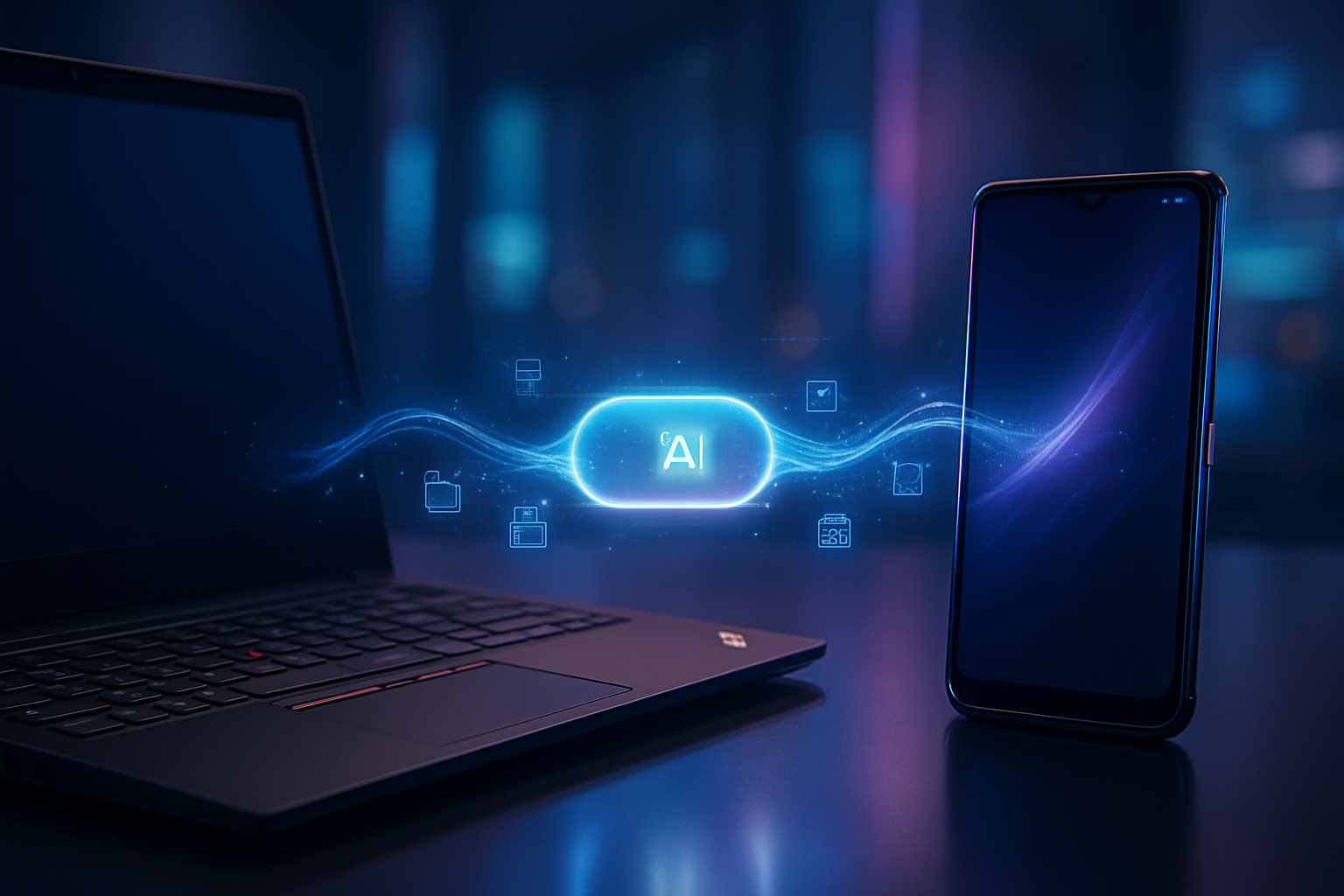
    At the 2026 Consumer Electronics Show (CES) in Las Vegas, Lenovo (HKG: 0992) and its subsidiary Motorola have fundamentally rewritten the rules of personal computing with the launch of Qira, a "Personal Ambient Intelligence" system. Moving beyond the era of standalone chatbots and fragmented apps, Qira represents the first truly successful attempt to create a seamless, context-aware AI layer that follows a user across their entire hardware ecosystem. Whether a user is transitioning from a Motorola smartphone to a Lenovo Yoga laptop or checking a wearable device, Qira maintains a persistent "neural thread," ensuring that digital context is never lost during device handoffs.

    The announcement, delivered at the high-tech Sphere venue, signals a pivot for the tech industry away from "Generative AI" as a destination and toward "Ambient Computing" as a lifestyle. By embedding Qira at the system level of both Windows and Android, Lenovo is positioning itself not just as a hardware manufacturer, but as the architect of a unified digital consciousness. This development marks a significant milestone in the evolution of the personal computer, transforming it from a passive tool into a proactive agent capable of managing complex life tasks—like trip planning and cross-device file management—without the user ever having to open a traditional application.

    The Technical Architecture of Ambient Intelligence

    Qira is built on a sophisticated Hybrid AI Architecture that balances local privacy with cloud-based reasoning. At its core, the system utilizes a "Neural Fabric" that orchestrates tasks between on-device Small Language Models (SLMs) and massive cloud-based Large Language Models (LLMs). For immediate, privacy-sensitive tasks, Qira employs Microsoft’s (NASDAQ: MSFT) Phi-4 mini, running locally on the latest NPU-heavy silicon. To handle the "full" ambient experience, Lenovo has mandated hardware capable of 40+ TOPS (Trillion Operations Per Second), specifically optimizing for the new Intel (NASDAQ: INTC) Core Ultra "Panther Lake" and Qualcomm (NASDAQ: QCOM) Snapdragon X2 processors.

    What distinguishes Qira from previous iterations of AI assistants is its "Fused Knowledge Base." Unlike Apple Intelligence, which focuses primarily on on-screen awareness, Qira observes user intent across different operating systems. Its flagship feature, "Next Move," proactively surfaces the files, browser tabs, and documents a user was working on their phone the moment they flip open their laptop. In technical demonstrations, Qira showcased its ability to perform point-to-point file transfers both online and offline, bypassing cloud intermediaries like Dropbox or email. By using a dedicated hardware "Qira Key" on PCs and a "Persistent Pill" UI on Motorola devices, the AI remains a constant, low-latency companion that understands the user’s physical and digital environment.

    Initial reactions from the AI research community have been overwhelmingly positive, with many praising the "Catch Me Up" feature. This tool provides a multimodal summary of missed notifications and activity across all linked devices, effectively acting as a personal secretary that filters noise from signal. Experts note that by integrating directly with the Windows Foundry and Android kernel, Lenovo has achieved a level of "neural sync" that third-party software developers have struggled to reach for decades.

    Strategic Implications and the "Context Wall"

    The launch of Qira places Lenovo in direct competition with the "walled gardens" of Apple Inc. (NASDAQ: AAPL) and Alphabet Inc. (NASDAQ: GOOGL). By bridging the gap between Windows and Android, Lenovo is attempting to create its own ecosystem lock-in, which analysts are calling the "Context Wall." Once Qira learns a user’s specific habits, professional tone, and travel preferences across their ThinkPad and Razr phone, the "switching cost" to another brand becomes immense. This strategy is designed to drive a faster PC refresh cycle, as the most advanced ambient features require the high-performance NPUs found in the newest 2026 models.

    For tech giants, the implications are profound. Microsoft benefits significantly from this partnership, as Qira utilizes the Azure OpenAI Service for its cloud-heavy reasoning, further cementing the Microsoft AI stack in the enterprise and consumer sectors. Meanwhile, Expedia Group (NASDAQ: EXPE) has emerged as a key launch partner, integrating its travel inventory directly into Qira’s agentic workflows. This allows Qira to plan entire vacations—booking flights, hotels, and local transport—based on a single conversational prompt or a photo found in the user's gallery, potentially disrupting the traditional "search and book" model of the travel industry.

    A Paradigm Shift Toward Ambient Computing

    Qira represents a broader shift in the AI landscape from "proactive" to "ambient." In this new era, the AI does not wait for a prompt; it exists in the background, sensing context through cameras, microphones, and sensor data. This fits into a trend where the interface becomes invisible. Lenovo’s Project Maxwell, a wearable AI pin showcased alongside Qira, illustrates this perfectly. The pin provides visual context to the AI, allowing it to "see" what the user sees, thereby enabling Qira to offer live translation or real-time advice during a physical meeting without the user ever touching a screen.

    However, this level of integration brings significant privacy concerns. The "Fused Knowledge Base" essentially creates a digital twin of the user’s life. While Lenovo emphasizes its hybrid approach—keeping the most sensitive "Personal Knowledge" on-device—the prospect of a system-level agent observing every keystroke and camera feed will likely face scrutiny from regulators and privacy advocates. Comparisons are already being drawn to previous milestones like the launch of the original iPhone or the debut of ChatGPT; however, Qira’s significance lies in its ability to make the technology disappear into the fabric of daily life.

    The Horizon: From Assistants to Agents

    Looking ahead, the evolution of Qira is expected to move toward even greater autonomy. In the near term, Lenovo plans to expand Qira’s "Agentic Workflows" to include more third-party integrations, potentially allowing the AI to manage financial portfolios or handle complex enterprise project management. The "ThinkPad Rollable XD," a concept laptop also revealed at CES, suggests a future where hardware physically adapts to the AI’s needs—expanding its screen real estate when Qira determines the user is entering a "deep work" phase.

    Experts predict that the next challenge for Lenovo will be the "iPhone Factor." To truly dominate, Lenovo must find a way to offer Qira’s best features to users who prefer iOS, a task that remains difficult due to Apple's restrictive ecosystem. Nevertheless, the development of "AI Glasses" and other wearables suggests that the battle for ambient supremacy will eventually move off the smartphone and onto the face and body, where Lenovo is already making significant experimental strides.

    Summary of the Ambient Era

    The launch of Qira at CES 2026 marks a definitive turning point in the history of artificial intelligence. By successfully unifying the Windows and Android experiences through a context-aware, ambient layer, Lenovo and Motorola have moved the industry past the "app-centric" model that has dominated for nearly two decades. The key takeaways from this launch are the move toward hybrid local/cloud processing, the rise of agentic travel and file management, and the creation of a "Context Wall" that prioritizes user history over raw hardware specs.

    As we move through 2026, the tech world will be watching closely to see how quickly consumers adopt these ambient features and whether competitors like Samsung or Dell can mount a convincing response. For now, Lenovo has seized the lead in the "Agency War," proving that in the future of computing, the most powerful tool is the one you don't even have to open.


    This content is intended for informational purposes only and represents analysis of current AI developments.

    TokenRing AI delivers enterprise-grade solutions for multi-agent AI workflow orchestration, AI-powered development tools, and seamless remote collaboration platforms.
    For more information, visit https://www.tokenring.ai/.