Tag: National Security

  • The AI Cyberwar: State-Sponsored Hackers and Malicious Actors Unleash a New Era of Digital Deception and Intrusion

    The AI Cyberwar: State-Sponsored Hackers and Malicious Actors Unleash a New Era of Digital Deception and Intrusion

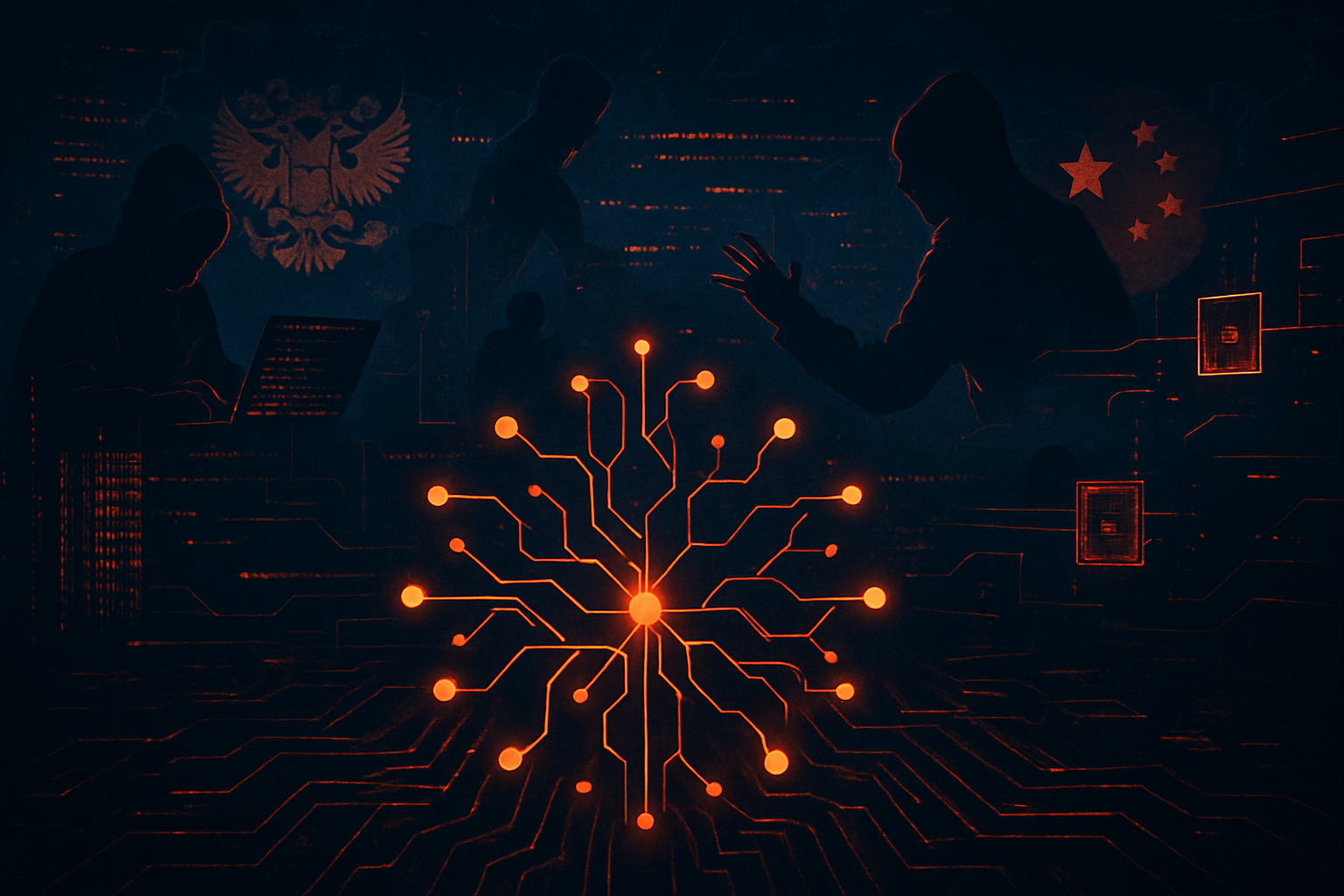
    October 16, 2025 – The digital battleground has been irrevocably reshaped by artificial intelligence, as state-sponsored groups and independent malicious actors alike are leveraging advanced AI capabilities to orchestrate cyberattacks of unprecedented sophistication and scale. Reports indicate a dramatic surge in AI-powered campaigns, with nations such as Russia, China, Iran, and North Korea intensifying their digital assaults on the United States, while a broader ecosystem of hackers employs AI to steal credentials and gain unauthorized access at an alarming rate. This escalating threat marks a critical juncture in cybersecurity, demanding a fundamental re-evaluation of defensive strategies as AI transforms both the offense and defense in the digital realm.

    The immediate significance of this AI integration is profound: traditional cybersecurity measures are increasingly outmatched by dynamic, adaptive AI-driven threats. The global cost of cybercrime is projected to soar, underscoring the urgency of this challenge. As AI-generated deception becomes indistinguishable from reality and automated attacks proliferate, the cybersecurity community faces a defining struggle to protect critical infrastructure, economic stability, and national security from a rapidly evolving adversary.

    The Technical Edge: How AI Elevates Cyber Warfare

    The technical underpinnings of these new AI-powered cyberattacks reveal a significant leap in offensive capabilities. AI is no longer merely an auxiliary tool but a core component enabling entirely new forms of digital warfare and crime.

    One of the most concerning advancements is the rise of sophisticated deception. Generative AI models are being used to create hyper-realistic deepfakes, including digital clones of senior government officials, which can be deployed in highly convincing social engineering attacks. Poorly worded phishing emails, a traditional tell-tale sign of malicious intent, are now seamlessly translated into fluent, contextually relevant English, making them virtually indistinguishable from legitimate communications. Iranian state-affiliated groups, for instance, have been actively seeking AI assistance to develop new electronic deception methods and evade detection.

    AI is also revolutionizing reconnaissance and vulnerability research. Attackers are leveraging AI to rapidly research companies, intelligence agencies, satellite communication protocols, radar technology, and publicly reported vulnerabilities. North Korean hackers have specifically employed AI to identify experts on their country's military capabilities and to pinpoint known security flaws in systems. Furthermore, AI assists in malware development and automation, streamlining coding tasks, scripting malware functions, and even developing adaptive, evasive polymorphic malware that can self-modify to bypass signature-based antivirus solutions. Generative AI tools are readily available on the dark web, offering step-by-step instructions for developing ransomware and other malicious payloads.

    The methods for unauthorized access have also grown more insidious. North Korea has pioneered the use of AI personas to create fake American identities, which are then used to secure remote tech jobs within US organizations. This insider access is subsequently exploited to steal secrets or install malware. In a critical development, China-backed hackers maintained long-term unauthorized access to systems belonging to F5, Inc. (NASDAQ: FFIV), a leading application delivery and security company. This breach, discovered in October 2025, resulted in the theft of portions of the BIG-IP product’s source code and details about undisclosed security flaws, prompting an emergency directive from the US Cybersecurity and Infrastructure Security Agency (CISA) due to the "significant cyber threat" it posed to federal networks utilizing F5 products. Russian state hackers, meanwhile, have employed sophisticated cyberespionage campaigns, manipulating system certificates to disguise their activities as trusted applications and gain diplomatic intelligence.

    Beyond state actors, other malicious actors are driving an explosive rise in credential theft. The first half of 2025 saw a staggering 160% increase in compromised credentials, with 1.8 billion logins stolen. This surge is fueled by AI-powered phishing and the proliferation of "malware-as-a-service" (MaaS) offerings. Generative AI models, such as advanced versions of GPT-4, enable the rapid creation of hyper-personalized, grammatically flawless, and contextually relevant phishing emails and messages at unprecedented speed and scale. Deepfake technology has also become a cornerstone of organized cybercrime, with deepfake vishing (voice phishing) surging over 1,600% in the first quarter of 2025. Criminals use synthetic audio and video clones to impersonate CEOs, CFOs, or family members, tricking victims into urgent money transfers or revealing sensitive information. Notable incidents include a European energy conglomerate losing $25 million due to a deepfake audio clone of their CFO and a British engineering firm losing a similar amount after a deepfake video call impersonating their CFO. These deepfake services are now widely available on the dark web, democratizing advanced attack capabilities for less-experienced hackers through "cybercrime-as-a-service" models.

    Competitive Implications for the Tech Industry

    The escalating threat of AI-powered cyberattacks presents a complex landscape of challenges and opportunities for AI companies, tech giants, and startups. While the immediate impact is a heightened security risk, it also catalyzes innovation in defensive AI.

    Cybersecurity firms specializing in AI-driven threat detection and response stand to benefit significantly. Companies like Palo Alto Networks (NASDAQ: PANW), CrowdStrike Holdings, Inc. (NASDAQ: CRWD), and Fortinet, Inc. (NASDAQ: FTNT) are already heavily invested in AI and machine learning to identify anomalies, predict attacks, and automate responses. This new wave of AI-powered attacks will accelerate the demand for their advanced solutions, driving growth in their enterprise-grade offerings. Startups focusing on niche areas such as deepfake detection, behavioral biometrics, and sophisticated anomaly detection will also find fertile ground for innovation and market entry.

    For major AI labs and tech companies like Microsoft Corp. (NASDAQ: MSFT), Alphabet Inc. (NASDAQ: GOOGL), and International Business Machines Corp. (NYSE: IBM), the competitive implications are twofold. On one hand, they are at the forefront of developing the very AI technologies being weaponized, placing a significant responsibility on them to implement robust safety and ethical guidelines for their models. OpenAI, for instance, has already confirmed attempts by state-affiliated groups to misuse its AI chatbot services. On the other hand, these tech giants possess the resources and expertise to develop powerful defensive AI tools, integrating them into their cloud platforms, operating systems, and enterprise security suites. Their ability to secure their own AI models against adversarial attacks and to provide AI-powered defenses to their vast customer bases will become a critical competitive differentiator.

    The development of AI-powered attacks also poses a significant disruption to existing products and services, particularly those relying on traditional, signature-based security. Legacy systems are increasingly vulnerable, necessitating substantial investment in upgrades or complete overhauls. Companies that fail to adapt their security posture will face increased risks of breaches, reputational damage, and financial losses. This creates a strong market pull for innovative AI-driven security solutions that can proactively identify and neutralize sophisticated threats.

    In terms of market positioning and strategic advantages, companies that can demonstrate a strong commitment to AI safety, develop transparent and explainable AI defenses, and offer comprehensive, adaptive security platforms will gain a significant edge. The ability to leverage AI not just for threat detection but also for automated incident response, threat intelligence analysis, and even proactive threat hunting will be paramount. This situation is fostering an intense "AI arms race" where the speed and effectiveness of AI deployment in both offense and defense will determine market leadership and national security.

    The Wider Significance: An AI Arms Race and Societal Impact

    The escalating threat of AI-powered cyberattacks fits squarely into the broader AI landscape as a critical and concerning trend: the weaponization of advanced artificial intelligence. This development underscores the dual-use nature of AI technology, where innovations designed for beneficial purposes can be repurposed for malicious intent. It highlights an accelerating AI arms race, where nation-states and criminal organizations are investing heavily in offensive AI capabilities, forcing a parallel and equally urgent investment in defensive AI.

    The impacts are far-reaching. Economically, the projected global cost of cybercrime reaching $24 trillion by 2027 is a stark indicator of the financial burden. Businesses face increased operational disruptions, intellectual property theft, and regulatory penalties from data breaches. Geopolitically, the use of AI by state-sponsored groups intensifies cyber warfare, blurring the lines between traditional conflict and digital aggression. Critical infrastructure, from energy grids to financial systems, faces unprecedented exposure to outages and sabotage, with severe societal consequences.

    Potential concerns are manifold. The ability of AI to generate hyper-realistic deepfakes erodes trust in digital information and can be used for widespread disinformation campaigns, undermining democratic processes and public discourse. The ease with which AI can be used to create sophisticated phishing and social engineering attacks increases the vulnerability of individuals, leading to identity theft, financial fraud, and emotional distress. Moreover, the increasing autonomy of AI in attack vectors raises questions about accountability and control, particularly as AI-driven malware becomes more adaptive and evasive. The targeting of AI models themselves through prompt injection or data poisoning introduces novel attack surfaces and risks, threatening the integrity and reliability of AI systems across all sectors.

    Comparisons to previous AI milestones reveal a shift from theoretical advancements to practical, often dangerous, applications. While early AI breakthroughs focused on tasks like image recognition or natural language processing, the current trend showcases AI's mastery over human-like deception and complex strategic planning in cyber warfare. This isn't just about AI performing tasks better; it's about AI performing malicious tasks with human-level cunning and machine-level scale. It represents a more mature and dangerous phase of AI adoption, where the technology's power is being fully realized by adversarial actors. The speed of this adoption by malicious entities far outpaces the development and deployment of robust, standardized defensive measures, creating a dangerous imbalance.

    Future Developments: The Unfolding Cyber Landscape

    The trajectory of AI-powered cyberattacks suggests a future defined by continuous innovation in both offense and defense, posing significant challenges that demand proactive solutions.

    In the near-term, we can expect an intensification of the trends already observed. Deepfake technology will become even more sophisticated and accessible, making it increasingly difficult for humans to distinguish between genuine and synthetic media in real-time. This will necessitate the widespread adoption of advanced deepfake detection technologies and robust authentication mechanisms beyond what is currently available. AI-driven phishing and social engineering will become hyper-personalized, leveraging vast datasets to craft highly effective, context-aware lures that exploit individual psychological vulnerabilities. The "malware-as-a-service" ecosystem will continue to flourish, democratizing advanced attack capabilities for a wider array of cybercriminals.

    Long-term developments will likely see the emergence of highly autonomous AI agents capable of orchestrating multi-stage cyberattacks with minimal human intervention. These agents could conduct reconnaissance, develop custom exploits, penetrate networks, exfiltrate data, and even adapt their strategies in real-time to evade detection. The concept of "AI vs. AI" in cybersecurity will become a dominant paradigm, with defensive AI systems constantly battling offensive AI systems in a perpetual digital arms race. We might also see the development of AI systems specifically designed to probe and exploit weaknesses in other AI systems, leading to a new class of "AI-native" vulnerabilities.

    Potential applications and use cases on the horizon for defensive AI include predictive threat intelligence, where AI analyzes global threat data to anticipate future attack vectors; self-healing networks that can automatically detect, isolate, and remediate breaches; and AI-powered cyber-physical system protection for critical infrastructure. AI could also play a crucial role in developing "digital immune systems" for organizations, constantly learning and adapting to new threats.

    However, significant challenges need to be addressed. The explainability of AI decisions in both attack and defense remains a hurdle; understanding why an AI flagged a threat or why an AI-driven attack succeeded is vital for improvement. The ethical implications of deploying autonomous defensive AI, particularly concerning potential false positives or unintended collateral damage, require careful consideration. Furthermore, the sheer volume and velocity of AI-generated threats will overwhelm human analysts, emphasizing the need for highly effective and trustworthy automated defenses. Experts predict that the sophistication gap between offensive and defensive AI will continue to fluctuate, but the overall trend will be towards more complex and persistent threats, requiring continuous innovation and international cooperation to manage.

    Comprehensive Wrap-Up: A Defining Moment in AI History

    The current surge in AI-powered cyberattacks represents a pivotal moment in the history of artificial intelligence, underscoring its profound and often perilous impact on global security. The key takeaways are clear: AI has become an indispensable weapon for both state-sponsored groups and other malicious actors, enabling unprecedented levels of deception, automation, and unauthorized access. Traditional cybersecurity defenses are proving inadequate against these dynamic threats, necessitating a radical shift towards AI-driven defensive strategies. The human element remains a critical vulnerability, as AI-generated scams become increasingly convincing, demanding heightened vigilance and advanced training.

    This development's significance in AI history cannot be overstated. It marks the transition of AI from a tool of innovation and convenience to a central player in geopolitical conflict and global crime. It highlights the urgent need for responsible AI development, robust ethical frameworks, and international collaboration to mitigate the risks associated with powerful dual-use technologies. The "AI arms race" is not a future prospect; it is a current reality, reshaping the cybersecurity landscape in real-time.

    Final thoughts on the long-term impact suggest a future where cybersecurity is fundamentally an AI-versus-AI battle. Organizations and nations that fail to adequately invest in and integrate AI into their defensive strategies will find themselves at a severe disadvantage. The integrity of digital information, the security of critical infrastructure, and the trust in online interactions are all at stake. This era demands a holistic approach, combining advanced AI defenses with enhanced human training and robust policy frameworks.

    What to watch for in the coming weeks and months includes further emergency directives from cybersecurity agencies, increased public-private partnerships aimed at sharing threat intelligence and developing defensive AI, and accelerated investment in AI security startups. The legal and ethical debates surrounding autonomous defensive AI will also intensify. Ultimately, the ability to harness AI for defense as effectively as it is being weaponized for offense will determine the resilience of our digital world.


    This content is intended for informational purposes only and represents analysis of current AI developments.

    TokenRing AI delivers enterprise-grade solutions for multi-agent AI workflow orchestration, AI-powered development tools, and seamless remote collaboration platforms.
    For more information, visit https://www.tokenring.ai/.
  • The Silicon Curtain Descends: Geopolitics Reshapes the Global Semiconductor Landscape and the Future of AI

    The Silicon Curtain Descends: Geopolitics Reshapes the Global Semiconductor Landscape and the Future of AI

    The global semiconductor supply chain is undergoing an unprecedented and profound transformation, driven by escalating geopolitical tensions and strategic trade policies. As of October 2025, the era of a globally optimized, efficiency-first semiconductor industry is rapidly giving way to fragmented, regional manufacturing ecosystems. This fundamental restructuring is leading to increased costs, aggressive diversification efforts, and an intense strategic race for technological supremacy, with far-reaching implications for the burgeoning field of Artificial Intelligence.

    This geopolitical realignment is not merely a shift in trade dynamics; it represents a foundational re-evaluation of national security, economic power, and technological leadership, placing semiconductors at the very heart of 21st-century global power struggles. The immediate significance is a rapid fragmentation of the supply chain, compelling companies to reconsider manufacturing footprints and diversify suppliers, often at significant cost. The world is witnessing the emergence of a "Silicon Curtain," dividing technological ecosystems and redefining the future of innovation.

    The Technical Battleground: Export Controls, Rare Earths, and the Scramble for Lithography

    The current geopolitical climate has led to a complex web of technical implications for semiconductor manufacturing, primarily centered around access to advanced lithography and critical raw materials. The United States has progressively tightened export controls on advanced semiconductors and related manufacturing equipment to China, with significant expansions in October 2023, December 2024, and March 2025. These measures specifically target China's access to high-end AI chips, supercomputing capabilities, and advanced chip manufacturing tools, including the Foreign Direct Product Rule and expanded Entity Lists. The U.S. has even lowered the Total Processing Power (TPP) threshold from 4,800 to 1,600 Giga operations per second to further restrict China's ability to develop and produce advanced chips.

    Crucially, these restrictions extend to advanced lithography, the cornerstone of modern chipmaking. China's access to Extreme Ultraviolet (EUV) lithography machines, exclusively supplied by Dutch firm ASML, and advanced Deep Ultraviolet (DUV) immersion lithography systems, essential for producing chips at 7nm and below, has been largely cut off. This compels China to innovate rapidly with older technologies or pursue less advanced solutions, often leading to performance compromises in its AI and high-performance computing initiatives. While Chinese companies are accelerating indigenous innovation, including the development of their own electron beam lithography machines and testing homegrown immersion DUV tools, experts predict China will likely lag behind the cutting edge in advanced nodes for several years. ASML (AMS: ASML), however, anticipates the impact of these updated export restrictions to fall within its previously communicated outlook for 2025, with China's business expected to constitute around 20% of its total net sales for the year.

    China has responded by weaponizing its dominance in rare earth elements, critical for semiconductor manufacturing. Starting in late 2024 with gallium, germanium, and graphite, and significantly expanded in April and October 2025, Beijing has imposed sweeping export controls on rare earth elements and associated technologies. These controls, including stringent licensing requirements, target strategically significant heavy rare earth elements and extend beyond raw materials to encompass magnets, processing equipment, and products containing Chinese-origin rare earths. China controls approximately 70% of global rare earth mining production and commands 85-90% of processing capacity, making these restrictions a significant geopolitical lever. This has spurred dramatic acceleration of capital investment in non-Chinese rare earth supply chains, though these alternatives are still in nascent stages.

    These current policies mark a substantial departure from the globalization-focused trade agreements of previous decades. The driving rationale has shifted from prioritizing economic efficiency to national security and technological sovereignty. Both the U.S. and China are "weaponizing" their respective technological and resource chokepoints, creating a "Silicon Curtain." Initial reactions from the AI research community and industry experts are mixed but generally concerned. While there's optimism about industry revenue growth in 2025 fueled by the "AI Supercycle," this is tempered by concerns over geopolitical territorialism, tariffs, and trade restrictions. Experts predict increased costs for critical AI accelerators and a more fragmented, costly global semiconductor supply chain characterized by regionalized production.

    Corporate Crossroads: Navigating a Fragmented AI Hardware Landscape

    The geopolitical shifts in semiconductor supply chains are profoundly impacting AI companies, tech giants, and startups, creating a complex landscape of winners, losers, and strategic reconfigurations. Increased costs and supply disruptions are a major concern, with prices for advanced GPUs potentially seeing hikes of up to 20% if significant disruptions occur. This "Silicon Curtain" is fragmenting development pathways, forcing companies to prioritize resilience over economic efficiency, leading to a shift from "just-in-time" to "just-in-case" supply chain strategies. AI startups, in particular, are vulnerable, often struggling to acquire necessary hardware and compete for top talent against tech giants.

    Companies with diversified supply chains and those investing in "friend-shoring" or domestic manufacturing are best positioned to mitigate risks. The U.S. CHIPS and Science Act (CHIPS Act), a $52.7 billion initiative, is driving domestic production, with Intel (NASDAQ: INTC), Taiwan Semiconductor Manufacturing Company (NYSE: TSM), and Samsung Electronics (KRX: 005930) receiving significant funding to expand advanced manufacturing in the U.S. Tech giants like Alphabet (NASDAQ: GOOGL), Amazon (NASDAQ: AMZN), and Microsoft (NASDAQ: MSFT) are heavily investing in designing custom AI chips (e.g., Google's TPUs, Amazon's Inferentia, Microsoft's Azure Maia AI Accelerator) to reduce reliance on external vendors and mitigate supply chain risks. Chinese tech firms, led by Huawei and Alibaba (NYSE: BABA), are intensifying efforts to achieve self-reliance in AI technology, developing their own chips like Huawei's Ascend series, with SMIC (HKG: 0981) reportedly achieving 7nm process technology. Memory manufacturers like Samsung Electronics and SK Hynix (KRX: 000660) are poised for significant profit increases due to robust demand and escalating prices for high-bandwidth memory (HBM), DRAM, and NAND flash. While NVIDIA (NASDAQ: NVDA) and AMD (NASDAQ: AMD) remain global leaders in AI chip design, they face challenges due to export controls, compelling them to develop modified, less powerful "China-compliant" chips, impacting revenue and diverting R&D resources. Nonetheless, NVIDIA remains the preeminent beneficiary, with its GPUs commanding a market share between 70% and 95% in AI accelerators.

    The competitive landscape for major AI labs and tech companies is marked by intensified competition for resources—skilled semiconductor engineers, AI specialists, and access to cutting-edge computing power. Geopolitical restrictions can directly hinder R&D and product development, leading to delays. The escalating strategic competition is creating a "bifurcated AI world" with separate technological ecosystems and standards, shifting from open collaboration to techno-nationalism. This could lead to delayed rollouts of new AI products and services, reduced performance in restricted markets, and higher operating costs across the board. Companies are strategically moving away from purely efficiency-focused supply chains to prioritize resilience and redundancy, often through "friend-shoring" strategies. Innovation in alternative architectures, advanced packaging, and strategic partnerships (e.g., OpenAI's multi-billion-dollar chip deals with AMD, Samsung, and SK Hynix for projects like 'Stargate') are becoming critical for market positioning and strategic advantage.

    A New Cold War: AI, National Security, and Economic Bifurcation

    The geopolitical shifts in semiconductor supply chains are not isolated events but fundamental drivers reshaping the broader AI landscape and global power dynamics. Semiconductors, once commercial goods, are now viewed as critical strategic assets, integral to national security, economic power, and military capabilities. This "chip war" is driven by the understanding that control over advanced chips is foundational for AI leadership, which in turn underpins future economic and military power. Taiwan's pivotal role, controlling over 90% of the most advanced chips, represents a critical single point of failure that could trigger a global economic crisis if disrupted.

    The national security implications for AI are explicit: the U.S. has implemented stringent export controls to curb China's access to advanced AI chips, preventing their use for military modernization. A global tiered framework for AI chip access, introduced in January 2025, classifies China, Russia, and Iran as "Tier 3 nations," effectively barring them from receiving advanced AI technology. Nations are prioritizing "chip sovereignty" through initiatives like the U.S. CHIPS Act and the EU Chips Act, recognizing semiconductors as a pillar of national security. Furthermore, China's weaponization of critical minerals, including rare earth elements, through expanded export controls in October 2025, directly impacts defense systems and critical infrastructure, highlighting the limited substitutability of these essential materials.

    Economically, these shifts create significant instability. The drive for strategic resilience has led to increased production costs, with U.S. fabs costing 30-50% more to build and operate than those in East Asia. This duplication of infrastructure, while aiming for strategic resilience, leads to less globally efficient supply chains and higher component costs. Export controls directly impact the revenue streams of major chip designers, with NVIDIA anticipating a $5.5 billion hit in 2025 due to H20 export restrictions and its share of China's AI chip market plummeting. The tech sector experienced significant downward pressure in October 2025 due to renewed escalation in US-China trade tensions and potential 100% tariffs on Chinese goods by November 1, 2025. This volatility leads to a reassessment of valuation multiples for high-growth tech companies.

    The impact on innovation is equally profound. Export controls can lead to slower innovation cycles in restricted regions and widen the technological gap. Companies like NVIDIA and AMD are forced to develop "China-compliant" downgraded versions of their AI chips, diverting valuable R&D resources from pushing the absolute technological frontier. Conversely, these controls stimulate domestic innovation in restricted countries, with China pouring billions into its semiconductor industry to achieve self-sufficiency. This geopolitical struggle is increasingly framed as a "digital Cold War," a fight for AI sovereignty that will define global markets, national security, and the balance of world power, drawing parallels to historical resource conflicts where control over vital resources dictated global power dynamics.

    The Horizon: A Fragmented Future for AI and Chips

    From October 2025 onwards, the future of semiconductor geopolitics and AI is characterized by intensifying strategic competition, rapid technological advancements, and significant supply chain restructuring. The "tech war" between the U.S. and China will lead to an accelerating trend towards "techno-nationalism," with nations aggressively investing in domestic chip manufacturing. China will continue its drive for self-sufficiency, while the U.S. and its allies will strengthen their domestic ecosystems and tighten technological alliances. The militarization of chip policy will also intensify, with semiconductors becoming integral to defense strategies. Long-term, a permanent bifurcation of the semiconductor industry is likely, leading to separate research, development, and manufacturing facilities for different geopolitical blocs, higher operational costs, and slower global product rollouts. The race for next-gen AI and quantum computing will become an even more critical front in this tech war.

    On the AI front, integration into human systems is accelerating. In the enterprise, AI is evolving into proactive digital partners (e.g., Google Gemini Enterprise, Microsoft Copilot Studio 2025 Wave 2) and workforce architects, transforming work itself through multi-agent orchestration. Industry-specific applications are booming, with AI becoming a fixture in healthcare for diagnosis and drug discovery, driving military modernization with autonomous systems, and revolutionizing industrial IoT, finance, and software development. Consumer AI is also expanding, with chatbots becoming mainstream companions and new tools enabling advanced content creation.

    However, significant challenges loom. Geopolitical disruptions will continue to increase production costs and market uncertainty. Technological decoupling threatens to reverse decades of globalization, leading to inefficiencies and slower overall technological progress. The industry faces a severe talent shortage, requiring over a million additional skilled workers globally by 2030. Infrastructure costs for new fabs are massive, and delays are common. Natural resource limitations, particularly water and critical minerals, pose significant concerns. Experts predict robust growth for the semiconductor industry, with sales reaching US$697 billion in 2025 and potentially US$1 trillion by 2030, largely driven by AI. The generative AI chip market alone is projected to exceed $150 billion in 2025. Innovation will focus on AI-specific processors, advanced memory (HBM, GDDR7), and advanced packaging technologies. For AI, 2025 is seen as a pivotal year where AI becomes embedded into the entire fabric of human systems, with the rise of "agentic AI" and multimodal AI systems. While AI will augment professionals, the high investment required for training and running large language models may lead to market consolidation.

    The Dawn of a New AI Era: Resilience Over Efficiency

    The geopolitical reshaping of AI semiconductor supply chains represents a profound and irreversible alteration in the trajectory of AI development. It has ushered in an era where technological progress is inextricably linked with national security and strategic competition, frequently termed an "AI Cold War." This marks the definitive end of a truly open and globally integrated AI chip supply chain, where the availability and advancement of high-performance semiconductors directly impact the pace of AI innovation. Advanced semiconductors are now considered critical national security assets, underpinning modern military capabilities, intelligence gathering, and defense systems.

    The long-term impact will be a more regionalized, potentially more secure, but almost certainly less efficient and more expensive foundation for AI development. Experts predict a deeply bifurcated global semiconductor market within three years, characterized by separate technological ecosystems and standards, leading to duplicated supply chains that prioritize strategic resilience over pure economic efficiency. An intensified "talent war" for skilled semiconductor and AI engineers will continue, with geopolitical alignment increasingly dictating market access and operational strategies. Companies and consumers will face increased costs for advanced AI hardware.

    In the coming weeks and months, observers should closely monitor any further refinements or enforcement of export controls by the U.S. Department of Commerce, as well as China's reported advancements in domestic chip production and the efficacy of its aggressive investments in achieving self-sufficiency. China's continued tightening of export restrictions on rare earth elements and magnets will be a key indicator of geopolitical leverage. The progress of national chip initiatives, such as the U.S. CHIPS Act and the EU Chips Act, including the operationalization of new fabrication facilities, will be crucial. The anticipated volume production of 2-nanometer (N2) nodes by TSMC (NYSE: TSM) in the second half of 2025 and A16 chips in the second half of 2026 will be significant milestones. Finally, the dynamics of the memory market, particularly the "AI explosion" driven demand for HBM, DRAM, and NAND, and the expansion of AI-driven semiconductors beyond large cloud data centers into enterprise edge devices and IoT applications, will shape demand and supply chain pressures. The coming period will continue to demonstrate how geopolitical tensions are not merely external factors but are fundamentally integrated into the strategy, economics, and technological evolution of the AI and semiconductor industries.


    This content is intended for informational purposes only and represents analysis of current AI developments.

    TokenRing AI delivers enterprise-grade solutions for multi-agent AI workflow orchestration, AI-powered development tools, and seamless remote collaboration platforms.
    For more information, visit https://www.tokenring.ai/.

  • SEALSQ and TSS Forge Alliance for Quantum-Resistant AI Security, Bolstering US Digital Sovereignty

    SEALSQ and TSS Forge Alliance for Quantum-Resistant AI Security, Bolstering US Digital Sovereignty

    New York, NY – October 14, 2025 – In a move set to significantly fortify the cybersecurity landscape for artificial intelligence, SEALSQ Corp (NASDAQ: LAES) and Trusted Semiconductor Solutions (TSS) have announced a strategic partnership aimed at developing "Made in US" Post-Quantum Cryptography (PQC)-enabled secure semiconductor solutions. This collaboration, officially announced on October 9, 2025, and slated for formalization at the upcoming Quantum + AI Conference in New York City (October 19-21, 2025), is poised to deliver unprecedented levels of hardware security crucial for safeguarding critical U.S. defense and government AI systems against the looming threat of quantum computing.

    The alliance marks a proactive and essential step in addressing the escalating cybersecurity risks posed by cryptographically relevant quantum computers, which could potentially dismantle current encryption standards. By embedding quantum-resistant algorithms directly into the hardware, the partnership seeks to establish a foundational layer of trust and resilience, ensuring the integrity and confidentiality of AI models and the sensitive data they process. This initiative is not merely about protecting data; it's about securing the very fabric of future AI operations, from autonomous systems to classified analytical platforms, against an entirely new class of computational threats.

    Technical Deep Dive: Architecting Quantum-Resistant AI

    The partnership between SEALSQ Corp and TSS is built upon a meticulously planned three-phase roadmap, designed to progressively integrate and develop cutting-edge secure semiconductor solutions. In the short-term, the focus will be on integrating SEALSQ's existing QS7001 secure element with TSS’s trusted semiconductor platforms. The QS7001 chip is a critical component, embedding NIST-standardized quantum-resistant algorithms, providing an immediate uplift in security posture.

    Moving into the mid-term, the collaboration will pivot towards the co-development of "Made in US" PQC-embedded integrated circuits (ICs). These ICs are not just secure; they are engineered to achieve the highest levels of hardware certification, including FIPS 140-3 (a stringent U.S. government security requirement for cryptographic modules) and Common Criteria, along with other agency-specific certifications. This commitment to rigorous certification underscores the partnership's dedication to delivering uncompromised security. The long-term vision involves the development of next-generation secure architectures, which include innovative Chiplet-based Hardware Security Modules (CHSMs) tightly integrated with advanced embedded secure elements or pre-certified intellectual property (IP).

    This approach significantly differs from previous security paradigms by proactively addressing quantum threats at the hardware level. While existing security relies on cryptographic primitives vulnerable to quantum attacks, this partnership embeds PQC from the ground up, creating a "quantum-safe" root of trust. TSS's Category 1A Trusted accreditation further ensures that these solutions meet the stringent requirements for U.S. government and defense applications, providing a level of assurance that few other collaborations can offer. The formalization of this partnership at the Quantum + AI Conference speaks volumes about the anticipated positive reception from the AI research community and industry experts, recognizing the critical importance of hardware-based quantum resistance for AI integrity.

    Reshaping the Landscape for AI Innovators and Tech Giants

    This strategic partnership is poised to have profound implications for AI companies, tech giants, and startups, particularly those operating within or collaborating with the U.S. defense and government sectors. Companies involved in critical infrastructure, autonomous systems, and sensitive data processing for national security stand to significantly benefit from access to these quantum-resistant, "Made in US" secure semiconductor solutions.

    For major AI labs and tech companies, the competitive implications are substantial. The development of a sovereign, quantum-resistant digital infrastructure by SEALSQ (NASDAQ: LAES) and TSS sets a new benchmark for hardware security in AI. Companies that fail to integrate similar PQC capabilities into their hardware stacks may find themselves at a disadvantage, especially when bidding for government contracts or handling highly sensitive AI deployments. This initiative could disrupt existing product lines that rely on conventional, quantum-vulnerable cryptography, compelling a rapid shift towards PQC-enabled hardware.

    From a market positioning standpoint, SEALSQ and TSS gain a significant strategic advantage. TSS, with its established relationships within the defense ecosystem and Category 1A Trusted accreditation, provides SEALSQ with accelerated access to sensitive national security markets. Together, they are establishing themselves as leaders in a niche yet immensely critical segment: secure, quantum-resistant microelectronics for sovereign AI applications. This partnership is not just about technology; it's about national security and technological sovereignty in the age of quantum computing and advanced AI.

    Broader Significance: Securing the Future of AI

    The SEALSQ and TSS partnership represents a critical inflection point in the broader AI landscape, aligning perfectly with the growing imperative to secure digital infrastructures against advanced threats. As AI systems become increasingly integrated into every facet of society—from critical infrastructure management to national defense—the integrity and trustworthiness of these systems become paramount. This initiative directly addresses a fundamental vulnerability by ensuring that the underlying hardware, the very foundation upon which AI operates, is impervious to future quantum attacks.

    The impacts of this development are far-reaching. It offers a robust defense for AI models against data exfiltration, tampering, and intellectual property theft by quantum adversaries. For national security, it ensures that sensitive AI computations and data remain confidential and unaltered, safeguarding strategic advantages. Potential concerns, however, include the inherent complexity of implementing PQC algorithms effectively and the need for continuous vigilance against new attack vectors. Furthermore, while the "Made in US" focus strengthens national security, it could present supply chain challenges for international AI players seeking similar levels of quantum-resistant hardware.

    Comparing this to previous AI milestones, this partnership is akin to the early efforts in establishing secure boot mechanisms or Trusted Platform Modules (TPMs), but scaled for the quantum era and specifically tailored for AI. It moves beyond theoretical discussions of quantum threats to concrete, hardware-based solutions, marking a significant step towards building truly resilient and trustworthy AI systems. It underscores the recognition that software-level security alone will be insufficient against the computational power of future quantum computers.

    The Road Ahead: Quantum-Resistant AI on the Horizon

    Looking ahead, the partnership's three-phase roadmap provides a clear trajectory for future developments. In the near-term, the successful integration of SEALSQ's QS7001 secure element with TSS platforms will be a key milestone. This will be followed by the rigorous development and certification of FIPS 140-3 and Common Criteria-compliant PQC-embedded ICs, which are expected to be rolled out for specific government and defense applications. The long-term vision of Chiplet-based Hardware Security Modules (CHSMs) promises even more integrated and robust security architectures.

    The potential applications and use cases on the horizon are vast and transformative. These secure semiconductor solutions could underpin next-generation secure autonomous systems, confidential AI training and inference platforms, and the protection of critical national AI infrastructure, including power grids, communication networks, and financial systems. Experts predict a definitive shift towards hardware-based, quantum-resistant security becoming a mandatory feature for all high-assurance AI systems, especially those deemed critical for national security or handling highly sensitive data.

    However, challenges remain. The standardization of PQC algorithms is an ongoing process, and ensuring interoperability across diverse hardware and software ecosystems will be crucial. Continuous threat modeling and the attraction of skilled talent in both quantum cryptography and secure hardware design will also be vital for sustained success. What experts predict is that this partnership will catalyze a broader industry movement towards quantum-safe hardware, pushing other players to invest in similar foundational security measures for their AI offerings.

    A New Era of Trust for AI

    The partnership between SEALSQ Corp (NASDAQ: LAES) and Trusted Semiconductor Solutions (TSS) represents a pivotal moment in the evolution of AI security. By focusing on "Made in US" Post-Quantum Cryptography-enabled secure semiconductor solutions, the collaboration is not just addressing a future threat; it is actively building a resilient foundation for the integrity of AI systems today. The key takeaways are clear: hardware-based quantum resistance is becoming indispensable, national security demands sovereign supply chains for critical AI components, and proactive measures are essential to safeguard against the unprecedented computational power of quantum computers.

    This development's significance in AI history cannot be overstated. It marks a transition from theoretical concerns about quantum attacks to concrete, strategic investments in defensive technologies. It underscores the understanding that true AI integrity begins at the silicon level. The long-term impact will be a more trusted, resilient, and secure AI ecosystem, particularly for sensitive government and defense applications, setting a new global standard for AI security.

    In the coming weeks and months, industry observers should watch closely for the formalization of this partnership at the Quantum + AI Conference, the initial integration results of the QS7001 secure element, and further details on the development roadmap for PQC-embedded ICs. This alliance is a testament to the urgent need for robust security in the age of AI and quantum computing, promising a future where advanced intelligence can operate with an unprecedented level of trust and protection.


    This content is intended for informational purposes only and represents analysis of current AI developments.

    TokenRing AI delivers enterprise-grade solutions for multi-agent AI workflow orchestration, AI-powered development tools, and seamless remote collaboration platforms.
    For more information, visit https://www.tokenring.ai/.

  • South Korea’s Tech Titans Under Siege: A Deep Dive into Escalating Technology Leaks

    South Korea’s Tech Titans Under Siege: A Deep Dive into Escalating Technology Leaks

    South Korean tech firms, global powerhouses in semiconductors, displays, and batteries, are facing an increasingly aggressive wave of technology leaks. These breaches, often involving highly sensitive and proprietary information, pose a severe threat to the nation's innovation-driven economy and national security. The immediate significance of these leaks is immense, ranging from colossal financial losses and the erosion of a hard-won competitive edge to a heightened sense of urgency within the government to implement tougher legal and regulatory frameworks. As of October 2025, the problem has reached a critical juncture, with high-profile incidents at industry giants like Samsung Electronics (KRX: 005930), LG Display (KRX: 034220), and Samsung Display underscoring a systemic vulnerability that demands immediate and comprehensive action.

    The Anatomy of Betrayal: Unpacking Sophisticated Tech Theft

    The recent wave of technology leaks reveals a disturbing pattern of sophisticated industrial espionage, often orchestrated by foreign entities, predominantly from China, and facilitated by insider threats. In October 2025, the South Korean tech landscape was rocked by multiple high-profile indictments and investigations. Former Samsung Electronics officials and researchers were accused of leaking core 18-nanometer DRAM manufacturing technology to China's CXMT. This wasn't just any technology; it was Samsung's cutting-edge 10nm-class DRAM process, a proprietary innovation backed by an staggering 1.6 trillion won investment. The alleged perpetrators reportedly used external storage devices and personal emails to transfer thousands of pages of highly confidential data, including process schematics and design blueprints, effectively handing over years of R&D on a silver platter.

    Concurrently, police raided plants belonging to both LG Display and Samsung Display. In the LG Display case, two employees are suspected of illegally transferring advanced display technologies to a Chinese competitor, with hundreds of photos of internal documents seized as evidence. Samsung Display faced similar investigations over suspicions that its latest OLED display technologies, crucial for next-generation mobile and TV screens, were leaked to a different Chinese firm. These incidents highlight a critical shift in the methods of industrial espionage. While traditional cyberattacks remain a threat, the increasing reliance on "human vectors"—poaching highly skilled former employees who possess intimate knowledge of proprietary processes—has become a primary conduit for technology transfer. These individuals are often lured by lucrative offers, sometimes using pseudonyms or changing phone numbers to evade detection, exploiting loopholes in non-compete agreements and corporate security protocols. The sheer volume of data involved, such as the 5,900 pages of sensitive data stolen from SK Hynix (KRX: 000660) between February and July 2022, indicates a systematic effort to acquire comprehensive technological blueprints rather than isolated pieces of information. This proactive and targeted approach by foreign rivals to acquire entire technological stacks represents a significant escalation from previous, more opportunistic attempts at information gathering.

    Competitive Fallout: A Shifting Global Tech Landscape

    The ramifications of these technology leaks are profoundly altering the competitive dynamics within the global tech industry, particularly for South Korean firms. The National Intelligence Service (NIS) estimates that successful technology leaks over the past five years, especially in the semiconductor sector, could have resulted in losses of approximately 23 trillion won (about $16.85 billion). For Samsung alone, a single DRAM technology leak was estimated to have caused around 5 trillion won in sales losses last year, with potential future damages reaching tens of trillions of won. These figures underscore the massive financial burden placed on companies that have invested heavily in R&D.

    The most significant impact is the rapid erosion of the competitive edge held by South Korean giants. By acquiring advanced manufacturing processes and design specifications, foreign rivals, particularly Chinese companies, can drastically shorten their R&D cycles and quickly enter or expand their presence in high-value markets like advanced memory chips, OLED displays, and rechargeable batteries. This directly threatens the market positioning of companies like Samsung Electronics, SK Hynix, and LG Display, which have long dominated these sectors through technological superiority. For instance, the leakage of 18-nanometer DRAM technology could enable competitors to produce comparable chips at a lower cost and faster pace, leading to price wars and reduced profitability for Korean firms.

    Startups and smaller tech firms within South Korea also face heightened risks. While they may not possess technologies of "national strategic" importance, their innovative solutions and niche expertise can still be valuable targets, potentially stifling their growth and ability to compete on a global scale. The increased security measures and legal battles necessitated by these leaks also divert significant resources—financial, human, and legal—that could otherwise be invested in further innovation. Ultimately, these leaks create an uneven playing field, where the painstaking efforts of South Korean engineers and researchers are unfairly exploited, undermining the very foundation of fair competition and intellectual property rights in the global tech arena.

    Broader Implications: A National Security Imperative

    The pervasive issue of technology leakage transcends corporate balance sheets, evolving into a critical national security imperative for South Korea. These incidents are not isolated corporate espionage cases but rather systematic attempts to undermine the technological backbone of a nation heavily reliant on its innovation prowess. The South Korean government has designated 12 sectors, including semiconductors, displays, and rechargeable batteries, as "national strategic technologies" due to their vital role in economic growth and national defense. The outflow of these technologies is thus viewed as a direct threat to both industrial competitiveness and the nation's ability to maintain its strategic autonomy in a complex geopolitical landscape.

    The current situation fits into a broader global trend of intensified technological competition and state-sponsored industrial espionage, particularly between major economic powers. South Korea, with its advanced manufacturing capabilities and leading-edge research, finds itself a prime target. The sheer volume of targeted leaks, with 40 out of 97 attempted business secret leaks over the past five years occurring in the semiconductor sector alone, underscores the strategic value placed on these technologies by foreign rivals. This persistent threat raises concerns about the long-term viability of South Korea's leadership in critical industries. If foreign competitors can consistently acquire proprietary knowledge through illicit means, the incentive for domestic companies to invest heavily in R&D diminishes, potentially leading to a stagnation of innovation and a decline in global market share.

    Comparisons to previous industrial espionage incidents highlight the increasing sophistication and scale of current threats. While past breaches might have involved individual components or processes, recent leaks aim to acquire entire manufacturing methodologies, allowing rivals to replicate complex production lines. The government's response, including proposed legislation to significantly increase penalties for overseas leaks and implement stricter monitoring, reflects the gravity of the situation. However, concerns remain about the effectiveness of these measures, particularly given historical perceptions of lenient court rulings and the inherent difficulties in enforcing non-compete agreements in a rapidly evolving tech environment. The battle against technology leaks is now a defining challenge for South Korea, shaping its economic future and its standing on the global stage.

    The Road Ahead: Fortifying Against Future Threats

    The escalating challenge of technology leaks necessitates a multi-faceted and proactive approach from both the South Korean government and its leading tech firms. In the near term, experts predict a significant overhaul of legal frameworks and enforcement mechanisms. Proposed revisions to the "Act on Prevention of Divulgence and Protection of Industrial Technology" are expected to be finalized, tripling the penalty for overseas leaks of national technology to up to 18 years in prison and increasing the maximum sentence for industrial technology leakage from nine to twelve years. Punitive damages for trade secret theft are also being raised from three to five times the actual damages incurred, aiming to create a stronger deterrent. Furthermore, there's a push for stricter criteria for probation, ensuring even first-time offenders face imprisonment, addressing past criticisms of judicial leniency.

    Long-term developments will likely focus on enhancing preventative measures and fostering a culture of robust intellectual property protection. This includes the implementation of advanced "big data" systems within patent agencies to proactively monitor and identify potential leak vectors. Companies are expected to invest heavily in bolstering their internal cybersecurity infrastructure, adopting AI-powered monitoring systems to detect anomalous data access patterns, and implementing more rigorous background checks and continuous monitoring for employees with access to critical technologies. There's also a growing discussion around creating a national roster of engineers in core industries to monitor their international travel, though this raises significant privacy concerns that need careful consideration.

    Challenges that need to be addressed include the continued difficulty in enforcing non-compete agreements, which often struggle in court against an individual's right to pursue employment. The rapid obsolescence of technology also means that by the time a leak is detected and prosecuted, the stolen information may have already been exploited. Experts predict a future where the line between industrial espionage and national security becomes even more blurred, requiring a unified "control tower" within the government to coordinate responses across intelligence agencies, law enforcement, and industry bodies. The focus will shift from reactive damage control to proactive threat intelligence and prevention, coupled with international cooperation to combat state-sponsored theft.

    A Critical Juncture for South Korean Innovation

    The ongoing battle against technology leaks marks a critical juncture in South Korea's technological history. The pervasive and sophisticated nature of recent breaches, particularly in national strategic sectors like semiconductors and displays, underscores a systemic vulnerability that threatens the very foundation of the nation's innovation economy. The immediate financial losses, estimated in the tens of trillions of won, are staggering, but the long-term impact on South Korea's global competitiveness and national security is far more profound. These incidents highlight the urgent need for a robust and unified national strategy that combines stringent legal deterrence, advanced technological safeguards, and a cultural shift towards prioritizing intellectual property protection at every level.

    The government's intensified efforts, including stricter penalties and enhanced monitoring systems, signal a recognition of the gravity of the situation. However, the effectiveness of these measures will depend on consistent enforcement, judicial resolve, and the active participation of private sector firms in fortifying their defenses. What to watch for in the coming weeks and months includes the finalization of new legislation, the outcomes of ongoing high-profile leak investigations, and the visible implementation of new corporate security protocols. The ability of South Korea to safeguard its technological crown jewels will not only determine its economic prosperity but also its strategic influence in an increasingly competitive and technologically driven global landscape. The stakes have never been higher.


    This content is intended for informational purposes only and represents analysis of current AI developments.

    TokenRing AI delivers enterprise-grade solutions for multi-agent AI workflow orchestration, AI-powered development tools, and seamless remote collaboration platforms.
    For more information, visit https://www.tokenring.ai/.

  • China’s Rare Earth Clampdown Ignites Global Tech Tensions, Threatening AI and Defense Supply Chains

    China’s Rare Earth Clampdown Ignites Global Tech Tensions, Threatening AI and Defense Supply Chains

    Beijing's Expanded Export Restrictions Send Shockwaves Through Semiconductor and Defense Industries

    On Thursday, October 9, 2025, China significantly expanded its rare earth export restrictions, implementing stringent new controls that directly target foreign defense and advanced semiconductor users. This decisive move, announced by China's Ministry of Commerce, marks a critical escalation in the ongoing geopolitical competition, leveraging Beijing's near-monopoly on these vital materials to assert national security interests and strategic leverage. The immediate significance of these restrictions lies in their profound potential to disrupt global supply chains, impede national defense capabilities, and introduce significant uncertainty for the worldwide semiconductor industry, particularly impacting the development and deployment of artificial intelligence (AI) technologies.

    The expanded measures, some taking immediate effect and others slated for December 1, 2025, go far beyond previous rare earth export quotas. They introduce broad licensing requirements for a wider range of rare earth elements and, critically, the advanced processing technologies used to extract and refine them. This strategic pivot signals China's intent to control not just the raw materials, but also the intellectual property and manufacturing know-how that underpins the global rare earth supply chain, directly challenging the technological independence of nations reliant on these critical inputs.

    The Indispensable Role of Rare Earths in High-Tech and China's Strategic Chokepoint

    Rare earth elements (REEs), a group of 17 metallic elements including the 15 lanthanides, scandium, and yttrium, are not "rare" in geological terms but are notoriously difficult and costly to mine and process. Their unique electrical, magnetic, and optical properties make them indispensable for modern high-tech applications, particularly in semiconductor manufacturing and advanced AI hardware. For instance, cerium oxide (CeO2) is crucial for chemical-mechanical planarization (CMP), a vital wafer polishing step in chip fabrication. Neodymium, often alloyed with praseodymium, is essential for powerful permanent magnets used in critical semiconductor manufacturing equipment like lithography scanners, as well as in AI-powered robotics, drones, and electric vehicle motors. Dysprosium and terbium enhance the high-temperature performance of these magnets, while europium is pivotal for phosphors in advanced displays. Gallium and germanium, also categorized as critical rare earths, are fundamental to high-performance chips and optoelectronics.

    The October 2025 restrictions significantly broaden the scope of China's export controls. They now encompass all 17 rare earth elements, adding holmium, erbium, thulium, europium, and ytterbium to the existing list. More importantly, the controls extend to advanced processing technologies for rare earth mining, smelting, separation, metallurgy, magnetic material manufacturing, and secondary resource recovery, including specialized equipment for rare earth recycling. Export applications for "advanced semiconductors" (logic chips at 14 nanometers and below, memory chips with 256 layers or more, and associated manufacturing tools) will be approved only on a case-by-case basis, introducing immense uncertainty. Furthermore, licenses for "foreign military forces" or "overseas defense users" will, "in principle," not be granted, effectively imposing a near-blanket ban.

    These new measures represent a significant escalation from previous Chinese export controls. Earlier restrictions, such as those implemented in April 2025, primarily focused on specific rare earth elements and magnets. The October 2025 controls shift towards a technology-focused approach, explicitly targeting downstream applications in advanced tech sectors like semiconductors and AI with military potential. A key departure is the "extraterritorial" application, requiring foreign entities to obtain export licenses for products containing even "tiny amounts" (0.1% or more of value) of Chinese-origin rare earths or those manufactured using Chinese rare earth processing technology. This mirrors Western, particularly U.S., restrictions on semiconductor exports, signaling a tit-for-tat escalation in the tech trade war. Initial reactions from the AI research community and industry experts are largely characterized by alarm, with many interpreting the move as China "weaponizing" its rare earth dominance to gain geopolitical leverage.

    Ripple Effects: Tech Giants, AI Innovators, and Defense Contractors on Edge

    The expanded rare earth export restrictions are poised to send significant ripple effects across the global technology landscape, creating clear winners and losers. Major tech giants and defense contractors, heavily reliant on Chinese rare earths for their sophisticated products and manufacturing processes, stand to be severely disadvantaged. Conversely, non-Chinese rare earth producers, alternative material developers, and recycling innovators are likely to see a surge in demand and investment.

    Companies like Apple (NASDAQ: AAPL), Dell Technologies (NYSE: DELL), HP (NYSE: HPQ), IBM (NYSE: IBM), Intel (NASDAQ: INTC), Samsung (KRX: 005930), and TSMC (NYSE: TSM) face substantial disruption. Their extensive use of rare earths in smartphones, laptops, servers, AI accelerators, and data centers, as well as in critical semiconductor manufacturing equipment, will lead to potential production delays, increased costs, and complex compliance hurdles. AI labs and startups developing hardware, robotics, or advanced computing solutions that depend on specialized rare earth components will also experience heightened supply chain uncertainty and potentially prohibitive material costs. Defense contractors are perhaps the most impacted, facing a near-blanket license prohibition for rare earth materials used in military applications, which will disrupt supply chains for guidance systems, radar technologies, and advanced weaponry.

    On the other hand, non-Chinese rare earth producers and processors are poised to benefit significantly. Companies such as MP Materials (NYSE: MP), operating the Mountain Pass mine in California, USA Rare Earth, which is building an integrated "mine-to-magnet" supply chain in the U.S., American Battery Technology (NASDAQ: ABML), focusing on rare earth salvage from battery recycling, and NioCorp (NASDAQ: NB), exploring rare earth magnet recycling, are strategically positioned. These firms will likely attract increased demand and strategic investments from governments and industries seeking to diversify supply chains. Developers of rare earth alternatives, such as ceramic magnets or advanced alloys, and e-waste recycling companies will also find new opportunities. Interestingly, Chinese rare earth companies like China Northern Rare Earth Group and Shenghe Resources saw their share prices surge, as these restrictions solidify China's dominant market position and enhance its pricing power.

    The competitive implications are profound, accelerating global efforts to establish resilient rare earth supply chains outside China. This includes increased investment in mining, processing, and recycling facilities in other countries, as well as the development of "friend-shoring" initiatives. Tech companies will face higher raw material costs and potential manufacturing delays, compelling them to invest heavily in R&D to redesign products or develop viable alternative materials. Nations and companies that successfully secure diversified rare earth supply chains or develop effective alternatives will gain a significant strategic and competitive advantage, while those heavily reliant on Chinese rare earths will face persistent vulnerabilities.

    Geopolitical Chessboard: AI, National Security, and Resource Nationalism

    China's expanded rare earth export restrictions signify a major geopolitical maneuver, underscoring the critical role of these materials in the broader AI landscape and global power dynamics. This move fits squarely into a global trend of resource nationalism and technological decoupling, where nations increasingly view control over strategic materials as essential for national security and economic sovereignty.

    The restrictions establish China's overwhelming control over the rare earth supply chain as a critical "chokepoint" in the global AI race. By controlling these essential inputs for AI chips, robotics, and advanced computing infrastructure, Beijing gains substantial leverage over nations developing advanced AI capabilities. This weaponization of resources is not new for China, which previously imposed an embargo on Japan in 2010 and, more recently, restricted exports of gallium, germanium, antimony, graphite, and tungsten between 2023 and 2025—all crucial for defense applications. These actions draw parallels to historical strategic resource control events, such as the OPEC oil embargoes of the 1970s, which similarly demonstrated how controlling vital resources could exert significant geopolitical pressure and reshape industrial strategies.

    The direct targeting of foreign defense and semiconductor industries has profound national security implications, particularly for the United States and its allies. It poses a significant threat to military readiness and reindustrialization ambitions, forcing a rapid reassessment of strategic vulnerabilities. The extraterritorial reach of the new rules, requiring licenses for products containing even trace amounts of Chinese rare earths, creates widespread uncertainty and compliance challenges across global manufacturing. This escalates the ongoing trade and technology rivalry between the U.S. and China, raising the specter of further retaliatory measures and increasing the risk of a more confrontational global environment, akin to the "chip wars" but upstreamed to the raw material level.

    These restrictions will undoubtedly intensify efforts by countries to "friendshore" or "reshore" critical mineral supplies, building more resilient supply chains with politically aligned nations or boosting domestic production. The European Commission has already expressed concern, urging China to act as a reliable partner, while South Korea and Taiwan, major semiconductor hubs, are assessing the impact and exploring diversification strategies. The long-term consequence is a likely acceleration towards a more fragmented global technology landscape, driven by national security imperatives rather than purely economic efficiency.

    The Road Ahead: Diversification, Innovation, and Enduring Challenges

    Looking ahead, China's expanded rare earth export restrictions will catalyze significant near-term and long-term developments in global supply chains, material science, and geopolitical responses. While immediate disruptions and price volatility are expected, particularly as existing rare earth inventory buffers deplete within the next 3-6 months, the long-term trajectory points towards a concerted global effort to reduce dependence on Chinese rare earths.

    In the near term, high-tech manufacturers and defense contractors will grapple with securing critical components, potentially facing complete license bans for military uses and stricter conditions for advanced semiconductors. This will lead to increased costs and investment uncertainty. In the long term, nations are accelerating efforts to develop indigenous rare earth supply chains, investing in mining projects in Australia, the U.S., Canada, and Brazil, and enhancing recycling capacities. New processing plants, such as one set to open in Texas by 2026, and efforts by Belgium and South Korea to produce rare earth oxides and magnets by 2025, signal a determined push for diversification.

    Material science research is also intensifying to find rare earth substitutes. While the unique properties of REEs make them difficult to replace without performance compromises, breakthroughs are emerging. A UK-based company, Materials Nexus, reportedly developed a rare-earth-free magnet using AI in just three months, showcasing the potential of advanced computational methods. Other research focuses on manganese-based, iron-nitride, and tetrataenite magnets as alternatives. Innovations in rare earth processing, including advanced hydrometallurgical techniques, bioleaching, in-situ leaching, and AI-enhanced recycling methods, are crucial for establishing competitive non-Chinese supply chains and reducing environmental impact.

    Despite these promising developments, significant challenges remain. Building new rare earth production capacity is a lengthy and costly endeavor, often taking 10-15 years and hundreds of millions of dollars. Non-Chinese projects face higher production costs, complex permitting, and environmental concerns. Alternative magnet materials often offer lower magnetic strength and may require larger components, posing a performance gap. Western nations also face a skilled workforce shortage in the rare earth industry. Experts predict that while China's dominance is formidable, it may diminish over the next decade as new sources emerge globally, particularly reducing China's share of raw materials from an estimated 62% to 28% by 2035. However, the demand for rare earth elements is projected to double by 2050, driven by the renewable energy transition, creating persistent supply constraints even with diversification efforts.

    A New Era of Resource Geopolitics: AI's Unforeseen Vulnerability

    China's expanded rare earth export restrictions on October 9, 2025, mark a pivotal moment in global trade and technology, fundamentally reshaping the landscape for AI development and national security. This strategic move, leveraging China's unparalleled dominance in rare earth mining and processing, underscores a stark reality: access to critical raw materials is now as vital a battleground as control over advanced semiconductor manufacturing.

    The key takeaway is that the era of globally integrated and optimized supply chains, driven purely by economic efficiency, is rapidly giving way to a new paradigm defined by resource nationalism and strategic autonomy. For the AI industry, this represents an unforeseen vulnerability. The very building blocks of AI hardware—from high-performance chips and data center cooling systems to advanced robotics and autonomous vehicles—are now subject to geopolitical leverage. This will undoubtedly accelerate the trend towards technological decoupling, forcing nations to prioritize supply chain resilience over cost, even if it means slower innovation or higher prices in the short term.

    The long-term impact will be a profound restructuring of global technology supply chains, characterized by intensified investment in non-Chinese rare earth sources, a surge in R&D for alternative materials and recycling technologies, and closer integration of critical minerals policy with climate and security agendas. While China's short-term leverage is undeniable, the long-term effectiveness of such export controls remains debated, with some experts suggesting they may ultimately accelerate global self-sufficiency and diminish China's future dominance.

    In the coming weeks and months, observers should closely watch for official responses from major importing nations, particularly the U.S., EU, Japan, and South Korea, including potential retaliatory measures and diplomatic efforts. The immediate impact on critical industries, rare earth price volatility, and the strategic adjustments made by major tech and defense companies will be crucial indicators. Furthermore, any announcements of new mining projects, processing facilities, and recycling initiatives outside of China will signal the global commitment to building truly resilient rare earth supply chains, charting a new course for the future of AI and global technological independence.


    This content is intended for informational purposes only and represents analysis of current AI developments.

    TokenRing AI delivers enterprise-grade solutions for multi-agent AI workflow orchestration, AI-powered development tools, and seamless remote collaboration platforms. For more information, visit https://www.tokenring.ai/.
  • SEALSQ and Trusted Semiconductor Solutions Forge Quantum-Secure Future for U.S. Defense

    SEALSQ and Trusted Semiconductor Solutions Forge Quantum-Secure Future for U.S. Defense

    NEW YORK, NY – October 9, 2025 – In a landmark announcement poised to redefine national data security, SEALSQ Corp (NASDAQ: LAES) and Trusted Semiconductor Solutions (TSS) today unveiled a strategic partnership aimed at developing "Made in US" Post-Quantum Cryptography (PQC)-enabled semiconductor solutions. This collaboration, critically timed with the accelerating advancements in quantum computing, targets U.S. defense and government agencies, promising an impenetrable shield against future quantum threats and marking a pivotal moment in the race for quantum resilience.

    The alliance is set to deliver hardware with the highest level of security certifications, designed to withstand the unprecedented cryptographic challenges posed by cryptographically relevant quantum computers (CRQCs). This initiative is not merely about upgrading existing security but about fundamentally rebuilding the digital trust infrastructure from the ground up, ensuring the confidentiality and integrity of the nation's most sensitive data for decades to come.

    A New Era of Hardware-Level Quantum Security

    The partnership leverages SEALSQ's pioneering expertise in quantum-resistant technology, including its secure microcontrollers and NIST-standardized PQC solutions, with TSS's unparalleled capabilities in high-reliability semiconductor design and its Category 1A Trusted accreditation for classified microelectronics. This synergy is critical for embedding quantum-safe algorithms directly into hardware, offering a robust "root of trust" that software-only solutions cannot guarantee.

    At the heart of this development is SEALSQ's Quantum Shield QS7001 secure element, a chip meticulously engineered to embed NIST-standardized quantum-resistant algorithms (ML-KEM and ML-DSA) at the hardware level. This revolutionary component, slated for launch in mid-November 2025 with commercial development kits available the same month, will provide robust protection for critical applications ranging from defense systems to vital infrastructure. The collaboration also anticipates the release of a QVault Trusted Platform Module (TPM) version in the first half of 2026, further extending hardware-based quantum security.

    This approach differs significantly from previous cryptographic transitions, which often relied on software patches or protocol updates. By integrating PQC directly into the semiconductor architecture, the partnership aims to create tamper-resistant, immutable security foundations. This hardware-centric strategy is essential for secure key storage and management, true random number generation (TRNG) crucial for strong cryptography, and protection against sophisticated supply chain and side-channel attacks. Initial reactions from cybersecurity experts underscore the urgency and foresight of this hardware-first approach, recognizing it as a necessary step to future-proof critical systems against the looming "Q-Day."

    Reshaping the Tech Landscape: Benefits and Competitive Edge

    This strategic alliance between SEALSQ (NASDAQ: LAES) and Trusted Semiconductor Solutions is set to profoundly impact various sectors of the tech industry, particularly those with stringent security requirements. The primary beneficiaries will be U.S. defense and government agencies, which face an immediate and critical need to protect classified information and critical infrastructure from state-sponsored quantum attacks. The "Made in US" aspect, combined with TSS's Category 1A Trusted accreditation, provides an unparalleled level of assurance and compliance with Department of Defense (DoD) and federal requirements, offering a sovereign solution to a global threat.

    For tech giants like Alphabet (NASDAQ: GOOGL), Microsoft (NASDAQ: MSFT), and International Business Machines (NYSE: IBM), who are already heavily invested in quantum computing research and quantum-safe cryptography, this partnership reinforces the industry's direction towards hardware-level security. While these companies are developing their own PQC solutions for cloud services and enterprise products, the SEALSQ-TSS collaboration highlights a specialized, high-assurance pathway for government and defense applications, potentially setting a benchmark for future secure hardware design. Semiconductor manufacturers like NXP Semiconductors (NASDAQ: NXPI) and Taiwan Semiconductor Manufacturing (NYSE: TSM) are also poised to benefit from the growing demand for PQC-enabled chips.

    The competitive implications are significant. Companies that proactively adopt and integrate these quantum-secure chips will gain a substantial strategic advantage, particularly in sectors where data integrity and national security are paramount. This development could disrupt existing cybersecurity product lines that rely solely on classical encryption, forcing a rapid migration to quantum-resistant alternatives. Startups specializing in quantum cryptography, quantum key distribution (QKD), and quantum random number generation (QRNG), such as KETS and Quantum Numbers Corp, will find an expanding market for their complementary technologies as the ecosystem for quantum security matures. SEALSQ itself, through its "Quantum Corridor" initiative and investments in pioneering startups, is actively fostering this burgeoning quantum-resilient world.

    Broader Significance: Securing the Digital Frontier

    The partnership between SEALSQ and Trusted Semiconductor Solutions is a critical milestone in the broader AI and cybersecurity landscape, directly addressing one of the most significant threats to modern digital infrastructure: the advent of cryptographically relevant quantum computers (CRQCs). These powerful machines, though still in development, possess the theoretical capability to break widely used public-key encryption algorithms like RSA and ECC, which form the bedrock of secure communications, financial transactions, and data protection globally. This initiative squarely tackles the "harvest now, decrypt later" threat, where adversaries could collect encrypted data today and decrypt it in the future once CRQCs become available.

    The impacts of this development extend far beyond defense. In the financial sector, where billions of transactions rely on vulnerable encryption, quantum-secure chips promise impenetrable data encryption for banking, digital signatures, and customer data, preventing catastrophic fraud and identity theft. Healthcare, handling highly sensitive patient records, will benefit from robust protection for telemedicine platforms and data sharing. Critical infrastructure, including energy grids, transportation, and telecommunications, will gain enhanced resilience against cyber-sabotage. The integration of PQC into hardware provides a foundational layer of security that will safeguard these vital systems against the most advanced future threats.

    Potential concerns include the complexity and cost of migrating existing systems to quantum-safe hardware, the ongoing evolution of quantum algorithms, and the need for continuous standardization. However, the proactive nature of this partnership, aligning with NIST's PQC standardization process, mitigates some of these risks. This collaboration stands as a testament to the industry's commitment to staying ahead of the quantum curve, drawing comparisons to previous cryptographic milestones that secured the internet in its nascent stages.

    The Road Ahead: Future-Proofing Our Digital World

    Looking ahead, the partnership outlines a clear three-phase development roadmap. The immediate focus is on integrating SEALSQ's QS7001 secure element into TSS's trusted semiconductor platforms, with the chip's launch anticipated in mid-November 2025. This will be followed by the co-development of "Made in US" PQC-embedded Integrated Circuits (ICs) aiming for stringent FIPS 140-3, Common Criteria, and specific agency certifications. The long-term vision includes the development of next-generation secure architectures, such as Chiplet-based Hardware Security Modules (CHSMs) with advanced embedded secure elements, promising a future where digital assets are protected by an unassailable hardware-rooted trust.

    The potential applications and use cases on the horizon are vast. Beyond defense, these quantum-secure chips could find their way into critical infrastructure, IoT devices, automotive systems, and financial networks, providing a new standard of security for data in transit and at rest. Experts predict a rapid acceleration in the adoption of hardware-based PQC solutions, driven by regulatory mandates and the escalating threat landscape. The ongoing challenge will be to ensure seamless integration into existing ecosystems and to maintain agility in the face of evolving quantum computing capabilities.

    What experts predict will happen next is a surge in demand for quantum-resistant components and a race among nations and corporations to secure their digital supply chains. This partnership positions the U.S. at the forefront of this crucial technological arms race, providing sovereign capabilities in quantum-secure microelectronics.

    A Quantum Leap for Cybersecurity

    The partnership between SEALSQ and Trusted Semiconductor Solutions represents a monumental leap forward in cybersecurity. By combining SEALSQ's innovative quantum-resistant technology with TSS's trusted manufacturing and accreditation, the alliance is delivering a tangible, hardware-based solution to the existential threat posed by quantum computing. The immediate significance lies in its direct application to U.S. defense and government agencies, providing an uncompromised level of security for national assets.

    This development will undoubtedly be remembered as a critical juncture in AI and cybersecurity history, marking the transition from theoretical quantum threat mitigation to practical, deployable quantum-secure hardware. It underscores the urgent need for proactive measures and collaborative innovation to safeguard our increasingly digital world.

    In the coming weeks and months, the tech community will be closely watching the launch of the QS7001 chip and the subsequent phases of this partnership. Its success will not only secure critical U.S. infrastructure but also set a precedent for global quantum resilience efforts, ushering in a new era of trust and security in the digital age.


    This content is intended for informational purposes only and represents analysis of current AI developments.
    TokenRing AI delivers enterprise-grade solutions for multi-agent AI workflow orchestration, AI-powered development tools, and seamless remote collaboration platforms. For more information, visit https://www.tokenring.ai/.

  • Reshoring the Future: Amkor’s Arizona Campus Ignites US Semiconductor Independence

    Reshoring the Future: Amkor’s Arizona Campus Ignites US Semiconductor Independence

    Peoria, Arizona – October 6, 2025 – In a landmark move poised to fundamentally reshape the global semiconductor supply chain, Amkor Technology (NASDAQ: AMKR) today broke ground on its sprawling advanced packaging and test campus in Peoria, Arizona. This monumental $7 billion investment signifies a critical step in strengthening the United States' domestic semiconductor infrastructure, addressing a long-standing vulnerability in the nation's technological independence and national security. The facility, set to be the first high-volume advanced packaging plant of its kind in the US, is a prime example of the strategic large-scale investments vital for reshoring crucial stages of chip manufacturing.

    The establishment of Amkor's Arizona campus is more than just a new factory; it represents a strategic realignment driven by geopolitical realities and economic imperatives. For decades, the US has dominated chip design and front-end fabrication but has largely outsourced the crucial back-end processes of advanced packaging and testing to East Asia. This reliance on overseas facilities created significant supply chain risks, particularly evident during recent global disruptions and heightened geopolitical tensions. Amkor's investment, bolstered by substantial federal and local support, directly confronts this challenge, aiming to create a robust, end-to-end domestic semiconductor ecosystem that safeguards America's access to cutting-edge chip technology.

    A New Era of Advanced Packaging for US Chipmaking

    The Amkor Arizona campus, strategically located within Peoria's Innovation Core, is an ambitious undertaking spanning 104 acres and projected to feature over 750,000 square feet of state-of-the-art cleanroom space across two phases. This facility will specialize in high-volume advanced semiconductor packaging and test services, focusing on critical technologies for the next generation of chips powering Artificial Intelligence (AI), High-Performance Computing (HPC), mobile communications, automotive, and industrial applications. Upon full completion, the campus is anticipated to process approximately 14,500 wafers per month and assemble and test 3,700,000 units monthly.

    Crucially, the facility will support advanced packaging platforms like TSMC's CoWoS and InFO, which are indispensable for data center GPUs and Apple's latest silicon. A significant focus will be on 2.5D technology, a foundational element for AI accelerators and GPUs. This particular capability addresses a major bottleneck in the industry's ability to meet the surging demand for generative AI products. By bringing these complex "chiplet" integration technologies onshore, Amkor is not just building a factory; it's establishing a critical piece of infrastructure that enables the most advanced computational power, differentiating it significantly from traditional packaging operations. This marks a departure from previous approaches that saw such advanced back-end processes almost exclusively concentrated in Asia, representing a decisive step towards a truly integrated domestic semiconductor supply chain. Initial reactions from the AI research community and industry experts have been overwhelmingly positive, hailing it as a game-changer for reducing lead times and enhancing collaboration between design, fabrication, and packaging.

    Competitive Implications and Strategic Advantages for the Tech Industry

    The implications of Amkor's Arizona campus reverberate throughout the entire semiconductor ecosystem, offering significant benefits to a wide array of companies. Chip designers like NVIDIA (NASDAQ: NVDA) and Apple (NASDAQ: AAPL), who are identified as key customers, stand to gain immense strategic advantages from having advanced packaging and test capabilities closer to their design and front-end fabrication partners, such as Taiwan Semiconductor Manufacturing Company (TSMC) (NYSE: TSM), which is also building fabs nearby in Arizona. This geographical proximity will facilitate tighter collaboration, faster iteration cycles, and enhanced supply chain resilience, reducing reliance on distant and potentially vulnerable overseas facilities.

    For major AI labs and tech giants heavily invested in custom silicon, this domestic advanced packaging capacity offers a crucial competitive edge. It mitigates risks associated with geopolitical instability and trade disputes, ensuring a more secure and predictable path to bringing their cutting-edge AI chips to market. While existing packaging and test providers globally will face increased competition, Amkor's move is more about establishing a new, strategically vital domestic capability rather than merely competing on cost for existing services. This development could potentially disrupt existing product and service supply chains that rely solely on offshore packaging, encouraging a broader re-evaluation of supply chain strategies across the industry. Companies prioritizing security of supply and speed to market for their most advanced chips will increasingly favor domestic packaging options, enhancing their market positioning and strategic advantages in the rapidly evolving AI and HPC landscapes.

    Bolstering National Security and Technological Independence

    Amkor's Arizona campus fits squarely within the broader global trend of nations striving for greater technological independence and supply chain resilience, particularly in critical sectors like semiconductors. The geopolitical landscape, marked by escalating US-China tech rivalry and the vulnerabilities exposed by the COVID-19 pandemic, has underscored the imperative for the United States to reduce its reliance on foreign nations for essential components. This investment is a direct response to these concerns, aligning perfectly with the objectives of the CHIPS and Science Act, which aims to bring semiconductor manufacturing back to American soil.

    The wider significance extends beyond economic benefits like the creation of approximately 3,000 high-quality jobs and regional development in Arizona. It is a fundamental pillar of national security. By securing the advanced packaging stage domestically, the US significantly reduces the risk of disruptions to its military, intelligence, and critical infrastructure systems that increasingly rely on state-of-the-art semiconductors. This move is comparable to previous AI milestones in its strategic importance, as it addresses a foundational vulnerability that could otherwise limit the nation's ability to leverage future AI breakthroughs. While the initial investment is substantial, the long-term benefits in terms of national security, economic stability, and technological leadership are considered invaluable. Potential concerns, primarily around the high cost of domestic manufacturing and the challenges of workforce development, are being actively addressed through federal incentives and robust educational partnerships.

    The Road Ahead: Future Developments and Challenges

    Looking ahead, the Amkor Arizona campus is a harbinger of further developments in the US semiconductor landscape. With construction of the first manufacturing facility expected to be completed by mid-2027 and production slated to begin in early 2028, the immediate future will focus on the successful ramp-up of operations and the integration of this new capacity into the broader domestic supply chain. Experts predict that the presence of such advanced packaging capabilities will attract further investments in related sectors, fostering a more complete and resilient semiconductor ecosystem in the US. Potential applications and use cases on the horizon include enhanced prototyping capabilities for AI hardware, accelerated development cycles for next-generation data center solutions, and more secure chip production for defense applications.

    However, challenges remain. The semiconductor industry demands a highly skilled workforce, and while Amkor is actively partnering with educational institutions like Arizona State University and Maricopa Community College, developing a talent pipeline capable of sustaining this growth will be crucial. The high operational costs in the US compared to Asia will also necessitate continued government support and innovation in manufacturing processes to ensure long-term competitiveness. Experts predict that the success of this and other CHIPS Act-backed projects will largely depend on sustained government commitment, effective public-private partnerships, and a continuous focus on R&D to maintain a technological edge. The next few years will be critical in demonstrating the viability and strategic benefits of this ambitious reshoring effort.

    A Pivotal Moment for American Innovation and Security

    Amkor Technology's groundbreaking in Arizona marks a truly pivotal moment in American industrial policy and technological strategy. The key takeaway is the resolute commitment to establishing a complete, resilient, and advanced domestic semiconductor supply chain, moving beyond a sole focus on front-end fabrication. This development's significance in AI history cannot be overstated, as it directly underpins the ability of the US to design, produce, and secure the advanced chips essential for future AI innovation and deployment. It represents a tangible step towards technological independence, safeguarding national security and economic stability in an increasingly complex global environment.

    The long-term impact of this investment will be profound, not only in terms of direct economic benefits and job creation but also in re-establishing the United States as a leader across all critical stages of semiconductor manufacturing. What to watch for in the coming weeks and months includes further announcements regarding workforce development initiatives, updates on construction progress, and the potential for other companies to follow suit with investments in complementary parts of the semiconductor supply chain. This is not merely an investment in infrastructure; it is an investment in the future of American innovation and security.

    This content is intended for informational purposes only and represents analysis of current AI developments.

    TokenRing AI delivers enterprise-grade solutions for multi-agent AI workflow orchestration, AI-powered development tools, and seamless remote collaboration platforms.
    For more information, visit https://www.tokenring.ai/.

  • The Silicon Curtain Descends: Geopolitics Reshaping the Future of AI Chip Availability and Innovation

    The Silicon Curtain Descends: Geopolitics Reshaping the Future of AI Chip Availability and Innovation

    As of late 2025, the global landscape of artificial intelligence is increasingly defined not just by technological breakthroughs but by the intricate dance of international relations and national security interests. The geopolitical tug-of-war over advanced semiconductors, the literal building blocks of AI, has intensified, creating a "Silicon Curtain" that threatens to bifurcate global tech ecosystems. This high-stakes competition, primarily between the United States and China, is fundamentally altering where and how AI chips are produced, traded, and innovated, with profound implications for AI companies, tech giants, and startups worldwide. The immediate significance is a rapid recalibration of global technology supply chains and a heightened focus on techno-nationalism, placing national security at the forefront of policy decisions over traditional free trade considerations.

    Geopolitical Dynamics: The Battle for Silicon Supremacy

    The current geopolitical environment is characterized by an escalating technological rivalry, with advanced semiconductors for AI chips at its core. This struggle involves key nations and their industrial champions, each vying for technological leadership and supply chain resilience. The United States, a leader in chip design through companies like Nvidia and Intel, has aggressively pursued policies to limit rivals' access to cutting-edge technology while simultaneously boosting domestic manufacturing through initiatives such as the CHIPS and Science Act. This legislation, enacted in 2022, has allocated over $52 billion in subsidies and tax credits to incentivize chip manufacturing within the US, alongside $200 billion for research in AI, quantum computing, and robotics, aiming to produce approximately 20% of the world's most advanced logic chips by the end of the decade.

    In response, China, with its "Made in China 2025" strategy and substantial state funding, is relentlessly pushing for self-sufficiency in high-tech sectors, including semiconductors. Companies like Huawei and Semiconductor Manufacturing International Corporation (SMIC) are central to these efforts, striving to overcome US export controls that have targeted their access to advanced chip-making equipment and high-performance AI chips. These restrictions, which include bans on the export of top-tier GPUs like Nvidia's A100 and H100 and critical Electronic Design Automation (EDA) software, aim to slow China's AI development, forcing Chinese firms to innovate domestically or seek alternative, less advanced solutions.

    Taiwan, home to Taiwan Semiconductor Manufacturing Company (TSMC), holds a uniquely pivotal position in this global contest. TSMC, the world's largest contract manufacturer of integrated circuits, produces over 90% of the world's most advanced chips, including those powering AI applications from major global tech players. This concentration makes Taiwan a critical geopolitical flashpoint, as any disruption to its semiconductor production would have catastrophic global economic and technological consequences. Other significant players include South Korea, with Samsung (a top memory chip maker and foundry player) and SK Hynix, and the Netherlands, home to ASML, the sole producer of extreme ultraviolet (EUV) lithography machines essential for manufacturing the most advanced semiconductors. Japan also plays a crucial role as a partner in limiting China's access to cutting-edge equipment and a recipient of investments aimed at strengthening semiconductor supply chains.

    The Ripple Effect: Impact on AI Companies and Tech Giants

    The intensifying geopolitical competition has sent significant ripple effects throughout the AI industry, impacting established tech giants, innovative startups, and the competitive landscape itself. Companies like Nvidia (the undisputed leader in AI computing with its GPUs) and AMD are navigating complex export control regulations, which have necessitated the creation of "China-only" versions of their advanced chips with reduced performance to comply with US mandates. This has not only impacted their revenue streams from a critical market but also forced strategic pivots in product development and market segmentation.

    For major AI labs and tech companies, the drive for supply chain resilience and national technological sovereignty is leading to significant strategic shifts. Many hyperscalers, including Google, Microsoft, and Amazon, are heavily investing in developing their own custom AI accelerators and chips to reduce reliance on external suppliers and mitigate geopolitical risks. This trend, while fostering innovation in chip design, also increases development costs and creates potential fragmentation in the AI hardware ecosystem. Intel, historically a CPU powerhouse, is aggressively expanding its foundry services to compete with TSMC and Samsung, aiming to become a major player in the contract manufacturing of AI chips and reduce global reliance on a single region.

    The competitive implications are stark. While Nvidia's dominance in high-end AI GPUs remains strong, the restrictions and the rise of in-house chip development by hyperscalers pose a long-term challenge. Samsung is making high-stakes investments in its foundry services for AI chips, aiming to compete directly with TSMC, but faces hurdles from US sanctions affecting sales to China and managing production delays. SK Hynix (South Korea) has strategically benefited from its focus on high-bandwidth memory (HBM), a crucial component for AI servers, gaining significant market share by aligning with Nvidia's needs. Chinese AI companies, facing restricted access to advanced foreign chips, are accelerating domestic innovation, optimizing their AI models for locally produced hardware, and investing heavily in domestic chip design and manufacturing capabilities, potentially fostering a parallel, albeit less advanced, AI ecosystem.

    Wider Significance: A New AI Landscape Emerges

    The geopolitical shaping of semiconductor production and trade extends far beyond corporate balance sheets, fundamentally altering the broader AI landscape and global technological trends. The emergence of a "Silicon Curtain" signifies a world increasingly fractured into distinct technology ecosystems, with parallel supply chains and potentially divergent standards. This bifurcation challenges the historically integrated and globalized nature of the tech industry, raising concerns about interoperability, efficiency, and the pace of global innovation.

    At its core, this shift elevates semiconductors and AI to the status of unequivocal strategic assets, placing national security at the forefront of policy decisions. Governments are now prioritizing techno-nationalism and economic sovereignty over traditional free trade considerations, viewing control over advanced AI capabilities as paramount for defense, economic competitiveness, and political influence. This perspective fuels an "AI arms race" narrative, where nations are striving for technological dominance across various sectors, intensifying the focus on controlling critical AI infrastructure, data, and talent.

    The economic restructuring underway is profound, impacting investment flows, corporate strategies, and global trade patterns. Companies must now navigate complex regulatory environments, balancing geopolitical alignments with market access. This environment also brings potential concerns, including increased production costs due to efforts to onshore or "friendshore" manufacturing, which could lead to higher prices for AI chips and potentially slow down the widespread adoption and advancement of AI technologies. Furthermore, the concentration of advanced chip manufacturing in geopolitically sensitive regions like Taiwan creates significant vulnerabilities, where any conflict could trigger a global economic catastrophe far beyond the tech sector. This era marks a departure from previous AI milestones, where breakthroughs were largely driven by open collaboration and scientific pursuit; now, national interests and strategic competition are equally powerful drivers, shaping the very trajectory of AI development.

    Future Developments: Navigating a Fractured Future

    Looking ahead, the geopolitical currents influencing AI chip availability and innovation are expected to intensify, leading to both near-term adjustments and long-term structural changes. In the near term, we can anticipate further refinements and expansions of export control regimes, with nations continually calibrating their policies to balance strategic advantage against the risks of stifling domestic innovation or alienating allies. The US, for instance, may continue to broaden its list of restricted entities and technologies, while China will likely redouble its efforts in indigenous research and development, potentially leading to breakthroughs in less advanced but still functional AI chip designs that circumvent current restrictions.

    The push for regional self-sufficiency will likely accelerate, with more investments flowing into semiconductor manufacturing hubs in North America, Europe, and potentially other allied nations. This trend is expected to foster greater diversification of the supply chain, albeit at a higher cost. We may see more strategic alliances forming among like-minded nations to secure critical components and share technological expertise, aimed at creating resilient supply chains that are less susceptible to geopolitical shocks. Experts predict that this will lead to a more complex, multi-polar semiconductor industry, where different regions specialize in various parts of the value chain, rather than the highly concentrated model of the past.

    Potential applications and use cases on the horizon will be shaped by these dynamics. While high-end AI research requiring the most advanced chips might face supply constraints in certain regions, the drive for domestic alternatives could spur innovation in optimizing AI models for less powerful hardware or developing new chip architectures. Challenges that need to be addressed include the immense capital expenditure required to build new fabs, the scarcity of skilled labor, and the ongoing need for international collaboration on fundamental research, even amidst competition. What experts predict will happen next is a continued dance between restriction and innovation, where geopolitical pressures inadvertently drive new forms of technological advancement and strategic partnerships, fundamentally reshaping the global AI ecosystem for decades to come.

    Comprehensive Wrap-up: The Dawn of Geopolitical AI

    In summary, the geopolitical landscape's profound impact on semiconductor production and trade has ushered in a new era for artificial intelligence—one defined by strategic competition, national security imperatives, and the restructuring of global supply chains. Key takeaways include the emergence of a "Silicon Curtain" dividing technological ecosystems, the aggressive use of export controls and domestic subsidies as tools of statecraft, and the subsequent acceleration of in-house chip development by major tech players. The centrality of Taiwan's TSMC to the advanced chip market underscores the acute vulnerabilities inherent in the current global setup, making it a focal point of international concern.

    This development marks a significant turning point in AI history, moving beyond purely technological milestones to encompass a deeply intertwined geopolitical dimension. The "AI arms race" narrative is no longer merely metaphorical but reflects tangible policy actions aimed at securing technological supremacy. The long-term impact will likely see a more fragmented yet potentially more resilient global semiconductor industry, with increased regional manufacturing capabilities and a greater emphasis on national control over critical technologies. However, this comes with the inherent risks of increased costs, slower global innovation due to reduced collaboration, and the potential for greater international friction.

    In the coming weeks and months, it will be crucial to watch for further policy announcements regarding export controls, the progress of major fab construction projects in the US and Europe, and any shifts in the strategic alliances surrounding semiconductor supply chains. The adaptability of Chinese AI companies in developing domestic alternatives will also be a key indicator of the effectiveness of current restrictions. Ultimately, the future of AI availability and innovation will be a testament to how effectively nations can balance competition with the undeniable need for global cooperation in advancing a technology that holds immense promise for all of humanity.

    This content is intended for informational purposes only and represents analysis of current AI developments.

    TokenRing AI delivers enterprise-grade solutions for multi-agent AI workflow orchestration, AI-powered development tools, and seamless remote collaboration platforms.
    For more information, visit https://www.tokenring.ai/.