Tag: Neural Processing Units

  • AI at the Edge: Revolutionizing Real-Time Intelligence with Specialized Silicon

    AI at the Edge: Revolutionizing Real-Time Intelligence with Specialized Silicon

    The landscape of artificial intelligence is undergoing a profound transformation as computational power and data processing shift from centralized cloud servers to the very edge of networks. This burgeoning field, known as "AI at the Edge," is bringing intelligence directly to devices where data is generated, enabling real-time decision-making, enhanced privacy, and unprecedented efficiency. This paradigm shift is being pioneered by advancements in semiconductor technology, with specialized chips forming the bedrock of this decentralized AI revolution.

    The immediate significance of AI at the Edge lies in its ability to overcome the inherent limitations of traditional cloud-based AI. By eliminating the latency associated with transmitting vast amounts of data to remote data centers for processing, edge AI enables instantaneous responses crucial for applications like autonomous vehicles, industrial automation, and real-time health monitoring. This not only accelerates decision-making but also drastically reduces bandwidth consumption, enhances data privacy by keeping sensitive information localized, and ensures continuous operation even in environments with intermittent or no internet connectivity.

    The Silicon Brains: Specialized Chips Powering Edge AI

    The technical backbone of AI at the Edge is a new generation of specialized semiconductor chips designed for efficiency and high-performance inference. These chips often integrate diverse processing units to handle the unique demands of local AI tasks. Neural Processing Units (NPUs) are purpose-built to accelerate neural network computations, while Graphics Processing Units (GPUs) provide parallel processing capabilities for complex AI workloads like video analytics. Alongside these, optimized Central Processing Units (CPUs) manage general compute tasks, and Digital Signal Processors (DSPs) handle audio and signal processing for multimodal AI applications. Application-Specific Integrated Circuits (ASICs) offer custom-designed, highly efficient solutions for particular AI tasks.

    Performance in edge AI chips is frequently measured in TOPS (tera-operations per second), indicating trillions of operations per second, while maintaining ultra-low power consumption—a critical factor for battery-powered or energy-constrained edge devices. These chips feature optimized memory architectures, robust connectivity options (Wi-Fi 7, Bluetooth, Thread, UWB), and embedded security features like hardware-accelerated encryption and secure boot to protect sensitive on-device data. Support for optimized software frameworks such as TensorFlow Lite and ONNX Runtime is also essential for seamless model deployment.

    Synaptics (NASDAQ: SYNA), a company with a rich history in human interface technologies, is at the forefront of this revolution. At the Wells Fargo 9th Annual TMT Summit on November 19, 2025, Synaptics' CFO, Ken Rizvi, highlighted the company's strategic focus on the Internet of Things (IoT) sector, particularly in AI at the Edge. A cornerstone of their innovation is the "AI-native" Astra embedded computing platform, designed to streamline edge AI product development for consumer, industrial, and enterprise IoT applications. The Astra platform boasts scalable hardware, unified software, open-source AI tools, a robust partner ecosystem, and best-in-class wireless connectivity.

    Within the Astra platform, Synaptics' SL-Series processors, such as the SL2600 Series, are multimodal Edge AI processors engineered for high-performance, low-power intelligence. The SL2610 product line, for instance, integrates Arm Cortex-A55 and Cortex-M52 with Helium cores, a transformer-capable Neural Processing Unit (NPU), and a Mali G31 GPU. A significant innovation is the integration of Google's RISC-V-based Coral NPU into the Astra SL2600 series, marking its first production deployment and providing developers access to an open compiler stack. Complementing the SL-Series, the SR-Series microcontrollers (MCUs) extend Synaptics' roadmap with power-optimized AI-enabling MCUs, featuring Cortex-M55 cores with Arm Helium™ technology for ultra-low-power, always-on sensing.

    Initial reactions from the AI research community and industry experts have been overwhelmingly positive, particularly from a business and investment perspective. Financial analysts have maintained or increased "Buy" or "Overweight" ratings for Synaptics, citing strong growth in their Core IoT segment driven by edge AI. Experts commend Synaptics' strategic positioning, especially with the Astra platform and Google Coral NPU integration, for effectively addressing the low-latency, low-energy demands of edge AI. The company's developer-first approach, offering open-source tools and development kits, is seen as crucial for accelerating innovation and time-to-market for OEMs. Synaptics also secured the 2024 EDGE Award for its Astra AI-native IoT compute platform, further solidifying its leadership in the field.

    Reshaping the AI Landscape: Impact on Companies and Markets

    The rise of AI at the Edge is fundamentally reshaping the competitive dynamics for AI companies, tech giants, and startups alike. Specialized chip manufacturers like NVIDIA (NASDAQ: NVDA), Intel (NASDAQ: INTC), Qualcomm (NASDAQ: QCOM), Samsung (KRX: 005930), and Arm (NASDAQ: ARM) are clear beneficiaries, investing heavily in developing advanced GPUs, NPUs, and ASICs optimized for local AI processing. Emerging edge AI hardware specialists such as Hailo Technologies, SiMa.ai, and BrainChip Holdings are also carving out significant niches with energy-efficient processors tailored for edge inference. Foundries like Taiwan Semiconductor Manufacturing Company (TSMC: TPE) stand as critical enablers, fabricating these cutting-edge chips.

    Beyond hardware, providers of integrated edge AI solutions and platforms, such as Edge Impulse, are simplifying the development and deployment of edge AI models, fostering a broader ecosystem. Industries that stand to benefit most are those requiring real-time decision-making, high privacy, and reliability. This includes autonomous systems (vehicles, drones, robotics), Industrial IoT (IIoT) for predictive maintenance and quality control, healthcare for remote patient monitoring and diagnostics, smart cities for traffic and public safety, and smart homes for personalized, secure experiences.

    For tech giants like Google (NASDAQ: GOOGL), Microsoft (NASDAQ: MSFT), and Amazon (NASDAQ: AMZN), the shift to edge AI presents both challenges and opportunities. While they have historically dominated cloud AI, they are rapidly adapting by developing their own edge AI hardware and software, and integrating AI deeply into their vast product ecosystems. The key challenge lies in balancing centralized cloud resources for complex analytics and model training with decentralized edge processing for real-time applications, potentially decentralizing profit centers from the cloud to the edge.

    Startups, with their agility, can rapidly develop disruptive business models by leveraging edge AI in niche markets or by creating innovative, lightweight AI models. However, they face significant hurdles, including limited resources and intense competition for talent. Success for startups hinges on finding unique value propositions and avoiding direct competition with the giants in areas requiring massive computational power.

    AI at the Edge is disrupting existing products and services by decentralizing intelligence. This transforms IoT devices from simple "sensing + communication" to "autonomous decision-making" devices, creating a closed-loop system of "on-site perception -> real-time decision -> intelligent service." Products previously constrained by cloud latency can now offer instantaneous responses, leading to new business models centered on "smart service subscriptions." While cloud services will remain essential for training and analytics, edge AI will offload a significant portion of inference tasks, altering demand patterns for cloud resources and freeing them for more complex workloads. Enhanced security and privacy, by keeping sensitive data local, are also transforming products in healthcare, finance, and home security. Early adopters gain significant strategic advantages through innovation leadership, market differentiation, cost efficiency, improved customer engagement, and the development of proprietary capabilities, allowing them to establish market benchmarks and build resilience.

    A Broader Lens: Significance, Concerns, and Milestones

    AI at the Edge fits seamlessly into the broader AI landscape as a complementary force to cloud AI, rather than a replacement. It addresses the growing proliferation of Internet of Things (IoT) devices, enabling them to process the immense data they generate locally, thus alleviating network congestion. It is also deeply intertwined with the rollout of 5G technology, which provides the high-speed, low-latency connectivity essential for more advanced edge AI applications. Furthermore, it contributes to the trend of distributed AI and "Micro AI," where intelligence is spread across numerous, often resource-constrained, devices.

    The impacts on society, industries, and technology are profound. Technologically, it means reduced latency, enhanced data security and privacy, lower bandwidth usage, improved reliability, and offline functionality. Industrially, it is revolutionizing manufacturing with predictive maintenance and quality control, enabling true autonomy in vehicles, providing real-time patient monitoring in healthcare, and powering smart city initiatives. Societally, it promises enhanced user experience and personalization, greater automation and efficiency across sectors, and improved accessibility to AI-powered tools.

    However, the widespread adoption of AI at the Edge also raises several critical concerns and ethical considerations. While it generally improves privacy by localizing data, edge devices can still be targets for security breaches if not adequately protected, and managing security across a decentralized network is challenging. The limited computational power and storage of edge devices can restrict the complexity and accuracy of AI models, potentially leading to suboptimal performance. Data quality and diversity issues can arise from isolated edge environments, affecting model robustness. Managing updates and monitoring AI models across millions of distributed edge devices presents significant logistical complexities. Furthermore, inherent biases in training data can lead to discriminatory outcomes, and the "black box" nature of some AI models raises concerns about transparency and accountability, particularly in critical applications. The potential for job displacement due to automation and challenges in ensuring user control and consent over continuous data processing are also significant ethical considerations.

    Comparing AI at the Edge to previous AI milestones reveals it as an evolution that builds upon foundational breakthroughs. While early AI systems focused on symbolic reasoning, and the machine learning/deep learning era (2000s-present) leveraged vast datasets and cloud computing for unprecedented accuracy, Edge AI takes these powerful models and optimizes them for efficient execution on resource-constrained devices. It extends the reach of AI beyond the data center, addressing the practical limitations of cloud-centric AI in terms of latency, bandwidth, and privacy. It signifies a critical next step, making intelligence ubiquitous and actionable at the point of interaction, expanding AI's applicability into scenarios previously impractical or impossible.

    The Horizon: Future Developments and Challenges

    The future of AI at the Edge is characterized by continuous innovation and explosive growth. In the near term (2024-2025), analysts predict that 50% of enterprises will adopt edge computing, with industries like manufacturing, retail, and healthcare leading the charge. The rise of "Agentic AI," where autonomous decision-making occurs directly on edge devices, is a significant trend, promising enhanced efficiency and safety in various applications. The development of robust edge infrastructure platforms will become crucial for managing and orchestrating multiple edge workloads. Continued advancements in specialized hardware and software frameworks, along with the optimization of smaller, more efficient AI models (including lightweight large language models), will further enable widespread deployment. Hybrid edge-cloud inferencing, balancing real-time edge processing with cloud-based training and storage, will also see increased adoption, facilitated by the ongoing rollout of 5G networks.

    Looking further ahead (next 5-10 years), experts envision ubiquitous decentralized intelligence by 2030, with AI running directly on devices, sensors, and autonomous systems, making decisions at the source without relying on the cloud for critical responses. Real-time learning and adaptive intelligence, potentially powered by neuromorphic AI, will allow edge devices to continuously learn and adapt based on live data, revolutionizing robotics and autonomous systems. The long-term trajectory also includes the integration of edge AI with emerging 6G networks and potentially quantum computing, promising ultra-low-latency, massively parallel processing at the edge and democratizing access to cutting-edge AI capabilities. Federated learning will become more prevalent, further enhancing privacy and enabling hyper-personalized, real-time evolving models in sensitive sectors.

    Potential applications on the horizon are vast and transformative. In smart manufacturing, AI at the Edge will enable predictive maintenance, AI-powered quality control, and enhanced worker safety. Healthcare will see advanced remote patient monitoring, on-device diagnostics, and AI-assisted surgeries with improved privacy. Autonomous vehicles will rely entirely on edge AI for real-time navigation and collision prevention. Smart cities will leverage edge AI for intelligent traffic management, public safety, and optimized resource allocation. Consumer electronics, smart homes, agriculture, and even office productivity tools will integrate edge AI for more personalized, efficient, and secure experiences.

    Despite this immense potential, several challenges need to be addressed. Hardware limitations (processing power, memory, battery life) and the critical need for energy efficiency remain significant hurdles. Optimizing complex AI models, including large language models, to run efficiently on resource-constrained edge devices without compromising accuracy is an ongoing challenge, exacerbated by a shortage of production-ready edge-specific models and skilled talent. Data management across distributed edge environments, ensuring consistency, and orchestrating data movement with intermittent connectivity are complex. Security and privacy vulnerabilities in a decentralized network of edge devices require robust solutions. Furthermore, integration complexities, lack of interoperability standards, and cost considerations for setting up and maintaining edge infrastructure pose significant barriers.

    Experts predict that "Agentic AI" will be a transformative force, with Deloitte forecasting the agentic AI market to reach $45 billion by 2030. Gartner predicts that by 2025, 75% of enterprise-managed data will be created and processed outside traditional data centers or the cloud, indicating a massive shift of data gravity to the edge. IDC forecasts that by 2028, 60% of Global 2000 companies will double their spending on remote compute, storage, and networking resources at the edge due to generative AI inferencing workloads. AI models will continue to get smaller, more effective, and personalized, becoming standard across mobile devices and affordable PCs. Industry-specific AI solutions, particularly in asset-intensive sectors, will lead the way, fostering increased partnerships among AI developers, platform providers, and device manufacturers. The Edge AI market is projected to expand significantly, reaching between $157 billion and $234 billion by 2030, driven by smart cities, connected vehicles, and industrial digitization. Hardware innovation, specifically for AI-specific chips, is expected to soar to $150 billion by 2028, with edge AI as a primary catalyst. Finally, AI oversight committees are expected to become commonplace in large organizations to review AI use and ensure ethical deployment.

    A New Era of Ubiquitous Intelligence

    In summary, AI at the Edge represents a pivotal moment in the evolution of artificial intelligence. By decentralizing processing and bringing intelligence closer to the data source, it addresses critical limitations of cloud-centric AI, ushering in an era of real-time responsiveness, enhanced privacy, and operational efficiency. Specialized semiconductor technologies, exemplified by companies like Synaptics and their Astra platform, are the unsung heroes enabling this transformation, providing the silicon brains for a new generation of intelligent devices.

    The significance of this development cannot be overstated. It is not merely an incremental improvement but a fundamental shift that will redefine how AI is deployed and utilized across virtually every industry. While challenges related to hardware constraints, model optimization, data management, and security remain, the ongoing research and development efforts, coupled with the clear benefits, are paving the way for a future where intelligent decisions are made ubiquitously at the source of data. The coming weeks and months will undoubtedly bring further announcements and advancements as companies race to capitalize on this burgeoning field. We are witnessing the dawn of truly pervasive AI, where intelligence is embedded in the fabric of our everyday lives, from our smart homes to our cities, and from our factories to our autonomous vehicles.


    This content is intended for informational purposes only and represents analysis of current AI developments.

    TokenRing AI delivers enterprise-grade solutions for multi-agent AI workflow orchestration, AI-powered development tools, and seamless remote collaboration platforms.
    For more information, visit https://www.tokenring.ai/.

  • Silicon’s Sentient Leap: How Specialized Chips Are Igniting the Autonomous Revolution

    Silicon’s Sentient Leap: How Specialized Chips Are Igniting the Autonomous Revolution

    The age of autonomy isn't a distant dream; it's unfolding now, powered by an unseen force: advanced semiconductors. These microscopic marvels are the indispensable "brains" of the autonomous revolution, immediately transforming industries from transportation to manufacturing by imbuing self-driving cars, sophisticated robotics, and a myriad of intelligent autonomous systems with the capacity to perceive, reason, and act with unprecedented speed and precision. The critical role of specialized artificial intelligence (AI) chips, from GPUs to NPUs, cannot be overstated; they are the bedrock upon which the entire edifice of real-time, on-device intelligence is being built.

    At the heart of every self-driving car navigating complex urban environments and every robot performing intricate tasks in smart factories lies a sophisticated network of sensors, processors, and AI-driven computing units. Semiconductors are the fundamental components powering this ecosystem, enabling vehicles and robots to process vast quantities of data, recognize patterns, and make split-second decisions vital for safety and efficiency. This demand for computational prowess is skyrocketing, with electric autonomous vehicles now requiring up to 3,000 chips – a dramatic increase from the less than 1,000 found in a typical modern car. The immediate significance of these advancements is evident in the rapid evolution of advanced driver-assistance systems (ADAS) and the accelerating journey towards fully autonomous driving.

    The Microscopic Minds: Unpacking the Technical Prowess of AI Chips

    Autonomous systems, encompassing self-driving cars and robotics, rely on highly specialized semiconductor technologies to achieve real-time decision-making, advanced perception, and efficient operation. These AI chips represent a significant departure from traditional general-purpose computing, tailored to meet stringent requirements for computational power, energy efficiency, and ultra-low latency.

    The intricate demands of autonomous driving and robotics necessitate semiconductors with particular characteristics. Immense computational power is required to process massive amounts of data from an array of sensors (cameras, LiDAR, radar, ultrasonic sensors) for tasks like sensor fusion, object detection and tracking, and path planning. For electric autonomous vehicles and battery-powered robots, energy efficiency is paramount, as high power consumption directly impacts vehicle range and battery life. Specialized AI chips perform complex computations with fewer transistors and more effective workload distribution, leading to significantly lower energy usage. Furthermore, autonomous systems demand millisecond-level response times; ultra-low latency is crucial for real-time perception, enabling the vehicle or robot to quickly interpret sensor data and engage control systems without delay.

    Several types of specialized AI chips are deployed in autonomous systems, each with distinct advantages. Graphics Processing Units (GPUs), like those from NVIDIA (NASDAQ: NVDA), are widely used due to their parallel processing capabilities, essential for AI model training and complex AI inference. NVIDIA's DRIVE AGX platforms, for instance, integrate powerful GPUs with high Tensor Cores for concurrent AI inference and real-time data processing. Neural Processing Units (NPUs) are dedicated processors optimized specifically for neural network operations, excelling at tensor operations and offering greater energy efficiency. Examples include Tesla's (NASDAQ: TSLA) FSD chip NPU and Google's (NASDAQ: GOOGL) Tensor Processing Units (TPUs). Application-Specific Integrated Circuits (ASICs) are custom-designed for specific tasks, offering the highest levels of efficiency and performance for that particular function, as seen with Mobileye's (NASDAQ: MBLY) EyeQ SoCs. Field-Programmable Gate Arrays (FPGAs) provide reconfigurable hardware, advantageous for prototyping and adapting to evolving AI algorithms, and are used in sensor fusion and computer vision.

    These specialized AI chips fundamentally differ from general-purpose computing approaches (like traditional CPUs). While CPUs primarily use sequential processing, AI chips leverage parallel processing to perform numerous calculations simultaneously, critical for data-intensive AI workloads. They are purpose-built and optimized for specific AI tasks, offering superior performance, speed, and energy efficiency, often incorporating a larger number of faster, smaller, and more efficient transistors. The memory bandwidth requirements for specialized AI hardware are also significantly higher to handle the vast data streams. The AI research community and industry experts have reacted with overwhelming optimism, citing an "AI Supercycle" and a strategic shift to custom silicon, with excitement for breakthroughs in neuromorphic computing and the dawn of a "physical AI era."

    Reshaping the Landscape: Industry Impact and Competitive Dynamics

    The advancement of specialized AI semiconductors is ushering in a transformative era for the tech industry, profoundly impacting AI companies, tech giants, and startups alike. This "AI Supercycle" is driving unprecedented innovation, reshaping competitive landscapes, and leading to the emergence of new market leaders.

    Tech giants are leveraging their vast resources for strategic advantage. Companies like Google (NASDAQ: GOOGL) and Amazon (NASDAQ: AMZN) have adopted vertical integration by designing their own custom AI chips (e.g., Google's TPUs, Amazon's Inferentia). This strategy insulates them from broader market shortages and allows them to optimize performance for specific AI workloads, reducing dependency on external suppliers and potentially gaining cost advantages. Microsoft (NASDAQ: MSFT), Meta (NASDAQ: META), and Google are heavily investing in AI data centers powered by advanced chips, integrating AI and machine learning across their product ecosystems. AI companies (non-tech giants) and startups face a more complex environment. While specialized AI chips offer immense opportunities for innovation, the high manufacturing costs and supply chain constraints can create significant barriers to entry, though AI-powered tools are also democratizing chip design.

    The companies best positioned to benefit are primarily those involved in designing, manufacturing, and supplying these specialized semiconductors, as well as those integrating them into autonomous systems.

    • Semiconductor Manufacturers & Designers:
      • NVIDIA (NASDAQ: NVDA): Remains the undisputed leader in AI accelerators, particularly GPUs, with an estimated 70% to 95% market share. Its CUDA software ecosystem creates significant switching costs, solidifying its technological edge. NVIDIA's GPUs are integral to deep learning, neural network training, and autonomous systems.
      • AMD (NASDAQ: AMD): A formidable challenger, keeping pace with AI innovations in both CPUs and GPUs, offering scalable solutions for data centers, AI PCs, and autonomous vehicle development.
      • Intel (NASDAQ: INTC): Is actively vying for dominance with its Gaudi accelerators, positioning itself as a cost-effective alternative to NVIDIA. It's also expanding its foundry services and focusing on AI for cloud computing, autonomous systems, and data analytics.
      • TSMC (NYSE: TSM): As the leading pure-play foundry, TSMC produces 90% of the chips used for generative AI systems, making it a critical enabler for the entire industry.
      • Qualcomm (NASDAQ: QCOM): Integrates AI capabilities into its mobile processors and is expanding into AI and data center markets, with a focus on edge AI for autonomous vehicles.
      • Samsung (KRX: 005930): A global leader in semiconductors, developing its Exynos series with AI capabilities and challenging TSMC with advanced process nodes.
    • Autonomous System Developers:
      • Tesla (NASDAQ: TSLA): Utilizes custom AI semiconductors for its Full Self-Driving (FSD) system to process real-time road data.
      • Waymo (Alphabet, NASDAQ: GOOGL): Employs high-performance SoCs and AI-powered chips for Level 4 autonomy in its robotaxi service.
      • General Motors (NYSE: GM) (Cruise): Integrates advanced semiconductor-based computing to enhance vehicle perception and response times.

    Companies specializing in ADAS components, autonomous fleet management, and semiconductor manufacturing and testing will also benefit significantly.

    The competitive landscape is intensely dynamic. NVIDIA's strong market share and robust ecosystem create significant barriers, leading to heavy reliance from major AI labs. This reliance is prompting tech giants to design their own custom AI chips, shifting power dynamics. Strategic partnerships and investments are common, such as NVIDIA's backing of OpenAI. Geopolitical factors and export controls are also forcing companies to innovate with downgraded chips for certain markets and compelling firms like Huawei (SHE: 002502) to develop domestic alternatives. The advancements in specialized AI semiconductors are poised to disrupt various industries, potentially rendering older products obsolete, creating new product categories, and highlighting the need for resilient supply chains. Companies are adopting diverse strategies, including specialization, ecosystem building, vertical integration, and significant investment in R&D and manufacturing, to secure market positioning in an AI chip market projected to reach hundreds of billions of dollars.

    A New Era of Intelligence: Wider Significance and Societal Impact

    The rise of specialized AI semiconductors is profoundly reshaping the landscape of autonomous systems, marking a pivotal moment in the evolution of artificial intelligence. These purpose-built chips are not merely incremental improvements but fundamental enablers for the advanced capabilities seen in self-driving cars, robotics, drones, and various industrial automation applications. Their significance spans technological advancements, industrial transformation, societal impacts, and presents a unique set of ethical, security, and economic concerns, drawing parallels to earlier, transformative AI milestones.

    Specialized AI semiconductors are the computational backbone of modern autonomous systems, enabling real-time decision-making, efficient data processing, and advanced functionalities that were previously unattainable with general-purpose processors. For autonomous vehicles, these chips process vast amounts of data from multiple sensors to perceive surroundings, detect objects, plan paths, and execute precise vehicle control, critical for achieving higher levels of autonomy (Level 4 and Level 5). For robotics, they enhance safety, precision, and productivity across diverse applications. These chips, including GPUs, TPUs, ASICs, and NPUs, are engineered for parallel processing and high-volume computations characteristic of AI workloads, offering significantly faster processing speeds and lower energy consumption compared to general-purpose CPUs.

    This development is tightly intertwined with the broader AI landscape, driving the growth of edge computing, where data processing occurs locally on devices, reducing latency and enhancing privacy. It signifies a hardware-software co-evolution, where AI's increasing complexity drives innovations in hardware design. The trend towards new architectures, such as neuromorphic chips mimicking the human brain, and even long-term possibilities in quantum computing, highlights this transformative period. The AI chip market is experiencing explosive growth, projected to surpass $150 billion in 2025 and potentially reach $400 billion by 2027. The impacts on society and industries are profound, from industrial transformation in healthcare, automotive, and manufacturing, to societal advancements in mobility and safety, and economic growth and job creation in AI development.

    Despite the immense benefits, the proliferation of specialized AI semiconductors in autonomous systems also raises significant concerns. Ethical dilemmas include algorithmic bias, accountability and transparency in AI decision-making, and complex "trolley problem" scenarios in autonomous vehicles. Privacy concerns arise from the massive data collection by AI systems. Security concerns encompass cybersecurity risks for connected autonomous systems and supply chain vulnerabilities due to concentrated manufacturing. Economic concerns include the rising costs of innovation, market concentration among a few leading companies, and potential workforce displacement. The advent of specialized AI semiconductors can be compared to previous pivotal moments in AI and computing history, such as the shift from CPUs to GPUs for deep learning, and now from GPUs to custom accelerators, signifying a fundamental re-architecture where AI's needs actively drive computer architecture design.

    The Road Ahead: Future Developments and Emerging Challenges

    Specialized AI semiconductors are the bedrock of autonomous systems, driving advancements from self-driving cars to intelligent robotics. The future of these critical components is marked by rapid innovation across architectures, materials, and manufacturing techniques, aimed at overcoming significant challenges to enable more capable and efficient autonomous operations.

    In the near term (1-3 years), specialized AI semiconductors will see significant evolution in existing paradigms. The focus will be on heterogeneous computing, integrating diverse processors like CPUs, GPUs, and NPUs onto a single chip for optimized performance. System-on-Chip (SoC) architectures are becoming more sophisticated, combining AI accelerators with other necessary components to reduce latency and improve efficiency. Edge AI computing is intensifying, leading to more energy-efficient and powerful processors for autonomous systems. Companies like NVIDIA (NASDAQ: NVDA), Qualcomm (NASDAQ: QCOM), and Intel (NASDAQ: INTC) are developing powerful SoCs, with Tesla's (NASDAQ: TSLA) upcoming AI5 chip designed for real-time inference in self-driving and robotics. Materials like Silicon Carbide (SiC) and Gallium Nitride (GaN) are improving power efficiency, while advanced packaging techniques like 3D stacking are enhancing chip density, speed, and energy efficiency.

    Looking further ahead (3+ years), the industry anticipates more revolutionary changes. Breakthroughs are predicted in neuromorphic chips, inspired by the human brain for ultra-energy-efficient processing, and specialized hardware for quantum computing. Research will continue into next-generation semiconductor materials beyond silicon, such as 2D materials and quantum dots. Advanced packaging techniques like silicon photonics will become commonplace, and AI/AE (Artificial Intelligence-powered Autonomous Experimentation) systems are emerging to accelerate materials research. These developments will unlock advanced capabilities across various autonomous systems, accelerating Level 4 and Level 5 autonomy in vehicles, enabling sophisticated and efficient robotic systems, and powering drones, industrial automation, and even applications in healthcare and smart cities.

    However, the rapid evolution of AI semiconductors faces several significant hurdles. Power consumption and heat dissipation are major challenges, as AI workloads demand substantial computing power, leading to significant energy consumption and heat generation, necessitating advanced cooling strategies. The AI chip supply chain faces rising risks due to raw material shortages, geopolitical conflicts, and heavy reliance on a few key manufacturers, requiring diversification and investment in local fabrication. Manufacturing costs and complexity are also increasing with each new generation of chips. For autonomous systems, achieving human-level reliability and safety is critical, requiring rigorous testing and robust cybersecurity measures. Finally, a critical shortage of skilled talent in designing and developing these complex hardware-software co-designed systems persists. Experts anticipate a "sustained AI Supercycle," characterized by continuous innovation and pervasive integration of AI hardware into daily life, with a strong emphasis on energy efficiency, diversification, and AI-driven design and manufacturing.

    The Dawn of Autonomous Intelligence: A Concluding Assessment

    The fusion of semiconductors and the autonomous revolution marks a pivotal era, fundamentally redefining the future of transportation and artificial intelligence. These tiny yet powerful components are not merely enablers but the very architects of intelligent, self-driving systems, propelling the automotive industry into an unprecedented transformation.

    Semiconductors are the indispensable backbone of the autonomous revolution, powering the intricate network of sensors, processors, and AI computing units that allow vehicles to perceive their environment, process vast datasets, and make real-time decisions. Key innovations include highly specialized AI-powered chips, high-performance processors, and energy-efficient designs crucial for electric autonomous vehicles. System-on-Chip (SoC) architectures and edge AI computing are enabling vehicles to process data locally, reducing latency and enhancing safety. This development represents a critical phase in the "AI supercycle," pushing artificial intelligence beyond theoretical concepts into practical, scalable, and pervasive real-world applications. The integration of advanced semiconductors signifies a fundamental re-architecture of the vehicle itself, transforming it from a mere mode of transport into a sophisticated, software-defined, and intelligent platform, effectively evolving into "traveling data centers."

    The long-term impact is poised to be transformative, promising significantly safer roads, reduced accidents, and increased independence. Technologically, the future will see continuous advancements in AI chip architectures, emphasizing energy-efficient neural processing units (NPUs) and neuromorphic computing. The automotive semiconductor market is projected to reach $132 billion by 2030, with AI chips contributing substantially. However, this promising future is not without its complexities. High manufacturing costs, persistent supply chain vulnerabilities, geopolitical constraints, and ethical considerations surrounding AI (bias, accountability, moral dilemmas) remain critical hurdles. Data privacy and robust cybersecurity measures are also paramount.

    In the immediate future (2025-2030), observers should closely monitor the rapid proliferation of edge AI, with specialized processors becoming standard for powerful, low-latency inference directly within vehicles. Continued acceleration towards Level 4 and Level 5 autonomy will be a key indicator. Watch for advancements in new semiconductor materials like Silicon Carbide (SiC) and Gallium Nitride (GaN), and innovative chip architectures like "chiplets." The evolving strategies of automotive OEMs, particularly their increased involvement in designing their own chips, will reshape industry dynamics. Finally, ongoing efforts to build more resilient and diversified semiconductor supply chains, alongside developments in regulatory and ethical frameworks, will be crucial to sustained progress and responsible deployment of these transformative technologies.


    This content is intended for informational purposes only and represents analysis of current AI developments.

    TokenRing AI delivers enterprise-grade solutions for multi-agent AI workflow orchestration, AI-powered development tools, and seamless remote collaboration platforms.
    For more information, visit https://www.tokenring.ai/.

  • The Edge Revolution: How AI Processors are Decentralizing Intelligence and Reshaping the Future

    The Edge Revolution: How AI Processors are Decentralizing Intelligence and Reshaping the Future

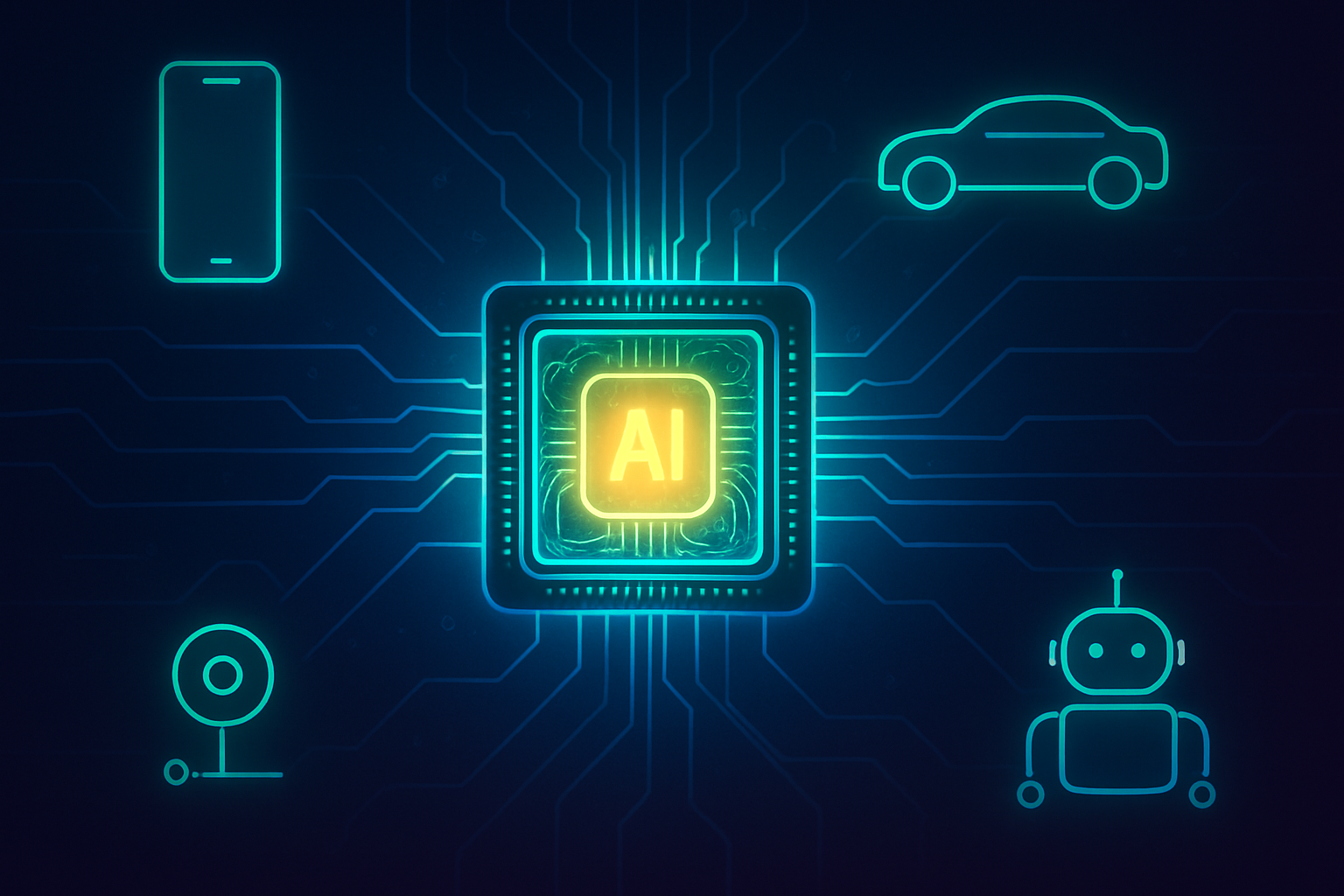
    In a significant paradigm shift, Artificial Intelligence is moving out of the centralized cloud and into the devices that generate data, thanks to the rapid advancement of Edge AI processors. These specialized computing units are designed to execute AI algorithms and models directly on local "edge" devices—from smartphones and cameras to industrial machinery and autonomous vehicles. This decentralization of intelligence is not merely an incremental upgrade but a fundamental transformation, promising to unlock unprecedented levels of real-time responsiveness, data privacy, and operational efficiency across virtually every industry.

    The immediate significance of Edge AI lies in its ability to process data at its source, dramatically reducing latency and enabling instantaneous decision-making critical for mission-critical applications. By minimizing data transmission to distant cloud servers, Edge AI also bolsters data privacy and security, reduces bandwidth requirements and associated costs, and enhances system reliability even in environments with intermittent connectivity. This evolution marks a pivotal moment, addressing the limitations of purely cloud-dependent AI and paving the way for a truly ubiquitous and intelligent ecosystem.

    Technical Prowess: The Engine Behind On-Device Intelligence

    Edge AI processors are characterized by their specialized architectures, meticulously engineered for efficiency and performance within strict power and thermal constraints. At their core are dedicated AI accelerators, including Neural Processing Units (NPUs), Graphics Processing Units (GPUs), Digital Signal Processors (DSPs), Field-Programmable Gate Arrays (FPGAs), and Application-Specific Integrated Circuits (ASICs). NPUs, for instance, are purpose-built for neural network computations, accelerating tasks like matrix multiplication and convolution operations with high energy efficiency, offering more AI operations per watt than traditional CPUs or general-purpose GPUs. Companies like Intel (NASDAQ: INTC) with its AI Boost and AMD (NASDAQ: AMD) with its XDNA are integrating these units directly into their mainstream processors, while specialized players like Google (NASDAQ: GOOGL) with its Coral TPU and EdgeCortix with its SAKURA-I chips offer highly optimized ASICs for specific inference tasks.

    These processors leverage significant advancements in AI model optimization, such as quantization (reducing numerical precision) and pruning (removing redundant nodes), which dramatically shrink the memory footprint and computational overhead of complex neural networks like MobileNet or TinyML models. This allows sophisticated AI to run effectively on resource-constrained devices, often operating within strict Thermal Design Power (TDP) limits, typically between 1W and 75W, far less than data center GPUs. Power efficiency is paramount, with metrics like TOPS/Watt (Tera Operations Per Second per Watt) becoming a key differentiator. The architectural trend is towards heterogeneous computing environments, combining various processor types within a single chip to optimize for performance, power, and cost, ensuring responsiveness for time-sensitive applications while maintaining flexibility for updates.

    The fundamental difference from traditional cloud-based AI lies in the processing location. Cloud AI relies on remote, centralized data centers, incurring latency and requiring extensive data transmission. Edge AI processes data locally, eliminating these bottlenecks and enabling real-time decision-making crucial for applications like autonomous vehicles, where milliseconds matter. This localized processing also inherently enhances data privacy by minimizing the transmission of sensitive information to third-party cloud services and ensures offline capability, making devices resilient to network outages. While cloud AI still offers immense computational power for training large, complex models, Edge AI excels at efficient, low-latency inference, bringing AI's practical benefits directly to the point of action. The AI research community and industry experts widely acknowledge Edge AI as an "operational necessity," particularly for mission-critical applications, though they also point to challenges in resource constraints, development tools, and power management.

    A New Battleground: Corporate Impact and Market Dynamics

    The rise of Edge AI processors is creating a dynamic and intensely competitive landscape, reshaping strategic priorities for tech giants and opening new avenues for startups. Companies providing the foundational silicon stand to benefit immensely. NVIDIA (NASDAQ: NVDA), a leader in cloud AI GPUs, is aggressively expanding its edge presence with platforms like Jetson for robotics and embedded AI, and investing in AI-RAN products for next-generation networks. Intel (NASDAQ: INTC) is making a strong push with its Core Ultra processors and Tiber Edge Platform, aiming to integrate AI processing with high-performance computing at the edge, while AMD (NASDAQ: AMD) is also intensifying its efforts in AI computing with competitive GPUs and processors.

    Qualcomm (NASDAQ: QCOM), a powerhouse in mobile, IoT, and automotive, is exceptionally well-positioned in the Edge AI semiconductor market. Its Snapdragon processors provide AI acceleration across numerous devices, and its Edge AI Box solutions target smart cities and factories, leveraging its mobile DNA for power-efficient, cost-effective inference at scale. Google (NASDAQ: GOOGL), through its custom Edge TPU and ML Kit platform, is optimizing its AI for on-device processing, as are other hyperscalers developing custom silicon to reduce dependency and optimize performance. Apple (NASDAQ: AAPL), with its Neural Engine Unit and Core ML, has been a pioneer in on-device AI for its vast ecosystem. Beyond these giants, companies like Samsung (KRX: 005930), MediaTek (TPE: 2454), and Arm Holdings (NASDAQ: ARM) are crucial players, alongside specialized startups like Hailo, Mythic, and Ambarella (NASDAQ: AMBA), which are developing ultra-efficient AI silicon tailored for specific edge applications.

    Edge AI is poised to disrupt numerous sectors by shifting from a cloud-centric "data transmission -> decision -> command" model to "on-site perception -> real-time decision -> intelligent service." This will fundamentally restructure device forms, business models, and value distribution in areas like AIoT, autonomous driving, and industrial automation. For instance, in healthcare, Edge AI enables real-time patient monitoring and diagnostics on wearables, protecting sensitive data locally. In manufacturing, it facilitates predictive maintenance and quality control directly on the factory floor. This decentralization also impacts business models, potentially shifting profitability towards "smart service subscriptions" that offer continuous, scenario-defined intelligent services. Strategic advantages are being forged through specialized hardware development, robust software ecosystems (like NVIDIA's CUDA or Intel's OpenVINO), vertical integration, strategic partnerships, and a strong focus on energy efficiency and privacy-centric AI.

    Wider Significance: A New Era of Ubiquitous Intelligence

    The wider significance of Edge AI processors cannot be overstated; they represent a crucial evolutionary step in the broader AI landscape. While cloud AI was instrumental in the initial training of complex models and generative AI, Edge AI addresses its inherent limitations, fostering a hybrid landscape where cloud AI handles large-scale training and analytics, and edge AI manages real-time inference and immediate actions. This decentralization of AI is akin to the shift from mainframe to client-server computing or the rise of cloud computing itself, bringing intelligence closer to the end-user and data source.

    The impacts are far-reaching. On data privacy, Edge AI offers a robust solution by processing sensitive information locally, minimizing its exposure during network transmission and simplifying compliance with regulations like GDPR. Techniques such as federated learning allow collaborative model training without sharing raw data, further enhancing privacy. From a sustainability perspective, Edge AI contributes to a "Green AI" approach by reducing the energy consumption associated with transmitting and processing vast amounts of data in energy-intensive cloud data centers, lowering bandwidth usage and greenhouse gas emissions. It also enables energy optimization in smart factories, homes, and medical devices. Furthermore, Edge AI is a catalyst for new business models, enabling cost reduction through optimized infrastructure, real-time insights for ultra-fast decision-making (e.g., instant fraud detection), and new service-based models that offer personalized, intelligent services.

    However, Edge AI also introduces potential concerns. Security is a primary challenge, as decentralized edge devices are often physically accessible and resource-constrained, making them vulnerable to tampering, unauthorized access, and adversarial attacks. Robust encryption, secure boot processes, and tamper-detection mechanisms are essential. Complexity is another hurdle; deploying sophisticated AI models on devices with limited computational power, memory, and battery life requires aggressive optimization, which can sometimes degrade accuracy. Managing and updating models across thousands of geographically dispersed devices, coupled with the lack of standardized tools and diverse hardware capabilities, adds significant layers of complexity to development and deployment. Despite these challenges, Edge AI marks a pivotal moment, transitioning AI from a predominantly centralized paradigm to a more distributed, ubiquitous, and real-time intelligent ecosystem.

    The Horizon: Future Developments and Expert Predictions

    The future of Edge AI processors promises continuous innovation, driven by the insatiable demand for more powerful, efficient, and autonomous AI. In the near term (1-3 years), expect to see a relentless focus on increasing performance and energy efficiency, with chips capable of hundreds of TOPS at low power consumption. Specialized architectures—more powerful TPUs, NPUs, and ASICs—will continue to evolve, tailored for specific AI workloads. The widespread rollout of 5G networks will further accelerate Edge AI capabilities, providing the necessary high-speed, low-latency connectivity for large-scale, real-time deployments. Compute density and miniaturization will remain key, enabling complex AI models to run on even smaller, more resource-constrained devices, often integrated into hybrid edge-to-cloud processing systems.

    Looking to the long term (3+ years and beyond), the landscape becomes even more revolutionary. Neuromorphic computing, with its brain-inspired architectures that integrate memory and processing, is poised to offer unparalleled energy efficiency and real-time learning capabilities directly at the edge. This will enable continuous adaptation and intelligence in autonomous systems, robotics, and decentralized medical AI. The integration of neuromorphic AI with future 6G networks and even quantum computing holds the promise of ultra-low-latency, massively parallel processing at the edge. Federated learning will become increasingly dominant, allowing AI systems to learn dynamically across vast networks of devices without centralizing sensitive data. Advanced chip architectures like RISC-V processors optimized for AI inference, in-memory compute, and 3D chip stacking will push the boundaries of performance and power delivery.

    These advancements will unlock a myriad of new applications: truly autonomous vehicles making instant decisions, intelligent robots performing complex tasks independently, smart cities optimizing traffic and public safety in real-time, and pervasive AI in healthcare for remote diagnostics and personalized monitoring. However, challenges remain. Hardware limitations, power consumption, scalability, security, and the complexity of model optimization and deployment across diverse devices are critical hurdles. Experts predict that Edge AI will become the primary driver of real-time, autonomous intelligence, with hybrid AI architectures combining cloud training with edge inference becoming the norm. The global market for Edge AI chips is forecast for significant growth, with consumer electronics, industrial, and automotive sectors leading the charge, as major tech companies and governments heavily invest in this transformative technology.

    The Dawn of Distributed Intelligence: A Concluding Perspective

    The journey of Edge AI processors from a niche concept to a mainstream technological imperative marks a profound moment in AI history. We are witnessing a fundamental shift from centralized, cloud-dependent intelligence to a more distributed, ubiquitous, and real-time intelligent ecosystem. The key takeaways underscore its ability to deliver unparalleled speed, enhanced privacy, reduced costs, and improved reliability, making AI practical and pervasive across an ever-expanding array of real-world applications.

    This development is not merely an incremental improvement; it is a strategic evolution that addresses the inherent limitations of purely cloud-based AI, particularly in an era dominated by the exponential growth of IoT devices and the demand for instantaneous, secure decision-making. Its long-term impact promises to be transformative, revolutionizing industries from healthcare and automotive to manufacturing and smart cities, while enhancing data privacy and fostering new economic models driven by intelligent services.

    In the coming weeks and months, watch closely for new hardware releases from industry giants like NVIDIA (NASDAQ: NVDA), AMD (NASDAQ: AMD), Intel (NASDAQ: INTC), and Qualcomm (NASDAQ: QCOM), as well as innovative startups. Pay attention to the maturation of software ecosystems, open-source frameworks, and the seamless integration of 5G connectivity. Emerging trends like "thick edge" training, micro and thin edge intelligence, TinyML, federated learning, and neuromorphic computing will define the next wave of innovation. Edge AI is not just a technological trend; it is the dawn of distributed intelligence, promising a future where AI operates at the source, powering industries, cities, and everyday life with unprecedented efficiency and autonomy.


    This content is intended for informational purposes only and represents analysis of current AI developments.

    TokenRing AI delivers enterprise-grade solutions for multi-agent AI workflow orchestration, AI-powered development tools, and seamless remote collaboration platforms.
    For more information, visit https://www.tokenring.ai/.
  • Edge of Innovation: How AI is Reshaping Semiconductor Design and Fueling a New Era of On-Device Intelligence

    Edge of Innovation: How AI is Reshaping Semiconductor Design and Fueling a New Era of On-Device Intelligence

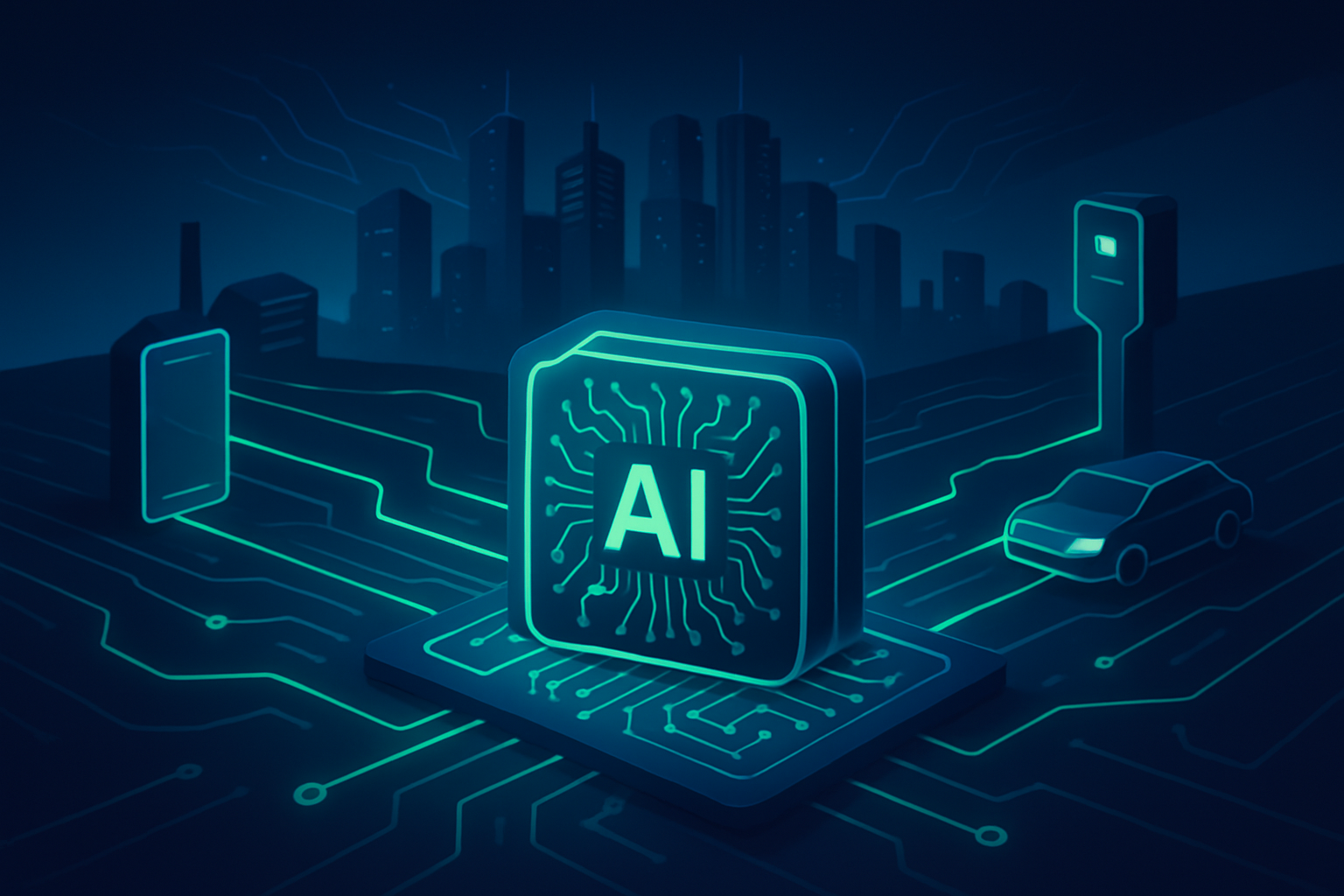
    The landscape of artificial intelligence is undergoing a profound transformation, shifting from predominantly centralized cloud-based processing to a decentralized model where AI algorithms and models operate directly on local "edge" devices. This paradigm, known as Edge AI, is not merely an incremental advancement but a fundamental re-architecture of how intelligence is delivered and consumed. Its burgeoning impact is creating an unprecedented ripple effect across the semiconductor industry, dictating new design imperatives and skyrocketing demand for specialized chips optimized for real-time, on-device AI processing. This strategic pivot promises to unlock a new era of intelligent, efficient, and secure devices, fundamentally altering the fabric of technology and society.

    The immediate significance of Edge AI lies in its ability to address critical limitations of cloud-centric AI: latency, bandwidth, and privacy. By bringing computation closer to the data source, Edge AI enables instantaneous decision-making, crucial for applications where even milliseconds of delay can have severe consequences. It reduces the reliance on constant internet connectivity, conserves bandwidth, and inherently enhances data privacy and security by minimizing the transmission of sensitive information to remote servers. This decentralization of intelligence is driving a massive surge in demand for purpose-built silicon, compelling semiconductor manufacturers to innovate at an accelerated pace to meet the unique requirements of on-device AI.

    The Technical Crucible: Forging Smarter Silicon for the Edge

    The optimization of chips for on-device AI processing represents a significant departure from traditional computing paradigms, necessitating specialized architectures and meticulous engineering. Unlike general-purpose CPUs or even traditional GPUs, which were initially designed for graphics rendering, Edge AI chips are purpose-built to execute already trained AI models (inference) efficiently within stringent power and resource constraints.

    A cornerstone of this technical evolution is the proliferation of Neural Processing Units (NPUs) and other dedicated AI accelerators. These specialized processors are designed from the ground up to accelerate machine learning tasks, particularly deep learning and neural networks, by efficiently handling operations like matrix multiplication and convolution with significantly fewer instructions than a CPU. For instance, the Hailo-8 AI Accelerator delivers up to 26 Tera-Operations Per Second (TOPS) of AI performance at a mere 2.5W, achieving an impressive efficiency of approximately 10 TOPS/W. Similarly, the Hailo-10H AI Processor pushes this further to 40 TOPS. Other notable examples include Google's (NASDAQ: GOOGL) Coral Dev Board (Edge TPU), offering 4 TOPS of INT8 performance at about 2 Watts, and NVIDIA's (NASDAQ: NVDA) Jetson AGX Orin, a high-end module for robotics, delivering up to 275 TOPS of AI performance within a configurable power envelope of 15W to 60W. Qualcomm's (NASDAQ: QCOM) 5th-generation AI Engine in its Robotics RB5 Platform delivers 15 TOPS of on-device AI performance.

    These dedicated accelerators contrast sharply with previous approaches. While CPUs are versatile, they are inefficient for highly parallel AI workloads. GPUs, repurposed for AI due to their parallel processing, are suitable for intensive training but for edge inference, dedicated AI accelerators (NPUs, DPUs, ASICs) offer superior performance-per-watt, lower power consumption, and reduced latency, making them better suited for power-constrained environments. The move from cloud-centric AI, which relies on massive data centers, to Edge AI significantly reduces latency, improves data privacy, and lowers power consumption by eliminating constant data transfer. Experts from the AI research community have largely welcomed this shift, emphasizing its transformative potential for enhanced privacy, reduced latency, and the ability to run sophisticated AI models, including Large Language Models (LLMs) and diffusion models, directly on devices. The industry is strategically investing in specialized architectures, recognizing the growing importance of tailored hardware for specific AI workloads.

    Beyond NPUs, other critical technical advancements include In-Memory Computing (IMC), which integrates compute functions directly into memory to overcome the "memory wall" bottleneck, drastically reducing energy consumption and latency. Low-bit quantization and model compression techniques are also essential, reducing the precision of model parameters (e.g., from 32-bit floating-point to 8-bit or 4-bit integers) to significantly cut down memory usage and computational demands while maintaining accuracy on resource-constrained edge devices. Furthermore, heterogeneous computing architectures that combine NPUs with CPUs and GPUs are becoming standard, leveraging the strengths of each processor for different tasks.

    Corporate Chessboard: Navigating the Edge AI Revolution

    The ascendance of Edge AI is profoundly reshaping the competitive landscape for AI companies, tech giants, and startups, creating both immense opportunities and strategic imperatives. Companies that effectively adapt their semiconductor design strategies and embrace specialized hardware stand to gain significant market positioning and strategic advantages.

    Established semiconductor giants are at the forefront of this transformation. NVIDIA (NASDAQ: NVDA), a dominant force in AI GPUs, is extending its reach to the edge with platforms like Jetson. Qualcomm (NASDAQ: QCOM) is a strong player in the Edge AI semiconductor market, providing AI acceleration across mobile, IoT, automotive, and enterprise devices. Intel (NASDAQ: INTC) is making significant inroads with Core Ultra processors designed for Edge AI and its Habana Labs AI processors. AMD (NASDAQ: AMD) is also adopting a multi-pronged approach with GPUs and NPUs. Arm Holdings (NASDAQ: ARM), with its energy-efficient architecture, is increasingly powering AI workloads on edge devices, making it ideal for power-constrained applications. TSMC (Taiwan Semiconductor Manufacturing Company) (NYSE: TSM), as the leading pure-play foundry, is an indispensable player, fabricating cutting-edge AI chips for major clients.

    Tech giants like Google (NASDAQ: GOOGL), Amazon (NASDAQ: AMZN) (with its Trainium and Inferentia chips), and Microsoft (NASDAQ: MSFT) (with Azure Maia) are heavily investing in developing their own custom AI chips. This strategy provides strategic independence from third-party suppliers, optimizes their massive cloud and edge AI workloads, reduces operational costs, and allows them to offer differentiated AI services. Edge AI has become a new battleground, reflecting a shift in industry focus from cloud to edge.

    Startups are also finding fertile ground by providing highly specialized, performance-optimized solutions. Companies like Hailo, Mythic, and Graphcore are investing heavily in custom chips for on-device AI. Ambarella (NASDAQ: AMBA) focuses on all-in-one computer vision platforms. Lattice Semiconductor (NASDAQ: LSCC) provides ultra-low-power FPGAs for near-sensor AI. These agile innovators are carving out niches by offering superior performance per watt and cost-efficiency for specific AI models at the edge.

    The competitive landscape is intensifying, compelling major AI labs and tech companies to diversify their hardware supply chains. The ability to run more complex AI models on resource-constrained edge devices creates new competitive dynamics. Potential disruptions loom for existing products and services heavily reliant on cloud-based AI, as demand for real-time, local processing grows. However, a hybrid edge-cloud inferencing model is likely to emerge, where cloud platforms remain essential for large-scale model training and complex computations, while edge AI handles real-time inference. Strategic advantages include reduced latency, enhanced data privacy, conserved bandwidth, and operational efficiency, all critical for the next generation of intelligent systems.

    A Broader Canvas: Edge AI in the Grand Tapestry of AI

    Edge AI is not just a technological advancement; it's a pivotal evolutionary step in the broader AI landscape, profoundly influencing societal and economic structures. It fits into a larger trend of pervasive computing and the Internet of Things (IoT), acting as a critical enabler for truly smart environments.

    This decentralization of intelligence aligns perfectly with the growing trend of Micro AI and TinyML, which focuses on developing lightweight, hyper-efficient AI models specifically designed for resource-constrained edge devices. These miniature AI brains enable real-time data processing in smartwatches, IoT sensors, and drones without heavy cloud reliance. The convergence of Edge AI with 5G technology is also critical, enabling applications like smart cities, real-time industrial inspection, and remote health monitoring, where low-latency communication combined with on-device intelligence ensures systems react in milliseconds. Gartner predicts that by 2025, 75% of enterprise-generated data will be created and processed outside traditional data centers or the cloud, with Edge AI being a significant driver of this shift.

    The broader impacts are transformative. Edge AI is poised to create a truly intelligent and responsive physical environment, altering how humans interact with their surroundings. From healthcare (wearables for early illness detection) and smart cities (optimized traffic flow, public safety) to autonomous systems (self-driving cars, factory robots), it promises smarter, safer, and more responsive systems. Economically, the global Edge AI market is experiencing robust growth, fostering innovation and creating new business models.

    However, this widespread adoption also brings potential concerns. While enhancing privacy by local processing, Edge AI introduces new security risks due to its decentralized nature. Edge devices, often in physically accessible locations, are more susceptible to physical tampering, theft, and unauthorized access. They typically lack the advanced security features of data centers, creating a broader attack surface. Privacy concerns persist regarding the collection, storage, and potential misuse of sensitive data on edge devices. Resource constraints on edge devices limit the size and complexity of AI models, and managing and updating numerous, geographically dispersed edge devices can be complex. Ethical implications, such as algorithmic bias and accountability for autonomous decision-making, also require careful consideration.

    Comparing Edge AI to previous AI milestones reveals its significance. Unlike early AI (expert systems, symbolic AI) that relied on explicit programming, Edge AI is driven by machine learning and deep learning models. While breakthroughs in machine learning and deep learning (cloud-centric) democratized AI training, Edge AI is now democratizing AI inference, making intelligence pervasive and embedded in everyday devices, operating at the data source. It represents a maturation of AI, moving beyond solely cloud-dependent models to a hybrid ecosystem that leverages the strengths of both centralized and distributed computing.

    The Horizon Beckons: Future Trajectories of Edge AI and Semiconductors

    The journey of Edge AI and its symbiotic relationship with semiconductor design is only just beginning, with a trajectory pointing towards increasingly sophisticated and pervasive intelligence.

    In the near-term (1-3 years), we can expect wider commercial deployment of chiplet architectures and heterogeneous integration in AI accelerators, improving yields and integrating diverse functions. The rapid transition to smaller process nodes, with 3nm and 2nm technologies, will become prevalent, enabling higher transistor density crucial for complex AI models; TSMC (NYSE: TSM), for instance, anticipates high-volume production of its 2nm (N2) process node in late 2025. NPUs are set to become ubiquitous in consumer devices, including smartphones and "AI PCs," with projections indicating that AI PCs will constitute 43% of all PC shipments by the end of 2025. Qualcomm (NASDAQ: QCOM) has already launched platforms with dedicated NPUs for high-performance AI inference on PCs.

    Looking further into the long-term (3-10+ years), we anticipate the continued innovation of intelligent sensors enabling nearly every physical object to have a "digital twin" for optimized monitoring. Edge AI will deepen its integration across various sectors, enabling real-time patient monitoring in healthcare, sophisticated control in industrial automation, and highly responsive autonomous systems. Novel computing architectures, such as hybrid AI-quantum systems and specialized silicon hardware tailored for BitNet models, are on the horizon, promising to accelerate AI training and reduce operational costs. Neuromorphic computing, inspired by the human brain, will mature, offering unprecedented energy efficiency for AI tasks at the edge. A profound prediction is the continuous, symbiotic evolution where AI tools will increasingly design their own chips, accelerating development and even discovering new materials, creating a "virtuous cycle of innovation."

    Potential applications and use cases on the horizon are vast. From enhanced on-device AI in consumer electronics for personalization and real-time translation to fully autonomous vehicles relying on Edge AI for instantaneous decision-making, the possibilities are immense. Industrial automation will see predictive maintenance, real-time quality control, and optimized logistics. Healthcare will benefit from wearable devices for real-time health monitoring and faster diagnostics. Smart cities will leverage Edge AI for optimizing traffic flow and public safety. Even office tools like Microsoft (NASDAQ: MSFT) Word and Excel will integrate on-device LLMs for document summarization and anomaly detection.

    However, significant challenges remain. Resource limitations, power consumption, and thermal management for compact edge devices pose substantial hurdles. Balancing model complexity with performance on constrained hardware, efficient data management, and robust security and privacy frameworks are critical. High manufacturing costs of advanced edge AI chips and complex integration requirements can be barriers to widespread adoption, compounded by persistent supply chain vulnerabilities and a severe global talent shortage in both AI algorithms and semiconductor technology.

    Despite these challenges, experts are largely optimistic. They predict explosive market growth for AI chips, potentially reaching $1.3 trillion by 2030 and $2 trillion by 2040. There will be an intense diversification and customization of AI chips, moving away from "one size fits all" solutions towards purpose-built silicon. AI itself will become the "backbone of innovation" within the semiconductor industry, optimizing chip design, manufacturing processes, and supply chain management. The shift towards Edge AI signifies a fundamental decentralization of intelligence, creating a hybrid AI ecosystem that dynamically leverages both centralized and distributed computing strengths, with a strong focus on sustainability.

    The Intelligent Frontier: A Concluding Assessment

    The growing impact of Edge AI on semiconductor design and demand represents one of the most significant technological shifts of our time. It's a testament to the relentless pursuit of more efficient, responsive, and secure artificial intelligence.

    Key takeaways include the imperative for localized processing, driven by the need for real-time responses, reduced bandwidth, and enhanced privacy. This has catalyzed a boom in specialized AI accelerators, forcing innovation in chip design and manufacturing, with a keen focus on power, performance, and area (PPA) optimization. The immediate significance is the decentralization of intelligence, enabling new applications and experiences while driving substantial market growth.

    In AI history, Edge AI marks a pivotal moment, transitioning AI from a powerful but often remote tool to an embedded, ubiquitous intelligence that directly interacts with the physical world. It's the "hardware bedrock" upon which the next generation of AI capabilities will be built, fostering a symbiotic relationship between hardware and software advancements.

    The long-term impact will see continued specialization in AI chips, breakthroughs in advanced manufacturing (e.g., sub-2nm nodes, heterogeneous integration), and the emergence of novel computing architectures like neuromorphic and hybrid AI-quantum systems. Edge AI will foster truly pervasive intelligence, creating environments that learn and adapt, transforming industries from healthcare to transportation.

    In the coming weeks and months, watch for the wider commercial deployment of chiplet architectures, increased focus on NPUs for efficient inference, and the deepening convergence of 5G and Edge AI. The "AI chip race" will intensify, with major tech companies investing heavily in custom silicon. Furthermore, advancements in AI-driven Electronic Design Automation (EDA) tools will accelerate chip design cycles, and semiconductor manufacturers will continue to expand capacity to meet surging demand. The intelligent frontier is upon us, and its hardware foundation is being laid today.


    This content is intended for informational purposes only and represents analysis of current AI developments.

    TokenRing AI delivers enterprise-grade solutions for multi-agent AI workflow orchestration, AI-powered development tools, and seamless remote collaboration platforms.
    For more information, visit https://www.tokenring.ai/.
  • Edge AI Unleashed: Specialized Chips Propel Real-Time Intelligence to the Source

    Edge AI Unleashed: Specialized Chips Propel Real-Time Intelligence to the Source

    The artificial intelligence landscape is undergoing a profound transformation as AI processing shifts decisively from centralized cloud data centers to the network's periphery, closer to where data is generated. This paradigm shift, known as Edge AI, is fueled by the escalating demand for real-time insights, lower latency, and enhanced data privacy across an ever-growing ecosystem of connected devices. By late 2025, researchers are calling it "the year of Edge AI," with Gartner predicting that 75% of enterprise-managed data will be processed outside traditional data centers or the cloud. This movement to the edge is critical as billions of IoT devices come online, making traditional cloud infrastructure increasingly inefficient for handling the sheer volume and velocity of data.

    At the heart of this revolution are specialized semiconductor designs meticulously engineered for Edge AI workloads. Unlike general-purpose CPUs or even traditional GPUs, these purpose-built chips, including Neural Processing Units (NPUs) and Application-Specific Integrated Circuits (ASICs), are optimized for the unique demands of neural networks under strict power and resource constraints. Current developments in October 2025 show NPUs becoming ubiquitous in consumer devices, from smartphones to "AI PCs," which are projected to make up 43% of all PC shipments by year-end. The immediate significance of bringing AI processing closer to data sources cannot be overstated, as it dramatically reduces latency, conserves bandwidth, and enhances data privacy and security, ultimately creating a more responsive, efficient, and intelligent world.

    The Technical Core: Purpose-Built Silicon for Pervasive AI

    Edge AI represents a significant paradigm shift, moving artificial intelligence processing from centralized cloud data centers to local devices, or the "edge" of the network. This decentralization is driven by the increasing demand for real-time responsiveness, enhanced data privacy and security, and reduced bandwidth consumption in applications such as autonomous vehicles, industrial automation, robotics, and smart wearables. Unlike cloud AI, which relies on sending data to powerful remote servers for processing and then transmitting results back, Edge AI performs inference directly on the device where the data is generated. This eliminates network latency, making instantaneous decision-making possible, and inherently improves privacy by keeping sensitive data localized. As of late 2025, the Edge AI chip market is experiencing rapid growth, even surpassing cloud AI chip revenues, reflecting the critical need for low-cost, ultra-low-power chips designed specifically for this distributed intelligence model.

    Specialized semiconductor designs are at the heart of this Edge AI revolution. Neural Processing Units (NPUs) are becoming ubiquitous, specifically optimized Application-Specific Integrated Circuits (ASICs) that excel at low-power, high-efficiency inference tasks by handling operations like matrix multiplication with remarkable energy efficiency. Companies like Google (NASDAQ: GOOGL), with its Edge TPU and the new Coral NPU architecture, are designing AI-first hardware that prioritizes the ML matrix engine over scalar compute, enabling ultra-low-power, always-on AI for wearables and IoT devices. Intel (NASDAQ: INTC)'s integrated AI technologies, including iGPUs and NPUs, are providing viable, power-efficient alternatives to discrete GPUs for near-edge AI solutions. Field-Programmable Gate Arrays (FPGAs) continue to be vital, offering flexibility and reconfigurability for custom hardware implementations of inference algorithms, with manufacturers like Advanced Micro Devices (AMD) (NASDAQ: AMD) (Xilinx) and Intel (Altera) developing AI-optimized FPGA architectures that incorporate dedicated AI acceleration blocks.

    Neuromorphic chips, inspired by the human brain, are seeing 2025 as a "breakthrough year," with devices from BrainChip (ASX: BRN) (Akida), Intel (Loihi), and International Business Machines (IBM) (NYSE: IBM) (TrueNorth) entering the market at scale. These chips emulate neural networks directly in silicon, integrating memory and processing to offer significant advantages in energy efficiency (up to 1000x reductions for specific AI tasks compared to GPUs) and real-time learning, making them ideal for battery-powered edge devices. Furthermore, innovative memory architectures like In-Memory Computing (IMC) are being explored to address the "memory wall" bottleneck by integrating compute functions directly into memory, significantly reducing data movement and improving energy efficiency for data-intensive AI workloads.

    These specialized chips differ fundamentally from previous cloud-centric approaches that relied heavily on powerful, general-purpose GPUs in data centers for both training and inference. While cloud AI continues to be crucial for training large, resource-intensive models and analyzing data at scale, Edge AI chips are designed for efficient, low-latency inference on new, real-world data, often using compressed or quantized models. The AI advancements enabling this shift include improved language model distillation techniques, allowing Large Language Models (LLMs) to be shrunk for local execution with lower hardware requirements, as well as the proliferation of generative AI and agentic AI technologies taking hold in various industries. This allows for functionalities like contextual awareness, real-time translation, and proactive assistance directly on personal devices. The AI research community and industry experts have largely welcomed these advancements with excitement, recognizing the transformative potential of Edge AI. There's a consensus that energy-efficient hardware is not just optimizing AI but is defining its future, especially given concerns over AI's escalating energy footprint.

    Reshaping the AI Industry: A Competitive Edge at the Edge

    The rise of Edge AI and specialized semiconductor designs is fundamentally reshaping the artificial intelligence landscape, fostering a dynamic environment for tech giants and startups alike as of October 2025. This shift emphasizes moving AI processing from centralized cloud systems to local devices, significantly reducing latency, enhancing privacy, and improving operational efficiency across various applications. The global Edge AI market is experiencing rapid growth, projected to reach $25.65 billion in 2025 and an impressive $143.06 billion by 2034, driven by the proliferation of IoT devices, 5G technology, and advancements in AI algorithms. This necessitates hardware innovation, with specialized AI chips like GPUs, TPUs, and NPUs becoming central to handling immense workloads with greater energy efficiency and reduced thermal challenges. The push for efficiency is critical, as processing at the edge can reduce energy consumption by 100 to 1,000 times per AI task compared to cloud-based AI, extending battery life and enabling real-time operations without constant internet connectivity.

    Several major players stand to benefit significantly from this trend. NVIDIA (NASDAQ: NVDA) continues to hold a commanding lead in high-end AI training and data center GPUs but is also actively pursuing opportunities in the Edge AI market with its partners and new architectures. Intel (NASDAQ: INTC) is aggressively expanding its AI accelerator portfolio with new data center GPUs like "Crescent Island" designed for inference workloads and is pushing its Core Ultra processors for Edge AI, aiming for an open, developer-first software stack from the AI PC to the data center and industrial edge. Google (NASDAQ: GOOGL) is advancing its custom AI chips with the introduction of Trillium, its sixth-generation TPU optimized for on-device inference to improve energy efficiency, and is a significant player in both cloud and edge computing applications.

    Qualcomm (NASDAQ: QCOM) is making bold moves, particularly in the mobile and industrial IoT space, with developer kits featuring Edge Impulse and strategic partnerships, such as its recent acquisition of Arduino in October 2025, to become a full-stack Edge AI/IoT leader. ARM Holdings (NASDAQ: ARM), while traditionally licensing its power-efficient architectures, is increasingly engaging in AI chip manufacturing and design, with its Neoverse platform being leveraged by major cloud providers for custom chips. Advanced Micro Devices (AMD) (NASDAQ: AMD) is challenging NVIDIA's dominance with its Instinct MI350 series, offering increased high-bandwidth memory capacity for inferencing models. Startups are also playing a crucial role, developing highly specialized, performance-optimized solutions like optical processors and in-memory computing chips that could disrupt existing markets by offering superior performance per watt and cost-efficiency for specific AI models at the edge.

    The competitive landscape is intensifying, as tech giants and AI labs strive for strategic advantages. Companies are diversifying their semiconductor content, with a growing focus on custom silicon to optimize performance for specific workloads, reduce reliance on external suppliers, and gain greater control over their AI infrastructure. This internal chip development, exemplified by Amazon (NASDAQ: AMZN)'s Trainium and Inferentia, Microsoft (NASDAQ: MSFT)'s Azure Maia, and Google's Axion, allows them to offer specialized AI services, potentially disrupting traditional chipmakers in the cloud AI services market. The shift to Edge AI also presents potential disruptions to existing products and services that are heavily reliant on cloud-based AI, as the demand for real-time, local processing pushes for new hardware and software paradigms. Companies are embracing hybrid edge-cloud inferencing to manage data processing and mobility efficiently, requiring IT and OT teams to navigate seamless interaction between these environments. Strategic partnerships are becoming essential, with collaborations between hardware innovators and AI software developers crucial for successful market penetration, especially as new architectures require specialized software stacks. The market is moving towards a more diverse ecosystem of specialized hardware tailored for different AI workloads, rather than a few dominant general-purpose solutions.

    A Broader Canvas: Sustainability, Privacy, and New Frontiers

    The wider significance of Edge AI and specialized semiconductor designs lies in a fundamental paradigm shift within the artificial intelligence landscape, moving processing capabilities from centralized cloud data centers to the periphery of networks, closer to the data source. This decentralization of intelligence, often referred to as a hybrid AI ecosystem, allows for AI workloads to dynamically leverage both centralized and distributed computing strengths. By October 2025, this trend is solidified by the rapid development of specialized semiconductor chips, such as Neural Processing Units (NPUs) and Application-Specific Integrated Circuits (ASICs), which are purpose-built to optimize AI workloads under strict power and resource constraints. These innovations are essential for driving "AI everywhere" and fitting into broader trends like "Micro AI" for hyper-efficient models on tiny devices and Federated Learning, which enables collaborative model training without sharing raw data. This shift is becoming the backbone of innovation within the semiconductor industry, as companies increasingly move away from "one size fits all" solutions towards customized AI silicon for diverse applications.

    The impacts of Edge AI and specialized hardware are profound and far-reaching. By performing AI computations locally, these technologies dramatically reduce latency, conserve bandwidth, and enhance data privacy by minimizing the transmission of sensitive information to the cloud. This enables real-time AI applications crucial for sectors like autonomous vehicles, where milliseconds matter for collision avoidance, and personalized healthcare, offering immediate insights and responsive care. Beyond speed, Edge AI contributes to sustainability by reducing the energy consumption associated with extensive data transfers and large cloud data centers. New applications are emerging across industries, including predictive maintenance in manufacturing, real-time monitoring in smart cities, and AI-driven health diagnostics in wearables. Edge AI also offers enhanced reliability and autonomous operation, allowing devices to function effectively even in environments with limited or no internet connectivity.

    Despite the transformative benefits, the proliferation of Edge AI and specialized semiconductors introduces several potential concerns. Security is a primary challenge, as distributed edge devices expand the attack surface and can be vulnerable to physical tampering, requiring robust security protocols and continuous monitoring. Ethical implications also arise, particularly in critical applications like autonomous warfighting, where clear deployment frameworks and accountability are paramount. The complexity of deploying and managing vast edge networks, ensuring interoperability across diverse devices, and addressing continuous power consumption and thermal management for specialized chips are ongoing challenges. Furthermore, the rapid evolution of AI models, especially large language models, presents a "moving target" for chip designers who must hardwire support for future AI capabilities into silicon. Data management can also become challenging, as local processing can lead to fragmented, inconsistent datasets that are harder to aggregate and analyze comprehensively.

    Comparing Edge AI to previous AI milestones reveals it as a significant refinement and logical progression in the maturation of artificial intelligence. While breakthroughs like the adoption of GPUs in the late 2000s democratized AI training by making powerful parallel processing widely accessible, Edge AI is now democratizing AI inference, making intelligence pervasive and embedded in everyday devices. This marks a shift from cloud-centric AI models, where raw data was sent to distant data centers, to a model where AI operates at the source, anticipating needs and creating new opportunities. Developments around October 2025, such as the ubiquity of NPUs in consumer devices and advancements in in-memory computing, demonstrate a distinct focus on the industrialization and scaling of AI for real-time responsiveness and efficiency. The ongoing evolution includes federated learning, neuromorphic computing, and even hybrid classical-quantum architectures, pushing the boundaries towards self-sustaining, privacy-preserving, and infinitely scalable AI systems directly at the edge.

    The Horizon: What's Next for Edge AI

    Future developments in Edge AI and specialized semiconductor designs are poised for significant advancements, characterized by a relentless drive for greater efficiency, lower latency, and enhanced on-device intelligence. In the near term (1-3 years from October 2025), a key trend will be the wider commercial deployment of chiplet architectures and heterogeneous integration in AI accelerators. This modular approach, integrating multiple specialized dies into a single package, circumvents limitations of traditional silicon-based computing by improving yields, lowering costs, and enabling seamless integration of diverse functions. Neuromorphic and in-memory computing solutions will also become more prevalent in specialized edge AI applications, particularly in IoT, automotive, and robotics, where ultra-low power consumption and real-time processing are critical. There will be an increased focus on Neural Processing Units (NPUs) over general-purpose GPUs for inference tasks at the edge, as NPUs are optimized for "thinking" and reasoning with trained models, leading to more accurate and energy-efficient outcomes. The Edge AI hardware market is projected to reach USD 58.90 billion by 2030, growing from USD 26.14 billion in 2025, driven by continuous innovation in AI co-processors and expanding IoT capabilities. Smartphones, AI-enabled personal computers, and automotive safety systems are expected to anchor near-term growth.

    Looking further ahead, long-term developments will see continued innovation in intelligent sensors, allowing nearly every physical object to have a "digital twin" for optimized monitoring and process optimization in areas like smart homes and cities. Edge AI will continue to deepen its integration across various sectors, enabling applications such as real-time patient monitoring in healthcare, sophisticated control in industrial automation, and highly responsive autonomous systems in vehicles and drones. The shift towards local AI processing on devices aims to overcome bandwidth limitations, latency issues, and privacy concerns associated with cloud-based AI. Hybrid AI-quantum systems and specialized silicon hardware tailored for bitnet models are also on the horizon, promising to accelerate AI training times and reduce operational costs by processing information more efficiently with less power consumption. Experts predict that AI-related semiconductors will see growth approximately five times greater than non-AI applications, with a strong positive outlook for the semiconductor industry's financial improvement and new opportunities in 2025 and beyond.

    Despite these promising developments, significant challenges remain. Edge AI faces persistent issues with large-scale model deployment, interpretability, and vulnerabilities in privacy and security. Resource limitations on edge devices, including constrained processing power, memory, and energy budgets, pose substantial hurdles for deploying complex AI models. The need for real-time performance in critical applications like autonomous navigation demands inference times in milliseconds, which is challenging with large models. Data management at the edge is complex, as devices often capture incomplete or noisy real-time data, impacting prediction accuracy. Scalability, integration with diverse and heterogeneous hardware and software components, and balancing performance with energy efficiency are also critical challenges that require adaptive model compression, secure and interpretable Edge AI, and cross-layer co-design of hardware and algorithms.

    The Edge of a New Era: A Concluding Outlook

    The landscape of artificial intelligence is experiencing a profound transformation, spearheaded by the accelerating adoption of Edge AI and the concomitant evolution of specialized semiconductor designs. As of late 2025, the Edge AI market is in a period of rapid expansion, projected to reach USD 25.65 billion, fueled by the widespread integration of 5G technology, a growing demand for ultra-low latency processing, and the extensive deployment of AI solutions across smart cities, autonomous systems, and industrial automation. A key takeaway from this development is the shift of AI inference closer to the data source, enhancing real-time decision-making capabilities, improving data privacy and security, and reducing bandwidth costs. This necessitates a departure from traditional general-purpose processors towards purpose-built AI chips, including advanced GPUs, TPUs, ASICs, FPGAs, and particularly NPUs, which are optimized for the unique demands of AI workloads at the edge, balancing high performance with strict power and thermal budgets. This period also marks a "breakthrough year" for neuromorphic chips, with devices from companies like BrainChip, Intel, and IBM entering the market at scale to address the need for ultra-low power and real-time processing in edge applications.

    This convergence of Edge AI and specialized semiconductors represents a pivotal moment in the history of artificial intelligence, comparable in significance to the invention of the transistor or the advent of parallel processing with GPUs. It signifies a foundational shift that enables AI to transcend existing limitations, pushing the boundaries of what's achievable in terms of intelligence, autonomy, and problem-solving. The long-term impact promises a future where AI is not only more powerful but also more pervasive, sustainable, and seamlessly integrated into every facet of our lives, from personal assistants to global infrastructure. This includes the continued evolution towards federated learning, where AI models are trained across distributed edge devices without transferring raw data, further enhancing privacy and efficiency, and leveraging ultra-fast 5G connectivity for seamless interaction between edge devices and cloud systems. The development of lightweight AI models will also enable powerful algorithms to run on increasingly resource-constrained devices, solidifying the trend of localized intelligence.

    In the coming weeks and months, the industry will be closely watching for several key developments. Expect announcements regarding new funding rounds for innovative AI hardware startups, alongside further advancements in silicon photonics integration, which will be crucial for improving chip performance and efficiency. Demonstrations of neuromorphic chips tackling increasingly complex real-world problems in applications like IoT, automotive, and robotics will also gain traction, showcasing their potential for ultra-low power and real-time processing. Additionally, the wider commercial deployment of chiplet-based AI accelerators is anticipated, with major players like NVIDIA expected to adopt these modular approaches to circumvent the traditional limitations of Moore's Law. The ongoing race to develop power-efficient, specialized processors will continue to drive innovation, as demand for on-device inference and secure data processing at the edge intensifies across diverse industries.


    This content is intended for informational purposes only and represents analysis of current AI developments.

    TokenRing AI delivers enterprise-grade solutions for multi-agent AI workflow orchestration, AI-powered development tools, and seamless remote collaboration platforms.
    For more information, visit https://www.tokenring.ai/.
  • The Dawn of On-Device Intelligence: How AI PCs Are Reshaping the Computing Landscape

    The Dawn of On-Device Intelligence: How AI PCs Are Reshaping the Computing Landscape

    The computing world stands at the precipice of a new era, heralded by the rapid emergence of Artificial Intelligence Personal Computers (AI PCs). These aren't just faster machines; they represent a fundamental shift in how personal computing operates, moving sophisticated AI processing from distant cloud servers directly onto the user's device. This profound decentralization of intelligence promises to redefine productivity, enhance privacy, and unlock a new spectrum of personalized experiences, fundamentally reshaping the personal computing landscape as we know it by late 2025.

    At the heart of this transformation lies the integration of specialized hardware, primarily the Neural Processing Unit (NPU), working in concert with optimized CPUs and GPUs. This dedicated AI acceleration allows AI PCs to execute complex AI workloads locally, offering substantial advantages in performance, efficiency, and data security over traditional computing paradigms. The immediate significance is clear: AI PCs are poised to become the new standard, driving a massive upgrade cycle and fostering an ecosystem where intelligent, responsive, and private AI capabilities are not just features, but foundational elements of the personal computing experience.

    The Engineering Marvel: Diving Deep into AI PC Architecture

    The distinguishing feature of an AI PC lies in its architectural enhancements, most notably the Neural Processing Unit (NPU). This dedicated chip or component is purpose-built to accelerate machine learning (ML) workloads and AI algorithms with remarkable efficiency. Unlike general-purpose CPUs or even parallel-processing GPUs, NPUs are optimized for the specific mathematical operations vital to neural networks, performing matrix multiplication at extremely low power in a massively parallel fashion. This allows NPUs to handle AI tasks efficiently, freeing up the CPU for multitasking and the GPU for graphics and traditional computing. NPU performance is measured in Trillions of Operations Per Second (TOPS), with Microsoft (NASDAQ: MSFT) mandating at least 40 TOPS for a device to be certified as a Copilot+ PC.

    Leading chip manufacturers are locked in a "TOPS war" to deliver increasingly powerful NPUs. Qualcomm's (NASDAQ: QCOM) Snapdragon X Elite and X Plus platforms, for instance, boast a Hexagon NPU delivering 45 TOPS, with the entire platform offering up to 75 TOPS of AI compute. These ARM-based SoCs, built on a 4nm TSMC process, emphasize power efficiency and multi-day battery life. Intel's (NASDAQ: INTC) Core Ultra Lunar Lake processors, launched in September 2024, feature an NPU 4 architecture delivering up to 48 TOPS from the NPU alone, with a total platform AI performance of up to 120 TOPS. Their upcoming Panther Lake (Core Ultra Series 3), slated for late 2025, promises an NPU 5 with up to 50 TOPS and a staggering 180 platform TOPS. AMD's (NASDAQ: AMD) Ryzen AI 300 series ("Strix Point"), unveiled at Computex 2024, features the XDNA 2 NPU, offering a substantial 50 TOPS of AI performance, a 5x generational gain over its predecessor. These processors integrate new Zen 5 CPU cores and RDNA 3.5 graphics.

    The fundamental difference lies in how these components handle AI tasks. CPUs are versatile but less efficient for parallel AI computations. GPUs excel at parallel processing but consume significant power. NPUs, however, are designed for extreme power efficiency (often 1-10W for AI tasks) and specialized operations, making them ideal for sustained, real-time AI inference on-device. This offloading of AI workloads leads to longer battery life (up to 20-30% longer during AI-enhanced workflows), reduced heat, and improved overall system performance. Initial reactions from the AI research community and industry experts have been overwhelmingly positive, highlighting the transformative potential of on-device AI for enhanced privacy, reduced latency, and the ability to run sophisticated AI models like large language models (LLMs) and diffusion models directly on the PC without cloud reliance. While hardware is rapidly advancing, experts stress the critical need for continued investment in software support and developer tooling to fully leverage NPU capabilities.

    Reshaping the Tech Industry: Competitive Dynamics and Strategic Plays

    The advent of AI PCs is not merely an evolutionary step; it's a disruptive force reshaping competitive dynamics across the tech industry, benefiting established giants and creating fertile ground for innovative startups. The market is projected to grow exponentially, with some forecasts estimating the global AI PC market to reach USD 128.7 billion by 2032 and comprise over half of the PC market by 2026.

    Microsoft (NASDAQ: MSFT) stands as a primary beneficiary, deeply embedding AI into Windows with its Copilot+ PC initiative. By setting stringent hardware requirements (40+ TOPS NPU), Microsoft is driving innovation and ensuring a standardized, high-performance AI experience. Features like "Recall," "Cocreator," and real-time translation are exclusive to these new machines, positioning Microsoft to compete directly with AI advancements from other tech giants and revitalize the PC ecosystem. Its collaboration with various manufacturers and the launch of its own Surface Copilot+ PC models underscore its aggressive market positioning.

    Chipmakers are at the epicenter of this transformation. Qualcomm (NASDAQ: QCOM) has emerged as a formidable contender, with its Snapdragon X Elite/Plus platforms leading the first wave of ARM-based AI PCs for Windows, challenging the traditional x86 dominance with superior power efficiency and battery life. Intel (NASDAQ: INTC) and AMD (NASDAQ: AMD) are vigorously defending their market share, rapidly advancing their Core Ultra and Ryzen AI processors, respectively, with increasing NPU TOPS performance and extensive developer programs to optimize software. NVIDIA (NASDAQ: NVDA), while dominant in data center AI, is also playing a significant role by partnering with PC manufacturers to integrate its RTX GPUs, accelerating AI applications, games, and creative workflows on high-end AI PCs.

    This shift creates a vibrant environment for AI software developers and startups. They can now create innovative local AI solutions, benefiting from enhanced development environments and potentially reducing long-term operational costs associated with cloud resources. However, it also presents challenges, requiring optimization for heterogeneous hardware architectures and adapting to a "hybrid AI" strategy that intelligently distributes workloads between the cloud and the PC. The rise of AI PCs is expected to disrupt cloud-centric AI models by allowing more tasks to be processed on-device, offering enhanced privacy, lower latency, and potential cost savings. It also redefines traditional PC usage, moving beyond incremental upgrades to fundamentally change user interaction through proactive assistance and real-time data analysis, potentially shifting developer roles towards higher-level design and user experience.

    A New Computing Paradigm: Wider Significance and Societal Implications

    The emergence of AI PCs signifies more than just a technological upgrade; it represents a crucial inflection point in the broader AI landscape and holds profound implications for society. By bringing powerful AI capabilities directly to the "edge"—the user's device—AI PCs are central to the growing trend of decentralized intelligence, addressing critical limitations of cloud-centric AI such as network latency, data privacy concerns, and escalating operational costs. This development fosters a "hybrid AI" approach, where on-device AI handles immediate, privacy-sensitive tasks and smaller models, while cloud AI continues to provide the computational power for training large models and managing massive datasets.

    The impacts on society are multifaceted. AI PCs are poised to dramatically enhance productivity, with studies suggesting potential boosts of up to 30% through intelligent automation. They streamline workflows, accelerate creative processes, and enable real-time communication enhancements like live captioning and translation in video calls, all processed locally without taxing core system resources. This democratization of AI makes advanced capabilities more accessible, fostering new applications and personalized user experiences that learn and adapt to individual behavior. Businesses are already reporting significant reductions in device management time and IT visits due to enhanced local AI capabilities for threat detection and automation.

    However, this transformative power comes with potential concerns. While on-device processing generally enhances privacy by keeping sensitive data local, the overall expansion of AI capabilities leads to an unprecedented increase in data collection and analysis, raising questions about data usage and consent. The widespread adoption of AI, even on personal devices, fuels anxieties about job displacement, particularly in roles involving repetitive cognitive and manual tasks. While AI is expected to create new jobs, the transition could disproportionately affect economically disadvantaged groups. Ethical AI considerations—including bias and fairness in algorithms, transparency and explainability of AI decisions, and accountability when AI systems err—become even more critical as AI becomes ubiquitous. Furthermore, the initial higher cost of AI PCs could exacerbate the digital divide, and the rapid refresh cycles driven by AI advancements raise environmental concerns regarding e-waste.

    Historically, the introduction of AI PCs is comparable to the original personal computer revolution, which brought computing power from mainframes to individual desks. It echoes the impact of the GPU, which transformed graphics and later deep learning, by introducing a dedicated hardware accelerator (the NPU) purpose-built for the next generation of AI workloads. Like the internet and mobile computing, AI PCs are making advanced AI ubiquitous and personal, fundamentally altering how we interact with our machines. The year 2025 is widely recognized as "The Year of AI PCs," a turning point where these devices are expected to redefine the fundamental limits of computing, akin to the impact of the graphical user interface or the advent of the internet itself.

    The Horizon of Intelligence: Future Developments and Expert Predictions

    The journey of AI PCs is only just beginning, with both near-term and long-term developments promising to further revolutionize personal computing. In the immediate future (2025-2027), we will see the widespread integration of increasingly powerful NPUs across all device types. Industry projections anticipate AI PCs comprising around 50% of shipments by 2027 and 80% of PC sales by 2028. Hardware advancements will continue to push NPU performance, with next-generation chips targeting even higher TOPS. Memory technologies like LPCAMM2 will evolve to support these complex workloads with greater speed and efficiency.

    On the software front, a "massive mobilization of the PC ecosystem" is underway. Silicon providers like Intel are heavily investing in AI PC acceleration programs to empower developers, aiming to deliver hundreds of new AI features across numerous Independent Software Vendor (ISV) applications. By 2026, experts predict that 60% of new software will require AI hardware for full functionality, signifying a rapid evolution of the application landscape. This will lead to ubiquitous multimodal generative AI capabilities by 2026, capable of creating text, images, audio, and video directly on the device.

    Looking further ahead (beyond 2027), AI PCs are expected to drive a major hardware and semiconductor cycle that could ultimately lead to "Personal Access Points" incorporating quantum computing and neural interfaces, shifting human-computer interaction from keyboards to thought-controlled AR/VR systems. Human-like AI, with intelligence levels comparable to humans, is expected to emerge by 2030, revolutionizing decision-making and creative processes. Potential applications and use cases on the horizon are vast, including hyper-personalized productivity assistants, real-time communication and collaboration tools with advanced translation, sophisticated content creation and media editing powered by on-device generative AI, enhanced security features, and intelligent gaming optimization. Autonomous AI agents, capable of performing complex tasks independently, are also expected to become far more common in workflows by 2027.

    However, several challenges need addressing. Robust software optimization and ecosystem development are crucial, requiring ISVs to rapidly embrace local AI features. Power consumption remains a concern for complex models, necessitating continued advancements in energy-efficient architectures and model optimization techniques (e.g., pruning, quantization). Security and privacy, while enhanced by local processing, still demand robust measures to prevent data breaches or tampering. Furthermore, educating users and businesses about the tangible value of AI PC capabilities is vital for widespread adoption, as some currently perceive them as a "gimmick." Experts largely agree that on-device intelligence will continue its rapid evolution, driven by the clear benefits of local AI processing: better performance, improved privacy, and lower lifetime costs. The future of AI PCs is not just about raw power, but about providing highly personalized, secure, and efficient computing experiences that adapt proactively to user needs.

    A New Chapter in Computing: The Enduring Significance of AI PCs

    The 'Dawn of On-Device Intelligence' ushered in by AI PCs marks a definitive new chapter in the history of personal computing. This paradigm shift, characterized by the integration of dedicated NPUs and optimized hardware, is profoundly transforming how we interact with technology. The key takeaways are clear: AI PCs deliver unparalleled productivity, enhanced security and privacy through local processing, superior performance with longer battery life, and a new generation of advanced, personalized user experiences.

    Assessing its significance, the AI PC era is not merely an incremental upgrade but a foundational re-architecture of computing. It decentralizes AI power, moving sophisticated capabilities from centralized cloud data centers to the individual device. This parallels historic milestones like the advent of the personal computer itself or the transformative impact of GPUs, democratizing advanced AI and embedding it into the fabric of daily digital life. The year 2025 is widely acknowledged as a pivotal moment, with AI PCs poised to redefine the very limits of what personal computing can achieve.

    The long-term impact is set to be transformative. AI PCs are projected to become the new standard, fundamentally altering productivity, personalizing consumer behavior through adaptive intelligence, and seamlessly integrating into smart environments. They are envisioned as devices that "never stop learning," augmenting human capabilities and fostering innovation across all sectors. While challenges such as software optimization, power efficiency, and ethical considerations remain, the trajectory points towards a future where intelligent, responsive, and private AI is an inherent part of every personal computing experience.

    In the coming weeks and months, up to October 2025, several critical developments bear watching. Expect accelerated market growth, with AI PCs projected to capture a significant portion of global PC shipments. Hardware innovation will continue at a rapid pace, with Intel's Panther Lake and other next-generation chips pushing the boundaries of NPU performance and overall platform AI acceleration. The software ecosystem will expand dramatically, driven by Microsoft's Copilot+ PC initiative, Apple Intelligence, and increased investment from software vendors to leverage on-device AI. We will also witness the emergence of more sophisticated AI agents capable of autonomous task execution directly on the PC. Finally, the competitive dynamics between x86 (Intel, AMD) and ARM (Qualcomm) architectures will intensify, shaping the market landscape for years to come. The AI PC is here, and its evolution will be a defining story of our technological age.


    This content is intended for informational purposes only and represents analysis of current AI developments.

    TokenRing AI delivers enterprise-grade solutions for multi-agent AI workflow orchestration, AI-powered development tools, and seamless remote collaboration platforms.
    For more information, visit https://www.tokenring.ai/.