Tag: Next-Gen AI

  • The Atomic Revolution: New Materials Propel AI Semiconductors Beyond Silicon’s Limits

    The Atomic Revolution: New Materials Propel AI Semiconductors Beyond Silicon’s Limits

    The relentless march of artificial intelligence, demanding ever-greater computational power and energy efficiency, is pushing the very limits of traditional silicon-based semiconductors. As AI models grow in complexity and data centers consume prodigious amounts of energy, a quiet but profound revolution is unfolding in materials science. Researchers and industry leaders are now looking beyond silicon to a new generation of exotic materials – from atomically thin 2D compounds to 'memory-remembering' ferroelectrics and zero-resistance superconductors – that promise to unlock unprecedented performance and sustainability for the next wave of AI chips. This fundamental shift is not just an incremental upgrade but a foundational re-imagining of how AI hardware is built, with immediate and far-reaching implications for the entire technology landscape.

    This paradigm shift is driven by the urgent need to overcome the physical and energetic bottlenecks inherent in current silicon technology. As transistors shrink to atomic scales, quantum effects become problematic, and heat dissipation becomes a major hurdle. The new materials, each with unique properties, offer pathways to denser, faster, and dramatically more power-efficient AI processors, essential for everything from sophisticated generative AI models to ubiquitous edge computing devices. The race is on to integrate these innovations, heralding an era where AI's potential is no longer constrained by the limitations of a single element.

    The Microscopic Engineers: Specific Innovations and Their Technical Prowess

    The core of this revolution lies in the unique properties of several advanced material classes. Two-dimensional (2D) materials, such as graphene and hexagonal boron nitride (hBN), are at the forefront. Graphene, a single layer of carbon atoms, boasts ultra-high carrier mobility and exceptional electrical conductivity, making it ideal for faster electronic devices. Its counterpart, hBN, acts as an excellent insulator and substrate, enhancing graphene's performance by minimizing scattering. Their atomic thinness allows for unprecedented miniaturization, enabling denser chip designs and reducing the physical size limits faced by silicon, while also being crucial for energy-efficient, atomically thin artificial neurons in neuromorphic computing.

    Ferroelectric materials are another game-changer, characterized by their ability to retain electrical polarization even after an electric field is removed, effectively "remembering" their state. This non-volatility, combined with low power consumption and high endurance, makes them perfect for addressing the notorious "memory bottleneck" in AI. By creating ferroelectric RAM (FeRAM) and high-performance electronic synapses, these materials are enabling neuromorphic chips that mimic the human brain's adaptive learning and computation with significantly reduced energy overhead. Materials like hafnium-based thin films even become more robust at nanometer scales, promising ultra-small, efficient AI components.

    Superconducting materials represent the pinnacle of energy efficiency, exhibiting zero electrical resistance below a critical temperature. This means electric currents can flow indefinitely without energy loss, leading to potentially 100 times more energy efficiency and 1000 times more computational density than state-of-the-art CMOS processors. While typically requiring cryogenic temperatures, recent breakthroughs like germanium exhibiting superconductivity at 3.5 Kelvin hint at more accessible applications. Superconductors are also fundamental to quantum computing, forming the basis of Josephson junctions and qubits, which are critical for future quantum AI systems that demand unparalleled speed and precision.

    Finally, novel dielectrics are crucial insulators that prevent signal interference and leakage within chips. Low-k dielectrics, with their low dielectric constants, are essential for reducing capacitive coupling (crosstalk) as wiring becomes denser, enabling higher-speed communication. Conversely, certain high-κ dielectrics offer high permittivity, allowing for low-voltage, high-performance thin-film transistors. These advancements are vital for increasing chip density, improving signal integrity, and facilitating advanced 2.5D and 3D semiconductor packaging, ensuring that the benefits of new conductive and memory materials can be fully realized within complex chip architectures.

    Reshaping the AI Industry: Corporate Battlegrounds and Strategic Advantages

    The emergence of these new materials is creating a fierce new battleground for supremacy among AI companies, tech giants, and ambitious startups. Major semiconductor manufacturers like Taiwan Semiconductor Manufacturing Company (TSMC) (TWSE: 2330), Intel Corporation (NASDAQ: INTC), and Samsung Electronics Co., Ltd. (KRX: 005930) are heavily investing in researching and integrating these advanced materials into their future technology roadmaps. Their ability to successfully scale production and leverage these innovations will solidify their market dominance in the AI hardware space, giving them a critical edge in delivering the next generation of powerful and efficient AI chips.

    This shift also brings potential disruption to traditional silicon-centric chip design and manufacturing. Startups specializing in novel material synthesis or innovative device integration are poised to become key players or lucrative acquisition targets. Companies like Paragraf, which focuses on graphene-based electronics, and SuperQ Technologies, developing high-temperature superconductors, exemplify this new wave. Simultaneously, tech giants such as International Business Machines Corporation (NYSE: IBM) and Alphabet Inc. (NASDAQ: GOOGL) (Google) are pouring resources into superconducting quantum computing and neuromorphic chips, leveraging these materials to push the boundaries of their AI capabilities and maintain competitive leadership.

    The companies that master the integration of these materials will gain significant strategic advantages in performance, power consumption, and miniaturization. This is crucial for developing the increasingly sophisticated AI models that demand immense computational resources, as well as for enabling efficient AI at the edge in devices like autonomous vehicles and smart sensors. Overcoming the "memory bottleneck" with ferroelectrics or achieving near-zero energy loss with superconductors offers unparalleled efficiency gains, translating directly into lower operational costs for AI data centers and enhanced computational power for complex AI workloads.

    Research institutions like Imec in Belgium and Fraunhofer IPMS in Germany are playing a pivotal role in bridging the gap between fundamental materials science and industrial application. These centers, often in partnership with leading tech companies, are accelerating the development and validation of new material-based components. Furthermore, funding initiatives from bodies like the Defense Advanced Research Projects Agency (DARPA) underscore the national strategic importance of these material advancements, intensifying the global competitive race to harness their full potential for AI.

    A New Foundation for AI's Future: Broader Implications and Milestones

    These material innovations are not merely technical improvements; they are foundational to the continued exponential growth and evolution of artificial intelligence. By enabling the development of larger, more complex neural networks and facilitating breakthroughs in generative AI, autonomous systems, and advanced scientific discovery, they are crucial for sustaining the spirit of Moore's Law in an era where silicon is rapidly approaching its physical limits. This technological leap will underpin the next wave of AI capabilities, making previously unimaginable computational feats possible.

    The primary impacts of this revolution include vastly improved energy efficiency, a critical factor in mitigating the environmental footprint of increasingly powerful AI data centers. As AI scales, its energy demands become a significant concern; these materials offer a path toward more sustainable computing. Furthermore, by reducing the cost per computation, they could democratize access to higher AI capabilities. However, potential concerns include the complexity and cost of manufacturing these novel materials at industrial scale, the need for entirely new fabrication techniques, and potential supply chain vulnerabilities if specific rare materials become essential components.

    This shift in materials science can be likened to previous epoch-making transitions in computing history, such as the move from vacuum tubes to transistors, or the advent of integrated circuits. It represents a fundamental technological leap that will enable future AI milestones, much like how improvements in Graphics Processing Units (GPUs) fueled the deep learning revolution. The ability to create brain-inspired neuromorphic chips with ferroelectrics and 2D materials directly addresses the architectural limitations of traditional Von Neumann machines, paving the way for truly intelligent, adaptive systems that more closely mimic biological brains.

    The integration of AI itself into the discovery process for new materials further underscores the profound interconnectedness of these advancements. Institutions like the Johns Hopkins Applied Physics Laboratory (APL) and the National Institute of Standards and Technology (NIST) are leveraging AI to rapidly identify and optimize novel semiconductor materials, creating a virtuous cycle where AI helps build the very hardware that will power its future iterations. This self-accelerating innovation loop promises to compress development cycles and unlock material properties that might otherwise remain undiscovered.

    The Horizon of Innovation: Future Developments and Expert Outlook

    In the near term, the AI semiconductor landscape will likely feature hybrid chips that strategically incorporate novel materials for specialized functions. We can expect to see ferroelectric memory integrated alongside traditional silicon logic, or 2D material layers enhancing specific components within a silicon-based architecture. This allows for a gradual transition, leveraging the strengths of both established and emerging technologies. Long-term, however, the vision includes fully integrated chips built entirely from 2D materials or advanced superconducting circuits, particularly for groundbreaking applications in quantum computing and ultra-low-power edge AI devices. The continued miniaturization and efficiency gains will enable AI to be embedded in an even wider array of ubiquitous forms, from smart dust to advanced medical implants.

    The potential applications stemming from these material innovations are vast and transformative. They range from real-time, on-device AI processing for truly autonomous vehicles and smart city infrastructure, to massive-scale scientific simulations that can model complex biological systems or climate change scenarios with unprecedented accuracy. Personalized healthcare, advanced robotics, and immersive virtual realities will all benefit from the enhanced computational power and energy efficiency. However, significant challenges remain, including scaling up the manufacturing processes for these intricate new materials, ensuring their long-term reliability and yield in mass production, and developing entirely new chip architectures and software stacks that can fully leverage their unique properties. Interoperability with existing infrastructure and design tools will also be a key hurdle to overcome.

    Experts predict a future for AI semiconductors that is inherently multi-material, moving away from a single dominant material like silicon. The focus will be on optimizing specific material combinations and architectures for particular AI workloads, creating a highly specialized and efficient hardware ecosystem. The ongoing race to achieve stable room-temperature superconductivity or seamless, highly reliable 2D material integration continues, promising even more radical shifts in computing paradigms. Critically, the convergence of materials science, advanced AI, and quantum computing will be a defining trend, with AI acting as a catalyst for discovering and refining the very materials that will power its future, creating a self-reinforcing cycle of innovation.

    A New Era for AI: A Comprehensive Wrap-Up

    The journey beyond silicon to novel materials like 2D compounds, ferroelectrics, superconductors, and advanced dielectrics marks a pivotal moment in the history of artificial intelligence. This is not merely an incremental technological advancement but a foundational shift in how AI hardware is conceived, designed, and manufactured. It promises unprecedented gains in speed, energy efficiency, and miniaturization, which are absolutely critical for powering the next wave of AI innovation and addressing the escalating demands of increasingly complex models and data-intensive applications. This material revolution stands as a testament to human ingenuity, akin to earlier paradigm shifts that redefined the very nature of computing.

    The long-term impact of these developments will be a world where AI is more pervasive, powerful, and sustainable. By overcoming the current physical and energy bottlenecks, these material innovations will unlock capabilities previously confined to the realm of science fiction. From advanced robotics and immersive virtual realities to personalized medicine, climate modeling, and sophisticated generative AI, these new materials will underpin the essential infrastructure for truly transformative AI applications across every sector of society. The ability to process more information with less energy will accelerate scientific discovery, enable smarter infrastructure, and fundamentally alter how humans interact with technology.

    In the coming weeks and months, the tech world should closely watch for announcements from major semiconductor companies and leading research consortia regarding new material integration milestones. Particular attention should be paid to breakthroughs in 3D stacking technologies for heterogeneous integration and the unveiling of early neuromorphic chip prototypes that leverage ferroelectric or 2D materials. Keep an eye on advancements in manufacturing scalability for these novel materials, as well as the development of new software frameworks and programming models optimized for these emerging hardware architectures. The synergistic convergence of materials science, artificial intelligence, and quantum computing will undoubtedly be one of the most defining and exciting trends to follow in the unfolding narrative of technological progress.


    This content is intended for informational purposes only and represents analysis of current AI developments.

    TokenRing AI delivers enterprise-grade solutions for multi-agent AI workflow orchestration, AI-powered development tools, and seamless remote collaboration platforms.
    For more information, visit https://www.tokenring.ai/.

  • Beyond the Silicon Ceiling: Next-Gen AI Chips Ignite a New Era of Intelligence

    Beyond the Silicon Ceiling: Next-Gen AI Chips Ignite a New Era of Intelligence

    The relentless pursuit of artificial general intelligence (AGI) and the explosive growth of large language models (LLMs) are pushing the boundaries of traditional computing, ushering in a transformative era for AI chip architectures. We are witnessing a profound shift beyond the conventional CPU and GPU paradigms, as innovators race to develop specialized, energy-efficient, and brain-inspired silicon designed to unlock unprecedented AI capabilities. This architectural revolution is not merely an incremental upgrade; it represents a foundational re-thinking of how AI processes information, promising to dismantle existing computational bottlenecks and pave the way for a future where intelligent systems are faster, more efficient, and ubiquitous.

    The immediate significance of these next-generation AI chips cannot be overstated. They are the bedrock upon which the next wave of AI innovation will be built, addressing critical challenges such as the escalating energy consumption of AI data centers, the "von Neumann bottleneck" that limits data throughput, and the demand for real-time, on-device AI in countless applications. From neuromorphic processors mimicking the human brain to optical chips harnessing the speed of light, these advancements are poised to accelerate AI development cycles, enable more complex and sophisticated AI models, and ultimately redefine the scope of what artificial intelligence can achieve across industries.

    A Deep Dive into Architectural Revolution: From Neurons to Photons

    The innovations driving next-generation AI chip architectures are diverse and fundamentally depart from the general-purpose designs that have dominated computing for decades. At their core, these new architectures aim to overcome the limitations of the von Neumann architecture—where processing and memory are separate, leading to significant energy and time costs for data movement—and to provide hyper-specialized efficiency for AI workloads.

    Neuromorphic Computing stands out as a brain-inspired paradigm. Chips like Intel's (NASDAQ: INTC) Loihi and IBM's TrueNorth utilize spiking neural networks (SNNs), mimicking biological neurons that communicate via electrical spikes. A key differentiator is their inherent integration of computation and memory, dramatically reducing the von Neumann bottleneck. These chips boast ultra-low power consumption, often operating at 1% to 10% of traditional processors' power draw, and excel in real-time processing, making them ideal for edge AI applications. For instance, Intel's Loihi 2 features 1 million neurons and 128 million synapses, offering significant improvements in energy efficiency and latency for event-driven, sparse AI workloads compared to conventional GPUs.

    In-Memory Computing (IMC) and Analog AI Accelerators represent another significant leap. IMC performs computations directly within or adjacent to memory, drastically cutting down data transfer overhead. This approach is particularly effective for the multiply-accumulate (MAC) operations central to deep learning. Analog AI accelerators often complement IMC by using analog circuits for computations, consuming significantly less energy than their digital counterparts. Innovations like ferroelectric field-effect transistors (FeFET) and phase-change memory are enhancing the efficiency and compactness of IMC solutions. For example, startups like Mythic and Cerebras Systems (private) are developing analog and wafer-scale engines, respectively, to push the boundaries of in-memory and near-memory computation, claiming orders of magnitude improvements in performance-per-watt for specific AI inference tasks. D-Matrix's 3D Digital In-Memory Compute (3DIMC) technology, for example, aims to offer superior speed and energy efficiency compared to traditional High Bandwidth Memory (HBM) for AI inference.

    Optical/Photonic AI Chips are perhaps the most revolutionary, leveraging light (photons) instead of electrons for processing. These chips promise machine learning tasks at the speed of light, potentially classifying wireless signals within nanoseconds—about 100 times faster than the best digital alternatives—while being significantly more energy-efficient and generating less heat. By encoding and processing data with light, photonic chips can perform key deep neural network computations entirely optically on-chip. Lightmatter (private) and Ayar Labs (private) are notable players in this emerging field, developing silicon photonics solutions that could revolutionize applications from 6G wireless systems to autonomous vehicles by enabling ultra-fast, low-latency AI inference directly at the source of data.

    Finally, Domain-Specific Architectures (DSAs), Application-Specific Integrated Circuits (ASICs), and Neural Processing Units (NPUs) represent a broader trend towards "hyper-specialized silicon." Unlike general-purpose CPUs/GPUs, DSAs are meticulously engineered for specific AI workloads, such as large language models, computer vision, or edge inference. Google's (NASDAQ: GOOGL) Tensor Processing Units (TPUs) are a prime example, optimized specifically for AI workloads in data centers, delivering unparalleled performance for tasks like TensorFlow model training. Similarly, Google's Coral NPUs are designed for energy-efficient on-device inference. These custom chips achieve higher performance and energy efficiency by shedding the overhead of general-purpose designs, providing a tailored fit for the unique computational patterns of AI.

    Initial reactions from the AI research community and industry experts are overwhelmingly positive, albeit with a healthy dose of realism regarding the challenges ahead. Many see these architectural shifts as not just necessary but inevitable for AI to continue its exponential growth. Experts highlight the potential for these chips to democratize advanced AI by making it more accessible and affordable, especially for resource-constrained applications. However, concerns remain about the complexity of developing software stacks for these novel architectures and the significant investment required for their commercialization and mass production.

    Industry Impact: Reshaping the AI Competitive Landscape

    The advent of next-generation AI chip architectures is poised to dramatically reshape the competitive landscape for AI companies, tech giants, and startups alike. This shift favors entities capable of deep hardware-software co-design and those willing to invest heavily in specialized silicon.

    NVIDIA (NASDAQ: NVDA), currently the undisputed leader in AI hardware with its dominant GPU accelerators, faces both opportunities and challenges. While NVIDIA continues to innovate with new GPU generations like Blackwell, incorporating features like transformer engines and greater memory bandwidth, the rise of highly specialized architectures could eventually erode its general-purpose AI supremacy for certain workloads. NVIDIA is proactively responding by investing in its own software ecosystem (CUDA) and developing more specialized solutions, but the sheer diversity of new architectures means competition will intensify.

    Tech giants like Google (NASDAQ: GOOGL), Amazon (NASDAQ: AMZN), and Microsoft (NASDAQ: MSFT) are significant beneficiaries, primarily through their massive cloud infrastructure and internal AI development. Google's TPUs have given it a strategic advantage in AI training for its own services and Google Cloud. Amazon's AWS has its own Inferentia and Trainium chips, and Microsoft is reportedly developing its own custom AI silicon. These companies leverage their vast resources to design chips optimized for their specific cloud workloads, reducing reliance on external vendors and gaining performance and cost efficiencies. This vertical integration allows them to offer more competitive AI services to their customers.

    Startups are a vibrant force in this new era, often focusing on niche architectural innovations that established players might overlook or find too risky. Companies like Cerebras Systems (private) with its wafer-scale engine, Mythic (private) with analog in-memory compute, Lightmatter (private) and Ayar Labs (private) with optical computing, and SambaNova Systems (private) with its reconfigurable dataflow architecture, are all aiming to disrupt the market. These startups, often backed by significant venture capital, are pushing the boundaries of what's possible, potentially creating entirely new market segments or offering compelling alternatives for specific AI tasks where traditional GPUs fall short. Their success hinges on demonstrating superior performance-per-watt or unique capabilities for emerging AI paradigms.

    The competitive implications are profound. For major AI labs and tech companies, access to or ownership of cutting-edge AI silicon becomes a critical strategic advantage, influencing everything from research velocity to the cost of deploying large-scale AI services. This could lead to a further consolidation of AI power among those who can afford to design and fabricate their own chips, or it could foster a more diverse ecosystem if specialized startups gain significant traction. Potential disruption to existing products or services is evident, particularly for general-purpose AI acceleration, as specialized chips can offer vastly superior efficiency for their intended tasks. Market positioning will increasingly depend on a company's ability to not only develop advanced AI models but also to run them on the most optimal and cost-effective hardware, making silicon innovation a core competency for any serious AI player.

    Wider Significance: Charting AI's Future Course

    The emergence of next-generation AI chip architectures is not merely a technical footnote; it represents a pivotal moment in the broader AI landscape, profoundly influencing its trajectory and capabilities. This wave of innovation fits squarely into the overarching trend of AI industrialization and specialization, moving beyond theoretical breakthroughs to practical, scalable, and efficient deployment.

    The impacts are multifaceted. Firstly, these chips are instrumental in tackling the "AI energy squeeze." As AI models grow exponentially in size and complexity, their computational demands translate into colossal energy consumption for training and inference. Architectures like neuromorphic, in-memory, and optical computing offer orders of magnitude improvements in energy efficiency, making AI more sustainable and reducing the environmental footprint of massive data centers. This is crucial for the long-term viability and public acceptance of widespread AI deployment.

    Secondly, these advancements are critical for the realization of ubiquitous AI at the edge. The ability to perform complex AI tasks on devices with limited power budgets—smartphones, autonomous vehicles, IoT sensors, wearables—is unlocked by these energy-efficient designs. This will enable real-time, personalized, and privacy-preserving AI applications that don't rely on constant cloud connectivity, fundamentally changing how we interact with technology and our environment. Imagine autonomous drones making split-second decisions with minimal latency or medical wearables providing continuous, intelligent health monitoring.

    However, the wider significance also brings potential concerns. The increasing specialization of hardware could lead to greater vendor lock-in, making it harder for developers to port AI models across different platforms without significant re-optimization. This could stifle innovation if a diverse ecosystem of interoperable hardware and software does not emerge. There are also ethical considerations related to the accelerated capabilities of AI, particularly in areas like autonomous systems and surveillance, where ultra-fast, on-device AI could pose new challenges for oversight and control.

    Comparing this to previous AI milestones, this architectural shift is as significant as the advent of GPUs for deep learning or the development of specialized TPUs. While those were crucial steps, the current wave goes further by fundamentally rethinking the underlying computational model itself, rather than just optimizing existing paradigms. It's a move from brute-force parallelization to intelligent, purpose-built computation, reminiscent of how the human brain evolved highly specialized regions for different tasks. This marks a transition from general-purpose AI acceleration to a truly heterogeneous computing future where the right tool (chip architecture) is matched precisely to the AI task at hand, promising to unlock capabilities that were previously unimaginable due to power or performance constraints.

    The Road Ahead: Future Developments and Expert Predictions

    The trajectory of next-generation AI chip architectures promises a fascinating and rapid evolution in the coming years. In the near term, we can expect a continued refinement and commercialization of the architectures currently under development. This includes more mature software development kits (SDKs) and programming models for neuromorphic and in-memory computing, making them more accessible to a broader range of AI developers. We will likely see a proliferation of specialized ASICs and NPUs for specific large language models (LLMs) and generative AI tasks, offering optimized performance for these increasingly dominant workloads.

    Longer term, experts predict a convergence of these innovative approaches, leading to hybrid architectures that combine the best aspects of different paradigms. Imagine a chip integrating optical interconnects for ultra-fast data transfer, neuromorphic cores for energy-efficient inference, and specialized digital accelerators for high-precision training. This heterogeneous integration, possibly facilitated by advanced chiplet designs and 3D stacking, will unlock unprecedented levels of performance and efficiency.

    Potential applications and use cases on the horizon are vast. Beyond current applications, these chips will be crucial for developing truly autonomous systems that can learn and adapt in real-time with minimal human intervention, from advanced robotics to fully self-driving vehicles operating in complex, unpredictable environments. They will enable personalized, always-on AI companions that deeply understand user context and intent, running sophisticated models directly on personal devices. Furthermore, these architectures are essential for pushing the boundaries of scientific discovery, accelerating simulations in fields like materials science, drug discovery, and climate modeling by handling massive datasets with unparalleled speed.

    However, significant challenges need to be addressed. The primary hurdle remains the software stack. Developing compilers, frameworks, and programming tools that can efficiently map diverse AI models onto these novel, often non-Von Neumann architectures is a monumental task. Manufacturing processes for exotic materials and complex 3D structures also present considerable engineering challenges and costs. Furthermore, the industry needs to establish common benchmarks and standards to accurately compare the performance and efficiency of these vastly different chip designs.

    Experts predict that the next five to ten years will see a dramatic shift in how AI hardware is designed and consumed. The era of a single dominant chip architecture for all AI tasks is rapidly fading. Instead, we are moving towards an ecosystem of highly specialized and interconnected processors, each optimized for specific aspects of the AI workload. The focus will increasingly be on system-level optimization, where the interaction between hardware, software, and the AI model itself is paramount. This will necessitate closer collaboration between chip designers, AI researchers, and application developers to fully harness the potential of these revolutionary architectures.

    A New Dawn for AI: The Enduring Significance of Architectural Innovation

    The emergence of next-generation AI chip architectures marks a pivotal inflection point in the history of artificial intelligence. It is a testament to the relentless human ingenuity in overcoming computational barriers and a clear indicator that the future of AI will be defined as much by hardware innovation as by algorithmic breakthroughs. This architectural revolution, encompassing neuromorphic, in-memory, optical, and domain-specific designs, is fundamentally reshaping the capabilities and accessibility of AI.

    The key takeaways are clear: we are moving towards a future of hyper-specialized, energy-efficient, and data-movement-optimized AI hardware. This shift is not just about making AI faster; it's about making it sustainable, ubiquitous, and capable of tackling problems previously deemed intractable due to computational constraints. The significance of this development in AI history can be compared to the invention of the transistor or the microprocessor—it's a foundational change that will enable entirely new categories of AI applications and accelerate the journey towards more sophisticated and intelligent systems.

    In the long term, these innovations will democratize advanced AI, allowing complex models to run efficiently on everything from massive cloud data centers to tiny edge devices. This will foster an explosion of creativity and application development across industries. The environmental benefits, through drastically reduced power consumption, are also a critical aspect of their enduring impact.

    What to watch for in the coming weeks and months includes further announcements from both established tech giants and innovative startups regarding their next-generation chip designs and strategic partnerships. Pay close attention to the development of robust software ecosystems for these new architectures, as this will be a crucial factor in their widespread adoption. Additionally, observe how benchmarks evolve to accurately measure the unique performance characteristics of these diverse computational paradigms. The race to build the ultimate AI engine is intensifying, and the future of artificial intelligence will undoubtedly be forged in silicon.


    This content is intended for informational purposes only and represents analysis of current AI developments.

    TokenRing AI delivers enterprise-grade solutions for multi-agent AI workflow orchestration, AI-powered development tools, and seamless remote collaboration platforms.
    For more information, visit https://www.tokenring.ai/.

  • Neuromorphic Computing: The Brain-Inspired Revolution Reshaping Next-Gen AI Hardware

    Neuromorphic Computing: The Brain-Inspired Revolution Reshaping Next-Gen AI Hardware

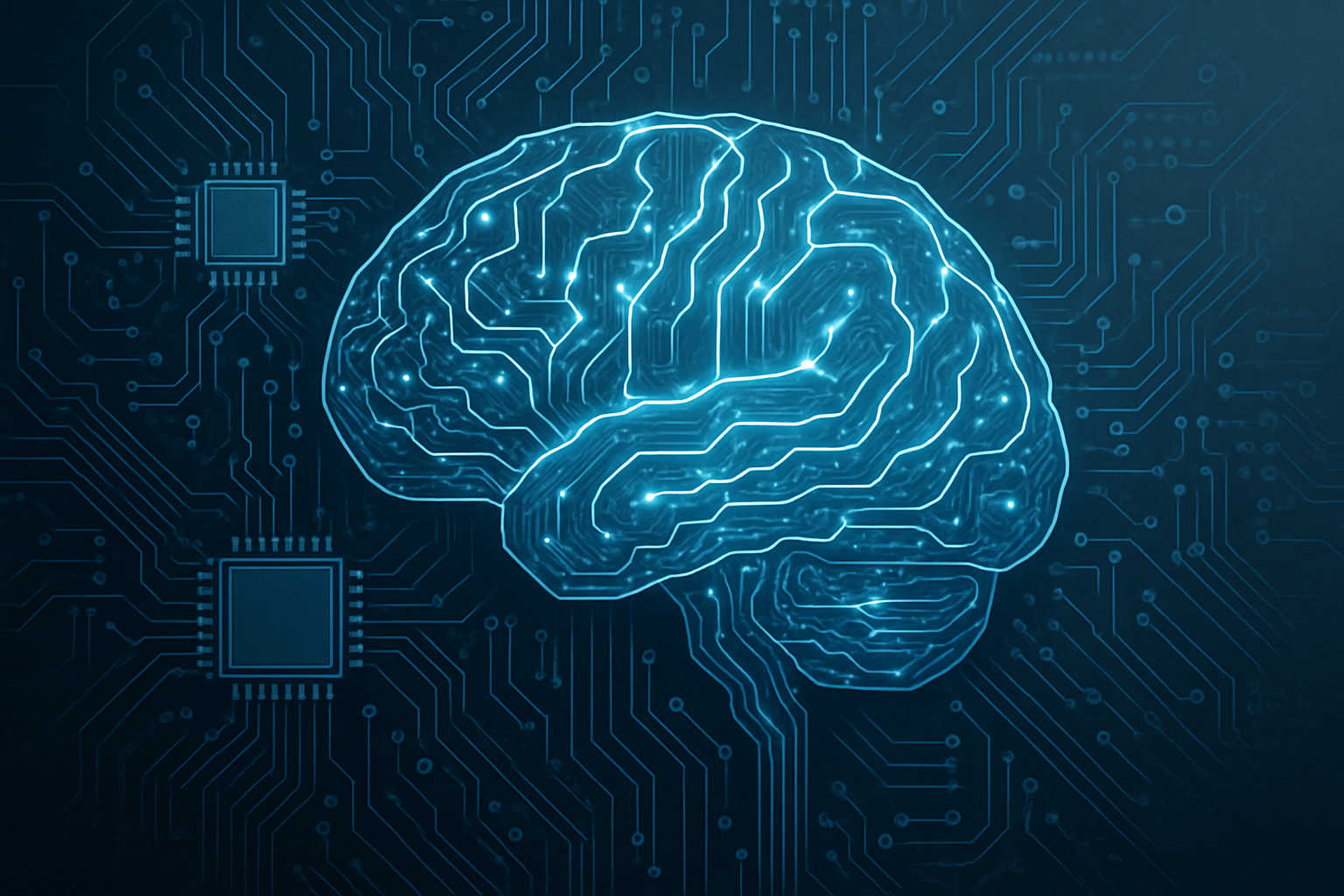
    As artificial intelligence continues its relentless march into every facet of technology, the foundational hardware upon which it runs is undergoing a profound transformation. At the forefront of this revolution is neuromorphic computing, a paradigm shift that draws direct inspiration from the human brain's unparalleled efficiency and parallel processing capabilities. By integrating memory and processing, and leveraging event-driven communication, neuromorphic architectures are poised to shatter the limitations of traditional Von Neumann computing, offering unprecedented energy efficiency and real-time intelligence crucial for the AI of tomorrow.

    As of October 2025, neuromorphic computing is rapidly transitioning from the realm of academic curiosity to commercial viability, promising to unlock new frontiers for AI applications, particularly in edge computing, autonomous systems, and sustainable AI. Companies like Intel (NASDAQ: INTC) with its Hala Point, IBM (NYSE: IBM), and several innovative startups are leading the charge, demonstrating significant advancements in computational speed and power reduction. This brain-inspired approach is not just an incremental improvement; it represents a fundamental rethinking of how AI can be powered, setting the stage for a new generation of intelligent, adaptive, and highly efficient systems.

    Beyond the Von Neumann Bottleneck: The Principles of Brain-Inspired AI

    At the heart of neuromorphic computing lies a radical departure from the traditional Von Neumann architecture that has dominated computing for decades. The fundamental flaw of Von Neumann systems, particularly for data-intensive AI tasks, is the "memory wall" – the constant, energy-consuming shuttling of data between a separate processing unit (CPU/GPU) and memory. Neuromorphic chips circumvent this bottleneck by adopting brain-inspired principles: integrating memory and processing directly within the same components, employing event-driven (spiking) communication, and leveraging massive parallelism. This allows data to be processed where it resides, dramatically reducing latency and power consumption. Instead of continuous data streams, neuromorphic systems use Spiking Neural Networks (SNNs), where artificial neurons communicate through discrete electrical pulses, or "spikes," much like biological neurons. This event-driven processing means resources are only active when needed, leading to unparalleled energy efficiency.

    Technically, neuromorphic processors like Intel's (NASDAQ: INTC) Loihi 2 and IBM's (NYSE: IBM) TrueNorth are designed with thousands or even millions of artificial neurons and synapses, distributed across the chip. Loihi 2, for instance, integrates 128 neuromorphic cores and supports asynchronous SNN models with up to 130,000 synthetic neurons and 130 million synapses, featuring a new learning engine for on-chip adaptation. BrainChip's (ASX: BRN) Akida, another notable player, is optimized for edge AI with ultra-low power consumption and on-device learning capabilities. These systems are inherently massively parallel, mirroring the brain's ability to process vast amounts of information simultaneously without a central clock. Furthermore, they incorporate synaptic plasticity, allowing the connections between neurons to strengthen or weaken based on experience, enabling real-time, on-chip learning and adaptation—a critical feature for autonomous and dynamic AI applications.

    The advantages for AI applications are profound. Neuromorphic systems offer orders of magnitude greater energy efficiency, often consuming 80-100 times less power for specific AI workloads compared to conventional GPUs. This radical efficiency is pivotal for sustainable AI and enables powerful AI to operate in power-constrained environments, such as IoT devices and wearables. Their low latency and real-time processing capabilities make them ideal for time-sensitive applications like autonomous vehicles, robotics, and real-time sensory processing, where immediate decision-making is paramount. The ability to perform on-chip learning means AI systems can adapt and evolve locally, reducing reliance on cloud infrastructure and enhancing privacy.

    Initial reactions from the AI research community, as of October 2025, are "overwhelmingly positive," with many hailing this year as a "breakthrough" for neuromorphic computing's transition from academic research to tangible commercial products. Researchers are particularly excited about its potential to address the escalating energy demands of AI and enable decentralized intelligence. While challenges remain, including a fragmented software ecosystem, the need for standardized benchmarks, and latency issues for certain tasks, the consensus points towards a future with hybrid architectures. These systems would combine the strengths of conventional processors for general tasks with neuromorphic elements for specialized, energy-efficient, and adaptive AI functions, potentially transforming AI infrastructure and accelerating fields from drug discovery to large language model optimization.

    A New Battleground: Neuromorphic Computing's Impact on the AI Industry

    The ascent of neuromorphic computing is creating a new competitive battleground within the AI industry, poised to redefine strategic advantages for tech giants and fuel a new wave of innovative startups. By October 2025, the market for neuromorphic computing is projected to reach approximately USD 8.36 billion, signaling its growing commercial viability and the substantial investments flowing into the sector. This shift will particularly benefit companies that can harness its unparalleled energy efficiency and real-time processing capabilities, especially for edge AI applications.

    Leading the charge are tech behemoths like Intel (NASDAQ: INTC) and IBM (NYSE: IBM). Intel, with its Loihi series and the large-scale Hala Point system, is demonstrating significant efficiency gains in areas like robotics, healthcare, and IoT, positioning itself as a key hardware provider for brain-inspired AI. IBM, a pioneer with its TrueNorth chip and its successor, NorthPole, continues to push boundaries in energy and space-efficient cognitive workloads. While NVIDIA (NASDAQ: NVDA) currently dominates the GPU market for AI, it will likely benefit from advancements in packaging and high-bandwidth memory (HBM4), which are crucial for the hybrid systems that many experts predict will be the near-term future. Hyperscalers such as Amazon (NASDAQ: AMZN), Microsoft (NASDAQ: MSFT), and Google (NASDAQ: GOOGL) also stand to gain immensely from reduced data center power consumption and enhanced edge AI services.

    The disruption to existing products, particularly those heavily reliant on power-hungry GPUs for real-time, low-latency processing at the edge, could be significant. Neuromorphic chips offer up to 1000x improvements in energy efficiency for certain AI inference tasks, making them a far more viable solution for battery-powered IoT devices, autonomous vehicles, and wearable technologies. This could lead to a strategic pivot from general-purpose CPUs/GPUs towards highly specialized AI silicon, where neuromorphic chips excel. However, the immediate future likely involves hybrid architectures, combining classical processors for general tasks with neuromorphic elements for specialized, adaptive functions.

    For startups, neuromorphic computing offers fertile ground for innovation. Companies like BrainChip (ASX: BRN), with its Akida chip for ultra-low-power edge AI, SynSense, specializing in integrated sensing and computation, and Innatera, producing ultra-low-power spiking neural processors, are carving out significant niches. These agile players are often focused on specific applications, from smart sensors and defense to real-time bio-signal analysis. The strategic advantages for companies embracing this technology are clear: radical energy efficiency, enabling sustainable and always-on AI; real-time processing for critical applications like autonomous navigation; and on-chip learning, which fosters adaptable, privacy-preserving AI at the edge. Developing accessible SDKs and programming frameworks will be crucial for companies aiming to foster wider adoption and cement their market position in this nascent, yet rapidly expanding, field.

    A Sustainable Future for AI: Broader Implications and Ethical Horizons

    Neuromorphic computing, as of October 2025, represents a pivotal and rapidly evolving field within the broader AI landscape, signaling a profound structural transformation in how intelligent systems are designed and powered. It aligns perfectly with the escalating global demand for sustainable AI, decentralized intelligence, and real-time processing, offering a compelling alternative to the energy-intensive GPU-centric approaches that have dominated recent AI breakthroughs. By mimicking the brain's inherent energy efficiency and parallel processing, neuromorphic computing is poised to unlock new frontiers in autonomy and real-time adaptability, moving beyond the brute-force computational power that characterized previous AI milestones.

    The impacts of this paradigm shift are extensive. Foremost is the radical energy efficiency, with neuromorphic systems offering orders of magnitude greater efficiency—up to 100 times less energy consumption and 50 times faster processing for specific tasks compared to conventional CPU/GPU systems. This efficiency is crucial for addressing the soaring energy footprint of AI, potentially reducing global AI energy consumption by 20%, and enabling powerful AI to run on power-constrained edge devices, IoT sensors, and mobile applications. Beyond efficiency, neuromorphic chips enhance performance and adaptability, excelling in real-time processing of sensory data, pattern recognition, and dynamic decision-making crucial for applications in robotics, autonomous vehicles, healthcare, and AR/VR. This is not merely an incremental improvement but a fundamental rethinking of AI's physical substrate, promising to unlock new markets and drive innovation across numerous sectors.

    However, this transformative potential comes with significant concerns and technical hurdles. Replicating biological neurons and synapses in artificial hardware requires advanced materials and architectures, while integrating neuromorphic hardware with existing digital infrastructure remains complex. The immaturity of development tools and programming languages, coupled with a lack of standardized model hierarchies, poses challenges for widespread adoption. Furthermore, as neuromorphic systems become more autonomous and capable of human-like learning, profound ethical questions arise concerning accountability for AI decisions, privacy implications, security vulnerabilities, and even the philosophical considerations surrounding artificial consciousness.

    Compared to previous AI milestones, neuromorphic computing represents a fundamental architectural departure. While the rise of deep learning and GPU computing focused on achieving performance through increasing computational power and data throughput, often at the cost of high energy consumption, neuromorphic computing prioritizes extreme energy efficiency through its event-driven, spiking communication mechanisms. This "non-Von Neumann" approach, integrating memory and processing, is a distinct break from the sequential, separate-memory-and-processor model. Experts describe this as a "profound structural transformation," positioning it as a "lifeblood of a global AI economy" and as transformative as GPUs were for deep learning, particularly for edge AI, cybersecurity, and autonomous systems applications.

    The Road Ahead: Near-Term Innovations and Long-Term Visions for Brain-Inspired AI

    The trajectory of neuromorphic computing points towards a future where AI is not only more powerful but also significantly more efficient and autonomous. In the near term (the next 1-5 years, 2025-2030), we can anticipate a rapid proliferation of commercial neuromorphic deployments, particularly in critical sectors like autonomous vehicles, robotics, and industrial IoT for applications such as predictive maintenance. Companies like Intel (NASDAQ: INTC) and BrainChip (ASX: BRN) are already showcasing the capabilities of their chips, and we expect to see these brain-inspired processors integrated into a broader range of consumer electronics, including smartphones and smart speakers, enabling more intelligent and energy-efficient edge AI. The focus will remain on developing specialized AI chips and leveraging advanced packaging technologies like HBM and chiplet architectures to boost performance and efficiency, as the neuromorphic computing market is projected for explosive growth, with some estimates predicting it to reach USD 54.05 billion by 2035.

    Looking further ahead (beyond 2030), the long-term vision for neuromorphic computing involves the emergence of truly cognitive AI and the development of sophisticated hybrid architectures. These "systems on a chip" (SoCs) will seamlessly combine conventional CPU/GPU cores with neuromorphic processors, creating a "best of all worlds" approach that leverages the strengths of each paradigm for diverse computational needs. Experts also predict a convergence with other cutting-edge technologies like quantum computing and optical computing, unlocking unprecedented levels of computational power and efficiency. Advancements in materials science and manufacturing processes will be crucial to reduce costs and improve the performance of neuromorphic devices, fostering sustainable AI ecosystems that drastically reduce AI's global energy consumption.

    Despite this immense promise, significant challenges remain. Scalability is a primary hurdle; developing a comprehensive roadmap for achieving large-scale, high-performance neuromorphic systems that can compete with existing, highly optimized computing methods is essential. The software ecosystem for neuromorphic computing is still nascent, requiring new programming languages, development frameworks, and debugging tools. Furthermore, unlike traditional systems where a single trained model can be easily replicated, each neuromorphic computer may require individual training, posing scalability challenges for broad deployment. Latency issues in current processors and the significant "adopter burden" for developers working with asynchronous hardware also need to be addressed.

    Nevertheless, expert predictions are overwhelmingly optimistic. Many describe the current period as a "pivotal moment," akin to an "AlexNet-like moment for deep learning," signaling a tremendous opportunity for new architectures and open frameworks in commercial applications. The consensus points towards a future with specialized neuromorphic hardware solutions tailored to specific application needs, with energy efficiency serving as a key driver. While a complete replacement of traditional computing is unlikely, the integration of neuromorphic capabilities is expected to transform the computing landscape, offering energy-efficient, brain-inspired solutions across various sectors and cementing its role as a foundational technology for the next generation of AI.

    The Dawn of a New AI Era: A Comprehensive Wrap-up

    Neuromorphic computing stands as one of the most significant technological breakthroughs of our time, poised to fundamentally reshape the future of AI hardware. Its brain-inspired architecture, characterized by integrated memory and processing, event-driven communication, and massive parallelism, offers a compelling solution to the energy crisis and performance bottlenecks plaguing traditional Von Neumann systems. The key takeaways are clear: unparalleled energy efficiency, enabling sustainable and ubiquitous AI; real-time processing for critical, low-latency applications; and on-chip learning, fostering adaptive and autonomous intelligent systems at the edge.

    This development marks a pivotal moment in AI history, not merely an incremental step but a fundamental paradigm shift akin to the advent of GPUs for deep learning. It signifies a move towards more biologically plausible and energy-conscious AI, promising to unlock capabilities previously thought impossible for power-constrained environments. As of October 2025, the transition from research to commercial viability is in full swing, with major tech players and innovative startups aggressively pursuing this technology.

    The long-term impact of neuromorphic computing will be profound, leading to a new generation of AI that is more efficient, adaptive, and pervasive. We are entering an era of hybrid computing, where neuromorphic elements will complement traditional processors, creating a synergistic ecosystem capable of tackling the most complex AI challenges. Watch for continued advancements in specialized hardware, the maturation of software ecosystems, and the emergence of novel applications in edge AI, robotics, autonomous systems, and sustainable data centers in the coming weeks and months. The brain-inspired revolution is here, and its implications for the tech industry and society are just beginning to unfold.

    This content is intended for informational purposes only and represents analysis of current AI developments.

    TokenRing AI delivers enterprise-grade solutions for multi-agent AI workflow orchestration, AI-powered development tools, and seamless remote collaboration platforms.
    For more information, visit https://www.tokenring.ai/.