Tag: Nordic Semiconductor

  • Nordic Semiconductor’s nRF9151: Ushering in a New Era of Ultra-Reliable IoT with DECT NR+ and Satellite Connectivity

    Nordic Semiconductor’s nRF9151: Ushering in a New Era of Ultra-Reliable IoT with DECT NR+ and Satellite Connectivity

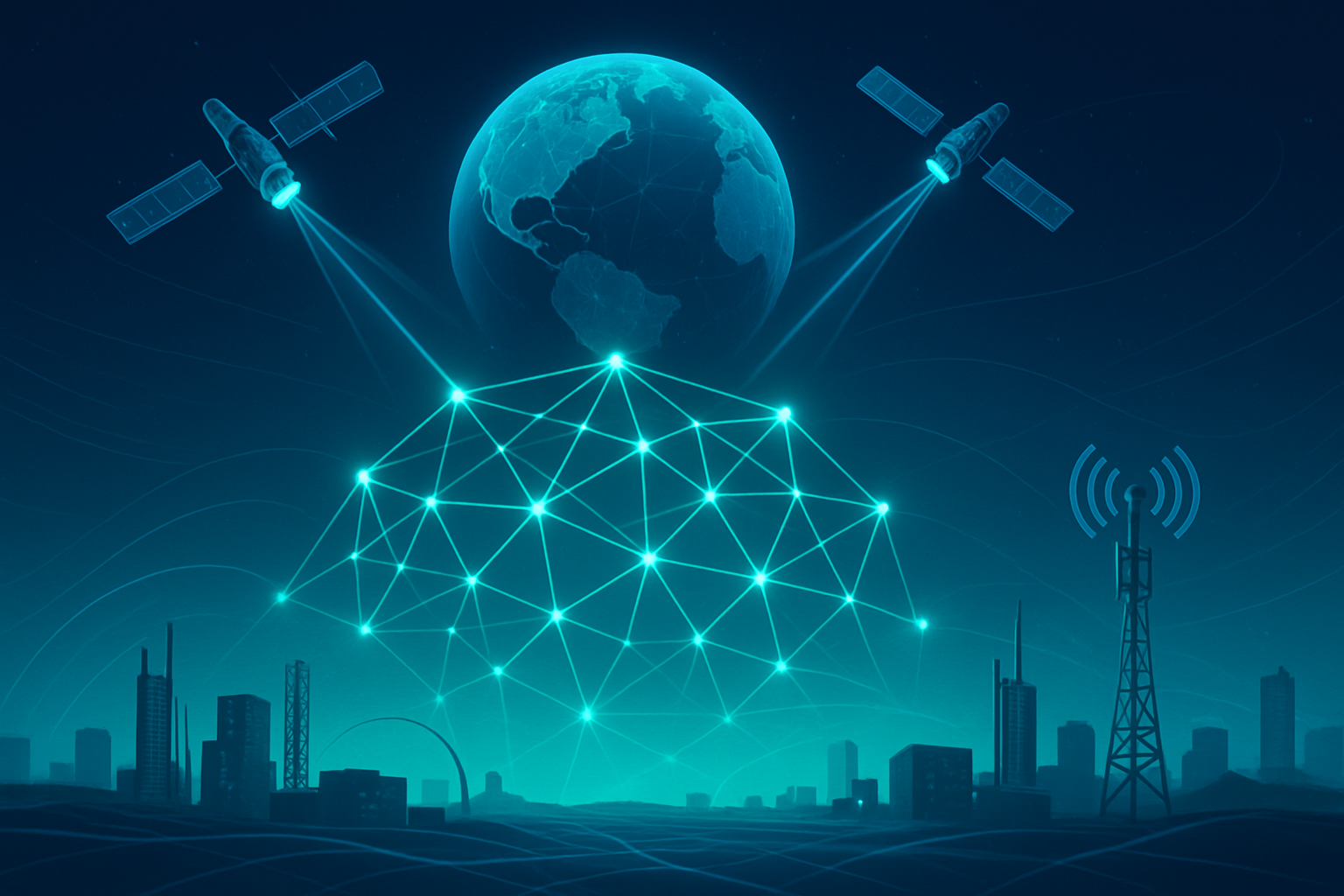
    Nordic Semiconductor's (OSL: NOD) latest innovation, the nRF9151 System-in-Package (SiP) and its accompanying development kits, are poised to redefine the landscape of Internet of Things (IoT) connectivity. This advanced, compact solution integrates cellular IoT (LTE-M/NB-IoT) with groundbreaking support for DECT NR+ and, crucially, a recent firmware update enabling Non-Terrestrial Network (NTN) direct-to-satellite communication. Launched in December 2025, the nRF9151, particularly with the specialized SMA Development Kit and NTN firmware, signifies a pivotal moment for industrial, massive-scale, and globally distributed IoT applications, promising unprecedented reliability, scalability, and reach.

    This development is not merely an incremental upgrade but a strategic leap, addressing critical gaps in current IoT infrastructure. By combining robust cellular connectivity with the unique capabilities of DECT NR+ – the world's first operator-free 5G technology tailored for industrial IoT – Nordic Semiconductor is empowering developers to build private networks that can scale to millions of nodes with ultra-low latency and high reliability. The addition of NB-IoT NTN support further extends this reach to the most remote corners of the globe, setting a new benchmark for versatile and resilient IoT deployments.

    Technical Prowess and Revolutionary Connectivity

    The nRF9151 SiP is a marvel of integration, packing a 64 MHz Arm Cortex-M33 application processor, a multimode LTE-M/NB-IoT modem with Global Navigation Satellite System (GNSS) capabilities, power management, and an RF front-end into a package 20% smaller than its predecessors. This significant footprint reduction, alongside improved Power Class 5 support for up to 45% lower peak power consumption, makes it ideal for compact, battery-powered devices in diverse environments.

    What truly sets the nRF9151 apart is its versatile connectivity suite. Beyond 3GPP Release 14 LTE-M and NB-IoT for global cellular coverage, it fully integrates DECT NR+ (DECT-2020 NR) support. This 5G standard operates in the license-exempt 1.9 GHz band, enabling massive mesh applications that prioritize reliability, secure connections, and long range (1-3 km) in dense urban and industrial settings. DECT NR+ offers ultra-low latency (down to 1ms) and over 99.99% reliability, making it suitable for mission-critical industrial automation, smart utility metering, and professional audio. Furthermore, a recent firmware release, coinciding with the December 2025 launch of the nRF9151 SMA Development Kit, introduces NB-IoT NTN (3GPP Rel 17) support, marking Nordic's first foray into direct-to-satellite communication. This capability provides hybrid connectivity, ensuring coverage even in areas without terrestrial networks.

    Compared to previous approaches, the nRF9151's integrated hybrid connectivity, particularly the combination of DECT NR+ and NTN, represents a significant departure. Existing solutions often require multiple modules or complex integrations to achieve similar versatility, leading to higher costs, larger footprints, and increased power consumption. The nRF9151 simplifies this by offering a unified, pre-certified platform, leveraging the robust nRF Connect SDK for streamlined development. Initial reactions from the IoT industry and developer community have been overwhelmingly positive, highlighting the nRF9151's potential to unlock previously unfeasible applications due to its power efficiency, compact size, and the promise of truly ubiquitous, reliable connectivity. Experts are particularly impressed by the strategic inclusion of DECT NR+ as a robust, private network alternative to traditional cellular or Wi-Fi for industrial use cases, alongside the forward-looking integration of satellite IoT.

    Reshaping the Competitive Landscape for IoT Innovators

    The introduction of Nordic Semiconductor's nRF9151 is set to significantly impact a wide array of companies, from established tech giants to agile startups in the IoT sector. Companies specializing in industrial automation, smart agriculture, asset tracking, smart cities, and critical infrastructure monitoring stand to benefit immensely. Manufacturers of smart meters, environmental sensors, medical wearables, and logistics solutions will find the nRF9151's compact size, power efficiency, and hybrid connectivity capabilities particularly appealing, enabling them to develop more robust, reliable, and globally deployable products.

    For major AI labs and tech companies engaged in IoT, the nRF9151 presents both opportunities and competitive pressures. Companies like Qualcomm (NASDAQ: QCOM), which offers its own cellular IoT solutions, and other module manufacturers will face heightened competition from Nordic's integrated, highly optimized, and now satellite-enabled offering. The nRF9151's strong focus on DECT NR+ provides a distinct advantage in the burgeoning private 5G and industrial IoT market, potentially disrupting existing product lines that rely solely on cellular or short-range wireless. Companies that quickly adopt and integrate the nRF9151 into their platforms or leverage its capabilities for their cloud services (e.g., for device management and data analytics) will gain a strategic advantage.

    The potential for disruption extends to providers of proprietary wireless solutions for industrial use cases. DECT NR+'s open standard and license-exempt operation, combined with the nRF9151's ease of integration, could democratize access to high-performance, ultra-reliable industrial communication, reducing reliance on expensive, vendor-locked systems. Startups focused on innovative IoT solutions for remote monitoring, precision agriculture, or advanced logistics will find the nRF9151 a powerful enabler, allowing them to bring sophisticated, globally connected products to market faster and more cost-effectively. Nordic Semiconductor's strategic advantage lies in its comprehensive, unified platform (nRF Connect SDK) and its proactive embrace of both terrestrial and non-terrestrial network technologies, solidifying its market positioning as a leader in advanced, low-power IoT connectivity.

    Wider Significance in the Evolving AI and IoT Landscape

    The nRF9151's arrival, particularly with its DECT NR+ and NTN capabilities, fits seamlessly into the broader trends of pervasive connectivity, edge AI, and the demand for robust, resilient networks. As the IoT landscape continues to expand, there's an increasing need for solutions that can operate reliably in diverse environments, from dense urban settings to remote agricultural fields or even outer space. The nRF9151 addresses this by offering a multi-faceted approach to connectivity that ensures data flow for AI-driven analytics and control, regardless of location.

    The impacts are profound. For industrial IoT, DECT NR+ provides a dedicated, interference-resistant 5G-grade network for critical applications, reducing operational costs and enhancing safety and efficiency. This empowers the deployment of massive sensor networks for predictive maintenance, real-time asset tracking, and automated logistics, feeding vast datasets to AI systems for optimization. The NTN support, a significant milestone, democratizes satellite IoT, making it accessible for applications like global container tracking, environmental monitoring in remote areas, and disaster response, where terrestrial networks are non-existent. This expansion of reach dramatically increases the potential data sources for global AI models.

    Potential concerns, however, include the complexity of managing hybrid networks and ensuring seamless handovers between different connectivity types. While Nordic's nRF Connect SDK aims to simplify this, developers will still need to navigate the nuances of each technology. Security also remains paramount, and while the nRF9151 includes robust hardware-based security features (Arm TrustZone, CryptoCell 310), the sheer scale of potential deployments necessitates continuous vigilance against cyber threats. Comparing this to previous AI and IoT milestones, the nRF9151 represents a maturation of IoT connectivity, moving beyond basic data transmission to highly specialized, ultra-reliable, and globally accessible communication tailored for complex, mission-critical applications, paving the way for more sophisticated edge AI deployments.

    The Horizon: Future Developments and Applications

    The immediate future for the nRF9151 will likely see rapid adoption in industrial IoT and logistics. With the December 2025 launch of the SMA DK and NTN firmware, expect to see a surge in proof-of-concept deployments and pilot programs leveraging the direct-to-satellite capabilities for global asset tracking, smart agriculture, and environmental monitoring in areas previously considered unconnectable. Near-term developments will focus on refining the software stack within the nRF Connect SDK to further simplify the integration of DECT NR+ mesh networking and NTN services, potentially including advanced power management features optimized for these hybrid scenarios.

    Longer-term, the nRF9151's architecture lays the groundwork for increasingly intelligent edge devices. Its powerful Arm Cortex-M33 processor, coupled with robust connectivity, positions it as an ideal platform for localized AI inference, allowing devices to process data and make decisions at the source before transmitting only critical information to the cloud. This will reduce latency, conserve bandwidth, and enhance privacy. Potential applications on the horizon include highly autonomous industrial robots communicating via DECT NR+ for real-time coordination, smart infrastructure monitoring systems in remote locations powered by NTN, and advanced medical wearables providing continuous, reliable health data from anywhere on Earth.

    Challenges that need to be addressed include the continued development of global satellite IoT infrastructure to support the growing demand, as well as the standardization and interoperability of DECT NR+ deployments across different vendors. Experts predict that the nRF9151 will accelerate the convergence of terrestrial and non-terrestrial networks, making truly ubiquitous IoT a reality. They anticipate a new wave of innovation in remote sensing, autonomous systems, and critical infrastructure management, driven by the nRF9151's ability to provide reliable, secure, and power-efficient connectivity in virtually any environment.

    Comprehensive Wrap-up: A New Chapter for IoT Connectivity

    Nordic Semiconductor's nRF9151 SiP, with its integrated support for cellular IoT, DECT NR+, and newly enabled direct-to-satellite NTN communication, represents a significant leap forward in the evolution of IoT connectivity. Key takeaways include its compact size, exceptional power efficiency, and the unparalleled versatility offered by its hybrid communication capabilities. The introduction of DECT NR+ as a robust, operator-free 5G standard for industrial private networks, combined with the global reach of NB-IoT NTN, positions the nRF9151 as a foundational technology for next-generation, mission-critical IoT applications.

    This development holds immense significance in AI history by enabling a more comprehensive and reliable data pipeline for AI systems. By connecting devices in previously inaccessible or challenging environments, the nRF9151 expands the potential for data collection and real-time insights, fueling more intelligent and autonomous AI deployments at the edge and in the cloud. It signifies a move towards a truly connected world, where no device is left offline due to connectivity limitations.

    The long-term impact will be a paradigm shift in how industries approach automation, monitoring, and asset management, fostering innovation in areas like smart agriculture, environmental conservation, and global logistics. What to watch for in the coming weeks and months is the rapid adoption of the nRF9151 by early innovators, the emergence of novel applications leveraging its hybrid connectivity, and further advancements in the nRF Connect SDK to streamline complex deployments. The nRF9151 is not just a new chip; it's an enabler of a more connected, intelligent, and resilient future.


    This content is intended for informational purposes only and represents analysis of current AI developments.

    TokenRing AI delivers enterprise-grade solutions for multi-agent AI workflow orchestration, AI-powered development tools, and seamless remote collaboration platforms.
    For more information, visit https://www.tokenring.ai/.
  • LEO Satellite IoT Breakthrough: Unmodified Devices Go Global with Nordic Semiconductor, Sateliot, and Gatehouse Satcom

    LEO Satellite IoT Breakthrough: Unmodified Devices Go Global with Nordic Semiconductor, Sateliot, and Gatehouse Satcom

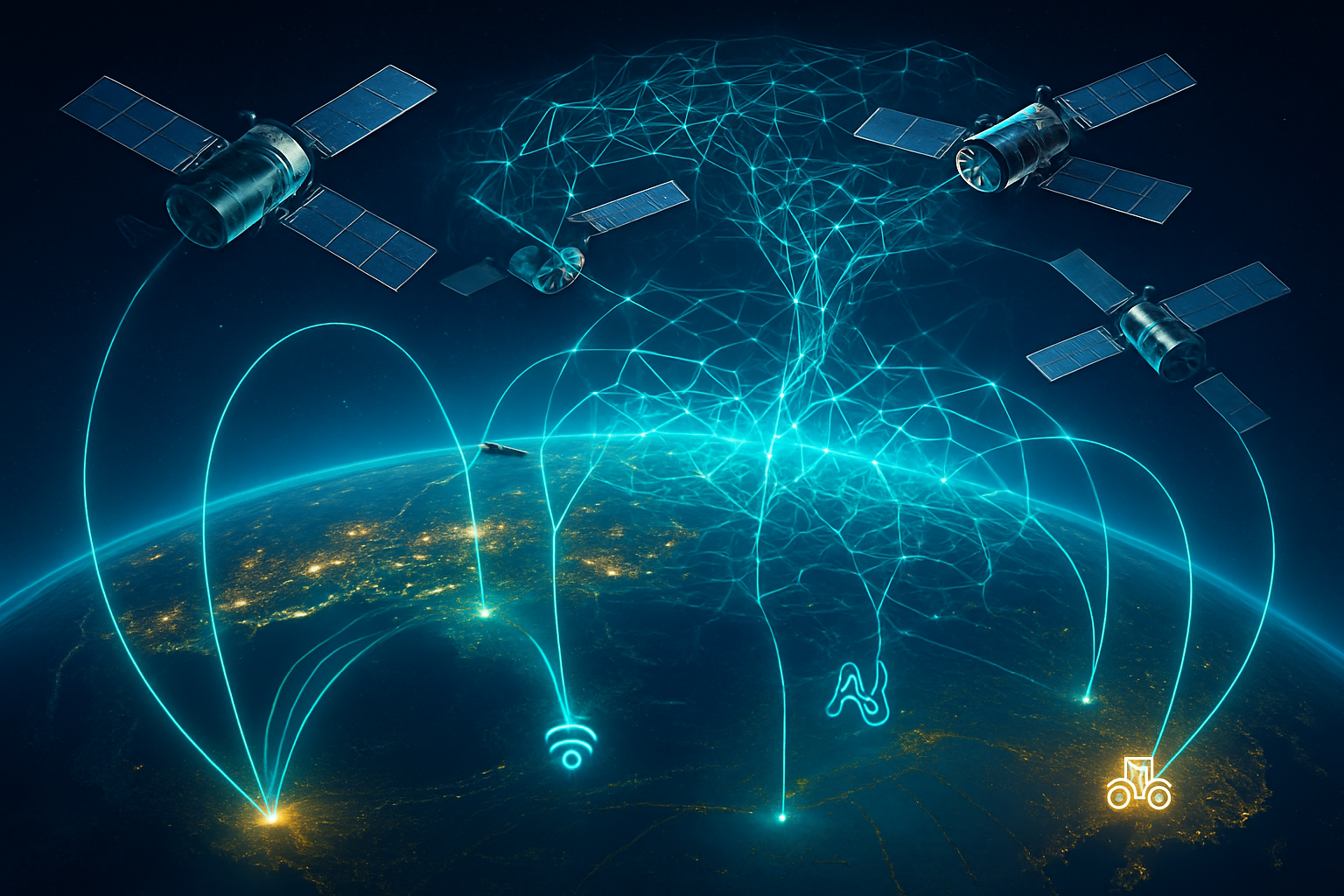
    Oslo, Norway – October 9, 2025 – In a monumental leap for global connectivity, a groundbreaking collaboration between Nordic Semiconductor (OSL: NOD), Sateliot, and Gatehouse Satcom has successfully demonstrated the world's first-ever 5G IoT transmission between a standard commercial cellular IoT device and a Low Earth Orbit (LEO) satellite. This achievement, announced on October 8th and 9th, 2025, heralds a new era of ubiquitous, reliable, and affordable connectivity for the Internet of Things (IoT), promising to extend coverage to the approximately 80% of the Earth's surface currently unreached by terrestrial networks. The breakthrough means that millions of existing and future IoT devices can now seamlessly connect to space-based networks without any hardware modifications, transforming Sateliot's LEO satellites into "cell towers in space" and unlocking unprecedented potential for remote monitoring and data collection across industries.

    This pivotal development is set to democratize access to IoT connectivity, enabling a vast array of applications from smart agriculture and asset tracking to environmental monitoring and critical infrastructure management in the most remote and hard-to-reach areas. By leveraging standard cellular IoT technology, the partnership has eliminated the need for specialized satellite hardware, significantly lowering the cost and complexity of deploying global IoT solutions and reinforcing Europe's leadership in satellite-based telecommunications.

    Unpacking the Technical Marvel: 5G IoT from Orbit

    The core of this unprecedented achievement lies in the successful demonstration of a 5G Narrowband IoT (NB-IoT) system operating over an S-band Non-Geostationary Orbit (NGSO) satellite. This end-to-end solution was rigorously validated in full compliance with the 3GPP 5G NB-IoT Release 17 standard, a critical benchmark that extends terrestrial mobile standards into space. This ensures that satellites are no longer isolated communication silos but integral parts of the broader 5G ecosystem, allowing for unified global networks and seamless interoperability.

    At the heart of this technical marvel is Nordic Semiconductor's (OSL: NOD) nRF9151 module. This low-power cellular IoT System-in-Package (SiP) module is optimized for satellite communication and boasts industry-leading battery life. Crucially, devices equipped with the nRF9151 module can transmit and receive data over Sateliot's LEO constellation without requiring any hardware alterations. This "unmodified cellular device" capability is a game-changer, as it means the same device designed for a terrestrial cellular network can now automatically roam and connect to a satellite network when out of ground-based coverage, mirroring the familiar roaming experience of mobile phones.

    Gatehouse Satcom played an indispensable role by providing its specialized 5G satellite communications software, the "5G NTN NB-IoT NodeB." This software is purpose-built for Non-Terrestrial Network (NTN) environments, rather than being an adaptation of terrestrial solutions. It is engineered to manage the complex dynamics inherent in LEO satellite communications, including real-time Doppler compensation, precise timing synchronization, mobility management, and intelligent beam management. Gatehouse Satcom's software ensures strict adherence to 3GPP standards, allowing satellites to function as base stations within the 5G framework and supporting connectivity across various orbits and payload modes.

    This breakthrough fundamentally differentiates itself from previous satellite IoT solutions in two key aspects: device modification and standardization. Historically, satellite IoT often relied on proprietary, specialized, and often expensive hardware, creating fragmented networks. The new solution, however, leverages standard commercial cellular IoT devices and is fully compliant with 3GPP 5G NB-IoT Release 17 for NTN. This adherence to an open standard ensures interoperability, future-proofing, and significantly lowers the entry barriers and costs for IoT deployments, effectively merging the ubiquitous reach of satellite networks with the cost-efficiency and widespread adoption of cellular IoT.

    Reshaping the AI and Tech Landscape

    The advent of ubiquitous LEO satellite IoT connectivity is poised to profoundly impact AI companies, tech giants, and startups, ushering in a new era of global data accessibility and intelligent automation. For AI companies, this means an unprecedented influx of real-time data from virtually any location on Earth. Low latency and higher bandwidth from LEO constellations will feed richer, more continuous data streams to AI models, significantly improving their accuracy and predictive capabilities. This will also enable the expansion of Edge AI, allowing for faster decision-making for AI-powered devices in remote environments crucial for applications like autonomous vehicles and industrial automation.

    Tech giants, particularly those investing heavily in LEO constellations like SpaceX's (Starlink) and Amazon's (NASDAQ: AMZN) Project Kuiper, stand to solidify their positions as foundational infrastructure providers. These companies are building massive LEO networks, aiming for global coverage and directly competing with traditional internet service providers in remote areas. Through vertical integration, companies like Amazon can seamlessly merge LEO connectivity with their existing cloud services (AWS), offering end-to-end solutions from satellite hardware to data processing and AI analytics. This control over the connectivity layer further enhances their data collection capabilities and subsequent AI development, leveraging vast datasets for advanced analytics and machine learning.

    For startups, the LEO satellite IoT landscape presents a dual scenario of immense opportunity and significant challenge. While building and launching LEO constellations remains capital-intensive, startups can thrive by focusing on niche innovation. This includes developing specialized IoT devices, advanced AI algorithms, and vertical-specific solutions that leverage LEO connectivity. Partnerships with established LEO operators will be crucial for accessing infrastructure and market reach. Startups that innovate in edge AI and data analytics, processing LEO IoT data onboard satellites or at the network edge to reduce bandwidth and accelerate insights, will find significant opportunities. This development also disrupts existing products and services, as LEO satellite IoT offers a cost-effective alternative to terrestrial networks in remote areas and superior performance compared to older GEO/MEO satellite services for many real-time IoT applications.

    Industries set to benefit immensely from this development include agriculture (Agritech), where AI can optimize farming with real-time data from remote sensors; maritime and logistics, enabling global tracking and predictive maintenance for supply chains; mining and oil & gas, for remote monitoring of operations in isolated locations; and environmental monitoring, providing crucial data for climate change research and disaster response. Companies like John Deere (NYSE: DE), for instance, are already integrating satellite communications for remote diagnostics and machine-to-machine communication in their farming machinery, showcasing the tangible benefits.

    A New Frontier in Global Connectivity and AI

    This LEO satellite IoT connectivity breakthrough signifies a profound shift in the broader technological landscape, deeply intertwining with current global connectivity and AI trends. It represents a critical step towards truly ubiquitous connectivity, ensuring that devices can communicate regardless of geographical barriers. As a core component of 5G Non-Terrestrial Networks (NTN), it integrates seamlessly into the evolving 5G architecture, enhancing coverage, improving reliability, and offering resilient services in previously unserved regions. This development accelerates the trend towards hybrid networks, combining LEO, MEO, GEO, and terrestrial cellular networks to optimize cost, performance, and coverage for diverse IoT use cases.

    The most significant impact on the AI landscape is the enablement of massive data collection. LEO satellite IoT unlocks unprecedented volumes of real-time data from a global footprint of IoT devices, including vast geographical areas previously considered "connectivity deserts." This continuous stream of data from diverse, remote environments is invaluable for training and operating AI models, facilitating informed decision-making and process optimization across industries. It drives more comprehensive and accurate AI insights, accelerating progress in fields like environmental monitoring, logistics optimization, and disaster prediction. This milestone can be compared to the early days of widespread internet adoption, but with the added dimension of truly global, machine-to-machine communication fueling the next generation of AI.

    However, this transformative technology is not without its challenges and concerns. Regulatory aspects, particularly spectrum management, are becoming increasingly complex as demand for satellite communication intensifies, leading to potential scarcity and interference. Companies must navigate a labyrinth of national and international licensing and compliance frameworks. Security is another paramount concern; the proliferation of gateways and a massive number of terminals in LEO satellite communication systems expands the attack surface, making them vulnerable to cyber threats. Robust cybersecurity measures are essential to protect data privacy and system integrity.

    Environmentally, the exponential increase in LEO satellites, particularly mega-constellations, raises serious concerns about orbital debris. The risk of collisions, which generate more debris, poses a threat to operational satellites and future space missions. While regulations are emerging, such as the FCC's requirement for non-functional LEO satellites to deorbit within five years, global coordination and enforcement remain critical to ensure the sustainability of space.

    The Road Ahead: An Increasingly Connected World

    The near-term future of LEO satellite IoT connectivity is marked by rapid expansion and deeper integration. Forecasts predict a significant increase in LEO satellites, with some estimates suggesting a rise from 10,000 in 2024 to over 24,000 by 2029, with LEOs constituting 98% of new satellite launches. This proliferation will lead to enhanced global coverage, with LEO networks expected to provide 90% global IoT coverage by 2026. Cost reduction through miniaturization and CubeSat technology will make satellite IoT solutions increasingly economical for widespread deployment, while further integration of 5G with satellite networks will solidify direct-to-device (D2D) connectivity for unmodified cellular IoT devices.

    In the long term, the landscape will evolve towards multi-orbit and hybrid networks, combining LEOs with GEO satellites and terrestrial 5G/fiber networks to optimize for diverse IoT use cases. Artificial intelligence and machine learning will be increasingly embedded in satellite systems, both in orbit and in ground control, to optimize performance, manage traffic, and ensure efficient use of orbital resources. Experts also predict the rise of edge computing in space, moving processing power closer to devices to reduce transmission costs and enable remote control. Beyond 5G, satellite constellations will play a crucial role in supporting space-based 6G networks, managing data in space, and seamlessly integrating even more devices globally.

    New applications on the horizon are vast, ranging from hyper-precision agriculture and enhanced maritime logistics to real-time environmental monitoring and advanced disaster response systems. Remote healthcare will bridge gaps in underserved regions, while critical infrastructure monitoring will provide consistent data from isolated assets. Autonomous vehicles and drones will gain real-time, global communication capabilities, even enabling the exploration of "Deep Space IoT" for lunar or Martian missions.

    However, challenges remain, including managing massive connectivity with high signaling overhead, handling the high mobility and frequent handovers of LEO satellites, and designing ultra-low-power IoT devices. Addressing regulatory complexities, ensuring robust security and data privacy across global networks, and mitigating space congestion and debris are also critical. Experts are highly optimistic, predicting the global LEO satellite IoT market to grow significantly, reaching billions of dollars by the end of the decade, with hundreds of millions of IoT devices connected via satellite by 2030. This growth will likely drive a shift in business models, with strategic partnerships becoming crucial to bridge capabilities and attract enterprise users in "sovereign verticals" like public safety and defense.

    A Defining Moment in Connectivity

    The LEO satellite IoT connectivity breakthrough achieved by Nordic Semiconductor, Sateliot, and Gatehouse Satcom marks a defining moment in the history of global connectivity and its symbiotic relationship with artificial intelligence. The ability to connect standard commercial cellular IoT devices directly to LEO satellites without modification is a paradigm shift, eliminating previous barriers of cost, complexity, and geographical reach. This development ensures that the digital divide for IoT is rapidly closing, enabling a truly connected world where data can be collected and utilized from virtually anywhere.

    This milestone is not merely an incremental improvement; it is a foundational change that will fuel the next generation of AI innovation. By providing unprecedented access to real-time, global data, it will empower AI models to deliver more accurate insights, enable sophisticated automation in remote environments, and drive the creation of entirely new intelligent applications across every sector. The long-term impact will be a more efficient, responsive, and data-rich world, fostering economic growth and addressing critical global challenges from climate change to disaster management.

    As we move forward, the tech world will be watching closely for continued advancements in LEO constellation deployment, further standardization efforts, and the emergence of innovative AI-driven solutions that leverage this newfound global connectivity. The coming weeks and months will likely see accelerated adoption, new partnerships, and a clearer picture of the full transformative potential unleashed by this pivotal breakthrough.


    This content is intended for informational purposes only and represents analysis of current AI developments.

    TokenRing AI delivers enterprise-grade solutions for multi-agent AI workflow orchestration, AI-powered development tools, and seamless remote collaboration platforms. For more information, visit https://www.tokenring.ai/.