
Tag: Nuclear Energy

  • The Nuclear-AI Nexus: How HTS is Building the Carbon-Free Backbone for the Intelligence Age

    The Nuclear-AI Nexus: How HTS is Building the Carbon-Free Backbone for the Intelligence Age

    As the global demand for artificial intelligence compute hits a critical "energy wall" in early 2026, Hi Tech Solutions (HTS) has unveiled a transformative vision to decouple AI growth from the constraints of the aging electrical grid. By positioning itself as an "ecosystem architect," HTS is spearheading a movement to power the next generation of massive AI data centers through dedicated, small-scale nuclear installations. This strategy aims to provide the "five nines" (99.999%) reliability required for frontier model training while meeting the aggressive carbon-neutrality goals of the world’s largest technology firms.

    The HTS vision, punctuated by the recent expansion of the "Mountain West Crossroads Energy Initiative," signals a shift in the AI industry from a period defined by GPU scarcity to one defined by power availability. As generative AI models grow in complexity and high-density server racks now demand upwards of 100 kilowatts each, the traditional strategy of relying on intermittent renewables and public utilities has become a bottleneck. HTS’s nuclear-led approach offers a "behind-the-meter" solution that bypasses transmission delays and provides a sovereign, steady-state energy source for the most advanced compute clusters on the planet.

    The Architecture of Reliability: The SMR-300 and the Nuclear Ecosystem

    At the technical core of the HTS vision is the deployment of the Holtec SMR-300, an advanced pressurized light water reactor developed by its strategic partner, Holtec International. Unlike traditional gigawatt-scale nuclear plants that take decades to permit and build, the SMR-300 is designed for modularity and rapid deployment. Each unit produces 300 megawatts of electrical power (MWe), but HTS’s standard "dual-unit" configuration is optimized for a total output of 646 MWe. This specific scale is tailored to support a modern AI "gigawatt campus," providing a concentrated power source that matches the footprint of massive data center clusters.

    A key technical differentiator in the HTS strategy is the focus on "air-cooled" condenser systems, a critical adaptation for the arid regions of the Mountain West where water scarcity often stymies industrial growth. While traditional nuclear plants require massive amounts of water for cooling, the SMR-300’s ability to operate efficiently in dry climates allows HTS to co-location power plants and data centers in locations previously considered non-viable. Furthermore, the reactor is designed with "walk-away safe" passive cooling systems. In the event of a total system failure, gravity-driven cooling ensures the reactor shuts down and remains stable without human intervention or external power, a level of safety that has significantly eased regulatory hurdles and public concerns.

    Beyond the reactor itself, HTS is building what it calls a "comprehensive nuclear-AI ecosystem." This includes the METCON™ (Metal-Concrete) containment structures designed to withstand extreme external threats and a centralized manufacturing hub for nuclear components. Industry experts have praised this vertically integrated approach, noting that it addresses the "deliverability shock" predicted for 2026. By controlling the supply chain and the maintenance infrastructure, HTS is able to guarantee uptimes that traditional grid-connected facilities simply cannot match.

    Powering the Hyperscalers: The Competitive Shift to Firm Energy

    The HTS initiative comes at a time when tech giants like Microsoft (NASDAQ:MSFT), Alphabet Inc. (NASDAQ:GOOGL), and Amazon.com, Inc. (NASDAQ:AMZN) are increasingly desperate for "firm" carbon-free power. While these companies initially led the charge in wind and solar procurement, the intermittent nature of renewables has proven insufficient for the 24/7 demands of high-performance AI training. The HTS model of "nuclear-to-chip" co-location offers these hyperscalers a way to secure their energy future independently of the public grid, which is currently struggling under the weight of a 30% annual growth rate in AI energy consumption.

    For companies like Amazon, which recently acquired data centers co-located with existing nuclear plants through deals with Talen Energy (NASDAQ:TLN), the HTS vision represents the next logical step: building new, dedicated nuclear capacity from the ground up. This shift creates a significant strategic advantage for early adopters. By securing long-term, fixed-price nuclear power through HTS-managed ecosystems, AI labs can insulate themselves from the volatility of energy markets and the rising costs of grid modernization. Meanwhile, utilities like Constellation Energy Corporation (NASDAQ:CEG) and Vistra Corp. (NYSE:VST) are watching closely as HTS proves the viability of "behind-the-meter" nuclear power as a standalone product.

    The HTS strategy also disrupts the traditional relationship between tech companies and state governments. By partnering with the State of Utah under Governor Spencer Cox’s "Operation Gigawatt," HTS has created a blueprint for regional energy independence. This "Utah Model" is expected to attract billions in AI investment, as data center operators prioritize locations where power is not only green but guaranteed. Analysts suggest that the ability to deploy power in 300-megawatt increments allows for a more "agile" infrastructure buildout, enabling tech companies to scale their energy footprint in lockstep with their compute needs.

    A National Security Imperative: The Broader AI Landscape

    The emergence of the HTS nuclear-AI vision reflects a broader trend in which energy policy and national security are becoming inextricably linked to artificial intelligence. As of early 2026, the U.S. government has increasingly viewed AI sovereign power as a matter of domestic stability. The HTS Mountain West initiative is framed not just as a commercial venture, but as a "critical infrastructure" project designed to ensure that the U.S. maintains its lead in AI research without compromising the stability of the civilian electrical grid.

    This move marks a significant milestone in the evolution of the AI industry, comparable to the transition from CPU-based computing to the GPU revolution. If the 2023-2024 era was defined by who had the most H100s, the 2026 era is defined by who has the most stable megawatts. HTS is the first to bridge this gap with a specialized service model that treats nuclear energy as a high-tech service rather than a legacy utility. This has sparked a "nuclear renaissance" that is more focused on industrial application than residential supply, a paradigm shift that could define the energy landscape for the next several decades.

    However, the vision is not without its critics and concerns. Environmental groups remain divided on the rapid expansion of nuclear power, though the carbon-free nature of the technology has won over many former skeptics in the face of the climate crisis. There are also concerns regarding the "bifurcation" of the energy grid—where high-tech "AI islands" enjoy premium, dedicated power while the general public relies on an increasingly strained and aging national grid. HTS has countered this by arguing that their "excess capacity" strategies will eventually provide a stabilizing effect on the broader market as their technology matures.

    The Road Ahead: Scaling the Nuclear-AI Workforce

    Looking toward the late 2020s, the success of the HTS vision will depend heavily on its ability to scale the human element of the nuclear equation. In January 2026, HTS announced a massive expansion of its workforce development programs, specifically targeting military veterans through its SkillBridge partnership. The company aims to train thousands of specialized nuclear technicians to operate its SMR-300 fleet, recognizing that a lack of skilled labor is one of the few remaining hurdles to its "gigawatt campus" rollout.

    Near-term developments include the ground-breaking of the first Master-Planned Digital Infrastructure Park in Utah, which is expected to be the world's first fully nuclear-powered AI research zone. Following this, HTS is rumored to be in talks with several defense contractors and frontier AI labs to establish similar hubs in the Pacific Northwest and the Appalachian region. The potential applications for this "isolated power" model extend beyond AI, including the production of green hydrogen and industrial-scale desalination, all powered by the same modular nuclear technology.

    Final Assessment: A New Era of Energy Sovereignty

    The HTS vision for a nuclear-powered AI future represents one of the most significant developments in the tech-energy sector this decade. By combining the safety and scalability of the Holtec SMR-300 with a specialized service-first business model, HTS is providing a viable path forward for an AI industry that was beginning to suffocate under its own energy requirements. The "Mountain West Crossroads" is more than just a power project; it is the first true instance of "Energy-as-a-Service" tailored for the age of intelligence.

    As we move through 2026, the industry will be watching the Utah deployment closely as a proof-of-concept for the rest of the world. The key takeaways are clear: the future of AI is carbon-free, it is modular, and it is increasingly independent of the traditional electrical grid. HTS has positioned itself at the nexus of these two vital industries, and its success may very well determine the speed at which the AI revolution can continue to expand.


    This content is intended for informational purposes only and represents analysis of current AI developments.

    TokenRing AI delivers enterprise-grade solutions for multi-agent AI workflow orchestration, AI-powered development tools, and seamless remote collaboration platforms.
    For more information, visit https://www.tokenring.ai/.
  • The Power Sovereign: OpenAI’s $500 Billion ‘Stargate’ Shift to Private Energy Grids

    The Power Sovereign: OpenAI’s $500 Billion ‘Stargate’ Shift to Private Energy Grids

    As the race for artificial intelligence dominance reaches a fever pitch in early 2026, OpenAI has pivoted from being a mere software pioneer to a primary architect of global energy infrastructure. The company’s "Stargate" project, once a conceptual blueprint for a $100 billion supercomputer, has evolved into a massive $500 billion infrastructure venture known as Stargate LLC. This new entity, a joint venture involving SoftBank Group Corp (OTC: SFTBY), Oracle (NYSE: ORCL), and the UAE-backed MGX, represents a radical departure from traditional tech scaling, focusing on "Energy Sovereignty" to bypass the aging and overtaxed public utility grids that have become the primary bottleneck for AI development.

    The move marks a historic transition in the tech industry: the realization that the "intelligence wall" is actually a "power wall." By funding its own dedicated energy generation, storage, and proprietary transmission lines, OpenAI is attempting to decouple its growth from the limitations of the national grid. With a goal to deploy 10 gigawatts (GW) of US-based AI infrastructure by 2029, the Stargate initiative is effectively building a private, parallel energy system designed specifically to feed the insatiable demand of next-generation frontier models.

    Engineering the Gridless Data Center

    Technically, the Stargate strategy centers on a "power-first" architecture rather than the traditional "fiber-first" approach. This involves a "Behind-the-Meter" (BTM) strategy where data centers are physically connected to power sources—such as nuclear plants or dedicated gas turbines—before that electricity ever touches the public utility grid. This allows OpenAI to avoid the 5-to-10-year delays typically associated with grid interconnection queues. In Saline Township, Michigan, a 1.4 GW site developed with DTE Energy (NYSE: DTE) utilizes project-funded battery storage and private substations to ensure the massive draw of the facility does not cause local rate hikes or instability.

    The sheer scale of these sites is unprecedented. In Abilene, Texas, the flagship Stargate campus is already scaling toward 1 GW of capacity, utilizing NVIDIA (NASDAQ: NVDA) Blackwell architectures in a liquid-cooled environment that requires specialized high-voltage infrastructure. To connect these remote "power islands" to compute blocks, Stargate LLC is investing in over 1,000 miles of private transmission lines across Texas and the Southwest. This "Middle Mile" investment ensures that energy-rich but remote locations can be harnessed without relying on the public transmission network, which is currently bogged down by regulatory and physical constraints.

    Furthermore, the project is leveraging advanced networking technologies to maintain low-latency communication across these geographically dispersed energy hubs. By utilizing proprietary optical interconnects and custom silicon, including Microsoft (NASDAQ: MSFT) Azure’s Maia chips and SoftBank-led designs, the Stargate infrastructure functions as a singular, unified super-cluster. This differs from previous data center models that relied on local utilities to provide power; here, the data center and the power plant are designed as a singular, integrated machine.

    A Geopolitical and Corporate Realignment

    The formation of Stargate LLC has fundamentally shifted the competitive landscape. By partnering with SoftBank (OTC: SFTBY), led by Chairman Masayoshi Son, and Oracle (NYSE: ORCL), OpenAI has secured the massive capital and land-use expertise required for such an ambitious build-out. This consortium allows OpenAI to mitigate its reliance on any single cloud provider while positioning itself as a "nation-builder." Major tech giants like Alphabet (NASDAQ: GOOGL) and Amazon (NASDAQ: AMZN) are now being forced to accelerate their own energy investments, with Amazon recently acquiring a nuclear-powered data center campus in Pennsylvania to keep pace with the Stargate model.

    For Microsoft (NASDAQ: MSFT), the partnership remains symbiotic yet complex. While Microsoft provides the cloud expertise, the Stargate LLC structure allows for a broader base of investors to fund the staggering $500 billion price tag. This strategic positioning gives OpenAI and its partners a significant advantage in the "AI Sovereignty" race, as they are no longer just competing on model parameters, but on the raw physical ability to sustain computation. The move essentially commoditizes the compute layer by controlling the energy input, allowing OpenAI to dictate the pace of innovation regardless of utility-level constraints.

    Industry experts view this as a move to verticalize the entire AI stack—from the fusion research at Helion Energy (backed by Sam Altman) to the final API output. By owning the power transmission, OpenAI protects itself from the rising costs of electricity and the potential for regulatory interference at the state utility level. This infrastructure-heavy approach creates a formidable "moat," as few other entities on earth possess the capital and political alignment to build a private energy grid of this magnitude.

    National Interests and the "Power Wall"

    The wider significance of the Stargate project lies in its intersection with national security and the global energy transition. In January 2025, the U.S. government issued Executive Order 14156, declaring a "National Energy Emergency" to fast-track energy infrastructure for AI development. This has enabled OpenAI to bypass several layers of environmental and bureaucratic red tape, treating the Stargate campuses as essential national assets. The project is no longer just about building a smarter chatbot; it is about establishing the industrial infrastructure for the next century of economic productivity.

    However, this "Power Sovereignty" model is not without its critics. Concerns regarding the environmental impact of such massive energy consumption remain high, despite OpenAI's commitment to carbon-free baseload power like nuclear. The restart of the Three Mile Island reactor to power Microsoft and OpenAI operations has become a symbol of this new era—repurposing 20th-century nuclear technology to fuel 21st-century intelligence. There are also growing debates about "AI Enclaves," where the tech industry enjoys a modernized, reliable energy grid while the public continues to rely on aging infrastructure.

    Comparatively, the Stargate project is being likened to the Manhattan Project or the construction of the U.S. Interstate Highway System. It represents a pivot toward "Industrial AI," where the success of a technology is measured by its physical footprint and resource throughput. This shift signals the end of the "asset-light" era of software development, as the frontier of AI now requires more concrete, steel, and copper than ever before.

    The Horizon: Fusion and Small Modular Reactors

    Looking toward the late 2020s, the Stargate strategy expects to integrate even more advanced power technologies. OpenAI is reportedly in advanced discussions to purchase "vast quantities" of electricity from Helion Energy, which aims to demonstrate commercial fusion power by 2028. If successful, fusion would represent the ultimate goal of the Stargate project: a virtually limitless, carbon-free energy source that is entirely independent of the terrestrial power grid.

    In the near term, the focus remains on the deployment of Small Modular Reactors (SMRs). These compact nuclear reactors are designed to be built on-site at data center campuses, further reducing the need for long-distance power transmission. As the AI Permitting Reform Act of 2025 begins to streamline nuclear deployment, experts predict that the "Lighthouse Campus" in Wisconsin and the "Barn" in Michigan will be among the first to host these on-site reactors, creating self-sustaining islands of intelligence.

    The primary challenge ahead lies in the global rollout of this model. OpenAI has already initiated "Stargate Norway," a 230 MW hydropower-driven site, and "Stargate Argentina," a $25 billion project in Patagonia. Successfully navigating the diverse regulatory and geopolitical landscapes of these regions will be critical. If OpenAI can prove that its "Stargate Community Plan" actually lowers costs for local residents by funding grid upgrades, it may find a smoother path for global expansion.

    A New Era of Intelligence Infrastructure

    The evolution of the Stargate project from a supercomputer proposal to a $500 billion global energy play is perhaps the most significant development in the history of the AI industry. It represents the ultimate recognition that intelligence is a physical resource, requiring massive amounts of power, land, and specialized infrastructure. By funding its own transmission lines and energy generation, OpenAI is not just building a computer; it is building the foundation for a new industrial age.

    The key takeaway for 2026 is that the competitive edge in AI has shifted from algorithmic efficiency to energy procurement. As Stargate LLC continues its build-out, the industry will be watching closely to see if this "energy-first" model can truly overcome the "Power Wall." If OpenAI succeeds in creating a parallel energy grid, it will have secured a level of operational independence that no tech company has ever achieved.

    In the coming months, the focus will turn to the first major 1 GW cluster going online in Texas and the progress of the Three Mile Island restart. These milestones will serve as a proof-of-concept for the Stargate vision. Whether this leads to a universal boom in energy technology or the creation of isolated "data islands" remains to be seen, but one thing is certain: the path to AGI now runs directly through the power grid.


    This content is intended for informational purposes only and represents analysis of current AI developments.

    TokenRing AI delivers enterprise-grade solutions for multi-agent AI workflow orchestration, AI-powered development tools, and seamless remote collaboration platforms.
    For more information, visit https://www.tokenring.ai/.
  • Powering the Gods: Meta’s “Prometheus” Supercluster Ignites a 6.6-Gigawatt Nuclear Renaissance

    Powering the Gods: Meta’s “Prometheus” Supercluster Ignites a 6.6-Gigawatt Nuclear Renaissance

    In a move that fundamentally redraws the map of the global AI infrastructure race, Meta Platforms (NASDAQ: META) has officially unveiled its "Prometheus" supercluster project, supported by a historic 6.6-gigawatt (GW) nuclear energy procurement strategy. Announced in early January 2026, the initiative marks the single largest corporate commitment to nuclear power in history, positioning Meta as a primary financier and consumer of the next generation of carbon-free energy. As the demand for artificial intelligence compute grows exponentially, Meta’s pivot toward advanced nuclear energy signifies a departure from traditional grid reliance, ensuring the company has the "firm" baseload power necessary to fuel its pursuit of artificial superintelligence (ASI).

    The "Prometheus" project, anchored in a massive 1-gigawatt data center complex in New Albany, Ohio, represents the first of Meta’s "frontier-scale" training environments. By securing long-term power purchase agreements (PPAs) with pioneers like TerraPower and Oklo Inc. (NYSE: OKLO), alongside utility giants Vistra Corp. (NYSE: VST) and Constellation Energy (NASDAQ: CEG), Meta is effectively decoupling its AI growth from the constraints of an aging national electrical grid. This move is not merely a utility deal; it is a strategic fortification designed to power the next decade of Meta’s Llama models and beyond.

    Technical Foundations: The Prometheus Architecture

    The Prometheus supercluster is a technical marvel, operating at a scale previously thought unattainable for a single training environment. The cluster is designed to deliver 1 gigawatt of dedicated compute capacity, utilizing Meta’s most advanced hardware configuration to date. Central to this architecture is a heterogeneous mix of silicon: Meta has integrated NVIDIA (NASDAQ: NVDA) Blackwell GB200 systems and Advanced Micro Devices (NASDAQ: AMD) Instinct MI300 accelerators alongside its own custom-designed MTIA (Meta Training and Inference Accelerator) silicon. This "multi-vendor" strategy allows Meta to optimize specific layers of its neural networks on the most efficient hardware available, reducing both latency and energy overhead.

    To manage the unprecedented heat generated by the Blackwell GPUs, which operate within Meta's "Catalina" rack architecture at roughly 140 kW per rack, the company has transitioned to air-assisted liquid cooling systems. This cooling innovation is essential for the Prometheus site in Ohio, which spans five massive, purpose-built data center buildings. Interestingly, to meet aggressive deployment timelines, Meta utilized high-durability, weatherproof modular structures to house initial compute units while permanent buildings were completed—a move that allowed training on early phases of the next-generation Llama 5 model to begin months ahead of schedule.

    Industry experts have noted that Prometheus differs from previous superclusters like the AI Research SuperCluster (RSC) primarily in its energy density and "behind-the-meter" integration. Unlike previous iterations that relied on standard grid connections, Prometheus is designed to eventually draw power directly from nearby nuclear facilities. The AI research community has characterized the launch as a "paradigm shift," noting that the sheer 1-GW scale of a single cluster provides the memory bandwidth and interconnect speed required for the complex reasoning tasks associated with the transition from Large Language Models (LLMs) to Agentic AI and AGI.

    The Nuclear Arms Race: Strategic Implications for Big Tech

    The scale of Meta’s 6.6-GW nuclear strategy has sent shockwaves through the tech and energy sectors. By comparison, Microsoft (NASDAQ: MSFT) and its deal for the Crane Clean Energy Center at Three Mile Island, and Google’s (NASDAQ: GOOGL) partnership with Kairos Power, represent only a fraction of Meta’s total committed capacity. Meta’s strategy is three-pronged: it funds the "uprating" of existing nuclear plants owned by Vistra and Constellation, provides venture-scale backing for TerraPower’s Natrium advanced reactors, and supports the deployment of Oklo’s Aurora "Powerhouses."

    This massive procurement gives Meta a distinct competitive advantage. As major AI labs face a "power wall"—where the availability of electricity becomes the primary bottleneck for training larger models—Meta has secured a decades-long runway of 24/7 carbon-free power. For utility companies like Vistra and Constellation, the deal transforms them into essential "AI infrastructure" plays. Following the announcement, shares of Oklo and Vistra surged by 18% and 15% respectively, as investors realized that the future of AI is inextricably linked to the resurgence of nuclear energy.

    For startups and smaller AI labs, Meta’s move raises the barrier to entry for training frontier models. The ability to fund the construction of nuclear reactors to power data centers is a luxury only the trillion-dollar "Hyperscalers" can afford. This development likely accelerates a consolidation of the AI industry, where only a handful of companies possess the integrated stack—silicon, software, and energy—required to compete at the absolute frontier of machine intelligence.

    Wider Significance: Decarbonization and the Grid Crisis

    The Prometheus project sits at the intersection of two of the 21st century's greatest challenges: the race for advanced AI and the transition to a carbon-free economy. Meta’s commitment to nuclear energy is a pragmatic response to the reliability issues of solar and wind for data centers that require constant, high-load power. By investing in Small Modular Reactors (SMRs), Meta is not just buying electricity; it is catalyzing a new American industrial sector. TerraPower’s Natrium reactors, for instance, include a molten salt energy storage system that allows the plant to boost its output during peak training loads—a feature perfectly suited for the "bursty" nature of AI compute.

    However, the move is not without controversy. Environmental advocates have raised concerns regarding the long lead times of SMR technology, with many of Meta’s contracted reactors not expected to come online until the early 2030s. There are also ongoing debates regarding the immediate carbon impact of keeping aging nuclear plants operational rather than decommissioning them in favor of newer renewables. Despite these concerns, Meta’s Chief Global Affairs Officer, Joel Kaplan, has argued that these deals are vital for "securing America’s position as a global leader in AI," framing the Prometheus project as a matter of national economic and technological security.

    This milestone mirrors previous breakthroughs in industrial history, such as the early 20th-century steel mills building their own power plants. By internalizing its energy supply chain, Meta is signaling that AI is no longer just a software competition—it is a race of physical infrastructure, resource procurement, and engineering at a planetary scale.

    Future Developments: Toward the 5-GW "Hyperion"

    The Prometheus supercluster is only the beginning of Meta’s infrastructure roadmap. Looking toward 2028, the company has already teased plans for "Hyperion," a staggering 5-GW AI cluster that would require the equivalent energy output of five large-scale nuclear reactors. The success of the current deals with TerraPower and Oklo will serve as the blueprint for this next phase. In the near term, we can expect Meta to announce further "site-specific" nuclear integrations, possibly placing SMRs directly adjacent to data center campuses to bypass the public transmission grid entirely.

    The development of "recycled fuel" technology by companies like Oklo remains a key area to watch. If Meta can successfully leverage reactors that run on spent nuclear fuel, it could solve two problems at once: providing clean energy for AI while addressing the long-standing issue of nuclear waste. Challenges remain, particularly regarding the Nuclear Regulatory Commission’s (NRC) licensing timelines for these new reactor designs. Experts predict that the speed of the "AI-Nuclear Nexus" will be determined as much by federal policy and regulatory reform as by technical engineering.

    A New Epoch for Artificial Intelligence

    Meta’s Prometheus project and its massive nuclear pivot represent a defining moment in the history of technology. By committing 6.6 GW of power to its AI ambitions, Meta has transitioned from a social media company into a cornerstone of the global energy and compute infrastructure. The key takeaway is clear: the path to Artificial Superintelligence is paved with uranium. Meta’s willingness to act as a venture-scale backer for the nuclear industry ensures that its "Prometheus" will have the fire it needs to reshape the digital world.

    In the coming weeks and months, the industry will be watching for the first training benchmarks from the Prometheus cluster and for any regulatory hurdles that might face the TerraPower and Oklo deployments. As the AI-nuclear arms race intensifies, the boundaries between the digital and physical worlds continue to blur, ushering in an era where the limit of human intelligence is defined by the wattage of the atom.


    This content is intended for informational purposes only and represents analysis of current AI developments.

    TokenRing AI delivers enterprise-grade solutions for multi-agent AI workflow orchestration, AI-powered development tools, and seamless remote collaboration platforms.
    For more information, visit https://www.tokenring.ai/.
  • Meta’s 6.6-Gigawatt Nuclear “Super-Deal” to Power the Dawn of Artificial Superintelligence

    Meta’s 6.6-Gigawatt Nuclear “Super-Deal” to Power the Dawn of Artificial Superintelligence

    In a move that fundamentally reshapes the relationship between Big Tech and the global energy grid, Meta Platforms, Inc. (NASDAQ: META) has announced a staggering 6.6-gigawatt (GW) nuclear energy portfolio to fuel its next generation of AI infrastructure. On January 9, 2026, the social media and AI titan unveiled a series of landmark agreements with Vistra Corp (NYSE: VST), Oklo Inc (NYSE: OKLO), and the Bill Gates-founded TerraPower. These multi-decade partnerships represent the single largest private procurement of nuclear power in history, marking a decisive shift toward permanent, carbon-free baseload energy for the massive compute clusters required to achieve artificial general intelligence (AGI).

    The announcement solidifies Meta’s transition from a software-centric company to a vertically integrated compute-and-power powerhouse. By securing nearly seven gigawatts of dedicated nuclear capacity, Meta is addressing the "energy wall" that has threatened to stall AI scaling. The deal specifically targets the development of "Gigawatt-scale" data center clusters—industrial-scale supercomputers that consume as much power as a mid-sized American city. This strategic pivot ensures that as Meta’s AI models grow in complexity, the physical infrastructure supporting them will remain resilient, sustainable, and independent of the fluctuating prices of the traditional energy market.

    The Architecture of Atomic Intelligence: SMRs and Legacy Uprates

    Meta’s nuclear strategy is a sophisticated three-pronged approach that blends the modernization of existing infrastructure with the pioneering of next-generation reactor technology. The cornerstone of the immediate energy supply comes from Vistra Corp, with Meta signing 20-year Power Purchase Agreements (PPAs) to source over 2.1 GW from the Perry, Davis-Besse, and Beaver Valley nuclear plants. Beyond simple procurement, Meta is funding "uprates"—technical modifications to existing reactors that increase their efficiency and output—adding an additional 433 MW of new, carbon-free capacity to the PJM grid. This "brownfield" strategy allows Meta to bring new power online faster than building from scratch.

    For its long-term needs, Meta is betting heavily on Small Modular Reactors (SMRs). The partnership with Oklo Inc involves the development of a 1.2 GW "nuclear campus" in Pike County, Ohio. Utilizing Oklo’s Aurora Powerhouse technology, this campus will feature a fleet of fast fission reactors that can operate on both fresh and recycled nuclear fuel. Unlike traditional massive light-water reactors, these SMRs are designed for rapid deployment and can be co-located with data centers to minimize transmission losses. Meta has opted for a "Power as a Service" model with Oklo, providing upfront capital to de-risk the development phase and ensure a dedicated pipeline of energy through the 2030s.

    The most technically advanced component of the deal is the partnership with TerraPower for its Natrium reactor technology. These units utilize a sodium-cooled fast reactor combined with a molten salt energy storage system. This unique design allows the reactors to provide a steady 345 MW of baseload power while possessing the ability to "flex" up to 500 MW for over five hours to meet the high-demand spikes inherent in AI training runs. Meta has secured rights to two initial units with options for six more, totaling a potential 2.8 GW. This flexibility is a radical departure from the "always-on" nature of traditional nuclear, providing a dynamic energy source that matches the variable workloads of modern AI.

    The Trillion-Dollar Power Play: Market and Competitive Implications

    This massive energy grab places Meta at the forefront of the "Compute-Energy Nexus," a term now widely used by industry analysts to describe the merging of the tech and utility sectors. While Microsoft Corp (NASDAQ: MSFT) and Amazon.com, Inc. (NASDAQ: AMZN) made early waves in 2024 and 2025 with their respective deals for the Three Mile Island and Talen Energy sites, Meta’s 6.6 GW portfolio is significantly larger in both scope and technological diversity. By locking in long-term, fixed-price energy contracts, Meta is insulating itself from the energy volatility that its competitors may face as the global grid struggles to keep up with AI-driven demand.

    The primary beneficiaries of this deal are the nuclear innovators themselves. Following the announcement, shares of Vistra Corp and Oklo Inc saw significant surges, with Oklo being viewed as the "Apple of Energy"—a design-led firm with a massive, guaranteed customer in Meta. For TerraPower, the deal provides the commercial validation and capital injection needed to move Natrium from the pilot stage to industrial-scale deployment. This creates a powerful signal to the market: nuclear is no longer a "last resort" for green energy, but the primary engine for the next industrial revolution.

    However, this aggressive procurement has also raised concerns among smaller AI startups and research labs. As tech giants like Meta, Google—owned by Alphabet Inc (NASDAQ: GOOGL)—and Microsoft consolidate the world's available carbon-free energy, the "energy barrier to entry" for new AI companies becomes nearly insurmountable. The strategic advantage here is clear: those who control the power, control the compute. Meta's ability to build "Gigawatt" clusters like the 1 GW Prometheus in Ohio and the planned 5 GW Hyperion in Louisiana effectively creates a "moat of electricity" that could marginalize any competitor without its own dedicated power source.

    Beyond the Grid: AI’s Environmental and Societal Nuclear Renaissance

    The broader significance of Meta's nuclear pivot cannot be overstated. It marks a historic reconciliation between the environmental goals of the tech industry and the high energy demands of AI. For years, critics argued that the "AI boom" would lead to a resurgence in coal and natural gas; instead, Meta is using AI as the primary catalyst for a nuclear renaissance. By funding the "uprating" of old plants and the construction of new SMRs, Meta is effectively modernizing the American energy grid, providing a massive influx of private capital into a sector that has been largely stagnant for three decades.

    This development also reflects a fundamental shift in the AI landscape. We are moving away from the era of "efficiency-first" AI and into the era of "brute-force scaling." The "Gigawatt" data center is a testament to the belief that the path to AGI requires an almost unfathomable amount of physical resources. Comparing this to previous milestones, such as the 2012 AlexNet breakthrough or the 2022 launch of ChatGPT, the current milestone is not a change in code, but a change in matter. We are now measuring AI progress in terms of hectares of land, tons of cooling water, and gigawatts of nuclear energy.

    Despite the optimism, the move has sparked intense debate over grid equity and safety. While Meta is funding new capacity, the sheer volume of power it requires could still strain regional grids, potentially driving up costs for residential consumers in the PJM and MISO regions. Furthermore, the reliance on SMRs—a technology that is still in its commercial infancy—carries inherent regulatory and construction risks. The industry is watching closely to see if the Nuclear Regulatory Commission (NRC) can keep pace with the "Silicon Valley speed" that Meta and its partners are demanding.

    The Road to Hyperion: What’s Next for Meta’s Infrastructure

    In the near term, the focus will shift from contracts to construction. The first major milestone is the 1 GW Prometheus cluster in New Albany, Ohio, expected to go fully operational by late 2026. This facility will serve as the "blueprint" for future sites, integrating the energy from Vistra's nuclear uprates directly into the high-voltage fabric of Meta's most advanced AI training facility. Success here will determine the feasibility of the even more ambitious Hyperion project in Louisiana, which aims to reach 5 GW by the end of the decade.

    The long-term challenge remains the delivery of the SMR fleet. Oklo and TerraPower must navigate a complex landscape of supply chain hurdles, specialized labor shortages, and stringent safety testing. If successful, the applications for this "boundless" compute are transformative. Experts predict that Meta will use this power to run "infinite-context" models and real-time physical world simulations that could accelerate breakthroughs in materials science, drug discovery, and climate modeling—ironically using the very AI that consumes the energy to find more efficient ways to produce and save it.

    Conclusion: A New Era of Atomic-Scale Computing

    Meta’s 6.6 GW nuclear commitment is more than just a series of power deals; it is a declaration of intent for the age of Artificial Superintelligence. By partnering with Vistra, Oklo, and TerraPower, Meta has secured the physical foundation necessary to sustain its vision of the future. The significance of this development in AI history lies in its scale—it is the moment when the digital world fully acknowledged its inescapable dependence on the physical world’s most potent energy source.

    As we move further into 2026, the key metrics to watch will not just be model parameters or FLOPs, but "time-to-power" and "grid-interconnect" dates. The race for AI supremacy has become a race for atomic energy, and for now, Meta has taken a commanding lead. Whether this gamble pays off depends on the successful deployment of SMR technology and the company's ability to maintain public and regulatory support for a nuclear-powered future. One thing is certain: the path to the next generation of AI will be paved in uranium.


    This content is intended for informational purposes only and represents analysis of current AI developments.

    TokenRing AI delivers enterprise-grade solutions for multi-agent AI workflow orchestration, AI-powered development tools, and seamless remote collaboration platforms.
    For more information, visit https://www.tokenring.ai/.
  • Atomic Ambition: Meta Secures Massive 6.6 GW Nuclear Deal to Power the Next Generation of AI Superclusters

    Atomic Ambition: Meta Secures Massive 6.6 GW Nuclear Deal to Power the Next Generation of AI Superclusters

    In a move that signals a paradigm shift in the global race for artificial intelligence supremacy, Meta Platforms (NASDAQ: META) has announced a historic series of power purchase agreements to secure a staggering 6.6 gigawatts (GW) of nuclear energy. Announced on January 9, 2026, the deal establishes a multi-decade partnership with energy giants Vistra Corp (NYSE: VST) and the Bill Gates-backed TerraPower, marking the largest corporate commitment to nuclear energy in history. This massive injection of "baseload" power is specifically earmarked to fuel Meta's next generation of AI superclusters, which are expected to push the boundaries of generative AI and personal superintelligence.

    The announcement comes at a critical juncture for the tech industry, as the power demands of frontier AI models have outstripped the capacity of traditional renewable energy sources like wind and solar. By securing a reliable, 24/7 carbon-free energy supply, Meta is not only insulating its operations from grid volatility but also positioning itself to build the most advanced computing infrastructure on the planet. CEO Mark Zuckerberg framed the investment as a foundational necessity, stating that the ability to engineer and partner for massive-scale energy will become the primary "strategic advantage" for technology companies in the late 2020s.

    The Technical Backbone: From Existing Reactors to Next-Gen SMRs

    The 6.6 GW commitment is a complex, multi-tiered arrangement that combines immediate power from existing nuclear assets with long-term investments in experimental Small Modular Reactors (SMRs). Roughly 2.6 GW will be provided by Vistra Corp through its established nuclear fleet, including the Beaver Valley, Perry, and Davis-Besse plants in Pennsylvania and Ohio. A key technical highlight of the Vistra portion involves "uprating"—the process of increasing the maximum power level at which a commercial nuclear power plant can operate—which will contribute an additional 433 MW of capacity specifically for Meta's nearby data centers.

    The forward-looking half of the deal focuses on Meta's partnership with TerraPower to deploy advanced Natrium sodium-cooled fast reactors. These reactors are designed to be more efficient than traditional light-water reactors and include a built-in molten salt energy storage system. This storage allows the plants to boost their output by up to 1.2 GW for short periods, providing the flexibility needed to handle the "bursty" power demands of training massive AI models. Furthermore, the deal includes a significant 1.2 GW commitment from Oklo Inc. (NYSE: OKLO) to develop an advanced nuclear technology campus in Pike County, Ohio, using their "Aurora" powerhouse units to create a localized microgrid for Meta's high-density compute clusters.

    This infrastructure is destined for Meta’s most ambitious hardware projects to date: the "Prometheus" and "Hyperion" superclusters. Prometheus, a 1-gigawatt AI cluster located in New Albany, Ohio, is slated to become the industry’s first "gigawatt-scale" facility when it comes online later this year. Hyperion, planned for Louisiana, is designed to eventually scale to a massive 5 GW. Unlike previous data center designs that relied on traditional grid connections, these "Nuclear AI Parks" are being engineered as vertically integrated campuses where the power plant and the data center exist in a symbiotic, high-efficiency loop.

    The Big Tech Nuclear Arms Race: Strategic Implications

    Meta’s 6.6 GW deal places it at the forefront of a burgeoning "nuclear arms race" among Big Tech firms. While Microsoft (NASDAQ: MSFT) made waves in late 2024 with its plan to restart Three Mile Island and Amazon (NASDAQ: AMZN) secured power from the Susquehanna plant, Meta’s deal is significantly larger in both scale and technological diversity. By diversifying its energy portfolio across existing large-scale plants and emerging SMR technology, Meta is mitigating the regulatory and construction risks associated with new nuclear projects.

    For Meta, this move is as much about market positioning as it is about engineering. CFO Susan Li recently indicated that Meta's capital expenditures for 2026 would rise significantly above the $72 billion spent in 2025, with much of that capital flowing into these long-term energy contracts and the specialized hardware they power. This aggressive spending creates a high barrier to entry for smaller AI startups and even well-funded labs like OpenAI, which may struggle to secure the massive, 24/7 power supplies required to train the next generation of "Level 5" AI models—those capable of autonomous reasoning and scientific discovery.

    The strategic advantage extends beyond pure compute power. By securing "behind-the-meter" power—electricity generated and consumed on-site—Meta can bypass the increasingly congested US electrical grid. This allows for faster deployment of new data centers, as the company is no longer solely dependent on the multi-year wait times for new grid interconnections that have plagued the industry. Consequently, Meta is positioning its "Meta Compute" division not just as an internal service provider, but as a sovereign infrastructure entity capable of out-competing national-level investments in AI capacity.

    Redefining the AI Landscape: Power as the Ultimate Constraint

    The shift toward nuclear energy highlights a fundamental reality of the 2026 AI landscape: energy, not just data or silicon, has become the primary bottleneck for artificial intelligence. As models transition from simple chatbots to agentic systems that require continuous, real-time "thinking" and scientific simulation, the "FLOPs-per-watt" efficiency has become the most scrutinized metric in the industry. Meta's decision to pivot toward nuclear reflects a broader trend where "clean baseload" is the only viable path forward for companies committed to Net Zero goals while simultaneously increasing their power consumption by orders of magnitude.

    However, this trend is not without its concerns. Critics argue that Big Tech’s "cannibalization" of existing nuclear capacity could lead to higher electricity prices for residential consumers as the supply of carbon-free baseload power is diverted to AI. Furthermore, while SMRs like those from TerraPower and Oklo offer a promising future, the technology remains largely unproven at a commercial scale. There are significant regulatory hurdles and potential delays in the NRC (Nuclear Regulatory Commission) licensing process that could stall Meta’s ambitious timeline.

    Despite these challenges, the Meta-Vistra-TerraPower deal is being compared to the historic "Manhattan Project" in its scale and urgency. It represents a transition from the era of "Software is eating the world" to "AI is eating the grid." By anchoring its future in atomic energy, Meta is signaling that it views the development of AGI (Artificial General Intelligence) as an industrial-scale endeavor requiring the most concentrated form of energy known to man.

    The Road to Hundreds of Gigawatts: Future Developments

    Looking ahead, Meta’s 6.6 GW deal is only the beginning. Mark Zuckerberg has hinted that the company’s internal roadmap involves scaling to "tens of gigawatts this decade, and hundreds of gigawatts or more over time." This trajectory suggests that Meta may eventually move toward owning and operating its own nuclear assets directly, rather than just signing purchase agreements. There is already speculation among industry analysts that Meta’s next move will involve international nuclear partnerships to power data centers in Europe and Asia, where energy costs are even more volatile.

    In the near term, the industry will be watching the "Prometheus" site in Ohio very closely. If Meta successfully integrates a 1 GW AI cluster with a dedicated nuclear supply, it will serve as a blueprint for the entire tech sector. We can also expect to see a surge in M&A activity within the nuclear sector, as other tech giants scramble to secure the remaining available capacity from aging plants or invest in the next wave of fusion energy startups, which remain the "holy grail" for the post-2030 era.

    The primary challenge remaining is the human and regulatory element. Building nuclear reactors—even small ones—requires a specialized workforce and rigorous safety oversight. Meta is expected to launch a massive "Infrastructure and Nuclear Engineering" recruitment drive throughout 2026 to manage these assets. How quickly the NRC can adapt to the "move fast and break things" culture of Silicon Valley will be the defining factor in whether these gigawatts actually hit the wires on schedule.

    A New Era for AI and Energy

    Meta’s 6.6 GW nuclear deal is more than just a utility contract; it is a declaration of intent. It marks the moment when the digital world fully acknowledged its physical foundations. By tying the future of Llama 6 and beyond to the stability of the atom, Meta is ensuring that its AI ambitions will not be throttled by the limitations of the existing power grid. This development will likely be remembered as the point where the "Big Tech" era evolved into the "Big Infrastructure" era.

    The significance of this move in AI history cannot be overstated. We have moved past the point where AI is a matter of clever algorithms; it is now a matter of planetary-scale resource management. For investors and industry observers, the key metrics to watch in the coming months will be the progress of the "uprating" projects at Vistra’s plants and the permitting milestones for TerraPower’s Natrium reactors. As the first gigawatts begin to flow into the Prometheus supercluster, the world will get its first glimpse of what AI can achieve when it is no longer constrained by the limits of the traditional grid.


    This content is intended for informational purposes only and represents analysis of current AI developments.

    TokenRing AI delivers enterprise-grade solutions for multi-agent AI workflow orchestration, AI-powered development tools, and seamless remote collaboration platforms.
    For more information, visit https://www.tokenring.ai/.
  • Meta Goes Atomic: Securing 6.6 Gigawatts of Nuclear Power to Fuel the Prometheus Superintelligence Era

    Meta Goes Atomic: Securing 6.6 Gigawatts of Nuclear Power to Fuel the Prometheus Superintelligence Era

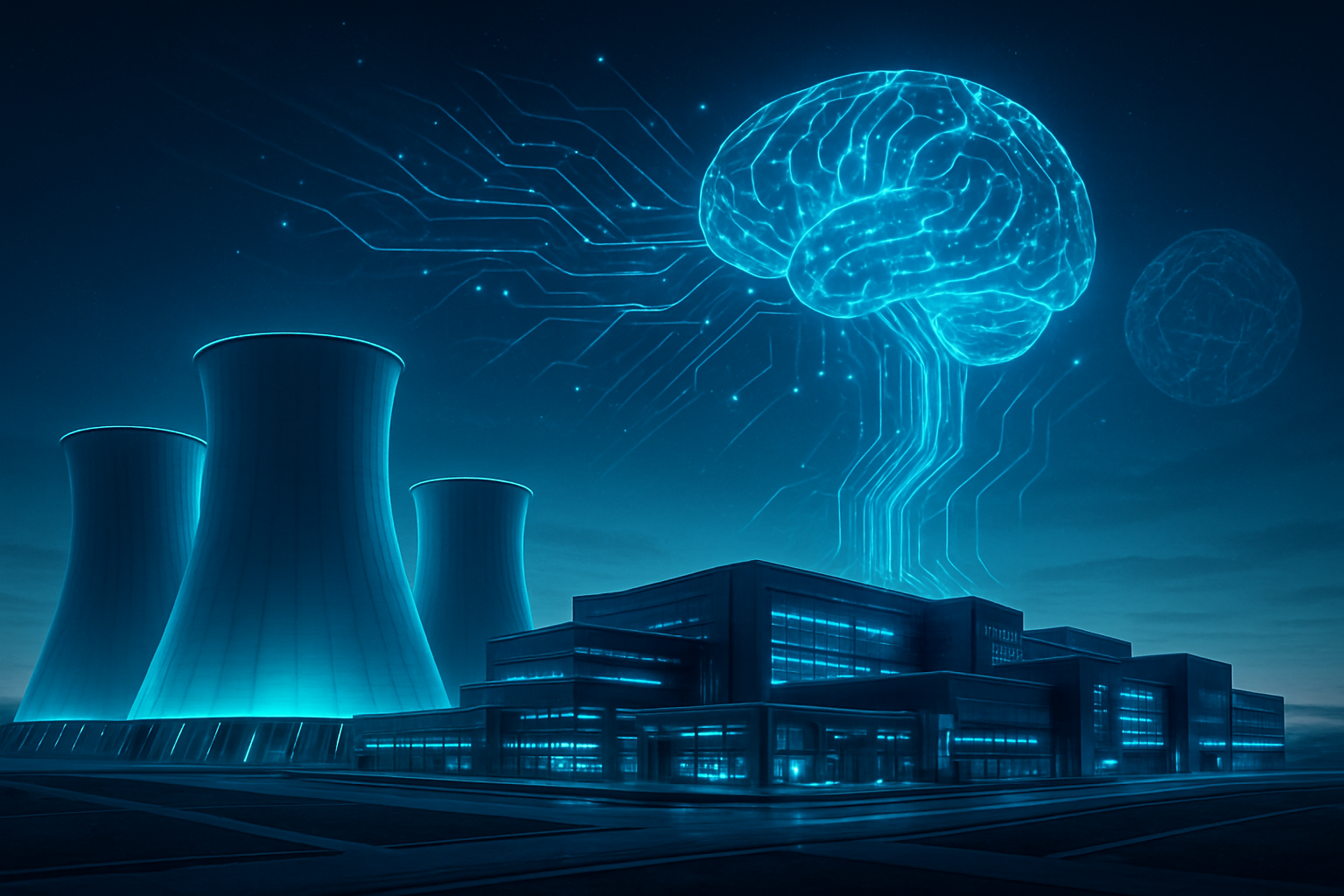
    In a move that signals the dawn of the "gigawatt-scale" AI era, Meta Platforms (NASDAQ: META) has announced a historic trifecta of nuclear energy agreements with Vistra (NYSE: VST), TerraPower, and Oklo (NYSE: OKLO). The deals, totaling a staggering 6.6 gigawatts (GW) of carbon-free capacity, are designed to solve the single greatest bottleneck in modern computing: the massive power requirements of next-generation AI training. This unprecedented energy pipeline is specifically earmarked to power Meta's "Prometheus" AI supercluster, a facility that marks the company's most aggressive push yet toward achieving artificial general intelligence (AGI).

    The announcement, made in early January 2026, represents the largest corporate procurement of nuclear energy in history. By directly bankrolling the revival of American nuclear infrastructure and the deployment of advanced Small Modular Reactors (SMRs), Meta is shifting from being a mere consumer of electricity to a primary financier of the energy grid. This strategic pivot ensures that Meta’s roadmap for "Superintelligence" is not derailed by the aging US power grid or the increasing scarcity of renewable energy credits.

    Engineering the Prometheus Supercluster: 500,000 GPUs and the Quest for 3.1 ExaFLOPS

    At the heart of this energy demand is the Prometheus AI supercluster, located in New Albany, Ohio. Prometheus is Meta’s first 1-gigawatt data center complex, housing an estimated 500,000 GPUs at full capacity. The hardware configuration is a high-performance tapestry, integrating NVIDIA (NASDAQ: NVDA) Blackwell GB200 systems alongside AMD (NASDAQ: AMD) MI300 accelerators and Meta’s proprietary MTIA (Meta Training and Inference Accelerator) chips. This heterogenous architecture allows Meta to optimize for various stages of the model lifecycle, pushing peak performance beyond 3.1 ExaFLOPS. To handle the unprecedented heat density—reaching up to 140 kW per rack—Meta is utilizing its "Catalina" rack design and Air-Assisted Liquid Cooling (AALC), a hybrid system that allows for liquid cooling efficiency without the need for a full facility-wide plumbing overhaul.

    The energy strategy to support this beast is divided into immediate and long-term phases. To power Prometheus today, Meta’s 2.6 GW deal with Vistra leverages existing nuclear assets, including the Perry and Davis-Besse plants in Ohio and the Beaver Valley plant in Pennsylvania. Crucially, the deal funds "uprates"—technical upgrades to existing reactors that will add 433 MW of new capacity to the grid by the early 2030s. For its future needs, Meta is betting on the next generation of nuclear technology. The company has secured up to 2.8 GW from TerraPower’s Natrium sodium-cooled fast reactors and 1.2 GW from Oklo’s Aurora powerhouse "power campus." This ensures that as Meta scales from Prometheus to its even larger 5 GW "Hyperion" cluster in Louisiana, it will have dedicated, carbon-free baseload power that operates independently of weather-dependent solar or wind.

    A Nuclear Arms Race: How Meta’s Power Play Reshapes the AI Industry

    This massive commitment places Meta in a direct competitive standoff with Microsoft (NASDAQ: MSFT) and Google (NASDAQ: GOOGL), both of whom have also explored nuclear options but on a significantly smaller scale. By securing 6.6 GW, Meta has effectively locked up a significant portion of the projected SMR production capacity for the next decade. This "first-mover" advantage in energy procurement could leave rivals struggling to find locations for their own gigawatt-scale clusters, as grid capacity becomes the new gold in the AI economy. Companies like Arista Networks (NYSE: ANET) and Broadcom (NASDAQ: AVGO), who provide the high-speed networking fabric for Prometheus, also stand to benefit as these massive data centers transition from blueprints to operational reality.

    The strategic advantage here is not just about sustainability; it is about "sovereign compute." By financing its own power sources, Meta reduces its reliance on public utility commissions and the often-glacial pace of grid interconnection queues. This allows the company to accelerate its development cycles, potentially releasing "Superintelligence" models months or even years ahead of competitors who remain tethered to traditional energy constraints. For the broader AI ecosystem, Meta's move signals that the entry price for frontier-model training is no longer just billions of dollars in chips, but billions of dollars in dedicated energy infrastructure.

    Beyond the Grid: The Broader Significance of the Meta-Nuclear Alliance

    The broader significance of these deals extends far beyond Meta's balance sheet; it represents a fundamental shift in the American industrial landscape. For decades, the US nuclear industry has struggled with high costs and regulatory hurdles. By providing massive "pre-payments" and guaranteed long-term contracts, Meta is acting as a private-sector catalyst for a nuclear renaissance. This fits into a larger trend where "Big Tech" is increasingly taking on the roles traditionally held by governments, from funding infrastructure to driving fundamental research in physics and materials science.

    However, the scale of this project also raises significant concerns. The concentration of such massive energy resources for AI training comes at a time when global energy transitions are already under strain. Critics argue that diverting gigawatts of carbon-free power to train LLMs could slow the decarbonization of other sectors, such as residential heating or transportation. Furthermore, the reliance on unproven SMR technology from companies like Oklo and TerraPower carries inherent project risks. If these next-gen reactors face delays—as nuclear projects historically have—Meta’s "Superintelligence" timeline could be at risk, creating a high-stakes dependency on the success of the advanced nuclear sector.

    Looking Ahead: The Road to Hyperion and the 10-Gigawatt Data Center

    In the near term, the industry will be watching the first phase of the Vistra deal, as power begins flowing to the initial stages of Prometheus in New Albany. By late 2026, we expect to see the first frontier models trained entirely on nuclear-backed compute. These models are predicted to exhibit reasoning capabilities far beyond current iterations, potentially enabling breakthroughs in drug discovery, climate modeling, and autonomous systems. The success of Prometheus will serve as a pilot for "Hyperion," Meta's planned 5-gigawatt site in Louisiana, which aims to be the first truly autonomous AI city, powered by a dedicated fleet of SMRs.

    The technical challenges remain formidable. Integrating modular reactors directly into data center campuses requires navigating complex NRC (Nuclear Regulatory Commission) guidelines and developing new safety protocols for "behind-the-meter" nuclear generation. Experts predict that if Meta successfully integrates Oklo’s Aurora units by 2030, it will set a new blueprint for industrial energy consumption. The ultimate goal, as hinted by Meta leadership, is a 10-gigawatt global compute footprint that is entirely self-sustaining and carbon-neutral, a milestone that could redefine the relationship between technology and the environment.

    Conclusion: A Defining Moment in the History of Computing

    Meta's 6.6 GW nuclear commitment is more than just a power purchase agreement; it is a declaration of intent. By tying its future to the atom, Meta is ensuring that its pursuit of AGI will not be limited by the physical constraints of the 20th-century power grid. This development marks a transition in the AI narrative from one of software and algorithms to one of hardware, energy, and massive-scale industrial engineering. It is a bold, high-risk bet that the path to superintelligence is paved with nuclear fuel.

    As we move deeper into 2026, the success of these partnerships will be a primary indicator of the health of the AI industry. If Meta can successfully bring these reactors online and scale its Prometheus supercluster, it will have built an unassailable moat in the race for AI supremacy. For now, the world watches as the tech giant attempts to harness the power of the stars to build the minds of the future. The next few years will determine whether this nuclear gamble pays off or if the sheer scale of the AI energy appetite is too great even for the atom to satisfy.


    This content is intended for informational purposes only and represents analysis of current AI developments.

    TokenRing AI delivers enterprise-grade solutions for multi-agent AI workflow orchestration, AI-powered development tools, and seamless remote collaboration platforms.
    For more information, visit https://www.tokenring.ai/.
  • The Atomic AI Renaissance: Why Tech Giants are Betting on Nuclear to Power the Future of Silicon

    The Atomic AI Renaissance: Why Tech Giants are Betting on Nuclear to Power the Future of Silicon

    The era of the "AI Factory" has arrived, and it is hungry for power. As of January 12, 2026, the global technology landscape is witnessing an unprecedented convergence between the cutting edge of artificial intelligence and the decades-old reliability of nuclear fission. What began as a series of experimental power purchase agreements has transformed into a full-scale "Nuclear Renaissance," driven by the insatiable energy demands of next-generation AI data centers.

    Led by industry titans like Microsoft (NASDAQ: MSFT) and Amazon (NASDAQ: AMZN), the tech sector is effectively underwriting the revival of the nuclear industry. This shift marks a strategic pivot away from a pure reliance on intermittent renewables like wind and solar, which—while carbon-neutral—cannot provide the 24/7 "baseload" power required to keep massive GPU clusters humming at 100% capacity. With the recent unveiling of even more power-intensive silicon, the marriage of the atom and the chip is no longer a luxury; it is a necessity for survival in the AI arms race.

    The Technical Imperative: From Blackwell to Rubin

    The primary catalyst for this nuclear surge is the staggering increase in power density within AI hardware. While the NVIDIA (NASDAQ: NVDA) Blackwell architecture of 2024-2025 already pushed data center cooling to its limits with chips consuming up to 1,500W, the newly released NVIDIA Rubin architecture has rewritten the rulebook. A single Rubin GPU is now estimated to have a Thermal Design Power (TDP) of between 1,800W and 2,300W. When these chips are integrated into the high-end "Rubin Ultra" Kyber rack architectures, power density reaches a staggering 600kW per rack.

    This level of energy consumption has rendered traditional air-cooling obsolete, mandating the universal adoption of liquid-to-chip and immersion cooling systems. More importantly, it has created a "power gap" that renewables alone cannot bridge. To run a "Stargate-class" supercomputer—the kind Microsoft and Oracle (NYSE: ORCL) are currently building—requires upwards of five gigawatts of constant, reliable power. Because AI training runs can last for months, any fluctuation in power supply or "grid throttling" due to weather-dependent renewables can result in millions of dollars in lost compute time. Nuclear energy provides the only carbon-free solution that offers 90%+ capacity factors, ensuring that multi-billion dollar clusters never sit idle.

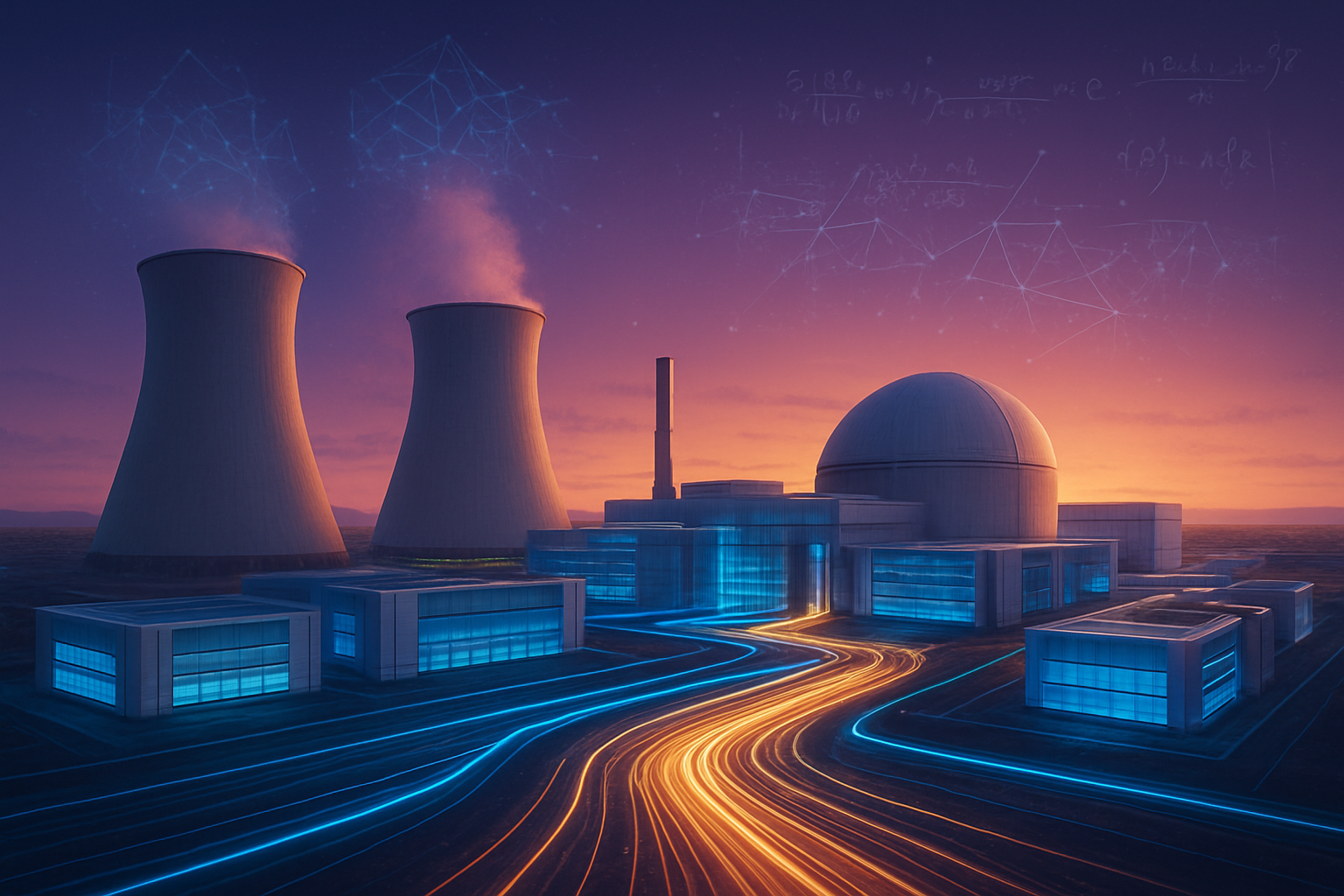
    Industry experts note that this differs fundamentally from the "green energy" strategies of the 2010s. Previously, tech companies could offset their carbon footprint by buying Renewable Energy Credits (RECs) from distant wind farms. Today, the physical constraints of the grid mean that AI giants need the power to be generated as close to the data center as possible. This has led to "behind-the-meter" and "co-location" strategies, where data centers are built literally in the shadow of nuclear cooling towers.

    The Strategic Power Play: Competitive Advantages in the Energy War

    The race to secure nuclear capacity has created a new hierarchy among tech giants. Microsoft (NASDAQ: MSFT) remains a front-runner through its landmark deal with Constellation Energy (NASDAQ: CEG) to restart the Crane Clean Energy Center (formerly Three Mile Island Unit 1). As of early 2026, the project is ahead of schedule, with commercial operations expected by mid-2027. By securing 100% of the plant's 835 MW output, Microsoft has effectively guaranteed a dedicated, carbon-free "fuel" source for its Mid-Atlantic AI operations, a move that competitors are now scrambling to replicate.

    Amazon (NASDAQ: AMZN) has faced more regulatory friction but remains equally committed. After the Federal Energy Regulatory Commission (FERC) challenged its "behind-the-meter" deal with Talen Energy (NASDAQ: TLN) at the Susquehanna site, AWS successfully pivoted to a "front-of-the-meter" arrangement. This allows them to scale toward a 960 MW goal while satisfying grid stability requirements. Meanwhile, Google—under Alphabet (NASDAQ: GOOGL)—is playing the long game by partnering with Kairos Power to deploy a fleet of Small Modular Reactors (SMRs). Their "Hermes 2" reactor in Tennessee is slated to be the first Gen IV reactor to provide commercial power to a U.S. utility specifically to offset data center loads.

    The competitive advantage here is clear: companies that own or control their power supply are insulated from the rising costs and volatility of the public energy market. Oracle (NYSE: ORCL) has even taken the radical step of designing a 1-gigawatt campus powered by three dedicated SMRs. For these companies, energy is no longer an operational expense—it is a strategic moat. Startups and smaller AI labs that rely on public cloud providers may find themselves at the mercy of "energy surcharges" as the grid struggles to keep up with the collective demand of the tech industry.

    The Global Significance: A Paradox of Sustainability

    This trend represents a significant shift in the broader AI landscape, highlighting the "AI-Energy Paradox." While AI is touted as a tool to solve climate change through optimized logistics and material science, its own physical footprint is expanding at an alarming rate. The return to nuclear energy is a pragmatic admission that the transition to a fully renewable grid is not happening fast enough to meet the timelines of the AI revolution.

    However, the move is not without controversy. Environmental groups remain divided; some applaud the tech industry for providing the capital needed to modernize the nuclear fleet, while others express concern over radioactive waste and the potential for "grid hijacking," where tech giants monopolize clean energy at the expense of residential consumers. The FERC's recent interventions in the Amazon-Talen deal underscore this tension. Regulators are increasingly wary of "cost-shifting," where the infrastructure upgrades needed to support AI data centers are passed on to everyday ratepayers.

    Comparatively, this milestone is being viewed as the "Industrial Revolution" moment for AI. Just as the first factories required proximity to water power or coal mines, the AI "factories" of the 2020s are tethering themselves to the most concentrated form of energy known to man. It is a transition that has revitalized a nuclear industry that was, only a decade ago, facing a slow decline in the United States and Europe.

    The Horizon: Fusion, SMRs, and Regulatory Shifts

    Looking toward the late 2020s and early 2030s, the focus is expected to shift from restarting old reactors to the mass deployment of Small Modular Reactors (SMRs). These factory-built units promise to be safer, cheaper, and faster to deploy than the massive "cathedral-style" reactors of the 20th century. Experts predict that by 2030, we will see the first "plug-and-play" nuclear data centers, where SMR units are added to a campus in 50 MW or 100 MW increments as the AI cluster grows.

    Beyond fission, the tech industry is also the largest private investor in nuclear fusion. Companies like Helion Energy (backed by Microsoft's Sam Altman) and Commonwealth Fusion Systems are racing to achieve commercial viability. While fusion remains a "long-term" play, the sheer amount of capital being injected by the AI sector has accelerated development timelines by years. The ultimate goal is a "closed-loop" AI ecosystem: AI helps design more efficient fusion reactors, which in turn provide the limitless energy needed to train even more powerful AI.

    The primary challenge remains regulatory. The U.S. Nuclear Regulatory Commission (NRC) is currently under immense pressure to streamline the licensing process for SMRs. If the U.S. fails to modernize its regulatory framework, industry analysts warn that AI giants may begin moving their most advanced data centers to regions with more permissive nuclear policies, potentially leading to a "compute flight" to countries like the UAE or France.

    Conclusion: The Silicon-Atom Alliance

    The trend of tech giants investing in nuclear energy is more than just a corporate sustainability play; it is the fundamental restructuring of the world's digital infrastructure. By 2026, the alliance between the silicon chip and the atom has become the bedrock of the AI economy. Microsoft, Amazon, Google, and Oracle are no longer just software and cloud companies—they are becoming the world's most influential energy brokers.

    The significance of this development in AI history cannot be overstated. It marks the moment when the "virtual" world of software finally hit the hard physical limits of the "real" world, and responded by reviving one of the most powerful technologies of the 20th century. As we move into the second half of the decade, the success of the next great AI breakthrough will depend as much on the stability of a reactor core as it does on the elegance of a neural network.

    In the coming months, watch for the results of the first "Rubin-class" cluster deployments and the subsequent energy audits. The ability of the grid to handle these localized "gigawatt-shocks" will determine whether the nuclear renaissance can stay on track or if the AI boom will face a literal power outage.


    This content is intended for informational purposes only and represents analysis of current AI developments.

    TokenRing AI delivers enterprise-grade solutions for multi-agent AI workflow orchestration, AI-powered development tools, and seamless remote collaboration platforms.
    For more information, visit https://www.tokenring.ai/.
  • Meta’s Nuclear Gambit: A 6.6-Gigawatt Leap to Power the Age of ‘Prometheus’

    Meta’s Nuclear Gambit: A 6.6-Gigawatt Leap to Power the Age of ‘Prometheus’

    In a move that fundamentally reshapes the intersection of big tech and the global energy sector, Meta Platforms Inc. (NASDAQ:META) has announced a staggering 6.6-gigawatt (GW) nuclear power procurement strategy. This unprecedented commitment, unveiled on January 9, 2026, represents the largest corporate investment in nuclear energy to date, aimed at securing a 24/7 carbon-free power supply for the company’s next generation of artificial intelligence "superclusters." By partnering with industry giants and innovators, Meta is positioning itself to overcome the primary bottleneck of the AI era: the massive, unyielding demand for electrical power.

    The significance of this announcement cannot be overstated. As the race toward Artificial Superintelligence (ASI) intensifies, the availability of "firm" baseload power—energy that does not fluctuate with the weather—has become the ultimate competitive advantage. Meta’s multi-pronged agreement with Vistra Corp. (NYSE:VST), Oklo Inc. (NYSE:OKLO), and the Bill Gates-backed TerraPower ensures that its "Prometheus" and "Hyperion" data centers will have the necessary fuel to train models of unimaginable scale, while simultaneously revitalizing the American nuclear supply chain.

    The 6.6 GW portfolio is a sophisticated blend of existing infrastructure and frontier technology. At the heart of the agreement is a massive commitment to Vistra Corp., which will provide over 2.1 GW of power through 20-year Power Purchase Agreements (PPAs) from the Perry, Davis-Besse, and Beaver Valley plants. This deal includes funding for 433 megawatts (MW) of "uprates"—technical modifications to existing reactors that increase their efficiency and output. This approach provides Meta with immediate, reliable power while extending the operational life of critical American energy assets into the mid-2040s.

    Beyond traditional nuclear, Meta is placing a significant bet on the future of Small Modular Reactors (SMRs) and advanced reactor designs. The partnership with Oklo Inc. involves a 1.2 GW "power campus" in Pike County, Ohio, utilizing Oklo’s Aurora powerhouse technology. These SMRs are designed to operate on recycled nuclear fuel, offering a more sustainable and compact alternative to traditional light-water reactors. Simultaneously, Meta’s deal with TerraPower focuses on "Natrium" technology—a sodium-fast reactor that uses liquid sodium as a coolant. Unlike water-cooled systems, Natrium reactors operate at higher temperatures and include integrated molten salt energy storage, allowing the facility to boost its power output for hours at a time to meet peak AI training demands.

    These energy assets are directly tied to Meta’s most ambitious infrastructure projects: the Prometheus and Hyperion data centers. Prometheus, a 1 GW AI supercluster in New Albany, Ohio, is scheduled to come online later this year and will serve as the primary testing ground for Meta’s most advanced generative models. Hyperion, an even more massive 5 GW facility in rural Louisiana, represents a $27 billion investment designed to house the hardware required for the next decade of AI breakthroughs. While Hyperion will initially utilize natural gas to meet its immediate 2028 operational goals, the 6.6 GW nuclear portfolio is designed to transition Meta’s entire AI fleet to carbon-neutral power by 2035.

    Meta’s nuclear surge sends a clear signal to its primary rivals: Microsoft (NASDAQ:MSFT), Google (NASDAQ:GOOGL), and Amazon (NASDAQ:AMZN). While Microsoft previously set the stage with its deal to restart a reactor at Three Mile Island, Meta’s 6.6 GW commitment is nearly eight times larger in scale. By securing such a massive portion of the available nuclear capacity in the PJM Interconnection region—the energy heartland of American data centers—Meta is effectively "moating" its energy supply, making it more difficult for competitors to find the firm power needed for their own mega-projects.

    Industry analysts suggest that this move provides Meta with a significant strategic advantage in the race for AGI. As AI models grow exponentially in complexity, the cost of electricity is becoming a dominant factor in the total cost of ownership for AI systems. By locking in long-term, fixed-rate contracts for nuclear power, Meta is insulating itself from the volatility of natural gas prices and the rising costs of grid congestion. Furthermore, the partnership with Oklo and TerraPower allows Meta to influence the design and deployment of energy tech specifically tailored for high-compute environments, potentially creating a proprietary blueprint for AI-integrated energy infrastructure.

    The broader significance of this deal extends far beyond Meta’s balance sheet. It marks a pivotal moment in the "AI-Nuclear" nexus, where the demands of the tech industry act as the primary catalyst for a nuclear renaissance in the United States. For decades, the American nuclear industry has struggled with high capital costs and long construction timelines. By acting as a foundational "off-taker" for 6.6 GW of power, Meta is providing the financial certainty required for companies like Oklo and TerraPower to move from prototypes to commercial-scale deployment.

    This development is also a cornerstone of American energy policy and national security. Meta Policy Chief Joel Kaplan has noted that these agreements are essential for "securing the U.S.'s position as the global leader in AI innovation." By subsidizing the de-risking of next-generation American nuclear technology, Meta is helping to build a domestic supply chain that can compete with state-sponsored energy initiatives in China and Russia. However, the plan is not without its critics; environmental groups and local communities have expressed concerns regarding the speed of SMR deployment and the long-term management of nuclear waste, even as Meta promises to pay the "full costs" of infrastructure to avoid burdening residential taxpayers.

    While the 6.6 GW announcement is a historic milestone, the path to 2035 is fraught with challenges. The primary hurdle remains the Nuclear Regulatory Commission (NRC), which must approve the novel designs of the Oklo and TerraPower reactors. While the NRC has signaled a willingness to streamline the licensing process for advanced reactors, the timeline for "first-of-a-kind" technology is notoriously unpredictable. Meta and its partners will need to navigate a complex web of safety evaluations, environmental reviews, and public hearings to stay on schedule.

    In the near term, the focus will shift to the successful completion of the Vistra uprates and the initial construction phases of the Prometheus data center. Experts predict that if Meta can successfully integrate nuclear power into its AI operations at this scale, it will set a new global standard for "green" AI. We may soon see a trend where data center locations are chosen not based on proximity to fiber optics, but on proximity to dedicated nuclear "power campuses." The ultimate goal remains the realization of Artificial Superintelligence, and with 6.6 GW of power on the horizon, the electrical constraints that once seemed insurmountable are beginning to fade.

    Meta’s 6.6 GW nuclear agreement is more than just a utility contract; it is a declaration of intent. By securing a massive, diversified portfolio of traditional and advanced nuclear energy, Meta is ensuring that its AI ambitions—embodied by the Prometheus and Hyperion superclusters—will not be sidelined by a crumbling or carbon-heavy electrical grid. The deal provides a lifeline to the American nuclear industry, signals a new phase of competition among tech giants, and reinforces the United States' role as the epicenter of the AI revolution.

    As we move through 2026, the industry will be watching closely for the first signs of construction at the Oklo campus in Ohio and the regulatory milestones of TerraPower’s Natrium reactors. This development marks a definitive chapter in AI history, where the quest for digital intelligence has become the most powerful driver of physical energy innovation. The long-term impact of this "Nuclear Gambit" may well determine which company—and which nation—crosses the finish line in the race for the next era of computing.


    This content is intended for informational purposes only and represents analysis of current AI developments.

    TokenRing AI delivers enterprise-grade solutions for multi-agent AI workflow orchestration, AI-powered development tools, and seamless remote collaboration platforms.
    For more information, visit https://www.tokenring.ai/.
  • The Nuclear Pivot: How Big Tech is Powering the AI Revolution

    The Nuclear Pivot: How Big Tech is Powering the AI Revolution

    The era of "clean-only" energy for Silicon Valley has entered a radical new phase. As of January 6, 2026, the global race for Artificial Intelligence dominance has collided with the physical limits of the power grid, forcing a historic pivot toward the one energy source capable of sustaining the "insatiable" appetite of next-generation neural networks: nuclear power. In what industry analysts are calling the "Great Nuclear Renaissance," the world’s largest technology companies are no longer content with purchasing carbon credits from wind and solar farms; they are now buying, reviving, and building nuclear reactors to secure the 24/7 "baseload" power required to train the AGI-scale models of the future.

    This transition marks a fundamental shift in the tech industry's relationship with infrastructure. With global data center electricity consumption projected to hit 1,050 Terawatt-hours (TWh) this year—nearly double the levels seen in 2023—the bottleneck for AI progress has moved from the availability of high-end GPUs to the availability of gigawatt-scale electricity. For giants like Microsoft, Google, and Amazon, the choice was clear: embrace the atom or risk being left behind in a power-starved digital landscape.

    The Technical Blueprint: From Three Mile Island to Modular Reactors

    The most symbolic moment of this pivot came with the rebranding and technical refurbishment of one of the most infamous sites in American energy history. Microsoft (NASDAQ: MSFT) has partnered with Constellation Energy (NASDAQ: CEG) to restart Unit 1 of the Three Mile Island facility, now known as the Crane Clean Energy Center (CCEC). As of early 2026, the project is in an intensive technical phase, with over 500 on-site employees and a successful series of turbine and generator tests completed in late 2025. Backed by a $1 billion U.S. Department of Energy loan, the 835-megawatt facility is on track to come back online by 2027—a full year ahead of original estimates—dedicated entirely to powering Microsoft’s AI clusters on the PJM grid.

    While Microsoft focuses on reviving established fission, Google (Alphabet) (NASDAQ: GOOGL) is betting on the future of Generation IV reactor technology. In late 2025, Google signed a landmark Power Purchase Agreement (PPA) with Kairos Power and the Tennessee Valley Authority (TVA). This deal centers on the "Hermes 2" demonstration reactor, a 50-megawatt plant currently under construction in Oak Ridge, Tennessee. Unlike traditional water-cooled reactors, Kairos uses a fluoride salt-cooled high-temperature design, which offers enhanced safety and modularity. Google’s "order book" strategy aims to deploy a fleet of these Small Modular Reactors (SMRs) to provide 500 megawatts of carbon-free power by 2035.

    Amazon (NASDAQ: AMZN) has taken a multi-pronged approach to secure its energy future. Following a complex regulatory battle with the Federal Energy Regulatory Commission (FERC) over "behind-the-meter" power delivery, Amazon and Talen Energy (NASDAQ: TLN) successfully restructured a deal to pull up to 1,920 megawatts from the Susquehanna nuclear plant in Pennsylvania. Simultaneously, Amazon is investing heavily in SMR development through X-energy. Their joint project, the Cascade Advanced Energy Facility in Washington State, recently expanded its plans from 320 megawatts to a potential 960-megawatt capacity, utilizing the Xe-100 high-temperature gas-cooled reactor.

    The Power Moat: Competitive Implications for the AI Giants

    The strategic advantage of these nuclear deals cannot be overstated. In the current market, "power is the new hard currency." By securing dedicated nuclear capacity, the "Big Three" have effectively built a "Power Moat" that smaller AI labs and startups find impossible to cross. While a startup may be able to secure a few thousand H100 GPUs, they cannot easily secure the hundreds of megawatts of firm, 24/7 power required to run them. This has led to an even greater consolidation of AI capabilities within the hyperscalers.

    Microsoft, Amazon, and Google are now positioned to bypass the massive interconnection queues that plague the U.S. power grid. With over 2 terawatts of energy projects currently waiting for grid access, the ability to co-locate data centers at existing nuclear sites or build dedicated SMRs allows these companies to bring new AI clusters online years faster than their competitors. This "speed-to-market" is critical as the industry moves toward "frontier" models that require exponentially more compute than GPT-4 or Gemini 1.5.

    The competitive landscape is also shifting for other major players. Meta (NASDAQ: META), which initially trailed the nuclear trend, issued a massive Request for Proposals in late 2024 for up to 4 gigawatts of nuclear capacity. Meanwhile, OpenAI remains in a unique position; while it relies on Microsoft’s infrastructure, its CEO, Sam Altman, has made personal bets on the nuclear sector through his chairmanship of Oklo (NYSE: OKLO) and investments in Helion Energy. This "founder-led" hedge suggests that even the leading AI research labs recognize that software breakthroughs alone are insufficient without a massive, stable energy foundation.

    The Global Significance: Climate Goals and the Nuclear Revival

    The "Nuclear Pivot" has profound implications for the global climate agenda. For years, tech companies have been the largest corporate buyers of renewable energy, but the intermittent nature of wind and solar proved insufficient for the "five-nines" (99.999%) uptime requirement of 2026-era data centers. By championing nuclear power, Big Tech is providing the financial "off-take" agreements necessary to revitalize an industry that had been in decline for decades. This has led to a surge in utility stocks, with companies like Vistra Corp (NYSE: VST) and Constellation Energy seeing record valuations.

    However, the trend is not without controversy. Environmental researchers, such as those at HuggingFace, have pointed out the inherent inefficiency of current generative AI models, noting that a single query can consume ten times the electricity of a traditional search. There are also concerns about "grid fairness." As tech giants lock up existing nuclear capacity, energy experts warn that the resulting supply crunch could drive up electricity costs for residential and commercial consumers, leading to a "digital divide" in energy access.

    Despite these concerns, the geopolitical significance of this energy shift is clear. The U.S. government has increasingly viewed AI leadership as a matter of national security. By supporting the restart of facilities like Three Mile Island and the deployment of Gen IV reactors, the tech sector is effectively subsidizing the modernization of the American energy grid, ensuring that the infrastructure for the next industrial revolution remains domestic.

    The Horizon: SMRs, Fusion, and the Path to 2030

    Looking ahead, the next five years will be a period of intense construction and regulatory testing. While the Three Mile Island restart provides a near-term solution for Microsoft, the long-term viability of the AI boom depends on the successful deployment of SMRs. Unlike the massive, bespoke reactors of the past, SMRs are designed to be factory-built and easily Scaled. If Kairos Power and X-energy can meet their 2030 targets, we may see a future where every major data center campus features its own dedicated modular reactor.

    On the more distant horizon, the "holy grail" of energy—nuclear fusion—remains a major point of interest for AI visionaries. Companies like Helion Energy are working toward commercial-scale fusion, which would provide virtually limitless clean energy without the long-lived radioactive waste of fission. While most experts predict fusion is still decades away from powering the grid, the sheer scale of AI-driven capital currently flowing into the energy sector has accelerated R&D timelines in ways previously thought impossible.

    The immediate challenge for the industry will be navigating the complex web of state and federal regulations. The FERC's recent scrutiny of Amazon's co-location deals suggests that the path to "energy independence" for Big Tech will be paved with legal challenges. Companies will need to prove that their massive power draws do not compromise the reliability of the public grid or unfairly shift costs to the general public.

    A New Era of Symbiosis

    The nuclear pivot of 2025-2026 represents a defining moment in the history of technology. It is the moment when the digital world finally acknowledged its absolute dependence on the physical world. The symbiosis between Artificial Intelligence and Nuclear Energy is now the primary engine of innovation, with the "Big Three" leading a charge that is simultaneously reviving a legacy industry and pioneering a modular future.

    As we move further into 2026, the key metrics to watch will be the progress of the Crane Clean Energy Center's restart and the first regulatory approvals for SMR site permits. The success or failure of these projects will determine not only the carbon footprint of the AI revolution but also which companies will have the "fuel" necessary to reach the next frontier of machine intelligence. In the race for AGI, the winner may not be the one with the best algorithms, but the one with the most stable reactors.


    This content is intended for informational purposes only and represents analysis of current AI developments.

    TokenRing AI delivers enterprise-grade solutions for multi-agent AI workflow orchestration, AI-powered development tools, and seamless remote collaboration platforms.
    For more information, visit https://www.tokenring.ai/.
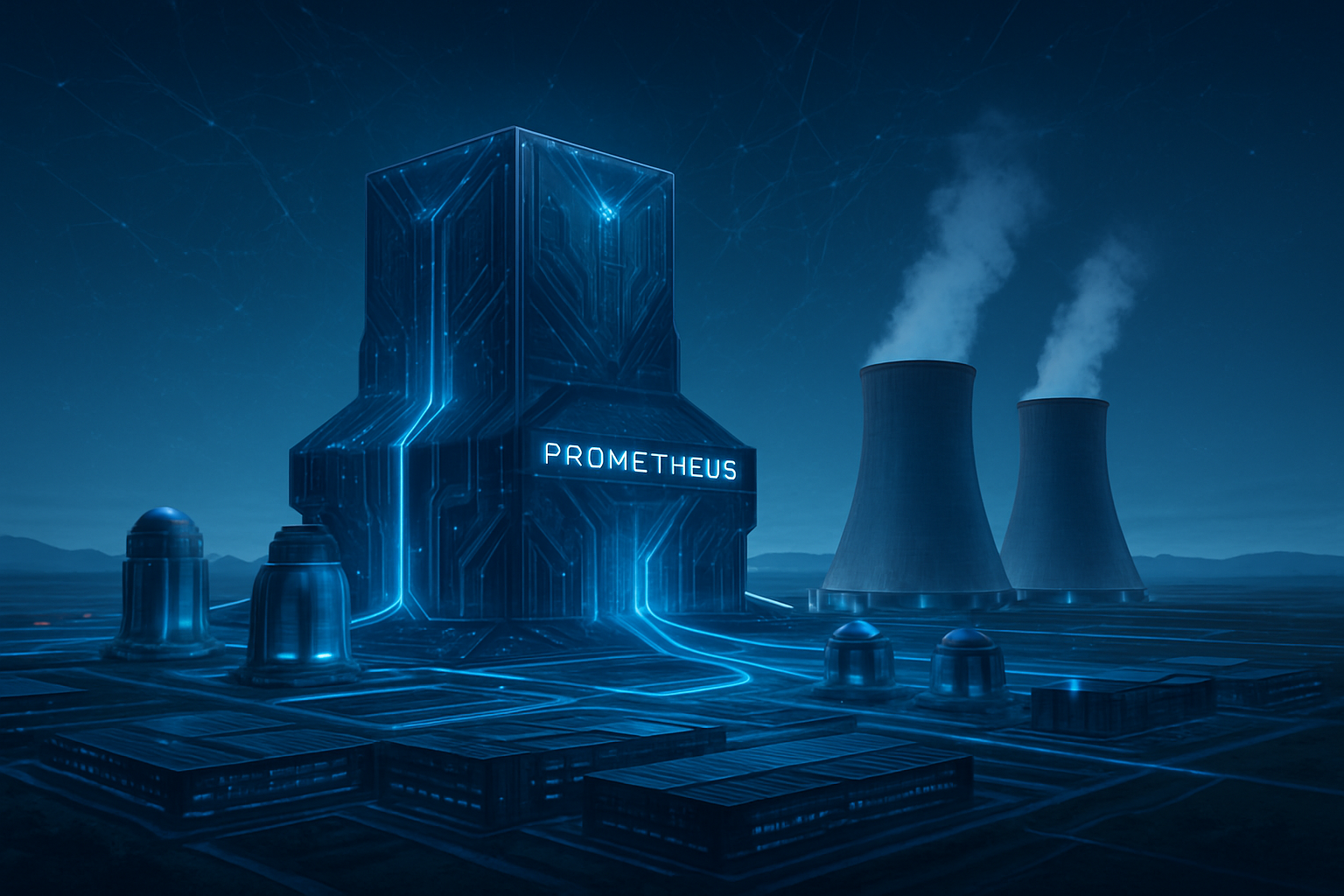
  • The Data Center Power Crisis: Energy Grid Constraints on AI Growth

    The Data Center Power Crisis: Energy Grid Constraints on AI Growth

    As of early 2026, the artificial intelligence revolution has collided head-on with the physical limits of the 20th-century electrical grid. What began as a race for the most sophisticated algorithms and the largest datasets has transformed into a desperate, multi-billion dollar scramble for raw wattage. The "Data Center Power Crisis" is no longer a theoretical bottleneck; it is the defining constraint of the AI era, forcing tech giants to abandon their reliance on public utilities in favor of a "Bring Your Own Generation" (BYOG) model that is resurrecting the nuclear power industry.

    This shift marks a fundamental pivot in the tech industry’s evolution. For decades, software companies scaled with negligible physical footprints. Today, the training of "Frontier Models" requires energy on the scale of small nations. As the industry moves into 2026, the strategy has shifted from optimizing code to securing "behind-the-meter" power—direct connections to nuclear reactors and massive onsite natural gas plants that bypass the congested and aging public infrastructure.

    The Gigawatt Era: Technical Demands of Next-Gen Compute

    The technical specifications for the latest AI hardware have shattered previous energy assumptions. NVIDIA (NASDAQ:NVDA) has continued its aggressive release cycle, with the transition from the Blackwell architecture to the newly deployed Rubin (R100) platform in late 2025. While the Blackwell GB200 chips already pushed rack densities to a staggering 120 kW, the Rubin platform has increased the stakes further. Each R100 GPU now draws approximately 2,300 watts of thermal design power (TGP), nearly double that of its predecessor. This has forced a total redesign of data center electrical systems, moving toward 800-volt power delivery and mandatory warm-water liquid cooling, as traditional air-cooling methods are physically incapable of dissipating the heat generated by these clusters.

    These power requirements are not just localized to the chips themselves. A modern "Stargate-class" supercluster, designed to train the next generation of multimodal LLMs, now targets a power envelope of 2 to 5 gigawatts (GW). To put this in perspective, 1 GW can power roughly 750,000 homes. The industry research community has noted that the "Fairfax Near-Miss" of mid-2024—where 60 data centers in Northern Virginia simultaneously switched to diesel backup due to grid instability—was a turning point. Experts now agree that the existing grid cannot support the simultaneous ramp-up of multiple 5 GW clusters without risking regional blackouts.

    The Power Play: Tech Giants Become Energy Producers

    The competitive landscape of AI is now dictated by energy procurement. Microsoft (NASDAQ:MSFT) made waves with its landmark agreement with Constellation Energy (NASDAQ:CEG) to restart the Three Mile Island Unit 1 reactor, now known as the Crane Clean Energy Center. As of January 2026, the project has cleared major NRC milestones, with Microsoft securing 800 MW of dedicated carbon-free power. Not to be outdone, Amazon (NASDAQ:AMZN) Web Services (AWS) recently expanded its partnership with Talen Energy (NASDAQ:TLN), securing a massive 1.9 GW supply from the Susquehanna nuclear plant to power its burgeoning Pennsylvania data center hub.

    This "nuclear land grab" has extended to Google (NASDAQ:GOOGL), which has pivoted toward Small Modular Reactors (SMRs). Google’s partnership with Kairos Power and Elementl Power aims to deploy a 10-GW advanced nuclear pipeline by 2035, with the first sites entering the permitting phase this month. Meanwhile, Oracle (NYSE:ORCL) and OpenAI have taken a more immediate approach to the crisis, breaking ground on a 2.3 GW onsite natural gas plant in Texas. By bypassing the public utility commission and building their own generation, these companies are gaining a strategic advantage: the ability to scale compute capacity without waiting the typical 5-to-8-year lead time for a new grid interconnection.

    Gridlock and Governance: The Wider Significance

    The environmental and social implications of this energy hunger are profound. In major AI hubs like Northern Virginia and Central Texas (ERCOT), the massive demand from data centers has been blamed for double-digit increases in residential utility bills. This has led to a regulatory backlash; in late 2025, several states passed "Large Load" tariffs requiring data centers to pay significant upfront collateral for grid upgrades. The U.S. Department of Energy has also intervened, with a 2025 directive from the Federal Energy Regulatory Commission (FERC) aimed at standardizing how these "mega-loads" connect to the grid to prevent them from destabilizing local power supplies.

    Furthermore, the shift toward nuclear and natural gas to meet AI demands has complicated the "Net Zero" pledges of the big tech firms. While nuclear provides carbon-free baseload power, the sheer volume of energy needed has forced some companies to extend the life of fossil fuel plants. In Europe, the full implementation of the EU AI Act this year now mandates strict "Sustainability Disclosures," forcing AI labs to report the exact carbon and water footprint of every training run. This transparency is creating a new metric for AI efficiency: "Intelligence per Watt," which is becoming as important to investors as raw performance scores.

    The Horizon: SMRs and the Future of Onsite Power

    Looking ahead to the rest of 2026 and beyond, the focus will shift from securing existing nuclear plants to the deployment of next-generation reactor technology. Small Modular Reactors (SMRs) are the primary hope for sustainable long-term growth. Companies like Oklo, backed by Sam Altman, are racing to deploy their first commercial microreactors by 2027. These units are designed to be "plug-and-play," allowing data center operators to add 50 MW modules of power as their compute clusters grow.

    However, significant challenges remain. The supply chain for High-Assay Low-Enriched Uranium (HALEU) fuel is still in its infancy, and public opposition to nuclear waste storage remains a hurdle for new site permits. Experts predict that the next two years will see a "bridge period" dominated by onsite natural gas and massive battery storage installations, as the industry waits for the first wave of SMRs to come online. We may also see the rise of "Energy-First" AI hubs—data centers located in remote, energy-rich regions like the Dakotas or parts of Canada, where power is cheap and cooling is natural, even if latency to major cities is higher.

    Summary: The Physical Reality of Artificial Intelligence

    The data center power crisis has served as a reality check for an industry that once believed "compute" was an infinite resource. As we move through 2026, the winners in the AI race will not just be those with the best researchers, but those with the most robust energy supply chains. The revival of nuclear power, driven by the demands of large language models, represents one of the most significant shifts in global infrastructure in the 21st century.

    Key takeaways for the coming months include the progress of SMR permitting, the impact of new state-level energy taxes on data center operators, and whether NVIDIA’s upcoming Rubin Ultra platform will push power demands even further into the stratosphere. The "gold rush" for AI has officially become a "power rush," and the stakes for the global energy grid have never been higher.


    This content is intended for informational purposes only and represents analysis of current AI developments.

    TokenRing AI delivers enterprise-grade solutions for multi-agent AI workflow orchestration, AI-powered development tools, and seamless remote collaboration platforms.
    For more information, visit https://www.tokenring.ai/.