Tag: NVIDIA Rubin

  • Backside Power Delivery: A Radical Shift in Chip Architecture

    Backside Power Delivery: A Radical Shift in Chip Architecture

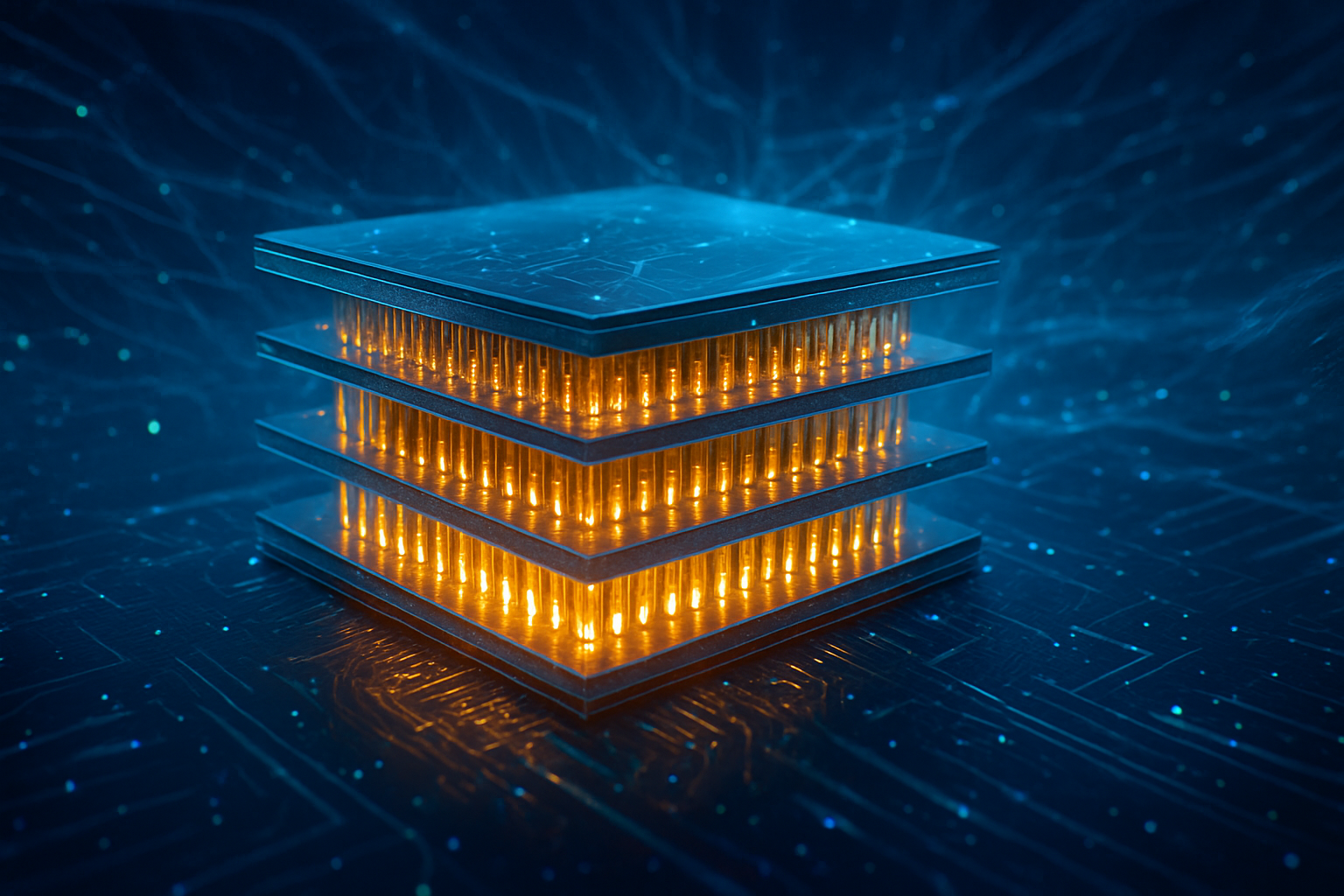
    The world of semiconductor manufacturing has reached a historic inflection point. As of January 2026, the industry has officially moved beyond the constraints of traditional transistor scaling and entered the "Angstrom Era," defined by a radical architectural shift known as Backside Power Delivery (BSPDN). This breakthrough, led by Intel’s "PowerVia" and TSMC’s "Super Power Rail," represents the most significant change to microchip design in over a decade, fundamentally rewriting how power and data move through silicon to fuel the next generation of generative AI.

    The immediate significance of BSPDN cannot be overstated. By moving power delivery lines from the front of the wafer to the back, chipmakers have finally broken the "interconnect bottleneck" that threatened to stall Moore’s Law. This transition is the primary engine behind the new 2nm and 1.8nm nodes, providing the massive efficiency gains required for the power-hungry AI accelerators that now dominate global data centers.

    Decoupling Power from Logic

    For decades, microchips were built like a house where the plumbing and the electrical wiring were forced to run through the same narrow hallways as the residents. In traditional Front-End-Of-Line (FEOL) manufacturing, both power lines and signal interconnects are built on the front side of the silicon wafer. As transistors shrank to the 3nm level, these wires became so densely packed that they began to interfere with one another, causing significant electrical resistance and "crosstalk" interference.

    BSPDN solves this by essentially flipping the house. In this new architecture, the silicon wafer is thinned down to a fraction of its original thickness, and an entirely separate network of power delivery lines is fabricated on the back. Intel Corporation (NASDAQ: INTC) was the first to commercialize this with its PowerVia technology, which utilizes "nano-Through Silicon Vias" (nTSVs) to carry power directly to the transistor layer. This separation allows for much thicker, less resistive power wires on the back and clearer, more efficient signal routing on the front.

    The technical specifications are staggering. Early reports from the 1.8nm (18A) production lines indicate that BSPDN reduces "IR drop"—a phenomenon where voltage decreases as it travels through a circuit—by nearly 30%. This allows transistors to switch faster while consuming less energy. Initial reactions from the research community have highlighted that this shift provides a 6% to 10% frequency boost and up to a 15% reduction in total power loss, a critical requirement for AI chips that are now pushing toward 1,000-watt power envelopes.

    The New Foundry War: Intel, TSMC, and the 2nm Gold Rush

    The successful rollout of BSPDN has reshaped the competitive landscape among the world’s leading foundries. Intel (NASDAQ: INTC) has used its first-mover advantage with PowerVia to reclaim a seat at the table of leading-edge manufacturing. Its 18A node is now in high-volume production, powering the new Panther Lake processors and securing major foundry customers like Microsoft Corporation (NASDAQ: MSFT) and Amazon (NASDAQ: AMZN), both of which are designing custom AI silicon to reduce their reliance on merchant hardware.

    However, Taiwan Semiconductor Manufacturing Company (NYSE: TSM) remains the titan to beat. While TSMC’s initial 2nm (N2) node did not include backside power, its upcoming A16 node—scheduled for mass production later this year—introduces the "Super Power Rail." This implementation is even more advanced than Intel's, connecting power directly to the transistor’s source and drain. This precision has led NVIDIA Corporation (NASDAQ: NVDA) to select TSMC’s A16 for its next-generation "Rubin" AI platform, which aims to deliver a 3x performance-per-watt improvement over the previous Blackwell architecture.

    Meanwhile, Samsung Electronics (OTC: SSNLF) is positioning itself as the "turnkey" alternative. Samsung is skipping the intermediate steps and moving directly to a highly optimized BSPDN on its 2nm (SF2Z) node. By offering a bundled package of 2nm logic, HBM4 memory, and advanced 2.5D packaging, Samsung has managed to peel away high-profile AI startups and even secure contracts from Advanced Micro Devices (NASDAQ: AMD) for specialized AI chiplets.

    AI Scaling and the "Joule-per-Token" Metric

    The broader significance of Backside Power Delivery lies in its impact on the economics of artificial intelligence. In 2026, the focus of the AI industry has shifted from raw FLOPS (Floating Point Operations Per Second) to "Joules-per-Token"—a measure of how much energy it takes to generate a single word of AI output. With the cost of 2nm wafers reportedly reaching $30,000 each, the energy efficiency provided by BSPDN is the only way for hyperscalers to keep the operational costs of LLMs (Large Language Models) sustainable.

    Furthermore, BSPDN is a prerequisite for the continued density of AI accelerators. By freeing up space on the front of the die, designers have been able to increase logic density by 10% to 20%, allowing for more Tensor cores and larger on-chip caches. This is vital for the 2026 crop of "Superchips" that integrate CPUs and GPUs on a single package. Without backside power, these chips would have simply melted under the thermal and electrical stress of modern AI workloads.

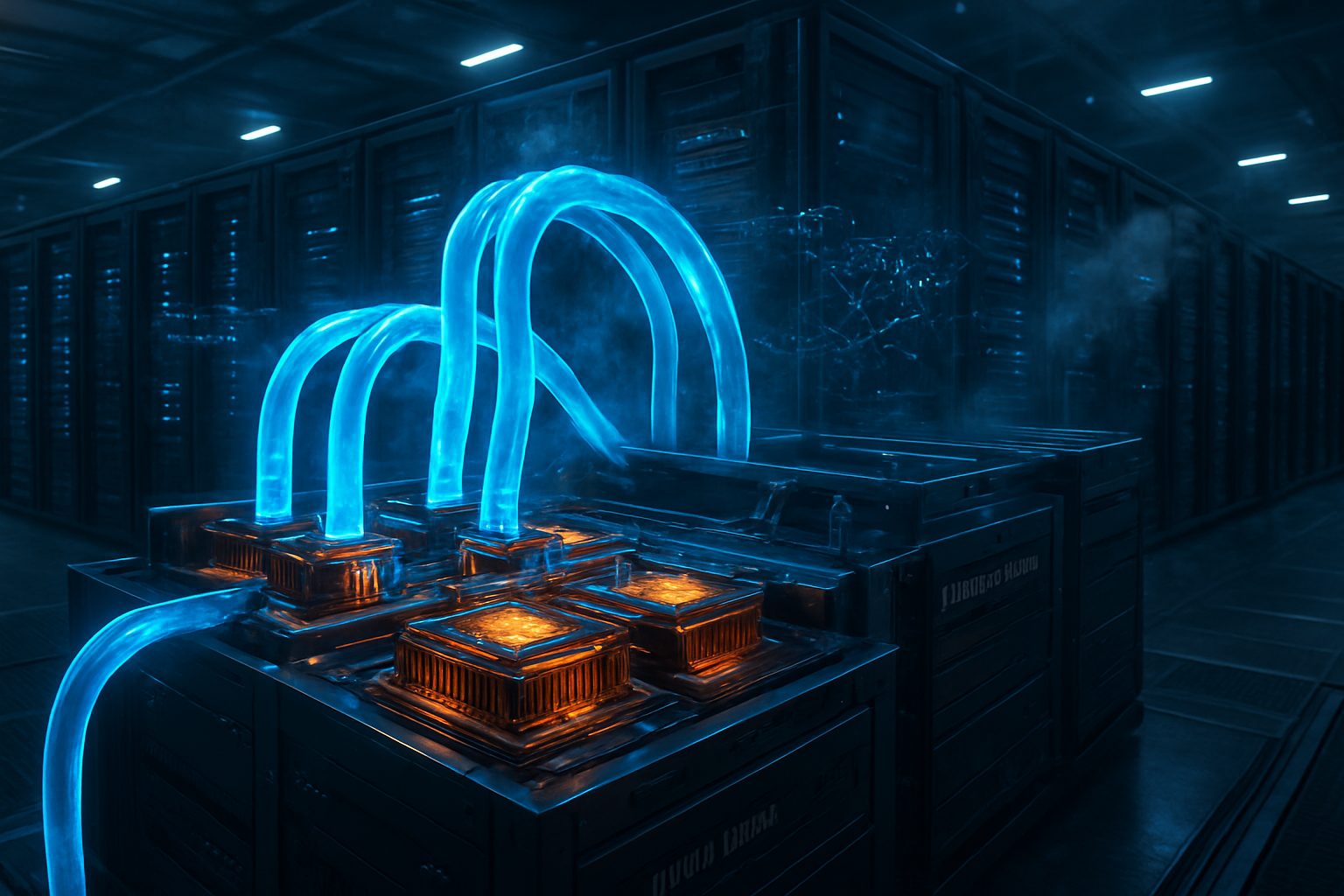
    However, this transition has not been without its challenges. One major concern is thermal management. Because the power delivery network is now on the back of the chip, it can trap heat between the silicon and the cooling solution. This has made liquid cooling a mandatory requirement for almost all high-performance AI hardware using these new nodes, leading to a massive infrastructure upgrade cycle in data centers across the globe.

    Looking Ahead: 1nm and the 3D Future

    The shift to BSPDN is not just a one-time upgrade; it is the foundation for the next decade of semiconductor evolution. Looking forward to 2027 and 2028, experts predict the arrival of the 1.4nm and 1nm nodes, where BSPDN will be combined with "Complementary FET" (CFET) architectures. In a CFET design, n-type and p-type transistors are stacked directly on top of each other, a move that would be physically impossible without the backside plumbing provided by BSPDN.

    We are also seeing the early stages of "Function-Side Power Delivery," where specific parts of the chip can be powered independently from the back to allow for ultra-fine-grained power gating. This would allow AI chips to "turn off" 90% of their circuits during idle periods, further driving down the carbon footprint of AI. The primary challenge remaining is yield; as of early 2026, Intel and TSMC are still working to push 2nm/1.8nm yields past the 70% mark, a task complicated by the extreme precision required to align the front and back of the wafer.

    A Fundamental Transformation of Silicon

    The arrival of Backside Power Delivery marks the end of the "Planar Era" and the beginning of a truly three-dimensional approach to computing. By separating the flow of energy from the flow of information, the semiconductor industry has successfully navigated the most dangerous bottleneck in its history.

    The key takeaways for the coming year are clear: Intel has proven its technical relevance with PowerVia, but TSMC’s A16 remains the preferred choice for the highest-end AI hardware. For the tech industry, the 2nm and 1.8nm nodes represent more than just a shrink; they are an architectural rebirth that will define the performance limits of artificial intelligence for years to come. In the coming months, watch for the first third-party benchmarks of Intel’s 18A and the official tape-outs of NVIDIA’s Rubin GPUs—these will be the ultimate tests of whether the "backside revolution" lives up to its immense promise.


    This content is intended for informational purposes only and represents analysis of current AI developments.

    TokenRing AI delivers enterprise-grade solutions for multi-agent AI workflow orchestration, AI-powered development tools, and seamless remote collaboration platforms.
    For more information, visit https://www.tokenring.ai/.
  • The HBM4 Era Begins: Samsung and SK Hynix Trigger Mass Production for Next-Gen AI

    The HBM4 Era Begins: Samsung and SK Hynix Trigger Mass Production for Next-Gen AI

    As the calendar turns to late January 2026, the artificial intelligence industry is witnessing a tectonic shift in its hardware foundation. Samsung Electronics Co., Ltd. (KRX: 005930) and SK Hynix Inc. (KRX: 000660) have officially signaled the start of the HBM4 mass production phase, a move that promises to shatter the "memory wall" that has long constrained the scaling of massive large language models. This transition marks the most significant architectural overhaul in high-bandwidth memory history, moving from the incremental improvements of HBM3E to a radically more powerful and efficient 2048-bit interface.

    The immediate significance of this milestone cannot be overstated. With the HBM market forecast to grow by a staggering 58% to reach $54.6 billion in 2026, the arrival of HBM4 is the oxygen for a new generation of AI accelerators. Samsung has secured a major strategic victory by clearing final qualification with both NVIDIA Corporation (NASDAQ: NVDA) and Advanced Micro Devices, Inc. (NASDAQ: AMD), ensuring that the upcoming "Rubin" and "Instinct MI400" series will have the necessary memory bandwidth to fuel the next leap in generative AI capabilities.

    Technical Superiority and the Leap to 11.7 Gbps

    Samsung’s HBM4 entry is characterized by a significant performance jump, with shipments scheduled to begin in February 2026. The company’s latest modules have achieved blistering data transfer speeds of up to 11.7 Gbps, surpassing the 10 Gbps benchmark originally set by industry leaders. This performance is achieved through the adoption of a sixth-generation 10nm-class (1c) DRAM process combined with an in-house 4nm foundry logic die. By integrating the logic die and memory production under one roof, Samsung has optimized the vertical interconnects to reduce latency and power consumption, a critical factor for data centers already struggling with massive energy demands.

    In parallel, SK Hynix has utilized the recent CES 2026 stage to showcase its own engineering marvel: the industry’s first 16-layer HBM4 stack with a 48 GB capacity. While Samsung is leading with immediate volume shipments of 12-layer stacks in February, SK Hynix is doubling down on density, targeting mass production of its 16-layer variant by Q3 2026. This 16-layer stack utilizes advanced MR-MUF (Mass Reflow Molded Underfill) technology to manage the extreme thermal dissipation required when stacking 16 high-performance dies. Furthermore, SK Hynix’s collaboration with Taiwan Semiconductor Manufacturing Co. (NYSE: TSM) for the logic base die has turned the memory stack into an active co-processor, effectively allowing the memory to handle basic data operations before they even reach the GPU.

    This new generation of memory differs fundamentally from HBM3E by doubling the number of I/Os from 1024 to 2048 per stack. This wider interface allows for massive bandwidth even at lower clock speeds, which is essential for maintaining power efficiency. Initial reactions from the AI research community suggest that HBM4 will be the "secret sauce" that enables real-time inference for trillion-parameter models, which previously required cumbersome and slow multi-GPU swapping techniques.

    Strategic Maneuvers and the Battle for AI Dominance

    The successful qualification of Samsung’s HBM4 by NVIDIA and AMD reshapes the competitive landscape of the semiconductor industry. For NVIDIA, the availability of high-yield HBM4 is the final piece of the puzzle for its "Rubin" architecture. Each Rubin GPU is expected to feature eight stacks of HBM4, providing a total of 288 GB of high-speed memory and an aggregate bandwidth exceeding 22 TB/s. By diversifying its supply chain to include both Samsung and SK Hynix—and potentially Micron Technology, Inc. (NASDAQ: MU)—NVIDIA secures its production timelines against the backdrop of insatiable global demand.

    For Samsung, this moment represents a triumphant return to form after a challenging HBM3E cycle. By clearing NVIDIA’s rigorous qualification process ahead of schedule, Samsung has positioned itself to capture a significant portion of the $54.6 billion market. This rivalry benefits the broader ecosystem; the intense competition between the South Korean giants is driving down the cost per gigabyte of high-end memory, which may eventually lower the barrier to entry for smaller AI labs and startups that rely on renting cloud-based GPU clusters.

    Existing products, particularly those based on the HBM3E standard, are expected to see a rapid transition to "legacy" status for flagship enterprise applications. While HBM3E will remain relevant for mid-range AI tasks and edge computing, the high-end training market is already pivoting toward HBM4-exclusive designs. This creates a strategic advantage for companies that have secured early allocations of the new memory, potentially widening the gap between "compute-rich" tech giants and "compute-poor" competitors.

    The Broader AI Landscape: Breaking the Memory Wall

    The rise of HBM4 fits into a broader trend of "system-level" AI optimization. As GPU compute power has historically outpaced memory bandwidth, the industry hit a "memory wall" where the processor would sit idle waiting for data. HBM4 effectively smashes this wall, allowing for a more balanced architecture. This milestone is comparable to the introduction of multi-core processing in the mid-2000s; it is not just an incremental speed boost, but a fundamental change in how data moves within a machine.

    However, the rapid growth also brings concerns. The projected 58% market growth highlights the extreme concentration of capital and resources in the AI hardware sector. There are growing worries about over-reliance on a few key manufacturers and the geopolitical risks associated with semiconductor production in East Asia. Moreover, the energy intensity of HBM4, while more efficient per bit than its predecessors, still contributes to the massive carbon footprint of modern AI factories.

    When compared to previous milestones like the introduction of the H100 GPU, the HBM4 era represents a shift toward specialized, heterogeneous computing. We are moving away from general-purpose accelerators toward highly customized "AI super-chips" where memory, logic, and interconnects are co-designed and co-manufactured.

    Future Horizons: Beyond the 16-Layer Barrier

    Looking ahead, the roadmap for high-bandwidth memory is already extending toward HBM4E and "Custom HBM." Experts predict that by 2027, the industry will see the integration of specialized AI processing units directly into the HBM logic die, a concept known as Processing-in-Memory (PIM). This would allow AI models to perform certain calculations within the memory itself, further reducing data movement and power consumption.

    The potential applications on the horizon are vast. With the massive capacity of 16-layer HBM4, we may soon see "World Models"—AI that can simulate complex physical environments in real-time for robotics and autonomous vehicles—running on a single workstation rather than a massive server farm. The primary challenge remains yield; manufacturing a 16-layer stack with zero defects is an incredibly complex task, and any production hiccups could lead to supply shortages later in 2026.

    A New Chapter in Computational Power

    The mass production of HBM4 by Samsung and SK Hynix marks a definitive new chapter in the history of artificial intelligence. By delivering unprecedented bandwidth and capacity, these companies are providing the raw materials necessary for the next stage of AI evolution. The transition to a 2048-bit interface and the integration of advanced logic dies represent a crowning achievement in semiconductor engineering, signaling that the hardware industry is keeping pace with the rapid-fire innovations in software and model architecture.

    In the coming weeks, the industry will be watching for the first "Rubin" silicon benchmarks and the stabilization of Samsung’s February shipment yields. As the $54.6 billion market continues to expand, the success of these HBM4 rollouts will dictate the pace of AI progress for the remainder of the decade. For now, the "memory wall" has been breached, and the road to more powerful, more efficient AI is wider than ever before.


    This content is intended for informational purposes only and represents analysis of current AI developments.

    TokenRing AI delivers enterprise-grade solutions for multi-agent AI workflow orchestration, AI-powered development tools, and seamless remote collaboration platforms.
    For more information, visit https://www.tokenring.ai/.

  • The Power Flip: How Backside Delivery Is Saving the AI Revolution in the Angstrom Era

    The Power Flip: How Backside Delivery Is Saving the AI Revolution in the Angstrom Era

    As the artificial intelligence boom continues to strain the physical limits of silicon, a radical architectural shift has moved from the laboratory to the factory floor. As of January 2026, the semiconductor industry has officially entered the "Angstrom Era," marked by the high-volume manufacturing of Backside Power Delivery Network (BSPDN) technology. This breakthrough—decoupling power routing from signal routing—is proving to be the "secret sauce" required to sustain the multi-kilowatt power demands of next-generation AI accelerators.

    The significance of this transition cannot be overstated. For decades, chips were built like houses where the plumbing and electrical wiring were crammed into the ceiling, competing with the living space. By moving the "electrical grid" to the basement—the back of the wafer—chipmakers are drastically reducing interference, lowering heat, and allowing for unprecedented transistor density. Leading the charge are Intel Corporation (NASDAQ: INTC) and Taiwan Semiconductor Manufacturing Company Limited (NYSE: TSM), whose competing implementations are currently reshaping the competitive landscape for AI giants like Nvidia (NASDAQ: NVDA) and Advanced Micro Devices (NASDAQ: AMD).

    The Technical Duel: PowerVia vs. Super Power Rail

    At the heart of this revolution are two distinct engineering philosophies. Intel, having successfully navigated its "five nodes in four years" roadmap, is currently shipping its Intel 18A node in high volume. The cornerstone of 18A is PowerVia, which uses "nano-through-silicon vias" (nTSVs) to bridge the power network from the backside to the transistor layer. By being the first to bring BSPDN to market, Intel has achieved a "first-mover" advantage that its CEO, Pat Gelsinger, claims provides a 6% frequency gain and a staggering 30% reduction in voltage droop (IR drop) for its new "Panther Lake" processors.

    In contrast, TSMC (NYSE: TSM) has taken a more aggressive, albeit slower-to-market, approach with its Super Power Rail (SPR) technology. While TSMC’s current 2nm (N2) node focuses on the transition to Gate-All-Around (GAA) transistors, its upcoming A16 (1.6nm) node will debut SPR in the second half of 2026. Unlike Intel’s nTSVs, TSMC’s Super Power Rail connects directly to the transistor’s source and drain. This direct-contact method is technically more complex to manufacture—requiring extreme wafer thinning—but it promises an additional 10% speed boost and higher transistor density than Intel's current 18A implementation.

    The primary benefit for both approaches is the elimination of routing congestion. In traditional front-side delivery, power wires and signal wires "fight" for the same metal layers, leading to a "logistical nightmare" of interference. By moving power to the back, the front side is de-cluttered, allowing for a 5-10% improvement in cell utilization. For AI researchers, this means more compute logic can be packed into the same square millimeter, effectively extending the life of Moore’s Law even as we approach atomic-scale limits.

    Shifting Alliances in the AI Foundry Wars

    This technological divergence is causing a strategic reshuffle among the world's most powerful AI companies. Nvidia (NASDAQ: NVDA), the reigning king of AI hardware, is preparing its Rubin (R100) architecture for a late 2026 launch. The Rubin platform is expected to be the first major GPU to utilize TSMC’s A16 node and Super Power Rail, specifically to handle the 1.8kW+ power envelopes required by frontier models. However, the high cost of TSMC’s A16 wafers—estimated at $30,000 each—has led Nvidia to evaluate Intel’s 18A as a potential secondary source, a move that would have been unthinkable just three years ago.

    Meanwhile, Microsoft (NASDAQ: MSFT) and Amazon (NASDAQ: AMZN) have already placed significant bets on Intel’s 18A node for their internal AI silicon projects, such as the Maia 2 and Trainium 3 chips. By leveraging Intel's PowerVia, these hyperscalers are seeking better performance-per-watt to lower the astronomical total cost of ownership (TCO) associated with running massive data centers. Alphabet Inc. (NASDAQ: GOOGL), through its Google Cloud division, is also pushing the limits with its TPU v7 "Ironwood", focusing on a "Rack-as-a-Unit" design that complements backside power with 400V DC distribution systems.

    The competitive implication is clear: the foundry business is no longer just about who can make the smallest transistor, but who can deliver the most efficient power. Intel’s early lead in BSPDN has allowed it to secure design wins that are critical for its "Systems Foundry" pivot, while TSMC’s density advantage remains the preferred choice for those willing to pay a premium for the absolute peak of performance.

    Beyond the Transistor: The Thermal and Energy Crisis

    While backside power delivery solves the "wiring" problem, it has inadvertently triggered a new crisis: thermal management. In early 2026, industry data suggests that chip "hot spots" are nearly 45% hotter in BSPDN designs than in previous generations. Because the transistor layer is now sandwiched between two dense networks of wiring, heat is effectively trapped within the silicon. This has forced a mandatory shift toward liquid cooling for all high-end AI deployments.

    This development fits into a broader trend of "forced evolution" in the AI landscape. As models grow, the energy required to train them has become a geopolitical concern. BSPDN is a vital tool for efficiency, but it is being deployed against a backdrop of diminishing returns. The $500 billion annual investment in AI infrastructure is increasingly scrutinized, with analysts at firms like Broadcom (NASDAQ: AVGO) warning that the industry must pivot from raw "TFLOPS" (Teraflops) to "Inference Efficiency" to avoid an investment bubble.

    The move to the backside is reminiscent of the transition from 2D Planar transistors to 3D FinFETs a decade ago. It is a fundamental architectural shift that will define the next ten years of computing. However, unlike the FinFET transition, the BSPDN era is defined by the needs of a single vertical: High-Performance Computing (HPC) and AI. Consumer devices like the Apple (NASDAQ: AAPL) iPhone 18 are expected to adopt these technologies eventually, but for now, the bleeding edge is reserved for the data center.

    Future Horizons: The 1,000-Watt Barrier and Beyond

    Looking ahead to 2027 and 2028, the industry is already eyeing the next frontier: "Inside-the-Silicon" cooling. To manage the heat generated by BSPDN-equipped chips, researchers are piloting microfluidic channels etched directly into the interposers. This will be essential as AI accelerators move toward 2kW and 3kW power envelopes. Intel has already announced its 14A node, which will further refine PowerVia, while TSMC is working on an even more advanced version of Super Power Rail for its A10 (1nm) process.

    The challenges remain daunting. The manufacturing complexity of BSPDN has pushed wafer prices to record highs, and the yields for these advanced nodes are still stabilizing. Experts predict that the cost of developing a single cutting-edge AI chip could exceed $1 billion by 2027, potentially consolidating the market even further into the hands of a few "megacaps" like Meta (NASDAQ: META) and Nvidia.

    A New Foundation for Intelligence

    The transition to Backside Power Delivery marks the end of the "top-down" era of semiconductor design. By flipping the chip, Intel and TSMC have provided the electrical foundation necessary for the next leap in artificial intelligence. Intel currently holds the first-mover advantage with 18A PowerVia, proving that its turnaround strategy has teeth. Yet, TSMC’s looming A16 node suggests that the battle for technical supremacy is far from over.

    In the coming months, the industry will be watching the performance of Intel’s "Panther Lake" and the first tape-outs of TSMC's A16 silicon. These developments will determine which foundry will serve as the primary architect for the "ASI" (Artificial Super Intelligence) era. One thing is certain: in 2026, the back of the wafer has become the most valuable real estate in the world.


    This content is intended for informational purposes only and represents analysis of current AI developments.

    TokenRing AI delivers enterprise-grade solutions for multi-agent AI workflow orchestration, AI-powered development tools, and seamless remote collaboration platforms.
    For more information, visit https://www.tokenring.ai/.
  • The Death of Commodity Memory: How Custom HBM4 Stacks Are Powering NVIDIA’s Rubin Revolution

    The Death of Commodity Memory: How Custom HBM4 Stacks Are Powering NVIDIA’s Rubin Revolution

    As of January 16, 2026, the artificial intelligence industry has reached a pivotal inflection point where the sheer computational power of GPUs is no longer the primary bottleneck. Instead, the focus has shifted to the "memory wall"—the limit on how fast data can move between memory and processing cores. The resolution to this crisis has arrived in the form of High Bandwidth Memory 4 (HBM4), representing a fundamental transformation of memory from a generic "commodity" component into a highly customized, application-specific silicon platform.

    This evolution is being driven by the relentless demands of trillion-parameter models and agentic AI systems that require unprecedented data throughput. Memory giants like SK Hynix (KRX: 000660) and Samsung Electronics (KRX: 005930) are no longer just selling storage; they are co-designing specialized memory stacks that integrate directly with the next generation of AI architectures, most notably NVIDIA (NASDAQ: NVDA)’s newly unveiled Rubin platform. This shift marks the end of the "one-size-fits-all" era for DRAM and the beginning of a bespoke memory age.

    The Technical Leap: Doubling the Pipe and Embedding Logic

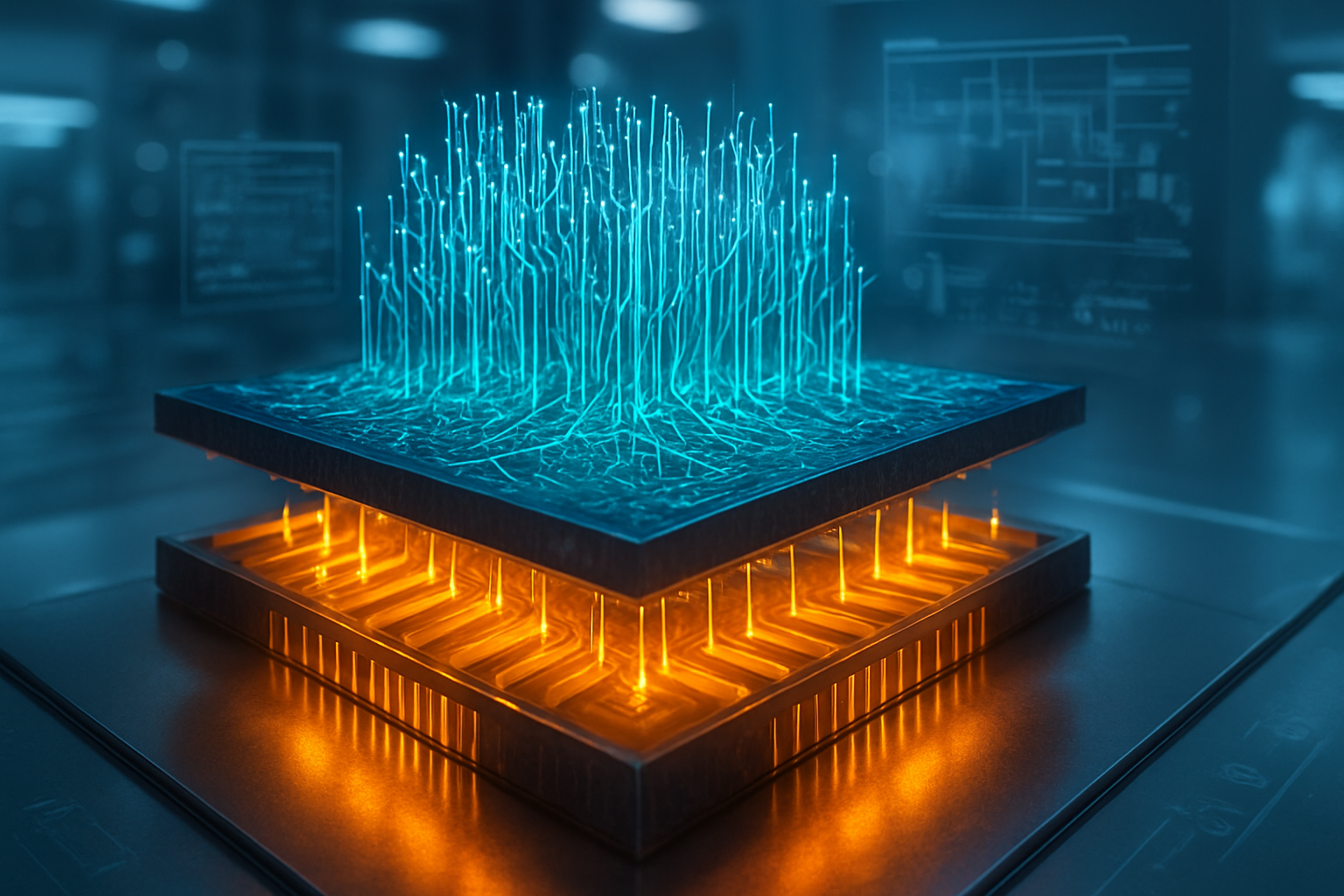
    HBM4 is not merely an incremental upgrade over HBM3E; it is an architectural overhaul. The most significant technical specification is the doubling of the physical interface width from 1,024-bit to 2,048-bit. By "widening the pipe" rather than just increasing clock speeds, HBM4 achieves massive gains in bandwidth while maintaining manageable power profiles. Current early-2026 units from Samsung are reporting peak bandwidths of up to 3.25 TB/s per stack, while Micron Technology (NASDAQ: MU) is shipping modules reaching 2.8 TB/s focused on extreme energy efficiency.

    Perhaps the most disruptive change is the transition of the "base die" at the bottom of the HBM stack. In previous generations, this die was manufactured using standard DRAM processes. With HBM4, the base die is now being produced on advanced foundry logic nodes, such as the 12nm and 5nm processes from TSMC (NYSE: TSM). This allows for the integration of custom logic directly into the memory stack. Designers can now embed custom memory controllers, hardware-level encryption, and even Processing-in-Memory (PIM) capabilities that allow the memory to perform basic data manipulation before the data even reaches the GPU.

    Initially, the industry targeted a 6.4 Gbps pin speed, but as the requirements for NVIDIA’s Rubin GPUs became clearer in late 2025, the specifications were revised upward. We are now seeing pin speeds between 11 and 13 Gbps. Furthermore, the physical constraints have become a marvel of engineering; to fit 12 or 16 layers of DRAM into a JEDEC-standard package height of 775µm, wafers must be thinned to a staggering 30µm—roughly one-third the thickness of a human hair.

    A New Competitive Landscape: Alliances vs. Turnkey Solutions

    The transition to customized HBM4 has reordered the competitive dynamics of the semiconductor industry. SK Hynix has solidified its market leadership through a "One-Team" alliance with TSMC. By leveraging TSMC’s logic process for the base die, SK Hynix ensures that its memory stacks are perfectly optimized for the Blackwell and Rubin GPUs also manufactured by TSMC. This partnership has allowed SK Hynix to deploy its proprietary Advanced MR-MUF (Mass Reflow Molded Underfill) technology, which offers superior thermal dissipation—a critical factor as 16-layer stacks become the norm for high-end AI servers.

    In contrast, Samsung Electronics is doubling down on its "turnkey" strategy. As the only company with its own DRAM production, logic foundry, and advanced packaging facilities, Samsung aims to provide a total solution under one roof. Samsung has become a pioneer in copper-to-copper hybrid bonding for HBM4. This technique eliminates the need for traditional micro-bumps between layers, allowing for even denser stacks with better thermal performance. By using its 4nm logic node for the base die, Samsung is positioning itself as the primary alternative for companies that want to bypass the TSMC-dominated supply chain.

    For NVIDIA, this customization is essential. The upcoming Rubin architecture, expected to dominate the second half of 2026, utilizes eight HBM4 stacks per GPU, providing a staggering 288GB of memory and over 22 TB/s of aggregate bandwidth. This "extreme co-design" allows NVIDIA to treat the GPU and its memory as a single coherent pool, which is vital for the low-latency reasoning required by modern "agentic" AI workflows that must process massive amounts of context in real-time.

    Solving the Memory Wall for Trillion-Parameter Models

    The broader significance of the HBM4 transition cannot be overstated. As AI models move from hundreds of billions to multiple trillions of parameters, the energy cost of moving data between the processor and memory has become the single largest expense in the data center. By moving logic into the HBM base die, manufacturers are effectively reducing the distance data must travel, significantly lowering the total cost of ownership (TCO) for AI labs like OpenAI and Anthropic.

    This development also addresses the "KV-cache" bottleneck in Large Language Models (LLMs). As models gain longer context windows—some now reaching millions of tokens—the amount of memory required just to store the intermediate states of a conversation has exploded. Customized HBM4 stacks allow for specialized memory management that can prioritize this data, enabling more efficient "thinking" processes in AI agents without the massive performance hits seen in the HBM3 era.

    However, the shift to custom memory also raises concerns regarding supply chain flexibility. In the era of commodity memory, a cloud provider could theoretically swap one vendor's RAM for another's. In the era of custom HBM4, the memory is so deeply integrated into the GPU's architecture that switching vendors becomes an arduous engineering task. This deep integration grants NVIDIA and its preferred partners even greater control over the AI hardware ecosystem, potentially raising barriers to entry for new chip startups.

    The Horizon: 16-Hi Stacks and Beyond

    Looking toward the latter half of 2026 and into 2027, the roadmap for HBM4 is already expanding. While 12-layer (12-Hi) stacks are the current volume leader, SK Hynix recently unveiled 16-Hi prototypes at CES 2026, promising 48GB of capacity per stack. These high-density modules will be the backbone of the "Rubin Ultra" GPUs, which are expected to push total on-chip memory toward the half-terabyte mark.

    Experts predict that the next logical step will be the full integration of optical interconnects directly into the HBM stack. This would allow for even faster communication between GPU clusters, effectively turning a whole rack of servers into a single giant GPU. Challenges remain, particularly in the yield rates of hybrid bonding and the thermal management of 16-layer towers of silicon, but the momentum is undeniable.

    A New Chapter in Silicon Evolution

    The evolution of HBM4 represents a fundamental shift in the hierarchy of computing. Memory is no longer a passive servant to the processor; it has become an active participant in the computational process. The move from commodity DRAM to customized HBM4 platforms is the industry's most potent weapon against the plateauing of Moore’s Law, providing the data throughput necessary to keep the AI revolution on its exponential growth curve.

    Key takeaways for the coming months include the ramp-up of Samsung’s hybrid bonding production and the first performance benchmarks of the Rubin architecture in the wild. As we move deeper into 2026, the success of these custom memory stacks will likely determine which hardware platforms can truly support the next generation of autonomous, trillion-parameter AI agents. The memory wall is falling, and in its place, a new, more integrated silicon landscape is emerging.


    This content is intended for informational purposes only and represents analysis of current AI developments.

    TokenRing AI delivers enterprise-grade solutions for multi-agent AI workflow orchestration, AI-powered development tools, and seamless remote collaboration platforms.
    For more information, visit https://www.tokenring.ai/.

  • The Yotta-Scale Showdown: AMD Helios vs. NVIDIA Rubin in the Battle for the 2026 AI Data Center

    The Yotta-Scale Showdown: AMD Helios vs. NVIDIA Rubin in the Battle for the 2026 AI Data Center

    As the first half of January 2026 draws to a close, the landscape of artificial intelligence infrastructure has been irrevocably altered by a series of landmark announcements at CES 2026. The world's two premier chipmakers, NVIDIA (NASDAQ:NVDA) and AMD (NASDAQ:AMD), have officially moved beyond the era of individual graphics cards, entering a high-stakes competition for "rack-scale" supremacy. With the unveiling of NVIDIA’s Rubin architecture and AMD’s Helios platform, the industry has transitioned into the age of the "AI Factory"—massive, liquid-cooled clusters designed to train and run the trillion-parameter autonomous agents that now define the enterprise landscape.

    This development marks a critical inflection point in the AI arms race. For the past three years, the market was defined by a desperate scramble for any available silicon. Today, however, the conversation has shifted to architectural efficiency, memory density, and total cost of ownership (TCO). While NVIDIA aims to maintain its near-monopoly through an ultra-integrated, proprietary ecosystem, AMD is positioning itself as the champion of open standards, gaining significant ground with hyperscalers who are increasingly wary of vendor lock-in. The fallout of this clash will determine the hardware foundation for the next decade of generative AI.

    The Silicon Titans: Architectural Deep Dives

    NVIDIA’s Rubin architecture, the successor to the record-breaking Blackwell series, represents a masterclass in vertical integration. At the heart of the Rubin platform is the Dual-Die GPU, a massive processor fabricated on TSMC’s (NYSE:TSM) refined N3 process, boasting a staggering 336 billion transistors. NVIDIA has paired this with the new Vera CPU, which utilizes custom-designed "Olympus" ARM cores to provide a unified memory pool with 1.8 TB/s of chip-to-chip bandwidth. The most significant leap, however, lies in the move to HBM4. Rubin GPUs feature 288GB of HBM4 memory, delivering a record-breaking 22 TB/s of bandwidth per socket. This is supported by NVLink 6, which doubles interconnect speeds to 3.6 TB/s, allowing the entire NVL72 rack to function as a single, massive GPU.

    AMD has countered with the Helios platform, built around the Instinct MI455X accelerator. Utilizing a pioneering 2nm/3nm hybrid chiplet design, AMD has prioritized memory capacity over raw bandwidth. Each MI455X GPU is equipped with a massive 432GB of HBM4—nearly 50% more than NVIDIA's Rubin. This "memory-first" strategy is intended to allow the largest Mixture-of-Experts (MoE) models to reside entirely within a single node, reducing the latency typically associated with inter-node communication. To tie the system together, AMD is spearheading the Ultra Accelerator Link (UALink), an open-standard interconnect that matches NVIDIA's 3.6 TB/s speeds but allows for interoperability with components from Intel (NASDAQ:INTC) and Broadcom (NASDAQ:AVGO).

    The initial reaction from the research community has been one of awe at the power densities involved. "We are no longer building computers; we are building superheated silicon engines," noted one senior architect at the OCP Global Summit. The sheer heat generated by these 1,000-watt+ GPUs has forced a mandatory shift to liquid cooling, with both NVIDIA and AMD now shipping their flagship architectures exclusively as fully integrated, rack-level systems rather than individual PCIe cards.

    Market Dynamics: The Fight for the Enterprise Core

    The strategic positioning of these two giants reveals a widening rift in how the world’s largest companies buy AI compute. NVIDIA is doubling down on its "premium integration" model. By controlling the CPU, GPU, and networking stack (InfiniBand/NVLink), NVIDIA (NASDAQ:NVDA) claims it can offer a "performance-per-watt" advantage that offsets its higher price point. This has resonated with companies like Microsoft (NASDAQ:MSFT) and Amazon (NASDAQ:AMZN), who have secured early access to Rubin-based systems for their flagship Azure and AWS clusters to support the next generation of GPT and Claude models.

    Conversely, AMD (NASDAQ:AMD) is successfully positioning Helios as the "Open Alternative." By adhering to Open Compute Project (OCP) standards, AMD has won the favor of Meta (NASDAQ:META). CEO Mark Zuckerberg recently confirmed that a significant portion of the Llama 4 training cluster would run on Helios infrastructure, citing the flexibility to customize networking and storage as a primary driver. Perhaps more surprising is OpenAI’s recent move to diversify its fleet, signing a multi-billion dollar agreement for AMD MI455X systems. This shift suggests that even the most loyal NVIDIA partners are looking for leverage in an era of constrained supply.

    This competition is also reshaping the memory market. The demand for HBM4 has created a fierce rivalry between SK Hynix (KRX:000660) and Samsung (KRX:005930). While NVIDIA has secured the lion's share of SK Hynix’s production through a "One-Team" strategic alliance, AMD has turned to Samsung’s energy-efficient 1c process. This split in the supply chain means that the availability of AI compute in 2026 will be as much about who has the better relationship with South Korean memory fabs as it is about architectural design.

    Broader Significance: The Era of Agentic AI

    The transition to Rubin and Helios is not just about raw speed; it is about a fundamental shift in AI behavior. In early 2026, the industry is moving away from "chat-based" AI toward "agentic" AI—autonomous systems that reason over long periods and handle multi-turn tasks. These workflows require immense "context memory." NVIDIA’s answer to this is the Inference Context Memory Storage (ICMS), a hardware-software layer that uses the NVL72 rack’s interconnect to store and retrieve "KV caches" (the memory of an AI agent's current task) across the entire cluster without re-computing data.

    AMD’s approach to the agentic era is more brute-force: raw HBM4 capacity. By providing 432GB per GPU, Helios allows an agent to maintain a much larger "active" context window in high-speed memory. This difference in philosophy—NVIDIA’s sophisticated memory tiering vs. AMD’s massive memory pool—will likely determine which platform wins the inference market for autonomous business agents.

    Furthermore, the scale of these deployments is raising unprecedented environmental concerns. A single Vera Rubin NVL72 rack can consume over 120kW of power. As enterprises move to deploy thousands of these racks, the pressure on the global power grid has become a central theme of 2026. The "AI Factory" is now as much a challenge for civil engineers and utility companies as it is for computer scientists, leading to a surge in specialized data center construction focused on modular nuclear power and advanced heat recapture systems.

    Future Horizons: What Comes After Rubin?

    Looking beyond 2026, the roadmap for both companies suggests that the "chiplet revolution" is only just beginning. Experts predict that the successor to Rubin, likely arriving in 2027, will move toward 3D-stacked logic-on-logic, where the CPU and GPU are no longer separate chips on a board but are vertically bonded into a single "super-chip." This would effectively eliminate the distinction between processor types, creating a truly universal AI compute unit.

    AMD is expected to continue its aggressive move toward 2nm and eventually sub-2nm nodes, leveraging its lead in multi-die interconnects to build even larger virtual GPUs. The challenge for both will be the "IO wall." As compute power continues to scale, the ability to move data in and out of the chip is becoming the ultimate bottleneck. Research into on-chip optical interconnects—using light instead of electricity to move data between chiplets—is expected to be the headline technology for the 2027/2028 refresh cycle.

    Final Assessment: A Duopoly Reborn

    As of January 15, 2026, the AI hardware market has matured into a robust duopoly. NVIDIA remains the dominant force, with a projected 82% market share in high-end data center GPUs, thanks to its peerless software ecosystem (CUDA) and the sheer performance of the Rubin NVL72. However, AMD has successfully shed its image as a "budget alternative." The Helios platform is a formidable, world-class architecture that offers genuine advantages in memory capacity and open-standard flexibility.

    For enterprise buyers, the choice in 2026 is no longer about which chip is faster on a single benchmark, but which ecosystem fits their long-term data center strategy. NVIDIA offers the "Easy Button"—a high-performance, turn-key solution with a significant "integration premium." AMD offers the "Open Path"—a high-capacity, standard-compliant platform that empowers the user to build their own bespoke AI factory. In the coming months, as the first volume shipments of Rubin and Helios hit data center floors, the real-world performance of these "Yotta-scale" systems will finally be put to the test.


    This content is intended for informational purposes only and represents analysis of current AI developments.

    TokenRing AI delivers enterprise-grade solutions for multi-agent AI workflow orchestration, AI-powered development tools, and seamless remote collaboration platforms.
    For more information, visit https://www.tokenring.ai/.

  • Breaking the Silicon Ceiling: TSMC Races to Scale CoWoS and Deploy Panel-Level Packaging for NVIDIA’s Rubin Era

    Breaking the Silicon Ceiling: TSMC Races to Scale CoWoS and Deploy Panel-Level Packaging for NVIDIA’s Rubin Era

    The global artificial intelligence race has entered a new and high-stakes chapter as the semiconductor industry shifts its focus from transistor shrinkage to the "packaging revolution." As of mid-January 2026, Taiwan Semiconductor Manufacturing Company (TSM: NYSE), or TSMC, is locked in a frantic race to double its Chip-on-Wafer-on-Substrate (CoWoS) capacity for the third consecutive year. The urgency follows the blockbuster announcement of NVIDIA’s (NVDA: NASDAQ) "Rubin" R100 architecture at CES 2026, which has sent demand for advanced packaging into an unprecedented stratosphere.

    The current bottleneck is no longer just about printing circuits; it is about how those circuits are stacked and interconnected. With the AI industry moving toward "Agentic AI" systems that require exponentially more compute power, traditional 300mm silicon wafers are reaching their physical limits. To combat this, the industry is pivoting toward Fan-Out Panel-Level Packaging (FOPLP), a breakthrough that promises to move chip production from circular wafers to massive rectangular panels, effectively tripling the available surface area for AI super-chips and breaking the supply chain gridlock that has defined the last two years.

    The Technical Leap: From Wafers to Panels and the Glass Revolution

    At the heart of this transition is the move from TSMC’s established CoWoS-L technology to its next-generation platform, branded as CoPoS (Chip-on-Panel-on-Substrate). While CoWoS has been the workhorse for NVIDIA’s Blackwell series, the new Rubin GPUs require a massive "reticle size" to integrate two 3nm compute dies alongside 8 to 12 stacks of HBM4 memory. By January 2026, TSMC has successfully scaled its CoWoS capacity to nearly 95,000 wafers per month (WPM), yet this is still insufficient to meet the orders pouring in from hyperscalers. Consequently, TSMC has accelerated its FOPLP pilot lines, utilizing a 515mm x 510mm rectangular format that offers over 300% more usable area than a standard 12-inch wafer.

    A pivotal technical development in 2026 is the industry-wide consensus on glass substrates. As chip sizes grow, traditional organic materials like Ajinomoto Build-up Film (ABF) have become prone to "warpage" and thermal instability, which can ruin a multi-thousand-dollar AI chip during the bonding process. TSMC, in collaboration with partners like Corning, is now verifying glass panels that provide 10x higher interconnect density and superior structural integrity. This transition allows for much tighter integration of HBM4, which delivers a staggering 22 TB/s of bandwidth—a necessity for the Rubin architecture's performance targets.

    Initial reactions from the AI research community have been electric, though tempered by concerns over yield rates. Experts at leading labs suggest that the move to panel-level packaging is a "reset" for the industry. While wafer-level processes are mature, panel-level manufacturing introduces new complexities in chemical mechanical polishing (CMP) and lithography across a much larger, flat surface. However, the potential for a 30% reduction in cost-per-chip due to area efficiency is seen as the only viable path to making trillion-parameter AI models commercially sustainable.

    The Competitive Battlefield: NVIDIA’s Dominance and the Foundry Pivot

    The strategic implications of these packaging bottlenecks are reshaping the corporate landscape. NVIDIA remains the "anchor tenant" of the semiconductor world, reportedly securing over 60% of TSMC’s total 2026 packaging capacity. This aggressive move has left rivals like AMD (AMD: NASDAQ) and Broadcom (AVGO: NASDAQ) scrambling for the remaining slots to support their own MI350 and custom ASIC projects. The supply constraint has become a strategic moat for NVIDIA; by controlling the packaging pipeline, they effectively control the pace at which the rest of the industry can deploy competitive hardware.

    However, the 2026 bottleneck has created a rare opening for Intel (INTC: NASDAQ) and Samsung (SSNLF: OTC). Intel has officially reached high-volume manufacturing at its 18A node and is operating a dedicated glass substrate facility in Arizona. By positioning itself as a "foundry alternative" with ready-to-use glass packaging, Intel is attempting to lure major AI players who are tired of being "TSMC-bound." Similarly, Samsung has leveraged its "Triple Alliance"—combining its display, substrate, and semiconductor divisions—to fast-track a glass-based PLP line in Sejong, aiming for full-scale mass production by the fourth quarter of 2026.

    This shift is disrupting the traditional "fab-first" mindset. Startups and mid-tier AI labs that cannot secure TSMC’s CoWoS capacity are being forced to explore these alternative foundries or pivot their software to be more hardware-agnostic. For tech giants like Meta and Google, the bottleneck has accelerated their push into "in-house" silicon, as they look for ways to design chips that can utilize simpler, more available packaging formats while still delivering the performance needed for their massive LLM clusters.

    Scaling Laws and the Sovereign AI Landscape

    The move to Panel-Level Packaging is more than a technical footnote; it is a critical component of the broader AI landscape. For years, "scaling laws" suggested that more data and more parameters would lead to more intelligence. In 2026, those laws have hit a hardware wall. Without the surface area provided by PLP, the physical dimensions of an AI chip would simply be too small to house the memory and logic required for next-generation reasoning. The "package" has effectively become the new transistor—the primary unit of innovation where gains are being made.

    This development also carries significant geopolitical weight. As countries pursue "Sovereign AI" by building their own national compute clusters, the ability to secure advanced packaging has become a matter of national security. The concentration of CoWoS and PLP capacity in Taiwan remains a point of intense focus for global policymakers. The diversification efforts by Intel in the U.S. and Samsung in Korea are being viewed not just as business moves, but as essential steps in de-risking the global AI supply chain.

    There are, however, looming concerns. The transition to glass and panels is capital-intensive, requiring billions in new equipment. Critics worry that this will further consolidate power among the three "super-foundries," making it nearly impossible for new entrants to compete in the high-end chip space. Furthermore, the environmental impact of these massive new facilities—which require significant water and energy for the high-precision cooling of glass substrates—is beginning to draw scrutiny from ESG-focused investors.

    Future Outlook: Toward the 2027 "Super-Panel" and Beyond

    Looking toward 2027 and 2028, experts predict that the pilot lines being verified today will evolve into "Super-Panels" measuring up to 750mm x 620mm. These massive substrates will allow for the integration of dozens of chiplets, effectively creating a "system-on-package" that rivals the power of a modern-day server rack. We are also likely to see the debut of "CoWoP" (Chip-on-Wafer-on-Platform), a substrate-less solution that connects interposers directly to the motherboard, further reducing latency and power consumption.

    The near-term challenge remains yield optimization. Transitioning from a circular wafer to a rectangular panel involves "edge effects" that can lead to defects in the outer chips of the panel. Addressing these challenges will require a new generation of AI-driven inspection tools and robotic handling systems. If these hurdles are cleared, the industry predicts a "golden age" of custom silicon, where even niche AI applications can afford advanced packaging due to the economies of scale provided by PLP.

    A New Era of Compute

    The transition to Panel-Level Packaging marks a definitive end to the era where silicon area was the primary constraint on AI. By moving to rectangular panels and glass substrates, TSMC and its competitors are quite literally expanding the boundaries of what a single chip can do. This development is the backbone of the "Rubin era" and the catalyst that will allow Agentic AI to move from experimental labs into the mainstream global economy.

    As we move through 2026, the key metrics to watch will be TSMC’s quarterly capacity updates and the yield rates of Samsung’s and Intel’s glass substrate lines. The winner of this packaging race will likely dictate which AI companies lead the market for the remainder of the decade. For now, the message is clear: the future of AI isn't just about how smart the code is—it's about how much silicon we can fit on a panel.


    This content is intended for informational purposes only and represents analysis of current AI developments.

    TokenRing AI delivers enterprise-grade solutions for multi-agent AI workflow orchestration, AI-powered development tools, and seamless remote collaboration platforms.
    For more information, visit https://www.tokenring.ai/.
  • The 2,048-Bit Breakthrough: SK Hynix and Samsung Launch a New Era of Generative AI with HBM4

    The 2,048-Bit Breakthrough: SK Hynix and Samsung Launch a New Era of Generative AI with HBM4

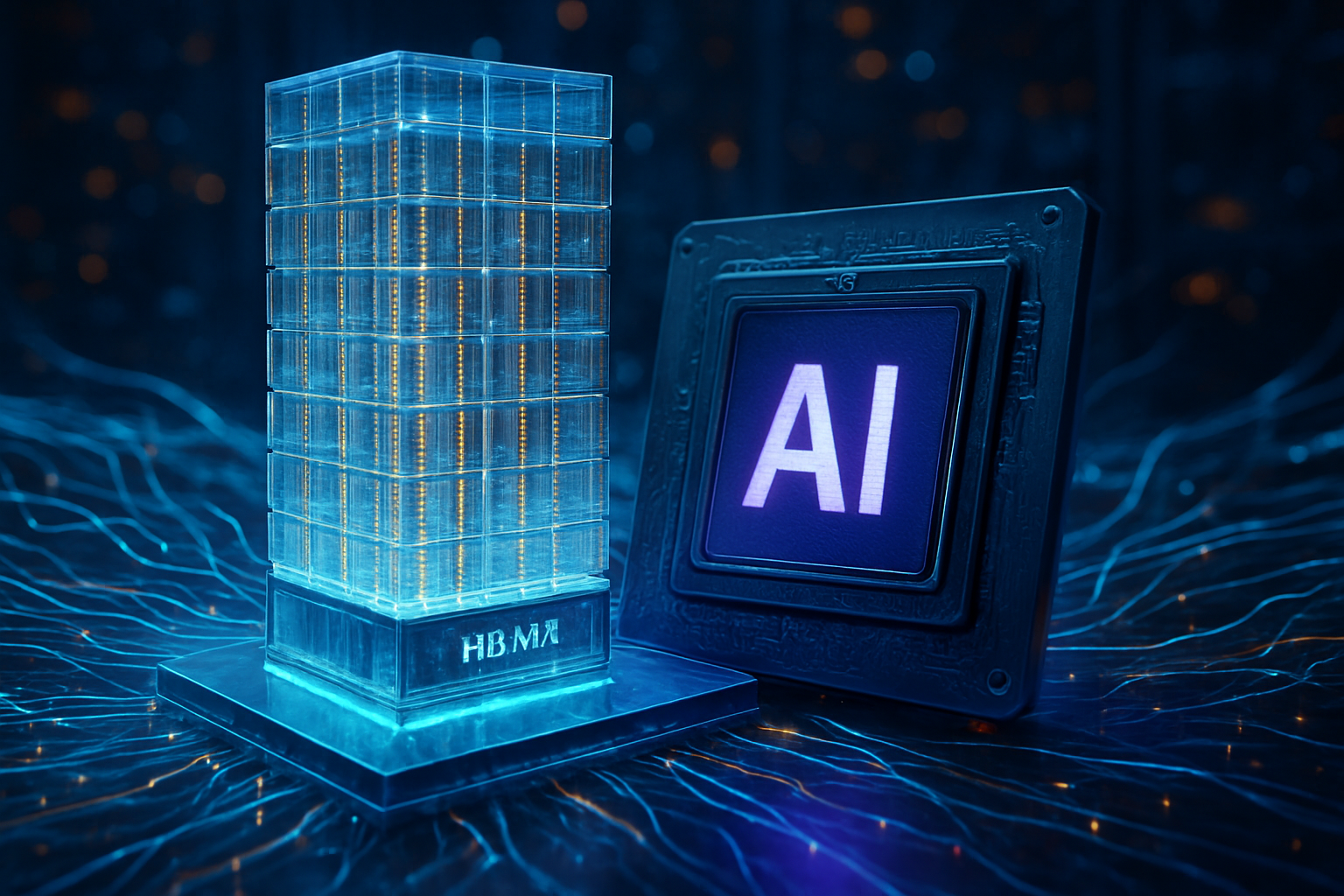
    As of January 13, 2026, the artificial intelligence industry has reached a pivotal juncture in its hardware evolution. The "Memory Wall"—the performance gap between ultra-fast processors and the memory that feeds them—is finally being dismantled. This week marks a definitive shift as SK Hynix (KRX: 000660) and Samsung Electronics (KRX: 005930) move into high-gear production of HBM4, the next generation of High Bandwidth Memory. This transition isn't just an incremental update; it is a fundamental architectural redesign centered on a new 2,048-bit interface that promises to double the data throughput available to the world’s most powerful generative AI models.

    The immediate significance of this development cannot be overstated. As large language models (LLMs) push toward multi-trillion parameter scales, the bottleneck has shifted from raw compute power to memory bandwidth. HBM4 provides the essential "oxygen" for these massive models to breathe, offering per-stack bandwidth of up to 2.8 TB/s. With major players like NVIDIA (NASDAQ: NVDA) and AMD (NASDAQ: AMD) integrating these stacks into their 2026 flagship accelerators, the race for HBM4 dominance has become the most critical subplot in the global AI arms race, determining which hardware platforms will lead the next decade of autonomous intelligence.

    The Technical Leap: Doubling the Highway

    The move to HBM4 represents the most significant technical overhaul in the history of memory. For the first time, the industry is transitioning from a 1,024-bit interface—a standard that held firm through HBM2 and HBM3—to a massive 2,048-bit interface. By doubling the number of I/O pins, manufacturers can achieve unprecedented data transfer speeds while actually reducing the clock speed and power consumption per bit. This architectural shift is complemented by the transition to 16-high (16-Hi) stacking, allowing for individual memory stacks with capacities ranging from 48GB to 64GB.

    Another groundbreaking technical change in HBM4 is the introduction of a logic base die manufactured on advanced foundry nodes. Previously, HBM base dies were built using standard DRAM processes. However, HBM4 requires the foundation of the stack to be a high-performance logic chip. SK Hynix has partnered with TSMC (NYSE: TSM) to utilize their 5nm and 12nm nodes for these base dies, allowing for "Custom HBM" where AI-specific controllers are integrated directly into the memory. Samsung, meanwhile, is leveraging its internal "one-stop shop" advantage, using its own 4nm foundry process to create a vertically integrated solution that promises lower latency and improved thermal management.

    The packaging techniques used to assemble these 16-layer skyscrapers are equally sophisticated. SK Hynix is employing an advanced version of its Mass Reflow Molded Underfill (MR-MUF) technology, thinning wafers to a mere 30 micrometers to keep the entire stack within the JEDEC-specified height limits. Samsung is aggressively pivoting toward Hybrid Bonding (copper-to-copper direct contact), a method that eliminates traditional micro-bumps. Industry experts suggest that Hybrid Bonding could be the "holy grail" for HBM4, as it significantly reduces thermal resistance—a critical factor for GPUs like NVIDIA’s upcoming Rubin platform, which are expected to exceed 1,000W in power draw.

    The Corporate Duel: Strategic Alliances and Vertical Integration

    The competitive landscape of 2026 has bifurcated into two distinct strategic philosophies. SK Hynix, which currently holds a market share lead of roughly 55%, has doubled down on its "Trilateral Alliance" with TSMC and NVIDIA. By outsourcing the logic die to TSMC, SK Hynix has effectively tethered its success to the world’s leading foundry and its primary customer. This ecosystem-centric approach has allowed them to remain the preferred vendor for NVIDIA's Blackwell and now the newly unveiled "Rubin" (R100) architecture, which features eight stacks of HBM4 for a staggering 22 TB/s of aggregate bandwidth.

    Samsung Electronics, however, is executing a "turnkey" strategy aimed at disrupting the status quo. By handling the DRAM fabrication, logic die manufacturing, and advanced 3D packaging all under one roof, Samsung aims to offer better price-to-performance ratios and faster customization for bespoke AI silicon. This strategy bore major fruit early this year with a reported $16.5 billion deal to supply Tesla (NASDAQ: TSLA) with HBM4 for its next-generation Dojo supercomputer chips. While Samsung struggled during the HBM3e era, its early lead in Hybrid Bonding and internal foundry capacity has positioned it as a formidable challenger to the SK Hynix-TSMC hegemony.

    Micron Technology (NASDAQ: MU) also remains a key player, focusing on high-efficiency HBM4 designs for the enterprise AI market. While smaller in scale compared to the South Korean giants, Micron’s focus on power-per-watt has earned it significant slots in AMD’s new Helios (Instinct MI455X) accelerators. The battle for market positioning is no longer just about who can make the most chips, but who can offer the most "customizable" memory. As hyperscalers like Amazon and Google design their own AI chips (TPUs and Trainium), the ability for memory makers to integrate specific logic functions into the HBM4 base die has become a critical strategic advantage.

    The Global AI Landscape: Breaking the Memory Wall

    The arrival of HBM4 is a milestone that reverberates far beyond the semiconductor industry; it is a prerequisite for the next stage of AI democratization. Until now, the high cost and limited availability of high-bandwidth memory have concentrated the most advanced AI capabilities within a handful of well-funded labs. By providing a 2x leap in bandwidth and capacity, HBM4 enables more efficient training of "Sovereign AI" models and allows smaller data centers to run more complex inference tasks. This fits into the broader trend of AI shifting from experimental research to ubiquitous infrastructure.

    However, the transition to HBM4 also brings concerns regarding the environmental footprint of AI. While the 2,048-bit interface is more efficient on a per-bit basis, the sheer density of these 16-layer stacks creates immense thermal challenges. The move toward liquid-cooled data centers is no longer an option but a requirement for 2026-era hardware. Comparison with previous milestones, such as the introduction of HBM1 in 2013, shows just how far the industry has come: HBM4 offers nearly 20 times the bandwidth of its earliest ancestor, reflecting the exponential growth in demand fueled by the generative AI explosion.

    Potential disruption is also on the horizon for traditional server memory. As HBM4 becomes more accessible and customizable, we are seeing the beginning of the "Memory-Centric Computing" era, where processing is moved closer to the data. This could eventually threaten the dominance of standard DDR5 memory in high-performance computing environments. Industry analysts are closely watching whether the high costs of HBM4 production—estimated to be several times that of standard DRAM—will continue to be absorbed by the high margins of the AI sector or if they will eventually lead to a cooling of the current investment cycle.

    Future Horizons: Toward HBM4e and Beyond

    Looking ahead, the roadmap for memory is already stretching toward the end of the decade. Near-term, we expect to see the announcement of HBM4e (Enhanced) by late 2026, which will likely push pin speeds toward 14 Gbps and expand stack heights even further. The successful implementation of Hybrid Bonding will be the gateway to HBM5, where we may see the total merging of logic and memory layers into a single, monolithic 3D structure. Experts predict that by 2028, we will see "In-Memory Processing" where simple AI calculations are performed within the HBM stack itself, further reducing latency.

    The applications on the horizon are equally transformative. With the massive memory capacity afforded by HBM4, the industry is moving toward "World Models" that can process hours of high-resolution video or massive scientific datasets in a single context window. However, challenges remain—particularly in yield rates for 16-high stacks and the geopolitical complexities of the semiconductor supply chain. Ensuring that HBM4 production can scale to meet the demand of the "Agentic AI" era, where millions of autonomous agents will require constant memory access, will be the primary task for engineers over the next 24 months.

    Conclusion: The Backbone of the Intelligent Era

    In summary, the HBM4 race is the definitive battleground for the next phase of the AI revolution. SK Hynix’s collaborative ecosystem and Samsung’s vertically integrated "one-stop shop" represent two distinct paths toward solving the same fundamental problem: the insatiable need for data speed. The shift to a 2,048-bit interface and the integration of logic dies mark the point where memory ceased to be a passive storage medium and became an active, intelligent component of the AI processor itself.

    As we move through 2026, the success of these companies will be measured by their ability to achieve high yields in the difficult 16-layer assembly process and their capacity to innovate in thermal management. This development will likely be remembered as the moment the "Memory Wall" was finally breached, enabling a new generation of AI models that are faster, more capable, and more efficient than ever before. Investors and tech enthusiasts should keep a close eye on the Q1 and Q2 earnings reports of the major players, as the first volume shipments of HBM4 begin to reshape the financial and technological landscape of the AI industry.


    This content is intended for informational purposes only and represents analysis of current AI developments.

    TokenRing AI delivers enterprise-grade solutions for multi-agent AI workflow orchestration, AI-powered development tools, and seamless remote collaboration platforms.
    For more information, visit https://www.tokenring.ai/.
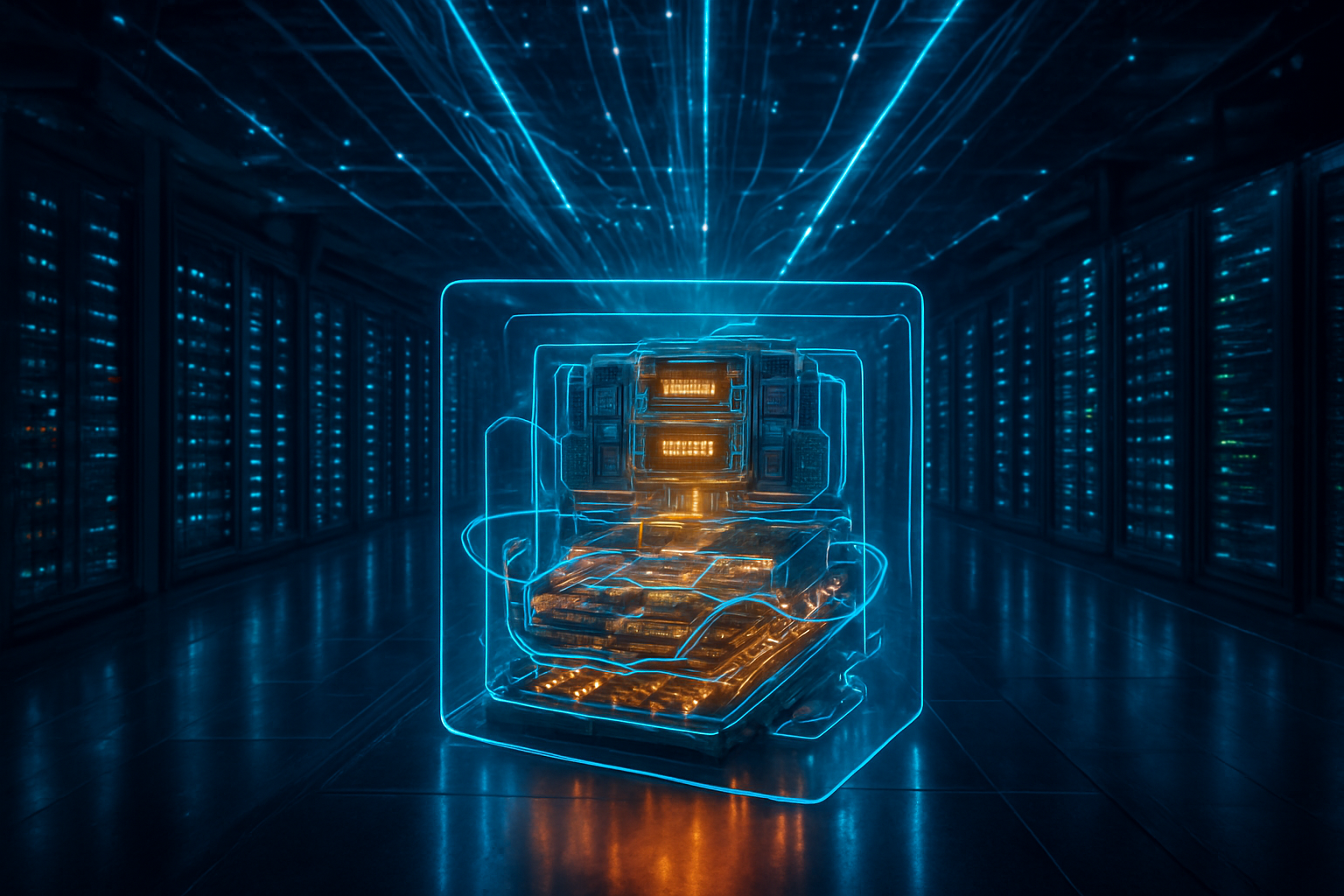
  • The Rubin Revolution: How ‘Fairwater’ and Custom ARM Silicon are Rewiring the AI Supercloud

    The Rubin Revolution: How ‘Fairwater’ and Custom ARM Silicon are Rewiring the AI Supercloud

    As of January 2026, the artificial intelligence industry has officially entered the "Rubin Era." Named after the pioneering astronomer Vera Rubin, NVIDIA’s latest architectural leap represents more than just a faster chip; it marks the transition of the data center from a collection of servers into a singular, planet-scale AI engine. This shift is being met by a massive infrastructure pivot from the world’s largest cloud providers, who are no longer content with off-the-shelf components. Instead, they are deploying "superfactories" and custom-designed ARM CPUs specifically engineered to squeeze every drop of performance out of NVIDIA’s silicon.

    The immediate significance of this development cannot be overstated. We are witnessing the end of general-purpose computing as the primary driver of data center growth. In its place is a highly specialized, vertically integrated stack where the CPU, GPU, and networking fabric are co-designed at the atomic level. Microsoft’s "Fairwater" project and the latest custom ARM chips from AWS and Google are the first true examples of this "AI-first" infrastructure, promising to reduce the cost of training frontier models by orders of magnitude while enabling the rise of autonomous, agentic AI systems.

    The Rubin Architecture: A 22 TB/s Leap into Agentic AI

    Unveiled at CES 2026, NVIDIA (NASDAQ:NVDA) has set a new high-water mark with the Rubin (R100) architecture. Built on an enhanced 3nm process from Taiwan Semiconductor Manufacturing Company (NYSE:TSM), Rubin moves away from the monolithic designs of the past toward a sophisticated chiplet-based approach. The headline specification is the integration of HBM4 memory, providing a staggering 22 TB/s of memory bandwidth. This is a 2.8x increase over the Blackwell Ultra architecture of 2025, effectively shattering the "memory wall" that has long throttled the performance of large language models (LLMs).

    Accompanying the R100 GPU is the new Vera CPU, the successor to the Grace CPU. The "Vera Rubin" superchip is specifically optimized for what industry experts call "Agentic AI"—autonomous systems that require high-speed reasoning, planning, and long-term memory. Unlike previous iterations that focused primarily on raw throughput, the Rubin platform is designed for low-latency inference and complex multi-step orchestration. Initial reactions from the research community suggest that Rubin could reduce the time-to-train for 100-trillion parameter models from months to weeks, a feat previously thought impossible before the end of the decade.

    The Rise of the Superfactory: Microsoft’s 'Fairwater' Initiative

    While NVIDIA provides the brains, Microsoft (NASDAQ:MSFT) is building the body. Project "Fairwater" represents a radical departure from traditional data center design. Rather than building isolated facilities, Microsoft is constructing "planet-scale AI superfactories" in locations like Mount Pleasant, Wisconsin, and Atlanta, Georgia. These sites are linked by a dedicated AI Wide Area Network (AI-WAN) backbone, a private fiber-optic mesh that allows data centers hundreds of miles apart to function as a single, unified supercomputer.

    This infrastructure is purpose-built for the Rubin era. Fairwater facilities feature a vertical rack layout designed to support the extreme power and cooling requirements of NVIDIA’s GB300 and Rubin systems. To handle the heat generated by 4-Exaflop racks, Microsoft has deployed the world’s largest closed-loop liquid cooling system, which recycles water with near-zero consumption. By treating the entire "superfactory" as a single machine, Microsoft can train next-generation frontier models for OpenAI with unprecedented efficiency, positioning itself as the undisputed leader in AI infrastructure.

    Eliminating the Bottleneck: Custom ARM CPUs for the GPU Age

    The biggest challenge in the Rubin era is no longer the GPU itself, but the "CPU bottleneck"—the inability of traditional processors to feed data to GPUs fast enough. To solve this, Amazon (NASDAQ:AMZN), Alphabet (NASDAQ:GOOGL), and Meta Platforms (NASDAQ:META) have all doubled down on custom ARM-based silicon. Amazon’s Graviton5, launched in late 2025, features 192 cores and a revolutionary "NVLink Fusion" technology. This allows the Graviton5 to communicate directly with NVIDIA GPUs over a unified high-speed fabric, reducing communication latency by over 30%.

    Google has taken a similar path with its Axion CPU, integrated into its "AI Hypercomputer" architecture. Axion uses custom "Titanium" offload controllers to manage the massive networking and I/O demands of Rubin pods, ensuring that the GPUs are never idle. Meanwhile, Meta has pivoted to a "customizable base" strategy with Arm Holdings (NASDAQ:ARM), optimizing the PyTorch library to run natively on their internal silicon and NVIDIA’s Grace-Rubin superchips. These custom CPUs are not meant to replace NVIDIA GPUs, but to act as the perfect "waiter," ensuring the GPU "chef" is always supplied with the data it needs to cook.

    The Wider Significance: Sovereign AI and the Efficiency Mandate

    The shift toward custom hyperscaler silicon and superfactories marks a turning point in the global AI landscape. We are moving away from a world where AI is a software layer on top of general hardware, and toward a world of "Sovereign AI" infrastructure. For tech giants, the ability to design their own silicon provides a massive strategic advantage: they can optimize for their specific workloads—be it search, social media ranking, or enterprise productivity—while reducing their reliance on external vendors and lowering their long-term capital expenditures.

    However, this trend also raises concerns about the "compute divide." The sheer scale of projects like Fairwater suggests that only the wealthiest nations and corporations will be able to afford the infrastructure required to train the next generation of AI. Comparisons are already being made to the Manhattan Project or the Space Race. Just as those milestones defined the 20th century, the construction of these AI superfactories will likely define the geopolitical and economic landscape of the mid-21st century, with energy efficiency and silicon sovereignty becoming the new metrics of national power.

    Future Horizons: From Rubin to Vera and Beyond

    Looking ahead, the industry is already whispering about what comes after Rubin. NVIDIA’s annual cadence suggests that a successor—potentially codenamed "Vera" or another astronomical pioneer—is already in the simulation phase for a 2027 release. Experts predict that the next major breakthrough will involve optical interconnects, replacing copper wiring within the rack to further reduce power consumption and increase data speeds. As AI agents become more autonomous, the demand for "on-the-fly" model retraining will grow, requiring even tighter integration between custom cloud silicon and GPU clusters.

    The challenges remain formidable. Powering these superfactories will require a massive expansion of the electrical grid and potentially the deployment of small modular reactors (SMRs) directly on-site. Furthermore, as the software stack becomes increasingly specialized for custom silicon, the industry must ensure that open-source frameworks remain compatible across different hardware ecosystems to prevent vendor lock-in. The coming months will be critical as the first Rubin-based systems begin their initial test runs in the Fairwater superfactories.

    A New Chapter in Computing History

    The emergence of custom hyperscaler silicon in the Rubin era represents the most significant architectural shift in computing since the transition from mainframes to the client-server model. By co-designing the CPU, the GPU, and the physical data center itself, companies like Microsoft, AWS, and Google are creating a foundation for AI that was previously the stuff of science fiction. The "Fairwater" project and the new generation of ARM CPUs are not just incremental improvements; they are the blueprints for the future of intelligence.

    As we move through 2026, the industry will be watching closely to see how these massive investments translate into real-world AI capabilities. The key takeaways are clear: the era of general-purpose compute is over, the era of the AI superfactory has begun, and the race for silicon sovereignty is just heating up. For enterprises and developers, the message is simple: the tools of the trade are changing, and those who can best leverage this new, vertically integrated stack will be the ones who define the next decade of innovation.


    This content is intended for informational purposes only and represents analysis of current AI developments.

    TokenRing AI delivers enterprise-grade solutions for multi-agent AI workflow orchestration, AI-powered development tools, and seamless remote collaboration platforms.
    For more information, visit https://www.tokenring.ai/.

  • The Yotta-Scale War: AMD’s Helios Challenges NVIDIA’s Rubin for the Agentic AI Throne at CES 2026

    The Yotta-Scale War: AMD’s Helios Challenges NVIDIA’s Rubin for the Agentic AI Throne at CES 2026

    The landscape of artificial intelligence reached a historic inflection point at CES 2026, as the industry transitioned from the era of discrete GPUs to the era of unified, rack-scale "AI factories." The highlight of the event was the unveiling of the AMD (NASDAQ: AMD) Helios platform, a liquid-cooled, double-wide rack-scale architecture designed to push the boundaries of "yotta-scale" computing. This announcement sets the stage for a direct confrontation with NVIDIA (NASDAQ: NVDA) and its newly minted Vera Rubin platform, marking the most aggressive challenge to NVIDIA’s data center dominance in over a decade.

    The immediate significance of the Helios launch lies in its focus on "Agentic AI"—autonomous systems capable of long-running reasoning and multi-step task execution. By prioritizing massive High-Bandwidth Memory (HBM4) co-packaging and open-standard networking, AMD is positioning Helios not just as a hardware alternative, but as a fundamental shift toward an open ecosystem for the next generation of trillion-parameter models. As hyperscalers like OpenAI and Meta seek to diversify their infrastructure, the arrival of Helios signals the end of the single-vendor era and the birth of a true silicon duopoly in the high-end AI market.

    Technical Superiority and the Memory Wall

    The AMD Helios platform is a technical marvel that redefines the concept of a data center node. Each Helios rack is a liquid-cooled powerhouse containing 18 compute trays, with each tray housing four Instinct MI455X GPUs and one EPYC "Venice" CPU. This configuration yields a staggering 72 GPUs and 18 CPUs per rack, capable of delivering 2.9 ExaFLOPS of FP4 AI compute. The most striking specification is the integration of 31TB of HBM4 memory across the rack, with an aggregate bandwidth of 1.4PB/s. This "memory-first" approach is specifically designed to overcome the "memory wall" that has traditionally bottlenecked large-scale inference.

    In contrast, NVIDIA’s Vera Rubin platform focuses on "extreme co-design." The Rubin GPU features 288GB of HBM4 and is paired with the Vera CPU—an 88-core Armv9.2 chip featuring custom "Olympus" cores. While NVIDIA’s NVL72 rack delivers a slightly higher 3.6 ExaFLOPS of NVFP4 compute, its true innovation is the Inference Context Memory Storage (ICMS). Powered by the BlueField-4 DPU, ICMS acts as a shared, pod-level memory tier for Key-Value (KV) caches. This allows a fleet of AI agents to share a unified "context namespace," meaning that if one agent learns a piece of information, the entire pod can access it without redundant computation.

    The technical divergence between the two giants is clear: AMD is betting on raw, on-package memory density (432GB per GPU) to keep trillion-parameter models resident in high-speed memory, while NVIDIA is leveraging its vertical stack to create a sophisticated, software-defined memory hierarchy. Industry experts note that AMD’s reliance on the new Ultra Accelerator Link (UALink) for scale-up and Ultra Ethernet for scale-out networking represents a major victory for open standards, potentially lowering the barrier to entry for third-party hardware integration.

    Initial reactions from the AI research community have been overwhelmingly positive, particularly regarding the performance-per-watt gains. Both platforms utilize advanced 3D chiplet co-packaging and hybrid bonding, which significantly reduces the energy required to move data between logic and memory. This efficiency is crucial as the industry moves toward "yotta-scale" goals—computing at the scale of 10²⁴ operations per second—where power consumption becomes the primary limiting factor for data center expansion.

    Market Disruptions and the Silicon Duopoly

    The arrival of Helios and Rubin has profound implications for the competitive dynamics of the tech industry. For AMD (NASDAQ: AMD), Helios represents a "Milan moment"—a breakthrough that could see its data center market share jump from the low teens to nearly 20% by the end of 2026. The platform has already secured a massive endorsement from OpenAI, which announced a partnership for 6 gigawatts of AMD infrastructure. Perhaps more significantly, reports suggest AMD has issued warrants that could allow OpenAI to acquire up to a 10% stake in the company, a move that would cement a deep, structural alliance against NVIDIA’s dominance.

    NVIDIA (NASDAQ: NVDA), meanwhile, remains the incumbent titan, controlling approximately 80-85% of the AI accelerator market. Its transition to a one-year product cadence—moving from Blackwell to Rubin in record time—is a strategic maneuver designed to exhaust competitors. However, the "NVIDIA tax"—the high premium for its proprietary CUDA and NVLink stack—is driving hyperscalers like Alphabet (NASDAQ: GOOGL) and Microsoft (NASDAQ: MSFT) to aggressively fund "second source" options. By offering an open-standard alternative that matches or exceeds NVIDIA’s memory capacity, AMD is providing these giants with the leverage they have long sought.

    Startups and mid-tier AI labs stand to benefit from this competition through a projected 10x reduction in token generation costs. As AMD and NVIDIA battle for the "price-per-token" crown, the economic viability of complex, agentic AI workflows will improve. This could lead to a surge in new AI-native products that were previously too expensive to run at scale. Furthermore, the shift toward liquid-cooled, rack-scale systems will favor data center providers like Equinix (NASDAQ: EQIX) and Digital Realty (NYSE: DLR), who are already retrofitting facilities to handle the massive power and cooling requirements of these new "AI factories."

    The strategic advantage of the Helios platform also lies in its interoperability. By adhering to the Open Compute Project (OCP) standards, AMD is appealing to companies like Meta (NASDAQ: META), which has co-designed the Helios Open Rack Wide specification. This allows Meta to mix and match AMD hardware with its own in-house MTIA (Meta Training and Inference Accelerator) chips, creating a flexible, heterogeneous compute environment that reduces reliance on any single vendor's proprietary roadmap.

    The Dawn of Agentic AI and Yotta-Scale Infrastructure

    The competition between Helios and Rubin is more than a corporate rivalry; it is a reflection of the broader shift in the AI landscape toward "Agentic AI." Unlike the chatbots of 2023 and 2024, which responded to individual prompts, the agents of 2026 are designed to operate autonomously for hours or days, performing complex research, coding, and decision-making tasks. This shift requires a fundamentally different hardware architecture—one that can maintain massive "session histories" and provide low-latency access to vast amounts of context.

    AMD’s decision to pack 432GB of HBM4 onto a single GPU is a direct response to this need. It allows the largest models to stay "awake" and responsive without the latency penalties of moving data across a network. On the other hand, NVIDIA’s ICMS approach acknowledges that as agents become more complex, the cost of HBM will eventually become prohibitive, necessitating a tiered storage approach. These two different philosophies will likely coexist, with AMD winning in high-density inference and NVIDIA maintaining its lead in large-scale training and "Physical AI" (robotics and simulation).

    However, this rapid advancement brings potential concerns, particularly regarding the environmental impact and the concentration of power. The move toward yotta-scale computing requires unprecedented amounts of electricity, leading to a "power grab" where tech giants are increasingly investing in nuclear and renewable energy projects to sustain their AI ambitions. There is also the risk that the sheer cost of these rack-scale systems—estimated at $3 million to $5 million per rack—will further widen the gap between the "compute-rich" hyperscalers and the "compute-poor" academic and smaller research institutions.

    Comparatively, the leap from the H100 (Hopper) era to the Rubin/Helios era is significantly larger than the transition from V100 to A100. We are no longer just seeing faster chips; we are seeing the integration of memory, logic, and networking into a single, cohesive organism. This milestone mirrors the transition from mainframe computers to distributed clusters, but at an accelerated pace that is straining global supply chains, particularly for TSMC's 2nm and 3nm wafer capacity.

    Future Outlook: The Road to 2027

    Looking ahead, the next 18 to 24 months will be defined by the execution of these ambitious roadmaps. While both AMD and NVIDIA have unveiled their visions, the challenge now lies in mass production. NVIDIA’s Rubin is expected to enter production in late 2026, with shipping starting in Q4, while AMD’s Helios is slated for a Q3 2026 launch. The availability of HBM4 will be the primary bottleneck, as manufacturers like SK Hynix and Samsung (OTC: SSNLF) struggle to keep up with the demand for the complex 3D-stacked memory.

    In the near term, expect to see a surge in "Agentic AI" applications that leverage these new hardware capabilities. We will likely see the first truly autonomous enterprise departments—AI agents capable of managing entire supply chains or software development lifecycles with minimal human oversight. In the long term, the success of the Helios platform will depend on the maturity of AMD’s ROCm software ecosystem. While ROCm 7.2 has narrowed the gap with CUDA, providing "day-zero" support for major frameworks like PyTorch and vLLM, NVIDIA’s deep software moat remains a formidable barrier.

    Experts predict that the next frontier after yotta-scale will be "Neuromorphic-Hybrid" architectures, where traditional silicon is paired with specialized chips that mimic the human brain's efficiency. Until then, the battle will be fought in the data center trenches, with AMD and NVIDIA pushing the limits of physics to power the next generation of intelligence. The "Silicon Duopoly" is now a reality, and the beneficiaries will be the developers and enterprises that can harness this unprecedented scale of compute.

    Final Thoughts: A New Chapter in AI History

    The announcements at CES 2026 have made one thing clear: the era of the individual GPU is over. The competition for the data center crown has moved to the rack level, where the integration of compute, memory, and networking determines the winner. AMD’s Helios platform, with its massive HBM4 capacity and commitment to open standards, has proven that it is no longer just a "second source" but a primary architect of the AI future. NVIDIA’s Rubin, with its extreme co-design and innovative context management, continues to set the gold standard for performance and efficiency.

    As we look back on this development, it will likely be viewed as the moment when AI infrastructure finally caught up to the ambitions of AI researchers. The move toward yotta-scale computing and the support for agentic workflows will catalyze a new wave of innovation, transforming every sector of the global economy. For investors and industry watchers, the key will be to monitor the deployment speeds of these platforms and the adoption rates of the UALink and Ultra Ethernet standards.

    In the coming weeks, all eyes will be on the quarterly earnings calls of AMD (NASDAQ: AMD) and NVIDIA (NASDAQ: NVDA) for further details on supply chain allocations and early customer commitments. The "Yotta-Scale War" has only just begun, and its outcome will shape the trajectory of artificial intelligence for the rest of the decade.


    This content is intended for informational purposes only and represents analysis of current AI developments.

    TokenRing AI delivers enterprise-grade solutions for multi-agent AI workflow orchestration, AI-powered development tools, and seamless remote collaboration platforms.
    For more information, visit https://www.tokenring.ai/.
  • The HBM4 Memory War: SK Hynix, Samsung, and Micron Battle for AI Supremacy at CES 2026

    The HBM4 Memory War: SK Hynix, Samsung, and Micron Battle for AI Supremacy at CES 2026

    The floor of CES 2026 has transformed into a high-stakes battlefield for the semiconductor industry, as the "HBM4 Memory War" officially ignited among the world’s three largest memory manufacturers. With the artificial intelligence revolution entering a new phase of massive-scale model training, the demand for High Bandwidth Memory (HBM) has shifted from a supply-chain bottleneck to the primary architectural hurdle for next-generation silicon. The announcements made this week by SK Hynix, Samsung, and Micron represent more than just incremental speed bumps; they signal a fundamental shift in how memory and logic are integrated to power the most advanced AI clusters on the planet.

    This surge in memory innovation is being driven by the arrival of NVIDIA’s (NASDAQ:NVDA) new "Vera Rubin" architecture, the much-anticipated successor to the Blackwell platform. As AI models grow to tens of trillions of parameters, the industry has hit the "memory wall"—a physical limit where processors are fast enough to compute data, but the memory cannot feed it to them quickly enough. HBM4 is the industry's collective answer to this crisis, offering the massive bandwidth and energy efficiency required to prevent the world’s most expensive GPUs from sitting idle while waiting for data.

    The 16-Layer Breakthrough and the 1c Efficiency Edge

    At the center of the CES hardware showcase, SK Hynix (KRX:000660) stunned the industry by debuting the world’s first 16-layer (16-Hi) 48GB HBM4 stack. This engineering marvel doubles the density of previous generations while maintaining a strict 775µm height limit required by standard packaging. To achieve this, SK Hynix thinned individual DRAM wafers to just 30 micrometers—roughly one-third the thickness of a human hair—using its proprietary Advanced Mass Reflow Molded Underfill (MR-MUF) technology. The result is a single memory cube capable of an industry-leading 11.7 Gbps per pin, providing the sheer density needed for the ultra-large language models expected in late 2026.

    Samsung Electronics (KRX:005930) took a different strategic path, emphasizing its "one-stop shop" capability and manufacturing efficiency. Samsung’s HBM4 is built on its cutting-edge 1c (6th generation 10nm-class) DRAM process, which the company claims offers a 40% improvement in energy efficiency over current 1b-based modules. Unlike its competitors, Samsung is leveraging its internal foundry to produce both the memory and the logic base die, aiming to provide a more integrated and cost-effective solution. This vertical integration is a direct challenge to the partnership-driven models of its rivals, positioning Samsung as a turnkey provider for the HBM4 era.

    Not to be outdone, Micron Technology (NASDAQ:MU) announced an aggressive $20 billion capital expenditure plan for the coming fiscal year to fuel its capacity expansion. Micron’s HBM4 entry focuses on a 12-layer 36GB stack that utilizes a 2,048-bit interface—double the width of the HBM3E standard. By widening the data "pipe," Micron is achieving speeds exceeding 2.0 TB/s per stack. The company is rapidly scaling its "megaplants" in Taiwan and Japan, aiming to capture a significantly larger slice of the HBM market share, which SK Hynix has dominated for the past two years.

    Fueling the Rubin Revolution and Redefining Market Power

    The immediate beneficiary of this memory arms race is NVIDIA, whose Vera Rubin GPUs are designed to utilize eight stacks of HBM4 memory. With SK Hynix’s 48GB stacks, a single Rubin GPU could boast a staggering 384GB of high-speed memory, delivering an aggregate bandwidth of 22 TB/s. This is a nearly 3x increase over the Blackwell architecture, allowing for real-time inference of models that previously required entire server racks. The competitive implications are clear: the memory maker that can provide the highest yield of 16-layer stacks will likely secure the lion's share of NVIDIA's multi-billion dollar orders.

    For the broader tech landscape, this development creates a new hierarchy. Companies like Advanced Micro Devices (NASDAQ:AMD) are also pivoting their Instinct accelerator roadmaps to support HBM4, ensuring that the "memory war" isn't just an NVIDIA-exclusive event. However, the shift to HBM4 also elevates the importance of Taiwan Semiconductor Manufacturing Company (NYSE:TSM), which is collaborating with SK Hynix and Micron to manufacture the logic base dies that sit at the bottom of the HBM stack. This "foundry-memory" alliance is a direct competitive response to Samsung's internal vertical integration, creating two distinct camps in the semiconductor world: the specialists versus the integrated giants.

    Breaking the Memory Wall and the Shift to Logic-Integrated Memory

    The wider significance of HBM4 lies in its departure from traditional memory design. For the first time, the base die of the memory stack—the foundation upon which the DRAM layers sit—is being manufactured using advanced logic nodes (such as 5nm or 4nm). This effectively turns the memory stack into a "co-processor." By moving some of the data pre-processing and memory management directly into the HBM4 stack, engineers can reduce the energy-intensive data movement between the GPU and the memory, which currently accounts for a significant portion of a data center’s power consumption.

    This evolution is the most significant step yet in overcoming the "Memory Wall." In previous generations, the gap between compute speed and memory bandwidth was widening at an exponential rate. HBM4’s 2,048-bit interface and logic-integrated base die finally provide a roadmap to close that gap. This is not just a hardware upgrade; it is a fundamental rethinking of computer architecture that moves us closer to "near-memory computing," where the lines between where data is stored and where it is processed begin to blur.

    The Horizon: Custom HBM and the Path to HBM5

    Looking ahead, the next phase of this war will be fought on the ground of "Custom HBM" (cHBM). Experts at CES 2026 predict that by 2027, major AI players like Google or Amazon may begin commissioning HBM stacks with logic dies specifically designed for their own proprietary AI chips. This level of customization would allow for even greater efficiency gains, potentially tailoring the memory's internal logic to the specific mathematical operations required by a company's unique neural network architecture.

    The challenges remaining are largely thermal and yield-related. Stacking 16 layers of DRAM creates immense heat density, and the precision required to align thousands of Through-Silicon Vias (TSVs) across 16 layers is unprecedented. If yields on these 16-layer stacks remain low, the industry may see a prolonged period of supply shortages, keeping the price of AI compute high despite the massive capacity expansions currently underway at Micron and Samsung.

    A New Chapter in AI History

    The HBM4 announcements at CES 2026 mark a definitive turning point in the AI era. We have moved past the phase where raw FLOPs (Floating Point Operations per Second) were the only metric that mattered. Today, the ability to store, move, and access data at the speed of thought is the true measure of AI performance. The "Memory War" between SK Hynix, Samsung, and Micron is a testament to the critical role that specialized hardware plays in the advancement of artificial intelligence.

    In the coming weeks, the industry will be watching for the first third-party benchmarks of the Rubin architecture and the initial yield reports from the new HBM4 production lines. As these components begin to ship to data centers later this year, the impact will be felt in everything from the speed of scientific research to the capabilities of consumer-facing AI agents. The HBM4 era has arrived, and it is the high-octane fuel that will power the next decade of AI innovation.


    This content is intended for informational purposes only and represents analysis of current AI developments.

    TokenRing AI delivers enterprise-grade solutions for multi-agent AI workflow orchestration, AI-powered development tools, and seamless remote collaboration platforms.
    For more information, visit https://www.tokenring.ai/.