Tag: Nvidia

  • The Silicon Singularity: How Google’s AlphaChip and Synopsys are Revolutionizing the Future of AI Hardware

    The Silicon Singularity: How Google’s AlphaChip and Synopsys are Revolutionizing the Future of AI Hardware

    The era of human-centric semiconductor engineering is rapidly giving way to a new paradigm: the "AI designing AI" loop. As of January 2026, the complexity of the world’s most advanced processors has surpassed the limits of manual human design, forcing a pivot toward autonomous agents capable of navigating near-infinite architectural possibilities. At the heart of this transformation are Alphabet Inc. (NASDAQ:GOOGL), with its groundbreaking AlphaChip technology, and Synopsys (NASDAQ:SNPS), the market leader in Electronic Design Automation (EDA), whose generative AI tools have compressed years of engineering labor into mere weeks.

    This shift represents more than just a productivity boost; it is a fundamental reconfiguration of the semiconductor industry. By leveraging reinforcement learning and large-scale generative models, these tools are optimizing the physical layouts of chips to levels of efficiency that were previously considered theoretically impossible. As the industry races toward 2nm and 1.4nm process nodes, the ability to automate floorplanning, routing, and power-grid optimization has become the defining competitive advantage for the world’s leading technology giants.

    The Technical Frontier: From AlphaChip to Agentic EDA

    The technical backbone of this revolution is Google’s AlphaChip, a reinforcement learning (RL) framework that treats chip floorplanning like a game of high-stakes chess. Unlike traditional tools that rely on human-defined heuristics, AlphaChip uses a neural network to place "macros"—the fundamental building blocks of a chip—on a canvas. By rewarding the AI for minimizing wirelength, power consumption, and congestion, AlphaChip has evolved to complete complex floorplanning tasks in under six hours—a feat that once required a team of expert engineers several months of iterative work. In its latest iteration powering the "Trillium" 6th Gen TPU, AlphaChip achieved a staggering 67% reduction in power consumption compared to its predecessors.

    Simultaneously, Synopsys (NASDAQ:SNPS) has redefined the EDA landscape with its Synopsys.ai suite and the newly launched AgentEngineer™ technology. While AlphaChip excels at physical placement, Synopsys’s generative AI agents are now tackling "creative" design tasks. These multi-agent systems can autonomously generate RTL (Register-Transfer Level) code, draft formal testbenches, and perform real-time logic synthesis with 80% syntax accuracy. Synopsys’s flagship DSO.ai (Design Space Optimization) tool is now capable of navigating a design space of $10^{90,000}$ configurations, delivering chips with 15% less area and 25% higher operating frequencies than non-AI optimized designs.

    The industry reaction has been one of both awe and urgency. Researchers from the AI community have noted that this "recursive design loop"—where AI agents optimize the hardware they will eventually run on—is creating a flywheel effect that is accelerating hardware capabilities faster than Moore’s Law ever predicted. Industry experts suggest that the integration of "Level 4" autonomy in design flows is no longer optional; it is the prerequisite for participating in the sub-2nm era.

    The Corporate Arms Race: Winners and Market Disruptions

    The immediate beneficiaries of this AI-driven design surge are the hyperscalers and vertically integrated chipmakers. NVIDIA (NASDAQ:NVDA) recently solidified its dominance through a landmark $2 billion strategic alliance with Synopsys. This partnership was instrumental in the design of NVIDIA’s newest "Rubin" platform, which utilized a combination of Synopsys.ai and NVIDIA’s internal agentic AI stack to simulate entire rack-level systems as "digital twins" before silicon fabrication. This has allowed NVIDIA to maintain an aggressive annual product cadence that its competitors are struggling to match.

    Intel (NASDAQ:INTC) has also staked its corporate turnaround on these advancements. The company’s 18A process node is now fully certified for Synopsys AI-driven flows, a move that was critical for the January 2026 debut of its "Panther Lake" processors. By utilizing AI-optimized templates, Intel reported a 50% performance-per-watt improvement, signaling its return to competitiveness in the foundry market. Meanwhile, AMD (NASDAQ:AMD) utilized AI design agents to scale its MI400 "Helios" platform, squeezing 432GB of HBM4 memory onto a single accelerator by maximizing layout density through AI-driven redundancy reduction.

    This development poses a significant threat to traditional EDA players who have been slow to adopt generative AI. Companies like Cadence Design Systems (NASDAQ:CDNS) are engaged in a fierce technological battle to match Synopsys’s multi-agent capabilities. Furthermore, the barrier to entry for custom silicon is dropping; startups that previously could not afford the multi-million dollar engineering overhead of chip design are now using AI-assisted tools to develop niche, application-specific integrated circuits (ASICs) at a fraction of the cost.

    Broader Significance: Beyond Moore's Law

    The transition to AI-driven chip design marks a pivotal moment in the history of computing, often referred to as the "Silicon Singularity." As physical scaling slows down due to the limits of extreme ultraviolet (EUV) lithography, performance gains are increasingly coming from architectural and layout optimizations rather than just smaller transistors. AI is effectively extending the life of Moore’s Law by finding efficiencies in the "dark silicon" and complex routing paths that human designers simply cannot see.

    However, this transition is not without concerns. The reliance on "black box" AI models to design critical infrastructure raises questions about long-term reliability and verification. If an AI agent optimizes a chip in a way that passes all current tests but contains a structural vulnerability that no human understands, the security implications could be profound. Furthermore, the concentration of these advanced design tools in the hands of a few giants like Alphabet and NVIDIA could further consolidate power in the AI hardware supply chain, potentially stifling competition from smaller firms in the global south or emerging markets.

    Compared to previous milestones, such as the transition from manual drafting to CAD (Computer-Aided Design), the jump to AI-driven design is far more radical. It represents a shift from "tools" that assist humans to "agents" that replace human decision-making in the design loop. This is arguably the most significant breakthrough in semiconductor manufacturing since the invention of the integrated circuit itself.

    Future Horizons: Towards Fully Autonomous Synthesis

    Looking ahead, the next 24 months are expected to bring the first "Level 5" fully autonomous design flows. In this scenario, a high-level architectural description—perhaps even one delivered via natural language—could be transformed into a tape-out ready GDSII file with zero human intervention. This would enable "just-in-time" silicon, where specialized chips for specific AI models are designed and manufactured in record time to meet the needs of rapidly evolving software.

    The next frontier will likely involve the integration of AI-driven design with new materials and 3D-stacked architectures. As we move toward 1.4nm nodes and beyond, the thermal and quantum effects will become so volatile that only real-time AI modeling will be able to manage the complexity of power delivery and heat dissipation. Experts predict that by 2028, the majority of global compute power will be generated by chips that were 100% designed by AI agents, effectively completing the transition to a machine-designed digital world.

    Conclusion: A New Chapter in AI History

    The rise of Google’s AlphaChip and Synopsys’s generative AI suites represents a permanent shift in how humanity builds the foundations of the digital age. By compressing months of expert labor into hours and discovering layouts that exceed human capability, these tools have ensured that the hardware required for the next generation of AI will be available to meet the insatiable demand for tokens and training cycles.

    Key takeaways from this development include the massive efficiency gains—up to 67% in power reduction—and the solidification of an "AI Designing AI" loop that will dictate the pace of innovation for the next decade. As we watch the first 18A and 2nm chips reach consumers in early 2026, the long-term impact is clear: the bottleneck for AI progress is no longer the speed of human thought, but the speed of the algorithms that design our silicon. In the coming months, the industry will be watching closely to see how these autonomous design tools handle the transition to even more exotic architectures, such as optical and neuromorphic computing.


    This content is intended for informational purposes only and represents analysis of current AI developments.

    TokenRing AI delivers enterprise-grade solutions for multi-agent AI workflow orchestration, AI-powered development tools, and seamless remote collaboration platforms.
    For more information, visit https://www.tokenring.ai/.
  • Japan’s $6 Billion ‘Sovereign AI’ Gamble: A Bold Bid for Silicon and Software Independence

    Japan’s $6 Billion ‘Sovereign AI’ Gamble: A Bold Bid for Silicon and Software Independence

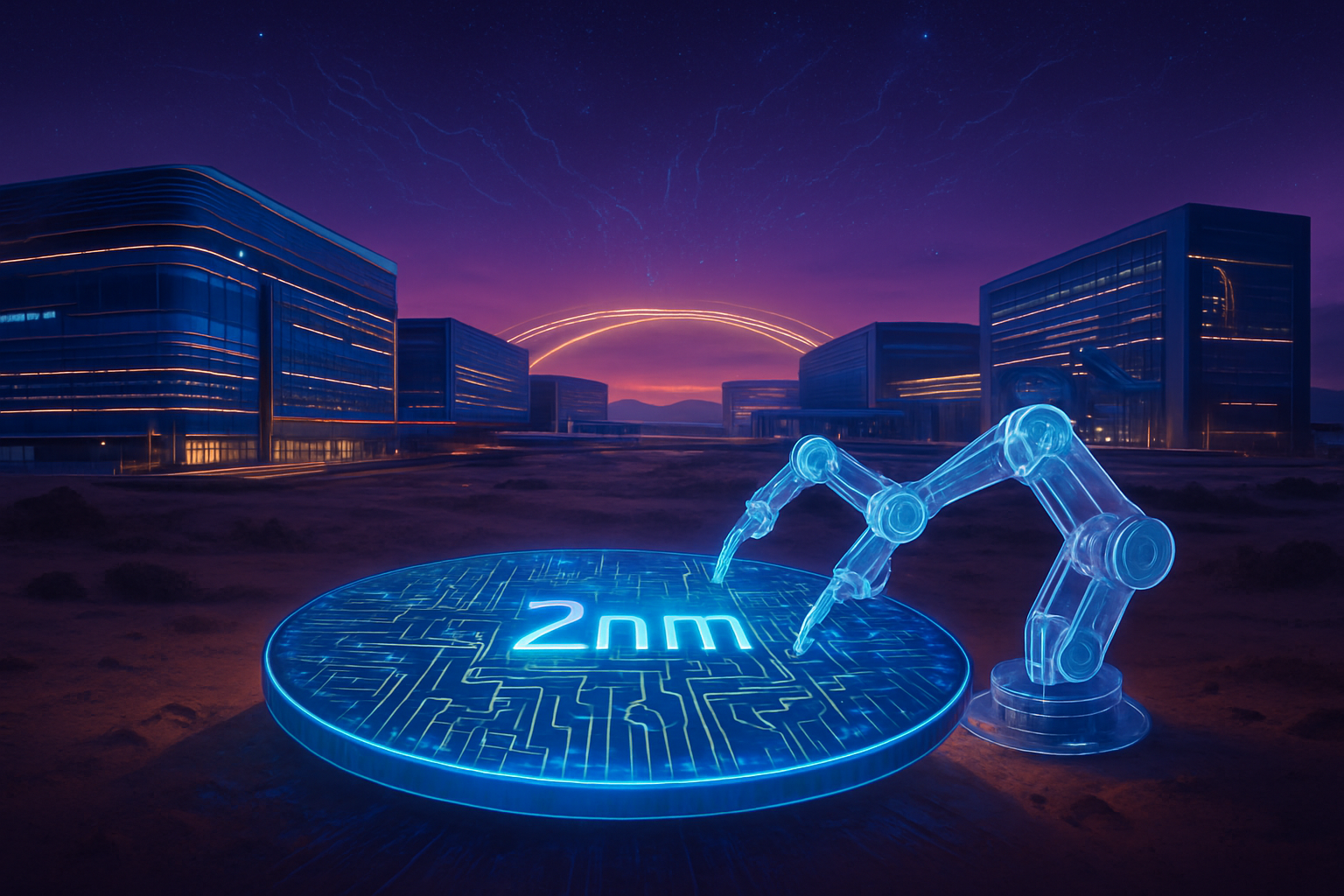
    TOKYO — In a decisive move to reclaim its status as a global technology superpower, the Japanese government has officially greenlit a massive $6.34 billion (¥1 trillion) "Sovereign AI" initiative. Announced as part of the nation’s National AI Basic Plan, the funding marks a historic shift toward total technological independence, aiming to create a domestic ecosystem that encompasses everything from 2-nanometer logic chips to trillion-parameter foundational models. By 2026, the strategy has evolved from a defensive reaction to global supply chain vulnerabilities into an aggressive industrial blueprint to dominate the next phase of the "AI Industrial Revolution."

    This initiative is not merely about matching the capabilities of Silicon Valley; it is a calculated effort to insulate Japan’s economy from geopolitical volatility while solving its most pressing domestic crisis: a rapidly shrinking workforce. By subsidizing the production of cutting-edge semiconductors through the state-backed venture Rapidus Corp. and fostering a "Physical AI" sector that merges machine intelligence with Japan's legendary robotics industry, the Ministry of Economy, Trade and Industry (METI) is betting that "Sovereign AI" will become the backbone of 21st-century Japanese infrastructure.

    Engineering the Silicon Soul: 2nm Chips and Physical AI

    At the heart of Japan's technical roadmap is a two-pronged strategy focusing on domestic high-end manufacturing and specialized AI architectures. The centerpiece of the hardware push is Rapidus Corp., which, as of January 2026, has successfully transitioned its pilot production line in Chitose, Hokkaido, to full-wafer runs of 2-nanometer (2nm) logic chips. Unlike the traditional mass-production methods used by established foundries, Rapidus is utilizing a "single-wafer processing" approach. This allows for hyper-precise, AI-driven adjustments during the fabrication process, catering specifically to the bespoke requirements of high-performance AI accelerators rather than the commodity smartphone market.

    Technically, the Japanese "Sovereign AI" movement is distinguishing itself through a focus on "Physical AI" or Vision-Language-Action (VLA) models. While Western models like GPT-4 excel at digital reasoning and text generation, Japan’s national models are being trained on "physics-based" datasets and digital twins. These models are designed to predict physical torque and robotic pathing rather than just the next word in a sentence. This transition is supported by the integration of NTT’s (OTC: NTTYY) Innovative Optical and Wireless Network (IOWN), a groundbreaking photonics-based infrastructure that replaces traditional electrical signals with light, reducing latency in AI-to-robot communication to near-zero levels.

    Initial reactions from the global research community have been cautiously optimistic. While some skeptics argue that Japan is starting late in the LLM race, others point to the nation’s unique data advantage. By training models on high-quality, proprietary Japanese industrial data—rather than just scraped internet text—Japan is creating a "cultural and industrial firewall." Experts at RIKEN, Japan’s largest comprehensive research institution, suggest that this focus on "embodied intelligence" could allow Japan to leapfrog the "hallucination" issues of traditional LLMs by grounding AI in the laws of physics and industrial precision.

    The Corporate Battlefield: SoftBank, Rakuten, and the Global Giants

    The $6 billion initiative has created a gravitational pull that is realigning Japan's corporate landscape. SoftBank Group Corp. (OTC: SFTBY) has emerged as the primary "sovereign provider," committing an additional $12.7 billion of its own capital to build massive AI data centers across Hokkaido and Osaka. These facilities, powered by the latest Blackwell architecture from NVIDIA Corporation (NASDAQ: NVDA), are designed to host "Sarashina," a 1-trillion parameter domestic model tailored for high-security government and corporate applications. SoftBank’s strategic pivot marks a transition from a global investment firm to a domestic infrastructure titan, positioning itself as the "utility provider" for Japan’s AI future.

    In contrast, Rakuten Group, Inc. (OTC: RKUNY) is pursuing a strategy of "AI-nization," focusing on the edge of the network. Leveraging its virtualized 5G mobile network, Rakuten is deploying smaller, highly efficient AI models—including a 700-billion parameter LLM optimized for its ecosystem of 100 million users. While SoftBank builds the "heavyweight" backbone, Rakuten is focusing on hyper-personalized consumer AI and smart city applications, creating a competitive tension that is accelerating the adoption of AI across the Japanese retail and financial sectors.

    For global giants like Taiwan Semiconductor Manufacturing Company (NYSE: TSM) and Samsung Electronics, the rise of Japan’s Rapidus represents a long-term "geopolitical insurance policy" for their customers. Major U.S. firms, including IBM (NYSE: IBM), which is a key technical partner for Rapidus, and various AI startups, are beginning to eye Japan as a secondary source for advanced logic chips. This diversification is seen as a strategic necessity to mitigate risks associated with regional tensions in the Taiwan Strait, potentially disrupting the existing foundry monopoly and giving Japan a seat at the table of advanced semiconductor manufacturing.

    Geopolitics and the Sovereign AI Trend

    The significance of Japan’s $6 billion investment extends far beyond its borders, signaling the rise of "AI Nationalism." In an era where data and compute power are synonymous with national security, Japan is following a global trend—also seen in France and the Middle East—of developing AI that is culturally and legally autonomous. This "Sovereign AI" movement is a direct response to concerns that a handful of U.S.-based tech giants could effectively control the "digital nervous system" of other nations, potentially leading to a new form of technological colonialism.

    However, the path is fraught with potential concerns. The massive energy requirements of Japan’s planned AI factories are at odds with the country’s stringent carbon-neutrality goals. To address this, the government is coupling the AI initiative with a renewed push for next-generation nuclear and renewable energy projects. Furthermore, there are ethical debates regarding the "AI-robotics" integration. As Japan automates its elderly care and manufacturing sectors to compensate for a shrinking population, the social implications of high-density robot-human interaction remain a subject of intense scrutiny within the newly formed AI Strategic Headquarters.

    Comparing this to previous milestones, such as the 1980s Fifth Generation Computer Systems project, the current Sovereign AI initiative is far more grounded in existing market demand and industrial capacity. Unlike past efforts that focused purely on academic research, the 2026 plan is deeply integrated with private sector champions like Fujitsu Ltd. (OTC: FJTSY) and the global supply chain, suggesting a higher likelihood of commercial success.

    The Road to 2027: What’s Next for the Rising Sun?

    Looking ahead, the next 18 to 24 months will be critical for Japan’s technological gamble. The immediate milestone is the graduation of Rapidus from pilot production to mass-market commercial viability by early 2027. If the company can achieve competitive yields on its 2nm GAA (Gate-All-Around) architecture, it will solidify Japan as a Tier-1 semiconductor player. On the software side, the release of the "Sarashina" model's enterprise API in mid-2026 is expected to trigger a wave of "AI-first" domestic startups, particularly in the fields of precision medicine and autonomous logistics.

    Potential challenges include a global shortage of AI talent and the immense capital expenditure required to keep pace with the frantic development cycles of companies like OpenAI and Google. To combat this, Japan is loosening visa restrictions for "AI elites" and offering massive tax breaks for companies that repatriate their digital workloads to Japanese soil. Experts predict that if these measures succeed, Japan could become the global hub for "Embodied AI"—the point where software intelligence meets physical hardware.

    A New Chapter in Technological History

    Japan’s $6 billion Sovereign AI initiative represents a watershed moment in the history of artificial intelligence. By refusing to remain a mere consumer of foreign technology, Japan is attempting to rewrite the rules of the AI era, prioritizing security, cultural integrity, and industrial utility over the "move fast and break things" ethos of Silicon Valley. It is a bold, high-stakes bet that the future of AI belongs to those who can master both the silicon and the soul of the machine.

    In the coming months, the industry will be watching the Hokkaido "Silicon Forest" closely. The success or failure of Rapidus’s 2nm yields and the deployment of the first large-scale Physical AI models will determine whether Japan can truly achieve technological sovereignty. For now, the "Rising Sun" of AI is ascending, and its impact will be felt across every factory floor, data center, and boardroom in the world.


    This content is intended for informational purposes only and represents analysis of current AI developments.

    TokenRing AI delivers enterprise-grade solutions for multi-agent AI workflow orchestration, AI-powered development tools, and seamless remote collaboration platforms.
    For more information, visit https://www.tokenring.ai/.
  • NVIDIA Unveils ‘Vera Rubin’ Architecture at CES 2026: The 10x Efficiency Leap Fueling the Next AI Industrial Revolution

    NVIDIA Unveils ‘Vera Rubin’ Architecture at CES 2026: The 10x Efficiency Leap Fueling the Next AI Industrial Revolution

    The 2026 Consumer Electronics Show (CES) kicked off with a seismic shift in the semiconductor landscape as NVIDIA (NASDAQ:NVDA) CEO Jensen Huang took the stage to unveil the "Vera Rubin" architecture. Named after the legendary astronomer who provided evidence for the existence of dark matter, the platform is designed to illuminate the next frontier of artificial intelligence: a world where inference is nearly free and AI "factories" drive a new industrial revolution. This announcement marks a critical turning point as the industry shifts from the "training era," characterized by massive compute clusters, to the "deployment era," where trillions of autonomous agents will require efficient, real-time reasoning.

    The centerpiece of the announcement was a staggering 10x reduction in inference costs compared to the previous Blackwell generation. By drastically lowering the barrier to entry for running sophisticated Mixture-of-Experts (MoE) models and large-scale reasoning agents, NVIDIA is positioning Vera Rubin not just as a hardware update, but as the foundational infrastructure for what Huang calls the "AI Industrial Revolution." With immediate backing from hyperscale partners like Microsoft (NASDAQ:MSFT) and specialized cloud providers like CoreWeave, the Vera Rubin platform is set to redefine the economics of intelligence.

    The Technical Backbone: R100 GPUs and the 'Olympus' Vera CPU

    The Vera Rubin architecture represents a departure from incremental gains, moving toward an "extreme codesign" philosophy that integrates six distinct chips into a unified supercomputer. At the heart of the system is the R100 GPU, manufactured on TSMC’s (NYSE:TSM) advanced 3nm (N3P) process. Boasting 336 billion transistors—a 1.6x density increase over Blackwell—the R100 is paired with the first-ever implementation of HBM4 memory. This allows for a massive 22 TB/s of memory bandwidth per chip, nearly tripling the throughput of previous generations and solving the "memory wall" that has long plagued high-performance computing.

    Complementing the GPU is the "Vera" CPU, featuring 88 custom-designed "Olympus" cores. These cores utilize "spatial multi-threading" to handle 176 simultaneous threads, delivering a 2x performance leap over the Grace CPU. The platform also introduces NVLink 6, an interconnect capable of 3.6 TB/s of bi-directional bandwidth, which enables the Vera Rubin NVL72 rack to function as a single, massive logical GPU. Perhaps the most innovative technical addition is the Inference Context Memory Storage (ICMS), powered by the new BlueField-4 DPU. This creates a dedicated storage tier for "KV cache," allowing AI agents to maintain long-term memory and reason across massive contexts without being throttled by on-chip GPU memory limits.

    Strategic Impact: Fortifying the AI Ecosystem

    The arrival of Vera Rubin cements NVIDIA’s dominance in the AI hardware market while deepening its ties with major cloud infrastructure players. Microsoft (NASDAQ:MSFT) Azure has already committed to being one of the first to deploy Vera Rubin systems within its upcoming "Fairwater" AI superfactories located in Wisconsin and Atlanta. These sites are being custom-engineered to handle the extreme power density and 100% liquid-cooling requirements of the NVL72 racks. For Microsoft, this provides a strategic advantage in hosting the next generation of OpenAI’s models, which are expected to rely heavily on the Rubin architecture's increased FP4 compute power.

    Specialized cloud provider CoreWeave is also positioned as a "first-mover" partner, with plans to integrate Rubin systems into its fleet by the second half of 2026. This move allows CoreWeave to maintain its edge as a high-performance alternative to traditional hyperscalers, offering developers direct access to the most efficient inference hardware available. The 10x reduction in token costs poses a significant challenge to competitors like AMD (NASDAQ:AMD) and Intel (NASDAQ:INTC), who must now race to match NVIDIA’s efficiency gains or risk being relegated to niche or budget-oriented segments of the market.

    Wider Significance: The Shift to Physical AI and Agentic Reasoning

    The theme of the "AI Industrial Revolution" signals a broader shift in how technology interacts with the physical world. NVIDIA is moving beyond chatbots and image generators toward "Physical AI"—autonomous systems that can perceive, reason, and act within industrial environments. Through an expanded partnership with Siemens (XETRA:SIE), NVIDIA is integrating the Rubin ecosystem into an "Industrial AI Operating System," allowing digital twins and robotics to automate complex workflows in manufacturing and energy sectors.

    This development also addresses the burgeoning "energy crisis" associated with AI scaling. By achieving a 5x improvement in power efficiency per token, the Vera Rubin architecture offers a path toward sustainable growth for data centers. It challenges the existing scaling laws, suggesting that intelligence can be "manufactured" more efficiently by optimizing inference rather than just throwing more raw power at training. This marks a shift from the era of "brute force" scaling to one of "intelligent efficiency," where the focus is on the quality of reasoning and the cost of deployment.

    Future Outlook: The Road to 2027 and Beyond

    Looking ahead, the Vera Rubin platform is expected to undergo an "Ultra" refresh in early 2027, potentially featuring up to 512GB of HBM4 memory. This will further enable the deployment of "World Models"—AI that can simulate physical reality with high fidelity for use in autonomous driving and scientific discovery. Experts predict that the next major challenge will be the networking infrastructure required to connect these "AI Factories" across global regions, an area where NVIDIA’s Spectrum-X Ethernet Photonics will play a crucial role.

    The focus will also shift toward "Sovereign AI," where nations build their own domestic Rubin-powered superclusters to ensure data privacy and technological independence. As the hardware becomes more efficient, the primary bottleneck may move from compute power to high-quality data and the refinement of agentic reasoning algorithms. We can expect to see a surge in startups focused on "Agentic Orchestration," building software layers that sit on top of Rubin’s ICMS to manage thousands of autonomous AI workers.

    Conclusion: A Milestone in Computing History

    The unveiling of the Vera Rubin architecture at CES 2026 represents more than just a new generation of chips; it is the infrastructure for a new era of global productivity. By delivering a 10x reduction in inference costs, NVIDIA has effectively democratized advanced AI reasoning, making it feasible for every business to integrate autonomous agents into their daily operations. The transition to a yearly product release cadence signals that the pace of AI innovation is not slowing down, but rather entering a state of perpetual acceleration.

    As we look toward the coming months, the focus will be on the successful deployment of the first Rubin-powered "AI Factories" by Microsoft and CoreWeave. The success of these sites will serve as the blueprint for the next decade of industrial growth. For the tech industry and society at large, the "Vera Rubin" era promises to be one where AI is no longer a novelty or a tool, but the very engine that powers the modern world.


    This content is intended for informational purposes only and represents analysis of current AI developments.

    TokenRing AI delivers enterprise-grade solutions for multi-agent AI workflow orchestration, AI-powered development tools, and seamless remote collaboration platforms.
    For more information, visit https://www.tokenring.ai/.
  • The Silicon Curtain: How 2026 Reshaped the Global Semiconductor War

    The Silicon Curtain: How 2026 Reshaped the Global Semiconductor War

    As of January 13, 2026, the global semiconductor landscape has hardened into what analysts are calling the "Silicon Curtain," a profound geopolitical and technical bifurcation between Western and Chinese technology ecosystems. While a high-level trade truce brokered during the "Busan Rapprochement" in late 2025 prevented a total economic decoupling, the start of 2026 has been marked by the formalization of two mutually exclusive supply chains. The passage of the Remote Access Security Act in the U.S. House this week represents the final closure of the "cloud loophole," effectively treating remote access to high-end GPUs as a physical export and forcing Chinese firms to rely entirely on domestic compute or high-taxed, monitored imports.

    This shift signifies a transition from broad, reactionary trade bans to a sophisticated "two-pronged squeeze" strategy. The U.S. is now leveraging its dominance in electronic design automation (EDA) and advanced packaging to maintain a "sliding scale" of control over China’s AI capabilities. Simultaneously, China’s "Big Fund" Phase 3 has successfully localized over 35% of its semiconductor equipment, allowing firms like Huawei and SMIC to scale 5nm production despite severe lithography restrictions. This era is no longer just about who builds the fastest chip, but who can architect the most resilient and sovereign AI stack.

    Advanced Packaging and the Race for 2nm Nodes

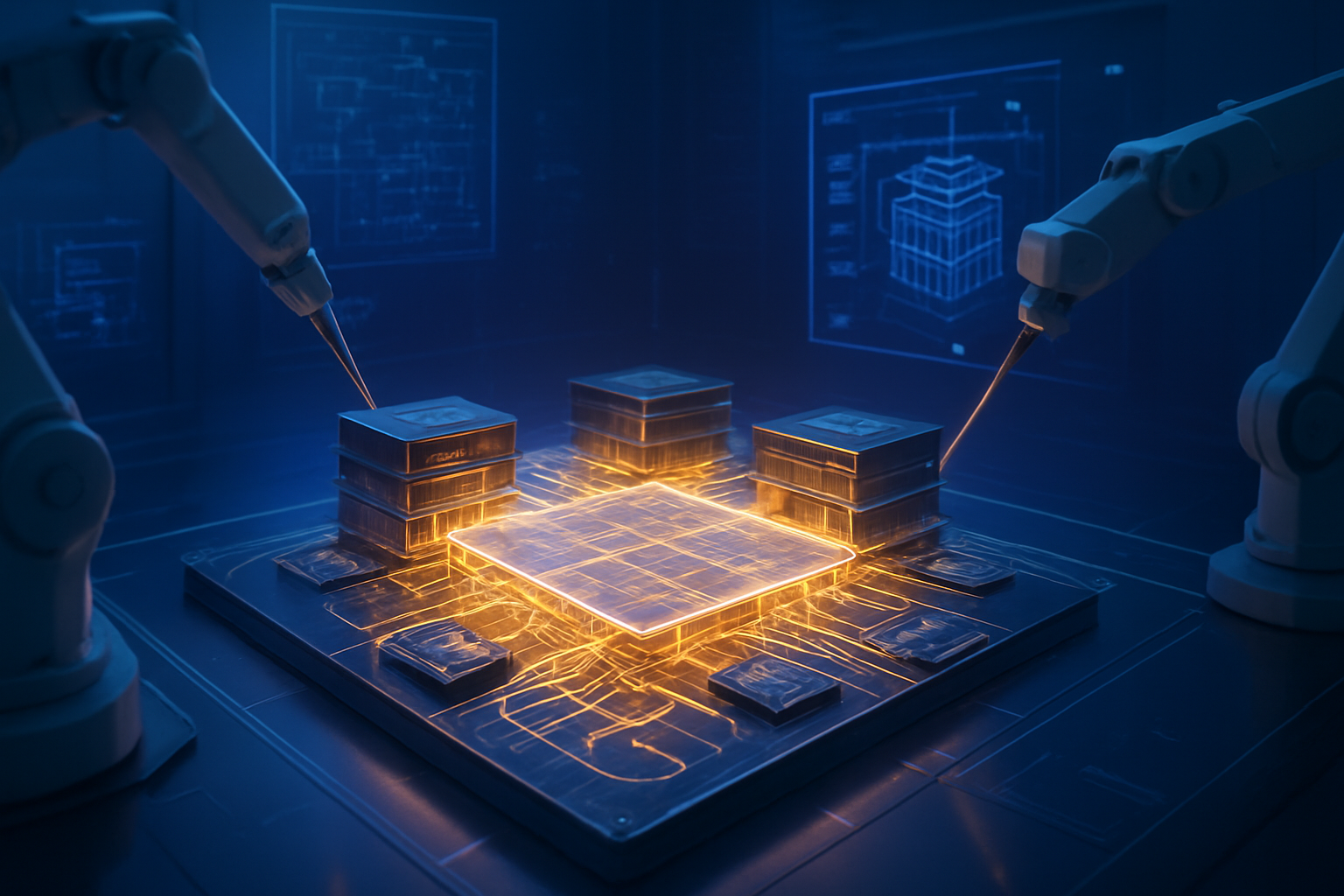
    The technical battleground has shifted from raw transistor scaling to the frontiers of advanced packaging and chiplet architectures. As the industry approaches the physical limits of 2nm nodes, the focus in early 2026 is on 2.5D and 3D integration, specifically technologies like Taiwan Semiconductor Manufacturing Co. (NYSE: TSM) CoWoS (Chip-on-Wafer-on-Substrate). The U.S. has successfully localized these "backend" processes through the expansion of TSMC’s Arizona facilities and Amkor Technology’s new Peoria plant. This allows for the creation of "All-American" high-performance chips where the silicon, interposer, and high-bandwidth memory (HBM) are integrated entirely within North American borders to ensure supply chain integrity.

    In response, China has pivoted to a "lithography bypass" strategy. By utilizing domestic advanced packaging platforms such as JCET’s X-DFOI, Chinese engineers are stitching together multiple 7nm or 5nm chiplets to achieve "virtual 3nm" performance. This architectural ingenuity is supported by the new ACC 1.0 (Advanced Chiplet Cloud) standard, an indigenous interconnect protocol designed to make Chinese-made chiplets cross-compatible. While Western firms move toward the Universal Chiplet Interconnect Express (UCIe) 2.0 standard, the divergence in these protocols ensures that a chiplet designed for a Western GPU cannot be easily integrated into a Chinese system-on-chip (SoC).

    Furthermore, the "Nvidia Surcharge" introduced in December 2025 has added a new layer of technical complexity. Nvidia (NASDAQ: NVDA) is now permitted to export its H200 GPUs to China, but each unit carries a mandatory 25% "Washington Tax" and integrated firmware that permits real-time auditing of compute workloads. This firmware, developed in collaboration with U.S. national labs, utilizes a "proof-of-work" verification system to ensure that the chips are not being used to train prohibited military or surveillance-grade frontier models.

    Initial reactions from the AI research community have been mixed. While some praise the "pragmatic" approach of allowing commercial sales to prevent a total market collapse, others warn that the "Silicon Curtain" is stifling global collaboration. Industry experts at the 2026 CES conference noted that the divergence in standards will likely lead to two separate AI software ecosystems, making it increasingly difficult for startups to develop cross-platform applications that work seamlessly on both Western and Chinese hardware.

    Market Impact: The Re-shoring Race and the Efficiency Paradox

    The current geopolitical climate has created a bifurcated market that favors companies with deep domestic ties. Intel (NASDAQ: INTC) has been a primary beneficiary, finalizing its $7.86 billion CHIPS Act award in late 2024 and reaching critical milestones for its Ohio "mega-fab." Similarly, Micron Technology (NASDAQ: MU) broke ground on its $100 billion Syracuse facility earlier this month, marking a decisive shift in HBM production toward U.S. soil. These companies are now positioned as the bedrock of a "trusted" Western supply chain, commanding premium prices for silicon that carries a "Made in USA" certification.

    For major AI labs and tech giants like Microsoft (NASDAQ: MSFT) and Google (NASDAQ: GOOGL), the new trade regime has introduced a "compute efficiency paradox." The release of the DeepSeek-R1 model in 2025 proved that superior algorithmic architectures—specifically Mixture of Experts (MoE)—can compensate for hardware restrictions. This has forced a pivot in market positioning; instead of racing for the largest GPU clusters, companies are now competing on the efficiency of their inference stacks. Nvidia’s Blackwell architecture remains the gold standard, but the company now faces "good enough" domestic competition in China from firms like Huawei, whose Ascend 970 chips are being mandated for use by Chinese giants like ByteDance and Alibaba.

    The disruption to existing products is most visible in the cloud sector. Amazon (NASDAQ: AMZN) and other hyperscalers have had to overhaul their remote access protocols to comply with the 2026 Remote Access Security Act. This has resulted in a significant drop in international revenue from Chinese AI startups that previously relied on "renting" American compute power. Conversely, this has accelerated the growth of sovereign cloud providers in regions like the Middle East and Southeast Asia, who are attempting to position themselves as neutral "tech hubs" between the two warring factions.

    Strategic advantages are now being measured in "energy sovereignty." As AI clusters grow to gigawatt scales, the proximity of semiconductor fabs to reliable, carbon-neutral energy sources has become as critical as the silicon itself. Companies that can integrate their chip manufacturing with localized power grids—such as Intel’s partnerships with renewable energy providers in the Pacific Northwest—are gaining a competitive edge in long-term operational stability over those relying on aging, centralized infrastructure.

    Broader Significance: The End of Globalized Silicon

    The emergence of the Silicon Curtain marks the definitive end of the "flat world" era for semiconductors. For three decades, the industry thrived on a globalized model where design happened in California, lithography in the Netherlands, manufacturing in Taiwan, and packaging in China. That model has been replaced by "Techno-Nationalism." This trend is not merely a trade war; it is a fundamental reconfiguration of the global economy where semiconductors are treated with the same strategic weight as oil or nuclear material.

    This development mirrors previous milestones, such as the 1986 U.S.-Japan Semiconductor Agreement, but at a vastly larger scale. The primary concern among economists is "innovation fragmentation." When the global talent pool is divided, and technical standards diverge, the rate of breakthrough discoveries in AI and materials science may slow. Furthermore, the aggressive use of rare earth "pauses" by China in late 2025—though currently suspended under the Busan trade deal—demonstrates that the supply chain remains vulnerable to "resource weaponization" at the lowest levels of the stack.

    However, some argue that this competition is actually accelerating innovation. The pressure to bypass U.S. export controls led to China’s breakthrough in "virtual 3nm" packaging, while the U.S. push for self-sufficiency has revitalized its domestic manufacturing sector. The "efficiency paradox" introduced by DeepSeek-R1 has also shifted the AI community's focus away from "brute force" scaling toward more sustainable, reasoning-capable models. This shift could potentially solve the AI industry's looming energy crisis by making powerful models accessible on less energy-intensive hardware.

    Future Outlook: The Race to 2nm and the STRIDE Act

    Looking ahead to the remainder of 2026 and 2027, the focus will turn toward the "2nm Race." TSMC and Intel are both racing to reach high-volume manufacturing of 2nm nodes featuring Gate-All-Around (GAA) transistors. These chips will be the first to truly test the limits of current lithography technology and will likely be subject to even stricter export controls. Experts predict that the next wave of U.S. policy will focus on "Quantum-Secure Supply Chains," ensuring that the chips powering tomorrow's encryption are manufactured in environments free from foreign surveillance or "backdoor" vulnerabilities.

    The newly introduced STRIDE Act (STrengthening Resilient Infrastructure and Domestic Ecosystems) is expected to be the center of legislative debate in mid-2026. This bill proposes a 10-year ban on CHIPS Act recipients using any Chinese-made semiconductor equipment, which would force a radical decoupling of the toolmaker market. If passed, it would provide a massive boost to Western toolmakers like ASML (NASDAQ: ASML) and Applied Materials, while potentially isolating Chinese firms like Naura into a "parallel" tool ecosystem that serves only the domestic market.

    Challenges remain, particularly in the realm of specialized labor. Both the U.S. and China are facing significant talent shortages as they attempt to rapidly scale domestic manufacturing. The "Silicon Curtain" may eventually be defined not by who has the best machines, but by who can train and retain the largest workforce of specialized semiconductor engineers. The coming months will likely see a surge in "tech-diplomacy" as both nations compete for talent from neutral regions like India, South Korea, and the European Union.

    Summary and Final Thoughts

    The geopolitical climate for semiconductors in early 2026 is one of controlled escalation and strategic self-reliance. The transition from the "cloud loophole" era to the "Remote Access Security Act" regime signifies a world where compute power is a strictly guarded national resource. Key takeaways include the successful localization of advanced packaging in both the U.S. and China, the emergence of a "two-stack" technical ecosystem, and the shift toward algorithmic efficiency as a means of overcoming hardware limitations.

    This development is perhaps the most significant in the history of the semiconductor industry, surpassing even the invention of the integrated circuit in its impact on global power dynamics. The "Silicon Curtain" is not just a barrier to trade; it is a blueprint for a new era of fragmented innovation. While the "Busan Rapprochement" provides a temporary buffer against total economic warfare, the underlying drive for technological sovereignty remains the dominant force in global politics.


    This content is intended for informational purposes only and represents analysis of current AI developments.

    TokenRing AI delivers enterprise-grade solutions for multi-agent AI workflow orchestration, AI-powered development tools, and seamless remote collaboration platforms.
    For more information, visit https://www.tokenring.ai/.

  • Breaking the Silicon Ceiling: How Panel-Level Packaging is Rescuing the AI Revolution from the CoWoS Crunch

    Breaking the Silicon Ceiling: How Panel-Level Packaging is Rescuing the AI Revolution from the CoWoS Crunch

    As of January 2026, the artificial intelligence industry has reached a pivotal infrastructure milestone. For the past three years, the primary bottleneck for the global AI explosion has not been the design of the chips themselves, nor the availability of raw silicon wafers, but rather the specialized "advanced packaging" required to stitch these complex processors together. TSMC (NYSE: TSM) has spent the last 24 months in a frantic race to expand its Chip-on-Wafer-on-Substrate (CoWoS) capacity, which is projected to reach an staggering 125,000 wafers per month by the end of this year—a nearly four-fold increase from early 2024 levels.

    Despite this massive scale-up, the insatiable demand from hyperscalers and AI chip giants like Nvidia (NASDAQ: NVDA) and AMD (NASDAQ: AMD) has kept the capacity effectively "sold out" through 2026. This persistent supply-demand imbalance has forced a paradigm shift in semiconductor manufacturing. The industry is now rapidly transitioning from traditional circular 300mm silicon wafers to a revolutionary new format: Panel-Level Packaging (PLP). This shift, spearheaded by new technological deployments like TSMC’s CoPoS and Intel’s commercial glass substrates, represents the most significant change to chip assembly in decades, promising to break the "reticle limit" and usher in an era of massive, multi-chiplet super-processors.

    Scaling Beyond the Circle: The Technical Leap to Panels

    The technical limitation of current advanced packaging lies in the geometry of the wafer. Since the late 1990s, the industry standard has been the 300mm (12-inch) circular silicon wafer. However, as AI chips like Nvidia’s Blackwell and the newly announced Rubin architectures grow larger and require more High Bandwidth Memory (HBM) stacks, they are reaching the physical limits of what a circular wafer can efficiently accommodate. Panel-Level Packaging (PLP) solves this by moving from circular wafers to large rectangular panels, typically starting at 310mm x 310mm and scaling up to a massive 600mm x 600mm.

    TSMC’s entry into this space, branded as CoPoS (Chip-on-Panel-on-Substrate), represents an evolution of its CoWoS technology. By using rectangular panels, manufacturers can achieve area utilization rates of over 95%, compared to the roughly 80% efficiency of circular wafers, where the edges often result in "scrap" silicon. Furthermore, the transition to glass substrates—a breakthrough Intel (NASDAQ: INTC) moved into High-Volume Manufacturing (HVM) this month—is replacing traditional organic materials. Glass offers 50% less pattern distortion and superior thermal stability, allowing for the extreme interconnect density required for the 1,000-watt AI chips currently entering the market.

    Initial reactions from the AI research community have been overwhelmingly positive, as these innovations allow for "super-packages" that were previously impossible. Experts at the 2026 International Solid-State Circuits Conference (ISSCC) noted that PLP and glass substrates are the only viable path to integrating HBM4 memory, which requires twice the interconnect density of its predecessors. This transition essentially allows chipmakers to treat the packaging itself as a giant, multi-layered circuit board, effectively extending the lifespan of Moore’s Law through physical assembly rather than transistor shrinking alone.

    The Competitive Scramble: Market Leaders and the OSAT Alliance

    The shift to PLP has reshuffled the competitive landscape of the semiconductor industry. While TSMC remains the dominant player, securing over 60% of Nvidia's packaging orders for the next two years, the bottleneck has opened a window of opportunity for rivals. Intel has leveraged its first-mover advantage in glass substrates to position its 18A foundry services as a high-end alternative for companies seeking to avoid the TSMC backlog. Intel’s Chandler, Arizona facility is now fully operational, providing a "turnkey" advanced packaging solution on U.S. soil—a strategic advantage that has already attracted attention from defense and aerospace sectors.

    Samsung (KRX: 005930) is also mounting a significant challenge through its "Triple Alliance" strategy, which integrates its display technology, electro-mechanics, and chip manufacturing arms. Samsung’s I-CubeE (Fan-Out Panel-Level Packaging) is currently being deployed to help customers like Broadcom (NASDAQ: AVGO) reduce costs by replacing expensive silicon interposers with embedded silicon bridges. This has allowed Samsung to capture a larger share of the "value-tier" AI accelerator market, providing a release valve for the high-end CoWoS shortage.

    Outsourced Semiconductor Assembly and Test (OSAT) providers are also benefiting from this shift. TSMC has increasingly outsourced the "back-end" portions of the process (the "on-Substrate" part of CoWoS) to partners like ASE Technology (NYSE: ASX) and Amkor (NASDAQ: AMKR). By 2026, ASE is expected to handle nearly 45% of the back-end packaging for TSMC’s customers. This ecosystem approach has allowed the industry to scale output more rapidly than any single company could achieve alone, though it has also led to a 10-20% increase in packaging prices due to the sheer complexity of the multi-vendor supply chain.

    The "Packaging Era" and the Future of AI Economics

    The broader significance of the PLP transition cannot be overstated. We have moved from the "Lithography Era," where the most important factor was the size of the transistor, to the "Packaging Era," where the most important factor is the speed and density of the connection between chiplets. This shift is fundamentally changing the economics of AI. Because advanced packaging is so capital-intensive, the barrier to entry for creating high-end AI chips has skyrocketed. Only a handful of companies can afford the multi-billion dollar "entry fee" required to secure CoWoS or PLP capacity at scale.

    However, there are growing concerns regarding the environmental and yield-related costs of this transition. Moving to 600mm panels requires entirely new sets of factory tools, and the early yield rates for PLP are significantly lower than those for mature 300mm wafer processes. Critics also point out that the centralization of advanced packaging in Taiwan remains a geopolitical risk, although the expansion of TSMC and Amkor into Arizona is a step toward diversification. The "warpage wall"—the tendency for large panels to bend under intense heat—remains a major engineering hurdle that companies are only now beginning to solve through the use of glass cores.

    What’s Next: The Road to 2028 and the "1 Trillion Transistor" Chip

    Looking ahead, the next two years will be defined by the transition from pilot lines to high-volume manufacturing for panel-level technologies. TSMC has scheduled the mass production of its CoPoS technology for late 2027 or early 2028, coinciding with the expected launch of "Post-Rubin" AI architectures. These future chips are predicted to feature "all-glass" substrates and integrated silicon photonics, allowing for light-speed data transfer between the processor and memory.

    The ultimate goal, as articulated by Intel and TSMC leaders, is the "1 Trillion Transistor System-in-Package" by 2030. Achieving this will require panels even larger than today's prototypes and a complete overhaul of how we manage heat in data centers. We should expect to see a surge in "co-packaged optics" announcements in late 2026, as the electrical limits of traditional substrates finally give way to optical interconnects. The primary challenge remains yield; as chips grow larger, the probability of a single defect ruining a multi-thousand-dollar package increases exponentially.

    A New Foundation for Artificial Intelligence

    The resolution of the CoWoS bottleneck through the adoption of Panel-Level Packaging and glass substrates marks a definitive turning point in the history of computing. By breaking the geometric constraints of the 300mm wafer, the industry has paved the way for a new generation of AI hardware that is exponentially more powerful than the chips that fueled the initial 2023-2024 AI boom.

    As we move through the first half of 2026, the key indicators of success will be the yield rates of Intel's glass substrate lines and the speed at which TSMC can bring its Chiayi AP7 facility to full capacity. While the shortage of AI compute has eased slightly due to these massive investments, the "structural demand" for intelligence suggests that packaging will remain a high-stakes battlefield for the foreseeable future. The silicon ceiling hasn't just been raised; it has been replaced by a new, rectangular, glass-bottomed foundation.


    This content is intended for informational purposes only and represents analysis of current AI developments.

    TokenRing AI delivers enterprise-grade solutions for multi-agent AI workflow orchestration, AI-powered development tools, and seamless remote collaboration platforms.
    For more information, visit https://www.tokenring.ai/.
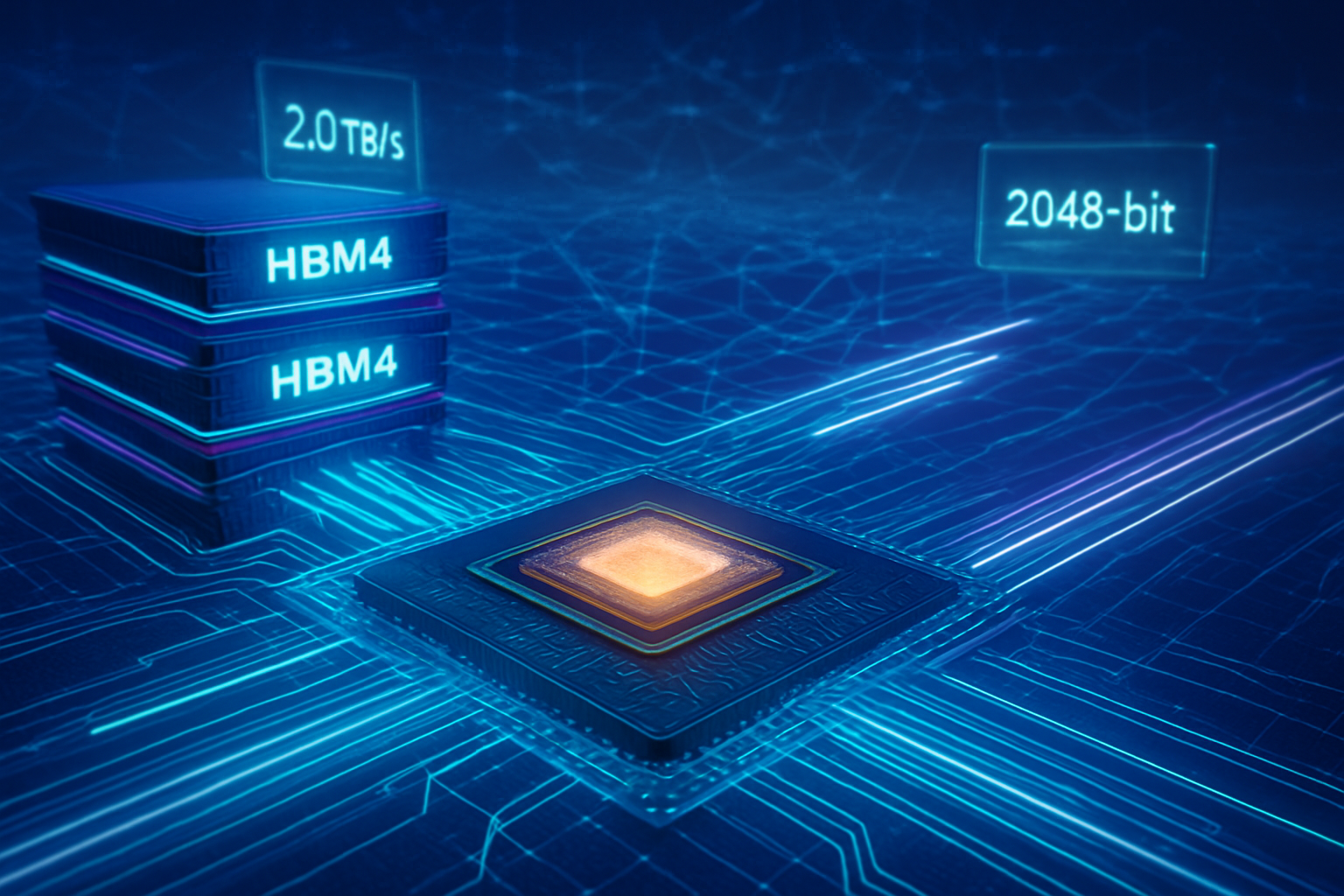
  • The Photonics Revolution: How Silicon Photonics and Co-Packaged Optics are Breaking the “Copper Wall”

    The Photonics Revolution: How Silicon Photonics and Co-Packaged Optics are Breaking the “Copper Wall”

    The artificial intelligence industry has officially entered the era of light-speed computing. At the conclusion of CES 2026, it has become clear that the "Copper Wall"—the physical limit where traditional electrical wiring can no longer transport data between chips without melting under its own heat or losing signal integrity—has finally been breached. The solution, long-promised but now finally at scale, is Silicon Photonics (SiPh) and Co-Packaged Optics (CPO). By integrating laser-based communication directly into the chip package, the industry is overcoming the energy and latency bottlenecks that threatened to stall the development of trillion-parameter AI models.

    This month's announcements from industry titans and specialized startups mark a paradigm shift in how AI supercomputers are built. Instead of massive clusters of GPUs struggling to communicate over meters of copper cable, the new "Optical AI Factory" uses light to move data with a fraction of the energy and virtually no latency. As NVIDIA (NASDAQ: NVDA) and Broadcom (NASDAQ: AVGO) move into volume production of CPO-integrated hardware, the blueprint for the next generation of AI infrastructure has been rewritten in photons.

    At the heart of this transition is the move from "pluggable" optics—the removable modules that have sat at the edge of servers for decades—to Co-Packaged Optics (CPO). In a CPO architecture, the optical engine is moved directly onto the same substrate as the GPU or network switch. This eliminates the power-hungry Digital Signal Processors (DSPs) and long copper traces previously required to drive electrical signals across a circuit board. At CES 2026, NVIDIA unveiled its Spectrum-6 Ethernet Switch (SN6800), which delivers a staggering 409.6 Tbps of aggregate bandwidth. By utilizing integrated silicon photonic engines, the Spectrum-6 reduces interconnect power consumption by 5x compared to the previous generation, while simultaneously increasing network resiliency by an order of magnitude.

    Technical specifications for 2026 hardware show a massive leap in energy efficiency, measured in picojoules per bit (pJ/bit). Traditional copper and pluggable systems in early 2025 typically consumed 12–15 pJ/bit. The new CPO systems from Broadcom—specifically the Tomahawk 6 "Davisson" switch, now in full volume production—have driven this down to less than 3.8 pJ/bit. This 70% reduction in power is not merely an incremental improvement; it is the difference between an AI data center requiring a dedicated nuclear power plant or fitting within existing power grids. Furthermore, latency has plummeted. While pluggable optics once added 100–600 nanoseconds of delay, new optical I/O solutions from startups like Ayar Labs are demonstrating near-die speeds of 5–20 nanoseconds, allowing thousands of GPUs to function as one cohesive, massive brain.

    This shift differs from previous approaches by moving light generation and modulation from the "shoreline" (the edge of the chip) into the heart of the package using 3D-stacking. TSMC (NYSE: TSM) has been instrumental here, moving its COUPE (Compact Universal Photonics Engine) technology into mass production. Using SoIC-X (System on Integrated Chips), TSMC is now hybrid-bonding electronic dies directly onto silicon photonics dies. The AI research community has reacted with overwhelming optimism, as these specifications suggest that the "communication overhead" which previously ate up 30-50% of AI training cycles could be virtually eliminated by the end of 2026.

    The commercial implications of this breakthrough are reorganizing the competitive landscape of Silicon Valley. NVIDIA (NASDAQ: NVDA) remains the frontrunner, using its Rubin GPU architecture—officially launched this month—to lock customers into a vertically integrated optical ecosystem. By combining its Vera CPUs and Rubin GPUs with CPO-based NVLink fabrics, NVIDIA is positioning itself as the only provider capable of delivering a "turnkey" million-GPU cluster. However, the move to optics has also opened the door for a powerful counter-coalition.

    Marvell (NASDAQ: MRVL) has emerged as a formidable challenger following its strategic acquisition of Celestial AI and XConn Technologies. By championing the UALink (Universal Accelerator Link) and CXL 3.1 standards, Marvell is providing an "open" optical fabric that allows hyperscalers like Amazon (NASDAQ: AMZN) and Google (NASDAQ: GOOGL) to build custom AI accelerators that can still compete with NVIDIA’s performance. The strategic advantage has shifted toward companies that control the packaging and the silicon photonics IP; as a result, TSMC (NYSE: TSM) has become the industry's ultimate kingmaker, as its CoWoS and SoIC packaging capacity now dictates the total global supply of CPO-enabled AI chips.

    For startups and secondary players, the barrier to entry has risen significantly. The transition to CPO requires advanced liquid cooling as a default standard, as integrated optical engines are highly sensitive to the massive heat generated by 1,200W GPUs. Companies that cannot master the intersection of photonics, 3D packaging, and liquid cooling are finding themselves sidelined. Meanwhile, the pluggable transceiver market—once a multi-billion dollar stronghold for traditional networking firms—is facing a rapid decline as Tier-1 AI labs move toward fixed, co-packaged solutions to maximize efficiency and minimize total cost of ownership (TCO).

    The wider significance of silicon photonics extends beyond mere speed; it is the primary solution to the "Energy Wall" that has become a matter of national security and environmental urgency. As AI clusters scale toward power draws of 500 megawatts and beyond, the move to optics represents the most significant sustainability milestone in the history of computing. By reducing the energy required for data movement by 70%, the industry is effectively "recycling" that power back into actual computation, allowing for larger models and faster training without a proportional increase in carbon footprint.

    Furthermore, this development marks the decoupling of compute from physical distance. In traditional copper-based architectures, GPUs had to be packed tightly together to maintain signal integrity, leading to extreme thermal densities. Silicon photonics allows for data to travel kilometers with negligible loss, enabling "Disaggregated Data Centers." In this new model, memory, compute, and storage can be located in different parts of a facility—or even different buildings—while still performing as if they were on the same motherboard. This is a fundamental break from the Von Neumann architecture constraints that have defined computing for 80 years.

    However, the transition is not without concerns. The move to CPO creates a "repairability crisis" in the data center. Unlike pluggable modules, which can be easily swapped if they fail, a failed optical engine in a CPO system may require replacing an entire $40,000 GPU or a $200,000 switch. To combat this, NVIDIA and Broadcom have introduced "detachable fiber connectors" and external laser sources (ELS), but the long-term reliability of these integrated systems in the 24/7 high-heat environment of an AI factory remains a point of intense scrutiny among industry skeptics.

    Looking ahead, the near-term roadmap for silicon photonics is focused on "Optical Memory." Marvell and Celestial AI have already demonstrated optical memory appliances that provide up to 33TB of shared capacity with sub-200ns latency. This suggests that by late 2026 or 2027, the concept of "GPU memory" may become obsolete, replaced by a massive, shared pool of HBM4 memory accessible by any processor in the rack via light. We also expect to see the debut of 1.6T and 3.2T per-port speeds as 200G-per-lane SerDes become the standard.

    Long-term, experts predict the arrival of "All-Optical Computing," where light is used not just for moving data, but for the actual mathematical operations within the Tensor cores. While this remains in the lab stage, the successful commercialization of CPO is the necessary first step. The primary challenge over the next 18 months will be manufacturing yield. As photonics moves into the 3D-stacking realm, the complexity of bonding light-emitting materials with silicon is immense. Predictably, the industry will see a "yield war" as foundries race to stabilize the production of these complex multi-die systems.

    The arrival of Silicon Photonics and Co-Packaged Optics in early 2026 represents a "point of no return" for the AI industry. The transition from electrical to optical interconnects is perhaps the most significant hardware breakthrough since the invention of the integrated circuit, effectively removing the physical boundaries that limited the scale of artificial intelligence. With NVIDIA's Rubin platform and Broadcom's Davisson switches now leading the charge, the path to million-GPU clusters is no longer blocked by the "Copper Wall."

    The key takeaway is that the future of AI is no longer just about the number of transistors on a chip, but the number of photons moving between them. This development ensures that the rapid pace of AI advancement can continue through the end of the decade, supported by a new foundation of energy-efficient, low-latency light-speed networking. In the coming months, the industry will be watching the first deployments of the Rubin NVL72 systems to see if the real-world performance matches the spectacular benchmarks seen at CES. For now, the era of "Computing at the Speed of Light" has officially dawned.


    This content is intended for informational purposes only and represents analysis of current AI developments.

    TokenRing AI delivers enterprise-grade solutions for multi-agent AI workflow orchestration, AI-powered development tools, and seamless remote collaboration platforms.
    For more information, visit https://www.tokenring.ai/.
  • The Silicon Self-Assembly: How Generative AI and AlphaChip are Rewriting the Rules of Processor Design

    The Silicon Self-Assembly: How Generative AI and AlphaChip are Rewriting the Rules of Processor Design

    In a milestone that marks the dawn of the "AI design supercycle," the semiconductor industry has officially moved beyond human-centric engineering. As of January 2026, the world’s most advanced processors—including Alphabet Inc. (NASDAQ: GOOGL) latest TPU v7 and NVIDIA Corporation (NASDAQ: NVDA) next-generation Blackwell architectures—are no longer just tools for running artificial intelligence; they are the primary products of it. Through the maturation of Google’s AlphaChip and the rollout of "agentic AI" from EDA giant Synopsys Inc. (NASDAQ: SNPS), the timeline to design a flagship chip has collapsed from months to mere weeks, forever altering the trajectory of Moore's Law.

    The significance of this shift cannot be overstated. By utilizing reinforcement learning and generative AI to automate the physical layout, logic synthesis, and thermal management of silicon, technology giants are overcoming the physical limitations of sub-2nm manufacturing. This transition from AI-assisted design to AI-driven "agentic" engineering is effectively decoupling performance gains from transistor shrinking, allowing the industry to maintain exponential growth in compute power even as traditional physics reaches its limits.

    The Era of Agentic Silicon: From AlphaChip to Ironwood

    At the heart of this revolution is AlphaChip, Google’s reinforcement learning (RL) engine that has recently evolved into its most potent form for the design of the TPU v7, codenamed "Ironwood." Unlike traditional Electronic Design Automation (EDA) tools that rely on human-guided heuristics and simulated annealing—a process akin to solving a massive, multi-dimensional jigsaw puzzle—AlphaChip treats chip floorplanning as a game of strategy. In this "game," the AI places massive memory blocks (macros) and logic gates across the silicon canvas to minimize wirelength and power consumption while maximizing speed. For the Ironwood architecture, which utilizes a complex dual-chiplet design and optical circuit switching, AlphaChip was able to generate superhuman layouts in under six hours—a task that previously took teams of expert engineers over eight weeks.

    Synopsys has matched this leap with the commercial rollout of AgentEngineer™, an "agentic AI" framework integrated into the Synopsys.ai suite. While early AI tools functioned as "co-pilots" that suggested optimizations, AgentEngineer operates with Level 4 autonomy, meaning it can independently plan and execute multi-step engineering tasks across the entire design flow. This includes everything from Register Transfer Level (RTL) generation—where engineers use natural language to describe a circuit's intent—to the creation of complex testbenches for verification. Furthermore, following Synopsys’ $35 billion acquisition of Ansys, the platform now incorporates real-time multi-physics simulations, allowing the AI to optimize for thermal dissipation and signal integrity simultaneously, a necessity as AI accelerators now regularly exceed 1,000W of total design power (TDP).

    The reaction from the research community has been a mix of awe and scrutiny. Industry experts at the 2026 International Solid-State Circuits Conference (ISSCC) noted that AI-generated layouts often appear "organic" or "chaotic" compared to the grid-like precision of human designs, yet they consistently outperform their human counterparts by 25% to 67% in power efficiency. However, some skeptics continue to demand more transparent benchmarks, arguing that while AI excels at floorplanning, the "sign-off" quality required for multi-billion dollar manufacturing still requires significant human oversight to ensure long-term reliability.

    Market Domination and the NVIDIA-Synopsys Alliance

    The commercial implications of these developments have reshaped the competitive landscape of the $600 billion semiconductor industry. The clear winners are the "hyperscalers" and EDA leaders who have successfully integrated AI into their core workflows. Synopsys has solidified its dominance over rival Cadence Design Systems, Inc. (NASDAQ: CDNS) by leveraging a landmark $2 billion investment from NVIDIA, which integrated NVIDIA’s AI microservices directly into the Synopsys design stack. This partnership has turned the "AI designing AI" loop into a lucrative business model, providing NVIDIA with the hardware-software co-optimization needed to maintain its lead in the data center accelerator market, which is projected to surpass $300 billion by the end of 2026.

    Device manufacturers like MediaTek have also emerged as major beneficiaries. By adopting AlphaChip’s open-source checkpoints, MediaTek has publicly credited AI for slashing the design cycles of its Dimensity 5G smartphone chips, allowing it to bring more efficient silicon to market faster than competitors reliant on legacy flows. For startups and smaller chip firms, these tools represent a "democratization" of silicon; the ability to use AI agents to handle the grunt work of physical design lowers the barrier to entry for custom AI hardware, potentially disrupting the dominance of the industry's incumbents.

    However, this shift also poses a strategic threat to firms that fail to adapt. Companies without a robust AI-driven design strategy now face a "latency gap"—a scenario where their product cycles are three to four times slower than those using AlphaChip or AgentEngineer. This has led to an aggressive consolidation phase in the industry, as larger players look to acquire niche AI startups specializing in specific aspects of the design flow, such as automated timing closure or AI-powered lithography simulation.

    A Feedback Loop for the History Books

    Beyond the balance sheets, the rise of AI-driven chip design represents a profound milestone in the history of technology: the closing of the AI feedback loop. For the first time, the hardware that enables AI is being fundamentally optimized by the very software it runs. This recursive cycle is fueling what many are calling "Super Moore’s Law." While the physical shrinking of transistors has slowed significantly at the 2nm node, AI-driven architectural innovations are providing the 2x performance jumps that were previously achieved through manufacturing alone.

    This trend is not without its concerns. The increasing complexity of AI-designed chips makes them virtually impossible for a human engineer to "read" or manually debug in the event of a systemic failure. This "black box" nature of silicon layout raises questions about long-term security and the potential for unforced errors in critical infrastructure. Furthermore, the massive compute power required to train these design agents is non-trivial; the "carbon footprint" of designing an AI chip has become a topic of intense debate, even if the resulting silicon is more energy-efficient than its predecessors.

    Comparatively, this breakthrough is being viewed as the "AlphaGo moment" for hardware engineering. Just as AlphaGo demonstrated that machines could find novel strategies in an ancient game, AlphaChip and Synopsys’ agents are finding novel pathways through the trillions of possible transistor configurations. It marks the transition of human engineers from "drafters" to "architects," shifting their focus from the minutiae of wire routing to high-level system intent and ethical guardrails.

    The Path to Fully Autonomous Silicon

    Looking ahead, the next two years are expected to bring the realization of Level 5 autonomy in chip design—systems that can go from a high-level requirements document to a manufacturing-ready GDSII file with zero human intervention. We are already seeing the early stages of this with "autonomous logic synthesis," where AI agents decide how to translate mathematical functions into physical gates. In the near term, expect to see AI-driven design expand into the realm of biological and neuromorphic computing, where the complexities of mimicking brain-like structures are far beyond human manual capabilities.

    The industry is also bracing for the integration of "Generative Thermal Management." As chips become more dense, the ability of AI to design three-dimensional cooling structures directly into the silicon package will be critical. The primary challenge remaining is verification: as designs become more alien and complex, the AI used to verify the chip must be even more advanced than the AI used to design it. Experts predict that the next major breakthrough will be in "formal verification agents" that can provide mathematical proof of a chip’s correctness in a fraction of the time currently required.

    Conclusion: A New Foundation for the Digital Age

    The evolution of Google's AlphaChip and the rise of Synopsys’ agentic tools represent a permanent shift in how humanity builds its most complex machines. The era of manual silicon layout is effectively over, replaced by a dynamic, AI-driven process that is faster, more efficient, and capable of reaching performance levels that were previously thought to be years away. Key takeaways from this era include the 30x speedup in circuit simulations and the reduction of design cycles from months to weeks, milestones that have become the new standard for the industry.

    As we move deeper into 2026, the long-term impact of this development will be felt in every sector of the global economy, from the cost of cloud computing to the capabilities of consumer electronics. This is the moment where AI truly took the reins of its own evolution. In the coming months, keep a close watch on the "Ironwood" TPU v7 deployments and the competitive response from NVIDIA and Cadence, as the battle for the most efficient silicon design agent becomes the new front line of the global technology race.


    This content is intended for informational purposes only and represents analysis of current AI developments.

    TokenRing AI delivers enterprise-grade solutions for multi-agent AI workflow orchestration, AI-powered development tools, and seamless remote collaboration platforms.
    For more information, visit https://www.tokenring.ai/.

  • Japan’s $6 Billion ‘Sovereign AI’ Gambit: A High-Stakes Race for Technological Autonomy

    Japan’s $6 Billion ‘Sovereign AI’ Gambit: A High-Stakes Race for Technological Autonomy

    As the global AI arms race enters a new and more fragmented era, the Japanese government has doubled down on its commitment to "Sovereign AI," officially greenlighting a $6.3 billion (¥1 trillion) initiative to build domestic foundation models and the infrastructure to power them. This massive investment, which forms the cornerstone of Japan's broader $65 billion semiconductor revitalization strategy, is designed to decouple the nation’s technological future from over-reliance on foreign entities. By funding everything from 2-nanometer chip fabrication to a 1-trillion-parameter Large Language Model (LLM), Tokyo is signaling that it will no longer be a mere consumer of Silicon Valley’s innovation, but a full-stack architect of its own digital destiny.

    The significance of this move, finalized as of January 2026, cannot be overstated. Amidst escalating geopolitical tensions in East Asia and the persistent "digital deficit" caused by the outflow of licensing fees to American tech giants, Japan is attempting one of the most ambitious industrial policy shifts in its post-war history. By integrating its world-class robotics pedigree with locally-trained generative AI, the initiative seeks to solve the "Japan problem"—a shrinking workforce and a decade-long stagnation in software—through a state-backed marriage of hardware and intelligence.

    The technical architecture of Japan’s Sovereign AI initiative is anchored by the GENIAC (Generative AI Accelerator Network) program and the state-backed foundry Rapidus Corp. While the primary $6.3 billion Sovereign AI fund is earmarked for the development of foundation models over the next five years, it is the underlying hardware efforts that have drawn the most scrutiny from the global research community. Rapidus Corp, which recently announced the successful prototyping of 2nm Gate-All-Around (GAA) transistors in mid-2025, is now preparing for its pilot production phase in April 2026. This represents a staggering technological "moonshot," as Japanese domestic chip manufacturing had previously been stalled at 40nm for over a decade.

    On the software front, the initiative is funding a consortium led by SoftBank Corp. (TYO:9984) and Preferred Networks (PFN) to develop a domestic LLM with 1 trillion parameters—a scale intended to rival OpenAI’s GPT-4 and Google’s Gemini. Unlike general-purpose models, this "Tokyo Model" is being specifically optimized for Japanese cultural nuance, legal frameworks, and "Physical AI"—the integration of vision-language models with industrial robotics. This differs from previous approaches by moving away from fine-tuning foreign models; instead, Japan is building from the "pre-training" level up, using massive regional data centers in Hokkaido and Osaka funded by a separate ¥2 trillion ($13 billion) private-public investment.

    Initial reactions from the AI research community are a mix of admiration and skepticism. While researchers at the RIKEN Center for Computational Science have praised the "Strategic Autonomy" provided by the upcoming FugakuNEXT supercomputer—a hybrid AI-HPC system utilizing Fujitsu’s (TYO:6702) Arm-based "MONAKA-X" CPUs—some analysts warn that the 2nm goal is a "high-risk" bet. Critics point out that by the time Rapidus hits volume production in 2027, TSMC (NYSE:TSM) will likely have already moved toward 1.4nm nodes, potentially leaving Japan’s flagship foundry one step behind in the efficiency race.

    The ripple effects of Japan’s $6 billion commitment are already reshaping the competitive landscape for tech giants and startups alike. Nvidia (NASDAQ:NVDA) stands as an immediate beneficiary, as the Japanese government continues to subsidize the purchase of thousands of H200 and Blackwell GPUs for its sovereign data centers. However, the long-term goal of the initiative is to reduce this very dependency. By fostering a domestic ecosystem, Japan is encouraging giants like Sony Group (TYO:6758) and Toyota Motor (TYO:7203) to integrate sovereign models into their hardware, ensuring that proprietary data from sensors and automotive systems never leaves Japanese shores.

    For major AI labs like OpenAI and Google, the rise of Sovereign AI represents a growing trend of "digital protectionism." As Japan develops high-performance, low-cost domestic alternatives like NEC’s (TYO:6701) "cotomi" or NTT’s "Tsuzumi," the market for generic American LLMs in the Japanese enterprise sector may shrink. These domestic models are being marketed on the premise of "data sovereignty"—a compelling pitch for the Japanese defense and healthcare industries. Furthermore, the AI Promotion Act of 2025 has created a "light-touch" regulatory environment in Japan, potentially attracting global startups that find the European Union's AI Act too restrictive, thereby positioning Japan as a strategic "third way" between the US and the EU.

    Startups like Preferred Networks and Sakana AI have already seen their valuations surge as they become the primary vehicles for state-funded R&D. The strategic advantage for these local players lies in their access to high-quality, localized datasets that foreign models struggle to digest. However, the disruption to existing cloud services is palpable; as SoftBank builds its own AI data centers, the reliance on Amazon (NASDAQ:AMZN) Web Services (AWS) and Microsoft (NASDAQ:MSFT) Azure for public sector workloads is expected to decline, shifting billions in potential revenue toward domestic infrastructure providers.

    The broader significance of the Sovereign AI movement lies in the transition from AI as a service to AI as national infrastructure. Japan’s move reflects a global trend where nations view AI capabilities as being as essential as energy or water. This fits into the wider trend of "Techno-Nationalism," where the globalized supply chains of the 2010s are being replaced by resilient, localized clusters. By securing its own chip production and AI intelligence, Japan is attempting to insulate itself from potential blockades or supply chain shocks centered around the Taiwan Strait—a geopolitical concern that looms large over the 2027 production deadline for Rapidus.

    There are, however, significant concerns. The "digital gap" in human capital remains a major hurdle. Despite the $6 billion investment, Japan faces a shortage of top-tier AI researchers compared to the US and China. Critics also worry that "Sovereign AI" could become a "Galapagos" technology—advanced and specialized for the Japanese market, but unable to compete globally, similar to Japan's mobile phone industry in the early 2000s. There is also the environmental impact; the massive energy requirements for the new Hokkaido data centers have sparked debates about Japan’s ability to meet its 2030 carbon neutrality goals while simultaneously scaling up power-hungry AI clusters.

    Compared to previous AI milestones, such as the launch of the original Fugaku supercomputer, this initiative is far more comprehensive. It isn't just about winning a "Top500" list; it's about building a sustainable, circular economy of data and compute. If successful, Japan’s model could serve as a blueprint for other middle-power nations—like South Korea, the UK, or France—that are seeking to maintain their relevance in an era dominated by a handful of "AI superpowers."

    Looking ahead, the next 24 months will be a gauntlet for Japan’s technological ambitions. The immediate focus will be the launch of the pilot production line at the Rapidus "IIM-1" plant in Chitose, Hokkaido, in April 2026. This will be the first real-world test of whether Japan can successfully manufacture at the 2nm limit. Simultaneously, we expect to see the first results from the SoftBank-led 1-trillion-parameter model, which is slated to undergo rigorous testing for industrial applications by the end of 2026.

    Potential applications on the horizon include "Edge AI" for humanoid robots and autonomous maritime vessels, where Japan holds a significant patent lead. Experts predict that the next phase of the initiative will involve integrating these sovereign models with the 6G telecommunications rollout, creating a hyper-connected society where AI processing happens seamlessly between the cloud and the device. The biggest challenge will remain the "funding gap"; while $6.3 billion is a massive sum, it is dwarfed by the annual R&D budgets of companies like Microsoft or Meta. To succeed, the Japanese government will need to successfully transition the project from state subsidies to self-sustaining private investment.

    Japan’s $6 billion Sovereign AI initiative marks a definitive end to the era of passive adoption. By aggressively funding the entire AI stack—from the silicon wafers to the neural networks—Tokyo is betting that technological independence is the only path to national security and economic growth in the 21st century. The key takeaways from this development are clear: Japan is prioritizing "Strategic Autonomy," focusing on specialized industrial AI over generic chatbots, and attempting a high-stakes leapfrog in semiconductor manufacturing that many thought impossible only five years ago.

    In the history of AI, this period may be remembered as the moment when "National AI" became a standard requirement for major economies. While the risks of failure are high—particularly regarding the aggressive 2nm timeline—the cost of inaction was deemed even higher by the Ishiba administration. In the coming weeks and months, all eyes will be on the procurement of advanced EUV (Extreme Ultraviolet) lithography machines for the Rapidus plant and the initial performance benchmarks of the GENIAC-supported LLMs. Whether Japan can truly reclaim its title as a "Tech Superpower" depends on its ability to execute this $6 billion vision with a speed and agility the nation hasn't seen in decades.


    This content is intended for informational purposes only and represents analysis of current AI developments.

    TokenRing AI delivers enterprise-grade solutions for multi-agent AI workflow orchestration, AI-powered development tools, and seamless remote collaboration platforms.
    For more information, visit https://www.tokenring.ai/.

  • Silicon Sovereignty: The 2026 Great Tech Divide as the US-China Semiconductor Cold War Reaches a Fever Pitch

    Silicon Sovereignty: The 2026 Great Tech Divide as the US-China Semiconductor Cold War Reaches a Fever Pitch

    As of January 13, 2026, the global semiconductor landscape has undergone a radical transformation, evolving from a unified global market into a strictly bifurcated "Silicon Curtain." The start of the new year has been marked by the implementation of the Remote Access Security Act, a landmark piece of U.S. legislation that effectively closed the "cloud loophole," preventing Chinese entities from accessing high-end compute power via offshore data centers. This move, combined with the fragile "Busan Truce" of late 2025, has solidified a new era of technological mercantilism where data, design, and hardware are treated as the ultimate sovereign assets.

    The immediate significance of these developments cannot be overstated. For the first time in the history of the digital age, the two largest economies in the world are operating on fundamentally different hardware roadmaps. While the U.S. and its allies have consolidated around a regulated "AI Diffusion Rule," China has accelerated its "Big Fund III" investments, shifting from mere chip manufacturing to solving critical chokepoints in lithography and advanced 3D packaging. This geopolitical friction is no longer just a trade dispute; it is an existential race for computational supremacy that will define the next decade of artificial intelligence development.

    The technical architecture of this divide is most visible in the divergence between NVIDIA (NVDA:NASDAQ) and its domestic Chinese rivals. Following the 2025 AI Diffusion Rule, the U.S. government established a rigorous three-tier export system. While top-tier allies enjoy unrestricted access to the latest Blackwell and Rubin architectures, Tier 3 nations like China are restricted to severely nerfed versions of high-end hardware. To maintain a foothold in the massive Chinese market, NVIDIA recently began navigating a complex "25% Revenue-Sharing Fee" protocol, allowing the export of the H200 to China only if a quarter of the revenue is redirected to the U.S. Treasury to fund domestic R&D—a move that has sparked intense debate among industry analysts regarding corporate sovereignty.

    Technically, the race has shifted from single-chip performance to "system-level" scaling. Because Chinese firms like Huawei are largely restricted from the 3nm and 2nm nodes produced by TSMC (TSM:NYSE), they have pivoted to innovative interconnect technologies. In late 2025, Huawei introduced UnifiedBus 2.0, a proprietary protocol that allows for the clustering of up to one million lower-performance 7nm chips into massive "SuperClusters." This approach argues that raw quantity and high-bandwidth connectivity can compensate for the lack of cutting-edge transistor density. Initial reactions from the AI research community suggest that while these clusters are less energy-efficient, they are proving surprisingly capable of training large language models (LLMs) that rival Western counterparts in specific benchmarks.

    Furthermore, China’s Big Fund III, fueled by approximately $48 billion in capital, has successfully localized several key components of the supply chain. Companies such as Piotech Jianke have made breakthroughs in hybrid bonding and 3D integration, allowing China to bypass some of the limitations imposed by the lack of ASML (ASML:NASDAQ) Extreme Ultraviolet (EUV) lithography machines. The focus is no longer on matching the West's 2nm roadmap but on perfecting "advanced packaging" to squeeze maximum performance out of existing 7nm and 5nm capabilities. This "chokepoint-first" strategy marks a significant departure from previous years, where the focus was simply on expanding mature node capacity.

    The implications for tech giants and startups are profound, creating clear winners and losers in this fragmented market. Intel (INTC:NASDAQ) has emerged as a central pillar of the U.S. strategy, with the government taking a historic 10% equity stake in the company in August 2025 to ensure the "Secure Enclave" program—intended for military-grade chip production—remains on American soil. This move has bolstered Intel's position as a national champion, though it has faced criticism for potential market distortions. Meanwhile, TSMC continues to navigate a delicate balance, ramping up its "GIGAFAB" cluster in Arizona, which is expected to begin trial runs for domestic AI packaging by mid-2026.

    In the private sector, the competitive landscape has been disrupted by the rise of "Sovereign AI." Major Chinese firms like Alibaba and Tencent have been privately directed by Beijing to prioritize Huawei’s Ascend 910C and the upcoming 910D chips over NVIDIA’s China-specific H20 models. This has forced a major market positioning shift for NVIDIA, which now relies more heavily on demand from the Middle East and Southeast Asia to offset the tightening Chinese restrictions. For startups, the divide is even more stark; Western AI startups benefit from a surplus of compute in "Tier 1" regions, while those in "Tier 3" regions are forced to optimize their algorithms for "compute-constrained" environments, potentially leading to more efficient software architectures in the East.

    The disruption extends to the supply of critical materials. Although the "Busan Truce" of November 2025 saw China temporarily suspend its export bans on gallium, germanium, and antimony, U.S. companies have used this reprieve to aggressively diversify their supply chains. Samsung Electronics (005930:KRX) has capitalized on this volatility by accelerating its $17 billion fab in Taylor, Texas, positioning itself as a primary alternative to TSMC for U.S.-based companies looking to mitigate geopolitical risk. The net result is a market where strategic resilience is now valued as highly as technical performance, fundamentally altering the ROI calculations for the world's largest tech investors.

    This shift toward semiconductor self-sufficiency represents a broader trend of "technological decoupling" that hasn't been seen since the Cold War. In the previous era of AI breakthroughs, such as the 2012 ImageNet moment or the 2017 Transformer paper, progress was driven by global collaboration and an open exchange of ideas. Today, the hardware required to run these models has become a "dual-use" asset, as vital to national security as enriched uranium. The creation of the "Silicon Curtain" means that the AI landscape is now inextricably tied to geography, with the "compute-rich" and the "compute-poor" increasingly defined by their alliance structures.

    The potential concerns are twofold: a slowdown in global innovation and the risk of "black box" development. With China and the U.S. operating in siloed ecosystems, there is a diminishing ability for international oversight on AI safety and ethics. Comparison to previous milestones, such as the 1990s semiconductor boom, shows a complete reversal in philosophy; where the industry once sought the lowest-cost manufacturing regardless of location, it now accepts significantly higher costs in exchange for "friend-shoring" and supply chain transparency. This shift has led to higher prices for consumer electronics but has stabilized the strategic outlook for Western defense sectors.

    Furthermore, the emergence of the "Remote Access Security Act" in early 2026 marks the end of the cloud as a neutral territory. For years, the cloud allowed for a degree of "technological arbitrage," where firms could bypass local hardware restrictions by renting GPUs elsewhere. By closing this loophole, the U.S. has effectively asserted that compute power is a physical resource that cannot be abstracted away from its national origin. This sets a significant precedent for future digital assets, including cryptographic keys and large-scale datasets, which may soon face similar geographic restrictions.

    Looking ahead to the remainder of 2026 and beyond, the industry is bracing for the Q2 release of Huawei’s Ascend 910D, which is rumored to match the performance of the NVIDIA H100 through sheer massive-scale interconnectivity. The near-term focus for the U.S. will be the continued implementation of the CHIPS Act, with Micron (MU:NASDAQ) expected to begin production of high-bandwidth memory (HBM) wafers at its new Boise facility by 2027. The long-term challenge remains the "1nm roadmap," where the physical limits of silicon will require even deeper collaboration between the few remaining players capable of such engineering—namely TSMC, Intel, and Samsung.

    Experts predict that the next frontier of this conflict will move into silicon photonics and quantum-resistant encryption. As traditional transistor scaling reaches its plateau, the ability to move data using light instead of electricity will become the new technical battleground. Additionally, there is a looming concern regarding the "2027 Cliff," when the temporary mineral de-escalation from the Busan Truce is set to expire. If a permanent agreement is not reached by then, the global semiconductor industry could face a catastrophic shortage of the rare earth elements required for advanced chip manufacturing.

    The key takeaway from the current geopolitical climate is that the semiconductor industry is no longer governed solely by Moore's Law, but by the laws of national security. The era of the "global chip" is over, replaced by a dual-track system that prioritizes domestic self-sufficiency and strategic alliances. While this has spurred massive investment and a "renaissance" of Western manufacturing, it has also introduced a layer of complexity and cost that will be felt across every sector of the global economy.

    In the history of AI, 2025 and early 2026 will be remembered as the years when the "Silicon Curtain" was drawn. The long-term impact will be a divergence in how AI is trained, deployed, and regulated, with the West focusing on high-density, high-efficiency models and the East pioneering massive-scale, distributed "SuperClusters." In the coming weeks and months, the industry will be watching for the first "Post-Cloud" AI breakthroughs and the potential for a new round of mineral export restrictions that could once again tip the balance of power in the world’s most important technology sector.


    This content is intended for informational purposes only and represents analysis of current AI developments.

    TokenRing AI delivers enterprise-grade solutions for multi-agent AI workflow orchestration, AI-powered development tools, and seamless remote collaboration platforms.
    For more information, visit https://www.tokenring.ai/.

  • The GAA Era Arrives: TSMC Enters Mass Production of 2nm Chips to Fuel the Next AI Supercycle

    The GAA Era Arrives: TSMC Enters Mass Production of 2nm Chips to Fuel the Next AI Supercycle

    As the calendar turns to early 2026, the global semiconductor landscape has officially shifted on its axis. Taiwan Semiconductor Manufacturing Company (NYSE:TSM), commonly known as TSMC, has successfully crossed the finish line of its most ambitious technological transition in a decade. Following a rigorous ramp-up period that concluded in late 2025, the company’s 2nm (N2) node is now in high-volume manufacturing, ushering in the era of Gate-All-Around (GAA) nanosheet transistors. This milestone marks more than just a reduction in feature size; it represents the foundational infrastructure upon which the next generation of generative AI and high-performance computing (HPC) will be built.

    The immediate significance of this development cannot be overstated. By moving into volume production ahead of its most optimistic competitors and maintaining superior yield rates, TSMC has effectively secured its position as the primary engine of the AI economy. With primary production hubs at Fab 22 in Kaohsiung and Fab 20 in Hsinchu reaching a combined output of over 50,000 wafers per month this January, the company is already churning out the silicon that will power the most advanced smartphones and data center accelerators of 2026 and 2027.

    The Nanosheet Revolution: Engineering the Future of Silicon

    The N2 node represents a fundamental departure from the FinFET (Fin Field-Effect Transistor) architecture that has dominated the industry for the last several process generations. In traditional FinFETs, the gate controls the channel on three sides; however, as transistors shrink toward the 2nm threshold, current leakage becomes an insurmountable hurdle. TSMC’s shift to Gate-All-Around (GAA) nanosheet transistors solves this by wrapping the gate around all four sides of the channel, providing superior electrostatic control and drastically reducing power leakage.

    Technical specifications for the N2 node are staggering. Compared to the previous 3nm (N3E) process, the 2nm node offers a 10% to 15% increase in performance at the same power envelope, or a significant 25% to 30% reduction in power consumption at the same clock speed. Furthermore, the N2 node introduces "Super High-Performance Metal-Insulator-Metal" (SHPMIM) capacitors. These components double the capacitance density while cutting resistance by 50%, a critical advancement for AI chips that must handle massive, instantaneous power draws without losing efficiency. Early logic test chips have reportedly achieved yield rates between 70% and 80%, a metric that validates TSMC's manufacturing prowess compared to the more volatile early yields seen in rival GAA implementations.

    A High-Stakes Duel: Intel, Samsung, and the Battle for Foundry Supremacy

    The successful ramp of N2 has profound implications for the competitive balance between the "Big Three" chipmakers. While Samsung Electronics (KRX:005930) was technically the first to move to GAA at the 3nm stage, its yields have historically struggled to compete with the stability of TSMC. Samsung’s recent launch of the SF2 node and the Exynos 2600 chip shows progress, but the company remains primarily a secondary source for major designers. Meanwhile, Intel (NASDAQ:INTC) has emerged as a formidable challenger with its 18A node. Intel’s 18A utilizes "PowerVia" (Backside Power Delivery), a technology TSMC will not integrate until its N2P variant in late 2026. This gives Intel a temporary technical lead in raw power delivery metrics, even as TSMC maintains a superior transistor density of roughly 313 million transistors per square millimeter.

    For the world’s most valuable tech giants, the arrival of N2 is a strategic windfall. Apple (NASDAQ:AAPL), acting as TSMC’s "alpha" customer, has reportedly secured over 50% of the initial 2nm capacity to power its upcoming iPhone 18 series and the M5/M6 Mac silicon. Close on their heels is Nvidia (NASDAQ:NVDA), which is leveraging the N2 node for its next-generation AI platforms succeeding the Blackwell architecture. Other major players including Advanced Micro Devices (NASDAQ:AMD), Broadcom (NASDAQ:AVGO), and MediaTek (TPE:2454) have already finalized their 2026 production slots, signaling a collective industry bet that TSMC’s N2 will be the gold standard for efficiency and scale.

    Scaling AI: The Broader Landscape of 2nm Integration

    The transition to 2nm is inextricably linked to the trajectory of artificial intelligence. As Large Language Models (LLMs) grow in complexity, the demand for "compute" has become the defining constraint of the tech industry. The 25-30% power savings offered by N2 are not merely a luxury for mobile devices; they are a survival necessity for data centers. By reducing the energy required per inference or training cycle, 2nm chips allow hyperscalers like Microsoft (NASDAQ:MSFT) and Amazon (NASDAQ:AMZN) to pack more density into their existing power footprints, potentially slowing the skyrocketing environmental costs of the AI boom.

    This milestone also reinforces the "Moore's Law is not dead" narrative, albeit with a caveat: while transistor density continues to increase, the cost per transistor is rising. The complexity of GAA manufacturing requires multi-billion dollar investments in Extreme Ultraviolet (EUV) lithography and specialized cleanrooms. This creates a widening "innovation gap" where only the largest, most capitalized companies can afford the leap to 2nm, potentially consolidating power within a handful of AI leaders while leaving smaller startups to rely on older, less efficient silicon.

    The Roadmap Beyond: A16 and the 1.6nm Frontier

    The arrival of 2nm mass production is just the beginning of a rapid-fire roadmap. TSMC has already disclosed that its N2P node—the enhanced version of 2nm featuring Backside Power Delivery—is on track for mass production in late 2026. This will be followed closely by the A16 node (1.6nm) in 2027, which will incorporate "Super PowerRail" technology to further optimize power distribution directly to the transistor's source and drain.

    Experts predict that the next eighteen months will focus on "advanced packaging" as much as the nodes themselves. Technologies like CoWoS (Chip on Wafer on Substrate) will be essential to combine 2nm logic with high-bandwidth memory (HBM4) to create the massive AI "super-chips" of the future. The challenge moving forward will be heat dissipation; as transistors become more densely packed, managing the thermal output of these 2nm dies will require innovative liquid cooling and material science breakthroughs.

    Conclusion: A Pivot Point for the Digital Age

    TSMC’s successful transition to the 2nm N2 node in early 2026 stands as one of the most significant engineering feats of the decade. By navigating the transition from FinFET to GAA nanosheets while maintaining industry-leading yields, the company has solidified its role as the indispensable foundation of the AI era. While Intel and Samsung continue to provide meaningful competition, TSMC’s ability to scale this technology for giants like Apple and Nvidia ensures that the heartbeat of global innovation remains centered in Taiwan.

    In the coming months, the industry will watch closely as the first 2nm consumer devices hit the shelves and the first N2-based AI clusters go online. This development is more than a technical upgrade; it is the starting gun for a new epoch of computing performance, one that will determine the pace of AI advancement for years to come.


    This content is intended for informational purposes only and represents analysis of current AI developments.

    TokenRing AI delivers enterprise-grade solutions for multi-agent AI workflow orchestration, AI-powered development tools, and seamless remote collaboration platforms.
    For more information, visit https://www.tokenring.ai/.