
Tag: Nvidia

  • AI Memory Sovereignty: Micron Breaks Ground on $100 Billion Mega-Fab in New York

    AI Memory Sovereignty: Micron Breaks Ground on $100 Billion Mega-Fab in New York

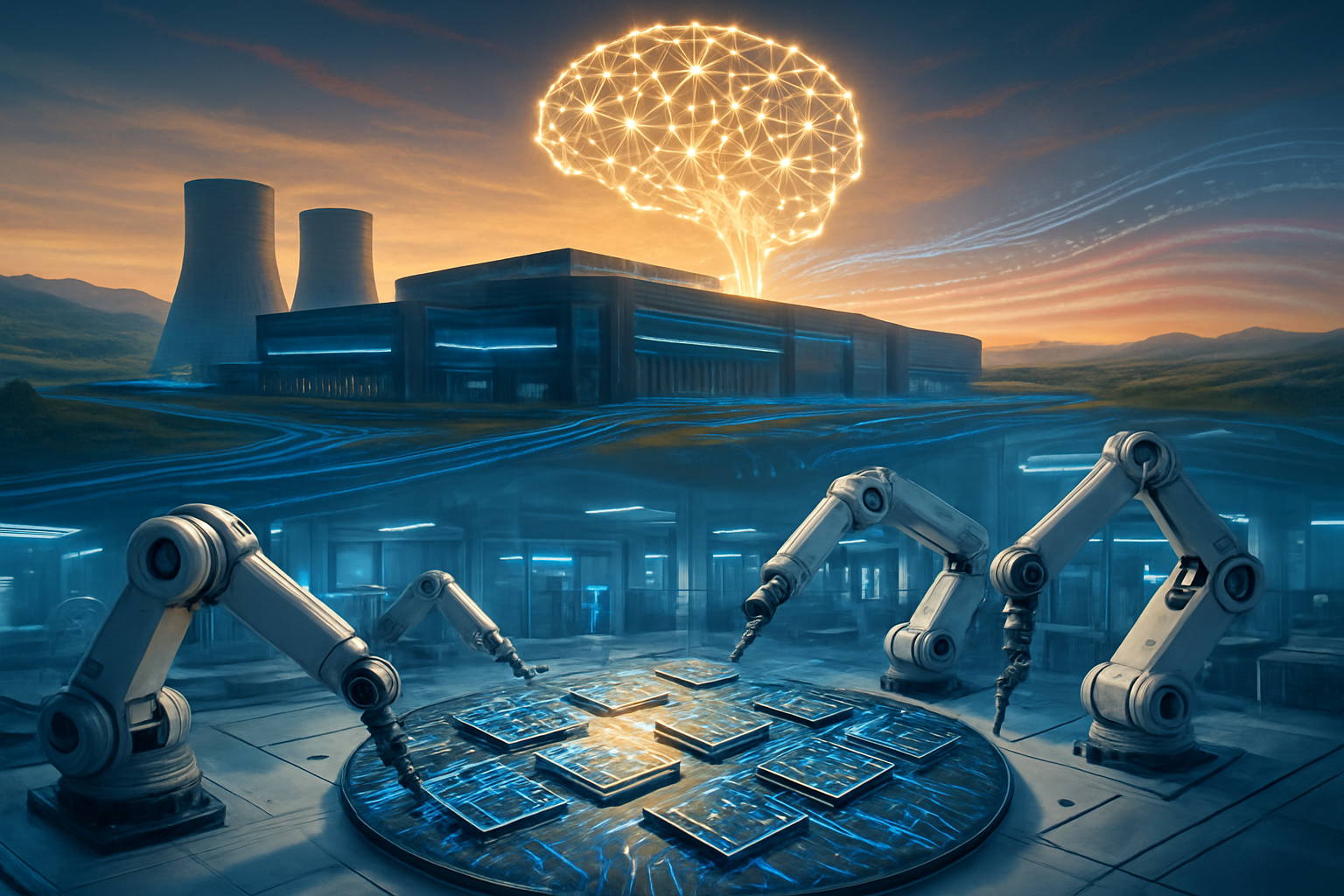
    As the artificial intelligence revolution enters a new era of localized hardware production, Micron Technology (NASDAQ: MU) is set to officially break ground this week on its massive $100 billion semiconductor manufacturing complex in Clay, New York. Scheduled for January 16, 2026, the ceremony marks a definitive turning point in the United States' decades-long effort to reshore critical technology manufacturing. The mega-fab, the largest private investment in New York State’s history, is positioned as the primary engine for domestic high-performance memory production, specifically designed to feed the insatiable demand of the AI era.

    The groundbreaking follows a rigorous multi-year environmental and regulatory review process that delayed the initial construction timeline but solidified the project’s scope. With over 20,000 pages of environmental impact studies behind them, Micron and federal officials are moving forward with a project that promises to create nearly 50,000 jobs and secure the "brains" of the AI hardware stack—High Bandwidth Memory (HBM)—on American soil. This development comes at a critical juncture as cloud providers and AI labs increasingly prioritize supply chain resilience over the sheer speed of global logistics.

    The Vanguard of Memory: HBM4 and the 1-Gamma Frontier

    The New York mega-fab is not merely a production site; it is a technical fortress designed to manufacture the world’s most advanced memory nodes. At the heart of the Clay facility’s roadmap is the production of HBM4 and its successors. High Bandwidth Memory is the essential "gasoline" for AI accelerators, allowing data to move between the memory and the processor at speeds that conventional DRAM cannot achieve. By stacking DRAM layers vertically using advanced packaging techniques, Micron’s upcoming HBM4 stacks are expected to deliver massive throughput while consuming up to 30% less power than current market alternatives.

    Technically, the site will utilize Micron’s proprietary 1-gamma (1γ) process node. This node is a significant leap from current technologies, as it fully integrates extreme ultraviolet (EUV) lithography into the mass-production flow. Unlike previous generations that relied on multi-patterning with deep ultraviolet (DUV) light, the 1-gamma process allows for finer circuitry and higher density, which is paramount for the massive parameter counts of 2026-era Large Language Models (LLMs). Analysts from KeyBanc (NYSE: KEY) have noted that Micron’s technical leadership in power efficiency is already making it a preferred partner for the next generation of power-constrained AI data centers.

    Initial industry reactions have been overwhelmingly positive, though pragmatic regarding the timeline. While wafer production in New York is not expected to reach full volume until 2030, the facility's design—featuring four separate fab modules each with 600,000 square feet of cleanroom space—has been hailed by the AI research community as a "generational asset." Experts argue that the integration of research and development from the nearby Albany NanoTech Complex with the mass production in Clay creates a "Silicon Corridor" that could rival the manufacturing clusters of East Asia.

    Reshaping the Competitive Landscape: NVIDIA and the HBM Rivalry

    The strategic implications for AI hardware giants are profound. NVIDIA (NASDAQ: NVDA), which currently dominates the AI GPU market, stands as the most significant indirect beneficiary of the New York mega-fab. CEO Jensen Huang has publicly endorsed the project, noting that domestic HBM production is a vital safeguard against geopolitical bottlenecks. As NVIDIA shifts toward its "Rubin" GPU architecture and beyond, the availability of a stable, U.S.-based memory supply reduces the risk of the supply-chain "whiplash" that plagued the industry during the early 2020s.

    Competitive pressure is also mounting on Micron’s primary rivals, SK Hynix and Samsung (KRX: 005930). While SK Hynix currently holds the largest share of the HBM market, Micron’s aggressive move into New York—supported by billions in federal subsidies—is seen as a direct challenge to South Korean dominance. By early 2026, Micron has already clawed back a 21% share of the HBM market through its facilities in Idaho and Taiwan; the New York site is the long-term play to push that share toward 40%. Advanced Micro Devices (NASDAQ: AMD) is also expected to leverage Micron’s domestic capacity for its future Instinct MI-series accelerators, ensuring that no single GPU manufacturer has a monopoly on U.S.-made memory.

    For startups and smaller AI labs, the long-term impact will be felt in the stabilization of hardware costs. The persistent "AI chip shortage" of previous years was often a memory shortage in disguise. By increasing global HBM capacity by such a significant margin, Micron effectively lowers the barrier to entry for firms requiring high-density compute power. Market positioning is shifting; "Made in USA" is no longer just a political slogan but a premium technical requirement for Western government and enterprise AI contracts.

    The Geopolitical Anchor: CHIPS Act and Economic Sovereignty

    The groundbreaking is a crowning achievement for the CHIPS and Science Act, which provided the financial bedrock for the project. Micron has finalized a direct funding agreement with the U.S. Department of Commerce for $6.14 billion in federal grants, with approximately $4.6 billion earmarked specifically for the first two phases in Clay. This is bolstered by an additional $5.5 billion in "GREEN CHIPS" tax credits from New York State, contingent on the facility operating on 100% renewable energy and achieving LEED Gold certification.

    This project represents more than just a corporate expansion; it is a move toward "AI Sovereignty." In the current geopolitical climate of 2026, the ability to manufacture the fundamental components of artificial intelligence within domestic borders is seen as a national security imperative. The CHIPS Act funding comes with stringent "clawback" provisions that prevent Micron from expanding high-end manufacturing in "countries of concern," effectively tethering the company’s future to the Western economic bloc.

    However, the path has not been without concerns. Some economists point to the "windfall profit-sharing" requirements and the mandate for affordable childcare as potential burdens on the project’s profitability. Furthermore, the delay in the production start date to 2030 has led some to question if the U.S. can move fast enough to keep pace with the hyper-accelerated AI development cycle. Nevertheless, the consensus among policy experts is that a 20-year investment in New York is the only way to break the current reliance on highly concentrated manufacturing hubs in sensitive regions of the Pacific.

    The Road to 2030: Future Developments and Challenges

    Looking ahead, the next several years will be a period of intense infrastructure development. While the New York site prepares for its first wafer in 2030, Micron is accelerating its Boise, Idaho facility to bridge the capacity gap, with that site expected to come online in 2027. This two-pronged approach ensures that Micron remains competitive in the HBM4 and HBM5 cycles while the New York mega-fab prepares for the era of HBM6 and beyond.

    The primary challenges remaining are labor and logistics. The construction of a project of this scale requires a specialized workforce that currently exceeds the capacity of the regional labor market. To address this, Micron has partnered with local universities and trade unions to create the "Northwest-Northeast Memory Corridor," a talent pipeline designed to train thousands of semiconductor technicians and engineers.

    Experts predict that by the time the first New York fab is fully operational in 2030, the AI landscape will have shifted from Large Language Models to "Agentic AI" systems that require even more persistent and high-speed memory. The Clay facility is being built with "future-proofing" in mind, including flexible cleanroom layouts that can accommodate the next generation of lithography beyond EUV, potentially including High-NA (Numerical Aperture) EUV systems.

    A New Era for American Silicon

    The groundbreaking of the Micron New York mega-fab is a historic milestone that marks the beginning of the end for the United States' total reliance on offshore memory manufacturing. By committing $100 billion over the next two decades, Micron is betting on a future where AI is the primary driver of global GDP and where the physical location of hardware production is a strategic asset of the highest order.

    As we move toward the 2030s, the significance of this project will likely be compared to the founding of Silicon Valley or the industrial mobilization of the mid-20th century. It represents a rare alignment of corporate ambition, state-level incentive, and federal national security policy. While the 2030 production date feels distant, the infrastructure being laid this week in Clay, New York, is the foundation upon which the next generation of artificial intelligence will be built.

    Investors and industry watchers should keep a close eye on Micron’s quarterly progress reports throughout 2026, as the company navigates the complexities of the largest construction project in the industry’s history. For now, the message from Clay is clear: the AI memory race has a new home in the United States.


    This content is intended for informational purposes only and represents analysis of current AI developments.

    TokenRing AI delivers enterprise-grade solutions for multi-agent AI workflow orchestration, AI-powered development tools, and seamless remote collaboration platforms.
    For more information, visit https://www.tokenring.ai/.
  • The Rubin Revolution: NVIDIA Unveils Next-Gen Vera Rubin Platform as Blackwell Scales to Universal AI Standard

    The Rubin Revolution: NVIDIA Unveils Next-Gen Vera Rubin Platform as Blackwell Scales to Universal AI Standard

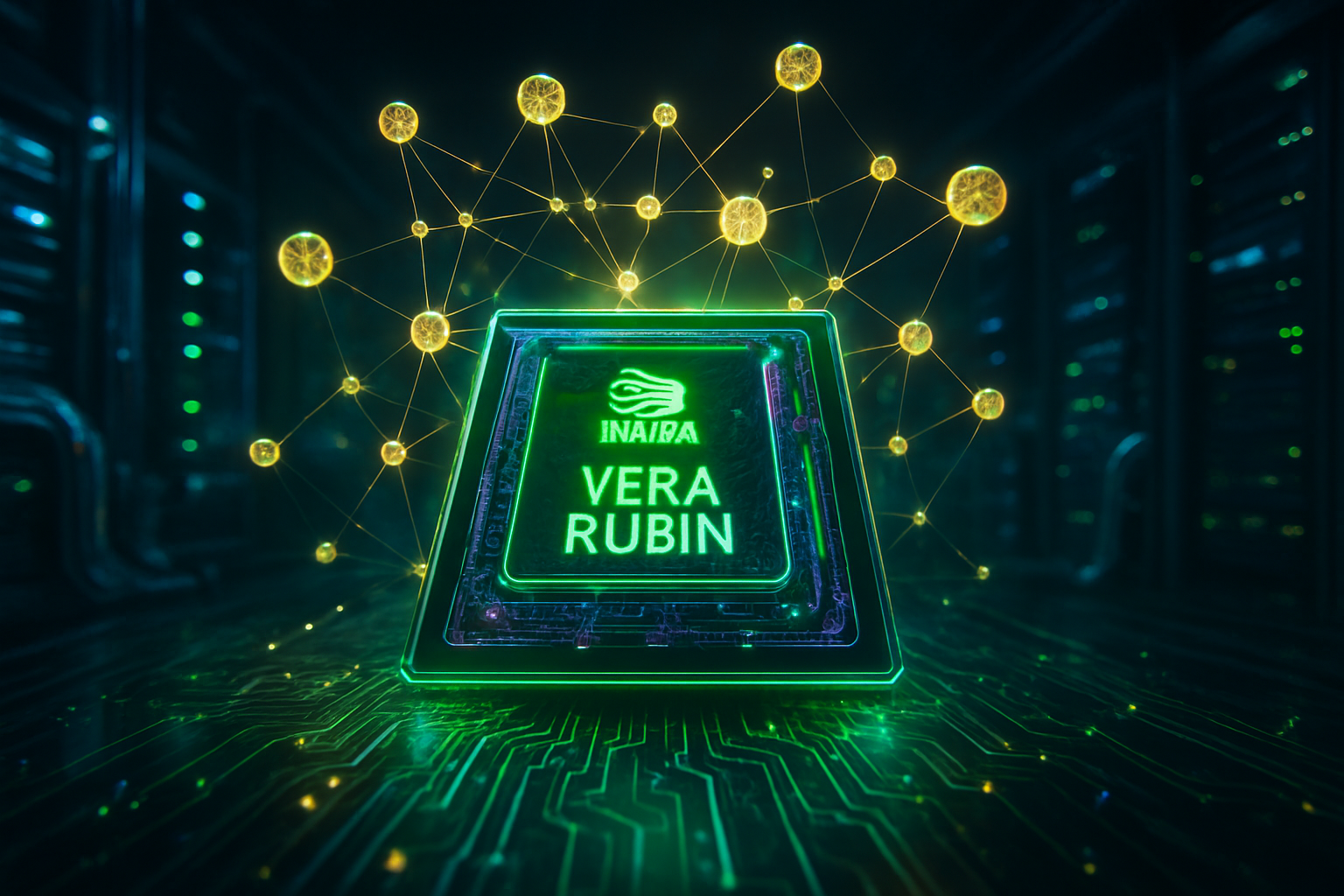
    SANTA CLARA, CA — January 13, 2026 — In a move that has effectively reset the roadmap for global computing, NVIDIA (NASDAQ:NVDA) has officially launched its Vera Rubin platform, signaling the dawn of the "Agentic AI" era. The announcement, which took center stage at CES 2026 earlier this month, comes as the company’s previous-generation Blackwell architecture reaches peak global deployment, cementing NVIDIA's role not just as a chipmaker, but as the primary architect of the world's AI infrastructure.

    The dual-pronged strategy—launching the high-performance Rubin platform while simultaneously scaling the Blackwell B200 and the new B300 Ultra series—has created a near-total lock on the high-end data center market. As organizations transition from simple generative AI to complex, multi-step autonomous agents, the Vera Rubin platform’s specialized architecture is designed to provide the massive throughput and memory bandwidth required to sustain trillion-parameter models.

    Engineering the Future: Inside the Vera Rubin Architecture

    The Vera Rubin platform, anchored by the R100 GPU, represents a significant technological leap over the Blackwell series. Built on an advanced 3nm (N3P) process from Taiwan Semiconductor Manufacturing Company (NYSE:TSM), the R100 features a dual-die, reticle-limited design that delivers an unprecedented 50 Petaflops of FP4 compute. This marks a nearly 3x increase in raw performance compared to the original Blackwell B100. Perhaps more importantly, Rubin is the first platform to fully integrate the HBM4 memory standard, sporting 288GB of memory per GPU with a staggering bandwidth of up to 22 TB/s.

    Beyond raw GPU power, NVIDIA has introduced the "Vera" CPU, succeeding the Grace architecture. The Vera CPU utilizes 88 custom "Olympus" Armv9.2 cores, optimized for high-velocity data orchestration. When coupled via the new NVLink 6 interconnect, which provides 3.6 TB/s of bidirectional bandwidth, the resulting NVL72 racks function as a single, unified supercomputer. This "extreme co-design" approach allows for an aggregate rack bandwidth of 260 TB/s, specifically designed to eliminate the "memory wall" that has plagued large-scale AI training for years.

    The initial reaction from the AI research community has been one of awe and logistical concern. While the performance metrics suggest a path toward Artificial General Intelligence (AGI), the power requirements remain formidable. NVIDIA has mitigated some of these concerns with the ConnectX-9 SuperNIC and the BlueField-4 DPU, which introduce a new "Inference Context Memory Storage" (ICMS) tier. This allows for more efficient reuse of KV-caches, significantly lowering the energy cost per token for complex, long-context inference tasks.

    Market Dominance and the Blackwell Bridge

    While the Vera Rubin platform is the star of the 2026 roadmap, the Blackwell architecture remains the industry's workhorse. As of mid-January, NVIDIA’s Blackwell B100 and B200 units are essentially sold out through the second half of 2026. Tech giants like Microsoft (NASDAQ:MSFT), Meta (NASDAQ:META), Amazon (NASDAQ:AMZN), and Alphabet (NASDAQ:GOOGL) have reportedly booked the lion's share of production capacity to power their respective "AI Factories." To bridge the gap until Rubin reaches mass shipments in late 2026, NVIDIA is currently rolling out the B300 "Blackwell Ultra," featuring upgraded HBM3E memory and refined networking.

    This relentless release cycle has placed intense pressure on competitors. Advanced Micro Devices (NASDAQ:AMD) is currently finding success with its Instinct MI350 series, which has gained traction among customers seeking an alternative to the NVIDIA ecosystem. AMD is expected to counter Rubin with its MI450 platform in late 2026, though analysts suggest NVIDIA currently maintains a 90% market share in the AI accelerator space. Meanwhile, Intel (NASDAQ:INTC) has pivoted toward a "hybridization" strategy, offering its Gaudi 3 and Falcon Shores chips as cost-effective alternatives for sovereign AI clouds and enterprise-specific applications.

    The strategic advantage of the NVIDIA ecosystem is no longer just the silicon, but the CUDA software stack and the new MGX modular rack designs. By contributing these designs to the Open Compute Project (OCP), NVIDIA is effectively turning its proprietary hardware configurations into the global standard for data center construction. This move forces hardware competitors to either build within NVIDIA’s ecosystem or risk being left out of the rapidly standardizing AI data center blueprint.

    Redefining the Data Center: The "No Chillers" Era

    The implications of the Vera Rubin launch extend far beyond the server rack and into the physical infrastructure of the global data center. At the recent launch event, NVIDIA CEO Jensen Huang declared a shift toward "Green AI" by announcing that the Rubin platform is designed to operate with warm-water Direct Liquid Cooling (DLC) at temperatures as high as 45°C (113°F). This capability could eliminate the need for traditional water chillers in many climates, potentially reducing data center energy overhead by up to 30%.

    This announcement sent shockwaves through the industrial cooling sector, with stock prices for traditional HVAC leaders like Johnson Controls (NYSE:JCI) and Trane Technologies (NYSE:TT) seeing increased volatility as investors recalibrate the future of data center cooling. The shift toward 800V DC power delivery and the move away from traditional air-cooling are now becoming the "standard" rather than the exception. This transition is critical, as typical Rubin racks are expected to consume between 120kW and 150kW of power, with future roadmaps already pointing toward 600kW "Kyber" racks by 2027.

    However, this rapid advancement raises concerns regarding the digital divide and energy equity. The cost of building a "Rubin-ready" data center is orders of magnitude higher than previous generations, potentially centralizing AI power within a handful of ultra-wealthy corporations and nation-states. Furthermore, the sheer speed of the Blackwell-to-Rubin transition has led to questions about hardware longevity and the environmental impact of rapid hardware cycles.

    The Horizon: From Generative to Agentic AI

    Looking ahead, the Vera Rubin platform is expected to be the primary engine for the shift from chatbots to "Agentic AI"—autonomous systems that can plan, reason, and execute multi-step workflows across different software environments. Near-term applications include sophisticated autonomous scientific research, real-time global supply chain orchestration, and highly personalized digital twins for industrial manufacturing.

    The next major milestone for NVIDIA will be the mass shipment of R100 GPUs in the third and fourth quarters of 2026. Experts predict that the first models trained entirely on Rubin architecture will begin to emerge in early 2027, likely exceeding the current scale of Large Language Models (LLMs) by a factor of ten. The challenge will remain the supply chain; despite TSMC’s expansion, the demand for HBM4 and 3nm wafers continues to outstrip global capacity.

    A New Benchmark in Computing History

    The launch of the Vera Rubin platform and the continued rollout of Blackwell mark a definitive moment in the history of computing. NVIDIA has transitioned from a company that sells chips to the architect of the global AI operating system. By vertically integrating everything from the transistor to the rack cooling system, they have set a pace that few, if any, can match.

    Key takeaways for the coming months include the performance of the Blackwell Ultra B300 as a transitional product and the pace at which data center operators can upgrade their power and cooling infrastructure to meet Rubin’s specifications. As we move further into 2026, the industry will be watching closely to see if the "Rubin Revolution" can deliver on its promise of making Agentic AI a ubiquitous reality, or if the sheer physics of power and thermal management will finally slow the breakneck speed of the AI era.


    This content is intended for informational purposes only and represents analysis of current AI developments.

    TokenRing AI delivers enterprise-grade solutions for multi-agent AI workflow orchestration, AI-powered development tools, and seamless remote collaboration platforms.
    For more information, visit https://www.tokenring.ai/.

  • The Nanosheet Revolution: Why GAAFET at 2nm is the New ‘Thermal Wall’ Solution for AI

    The Nanosheet Revolution: Why GAAFET at 2nm is the New ‘Thermal Wall’ Solution for AI

    As of January 2026, the semiconductor industry has reached its most significant architectural milestone in over a decade: the transition from the FinFET (Fin Field-Effect Transistor) to the Gate-All-Around (GAAFET) nanosheet architecture. This shift, led by industry titans TSMC (NYSE: TSM), Samsung (KRX: 005930), and Intel (NASDAQ: INTC), marks the end of the "fin" era that dominated chip manufacturing since the 22nm node. The transition is not merely a matter of incremental scaling; it is a fundamental survival tactic for the artificial intelligence industry, which has been rapidly approaching a "thermal wall" where power leakage threatened to stall the development of next-generation GPUs and AI accelerators.

    The immediate significance of the 2nm GAAFET transition lies in its ability to sustain the exponential growth of Large Language Models (LLMs) and generative AI. With data center power envelopes now routinely exceeding 1,000 watts per rack unit, the industry required a transistor that could deliver higher performance without a proportional increase in heat. By surrounding the conducting channel on all four sides with the gate, GAAFETs provide the electrostatic control necessary to eliminate the "short-channel effects" that plagued FinFETs at the 3nm boundary. This development ensures that the hardware roadmap for AI—driven by massive compute demands—can continue through the end of the decade.

    Engineering the 360-Degree Gate: The End of FinFET

    The technical necessity for GAAFET stems from the physical limitations of the FinFET structure. In a FinFET, the gate wraps around three sides of a vertical "fin" channel. As transistors shrunk toward the 2nm scale, these fins became so thin and tall that the gate began to lose control over the bottom of the channel. This resulted in "punch-through" leakage, where current flows even when the transistor is switched off. At 2nm, this leakage becomes catastrophic, leading to wasted power and excessive heat that can degrade chip longevity. GAAFET, specifically in its "nanosheet" implementation, solves this by stacking horizontal sheets of silicon and wrapping the gate entirely around them—a full 360-degree enclosure.

    This 360-degree control allows for a significantly sharper "Subthreshold Swing," which is the measure of how quickly a transistor can transition between 'on' and 'off' states. For AI workloads, which involve billions of simultaneous matrix multiplications, the efficiency of this switching is paramount. Technical specifications for the new 2nm nodes indicate a 75% reduction in static power leakage compared to 3nm FinFETs at equivalent voltages. Furthermore, the nanosheet design allows engineers to adjust the width of the sheets; wider sheets provide higher drive current for performance-critical paths, while narrower sheets save power, offering a level of design flexibility that was impossible with the rigid geometry of FinFETs.

    The 2nm Arms Race: Winners and Losers in the AI Era

    The transition to GAAFET has reshaped the competitive landscape among the world’s most valuable tech companies. TSMC (TPE: 2330), having entered high-volume mass production of its N2 node in late 2025, currently holds a dominant position with reported yields between 65% and 75%. This stability has allowed Apple (NASDAQ: AAPL) to secure over 50% of TSMC’s 2nm capacity through 2026, effectively creating a hardware moat for its upcoming A20 Pro and M6 chips. Competitors like Nvidia (NASDAQ: NVDA) and AMD (NASDAQ: AMD) are also racing to migrate their flagship AI architectures—Nvidia’s "Feynman" and AMD’s "Instinct MI455X"—to 2nm to maintain their performance-per-watt leadership in the data center.

    Meanwhile, Intel (NASDAQ: INTC) has made a bold play with its 18A (1.8nm) node, which debuted in early 2026. Intel is the first to combine its version of GAAFET, called RibbonFET, with "PowerVia" (backside power delivery). By moving power lines to the back of the wafer, Intel has reduced voltage drop and improved signal integrity, potentially giving it a temporary architectural edge over TSMC in power delivery efficiency. Samsung (KRX: 005930), which was the first to implement GAA at 3nm, is leveraging its multi-year experience to stabilize its SF2 node, recently securing a major contract with Tesla (NASDAQ: TSLA) for next-generation autonomous driving chips that require the extreme thermal efficiency of nanosheets.

    A Broader Shift in the AI Landscape

    The move to GAAFET at 2nm is more than a manufacturing change; it is a pivotal moment in the broader AI landscape. As AI models grow in complexity, the "cost per token" is increasingly dictated by the energy efficiency of the underlying silicon. The 18% increase in SRAM (Static Random-Access Memory) density provided by the 2nm transition is particularly crucial. AI chips are notoriously memory-starved, and the ability to fit larger caches directly on the die reduces the need for power-hungry data fetches from external HBM (High Bandwidth Memory). This helps mitigate the "memory wall," which has long been a bottleneck for real-time AI inference.

    However, this breakthrough comes with significant concerns regarding market consolidation. The cost of a single 2nm wafer is now estimated to exceed $30,000, a price point that only the largest "hyperscalers" and premium consumer electronics brands can afford. This risks creating a two-tier AI ecosystem where only companies like Alphabet (NASDAQ: GOOGL) and Microsoft (NASDAQ: MSFT) have access to the most efficient hardware, potentially stifling innovation among smaller AI startups. Furthermore, the extreme complexity of 2nm manufacturing has narrowed the field of foundries to just three players, increasing the geopolitical sensitivity of the global semiconductor supply chain.

    The Road to 1.6nm and Beyond

    Looking ahead, the GAAFET transition is just the beginning of a new era in transistor geometry. Near-term developments are already pointing toward the integration of backside power delivery across all foundries, with TSMC expected to roll out its A16 (1.6nm) node in late 2026. This will further refine the power gains seen at 2nm. Experts predict that the next major challenge will be the "contact resistance" at the source and drain of these tiny nanosheets, which may require the introduction of new materials like ruthenium or molybdenum to replace traditional copper and tungsten.

    In the long term, the industry is already researching "Complementary FET" (CFET) structures, which stack n-type and p-type GAAFETs on top of each other to double transistor density once again. We are also seeing the first experimental use of 2D materials, such as Transition Metal Dichalcogenides (TMDs), which could allow for even thinner channels than silicon nanosheets. The primary challenge remains the astronomical cost of EUV (Extreme Ultraviolet) lithography machines and the specialized chemicals required for atomic-layer deposition, which will continue to push the limits of material science and corporate capital expenditure.

    Summary of the GAAFET Inflection Point

    The transition to GAAFET nanosheets at 2nm represents a definitive victory for the semiconductor industry over the looming threat of thermal stagnation. By providing 360-degree gate control, the industry has successfully neutralized the power leakage that threatened to derail the AI revolution. The key takeaways from this transition are clear: power efficiency is now the primary metric of performance, and the ability to manufacture at the 2nm scale has become the ultimate strategic advantage in the global tech economy.

    As we move through 2026, the focus will shift from the feasibility of 2nm to the stabilization of yields and the equitable distribution of capacity. The significance of this development in AI history cannot be overstated; it provides the physical foundation upon which the next generation of "human-level" AI will be built. In the coming months, industry observers should watch for the first real-world benchmarks of 2nm-powered AI servers, which will reveal exactly how much of a leap in intelligence this new silicon can truly support.


    This content is intended for informational purposes only and represents analysis of current AI developments.

    TokenRing AI delivers enterprise-grade solutions for multi-agent AI workflow orchestration, AI-powered development tools, and seamless remote collaboration platforms.
    For more information, visit https://www.tokenring.ai/.
  • The Packaging Fortress: TSMC’s $50 Billion Bet to Break the 2026 AI Bottleneck

    The Packaging Fortress: TSMC’s $50 Billion Bet to Break the 2026 AI Bottleneck

    As of January 13, 2026, the global race for artificial intelligence supremacy has moved beyond the simple shrinking of transistors. The industry has entered the era of the "Packaging Fortress," where the ability to stitch multiple silicon dies together is now more valuable than the silicon itself. Taiwan Semiconductor Manufacturing Co. (TPE:2330) (NYSE:TSM) has responded to this shift by signaling a massive surge in capital expenditure, projected to reach between $44 billion and $50 billion for the 2026 fiscal year. This unprecedented investment is aimed squarely at expanding advanced packaging capacity—specifically CoWoS (Chip on Wafer on Substrate) and SoIC (System on Integrated Chips)—to satisfy the voracious appetite of the world’s AI giants.

    Despite massive expansions throughout 2025, the demand for high-end AI accelerators remains "over-subscribed." The recent launch of the NVIDIA (NASDAQ:NVDA) Rubin architecture and the upcoming AMD (NASDAQ:AMD) Instinct MI400 series has created a structural bottleneck that is no longer about raw wafer starts, but about the complex "back-end" assembly required to integrate high-bandwidth memory (HBM4) and multiple compute chiplets into a single, massive system-in-package.

    The Technical Frontier: CoWoS-L and the 3D Stacking Revolution

    The technical specifications of 2026’s flagship AI chips have pushed traditional manufacturing to its physical limits. For years, the "reticle limit"—the maximum size of a single chip that a lithography machine can print—stood at roughly 858 mm². To bypass this, TSMC has pioneered CoWoS-L (Local Silicon Interconnect), which uses tiny silicon "bridges" to link multiple chiplets across a larger substrate. This allows NVIDIA’s Rubin chips to function as a single logical unit while physically spanning an area equivalent to three or four traditional processors.

    Furthermore, 3D stacking via SoIC-X (System on Integrated Chips) has transitioned from an experimental boutique process to a mainstream requirement. Unlike 2.5D packaging, which places chips side-by-side, SoIC stacks them vertically using "bumpless" copper-to-copper hybrid bonding. By early 2026, commercial bond pitches have reached a staggering 6 micrometers. This technical leap reduces signal latency by 40% and cuts interconnect power consumption by half, a critical factor for data centers struggling with the 1,000-watt power envelopes of modern AI "superchips."

    The integration of HBM4 memory marks the third pillar of this technical shift. As the interface width for HBM4 has doubled to 2048-bit, the complexity of aligning these memory stacks on the interposer has become a primary engineering challenge. Industry experts note that while TSMC has increased its CoWoS capacity to over 120,000 wafers per month, the actual yield of finished systems is currently constrained by the precision required to bond these high-density memory stacks without defects.

    The Allocation War: NVIDIA and AMD’s Battle for Capacity

    The business implications of the packaging bottleneck are stark: if you don’t own the packaging capacity, you don’t own the market. NVIDIA has aggressively moved to secure its dominance, reportedly pre-booking 60% to 65% of TSMC’s total CoWoS output for 2026. This "capacity moat" ensures that the Rubin series—which integrates up to 12 stacks of HBM4—can be produced at a scale that competitors struggle to match. This strategic lock-in has forced other players to fight for the remaining 35% of the world's most advanced assembly lines.

    AMD has emerged as the most formidable challenger, securing approximately 11% of TSMC’s 2026 capacity for its Instinct MI400 series. Unlike previous generations, AMD is betting heavily on SoIC 3D stacking to gain a density advantage over NVIDIA. By stacking cache and compute logic vertically, AMD aims to offer superior performance-per-watt, targeting hyperscale cloud providers who are increasingly sensitive to the total cost of ownership (TCO) and electricity consumption of their AI clusters.

    This concentration of power at TSMC has sparked a strategic pivot among other tech giants. Apple (NASDAQ:AAPL) has reportedly secured significant SoIC capacity for its next-generation "M5 Ultra" chips, signaling that advanced packaging is no longer just for data center GPUs but is moving into high-end consumer silicon. Meanwhile, Intel (NASDAQ:INTC) and Samsung (KRX:005930) are racing to offer "turnkey" alternatives, though they continue to face uphill battles in matching TSMC’s yield rates and ecosystem integration.

    A Fundamental Shift in the Moore’s Law Paradigm

    The 2026 packaging crunch represents a wider historical significance: the functional end of traditional Moore’s Law scaling. For five decades, the industry relied on making transistors smaller to gain performance. Today, that "node shrink" is so expensive and yields such diminishing returns that the industry has shifted its focus to "System Technology Co-Optimization" (STCO). In this new landscape, the way chips are connected is just as important as the 3nm or 2nm process used to print them.

    This shift has profound geopolitical and economic implications. The "Silicon Shield" of Taiwan has been reinforced not just by the ability to make chips, but by the concentration of advanced packaging facilities like TSMC’s new AP7 and AP8 plants. The announcement of the first US-based advanced packaging plant (AP1) in Arizona, scheduled to begin construction in early 2026, highlights the desperate push by the U.S. government to bring this critical "back-end" infrastructure onto American soil to ensure supply chain resilience.

    However, the transition to chiplets and 3D stacking also brings new concerns. The complexity of these systems makes them harder to repair and more prone to "silent data errors" if the interconnects degrade over time. Furthermore, the high cost of advanced packaging is creating a "digital divide" in the hardware space, where only the wealthiest companies can afford to build or buy the most advanced AI hardware, potentially centralizing AI power in the hands of a few trillion-dollar entities.

    Future Outlook: Glass Substrates and Optical Interconnects

    Looking ahead to the latter half of 2026 and into 2027, the industry is already preparing for the next evolution in packaging: glass substrates. While current organic substrates are reaching their limits in terms of flatness and heat resistance, glass offers the structural integrity needed for even larger "system-on-wafer" designs. TSMC, Intel, and Samsung are all in a high-stakes R&D race to commercialize glass substrates, which could allow for even denser interconnects and better thermal management.

    We are also seeing the early stages of "Silicon Photonics" integration directly into the package. Near-term developments suggest that by 2027, optical interconnects will replace traditional copper wiring for chip-to-chip communication, effectively moving data at the speed of light within the server rack. This would solve the "memory wall" once and for all, allowing thousands of chiplets to act as a single, unified brain.

    The primary challenge remains yield and cost. As packaging becomes more complex, the risk of a single faulty chiplet ruining a $40,000 "superchip" increases. Experts predict that the next two years will see a massive surge in AI-driven inspection and metrology tools, where AI is used to monitor the manufacturing of the very hardware that runs it, creating a self-reinforcing loop of technological advancement.

    Conclusion: The New Era of Silicon Integration

    The advanced packaging bottleneck of 2026 is a defining moment in the history of computing. It marks the transition from the era of the "monolithic chip" to the era of the "integrated system." TSMC’s massive $50 billion CapEx surge is a testament to the fact that the future of AI is being built in the packaging house, not just the foundry. With NVIDIA and AMD locked in a high-stakes battle for capacity, the ability to master 3D stacking and CoWoS-L has become the ultimate competitive advantage.

    As we move through 2026, the industry's success will depend on its ability to solve the HBM4 yield issues and successfully scale new facilities in Taiwan and abroad. The "Packaging Fortress" is now the most critical infrastructure in the global economy. Investors and tech leaders should watch closely for quarterly updates on TSMC’s packaging yields and the progress of the Arizona AP1 facility, as these will be the true bellwethers for the next phase of the AI revolution.


    This content is intended for informational purposes only and represents analysis of current AI developments.

    TokenRing AI delivers enterprise-grade solutions for multi-agent AI workflow orchestration, AI-powered development tools, and seamless remote collaboration platforms.
    For more information, visit https://www.tokenring.ai/.
  • Biren Technology’s Blockbuster IPO: A 119% Surge Signals China’s AI Chip Independence

    Biren Technology’s Blockbuster IPO: A 119% Surge Signals China’s AI Chip Independence

    The landscape of the global semiconductor industry shifted dramatically on January 2, 2026, as Shanghai Biren Technology (HKG: 6082) made its highly anticipated debut on the Hong Kong Stock Exchange. In a stunning display of investor confidence that defied ongoing geopolitical tensions, Biren’s shares skyrocketed by as much as 119% during intraday trading, eventually closing its first day up 76% from its offering price of HK$19.60. The IPO, which raised approximately HK$5.58 billion (US$717 million), was oversubscribed by retail investors a staggering 2,348 times, marking the most explosive tech debut in the region since the pre-2021 era.

    This landmark listing is more than just a financial success story; it represents a pivotal moment in China’s quest for silicon sovereignty. As US export controls continue to restrict access to high-end hardware from NVIDIA (NASDAQ: NVDA), Biren’s BR100 chip has emerged as the definitive domestic alternative. The massive capital infusion from the IPO is expected to accelerate Biren’s production scaling and R&D, providing a homegrown foundation for the next generation of Chinese large language models (LLMs) and autonomous systems.

    The BR100: Engineering Around the Sanction Wall

    The technical centerpiece of Biren’s market dominance is the BR100 series, a high-performance general-purpose GPU (GPGPU) designed specifically for large-scale AI training and inference. Built on the proprietary "BiLiren" architecture, the BR100 utilizes an advanced 7nm process and a sophisticated "chiplet" (multi-chip module) design. This approach allows Biren to bypass the reticle limits of traditional monolithic chips, packing 77 billion transistors into a single package. The BR100 delivers peak performance of 1024 TFLOPS in BF16 precision and features 64GB of HBM2E memory with 2.3 TB/s bandwidth.

    While NVIDIA’s newer Blackwell and Hopper architectures still hold a raw performance edge in global markets, the BR100 has become the "workhorse" of Chinese data centers. Industry experts note that Biren’s software stack, BIRENSU, has achieved high compatibility with mainstream AI frameworks like PyTorch and TensorFlow, significantly lowering the migration barrier for developers who previously relied on NVIDIA’s CUDA. This technical parity in real-world workloads has led many Chinese research institutions to conclude that the BR100 is no longer just a "stopgap" solution, but a competitive platform capable of sustaining China’s AI ambitions indefinitely.

    A Market Reshaped by "Buy Local" Mandates

    The success of Biren’s IPO is fundamentally reshaping the competitive dynamics between Western chipmakers and domestic Chinese firms. For years, NVIDIA (NASDAQ: NVDA) enjoyed a near-monopoly in China’s AI sector, but that dominance is eroding under the weight of trade restrictions and Beijing’s aggressive "buy local" mandates. Reports from early January 2026 suggest that the Chinese government has issued guidance to domestic tech giants to pause or reduce orders for NVIDIA’s H200 chips—which were briefly permitted under specific licenses—to protect and nurture newly listed domestic champions like Biren.

    This shift provides a strategic advantage to Biren and its domestic peers, such as the Baidu (NASDAQ: BIDU) spin-off Kunlunxin and Shanghai Iluvatar CoreX. These companies now enjoy a "captive market" where demand is guaranteed by policy rather than just performance. For major Chinese cloud providers and AI labs, the Biren IPO offers a degree of supply chain security that was previously unthinkable. By securing billions in capital, Biren can now afford to outbid competitors for limited domestic fabrication capacity at SMIC (HKG: 0981), further solidifying its position as the primary gatekeeper of China's AI infrastructure.

    The Vanguard of a New AI Listing Wave

    Biren’s explosive debut is the lead domino in what is becoming a historic wave of Chinese AI and semiconductor listings in Hong Kong. Following Biren’s lead, the first two weeks of January 2026 saw a flurry of activity: the "AI Tiger" MiniMax Group surged 109% on its debut, and the Tsinghua-linked Zhipu AI raised over US$550 million. This trend signals that international investors are still hungry for exposure to the Chinese AI market, provided those companies can demonstrate a clear path to bypassing US technological bottlenecks.

    This development serves as a stark comparison to previous AI milestones. While the 2010s were defined by software-driven growth and mobile internet dominance, the mid-2020s are being defined by the "Hardware Renaissance." The fact that Biren was added to the US Entity List in 2023—an action meant to stifle its growth—has ironically served as a catalyst for its public success. By forcing the company to pivot to domestic foundries and innovate in chiplet packaging, the sanctions inadvertently created a battle-hardened champion that is now too well-capitalized to be easily suppressed.

    Future Horizons: Scaling and the HBM Challenge

    Looking ahead, Biren’s primary challenge will be scaling production to meet the insatiable demand of China’s "War of a Thousand Models." While the IPO provides the necessary cash, the company remains vulnerable to potential future restrictions on High-Bandwidth Memory (HBM) and advanced lithography tools. Analysts predict that Biren will use a significant portion of its IPO proceeds to secure long-term HBM supply contracts and to co-develop next-generation 2.5D packaging solutions with SMIC (HKG: 0981) and other domestic partners.

    In the near term, the industry is watching for the announcement of the BR200, which is rumored to utilize even more aggressive chiplet configurations to bridge the gap with NVIDIA’s 2026 product roadmap. Furthermore, there is growing speculation that Biren may begin exporting its hardware to "Global South" markets that are wary of US tech hegemony, potentially creating a secondary global ecosystem for AI hardware that operates entirely outside of the Western sphere of influence.

    A New Chapter in the Global AI Race

    The blockbuster IPO of Shanghai Biren Technology marks a definitive end to the era of undisputed Western dominance in AI hardware. With a 119% surge and billions in new capital, Biren has proven that the combination of state-backed demand and private market enthusiasm can overcome even the most stringent export controls. As of January 13, 2026, the company stands as a testament to the resilience of China’s semiconductor ecosystem and a warning to global competitors that the "silicon curtain" has two sides.

    In the coming weeks, the market will be closely monitoring the performance of other upcoming AI listings, including the expected spin-off of Baidu’s (NASDAQ: BIDU) Kunlunxin. If these debuts mirror Biren’s success, 2026 will be remembered as the year the center of gravity for AI hardware investment began its decisive tilt toward the East. For now, Biren has set the gold standard, proving that in the high-stakes world of artificial intelligence, independence is the ultimate competitive advantage.


    This content is intended for informational purposes only and represents analysis of current AI developments.

    TokenRing AI delivers enterprise-grade solutions for multi-agent AI workflow orchestration, AI-powered development tools, and seamless remote collaboration platforms.
    For more information, visit https://www.tokenring.ai/.
  • Silicon Sovereignty: TSMC Ignites the 2nm Era as Fab 22 Hits Volume Production

    Silicon Sovereignty: TSMC Ignites the 2nm Era as Fab 22 Hits Volume Production

    As of today, January 13, 2026, the global semiconductor landscape has officially shifted on its axis. Taiwan Semiconductor Manufacturing Company (NYSE: TSM) has announced that its Fab 22 facility in Kaohsiung has reached high-volume manufacturing (HVM) for its long-awaited 2nm (N2) process node. This milestone marks the definitive end of the FinFET transistor era and the beginning of a new chapter in silicon architecture that promises to redefine the limits of performance, efficiency, and artificial intelligence.

    The transition to 2nm is not merely an incremental step; it is a foundational reset of the "Golden Rule" of Moore's Law. By successfully ramping up production at Fab 22 alongside its sister facility, Fab 20 in Hsinchu, TSMC is now delivering the world’s most advanced semiconductors at a scale that its competitors—namely Samsung and Intel—are still struggling to match. With yields already reported in the 65–70% range, the 2nm era is arriving with a level of maturity that few industry analysts expected so early in the year.

    The GAA Revolution: Breaking the Power Wall

    The technical centerpiece of the N2 node is the transition from FinFET (Fin Field-Effect Transistor) to Gate-All-Around (GAA) Nanosheet transistors. For over a decade, FinFET served the industry well, but as transistors shrank toward the atomic scale, current leakage and electrostatic control became insurmountable hurdles. The GAA architecture solves this by wrapping the gate around all four sides of the channel, providing a degree of control that was previously impossible. This structural shift allows for a staggering 25% to 30% reduction in power consumption at the same performance levels compared to the previous 3nm (N3E) generation.

    Beyond power savings, the N2 process offers a 10% to 15% performance boost at the same power envelope, alongside a logic density increase of up to 20%. This is achieved through the stacking of horizontal silicon ribbons, which allows for more current to flow through a smaller footprint. Initial reactions from the semiconductor research community have been overwhelmingly positive, with experts noting that TSMC has effectively bypassed the "yield valley" that often plagues such radical architectural shifts. The ability to maintain high yields while implementing GAA is being hailed as a masterclass in precision engineering.

    Apple’s $30,000 Wafers and the 50% Capacity Lock

    The commercial implications of this rollout are being felt immediately across the consumer electronics sector. Apple (NASDAQ: AAPL) has once again flexed its capital muscle, reportedly securing a massive 50% of TSMC’s total 2nm capacity through the end of 2026. This reservation is earmarked for the upcoming A20 Pro chip, which will power the iPhone 18 Pro and Apple’s highly anticipated first-generation foldable device. By locking up half of the world's most advanced silicon, Apple has created a formidable "supply-side barrier" that leaves rivals like Qualcomm and MediaTek scrambling for the remaining capacity.

    This strategic move gives Apple a multi-generational lead in performance-per-watt, particularly in the realm of on-device AI. At an estimated cost of $30,000 per wafer, the N2 node is the most expensive in history, yet the premium is justified by the strategic advantage it provides. For tech giants and startups alike, the message is clear: the 2nm era is a high-stakes game where only those with the deepest pockets and the strongest foundry relationships can play. This further solidifies TSMC’s near-monopoly on advanced logic, as it currently produces an estimated 95% of the world’s most sophisticated AI chips.

    Fueling the AI Super-Cycle: From Data Centers to the Edge

    The arrival of 2nm silicon is the "pressure release valve" the AI industry has been waiting for. As Large Language Models (LLMs) scale toward tens of trillions of parameters, the energy cost of training and inference has hit a "power wall." The 30% efficiency gain offered by the N2 node allows data center operators to pack significantly more compute density into their existing power footprints. This is critical for companies like NVIDIA (NASDAQ: NVDA) and AMD (NASDAQ: AMD), who are already racing to port their next-generation AI accelerators to the N2 process to maintain their dominance in the generative AI space.

    Perhaps more importantly, the N2 node is the catalyst for the "Edge AI" revolution. By providing the efficiency needed to run complex generative tasks locally on smartphones and PCs, 2nm chips are enabling a new class of "AI-first" devices. This shift reduces the reliance on cloud-based processing, improving latency and privacy while triggering a massive global replacement cycle for hardware. The 2nm era isn't just about making chips smaller; it's about making AI ubiquitous, moving it from massive server farms directly into the pockets of billions of users.

    The Path to 1.4nm and the High-NA EUV Horizon

    Looking ahead, TSMC is already laying the groundwork for the next milestones. While the current N2 node utilizes standard Extreme Ultraviolet (EUV) lithography, the company is preparing for the introduction of "N2P" and the "A16" (1.6nm) nodes, which will introduce "backside power delivery"—a revolutionary method of routing power from the bottom of the wafer to reduce interference and further boost efficiency. These developments are expected to enter the pilot phase by late 2026, ensuring that the momentum of the 2nm launch carries directly into the next decade of innovation.

    The industry is also watching for the integration of High-NA (Numerical Aperture) EUV machines. While TSMC has been more cautious than Intel in adopting these $350 million machines, the complexity of 2nm and beyond will eventually make them a necessity. The challenge remains the astronomical cost of manufacturing; as wafer prices climb toward $40,000 in the 1.4nm era, the industry must find ways to balance cutting-edge performance with economic viability. Experts predict that the next two years will be defined by a "yield war," where the ability to manufacture these complex designs at scale will determine the winners of the silicon race.

    A New Benchmark in Semiconductor History

    TSMC’s successful ramp-up at Fab 22 is more than a corporate victory; it is a landmark event in the history of technology. The transition to GAA Nanosheets at the 2nm level represents the most significant architectural change since the introduction of FinFET in 2011. By delivering a 30% power reduction and securing the hardware foundation for the AI super-cycle, TSMC has once again proven its role as the indispensable engine of the modern digital economy.

    In the coming weeks and months, the industry will be closely monitoring the first benchmarks of the A20 Pro silicon and the subsequent announcements from NVIDIA regarding their N2-based Blackwell successors. As the first 2nm wafers begin their journey from Kaohsiung to assembly plants around the world, the tech industry stands on the precipice of a new era of compute. The "2nm era" has officially begun, and the world of artificial intelligence will never be the same.


    This content is intended for informational purposes only and represents analysis of current AI developments.

    TokenRing AI delivers enterprise-grade solutions for multi-agent AI workflow orchestration, AI-powered development tools, and seamless remote collaboration platforms.
    For more information, visit https://www.tokenring.ai/.

  • NVIDIA Unveils Vera Rubin Platform at CES 2026: A 10x Leap Toward the Era of Agentic AI

    NVIDIA Unveils Vera Rubin Platform at CES 2026: A 10x Leap Toward the Era of Agentic AI

    LAS VEGAS — In a landmark presentation at CES 2026, NVIDIA (NASDAQ: NVDA) has officially ushered in the next epoch of computing with the launch of the Vera Rubin platform. Named after the legendary astronomer who provided the first evidence of dark matter, the platform represents a total architectural overhaul designed to solve the most pressing bottleneck in modern technology: the transition from passive generative AI to autonomous, reasoning "agentic" AI.

    The announcement, delivered by CEO Jensen Huang to a capacity crowd, centers on a suite of six new chips that function as a singular, cohesive AI supercomputer. By integrating compute, networking, and memory at an unprecedented scale, NVIDIA claims the Vera Rubin platform will reduce AI inference costs by a factor of 10, effectively commoditizing high-level reasoning for enterprises and consumers alike.

    The Six Pillars of Rubin: A Masterclass in Extreme Codesign

    The Vera Rubin platform is built upon six foundational silicon advancements that NVIDIA describes as "extreme codesign." At the heart of the system is the Rubin GPU, a behemoth featuring 336 billion transistors and 288 GB of HBM4 memory. Delivering a staggering 22 TB/s of memory bandwidth per socket, the Rubin GPU is engineered to handle the massive Mixture-of-Experts (MoE) models that define the current state-of-the-art. Complementing the GPU is the Vera CPU, which marks a departure from traditional general-purpose processing. Featuring 88 custom "Olympus" cores compatible with Arm (NASDAQ: ARM) v9.2 architecture, the Vera CPU acts as a dedicated "data movement engine" optimized for the iterative logic and multi-step reasoning required by AI agents.

    The interconnect and networking stack has seen an equally dramatic upgrade. NVLink 6 doubles scale-up bandwidth to 3.6 TB/s per GPU, allowing a rack of 72 GPUs to act as a single, massive processor. On the scale-out side, the ConnectX-9 SuperNIC and Spectrum-6 Ethernet switch provide 1.6 Tb/s and 102.4 Tb/s of throughput, respectively, with the latter utilizing Co-Packaged Optics (CPO) for a 5x improvement in power efficiency. Finally, the BlueField-4 DPU introduces a dedicated Inference Context Memory Storage Platform, offloading Key-Value (KV) cache management to improve token throughput by 5x, effectively giving AI models a "long-term memory" during complex tasks.

    Microsoft and the Rise of the Fairwater AI Superfactories

    The immediate commercial impact of the Vera Rubin platform is being realized through a massive strategic partnership with Microsoft Corp. (NASDAQ: MSFT). Microsoft has been named the premier launch partner, integrating the Rubin architecture into its new "Fairwater" AI superfactories. These facilities, located in strategic hubs like Wisconsin and Atlanta, are designed to house hundreds of thousands of Vera Rubin Superchips in a unique three-dimensional rack configuration that minimizes cable runs and maximizes the efficiency of the NVLink 6 fabric.

    This partnership is a direct challenge to the broader cloud infrastructure market. By achieving a 10x reduction in inference costs, Microsoft and NVIDIA are positioning themselves to dominate the "agentic" era, where AI is not just a chatbot but a persistent digital employee performing complex workflows. For startups and competing AI labs, the Rubin platform raises the barrier to entry; training a 10-trillion parameter model now takes 75% fewer GPUs than it did on the previous Blackwell architecture. This shift effectively forces competitors to either adopt NVIDIA’s proprietary stack or face a massive disadvantage in both speed-to-market and operational cost.

    From Chatbots to Agents: The Reasoning Era

    The broader significance of the Vera Rubin platform lies in its explicit focus on "Agentic AI." While the previous generation of hardware was optimized for the "training era"—ingesting vast amounts of data to predict the next token—Rubin is built for the "reasoning era." This involves agents that can plan, use tools, and maintain context over weeks or months of interaction. The hardware-accelerated adaptive compression and the BlueField-4’s context management are specifically designed to handle the "long-context" requirements of these agents, allowing them to remember previous interactions and complex project requirements without the massive latency penalties of earlier systems.

    This development mirrors the historical shift from mainframe computing to the PC, or from the desktop to mobile. By making high-level reasoning 10 times cheaper, NVIDIA is enabling a world where every software application can have a dedicated, autonomous agent. However, this leap also brings concerns regarding the energy consumption of such massive clusters and the potential for rapid job displacement as AI agents become capable of handling increasingly complex white-collar tasks. Industry experts note that the Rubin platform is not just a faster chip; it is a fundamental reconfiguration of how data centers are built and how software is conceived.

    The Road Ahead: Robotics and Physical AI

    Looking toward the future, the Vera Rubin platform is expected to serve as the backbone for NVIDIA’s expansion into "Physical AI." The same architectural breakthroughs found in the Vera CPU and Rubin GPU are already being adapted for the GR00T humanoid robotics platform and the Alpamayo autonomous driving system. In the near term, we can expect the first Fairwater-powered agentic services to roll out to Microsoft Azure customers by the second half of 2026.

    The long-term challenge for NVIDIA will be managing the sheer power density of these systems. With the Rubin NVL72 requiring advanced liquid cooling and specialized power delivery, the infrastructure requirements for the "AI Superfactory" are becoming as complex as the silicon itself. Nevertheless, analysts predict that the Rubin platform will remain the gold standard for AI compute for the remainder of the decade, as the industry moves away from static models toward dynamic, self-improving agents.

    A New Benchmark in Computing History

    The launch of the Vera Rubin platform at CES 2026 is more than a routine product update; it is a declaration of the "Reasoning Era." By unifying six distinct chips into a singular, liquid-cooled fabric, NVIDIA has redefined the limits of what is possible in silicon. The 10x reduction in inference cost and the massive-scale partnership with Microsoft ensure that the Vera Rubin architecture will be the foundation upon which the next generation of autonomous digital and physical systems are built.

    As we move into the second half of 2026, the tech industry will be watching closely to see how the first Fairwater superfactories perform and how quickly agentic AI can be integrated into the global economy. For now, Jensen Huang and NVIDIA have once again set a pace that the rest of the industry must struggle to match, proving that in the race for AI supremacy, the hardware remains the ultimate gatekeeper.


    This content is intended for informational purposes only and represents analysis of current AI developments.

    TokenRing AI delivers enterprise-grade solutions for multi-agent AI workflow orchestration, AI-powered development tools, and seamless remote collaboration platforms.
    For more information, visit https://www.tokenring.ai/.
  • NVIDIA’s $20 Billion Groq Gambit: The Dawn of the Inference Era

    NVIDIA’s $20 Billion Groq Gambit: The Dawn of the Inference Era

    In a move that has sent shockwaves through the semiconductor industry, NVIDIA (NASDAQ: NVDA) has finalized a landmark $20 billion licensing and talent-acquisition deal with Groq, the pioneer of the Language Processing Unit (LPU). Announced in the final days of 2025 and coming into full focus this January 2026, the deal represents a strategic pivot for the world’s most valuable chipmaker. By integrating Groq’s ultra-high-speed inference architecture into its own roadmap, NVIDIA is signaling that the era of AI "training" dominance is evolving into a new, high-stakes battleground: the "Inference Flip."

    The deal, structured as a non-exclusive licensing agreement combined with a massive "acqui-hire" of nearly 90% of Groq’s workforce, allows NVIDIA to bypass the regulatory hurdles that previously sank its bid for Arm. With Groq founder and TPU visionary Jonathan Ross now leading NVIDIA’s newly formed "Deterministic Inference" division, the tech giant is moving to solve the "memory wall"—the persistent bottleneck that has limited the speed of real-time AI agents. This $20 billion investment is not just an acquisition of technology; it is a defensive and offensive masterstroke designed to ensure that the next generation of AI—autonomous, real-time, and agentic—runs almost exclusively on NVIDIA-powered silicon.

    The Technical Fusion: Fusing GPU Power with LPU Speed

    At the heart of this deal is the technical integration of Groq’s LPU architecture into NVIDIA’s newly unveiled Vera Rubin platform. Debuted just last week at CES 2026, the Rubin architecture is the first to natively incorporate Groq’s "assembly line" logic. Unlike traditional GPUs that rely heavily on external High Bandwidth Memory (HBM)—which, while powerful, introduces significant latency—Groq’s technology utilizes dense, on-chip SRAM (Static Random-Access Memory). This shift allows for "Batch Size 1" processing, meaning AI models can process individual requests with near-zero latency, a requirement for the low-latency demands of human-like AI conversation and real-time robotics.

    The technical specifications of the upcoming Rubin NVL144 CPX rack are staggering. Early benchmarks suggest a 7.5x improvement in inference performance over the previous Blackwell generation, specifically optimized for processing million-token contexts. By folding Groq’s software libraries and compiler technology into the CUDA platform, NVIDIA has created a "dual-stack" ecosystem. Developers can now train massive models on NVIDIA GPUs and, with a single click, deploy them for ultra-fast, deterministic inference using LPU-enhanced hardware. This deterministic scheduling eliminates the "jitter" or variability in response times that has plagued large-scale AI deployments in the past.

    Initial reactions from the AI research community have been a mix of awe and strategic concern. Researchers at OpenAI and Anthropic have praised the move, noting that the ability to run "inference-time compute"—where a model "thinks" longer to provide a better answer—requires exactly the kind of deterministic, high-speed throughput that the NVIDIA-Groq fusion provides. However, some hardware purists argue that by moving toward a hybrid LPU-GPU model, NVIDIA may be increasing the complexity of its hardware stack, potentially creating new challenges for cooling and power delivery in already strained data centers.

    Reshaping the Competitive Landscape

    The $20 billion deal creates immediate pressure on NVIDIA’s rivals. Advanced Micro Devices (NASDAQ: AMD), which recently launched its MI455 chip to compete with Blackwell, now finds itself chasing a moving target as NVIDIA shifts the goalposts from raw FLOPS to "cost per token." AMD CEO Lisa Su has doubled down on an open-source software strategy with ROCm, but NVIDIA’s integration of Groq’s compiler tech into CUDA makes the "moat" around NVIDIA’s software ecosystem even deeper.

    Cloud hyperscalers like Alphabet Inc. (NASDAQ: GOOGL), Amazon.com Inc. (NASDAQ: AMZN), and Microsoft Corp. (NASDAQ: MSFT) are also in a delicate position. While these companies have been developing their own internal AI chips—such as Google’s TPU, Amazon’s Inferentia, and Microsoft’s Maia—the NVIDIA-Groq alliance offers a level of performance that may be difficult to match internally. For startups and smaller AI labs, the deal is a double-edged sword: while it promises significantly faster and cheaper inference in the long run, it further consolidates power within a single vendor, making it harder for alternative hardware architectures like Cerebras or Sambanova to gain a foothold in the enterprise market.

    Furthermore, the strategic advantage for NVIDIA lies in neutralizing its most credible threat. Groq had been gaining significant traction with its "GroqCloud" service, proving that specialized inference hardware could outperform GPUs by an order of magnitude in specific tasks. By licensing the IP and hiring the talent behind that success, NVIDIA has effectively closed a "crack in the armor" that competitors were beginning to exploit.

    The "Inference Flip" and the Global AI Landscape

    This deal marks the official arrival of the "Inference Flip"—the point in history where the revenue and compute demand for running AI models (inference) surpasses the demand for building them (training). As of early 2026, industry analysts estimate that inference now accounts for nearly two-thirds of all AI compute spending. The world has moved past the era of simply training larger and larger models; the focus is now on making those models useful, fast, and economical for billions of end-users.

    The wider significance also touches on the global energy crisis. Data center power constraints have become the primary bottleneck for AI expansion in 2026. Groq’s LPU technology is notoriously more energy-efficient for inference tasks than traditional GPUs. By integrating this efficiency into the Vera Rubin platform, NVIDIA is addressing the "sustainability wall" that threatened to stall the AI revolution. This move aligns with global trends toward "Edge AI," where high-speed inference is required not just in massive data centers, but in local hubs and even high-end consumer devices.

    However, the deal has not escaped the notice of regulators. Antitrust watchdogs in the EU and the UK have already launched preliminary inquiries, questioning whether a $20 billion "licensing and talent" deal is merely a "quasi-merger" designed to circumvent acquisition bans. Unlike the failed Arm deal, NVIDIA’s current approach leaves Groq as a legal entity—led by new CEO Simon Edwards—to fulfill existing contracts, such as its massive $1.5 billion infrastructure deal with Saudi Arabia. Whether this legal maneuvering will satisfy regulators remains to be seen.

    Future Horizons: Agents, Robotics, and Beyond

    Looking ahead, the integration of Groq’s technology into NVIDIA’s roadmap paves the way for the "Age of Agents." Near-term developments will likely focus on "Real-Time Agentic Orchestration," where AI agents can interact with each other and with humans in sub-100-millisecond timeframes. This is critical for applications like high-frequency automated negotiation, real-time language translation in augmented reality, and autonomous vehicle networks that require split-second decision-making.

    In the long term, we can expect to see this technology migrate from the data center to the "Prosumer" level. Experts predict that by 2027, "Rubin-Lite" chips featuring integrated LPU cells could appear in high-end workstations, enabling local execution of massive models that currently require cloud connectivity. The challenge will be software optimization; while CUDA is the industry standard, fully exploiting the deterministic nature of LPU logic requires a shift in how developers write AI applications.

    A New Chapter in AI History

    NVIDIA’s $20 billion licensing deal with Groq is more than a corporate transaction; it is a declaration of the future. It marks the moment when the industry’s focus shifted from the "brute force" of model training to the "surgical precision" of high-speed inference. By securing Groq’s IP and the visionary leadership of Jonathan Ross, NVIDIA has fortified its position as the indispensable backbone of the AI economy for the foreseeable future.

    As we move deeper into 2026, the industry will be watching the rollout of the Vera Rubin platform with intense scrutiny. The success of this integration will determine whether NVIDIA can maintain its near-monopoly or if the sheer cost and complexity of its new hybrid architecture will finally leave room for a new generation of competitors. For now, the message is clear: the inference era has arrived, and it is being built on NVIDIA’s terms.


    This content is intended for informational purposes only and represents analysis of current AI developments.

    TokenRing AI delivers enterprise-grade solutions for multi-agent AI workflow orchestration, AI-powered development tools, and seamless remote collaboration platforms.
    For more information, visit https://www.tokenring.ai/.
  • The Atomic AI Renaissance: Why Tech Giants are Betting on Nuclear to Power the Future of Silicon

    The Atomic AI Renaissance: Why Tech Giants are Betting on Nuclear to Power the Future of Silicon

    The era of the "AI Factory" has arrived, and it is hungry for power. As of January 12, 2026, the global technology landscape is witnessing an unprecedented convergence between the cutting edge of artificial intelligence and the decades-old reliability of nuclear fission. What began as a series of experimental power purchase agreements has transformed into a full-scale "Nuclear Renaissance," driven by the insatiable energy demands of next-generation AI data centers.

    Led by industry titans like Microsoft (NASDAQ: MSFT) and Amazon (NASDAQ: AMZN), the tech sector is effectively underwriting the revival of the nuclear industry. This shift marks a strategic pivot away from a pure reliance on intermittent renewables like wind and solar, which—while carbon-neutral—cannot provide the 24/7 "baseload" power required to keep massive GPU clusters humming at 100% capacity. With the recent unveiling of even more power-intensive silicon, the marriage of the atom and the chip is no longer a luxury; it is a necessity for survival in the AI arms race.

    The Technical Imperative: From Blackwell to Rubin

    The primary catalyst for this nuclear surge is the staggering increase in power density within AI hardware. While the NVIDIA (NASDAQ: NVDA) Blackwell architecture of 2024-2025 already pushed data center cooling to its limits with chips consuming up to 1,500W, the newly released NVIDIA Rubin architecture has rewritten the rulebook. A single Rubin GPU is now estimated to have a Thermal Design Power (TDP) of between 1,800W and 2,300W. When these chips are integrated into the high-end "Rubin Ultra" Kyber rack architectures, power density reaches a staggering 600kW per rack.

    This level of energy consumption has rendered traditional air-cooling obsolete, mandating the universal adoption of liquid-to-chip and immersion cooling systems. More importantly, it has created a "power gap" that renewables alone cannot bridge. To run a "Stargate-class" supercomputer—the kind Microsoft and Oracle (NYSE: ORCL) are currently building—requires upwards of five gigawatts of constant, reliable power. Because AI training runs can last for months, any fluctuation in power supply or "grid throttling" due to weather-dependent renewables can result in millions of dollars in lost compute time. Nuclear energy provides the only carbon-free solution that offers 90%+ capacity factors, ensuring that multi-billion dollar clusters never sit idle.

    Industry experts note that this differs fundamentally from the "green energy" strategies of the 2010s. Previously, tech companies could offset their carbon footprint by buying Renewable Energy Credits (RECs) from distant wind farms. Today, the physical constraints of the grid mean that AI giants need the power to be generated as close to the data center as possible. This has led to "behind-the-meter" and "co-location" strategies, where data centers are built literally in the shadow of nuclear cooling towers.

    The Strategic Power Play: Competitive Advantages in the Energy War

    The race to secure nuclear capacity has created a new hierarchy among tech giants. Microsoft (NASDAQ: MSFT) remains a front-runner through its landmark deal with Constellation Energy (NASDAQ: CEG) to restart the Crane Clean Energy Center (formerly Three Mile Island Unit 1). As of early 2026, the project is ahead of schedule, with commercial operations expected by mid-2027. By securing 100% of the plant's 835 MW output, Microsoft has effectively guaranteed a dedicated, carbon-free "fuel" source for its Mid-Atlantic AI operations, a move that competitors are now scrambling to replicate.

    Amazon (NASDAQ: AMZN) has faced more regulatory friction but remains equally committed. After the Federal Energy Regulatory Commission (FERC) challenged its "behind-the-meter" deal with Talen Energy (NASDAQ: TLN) at the Susquehanna site, AWS successfully pivoted to a "front-of-the-meter" arrangement. This allows them to scale toward a 960 MW goal while satisfying grid stability requirements. Meanwhile, Google—under Alphabet (NASDAQ: GOOGL)—is playing the long game by partnering with Kairos Power to deploy a fleet of Small Modular Reactors (SMRs). Their "Hermes 2" reactor in Tennessee is slated to be the first Gen IV reactor to provide commercial power to a U.S. utility specifically to offset data center loads.

    The competitive advantage here is clear: companies that own or control their power supply are insulated from the rising costs and volatility of the public energy market. Oracle (NYSE: ORCL) has even taken the radical step of designing a 1-gigawatt campus powered by three dedicated SMRs. For these companies, energy is no longer an operational expense—it is a strategic moat. Startups and smaller AI labs that rely on public cloud providers may find themselves at the mercy of "energy surcharges" as the grid struggles to keep up with the collective demand of the tech industry.

    The Global Significance: A Paradox of Sustainability

    This trend represents a significant shift in the broader AI landscape, highlighting the "AI-Energy Paradox." While AI is touted as a tool to solve climate change through optimized logistics and material science, its own physical footprint is expanding at an alarming rate. The return to nuclear energy is a pragmatic admission that the transition to a fully renewable grid is not happening fast enough to meet the timelines of the AI revolution.

    However, the move is not without controversy. Environmental groups remain divided; some applaud the tech industry for providing the capital needed to modernize the nuclear fleet, while others express concern over radioactive waste and the potential for "grid hijacking," where tech giants monopolize clean energy at the expense of residential consumers. The FERC's recent interventions in the Amazon-Talen deal underscore this tension. Regulators are increasingly wary of "cost-shifting," where the infrastructure upgrades needed to support AI data centers are passed on to everyday ratepayers.

    Comparatively, this milestone is being viewed as the "Industrial Revolution" moment for AI. Just as the first factories required proximity to water power or coal mines, the AI "factories" of the 2020s are tethering themselves to the most concentrated form of energy known to man. It is a transition that has revitalized a nuclear industry that was, only a decade ago, facing a slow decline in the United States and Europe.

    The Horizon: Fusion, SMRs, and Regulatory Shifts

    Looking toward the late 2020s and early 2030s, the focus is expected to shift from restarting old reactors to the mass deployment of Small Modular Reactors (SMRs). These factory-built units promise to be safer, cheaper, and faster to deploy than the massive "cathedral-style" reactors of the 20th century. Experts predict that by 2030, we will see the first "plug-and-play" nuclear data centers, where SMR units are added to a campus in 50 MW or 100 MW increments as the AI cluster grows.

    Beyond fission, the tech industry is also the largest private investor in nuclear fusion. Companies like Helion Energy (backed by Microsoft's Sam Altman) and Commonwealth Fusion Systems are racing to achieve commercial viability. While fusion remains a "long-term" play, the sheer amount of capital being injected by the AI sector has accelerated development timelines by years. The ultimate goal is a "closed-loop" AI ecosystem: AI helps design more efficient fusion reactors, which in turn provide the limitless energy needed to train even more powerful AI.

    The primary challenge remains regulatory. The U.S. Nuclear Regulatory Commission (NRC) is currently under immense pressure to streamline the licensing process for SMRs. If the U.S. fails to modernize its regulatory framework, industry analysts warn that AI giants may begin moving their most advanced data centers to regions with more permissive nuclear policies, potentially leading to a "compute flight" to countries like the UAE or France.

    Conclusion: The Silicon-Atom Alliance

    The trend of tech giants investing in nuclear energy is more than just a corporate sustainability play; it is the fundamental restructuring of the world's digital infrastructure. By 2026, the alliance between the silicon chip and the atom has become the bedrock of the AI economy. Microsoft, Amazon, Google, and Oracle are no longer just software and cloud companies—they are becoming the world's most influential energy brokers.

    The significance of this development in AI history cannot be overstated. It marks the moment when the "virtual" world of software finally hit the hard physical limits of the "real" world, and responded by reviving one of the most powerful technologies of the 20th century. As we move into the second half of the decade, the success of the next great AI breakthrough will depend as much on the stability of a reactor core as it does on the elegance of a neural network.

    In the coming months, watch for the results of the first "Rubin-class" cluster deployments and the subsequent energy audits. The ability of the grid to handle these localized "gigawatt-shocks" will determine whether the nuclear renaissance can stay on track or if the AI boom will face a literal power outage.


    This content is intended for informational purposes only and represents analysis of current AI developments.

    TokenRing AI delivers enterprise-grade solutions for multi-agent AI workflow orchestration, AI-powered development tools, and seamless remote collaboration platforms.
    For more information, visit https://www.tokenring.ai/.

  • The DeepSeek Shock: How a $6 Million Model Broke the AI Status Quo

    The DeepSeek Shock: How a $6 Million Model Broke the AI Status Quo

    The artificial intelligence landscape shifted on its axis following the meteoric rise of DeepSeek R1, a reasoning model from the Hangzhou-based startup that achieved what many thought impossible: dethroning ChatGPT from the top of the U.S. App Store. This "Sputnik moment" for the AI industry didn't just signal a change in consumer preference; it shattered the long-held belief that frontier-level intelligence required tens of billions of dollars in capital and massive clusters of the latest restricted hardware.

    By early 2026, the legacy of DeepSeek R1’s viral surge has fundamentally rewritten the playbook for Silicon Valley. While OpenAI and Google had been racing to build ever-larger "Stargate" class data centers, DeepSeek proved that algorithmic efficiency and innovative reinforcement learning could produce world-class reasoning capabilities at a fraction of the cost. The impact was immediate and visceral, triggering a massive market correction and forcing a global pivot toward "efficiency-first" AI development.

    The Technical Triumph of "Cold-Start" Reasoning

    DeepSeek R1’s technical architecture represents a radical departure from the "brute-force" scaling laws that dominated the previous three years of AI development. Unlike OpenAI’s o1 model, which relies heavily on massive amounts of human-annotated data for its initial training, DeepSeek R1 utilized a "Cold-Start" Reinforcement Learning (RL) approach. By allowing the model to self-discover logical reasoning chains through pure trial-and-error, DeepSeek researchers were able to achieve a 79.8% score on the AIME 2024 math benchmark—effectively matching or exceeding the performance of models that cost twenty times more to produce.

    The most staggering metric, however, was the efficiency of its training. DeepSeek R1 was trained for an estimated $5.58 million to $5.87 million, a figure that stands in stark contrast to the $100 million to $500 million budgets rumored for Western frontier models. Even more impressively, the team achieved this using only 2,048 Nvidia (NASDAQ: NVDA) H800 GPUs—chips that were specifically hardware-limited to comply with U.S. export regulations. Through custom software optimizations, including FP8 quantization and advanced cross-chip communication management, DeepSeek bypassed the very bottlenecks designed to slow its progress.

    Initial reactions from the AI research community were a mix of awe and existential dread. Experts noted that DeepSeek R1 didn't just copy Western techniques; it innovated in "Multi-head Latent Attention" and Mixture-of-Experts (MoE) architectures, allowing for faster inference and lower memory usage. This technical prowess validated the idea that the "compute moat" held by American tech giants might be shallower than previously estimated, as algorithmic breakthroughs began to outpace the raw power of hardware scaling.

    Market Tremors and the End of the Compute Arms Race

    The "DeepSeek Shock" of January 2025 remains the largest single-day wipeout of market value in financial history. On the day R1 surpassed ChatGPT in the App Store, Nvidia (NASDAQ: NVDA) shares plummeted nearly 18%, erasing roughly $589 billion in market capitalization. Investors, who had previously viewed massive GPU demand as an infinite upward trend, suddenly faced a reality where efficiency could drastically reduce the need for massive hardware clusters.

    The ripple effects extended across the "Magnificent Seven." Microsoft (NASDAQ: MSFT) and Alphabet Inc. (NASDAQ: GOOGL) saw their stock prices dip as analysts questioned whether their multi-billion-dollar investments in proprietary hardware and massive data centers were becoming "stranded assets." If a startup could achieve GPT-4o or o1-level performance for the price of a luxury apartment in Manhattan, the competitive advantage of having the largest bank account in the world appeared significantly diminished.

    In response, the strategic positioning of these giants has shifted toward defensive infrastructure and ecosystem lock-in. Microsoft and OpenAI fast-tracked "Project Stargate," a $500 billion infrastructure plan, not just to build more compute, but to integrate it so deeply into the enterprise fabric that efficiency-led competitors like DeepSeek would find it difficult to displace them. Meanwhile, Meta Platforms, Inc. (NASDAQ: META) leaned further into the open-source movement, using the DeepSeek breakthrough as evidence that the future of AI belongs to open, collaborative architectures rather than closed-wall gardens.

    A Geopolitical Pivot in the AI Landscape

    Beyond the stock tickers, the rise of DeepSeek R1 has profound implications for the broader AI landscape and global geopolitics. For years, the narrative was that China was permanently behind in AI due to U.S. chip sanctions. DeepSeek R1 proved that ingenuity can serve as a substitute for silicon. By early 2026, DeepSeek had captured an 89% market share in China and established a dominant presence in the "Global South," providing high-intelligence API access at roughly 1/27th the price of Western competitors.

    This shift has raised significant concerns regarding data sovereignty and the "balkanization" of the internet. As DeepSeek became the first Chinese consumer app to achieve massive, direct-to-consumer traction in the West, it brought issues of algorithmic bias and censorship to the forefront of the regulatory debate. Critics point to the model's refusal to answer sensitive political questions as a sign of "embedded alignment" with state interests, while proponents argue that its sheer efficiency makes it a necessary tool for democratizing AI access in developing nations.

    The milestone is frequently compared to the 1957 launch of Sputnik. Just as that event forced the United States to overhaul its scientific and educational infrastructure, the "DeepSeek Shock" has led to a massive re-evaluation of American AI strategy. It signaled the end of the "Scale-at-all-costs" era and the beginning of the "Intelligence-per-Watt" era, where the winner is not the one with the most chips, but the one who uses them most effectively.

    The Horizon: DeepSeek V4 and the MHC Breakthrough

    As we move through January 2026, the AI community is bracing for the next chapter in the DeepSeek saga. While the much-anticipated DeepSeek R2 was eventually merged into the V3 and V4 lines, the company’s recent release of DeepSeek V3.2 on December 1, 2025, introduced "DeepSeek Sparse Attention" (DSA). This technology has reportedly reduced compute costs for long-context tasks by another factor of ten, maintaining the company’s lead in the efficiency race.

    Looking toward February 2026, rumors suggest the launch of DeepSeek V4, which internal tests indicate may outperform Anthropic’s Claude 4 and OpenAI’s latest iterations in complex software engineering and long-context reasoning. Furthermore, a January 1, 2026, research paper from DeepSeek on "Manifold-Constrained Hyper-Connections" (MHC) suggests a new training method that could further slash development costs, potentially making frontier-level AI accessible to even mid-sized enterprises.

    Experts predict that the next twelve months will see a surge in "on-device" reasoning. DeepSeek’s focus on efficiency makes their models ideal candidates for running locally on smartphones and laptops, bypassing the need for expensive cloud inference. The challenge ahead lies in addressing the "hallucination" issues that still plague reasoning models and navigating the increasingly complex web of international AI regulations that seek to curb the influence of foreign-developed models.

    Final Thoughts: The Year the World Caught Up

    The viral rise of DeepSeek R1 was more than just a momentary trend on the App Store; it was a fundamental correction for the entire AI industry. It proved that the path to Artificial General Intelligence (AGI) is not a straight line of increasing compute, but a winding road of algorithmic discovery. The events of the past year have shown that the "moat" of the tech giants is not as deep as it once seemed, and that innovation can come from anywhere—even under the pressure of strict international sanctions.

    As we look back from early 2026, the "DeepSeek Shock" will likely be remembered as the moment the AI industry matured. The focus has shifted from "how big can we build it?" to "how smart can we make it?" The long-term impact will be a more competitive, more efficient, and more global AI ecosystem. In the coming weeks, all eyes will be on the Lunar New Year and the expected launch of DeepSeek V4, as the world waits to see if the "Efficiency King" can maintain its crown in an increasingly crowded and volatile market.


    This content is intended for informational purposes only and represents analysis of current AI developments.

    TokenRing AI delivers enterprise-grade solutions for multi-agent AI workflow orchestration, AI-powered development tools, and seamless remote collaboration platforms.
    For more information, visit https://www.tokenring.ai/.