Tag: Nvidia

  • Nvidia’s CES 2026 Breakthrough: DGX Spark Update Turns MacBooks into AI Supercomputers

    Nvidia’s CES 2026 Breakthrough: DGX Spark Update Turns MacBooks into AI Supercomputers

    In a move that has sent shockwaves through the consumer and professional hardware markets, Nvidia (NASDAQ: NVDA) announced a transformative software update for its DGX Spark AI mini PC at CES 2026. The update effectively redefines the role of the compact supercomputer, evolving it from a standalone developer workstation into a high-octane external AI accelerator specifically optimized for Apple (NASDAQ: AAPL) MacBook Pro users. By bridging the gap between macOS portability and Nvidia's dominant CUDA ecosystem, the Santa Clara-based chip giant is positioning the DGX Spark as the essential "sidecar" for the next generation of AI development and creative production.

    The announcement marks a strategic pivot toward "Deskside AI," a movement aimed at bringing data-center-level compute power directly to the user’s desk without the latency or privacy concerns associated with cloud-based processing. With this update, Nvidia is not just selling hardware; it is offering a seamless "hybrid workflow" that allows developers and creators to offload the most grueling AI tasks—such as 4K video generation and large language model (LLM) fine-tuning—to a dedicated local node, all while maintaining the familiar interface of their primary laptop.

    The Technical Leap: Grace Blackwell and the End of the "VRAM Wall"

    The core of the DGX Spark's newfound capability lies in its internal architecture, powered by the GB10 Grace Blackwell Superchip. While the hardware remains the same as the initial launch, the 2026 software stack unlocks unprecedented efficiency through the introduction of NVFP4 quantization. This new numerical format allows the Spark to run massive models with significantly lower memory overhead, effectively doubling the performance of the device's 128GB of unified memory. Nvidia claims that these optimizations, combined with updated TensorRT-LLM kernels, provide a 2.5× performance boost over previous software versions.

    Perhaps the most impressive technical feat is the "Accelerator Mode" designed for the MacBook Pro. Utilizing high-speed local connectivity, the Spark can now act as a transparent co-processor for macOS. In a live demonstration at CES, Nvidia showed a MacBook Pro equipped with an M4 Max chip attempting to generate a high-fidelity video using the FLUX.1-dev model. While the MacBook alone required eight minutes to complete the task, offloading the compute to the DGX Spark reduced the processing time to just 60 seconds. This 8-fold speed increase is achieved by bypassing the thermal and power constraints of a laptop and utilizing the Spark’s 1 petaflop of AI throughput.

    Beyond raw speed, the update brings native, "out-of-the-box" support for the industry’s most critical open-source frameworks. This includes deep integration with PyTorch, vLLM, and llama.cpp. For the first time, Nvidia is providing pre-validated "Playbooks"—reference frameworks that allow users to deploy models from Meta (NASDAQ: META) and Stability AI with a single click. These optimizations are specifically tuned for the Llama 3 series and Stable Diffusion 3.5 Large, ensuring that the Spark can handle models with over 100 billion parameters locally—a feat previously reserved for multi-GPU server racks.

    Market Disruption: Nvidia’s Strategic Play for the Apple Ecosystem

    The decision to target the MacBook Pro is a calculated masterstroke. For years, AI developers have faced a difficult choice: the sleek hardware and Unix-based environment of a Mac, or the CUDA-exclusive performance of an Nvidia-powered PC. By turning the DGX Spark into a MacBook peripheral, Nvidia is effectively removing the primary reason for power users to leave the Apple ecosystem, while simultaneously ensuring that those users remain dependent on Nvidia’s software stack. This "best of both worlds" approach creates a powerful moat against competitors who are trying to build integrated AI PCs.

    This development poses a direct challenge to Intel (NASDAQ: INTC) and AMD (NASDAQ: AMD). While Intel’s "Panther Lake" Core Ultra Series 3 and AMD’s "Helios" AI mini PCs are making strides in NPU (Neural Processing Unit) performance, they lack the massive VRAM capacity and the specialized CUDA libraries that have become the industry standard for AI research. By positioning the $3,999 DGX Spark as a premium "accelerator," Nvidia is capturing the high-end market before its rivals can establish a foothold in the local AI workstation space.

    Furthermore, this move creates a complex dynamic for cloud providers like Amazon (NASDAQ: AMZN) and Microsoft (NASDAQ: MSFT). As the DGX Spark makes local inference and fine-tuning more accessible, the reliance on expensive cloud instances for R&D may diminish. Analysts suggest this could trigger a "Hybrid AI" shift, where companies use local Spark units for proprietary data and development, only scaling to AWS or Azure for massive-scale training or global deployment. In response, cloud giants are already slashing prices on Nvidia-based instances to prevent a mass migration to "deskside" hardware.

    Privacy, Sovereignty, and the Broader AI Landscape

    The wider significance of the DGX Spark update extends beyond mere performance metrics; it represents a major step toward "AI Sovereignty" for individual creators and small enterprises. By providing the tools to run frontier-class models like Llama 3 and Flux locally, Nvidia is addressing the growing concerns over data privacy and intellectual property. In an era where sending proprietary code or creative assets to a cloud-based AI can be a legal minefield, the ability to keep everything within a local, physical "box" is a significant selling point.

    This shift also highlights a growing trend in the AI landscape: the transition from "General AI" to "Agentic AI." Nvidia’s introduction of the "Local Nsight Copilot" within the Spark update allows developers to use a CUDA-optimized AI assistant that resides entirely on the device. This assistant can analyze local codebases and provide real-time optimizations without ever connecting to the internet. This "local-first" philosophy is a direct response to the demands of the AI research community, which has long advocated for more decentralized and private computing options.

    However, the move is not without its potential concerns. The high price point of the DGX Spark risks creating a "compute divide," where only well-funded researchers and elite creative studios can afford the hardware necessary to run the latest models at full speed. While Nvidia is democratizing access to high-end AI compared to data-center costs, the $3,999 entry fee remains a barrier for many independent developers, potentially centralizing power among those who can afford the "Nvidia Tax."

    The Road Ahead: Agentic Robotics and the Future of the Spark

    Looking toward the future, the DGX Spark update is likely just the beginning of Nvidia’s ambitions for small-form-factor AI. Industry experts predict that the next phase will involve "Physical AI"—the integration of the Spark as a brain for local robotic systems and autonomous agents. With its 128GB of unified memory and Blackwell architecture, the Spark is uniquely suited to handle the complex multi-modal inputs required for real-time robotic navigation and manipulation.

    We can also expect to see tighter integration between the Spark and Nvidia’s Omniverse platform. As AI-generated 3D content becomes more prevalent, the Spark could serve as a dedicated rendering and generation node for virtual worlds, allowing creators to build complex digital twins on their MacBooks with the power of a local supercomputer. The challenge for Nvidia will be maintaining this lead as Apple continues to beef up its own Unified Memory architecture and as AMD and Intel inevitably release more competitive "AI PC" silicon in the 2027-2028 timeframe.

    Final Thoughts: A New Chapter in Local Computing

    The CES 2026 update for the DGX Spark is more than just a software patch; it is a declaration of intent. By enabling the MacBook Pro to tap into the power of the Blackwell architecture, Nvidia has bridged one of the most significant divides in the tech world. The "VRAM wall" that once limited local AI development is crumbling, and the era of the "deskside supercomputer" has officially arrived.

    For the industry, the key takeaway is clear: the future of AI is hybrid. While the cloud will always have its place for massive-scale operations, the "center of gravity" for development and creative experimentation is shifting back to the local device. As we move into the middle of 2026, the success of the DGX Spark will be measured not just by units sold, but by the volume of innovative, locally-produced AI applications that emerge from this new synergy between Nvidia’s silicon and the world’s most popular professional laptops.


    This content is intended for informational purposes only and represents analysis of current AI developments.

    TokenRing AI delivers enterprise-grade solutions for multi-agent AI workflow orchestration, AI-powered development tools, and seamless remote collaboration platforms.
    For more information, visit https://www.tokenring.ai/.

  • The Great Decoupling: NVIDIA’s Data Center Revenue Now Six Times Larger Than Intel and AMD Combined

    The Great Decoupling: NVIDIA’s Data Center Revenue Now Six Times Larger Than Intel and AMD Combined

    As of January 8, 2026, the global semiconductor landscape has reached a definitive tipping point, marking the end of the "CPU-first" era that defined computing for nearly half a century. Recent financial disclosures for the final quarters of 2025 have revealed a staggering reality: NVIDIA (NASDAQ: NVDA) now generates more revenue from its data center segment alone than the combined data center and CPU revenues of its two largest historical rivals, Intel (NASDAQ: INTC) and AMD (NASDAQ: AMD). This financial chasm—with NVIDIA’s $51.2 billion in quarterly data center revenue dwarfing the $8.4 billion combined total of its competitors—signals a permanent shift in the industry’s center of gravity toward accelerated computing.

    The disparity is even more pronounced when isolating for general-purpose CPUs. Analysts estimate that NVIDIA's data center revenue is now approximately eight times the combined server CPU revenue of Intel and AMD. This "Great Decoupling" highlights a fundamental change in how the world’s most powerful computers are built. No longer are GPUs merely "accelerators" added to a CPU-based system; in the modern "AI Factory," the GPU is the primary compute engine, and the CPU has been relegated to a supporting role, managing housekeeping tasks while NVIDIA’s Blackwell architecture performs the heavy lifting of modern intelligence.

    The Blackwell Era and the Rise of the Integrated Platform

    The primary catalyst for this financial explosion has been the unprecedented ramp-up of NVIDIA’s Blackwell architecture. Throughout 2025, the B200 and GB200 chips became the most sought-after commodities in the tech world. Unlike previous generations where chips were sold individually, NVIDIA’s dominance in 2025 was driven by the sale of entire integrated systems, such as the NVL72 rack. These systems combine 72 Blackwell GPUs with NVIDIA’s own Grace CPUs and high-speed BlueField-3 DPUs, creating a unified "superchip" environment that competitors have struggled to replicate.

    Technically, the shift is driven by the transition from "Training" to "Reasoning." While 2023 and 2024 were defined by training Large Language Models (LLMs), 2025 saw the rise of "Reasoning AI"—models that perform complex multi-step thinking during inference. These models require massive amounts of memory bandwidth and inter-chip communication, areas where NVIDIA’s proprietary NVLink interconnect technology provides a significant moat. While AMD (NASDAQ: AMD) has made strides with its MI325X and MI350 series, and Intel has attempted to gain ground with its Gaudi 3 accelerators, NVIDIA’s ability to provide a full-stack solution—including the CUDA software layer and Spectrum-X networking—has made it the default choice for hyperscalers.

    Initial reactions from the research community suggest that the industry is no longer just buying "chips," but "time-to-market." The integration of hardware and software allows AI labs to deploy clusters of 100,000+ GPUs and begin training or serving models almost immediately. This "plug-and-play" capability at a massive scale has effectively locked in the world’s largest spenders, including Microsoft (NASDAQ: MSFT), Meta (NASDAQ: META), and Alphabet (NASDAQ: GOOGL), who are currently locked in a "Prisoner's Dilemma" where they must continue to spend record amounts on NVIDIA hardware to avoid falling behind in the AI arms race.

    Competitive Implications and the Shrinking CPU Pie

    The strategic implications for the rest of the semiconductor industry are profound. For Intel (NASDAQ: INTC), the rise of NVIDIA has forced a painful pivot toward its Foundry business. While Intel’s "Panther Lake" CPUs remain competitive in the dwindling market for general-purpose server chips, the company’s Data Center and AI (DCAI) segment has stagnated, hovering around $4 billion per quarter. Intel is now betting its future on becoming the primary manufacturer for other chip designers, including potentially its own rivals, as it struggles to regain its footing in the high-margin AI accelerator market.

    AMD (NASDAQ: AMD) has fared better in terms of market share, successfully capturing nearly 30% of the server CPU market from Intel by late 2025. However, this victory is increasingly viewed as a "king of the hill" battle on a shrinking mountain. As data center budgets shift toward GPUs, the total addressable market for CPUs is not growing at the same rate as the overall AI infrastructure spend. AMD’s Instinct GPU line has seen healthy growth, reaching several billion in revenue, but it still lacks the software ecosystem and networking integration that allows NVIDIA to command 75%+ gross margins.

    Startups and smaller AI labs are also feeling the squeeze. The high cost of NVIDIA’s top-tier Blackwell systems has created a two-tier AI landscape: "compute-rich" giants who can afford the latest $3 million racks, and "compute-poor" entities that must rely on older Hopper (H100) hardware or cloud rentals. This has led to a surge in demand for AI orchestration platforms that can maximize the efficiency of existing hardware, as companies look for ways to extract more performance from their multi-billion dollar investments.

    The Broader AI Landscape: From Components to Sovereign Clouds

    This shift fits into a broader trend of "Sovereign AI," where nations are now building their own domestic data centers to ensure data privacy and technological independence. In late 2025, countries like Saudi Arabia, the UAE, and Japan emerged as major NVIDIA customers, purchasing entire AI factories to fuel their national AI initiatives. This has diversified NVIDIA’s revenue stream beyond the "Big Four" US hyperscalers, further insulating the company from any potential cooling in Silicon Valley venture capital.

    The wider significance of NVIDIA’s $50 billion quarters cannot be overstated. It represents the most rapid reallocation of capital in industrial history. Comparisons are often made to the build-out of the internet in the late 1990s, but with a key difference: the AI build-out is generating immediate, tangible revenue for the infrastructure provider. While the "dot-com" era saw massive spending on fiber optics that took a decade to utilize, NVIDIA’s Blackwell chips are often sold out 12 months in advance, with demand for "Inference-as-a-Service" growing as fast as the hardware can be manufactured.

    However, this dominance has also raised concerns. Regulators in the US and EU have increased their scrutiny of NVIDIA’s "moat," specifically focusing on whether the bundling of CUDA software with hardware constitutes anti-competitive behavior. Furthermore, the sheer energy requirements of these GPU-dense data centers have led to a secondary crisis in power generation, with NVIDIA now frequently partnering with energy companies to secure the gigawatts of electricity needed to run its latest clusters.

    Future Horizons: Vera Rubin and the $500 Billion Visibility

    Looking ahead to the remainder of 2026 and 2027, NVIDIA has already signaled its next move with the announcement of the "Vera Rubin" platform. Named after the astronomer who discovered evidence of dark matter, the Rubin architecture is expected to focus on "Unified Compute," further blurring the lines between networking, memory, and processing. Experts predict that NVIDIA will continue its transition toward becoming a "Data Center-as-a-Service" company, potentially offering its own cloud capacity to compete directly with the very hyperscalers that are currently its largest customers.

    Near-term developments will likely focus on "Edge AI" and "Physical AI" (robotics). As the cost of inference drops due to Blackwell’s efficiency, we expect to see more complex AI models running locally on devices and within industrial robots. The challenge will be the "power wall"—the physical limit of how much heat can be dissipated and how much electricity can be delivered to a single rack. Addressing this will require breakthroughs in liquid cooling and power delivery, areas where NVIDIA is already investing heavily through its ecosystem of partners.

    A Permanent Shift in the Computing Hierarchy

    The data from early 2026 confirms that NVIDIA is no longer just a chip company; it is the architect of the AI era. By capturing more revenue than the combined forces of the traditional CPU industry, NVIDIA has proved that the future of computing is accelerated, parallel, and deeply integrated. The "CPU-centric" world of the last 40 years has been replaced by an "AI-centric" world where the GPU is the heart of the machine.

    Key takeaways for the coming months include the continued ramp-up of Blackwell, the first real-world benchmarks of the Vera Rubin architecture, and the potential for a "second wave" of AI investment from enterprise customers who are finally moving their AI pilots into full-scale production. While the competition from AMD and the manufacturing pivot of Intel will continue, the "center of gravity" has moved. For the foreseeable future, the world’s digital infrastructure will be built on NVIDIA’s terms.


    This content is intended for informational purposes only and represents analysis of current AI developments.

    TokenRing AI delivers enterprise-grade solutions for multi-agent AI workflow orchestration, AI-powered development tools, and seamless remote collaboration platforms.
    For more information, visit https://www.tokenring.ai/.

  • The Silicon Super-Cycle: US Implements ‘Managed Bifurcation’ as Semiconductor Market nears $1 Trillion

    The Silicon Super-Cycle: US Implements ‘Managed Bifurcation’ as Semiconductor Market nears $1 Trillion

    As of January 8, 2026, the global semiconductor industry has entered a transformative era defined by what economists call the "Silicon Super-Cycle." With total annual revenue rapidly approaching the $1 trillion milestone, the geopolitical landscape has shifted from a chaotic trade war to a sophisticated state of "managed bifurcation." The United States government, moving beyond passive regulation, has emerged as an active market participant, implementing a groundbreaking revenue-sharing model for AI exports while simultaneously executing strategic interventions to protect domestic interests.

    This new paradigm was punctuated last week by the blocking of a sensitive acquisition and the revelation of a massive federal stake in the nation’s leading chipmaker. These moves signal a definitive end to the era of globalized, borderless silicon and the beginning of a world where advanced compute capacity is treated with the same strategic gravity as nuclear enrichment or oil reserves.

    The Revenue-Sharing Pivot and the 2nm Frontier

    The technical and policy centerpiece of early 2026 is the US Department of Commerce’s "reversal-for-revenue" strategy. In a surprising late-2025 policy shift, the US administration granted NVIDIA Corporation (NASDAQ: NVDA) permission to resume shipments of its high-performance H200 AI chips to select customers in China. However, this comes with a historic caveat: a mandatory 25% "geopolitical risk tax" on every unit sold, paid directly to the US Treasury. This model attempts to balance the commercial needs of American tech giants with the national security goal of funding domestic infrastructure through the profits of competitors.

    Technologically, the industry has reached the 2-nanometer (2nm) milestone. Taiwan Semiconductor Manufacturing Company (NYSE: TSM) reported this week that its N2 process has achieved commercial yields of nearly 70%, significantly ahead of internal projections. This leap allows for a 15% increase in speed or a 30% reduction in power consumption compared to the previous 3nm generation. This advancement is critical as the "Intelligence Economy" demands more efficient hardware to sustain the massive energy requirements of generative AI models that have now moved from text and image generation into real-time, high-fidelity world simulation.

    Initial reactions from the AI research community have been mixed. While the availability of H200-class hardware in China provides a temporary relief valve for global supply chains, industry experts note that the 25% tax effectively creates a "compute divide." Researchers in the West are already eyeing the next generation of Blackwell-Ultra and Rubin architectures, while Chinese firms are being forced to choose between heavily taxed US silicon or domestic alternatives like Huawei’s Ascend series, which Beijing is now mandating for state-level projects.

    Corporate Giants and the Rise of 'Sovereign AI'

    The corporate impact of these shifts is most visible in the partial "nationalization" of Intel Corporation (NASDAQ: INTC). Following a period of financial volatility in late 2025, the US government intervened with an $8.9 billion stock purchase, funded by the Secure Enclave program. This move ensures that the Department of Defense has a guaranteed, domestic source for leading-edge military and intelligence chips. Intel is now effectively a public-private partnership, focused on its Arizona and Oregon "Secure Enclaves" to maintain a "frontier compute" lead over global rivals.

    NVIDIA, meanwhile, is navigating a complex dual-market strategy. While facing a soft boycott in China—where Beijing has directed local firms to halt H200 orders in favor of domestic chips—the company has found a massive new growth engine in the Middle East. In late December 2025, the US greenlit a $1 billion shipment of 35,000 advanced chips to Saudi Arabia’s HUMAIN project and the UAE’s G42. This deal was contingent on the total removal of Chinese hardware from those nations' data centers, illustrating how the US is using its "silicon hegemony" to forge new diplomatic and technological alliances.

    Other major players like Advanced Micro Devices, Inc. (NASDAQ: AMD) and ASML Holding N.V. (NASDAQ: ASML) are adjusting to this highly regulated environment. AMD has seen increased demand for its MI350 series in markets where NVIDIA’s tax-heavy H200s are less competitive, while ASML continues to face tightening restrictions on the export of its High-NA EUV lithography machines, further cementing the "technological moat" around the US and its immediate allies.

    Geopolitical Friction and the 'Third Path'

    The wider significance of these developments lies in the aggressive stance the US is taking against even minor "on-ramps" for foreign influence. On January 2, 2026, a Presidential Executive Order blocked the $3 million acquisition of assets from Emcore Corporation (NASDAQ: EMKR) by HieFo Corp, a firm identified as having ties to Chinese nationals. While the deal was small in dollar terms, the focus was on Emcore’s expertise in indium phosphide (InP) chips—a technology vital for military lasers and advanced sensors. This underscores a policy of "zero-leakage" for dual-use technologies.

    In Europe, a "Third Path" is emerging. All 27 EU member states recently signed a declaration calling for "EU Chips Act 2.0," with a formal review scheduled for the first quarter of 2026. The goal is to secure €20 billion in additional funding to help Europe reach a 20% global market share by 2030. The EU is positioning itself as the global leader in specialized "specialty" chips for the automotive and industrial sectors, attempting to remain a neutral ground while the US and China continue their high-stakes compute race.

    This landscape is a stark departure from the early 2020s. We are no longer seeing a "chip shortage" driven by supply chain hiccups, but a "compute containment" strategy. The US is leveraging its 8:1 advantage in frontier compute capacity to dictate the terms of the global AI rollout, while China counters by leveraging its dominance in the critical mineral supply chains—gallium, germanium, and rare earths—necessary to build the next generation of hardware.

    The Road to 2030: Challenges and Predictions

    Looking ahead, the next 12 to 24 months will likely see the formalization of "CHIPS 2.0" in the United States. Rather than just building factories, the focus is shifting toward fraud risk management and the oversight of the original $50 billion fund. Experts predict that by 2027, the US will attempt to create a "Silicon NATO"—a formal alliance of nations that share compute resources and research while maintaining a unified export front against non-aligned states.

    A major challenge remains the "Malaysia Shift." Companies like Nexperia, currently under pressure due to Chinese ownership, are rapidly moving production to Southeast Asia to avoid "penetrating sanctions." This migration is creating a new semiconductor hub in Malaysia and Vietnam, which could eventually challenge the established order if they can move up the value chain from assembly and testing to actual wafer fabrication.

    Predicting the next move, analysts suggest that the "Intelligence Economy" will drive the semiconductor market toward $1.5 trillion by 2030. The primary hurdle will not be the physics of the chips themselves, but the geopolitical friction of their distribution. As AI models become more integrated into national infrastructure, the "sovereignty" of the silicon they run on will become the most important metric for any nation's security.

    Summary of the New Silicon Order

    The events of early 2026 mark a definitive turning point in the history of technology. The transition from free-market competition to "managed bifurcation" reflects the reality that semiconductors are now the foundational resource of the 21st century. The US government’s active role—from taking stakes in Intel to taxing NVIDIA’s exports—shows that the "invisible hand" of the market has been replaced by the strategic hand of the state.

    Key takeaways for the coming weeks include the EU’s formal decision on Chips Act 2.0 funding and the potential for a Chinese counter-response regarding critical mineral exports. As we monitor these developments, the central question remains: can the world sustain a $1 trillion industry that is increasingly divided by digital iron curtains, or will the cost of bifurcation eventually stifle the very AI revolution it seeks to control?


    This content is intended for informational purposes only and represents analysis of current AI developments.

    TokenRing AI delivers enterprise-grade solutions for multi-agent AI workflow orchestration, AI-powered development tools, and seamless remote collaboration platforms.
    For more information, visit https://www.tokenring.ai/.
  • The Silicon Divorce: Hyperscalers Launch Custom AI Chips to Break NVIDIA’s Monopoly

    The Silicon Divorce: Hyperscalers Launch Custom AI Chips to Break NVIDIA’s Monopoly

    As the calendar turns to early 2026, the artificial intelligence industry is witnessing its most significant infrastructure shift since the start of the generative AI boom. For years, the "NVIDIA tax"—the high cost and limited supply of high-end GPUs—has been the primary bottleneck for tech giants. Today, that era of total dependence is coming to a close. Google, a subsidiary of Alphabet Inc. (NASDAQ: GOOGL), and Meta Platforms, Inc. (NASDAQ: META), have officially moved their latest generations of custom silicon, the TPU v6 (Trillium) and MTIA v3, into mass production, signaling a major transition toward vertical integration in the cloud.

    This movement represents more than just a search for cost savings; it is a fundamental architectural pivot. By designing chips specifically for their own internal workloads—such as recommendation algorithms, large language model (LLM) inference, and massive-scale training—hyperscalers are achieving performance-per-watt efficiencies that general-purpose GPUs struggle to match. As these custom accelerators flood data centers throughout 2026, the competitive landscape for AI infrastructure is being rewritten, challenging the long-standing dominance of NVIDIA (NASDAQ: NVDA) in the enterprise cloud.

    Technical Prowess: The Rise of Specialized ASICs

    The Google TPU v6, codenamed Trillium, has entered 2026 as the volume leader in Google’s fleet, with production scaling to over 1.6 million units this year. Trillium represents a massive leap forward, boasting a 4.7x increase in peak compute performance per chip compared to its predecessor, the TPU v5e. Technically, the TPU v6 is optimized for the "SparseCore" architecture, which is critical for the massive embedding tables used in modern recommendation systems and the "Mixture of Experts" (MoE) models that power the latest iterations of Gemini. By doubling the High Bandwidth Memory (HBM) capacity and bandwidth, Google has created a chip that excels at the high-throughput demands of 2026’s multimodal AI agents.

    Simultaneously, Meta’s MTIA v3 (Meta Training and Inference Accelerator) has moved from testing into full-scale deployment. Unlike earlier versions which were primarily focused on inference, the MTIA v3 is a full-stack training and inference solution. Built on a refined 3nm process, the MTIA v3 utilizes a custom RISC-V-based matrix compute grid. This architecture is specifically tuned to run Meta’s PyTorch-based workloads with surgical precision. Early benchmarks suggest that the MTIA v3 provides a 3x performance boost over its predecessor, allowing Meta to train its Llama-series models with significantly lower latency and power consumption than standard GPU clusters.

    This shift differs from previous approaches because it moves away from the "one-size-fits-all" philosophy of the GPU. While NVIDIA’s Blackwell architecture remains the gold standard for raw, versatile power, the TPU v6 and MTIA v3 are Application-Specific Integrated Circuits (ASICs). They strip away the hardware overhead required for general-purpose graphics or scientific simulation, focusing entirely on the tensor operations and memory management required for neural networks. Industry experts have noted that while a GPU is a "Swiss Army knife," these new chips are high-precision scalpels, designed to perform specific AI tasks with nearly double the cost-efficiency of general hardware.

    The reaction from the AI research community has been one of cautious optimism. Researchers at major labs have highlighted that the proliferation of custom silicon is finally easing the "compute crunch" that defined 2024 and 2025. However, the transition has required a significant software evolution. The success of these chips in 2026 is largely attributed to the maturity of open-source compilers like OpenAI’s Triton and the release of PyTorch 3.0, which have effectively neutralized NVIDIA's "CUDA moat" by making it easier for developers to port code across different hardware architectures without massive performance penalties.

    Market Repercussions: Challenging the NVIDIA Hegemony

    The strategic implications for the tech giants are profound. For companies like Google and Meta, producing their own silicon is a defensive necessity. By 2026, inference workloads—the process of running a trained model for users—are projected to account for nearly 70% of all AI-related compute. Because custom ASICs like the TPU v6 are roughly 1.4x to 2x more cost-efficient than GPUs for inference, Google can offer its AI services at a lower price point than competitors who are still paying a premium for third-party hardware. This vertical integration provides a massive margin advantage in the increasingly commoditized market for LLM API calls.

    NVIDIA is already feeling the pressure. While the company still maintains a commanding lead in the highest-end frontier model training, its market share in the broader AI accelerator space is expected to slip from its peak of 95% down toward 75-80% by the end of 2026. The rise of "Hyperscaler Silicon" means that Amazon.com, Inc. (NASDAQ: AMZN) and Microsoft Corporation (NASDAQ: MSFT) are also less reliant on NVIDIA’s roadmap. Amazon’s Trainium 3 (Trn3) has also reached mass deployment this year, achieving performance parity with NVIDIA’s Blackwell racks for specific training tasks, further crowding the high-end market.

    For startups and smaller AI labs, this development is a double-edged sword. On one hand, the increased competition is driving down the cost of cloud compute, making it cheaper to build and deploy new models. On the other hand, the best-performing hardware is increasingly "walled off" within specific cloud ecosystems. A startup using Google Cloud may find that their models run significantly faster on TPU v6, but moving those same models to Microsoft Azure’s Maia 200 silicon could require significant re-optimization. This creates a new kind of "vendor lock-in" based on hardware architecture rather than just software APIs.

    Strategic positioning in 2026 is now defined by "silicon sovereignty." Meta, for instance, has stated its goal to migrate 100% of its internal recommendation traffic to MTIA by 2027. By owning the hardware, Meta can optimize its social media algorithms at a level of granularity that was previously impossible. This allows for more complex, real-time personalization of content without a corresponding explosion in data center energy costs, giving Meta a distinct advantage in the battle for user attention and advertising efficiency.

    The Industrialization of AI

    The shift toward custom silicon in 2026 marks the "industrialization phase" of the AI revolution. In the early days, the industry relied on whatever hardware was available—primarily gaming GPUs. Today, the infrastructure is being purpose-built for the task at hand. This mirrors historical trends in other industries, such as the transition from general-purpose steam engines to specialized internal combustion engines designed for specific types of vehicles. It signifies that AI has moved from a research curiosity to the foundational utility of the modern economy.

    Environmental concerns are also a major driver of this trend. As global energy grids struggle to keep up with the demands of massive data centers, the efficiency gains of chips like the TPU v6 are critical. Custom silicon allows hyperscalers to do more with less power, which is essential for meeting the sustainability targets that many of these corporations have set for the end of the decade. The ability to perform 4.7x more compute per watt isn't just a financial metric; it's a regulatory and social necessity in a world increasingly conscious of the carbon footprint of digital services.

    However, this transition also raises concerns about the concentration of power. As the "Big Five" tech companies develop their own proprietary hardware, the barrier to entry for a new cloud provider becomes nearly insurmountable. It is no longer enough to buy a fleet of GPUs; a competitor would now need to invest billions in R&D to design their own chips just to achieve price parity. This could lead to a permanent oligopoly in the AI infrastructure space, where only a handful of companies possess the specialized hardware required to run the world's most advanced intelligence systems.

    Comparatively, this milestone is being viewed as the "Post-GPU Era." While GPUs will likely always have a place in the market due to their versatility and the massive ecosystem surrounding them, they are no longer the undisputed kings of the data center. The successful mass production of TPU v6 and MTIA v3 in 2026 serves as a clear signal that the future of AI is heterogeneous. We are moving toward a world where the hardware is as specialized as the software it runs, leading to a more efficient, albeit more fragmented, technological landscape.

    The Road to 2027 and Beyond

    Looking ahead, the silicon wars are only expected to intensify. Even as TPU v6 and MTIA v3 dominate the headlines today, Google is already beginning the limited rollout of TPU v7 (Ironwood), its first 3nm chip designed for massive rack-scale computing. Experts predict that by 2027, we will see the first 2nm AI chips entering the prototyping phase, pushing the limits of Moore’s Law even further. The focus will likely shift from raw compute power to "interconnect density"—how fast these thousands of custom chips can talk to one another to form a single, giant "planetary computer."

    We also expect to see these custom designs move closer to the "edge." While 2026 is the year of the data center chip, the architectural lessons learned from MTIA and TPU are already being applied to mobile processors and local AI accelerators. This will eventually lead to a seamless continuum of AI hardware, where a model can be trained on a TPU v6 cluster and then deployed on a specialized mobile NPU (Neural Processing Unit) that shares the same underlying architecture, ensuring maximum efficiency from the cloud to the pocket.

    The primary challenge moving forward will be the talent war. Designing world-class silicon requires a highly specialized workforce of chip architects and physical design engineers. As hyperscalers continue to expand their hardware divisions, the competition for this talent will be fierce. Furthermore, the geopolitical stability of the semiconductor supply chain remains a lingering concern. While Google and Meta design their chips in-house, they still rely on foundries like TSMC for production. Any disruption in the global supply chain could stall the ambitious rollout plans for 2027 and beyond.

    Conclusion: A New Era of Infrastructure

    The mass production of Google’s TPU v6 and Meta’s MTIA v3 in early 2026 represents a pivotal moment in the history of computing. It marks the end of NVIDIA’s absolute monopoly and the beginning of a new era of vertical integration and specialized hardware. By taking control of their own silicon, hyperscalers are not only reducing costs but are also unlocking new levels of performance that will define the next generation of AI applications.

    In terms of significance, 2026 will be remembered as the year the "AI infrastructure stack" was finally decoupled from the gaming GPU heritage. The move to ASICs represents a maturation of the field, where efficiency and specialization are the new metrics of success. This development ensures that the rapid pace of AI advancement can continue even as the physical and economic limits of general-purpose hardware are reached.

    In the coming months, the industry will be watching closely to see how NVIDIA responds with its upcoming Vera Rubin (R100) architecture and how quickly other players like Microsoft and AWS can scale their own designs. The battle for the heart of the AI data center is no longer just about who has the most chips, but who has the smartest ones. The silicon divorce is finalized, and the future of intelligence is now being forged in custom-designed silicon.


    This content is intended for informational purposes only and represents analysis of current AI developments.

    TokenRing AI delivers enterprise-grade solutions for multi-agent AI workflow orchestration, AI-powered development tools, and seamless remote collaboration platforms.
    For more information, visit https://www.tokenring.ai/.
  • American Silicon: Micron’s Groundbreaking New York Megafab Secures the Future of AI Memory

    American Silicon: Micron’s Groundbreaking New York Megafab Secures the Future of AI Memory

    The global race for artificial intelligence supremacy has officially shifted its center of gravity to the American heartland. As of January 8, 2026, the domestic semiconductor landscape has reached a historic milestone with Micron Technology, Inc. (NASDAQ: MU) preparing to break ground on its massive New York "megafab" in Clay, New York. This project, alongside the rapidly advancing construction of its leading-edge facility in Boise, Idaho, represents a seismic shift in the production of High Bandwidth Memory (HBM)—the specialized silicon essential for powering the world’s most advanced AI data centers.

    This "Made in USA" memory push is more than just a construction project; it is a strategic realignment of the global supply chain. For years, the HBM market was dominated by South Korean giants, leaving American AI leaders vulnerable to geopolitical shifts and logistical bottlenecks. Backed by billions in federal support from the CHIPS and Science Act, Micron’s expansion is designed to ensure that the "brains" of the AI revolution are not only designed in the U.S. but manufactured and packaged on American soil, providing a stable foundation for the next decade of computing.

    Scaling the Heights: From HBM3E to the HBM4 Revolution

    The technical specifications of these new facilities are staggering. The New York site, which will see its official groundbreaking on January 16, 2026, is a $100 billion multi-decade investment designed to eventually house four massive fabrication plants. Meanwhile, the Boise, Idaho, fab—which broke ground in late 2022—is already nearing completion of its exterior structure. By fiscal year 2027, the Boise site is expected to begin volume production of DRAM using Micron’s proprietary 1-beta and upcoming 1-gamma nodes. These facilities are specifically optimized for HBM, which stacks multiple layers of DRAM vertically to achieve the massive data throughput required by modern GPUs.

    As the industry transitions from HBM3E to the next-generation HBM4 standard in early 2026, Micron has positioned itself as a leader in power efficiency. While competitors like SK Hynix Inc. (KRX: 000660) and Samsung Electronics Co., Ltd. (KRX: 005930) have historically held larger market shares, Micron’s 12-high (12-Hi) HBM3E stacks have gained significant traction by offering 30% lower power consumption than the industry average. This efficiency is critical for data center operators who are increasingly constrained by thermal limits and energy costs. The upcoming HBM4 transition will double the interface width to 2048-bit, pushing bandwidth beyond 2.0 TB/s, a requirement for the next generation of AI architectures.

    Reshaping the Competitive Landscape for AI Giants

    The implications for the broader tech industry are profound. For AI heavyweights like NVIDIA Corporation (NASDAQ: NVDA) and Advanced Micro Devices, Inc. (NASDAQ: AMD), a domestic source of HBM reduces the "single-source" risk associated with relying almost exclusively on overseas suppliers. NVIDIA, which qualified Micron’s HBM3E for its Blackwell Ultra GPUs in late 2024, stands to benefit from a more resilient supply chain that can better withstand regional conflicts or trade disruptions. By having high-volume memory production co-located in the same hemisphere as the primary chip designers, the industry can expect faster iteration cycles and more integrated co-design of memory and logic.

    However, this shift also intensifies the rivalry between the "Big Three" memory makers. SK Hynix currently maintains a dominant 55-60% share of the HBM market, leveraging its Mass Reflow Molded Underfill (MR-MUF) bonding technology. Samsung has also made a massive push, recently announcing mass production of HBM4 using its "1c" process. Micron’s strategic advantage lies in its aggressive adoption of the CHIPS Act incentives to build the most modern, automated fabs in the world. Micron aims to capture 30% of the HBM4 market by the end of 2026, a goal that would significantly erode the current duopoly held by its Korean rivals.

    The CHIPS Act as a Catalyst for AI Sovereignty

    The rapid progress of these facilities would likely have been impossible without the $6.165 billion in direct funding and $7.5 billion in loans finalized under the CHIPS and Science Act in late 2024. This federal intervention represents a pivot toward "AI Sovereignty"—the idea that a nation’s economic and national security depends on its ability to produce the fundamental building blocks of artificial intelligence domestically. By subsidizing the high capital expenditures of these fabs, the U.S. government is effectively de-risking the transition to a more localized manufacturing model.

    Beyond the immediate economic impact, the Micron expansion addresses a critical vulnerability in the AI landscape: advanced packaging. Historically, even if chips were designed in the U.S., they often had to be sent to Asia for the complex stacking and bonding required for HBM. Micron’s new facilities will include advanced packaging capabilities, closing the "missing link" in the domestic ecosystem. This fits into a broader global trend of "techno-nationalism," where regions like the EU and Japan are also racing to subsidize their own semiconductor hubs to prevent being left behind in the AI-driven industrial revolution.

    The Horizon: HBM4 and the Path to 2030

    Looking ahead, the next 18 to 24 months will be defined by the mass production of HBM4. While the New York megafab is a long-term play—with initial production now projected for late 2030 due to the immense scale of the project—the Boise facility will serve as the immediate vanguard for U.S.-made memory. Industry experts predict that by 2027, the synergy between Micron’s R&D headquarters and its new Boise fab will allow for "lab-to-fab" transitions that are months faster than the current industry standard.

    The primary challenges remaining are labor and infrastructure. Building and operating these facilities requires tens of thousands of highly skilled engineers and technicians. Micron has already launched massive workforce development initiatives in New York and Idaho, but the talent gap remains a significant concern for the 2030 timeline. Furthermore, the transition to sub-10nm DRAM nodes will require the successful integration of High-NA EUV lithography, a technical hurdle that will test the limits of Micron’s engineering prowess as it seeks to maintain its power-efficiency lead.

    A New Chapter in Semiconductor History

    Micron’s groundbreaking in New York and the progress in Idaho mark the beginning of a new chapter in American industrial history. By successfully leveraging public-private partnerships, the U.S. is on a path to reclaim its position as a manufacturing powerhouse for the most critical components of the digital age. The goal of producing 40% of the company’s global DRAM in the U.S. by the mid-2030s is an ambitious target that, if achieved, will fundamentally alter the economics of the AI industry.

    In the coming weeks, all eyes will be on the official New York groundbreaking on January 16. This event will serve as a symbolic "go" signal for one of the largest construction projects in human history. As these fabs rise, they will not only produce silicon but also provide the essential infrastructure needed to sustain the current AI boom. For investors, policymakers, and tech leaders, the message is clear: the future of AI memory is being forged in America.


    This content is intended for informational purposes only and represents analysis of current AI developments.

    TokenRing AI delivers enterprise-grade solutions for multi-agent AI workflow orchestration, AI-powered development tools, and seamless remote collaboration platforms.
    For more information, visit https://www.tokenring.ai/.

  • The HBM4 Memory War: SK Hynix, Samsung, and Micron Clash at CES 2026 to Power NVIDIA’s Rubin Revolution

    The HBM4 Memory War: SK Hynix, Samsung, and Micron Clash at CES 2026 to Power NVIDIA’s Rubin Revolution

    The 2026 Consumer Electronics Show (CES) in Las Vegas has transformed from a showcase of consumer gadgets into the primary battlefield for the most critical component in the artificial intelligence era: High Bandwidth Memory (HBM). As of January 8, 2026, the industry is witnessing the eruption of the "HBM4 Memory War," a high-stakes conflict between the world’s three largest memory manufacturers—SK Hynix (KRX: 000660), Samsung Electronics (KRX: 005930), and Micron Technology (NASDAQ: MU). This technological arms race is not merely about storage; it is a desperate sprint to provide the massive data throughput required by NVIDIA’s (NASDAQ: NVDA) newly detailed "Rubin" platform, the successor to the record-breaking Blackwell architecture.

    The significance of this development cannot be overstated. As AI models grow to trillions of parameters, the bottleneck has shifted from raw compute power to memory bandwidth and energy efficiency. The announcements made this week at CES 2026 signal a fundamental shift in semiconductor architecture, where memory is no longer a passive storage bin but an active, logic-integrated component of the AI processor itself. With billions of dollars in capital expenditure on the line, the winners of this HBM4 cycle will likely dictate the pace of AI advancement for the remainder of the decade.

    Technical Frontiers: 16-Layer Stacks and the 1c Process

    The technical specifications unveiled at CES 2026 represent a monumental leap over the previous HBM3E standard. SK Hynix stole the early headlines by debuting the world’s first 16-layer 48GB HBM4 module. To achieve this, the company utilized its proprietary Advanced Mass Reflow Molded Underfill (MR-MUF) technology, thinning individual DRAM wafers to a staggering 30 micrometers to fit within the strict 775µm height limit set by JEDEC. This 16-layer stack delivers an industry-leading data rate of 11.7 Gbps per pin, which, when integrated into an 8-stack system like NVIDIA’s Rubin, provides a system-level bandwidth of 22 TB/s—nearly triple that of early HBM3E systems.

    Samsung Electronics countered with a focus on manufacturing sophistication and efficiency. Samsung’s HBM4 is built on its "1c" nanometer process (the 6th generation of 10nm-class DRAM). By moving to this advanced node, Samsung claims a 40% improvement in energy efficiency over its competitors. This is a critical advantage for data center operators struggling with the thermal demands of GPUs that now exceed 1,000 watts. Unlike its rivals, Samsung is leveraging its internal foundry to produce the HBM4 logic base die using a 10nm logic process, positioning itself as a "one-stop shop" that controls the entire stack from the silicon to the final packaging.

    Micron Technology, meanwhile, showcased its aggressive capacity expansion and its role as a lead partner for the initial Rubin launch. Micron’s HBM4 entry focuses on a 12-high (12-Hi) 36GB stack that emphasizes a 2048-bit interface—double the width of HBM3E. This allows for speeds exceeding 2.0 TB/s per stack while maintaining a 20% power efficiency gain over previous generations. The industry reaction has been one of collective awe; experts from the AI research community note that the shift from memory-based nodes to logic nodes (like TSMC’s 5nm for the base die) effectively turns HBM4 into a "custom" memory solution that can be tailored for specific AI workloads.

    The Kingmaker: NVIDIA’s Rubin Platform and the Supply Chain Scramble

    The primary driver of this memory frenzy is NVIDIA’s Rubin platform, which was the centerpiece of the CES 2026 keynote. The Rubin R100 and R200 GPUs, built on TSMC’s (NYSE: TSM) 3nm process, are designed to consume HBM4 at an unprecedented scale. Each Rubin GPU is expected to utilize eight stacks of HBM4, totaling 288GB of memory per chip. To ensure it does not repeat the supply shortages that plagued the Blackwell launch, NVIDIA has reportedly secured massive capacity commitments from all three major vendors, effectively acting as the kingmaker in the semiconductor market.

    Micron has responded with the most aggressive capacity expansion in its history, targeting a dedicated HBM4 production capacity of 15,000 wafers per month by the end of 2026. This is part of a broader $20 billion capital expenditure plan that includes new facilities in Taiwan and a "megaplant" in Hiroshima, Japan. By securing such a large slice of the Rubin supply chain, Micron is moving from its traditional "third-place" position to a primary supplier status, directly challenging the dominance of SK Hynix.

    The competitive implications extend beyond the memory makers. For AI labs and tech giants like Google (NASDAQ: GOOGL), Meta (NASDAQ: META), and Microsoft (NASDAQ: MSFT), the availability of HBM4-equipped Rubin GPUs will determine their ability to train next-generation "Agentic AI" models. Companies that can secure early allocations of these high-bandwidth systems will have a strategic advantage in inference speed and cost-per-query, potentially disrupting existing SaaS products that are currently limited by the latency of older hardware.

    A Paradigm Shift: From Compute-Centric to Memory-Centric AI

    The "HBM4 War" marks a broader shift in the AI landscape. For years, the industry focused on "Teraflops"—the number of floating-point operations a processor could perform. However, as models have grown, the energy cost of moving data between the processor and memory has become the primary constraint. The integration of logic dies into HBM4, particularly through the SK Hynix and TSMC "One-Team" alliance, signifies the end of the compute-only era. By embedding memory controllers and physical layer interfaces directly into the memory stack, manufacturers are reducing the physical distance data must travel, thereby slashing latency and power consumption.

    This development also brings potential concerns regarding market consolidation. The technical complexity and capital requirements of HBM4 are so high that smaller players are being priced out of the market entirely. We are seeing a "triopoly" where SK Hynix, Samsung, and Micron hold all the cards. Furthermore, the reliance on advanced packaging techniques like Hybrid Bonding and MR-MUF creates a new set of manufacturing risks; any yield issues at these nanometer scales could lead to global shortages of AI hardware, stalling progress in fields from drug discovery to climate modeling.

    Comparisons are already being drawn to the 2023 "GPU shortage," but with a twist. While 2023 was about the chips themselves, 2026 is about the interconnects and the stacking. The HBM4 breakthrough is arguably more significant than the jump from H100 to B100, as it addresses the fundamental "memory wall" that has threatened to plateau AI scaling laws.

    The Horizon: Rubin Ultra and the Road to 1TB Per GPU

    Looking ahead, the roadmap for HBM4 is already extending into 2027 and beyond. During the CES presentations, hints were dropped regarding the "Rubin Ultra" refresh, which is expected to move to 16-high HBM4e (Extended) stacks. This would effectively double the memory capacity again, potentially allowing for 1 terabyte of HBM memory on a single GPU package. Micron and SK Hynix are already sampling these 16-Hi stacks, with mass production targets set for early 2027.

    The next major challenge will be the move to "Custom HBM" (cHBM), where AI companies like OpenAI or Tesla (NASDAQ: TSLA) may design their own proprietary logic dies to be manufactured by TSMC and then stacked with DRAM by SK Hynix or Micron. This level of vertical integration would allow for AI-specific optimizations that are currently impossible with off-the-shelf components. Experts predict that by 2028, the distinction between "processor" and "memory" will have blurred so much that we may begin referring to them as unified "AI Compute Cubes."

    Final Reflections on the Memory-First Era

    The events at CES 2026 have made one thing clear: the future of artificial intelligence is being written in the cleanrooms of memory fabs. SK Hynix’s 16-layer breakthrough, Samsung’s 1c process efficiency, and Micron’s massive capacity ramp-up for NVIDIA’s Rubin platform collectively represent a new chapter in semiconductor history. We have moved past the era of general-purpose computing into a period of extreme specialization, where the ability to move data is as important as the ability to process it.

    As we move into the first quarter of 2026, the industry will be watching for the first production yields of these HBM4 modules. The success of the Rubin platform—and by extension, the next leap in AI capability—depends entirely on whether these three memory giants can deliver on their ambitious promises. For now, the "Memory War" is in full swing, and the spoils of victory are nothing less than the foundation of the global AI economy.


    This content is intended for informational purposes only and represents analysis of current AI developments.

    TokenRing AI delivers enterprise-grade solutions for multi-agent AI workflow orchestration, AI-powered development tools, and seamless remote collaboration platforms.
    For more information, visit https://www.tokenring.ai/.

  • The Rubin Era Begins: NVIDIA’s R100 “Vera Rubin” Architecture Enters Production with a 3x Leap in AI Density

    The Rubin Era Begins: NVIDIA’s R100 “Vera Rubin” Architecture Enters Production with a 3x Leap in AI Density

    As of early 2026, the artificial intelligence industry is bracing for its most significant hardware transition to date. NVIDIA (NASDAQ:NVDA) has officially confirmed that its next-generation "Vera Rubin" (R100) architecture has entered full-scale production, setting the stage for a massive commercial rollout in the second half of 2026. This announcement, detailed during the recent CES 2026 keynote, marks a pivotal shift in NVIDIA's roadmap as the company moves to an aggressive annual release cadence, effectively shortening the lifecycle of the previous Blackwell architecture to maintain its stranglehold on the generative AI market.

    The R100 platform is not merely an incremental update; it represents a fundamental re-architecting of the data center. By integrating the new Vera CPU—the successor to the Grace CPU—and pioneering the use of HBM4 memory, NVIDIA is promising a staggering 3x leap in compute density over the current Blackwell systems. This advancement is specifically designed to power the next frontier of "Agentic AI," where autonomous systems require massive reasoning and planning capabilities that exceed the throughput of today’s most advanced clusters.

    Breaking the Memory Wall: Technical Specs of the R100 and Vera CPU

    The heart of the Vera Rubin platform is a sophisticated chiplet-based design fabricated on TSMC’s (NYSE:TSM) enhanced 3nm (N3P) process node. This shift from the 4nm process used in Blackwell allows for a 20% increase in transistor density and significantly improved power efficiency. A single Rubin GPU is estimated to house approximately 333 billion transistors—a nearly 60% increase over its predecessor. However, the most critical breakthrough lies in the memory subsystem. Rubin is the first architecture to fully integrate HBM4 memory, utilizing 8 to 12 stacks to deliver a breathtaking 22 TB/s of memory bandwidth per socket. This 2.8x increase in bandwidth over Blackwell Ultra is intended to solve the "memory wall" that has long throttled the performance of trillion-parameter Large Language Models (LLMs).

    Complementing the GPU is the Vera CPU, which moves away from off-the-shelf designs to feature 88 custom "Olympus" cores built on the ARM (NASDAQ:ARM) v9.2-A architecture. Unlike traditional processors, Vera introduces "Spatial Multi-Threading," a technique that physically partitions core resources to support 176 simultaneous threads, doubling the data processing and compression performance of the previous Grace CPU. When combined into the Rubin NVL72 rack-scale system, the architecture delivers 3.6 Exaflops of FP4 performance. This represents a 3.3x leap in compute density compared to the Blackwell NVL72, allowing enterprises to pack the power of a modern supercomputer into a single data center row.

    The Competitive Gauntlet: AMD, Intel, and the Hyperscaler Pivot

    NVIDIA's aggressive production timeline for R100 arrives as competitors attempt to close the gap. AMD (NASDAQ:AMD) has positioned its Instinct MI400 series, specifically the MI455X, as a formidable challenger. Boasting a massive 432GB of HBM4—significantly higher than the Rubin R100’s 288GB—AMD is targeting memory-constrained "Mixture-of-Experts" (MoE) models. Meanwhile, Intel (NASDAQ:INTC) has undergone a strategic pivot, reportedly shelving the commercial release of Falcon Shores to focus on its "Jaguar Shores" architecture, slated for late 2026 on the Intel 18A node. This leaves NVIDIA and AMD in a two-horse race for the high-end training market for the remainder of the year.

    Despite NVIDIA’s dominance, major hyperscalers are increasingly diversifying their silicon portfolios to mitigate the high costs associated with NVIDIA hardware. Google (NASDAQ:GOOGL) has begun internal deployments of its TPU v7 "Ironwood," while Amazon (NASDAQ:AMZN) is scaling its Trainium3 chips across AWS regions. Microsoft (NASDAQ:MSFT) and Meta (NASDAQ:META) are also expanding their respective Maia and MTIA programs. However, industry analysts note that NVIDIA’s CUDA software moat and the sheer density of the Vera Rubin platform make it nearly impossible for these internal chips to replace NVIDIA for frontier model training. Most hyperscalers are adopting a hybrid approach: utilizing Rubin for the most demanding training tasks while offloading inference and internal workloads to their own custom ASICs.

    Beyond the Chip: The Macro Impact on AI Economics and Infrastructure

    The shift to the Rubin architecture carries profound implications for the economics of artificial intelligence. By delivering a 10x reduction in the cost per token, NVIDIA is making the deployment of "Agentic AI"—systems that can reason, plan, and execute multi-step tasks autonomously—commercially viable for the first time. Analysts predict that the R100's density leap will allow researchers to train a trillion-parameter model with four times fewer GPUs than were required during the Blackwell era. This efficiency is expected to accelerate the timeline for achieving Artificial General Intelligence (AGI) by lowering the hardware barriers that currently limit the scale of recursive self-improvement in AI models.

    However, this unprecedented density comes with a significant infrastructure challenge: cooling. The Vera Rubin NVL72 rack is so power-intensive that liquid cooling is no longer an option—it is a mandatory requirement. The platform utilizes a "warm-water" Direct Liquid Cooling (DLC) design capable of managing the heat generated by a 600kW rack. This necessitates a massive overhaul of global data center infrastructure, as legacy air-cooled facilities are physically unable to support the R100's thermal demands. This transition is expected to spark a multi-billion dollar boom in the data center cooling and power management sectors as providers race to retrofit their sites for the Rubin era.

    The Road to 2H 2026: Future Developments and the Annual Cadence

    Looking ahead, NVIDIA’s move to an annual release cycle suggests that the "Rubin Ultra" and the subsequent "Vera Rubin Next" architectures are already deep in the design phase. In the near term, the industry will be watching for the first "early access" benchmarks from Tier-1 cloud providers who are expected to receive initial Rubin samples in mid-2026. The integration of HBM4 is also expected to drive a supply chain squeeze, with SK Hynix (KRX:000660) and Samsung (KRX:005930) reportedly operating at maximum capacity to meet NVIDIA’s stringent performance requirements.

    The primary challenge facing NVIDIA in the coming months will be execution. Transitioning to 3nm chiplets and HBM4 simultaneously is a high-risk technical feat. Any delays in TSMC’s packaging yields or HBM4 validation could ripple through the entire AI sector, potentially stalling the progress of major labs like OpenAI and Anthropic. Furthermore, as the hardware becomes more powerful, the focus will likely shift toward "sovereign AI," with nations increasingly viewing Rubin-class clusters as essential national infrastructure, potentially leading to further geopolitical tensions over export controls.

    A New Benchmark for the Intelligence Age

    The production of the Vera Rubin architecture marks a watershed moment in the history of computing. By delivering a 3x leap in density and nearly 4 Exaflops of performance in a single rack, NVIDIA has effectively redefined the ceiling of what is possible in AI research. The integration of the custom Vera CPU and HBM4 memory signals NVIDIA’s transformation from a GPU manufacturer into a full-stack data center company, capable of orchestrating every aspect of the AI workflow from the silicon to the interconnect.

    As we move toward the 2H 2026 launch, the industry's focus will remain on the real-world performance of these systems. If NVIDIA can deliver on its promises of a 10x reduction in token costs and a 5x boost in inference throughput, the "Rubin Era" will likely be remembered as the period when AI moved from a novelty into a ubiquitous, autonomous layer of the global economy. For now, the tech world waits for the fall of 2026, when the first Vera Rubin clusters will finally go online and begin the work of training the world's most advanced intelligence.


    This content is intended for informational purposes only and represents analysis of current AI developments.

    TokenRing AI delivers enterprise-grade solutions for multi-agent AI workflow orchestration, AI-powered development tools, and seamless remote collaboration platforms.
    For more information, visit https://www.tokenring.ai/.
  • TSMC Enters the 2nm Era: A New Dawn for AI Supremacy as Volume Production Begins

    TSMC Enters the 2nm Era: A New Dawn for AI Supremacy as Volume Production Begins

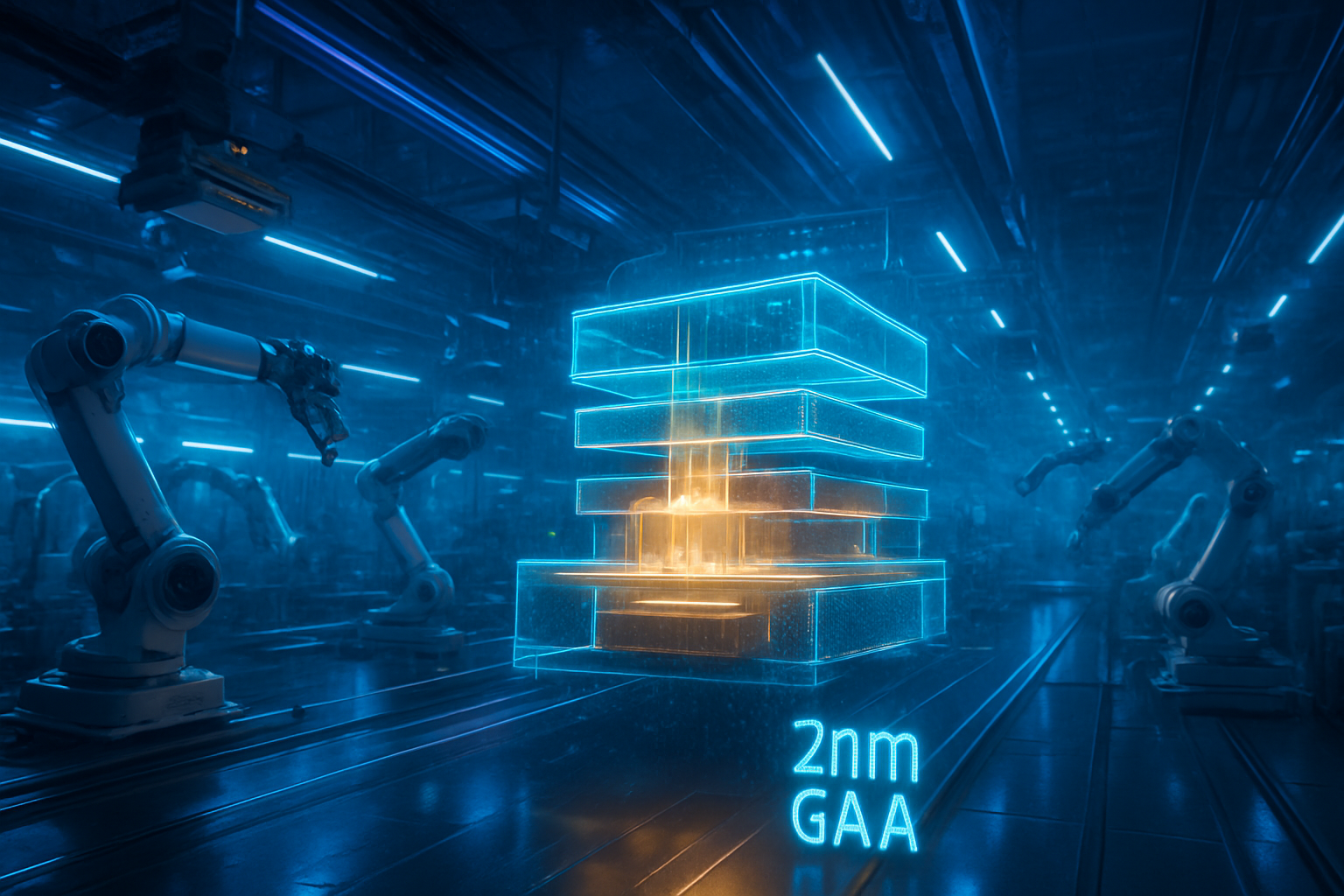
    As the calendar turns to early 2026, the global semiconductor landscape has reached a pivotal inflection point. Taiwan Semiconductor Manufacturing Company (TSM:NYSE), the world’s largest contract chipmaker, has officially commenced volume production of its highly anticipated 2-nanometer (N2) process node. This milestone, centered at the company’s massive Fab 20 in Hsinchu and the newly repurposed Fab 22 in Kaohsiung, marks the first time the industry has transitioned away from the long-standing FinFET transistor architecture to the revolutionary Gate-All-Around (GAA) nanosheet technology.

    The immediate significance of this development cannot be overstated. With initial yield rates reportedly exceeding 65%—a remarkably high figure for a first-generation architectural shift—TSMC is positioning itself to capture an unprecedented 95% of the AI accelerator market. As AI demand continues to surge across every sector of the global economy, the 2nm node is no longer just a technical upgrade; it is the essential bedrock for the next generation of large language models, autonomous systems, and "Physical AI" applications.

    The Nanosheet Revolution: Inside the N2 Architecture

    The transition to the N2 node represents the most significant architectural change in chip manufacturing in over a decade. By moving from FinFET to GAAFET (Gate-All-Around Field-Effect Transistor) nanosheet technology, TSMC has effectively re-engineered how electrons flow through a chip. In this new design, the gate surrounds the channel on all four sides, providing superior electrostatic control, drastically reducing current leakage, and allowing for much finer tuning of performance and power consumption.

    Technically, the N2 node delivers a substantial leap over the previous 3nm (N3E) generation. According to official specifications, the new process offers a 10% to 15% increase in processing speed at the same power level, or a staggering 25% to 30% reduction in power consumption at the same speed. Furthermore, logic density has seen a boost of approximately 15%, allowing designers to pack more transistors into the same footprint. This is complemented by TSMC’s "Nano-Flex" technology, which allows chip designers to mix different nanosheet heights within a single block to optimize for either extreme performance or ultra-low power.

    Initial reactions from the AI research community and industry experts have been overwhelmingly positive. Analysts at JPMorgan (JPM:NYSE) and Goldman Sachs (GS:NYSE) have characterized the N2 launch as the start of a "multi-year AI supercycle." The industry is particularly impressed by the maturity of the ecosystem; unlike previous node transitions that faced years of delay, TSMC’s 2nm ramp-up has met every internal milestone, providing a stable foundation for the world's most complex silicon designs.

    A 1.5x Surge in Tape-Outs: The Strategic Advantage for Tech Giants

    The business impact of the 2nm node is already visible in the sheer volume of customer engagement. Reports indicate that the N2 family has recorded 1.5 times more "tape-outs"—the final stage of the design process before manufacturing—than the 3nm node did at the same point in its lifecycle. This surge is driven by a unique convergence: for the first time, mobile giants like Apple (AAPL:NASDAQ) and high-performance computing (HPC) leaders like NVIDIA (NVDA:NASDAQ) and Advanced Micro Devices (AMD:NASDAQ) are racing for the same leading-edge capacity simultaneously.

    AMD has notably used the 2nm transition to execute a strategic "leapfrog" over its competitors. At CES 2026, Dr. Lisa Su confirmed that the new Instinct MI400 series AI accelerators are built on TSMC’s N2 process, whereas NVIDIA's recently unveiled "Vera Rubin" architecture utilizes an enhanced 3nm (N3P) node. This gives AMD a temporary edge in raw transistor density and energy efficiency, particularly for memory-intensive LLM training. Meanwhile, Apple has secured over 50% of the initial 2nm capacity for its upcoming A20 chips, ensuring that the next generation of iPhones will maintain a significant lead in on-device AI processing.

    The competitive implications for other foundries are stark. While Intel (INTC:NASDAQ) is pushing its 18A node and Samsung (SSNLF:OTC) is refining its own GAA process, TSMC’s 95% projected market share in AI accelerators suggests a widening "foundry gap." TSMC’s moat is not just the silicon itself, but its advanced packaging ecosystem, specifically CoWoS (Chip on Wafer on Substrate), which is essential for the multi-die configurations used in modern AI GPUs.

    Silicon Sovereignty and the Broader AI Landscape

    The successful ramp of 2nm production at Fab 20 and Fab 22 carries immense weight in the broader context of "Silicon Sovereignty." As nations race to secure their AI supply chains, TSMC’s ability to deliver 2nm at scale reinforces Taiwan's position as the indispensable hub of the global tech economy. This development fits into a larger trend where the bottleneck for AI progress has shifted from software algorithms to the physical availability of advanced silicon and the energy required to run it.

    The power efficiency gains of the N2 node—up to 30%—are perhaps its most critical contribution to the AI landscape. With data centers consuming an ever-growing share of the world’s electricity, the ability to perform more "tokens per watt" is the only sustainable path forward for the AI industry. Comparisons are already being made to the 7nm breakthrough of 2018, which enabled the first wave of modern mobile computing; however, the 2nm era is expected to have a far more profound impact on infrastructure, enabling the transition from cloud-based AI to ubiquitous, "always-on" intelligence in edge devices and robotics.

    However, this concentration of power also raises concerns. The projected 95% market share for AI accelerators creates a single point of failure for the global AI economy. Any disruption to TSMC’s 2nm production lines could stall the progress of thousands of AI startups and tech giants alike. This has led to intensified efforts by hyperscalers like Amazon (AMZN:NASDAQ), Google (GOOGL:NASDAQ), and Microsoft (MSFT:NASDAQ) to design their own custom AI ASICs on N2, attempting to gain some measure of control over their hardware destinies.

    The Road to 1.4nm and Beyond: What’s Next for TSMC?

    Looking ahead, the 2nm node is merely the first chapter in a new book of semiconductor physics. TSMC has already outlined its roadmap for the second half of 2026, which includes the N2P (performance-enhanced) node and the introduction of the A16 (1.6-nanometer) process. The A16 node will be the first to feature Backside Power Delivery (BSPD), a technique that moves the power wiring to the back of the wafer to further improve efficiency and signal integrity.

    Experts predict that the primary challenge moving forward will be the integration of these advanced chips with next-generation memory, such as HBM4. As chip density increases, the "memory wall"—the gap between processor speed and memory bandwidth—becomes the new limiting factor. We can expect to see TSMC deepen its partnerships with memory leaders like SK Hynix and Micron (MU:NASDAQ) to create integrated 3D-stacked solutions that blur the line between logic and memory.

    In the long term, the focus will shift toward the A14 node (1.4nm), currently slated for 2027-2028. The industry is watching closely to see if the nanosheet architecture can be scaled that far, or if entirely new materials, such as carbon nanotubes or two-dimensional semiconductors, will be required. For now, the successful execution of N2 provides a clear runway for the next three years of AI innovation.

    Conclusion: A Landmark Moment in Computing History

    The commencement of 2nm volume production in early 2026 is a landmark achievement that cements TSMC’s dominance in the semiconductor industry. By successfully navigating the transition to GAA nanosheet technology and securing a massive 1.5x surge in tape-outs, the company has effectively decoupled itself from the traditional cycles of the chip market, becoming an essential utility for the AI era.

    The key takeaway for the coming months is the rapid shift in the competitive landscape. With AMD and Apple leading the charge onto 2nm, the pressure is now on NVIDIA and Intel to prove that their architectural innovations can compensate for a lag in process technology. Investors and industry watchers should keep a close eye on the output levels of Fab 20 and Fab 22; their success will determine the pace of AI advancement for the remainder of the decade. As we look toward the mid-2020s, it is clear that the 2nm era is not just about smaller transistors—it is about the limitless potential of the silicon that powers our world.


    This content is intended for informational purposes only and represents analysis of current AI developments.

    TokenRing AI delivers enterprise-grade solutions for multi-agent AI workflow orchestration, AI-powered development tools, and seamless remote collaboration platforms.
    For more information, visit https://www.tokenring.ai/.
  • The Dawn of the AI Factory: NVIDIA Blackwell B200 Enters Full Production as Naver Scales Korea’s Largest AI Cluster

    The Dawn of the AI Factory: NVIDIA Blackwell B200 Enters Full Production as Naver Scales Korea’s Largest AI Cluster

    SANTA CLARA, CA — January 8, 2026 — The global landscape of artificial intelligence has reached a definitive turning point as NVIDIA (NASDAQ:NVDA) announced today that its Blackwell B200 architecture has entered full-scale volume production. This milestone marks the transition of the world’s most powerful AI chip from early-access trials to the backbone of global industrial intelligence. With supply chain bottlenecks for critical components like High Bandwidth Memory (HBM3e) and advanced packaging finally stabilizing, NVIDIA is now shipping Blackwell units in the tens of thousands per week, effectively sold out through mid-2026.

    The significance of this production ramp-up was underscored by South Korean tech titan Naver (KRX:035420), which recently completed the deployment of Korea’s largest AI computing cluster. Utilizing 4,000 Blackwell B200 GPUs, the "B200 4K Cluster" is designed to propel the next generation of "omni models"—systems capable of processing text, video, and audio simultaneously. Naver’s move signals a broader shift toward "AI Sovereignty," where nations and regional giants build massive, localized infrastructure to maintain a competitive edge in the era of trillion-parameter models.

    Redefining the Limits of Silicon: The Blackwell Architecture

    The Blackwell B200 is not merely an incremental upgrade; it represents a fundamental architectural shift from its predecessor, the H100 (Hopper). While the H100 was a monolithic chip, the B200 utilizes a revolutionary chiplet-based design, connecting two reticle-limited dies via a 10 TB/s ultra-high-speed link. This allows the 208 billion transistors to function as a single unified processor, effectively bypassing the physical limits of traditional silicon manufacturing. The B200 boasts 192GB of HBM3e memory and 8 TB/s of bandwidth, more than doubling the capacity and speed of previous generations.

    A key differentiator in the Blackwell era is the introduction of FP4 (4-bit floating point) precision. This technical leap, managed by a second-generation Transformer Engine, allows the B200 to process trillion-parameter models with 30 times the inference throughput of the H100. This capability is critical for the industry's pivot toward Mixture-of-Experts (MoE) models, where only a fraction of the model’s parameters are active at any given time, drastically reducing the energy cost per token. Initial reactions from the research community suggest that Blackwell has "reset the scaling laws," enabling real-time reasoning for models that were previously too large to serve efficiently.

    The "AI Factory" Era and the Corporate Arms Race

    NVIDIA CEO Jensen Huang has frequently described this transition as the birth of the "AI Factory." In this paradigm, data centers are no longer viewed as passive storage hubs but as industrial facilities where raw data is the raw material and "intelligence" is the finished product. This shift is visible in the strategic moves of hyperscalers and sovereign nations alike. While Naver is leading the charge in South Korea, global giants like Microsoft (NASDAQ:MSFT), Amazon (NASDAQ:AMZN), and Alphabet (NASDAQ:GOOGL) are integrating Blackwell into their clouds to support massive agentic systems—AI that doesn't just chat, but autonomously executes multi-step tasks.

    However, NVIDIA is not without challengers. As Blackwell hits full production, AMD (NASDAQ:AMD) has countered with its MI350 and MI400 series, the latter featuring up to 432GB of HBM4 memory. Meanwhile, Google has ramped up its TPU v7 "Ironwood" chips, and Amazon’s Trainium3 is gaining traction among startups looking for a lower "Nvidia Tax." These competitors are focusing on "Total Cost of Ownership" (TCO) and energy efficiency, aiming to capture the 30-40% of internal workloads that hyperscalers are increasingly moving toward custom silicon. Despite this, NVIDIA’s software moat—CUDA—and the sheer scale of the Blackwell rollout keep it firmly in the lead.

    Global Implications and the Sovereign AI Trend

    The deployment of the Blackwell architecture fits into a broader trend of "Sovereign AI," where countries recognize that AI capacity is as vital as energy or food security. Naver’s 4,000-GPU cluster is a prime example of this, providing South Korea with the computational self-reliance to develop foundation models like HyperCLOVA X without total dependence on Silicon Valley. Naver CEO Choi Soo-yeon noted that training tasks that previously took 18 months can now be completed in just six weeks, a 12-fold acceleration that fundamentally changes the pace of national innovation.

    Yet, this massive scaling brings significant concerns, primarily regarding energy consumption. A single GB200 NVL72 rack—a cluster of 72 Blackwell GPUs acting as one—can draw over 120kW of power, necessitating a mandatory shift toward liquid cooling solutions. The industry is now grappling with the "Energy Wall," leading to unprecedented investments in modular nuclear reactors and specialized power grids to sustain these AI factories. This has turned the AI race into a competition not just for chips, but for the very infrastructure required to keep them running.

    The Horizon: From Reasoning to Agency

    Looking ahead, the full production of Blackwell is expected to catalyze the move from "Reasoning AI" to "Agentic AI." Near-term developments will likely see the rise of autonomous systems capable of managing complex logistics, scientific discovery, and software development with minimal human oversight. Experts predict that the next 12 to 24 months will see the emergence of models exceeding 10 trillion parameters, powered by the Blackwell B200 and its already-announced successor, the Blackwell Ultra (B300), and the future "Rubin" (R100) architecture.

    The challenges remaining are largely operational and ethical. As AI factories begin producing "intelligence" at an industrial scale, the industry must address the environmental impact of such massive compute and the societal implications of increasingly autonomous agents. However, the momentum is undeniable. OpenAI CEO Sam Altman recently remarked that there is "no scaling wall" in sight, and the massive Blackwell deployment in early 2026 appears to validate that conviction.

    A New Chapter in Computing History

    In summary, the transition of the NVIDIA Blackwell B200 into full production is a landmark event that formalizes the "AI Factory" as the central infrastructure of the 21st century. With Naver’s massive cluster serving as a blueprint for national AI sovereignty and the B200’s technical specs pushing the boundaries of what is computationally possible, the industry has moved beyond the experimental phase of generative AI.

    As we move further into 2026, the focus will shift from the availability of chips to the efficiency of the factories they power. The coming months will be defined by how effectively companies and nations can translate this unprecedented raw compute into tangible economic and scientific breakthroughs. For now, the Blackwell era has officially begun, and the world is only starting to see the scale of the intelligence it will produce.


    This content is intended for informational purposes only and represents analysis of current AI developments.

    TokenRing AI delivers enterprise-grade solutions for multi-agent AI workflow orchestration, AI-powered development tools, and seamless remote collaboration platforms.
    For more information, visit https://www.tokenring.ai/.

  • The Great Decoupling: How Hyperscalers are Breaking NVIDIA’s Iron Grip with Custom Silicon

    The Great Decoupling: How Hyperscalers are Breaking NVIDIA’s Iron Grip with Custom Silicon

    The era of the general-purpose AI chip is rapidly giving way to a new age of hyper-specialization. As of early 2026, the world’s largest cloud providers—Google (NASDAQ:GOOGL), Amazon (NASDAQ:AMZN), and Microsoft (NASDAQ:MSFT)—have fundamentally rewritten the rules of the AI infrastructure market. By designing their own custom silicon, these "hyperscalers" are no longer just customers of the semiconductor industry; they are its most formidable architects. This strategic shift, often referred to as the "Silicon Divorce," marks a pivotal moment where the software giants have realized that to own the future of artificial intelligence, they must first own the atoms that power it.

    The immediate significance of this transition cannot be overstated. By moving away from a one-size-fits-all hardware model, these companies are slashing the astronomical "NVIDIA tax," reducing energy consumption in an increasingly power-constrained world, and optimizing their hardware for the specific nuances of their multi-trillion-parameter models. This vertical integration—controlling everything from the power source to the chip architecture to the final AI agent—is creating a competitive moat that is becoming nearly impossible for smaller players to cross.

    The Rise of the AI ASIC: Technical Frontiers of 2026

    The technical landscape of 2026 is dominated by Application-Specific Integrated Circuits (ASICs) that leave traditional GPUs in the rearview mirror for specific AI tasks. Google’s latest offering, the TPU v7 (codenamed "Ironwood"), represents the pinnacle of this evolution. Utilizing a cutting-edge 3nm process from TSMC, the TPU v7 delivers a staggering 4.6 PFLOPS of dense FP8 compute per chip. Unlike general-purpose GPUs, Google uses Optical Circuit Switching (OCS) to dynamically reconfigure its "Superpods," allowing for 10x faster collective operations than equivalent Ethernet-based clusters. This architecture is specifically tuned for the massive KV-caches required for the long-context windows of Gemini 2.0 and beyond.

    Amazon has followed a similar path with its Trainium3 chip, which entered volume production in early 2026. Designed by Amazon’s Annapurna Labs, Trainium3 is the company's first 3nm-class chip, offering 2.5 PFLOPS of MXFP8 performance. Amazon’s strategy focuses on "price-performance," leveraging the Neuron SDK to allow developers to seamlessly switch from NVIDIA (NASDAQ:NVDA) hardware to custom silicon. Meanwhile, Microsoft has solidified its position with the Maia 2 (Braga) accelerator. While Maia 100 was a conservative first step, Maia 2 is a vertically integrated powerhouse designed specifically to run Azure OpenAI services like GPT-5 and Microsoft Copilot with maximum efficiency, utilizing custom Ethernet-based interconnects to bypass traditional networking bottlenecks.

    These advancements differ from previous approaches by stripping away legacy hardware components—such as graphics rendering units and 64-bit precision—that are unnecessary for AI workloads. This "lean" architecture allows for significantly higher transistor density dedicated solely to matrix multiplications. Initial reactions from the research community have been overwhelmingly positive, with many noting that the specialized memory hierarchies of these chips are the only reason we have been able to scale context windows into the tens of millions of tokens without a total collapse in inference speed.

    The Strategic Divorce: A New Power Dynamic in Silicon Valley

    This shift has created a seismic ripple across the tech industry, benefiting a new class of "silent partners." While the hyperscalers design the chips, they rely on specialized design firms like Broadcom (NASDAQ:AVGO) and Marvell (NASDAQ:MRVL) to bring them to life. Broadcom, which now commands nearly 70% of the custom AI ASIC market, has become the backbone of the "Silicon Divorce," serving as the primary design partner for both Google and Meta (NASDAQ:META). Marvell has similarly positioned itself as a "growth challenger," securing massive wins with Amazon and Microsoft by integrating advanced "Photonic Fabrics" that allow for ultra-fast chip-to-chip communication.

    For NVIDIA, the competitive implications are complex. While the company remains the market leader with its newly launched Vera Rubin architecture, it is no longer the only game in town. The "NVIDIA Tax"—the high margins associated with the H100 and B200 series—is being eroded by the hyperscalers' internal alternatives. In response, cloud pricing has shifted to a two-tier model. Hyperscalers now offer their internal chips at a 30% to 50% discount compared to NVIDIA-based instances, effectively using their custom silicon as a loss leader to lock enterprises into their respective cloud ecosystems.

    Startups and smaller AI labs are the unexpected beneficiaries of this hardware war. The increased availability of lower-cost, high-performance compute on platforms like AWS Trainium and Google TPU v7 has lowered the barrier to entry for training mid-sized foundation models. However, the strategic advantage remains with the giants; by co-designing the hardware and the software (such as Google’s XLA compiler or Amazon’s Triton integration), these companies can squeeze performance out of their chips that no third-party user can ever hope to replicate on generic hardware.

    The Power Wall and the Quest for Energy Sovereignty

    Beyond the boardroom battles, the move toward custom silicon is driven by a looming physical reality: the "Power Wall." As of 2026, the primary constraint on AI scaling is no longer the number of chips, but the availability of electricity. Global data center power consumption is projected to reach record highs this year, and custom ASICs are the primary weapon against this energy crisis. By offering 30% to 40% better power efficiency than general-purpose GPUs, chips like the TPU v7 and Trainium3 allow hyperscalers to pack more compute into the same power envelope.

    This has led to the rise of "Sovereign AI" and a trend toward total vertical integration. We are seeing the emergence of "AI Factories"—massive, multi-billion-dollar campuses where the data center is co-located with its own dedicated power source. Microsoft’s involvement in "Project Stargate" and Google’s investments in Small Modular Reactors (SMRs) are prime examples of this trend. The goal is no longer just to build a better chip, but to build a vertically integrated supply chain of intelligence that is immune to geopolitical shifts or energy shortages.

    This movement mirrors previous milestones in computing history, such as the shift from mainframes to x86 architecture, but on a much more massive scale. The concern, however, is the "closed" nature of these ecosystems. Unlike the open standards of the PC era, the custom silicon era is highly proprietary. If the best AI performance can only be found inside the walled gardens of Azure, GCP, or AWS, the dream of a decentralized and open AI landscape may become increasingly difficult to realize.

    The Frontier of 2027: Photonics and 2nm Nodes

    Looking ahead, the next frontier for custom silicon lies in light-based computing and even smaller process nodes. TSMC has already begun ramping up 2nm (N2) mass production for the 2027 chip cycle, which will utilize Gate-All-Around (GAAFET) transistors to provide another leap in efficiency. Experts predict that the next generation of chips—Google’s TPU v8 and Amazon’s Trainium4—will likely be the first to move entirely to 2nm, potentially doubling the performance-per-watt once again.

    Furthermore, "Silicon Photonics" is moving from the lab to the data center. Companies like Marvell are already testing "Photonic Compute Units" that perform matrix multiplications using light rather than electricity, promising a 100x efficiency gain for specific inference tasks by the end of the decade. The challenge will be managing the heat; liquid cooling has already become the baseline for AI data centers in 2026, but the next generation of chips may require even more exotic solutions, such as microfluidic cooling integrated directly into the silicon substrate.

    As AI models continue to grow toward the "Quadrillion Parameter" mark, the industry will likely see a further bifurcation between "Training Monsters"—massive, liquid-cooled clusters of custom ASICs—and "Edge Inference" chips designed to run sophisticated models on local devices. The next 24 months will be defined by how quickly these hyperscalers can scale their 3nm production and whether NVIDIA's Rubin architecture can offer enough of a performance leap to justify its premium price tag.

    Conclusion: A New Foundation for the Intelligence Age

    The transition to custom silicon by Google, Amazon, and Microsoft marks the end of the "one size fits all" era of AI compute. By January 2026, the success of these internal hardware programs has proven that the most efficient way to process intelligence is through specialized, vertically integrated stacks. This development is as significant to the AI age as the development of the microprocessor was to the personal computing revolution, signaling a shift from experimental scaling to industrial-grade infrastructure.

    The key takeaway for the industry is clear: hardware is no longer a commodity; it is a core competency. In the coming months, observers should watch for the first benchmarks of the TPU v7 in "Gemini 3" training and the potential announcement of OpenAI’s first fully independent silicon efforts. As the "Silicon Divorce" matures, the gap between those who own their hardware and those who rent it will only continue to widen, fundamentally reshaping the power structure of the global technology landscape.


    This content is intended for informational purposes only and represents analysis of current AI developments.

    TokenRing AI delivers enterprise-grade solutions for multi-agent AI workflow orchestration, AI-powered development tools, and seamless remote collaboration platforms.
    For more information, visit https://www.tokenring.ai/.