
Tag: Nvidia

  • The 800-Year Leap: How AI is Rewriting the Periodic Table to Discover the Next Superconductor

    The 800-Year Leap: How AI is Rewriting the Periodic Table to Discover the Next Superconductor

    As of January 2026, the field of materials science has officially entered its "generative era." What was once a painstaking process of trial and error in physical laboratories—often taking decades to bring a single new material to market—has been compressed into a matter of weeks by artificial intelligence. By leveraging massive neural networks and autonomous robotic labs, researchers are now identifying and synthesizing stable new crystals at a scale that would have taken 800 years of human effort to achieve. This "Materials Genome" revolution is not just a theoretical exercise; it is the frontline of the hunt for a room-temperature superconductor, a discovery that would fundamentally rewrite the rules of global energy and computing.

    The immediate significance of this shift cannot be overstated. In the last 18 months, AI models have predicted the existence of over two million new crystal structures, hundreds of thousands of which are stable enough for real-world use. This explosion of data has provided a roadmap for the "Energy Transition," offering new pathways for high-density batteries, carbon-capture materials, and, most crucially, high-temperature superconductors. With the recent stabilization of nickelate superconductors at room pressure and the deployment of "Physical AI" in autonomous labs, the gap between a computer's prediction and a physical sample in a vial has nearly vanished.

    From Prediction to Generation: The Technical Shift

    The technical backbone of this revolution lies in two distinct but converging AI architectures: Graph Neural Networks (GNNs) and Generative Diffusion Models. Alphabet Inc. (NASDAQ: GOOGL) pioneered this space with GNoME (Graph Networks for Materials Exploration), which utilized GNNs to predict the stability of 2.2 million new crystals. Unlike previous approaches that relied on expensive Density Functional Theory (DFT) calculations—which could take hours or days per material—GNoME can screen candidates in seconds. This allowed researchers to bypass the "valley of death" where promising theoretical materials often fail due to thermodynamic instability.

    However, in 2025, the paradigm shifted from "screening" to "inverse design." Microsoft Corp. (NASDAQ: MSFT) introduced MatterGen, a generative model that functions similarly to image generators like DALL-E, but for atomic structures. Instead of looking through a list of known possibilities, scientists can now prompt the AI with desired properties—such as "high magnetic field tolerance and zero electrical resistance at 200K"—and the AI "dreams" a brand-new crystal structure that fits those parameters. This generative approach has proven remarkably accurate; recent collaborations between Microsoft and the Chinese Academy of Sciences successfully synthesized TaCr₂O₆, a material designed entirely by MatterGen, with its physical properties matching the AI's predictions with over 90% accuracy.

    This digital progress is being validated in the physical world by "Self-Driving Labs" like the A-Lab at Lawrence Berkeley National Laboratory. By early 2026, these facilities have reached a 71% success rate in autonomously synthesizing AI-predicted materials without human intervention. The introduction of "AutoBot" in late 2025 added autonomous characterization to the loop, meaning the lab not only makes the material but also tests its superconductivity and magnetic properties, feeding the results back into the AI to refine its next prediction. This closed-loop system is the primary reason the industry has seen more material breakthroughs in the last two years than in the previous two decades.

    The Industrial Race for the "Holy Grail"

    The race to dominate AI-driven material discovery has created a new competitive landscape among tech giants and specialized startups. Alphabet Inc. (NASDAQ: GOOGL) continues to lead in foundational research, recently announcing a partnership with the UK government to open a fully automated materials discovery lab in London. This facility is designed to be the first "Gemini-native" lab, where the AI acts as a co-scientist, using multi-modal reasoning to design experiments that robots execute at a rate of hundreds per day. This move positions Alphabet not just as a software provider, but as a key player in the physical supply chain of the future.

    Microsoft Corp. (NASDAQ: MSFT) has taken a different strategic path by integrating MatterGen into its Azure Quantum Elements platform. This allows industrial giants like Johnson Matthey (LSE: JMAT) and BASF (ETR: BAS) to lease "discovery-as-a-service," using Microsoft’s massive compute power to find new catalysts or battery chemistries. Meanwhile, NVIDIA Corp. (NASDAQ: NVDA) has become the essential infrastructure provider for this movement. In early 2026, Nvidia launched its Rubin platform, which provides the "Physical AI" and simulation environments needed to run the robotics in autonomous labs. Their ALCHEMI microservices have already helped companies like ENEOS (TYO: 5020) screen 100 million catalyst options in a fraction of the time previously required.

    The disruption is also spawning a new breed of "full-stack" materials startups. Periodic Labs, founded by former DeepMind and OpenAI researchers, recently raised $300 million to build proprietary autonomous labs specifically focused on a commercial-grade room-temperature superconductor. These startups are betting that the first entity to own the patent for a practical superconductor will become the most valuable company in the world, potentially displacing existing leaders in energy and transportation.

    Wider Significance: Solving the "Heat Death" of Technology

    The broader implications of these discoveries touch every aspect of modern civilization, most notably the global energy crisis. The hunt for a room-temperature superconductor (RTS) is the ultimate prize because such a material would allow for 100% efficient power grids, losing zero energy to heat during transmission. As of January 2026, while a universal, ambient-pressure RTS remains elusive, the "Zentropy" theory-based AI models from Penn State have successfully predicted superconducting behavior in copper-gold alloys that were previously thought impossible. These incremental steps are rapidly narrowing the search space for a material that could make fusion energy viable and revolutionize electric motors.

    Beyond energy, AI-driven material discovery is solving the "heat death" problem in the semiconductor industry. As AI chips like Nvidia’s Blackwell and Rubin series become more power-hungry, traditional cooling methods are reaching their limits. AI is now being used to discover new thermal interface materials that allow for 30% denser chip packaging. This ensures that the very AI models doing the discovery can continue to scale in performance. Furthermore, the ability to find alternatives to rare-earth metals is a geopolitical game-changer, reducing the tech industry's reliance on fragile and often monopolized global supply chains.

    However, this rapid pace of discovery brings concerns regarding the "sim-to-real" gap and the democratization of science. While AI can predict millions of materials, the ability to synthesize them still requires physical infrastructure. There is a growing risk of a "materials divide," where only the wealthiest nations and corporations have the robotic labs necessary to turn AI "dreams" into physical reality. Additionally, the potential for AI to design hazardous or dual-use materials remains a point of intense debate among ethics boards and international regulators.

    The Near Horizon: What Comes Next?

    In the near term, we expect to see the first commercial applications of "AI-first" materials in the battery and catalyst markets. Solid-state batteries designed by generative models are already entering pilot production, promising double the energy density of current lithium-ion cells. In the realm of superconductors, the focus is shifting toward "near-room-temperature" materials that function at the temperatures of dry ice rather than liquid nitrogen. These would still be revolutionary for medical imaging (MRI) and quantum computing, making these technologies significantly cheaper and more portable.

    Longer-term, the goal is the "Universal Material Model"—an AI that understands the properties of every possible combination of the periodic table. Experts predict that by 2030, the timeline from discovering a new material to its first industrial application will drop to under 18 months. The challenge remains the synthesis of complex, multi-element compounds that AI can imagine but current robotics struggle to assemble. Addressing this "synthesis bottleneck" will be the primary focus of the next generation of autonomous laboratories.

    A New Era for Scientific Discovery

    The integration of AI into materials science represents one of the most significant milestones in the history of the scientific method. We have moved beyond the era of the "lone genius" in a lab to an era of "Science 2.0," where human intuition is augmented by the brute-force processing and generative creativity of artificial intelligence. The discovery of 2.2 million new crystal structures is not just a data point; it is the foundation for a new industrial revolution that could solve the climate crisis and usher in an age of limitless energy.

    As we move further into 2026, the world should watch for the first replicated results from the UK’s Automated Science Lab and the potential announcement of a "stable" high-temperature superconductor that operates at ambient pressure. While the "Holy Grail" of room-temperature superconductivity may still be a few years away, the tools we are using to find it have already changed the world forever. The periodic table is no longer a static chart on a classroom wall; it is a dynamic, expanding frontier of human—and machine—ingenuity.


    This content is intended for informational purposes only and represents analysis of current AI developments.

    TokenRing AI delivers enterprise-grade solutions for multi-agent AI workflow orchestration, AI-powered development tools, and seamless remote collaboration platforms.
    For more information, visit https://www.tokenring.ai/.

  • Harvard’s CHIEF AI: The ‘Swiss Army Knife’ of Pathology Achieving 98% Accuracy in Cancer Diagnosis

    Harvard’s CHIEF AI: The ‘Swiss Army Knife’ of Pathology Achieving 98% Accuracy in Cancer Diagnosis

    In a landmark achievement for computational medicine, researchers at Harvard Medical School have developed a "generalist" artificial intelligence model that is fundamentally reshaping the landscape of oncology. Known as the Clinical Histopathology Imaging Evaluation Foundation (CHIEF), this AI system has demonstrated a staggering 98% accuracy in diagnosing rare and metastatic cancers, while simultaneously predicting patient survival rates across 19 different anatomical sites. Unlike the "narrow" AI tools of the past, CHIEF operates as a foundation model, often referred to by the research community as the "ChatGPT of cancer diagnosis."

    The immediate significance of CHIEF lies in its versatility and its ability to see what the human eye cannot. By analyzing standard pathology slides, the model can identify tumor cells, predict molecular mutations, and forecast long-term clinical outcomes with a level of precision that was previously unattainable. As of early 2026, CHIEF has moved from a theoretical breakthrough published in Nature to a cornerstone of digital pathology, offering a standardized, high-performance diagnostic layer that can be deployed across diverse clinical settings globally.

    The Technical Core: Beyond Narrow AI

    Technically, CHIEF represents a departure from traditional supervised learning models that require thousands of manually labeled images. Instead, the Harvard team utilized a self-supervised learning approach, pre-training the model on a massive dataset of 15 million unlabeled image patches. This was followed by a refinement process using 60,530 whole-slide images (WSIs) spanning 19 different organ systems, including the lung, breast, prostate, and brain. By ingesting approximately 44 terabytes of high-resolution data, CHIEF learned the "geometry and grammar" of human tissue, allowing it to generalize its knowledge across different types of cancer without needing specific re-training for each organ.

    The performance metrics of CHIEF are unparalleled. In validation tests involving over 19,400 slides from 24 hospitals worldwide, the model achieved nearly 94% accuracy in general cancer detection. However, its most impressive feat is its 98% accuracy rate in identifying rare and metastatic cancers—areas where even experienced pathologists often face significant challenges. Furthermore, CHIEF can predict genetic mutations directly from a standard microscope slide, such as the EZH2 mutation in lymphoma (96% accuracy) and BRAF in thyroid cancer (89% accuracy), effectively bypassing the need for expensive and time-consuming genomic sequencing in many cases.

    Beyond simple detection, CHIEF excels at prognosis. By analyzing the "tumor microenvironment"—the complex interplay between immune cells, blood vessels, and connective tissue—the model can distinguish between patients with long-term and short-term survival prospects with an accuracy 8% to 10% higher than previous state-of-the-art AI systems. It generates heat maps that visualize "hot spots" of tumor aggressiveness, providing clinicians with a visual roadmap of a patient's specific cancer profile.

    The AI research community has hailed CHIEF as a "Swiss Army Knife" for pathology. Experts note that while previous models were "narrow"—meaning a model trained for lung cancer could not be used for breast cancer—CHIEF’s foundation model architecture allows it to be "plug-and-play." This robustness ensures that the model maintains its accuracy even when analyzing slides prepared with different staining techniques or digitized by different scanners, a hurdle that has historically limited the clinical adoption of medical AI.

    Market Disruption and Corporate Strategic Shifts

    The rise of foundation models like CHIEF is creating a seismic shift for major technology and healthcare companies. NVIDIA (NASDAQ:NVDA) stands as a primary beneficiary, as the massive computational power required to train and run CHIEF-scale models has cemented the company’s H100 and B200 GPU architectures as the essential infrastructure for the next generation of medical AI. NVIDIA has increasingly positioned healthcare as its most lucrative "generative AI" vertical, using breakthroughs like CHIEF to forge deeper ties with hospital networks and diagnostic manufacturers.

    For traditional diagnostic giants like Roche (OTC:RHHBY), CHIEF presents a complex "threat and opportunity" dynamic. Roche’s core business includes the sale of molecular sequencing kits and diagnostic assays. CHIEF’s ability to predict genetic mutations directly from a $20 pathology slide could potentially disrupt the market for $3,000 genomic tests. To counter this, Roche has actively collaborated with academic institutions to integrate foundation models into their own digital pathology workflows, aiming to remain the "operating system" for the modern lab.

    Similarly, GE Healthcare (NASDAQ:GEHC) and Johnson & Johnson (NYSE:JNJ) are racing to integrate CHIEF-like capabilities into their imaging and surgical platforms. GE Healthcare has been particularly aggressive in its vision of a "digital pathology app store," where CHIEF could serve as a foundational layer upon which other specialized diagnostic tools are built. This consolidation of AI tools into a single, generalist model reduces the "vendor fatigue" felt by hospitals, which previously had to manage dozens of siloed AI applications for different diseases.

    The competitive landscape is also shifting for AI startups. While the "narrow AI" startups of the early 2020s are struggling to compete with the breadth of CHIEF, new ventures are emerging that focus on "fine-tuning" Harvard’s open-source architecture for specific clinical trials or ultra-rare diseases. This democratization of high-end AI allows smaller institutions to leverage expert-level diagnostic power without the billion-dollar R&D budgets of Big Tech.

    Wider Significance: The Dawn of Generalist Medical AI

    In the broader AI landscape, CHIEF marks the arrival of Generalist Medical AI (GMAI). This trend mirrors the evolution of Large Language Models (LLMs) like GPT-4, which moved away from task-specific programming toward broad, multi-purpose intelligence. CHIEF’s success proves that the "foundation model" approach is not just for text and images but is deeply applicable to the biological complexities of human disease. This shift is expected to accelerate the move toward "precision medicine," where treatment is tailored to the specific biological signature of an individual’s tumor.

    However, the widespread adoption of such a powerful tool brings significant concerns. The "black box" nature of AI remains a point of contention; while CHIEF provides heat maps to explain its reasoning, the underlying neural pathways that lead to a 98% accuracy rating are not always fully transparent to human clinicians. There are also valid concerns regarding health equity. If CHIEF is trained primarily on datasets from Western hospitals, its performance on diverse global populations must be rigorously validated to ensure that its "98% accuracy" holds true for all patients, regardless of ethnicity or geographic location.

    Comparatively, CHIEF is being viewed as the "AlphaFold moment" for pathology. Just as Google DeepMind’s AlphaFold solved the protein-folding problem, CHIEF is seen as solving the "generalization problem" in digital pathology. It has moved the conversation from "Can AI help a pathologist?" to "How can we safely integrate this AI as the primary diagnostic screening layer?" This transition marks a fundamental change in the role of the pathologist, who is evolving from a manual observer to a high-level data interpreter.

    Future Horizons: Clinical Trials and Drug Discovery

    Looking ahead, the near-term focus for CHIEF and its successors will be regulatory approval and clinical integration. While the model has been validated on retrospective data, prospective clinical trials are currently underway to determine how its use affects patient outcomes in real-time. Experts predict that within the next 24 months, we will see the first FDA-cleared "generalist" pathology models that can be used for primary diagnosis across multiple cancer types simultaneously.

    The potential applications for CHIEF extend beyond the hospital walls. In the pharmaceutical industry, companies like Illumina (NASDAQ:ILMN) and others are exploring how CHIEF can be used to identify patients who are most likely to respond to specific immunotherapies. By identifying subtle morphological patterns in tumor slides, CHIEF could act as a powerful "biomarker discovery engine," significantly reducing the cost and failure rate of clinical trials for new cancer drugs.

    Challenges remain, particularly in the realm of data privacy and the "edge" deployment of these models. Running a 44-terabyte-trained model requires significant local compute or secure cloud access, which may be a barrier for rural or under-resourced clinics. Addressing these infrastructure gaps will be the next major hurdle for the tech industry as it seeks to scale Harvard’s breakthrough to the global population.

    Final Assessment: A Pillar of Modern Oncology

    Harvard’s CHIEF AI stands as a definitive milestone in the history of medical technology. By achieving 98% accuracy in rare cancer diagnosis and providing superior survival predictions across 19 cancer types, it has proven that foundation models are the future of clinical diagnostics. The transition from narrow, organ-specific AI to generalist systems like CHIEF marks the beginning of a new era in oncology—one where "invisible" biological signals are transformed into actionable clinical insights.

    As we move through 2026, the tech industry and the medical community will be watching closely to see how these models are governed and integrated into the standard of care. The key takeaways are clear: AI is no longer just a supportive tool; it is becoming the primary engine of diagnostic precision. For patients, this means faster diagnoses, more accurate prognoses, and treatments that are more closely aligned with their unique biological reality.


    This content is intended for informational purposes only and represents analysis of current AI developments.

    TokenRing AI delivers enterprise-grade solutions for multi-agent AI workflow orchestration, AI-powered development tools, and seamless remote collaboration platforms.
    For more information, visit https://www.tokenring.ai/.
  • The Silicon Super-Cycle: How the Semiconductor Industry is Racing Past the $1 Trillion Milestone

    The Silicon Super-Cycle: How the Semiconductor Industry is Racing Past the $1 Trillion Milestone

    The global semiconductor industry has reached a historic turning point, transitioning from a cyclical commodity market into the foundational bedrock of a new "Intelligence Economy." As of January 6, 2026, the long-standing industry goal of reaching $1 trillion in annual revenue by 2030 is no longer a distant forecast—it is a fast-approaching reality. Driven by an insatiable demand for generative AI hardware and the rapid electrification of the automotive sector, current run rates suggest the industry may eclipse the trillion-dollar mark years ahead of schedule, with 2026 revenues already projected to hit nearly $976 billion.

    This "Silicon Super-Cycle" represents more than just financial growth; it signifies a structural shift in how the world consumes computing power. While the previous decade was defined by the mobility of smartphones, this new era is characterized by the "Token Economy," where silicon is the primary currency. From massive AI data centers to autonomous vehicles that function as "data centers on wheels," the semiconductor industry is now the most critical link in the global supply chain, carrying implications for national security, economic sovereignty, and the future of human-machine interaction.

    Engineering the Path to $1 Trillion

    Reaching the trillion-dollar milestone has required a fundamental reimagining of transistor architecture. For over a decade, the industry relied on FinFET (Fin Field-Effect Transistor) technology, but as of early 2026, the "yield war" has officially moved to the Angstrom era. Major manufacturers have transitioned to Gate-All-Around (GAA) or "Nanosheet" transistors, which allow for better electrical control and lower power leakage at sub-2nm scales. Intel (NASDAQ: INTC) has successfully entered high-volume production with its 18A (1.8nm) node, while Taiwan Semiconductor Manufacturing Company (NYSE: TSM) is achieving commercial yields of 60-70% on its N2 (2nm) process.

    The technical specifications of these new chips are staggering. By utilizing High-NA (Numerical Aperture) Extreme Ultraviolet (EUV) lithography, companies are now printing features that are smaller than a single strand of DNA. However, the most significant shift is not just in the chips themselves, but in how they are assembled. Advanced packaging technologies, such as TSMC’s CoWoS (Chip-on-Wafer-on-Substrate) and Intel’s EMIB (Embedded Multi-die Interconnect Bridge), have become the industry's new bottleneck. These "chiplet" designs allow multiple specialized processors to be fused into a single package, providing the massive memory bandwidth required for next-generation AI models.

    Industry experts and researchers have noted that this transition marks the end of "traditional" Moore's Law and the beginning of "System-level Moore's Law." Instead of simply shrinking transistors, the focus has shifted to vertical stacking and backside power delivery—a technique that moves power wiring to the bottom of the wafer to free up space for signals on top. This architectural leap is what enables the massive performance gains seen in the latest AI accelerators, which are now capable of trillions of operations per second while maintaining energy efficiency that was previously thought impossible.

    Corporate Titans and the AI Gold Rush

    The race to $1 trillion has reshaped the corporate hierarchy of the technology world. NVIDIA (NASDAQ: NVDA) has emerged as the undisputed king of this era, recently crossing a $5 trillion market valuation. By evolving from a chip designer into a "full-stack datacenter systems" provider, NVIDIA has secured unprecedented pricing power. Its Blackwell and Rubin platforms, which integrate compute, networking, and software, command prices upwards of $40,000 per unit. For major cloud providers and sovereign nations, securing a steady supply of NVIDIA hardware has become a top strategic priority, often dictating the pace of their own AI deployments.

    While NVIDIA designs the brains, TSMC remains the "Sovereign Foundry" of the world, manufacturing over 90% of the world’s most advanced semiconductors. To mitigate geopolitical risks and meet surging demand, TSMC has adopted a "dual-engine" manufacturing model, accelerating production in its new facilities in Arizona alongside its primary hubs in Taiwan. Meanwhile, Intel is executing one of the most significant turnarounds in industrial history. By reclaiming the technical lead with its 18A node and securing the first fleet of High-NA EUV machines, Intel Foundry has positioned itself as the primary Western alternative to TSMC, attracting a growing list of customers seeking supply chain resilience.

    In the memory sector, Samsung (OTC: SSNLF) and SK Hynix have seen their fortunes soar due to the critical role of High-Bandwidth Memory (HBM). Every advanced AI wafer produced requires an accompanying stack of HBM to function. This has turned memory—once a volatile commodity—into a high-margin, specialized component. As the industry moves toward 2030, the competitive advantage is shifting toward companies that can offer "turnkey" solutions, combining logic, memory, and advanced packaging into a single, optimized ecosystem.

    Geopolitics and the "Intelligence Economy"

    The broader significance of the $1 trillion semiconductor goal lies in its intersection with global politics. Semiconductors are no longer just components; they are instruments of national power. The U.S. CHIPS Act and the EU Chips Act have funneled hundreds of billions of dollars into regionalizing the supply chain, leading to the construction of over 70 new mega-fabs globally. This "technological sovereignty" movement aims to reduce reliance on any single geographic region, particularly as tensions in the Taiwan Strait remain a focal point of global economic concern.

    However, this regionalization comes with significant challenges. As of early 2026, the U.S. has implemented a strict annual licensing framework for high-end chip exports, prompting retaliatory measures from China, including "mineral whitelists" for critical materials like gallium and germanium. This fragmentation of the supply chain has ended the era of "cheap silicon," as the costs of building and operating fabs in multiple regions are passed down to consumers. Despite these costs, the consensus among global leaders is that the price of silicon independence is a necessary investment for national security.

    The shift toward an "Intelligence Economy" also raises concerns about a deepening digital divide. As AI chips become the primary driver of economic productivity, nations and companies with the capital to invest in massive compute clusters will likely pull ahead of those without. This has led to the rise of "Sovereign AI" initiatives, where countries like Japan, Saudi Arabia, and France are investing billions to build their own domestic AI infrastructure, ensuring they are not entirely dependent on American or Chinese technology stacks.

    The Road to 2030: Challenges and the Rise of Physical AI

    Looking toward the end of the decade, the industry is already preparing for the next wave of growth: Physical AI. While the current boom is driven by large language models and software-based agents, the 2027-2030 period is expected to be dominated by robotics and humanoid systems. These applications require even more specialized silicon, including low-latency edge processors and sophisticated sensor fusion chips. Experts predict that the "robotics silicon" market could eventually rival the size of the current smartphone chip market, providing the final push needed to exceed the $1.3 trillion revenue mark by 2030.

    However, several hurdles remain. The industry is facing a "ticking time bomb" in the form of a global talent shortage. By 2030, the gap for skilled semiconductor engineers and technicians is expected to exceed one million workers. Furthermore, the environmental impact of massive new fabs and energy-hungry data centers is coming under increased scrutiny. The next few years will see a massive push for "Green Silicon," focusing on new materials like Silicon Carbide (SiC) and Gallium Nitride (GaN) to improve energy efficiency across the power grid and in electric vehicles.

    The roadmap for the next four years includes the transition to 1.4nm (A14) and eventually 1nm (10A) nodes. These milestones will require even more exotic manufacturing techniques, such as "Directed Self-Assembly" (DSA) and advanced 3D-IC architectures. If the industry can successfully navigate these technical hurdles while managing the volatile geopolitical landscape, the semiconductor sector is poised to become the most valuable industry on the planet, surpassing traditional sectors like oil and gas in terms of strategic and economic importance.

    A New Era of Silicon Dominance

    The journey to a $1 trillion semiconductor industry is a testament to human ingenuity and the relentless pace of technological progress. From the development of GAA transistors to the multi-billion dollar investments in global fabs, the industry has successfully reinvented itself to meet the demands of the AI era. The key takeaway for 2026 is that the semiconductor market is no longer just a bellwether for the tech sector; it is the engine of the entire global economy.

    As we look ahead, the significance of this development in AI history cannot be overstated. We are witnessing the physical construction of the infrastructure that will power the next century of human evolution. The long-term impact will be felt in every sector, from healthcare and education to transportation and defense. Silicon has become the most precious resource of the 21st century, and the companies that control its production will hold the keys to the future.

    In the coming weeks and months, investors and policymakers should watch for updates on the 18A and N2 production yields, as well as any further developments in the "mineral wars" between the U.S. and China. Additionally, the progress of the first wave of "Physical AI" chips will provide a crucial indicator of whether the industry can maintain its current trajectory toward the $1 trillion goal and beyond.


    This content is intended for informational purposes only and represents analysis of current AI developments.

    TokenRing AI delivers enterprise-grade solutions for multi-agent AI workflow orchestration, AI-powered development tools, and seamless remote collaboration platforms.
    For more information, visit https://www.tokenring.ai/.

  • Shattering the Copper Wall: Silicon Photonics Ushers in the Age of Light-Speed AI Clusters

    Shattering the Copper Wall: Silicon Photonics Ushers in the Age of Light-Speed AI Clusters

    As of January 6, 2026, the global technology landscape has reached a definitive crossroads in the evolution of artificial intelligence infrastructure. For decades, the movement of data within the heart of the world’s most powerful computers relied on the flow of electrons through copper wires. However, the sheer scale of modern AI—typified by the emergence of "million-GPU" clusters and the push toward Artificial General Intelligence (AGI)—has officially pushed copper to its physical breaking point. The industry has entered the "Silicon Photonics Era," a transition where light replaces electricity as the primary medium for data center interconnects.

    This shift is not merely a technical upgrade; it is a fundamental re-architecting of how AI models are built and scaled. With the "Copper Wall" rendering traditional electrical signaling inefficient at speeds beyond 224 Gbps, the world’s leading semiconductor and cloud giants have pivoted to optical fabrics. By integrating lasers and photonic circuits directly into the silicon package, the industry has unlocked a 70% reduction in interconnect power consumption while doubling bandwidth, effectively clearing the path for the next decade of AI growth.

    The Physics of the 'Copper Wall' and the Rise of 1.6T Optics

    The technical crisis that precipitated this shift is known as the "Copper Wall." As per-lane speeds reached 224 Gbps in late 2024 and throughout 2025, the reach of passive copper cables plummeted to less than one meter. At these frequencies, electrical signals degrade so rapidly that they can barely traverse a single server rack without massive power-hungry amplification. By early 2025, data center operators reported that the "I/O Tax"—the energy required just to move data between chips—was consuming nearly 30% of total cluster power.

    To solve this, the industry has turned to Co-Packaged Optics (CPO) and Silicon Photonics. Unlike traditional pluggable transceivers that sit at the edge of a switch, CPO moves the optical engine directly onto the processor substrate. This allows for a "shoreline" of high-speed optical I/O that bypasses the energy losses of long electrical traces. In late 2025, the market saw the mass adoption of 1.6T (Terabit) transceivers, which utilize 200G per-lane technology. By early 2026, initial demonstrations of 3.2T links using 400G per-lane technology have already begun, promising to support the massive throughput required for real-time inference on trillion-parameter models.

    The technical community has also embraced Linear-drive Pluggable Optics (LPO) as a bridge technology. By removing the power-intensive Digital Signal Processor (DSP) from the optical module and relying on the host ASIC to drive the signal, LPO has provided a lower-latency, lower-power intermediate step. However, for the most advanced AI clusters, CPO is now considered the "gold standard," as it reduces energy consumption from approximately 15 picojoules per bit (pJ/bit) to less than 5 pJ/bit.

    The New Power Players: NVDA, AVGO, and the Optical Arms Race

    The transition to light has fundamentally shifted the competitive dynamics among semiconductor giants. Nvidia (NASDAQ: NVDA) has solidified its dominance by integrating silicon photonics into its latest Rubin architecture and Quantum-X networking platforms. By utilizing optical NVLink fabrics, Nvidia’s million-GPU clusters can now operate with nanosecond latency, effectively treating an entire data center as a single, massive GPU.

    Broadcom (NASDAQ: AVGO) has emerged as a primary architect of this new era with its Tomahawk 6-Davisson switch, which boasts a staggering 102.4 Tbps throughput and integrated CPO. Broadcom’s success in proving CPO reliability at scale—particularly within the massive AI infrastructures of Meta and Google—has made it the indispensable partner for optical networking. Meanwhile, TSMC (NYSE: TSM) has become the foundational foundry for this transition through its COUPE (Compact Universal Photonic Engine) technology, which allows for the 3D stacking of photonic and electronic circuits, a feat previously thought to be years away from mass production.

    Other key players are carving out critical niches in the optical ecosystem. Marvell (NASDAQ: MRVL), following its strategic acquisition of optical interconnect startups in late 2025, has positioned its Ara 1.6T Optical DSP as the backbone for third-party AI accelerators. Intel (NASDAQ: INTC) has also made a significant comeback in the data center space with its Optical Compute Interconnect (OCI) chiplets. Intel’s unique ability to integrate lasers directly onto the silicon die has enabled "disaggregated" data centers, where compute and memory can be physically separated by over 100 meters without a loss in performance, a capability that is revolutionizing how hyperscalers design their facilities.

    Sustainability and the Global Interconnect Pivot

    The wider significance of the move from copper to light extends far beyond mere speed. In an era where the energy demands of AI have become a matter of national security and environmental concern, silicon photonics offers a rare "win-win" for both performance and sustainability. The 70% reduction in interconnect power provided by CPO is critical for meeting the carbon-neutral goals of tech giants like Microsoft and Amazon, who are currently retrofitting their global data center fleets to support optical fabrics.

    Furthermore, this transition marks the end of the "Compute-Bound" era and the beginning of the "Interconnect-Bound" era. For years, the bottleneck in AI was the speed of the processor itself. Today, the bottleneck is the "fabric"—the ability to move massive amounts of data between thousands of processors simultaneously. By shattering the Copper Wall, the industry has ensured that AI scaling laws can continue to hold true for the foreseeable future.

    However, this shift is not without its concerns. The complexity of manufacturing CPO-based systems is significantly higher than traditional copper-based ones, leading to potential supply chain vulnerabilities. There are also ongoing debates regarding the "serviceability" of integrated optics; if an optical laser fails inside a $40,000 GPU package, the entire unit may need to be replaced, unlike the "hot-swappable" pluggable modules of the past.

    The Road to Petabit Connectivity and Optical Computing

    Looking ahead to the remainder of 2026 and into 2027, the industry is already eyeing the next frontier: Petabit-per-second connectivity. As 3.2T transceivers move into production, researchers are exploring multi-wavelength "comb lasers" that can transmit hundreds of data streams over a single fiber, potentially increasing bandwidth density by another order of magnitude.

    Beyond just moving data, the ultimate goal is Optical Computing—performing mathematical calculations using light itself rather than transistors. While still in the early experimental stages, the integration of photonics into the processor package is the necessary first step toward this "Holy Grail" of computing. Experts predict that by 2028, we may see the first hybrid "Opto-Electronic" processors that perform specific AI matrix multiplications at the speed of light, with virtually zero heat generation.

    The immediate challenge remains the standardization of CPO interfaces. Groups like the OIF (Optical Internetworking Forum) are working feverishly to ensure that components from different vendors can interoperate, preventing the "walled gardens" that could stifle innovation in the optical ecosystem.

    Conclusion: A Bright Future for AI Infrastructure

    The transition from copper to silicon photonics represents one of the most significant architectural shifts in the history of computing. By overcoming the physical limitations of electricity, the industry has laid the groundwork for AGI-scale infrastructure that is faster, more efficient, and more scalable than anything that came before. The "Copper Era," which defined the first fifty years of the digital age, has finally given way to the "Era of Light."

    As we move further into 2026, the key metrics to watch will be the yield rates of CPO-integrated chips and the speed at which 1.6T networking is deployed across global data centers. For AI companies and tech enthusiasts alike, the message is clear: the future of intelligence is no longer traveling through wires—it is moving at the speed of light.


    This content is intended for informational purposes only and represents analysis of current AI developments.

    TokenRing AI delivers enterprise-grade solutions for multi-agent AI workflow orchestration, AI-powered development tools, and seamless remote collaboration platforms.
    For more information, visit https://www.tokenring.ai/.
  • The HBM3E and HBM4 Memory War: How SK Hynix and Micron are racing to supply the ‘fuel’ for trillion-parameter AI models.

    The HBM3E and HBM4 Memory War: How SK Hynix and Micron are racing to supply the ‘fuel’ for trillion-parameter AI models.

    As of January 2026, the artificial intelligence industry has hit a critical juncture where the silicon "brain" is only as fast as its "circulatory system." The race to provide High Bandwidth Memory (HBM)—the essential fuel for the world’s most powerful GPUs—has escalated into a full-scale industrial war. With the transition from HBM3E to the next-generation HBM4 standard now in full swing, the three dominant players, SK Hynix (KRX: 000660), Micron Technology (NASDAQ: MU), and Samsung Electronics (KRX: 005930), are locked in a high-stakes competition to capture the majority of the market for NVIDIA (NASDAQ: NVDA) and its upcoming Rubin architecture.

    The significance of this development cannot be overstated: as AI models cross the trillion-parameter threshold, the "memory wall"—the bottleneck caused by the speed difference between processors and memory—has become the primary obstacle to progress. In early 2026, the industry is witnessing an unprecedented supply crunch; as manufacturers retool their lines for HBM4, the price of existing HBM3E has surged by 20%, even as demand for NVIDIA’s Blackwell Ultra chips reaches a fever pitch. The winners of this memory war will not only see record profits but will effectively control the pace of AI evolution for the remainder of the decade.

    The Technical Leap: HBM4 and the 2048-Bit Revolution

    The technical specifications of the new HBM4 standard represent the most significant architectural shift in memory technology in a decade. Unlike the incremental move from HBM3 to HBM3E, HBM4 doubles the interface width from 1024-bit to 2048-bit. This allows for a massive leap in aggregate bandwidth—reaching up to 3.3 TB/s per stack—while operating at lower clock speeds. This reduction in clock speed is critical for managing the immense heat generated by AI superclusters. For the first time, memory is moving toward a "logic-in-memory" approach, where the base die of the HBM stack is manufactured on advanced logic nodes (5nm and 4nm) rather than traditional memory processes.

    A major point of contention in the research community is the method of stacking these chips. Samsung is leading the charge with "Hybrid Bonding," a copper-to-copper direct contact method that eliminates the need for traditional micro-bumps between layers. This allows Samsung to fit 16 layers of DRAM into a 775-micrometer package, a feat that requires thinning wafers to a mere 30 micrometers. Meanwhile, SK Hynix has refined its "Advanced MR-MUF" (Mass Reflow Molded Underfill) process to maintain high yields for 12-layer stacks, though it is expected to transition to hybrid bonding for its 20-layer roadmap in 2027. Initial reactions from industry experts suggest that while SK Hynix currently holds the yield advantage, Samsung’s vertical integration—using its own internal foundry—could give it a long-term cost edge.

    Strategic Positioning: The Battle for the 'Rubin' Crown

    The competitive landscape is currently dominated by the "Big Three," but the hierarchy is shifting. SK Hynix remains the incumbent leader, with nearly 60% of the HBM market share and its 2026 capacity already pre-booked by NVIDIA and OpenAI. However, Samsung has staged a dramatic comeback in early 2026. After facing delays in HBM3E certification throughout 2024 and 2025, Samsung recently passed NVIDIA’s rigorous qualification for 12-layer HBM3E and is now the first to announce mass production of HBM4, scheduled for February 2026. This resurgence was bolstered by a landmark $16.5 billion deal with Tesla (NASDAQ: TSLA) to provide HBM4 for their next-generation Dojo supercomputer chips.

    Micron, though holding a smaller market share (projected at 15-20% for 2026), has carved out a niche as the "efficiency king." By focusing on power-per-watt leadership, Micron has become a secondary but vital supplier for NVIDIA’s Blackwell B200 and GB300 platforms. The strategic advantage for NVIDIA is clear: by fostering a three-way war, they can prevent any single supplier from gaining too much pricing power. For the AI labs, this competition is a double-edged sword. While it drives innovation, the rapid transition to HBM4 has created a "supply air gap," where HBM3E availability is tightening just as the industry needs it most for mid-tier deployments.

    The Wider Significance: AI Sovereignty and the Energy Crisis

    This memory war fits into a broader global trend of "AI Sovereignty." Nations and corporations are realizing that the ability to train massive models is tethered to the physical supply of HBM. The shift to HBM4 is not just about speed; it is about the survival of the AI industry's growth trajectory. Without the 2048-bit interface and the power efficiencies of HBM4, the electricity requirements for the next generation of data centers would become unsustainable. We are moving from an era where "compute is king" to one where "memory is the limit."

    Comparisons are already being made to the 2021 semiconductor shortage, but with higher stakes. The potential concern is the concentration of manufacturing in East Asia, specifically South Korea. While the U.S. CHIPS Act has helped Micron expand its domestic footprint, the core of the HBM4 revolution remains centered in the Pyeongtaek and Cheongju clusters. Any geopolitical instability could immediately halt the development of trillion-parameter models globally. Furthermore, the 20% price hike in HBM3E contracts seen this month suggests that the cost of "AI fuel" will remain a significant barrier to entry for smaller startups, potentially centralizing AI power among the "Magnificent Seven" tech giants.

    Future Outlook: Toward 1TB Memory Stacks and CXL

    Looking ahead to late 2026 and 2027, the industry is already preparing for "HBM4E." Experts predict that by 2027, we will see the first 1-terabyte (1TB) memory configurations on a single GPU package, utilizing 16-Hi or even 20-Hi stacks. Beyond just stacking more layers, the next frontier is CXL (Compute Express Link), which will allow for memory pooling across entire racks of servers, effectively breaking the physical boundaries of a single GPU.

    The immediate challenge for 2026 will be the transition to 16-layer HBM4. The physics of thinning silicon to 30 micrometers without introducing defects is the "moonshot" of the semiconductor world. If Samsung or SK Hynix can master 16-layer yields by the end of this year, it will pave the way for NVIDIA's "Rubin Ultra" platform, which is expected to target the first 100-trillion parameter models. Analysts at TokenRing AI suggest that the successful integration of TSMC (NYSE: TSM) logic dies into HBM4 stacks—a partnership currently being pursued by both SK Hynix and Micron—will be the deciding factor in who wins the 2027 cycle.

    Conclusion: The New Foundation of Intelligence

    The HBM3E and HBM4 memory war is more than a corporate rivalry; it is the construction of the foundation for the next era of human intelligence. As of January 2026, the transition to HBM4 marks the moment AI hardware moved away from traditional PC-derived architectures toward something entirely new and specialized. The key takeaway is that while NVIDIA designs the brains, the trio of SK Hynix, Samsung, and Micron are providing the vital energy and data throughput that makes those brains functional.

    The significance of this development in AI history will likely be viewed as the moment the "Memory Wall" was finally breached, enabling the move from generative chatbots to truly autonomous, trillion-parameter agents. In the coming weeks, all eyes will be on Samsung’s Pyeongtaek campus as mass production of HBM4 begins. If yields hold steady, the AI industry may finally have the fuel it needs to reach the next frontier.


    This content is intended for informational purposes only and represents analysis of current AI developments.

    TokenRing AI delivers enterprise-grade solutions for multi-agent AI workflow orchestration, AI-powered development tools, and seamless remote collaboration platforms.
    For more information, visit https://www.tokenring.ai/.

  • The Packaging Revolution: How Glass Substrates and 3D Stacking Shattered the AI Hardware Bottleneck

    The Packaging Revolution: How Glass Substrates and 3D Stacking Shattered the AI Hardware Bottleneck

    The semiconductor industry has officially entered the "packaging-first" era. As of January 2026, the era of relying solely on shrinking transistors to boost AI performance has ended, replaced by a sophisticated paradigm of 3D integration and advanced materials. The chronic manufacturing bottlenecks that plagued the industry between 2023 and 2025—most notably the shortage of Chip-on-Wafer-on-Substrate (CoWoS) capacity—have been decisively overcome, clearing the path for a new generation of AI processors capable of handling 100-trillion parameter models with unprecedented efficiency.

    This breakthrough is driven by a trifecta of innovations: the commercialization of glass substrates, the maturation of hybrid bonding for 3D IC stacking, and the rapid adoption of the UCIe 3.0 interconnect standard. These technologies have allowed companies to bypass the physical "reticle limit" of a single silicon chip, effectively stitching together dozens of specialized chiplets into a single, massive System-in-Package (SiP). The result is a dramatic leap in bandwidth and power efficiency that is already redefining the competitive landscape for generative AI and high-performance computing.

    Breakthrough Technologies: Glass Substrates and Hybrid Bonding

    The technical cornerstone of this shift is the transition from organic to glass substrates. Leading the charge, Intel (Nasdaq: INTC) has successfully moved glass substrates from pilot programs into high-volume production for its latest AI accelerators. Unlike traditional materials, glass offers a 10-fold increase in routing density and superior thermal stability, which is critical for the massive power draws of modern AI workloads. This allows for ultra-large SiPs that can house over 50 individual chiplets, a feat previously impossible due to material warping and signal degradation.

    Simultaneously, "Hybrid Bonding" has become the gold standard for interconnecting these components. TSMC (NYSE: TSM) has expanded its System-on-Integrated-Chips (SoIC) capacity by 20-fold since 2024, enabling the direct copper-to-copper bonding of logic and memory tiles. This eliminates traditional microbumps, reducing the pitch to as small as 9 micrometers. This advancement is the secret sauce behind NVIDIA’s (Nasdaq: NVDA) new "Rubin" architecture and AMD’s (Nasdaq: AMD) Instinct MI455X, both of which utilize 3D stacking to place HBM4 memory directly atop compute logic.

    Furthermore, the integration of HBM4 (High Bandwidth Memory 4) has effectively shattered the "memory wall." These new modules, featured in the latest silicon from NVIDIA and AMD, offer up to 22 TB/s of bandwidth—double that of the previous generation. By utilizing hybrid bonding to stack up to 16 layers of DRAM, manufacturers are packing nearly 300GB of high-speed memory into a single package, allowing even the largest large language models (LLMs) to reside entirely in-memory during inference.

    Market Impact: Easing Supply and Enabling Custom Silicon

    The resolution of the packaging bottleneck has profound implications for the world’s most valuable tech giants. NVIDIA (Nasdaq: NVDA) remains the primary beneficiary, as the expansion of TSMC’s AP7 and AP8 facilities has finally brought CoWoS supply in line with the insatiable demand for H100, Blackwell, and now Rubin GPUs. With monthly capacity projected to hit 130,000 wafers by the end of 2026, the "supply-constrained" narrative that dominated 2024 has vanished, allowing NVIDIA to accelerate its roadmap to an annual release cycle.

    However, the playing field is also leveling. The ratification of the UCIe 3.0 standard has enabled a "mix-and-match" ecosystem where hyperscalers like Amazon (Nasdaq: AMZN) and Alphabet (Nasdaq: GOOGL) can design custom AI accelerator chiplets and pair them with industry-standard compute tiles from Intel or Samsung (KRX: 005930). This modularity reduces the barrier to entry for custom silicon, potentially disrupting the dominance of off-the-shelf GPUs in specialized cloud environments.

    For equipment manufacturers like ASML (Nasdaq: ASML) and Applied Materials (Nasdaq: AMAT), the packaging boom is a windfall. ASML’s new specialized i-line scanners and Applied Materials' breakthroughs in through-glass via (TGV) etching have become as essential to the supply chain as extreme ultraviolet (EUV) lithography was to the 5nm era. These companies are now the gatekeepers of the "More than Moore" movement, providing the tools necessary to manage the extreme thermal and electrical demands of 2,000-watt AI processors.

    Broader Significance: Extending Moore's Law Through Architecture

    In the broader AI landscape, these breakthroughs represent the successful extension of Moore’s Law through architecture rather than just lithography. By focusing on how chips are connected rather than just how small they are, the industry has avoided a catastrophic stagnation in hardware progress. This is arguably the most significant milestone since the introduction of the first GPU-accelerated neural networks, as it provides the raw compute density required for the next leap in AI: autonomous agents and real-world robotics.

    Yet, this progress brings new challenges, specifically regarding the "Thermal Wall." With AI processors now exceeding 1,000W to 2,000W of total dissipated power (TDP), air cooling has become obsolete for high-end data centers. The industry has been forced to standardize liquid cooling and explore microfluidic channels etched directly into the silicon interposers. This shift is driving a massive infrastructure overhaul in data centers worldwide, raising concerns about the environmental footprint and energy consumption of the burgeoning AI economy.

    Comparatively, the packaging revolution of 2025-2026 mirrors the transition from single-core to multi-core processors in the mid-2000s. Just as multi-core designs saved the PC industry from a thermal dead-end, 3D IC stacking and chiplets have saved AI from a physical size limit. The ability to create "virtual monolithic chips" that are nearly 10 times the size of a standard reticle limit marks a definitive shift in how we conceive of computational power.

    The Future Frontier: Optical Interconnects and Wafer-Scale Systems

    Looking ahead, the near-term focus will be the refinement of "CoPoS" (Chip-on-Panel-on-Substrate). This technique, currently in pilot production at TSMC, moves beyond circular wafers to large rectangular panels, significantly reducing material waste and allowing for even larger interposers. Experts predict that by 2027, we will see the first "wafer-scale" AI systems that are fully integrated using these panel-level packaging techniques, potentially offering a 100x increase in local memory access.

    The long-term frontier lies in optical interconnects. While UCIe 3.0 has maximized the potential of electrical signaling between chiplets, the next bottleneck will be the energy cost of moving data over copper. Research into co-packaged optics (CPO) is accelerating, with the goal of replacing electrical wires with light-based communication within the package itself. If successful, this would virtually eliminate the energy penalty of data movement, paving the way for AI models with quadrillions of parameters.

    The primary challenge remains the complexity of the supply chain. Advanced packaging requires a level of coordination between foundries, memory makers, and assembly houses that is unprecedented. Any disruption in the supply of specialized resins for glass substrates or precision bonding equipment could create new bottlenecks. However, with the massive capital expenditures currently being deployed by Intel, Samsung, and TSMC, the industry is more resilient than it was two years ago.

    A New Foundation for AI

    The advancements in advanced packaging witnessed at the start of 2026 represent a historic pivot in semiconductor manufacturing. By overcoming the CoWoS bottleneck and successfully commercializing glass substrates and 3D stacking, the industry has ensured that the hardware will not be the limiting factor for the next generation of AI. The integration of HBM4 and the standardization of UCIe have created a flexible, high-performance foundation that benefits both established giants and emerging custom-silicon players.

    As we move further into 2026, the key metrics to watch will be the yield rates of glass substrates and the speed at which data centers can adopt the liquid cooling infrastructure required for these high-density chips. This is no longer just a story about chips; it is a story about the complex, multi-dimensional systems that house them. The packaging revolution has not just extended Moore's Law—it has reinvented it for the age of artificial intelligence.


    This content is intended for informational purposes only and represents analysis of current AI developments.

    TokenRing AI delivers enterprise-grade solutions for multi-agent AI workflow orchestration, AI-powered development tools, and seamless remote collaboration platforms.
    For more information, visit https://www.tokenring.ai/.
  • The Silicon Curtain: How ‘Silicon Sovereignty’ and the 2026 NDAA are Redrawing the Global AI Map

    The Silicon Curtain: How ‘Silicon Sovereignty’ and the 2026 NDAA are Redrawing the Global AI Map

    As of January 6, 2026, the global artificial intelligence landscape has been fundamentally reshaped by a series of aggressive U.S. legislative moves and trade pivots that experts are calling the dawn of "Silicon Sovereignty." The centerpiece of this transformation is the National Defense Authorization Act (NDAA) for Fiscal Year 2026, signed into law on December 18, 2025. This landmark legislation, coupled with the new Guaranteeing Access and Innovation for National AI (GAIN) Act, has effectively ended the era of borderless technology, replacing it with a "Silicon Curtain" that prioritizes domestic compute power and national security over global market efficiency.

    The immediate significance of these developments cannot be overstated. For the first time, the U.S. government has mandated a "right-of-first-refusal" for domestic entities seeking advanced AI hardware, ensuring that American startups and researchers are no longer outbid by international state actors or foreign "hyperscalers." Simultaneously, a controversial new "transactional" trade policy has replaced total bans with a 25% revenue-sharing tax on specific mid-tier chip exports to China, a move that attempts to fund U.S. re-industrialization while keeping global rivals tethered to American software ecosystems.

    Technical Foundations: GAIN AI and the Revenue-Share Model

    The technical specifications of the 2026 NDAA and the GAIN AI Act represent a granular approach to technology control. Central to the GAIN AI Act is the "Priority Access" provision, which requires major chipmakers like NVIDIA (NASDAQ: NVDA) and AMD (NASDAQ: AMD) to satisfy all certified domestic orders before fulfilling international contracts for high-performance chips. This policy is specifically targeted at the newest generation of hardware, including the NVIDIA H200 and the upcoming Rubin architecture. Furthermore, the Bureau of Industry and Security (BIS) has introduced a new threshold for "Frontier Model Weights," requiring an export license for any AI model trained using more than 10^26 operations—effectively treating high-level neural network weights as dual-use munitions.

    In a significant shift regarding hardware "chokepoints," the 2026 regulations have expanded to include High Bandwidth Memory (HBM) and advanced packaging equipment. As mass production of HBM4 begins this quarter, led by SK Hynix (KRX: 000660) and Samsung (KRX: 005930), the U.S. has implemented country-wide controls on the 6th-generation memory required to run large-scale AI clusters. This is paired with new restrictions on Deep Ultraviolet (DUV) lithography tools from ASML (NASDAQ: ASML) and packaging machines used for Chip on Wafer on Substrate (CoWoS) processes. By targeting the "packaging gap," the U.S. aims to prevent adversaries from using older "chiplet" architectures to bypass performance caps.

    The most debated technical provision is the "25% Revenue Share" model. Under this rule, the U.S. Treasury allows the export of mid-tier AI chips (such as the H200) to Chinese markets provided the manufacturer pays a 25% surcharge on the gross revenue of the sale. This "digital statecraft" is intended to generate billions for the domestic "Secure Enclave" program, which funds the production of defense-critical silicon in "trusted" facilities, primarily those operated by Intel (NASDAQ: INTC) and TSMC (NYSE: TSM) in Arizona. Initial reactions from the AI research community are mixed; while domestic researchers celebrate the guaranteed hardware access, many warn that the 25% tax may inadvertently accelerate the adoption of domestic Chinese alternatives like Huawei’s Ascend 950PR series.

    Corporate Impact: Navigating the Bifurcated Market

    The impact on tech giants and the broader corporate ecosystem is profound. NVIDIA, which has long dominated the global AI market, now finds itself in a "bifurcated market" strategy. While the company’s stock initially rallied on the news that the Chinese market would partially reopen via the revenue-sharing model, CEO Jensen Huang has warned that the GAIN AI Act's rigid domestic mandates could undermine the predictability of global supply chains. Conversely, domestic-focused AI labs like Anthropic have expressed support for the bill, viewing it as a necessary safeguard for "national survival" in the race toward Artificial General Intelligence (AGI).

    For major "hyperscalers" like Microsoft (NASDAQ: MSFT) and Meta (NASDAQ: META), the new regulations create a complex strategic environment. These companies, which have historically hoarded massive quantities of H100 and B200 chips, must now compete with a federally mandated "waitlist" that prioritizes smaller U.S. startups and defense contractors. This disruption to existing procurement strategies is forcing a shift in market positioning, with many tech giants now lobbying for an expansion of the CHIPS Act to include massive tax credits for domestic power infrastructure and data center construction.

    Startups in the U.S. stand to benefit the most from the GAIN AI Act. By securing a guaranteed supply of cutting-edge silicon, the "compute-poor" tier of the AI ecosystem is finally seeing a leveling of the playing field. However, venture capital firms like Andreessen Horowitz have expressed concerns regarding "outbound investment" controls. The 2026 NDAA restricts U.S. funds from investing in foreign AI firms that utilize restricted hardware, a move that some analysts fear will limit "global intelligence" and visibility into the progress of international competitors.

    Geopolitical Significance: The End of Globalized AI

    The wider significance of "Silicon Sovereignty" marks a definitive end to the era of globalized tech supply chains. This shift is best exemplified by "Pax Silica," an economic security pact signed in late 2025 between the U.S., Japan, South Korea, Taiwan, and the Netherlands. This "Silicon Shield" coordinates export controls and supply chain resilience, creating a unified front against technological proliferation. It represents a transition from a purely commercial landscape to one where silicon is treated with the same strategic weight as oil or nuclear material.

    However, this "Silicon Curtain" brings significant potential concerns. The 25% surcharge on American chips in China makes U.S. technology significantly more expensive, handing a massive price advantage to indigenous Chinese manufacturers. Critics argue that this policy could be a "godsend" for firms like Huawei, accelerating their push for self-sufficiency and potentially crowning them as the dominant hardware providers for the "Global South." This mirrors previous milestones in the Cold War, where technological decoupling often led to the rapid, if inefficient, development of parallel systems.

    Moreover, the focus on "Model Weights" as a restricted commodity introduces a new paradigm for open-source AI. By setting a training threshold of 10^26 operations for export licenses, the U.S. is effectively drawing a line between "safe" consumer AI and "restricted" frontier models. This has sparked a heated debate within the AI community about the future of open-source innovation and whether these restrictions will stifle the very collaborative spirit that fueled the AI boom of 2023-2024.

    Future Horizons: The Packaging War and 2nm Supremacy

    Looking ahead, the next 12 to 24 months will be defined by the "Packaging War" and the 2nm ramp-up. While TSMC’s Arizona facilities are now operational at the 4nm and 3nm nodes, the "technological crown jewel"—the 2nm process—remains centered in Taiwan. U.S. policymakers are expected to increase pressure on TSMC to move more of its advanced packaging (CoWoS) capabilities to American soil to close the "packaging gap" by 2027. Experts predict that the next iteration of the NDAA will likely include provisions for "Sovereign AI Clouds," federally funded data centers designed to provide massive compute power exclusively to "trusted" domestic entities.

    Near-term challenges include the integration of HBM4 and the management of the 25% revenue-share tax. If the tax leads to a total collapse of U.S. chip sales in China due to price sensitivity, the "digital statecraft" model may be abandoned in favor of even stricter bans. Furthermore, as NVIDIA prepares to launch its Rubin architecture in late 2026, the industry will watch closely to see if these chips are even eligible for the revenue-sharing model or if they will be locked behind the "Silicon Curtain" indefinitely.

    Conclusion: A New Era of Digital Statecraft

    In summary, the 2026 NDAA and the GAIN AI Act have codified a new world order for artificial intelligence. The key takeaways are clear: the U.S. has moved from a policy of "containment" to one of "sovereignty," prioritizing domestic access to compute, securing the hardware supply chain through "Pax Silica," and utilizing transactional trade to fund its own re-industrialization. This development is perhaps the most significant in AI history since the release of GPT-4, as it shifts the focus from software capabilities to the raw industrial power required to sustain them.

    The long-term impact of these policies will depend on whether the U.S. can successfully close the "packaging gap" and maintain its lead in lithography. In the coming weeks and months, the industry should watch for the first "revenue-share" licenses to be issued and for the impact of the GAIN AI Act on the Q1 2026 earnings of major semiconductor firms. The "Production Era" of AI has arrived, and the map of the digital world is being redrawn in real-time.


    This content is intended for informational purposes only and represents analysis of current AI developments.

    TokenRing AI delivers enterprise-grade solutions for multi-agent AI workflow orchestration, AI-powered development tools, and seamless remote collaboration platforms.
    For more information, visit https://www.tokenring.ai/.

  • TSMC’s Strategic High-NA Pivot: Balancing Cost and Cutting-Edge Lithography in the AI Era

    TSMC’s Strategic High-NA Pivot: Balancing Cost and Cutting-Edge Lithography in the AI Era

    As of January 2026, the global semiconductor landscape has reached a critical inflection point in the race toward the "Angstrom Era." While the industry watches the rapid evolution of artificial intelligence, Taiwan Semiconductor Manufacturing Company (TSM:NYSE) has officially entered its High-NA EUV (Extreme Ultraviolet) era, albeit with a strategy defined by characteristic caution and economic pragmatism. While competitors like Intel (INTC:NASDAQ) have aggressively integrated ASML (ASML:NASDAQ) latest high-numerical aperture machines into their production lines, TSMC is pursuing a "calculated delay," focusing on refining the technology in its R&D labs while milking the efficiency of its existing fleet for the upcoming A16 and A14 process nodes.

    This strategic divergence marks one of the most significant moments in foundry history. TSMC’s decision to prioritize cost-effectiveness and yield stability over being "first to market" with High-NA hardware is a high-stakes gamble. With AI giants demanding ever-smaller, more power-efficient transistors to fuel the next generation of Large Language Models (LLMs) and autonomous systems, the world’s leading foundry is betting that its mastery of current-generation lithography and advanced packaging will maintain its dominance until the 1.4nm and 1nm nodes become the new industry standard.

    Technical Foundations: The Power of 0.55 NA

    The core of this transition is the ASML Twinscan EXE:5200, a marvel of engineering that represents the most significant leap in lithography in over a decade. Unlike the previous generation of Low-NA (0.33 NA) EUV machines, the High-NA system utilizes a 0.55 numerical aperture to collect more light, enabling a resolution of approximately 8nm. This allows for the printing of features nearly 1.7 times smaller than what was previously possible. For TSMC, the shift to High-NA isn't just about smaller transistors; it’s about reducing the complexity of multi-patterning—a process where a single layer is printed multiple times to achieve fine resolution—which has become increasingly prone to errors at the 2nm scale.

    However, the move to High-NA introduces a significant technical hurdle: the "half-field" challenge. Because of the anamorphic optics required to achieve 0.55 NA, the exposure field of the EXE:5200 is exactly half the size of standard scanners. For massive AI chips like those produced by Nvidia (NVDA:NASDAQ), this requires "field stitching," a process where two halves of a die are printed separately and joined with sub-nanometer precision. TSMC is currently utilizing its R&D units to perfect this stitching and refine the photoresist chemistry, ensuring that when High-NA is finally deployed for high-volume manufacturing (HVM) in the late 2020s, the yield rates will meet the stringent demands of its top-tier customers.

    Competitive Implications and the AI Hardware Boom

    The impact of TSMC’s High-NA strategy ripples across the entire AI ecosystem. Nvidia, currently the world’s most valuable chip designer, stands as both a beneficiary and a strategic balancer in this transition. Nvidia’s upcoming "Rubin" and "Rubin Ultra" architectures, slated for late 2026 and 2027, are expected to leverage TSMC’s 2nm and 1.6nm (A16) nodes. Because these chips are physically massive, Nvidia is leaning heavily into chiplet-based designs and CoWoS-L (Chip on Wafer on Substrate) packaging to bypass the field-size limits of High-NA lithography. By sticking with TSMC’s mature Low-NA processes for now, Nvidia avoids the "bleeding edge" yield risks associated with Intel’s more aggressive High-NA roadmap.

    Meanwhile, Apple (AAPL:NASDAQ) continues to be the primary driver for TSMC’s mobile-first innovations. For the upcoming A19 and A20 chips, Apple is prioritizing transistor density and battery life over the raw resolution gains of High-NA. Industry experts suggest that Apple will likely be the lead customer for TSMC’s A14P node in 2028, which is projected to be the first point of entry for High-NA EUV in consumer electronics. This cautious approach provides a strategic opening for Intel, which has finalized its 14A node using High-NA. In a notable shift, Nvidia even finalized a multi-billion dollar investment in Intel Foundry Services in late 2025 as a hedge, ensuring they have access to High-NA capacity if TSMC’s timeline slips.

    The Broader Significance: Moore’s Law on Life Support

    The transition to High-NA EUV is more than just a hardware upgrade; it is the "life support" for Moore’s Law in an age where AI compute demand is doubling every few months. In the broader AI landscape, the ability to pack nearly three times more transistors into the same silicon area is the only path toward the 100-trillion parameter models envisioned for the end of the decade. However, the sheer cost of this progress is staggering. With each High-NA machine costing upwards of $380 million, the barrier to entry for semiconductor manufacturing has never been higher, further consolidating power among a handful of global players.

    There are also growing concerns regarding power density. As transistors shrink toward the 1nm (A10) mark, managing the thermal output of a 1000W+ AI "superchip" becomes as much a challenge as printing the chip itself. TSMC is addressing this through the implementation of Backside Power Delivery (Super PowerRail) in its A16 node, which moves power routing to the back of the wafer to reduce interference and heat. This synergy between lithography and power delivery is the new frontier of semiconductor physics, echoing the industry's shift from simple scaling to holistic system-level optimization.

    Looking Ahead: The Roadmap to 1nm

    The near-term future for TSMC is focused on the mass production of the A16 node in the second half of 2026. This node will serve as the bridge to the true Angstrom era, utilizing advanced Low-NA techniques to deliver performance gains without the astronomical costs of a full High-NA fleet. Looking further out, the industry expects the A14P node (circa 2028) and the A10 node (2030) to be the true "High-NA workhorses." These nodes will likely be the first to fully adopt 0.55 NA across all critical layers, enabling the next generation of sub-1nm architectures that will power the AI agents and robotics of the 2030s.

    The primary challenge remaining is the economic viability of these sub-1nm processes. Experts predict that as the cost per transistor begins to level off or even rise due to the expense of High-NA, the industry will see an even greater reliance on "More than Moore" strategies. This includes 3D-stacked dies and heterogeneous integration, where only the most critical parts of a chip are made on the expensive High-NA nodes, while less sensitive components are relegated to older, cheaper processes.

    A New Chapter in Silicon History

    TSMC’s entry into the High-NA era, characterized by its "calculated delay," represents a masterclass in industrial strategy. By allowing Intel to bear the initial "pioneer's tax" of debugging ASML’s most complex machines, TSMC is positioning itself to enter the market with higher yields and lower costs when the technology is truly ready for prime time. This development reinforces TSMC's role as the indispensable foundation of the AI revolution, providing the silicon bedrock upon which the future of intelligence is built.

    In the coming weeks and months, the industry will be watching for the first production results from TSMC’s A16 pilot lines and any further shifts in Nvidia’s foundry allocations. As we move deeper into 2026, the success of TSMC’s balanced approach will determine whether it remains the undisputed king of the foundry world or if the aggressive technological leaps of its competitors can finally close the gap. One thing is certain: the High-NA era has arrived, and the chips it produces will define the limits of human and artificial intelligence for decades to come.


    This content is intended for informational purposes only and represents analysis of current AI developments.

    TokenRing AI delivers enterprise-grade solutions for multi-agent AI workflow orchestration, AI-powered development tools, and seamless remote collaboration platforms.
    For more information, visit https://www.tokenring.ai/.

  • OpenAI’s Strategic Shift to Amazon Trainium: Analyzing the $10 Billion Talks and the Move Toward Custom Silicon

    OpenAI’s Strategic Shift to Amazon Trainium: Analyzing the $10 Billion Talks and the Move Toward Custom Silicon

    In a move that has sent shockwaves through the semiconductor and cloud computing industries, OpenAI has reportedly entered advanced negotiations with Amazon (NASDAQ: AMZN) for a landmark $10 billion "chips-for-equity" deal. This strategic pivot, finalized in early 2026, centers on OpenAI’s commitment to migrate a massive portion of its training and inference workloads to Amazon’s proprietary Trainium silicon. The deal effectively ends OpenAI’s exclusive reliance on NVIDIA (NASDAQ: NVDA) hardware and marks a significant cooling of its once-monolithic relationship with Microsoft (NASDAQ: MSFT).

    The agreement is the cornerstone of OpenAI’s new "multi-vendor" infrastructure strategy, designed to insulate the AI giant from the supply chain bottlenecks and "NVIDIA tax" that have defined the last three years of the AI boom. By integrating Amazon’s next-generation Trainium 3 architecture into its core stack, OpenAI is not just diversifying its cloud providers—it is fundamentally rewriting the economics of large language model (LLM) development. This $10 billion investment is paired with a staggering $38 billion, seven-year cloud services agreement with Amazon Web Services (AWS), positioning Amazon as a primary engine for OpenAI’s future frontier models.

    The Technical Leap: Trainium 3 and the NKI Breakthrough

    At the heart of this transition is the Trainium 3 accelerator, unveiled by Amazon at the end of 2025. Built on a cutting-edge 3nm process node, Trainium 3 delivers a staggering 2.52 PFLOPs of FP8 compute performance, representing a more than twofold increase over its predecessor. More critically, the chip boasts a 4x improvement in energy efficiency, a vital metric as OpenAI’s power requirements begin to rival those of small nations. With 144GB of HBM3e memory and bandwidth reaching up to 9 TB/s via PCIe Gen 6, Trainium 3 is the first custom ASIC (Application-Specific Integrated Circuit) to credibly challenge NVIDIA’s Blackwell and upcoming Rubin architectures in high-end training performance.

    The technical catalyst that made this migration possible is the Neuron Kernel Interface (NKI). Historically, AI labs were "locked in" to NVIDIA’s CUDA ecosystem because custom silicon lacked the software flexibility required for complex, evolving model architectures. NKI changes this by allowing OpenAI’s performance engineers to write custom kernels directly for the Trainium hardware. This level of low-level optimization is essential for "Project Strawberry"—OpenAI’s suite of reasoning-heavy models—which require highly efficient memory-to-compute ratios that standard GPUs struggle to maintain at scale.

    Initial reactions from the AI research community have been one of cautious validation. Experts note that while NVIDIA remains the "gold standard" for raw flexibility and peak performance in frontier research, the specialized nature of Trainium 3 allows for a 40% better price-performance ratio for the high-volume inference tasks that power ChatGPT. By moving inference to Trainium, OpenAI can significantly lower its "cost-per-token," a move that is seen as essential for the company's long-term financial sustainability.

    Reshaping the Cloud Wars: Amazon’s Ascent and Microsoft’s New Reality

    This deal fundamentally alters the competitive landscape of the "Big Three" cloud providers. For years, Microsoft (NASDAQ: MSFT) enjoyed a privileged position as the exclusive cloud provider for OpenAI. However, in late 2025, Microsoft officially waived its "right of first refusal," signaling a transition to a more open, competitive relationship. While Microsoft remains a 27% shareholder in OpenAI, the AI lab is now spreading roughly $600 billion in compute commitments across Microsoft Azure, AWS, and Oracle (NYSE: ORCL) through 2030.

    Amazon stands as the primary beneficiary of this shift. By securing OpenAI as an anchor tenant for Trainium 3, AWS has validated its custom silicon strategy in a way that Google’s (NASDAQ: GOOGL) TPU has yet to achieve with external partners. This move positions AWS not just as a provider of generic compute, but as a specialized AI foundry. For NVIDIA (NASDAQ: NVDA), the news is a sobering reminder that its largest customers are also becoming its most formidable competitors. While NVIDIA’s stock has shown resilience due to the sheer volume of global demand, the loss of total dominance over OpenAI’s hardware stack marks the beginning of the "de-NVIDIA-fication" of the AI industry.

    Other AI startups are likely to follow OpenAI’s lead. The "roadmap for hardware sovereignty" established by this deal provides a blueprint for labs like Anthropic and Mistral to reduce their hardware overhead. As OpenAI migrates its workloads, the availability of Trainium instances on AWS is expected to surge, creating a more diverse and price-competitive market for AI compute that could lower the barrier to entry for smaller players.

    The Wider Significance: Hardware Sovereignty and the $1.4 Trillion Bill

    The move toward custom silicon is a response to a looming economic crisis in the AI sector. With OpenAI facing a projected $1.4 trillion compute bill over the next decade, the "NVIDIA Tax"—the high margins commanded by general-purpose GPUs—has become an existential threat. By moving to Trainium 3 and co-developing its own proprietary "XPU" with Broadcom (NASDAQ: AVGO) and TSMC (NYSE: TSM), OpenAI is pursuing "hardware sovereignty." This is a strategic shift comparable to Apple’s transition to its own M-series chips, prioritizing vertical integration to optimize both performance and profit margins.

    This development fits into a broader trend of "AI Nationalism" and infrastructure consolidation. As AI models become more integrated into the global economy, the control of the underlying silicon becomes a matter of national and corporate security. The shift away from a single hardware monoculture (CUDA/NVIDIA) toward a multi-polar hardware environment (Trainium, TPU, XPU) will likely lead to more specialized AI models that are "hardware-aware," designed from the ground up to run on specific architectures.

    However, this transition is not without concerns. The fragmentation of the AI hardware landscape could lead to a "software tax," where developers must maintain multiple versions of their code for different chips. There are also questions about whether Amazon and OpenAI can maintain the pace of innovation required to keep up with NVIDIA’s annual release cycle. If Trainium 3 falls behind the next generation of NVIDIA’s Rubin chips, OpenAI could find itself locked into inferior hardware, potentially stalling its progress toward Artificial General Intelligence (AGI).

    The Road Ahead: Proprietary XPUs and the Rubin Era

    Looking forward, the Amazon deal is only the first phase of OpenAI’s silicon ambitions. The company is reportedly working on its own internal inference chip, codenamed "XPU," in partnership with Broadcom (NASDAQ: AVGO). While Trainium will handle the bulk of training and high-scale inference in the near term, the XPU is expected to ship in late 2026 or early 2027, focusing specifically on ultra-low-latency inference for real-time applications like voice and video synthesis.

    In the near term, the industry will be watching the first "frontier" model trained entirely on Trainium 3. If OpenAI can demonstrate that its next-generation GPT-5 or "Orion" models perform identically or better on Amazon silicon compared to NVIDIA hardware, it will trigger a mass migration of enterprise AI workloads to AWS. Challenges remain, particularly in the scaling of "UltraServers"—clusters of 144 Trainium chips—which must maintain perfectly synchronized communication to train the world's largest models.

    Experts predict that by 2027, the AI hardware market will be split into two distinct tiers: NVIDIA will remain the leader for "frontier training," where absolute performance is the only metric that matters, while custom ASICs like Trainium and OpenAI’s XPU will dominate the "inference economy." This bifurcation will allow for more sustainable growth in the AI sector, as the cost of running AI models begins to drop faster than the models themselves are growing.

    Conclusion: A New Chapter in the AI Industrial Revolution

    OpenAI’s $10 billion pivot to Amazon Trainium 3 is more than a simple vendor change; it is a declaration of independence. By diversifying its hardware stack and investing heavily in custom silicon, OpenAI is attempting to break the bottlenecks that have constrained AI development since the release of GPT-4. The significance of this move in AI history cannot be overstated—it marks the end of the GPU monoculture and the beginning of a specialized, vertically integrated AI industry.

    The key takeaways for the coming months are clear: watch for the performance benchmarks of OpenAI models on AWS, the progress of the Broadcom-designed XPU, and NVIDIA’s strategic response to the erosion of its moat. As the "Silicon Divorce" between OpenAI and its singular reliance on NVIDIA and Microsoft matures, the entire tech industry will have to adapt to a world where the software and the silicon are once again inextricably linked.


    This content is intended for informational purposes only and represents analysis of current AI developments.

    TokenRing AI delivers enterprise-grade solutions for multi-agent AI workflow orchestration, AI-powered development tools, and seamless remote collaboration platforms.
    For more information, visit https://www.tokenring.ai/.
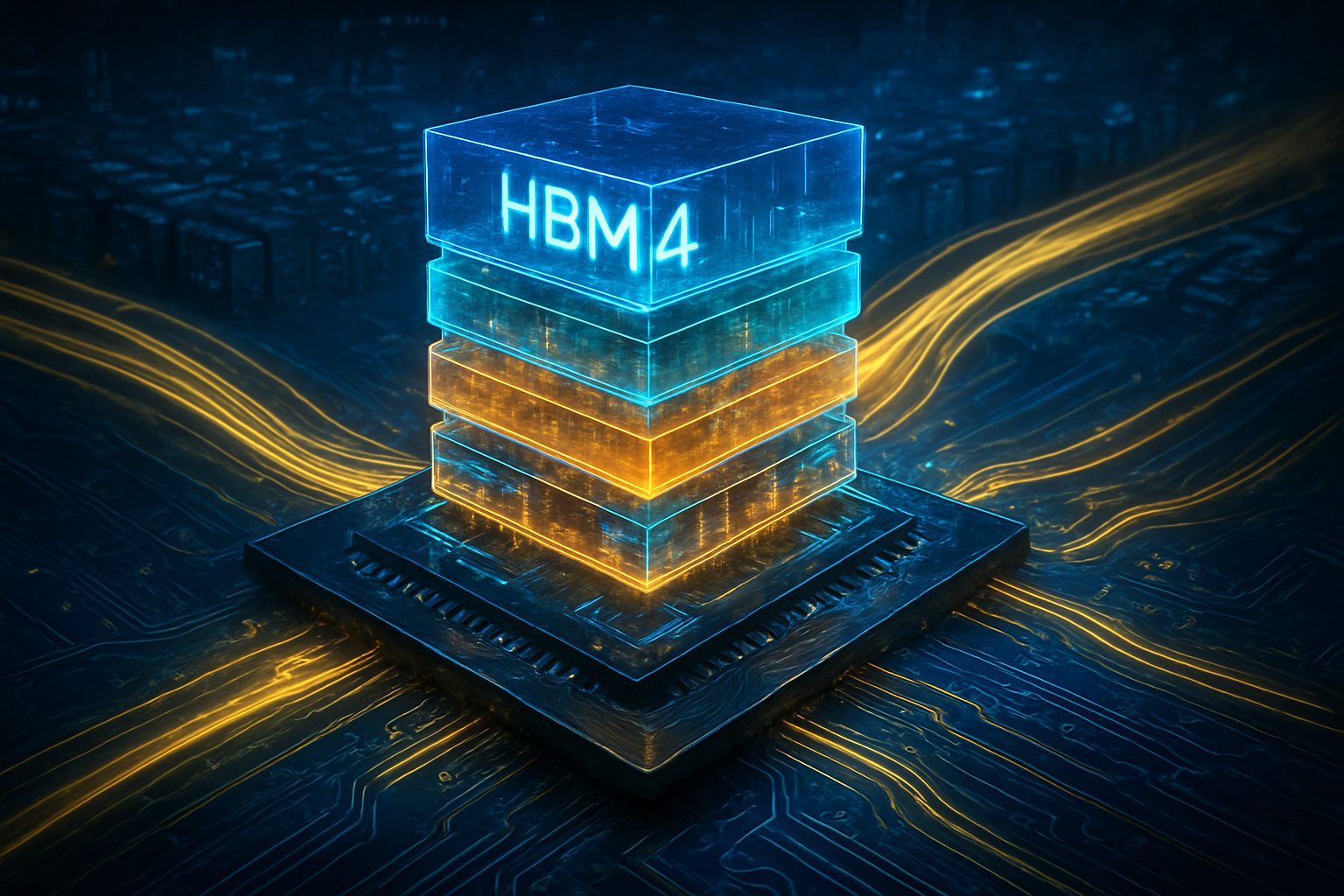
  • NVIDIA Blackwell vs. The Rise of Custom Silicon: The Battle for AI Dominance in 2026

    NVIDIA Blackwell vs. The Rise of Custom Silicon: The Battle for AI Dominance in 2026

    As we enter 2026, the artificial intelligence industry has reached a pivotal crossroads. For years, NVIDIA (NASDAQ: NVDA) has held a near-monopoly on the high-end compute market, with its chips serving as the literal bedrock of the generative AI revolution. However, the debut of the Blackwell architecture has coincided with a massive, coordinated push by the world’s largest technology companies to break free from the "NVIDIA tax." Amazon (NASDAQ: AMZN), Microsoft (NASDAQ: MSFT), and Meta Platforms (NASDAQ: META) are no longer just customers; they are now formidable competitors, deploying their own custom-designed silicon to power the next generation of AI.

    This "Great Decoupling" represents a fundamental shift in the tech economy. While NVIDIA’s Blackwell remains the undisputed champion for training the world’s most complex frontier models, the battle for "inference"—the day-to-day running of AI applications—has moved to custom-built territory. With billions of dollars in capital expenditures at stake, the rise of chips like Amazon’s Trainium 3 and Microsoft’s Maia 200 is challenging the notion that a general-purpose GPU is the only way to scale intelligence.

    Technical Supremacy vs. Architectural Specialization

    NVIDIA’s Blackwell architecture, specifically the B200 and the GB200 "Superchip," is a marvel of modern engineering. Boasting 208 billion transistors and manufactured on a custom TSMC (NYSE: TSM) 4NP process, Blackwell introduced the world to native FP4 precision, allowing for a 5x increase in inference throughput compared to the previous Hopper generation. Its NVLink 5.0 interconnect provides a staggering 1.8 TB/s of bidirectional bandwidth, creating a unified memory pool that allows hundreds of GPUs to act as a single, massive processor. This level of raw power is why Blackwell remains the primary choice for training trillion-parameter models that require extreme flexibility and high-speed communication between nodes.

    In contrast, the custom silicon from the "Big Three" hyperscalers is designed for surgical precision. Amazon’s Trainium 3, now in general availability as of early 2026, utilizes a 3nm process and focuses on "scale-out" efficiency. By stripping away the legacy graphics circuitry found in NVIDIA’s chips, Amazon has achieved roughly 50% better price-performance for training internal models like Claude 4. Similarly, Microsoft’s Maia 200 (internally codenamed "Braga") has been optimized for "Microscaling" (MX) data formats, allowing it to run ChatGPT and Copilot workloads with significantly lower power consumption than a standard Blackwell cluster.

    The technical divergence is most visible in the cooling and power delivery systems. While NVIDIA’s GB200 NVL72 racks require advanced liquid cooling to manage their 120kW power draw, Meta’s MTIA v3 (Meta Training and Inference Accelerator) is built with a chiplet-based design that prioritizes energy efficiency for recommendation engines. These custom ASICs (Application-Specific Integrated Circuits) are not trying to do everything; they are trying to do one thing—like ranking a Facebook feed or generating a Copilot response—at the lowest possible cost-per-token.

    The Economics of Silicon Sovereignty

    The strategic advantage of custom silicon is, first and foremost, financial. At an estimated $30,000 to $35,000 per B200 card, the cost of building a massive AI data center using only NVIDIA hardware is becoming unsustainable for even the wealthiest corporations. By designing their own chips, companies like Alphabet (NASDAQ: GOOGL) and Amazon can reduce their total cost of ownership (TCO) by 30% to 40%. This "silicon sovereignty" allows them to offer lower prices to cloud customers and maintain higher margins on their own AI services, creating a competitive moat that NVIDIA’s hardware-only business model struggles to penetrate.

    This shift is already disrupting the competitive landscape for AI startups. While the most well-funded labs still scramble for NVIDIA Blackwell allocations to train "God-like" models, mid-tier startups are increasingly pivoting to custom silicon instances on AWS and Azure. The availability of Trainium 3 and Maia 200 has democratized high-performance compute, allowing smaller players to run large-scale inference without the "NVIDIA premium." This has forced NVIDIA to move further up the stack, offering its own "AI Foundry" services to maintain its relevance in a world where hardware is becoming increasingly fragmented.

    Furthermore, the market positioning of these companies has changed. Microsoft and Amazon are no longer just cloud providers; they are vertically integrated AI powerhouses that control everything from the silicon to the end-user application. This vertical integration provides a massive strategic advantage in the "Inference Era," where the goal is to serve as many AI tokens as possible at the lowest possible energy cost. NVIDIA, recognizing this threat, has responded by accelerating its roadmap, recently teasing the "Vera Rubin" architecture at CES 2026 to stay one step ahead of the hyperscalers’ design cycles.

    The Erosion of the CUDA Moat

    For a decade, NVIDIA’s greatest defense was not its hardware, but its software: CUDA. The proprietary programming model made it nearly impossible for developers to switch to rival chips without rewriting their entire codebase. However, by 2026, that moat is showing significant cracks. The rise of hardware-agnostic compilers like OpenAI’s Triton and the maturation of the OpenXLA ecosystem have created an "off-ramp" for developers. Triton allows high-performance kernels to be written in Python and run seamlessly across NVIDIA, AMD (NASDAQ: AMD), and custom ASICs like Google’s TPU v7.

    This shift toward open-source software is perhaps the most significant trend in the broader AI landscape. It has allowed the industry to move away from vendor lock-in and toward a more modular approach to AI infrastructure. As of early 2026, "StableHLO" (Stable High-Level Operations) has become the standard portability layer, ensuring that a model trained on an NVIDIA workstation can be deployed to a Trainium or Maia cluster with minimal performance loss. This interoperability is essential for a world where energy constraints are the primary bottleneck to AI growth.

    However, this transition is not without concerns. The fragmentation of the hardware market could lead to a "Balkanization" of AI development, where certain models only run optimally on specific clouds. There are also environmental implications; while custom silicon is more efficient, the sheer volume of chip production required to satisfy the needs of Amazon, Meta, and Microsoft is putting unprecedented strain on the global semiconductor supply chain and rare-earth mineral mining. The race for silicon dominance is, in many ways, a race for the planet's resources.

    The Road Ahead: Vera Rubin and the 2nm Frontier

    Looking toward the latter half of 2026 and into 2027, the industry is bracing for the next leap in performance. NVIDIA’s Vera Rubin architecture, expected to ship in late 2026, promises a 10x reduction in inference costs through even more advanced data formats and HBM4 memory integration. This is NVIDIA’s attempt to reclaim the inference market by making its general-purpose GPUs so efficient that the cost savings of custom silicon become negligible. Experts predict that the "Rubin vs. Custom Silicon v4" battle will define the next three years of the AI economy.

    In the near term, we expect to see more specialized "edge" AI chips from these tech giants. As AI moves from massive data centers to local devices and specialized robotics, the need for low-power, high-efficiency silicon will only grow. Challenges remain, particularly in the realm of interconnects; while NVIDIA has NVLink, the hyperscalers are working on the Ultra Ethernet Consortium (UEC) standards to create a high-speed, open alternative for massive scale-out clusters. The company that masters the networking between the chips may ultimately win the war.

    A New Era of Computing

    The battle between NVIDIA’s Blackwell and the custom silicon of the hyperscalers marks the end of the "GPU-only" era of artificial intelligence. We have moved into a more mature, fragmented, and competitive phase of the industry. While NVIDIA remains the king of the frontier, providing the raw horsepower needed to push the boundaries of what AI can do, the hyperscalers have successfully carved out a massive territory in the operational heart of the AI economy.

    Key takeaways from this development include the successful challenge to the CUDA monopoly, the rise of "silicon sovereignty" as a corporate strategy, and the shift in focus from raw training power to inference efficiency. As we look forward, the significance of this moment in AI history cannot be overstated: it is the moment the industry stopped being a one-company show and became a multi-polar race for the future of intelligence. In the coming months, watch for the first benchmarks of the Vera Rubin platform and the continued expansion of "ASIC-first" data centers across the globe.


    This content is intended for informational purposes only and represents analysis of current AI developments.

    TokenRing AI delivers enterprise-grade solutions for multi-agent AI workflow orchestration, AI-powered development tools, and seamless remote collaboration platforms.
    For more information, visit https://www.tokenring.ai/.