
Tag: Nvidia

  • NVIDIA’s $20 Billion Groq Deal: A Strategic Strike for AI Inference Dominance

    NVIDIA’s $20 Billion Groq Deal: A Strategic Strike for AI Inference Dominance

    In a move that has sent shockwaves through Silicon Valley and the global semiconductor industry, NVIDIA (NASDAQ: NVDA) has finalized a blockbuster $20 billion agreement to license the intellectual property of AI chip innovator Groq and transition the vast majority of its engineering talent into the NVIDIA fold. The deal, structured as a strategic "license-and-acquihire," represents the largest single investment in NVIDIA’s history and marks a decisive pivot toward securing total dominance in the rapidly accelerating AI inference market.

    The centerpiece of the agreement is the integration of Groq’s ultra-low-latency Language Processing Unit (LPU) technology and the appointment of Groq founder and Tensor Processing Unit (TPU) inventor Jonathan Ross to a senior leadership role within NVIDIA. By absorbing the team and technology that many analysts considered the most credible threat to its hardware hegemony, NVIDIA is effectively skipping years of research and development. This strategic strike not only neutralizes a potent rival but also positions NVIDIA to own the "real-time" AI era, where speed and efficiency in running models are becoming as critical as the power used to train them.

    The LPU Advantage: Redefining AI Performance

    At the heart of this deal is Groq’s revolutionary LPU architecture, which differs fundamentally from the traditional Graphics Processing Units (GPUs) that have powered the AI boom to date. While GPUs are masters of parallel processing—handling thousands of small tasks simultaneously—they often struggle with the sequential nature of Large Language Models (LLMs), leading to "jitter" or variable latency. In contrast, the LPU utilizes a deterministic, single-core architecture. This design allows the system to know exactly where data is at any given nanosecond, resulting in predictable, sub-millisecond response times that are essential for fluid, human-like AI interactions.

    Technically, the LPU’s secret weapon is its reliance on massive on-chip SRAM (Static Random-Access Memory) rather than the High Bandwidth Memory (HBM) used by NVIDIA’s current H100 and B200 chips. By keeping data directly on the processor, the LPU achieves a memory bandwidth of up to 80 terabytes per second—nearly ten times that of existing high-end GPUs. This architecture excels at "Batch Size 1" processing, meaning it can generate tokens for a single user instantly without needing to wait for other requests to bundle together. For the AI research community, this is a game-changer; it enables "instantaneous" reasoning in models like GPT-5 and Claude 4, which were previously bottlenecked by the physical limits of HBM data transfer.

    Industry experts have reacted to the news with a mix of awe and caution. "NVIDIA just bought the fastest lane on the AI highway," noted one lead analyst at a major tech research firm. "By bringing Jonathan Ross—the man who essentially invented the modern AI chip at Google—into their ranks, NVIDIA isn't just buying hardware; they are buying the architectural blueprint for the next decade of computing."

    Reshaping the Competitive Landscape

    The strategic implications for the broader tech industry are profound. For years, major cloud providers and competitors like Alphabet Inc. (NASDAQ: GOOGL) and Advanced Micro Devices, Inc. (NASDAQ: AMD) have been racing to develop specialized inference ASICs (Application-Specific Integrated Circuits) to chip away at NVIDIA’s market share. Google’s TPU and Amazon’s Inferentia were designed specifically to offer a cheaper, faster alternative to NVIDIA’s general-purpose GPUs. By licensing Groq’s LPU technology, NVIDIA has effectively leapfrogged these custom solutions, offering a commercial product that matches or exceeds the performance of in-house hyperscaler silicon.

    This deal creates a significant hurdle for other AI chip startups, such as Cerebras and Sambanova, who now face a competitor that possesses both the massive scale of NVIDIA and the specialized speed of Groq. Furthermore, the "license-and-acquihire" structure allows NVIDIA to avoid some of the regulatory scrutiny that would accompany a full acquisition. Because Groq will continue to exist as an independent entity operating its "GroqCloud" service, NVIDIA can argue it is fostering an ecosystem rather than absorbing it, even as it integrates Groq’s core innovations into its own future product lines.

    For major AI labs like OpenAI and Anthropic, the benefit is immediate. Access to LPU-integrated NVIDIA hardware means they can deploy "agentic" AI—autonomous systems that can think, plan, and react in real-time—at a fraction of the current latency and power cost. This move solidifies NVIDIA’s position as the indispensable backbone of the AI economy, moving them from being the "trainers" of AI to the "engine" that runs it every second of the day.

    From Training to Inference: The Great AI Shift

    The $20 billion price tag reflects a broader trend in the AI landscape: the shift from the "Training Era" to the "Inference Era." While the last three years were defined by the massive clusters of GPUs needed to build models, the next decade will be defined by the trillions of queries those models must answer. Analysts predict that by 2030, the market for AI inference will be ten times larger than the market for training. NVIDIA’s move is a preemptive strike to ensure that as the industry evolves, its revenue doesn't peak with the completion of the world's largest data centers.

    This acquisition draws parallels to NVIDIA’s 2020 purchase of Mellanox, which gave the company control over the high-speed networking (InfiniBand) necessary for massive GPU clusters. Just as Mellanox allowed NVIDIA to dominate training at scale, Groq’s technology will allow them to dominate inference at speed. However, this milestone is perhaps even more significant because it addresses the growing concern over AI's energy consumption. The LPU architecture is significantly more power-efficient for inference tasks than traditional GPUs, providing a path toward sustainable AI scaling as global power grids face increasing pressure.

    Despite the excitement, the deal is not without its critics. Some in the open-source community express concern that NVIDIA’s tightening grip on both training and inference hardware could lead to a "black box" ecosystem where the most efficient AI can only run on proprietary NVIDIA stacks. This concentration of power in a single company’s hands remains a focal point for regulators in the US and EU, who are increasingly wary of "killer acquisitions" in the semiconductor space.

    The Road Ahead: Real-Time Agents and "Vera Rubin"

    Looking toward the near-term future, the first fruits of this deal are expected to appear in NVIDIA’s 2026 hardware roadmap, specifically the rumored "Vera Rubin" architecture. Industry insiders suggest that NVIDIA will integrate LPU-derived "inference blocks" directly onto its next-generation dies, creating a hybrid chip capable of switching between heavy-lift training and ultra-fast inference seamlessly. This would allow a single server rack to handle the entire lifecycle of an AI model with unprecedented efficiency.

    The most transformative applications will likely be in the realm of real-time AI agents. With the latency barriers removed, we can expect to see the rise of voice assistants that have zero "thinking" delay, real-time language translation that feels natural, and autonomous systems in robotics and manufacturing that can process visual data and make decisions in microseconds. The challenge for NVIDIA will be the complex task of merging Groq’s software-defined hardware approach with its own CUDA software stack, a feat of engineering that Jonathan Ross is uniquely qualified to lead.

    Experts predict that the coming months will see a flurry of activity as NVIDIA's partners, including Microsoft Corp. (NASDAQ: MSFT) and Meta, scramble to secure early access to the first LPU-enhanced systems. The "race to zero latency" has officially begun, and with this $20 billion move, NVIDIA has claimed the pole position.

    A New Chapter in the AI Revolution

    NVIDIA’s licensing of Groq’s IP and the absorption of its engineering core represents a watershed moment in the history of computing. It is a clear signal that the "GPU-only" era of AI is evolving into a more specialized, diverse hardware landscape. By successfully identifying and integrating the most advanced inference technology on the market, NVIDIA has once again demonstrated the strategic agility that has made it one of the most valuable companies in the world.

    The key takeaway for the industry is that the battle for AI supremacy has moved beyond who can build the largest model to who can deliver that model’s intelligence the fastest. As we look toward 2026, the integration of Groq’s deterministic architecture into the NVIDIA ecosystem will likely be remembered as the move that made real-time, ubiquitous AI a reality.

    In the coming weeks, all eyes will be on the first joint technical briefings from NVIDIA and the former Groq team. As the dust settles on this $20 billion deal, the message to the rest of the industry is clear: NVIDIA is no longer just a chip company; it is the architect of the real-time intelligent world.


    This content is intended for informational purposes only and represents analysis of current AI developments.

    TokenRing AI delivers enterprise-grade solutions for multi-agent AI workflow orchestration, AI-powered development tools, and seamless remote collaboration platforms.
    For more information, visit https://www.tokenring.ai/.
  • The Inference Crown: Nvidia’s $20 Billion Groq Gambit Redefines the AI Landscape

    The Inference Crown: Nvidia’s $20 Billion Groq Gambit Redefines the AI Landscape

    In a move that has sent shockwaves through Silicon Valley and global markets, Nvidia (NASDAQ: NVDA) has finalized a staggering $20 billion strategic intellectual property (IP) deal with the AI chip sensation Groq. Beyond the massive capital outlay, the deal includes the high-profile hiring of Groq’s visionary founder, Jonathan Ross, and nearly 80% of the startup’s engineering talent. This "license-and-acquihire" maneuver signals a definitive shift in Nvidia’s strategy, as the company moves to consolidate its dominance over the burgeoning AI inference market.

    The deal, announced as we close out 2025, represents a pivotal moment in the hardware arms race. While Nvidia has long been the undisputed king of AI "training"—the process of building massive models—the industry’s focus has rapidly shifted toward "inference," the actual running of those models for end-users. By absorbing Groq’s specialized Language Processing Unit (LPU) technology and the mind of the man who originally led Google’s (NASDAQ: GOOGL) TPU program, Nvidia is positioning itself to own the entire AI lifecycle, from the first line of code to the final millisecond of a user’s query.

    The LPU Advantage: Solving the Memory Bottleneck

    At the heart of this deal is Groq’s radical LPU architecture, which differs fundamentally from the GPU (Graphics Processing Unit) architecture that propelled Nvidia to its multi-trillion-dollar valuation. Traditional GPUs rely on High Bandwidth Memory (HBM), which, while powerful, creates a "Von Neumann bottleneck" during inference. Data must travel between the processor and external memory stacks, causing latency that can hinder real-time AI interactions. In contrast, Groq’s LPU utilizes massive amounts of on-chip SRAM (Static Random-Access Memory), allowing model weights to reside directly on the processor.

    The technical specifications of this integration are formidable. Groq’s architecture provides a deterministic execution model, meaning the performance is mathematically predictable to the nanosecond—a far cry from the "jitter" or variable latency found in probabilistic GPU scheduling. By integrating this into Nvidia’s upcoming "Vera Rubin" chip architecture, experts predict token-generation speeds could jump from the current 100 tokens per second to over 500 tokens per second for models like Llama 3. This enables "Batch Size 1" processing, where a single user receives an instantaneous response without the need for the system to wait for other requests to fill a queue.

    Initial reactions from the AI research community have been a mix of awe and apprehension. Dr. Elena Rodriguez, a senior fellow at the AI Hardware Institute, noted, "Nvidia isn't just buying a faster chip; they are buying a different way of thinking about compute. The deterministic nature of the LPU is the 'holy grail' for real-time applications like autonomous robotics and high-frequency trading." However, some industry purists worry that such consolidation may stifle the architectural diversity that has fueled recent innovation.

    A Strategic Masterstroke: Market Positioning and Antitrust Maneuvers

    The structure of the deal—a $20 billion IP license combined with a mass hiring event—is a calculated effort to bypass the regulatory hurdles that famously tanked Nvidia’s attempt to acquire ARM in 2022. By not acquiring Groq Inc. as a legal entity, Nvidia avoids the protracted 18-to-24-month antitrust reviews from global regulators. This "hollow-out" strategy, pioneered by Microsoft (NASDAQ: MSFT) and Amazon (NASDAQ: AMZN) earlier in the decade, allows Nvidia to secure the technology and talent it needs while leaving a shell of the original company to manage its existing "GroqCloud" service.

    For competitors like AMD (NASDAQ: AMD) and Intel (NASDAQ: INTC), this deal is a significant blow. AMD had recently made strides in the inference space with its MI300 series, but the integration of Groq’s LPU technology into the CUDA ecosystem creates a formidable barrier to entry. Nvidia’s ability to offer ultra-low-latency inference as a native feature of its hardware stack makes it increasingly difficult for startups or established rivals to argue for a "specialized" alternative.

    Furthermore, this move neutralizes one of the most credible threats to Nvidia’s cloud dominance. Groq had been rapidly gaining traction among developers who were frustrated by the high costs and latency of running large language models (LLMs) on standard GPUs. By bringing Jonathan Ross into the fold, Nvidia has effectively removed the "father of the TPU" from the competitive board, ensuring his next breakthroughs happen under the Nvidia banner.

    The Inference Era: A Paradigm Shift in AI

    The wider significance of this deal cannot be overstated. We are witnessing the end of the "Training Era" and the beginning of the "Inference Era." In 2023 and 2024, the primary constraint on AI was the ability to build models. In 2025, the constraint is the ability to run them efficiently, cheaply, and at scale. Groq’s LPU technology is significantly more energy-efficient for inference tasks than traditional GPUs, addressing a major concern for data center operators and environmental advocates alike.

    This milestone is being compared to the 2006 launch of CUDA, the software platform that originally transformed Nvidia from a gaming company into an AI powerhouse. Just as CUDA made GPUs programmable for general tasks, the integration of LPU architecture into Nvidia’s stack makes real-time, high-speed AI accessible for every enterprise. It marks a transition from AI being a "batch process" to AI being a "living interface" that can keep up with human thought and speech in real-time.

    However, the consolidation of such critical IP raises concerns about a "hardware monopoly." With Nvidia now controlling both the training and the most efficient inference paths, the tech industry must grapple with the implications of a single entity holding the keys to the world’s AI infrastructure. Critics argue that this could lead to higher prices for cloud compute and a "walled garden" that forces developers into the Nvidia ecosystem.

    Looking Ahead: The Future of Real-Time Agents

    In the near term, expect Nvidia to release a series of "Inference-First" modules designed specifically for edge computing and real-time voice and video agents. These products will likely leverage the newly acquired LPU IP to provide human-like interaction speeds in devices ranging from smart glasses to industrial robots. Jonathan Ross is reportedly leading a "Special Projects" division at Nvidia, tasked with merging the LPU’s deterministic pipeline with Nvidia’s massive parallel processing capabilities.

    The long-term applications are even more transformative. We are looking at a future where AI "agents" can reason and respond in milliseconds, enabling seamless real-time translation, complex autonomous decision-making in split-second scenarios, and personalized AI assistants that feel truly instantaneous. The challenge will be the software integration; porting the world’s existing AI models to a hybrid GPU-LPU architecture will require a massive update to the CUDA toolkit, a task that Ross’s team is expected to spearhead throughout 2026.

    A New Chapter for the AI Titan

    Nvidia’s $20 billion bet on Groq is more than just an acquisition of talent; it is a declaration of intent. By securing the most advanced inference technology on the market, CEO Jensen Huang has shored up the one potential weakness in Nvidia’s armor. The "license-and-acquihire" model has proven to be an effective, if controversial, tool for market leaders to stay ahead of the curve while navigating a complex regulatory environment.

    As we move into 2026, the industry will be watching closely to see how quickly the "Groq-infused" Nvidia hardware hits the market. This development will likely be remembered as the moment when the "Inference Gap" was closed, paving the way for the next generation of truly interactive, real-time artificial intelligence. For now, Nvidia remains the undisputed architect of the AI age, with a lead that looks increasingly insurmountable.


    This content is intended for informational purposes only and represents analysis of current AI developments.

    TokenRing AI delivers enterprise-grade solutions for multi-agent AI workflow orchestration, AI-powered development tools, and seamless remote collaboration platforms.
    For more information, visit https://www.tokenring.ai/.

  • Efficiency Over Excess: How DeepSeek R1 Shattered the AI Scaling Myth

    Efficiency Over Excess: How DeepSeek R1 Shattered the AI Scaling Myth

    The year 2025 will be remembered in the annals of technology as the moment the "brute force" era of artificial intelligence met its match. In January, a relatively obscure Chinese startup named DeepSeek released R1, a reasoning model that sent shockwaves through Silicon Valley and global financial markets. By achieving performance parity with OpenAI’s most advanced reasoning models—at a reported training cost of just $5.6 million—DeepSeek R1 did more than just release a new tool; it fundamentally challenged the "scaling law" paradigm that suggested better AI could only be bought with multi-billion-dollar clusters and endless power consumption.

    As we close out December 2025, the impact of DeepSeek’s efficiency-first philosophy has redefined the competitive landscape. The model's ability to match the math and coding prowess of the world’s most expensive systems using significantly fewer resources has forced a global pivot. No longer is the size of a company's GPU hoard the sole predictor of its AI dominance. Instead, algorithmic ingenuity and reinforcement learning optimizations have become the new currency of the AI arms race, democratizing high-level reasoning and accelerating the transition from simple chatbots to autonomous, agentic systems.

    The Technical Breakthrough: Doing More with Less

    At the heart of DeepSeek R1’s success is a radical departure from traditional training methodologies. While Western giants like OpenAI and Google, a subsidiary of Alphabet (NASDAQ: GOOGL), were doubling down on massive SuperPODs, DeepSeek focused on a technique called Group Relative Policy Optimization (GRPO). Unlike the standard Proximal Policy Optimization (PPO) used by most labs, which requires a separate "critic" model to evaluate the "actor" model during reinforcement learning, GRPO evaluates a group of generated responses against each other. This eliminated the need for a secondary model, drastically reducing the memory and compute overhead required to teach the model how to "think" through complex problems.

    The model’s architecture itself is a marvel of efficiency, utilizing a Mixture-of-Experts (MoE) design. While DeepSeek R1 boasts a total of 671 billion parameters, it is "sparse," meaning it only activates approximately 37 billion parameters for any given token. This allows the model to maintain the intelligence of a massive system while operating with the speed and cost-effectiveness of a much smaller one. Furthermore, DeepSeek introduced Multi-head Latent Attention (MLA), which optimized the model's short-term memory (KV cache), making it far more efficient at handling the long, multi-step reasoning chains required for advanced mathematics and software engineering.

    The results were undeniable. In benchmark tests that defined the year, DeepSeek R1 achieved a 79.8% Pass@1 on the AIME 2024 math benchmark and a 97.3% on MATH-500, essentially matching or exceeding OpenAI’s o1-preview. In coding, it reached the 96.3rd percentile on Codeforces, proving that high-tier logic was no longer the exclusive domain of companies with billion-dollar training budgets. The AI research community was initially skeptical of the $5.6 million training figure, but as independent researchers verified the model's efficiency, the narrative shifted from disbelief to a frantic effort to replicate DeepSeek’s "algorithmic cleverness."

    Market Disruption and the "Inference Wars"

    The business implications of DeepSeek R1 were felt almost instantly, most notably on "DeepSeek Monday" in late January 2025. NVIDIA (NASDAQ: NVDA), the primary beneficiary of the AI infrastructure boom, saw its stock price plummet by 17% in a single day—the largest one-day market cap loss in history at the time. Investors panicked, fearing that if a Chinese startup could build a frontier-tier model for a fraction of the expected cost, the insatiable demand for H100 and B200 GPUs might evaporate. However, by late 2025, the "Jevons Paradox" took hold: as the cost of AI reasoning dropped by 90%, the total demand for AI services exploded, leading NVIDIA to a full recovery and a historic $5 trillion market cap by October.

    For tech giants like Microsoft (NASDAQ: MSFT) and Meta (NASDAQ: META), DeepSeek R1 served as a wake-up call. Microsoft, which had heavily subsidized OpenAI’s massive compute needs, began diversifying its internal efforts toward more efficient "small language models" (SLMs) and reasoning-optimized architectures. The release of DeepSeek’s distilled models—ranging from 1.5 billion to 70 billion parameters—allowed developers to run high-level reasoning on consumer-grade hardware. This sparked the "Inference Wars" of mid-2025, where the strategic advantage shifted from who could train the biggest model to who could serve the most intelligent model at the lowest latency.

    Startups have been perhaps the biggest beneficiaries of this shift. With DeepSeek R1’s open-weights release and its distilled versions, the barrier to entry for building "agentic" applications—AI that can autonomously perform tasks like debugging code or conducting scientific research—has collapsed. This has led to a surge in specialized AI companies that focus on vertical applications rather than general-purpose foundation models. The competitive moat that once protected the "Big Three" AI labs has been significantly narrowed, as "reasoning-as-a-service" became a commodity by the end of 2025.

    Geopolitics and the New AI Landscape

    Beyond the balance sheets, DeepSeek R1 carries profound geopolitical significance. Developed in China using "bottlenecked" NVIDIA H800 chips—hardware specifically designed to comply with U.S. export controls—the model proved that architectural innovation could bypass hardware limitations. This realization has forced a re-evaluation of the effectiveness of chip sanctions. If China can produce world-class AI using older or restricted hardware through superior software optimization, the "compute gap" between the U.S. and China may be less of a strategic advantage than previously thought.

    The open-source nature of DeepSeek R1 has also acted as a catalyst for the democratization of AI. By releasing the model weights and the methodology behind their reinforcement learning, DeepSeek has provided a blueprint for labs across the globe, from Paris to Tokyo, to build their own reasoning models. This has led to a more fragmented and resilient AI ecosystem, moving away from a centralized model where a handful of American companies dictated the pace of progress. However, this democratization has also raised concerns regarding safety and alignment, as sophisticated reasoning capabilities are now available to anyone with a high-end desktop computer.

    Comparatively, the impact of DeepSeek R1 is being likened to the "Sputnik moment" for AI efficiency. Just as the original Transformer paper in 2017 launched the LLM era, R1 has launched the "Efficiency Era." It has debunked the myth that massive capital is the only path to intelligence. While OpenAI and Google still maintain a lead in broad, multi-modal natural language nuances, DeepSeek has proven that for the "hard" tasks of STEM and logic, the industry has entered a post-scaling world where the smartest model isn't necessarily the one that cost the most to build.

    The Horizon: Agents, Edge AI, and V3.2

    Looking ahead to 2026, the trajectory set by DeepSeek R1 is clear: the focus is shifting toward "thinking tokens" and autonomous agents. In December 2025, the release of DeepSeek-V3.2 introduced "Sparse Attention" mechanisms that allow for massive context windows with near-zero performance degradation. This is expected to pave the way for AI agents that can manage entire software repositories or conduct month-long research projects without human intervention. The industry is now moving toward "Hybrid Thinking" models, which can toggle between fast, cheap responses for simple queries and deep, expensive reasoning for complex problems.

    The next major frontier is Edge AI. Because DeepSeek proved that reasoning can be distilled into smaller models, we are seeing the first generation of smartphones and laptops equipped with "local reasoning" capabilities. Experts predict that by mid-2026, the majority of AI interactions will happen locally on-device, reducing reliance on the cloud and enhancing user privacy. The challenge remains in "alignment"—ensuring these highly capable reasoning models don't find "shortcuts" to solve problems that result in unintended or harmful consequences.

    Predictably, the "scaling laws" aren't dead, but they have been refined. The industry is now scaling inference compute—giving models more time to "think" at the moment of the request—rather than just scaling training compute. This shift, pioneered by DeepSeek R1 and OpenAI’s o1, will likely dominate the research papers of 2026, as labs seek to find the optimal balance between pre-training knowledge and real-time logic.

    A Pivot Point in AI History

    DeepSeek R1 will be remembered as the model that broke the fever of the AI spending spree. It proved that $5.6 million and a group of dedicated researchers could achieve what many thought required $5.6 billion and a small city’s worth of electricity. The key takeaway from 2025 is that intelligence is not just a function of scale, but of strategy. DeepSeek’s willingness to share its methods has accelerated the entire field, pushing the industry toward a future where AI is not just powerful, but accessible and efficient.

    As we look back on the year, the significance of DeepSeek R1 lies in its role as a great equalizer. It forced the giants of Silicon Valley to innovate faster and more efficiently, while giving the rest of the world the tools to compete. The "Efficiency Pivot" of 2025 has set the stage for a more diverse and competitive AI market, where the next breakthrough is just as likely to come from a clever algorithm as it is from a massive data center.

    In the coming weeks, the industry will be watching for the response from the "Big Three" as they prepare their early 2026 releases. Whether they can reclaim the "efficiency crown" or if DeepSeek will continue to lead the charge with its rapid iteration cycle remains the most watched story in tech. One thing is certain: the era of "spending more for better AI" has officially ended, replaced by an era where the smartest code wins.


    This content is intended for informational purposes only and represents analysis of current AI developments.

    TokenRing AI delivers enterprise-grade solutions for multi-agent AI workflow orchestration, AI-powered development tools, and seamless remote collaboration platforms.
    For more information, visit https://www.tokenring.ai/.

  • The Blackwell Era: How Nvidia’s 2025 Launch Reshaped the Trillion-Parameter AI Landscape

    The Blackwell Era: How Nvidia’s 2025 Launch Reshaped the Trillion-Parameter AI Landscape

    As 2025 draws to a close, the technology landscape looks fundamentally different than it did just twelve months ago. The catalyst for this transformation was the January 2025 launch of Nvidia’s (NASDAQ: NVDA) Blackwell architecture, a release that signaled the end of the "GPU as a component" era and the beginning of the "AI platform" age. By delivering the computational muscle required to run trillion-parameter models with unprecedented energy efficiency, Blackwell has effectively democratized the most advanced forms of generative AI, moving them from experimental labs into the heart of global enterprise and consumer hardware.

    The arrival of the Blackwell B200 and the consumer-grade GeForce RTX 50-series in early 2025 addressed the most significant bottleneck in the industry: the "inference wall." Before Blackwell, running models with over a trillion parameters—the scale required for true reasoning and multi-modal agency—was prohibitively expensive and power-hungry. Today, as we look back on a year of rapid deployment, Nvidia’s strategic pivot toward system-level scaling has solidified its position as the foundational architect of the intelligence economy.

    Engineering the Trillion-Parameter Powerhouse

    The technical cornerstone of the Blackwell architecture is the B200 GPU, a marvel of silicon engineering featuring 208 billion transistors. Unlike its predecessor, the H100, the B200 utilizes a multi-die design connected by a 10 TB/s chip-to-chip interconnect, allowing it to function as a single, massive unified processor. This is complemented by the second-generation Transformer Engine, which introduced support for FP4 and FP6 precision. These lower-bit formats have been revolutionary, allowing AI researchers to compress massive models to fit into memory with negligible loss in accuracy, effectively tripling the throughput for the latest Large Language Models (LLMs).

    For the consumer and "prosumer" markets, the January 30, 2025, launch of the GeForce RTX 5090 and RTX 5080 brought this architecture to the desktop. The RTX 5090, featuring 32GB of GDDR7 VRAM and a staggering 3,352 AI TOPS (Tera Operations Per Second), has become the gold standard for local AI development. Perhaps most significant for the average user was the introduction of DLSS 4. By replacing traditional convolutional neural networks with a Vision Transformer architecture, DLSS 4 can generate three AI frames for every one native frame, providing a 4x boost in performance that has redefined high-end gaming and real-time 3D rendering.

    The industry's reaction to these specs was immediate. Research labs noted that the GB200 NVL72—a liquid-cooled rack containing 72 Blackwell GPUs—delivers up to 30x faster real-time inference for 1.8-trillion parameter models compared to the previous Hopper-based systems. This leap allowed companies to move away from simple chatbots toward "agentic" AI systems capable of long-term planning and complex problem-solving, all while reducing the total cost of ownership by nearly 25x for inference tasks.

    A New Hierarchy in the AI Arms Race

    The launch of Blackwell has intensified the competitive dynamics among "hyperscalers" and AI startups alike. Major cloud providers, including Microsoft (NASDAQ: MSFT), Alphabet (NASDAQ: GOOGL), and Amazon (NASDAQ: AMZN), moved aggressively to integrate Blackwell into their data centers. By mid-2025, Oracle (NYSE: ORCL) and specialized AI cloud provider CoreWeave were among the first to offer "live" Blackwell instances, giving them a temporary but crucial edge in attracting high-growth AI startups that required the highest possible compute density for training next-generation models.

    Beyond the cloud giants, the Blackwell architecture has disrupted the automotive and robotics sectors. Companies like Tesla (NASDAQ: TSLA) and various humanoid robot developers have leveraged the Blackwell-based GR00T foundation models to accelerate real-time imitation learning. The ability to process massive amounts of sensor data locally with high energy efficiency has turned Blackwell into the "brain" of the 2025 robotics boom. Meanwhile, competitors like Advanced Micro Devices (NASDAQ: AMD) and Intel (NASDAQ: INTC) have been forced to accelerate their own roadmaps, focusing on open-source software stacks to counter Nvidia's proprietary NVLink and CUDA dominance.

    The market positioning of the RTX 50-series has also created a new tier of "local AI" power users. With the RTX 5090's massive VRAM, small-to-medium enterprises (SMEs) are now fine-tuning 70B and 100B parameter models in-house rather than relying on expensive, privacy-compromising cloud APIs. This shift toward "Hybrid AI"—where prototyping happens on a 50-series desktop and scaling happens on Blackwell cloud clusters—has become the standard workflow for the modern developer.

    The Green Revolution and Sovereign AI

    Perhaps the most significant long-term impact of the Blackwell launch is its contribution to "Green AI." In a year where energy consumption by data centers became a major political and environmental flashpoint, Nvidia’s focus on efficiency proved timely. Blackwell offers a 25x reduction in energy consumption for LLM inference compared to the Hopper architecture. This efficiency is largely driven by the transition to liquid cooling in the NVL72 racks, which has allowed data centers to triple their compute density without a corresponding spike in power usage or cooling costs.

    This efficiency has also fueled the rise of "Sovereign AI." Throughout 2025, nations such as South Korea, India, and various European states have invested heavily in national AI clouds powered by Blackwell hardware. These initiatives aim to host localized models that reflect domestic languages and cultural nuances, ensuring that the benefits of the trillion-parameter era are not concentrated solely in Silicon Valley. By providing a platform that is both powerful and energy-efficient enough to be hosted within national power grids, Nvidia has become an essential partner in global digital sovereignty.

    Comparing this to previous milestones, Blackwell is often cited as the "GPT-4 moment" of hardware. Just as GPT-4 proved that scaling models could lead to emergent reasoning, Blackwell has proved that scaling systems can make those emergent capabilities economically viable. However, this has also raised concerns regarding the "Compute Divide," where the gap between those who can afford Blackwell clusters and those who cannot continues to widen, potentially centralizing the most powerful AI capabilities in the hands of a few ultra-wealthy corporations and states.

    Looking Toward the Rubin Architecture and Beyond

    As we move into 2026, the focus is already shifting toward Nvidia's next leap: the Rubin architecture. While Blackwell focused on mastering the trillion-parameter model, early reports suggest that Rubin will target "World Models" and physical AI, integrating even more advanced HBM4 memory and a new generation of optical interconnects to handle the data-heavy requirements of autonomous systems.

    In the near term, we expect to see the full rollout of "Project Digits," a rumored personal AI supercomputer that utilizes Blackwell-derived chips to bring data-center-grade inference to a consumer form factor. The challenge for the coming year will be software optimization; as hardware capacity has exploded, the industry is now racing to develop software frameworks that can fully utilize the FP4 precision and multi-die architecture of the Blackwell era. Experts predict that the next twelve months will see a surge in "small-but-mighty" models that use Blackwell’s specialized engines to outperform much larger models from the previous year.

    Reflections on a Pivotal Year

    The January 2025 launch of Blackwell and the RTX 50-series will likely be remembered as the moment the AI revolution became sustainable. By solving the dual challenges of massive model complexity and runaway energy consumption, Nvidia has provided the infrastructure for the next decade of digital growth. The key takeaways from 2025 are clear: the future of AI is multi-die, it is energy-efficient, and it is increasingly local.

    As we enter 2026, the industry will be watching for the first "Blackwell-native" models—AI systems designed from the ground up to take advantage of FP4 precision and the NVLink 5 interconnect. While the hardware battle for 2025 has been won, the race to define what this unprecedented power can actually achieve is only just beginning.


    This content is intended for informational purposes only and represents analysis of current AI developments.

    TokenRing AI delivers enterprise-grade solutions for multi-agent AI workflow orchestration, AI-powered development tools, and seamless remote collaboration platforms.
    For more information, visit https://www.tokenring.ai/.

  • Musk’s xAI Hits $200 Billion Valuation in Historic $10 Billion Round Fueled by Middle Eastern Capital

    Musk’s xAI Hits $200 Billion Valuation in Historic $10 Billion Round Fueled by Middle Eastern Capital

    In a move that has fundamentally reshaped the competitive landscape of the artificial intelligence industry, Elon Musk’s xAI has officially closed a staggering $10 billion funding round, catapulting the company to a $200 billion valuation. This milestone, finalized in late 2025, places xAI on a near-equal financial footing with OpenAI, marking one of the most rapid value-creation events in the history of Silicon Valley. The funding, a mix of $5 billion in equity and $5 billion in debt, reflects the market's immense appetite for the "brute force" infrastructure strategy Musk has championed since the company’s inception.

    The significance of this capital injection extends far beyond the balance sheet. With major participation from Middle Eastern sovereign wealth funds and a concentrated focus on expanding its massive "Colossus" compute cluster in Memphis, Tennessee, xAI is signaling its intent to dominate the AI era through sheer scale. This development arrives as the industry shifts from purely algorithmic breakthroughs to a "compute-first" paradigm, where the entities with the largest hardware footprints and the most reliable energy pipelines are poised to lead the race toward Artificial General Intelligence (AGI).

    The Colossus of Memphis: A New Benchmark in AI Infrastructure

    At the heart of xAI’s valuation is its unprecedented infrastructure play in Memphis. As of December 30, 2025, the company’s "Colossus" supercomputer has officially surpassed 200,000 GPUs, integrating a sophisticated mix of NVIDIA (NASDAQ: NVDA) H100s, H200s, and the latest Blackwell-generation GB200 chips. This cluster is widely recognized by industry experts as the largest and most powerful AI training system currently in operation. Unlike traditional data centers that can take years to commission, xAI’s first phase was brought online in a record-breaking 122 days, a feat that has left veteran infrastructure providers stunned.

    The technical specifications of the Memphis site are equally formidable. To support the massive computational load required for the newly released Grok-4 model, xAI has secured over 1 gigawatt (GW) of power capacity. The company has also broken ground on "Colossus 2," a 1 million-square-foot expansion designed to house an additional 800,000 GPUs by 2026. To circumvent local grid limitations and environmental cooling challenges, xAI has deployed innovative—if controversial—solutions, including its own $80 million greywater recycling plant and a fleet of mobile gas turbines to provide immediate, off-grid power.

    Initial reactions from the AI research community have been a mix of awe and skepticism. While many acknowledge that the sheer volume of compute has allowed xAI to close the gap with OpenAI’s GPT-5 and Google’s Gemini 2.0, some researchers argue that the "compute-at-all-costs" approach may be hitting diminishing returns. However, xAI’s shift toward synthetic data generation—using its own models to train future iterations—suggests a strategic pivot intended to solve the looming "data wall" problem that many of its competitors are currently facing.

    Shifting the Power Balance: Competitive Implications for AI Giants

    This massive funding round and infrastructure build-out have sent shockwaves through the "Magnificent Seven" and the broader startup ecosystem. By securing $10 billion, xAI has ensured it has the runway to compete for the most expensive commodity in the world: advanced semiconductors. This puts immediate pressure on OpenAI and its primary benefactor, Microsoft (NASDAQ: MSFT), as well as Anthropic and its backers, Amazon (NASDAQ: AMZN) and Google (NASDAQ: GOOGL). The $200 billion valuation effectively ends the era where OpenAI was the undisputed heavyweight in the private AI market.

    Hardware vendors are among the primary beneficiaries of xAI's aggressive expansion. Beyond the windfall for NVIDIA, companies like Dell (NYSE: DELL) and Super Micro Computer (NASDAQ: SMCI) have established dedicated local operations in Memphis to service xAI’s hardware needs. This "Digital Delta" has created a secondary market of high-tech employment and logistics that rivals traditional tech hubs. For startups, however, the barrier to entry has never been higher; with xAI burning an estimated $1 billion per month on infrastructure, the "table stakes" for building a frontier-tier foundation model have now reached the tens of billions of dollars.

    Strategically, xAI is positioning itself as the "unfiltered" and "pro-humanity" alternative to the more guarded models produced by Silicon Valley’s established giants. By leveraging real-time data from the X platform and potentially integrating with Tesla (NASDAQ: TSLA) for real-world robotics data, Musk is building a vertically integrated AI ecosystem that is difficult for competitors to replicate. The $200 billion valuation reflects investor confidence that this multi-pronged data and compute strategy will yield the first truly viable path to AGI.

    Sovereign Compute and the Global AI Arms Race

    The participation of Middle Eastern sovereign wealth funds—including Saudi Arabia’s Public Investment Fund (PIF), Qatar Investment Authority (QIA), and Abu Dhabi’s MGX—marks a pivotal shift in the geopolitics of AI. These nations are no longer content to be mere consumers of technology; they are using their vast capital reserves to secure "sovereign compute" capabilities. By backing xAI, these funds are ensuring their regions have guaranteed access to the most advanced AI models and the infrastructure required to run them, effectively trading oil wealth for digital sovereignty.

    This trend toward sovereign AI raises significant concerns regarding the centralization of power. As AI becomes the foundational layer for global economies, the fact that a single private company, backed by foreign states, controls a significant portion of the world’s compute power is a subject of intense debate among policymakers. Furthermore, the environmental impact of the Memphis cluster has drawn fire from groups like the Southern Environmental Law Center, who argue that the 1GW power draw and massive water requirements are unsustainable.

    Comparatively, this milestone echoes the early days of the aerospace industry, where only a few entities possessed the resources to reach orbit. xAI’s $200 billion valuation is a testament to the fact that AI has moved out of the realm of pure software and into the realm of heavy industry. The scale of the Memphis cluster is a physical manifestation of the belief that intelligence is a function of scale—a hypothesis that is being tested at a multi-billion dollar price point.

    The Horizon: Synthetic Data and the Path to 1 Million GPUs

    Looking ahead, xAI’s trajectory is focused on reaching the "1 million GPU" milestone by late 2026. This level of compute is intended to facilitate the training of Grok-5, which Musk has teased as a model capable of autonomous reasoning across complex scientific domains. To achieve this, the company will need to navigate the logistical nightmare of securing enough electricity to power a small city, a challenge that experts predict will lead xAI to invest directly in modular nuclear reactors or massive solar arrays in the coming years.

    Near-term developments will likely focus on the integration of xAI’s models into a wider array of consumer and enterprise applications. From advanced coding assistants to the brain for Tesla’s Optimus humanoid robots, the use cases for Grok’s high-reasoning capabilities are expanding. However, the reliance on synthetic data—training models on AI-generated content—remains a "high-risk, high-reward" strategy. If successful, it could decouple AI progress from the limitations of human-generated internet data; if it fails, it could lead to "model collapse," where AI outputs become increasingly distorted over time.

    Experts predict that the next 12 to 18 months will see a further consolidation of the AI industry. With xAI now valued at $200 billion, the pressure for an Initial Public Offering (IPO) will mount, though Musk has historically preferred to keep his most ambitious projects private during their high-growth phases. The industry will be watching closely to see if the Memphis "Digital Delta" can deliver on its promise or if it becomes a cautionary tale of over-leveraged infrastructure.

    A New Chapter in the History of Artificial Intelligence

    The closing of xAI’s $10 billion round is more than just a financial transaction; it is a declaration of the new world order in technology. By achieving a $200 billion valuation in less than three years, xAI has shattered records and redefined what is possible for a private startup. The combination of Middle Eastern capital, Tennessee-based heavy infrastructure, and Musk’s relentless pursuit of scale has created a formidable challenger to the established AI hierarchy.

    As we look toward 2026, the key takeaways are clear: the AI race has entered a phase of industrial-scale competition where capital and kilowatts are the primary currencies. The significance of this development in AI history cannot be overstated; it represents the moment when AI moved from the laboratory to the factory floor. Whether this "brute force" approach leads to the breakthrough of AGI or serves as a high-water mark for the AI investment cycle remains to be seen. For now, all eyes are on Memphis, where the hum of 200,000 GPUs is the sound of the future being built in real-time.


    This content is intended for informational purposes only and represents analysis of current AI developments.

    TokenRing AI delivers enterprise-grade solutions for multi-agent AI workflow orchestration, AI-powered development tools, and seamless remote collaboration platforms.
    For more information, visit https://www.tokenring.ai/.
  • The Great Chill: How NVIDIA’s 1,000W+ Blackwell and Rubin Chips Ended the Era of Air-Cooled Data Centers

    The Great Chill: How NVIDIA’s 1,000W+ Blackwell and Rubin Chips Ended the Era of Air-Cooled Data Centers

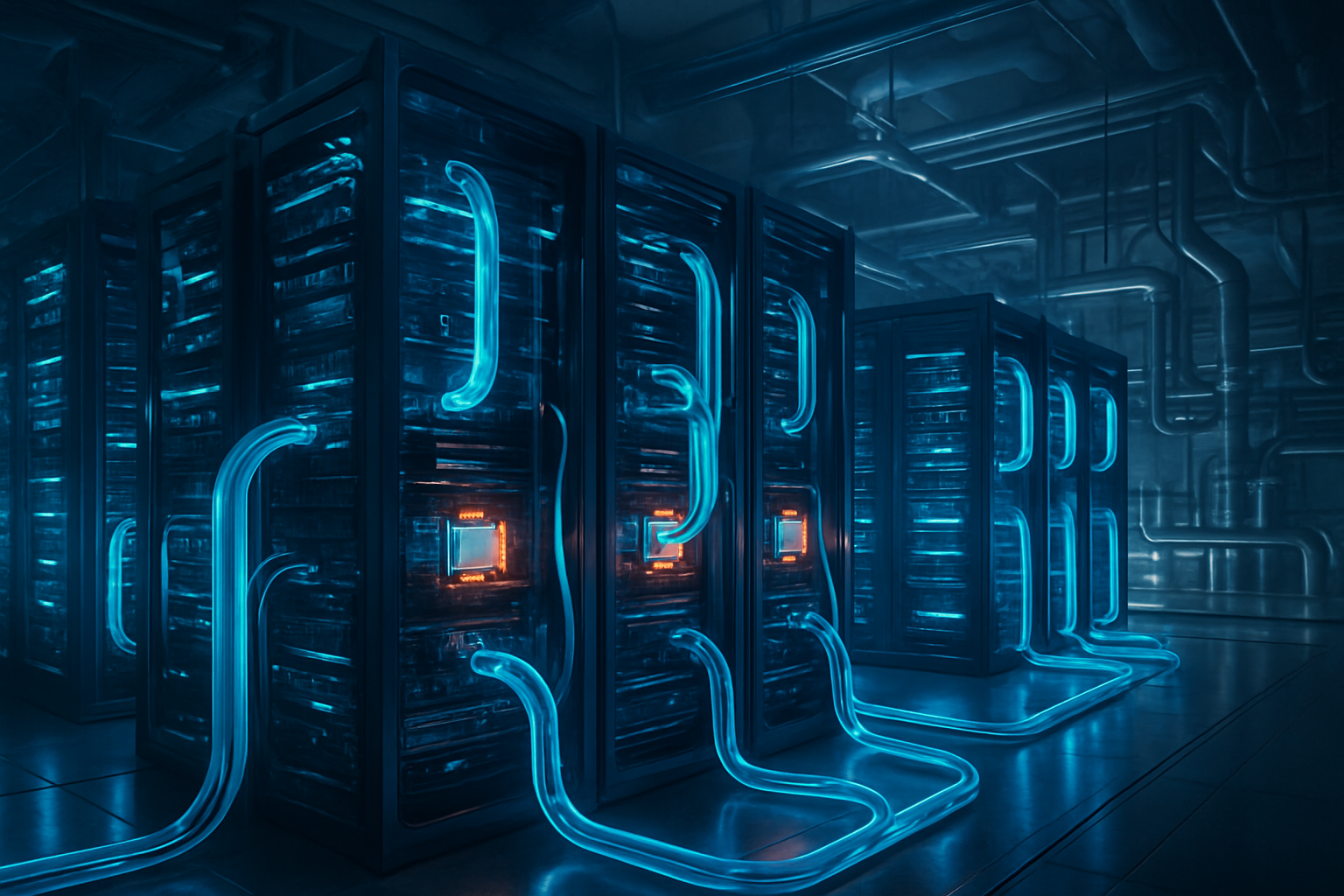
    As 2025 draws to a close, the data center industry has reached a definitive tipping point: the era of the fan-cooled server is over for high-performance computing. The catalyst for this seismic shift has been the arrival of NVIDIA’s (NASDAQ: NVDA) Blackwell and the newly announced Rubin GPU architectures, which have pushed thermal design power (TDP) into territory once thought impossible for silicon. With individual chips now drawing well over 1,000 watts, the physics of air—its inability to carry heat away fast enough—has forced a total architectural rewrite of the world’s digital infrastructure.

    This transition is not merely a technical upgrade; it is a multi-billion dollar industrial pivot. As of December 2025, major colocation providers and hyperscalers have stopped asking if they should implement liquid cooling and are now racing to figure out how fast they can retrofit existing halls. The immediate significance is clear: the success of the next generation of generative AI models now depends as much on plumbing and fluid dynamics as it does on neural network architecture.

    The 1,000W Threshold and the Physics of Heat

    The technical specifications of the 2025 hardware lineup have made traditional cooling methods physically obsolete. NVIDIA’s Blackwell B200 GPUs, which became the industry standard earlier this year, operate at a TDP of 1,200W, while the GB200 Superchip modules—combining two Blackwell GPUs with a Grace CPU—demand a staggering 2,700W per unit. However, it is the Rubin architecture, slated for broader rollout in 2026 but already being integrated into early-access "AI Factories," that has truly broken the thermal ceiling. Rubin chips are reaching 1,800W to 2,300W, with the "Ultra" variants projected to hit 3,600W.

    This level of heat density creates what engineers call the "airflow wall." To cool a single rack of Rubin-based servers using air, the volume of air required would need to move at speeds that would create hurricane-force winds inside the server room, potentially damaging components and creating noise levels that exceed safety regulations. Furthermore, air cooling reaches a physical efficiency limit at roughly 1W per square millimeter of chip area; Blackwell and Rubin have surged far past this, making "micro-throttling"—where a chip rapidly slows down to avoid melting—an unavoidable consequence of air-based systems.

    To combat this, the industry has standardized on Direct-to-Chip (DLC) cooling. Unlike previous liquid cooling attempts that were often bespoke, 2025 has seen the rise of Microchannel Cold Plates (MCCP). These plates, mounted directly onto the silicon, feature internal channels as small as 50 micrometers, allowing dielectric fluids or water-glycol mixes to flow within a hair's breadth of the GPU die. This method is significantly more efficient than air, as liquid has over 3,000 times the heat-carrying capacity of air by volume, allowing for rack densities that have jumped from 15kW to over 140kW in a single year.

    Strategic Realignment: Equinix and Digital Realty Lead the Charge

    The shift to liquid cooling has fundamentally altered the competitive landscape for data center operators and hardware providers. Equinix (NASDAQ: EQIX) and Digital Realty (NYSE: DLR) have emerged as the primary beneficiaries of this transition, leveraging their massive capital reserves to "liquid-ready" their global portfolios. Equinix recently announced that over 100 of its International Business Exchange centers are now fully equipped for liquid cooling, while Digital Realty has standardized its "Direct Liquid Cooling" offering across 50% of its 300+ sites. These companies are no longer just providing space and power; they are providing advanced thermal management as a premium service.

    For NVIDIA, the move to liquid cooling is a strategic necessity to maintain its dominance. By partnering with Digital Realty to launch the "AI Factory Research Center" in Virginia, NVIDIA is ensuring that its most powerful chips have a home that can actually run them at 100% utilization. This creates a high barrier to entry for smaller AI chip startups; it is no longer enough to design a fast processor—you must also design the complex liquid-cooling loops and partner with global infrastructure giants to ensure that processor can be deployed at scale.

    Cloud giants like Amazon (NASDAQ: AMZN) and Microsoft (NASDAQ: MSFT) are also feeling the pressure, as they must now decide whether to retrofit aging air-cooled data centers or build entirely new "liquid-first" facilities. This has led to a surge in the market for specialized cooling components. Companies providing the "plumbing" of the AI age—such as Manz AG or specialized pump manufacturers—are seeing record demand. The strategic advantage has shifted to those who can secure the supply chain for coolants, manifolds, and quick-disconnect valves, which have become as critical as the HBM3e memory chips themselves.

    The Sustainability Imperative and the Nuclear Connection

    Beyond the technical hurdles, the transition to liquid cooling is a pivotal moment for global energy sustainability. Traditional air-cooled data centers often have a Power Usage Effectiveness (PUE) of 1.5, meaning for every watt used for computing, half a watt is wasted on cooling. Liquid cooling has the potential to bring PUE down to a remarkable 1.05. In the context of 2025’s global energy constraints, this 30-40% reduction in wasted power is the only way the AI boom can continue without collapsing local power grids.

    The massive power draw of these 1,000W+ chips has also forced a marriage between the data center and the nuclear power industry. Equinix’s 2025 agreement with Oklo (NYSE: OKLO) for 500MW of nuclear power and its collaboration with Rolls-Royce (LSE: RR) for small modular reactors (SMRs) highlight the desperation for stable, high-density energy. We are witnessing a shift where data centers are being treated less like office buildings and more like heavy industrial plants, requiring their own dedicated power plants and specialized waste-heat recovery systems that can pump excess heat into local municipal heating grids.

    However, this transition also raises concerns about the "digital divide" in infrastructure. Older data centers that cannot be retrofitted for liquid cooling are rapidly becoming "legacy" sites, suitable only for low-power web hosting or storage, rather than AI training. This has led to a valuation gap in the real estate market, where "liquid-ready" facilities command massive premiums, potentially centralizing AI power into the hands of a few elite operators who can afford the billions in required upgrades.

    Future Horizons: From Cold Plates to Immersion Cooling

    Looking ahead, the thermal demands of AI hardware show no signs of plateauing. Industry roadmaps for the post-Rubin era, including the rumored "Feynman" architecture, suggest chips that could draw between 6,000W and 9,000W per module. This will likely push the industry away from Direct-to-Chip cooling and toward total Immersion Cooling, where entire server blades are submerged in non-conductive dielectric fluid. While currently a niche solution in 2025, immersion cooling is expected to become the standard for "Gigascale" AI clusters by 2027.

    The next frontier will also involve "Phase-Change" cooling, which uses the evaporation of specialized fluids to absorb even more heat than liquid alone. Experts predict that the challenges of 2026 will revolve around the environmental impact of these fluids and the massive amounts of water required for cooling towers, even in "closed-loop" systems. We may see the emergence of "underwater" or "arctic" data centers becoming more than just experiments as companies seek natural heat sinks to offset the astronomical thermal output of future AI models.

    A New Era for Digital Infrastructure

    The shift to liquid cooling in 2025 marks the end of the "PC-era" of data center design and the beginning of the "Industrial AI" era. The 1,000W+ power draw of NVIDIA’s Blackwell and Rubin chips has acted as a catalyst, forcing a decade's worth of infrastructure evolution into a single eighteen-month window. Air, once the reliable medium of the digital age, has simply run out of breath, replaced by the silent, efficient flow of liquid loops.

    As we move into 2026, the key metrics for AI success will be PUE, rack density, and thermal overhead. The companies that successfully navigated this transition—NVIDIA, Equinix, and Digital Realty—have cemented their roles as the architects of the AI future. For the rest of the industry, the message is clear: adapt to the liquid era, or be left to overheat in the past. Watch for further announcements regarding small modular reactors and regional heat-sharing mandates as the integration of AI infrastructure and urban planning becomes the next major trend in the tech landscape.


    This content is intended for informational purposes only and represents analysis of current AI developments.

    TokenRing AI delivers enterprise-grade solutions for multi-agent AI workflow orchestration, AI-powered development tools, and seamless remote collaboration platforms.
    For more information, visit https://www.tokenring.ai/.
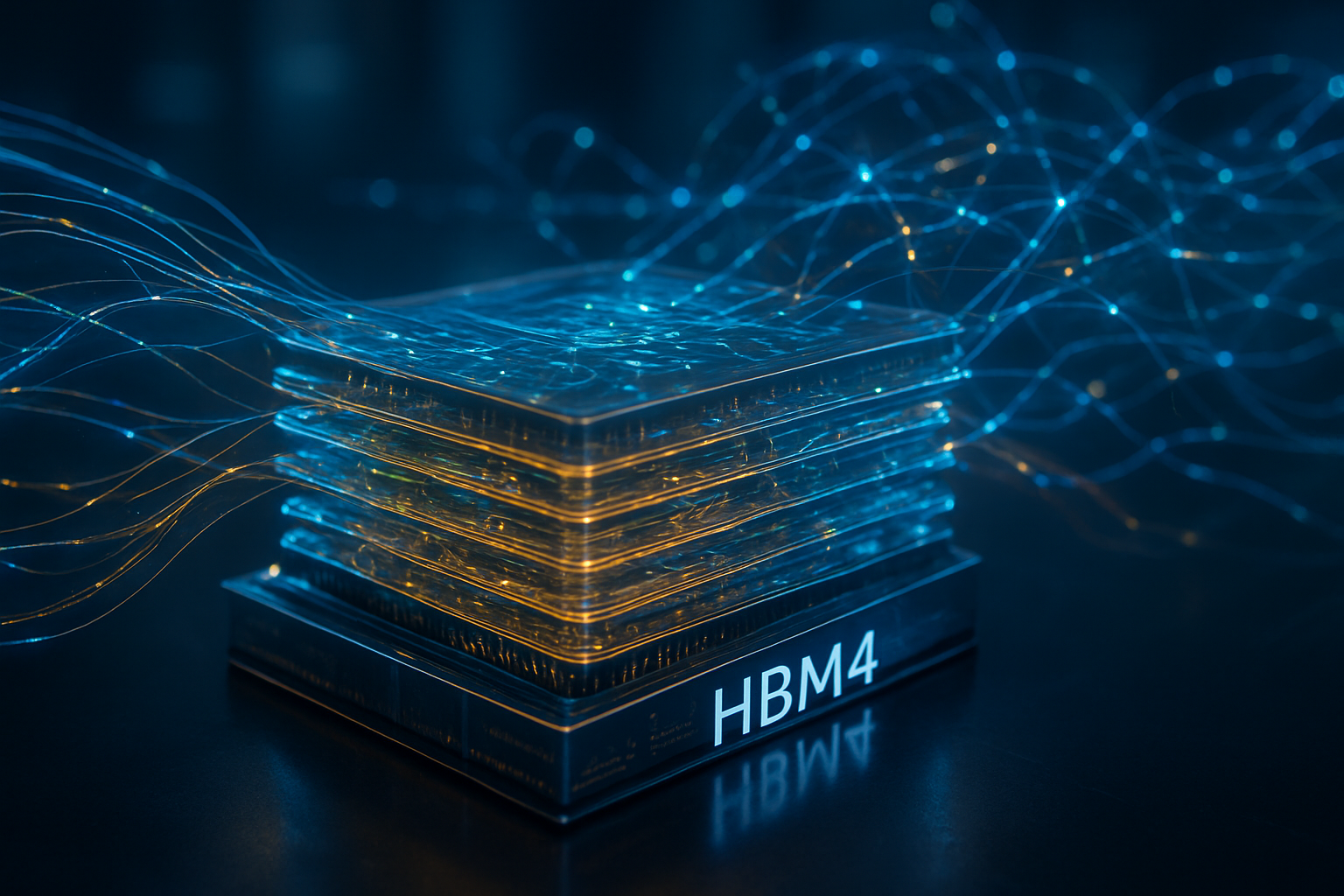
  • The Great Memory Pivot: HBM4 and the 3D Stacking Revolution of 2026

    The Great Memory Pivot: HBM4 and the 3D Stacking Revolution of 2026

    As 2025 draws to a close, the semiconductor industry is standing at the precipice of its most significant architectural shift in a decade. The transition to High Bandwidth Memory 4 (HBM4) has moved from theoretical roadmaps to the factory floors of the world’s largest chipmakers. This week, industry leaders confirmed that the first qualification samples of HBM4 are reaching key partners, signaling the end of the HBM3e era and the beginning of a new epoch in AI hardware.

    The stakes could not be higher. As AI models like GPT-5 and its successors push toward the 100-trillion parameter mark, the "memory wall"—the bottleneck where data cannot move fast enough from memory to the processor—has become the primary constraint on AI progress. HBM4, with its radical 2048-bit interface and the nascent implementation of hybrid bonding, is designed to shatter this wall. For the titans of the industry, the race to master this technology by the 2026 product cycle will determine who dominates the next phase of the AI revolution.

    The 2048-Bit Leap: Engineering the Future of Data

    The technical specifications of HBM4 represent a departure from nearly every standard that preceded it. For the first time, the industry is doubling the memory interface width from 1024-bit to 2048-bit. This change allows HBM4 to achieve bandwidths exceeding 2.0 terabytes per second (TB/s) per stack without the punishing power consumption associated with the high clock speeds of HBM3e. By late 2025, SK Hynix (KRX: 000660) and Samsung Electronics (KRX: 005930) have both reported successful pilot runs of 12-layer (12-Hi) HBM4, with 16-layer stacks expected to follow by mid-2026.

    Central to this transition is the move toward "hybrid bonding," a process that replaces traditional micro-bumps with direct copper-to-copper connections. Unlike previous generations that relied on Thermal Compression (TC) bonding, hybrid bonding eliminates the gap between DRAM layers, reducing the total height of the stack and significantly improving thermal conductivity. This is critical because JEDEC, the global standards body, recently set the HBM4 package thickness limit at 775 micrometers (μm). To fit 16 layers into that vertical space, manufacturers must thin DRAM wafers to a staggering 30μm—roughly one-third the thickness of a human hair—creating immense challenges for manufacturing yields.

    The industry reaction has been one of cautious optimism tempered by the sheer complexity of the task. While SK Hynix has leaned on its proven Advanced MR-MUF (Mass Reflow Molded Underfill) technology for its initial 12-layer HBM4, Samsung has taken a more aggressive "leapfrog" approach, aiming to be the first to implement hybrid bonding at scale for 16-layer products. Industry experts note that the move to a 2048-bit interface also requires a fundamental redesign of the logic base die, leading to unprecedented collaborations between memory makers and foundries like TSMC (NYSE: TSM).

    A New Power Dynamic: Foundries and Memory Makers Unite

    The HBM4 era is fundamentally altering the competitive landscape for AI companies. No longer can memory be treated as a commodity; it is now an integral part of the processor's logic. This has led to the formation of "mega-alliances." SK Hynix has solidified a "one-team" partnership with TSMC to manufacture the HBM4 logic base die on 5nm and 12nm nodes. This alliance aims to ensure that SK Hynix memory is perfectly tuned for the upcoming NVIDIA (NASDAQ: NVDA) "Rubin" R100 GPUs, which are expected to be the first major accelerators to utilize HBM4 in 2026.

    Samsung Electronics, meanwhile, is leveraging its unique position as the world’s only "turnkey" provider. By offering memory production, logic die fabrication on its own 4nm process, and advanced 2.5D/3D packaging under one roof, Samsung hopes to capture customers who want to bypass the complex TSMC supply chain. However, in a sign of the market's pragmatism, Samsung also entered a partnership with TSMC in late 2025 to ensure its HBM4 stacks remain compatible with TSMC’s CoWoS (Chip on Wafer on Substrate) packaging, ensuring it doesn't lose out on the massive NVIDIA and AMD (NASDAQ: AMD) contracts.

    For Micron Technology (NASDAQ: MU), the transition is a high-stakes catch-up game. After successfully gaining market share with HBM3e, Micron is currently ramping up its 12-layer HBM4 samples using its 1-beta DRAM process. While reports of yield issues surfaced in the final quarter of 2025, Micron remains a critical third pillar in the supply chain, particularly for North American clients looking to diversify their sourcing away from purely South Korean suppliers.

    Breaking the Memory Wall: Why 3D Stacking Matters

    The broader significance of HBM4 lies in its potential to move from 2.5D packaging to true 3D stacking—placing the memory directly on top of the GPU logic. This "memory-on-logic" architecture is the holy grail of AI hardware, as it reduces the distance data must travel from millimeters to microns. The result is a projected 10% to 15% reduction in latency and a massive 40% to 70% reduction in the energy required to move each bit of data. In an era where AI data centers are consuming gigawatts of power, these efficiency gains are not just beneficial; they are essential for the industry's survival.

    However, this transition introduces the "thermal crosstalk" problem. When memory is stacked directly on a GPU that generates 700W to 1000W of heat, the thermal energy can bleed into the DRAM layers, causing data corruption or requiring aggressive "refresh" cycles that tank performance. Managing this heat is the primary hurdle of late 2025. Engineers are currently experimenting with double-sided liquid cooling and specialized thermal interface materials to "sandwich" the heat between cooling plates.

    This shift mirrors previous milestones like the introduction of the first HBM by AMD in 2015, but at a vastly different scale. If the industry successfully navigates the thermal and yield challenges of HBM4, it will enable the training of models with hundreds of trillions of parameters, moving the needle from "Large Language Models" to "World Models" that can process video, logic, and physical simulations in real-time.

    The Road to 2026: What Lies Ahead

    Looking forward, the first half of 2026 will be defined by the "Battle of the Accelerators." NVIDIA’s Rubin architecture and AMD’s Instinct MI400 series are both designed around the capabilities of HBM4. These chips are expected to offer more than 0.5 TB of memory per GPU, with aggregate bandwidths nearing 20 TB/s. Such specs will allow a single server rack to hold the entire weights of a frontier-class model in active memory, drastically reducing the need for complex, multi-node communication.

    The next major challenge on the horizon is the standardization of "Bufferless HBM." By removing the buffer die entirely and letting the GPU's memory controller manage the DRAM directly, latency could be slashed further. However, this requires an even tighter level of integration between companies that were once competitors. Experts predict that by late 2026, we will see the first "custom HBM" solutions, where companies like Google (NASDAQ: GOOGL) or Amazon (NASDAQ: AMZN) co-design the HBM4 logic die specifically for their internal AI TPUs.

    Summary of a Pivotal Year

    The transition to HBM4 in late 2025 marks the moment when memory stopped being a peripheral component and became the heart of AI compute. The move to a 2048-bit interface and the pilot programs for hybrid bonding represent a massive engineering feat that has pushed the limits of material science and manufacturing precision. As SK Hynix, Samsung, and Micron prepare for mass production in early 2026, the focus has shifted from "can we build it?" to "can we yield it?"

    This development is more than a technical upgrade; it is a strategic realignment of the global semiconductor industry. The partnerships between memory giants and foundries like TSMC have created a new "AI Silicon Alliance" that will define the next decade of computing. As we move into 2026, the success of these HBM4 integrations will be the primary factor in determining the speed and scale of AI's integration into every facet of the global economy.


    This content is intended for informational purposes only and represents analysis of current AI developments.

    TokenRing AI delivers enterprise-grade solutions for multi-agent AI workflow orchestration, AI-powered development tools, and seamless remote collaboration platforms.
    For more information, visit https://www.tokenring.ai/.
  • The Silicon Squeeze: Why Advanced Packaging is the New Gatekeeper of the AI Revolution in 2025

    The Silicon Squeeze: Why Advanced Packaging is the New Gatekeeper of the AI Revolution in 2025

    As of December 30, 2025, the narrative of the global AI race has shifted from a battle over transistor counts to a desperate scramble for "back-end" real estate. For the past decade, the semiconductor industry focused on the front-end—the complex lithography required to etch circuits onto silicon wafers. However, in the closing days of 2025, the industry has hit a physical wall. The primary bottleneck for the world’s most powerful AI chips is no longer the ability to print them, but the ability to package them. Advanced packaging technologies like TSMC’s CoWoS and Intel’s Foveros have become the most precious commodities in the tech world, dictating the pace of progress for every major AI lab from San Francisco to Beijing.

    The significance of this shift cannot be overstated. With lead times for flagship AI accelerators like NVIDIA’s Blackwell architecture stretching to 18 months, the "Silicon Squeeze" has turned advanced packaging into a strategic geopolitical asset. As demand for generative AI and massive language models continues to outpace supply, the ability to "stitch" together multiple silicon dies into a single high-performance module is the only way to bypass the physical limits of traditional chip manufacturing. In 2025, the "chiplet" revolution has officially arrived, and those who control the packaging lines now control the future of artificial intelligence.

    The Technical Wall: Reticle Limits and the Rise of CoWoS-L

    The technical crisis of 2025 stems from a physical constraint known as the "reticle limit." For years, semiconductor manufacturers like Taiwan Semiconductor Manufacturing Co. (NYSE: TSM) could simply make a single chip larger to increase its power. However, standard lithography tools can only expose an area of approximately 858 mm² at once. NVIDIA (NASDAQ: NVDA) reached this limit with its previous generations, but the demands of 2025-era AI require far more silicon than a single exposure can provide. To solve this, the industry has moved toward heterogeneous integration—combining multiple smaller "chiplets" onto a single substrate to act as one giant processor.

    TSMC has maintained its lead through CoWoS-L (Chip on Wafer on Substrate – Local Silicon Interconnect). Unlike previous iterations that used a massive, expensive silicon interposer, CoWoS-L utilizes tiny silicon bridges to link dies with massive bandwidth. This technology is the backbone of the NVIDIA Blackwell (B200) and the upcoming Rubin (R100) architectures. The Rubin chip, entering volume production as 2025 draws to a close, is a marvel of engineering that scales to a "4x reticle" design, effectively stitching together four standard-sized chips into a single super-processor. This complexity, however, comes at a cost: yield rates for these multi-die modules remain volatile, and a single defect in one of the 16 integrated HBM4 (High Bandwidth Memory) stacks can ruin a module worth tens of thousands of dollars.

    The High-Stakes Rivalry: Intel’s $5 Billion Diversification and AMD’s Acceleration

    The packaging bottleneck has forced a radical reshuffling of industry alliances. In one of the most significant strategic pivots of the year, NVIDIA reportedly invested $5 billion into Intel (NASDAQ: INTC) Foundry Services in late 2025. This move was designed to secure capacity for Intel’s Foveros 3D stacking and EMIB (Embedded Multi-die Interconnect Bridge) technologies, providing NVIDIA with a vital "Plan B" to reduce its total reliance on TSMC. Intel’s aggressive expansion of its packaging facilities in Malaysia and Oregon has positioned it as the only viable Western alternative for high-end AI assembly, a goal CEO Pat Gelsinger has pursued relentlessly to revitalize the company’s foundry business.

    Meanwhile, Advanced Micro Devices (NASDAQ: AMD) has accelerated its own roadmap to capitalize on the supply gaps. The AMD Instinct MI350 series, launched in mid-2025, utilizes a sophisticated 3D chiplet architecture that rivals NVIDIA’s Blackwell in memory density. To bypass the TSMC logjam, AMD has turned to "Outsourced Semiconductor Assembly and Test" (OSAT) giants like ASE Technology Holding (NYSE: ASX) and Amkor Technology (NASDAQ: AMKR). These firms are rapidly building out "CoWoS-like" capacity in Arizona and Taiwan, though they too are hampered by 12-month lead times for the specialized equipment required to handle the ultra-fine interconnects of 2025-grade silicon.

    The Wider Significance: Geopolitics and the End of Monolithic Computing

    The shift to advanced packaging represents the end of the "monolithic era" of computing. For fifty years, the industry followed Moore’s Law by shrinking transistors on a single piece of silicon. In 2025, that era is over. The future is modular, and the economic implications are profound. Because advanced packaging is so capital-intensive and requires such high precision, it has created a new "moat" that favors the largest incumbents. Hyperscalers like Meta (NASDAQ: META), Microsoft (NASDAQ: MSFT), and Amazon (NASDAQ: AMZN) are now pre-booking packaging capacity up to two years in advance, a practice that effectively crowds out smaller AI startups and academic researchers.

    This bottleneck also has a massive impact on the global supply chain's resilience. Most advanced packaging still occurs in East Asia, creating a single point of failure that keeps policymakers in Washington and Brussels awake at night. While the U.S. CHIPS Act has funded domestic fabrication plants, the "back-end" packaging remains the missing link. In late 2025, we are seeing the first real efforts to "reshore" this capability, with new facilities in the American Southwest beginning to come online. However, the transition is slow; the expertise required for 2.5D and 3D integration is highly specialized, and the labor market for packaging engineers is currently the tightest in the tech sector.

    The Next Frontier: Glass Substrates and Panel-Level Packaging

    Looking toward 2026 and 2027, the industry is already searching for the next breakthrough to break the current bottleneck. The most promising development is the transition to glass substrates. Traditional organic substrates are prone to warping and heat-related issues as chips get larger and hotter. Glass offers superior flatness and thermal stability, allowing for even denser interconnects. Intel is currently leading the charge in glass substrate research, with plans to integrate the technology into its 2026 product lines. If successful, glass could allow for "system-in-package" designs that are significantly larger than anything possible today.

    Furthermore, the industry is eyeing Panel-Level Packaging (PLP). Currently, chips are packaged on circular 300mm wafers, which results in significant wasted space at the edges. PLP uses large rectangular panels—similar to those used in the display industry—to process hundreds of chips at once. This could potentially increase throughput by 3x to 4x, finally easing the supply constraints that have defined 2025. However, the transition to PLP requires an entirely new ecosystem of equipment and materials, meaning it is unlikely to provide relief for the current Blackwell and MI350 backlogs until at least late 2026.

    Summary of the 2025 Silicon Landscape

    As 2025 draws to a close, the semiconductor industry has successfully navigated the challenges of sub-3nm fabrication, only to find itself trapped by the physical limits of how those chips are put together. The "Silicon Squeeze" has made advanced packaging the ultimate arbiter of AI power. NVIDIA’s 18-month lead times and the strategic move toward Intel’s packaging lines underscore a new reality: in the AI era, it’s not just about what you can build on the silicon, but how much silicon you can link together.

    The coming months will be defined by how quickly TSMC, Intel, and Samsung (KRX: 005930) can scale their 3D stacking capacities. For investors and tech leaders, the metrics to watch are no longer just wafer starts, but "packaging out-turns" and "interposer yields." As we head into 2026, the companies that master the art of the chiplet will be the ones that define the next plateau of artificial intelligence. The revolution is no longer just in the code—it’s in the package.


    This content is intended for informational purposes only and represents analysis of current AI developments.

    TokenRing AI delivers enterprise-grade solutions for multi-agent AI workflow orchestration, AI-powered development tools, and seamless remote collaboration platforms.
    For more information, visit https://www.tokenring.ai/.
  • The Great Decoupling: How Hyperscaler Silicon Is Redrawing the AI Power Map in 2025

    The Great Decoupling: How Hyperscaler Silicon Is Redrawing the AI Power Map in 2025

    As of late 2025, the artificial intelligence industry has reached a pivotal inflection point: the era of "Silicon Sovereignty." For years, the world’s largest cloud providers were beholden to a single gatekeeper for the compute power necessary to fuel the generative AI revolution. Today, that dynamic has fundamentally shifted. Microsoft, Amazon, and Google have successfully transitioned from being NVIDIA's largest customers to becoming its most formidable architectural competitors, deploying a new generation of custom-designed Application-Specific Integrated Circuits (ASICs) that are now handling a massive portion of the world's AI workloads.

    This strategic pivot is not merely about cost-cutting; it is about vertical integration. By designing chips like the Maia 200, Trainium 3, and TPU v7 (Ironwood) specifically for their own proprietary models—such as GPT-4, Claude, and Gemini—these hyperscalers are achieving performance-per-watt efficiencies that general-purpose hardware cannot match. This "great decoupling" has seen internal silicon capture a projected 15-20% of the total AI accelerator market share this year, signaling a permanent end to the era of hardware monoculture in the data center.

    The Technical Vanguard: Maia, Trainium, and Ironwood

    The technical landscape of late 2025 is defined by a fierce arms race in 3nm and 5nm process technologies. Alphabet Inc. (NASDAQ: GOOGL) has maintained its lead in silicon longevity with the general availability of TPU v7, codenamed Ironwood. Released in November 2025, Ironwood is Google’s first TPU explicitly architected for massive-scale inference. It boasts a staggering 4.6 PFLOPS of FP8 compute per chip, nearly reaching parity with the peak performance of the high-end Blackwell chips from NVIDIA (NASDAQ: NVDA). With 192GB of HBM3e memory and a bandwidth of 7.2 TB/s, Ironwood is designed to run the largest iterations of Gemini with a 40% reduction in latency compared to the previous Trillium (v6) generation.

    Amazon (NASDAQ: AMZN) has similarly accelerated its roadmap, unveiling Trainium 3 at the recent re:Invent 2025 conference. Built on a cutting-edge 3nm process, Trainium 3 delivers a 2x performance leap over its predecessor. The chip is the cornerstone of AWS’s "Project Rainier," a massive cluster of over one million Trainium chips designed in collaboration with Anthropic. This cluster allows for the training of "frontier" models with a price-performance advantage that AWS claims is 50% better than comparable NVIDIA-based instances. Meanwhile, Microsoft (NASDAQ: MSFT) has solidified its first-generation Maia 100 deployment, which now powers the bulk of Azure OpenAI Service's inference traffic. While the successor Maia 200 (codenamed Braga) has faced some engineering delays and is now slated for a 2026 volume rollout, the Maia 100 remains a critical component in Microsoft’s strategy to lower the "Copilot tax" by optimizing the hardware specifically for the Transformer architectures used by OpenAI.

    Breaking the NVIDIA Tax: Strategic Implications for the Giants

    The move toward custom silicon is a direct assault on the multi-billion dollar "NVIDIA tax" that has squeezed the margins of cloud providers since 2023. By moving 15-20% of their internal workloads to their own ASICs, hyperscalers are reclaiming billions in capital expenditure that would have otherwise flowed to NVIDIA's bottom line. This shift allows tech giants to offer AI services at lower price points, creating a competitive moat against smaller cloud providers who remain entirely dependent on third-party hardware. For companies like Microsoft and Amazon, the goal is not to replace NVIDIA entirely—especially for the most demanding "frontier" training tasks—but to provide a high-performance, lower-cost alternative for the high-volume inference market.

    This strategic positioning also fundamentally changes the relationship between cloud providers and AI labs. Anthropic’s deep integration with Amazon’s Trainium and OpenAI’s collaboration on Microsoft’s Maia designs suggest that the future of AI development is "co-designed." In this model, the software (the LLM) and the hardware (the ASIC) are developed in tandem. This vertical integration provides a massive advantage: when a model’s specific attention mechanism or memory requirements are baked into the silicon, the resulting efficiency gains can disrupt the competitive standing of labs that rely on generic hardware.

    The Broader AI Landscape: Efficiency, Energy, and Economics

    Beyond the corporate balance sheets, the rise of custom silicon addresses the most pressing bottleneck in the AI era: energy consumption. General-purpose GPUs are designed to be versatile, which inherently leads to wasted energy when performing specific AI tasks. In contrast, the current generation of ASICs, like Google’s Ironwood, are stripped of unnecessary features, focusing entirely on tensor operations and high-bandwidth memory access. This has led to a 30-50% improvement in energy efficiency across hyperscale data centers, a critical factor as power grids struggle to keep up with AI demand.

    This trend mirrors the historical evolution of other computing sectors, such as the transition from general CPUs to specialized mobile processors in the smartphone era. However, the scale of the AI transition is unprecedented. The shift to 15-20% market share for internal silicon represents a seismic move in the semiconductor industry, challenging the dominance of the x86 and general GPU architectures that have defined the last two decades. While concerns remain regarding the "walled garden" effect—where models optimized for one cloud's silicon cannot easily be moved to another—the economic reality of lower Total Cost of Ownership (TCO) is currently outweighing these portability concerns.

    The Road to 2nm: What Lies Ahead

    Looking toward 2026 and 2027, the focus will shift from 3nm to 2nm process technologies and the implementation of advanced "chiplet" designs. Industry experts predict that the next generation of custom silicon will move toward even more modular architectures, allowing hyperscalers to swap out memory or compute components based on whether they are targeting training or inference. We also expect to see the "democratization" of ASIC design tools, potentially allowing Tier-2 cloud providers or even large enterprises to begin designing their own niche accelerators using the foundry services of Taiwan Semiconductor Manufacturing Company (NYSE: TSM).

    The primary challenge moving forward will be the software stack. NVIDIA’s CUDA remains a formidable barrier to entry, but the maturation of open-source compilers like Triton and the development of robust software layers for Trainium and TPU are rapidly closing the gap. As these software ecosystems become more developer-friendly, the friction of moving away from NVIDIA hardware will continue to decrease, further accelerating the adoption of custom silicon.

    Summary: A New Era of Compute

    The developments of 2025 have confirmed that the future of AI is custom. Microsoft’s Maia, Amazon’s Trainium, and Google’s Ironwood are no longer "science projects"; they are the industrial backbone of the modern economy. By capturing a significant slice of the AI accelerator market, the hyperscalers have successfully mitigated their reliance on a single hardware vendor and paved the way for a more sustainable, efficient, and cost-competitive AI ecosystem.

    In the coming months, the industry will be watching for the first results of "Project Rainier" and the initial benchmarks of Microsoft’s Maia 200 prototypes. As the market share for internal silicon continues its upward trajectory toward the 25% mark, the central question is no longer whether custom silicon can compete with NVIDIA, but how NVIDIA will evolve its business model to survive in a world where its biggest customers are also its most capable rivals.


    This content is intended for informational purposes only and represents analysis of current AI developments.

    TokenRing AI delivers enterprise-grade solutions for multi-agent AI workflow orchestration, AI-powered development tools, and seamless remote collaboration platforms.
    For more information, visit https://www.tokenring.ai/.
  • Masayoshi Son’s Grand Gambit: SoftBank Completes $6.5 Billion Ampere Acquisition to Forge the Path to Artificial Super Intelligence

    Masayoshi Son’s Grand Gambit: SoftBank Completes $6.5 Billion Ampere Acquisition to Forge the Path to Artificial Super Intelligence

    In a move that fundamentally reshapes the global semiconductor landscape, SoftBank Group Corp (TYO: 9984) has officially completed its $6.5 billion acquisition of Ampere Computing. This milestone marks the final piece of Masayoshi Son’s ambitious "Vertical AI" puzzle, integrating the high-performance cloud CPUs of Ampere with the architectural foundations of Arm Holdings (NASDAQ: ARM) and the specialized acceleration of Graphcore. By consolidating these assets, SoftBank has transformed from a sprawling investment firm into a vertically integrated industrial powerhouse capable of designing, building, and operating the infrastructure required for the next era of computing.

    The significance of this consolidation cannot be overstated. For the first time, a single entity controls the intellectual property, the processor design, and the AI-specific accelerators necessary to challenge the current market dominance of established titans. This strategic alignment is the cornerstone of Son’s "Project Stargate," a $500 billion infrastructure initiative designed to provide the massive computational power and energy required to realize his vision of Artificial Super Intelligence (ASI)—a form of AI he predicts will be 10,000 times smarter than the human brain within the next decade.

    The Silicon Trinity: Integrating Arm, Ampere, and Graphcore

    The technical core of SoftBank’s new strategy lies in the seamless integration of three distinct but complementary technologies. At the base is Arm, whose energy-efficient instruction set architecture (ISA) serves as the blueprint for modern mobile and data center chips. Ampere Computing, now a wholly-owned subsidiary, utilizes this architecture to build "cloud-native" CPUs that boast significantly higher core counts and better power efficiency than traditional x86 processors from Intel and AMD. By pairing these with Graphcore’s Intelligence Processing Units (IPUs)—specialized accelerators designed specifically for the massive parallel processing required by large language models—SoftBank has created a unified "CPU + Accelerator" stack.

    This vertical integration differs from previous approaches by eliminating the "vendor tax" and hardware bottlenecks associated with mixing disparate technologies. Traditionally, data center operators would buy CPUs from one vendor and GPUs from another, often leading to inefficiencies in data movement and software optimization. SoftBank’s unified architecture allows for a "closed-loop" system where the Ampere CPU and Graphcore IPU are co-designed to communicate with unprecedented speed, all while running on the highly optimized Arm architecture. This synergy is expected to reduce the total cost of ownership for AI data centers by as much as 30%, a critical factor as the industry grapples with the escalating costs of training trillion-parameter models.

    Initial reactions from the AI research community have been a mix of awe and cautious optimism. Dr. Elena Rossi, a senior silicon architect at the AI Open Institute, noted that "SoftBank is effectively building a 'Sovereign AI' stack. By controlling the silicon from the ground up, they can bypass the supply chain constraints that have plagued the industry for years." However, some experts warn that the success of this integration will depend heavily on software. While NVIDIA (NASDAQ: NVDA) has its robust CUDA platform, SoftBank must now convince developers to migrate to its proprietary ecosystem, a task that remains the most significant technical hurdle in its path.

    A Direct Challenge to the NVIDIA-AMD Duopoly

    The completion of the Ampere deal places SoftBank in a direct collision course with NVIDIA and Advanced Micro Devices (NASDAQ: AMD). For the past several years, NVIDIA has enjoyed a near-monopoly on AI hardware, with its H100 and B200 chips becoming the gold standard for AI training. However, SoftBank’s new vertical stack offers a compelling alternative for hyperscalers who are increasingly wary of NVIDIA’s high margins and closed ecosystem. By offering a fully integrated solution, SoftBank can provide customized hardware-software packages that are specifically tuned for the workloads of its partners, most notably OpenAI.

    This development is particularly disruptive for the burgeoning market of AI startups and sovereign nations looking to build their own AI capabilities. Companies like Oracle Corp (NYSE: ORCL), a former lead investor in Ampere, stand to benefit from a more diversified hardware market, potentially gaining access to SoftBank’s high-efficiency chips to power their cloud AI offerings. Furthermore, SoftBank’s decision to liquidate its entire $5.8 billion stake in NVIDIA in late 2025 to fund this transition signals a definitive end to its role as a passive investor and its emergence as a primary competitor.

    The strategic advantage for SoftBank lies in its ability to capture revenue across the entire value chain. While NVIDIA sells chips, SoftBank will soon be selling everything from the IP licensing (via Arm) to the physical chips (via Ampere/Graphcore) and even the data center capacity itself through its "Project Stargate" infrastructure. This "full-stack" approach mirrors the strategy that allowed Apple to dominate the smartphone market, but on a scale that encompasses the very foundations of global intelligence.

    Project Stargate and the Quest for ASI

    Beyond the silicon, the Ampere acquisition is the engine driving "Project Stargate," a massive $500 billion joint venture between SoftBank, OpenAI, and a consortium of global investors. Announced earlier this year, Stargate aims to build a series of "hyperscale" data centers across the United States, starting with a 10-gigawatt facility in Texas. These sites are not merely data centers; they are the physical manifestation of Masayoshi Son’s vision for Artificial Super Intelligence. Son believes that the path to ASI requires a level of compute and energy density that current infrastructure cannot provide, and Stargate is his answer to that deficit.

    This initiative represents a significant shift in the AI landscape, moving away from the era of "model-centric" development to "infrastructure-centric" dominance. As models become more complex, the primary bottleneck has shifted from algorithmic ingenuity to the sheer availability of power and specialized silicon. By acquiring DigitalBridge in December 2025 to manage the physical assets—including fiber networks and power substations—SoftBank has ensured it controls the "dirt and power" as well as the "chips and code."

    However, this concentration of power has raised concerns among regulators and ethicists. The prospect of a single corporation controlling the foundational infrastructure of super-intelligence brings about questions of digital sovereignty and monopolistic control. Critics argue that the "Stargate" model could create an insurmountable barrier to entry for any organization not aligned with the SoftBank-OpenAI axis, effectively centralizing the future of AI in the hands of a few powerful players.

    The Road Ahead: Power, Software, and Scaling

    In the near term, the industry will be watching the first deployments of the integrated Ampere-Graphcore systems within the Stargate data centers. The immediate challenge will be the software layer—specifically, the development of a compiler and library ecosystem that can match the ease of use of NVIDIA’s CUDA. SoftBank has already begun an aggressive hiring spree, poaching hundreds of software engineers from across Silicon Valley to build out its "Izanagi" software platform, which aims to provide a seamless interface for training models across its new hardware stack.

    Looking further ahead, the success of SoftBank’s gambit will depend on its ability to solve the energy crisis facing AI. The 7-to-10 gigawatt targets for Project Stargate are unprecedented, requiring the development of dedicated modular nuclear reactors (SMRs) and massive battery storage systems. Experts predict that if SoftBank can successfully integrate its new silicon with sustainable, high-density power, it will have created a blueprint for "Sovereign AI" that nations around the world will seek to replicate.

    The ultimate goal remains the realization of ASI by 2035. While many in the industry remain skeptical of Son’s aggressive timeline, the sheer scale of his capital deployment—over $100 billion committed in 2025 alone—has forced even the harshest critics to take his vision seriously. The coming months will be a critical testing ground for whether the Ampere-Arm-Graphcore trinity can deliver on its performance promises.

    A New Era of AI Industrialization

    The acquisition of Ampere Computing and its integration into the SoftBank ecosystem marks the beginning of the "AI Industrialization" era. No longer content with merely funding the future, Masayoshi Son has taken the reins of the production process itself. By vertically integrating the entire AI stack—from the architecture and the silicon to the data center and the power grid—SoftBank has positioned itself as the indispensable utility provider for the age of intelligence.

    This development will likely be remembered as a turning point in AI history, where the focus shifted from software breakthroughs to the massive physical scaling of intelligence. As we move into 2026, the tech world will be watching closely to see if SoftBank can execute on this Herculean task. The stakes could not be higher: the winner of the infrastructure race will not only dominate the tech market but will likely hold the keys to the most powerful technology ever devised by humanity.

    For now, the message from SoftBank is clear: the age of the general-purpose investor is over, and the age of the AI architect has begun.


    This content is intended for informational purposes only and represents analysis of current AI developments.

    TokenRing AI delivers enterprise-grade solutions for multi-agent AI workflow orchestration, AI-powered development tools, and seamless remote collaboration platforms.
    For more information, visit https://www.tokenring.ai/.