For nearly two decades, a remarkable partnership between the Georgia Institute of Technology (Georgia Tech) and the Georgia Aquarium has quietly yet profoundly been shaping the future of global marine conservation. Since its inception, even before the Aquarium officially opened its doors in 2005, this enduring alliance has leveraged cutting-edge technology and interdisciplinary expertise to tackle some of the most pressing challenges facing our oceans, from understanding the intricacies of marine life at a genomic level to deploying scalable solutions for climate change. This collaboration stands as a powerful testament to how technological innovation, when coupled with deep biological insight, can accelerate scientific discovery and deliver actionable conservation outcomes worldwide.
The immediate significance of this long-standing partnership, spanning two decades as of 2025, lies in its capacity to bridge advanced academic research with practical, real-world conservation applications. By uniting Georgia Tech's prowess in engineering and scientific research with the Georgia Aquarium's extensive marine life expertise and conservation programs, the collaboration has cultivated a unique ecosystem for innovation. It's a model that not only deepens our scientific understanding of marine ecosystems but also actively develops and deploys tangible solutions, positioning both institutions at the forefront of addressing urgent global conservation needs.
Technological Depths: Unveiling the Ocean's Secrets with Cutting-Edge Innovation
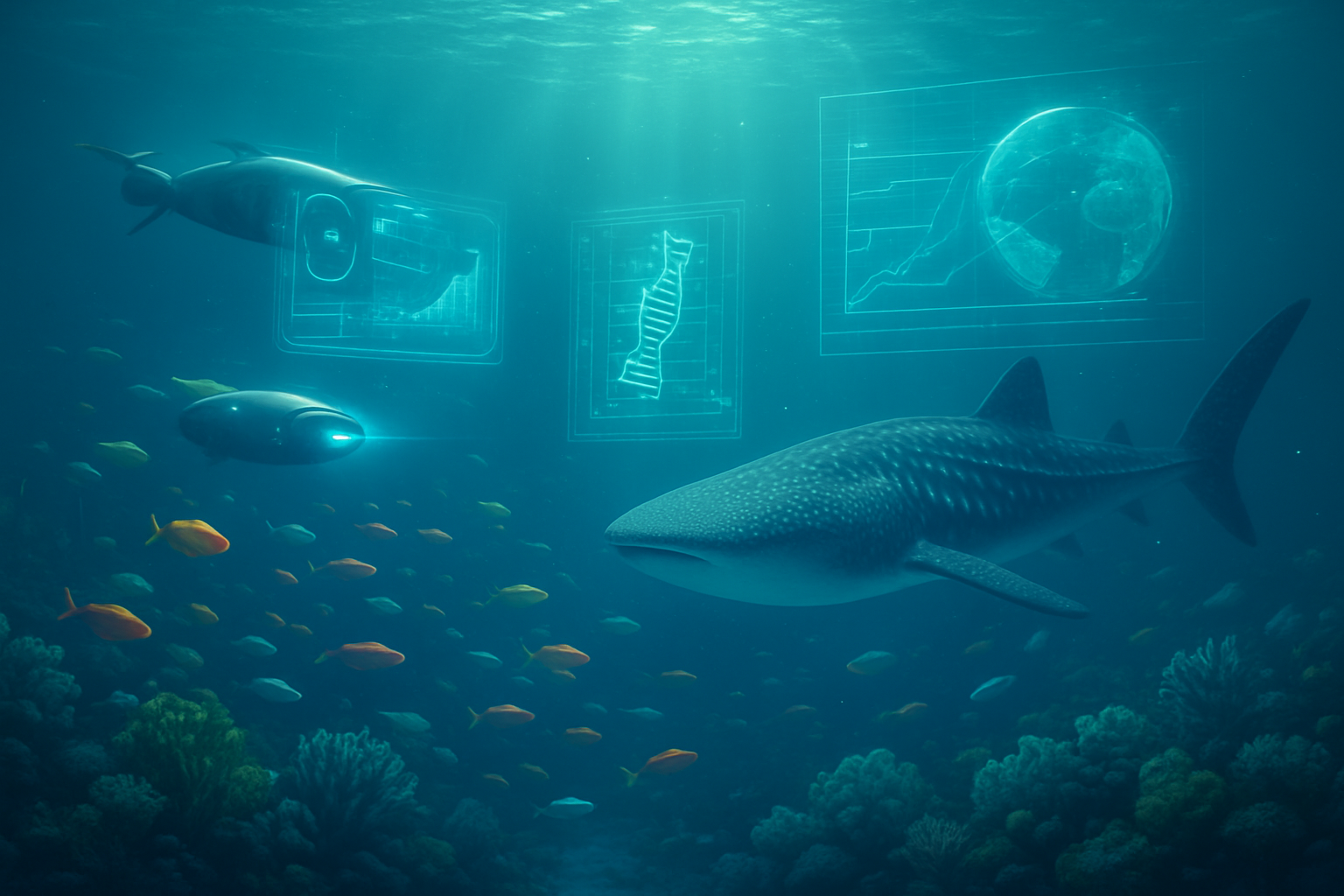
The heart of the Georgia Tech-Georgia Aquarium collaboration beats with technological innovation, pushing the boundaries of what's possible in marine conservation. Among the most groundbreaking achievements is the creation of the first-ever complete shark genome, a monumental feat accomplished with contributions from Georgia Tech and Emory University. This genetic blueprint provides an unprecedented wealth of data, offering invaluable insights into shark biology, evolution, and population dynamics—critical information for informing targeted conservation strategies that move beyond traditional observation. Furthermore, Georgia Tech’s advanced analytical techniques have been instrumental in meticulously exploring the complex chemistry of whale shark blood, unlocking physiological secrets that aid in understanding their health and environmental responses.
Beyond genetic breakthroughs, the partnership has applied sophisticated systems engineering to enhance the operational efficiency and visitor experience at the Georgia Aquarium itself. Georgia Tech engineers utilized advanced logistics and computational modeling to optimize visitor flow within exhibits, particularly the popular dolphin show. By modeling human behavior and accounting for various uncertainties, they improved guest satisfaction while indirectly supporting the Aquarium's mission through enhanced educational outreach. This application of data-driven optimization exemplifies a departure from previous, less analytical approaches to facility management, showcasing how technological thinking can permeate even the operational aspects of conservation institutions.
A significant evolution in the collaboration's technological reach came with Georgia Tech becoming a founding member of the Ocean Visions initiative in 2019. This venture brings together leading ocean science and engineering institutions to foster a collaborative environment between researchers, conservationists, and entrepreneurs. The goal is ambitious: to develop commercially marketable solutions that positively impact ocean health by addressing human, climate, and ecological pressures. A major milestone under this umbrella is the establishment of the Ocean Visions – UN Decade Collaborative Center for Ocean-Climate Solutions (OV – UN DCC) in 2022. Headquartered at the Georgia Aquarium with Georgia Tech as a pivotal partner, this center is the only one of its kind in the United States, dedicated to co-designing, developing, and deploying scalable, equitable, ocean-based solutions to climate change, food security, and marine ecosystem resilience. Initial reactions from the scientific and international community have been overwhelmingly positive, recognizing the center's unique mandate and its potential to deliver globally significant impacts, further solidifying the partnership's leadership in this critical domain.
Charting New Waters: Competitive Implications and Market Positioning
The sustained collaboration between Georgia Tech and the Georgia Aquarium has significant implications for the broader landscape of AI companies, tech giants, and startups, particularly those operating in the environmental and marine technology sectors. Companies specializing in marine robotics, data analytics for environmental monitoring, AI-driven predictive modeling for ecosystem health, and sustainable aquaculture technologies stand to benefit immensely from the research and solutions emerging from this partnership. The Ocean Visions initiative, with its explicit goal of fostering commercially marketable solutions, acts as a direct conduit for startups and established tech firms to engage with cutting-edge conservation challenges, potentially leading to new product development and market opportunities in areas like ocean-based renewable energy and sustainable fisheries.
For major AI labs and tech companies, the partnership serves as a powerful demonstration of AI's "for good" potential, driving interest and investment into environmental applications. While specific public companies (e.g., Google (NASDAQ: GOOGL), Microsoft (NASDAQ: MSFT)) aren't directly named as partners in the core collaboration, the data-intensive nature of genomic research, environmental monitoring, and climate modeling aligns perfectly with their core competencies in big data, machine learning, and cloud computing. This could spur increased corporate social responsibility initiatives, strategic partnerships, or even acquisitions of startups emerging from the Ocean Visions ecosystem. The unique positioning of the OV – UN DCC as the sole UN Decade Collaborative Center for Ocean-Climate Solutions in the US sets a high bar, potentially disrupting traditional, less technologically integrated approaches to conservation and compelling other institutions and companies to elevate their technological game.
The collaboration positions Georgia Tech and the Georgia Aquarium as global leaders in the burgeoning field of conservation technology. Their strategic advantage lies in their proven ability to translate fundamental scientific and engineering research into tangible, scalable conservation solutions. This not only enhances their academic and institutional prestige but also creates a precedent for how interdisciplinary partnerships can foster innovation that addresses critical planetary challenges. The emphasis on equitable and scalable solutions through the OV – UN DCC also suggests a commitment to ensuring that technological advancements benefit a wide range of communities, potentially opening new markets for inclusive technology deployment in developing regions.
A Lighthouse in the Broader AI Landscape: Wider Significance and Global Impact
This two-decade collaboration between Georgia Tech and the Georgia Aquarium stands as a shining example within the broader AI landscape, embodying the growing trend of "AI for good" and the critical role of interdisciplinary research in addressing complex global challenges. It showcases how advanced computational power, data analytics, and engineering expertise can be directly applied to environmental stewardship, moving beyond theoretical discussions to impactful, real-world applications. The partnership's work, particularly through the UN Decade Collaborative Center, directly contributes to the United Nations' Sustainable Development Goals, specifically those related to climate action, life below water, and sustainable cities and communities.
The impacts of this collaboration are far-reaching. It has led to a deeper scientific understanding of marine life, providing foundational knowledge for conservation strategies that are more precise and effective. By developing and deploying scalable ocean-based solutions to mitigate climate change, enhance food security, and build climate-resilient marine ecosystems, the partnership is directly influencing global efforts to protect our planet. Potential concerns, though not explicitly highlighted in the research, might include the ethical implications of deploying advanced monitoring technologies in sensitive ecosystems, ensuring data privacy and security, and addressing potential biases in AI models used for conservation. However, the partnership's focus on "equitable" solutions through the UN DCC suggests an awareness of these broader societal considerations.
Comparing this to previous AI milestones, the Georgia Tech-Georgia Aquarium collaboration represents a significant step in the maturation of AI applications. While earlier milestones often focused on breakthroughs in areas like image recognition or natural language processing, this partnership demonstrates AI's capacity to drive scientific discovery and facilitate complex environmental management on a global scale. It parallels other significant "AI for science" initiatives, but with a unique focus on direct conservation action and the integration of diverse scientific disciplines, setting a precedent for how academic institutions and public aquariums can collectively lead in a technology-driven era of environmental protection.
Surfing the Future: Expected Developments and Horizon Applications
Looking ahead, the collaboration between Georgia Tech and the Georgia Aquarium is poised for even greater impact, with several exciting developments on the horizon. In the near term, the work of the Ocean Visions – UN Decade Collaborative Center for Ocean-Climate Solutions (OV – UN DCC) will intensify. We can expect to see further progress in the co-design, development, and testing of ocean-based climate solutions, including advancements in ocean-based renewable energy technologies and innovative approaches to sustainable fisheries and aquaculture. This will involve deploying and refining sensor technologies for environmental monitoring, potentially leading to more sophisticated early warning systems for coastal communities threatened by rising sea levels and other climate impacts.
In the long term, the partnership is likely to expand its genomic research, potentially leading to the sequencing of more marine species and a deeper understanding of biodiversity at a molecular level. This could enable more precise conservation interventions, such as targeted breeding programs for endangered species or the identification of marine populations most resilient to environmental changes. Potential applications on the horizon include the development of AI-powered predictive models that can forecast marine ecosystem health, identify high-risk areas for human-wildlife conflict (like whale ship strikes, building on their 2024 study), and optimize resource allocation for conservation efforts globally.
Challenges that need to be addressed include securing sustained funding for large-scale technological deployments, ensuring the scalability of solutions across diverse marine environments, and navigating the complex policy landscapes required for international conservation efforts. Experts predict that this collaboration will continue to serve as a leading model for how interdisciplinary science and technology can be harnessed for planetary good. The focus on developing commercially marketable solutions through Ocean Visions also suggests a future where conservation tech becomes a significant economic sector, attracting further investment and talent.
A Legacy of Innovation: Comprehensive Wrap-up and Future Watch
The two decades of collaboration between Georgia Tech and the Georgia Aquarium represent a monumental achievement in the realm of marine conservation, profoundly shaped by the strategic application of technology. Key takeaways include the power of sustained interdisciplinary partnerships, the transformative potential of advanced engineering and AI in biological research, and the commitment to translating scientific discovery into actionable, scalable solutions for global challenges. From unraveling the complete shark genome to optimizing aquarium operations and establishing a unique UN-endorsed center for ocean-climate solutions, this alliance has consistently pushed the boundaries of what is possible in protecting our aquatic ecosystems.
This development holds significant historical importance in the context of AI and conservation. It showcases a mature application of artificial intelligence and related technologies not merely as tools for efficiency, but as catalysts for fundamental scientific breakthroughs and urgent environmental action. The partnership demonstrates how academic rigor combined with public engagement and a clear conservation mission can create a powerful synergy that inspires future generations and sets new standards for responsible technological innovation.
The long-term impact of this collaboration is poised to be immense, influencing how marine conservation is approached globally for decades to come. By fostering a new generation of conservation technologists and entrepreneurs, and by providing a blueprint for effective academic-institutional partnerships, Georgia Tech and the Georgia Aquarium are actively shaping a more sustainable future for our oceans. In the coming weeks and months, all eyes will be on the progress of the Ocean Visions – UN Decade Collaborative Center for Ocean-Climate Solutions. Watch for announcements regarding new pilot projects, successful deployments of ocean-based solutions, and further scientific breakthroughs emerging from this pioneering alliance, as they continue to lead the charge in safeguarding our blue planet.
This content is intended for informational purposes only and represents analysis of current AI developments.
TokenRing AI delivers enterprise-grade solutions for multi-agent AI workflow orchestration, AI-powered development tools, and seamless remote collaboration platforms.
For more information, visit https://www.tokenring.ai/.