Tag: Oceanography

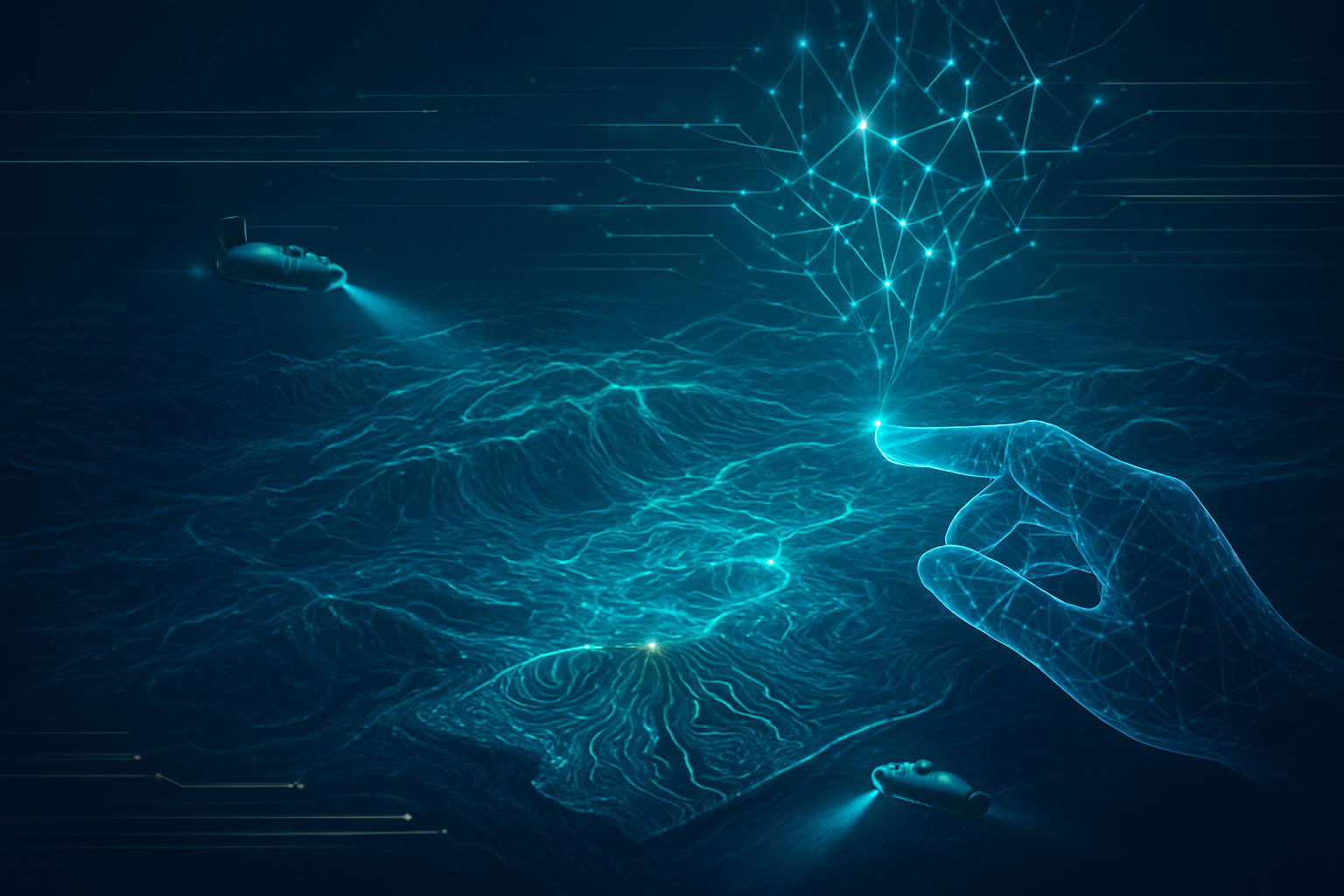
  • AI Unveils Ocean’s Deep Secrets: Seafloor Mapping and Predictive Modeling Revolutionize Climate and Ecosystem Understanding

    AI Unveils Ocean’s Deep Secrets: Seafloor Mapping and Predictive Modeling Revolutionize Climate and Ecosystem Understanding

    The silent depths of our oceans are beginning to surrender their secrets, thanks to a powerful new synergy between advanced seafloor mapping technologies and artificial intelligence. This groundbreaking development is rapidly transforming our understanding of climate change and the intricate dynamics of marine ecosystems, offering unprecedented insights into processes that have long remained a mystery. The immediate significance of this technological leap cannot be overstated: it promises to enhance disaster preparedness, optimize marine resource management, and accelerate vital conservation initiatives on a global scale.

    For too long, the vast majority of the ocean floor remained uncharted, a critical blind spot in our efforts to model Earth's climate and protect its biodiversity. Now, with high-resolution seafloor data feeding sophisticated AI models, scientists are gaining a clearer picture of the ocean's role as a climate regulator, its capacity for carbon sequestration, and the delicate balance of its myriad ecosystems. This fusion of data and intelligence is not merely an incremental improvement; it represents a fundamental shift in how we observe, analyze, and predict the future of our planet's most vital natural resource.

    Unveiling the Ocean's Operating System: Technical Breakthroughs in AI-Powered Oceanography

    The current revolution in oceanography is driven by a confluence of specific AI advancements, sophisticated data acquisition, and novel predictive modeling techniques. At its core, this involves leveraging machine learning (ML) and deep learning (DL) algorithms to process and interpret massive, multi-modal datasets derived from new seafloor mapping efforts. These datasets include high-resolution bathymetry, sub-bottom profiles, acoustic backscatter, and increasingly, biological and chemical sensor data collected by autonomous underwater vehicles (AUVs) and remotely operated vehicles (ROVs).

    Technically, AI models are now capable of performing real-time analysis of sonar data collected by AUVs, generating detailed 3D maps of underwater features like trenches, ridges, and hydrothermal vents with unprecedented speed and accuracy. Beyond mere topography, these AI systems can classify seafloor habitats, identify geological formations, and even detect changes in sediment composition, which are crucial for understanding carbon cycling. Machine learning algorithms are particularly adept at identifying subtle patterns and anomalies in this vast data, such as indicators of ecosystem stress or the presence of specific marine species from bioacoustic signals. This differs significantly from previous approaches, which often relied on laborious manual interpretation of limited sonar data, resulting in coarser maps and slower analysis. Older methods were also less effective at integrating diverse data types, such as correlating geological features with biological communities, a task at which modern AI excels. Initial reactions from the AI research community and oceanographers have been overwhelmingly positive, highlighting the transformative potential for accelerating discovery and improving environmental stewardship. Experts note that AI's ability to handle "big data" from the ocean is finally allowing scientists to move from descriptive analysis to truly predictive modeling.

    One key technical capability is the development of AI models that can integrate seafloor data with other oceanographic parameters, such as sea surface temperature, currents, salinity, and atmospheric data. This allows for the creation of comprehensive Earth System Models that are far more accurate in forecasting climate change impacts. For example, deep learning networks can now predict regional sea level rise and shifting rainfall patterns by analyzing the interaction between deep-ocean currents, seafloor topography, and global heat distribution. Furthermore, AI is being used to develop "digital twins" of specific ocean regions, allowing scientists to simulate various environmental scenarios and test the efficacy of different conservation or management strategies in a virtual environment before implementing them in the real world. These advancements represent a significant leap from traditional, physics-based ocean models that, while robust, often struggled with the computational complexity and data integration challenges presented by the sheer scale and heterogeneity of oceanographic data.

    Riding the AI Wave: Impact on Tech Giants, Startups, and the Blue Economy

    The burgeoning field of AI-powered oceanography is creating significant opportunities and competitive shifts across the tech industry, benefiting established giants, specialized startups, and research institutions alike. Companies involved in advanced sensor technology, autonomous systems, data analytics, and cloud computing stand to gain immensely.

    Tech giants like Google (NASDAQ: GOOGL), Microsoft (NASDAQ: MSFT), and Amazon (NASDAQ: AMZN) are poised to benefit through their cloud computing divisions, which provide the essential infrastructure for storing, processing, and analyzing the colossal datasets generated by seafloor mapping and oceanographic research. Their AI platforms and machine learning services are becoming indispensable tools for scientists and developers in this space. These companies are also likely to invest in or partner with startups developing specialized AI algorithms for ocean data, solidifying their positions as foundational technology providers for the emerging "Blue Economy." The competitive implication is that companies with robust AI and cloud capabilities will increasingly become gatekeepers for advanced oceanographic research and commercial applications.

    Meanwhile, a new wave of startups specializing in marine robotics, AI-driven data interpretation, and environmental forecasting are emerging as key players. Companies like Saildrone, which develops uncrewed surface vehicles for ocean data collection, and various AI firms focused on geospatial analysis, are seeing increased demand. These startups often possess niche expertise in applying AI to specific oceanographic challenges, such as identifying climate refugia, tracking marine plastic pollution, or optimizing sustainable fisheries management. Their agile development cycles and specialized solutions can disrupt existing, more traditional oceanographic survey companies, pushing them to adopt AI more rapidly or risk falling behind. The market positioning for these startups is often centered on providing highly accurate, cost-effective, and scalable solutions for data collection and analysis, which were previously unattainable or prohibitively expensive.

    The potential disruption extends to traditional maritime industries as well. Shipping companies could leverage AI-driven oceanographic forecasts for more efficient routing, reducing fuel consumption and emissions. Fisheries management will be transformed from reactive to proactive, with AI models predicting fish migration patterns and optimal harvesting times, impacting major seafood corporations. Furthermore, the defense and energy sectors, particularly offshore wind and oil and gas, will benefit from more precise seafloor mapping and environmental impact assessments, potentially leading to new product offerings in predictive maintenance and operational efficiency based on AI insights.

    Charting a New Course: Wider Significance and Ethical Considerations

    The integration of AI with new seafloor mapping data represents a profound shift in the broader AI landscape, moving beyond consumer applications and enterprise optimization into critical environmental stewardship. This development fits squarely within the trend of "AI for Good," demonstrating how advanced computational power can be harnessed to address some of humanity's most pressing challenges, particularly climate change and biodiversity loss. It underscores the increasing importance of interdisciplinary AI, where machine learning specialists collaborate closely with oceanographers, marine biologists, and climate scientists.

    The impacts are far-reaching. On one hand, it promises an unprecedented ability to monitor the health of our planet, offering early warning systems for ecological collapse, predicting the spread of invasive species, and identifying areas most vulnerable to climate impacts. This enhanced understanding can directly inform policy decisions, guiding the creation of more effective marine protected areas and sustainable resource management strategies. It also provides a more granular view of the ocean's role in the global carbon cycle, potentially refining our understanding of carbon budgets and the efficacy of various climate mitigation strategies.

    However, this advancement also brings potential concerns. The immense volume of data collected raises questions about data ownership, privacy (especially concerning indigenous coastal communities), and equitable access to these powerful analytical tools. There's also the risk of algorithmic bias, where AI models, if not carefully trained and validated, could perpetuate or even amplify existing biases in data collection or scientific interpretation, leading to misinformed environmental decisions. Furthermore, the increased efficiency of resource identification through AI could, paradoxically, lead to intensified exploitation if not coupled with robust regulatory frameworks. Compared to previous AI milestones, such as breakthroughs in image recognition or natural language processing, this development stands out for its direct and tangible impact on Earth system science and its potential to inform global environmental policy, marking a significant maturation of AI's application domain.

    Horizons Unfolding: Future Developments in AI Oceanography

    The road ahead for AI-powered oceanography is rich with expected near-term and long-term developments, promising even more sophisticated insights and applications. In the near term, we can anticipate a significant expansion of global seafloor mapping efforts, driven by a new generation of AI-enabled AUVs that can autonomously navigate, collect data, and even perform preliminary analysis on the fly, reducing the need for human intervention in hazardous environments. This will rapidly fill the vast unmapped areas of the ocean floor, providing a complete baseline for future research.

    On the horizon, potential applications include the development of real-time, global ocean "digital twins" that continuously update with new data, offering predictive capabilities for everything from tsunami warnings to the precise tracking of ocean currents for search and rescue operations. AI will also become instrumental in guiding large-scale ocean restoration projects, such as coral reef rehabilitation or seagrass meadow regeneration, by identifying optimal planting locations and monitoring recovery progress with unparalleled accuracy. Furthermore, experts predict that AI will play a crucial role in the sustainable harvesting of new marine resources, such as deep-sea minerals or novel biotechnological compounds, by precisely mapping their locations and assessing potential environmental impacts before extraction.

    Challenges that need to be addressed include the standardization of oceanographic data formats to ensure interoperability between different AI models and research institutions. The development of robust, explainable AI models that can clearly articulate their predictions and the underlying evidence will also be critical for building trust among policymakers and the public. Cybersecurity for autonomous marine systems and data infrastructure will also be paramount. Experts predict that the next decade will see a transition from localized AI applications to a globally interconnected network of AI-powered ocean monitoring and forecasting systems, fundamentally changing how humanity interacts with and manages the marine environment.

    A New Era for Ocean Science: A Comprehensive Wrap-up

    The convergence of new seafloor mapping data and AI-powered predictive modeling marks a pivotal moment in the history of ocean science and environmental forecasting. The key takeaways are clear: AI is enabling unprecedented detail in understanding the ocean's role in climate regulation, offering precise insights into marine ecosystems, and empowering more effective conservation strategies. It is transforming oceanography from a data-sparse, reactive field to a data-rich, proactive discipline capable of anticipating environmental changes and guiding human responses.

    This development's significance in AI history lies in its demonstration of AI's capacity to move beyond specialized tasks into complex, real-world environmental systems, tackling challenges of global scale and profound societal impact. It underscores AI's potential as a critical tool for achieving sustainable development goals and mitigating the effects of climate change. The long-term impact will likely be a more informed and proactive approach to marine stewardship, leading to healthier oceans and a more resilient planet.

    In the coming weeks and months, we should watch for continued advancements in autonomous marine robotics, the public release of more comprehensive seafloor datasets, and new collaborations between AI companies and oceanographic research institutions. The evolution of open-source AI tools specifically designed for ocean data analysis will also be a key indicator of the democratization of this powerful technology. As the AI-driven exploration of our oceans continues, we stand on the cusp of unlocking secrets that will redefine our relationship with the blue heart of our planet.


    This content is intended for informational purposes only and represents analysis of current AI developments.

    TokenRing AI delivers enterprise-grade solutions for multi-agent AI workflow orchestration, AI-powered development tools, and seamless remote collaboration platforms.
    For more information, visit https://www.tokenring.ai/.
  • AI and Public-Private Partnerships Chart a New Course for Ocean Exploration: Unveiling the Deep Sea’s Secrets

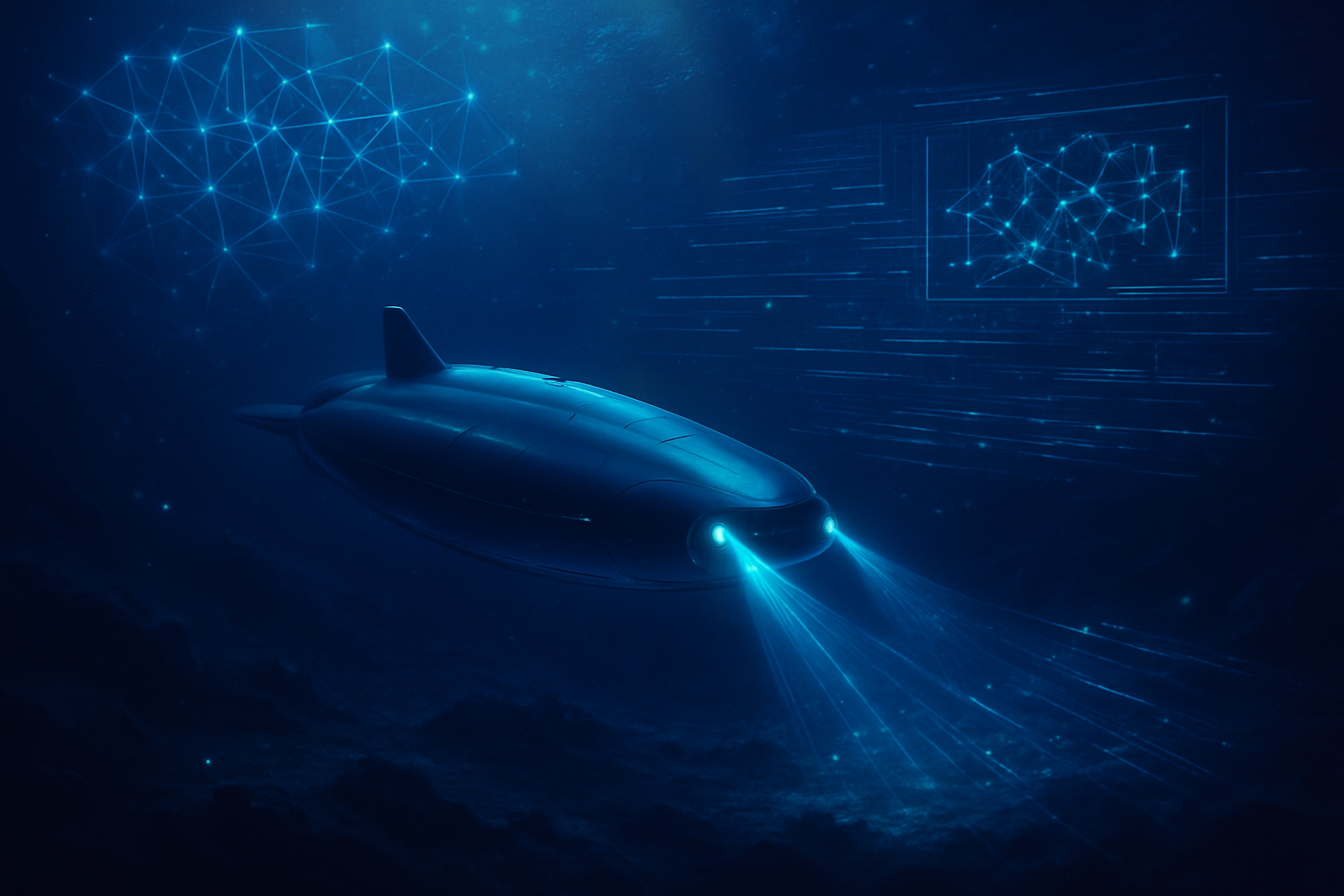
    AI and Public-Private Partnerships Chart a New Course for Ocean Exploration: Unveiling the Deep Sea’s Secrets

    A new era of ocean exploration is dawning, propelled by groundbreaking innovations in advanced seafloor mapping technologies. At the forefront of this revolution are dynamic public-private partnerships and the transformative power of Artificial Intelligence (AI), which are collectively accelerating our understanding of the vast, mysterious underwater world. These advancements are not merely pushing the boundaries of discovery but hold immediate and profound significance for critical fields such as oceanography and climate science, promising to unlock secrets vital to the health of our planet.

    The collaborative spirit between governmental bodies, academic institutions, and private enterprises, coupled with sophisticated AI algorithms, is enabling an unprecedented level of detail and efficiency in mapping the ocean floor. From high-resolution multibeam sonar to autonomous underwater vehicles (AUVs) and satellite altimetry, these technological leaps are providing a comprehensive view of underwater environments. The integration of AI for predictive modeling and automated data interpretation is proving to be a game-changer, allowing researchers to process colossal datasets, identify intricate geological and biological features, and ultimately enhance our ability to monitor, protect, and comprehend the ocean's crucial role in Earth's systems.

    Decoding the Deep: Technical Advancements in Seafloor Mapping

    The recent surge in seafloor mapping capabilities is a testament to significant technical advancements that are redefining what's possible beneath the waves. Modern multibeam sonar systems, for instance, have evolved beyond simple depth measurements to simultaneously map seafloor topography and the water column, revealing features like gas seeps and oil plumes with unparalleled clarity. This provides a holistic understanding of underwater environments, capturing complex bathymetry at resolutions previously unattainable.

    A cornerstone of this technological leap is the proliferation of autonomous platforms. Autonomous Underwater Vehicles (AUVs), Remotely Operated Vehicles (ROVs), and Autonomous Surface Vehicles (ASVs) like the Saildrone Surveyor are now capable of independent, long-duration missions, collecting vast quantities of bathymetric and environmental data across expansive and often hazardous deep-sea regions. These platforms, often equipped with advanced sensors such as deep-ocean Lidar (Light Detection and Ranging) systems, can reconstruct three-dimensional terrain with centimeter-scale precision, critical for detailed imaging of geological formations and biological communities. Technologies like Wide Swath Subsea LiDAR (WiSSL) and MiDAR are extending these capabilities, using high-intensity laser pulses to penetrate deeper and provide unprecedented clarity. Furthermore, underwater hyperspectral imaging, as operationalized by companies like planblue, offers quicker, more efficient, and more detailed insights into seabed composition and ecosystems, surpassing traditional photographic methods in analytical depth.

    These innovations fundamentally differ from previous approaches by offering a combination of high resolution, extensive coverage, and automated data acquisition and processing. Older methods often relied on sparse soundings, limited-range submersibles, or less sophisticated sonar, resulting in fragmented and lower-resolution maps. The current generation of technology integrates diverse data streams – from satellite altimetry, which indirectly maps the seafloor by measuring sea surface height variations, to direct sonar and lidar measurements – into cohesive, high-definition models. Initial reactions from the AI research community and industry experts have been overwhelmingly positive, with many hailing these advancements as pivotal for closing the knowledge gap about the 80% of the ocean floor that remains unmapped. Experts emphasize that the sheer volume and complexity of data generated necessitate AI for effective analysis, making AI not just an enhancement but an indispensable component of modern ocean exploration.

    Corporate Currents: Impact on AI Companies, Tech Giants, and Startups

    The innovations in advanced seafloor mapping, particularly those driven by AI and public-private partnerships, are creating significant ripples across the corporate landscape, poised to benefit a diverse array of AI companies, tech giants, and specialized startups. Companies at the forefront of autonomous systems, sensor technology, and big data analytics stand to gain substantial strategic advantages.

    Firms specializing in autonomous marine vehicles, such as Saildrone (private), and those developing advanced sonar and lidar systems, like Kongsberg Maritime (OSL: KMASA) and Teledyne Technologies (NYSE: TDY) via its Teledyne RESON brand, are direct beneficiaries. Their hardware and software are foundational to these mapping efforts. Furthermore, companies providing AI-powered data processing and interpretation solutions, such as planblue (private) for underwater hyperspectral imaging and AI analysis, are finding increasing demand for their specialized expertise. These companies are not just providing tools but are becoming integral partners in projects like the Nippon Foundation-GEBCO Seabed 2030, contributing vast amounts of proprietary data and analytical capabilities to the global effort.

    The competitive implications for major AI labs and tech companies are significant. While not always directly involved in the hardware, tech giants with strong AI research arms, like Google (NASDAQ: GOOGL), Microsoft (NASDAQ: MSFT), and NVIDIA (NASDAQ: NVDA), could see increased demand for their cloud computing infrastructure and machine learning platforms to process and store the massive datasets generated. Their expertise in developing sophisticated AI algorithms for image recognition, pattern detection, and predictive modeling is highly transferable to marine data analysis. Startups focused on niche applications, such as AI-driven anomaly detection in bathymetry or automated classification of marine habitats, are finding fertile ground for innovation and potential acquisition targets for larger players. This development could disrupt existing services that rely on older, less efficient mapping techniques, pushing them towards adopting these advanced AI-driven solutions to remain competitive. The market positioning for companies that can effectively integrate AI with robust marine technology is strengthening, offering strategic advantages in government contracts, scientific research grants, and commercial applications like offshore energy and cable laying.

    Charting a Deeper Understanding: Wider Significance and Global Impact

    The advancements in AI-powered seafloor mapping extend far beyond technical novelty, fitting into the broader AI landscape as a prime example of how machine intelligence can tackle complex, real-world scientific challenges. This development highlights the growing trend of AI being deployed for environmental monitoring, scientific discovery, and resource management, moving beyond consumer applications into critical global initiatives. The impacts are wide-ranging, touching upon everything from fundamental scientific understanding to practical applications in climate resilience and conservation.

    For oceanography, detailed seafloor maps are instrumental in understanding Earth's geological processes, including plate tectonics and the formation of marine habitats. This enhanced knowledge directly contributes to more accurate models of ocean circulation and mixing, which are profoundly influenced by underwater topography and are crucial for understanding heat and nutrient distribution. In climate science, the significance is even more pronounced. Precise bathymetric data is essential for improving climate change prediction models, as seafloor features influence deep-sea currents that regulate global climate patterns. Sediment composition, revealed through detailed mapping, offers invaluable insights into past climate responses, helping scientists predict future changes, including sea-level rise and the dynamics of tsunamis. The ability of AI to interpret these vast datasets allows for more granular and accurate inputs into Earth System Models, addressing a critical gap in our current understanding.

    However, potential concerns also accompany this progress. The dual-use nature of advanced mapping technologies raises questions about national security and sovereignty, as detailed maps could have military applications. Furthermore, the sheer volume of data being collected presents challenges in terms of storage, accessibility, and the computational resources required for processing, potentially exacerbating the digital divide between well-resourced nations and those with fewer capabilities. Comparisons to previous AI milestones, such as breakthroughs in natural language processing or computer vision, underscore the maturity of AI now being applied to highly specialized scientific domains. This marks a shift from general-purpose AI development to targeted applications that leverage AI's strengths in pattern recognition and predictive analytics to solve specific, grand challenges. The ethical implications of AI-driven exploration, particularly concerning data ownership and the potential for commercial exploitation of newly discovered resources, also warrant careful consideration.

    Horizon Scanning: Future Developments and Uncharted Territories

    The trajectory of advanced seafloor mapping, fueled by AI and collaborative partnerships, points towards exciting near-term and long-term developments that promise to further revolutionize our interaction with the ocean. In the near future, we can expect to see even greater integration of diverse sensor data, leading to hyper-resolution 4D maps that not only detail topography but also environmental parameters like temperature, salinity, and biodiversity over time. AI will play an increasingly sophisticated role in real-time data analysis aboard autonomous platforms, enabling on-the-spot decision-making for more efficient mission planning and adaptive sampling. Swarm robotics, where multiple AI-powered marine robots cooperatively map vast areas, is on the horizon, promising unprecedented speed and coverage.

    Potential applications and use cases are expanding rapidly. Beyond fundamental scientific research, these technologies will enhance navigational safety for shipping, optimize routes for submarine cable laying, and improve the siting and monitoring of offshore energy infrastructure. In conservation, AI-driven mapping will be crucial for identifying and protecting vulnerable marine habitats, monitoring the health of coral reefs, and tracking marine life migration patterns. The ability to predict ocean currents and even underwater volcanic activity through AI models will bolster disaster preparedness and climate change mitigation strategies. Experts predict a future where citizen science plays a larger role, with AI tools democratizing marine research by making data analysis more accessible, allowing broader participation in ocean discovery.

    However, several challenges need to be addressed to fully realize this potential. The development of robust, long-endurance autonomous systems capable of operating in extreme deep-sea environments remains a technical hurdle. Ensuring interoperability and standardization across different mapping technologies and data formats is crucial for seamless data integration. Furthermore, the ethical frameworks surrounding data ownership, access, and the potential commercial exploitation of newly discovered marine resources will require careful global deliberation. Experts predict that the next decade will see a significant portion of the remaining unmapped seafloor finally revealed, transforming our understanding of the planet and providing critical data for navigating the challenges of climate change and environmental sustainability.

    Deep Dive Debrief: A New Era of Ocean Discovery

    The innovations in advanced seafloor mapping technologies, powered by the synergy of public-private partnerships and Artificial Intelligence, mark a pivotal moment in our quest to understand Earth's final frontier: the deep ocean. This confluence of collaboration and computational power is not merely enhancing our ability to chart the unknown but is fundamentally reshaping the fields of oceanography and climate science, providing unprecedented insights into the planet's most critical and least understood ecosystem.

    The key takeaways from this revolution are manifold. Firstly, the sheer scale of the challenge—mapping 80% of the unmapped ocean floor—necessitates the combined resources, expertise, and data sharing facilitated by public-private partnerships like The Nippon Foundation-GEBCO Seabed 2030 Project. Secondly, AI is not just an auxiliary tool but an indispensable engine, enabling the processing of colossal datasets, automating complex interpretations, and powering the next generation of autonomous exploration vehicles. This allows for high-resolution, comprehensive mapping that was previously unimaginable. Finally, the immediate and long-term implications for climate science, marine conservation, and sustainable resource management are profound, offering critical data to inform global strategies for a changing planet.

    This development stands as a significant milestone in AI history, demonstrating the technology's capacity to drive scientific discovery on a global scale. It underscores a shift towards AI as a foundational technology for environmental intelligence, moving beyond theoretical models to practical, impactful applications. As we look to the coming weeks and months, the focus will be on the continued integration of new sensor technologies, the deployment of more sophisticated autonomous systems, and the ongoing efforts to standardize and democratize access to the burgeoning volume of seafloor data. The journey to fully map our oceans is far from over, but with AI and collaborative spirit guiding the way, we are closer than ever to unveiling the deep sea's most profound secrets and securing a more informed future for our planet.


    This content is intended for informational purposes only and represents analysis of current AI developments.

    TokenRing AI delivers enterprise-grade solutions for multi-agent AI workflow orchestration, AI-powered development tools, and seamless remote collaboration platforms.
    For more information, visit https://www.tokenring.ai/.

  • Raymarine and Seabed 2030 Chart a New Course for Ocean Mapping with AI-Driven Data

    Raymarine and Seabed 2030 Chart a New Course for Ocean Mapping with AI-Driven Data

    In a landmark collaboration poised to revolutionize oceanography, Raymarine, a global leader in marine electronics, has joined forces with The Nippon Foundation-GEBCO Seabed 2030 Project. This ambitious partnership aims to accelerate the comprehensive mapping of the world's entire ocean floor by the year 2030, leveraging Raymarine's advanced sonar technology and a unique crowdsourcing model. The initiative represents a critical step forward in understanding our planet's most unexplored frontier, providing foundational data crucial for climate modeling, marine conservation, and sustainable resource management.

    The immediate significance of this alliance, announced around November 2025, lies in its potential to dramatically increase the volume and resolution of bathymetric data available to the global scientific community. By integrating data from thousands of vessels equipped with Raymarine's state-of-the-art sonar systems, the project is rapidly filling critical data gaps, particularly in coastal and offshore regions that have historically been under-surveyed. This collaborative approach underscores a growing trend where private industry innovation is directly contributing to large-scale global scientific endeavors.

    Unveiling the Ocean's Depths: A Technical Deep Dive

    Raymarine's contribution to the Seabed 2030 Project is primarily driven by its cutting-edge sonar systems, most notably the Element™ CHIRP Sonar / GPS series. These systems provide an unparalleled view of the underwater world through a suite of advanced technologies. Key technical capabilities include HyperVision™ Sonar, utilizing super high frequencies (1.2 megahertz) and CHIRP technology for extremely high-resolution DownVision, SideVision, and RealVision 3D imaging up to 100 feet. For deeper insights, Standard CHIRP Sonar operates at 350 kHz, reaching depths of 600 feet, while High CHIRP Sonar (200 kHz) extends to 900 feet, excelling in fish targeting and high-speed bottom tracking. Features like RealBathy™ allow users to create custom maps, further enhancing data density.

    This crowdsourced bathymetry (CSB) approach marks a significant departure from traditional ocean mapping. Historically, bathymetric data was gathered through costly, time-consuming dedicated hydrographic surveys by specialized research vessels. While only 6% of the ocean floor was mapped to modern standards in 2017, this figure rose to 26.1% by World Hydrography Day 2024. Crowdsourcing, by contrast, mobilizes a vast network of existing vessels—from recreational boats to merchant ships—effectively turning them into data collection platforms. This distributed model efficiently gathers data from under-surveyed areas, significantly reduces costs, and rapidly increases coverage and resolution globally.

    While Raymarine's immediate announcement doesn't detail a specific AI advancement for data processing within this collaboration, the Seabed 2030 Project heavily relies on AI. AI plays a crucial role in processing and analyzing the vast amounts of crowdsourced data. This includes real-time data acquisition and quality control, automated filtering and processing to remove noise and optimize parameters, and enhanced analysis for instant report generation. AI platforms can identify patterns, anomalies, and features that might be missed by human observers, leading to a more comprehensive understanding of seafloor topography and marine habitats. Experts emphasize that AI will streamline workflows, reduce human error, and accelerate the creation of accurate, high-resolution maps.

    Reshaping the AI and Marine Tech Landscape

    The influx of freely available, high-resolution bathymetric data, facilitated by Raymarine and the Seabed 2030 Project, is poised to create significant ripples across the AI industry. AI companies specializing in marine data analytics and visualization, such as Terradepth, stand to benefit immensely from an expanded dataset to refine their platforms and train more robust machine learning models. Developers of Autonomous Marine Vehicles (AMVs), including Autonomous Underwater Vehicles (AUVs) and Uncrewed Surface Vessels (USVs), will leverage this comprehensive data for enhanced autonomous navigation, route optimization, and operational efficiency.

    Competitive implications are substantial. With lowered barriers to data access, competition will intensify for developing superior AI solutions for marine contexts, pushing companies to differentiate through advanced algorithmic capabilities and specialized applications. This could lead to a shift towards open-source and collaborative AI development, challenging companies relying solely on proprietary data. Tech giants with interests in marine technology, data analytics, or environmental monitoring—like Google (NASDAQ: GOOGL) or Garmin (NYSE: GRMN)—will find new avenues for their AI applications, from enhancing mapping services to supporting maritime surveillance.

    This development could disrupt traditional marine surveying, as crowdsourced bathymetry, when processed with AI, offers a more continuous and cost-effective mapping method, especially in shallower waters. This might reduce reliance on dedicated hydrographic vessels for routine tasks, freeing them for higher-precision or deeper-water missions. For companies like Raymarine, a brand of FLIR Systems (NASDAQ: FLIR), this collaboration offers a strategic advantage. It provides continuous access to massive real-world data streams for training and refining their proprietary AI models for sonar systems and navigation. This enhances product offerings, strengthens brand reputation as an innovative leader, and establishes a crucial feedback loop for AI development.

    A New Era for Ocean Science and Environmental AI

    Raymarine's collaboration with the Seabed 2030 Project fits perfectly into the broader AI landscape's trend towards advanced data collection, crowdsourcing, and environmental AI. It exemplifies how sophisticated sensor technologies, often AI-enhanced, are being leveraged for large-scale data acquisition, and how AI is becoming indispensable for processing, quality control, and analysis of vast datasets. This directly contributes to environmental AI, providing foundational data critical for understanding and addressing climate change, marine conservation, and predicting environmental shifts.

    The societal, environmental, and economic impacts of a complete seabed map are profound. Societally, it promises improved tsunami forecasting, safer navigation, and richer scientific research. Environmentally, it will aid in understanding ocean circulation and climate models, identifying vulnerable marine habitats, and managing ocean debris. Economically, it will support sustainable fisheries, offshore energy development, and infrastructure planning, fostering growth in the "blue economy." The project, a flagship program of the UN Decade of Ocean Science for Sustainable Development, has already seen the mapped ocean floor increase from 6% in 2017 to 26.1% by World Hydrography Day 2024, with Raymarine's contribution expected to accelerate this progress.

    However, challenges remain. Ensuring consistent data quality and standardization across diverse crowdsourced contributions is crucial. Technical complexities in mapping deep waters and polar regions persist, as do the immense computational demands for processing vast datasets, raising concerns about energy consumption. Ethical considerations around data ownership and the responsible use of autonomous technologies also require careful attention. Compared to previous AI milestones in marine science, this initiative represents a significant leap from manual to automated analysis, enabling real-time insights, predictive modeling, and large-scale data initiatives through autonomous exploration, fostering an interdisciplinary convergence of marine science, AI, and robotics.

    Charting the Future: Autonomy, AI, and Uncharted Depths

    Looking ahead, the collaboration between Raymarine and Seabed 2030 foreshadows transformative developments in seabed mapping and marine AI. In the near term, we can expect a significant increase in the use of autonomous surface vessels (ASVs) and AUVs for surveying, particularly in coastal areas, complemented by continued crowdsourcing from a wide array of vessels. AI integration will focus on optimizing data acquisition and processing, with algorithms improving underwater mapping by making sense of incomplete data and determining optimal measurement strategies.

    Long-term developments envision autonomous survey vessels handling all seabed mapping tasks, including complex offshore operations, potentially employing "swarm approaches" where multiple small autonomous robots cooperatively map vast areas. AI will evolve to include increasingly sophisticated algorithms for complex analysis and predictive modeling, such as AI-powered image recognition for marine species identification and tracking, and analysis of satellite images for subtle habitat changes. Potential applications include enhanced marine conservation and environmental management, more efficient resource management for industries, improved safety and disaster preparedness, and accelerated scientific discovery.

    Despite the promising outlook, several challenges must be addressed. Technical complexities in mapping extreme environments, managing the immense data and computational demands, and ensuring equitable access to advanced AI tools for all nations remain critical hurdles. Environmental and ethical concerns related to autonomous technologies and data ownership also require careful consideration. Experts widely predict that autonomous vehicles will have the most significant impact on future ocean mapping, acting as "force multipliers" for higher-resolution data acquisition and monitoring. Within a decade, fully autonomous vessels are expected to handle most seabed mapping tasks offshore, with AI becoming increasingly integrated into marine robotics, environmental monitoring, and policy-making.

    A Collaborative Voyage Towards a Fully Mapped Ocean

    Raymarine's collaboration with The Nippon Foundation-GEBCO Seabed 2030 Project is more than just a partnership; it's a monumental endeavor merging advanced marine electronics with a global scientific mission. The key takeaway is the power of crowdsourcing combined with cutting-edge technology to tackle one of humanity's grandest scientific challenges: mapping the entirety of the ocean floor. This development marks a significant milestone in AI history, showcasing how AI-compatible data initiatives can accelerate scientific understanding and drive environmental stewardship.

    The long-term impact will be profound, providing an indispensable foundational dataset for global policy, sustainable resource use, and continued scientific exploration for generations. It will enhance our understanding of critical planetary processes, from climate regulation to geological phenomena, fostering marine conservation and showcasing the immense potential of collaborative, technology-driven initiatives.

    In the coming weeks and months, watch for updates on the percentage of the ocean floor mapped, which is steadily increasing. Pay attention to how Raymarine's crowdsourced data is integrated into the GEBCO grid and its impact on map resolution and coverage. Expect announcements of new geological discoveries and insights into oceanographic processes as more detailed bathymetric data becomes available. Finally, keep an eye on further technological advancements, especially explicit applications of AI and autonomous underwater vehicles, which will continue to accelerate mapping efforts and inform critical policy and conservation outcomes.


    This content is intended for informational purposes only and represents analysis of current AI developments.

    TokenRing AI delivers enterprise-grade solutions for multi-agent AI workflow orchestration, AI-powered development tools, and seamless remote collaboration platforms.
    For more information, visit https://www.tokenring.ai/.