
Tag: October 2025

  • AI Supercycle Ignites Semiconductor and Tech Markets to All-Time Highs

    AI Supercycle Ignites Semiconductor and Tech Markets to All-Time Highs

    October 2025 has witnessed an unprecedented market rally in semiconductor stocks and the broader technology sector, fundamentally reshaped by the escalating demands of Artificial Intelligence (AI). This "AI Supercycle" has propelled major U.S. indices, including the S&P 500, Nasdaq Composite, and Dow Jones Industrial Average, to new all-time highs, reflecting an electrifying wave of investor optimism and a profound restructuring of the global tech landscape. The immediate significance of this rally is multifaceted, reinforcing the technology sector's leadership, signaling sustained investment in AI, and underscoring the market's conviction in AI's transformative power, even amidst geopolitical complexities.

    The robust performance is largely attributed to the "AI gold rush," with unprecedented growth and investment in the AI sector driving enormous demand for high-performance Graphics Processing Units (GPUs) and Central Processing Units (CPUs). Anticipated and reported strong earnings from sector leaders, coupled with positive analyst revisions, are fueling investor confidence. This rally is not merely a fleeting economic boom but a structural shift with trillion-dollar implications, positioning AI as the core component of future economic growth across nearly every sector.

    The AI Supercycle: Technical Underpinnings of the Rally

    The semiconductor market's unprecedented rally in October 2025 is fundamentally driven by the escalating demands of AI, particularly generative AI and large language models (LLMs). This "AI Supercycle" signifies a profound technological and economic transformation, positioning semiconductors as the "lifeblood of a global AI economy." The global semiconductor market is projected to reach approximately $697-701 billion in 2025, an 11-18% increase over 2024, with the AI chip market alone expected to exceed $150 billion.

    This surge is fueled by massive capital investments, with an estimated $185 billion projected for 2025 to expand global manufacturing capacity. Industry giants like Taiwan Semiconductor Manufacturing Company (TSMC) (TWSE: 2330) (NYSE: TSM), a primary beneficiary and bellwether of this trend, reported a record 39% jump in its third-quarter profit for 2025, with its high-performance computing (HPC) division, which fabricates AI and advanced data center silicon, contributing over 55% of its total revenues. The AI revolution is fundamentally reshaping chip architectures, moving beyond general-purpose computing to highly specialized designs optimized for AI workloads.

    The evolution of AI accelerators has seen a significant shift from CPUs to massively parallel GPUs, and now to dedicated AI accelerators like Application-Specific Integrated Circuits (ASICs) and Neural Processing Units (NPUs). Companies like Nvidia (NASDAQ: NVDA) continue to innovate with architectures such as the H100 and the newer H200 Tensor Core GPU, which achieves a 4.2x speedup on LLM inference tasks. Nvidia's upcoming Blackwell architecture boasts 208 billion transistors, supporting AI training and real-time inference for models scaling up to 10 trillion parameters. Google's (NASDAQ: GOOGL) Tensor Processing Units (TPUs) are prominent ASIC examples, with the TPU v5p showing a 30% improvement in throughput and 25% lower energy consumption than its previous generation in 2025. NPUs are crucial for edge computing in devices like smartphones and IoT.

    Enabling technologies such as advanced process nodes (TSMC's 7nm, 5nm, 3nm, and emerging 2nm and 1.4nm), High-Bandwidth Memory (HBM), and advanced packaging techniques (e.g., TSMC's CoWoS) are critical. The recently finalized HBM4 standard offers significant advancements over HBM3, targeting 2 TB/s of bandwidth per memory stack. AI itself is revolutionizing chip design through AI-powered Electronic Design Automation (EDA) tools, dramatically reducing design optimization cycles. The shift is towards specialization, hardware-software co-design, prioritizing memory bandwidth, and emphasizing energy efficiency—a "Green Chip Supercycle." Initial reactions from the AI research community and industry experts are overwhelmingly positive, acknowledging these advancements as indispensable for sustainable AI growth, while also highlighting concerns around energy consumption and supply chain stability.

    Corporate Fortunes: Winners and Challengers in the AI Gold Rush

    The AI-driven semiconductor and tech market rally in October 2025 is profoundly reshaping the competitive landscape, creating clear beneficiaries, intensifying strategic battles among major players, and disrupting existing product and service offerings. The primary beneficiaries are companies at the forefront of AI and semiconductor innovation.

    Nvidia (NASDAQ: NVDA) remains the undisputed market leader in AI GPUs, holding approximately 80-85% of the AI chip market. Its H100 and next-generation Blackwell architectures are crucial for training large language models (LLMs), ensuring sustained high demand. Taiwan Semiconductor Manufacturing Company (TSMC) (TWSE: 2330) (NYSE: TSM) is a crucial foundry, manufacturing the advanced chips that power virtually all AI applications, reporting record profits in October 2025. Advanced Micro Devices (AMD) (NASDAQ: AMD) is emerging as a strong challenger, with its Instinct MI300X and upcoming MI350 accelerators, securing significant multi-year agreements, including a deal with OpenAI. Broadcom (NASDAQ: AVGO) is recognized as a strong second player after Nvidia in AI-related revenue and has also inked a custom chip deal with OpenAI. Other key beneficiaries include Micron Technology (NASDAQ: MU) for HBM, Intel (NASDAQ: INTC) for its domestic manufacturing investments, and semiconductor ecosystem players like Marvell Technology (NASDAQ: MRVL), Cadence (NASDAQ: CDNS), Synopsys (NASDAQ: SNPS), and ASML (NASDAQ: ASML).

    Cloud hyperscalers like Microsoft (NASDAQ: MSFT), Amazon (NASDAQ: AMZN) (AWS), and Alphabet (NASDAQ: GOOGL) (Google) are considered the "backbone of today's AI boom," with unprecedented capital expenditure growth for data centers and AI infrastructure. These tech giants are leveraging their substantial cash flow to fund massive AI infrastructure projects and integrate AI deeply into their core services, actively developing their own AI chips and optimizing existing products for AI workloads.

    Major AI labs, such as OpenAI, are making colossal investments in infrastructure, with OpenAI's valuation surging to $500 billion and committing trillions through 2030 for AI build-out plans. To secure crucial chips and diversify supply chains, AI labs are entering into strategic partnerships with multiple chip manufacturers, challenging the dominance of single suppliers. Startups focused on specialized AI applications, edge computing, and novel semiconductor architectures are attracting multibillion-dollar investments, though they face significant challenges due to high R&D costs and intense competition. Companies not deeply invested in AI or advanced semiconductor manufacturing risk becoming marginalized, as AI is enabling the development of next-generation applications and optimizing existing products across industries.

    Beyond the Boom: Wider Implications and Market Concerns

    The AI-driven semiconductor and tech market rally in October 2025 signifies a pivotal, yet contentious, period in the ongoing technological revolution. This rally, characterized by soaring valuations and unprecedented investment, underscores the growing integration of AI across industries, while also raising concerns about market sustainability and broader societal impacts.

    The market rally is deeply embedded in several maturing and emerging AI trends, including the maturation of generative AI into practical enterprise applications, massive capital expenditure in advanced AI infrastructure, the convergence of AI with IoT for edge computing, and the rise of AI agents capable of autonomous decision-making. AI is widely regarded as a significant driver of productivity and economic growth, with projections indicating the global AI market could reach $1.3 trillion by 2025 and potentially $2.4 trillion by 2032. The semiconductor industry has cemented its role as the "indispensable backbone" of this revolution, with global chip sales projected to near $700 billion in 2025.

    However, despite the bullish sentiment, the AI-driven market rally is accompanied by notable concerns. Major financial institutions and prominent figures have expressed strong concerns about an "AI bubble," fearing that tech valuations have risen sharply to levels where earnings may never catch up to expectations. Investment in information processing and software has reached levels last seen during the dot-com bubble of 2000. The dominance of a few mega-cap tech firms means that even a modest correction in AI-related stocks could have a systemic impact on the broader market. Other concerns include the unequal distribution of wealth, potential bottlenecks in power or data supply, and geopolitical tensions influencing supply chains. While comparisons to the Dot-Com Bubble are frequent, today's leading AI companies often have established business models, proven profitability, and healthier balance sheets, suggesting stronger fundamentals. Some analysts even argue that current AI-related investment, as a percentage of GDP, remains modest compared to previous technological revolutions, implying the "AI Gold Rush" may still be in its early stages.

    The Road Ahead: Future Trajectories and Expert Outlooks

    The AI-driven market rally, particularly in the semiconductor and broader technology sectors, is poised for significant near-term and long-term developments beyond October 2025. In the immediate future (late 2025 – 2026), AI is expected to remain the primary revenue driver, with continued rapid growth in demand for specialized AI chips, including GPUs, ASICs, and HBM. The generative AI chip market alone is projected to exceed $150 billion in 2025. A key trend is the accelerating development and monetization of AI models, with major hyperscalers rapidly optimizing their AI compute strategies and carving out distinct AI business models. Investment focus is also broadening to AI software, and the proliferation of "Agentic AI" – intelligent systems capable of autonomous decision-making – is gaining traction.

    The long-term outlook (beyond 2026) for the AI-driven market is one of unprecedented growth and technological breakthroughs. The global AI chip market is projected to reach $194.9 billion by 2030, with some forecasts placing semiconductor sales approaching $1 trillion by 2027. The overall artificial intelligence market size is projected to reach $3,497.26 billion by 2033. AI model evolution will continue, with expectations for both powerful, large-scale models and more agile, smaller hybrid models. AI workloads are expected to expand beyond data centers to edge devices and consumer applications. PwC predicts that AI will fundamentally transform industry-level competitive landscapes, leading to significant productivity gains and new business models, potentially adding $14 trillion to the global economy by the decade's end.

    Potential applications are diverse and will permeate nearly every sector, from hyper-personalization and agentic commerce to healthcare (accelerating disease detection, drug design), finance (fraud detection, algorithmic trading), manufacturing (predictive maintenance, digital triplets), and transportation (autonomous vehicles). Challenges that need to be addressed include the immense costs of R&D and fabrication, overcoming the physical limits of silicon, managing heat, memory bandwidth bottlenecks, and supply chain vulnerabilities due to concentrated manufacturing. Ethical AI and governance concerns, such as job disruption, data privacy, deepfakes, and bias, also remain critical hurdles. Expert predictions generally view the current AI-driven market as a "supercycle" rather than a bubble, driven by fundamental restructuring and strong underlying earnings, with many anticipating continued growth, though some warn of potential volatility and overvaluation.

    A New Industrial Revolution: Wrapping Up the AI-Driven Rally

    October 2025's market rally marks a pivotal and transformative period in AI history, signifying a profound shift from a nascent technology to a foundational economic driver. This is not merely an economic boom but a "structural shift with trillion-dollar implications" and a "new industrial revolution" where AI is increasingly the core component of future economic growth across nearly every sector. The unprecedented scale of capital infusion is actively driving the next generation of AI capabilities, accelerating innovation in hardware, software, and cloud infrastructure. AI has definitively transitioned from "hype to infrastructure," fundamentally reshaping industries from chips to cloud and consumer platforms.

    The long-term impact of this AI-driven rally is projected to be widespread and enduring, characterized by a sustained "AI Supercycle" for at least the next five to ten years. AI is expected to become ubiquitous, permeating every facet of life, and will lead to enhanced productivity and economic growth, with projections of lifting U.S. productivity and GDP significantly in the coming decades. It will reshape competitive landscapes, favoring companies that effectively translate AI into measurable efficiencies. However, the immense energy and computational power requirements of AI mean that strategic deployment focusing on value rather than sheer volume will be crucial.

    In the coming weeks and months, several key indicators and developments warrant close attention. Continued robust corporate earnings from companies deeply embedded in the AI ecosystem, along with new chip innovation and product announcements from leaders like Nvidia (NASDAQ: NVDA) and AMD (NASDAQ: AMD), will be critical. The pace of enterprise AI adoption and the realization of productivity gains through AI copilots and workflow tools will demonstrate the technology's tangible impact. Capital expenditure from hyperscalers like Microsoft (NASDAQ: MSFT), Amazon (NASDAQ: AMZN), and Alphabet (NASDAQ: GOOGL) will signal long-term confidence in AI demand, alongside the rise of "Sovereign AI" initiatives by nations. Market volatility and valuations will require careful monitoring, as will the development of regulatory and geopolitical frameworks for AI, which could significantly influence the industry's trajectory.


    This content is intended for informational purposes only and represents analysis of current AI developments.

    TokenRing AI delivers enterprise-grade solutions for multi-agent AI workflow orchestration, AI-powered development tools, and seamless remote collaboration platforms.
    For more information, visit https://www.tokenring.ai/.

  • Identity’s New Frontier: AI, Passwordless, and the Evolving Cyber Battlefield Dominate October’s Security Landscape

    Identity’s New Frontier: AI, Passwordless, and the Evolving Cyber Battlefield Dominate October’s Security Landscape

    The week of October 17th, 2025, has underscored a pivotal moment in identity management and information security, as industry leaders like Saviynt, HID, and Qualys unveiled significant advancements reflecting a rapidly evolving cyber landscape. The overarching theme is clear: artificial intelligence is no longer just a tool but a fundamental component of both offense and defense, while the concept of identity itself has solidified its position as the undisputed new security perimeter. From groundbreaking AI-powered identity security platforms to strategic acquisitions aimed at accelerating passwordless adoption, the industry is racing to secure an increasingly complex digital world against sophisticated threats.

    This week's announcements highlight a proactive shift towards more intelligent, unified, and resilient security frameworks. Companies are grappling with the dual challenge of harnessing AI's potential while simultaneously securing the very AI agents that are becoming integral to enterprise operations. The proliferation of mobile identities, the urgent need for robust Identity and Access Management (IAM) controls for AI applications, and the continued surge in data breaches driven by compromised credentials have galvanized a concerted effort to redefine security strategies for the modern era.

    Technical Innovations Chart a Course for Future Security

    The technical advancements this week paint a vivid picture of the industry's strategic direction, focusing on AI integration, comprehensive identity coverage, and simplified, robust authentication.

    Saviynt (NYSE: SVYNT) took center stage with a series of announcements emphasizing its commitment to AI-powered identity security. The company rolled out major AI capabilities for its platform, designed to unify security across human, non-human, and critical AI agent identities. These enhancements are engineered to significantly reduce risk, accelerate security decision-making, and improve operational agility, extending Identity Security Posture Management (ISPM) to encompass all identity types. This approach marks a significant departure from traditional, siloed identity governance, pushing towards a holistic view that includes the burgeoning realm of AI agents. Saviynt's recognition as a Challenger in the 2025 Gartner® Magic Quadrant™ for Privileged Access Management (PAM) further solidifies its position in securing highly sensitive access. The company also launched its global "UNLOCK Tour" to evangelize the future of AI-powered identity security and inaugurated its largest global innovation hub in Bengaluru, India, specifically to drive AI-led research and development. These moves underscore Saviynt's strategy to embed AI deeply into every facet of identity security, moving beyond reactive measures to predictive and proactive defense.

    HID (SIX: HID) made a strategic play in the passwordless authentication space by announcing an agreement to acquire IDmelon. IDmelon's innovative platform allows users to transform existing identifiers—such as physical credentials, smartphones, or even biometrics—into enterprise-grade FIDO security keys. This acquisition is poised to significantly augment HID's existing FIDO authentication offerings, providing organizations with more flexible and accessible passwordless options. At GITEX Global 2025 in Dubai, HID showcased its latest innovations in secure identity issuance and passwordless authentication, reinforcing its leadership in physical and digital access solutions. The company's 2025 State of Security and Identity Report highlighted mobile identity proliferation as a top trend, with 61% of security leaders prioritizing it, indicating the timely nature of HID's expansion in this domain. This acquisition represents a tangible step towards a truly passwordless future, offering a more user-friendly and secure alternative to traditional credentials.

    Qualys (NASDAQ: QLYS) delivered its October 2025 Patch Tuesday Security Update Review, addressing a staggering 193 vulnerabilities. Of particular concern were nine critical and six zero-day vulnerabilities, with four of the zero-days already being actively exploited in the wild. This update also marked the end-of-support lifecycle for Windows 10, prompting organizations to accelerate migration strategies. Qualys was a prominent participant at "The Risk Operations Conference" (ROCon Americas) from October 13-16, 2025. Discussions at the conference highlighted Qualys's Enterprise TruRisk Management (ETM) platform, which now incorporates a built-in Agentic AI Fabric. This advancement aims to integrate identity security and industry-specific threat prioritization, enabling continuous and measurable risk mitigation. The integration of Agentic AI in ETM signifies a shift towards more intelligent, adaptive vulnerability management that can dynamically assess and prioritize risks based on real-time threat intelligence and business context, a significant leap from traditional, static patching cycles.

    These technical developments collectively illustrate an industry pivot towards integrated, intelligent security. Saviynt's AI-first approach to identity security, HID's strategic embrace of versatile passwordless authentication, and Qualys's AI-enhanced vulnerability management system represent a departure from fragmented security tools. They emphasize a unified, AI-driven defense posture that is more adaptive and resilient against the increasingly sophisticated threat landscape. Initial reactions from the cybersecurity community have been largely positive, recognizing the necessity of these advanced capabilities to combat the growing scale and complexity of cyber threats.

    Competitive Implications and Market Dynamics

    The innovations highlighted this week are set to reshape competitive landscapes, offering strategic advantages to companies that can effectively integrate AI and advanced identity solutions into their core offerings.

    Saviynt stands to significantly benefit from its aggressive push into AI-powered identity security. By unifying security across human, non-human, and AI agent identities, Saviynt is positioning itself at the forefront of securing the AI-driven enterprise. This comprehensive approach could disrupt competitors relying on more traditional, segmented identity governance solutions. The establishment of a global innovation hub in Bengaluru further solidifies its long-term R&D capabilities, potentially creating a competitive moat through continuous innovation in AI. Competitors that lag in integrating AI into their identity platforms may find themselves at a disadvantage as enterprises increasingly demand intelligent, automated security.

    HID (SIX: HID) strengthens its already robust portfolio in secure authentication with the acquisition of IDmelon. This move enhances its competitive edge in the rapidly expanding passwordless market, making it a more attractive partner for enterprises seeking flexible, user-friendly, and highly secure authentication methods. The emphasis on leveraging existing identifiers for FIDO security keys lowers the barrier to entry for passwordless adoption, potentially accelerating market penetration. This strategic acquisition positions HID to capture a larger share of the growing demand for frictionless and secure access, putting pressure on other authentication providers to innovate or acquire similar capabilities.

    Qualys (NASDAQ: QLYS) integration of Agentic AI Fabric into its Enterprise TruRisk Management (ETM) platform enhances its competitive standing in vulnerability management and risk assessment. By providing continuous, measurable risk mitigation with AI-driven threat prioritization, Qualys offers a more sophisticated solution than traditional vulnerability scanners. This could attract organizations looking for more intelligent and automated ways to manage their attack surface, potentially pulling market share from competitors with less advanced risk management capabilities. The focus on identity security within ETM also bridges a critical gap, aligning vulnerability management with the "identity as the new perimeter" paradigm.

    The competitive implications are clear: companies that can successfully pivot to AI-driven, identity-centric, and passwordless solutions will gain significant market positioning. Tech giants like Microsoft (NASDAQ: MSFT) and Google (NASDAQ: GOOGL), with their vast resources and existing cloud ecosystems, are also heavily investing in these areas, as evidenced by Google Workspace and JumpCloud's "The Work Transformation Set" partnership, which combines AI-powered productivity with identity and Zero Trust security. Startups focusing on niche AI security or decentralized identity solutions may also find opportunities, either as acquisition targets or through strategic partnerships. The market is increasingly valuing platforms that offer unified security, automation, and a strong identity backbone, leading to potential disruption for legacy providers.

    Wider Significance in the AI Landscape

    The developments this week resonate deeply within the broader AI landscape, highlighting both the transformative potential and the inherent risks of this rapidly advancing technology.

    The rise of AI in cybersecurity is unequivocally the most significant trend. Microsoft's daily processing of over 100 trillion signals underscores the sheer volume of AI-driven cyber threats, but also the scale at which AI is being deployed for defense. This dual role of AI—as both a potent weapon for attackers and an indispensable shield for defenders—is shaping the future of information security. The imperative to secure AI agents from inception, as warned by Okta's (NASDAQ: OKTA) "Customer Identity Trends Report 2025," is a critical new frontier. Unsecured AI applications represent novel vulnerabilities that could lead to catastrophic data breaches or system compromises, making robust IAM controls for AI agents a non-negotiable requirement.

    The concept of "identity as the new perimeter" continues to gain overwhelming traction. With stolen credentials consistently being the primary entry point for attackers, the focus has shifted from network-centric security to identity-centric security. This paradigm shift mandates securing not just human users, but also the vastly outnumbering non-human and AI agent identities. The industry's recognition of this fundamental truth is driving investments in advanced identity governance, privileged access management, and identity threat detection and response (ITDR) solutions.

    The proliferation of passwordless solutions, particularly passkeys, and the projected growth of the global decentralized identity market signal a profound shift in how identities are managed and authenticated. These technologies promise enhanced security, improved user experience, and greater user control over personal data, moving away from the vulnerabilities and inconveniences of traditional passwords. This trend aligns with the broader societal push for digital privacy and self-sovereign identity.

    Regulatory pressures are also playing a crucial role. The Cybersecurity and Infrastructure Security Agency (CISA) is expected to issue the final rule of the Cyber Incident Reporting for Critical Infrastructure Act (CIRCIA) in October 2025. This will compel critical infrastructure companies to implement new solutions and procedures for incident reporting and compliance, driving further investment in security technologies.

    The week also served as a stark reminder of ongoing cyber threats, with several significant data breaches and cyberattacks reported. Harvard University was affected by an Oracle (NYSE: ORCL) EBS cyberattack (Cl0p group, 1.3 TB leak), SimonMed Imaging disclosed a breach impacting over 1.2 million individuals, and Sotheby's (NYSE: BID) also reported a July data breach. Microsoft revoked over 200 certificates abused by the "Vanilla Tempest" threat actor, and a new rootkit campaign exploited a Cisco (NASDAQ: CSCO) SNMP flaw. The Qilin ransomware group claimed an attack on Asahi, Japan's largest brewing company. These incidents underscore the persistent and evolving nature of cybercrime, reinforcing the urgency behind the advanced security measures being developed.

    Comparisons to previous AI milestones reveal that the current phase is characterized by the practical application and integration of AI into foundational enterprise systems, rather than just groundbreaking research. This signifies a maturation of AI, moving from theoretical possibility to essential operational component in cybersecurity.

    Future Developments on the Horizon

    Looking ahead, the trajectory of identity management and information security is clear: deeper AI integration, pervasive passwordless adoption, and a continuous refinement of Zero Trust principles.

    In the near-term, we can expect an accelerated adoption of AI-powered identity security platforms. Companies will increasingly leverage AI for anomaly detection, risk scoring, automated access reviews, and proactive threat hunting across all identity types. The focus will be on operationalizing AI to reduce manual effort and improve the speed and accuracy of security responses. Passwordless solutions, particularly passkeys, will continue their rapid proliferation, especially in consumer-facing applications and mobile banking, driven by enhanced user experience and stronger security.

    Long-term developments will likely see the maturation of decentralized identity solutions, offering individuals greater control over their digital personas. The concept of "self-healing" security systems, powered by advanced AI and machine learning, could emerge, where systems automatically detect, respond to, and remediate threats with minimal human intervention. The integration of quantum-safe cryptography will also become a critical area of research and development as the threat of quantum computing looms.

    Potential applications and use cases on the horizon include AI-driven security orchestration and automation (SOAR) platforms that can autonomously manage complex incident responses, AI agents specifically designed for threat intelligence gathering and analysis, and highly personalized, context-aware access controls that adapt in real-time based on user behavior and environmental factors. We may also see the rise of "digital twins" for identities, allowing for simulation and testing of security policies in a safe environment.

    However, several challenges need to be addressed. Securing AI agents themselves will remain a paramount concern, requiring new security frameworks and best practices. Regulatory compliance, especially with evolving global data privacy and incident reporting mandates like CISA's CIRCIA, will continue to be a complex hurdle. The talent gap in cybersecurity, particularly for AI-specialized roles, will also need to be closed through education and training initiatives. Furthermore, ensuring ethical AI use in security, avoiding bias, and maintaining transparency in AI decision-making will be critical.

    Experts predict that the next few years will see a significant consolidation in the cybersecurity market, with platforms offering comprehensive, integrated solutions gaining dominance. The lines between identity, endpoint, network, and cloud security will continue to blur, converging into unified, AI-driven security operations centers (SOCs). The "human in the loop" will remain crucial, but their role will shift from manual execution to oversight, strategic decision-making, and advanced threat hunting, augmented by AI.

    A New Era of Proactive Defense

    The week of October 17th, 2025, marks a significant inflection point in the identity management and information security landscape. The key takeaways are clear: AI is no longer optional but foundational for effective cybersecurity, identity has cemented its status as the primary security perimeter, and the shift towards passwordless and decentralized identity is accelerating.

    This development's significance in AI history lies in its demonstration of AI's practical, enterprise-grade application in a domain critical for global digital infrastructure. It signifies a move from theoretical AI capabilities to tangible, deployable solutions that are actively combating real-world threats. The industry is collectively acknowledging that traditional security models are insufficient against modern, AI-powered adversaries and that a proactive, intelligent, and identity-centric defense is imperative.

    The long-term impact of these trends will be a more resilient and secure digital ecosystem, albeit one that requires continuous adaptation and innovation. Enterprises that embrace AI-powered identity security, adopt passwordless solutions, and implement Zero Trust architectures will be better equipped to navigate the complexities of the future.

    In the coming weeks and months, watch for further announcements regarding AI integration across security platforms, new partnerships aimed at expanding passwordless capabilities, and the rollout of comprehensive solutions to address the security of AI agents. The battle for digital trust is intensifying, and the advancements seen this week are critical steps in securing our collective digital future.


    This content is intended for informational purposes only and represents analysis of current AI developments.

    TokenRing AI delivers enterprise-grade solutions for multi-agent AI workflow orchestration, AI-powered development tools, and seamless remote collaboration platforms.
    For more information, visit https://www.tokenring.ai/.
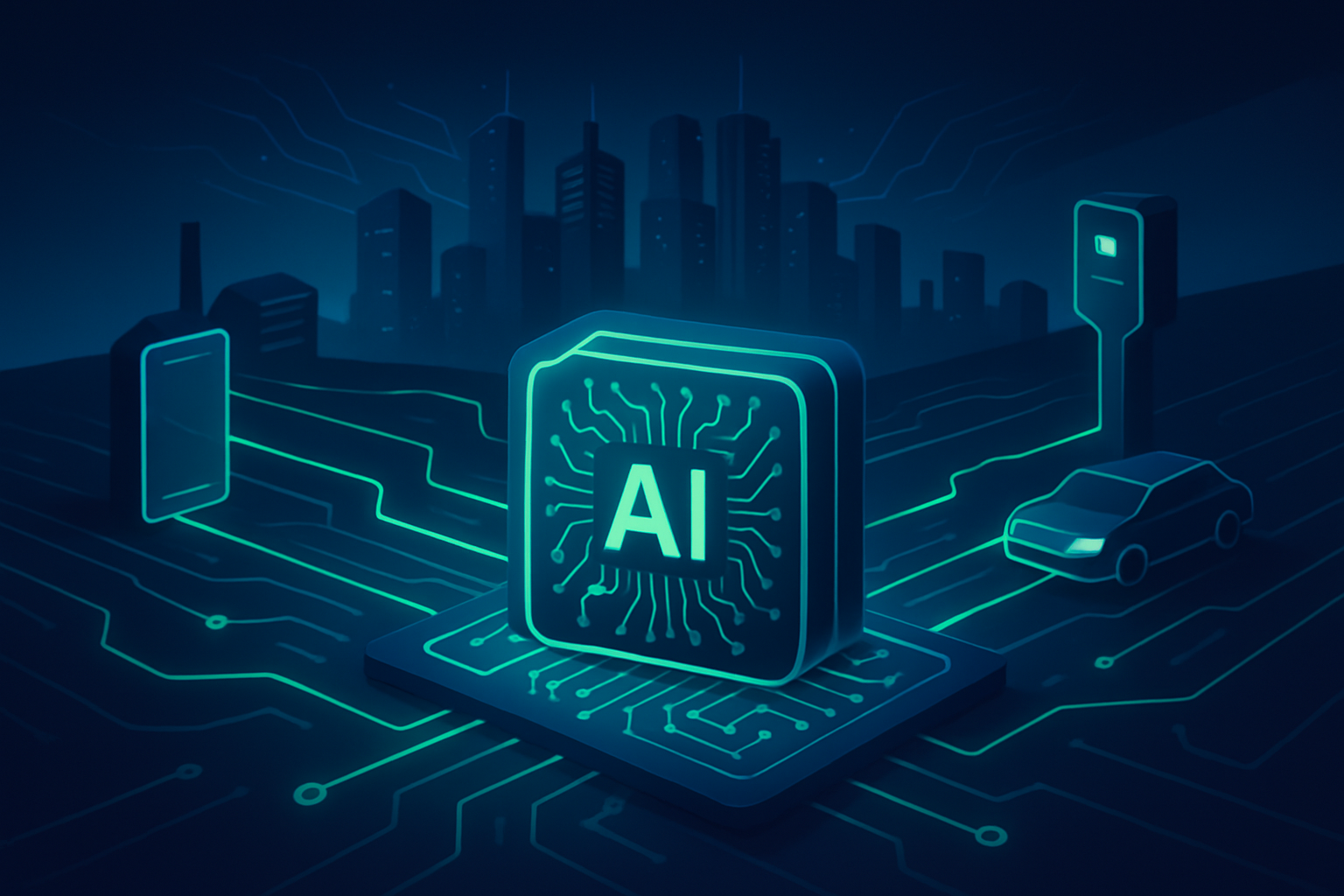
  • Edge AI Unleashed: Specialized Chips Propel Real-Time Intelligence to the Source

    Edge AI Unleashed: Specialized Chips Propel Real-Time Intelligence to the Source

    The artificial intelligence landscape is undergoing a profound transformation as AI processing shifts decisively from centralized cloud data centers to the network's periphery, closer to where data is generated. This paradigm shift, known as Edge AI, is fueled by the escalating demand for real-time insights, lower latency, and enhanced data privacy across an ever-growing ecosystem of connected devices. By late 2025, researchers are calling it "the year of Edge AI," with Gartner predicting that 75% of enterprise-managed data will be processed outside traditional data centers or the cloud. This movement to the edge is critical as billions of IoT devices come online, making traditional cloud infrastructure increasingly inefficient for handling the sheer volume and velocity of data.

    At the heart of this revolution are specialized semiconductor designs meticulously engineered for Edge AI workloads. Unlike general-purpose CPUs or even traditional GPUs, these purpose-built chips, including Neural Processing Units (NPUs) and Application-Specific Integrated Circuits (ASICs), are optimized for the unique demands of neural networks under strict power and resource constraints. Current developments in October 2025 show NPUs becoming ubiquitous in consumer devices, from smartphones to "AI PCs," which are projected to make up 43% of all PC shipments by year-end. The immediate significance of bringing AI processing closer to data sources cannot be overstated, as it dramatically reduces latency, conserves bandwidth, and enhances data privacy and security, ultimately creating a more responsive, efficient, and intelligent world.

    The Technical Core: Purpose-Built Silicon for Pervasive AI

    Edge AI represents a significant paradigm shift, moving artificial intelligence processing from centralized cloud data centers to local devices, or the "edge" of the network. This decentralization is driven by the increasing demand for real-time responsiveness, enhanced data privacy and security, and reduced bandwidth consumption in applications such as autonomous vehicles, industrial automation, robotics, and smart wearables. Unlike cloud AI, which relies on sending data to powerful remote servers for processing and then transmitting results back, Edge AI performs inference directly on the device where the data is generated. This eliminates network latency, making instantaneous decision-making possible, and inherently improves privacy by keeping sensitive data localized. As of late 2025, the Edge AI chip market is experiencing rapid growth, even surpassing cloud AI chip revenues, reflecting the critical need for low-cost, ultra-low-power chips designed specifically for this distributed intelligence model.

    Specialized semiconductor designs are at the heart of this Edge AI revolution. Neural Processing Units (NPUs) are becoming ubiquitous, specifically optimized Application-Specific Integrated Circuits (ASICs) that excel at low-power, high-efficiency inference tasks by handling operations like matrix multiplication with remarkable energy efficiency. Companies like Google (NASDAQ: GOOGL), with its Edge TPU and the new Coral NPU architecture, are designing AI-first hardware that prioritizes the ML matrix engine over scalar compute, enabling ultra-low-power, always-on AI for wearables and IoT devices. Intel (NASDAQ: INTC)'s integrated AI technologies, including iGPUs and NPUs, are providing viable, power-efficient alternatives to discrete GPUs for near-edge AI solutions. Field-Programmable Gate Arrays (FPGAs) continue to be vital, offering flexibility and reconfigurability for custom hardware implementations of inference algorithms, with manufacturers like Advanced Micro Devices (AMD) (NASDAQ: AMD) (Xilinx) and Intel (Altera) developing AI-optimized FPGA architectures that incorporate dedicated AI acceleration blocks.

    Neuromorphic chips, inspired by the human brain, are seeing 2025 as a "breakthrough year," with devices from BrainChip (ASX: BRN) (Akida), Intel (Loihi), and International Business Machines (IBM) (NYSE: IBM) (TrueNorth) entering the market at scale. These chips emulate neural networks directly in silicon, integrating memory and processing to offer significant advantages in energy efficiency (up to 1000x reductions for specific AI tasks compared to GPUs) and real-time learning, making them ideal for battery-powered edge devices. Furthermore, innovative memory architectures like In-Memory Computing (IMC) are being explored to address the "memory wall" bottleneck by integrating compute functions directly into memory, significantly reducing data movement and improving energy efficiency for data-intensive AI workloads.

    These specialized chips differ fundamentally from previous cloud-centric approaches that relied heavily on powerful, general-purpose GPUs in data centers for both training and inference. While cloud AI continues to be crucial for training large, resource-intensive models and analyzing data at scale, Edge AI chips are designed for efficient, low-latency inference on new, real-world data, often using compressed or quantized models. The AI advancements enabling this shift include improved language model distillation techniques, allowing Large Language Models (LLMs) to be shrunk for local execution with lower hardware requirements, as well as the proliferation of generative AI and agentic AI technologies taking hold in various industries. This allows for functionalities like contextual awareness, real-time translation, and proactive assistance directly on personal devices. The AI research community and industry experts have largely welcomed these advancements with excitement, recognizing the transformative potential of Edge AI. There's a consensus that energy-efficient hardware is not just optimizing AI but is defining its future, especially given concerns over AI's escalating energy footprint.

    Reshaping the AI Industry: A Competitive Edge at the Edge

    The rise of Edge AI and specialized semiconductor designs is fundamentally reshaping the artificial intelligence landscape, fostering a dynamic environment for tech giants and startups alike as of October 2025. This shift emphasizes moving AI processing from centralized cloud systems to local devices, significantly reducing latency, enhancing privacy, and improving operational efficiency across various applications. The global Edge AI market is experiencing rapid growth, projected to reach $25.65 billion in 2025 and an impressive $143.06 billion by 2034, driven by the proliferation of IoT devices, 5G technology, and advancements in AI algorithms. This necessitates hardware innovation, with specialized AI chips like GPUs, TPUs, and NPUs becoming central to handling immense workloads with greater energy efficiency and reduced thermal challenges. The push for efficiency is critical, as processing at the edge can reduce energy consumption by 100 to 1,000 times per AI task compared to cloud-based AI, extending battery life and enabling real-time operations without constant internet connectivity.

    Several major players stand to benefit significantly from this trend. NVIDIA (NASDAQ: NVDA) continues to hold a commanding lead in high-end AI training and data center GPUs but is also actively pursuing opportunities in the Edge AI market with its partners and new architectures. Intel (NASDAQ: INTC) is aggressively expanding its AI accelerator portfolio with new data center GPUs like "Crescent Island" designed for inference workloads and is pushing its Core Ultra processors for Edge AI, aiming for an open, developer-first software stack from the AI PC to the data center and industrial edge. Google (NASDAQ: GOOGL) is advancing its custom AI chips with the introduction of Trillium, its sixth-generation TPU optimized for on-device inference to improve energy efficiency, and is a significant player in both cloud and edge computing applications.

    Qualcomm (NASDAQ: QCOM) is making bold moves, particularly in the mobile and industrial IoT space, with developer kits featuring Edge Impulse and strategic partnerships, such as its recent acquisition of Arduino in October 2025, to become a full-stack Edge AI/IoT leader. ARM Holdings (NASDAQ: ARM), while traditionally licensing its power-efficient architectures, is increasingly engaging in AI chip manufacturing and design, with its Neoverse platform being leveraged by major cloud providers for custom chips. Advanced Micro Devices (AMD) (NASDAQ: AMD) is challenging NVIDIA's dominance with its Instinct MI350 series, offering increased high-bandwidth memory capacity for inferencing models. Startups are also playing a crucial role, developing highly specialized, performance-optimized solutions like optical processors and in-memory computing chips that could disrupt existing markets by offering superior performance per watt and cost-efficiency for specific AI models at the edge.

    The competitive landscape is intensifying, as tech giants and AI labs strive for strategic advantages. Companies are diversifying their semiconductor content, with a growing focus on custom silicon to optimize performance for specific workloads, reduce reliance on external suppliers, and gain greater control over their AI infrastructure. This internal chip development, exemplified by Amazon (NASDAQ: AMZN)'s Trainium and Inferentia, Microsoft (NASDAQ: MSFT)'s Azure Maia, and Google's Axion, allows them to offer specialized AI services, potentially disrupting traditional chipmakers in the cloud AI services market. The shift to Edge AI also presents potential disruptions to existing products and services that are heavily reliant on cloud-based AI, as the demand for real-time, local processing pushes for new hardware and software paradigms. Companies are embracing hybrid edge-cloud inferencing to manage data processing and mobility efficiently, requiring IT and OT teams to navigate seamless interaction between these environments. Strategic partnerships are becoming essential, with collaborations between hardware innovators and AI software developers crucial for successful market penetration, especially as new architectures require specialized software stacks. The market is moving towards a more diverse ecosystem of specialized hardware tailored for different AI workloads, rather than a few dominant general-purpose solutions.

    A Broader Canvas: Sustainability, Privacy, and New Frontiers

    The wider significance of Edge AI and specialized semiconductor designs lies in a fundamental paradigm shift within the artificial intelligence landscape, moving processing capabilities from centralized cloud data centers to the periphery of networks, closer to the data source. This decentralization of intelligence, often referred to as a hybrid AI ecosystem, allows for AI workloads to dynamically leverage both centralized and distributed computing strengths. By October 2025, this trend is solidified by the rapid development of specialized semiconductor chips, such as Neural Processing Units (NPUs) and Application-Specific Integrated Circuits (ASICs), which are purpose-built to optimize AI workloads under strict power and resource constraints. These innovations are essential for driving "AI everywhere" and fitting into broader trends like "Micro AI" for hyper-efficient models on tiny devices and Federated Learning, which enables collaborative model training without sharing raw data. This shift is becoming the backbone of innovation within the semiconductor industry, as companies increasingly move away from "one size fits all" solutions towards customized AI silicon for diverse applications.

    The impacts of Edge AI and specialized hardware are profound and far-reaching. By performing AI computations locally, these technologies dramatically reduce latency, conserve bandwidth, and enhance data privacy by minimizing the transmission of sensitive information to the cloud. This enables real-time AI applications crucial for sectors like autonomous vehicles, where milliseconds matter for collision avoidance, and personalized healthcare, offering immediate insights and responsive care. Beyond speed, Edge AI contributes to sustainability by reducing the energy consumption associated with extensive data transfers and large cloud data centers. New applications are emerging across industries, including predictive maintenance in manufacturing, real-time monitoring in smart cities, and AI-driven health diagnostics in wearables. Edge AI also offers enhanced reliability and autonomous operation, allowing devices to function effectively even in environments with limited or no internet connectivity.

    Despite the transformative benefits, the proliferation of Edge AI and specialized semiconductors introduces several potential concerns. Security is a primary challenge, as distributed edge devices expand the attack surface and can be vulnerable to physical tampering, requiring robust security protocols and continuous monitoring. Ethical implications also arise, particularly in critical applications like autonomous warfighting, where clear deployment frameworks and accountability are paramount. The complexity of deploying and managing vast edge networks, ensuring interoperability across diverse devices, and addressing continuous power consumption and thermal management for specialized chips are ongoing challenges. Furthermore, the rapid evolution of AI models, especially large language models, presents a "moving target" for chip designers who must hardwire support for future AI capabilities into silicon. Data management can also become challenging, as local processing can lead to fragmented, inconsistent datasets that are harder to aggregate and analyze comprehensively.

    Comparing Edge AI to previous AI milestones reveals it as a significant refinement and logical progression in the maturation of artificial intelligence. While breakthroughs like the adoption of GPUs in the late 2000s democratized AI training by making powerful parallel processing widely accessible, Edge AI is now democratizing AI inference, making intelligence pervasive and embedded in everyday devices. This marks a shift from cloud-centric AI models, where raw data was sent to distant data centers, to a model where AI operates at the source, anticipating needs and creating new opportunities. Developments around October 2025, such as the ubiquity of NPUs in consumer devices and advancements in in-memory computing, demonstrate a distinct focus on the industrialization and scaling of AI for real-time responsiveness and efficiency. The ongoing evolution includes federated learning, neuromorphic computing, and even hybrid classical-quantum architectures, pushing the boundaries towards self-sustaining, privacy-preserving, and infinitely scalable AI systems directly at the edge.

    The Horizon: What's Next for Edge AI

    Future developments in Edge AI and specialized semiconductor designs are poised for significant advancements, characterized by a relentless drive for greater efficiency, lower latency, and enhanced on-device intelligence. In the near term (1-3 years from October 2025), a key trend will be the wider commercial deployment of chiplet architectures and heterogeneous integration in AI accelerators. This modular approach, integrating multiple specialized dies into a single package, circumvents limitations of traditional silicon-based computing by improving yields, lowering costs, and enabling seamless integration of diverse functions. Neuromorphic and in-memory computing solutions will also become more prevalent in specialized edge AI applications, particularly in IoT, automotive, and robotics, where ultra-low power consumption and real-time processing are critical. There will be an increased focus on Neural Processing Units (NPUs) over general-purpose GPUs for inference tasks at the edge, as NPUs are optimized for "thinking" and reasoning with trained models, leading to more accurate and energy-efficient outcomes. The Edge AI hardware market is projected to reach USD 58.90 billion by 2030, growing from USD 26.14 billion in 2025, driven by continuous innovation in AI co-processors and expanding IoT capabilities. Smartphones, AI-enabled personal computers, and automotive safety systems are expected to anchor near-term growth.

    Looking further ahead, long-term developments will see continued innovation in intelligent sensors, allowing nearly every physical object to have a "digital twin" for optimized monitoring and process optimization in areas like smart homes and cities. Edge AI will continue to deepen its integration across various sectors, enabling applications such as real-time patient monitoring in healthcare, sophisticated control in industrial automation, and highly responsive autonomous systems in vehicles and drones. The shift towards local AI processing on devices aims to overcome bandwidth limitations, latency issues, and privacy concerns associated with cloud-based AI. Hybrid AI-quantum systems and specialized silicon hardware tailored for bitnet models are also on the horizon, promising to accelerate AI training times and reduce operational costs by processing information more efficiently with less power consumption. Experts predict that AI-related semiconductors will see growth approximately five times greater than non-AI applications, with a strong positive outlook for the semiconductor industry's financial improvement and new opportunities in 2025 and beyond.

    Despite these promising developments, significant challenges remain. Edge AI faces persistent issues with large-scale model deployment, interpretability, and vulnerabilities in privacy and security. Resource limitations on edge devices, including constrained processing power, memory, and energy budgets, pose substantial hurdles for deploying complex AI models. The need for real-time performance in critical applications like autonomous navigation demands inference times in milliseconds, which is challenging with large models. Data management at the edge is complex, as devices often capture incomplete or noisy real-time data, impacting prediction accuracy. Scalability, integration with diverse and heterogeneous hardware and software components, and balancing performance with energy efficiency are also critical challenges that require adaptive model compression, secure and interpretable Edge AI, and cross-layer co-design of hardware and algorithms.

    The Edge of a New Era: A Concluding Outlook

    The landscape of artificial intelligence is experiencing a profound transformation, spearheaded by the accelerating adoption of Edge AI and the concomitant evolution of specialized semiconductor designs. As of late 2025, the Edge AI market is in a period of rapid expansion, projected to reach USD 25.65 billion, fueled by the widespread integration of 5G technology, a growing demand for ultra-low latency processing, and the extensive deployment of AI solutions across smart cities, autonomous systems, and industrial automation. A key takeaway from this development is the shift of AI inference closer to the data source, enhancing real-time decision-making capabilities, improving data privacy and security, and reducing bandwidth costs. This necessitates a departure from traditional general-purpose processors towards purpose-built AI chips, including advanced GPUs, TPUs, ASICs, FPGAs, and particularly NPUs, which are optimized for the unique demands of AI workloads at the edge, balancing high performance with strict power and thermal budgets. This period also marks a "breakthrough year" for neuromorphic chips, with devices from companies like BrainChip, Intel, and IBM entering the market at scale to address the need for ultra-low power and real-time processing in edge applications.

    This convergence of Edge AI and specialized semiconductors represents a pivotal moment in the history of artificial intelligence, comparable in significance to the invention of the transistor or the advent of parallel processing with GPUs. It signifies a foundational shift that enables AI to transcend existing limitations, pushing the boundaries of what's achievable in terms of intelligence, autonomy, and problem-solving. The long-term impact promises a future where AI is not only more powerful but also more pervasive, sustainable, and seamlessly integrated into every facet of our lives, from personal assistants to global infrastructure. This includes the continued evolution towards federated learning, where AI models are trained across distributed edge devices without transferring raw data, further enhancing privacy and efficiency, and leveraging ultra-fast 5G connectivity for seamless interaction between edge devices and cloud systems. The development of lightweight AI models will also enable powerful algorithms to run on increasingly resource-constrained devices, solidifying the trend of localized intelligence.

    In the coming weeks and months, the industry will be closely watching for several key developments. Expect announcements regarding new funding rounds for innovative AI hardware startups, alongside further advancements in silicon photonics integration, which will be crucial for improving chip performance and efficiency. Demonstrations of neuromorphic chips tackling increasingly complex real-world problems in applications like IoT, automotive, and robotics will also gain traction, showcasing their potential for ultra-low power and real-time processing. Additionally, the wider commercial deployment of chiplet-based AI accelerators is anticipated, with major players like NVIDIA expected to adopt these modular approaches to circumvent the traditional limitations of Moore's Law. The ongoing race to develop power-efficient, specialized processors will continue to drive innovation, as demand for on-device inference and secure data processing at the edge intensifies across diverse industries.


    This content is intended for informational purposes only and represents analysis of current AI developments.

    TokenRing AI delivers enterprise-grade solutions for multi-agent AI workflow orchestration, AI-powered development tools, and seamless remote collaboration platforms.
    For more information, visit https://www.tokenring.ai/.