
Tag: Olympics

  • AI on Ice: How Artificial Intelligence is Reshaping Olympic Figure Skating

    AI on Ice: How Artificial Intelligence is Reshaping Olympic Figure Skating

    Artificial intelligence (AI) is rapidly revolutionizing the elegant and demanding world of Olympic figure skating, introducing unprecedented precision and objectivity across training, performance analysis, and judging. These advancements mark a significant shift from traditional, often subjective, human evaluation methods, promising to reshape how athletes prepare, how performances are evaluated, and ultimately, the fairness and development within the sport. The integration of AI systems, leveraging advanced computer vision and machine learning, provides data-driven analysis that enhances fairness, consistency, and training insights, fundamentally transforming the pursuit of excellence on ice.

    The immediate impact of AI's foray into figure skating includes increased transparency in judging, expedited scoring processes, and significantly enhanced athlete development through personalized training regimens. This technological leap not only augments human capabilities but is actively transforming the sport, promising optimized athletic development and a new standard for competitive fairness. From meticulously dissecting jump rotations to providing real-time feedback on intricate footwork, AI is becoming an indispensable tool for skaters, coaches, and governing bodies alike, pushing the boundaries of what's possible in this visually stunning sport.

    The Algorithmic Edge: Deep Dive into AI's Technical Revolution

    The technical application of AI in figure skating spans several critical areas, offering a level of detail and objectivity previously unattainable. At its core, advanced computer vision and machine learning algorithms are trained on vast datasets of skating performances, enabling them to recognize, track, and analyze human movement with incredible accuracy. This differs significantly from previous approaches that relied heavily on human observation, which, while skilled, is inherently susceptible to the limitations of real-time processing and subjective interpretation.

    In training methodologies, AI is profoundly impacting athlete development by offering highly personalized and precise feedback. Machine learning algorithms analyze a skater's performance data over time, identifying specific patterns and trends to create customized training programs. These programs are designed to improve strength, flexibility, balance, and endurance, even leveraging general AI chatbots like ChatGPT for tailored weekly plans. Real-time movement analysis, powered by advanced computer vision and pose estimation technologies, tracks intricate movements during elements like spins, jumps, and footwork, providing instant feedback on form and technique. Tools like the OOFSkate app, developed by computer science experts, analyze critical jump metrics—height, rotational speed, airtime, and landing quality—from a standard phone or tablet camera, detecting minute errors like a quarter-revolution short on a quad toe loop. This sensor-free feedback is a game-changer, allowing for immediate corrections and accelerated skill acquisition.

    For performance analysis, AI offers an unprecedented level of detail and objectivity. Systems excel at providing objective technical evaluations of elements that are complex and difficult for human judges to consistently measure, such as precisely determining the exact degrees of rotation in jumps, the position of the landing foot, the depth of edges, and the height and rotational speed of jumps. This precision helps identify critical deductions like under-rotations and incorrect edge calls. In synchronized skating, AI can analyze footage to enhance synchronization and formation precision across multiple skaters, identifying moments when a team is out of sync. Companies like Fujitsu (TYO: 6702) are adapting their high-precision skeleton recognition AI, originally for gymnastics, for figure skating to enhance analysis and fan engagement.

    Perhaps the most impactful application is in judging. AI is being developed to mitigate human bias, subjective interpretations, and inconsistencies that have historically affected human judging. By standardizing evaluation metrics, AI systems contribute to a fairer competitive environment. Emerging computer vision technology shows significant promise in objectively assessing technical elements, allowing human judges to concentrate on evaluating the artistic merit and emotional impact of a performance. The International Skating Union (ISU) is actively developing and planning to introduce technologies utilizing AI and augmented reality to accurately determine the number of turns in jumps and assess pre-rotation. While a complete replacement of human judges is not imminent, the prevailing view suggests a hybrid judging system, combining AI's consistency and objectivity in technical evaluation with human judges' indispensable ability to assess artistic merit, emotional connection, and overall presentation.

    AI's Impact on the Tech Landscape: Who Benefits?

    The revolution of AI in figure skating, and sports in general, presents a fertile ground for innovation and market disruption, benefiting a diverse range of AI companies, tech giants, and nimble startups. Companies specializing in computer vision, motion capture, and machine learning platforms stand to gain significantly. Their core technologies are directly applicable to analyzing complex human movement, making them crucial partners for sports federations and training academies.

    Major tech giants like Google (NASDAQ: GOOGL), Microsoft (NASDAQ: MSFT), and Amazon (NASDAQ: AMZN), with their extensive cloud AI services and research arms, are well-positioned to offer the scalable infrastructure and advanced machine learning tools required for processing vast amounts of video data and developing sophisticated analytical models. Their investments in AI research and development, particularly in areas like pose estimation and real-time analytics, can be easily repurposed for sports applications. These companies could provide the backbone for national skating federations or even the ISU to develop their proprietary AI judging and training systems.

    Startups focused on sports tech and specialized AI solutions are also poised for significant growth. Companies developing niche applications, like the aforementioned OOFSkate app, demonstrate the potential for smaller, agile teams to create highly effective tools that address specific needs within the sport. These startups can carve out market share by offering specialized software, hardware (e.g., smart sensors for ice rinks), or consultation services tailored to figure skating. The competitive landscape will likely see a rise in partnerships between sports organizations and these AI innovators, leading to new product offerings in performance tracking, injury prevention, and fan engagement.

    The disruption to existing products or services primarily affects traditional coaching methodologies and manual analysis tools. As AI provides more objective and detailed feedback, coaches who fail to integrate these technologies might find themselves at a disadvantage. However, rather than replacing human expertise, AI is more likely to augment it, empowering coaches with data-driven insights to make more informed decisions. The market positioning for AI labs and tech companies will increasingly lean towards offering comprehensive, end-to-end solutions for sports performance, from data acquisition and analysis to personalized training recommendations and objective scoring aids.

    Wider Significance: A Paradigm Shift for Sports and AI Ethics

    The integration of AI into Olympic figure skating is not an isolated phenomenon but rather a microcosm of a broader trend reshaping competitive sports globally. It signifies a paradigm shift towards data-driven decision-making and objective performance evaluation, moving away from purely subjective human judgment. This aligns with broader AI landscape trends focusing on explainable AI, real-time analytics, and the application of AI in complex, high-stakes environments. The success of AI in dissecting the intricate movements of figure skating demonstrates its capability to tackle other visually complex sports, from gymnastics to diving, potentially standardizing evaluation across many disciplines.

    The impacts are profound. For athletes, it means access to unparalleled insights into their technique, enabling faster improvement and a reduced risk of injury through biomechanical analysis. For coaches, it transforms their role from primary evaluators to strategic facilitators, leveraging AI data to refine training plans. For fans, it could lead to a more transparent and arguably fairer sport, with clearer explanations for scores and potentially new ways to engage with performance data. However, this also raises potential concerns. The reliance on AI for judging, even in a hybrid system, brings forth questions about algorithmic bias – if the training data reflects existing human biases, the AI could perpetuate them. There are also ethical considerations regarding data privacy for athletes and the potential for over-optimization, where the pursuit of algorithmic perfection might stifle artistic expression or innovative, unconventional techniques.

    Comparing this to previous AI milestones, the application in figure skating stands alongside breakthroughs in chess, Go, and even medical diagnostics. While AI in games like chess proved its ability to master complex rules, its application in figure skating demonstrates AI's capacity to interpret nuanced visual information and contribute to subjective domains, bridging the gap between objective data and artistic expression. The ongoing development by the ISU highlights a crucial trend: governing bodies are actively embracing AI as a tool for integrity and advancement, rather than resisting it. This acceptance marks a significant step in AI's journey from academic curiosity to practical, impactful application in areas traditionally considered human-exclusive.

    The Horizon: Future Developments and Challenges

    The future of AI in figure skating promises even more sophisticated applications and deeper integration. In the near term, we can expect enhanced real-time feedback systems that provide immediate, actionable insights to skaters and coaches during practice, perhaps through augmented reality displays or haptic feedback devices. The refinement of AI-powered injury prevention systems will be crucial, utilizing predictive analytics based on biomechanical data to identify early warning signs of potential injuries, leading to personalized prehabilitation programs. The ISU's efforts will likely lead to the formal implementation of AI-assisted judging for technical elements, starting with jump rotations and edge calls, further solidifying its role in official competitions.

    Long-term developments could include fully adaptive AI coaching systems that not only analyze performance but also dynamically adjust training schedules, dietary recommendations, and mental preparation strategies based on an athlete's real-time physiological and psychological state. We might see AI-generated choreography suggestions that optimize for both technical scoring potential and artistic impact, pushing creative boundaries while adhering to competitive requirements. The concept of a "Synchrobot" for synchronized skating, capable of consistently analyzing body lines and leg angles across multiple skaters for unison, could become a reality, working in conjunction with human judges.

    However, significant challenges need to be addressed. The inherent complexity of the sport's intricate movements demands extensive, high-quality, and diverse datasets to train AI systems effectively, avoiding biases and ensuring robustness across different body types and skating styles. Ethical considerations regarding algorithmic transparency, accountability, and the potential impact on the sport's artistic integrity will require ongoing dialogue and careful governance. Experts predict that the next phase will involve a delicate balance between leveraging AI's analytical power and preserving the human element of artistry, emotion, and subjective interpretation that defines figure skating. The goal isn't to replace human judgment entirely but to create a symbiotic relationship where AI elevates the sport's fairness and performance standards.

    Wrapping Up: AI's Enduring Legacy on Ice

    The integration of AI into Olympic figure skating represents a monumental shift, fundamentally redefining training methodologies, performance analysis, and judging. The key takeaways are clear: AI offers unprecedented objectivity and precision, enabling personalized athlete development, unbiased technical evaluation, and a potential for greater transparency in scoring. From real-time jump analysis to mitigating human biases in judging, AI is proving to be an indispensable tool for advancing the sport.

    This development's significance in AI history lies in its application to a highly nuanced, visually complex, and traditionally subjective domain. It showcases AI's capability not just for data processing but for interpreting intricate human performance and contributing to artistic evaluation. It underscores the broader trend of AI moving beyond enterprise applications into the fabric of human endeavors, including elite sports.

    Looking ahead, the long-term impact will likely see figure skating become a more data-informed, equitable, and perhaps even safer sport. The collaboration between AI and human expertise will be crucial, ensuring that technology enhances rather than diminishes the artistry and passion that defines skating. In the coming weeks and months, it will be vital to watch for further announcements from the International Skating Union regarding their AI implementation plans, the emergence of new sports tech startups, and the ongoing dialogue around the ethical implications of AI in competitive sports. The ice is set for AI to leave an indelible mark on figure skating's future.


    This content is intended for informational purposes only and represents analysis of current AI developments.

    TokenRing AI delivers enterprise-grade solutions for multi-agent AI workflow orchestration, AI-powered development tools, and seamless remote collaboration platforms.
    For more information, visit https://www.tokenring.ai/.
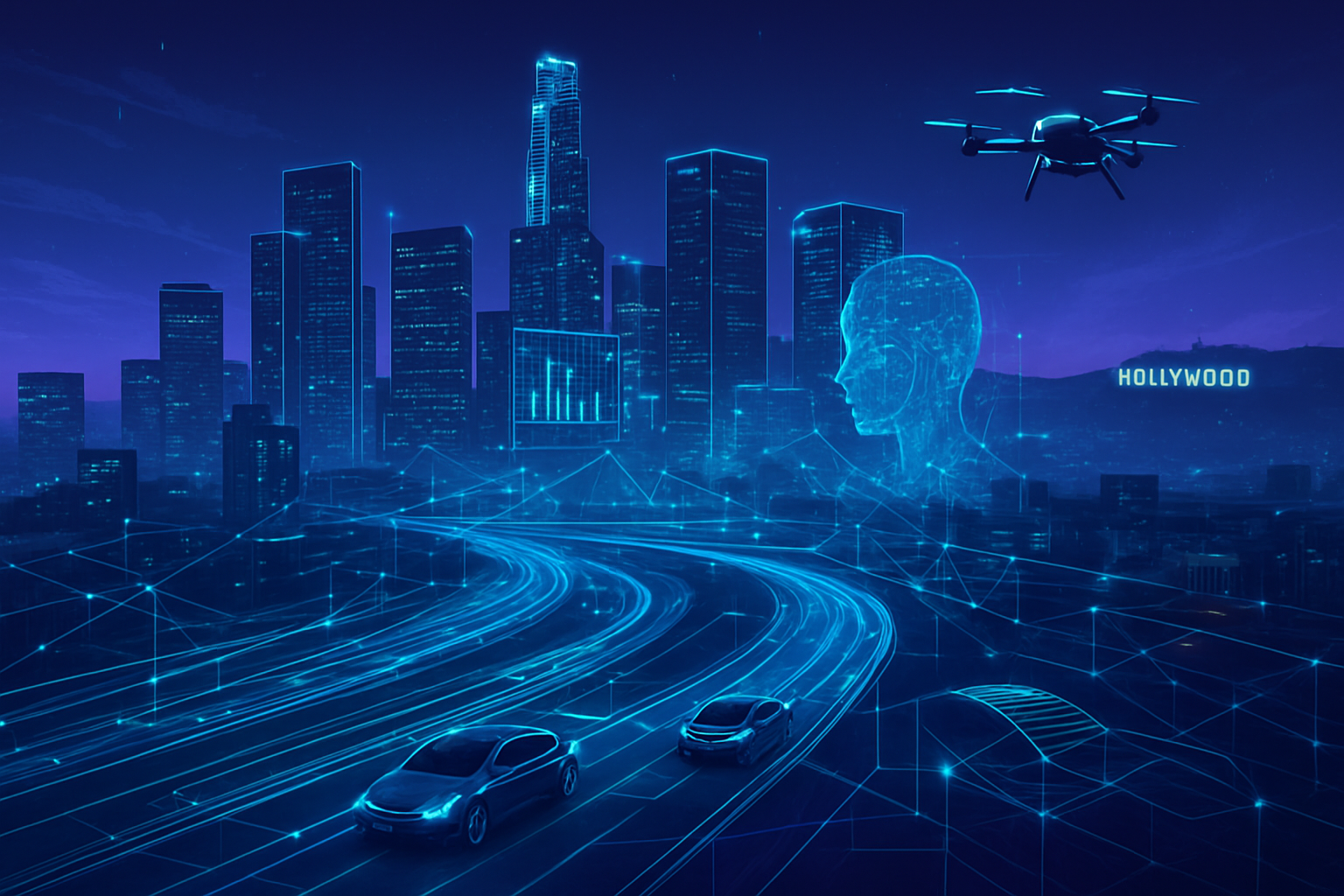
  • Los Angeles Orchestrates an AI-Powered Future for Global Sporting Spectacles

    Los Angeles Orchestrates an AI-Powered Future for Global Sporting Spectacles

    As the world's gaze turns towards Los Angeles in anticipation of a series of monumental sporting events—including the 2026 FIFA World Cup, the 2027 Super Bowl, and the 2028 Olympic and Paralympic Games—the city is not merely preparing to host; it is undergoing a profound technological metamorphosis. At the heart of this transformation is an ambitious integration of artificial intelligence (AI) across its urban fabric, aimed at revolutionizing everything from traffic flow and public safety to the overall visitor experience. This strategic deployment of AI, encapsulated in the "Smart City LA 2028" initiative, signifies a pivotal moment in urban development, positioning Los Angeles as a vanguard in leveraging intelligent systems for large-scale event management and sustainable metropolitan growth.

    The immediate significance of this AI-driven overhaul extends beyond mere logistical improvements. It represents a commitment to reimagining the urban environment itself, moving from a traditional "car city" to a multimodal transit hub powered by data and predictive analytics. By embedding AI into critical infrastructure and public services, Los Angeles seeks to not only ensure the seamless execution of these global events but also to establish a lasting legacy of efficiency, connectivity, and enhanced quality of life for its residents and future visitors. This proactive embrace of AI signals a new era for smart cities, where technology serves as the backbone for unprecedented levels of urban intelligence and responsiveness.

    The Digital Backbone: AI's Technical Blueprint for a Smarter LA

    Los Angeles's AI strategy is underpinned by a sophisticated array of technical advancements designed to address the complex challenges of hosting millions of attendees. A cornerstone of this approach is the evolution of traffic management. The city is upgrading its Automated Traffic Surveillance and Control (ATSAC) system, which already boasts 45,000 loop detectors and over 4,850 connected intersections. AI-powered algorithms analyze real-time data from these sensors and cameras to dynamically adjust traffic signals, predict congestion hotspots, and optimize flow. This differs significantly from previous static or reactive systems by offering predictive capabilities and adaptive responses, aiming to drastically reduce commute times and manage event-day surges more effectively.

    In the realm of public safety, AI is being deployed for predictive policing and crowd management. Computer vision systems are being integrated to monitor large gatherings, detecting unusual behaviors, unattended objects, or potential bottlenecks in real-time. AI models can simulate various crowd scenarios, factoring in variables like weather and expected attendance, to help planners design optimal entry/exit points and space utilization. This proactive approach to security and crowd control represents a significant leap from traditional human-centric surveillance, offering instant alerts and data-driven insights for emergency responders. Furthermore, the Los Angeles Police Department (LAPD) is utilizing virtual reality (VR) for officer training, allowing for immersive practice in de-escalation techniques and appropriate use-of-force scenarios, mitigating risks associated with real-life drills.

    Infrastructure upgrades are also heavily reliant on AI and related technologies. The Los Angeles International Airport (LAX) is undergoing a multi-billion dollar transformation, including an automated "people mover" system capable of handling 85 million passengers annually with two-minute peak-hour intervals, leveraging full automation and electric technology. The "Smart City LA 2028" plan also includes incentives for widespread fiber-optic buildout and a target of 10,000 public electric vehicle charging stations by 2024. These initiatives, while not solely AI-driven, create the essential data infrastructure and sustainable environment for AI systems to thrive, enabling everything from smart parking solutions to optimized energy grids. The initial reactions from urban planning and tech communities highlight the ambitious scale and integrated nature of LA's strategy, often pointing to it as a potential blueprint for other global cities facing similar challenges.

    Corporate Beneficiaries and Competitive Edge in the AI Arena

    The extensive AI integration in Los Angeles creates significant opportunities and competitive dynamics for a range of technology companies, from established giants to innovative startups. Google (NASDAQ: GOOGL) stands out as a primary beneficiary and key partner. The City of Los Angeles is collaborating with Google Public Sector to deploy Google Workspace with Gemini across its 27,500 employees, enhancing internal communication, automating administrative tasks, and streamlining project management. This partnership also leverages NotebookLM for reviewing large documents and identifying funding opportunities. As a founding partner for the LA28 Olympic and Paralympic Games, Google's Gemini and Google Cloud are poised to play a crucial role in data management, service personalization, and real-time communication for the event, significantly boosting its market position in government and large-scale event solutions.

    Beyond Google, companies specializing in smart city infrastructure, IoT devices, and cybersecurity are set to gain. Firms developing advanced sensor technologies, computer vision analytics platforms, and predictive modeling software will find a robust market in LA's ongoing development. The city's collaboration with the University of Southern California (USC) and various tech companies to form I3, a consortium focused on developing a city-wide Internet of Things (IoT) environment, signals a fertile ground for startups and established players in this domain. This initiative aims to connect everything from traffic lights and parking meters to smartphones, creating a truly responsive urban ecosystem.

    The competitive implications for major AI labs and tech companies are substantial. Success in Los Angeles could serve as a powerful case study, influencing other global cities preparing for major events or simply seeking to modernize their infrastructure. Companies that can demonstrate robust, scalable, and ethically sound AI solutions in a high-stakes environment like the Olympics will gain a significant strategic advantage. This development could also disrupt existing service models, pushing traditional urban planning and public safety contractors to adopt more AI-centric approaches or risk being outpaced by more technologically agile competitors. The focus on cybersecurity, given the increased digitization, also creates a burgeoning market for AI-powered threat detection and prevention solutions, positioning specialized cybersecurity firms for growth.

    The Broader AI Landscape: Vision, Concerns, and Milestones

    Los Angeles's ambitious AI strategy for its upcoming mega-events is more than just a local initiative; it's a significant marker in the broader AI landscape, illustrating the accelerating trend of "smart city" development globally. This integration of AI into urban planning, public safety, and citizen services highlights a shift from theoretical discussions about AI's potential to concrete, large-scale deployments that directly impact daily life. It fits into a wider movement where cities are increasingly viewing AI as a critical tool for improving efficiency, sustainability, and resilience in the face of growing populations and complex urban challenges. The sheer scale of data collection and analysis required for such an endeavor pushes the boundaries of current AI capabilities, particularly in areas like real-time predictive analytics and multimodal data fusion.

    However, this widespread deployment of AI also brings forth significant ethical concerns, primarily regarding privacy and potential bias. The use of AI-driven surveillance systems, while enhancing public safety, raises questions about the collection and use of biometric data, the potential for false positives, and algorithmic discrimination. California, with its strong constitutional right to privacy and the California Consumer Privacy Act (CCPA), is actively grappling with these issues, with legislators considering bills to ban discrimination by AI tools. These concerns underscore the critical need for transparent AI governance, robust data protection measures, and ongoing public discourse to ensure that technological advancements serve the public good without infringing on civil liberties.

    Comparing this to previous AI milestones, LA's project represents a move beyond isolated AI applications (like self-driving cars or voice assistants) towards a holistic, interconnected urban intelligence system. While not a singular "breakthrough" in the mold of AlphaGo's victory over Go champions, it signifies a crucial breakthrough in the practical, large-scale integration of diverse AI technologies into complex real-world environments. It demonstrates the maturation of AI from specialized tasks to an enabling technology for comprehensive urban transformation, potentially setting a new standard for how cities worldwide approach modernization and event management.

    The Horizon: Future Developments and Emerging Challenges

    Looking ahead, the AI initiatives in Los Angeles are poised for continuous evolution, with both near-term and long-term developments on the horizon. In the immediate future, we can expect further expansion of 5G connectivity across the city, providing the necessary high-speed infrastructure for more advanced AI applications, particularly those involving real-time data processing and edge computing. The rollout of personalized AI-powered travel itineraries and mobile applications will likely intensify, offering more sophisticated recommendations and seamless navigation for visitors. Interactive chatbots are also expected to become more prevalent, providing instant, multilingual assistance for event attendees and residents alike.

    Longer term, experts predict that Los Angeles will continue to refine its AI models, moving towards even more predictive and autonomous urban management systems. This could include highly adaptive infrastructure that anticipates needs before they arise, such as self-optimizing energy grids or waste management systems that respond dynamically to urban activity. The modernization of the city's 311 system with AI tools is designed to be a lasting piece of infrastructure, ensuring that improved service delivery extends far beyond the major events. Potential applications on the horizon include advanced environmental monitoring using AI to combat pollution, and AI-driven solutions for affordable housing and resource allocation, making the city more equitable.

    However, several challenges need to be addressed. The ongoing ethical debate surrounding AI surveillance and data privacy will require continuous legislative and technological safeguards. Ensuring the cybersecurity of interconnected urban systems will be paramount, as the increased reliance on digital infrastructure presents new vulnerabilities to cyberattacks. Furthermore, the challenge of integrating disparate AI systems from various vendors into a cohesive, interoperable framework will test the city's technical prowess and its ability to foster collaborative ecosystems. Experts predict a future where AI becomes an invisible layer of urban intelligence, seamlessly enhancing city functions, but only if these complex technical, ethical, and integration hurdles can be successfully navigated.

    A New Blueprint for Urban Intelligence: Wrapping Up LA's AI Journey

    Los Angeles's strategic embrace of artificial intelligence for its upcoming global sporting events marks a pivotal moment in the evolution of smart cities. The key takeaways from this ambitious undertaking are clear: AI is no longer a futuristic concept but a practical, indispensable tool for urban planning, public safety, and enhancing the citizen and visitor experience. By leveraging AI-powered traffic management, predictive security systems, and personalized digital services, Los Angeles is striving to become a connected, efficient, and intelligently responsive urban center. This development signifies a profound shift in how cities prepare for and manage large-scale events, setting a new global benchmark.

    The significance of this development in AI history lies in its demonstration of large-scale, integrated AI application in a complex, high-stakes environment. It moves beyond isolated AI successes to showcase the technology's capability to orchestrate an entire urban ecosystem. While the benefits of enhanced efficiency and safety are evident, the ongoing discussions around data privacy, algorithmic bias, and cybersecurity underscore the critical importance of responsible AI development and deployment. The city's efforts will serve as a living laboratory, providing invaluable lessons for other metropolitan areas around the world.

    In the coming weeks and months, the world will be watching Los Angeles closely. We should look for concrete results from the initial deployments, particularly in traffic flow improvements and public safety metrics. The ongoing dialogue between policymakers, technologists, and privacy advocates regarding AI governance will also be crucial. Ultimately, LA's journey is not just about hosting a few events; it's about forging a lasting legacy of urban intelligence, providing a compelling vision for how AI can fundamentally reshape our cities for the better, making them more resilient, responsive, and ready for the future.


    This content is intended for informational purposes only and represents analysis of current AI developments.

    TokenRing AI delivers enterprise-grade solutions for multi-agent AI workflow orchestration, AI-powered development tools, and seamless remote collaboration platforms.
    For more information, visit https://www.tokenring.ai/.