
Tag: ON Semiconductor

  • ON Semiconductor Navigates Market Headwinds with Strategic Clarity: SiC, AI, and EVs Drive Long-Term Optimism Amidst Analyst Upgrades

    ON Semiconductor Navigates Market Headwinds with Strategic Clarity: SiC, AI, and EVs Drive Long-Term Optimism Amidst Analyst Upgrades

    PHOENIX, AZ – December 2, 2025 – ON Semiconductor (NASDAQ: ON) has been a focal point of investor attention throughout late 2024 and 2025, demonstrating a resilient, albeit sometimes volatile, stock performance despite broader market apprehension. The company, a key player in intelligent power and sensing technologies, has consistently showcased its strategic pivot towards high-growth segments such as electric vehicles (EVs), industrial automation, and Artificial Intelligence (AI) data centers. This strategic clarity, underpinned by significant investments in Silicon Carbide (SiC) technology and key partnerships, has garnered a mixed but ultimately optimistic outlook from industry analysts, with a notable number of "Buy" ratings and upward-revised price targets signaling confidence in its long-term trajectory.

    Despite several quarters where ON Semiconductor surpassed Wall Street's earnings and revenue expectations, its stock often reacted negatively, indicating investor sensitivity to forward-looking guidance and macroeconomic headwinds. However, as the semiconductor market shows signs of stabilization in late 2025, ON Semiconductor's consistent focus on operational efficiency through its "Fab Right" strategy and its aggressive pursuit of next-generation technologies like SiC and Gallium Nitride (GaN) are beginning to translate into renewed analyst confidence and a clearer path for future growth.

    Powering the Future: ON Semiconductor's Technological Edge in Wide Bandgap Materials and AI

    ON Semiconductor's positive long-term outlook is firmly rooted in its leadership and significant investments in several transformative technological and market trends. Central to this is its pioneering work in Silicon Carbide (SiC) technology, a wide bandgap material offering superior efficiency, thermal conductivity, and breakdown voltage compared to traditional silicon. SiC is indispensable for high-power density and efficiency applications, particularly in the rapidly expanding EV market and the increasingly energy-hungry AI data centers.

    The company's strategic advantage in SiC stems from its aggressive vertical integration, controlling the entire manufacturing process from crystal growth to wafer processing and final device fabrication. This comprehensive approach, supported by substantial investments including a planned €1.64 billion investment in Europe's first fully integrated 8-inch SiC power device fab in the Czech Republic, ensures supply chain stability, stringent quality control, and accelerated innovation. ON Semiconductor's EliteSiC MOSFETs and diodes are engineered to deliver superior efficiency and faster switching speeds, crucial for extending EV range, enabling faster charging, and optimizing power conversion in industrial and AI applications.

    Beyond SiC, ON Semiconductor is making significant strides in electric vehicles, where its integrated SiC solutions are pivotal for 800V architectures, enhancing range and reducing charging times. Strategic partnerships with automotive giants like Volkswagen Group (XTRA: VOW) and other OEMs underscore its deep market penetration. In industrial automation, its intelligent sensing and broad power portfolios support the shift towards Industry 4.0, while for AI data centers, ON Semiconductor provides high-efficiency power conversion solutions, including a critical partnership with Nvidia (NASDAQ: NVDA) to accelerate the transition to 800 VDC power architectures. The company is also exploring Gallium Nitride (GaN) technology, collaborating with Innoscience to scale production for similar high-efficiency applications across industrial, automotive, and AI sectors.

    Strategic Positioning and Competitive Advantage in a Dynamic Semiconductor Landscape

    ON Semiconductor's strategic position in the semiconductor industry is robust, built on a foundation of continuous innovation, operational efficiency, and a deliberate focus on high-growth, high-value segments. As the second-largest power chipmaker globally and a leading supplier of automotive image sensors, the company has successfully pivoted its portfolio towards megatrends such as EV electrification, Advanced Driver-Assistance Systems (ADAS), industrial automation, and renewable energy. This targeted approach is critical for long-term growth and market leadership, providing stability amidst market fluctuations.

    The company's "Fab Right" strategy is a cornerstone of its competitive advantage, optimizing its manufacturing asset footprint to enhance efficiency and improve return on invested capital. This involves consolidating facilities, divesting subscale fabs, and investing in more efficient 300mm fabs, such as the East Fishkill facility acquired from GLOBALFOUNDRIES (NASDAQ: GFS). This strategy allows ON Semiconductor to manufacture higher-margin strategic growth products on larger wafers, leading to increased capacity and manufacturing efficiencies while maintaining flexibility through foundry partnerships.

    Crucially, ON Semiconductor's aggressive vertical integration in Silicon Carbide (SiC) sets it apart. By controlling the entire SiC production process—from crystal growth to advanced packaging—the company ensures supply assurance, maintains stringent quality and cost controls, and accelerates innovation. This end-to-end capability is vital for meeting the demanding requirements of automotive customers and building supply chain resilience. Strategic partnerships with industry leaders like Audi (XTRA: NSU), DENSO CORPORATION (TYO: 6902), Innoscience, and Nvidia further solidify ON Semiconductor's market positioning, enabling collaborative innovation and early integration of its advanced semiconductor technologies into next-generation products. These developments collectively enhance ON Semiconductor's competitive edge, allowing it to capitalize on evolving market demands and solidify its role as a critical enabler of future technologies.

    Broader Implications: Fueling Global Electrification and the AI Revolution

    ON Semiconductor's strategic advancements in SiC technology for EVs and AI data centers, amplified by its partnership with Nvidia, resonate deeply within the broader semiconductor and AI landscape. These developments are not isolated events but rather integral components of a global push towards increased power efficiency, widespread electrification, and the relentless demand for high-performance computing. The industry's transition to wide bandgap materials like SiC and GaN represents a fundamental shift, moving beyond the physical limitations of traditional silicon to unlock new levels of performance and energy savings.

    The wider impacts of these innovations are profound. In the realm of sustainability, ON Semiconductor's SiC solutions contribute significantly to reducing energy losses in EVs and data centers, thereby lowering the carbon footprint of electrified transport and digital infrastructure. Technologically, the collaboration with Nvidia on 800V DC power architectures pushes the boundaries of power management in AI, facilitating more powerful, compact, and efficient AI accelerators and data center designs. Economically, the increased adoption of SiC drives substantial growth in the power semiconductor market, creating new opportunities and fostering innovation across the ecosystem.

    However, this transformative period is not without its concerns. SiC manufacturing remains complex and costly, with challenges in crystal growth, wafer processing, and defect rates potentially limiting widespread adoption. Intense competition, particularly from aggressive Chinese manufacturers, coupled with potential short-term oversupply in 2025 due to rapid capacity expansion and fluctuating EV demand, poses significant market pressures. Geopolitical risks and cost pressures also continue to reshape global supply chain strategies. This dynamic environment, characterized by both immense opportunity and formidable challenges, echoes historical transitions in the semiconductor industry, such as the shift from germanium to silicon or the relentless pursuit of miniaturization under Moore's Law, where material science and manufacturing prowess dictate the pace of progress.

    The Road Ahead: Future Developments and Expert Outlook

    Looking to the near-term (2025-2026), ON Semiconductor anticipates a period of financial improvement and market recovery, with positive revenue trends and projected earnings growth. The company's strategic focus on AI and industrial markets, bolstered by its Nvidia partnership, is expected to mitigate potential downturns in the automotive sector. Longer-term (beyond 2026), ON Semiconductor is committed to sustainable growth through continued investment in next-generation technologies and ambitious environmental goals, including significant reductions in greenhouse gas emissions by 2034. A key challenge remains its sensitivity to the EV market slowdown and broader economic factors impacting consumer spending.

    The broader semiconductor industry is poised for robust growth, with projections of the global market exceeding $700 billion in 2025 and potentially reaching $1 trillion by the end of the decade, or even $2 trillion by 2040. This expansion will be primarily fueled by AI, Internet of Things (IoT), advanced automotive applications, and real-time data processing needs. Near-term, improvements in chip supply are expected, alongside growth in PC and smartphone sales, and the ramp-up of advanced packaging technologies and 2 nm processes by leading foundries.

    Future applications and use cases will be dominated by AI accelerators for data centers and edge devices, high-performance components for EVs and autonomous vehicles, power management solutions for renewable energy infrastructure, and specialized chips for medical devices, 5G/6G communication, and IoT. Expert predictions include AI chips exceeding $150 billion in 2025, with the total addressable market for AI accelerators reaching $500 billion by 2028. Generative AI is seen as the next major growth curve, driving innovation in chip design, manufacturing, and the development of specialized hardware like Neural Processing Units (NPUs). Challenges include persistent talent shortages, geopolitical tensions impacting supply chains, rising manufacturing costs, and the increasing demand for energy efficiency and sustainability in chip production. The continued adoption of SiC and GaN, along with AI's transformative impact on chip design and manufacturing, will define the industry's trajectory towards a future of more intelligent, efficient, and powerful electronic systems.

    A Strategic Powerhouse in the AI Era: Final Thoughts

    ON Semiconductor's journey through late 2024 and 2025 underscores its resilience and strategic foresight in a rapidly evolving technological landscape. Despite navigating market headwinds and investor caution, the company has consistently demonstrated its commitment to high-growth sectors and next-generation technologies. The key takeaways from this period are clear: ON Semiconductor's aggressive vertical integration in SiC, its pivotal role in powering the EV revolution, and its strategic partnership with Nvidia for AI data centers position it as a critical enabler of the future.

    This development signifies ON Semiconductor's transition from a broad-based semiconductor supplier to a specialized powerhouse in intelligent power and sensing solutions, particularly in wide bandgap materials. Its "Fab Right" strategy and focus on operational excellence are not merely cost-saving measures but fundamental shifts designed to enhance agility and competitiveness. In the grand narrative of AI history and semiconductor evolution, ON Semiconductor's current trajectory represents a crucial phase where material science breakthroughs are directly translating into real-world applications that drive energy efficiency, performance, and sustainability across industries.

    In the coming weeks and months, investors and industry observers should watch for further announcements regarding ON Semiconductor's SiC manufacturing expansion, new design wins in the automotive and industrial sectors, and the tangible impacts of its collaboration with Nvidia in the burgeoning AI data center market. The company's ability to continue capitalizing on these megatrends, while effectively managing manufacturing complexities and competitive pressures, will be central to its sustained growth and its enduring significance in the AI-driven era.


    This content is intended for informational purposes only and represents analysis of current AI developments.

    TokenRing AI delivers enterprise-grade solutions for multi-agent AI workflow orchestration, AI-powered development tools, and seamless remote collaboration platforms.
    For more information, visit https://www.tokenring.ai/.

  • ON Semiconductor Unleashes $6 Billion Share Buyback: A Bold Statement on Valuation and Future Strategy

    ON Semiconductor Unleashes $6 Billion Share Buyback: A Bold Statement on Valuation and Future Strategy

    Phoenix, AZ – November 18, 2025 – ON Semiconductor (NASDAQ: ON), a leading provider of intelligent power and sensing technologies, today announced a new and expansive $6 billion share repurchase program. This significant financial maneuver, set to commence on January 1, 2026, and run for three years through December 31, 2028, effectively doubles the company's previous $3 billion authorization. The announcement, made concurrently with the current date, signals a strong vote of confidence from management in the company's financial health, long-term strategic direction, and a belief that its shares are currently undervalued.

    The immediate significance of this colossal buyback is multi-faceted. It represents a substantial commitment of capital, amounting to approximately one-third of the company's current market capitalization of $18.34 billion. Thad Trent, ON Semiconductor's Executive Vice President and CFO, underscored that doubling the authorization demonstrates a dedication to disciplined capital management and creating long-term shareholder value. This move also highlights the company's robust liquidity, with a current ratio of 5.23, and a history of aggressive share repurchases, having utilized nearly 100% of its free cash flow in 2025 for buybacks under the expiring program.

    Financial Power Play: Unpacking the $6 Billion Share Repurchase

    The $6 billion share repurchase program is a clear signal of ON Semiconductor's financial strength and its strategic approach to capital allocation. The program offers flexibility, allowing repurchases through various methods, including open market purchases, privately negotiated transactions, or Rule 10b5-1 trading plans, with timing dependent on market conditions and stock prices. This flexibility allows the company to opportunistically acquire shares.

    This new authorization significantly expands upon a prior $3 billion program that is set to expire on December 31, 2025. Under the previous program, ON Semiconductor had already repurchased $2.1 billion of its common stock over the preceding three years, including a notable allocation of approximately 100% of its free cash flow in 2025 to share repurchases. This aggressive approach indicates a consistent strategy of returning capital to shareholders. Historically, ON Semiconductor has also focused on transforming its business by divesting from legacy, low-growth segments and investing heavily in higher-growth, higher-margin industries like automotive and industrial, particularly in advanced power solutions such as Silicon Carbide (SiC) and Gallium Nitride (GaN). This "Fab Right" strategy aims to optimize manufacturing for higher-value products and expand gross margins.

    The financial implications of such a large buyback are substantial. Primarily, it is expected to boost Earnings Per Share (EPS) by reducing the number of outstanding shares. Assuming constant or growing net income, fewer shares mean a larger slice of earnings for each remaining share. This can make the stock more attractive to investors and potentially lead to a higher stock valuation. Management's decision to repurchase shares often signals their belief that the stock is undervalued, projecting confidence in future earnings and the company's prospects. This is particularly relevant given that ON Semiconductor shares were trading down approximately 27% year-to-date and appeared undervalued by some estimates prior to the announcement. On the balance sheet, the buyback will reduce cash holdings and total assets, simultaneously decreasing shareholders' equity. However, this can also improve metrics like Return on Equity (ROE), making the company appear more efficient. Crucially, ON Semiconductor's strong liquidity and moderate debt levels suggest it can fund this buyback without undue financial strain.

    Market Responds Positively as Investors Eye Long-Term Value

    The market's reaction to ON Semiconductor's (NASDAQ: ON) $6 billion share buyback announcement was immediately positive. Following the news, ON Semiconductor's shares experienced an uplift, trading higher in extended hours. This positive movement came as the stock had been trading lower year-to-date, suggesting that the buyback could serve as a significant catalyst for a rebound, especially given independent assessments of the company's undervaluation.

    Financial analysts largely viewed the substantial share repurchase program favorably. A Capital Allocation Analyst expressed a positive outlook, noting the doubling of the buyback authorization. Analysts generally interpret such significant buybacks as a strong signal of management's confidence in the company's future performance and cash flow visibility. This confidence, combined with the EPS boost from a reduced share count, is seen as supportive of the stock's valuation. InvestingPro highlighted ON Semiconductor's aggressive share buyback strategy as a key characteristic of its management. While some analysts, like Piper Sandler, had recently adjusted price targets due to broader industry multiples, the overall sentiment around the buyback itself was positive, affirming a commitment to shareholder value.

    For current investors, the $6 billion share buyback signifies a strong dedication to returning capital, potentially leading to increased EPS and a higher stock valuation. It reinforces management's belief in the company's intrinsic value and future prospects, serving as a positive indicator of long-term value creation and financial stability. Prospective investors might view the buyback as an opportune moment, suggesting that management considers the stock undervalued. The commitment to consistent capital returns, coupled with ON Semiconductor's strategic focus on high-growth sectors like automotive, industrial automation, and AI data centers through investments in SiC and GaN technologies, could make it an attractive option for those seeking companies with disciplined financial management and exposure to future market trends. However, prospective investors should also weigh the potential impact of significant capital allocation to buybacks on the scale of future direct investments in R&D or other growth initiatives.

    Strategic Reinforcement: Aligning Buybacks with Growth Ambitions

    ON Semiconductor's (NASDAQ: ON) $6 billion share repurchase program is not merely a financial transaction; it's a strategic maneuver that reinforces the company's long-term vision and disciplined approach to growth. The program, commencing in 2026, underscores management's unwavering confidence in its financial health, consistent cash flow generation, and its strategic pivot towards high-growth, high-margin markets.

    The buyback aligns directly with ON Semiconductor's stated long-term goals of creating shareholder value and maintaining disciplined capital allocation. CEO Hassane El-Khoury emphasized that the increased program reflects confidence in the company's strategic direction. This capital management strategy is supported by ambitious financial targets, including a goal of achieving a 53% non-GAAP gross margin by 2027 and a revenue compound annual growth rate (CAGR) of 10-12% from 2022 to 2027, outpacing the broader semiconductor market. Furthermore, ON Semiconductor aims to convert approximately 25% of its revenue into free cash flow by 2025.

    Crucially, the share buyback program does not signal a retreat from strategic investments in critical technologies. ON Semiconductor remains committed to advancing its differentiated power and sensing technologies, particularly in Silicon Carbide (SiC) and Gallium Nitride (GaN). These advanced materials are foundational for next-generation power solutions and are central to the company's growth strategy in electric vehicles (EVs), sustainable energy grids, industrial automation, and AI data centers. The company is actively ramping up its SiC production to support long-term supply agreements and aims to capture 40% market share in the SiC segment by 2027 through strategic brownfield investments. While navigating recent headwinds in the EV market, the long-term outlook for SiC demand remains robust. The buyback demonstrates management's confidence in its cash generation capabilities even while making significant capital expenditures to scale SiC capacity.

    ON Semiconductor is strategically focused on high-growth megatrends. Its pivotal role in providing analog and power solutions for vehicle electrification, industrial automation, and AI data centers is solidified through partnerships, such as with Volkswagen Group, utilizing ON Semiconductor's EliteSiC technology in electric vehicles. The company's emphasis on onshore production also provides a competitive advantage and a "derisked" partnership for global automakers. Any perceived "shifts" in strategic focus are more accurately described as strategic optimizations. The company is undergoing restructuring and cost reduction initiatives through non-cash impairment and accelerated depreciation charges as part of its "Fab Right" strategy. This aims to optimize its manufacturing footprint for greater efficiency and improved return on invested capital, prioritizing high-growth areas rather than redirecting its strategic path.

    Broader Implications: A Semiconductor Industry Trend

    ON Semiconductor's (NASDAQ: ON) $6 billion share buyback program is a significant event that resonates within the broader semiconductor industry landscape, reflecting current trends in corporate finance and capital allocation. This substantial capital return program, representing a sizable portion of the company's market capitalization, signals a clear commitment to shareholder value and management's confidence in its future cash flow generation.

    The buyback fits into an industry landscape characterized by cyclical shifts and increasing capital allocation to emerging technologies. After a challenging 2023, the semiconductor market is poised for a rebound in 2024 and significant growth in 2025, driven by megatrends like artificial intelligence (AI), electric vehicles (EVs), and industrial automation—areas where ON Semiconductor is strategically positioned. While global semiconductor capital expenditure saw a dip, a rebound is anticipated, particularly for AI chips. However, share buybacks have become a prevalent feature across the tech sector, with a sharp uptick expected in 2024 and 2025, fueled by strong cash generation and, in some cases, investor pressure for direct returns.

    A common concern raised with large buyback programs is their potential impact on critical long-term investments, such as Research and Development (R&D) and capital expenditures. Critics argue that such programs can divert resources from innovation. However, ON Semiconductor's management has explicitly emphasized its continued investment in "differentiated technologies across power and sensing that will define the next generation of intelligent, energy-efficient systems." The company's focus on ramping silicon carbide capacity and its "Fab Right" restructuring efforts suggest a strategy of optimizing operations and investing in high-growth areas while simultaneously returning capital to shareholders. Some research even suggests that share repurchases can promote R&D expenditure rather than reduce it in the high-tech industry. The challenge for companies like ON Semiconductor is to strike a balance between rewarding shareholders and ensuring sufficient investment for long-term competitiveness.

    ON Semiconductor's buyback is not an isolated incident. Many major players in the semiconductor industry have engaged in similar or even larger capital return programs. Intel (NASDAQ: INTC), for instance, spent over $30 billion on buybacks from 2019 to 2023, even while receiving substantial CHIPS Act subsidies for manufacturing expansion. Advanced Micro Devices (NASDAQ: AMD) recently announced a $6 billion buyback, adding to an existing authorization, bringing its total to $10 billion. Analog Devices (NASDAQ: ADI) also spent $9 billion on buybacks between 2019 and 2023. This trend reflects a broader industry shift where strong financial positions are being used for both direct shareholder remuneration and strategic growth initiatives, often in response to strong cash flows and investor demands.

    Future Horizons: Sustained Growth and Emerging Challenges

    Following the substantial $6 billion share buyback authorization, ON Semiconductor (NASDAQ: ON) is strategically positioned for significant future developments, capitalizing on its strengths in intelligent power and sensing technologies. The buyback program, while a strong commitment to shareholder value, is complementary to the company's aggressive pursuit of growth in critical market segments.

    In the near term, ON Semiconductor is navigating a mixed market landscape. While facing a current slowdown in the Electric Vehicle (EV) market due to elevated interest rates and inventory adjustments, a recovery is anticipated. The company is actively monitoring demand and has secured key design wins in China's EV ecosystem, with product ramps expected in the second half of 2025. The industrial segment, which experienced an earlier decline, is expected to rebound sooner, with ON Semiconductor planning to broaden its analog/mixed-signal product lineup and introduce new image sensors in 2025. Furthermore, the company is undergoing restructuring and cost-reduction initiatives as part of its "Fab Right" strategy, aiming to reduce costs by 30% by 2026. Management expects the second quarter of 2025 to mark the bottom for the automotive market, with overall signs of recovery emerging.

    Long-term developments for ON Semiconductor are centered on capitalizing on several megatrends. Continued emphasis on automotive electrification and safety will drive demand for SiC technology to improve battery efficiency, extend range, and enable smaller, lighter power conversion systems. The global EV market is projected to reach 30% of passenger vehicle sales by 2030. The company will also see ongoing investment and expansion in industrial automation, robotics, machine vision, smart cities/buildings, and sustainable energy grids. Significant growth is anticipated in AI data centers and cloud infrastructure, driven by demand for intelligent power and sensing solutions, with the company's Hyperlux ID sensors and vertical GaN technology being key enablers. Strategic partnerships, such as with Nvidia (NASDAQ: NVDA), are expected to further enhance ON Semiconductor's capabilities in AI and industrial applications. Management aims to convert approximately 25% of its revenue into free cash flow by 2025 and forecasts revenue growth of 10-12% CAGR from 2022 through 2027, targeting a gross margin of 53% by 2027.

    Potential applications and use cases on the horizon span across its core markets: in automotive, this includes EVs, Advanced Driver-Assistance Systems (ADAS), autonomous driving, and EV charging stations; in industrial, it encompasses industrial automation, robotics, sustainable energy grids, and medical imaging; and in AI/Cloud, it involves AI data centers, cloud infrastructure power management, and 5G infrastructure.

    Despite the optimistic outlook, ON Semiconductor faces several challenges. High exposure to the automotive sector makes it vulnerable to cyclical downturns and EV adoption rate fluctuations. The industry is also currently dealing with excess inventory, impacting near-term revenue. Intense competition, particularly in the SiC market, and broader geopolitical and supply chain risks also pose challenges. Furthermore, execution risks associated with ramping SiC production and the "Fab Right" transition could impact margin targets.

    Experts generally maintain a positive outlook, predicting a strong recovery for ON Semiconductor, with expected earnings growth of 29% by 2026 as the automotive market stabilizes and AI-related demand increases. Many analyses suggest the stock is currently undervalued, presenting an attractive entry point. Some foresee ON Semiconductor positioned for a semiconductor "supercycle" driven by increasing AI adoption, with long-term forecasts projecting substantial stock price increases, reflecting confidence in the company's alignment with irreversible megatrends like electrification and automation.

    Comprehensive Wrap-Up: A Confident Stride into the Future

    ON Semiconductor's (NASDAQ: ON) announcement of a new $6 billion share repurchase program marks a pivotal moment in the company's financial and strategic trajectory. This aggressive move, doubling its previous authorization and commencing in January 2026, underscores a robust commitment to returning capital to shareholders and signals profound confidence in its financial resilience and long-term strategic vision.

    Key takeaways from this development include the substantial capital commitment, a continuation of ON Semiconductor's aggressive share repurchase strategy, and a clear demonstration of management's belief in the company's intrinsic value. The program's flexible execution methods allow for opportunistic share acquisitions, further emphasizing a disciplined approach to capital management.

    In the context of corporate finance, this buyback signifies a strategic prioritization of capital returns, aiming to enhance shareholder value through increased EPS and potentially a stronger stock valuation. Within the semiconductor industry, it highlights ON Semiconductor's unique position in high-growth, high-margin areas like automotive, industrial, and AI data centers, particularly with its differentiated Silicon Carbide (SiC) and Gallium Nitride (GaN) technologies. This move reflects a balanced strategy of investing in innovation while simultaneously rewarding shareholders, aligning with a broader industry trend where strong cash-generating companies are increasingly utilizing buybacks.

    The long-term impact is expected to be positive for shareholders, potentially leading to sustained stock price appreciation and reinforcing ON Semiconductor's image as a company dedicated to both disciplined capital management and strategic growth. This dual focus is crucial for strengthening its competitive position in the rapidly evolving power and sensing technology landscape.

    What to watch for in the coming weeks and months includes the actual pace and magnitude of the buyback execution, the company's ability to maintain strong free cash flow, and the performance of its strategic initiatives in core growth markets. Investors should also closely monitor quarterly financial results and guidance for insights into revenue growth, margin trends, and the anticipated 2026 rebound. The impact of recently disclosed asset impairments on near-term earnings and the broader semiconductor market conditions will also be crucial indicators for ON Semiconductor's continued success.


    This content is intended for informational purposes only and represents analysis of current AI developments.

    TokenRing AI delivers enterprise-grade solutions for multi-agent AI workflow orchestration, AI-powered development tools, and seamless remote collaboration platforms.
    For more information, visit https://www.tokenring.ai/.

  • ON Semiconductor Realigns for the Future: Billions in Charges Signal Strategic Pivot Amidst AI Boom

    ON Semiconductor Realigns for the Future: Billions in Charges Signal Strategic Pivot Amidst AI Boom

    Phoenix, AZ – November 17, 2025 – ON Semiconductor (NASDAQ: ON) has announced significant pre-tax non-cash asset impairment and accelerated depreciation charges totaling between $800 million and $1 billion throughout 2025. These substantial financial adjustments, culminating in a fresh announcement today, reflect a strategic overhaul of the company's manufacturing footprint and a decisive move to align its operations with long-term strategic objectives. In an era increasingly dominated by artificial intelligence and advanced technological demands, ON Semiconductor's actions underscore a broader industry trend of optimization and adaptation, aiming to enhance efficiency and focus on high-growth segments.

    The series of charges, first reported in March and again today, are a direct consequence of ON Semiconductor's aggressive restructuring and cost reduction initiatives. As the global technology landscape shifts, driven by insatiable demand for AI-specific hardware and energy-efficient solutions, semiconductor manufacturers are under immense pressure to modernize and specialize. These non-cash charges, while impacting the company's financial statements, are not expected to result in significant future cash expenditures, signaling a balance sheet cleanup designed to pave the way for future investments and improved operational agility.

    Deconstructing the Strategic Financial Maneuver

    ON Semiconductor's financial disclosures for 2025 reveal a concerted effort to rationalize its manufacturing capabilities. In March 2025, the company announced pre-tax non-cash impairment charges ranging from $600 million to $700 million. These charges were primarily tied to long-lived assets, specifically manufacturing equipment at certain facilities, as the company evaluated its existing technologies and capacity against anticipated long-term requirements. This initial wave of adjustments was approved on March 17, 2025, and publicly reported the following day, signaling a clear intent to streamline operations. The move was also projected to reduce the company's depreciation expense by approximately $30 million to $35 million in 2025.

    Today, November 17, 2025, ON Semiconductor further solidified its strategic shift by announcing additional pre-tax non-cash impairment and accelerated depreciation charges of between $200 million and $300 million. These latest charges, approved by management on November 13, 2025, are also related to long-lived assets and manufacturing equipment, stemming from an ongoing evaluation to identify further efficiencies and align capacity with future needs. This continuous reassessment of its manufacturing base highlights a proactive approach to optimizing resource allocation. Notably, these charges are expected to reduce recurring depreciation expense by $10 million to $15 million in 2026, indicating a sustained benefit from these strategic realignments. Unlike traditional write-downs that might signal distress, ON Semiconductor frames these as essential steps to pivot towards higher-value, more efficient production, critical for competing in the rapidly evolving semiconductor market, particularly in power management, sensing, and automotive solutions, all of which are increasingly critical for AI applications.

    This proactive approach differentiates ON Semiconductor from previous industry practices where such charges often followed periods of significant market downturns or technological obsolescence. Instead, ON is making these moves during a period of strong demand in specific sectors, suggesting a deliberate and forward-looking strategy to shed legacy assets and double down on future growth areas. Initial reactions from industry analysts have been cautiously optimistic, viewing these actions as necessary steps for long-term competitiveness, especially given the capital-intensive nature of semiconductor manufacturing and the rapid pace of technological change.

    Ripples Across the AI and Tech Ecosystem

    These strategic financial decisions by ON Semiconductor are set to send ripples across the AI and broader tech ecosystem. Companies heavily reliant on ON Semiconductor's power management integrated circuits (PMICs), intelligent power modules (IPMs), and various sensors—components crucial for AI data centers, edge AI devices, and advanced automotive systems—will be watching closely. While the charges themselves are non-cash, the underlying restructuring implies a sharpened focus on specific product lines and potentially a more streamlined supply chain.

    Companies like NVIDIA (NASDAQ: NVDA), Advanced Micro Devices (NASDAQ: AMD), and Intel (NASDAQ: INTC), which are at the forefront of AI hardware development, could indirectly benefit from a more agile and specialized ON Semiconductor that can deliver highly optimized components. If ON Semiconductor successfully reallocates resources to focus on high-performance, energy-efficient power solutions and advanced sensing technologies, it could lead to innovations that further enable next-generation AI accelerators and autonomous systems. Conversely, any short-term disruptions in product availability or shifts in product roadmaps due to the restructuring could pose challenges for tech giants and startups alike who depend on a stable supply of these foundational components.

    The competitive implications are significant. By optimizing its manufacturing, ON Semiconductor aims to enhance its market positioning against rivals by potentially improving cost structures and accelerating time-to-market for advanced products. This could disrupt existing product offerings, especially in areas where energy efficiency and compact design are paramount, such as in AI at the edge or in electric vehicles. Startups developing innovative AI hardware or IoT solutions might find new opportunities if ON Semiconductor's refined product portfolio offers superior performance or better value, but they will also need to adapt to any changes in product availability or specifications.

    Broader Significance in the AI Landscape

    ON Semiconductor's aggressive asset optimization strategy fits squarely into the broader AI landscape and current technological trends. As AI applications proliferate, from massive cloud-based training models to tiny edge inference devices, the demand for specialized, high-performance, and energy-efficient semiconductor components is skyrocketing. This move signals a recognition that a diverse, sprawling manufacturing footprint might be less effective than a focused, optimized one in meeting the precise demands of the AI era. It reflects a trend where semiconductor companies are increasingly divesting from general-purpose or legacy manufacturing to concentrate on highly specialized processes and products that offer a competitive edge in specific high-growth markets.

    The impacts extend beyond ON Semiconductor itself. This could be a bellwether for other semiconductor manufacturers, prompting them to re-evaluate their own asset bases and strategic focus. Potential concerns include the risk of over-specialization, which could limit flexibility in a rapidly changing market, or the possibility of short-term supply chain adjustments as manufacturing facilities are reconfigured. However, the overall trend points towards greater efficiency and innovation within the industry. This proactive restructuring stands in contrast to previous AI milestones where breakthroughs were primarily software-driven. Here, we see a foundational hardware player making significant financial moves to underpin future AI advancements, emphasizing the critical role of silicon in the AI revolution.

    Comparisons to previous AI milestones reveal a shift in focus. While earlier periods celebrated algorithmic breakthroughs and data processing capabilities, the current phase increasingly emphasizes the underlying hardware infrastructure. ON Semiconductor's actions highlight that the "picks and shovels" of the AI gold rush—the power components, sensors, and analog chips—are just as crucial as the sophisticated AI processors themselves. This strategic pivot is a testament to the industry's continuous evolution, where financial decisions are deeply intertwined with technological progress.

    Charting Future Developments and Predictions

    Looking ahead, ON Semiconductor's strategic realignments are expected to yield several near-term and long-term developments. In the near term, the company will likely continue to streamline its operations, focusing on integrating the newly optimized manufacturing capabilities. We can anticipate an accelerated pace of product development in areas critical to AI, such as advanced power solutions for data centers, high-resolution image sensors for autonomous vehicles, and robust power management for industrial automation and robotics. Experts predict that ON Semiconductor will emerge as a more agile and specialized supplier, better positioned to capitalize on the surging demand for AI-enabling hardware.

    Potential applications and use cases on the horizon include more energy-efficient AI servers, leading to lower operational costs for cloud providers; more sophisticated and reliable sensor arrays for fully autonomous vehicles; and highly integrated power solutions for next-generation edge AI devices that require minimal power consumption. However, challenges remain, primarily in executing these complex restructuring plans without disrupting existing customer relationships and ensuring that the new, focused manufacturing capabilities can scale rapidly enough to meet escalating demand.

    Industry experts widely predict that this move will solidify ON Semiconductor's position as a key enabler in the AI ecosystem. The emphasis on high-growth, high-margin segments is expected to improve the company's profitability and market valuation in the long run. What's next for ON Semiconductor could involve further strategic acquisitions to bolster its technology portfolio in niche AI hardware or increased partnerships with leading AI chip designers to co-develop optimized solutions. The market will be keenly watching for signs of increased R&D investment and new product announcements that leverage their refined manufacturing capabilities.

    A Strategic Leap in the AI Hardware Race

    ON Semiconductor's reported asset impairment and accelerated depreciation charges throughout 2025 represent a pivotal moment in the company's history and a significant development within the broader semiconductor industry. The key takeaway is a deliberate and proactive strategic pivot: shedding legacy assets and optimizing manufacturing to focus on high-growth areas critical to the advancement of artificial intelligence and related technologies. This isn't merely a financial adjustment but a profound operational realignment designed to enhance efficiency, reduce costs, and sharpen the company's competitive edge in an increasingly specialized market.

    This development's significance in AI history lies in its demonstration that the AI revolution is not solely about software and algorithms; it is fundamentally underpinned by robust, efficient, and specialized hardware. Companies like ON Semiconductor, by making bold financial and operational decisions, are laying the groundwork for the next generation of AI innovation. Their commitment to optimizing the physical infrastructure of AI underscores the growing understanding that hardware limitations can often be the bottleneck for AI breakthroughs.

    In the long term, these actions are expected to position ON Semiconductor as a more formidable player in critical sectors such as automotive, industrial, and cloud infrastructure, all of which are deeply intertwined with AI. Investors, customers, and competitors will be watching closely in the coming weeks and months for further details on ON Semiconductor's refined product roadmaps, potential new strategic partnerships, and the tangible benefits of these extensive restructuring efforts. The success of this strategic leap will offer valuable lessons for the entire semiconductor industry as it navigates the relentless demands of the AI-driven future.


    This content is intended for informational purposes only and represents analysis of current AI developments.

    TokenRing AI delivers enterprise-grade solutions for multi-agent AI workflow orchestration, AI-powered development tools, and seamless remote collaboration platforms.
    For more information, visit https://www.tokenring.ai/.

  • Semiconductor Sector Electrifies Investor Interest Amidst AI Boom and Strategic Shifts

    Semiconductor Sector Electrifies Investor Interest Amidst AI Boom and Strategic Shifts

    The semiconductor industry is currently navigating a period of unprecedented dynamism, marked by robust growth, groundbreaking technological advancements, and a palpable shift in investor focus. As the foundational bedrock of the modern digital economy, semiconductors are at the heart of every major innovation, from artificial intelligence to electric vehicles. This strategic importance has made the sector a magnet for significant capital, with investors keenly observing companies that are not only driving this technological evolution but also demonstrating resilience and profitability in a complex global landscape. A prime example of this investor confidence recently manifested in ON Semiconductor's (NASDAQ: ON) strong third-quarter 2025 financial results, which provided a positive jolt to market sentiment and underscored the sector's compelling investment narrative.

    The global semiconductor market is on a trajectory to reach approximately $697 billion in 2025, an impressive 11% year-over-year increase, with ambitious forecasts predicting a potential $1 trillion valuation by 2030. This growth is not uniform, however, with specific segments emerging as critical areas of investor interest due to their foundational role in the next wave of technological advancement. The confluence of AI proliferation, the electrification of the automotive industry, and strategic government initiatives is reshaping the investment landscape within semiconductors, signaling a pivotal era for the industry.

    The Microchip's Macro Impact: Dissecting Key Investment Hotbeds and Technical Leaps

    The current investment fervor in the semiconductor sector is largely concentrated around several high-growth, technologically intensive domains. Artificial Intelligence (AI) and High-Performance Computing (HPC) stand out as the undisputed leaders, with demand for generative AI chips alone projected to exceed $150 billion in 2025. This encompasses a broad spectrum of components, including advanced CPUs, GPUs, data center communication chips, and high-bandwidth memory (HBM). Companies like Nvidia (NASDAQ: NVDA), Broadcom (NASDAQ: AVGO), and TSMC (NYSE: TSM) are at the vanguard of this AI-driven surge, as data center markets, particularly for GPUs and advanced storage, are expected to grow at an 18% Compound Annual Growth Rate (CAGR), potentially reaching $361 billion by 2030.

    Beyond AI, the automotive sector presents another significant growth avenue, despite a slight slowdown in late 2024. The relentless march towards electric vehicles (EVs), advanced driver-assistance systems (ADAS), and sophisticated energy storage solutions means that EVs now utilize two to three times more chips than their traditional internal combustion engine counterparts. This drives immense demand for power management, charging infrastructure, and energy efficiency solutions, with the EV semiconductor devices market alone forecasted to expand at a remarkable 30% CAGR from 2025 to 2030. Memory technologies, especially HBM, are also experiencing a resurgence, fueled by AI accelerators and cloud computing, with HBM growing 200% in 2024 and an anticipated 70% increase in 2025. The SSD market is also on a robust growth path, projected to hit $77 billion by 2025.

    What distinguishes this current wave of innovation from previous cycles is the intense focus on advanced packaging and manufacturing technologies. Innovations such as 3D stacking, chiplets, and technologies like CoWoS (chip-on-wafer-on-substrate) are becoming indispensable for achieving the efficiency and performance levels required by modern AI chips. Furthermore, the industry is pushing the boundaries of process technology with the development of 2-nm Gate-All-Around (GAA) chips, promising unprecedented levels of performance and energy efficiency. These advancements represent a significant departure from traditional monolithic chip designs, enabling greater integration, reduced power consumption, and enhanced processing capabilities crucial for demanding AI and HPC applications. The initial market reactions, such as the positive bump in ON Semiconductor's stock following its earnings beat, underscore investor confidence in companies that demonstrate strong execution and strategic alignment with these high-growth segments, even amidst broader market challenges. The company's focus on profitability and strategic pivot towards EVs, ADAS, industrial automation, and AI applications, despite a projected decline in silicon carbide revenue in 2025, highlights a proactive adaptation to evolving market demands.

    The AI Supercycle's Ripple Effect: Shaping Corporate Fortunes and Competitive Battlegrounds

    The current surge in semiconductor investment, propelled by an insatiable demand for artificial intelligence capabilities and bolstered by strategic government initiatives, is dramatically reshaping the competitive landscape for AI companies, tech giants, and nascent startups alike. This "AI Supercycle" is not merely driving growth; it is fundamentally altering market dynamics, creating clear beneficiaries, intensifying rivalries, and forcing strategic repositioning across the tech ecosystem.

    At the forefront of this transformation are the AI chip designers and manufacturers. NVIDIA (NASDAQ: NVDA) continues to dominate the AI GPU market with its Hopper and Blackwell architectures, benefiting from unprecedented orders and a comprehensive full-stack approach that integrates hardware and software. However, competitors like Advanced Micro Devices (NASDAQ: AMD) are rapidly gaining ground with their MI series accelerators, directly challenging NVIDIA's hegemony in the high-growth AI server market. Taiwan Semiconductor Manufacturing Company (NYSE: TSM), as the world's leading foundry, is experiencing overwhelming demand for its cutting-edge process nodes and advanced packaging technologies like Chip-on-Wafer-on-Substrate (CoWoS), projecting a remarkable 40% compound annual growth rate for its AI-related revenue through 2029. Broadcom (NASDAQ: AVGO) is also a strong player in custom AI processors and networking solutions critical for AI data centers. Even Intel (NASDAQ: INTC) is aggressively pushing its foundry services and AI chip portfolio, including Gaudi accelerators and pioneering neuromorphic computing with its Loihi chips, to regain market share and position itself as a comprehensive AI provider.

    Major tech giants, often referred to as "hyperscalers" such as Microsoft (NASDAQ: MSFT), Alphabet (NASDAQ: GOOGL), Amazon (NASDAQ: AMZN), Meta (NASDAQ: META), and Oracle (NYSE: ORCL), are not just massive consumers of these advanced chips; they are increasingly designing their own custom AI silicon (ASICs and TPUs). This vertical integration strategy allows them to optimize performance for their specific AI workloads, control costs, and reduce reliance on external suppliers. This move presents a significant competitive threat to pure-play chip manufacturers, as these tech giants internalize a substantial portion of their AI hardware needs. For AI startups, while the availability of advanced hardware is increasing, access to the highest-end chips can be a bottleneck, especially without the purchasing power or strategic partnerships of larger players. This can lead to situations, as seen with some Chinese AI companies impacted by export bans, where they must consume significantly more power to achieve comparable results.

    The ripple effect extends to memory manufacturers like Micron Technology (NASDAQ: MU) and Samsung Electronics (KRX: 005930), who are heavily investing in High Bandwidth Memory (HBM) production to meet the memory-intensive demands of AI workloads. Semiconductor equipment suppliers, such as Lam Research (NASDAQ: LRCX), are also significant beneficiaries as foundries and chipmakers pour capital into new equipment for leading-edge technologies. Furthermore, companies like ON Semiconductor (NASDAQ: ON) are critical for providing the high-efficiency power management solutions essential for supporting the escalating compute capacity in AI data centers, highlighting their strategic value in the evolving ecosystem. The "AI Supercycle" is also driving a major PC refresh cycle, as demand for AI-capable devices with Neural Processing Units (NPUs) increases. This era is defined by a shift from traditional CPU-centric computing to heterogeneous architectures, fundamentally disrupting existing product lines and necessitating massive investments in new R&D across the board.

    Beyond the Silicon Frontier: Wider Implications and Geopolitical Fault Lines

    The unprecedented investment in the semiconductor sector, largely orchestrated by the advent of the "AI Supercycle," represents far more than just a technological acceleration; it signifies a profound reshaping of economic landscapes, geopolitical power dynamics, and societal challenges. This era distinguishes itself from previous technological revolutions by the symbiotic relationship between AI and its foundational hardware, where AI not only drives demand for advanced chips but also actively optimizes their design and manufacturing.

    Economically, the impact is immense, with projections placing the global semiconductor industry at $800 billion in 2025, potentially surging past $1 trillion by 2028. This growth fuels aggressive research and development, rapidly advancing AI capabilities across diverse sectors from healthcare and finance to manufacturing and autonomous systems. Experts frequently liken this "AI Supercycle" to transformative periods like the advent of personal computers, the internet, mobile, and cloud computing, suggesting a new, sustained investment cycle. However, a notable distinction in this cycle is the heightened concentration of economic profit among a select few top-tier companies, which generate the vast majority of the industry's economic value.

    Despite the immense opportunities, several significant concerns cast a shadow over this bullish outlook. The extreme concentration of advanced chip manufacturing, with over 90% of the world's most sophisticated semiconductors produced in Taiwan, creates a critical geopolitical vulnerability and supply chain fragility. This concentration makes the global technology infrastructure susceptible to natural disasters, political instability, and limited foundry capacity. The increasing complexity of products, coupled with rising cyber risks and economic uncertainties, further exacerbates these supply chain vulnerabilities. While the investment boom is underpinned by tangible demand, some analysts also cautiously monitor for signs of a potential price "bubble" within certain segments of the semiconductor market.

    Geopolitically, semiconductors have ascended to the status of a critical strategic asset, often referred to as "the new oil." Nations are engaged in an intense technological competition, most notably between the United States and China. Countries like the US, EU, Japan, and India are pouring billions into domestic manufacturing capabilities to reduce reliance on concentrated supply chains and bolster national security. The US CHIPS and Science Act, for instance, aims to boost domestic production and restrict China's access to advanced manufacturing equipment, while the EU Chips Act pursues similar goals for sovereign manufacturing capacity. This has led to escalating trade tensions and export controls, with the US imposing restrictions on advanced AI chip technology destined for China, a move that, while aimed at maintaining US technological dominance, also risks accelerating China's drive for semiconductor self-sufficiency. Taiwan's central role in advanced chip manufacturing places it at the heart of these geopolitical tensions, making any instability in the region a major global concern and driving efforts worldwide to diversify supply chains.

    The environmental footprint of this growth is another pressing concern. Semiconductor fabrication plants (fabs) are extraordinarily energy-intensive, with a single large fab consuming as much electricity as a small city. The industry's global electricity consumption, which was 0.3% of the world's total in 2020, is projected to double by 2030. Even more critically, the immense computational power required by AI models demands enormous amounts of electricity in data centers. AI data center capacity is projected to grow at a CAGR of 40.5% through 2027, with energy consumption growing at 44.7%, reaching 146.2 Terawatt-hours by 2027. Globally, data center electricity consumption is expected to more than double between 2023 and 2028, with AI being the most significant driver, potentially accounting for nearly half of data center power consumption by the end of 2025. This surging demand raises serious questions about sustainability and the potential reliance on fossil fuel-based power plants, despite corporate net-zero pledges.

    Finally, a severe global talent shortage threatens to impede the very innovation and growth fueled by these semiconductor investments. The unprecedented demand for AI chips has significantly worsened the deficit of skilled workers, including engineers in chip design (VLSI, embedded systems, AI chip architecture) and precision manufacturing technicians. The global semiconductor industry faces a projected shortage of over 1 million skilled workers by 2030, with the US alone potentially facing a deficit of 67,000 roles. This talent gap impacts the industry's capacity to innovate and produce foundational hardware for AI, posing a risk to global supply chains and economic stability. While AI tools are beginning to augment human capabilities in areas like design automation, they are not expected to fully replace complex engineering roles, underscoring the urgent need for strategic investment in workforce training and development.

    The Road Ahead: Navigating a Future Forged in Silicon and AI

    The semiconductor industry stands at the precipice of a transformative era, propelled by an unprecedented confluence of technological innovation and strategic investment. Looking ahead, both the near-term and long-term horizons promise a landscape defined by hyper-specialization, advanced manufacturing, and a relentless pursuit of computational efficiency, all underpinned by the pervasive influence of artificial intelligence.

    In the near term (2025-2026), AI will continue to be the paramount driver, leading to the deeper integration of AI capabilities into a broader array of devices, from personal computers to various consumer electronics. This necessitates a heightened focus on specialized AI chips, moving beyond general-purpose GPUs to silicon tailored for specific applications. Breakthroughs in advanced packaging technologies, such as 3D stacking, System-in-Package (SiP), and fan-out wafer-level packaging, will be critical enablers, enhancing performance, energy efficiency, and density without solely relying on transistor shrinks. High Bandwidth Memory (HBM) customization will become a significant trend, with its revenue expected to double in 2025, reaching nearly $34 billion, as it becomes indispensable for AI accelerators and high-performance computing. The fierce race to develop and mass-produce chips at advanced process nodes like 2nm and even 1.4nm will intensify among industry giants. Furthermore, the strategic imperative of supply chain resilience will drive continued geographical diversification of manufacturing bases beyond traditional hubs, with substantial investments flowing into the US, Europe, and Japan.

    Looking further out towards 2030 and beyond, the global semiconductor market is projected to exceed $1 trillion and potentially reach $2 trillion by 2040, fueled by sustained demand for advanced technologies. Long-term developments will explore new materials beyond traditional silicon, such as germanium, graphene, gallium nitride (GaN), and silicon carbide (SiC), to push the boundaries of speed and energy efficiency. Emerging computing paradigms like neuromorphic computing, which aims to mimic the human brain's structure, and quantum computing are poised to deliver massive leaps in computational power, potentially revolutionizing fields from cryptography to material science. AI and machine learning will become even more integral to the entire chip lifecycle, from design and testing to manufacturing, optimizing processes, improving accuracy, and accelerating innovation.

    These advancements will unlock a myriad of new applications and use cases. Specialized AI chips will dramatically enhance processing speeds and energy efficiency for sophisticated AI applications, including natural language processing and large language models (LLMs). Autonomous vehicles will rely heavily on advanced semiconductors for their sensor systems and real-time processing, enabling safer and more efficient transportation. The proliferation of IoT devices and Edge AI will demand power-efficient, faster chips capable of handling complex AI workloads closer to the data source. In healthcare, miniaturized sensors and processors will lead to more accurate and personalized devices, such as wearable health monitors and implantable medical solutions. Semiconductors will also play a pivotal role in energy efficiency and storage, contributing to improved solar panels, energy-efficient electronics, and advanced batteries, with wide-bandgap materials like SiC and GaN becoming core to power architectures for EVs, fast charging, and renewables.

    However, this ambitious future is not without its formidable challenges. Supply chain resilience remains a persistent concern, with global events, material shortages, and geopolitical tensions continuing to disrupt the industry. The escalating geopolitical tensions and trade conflicts, particularly between major economic powers, create significant volatility and uncertainty, driving a global shift towards "semiconductor sovereignty" and increased domestic sourcing. The pervasive global shortage of skilled engineers and technicians, projected to exceed one million by 2030, represents a critical bottleneck for innovation and growth. Furthermore, the rising manufacturing costs, with leading-edge fabrication plants now exceeding $30 billion, and the increasing complexity of chip design and manufacturing continue to drive up expenses. Finally, the sustainability and environmental impact of energy-intensive manufacturing processes and the vast energy consumption of AI data centers demand urgent attention, pushing the industry towards more sustainable practices and energy-efficient designs.

    Experts universally predict that the industry is firmly entrenched in an "AI Supercycle," fundamentally reorienting investment priorities and driving massive capital expenditures into advanced AI accelerators, high-bandwidth memory, and state-of-the-art fabrication facilities. Record capital expenditures, estimated at approximately $185 billion in 2025, are expected to expand global manufacturing capacity by 7%. The trend towards custom integrated circuits (ICs) will continue as companies prioritize tailored solutions for specialized performance, energy efficiency, and enhanced security. Governmental strategic investments, such as the US CHIPS Act, China's pledges, and South Korea's K-Semiconductor Strategy, underscore a global race for technological leadership and supply chain resilience. Key innovations on the horizon include on-chip optical communication using silicon photonics, continued memory innovation (HBM, GDDR7), backside or alternative power delivery, and advanced liquid cooling systems for GPU server clusters, all pointing to a future where semiconductors will remain the foundational bedrock of global technological progress.

    The Silicon Horizon: A Comprehensive Wrap-up and Future Watch

    The semiconductor industry is currently experiencing a profound and multifaceted transformation, largely orchestrated by the escalating demands of artificial intelligence. This era is characterized by unprecedented investment, a fundamental reshaping of market dynamics, and the laying of a crucial foundation for long-term technological and economic impacts.

    Key Takeaways: The overarching theme is AI's role as the primary growth engine, driving demand for high-performance computing, data centers, High-Bandwidth Memory (HBM), and custom silicon. This marks a significant shift from historical growth drivers like smartphones and PCs to the "engines powering today's most ambitious digital revolutions." While the overall industry shows impressive growth, this benefit is highly concentrated, with the top 5% of companies generating the vast majority of economic profit. Increased capital expenditure, strategic partnerships, and robust governmental support through initiatives like the U.S. CHIPS Act are further shaping this landscape, aiming to bolster domestic supply chains and reinforce technological leadership.

    Significance in AI History: The current investment trends in semiconductors are foundational to AI history. Advanced semiconductors are not merely components; they are the "lifeblood of a global AI economy," providing the immense computational power required for training and running sophisticated AI models. Data centers, powered by these advanced chips, are the "beating heart of the tech industry," with compute semiconductor growth projected to continue at an unprecedented scale. Critically, AI is not just consuming chips but also revolutionizing the semiconductor value chain itself, from design to manufacturing, marking a new, self-reinforcing investment cycle.

    Long-Term Impact: The long-term impact is expected to be transformative and far-reaching. The semiconductor market is on a trajectory to reach record valuations, with AI, data centers, automotive, and IoT serving as key growth drivers through 2030 and beyond. AI will become deeply integrated into nearly every aspect of technology, sustaining revenue growth for the semiconductor sector. This relentless demand will continue to drive innovation in chip architecture, materials (like GaN and SiC), advanced packaging, and manufacturing processes. Geopolitical tensions will likely continue to influence production strategies, emphasizing diversified supply chains and regional manufacturing capabilities. The growing energy consumption of AI servers will also drive continuous demand for power semiconductors, focusing on efficiency and new power solutions.

    What to Watch For: In the coming weeks and months, several critical indicators will shape the semiconductor landscape. Watch for continued strong demand in earnings reports from key AI chip manufacturers like NVIDIA (NASDAQ: NVDA), Broadcom (NASDAQ: AVGO), and TSMC (NYSE: TSM) for GPUs, HBM, and custom AI silicon. Monitor signs of recovery in legacy sectors such as automotive, analog, and IoT, which faced headwinds in 2024 but are poised for a rebound in 2025. Capital expenditure announcements from major semiconductor companies and foundries will reflect confidence in future demand and ongoing capacity expansion. Keep an eye on advancements in advanced packaging technologies, new materials, and the further integration of AI into chip design and manufacturing. Geopolitical developments and the impact of governmental support programs, alongside the market reception of new AI-powered PCs and the expansion of AI into edge devices, will also be crucial.

    Connecting to ON Semiconductor's Performance: ON Semiconductor (NASDAQ: ON) provides a microcosm of the broader industry's "tale of two markets." While its Q3 2025 earnings per share exceeded analyst estimates, revenue slightly missed projections, reflecting ongoing market challenges in some segments despite signs of stabilization. The company's stock performance has seen a decline year-to-date due to cyclical slowdowns in its core automotive and industrial markets. However, ON Semiconductor is strategically positioning itself for long-term growth. Its acquisition of Vcore Power Technology in October 2025 enables it to cover the entire power chain for data center operations, a crucial area given the increasing energy demands of AI servers. This focus on power efficiency, coupled with its strengths in SiC technology and its "Fab Right" restructuring strategy, positions ON Semiconductor as a compelling turnaround story. As the automotive semiconductor market anticipates a positive long-term outlook from 2025 onwards, ON Semiconductor's strategic pivot towards AI-driven power efficiency solutions and its strong presence in automotive solutions (ADAS, EVs) suggest significant long-term growth potential, even as it navigates current market complexities.


    This content is intended for informational purposes only and represents analysis of current AI developments.

    TokenRing AI delivers enterprise-grade solutions for multi-agent AI workflow orchestration, AI-powered development tools, and seamless remote collaboration platforms.
    For more information, visit https://www.tokenring.ai/.
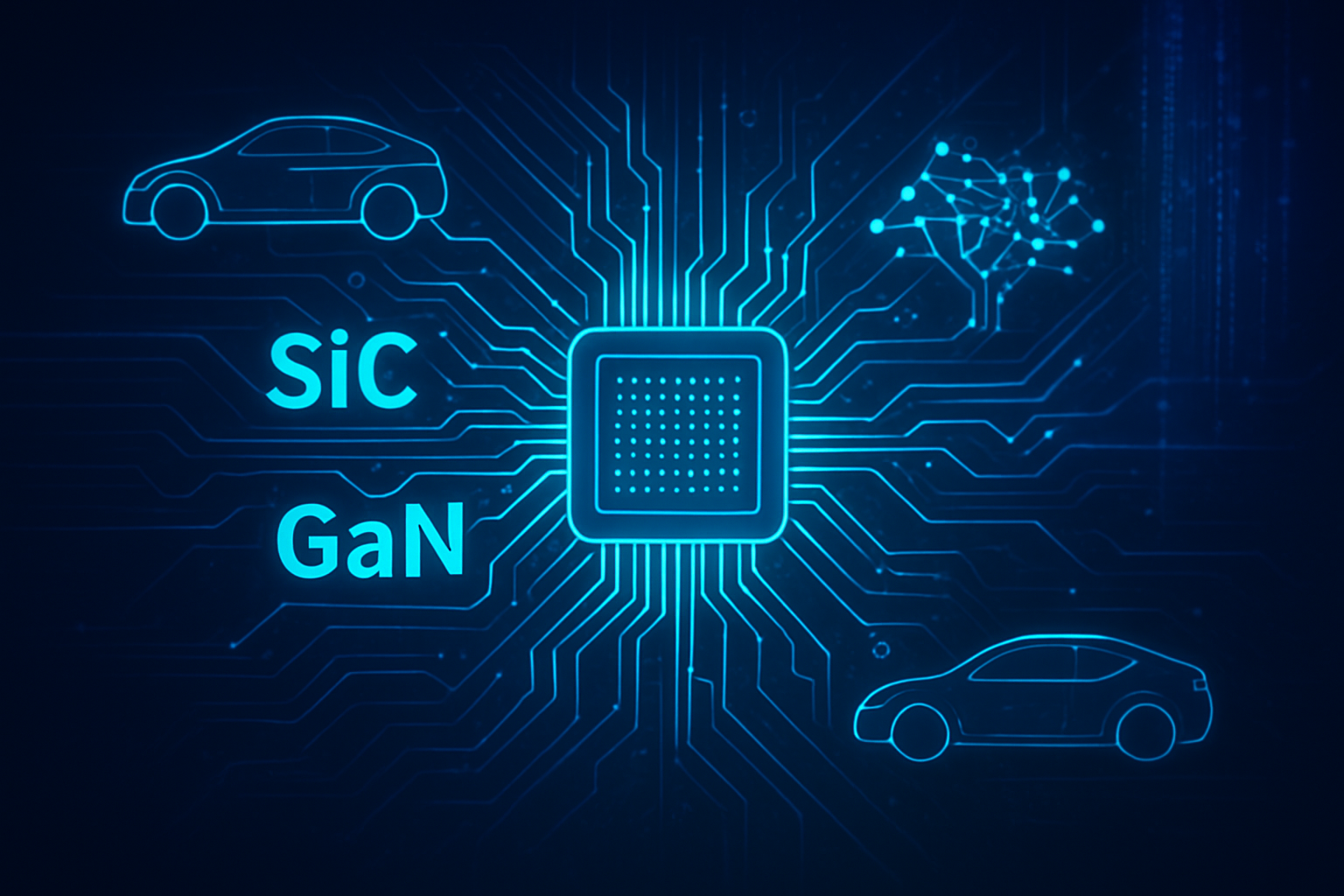
  • Powering Progress: Analog and Industrial Semiconductors Drive the Next Wave of Innovation

    The foundational components of our increasingly intelligent and electrified world, analog and industrial semiconductors, are undergoing a profound transformation. Far from the spotlight often cast on advanced digital processors, these critical chips are quietly enabling revolutionary advancements across electric vehicles (EVs), artificial intelligence (AI) data centers, the Industrial Internet of Things (IIoT), and renewable energy systems. Recent breakthroughs in materials science, packaging technologies, and novel computing architectures are dramatically enhancing efficiency, power density, and embedded intelligence, setting new benchmarks for performance and sustainability. This continuous wave of innovation is not merely incremental; it is fundamental to unlocking the full potential of next-generation technologies and addressing pressing global challenges like energy consumption and computational demands.

    At the forefront of this evolution, companies like ON Semiconductor (NASDAQ: ON) are driving significant advancements. Their latest offerings, including cutting-edge wide-bandgap (WBG) materials like Silicon Carbide (SiC) and Gallium Nitride (GaN), alongside sophisticated power management and sensing solutions, are crucial for managing power, converting energy, and interpreting real-world data with unprecedented precision and efficiency. The immediate significance of these developments lies in their ability to dramatically reduce energy loss, shrink device footprints, and empower intelligence closer to the data source, thereby accelerating the deployment of sustainable and smart technologies across virtually every industry.

    Technical Deep Dive: SiC, GaN, and the Rise of Analog Intelligence

    The core of the current revolution in analog and industrial semiconductors lies in the strategic shift towards wide-bandgap (WBG) materials, primarily Silicon Carbide (SiC) and Gallium Nitride (GaN). These materials possess superior electrical properties compared to traditional silicon, allowing for operation at higher temperatures, voltages, and frequencies with significantly reduced energy losses and heat generation. This inherent advantage translates directly into more efficient power conversion, faster charging capabilities for EVs, and smaller, lighter power systems across industrial applications.

    Specific details of these advancements are impressive. ON Semiconductor (NASDAQ: ON), for instance, has introduced its M3e EliteSiC MOSFETs, 1200V SiC devices that leverage planar technology to achieve industry-leading specific on-resistance while maintaining robust short-circuit capability. This pushes the boundaries of power density and efficiency, crucial for high-power applications. Similarly, their new Field Stop 7 (FS7) IGBT technology, integrated into 1200V half-bridge QDual3 IGBT modules, boasts a 33% increase in current density. This allows for the design of smaller, lighter, and more cost-effective power systems for demanding applications such as central solar inverters, energy storage, and heavy-duty commercial vehicles. Beyond power, ON Semiconductor's Hyperlux SG image sensors and Hyperlux ID family are revolutionizing indirect Time-of-Flight (iToF) depth sensing, extending accurate distance measurements and providing precise depth data on moving objects, vital for advanced robotics and autonomous systems.

    A groundbreaking development from ON Semiconductor is their vertical GaN (vGaN) power semiconductors, built on novel GaN-on-GaN technology. Unlike traditional lateral GaN devices, vGaN conducts current vertically, setting new benchmarks for power density, efficiency, and ruggedness. This innovation can reduce energy loss by almost 50% and is particularly crucial for the demanding power requirements of AI data centers, EVs, renewable energy infrastructure, and industrial automation. This vertical architecture fundamentally differs from previous lateral approaches by enabling higher operating voltages and faster switching frequencies, overcoming some of the limitations of earlier GaN implementations and offering a direct path to higher performance and greater energy savings. The initial reactions from the industry and research community highlight the transformative potential of these WBG materials and vertical architectures, recognizing them as critical enablers for the next generation of high-power and high-frequency electronics.

    The emergence of novel analog computing architectures, such as Analog Machine Learning (AnalogML), further distinguishes this wave of innovation. Companies like Aspinity are pioneering AnalogML platforms for ultra-low-power edge devices, enabling real-time data processing directly at the sensor level. This drastically reduces the need for extensive digital computation and data transfer, extending battery life and reducing latency in wearables, smart home devices, and industrial sensors. Furthermore, research into new analog processors that perform calculations directly within physical circuits, bypassing energy-intensive data transfers, is showing promise. A notable development from Peking University claims an analog AI chip capable of outperforming high-end GPUs by up to 1,000 times for certain AI tasks, while consuming significantly less energy. This "software programmable analog processor" addresses previous challenges of precision and programmability in analog systems, offering a potentially revolutionary approach to AI model training and future communication networks like 6G. These analog approaches represent a significant departure from purely digital processing, offering inherent advantages in power efficiency and speed for specific computational tasks, particularly at the edge.

    Competitive Landscape and Market Dynamics

    The ongoing advancements in analog and industrial semiconductors are reshaping the competitive landscape, creating new opportunities and challenges for tech giants, specialized AI labs, and burgeoning startups. Companies that heavily invest in and successfully deploy wide-bandgap (WBG) materials, advanced packaging, and novel analog computing solutions stand to gain significant strategic advantages.

    Major players like ON Semiconductor (NASDAQ: ON), Infineon Technologies (ETR: IFX), STMicroelectronics (NYSE: STM), Texas Instruments (NASDAQ: TXN), and Analog Devices (NASDAQ: ADI) are poised to benefit immensely. ON Semiconductor, with its strong portfolio in SiC, vGaN, and sensing solutions, is particularly well-positioned to capitalize on the booming markets for EVs, AI data centers, and industrial automation. Their focus on high-efficiency power management and advanced sensing directly addresses critical needs in these high-growth sectors. Similarly, Infineon's investments in SiC and their collaboration with NVIDIA (NASDAQ: NVDA) on 800V DC power delivery for AI data centers highlight the strategic importance of these foundational technologies. Texas Instruments, a long-standing leader in analog, continues to expand its manufacturing capacity, particularly with new 300mm fabs, to meet the surging demand across industrial and automotive applications.

    This development also has significant competitive implications. Companies that lag in adopting WBG materials or fail to innovate in power management and sensor integration may find their products less competitive in terms of efficiency, size, and cost. The superior performance of SiC and GaN, for instance, can render older silicon-based power solutions less attractive for new designs, potentially disrupting established product lines. For AI labs and tech companies, access to highly efficient power management solutions and innovative analog computing architectures is crucial. The ability to power AI data centers with reduced energy consumption directly impacts operational costs and sustainability goals. Furthermore, the rise of AnalogML and edge AI, enabled by these semiconductors, could shift some processing away from centralized cloud infrastructure, potentially disrupting traditional cloud-centric AI models and empowering a new generation of intelligent edge devices.

    Market positioning is increasingly defined by a company's ability to offer integrated, high-performance, and energy-efficient solutions. Strategic partnerships, like Analog Devices' expanded collaboration with General Motors (NYSE: GM) for EV battery management systems, underscore the importance of deep industry integration. Companies that can provide comprehensive solutions, from power conversion to sensing and processing, will command a stronger position. The increasing complexity and specialization within the semiconductor industry also mean that startups focusing on niche areas, such as advanced analog computing for specific AI tasks or ultra-low-power edge processing, can carve out significant market shares by offering highly specialized and optimized solutions that complement the broader offerings of larger players.

    Wider Significance: Fueling the Intelligent and Electric Future

    The advancements in analog and industrial semiconductors represent more than just incremental improvements; they are foundational to the broader technological landscape and critical enablers for the most significant trends shaping our future. This wave of innovation fits perfectly into the overarching drive towards greater energy efficiency, pervasive intelligence, and sustainable electrification.

    The impact is far-reaching. In the context of the global energy transition, these semiconductors are indispensable. Wide-bandgap materials like SiC and GaN are directly contributing to the efficiency of electric vehicles, making them more practical and accessible by extending range and accelerating charging times. In renewable energy, they optimize power conversion in solar inverters and wind turbines, maximizing energy capture and integration into smart grids. For AI, the ability to power data centers with significantly reduced energy consumption is paramount, addressing a major environmental concern associated with the exponential growth of AI processing. Furthermore, the development of AnalogML and novel analog computing architectures is pushing intelligence to the very edge of networks, enabling real-time decision-making in IIoT devices and autonomous systems without relying on constant cloud connectivity, thereby enhancing responsiveness and data privacy.

    Potential concerns, however, include the complexity and cost associated with transitioning to new materials and manufacturing processes. The supply chain for SiC and GaN, while maturing, still faces challenges in scaling to meet exploding demand. Geopolitical tensions and the increasing strategic importance of semiconductor manufacturing also raise concerns about supply chain resilience and national security. Compared to previous AI milestones, where the focus was often on algorithmic breakthroughs or increases in computational power through traditional silicon, this current wave highlights the critical role of the underlying hardware infrastructure. It underscores that the future of AI is not solely about software; it is deeply intertwined with the physical limitations and capabilities of the chips that power it. These semiconductor innovations are as significant as past breakthroughs in processor architecture, as they unlock entirely new paradigms for power efficiency and localized intelligence, which are essential for the widespread deployment of AI in the real world.

    The Road Ahead: Anticipating Future Developments

    Looking ahead, the trajectory of analog and industrial semiconductors promises continued evolution and groundbreaking applications. Near-term developments are expected to focus on further refinements of wide-bandgap (WBG) materials, with ongoing research aimed at increasing voltage capabilities, reducing manufacturing costs, and improving the reliability and robustness of SiC and GaN devices. We can anticipate more integrated power modules that combine multiple WBG components into compact, highly efficient packages, simplifying design for engineers and accelerating adoption across industries.

    In the long term, the field will likely see a deeper convergence of analog and digital processing, especially at the edge. The promise of fully programmable analog AI chips, moving beyond specialized functions to more general-purpose analog computation, could revolutionize how AI models are trained and deployed, offering unprecedented energy efficiency for inference and even training directly on edge devices. Research into new materials beyond SiC and GaN, and novel device architectures that push the boundaries of quantum effects, may also emerge, offering even greater performance and efficiency gains.

    Potential applications and use cases on the horizon are vast. Beyond current applications, these advancements will enable truly autonomous systems that can operate for extended periods on minimal power, intelligent infrastructure that self-optimizes, and a new generation of medical devices that offer continuous, unobtrusive monitoring. The enhanced precision and reliability of industrial sensors, coupled with edge AI, will drive further automation and predictive maintenance in factories, smart cities, and critical infrastructure. Challenges that need to be addressed include the standardization of new manufacturing processes, the development of robust design tools for complex analog-digital hybrid systems, and the education of a workforce capable of designing and implementing these advanced technologies. Supply chain resilience will remain a critical focus, with continued investments in regional manufacturing capabilities.

    Experts predict that the relentless pursuit of energy efficiency and distributed intelligence will continue to be the primary drivers. The move towards "more than Moore" – integrating diverse functionalities beyond just logic – will see analog, power, and sensing capabilities increasingly co-packaged or integrated onto single chips. What experts predict will happen next is a continued acceleration in the adoption of SiC and GaN across all power-hungry applications, coupled with significant breakthroughs in analog computing that allow AI to become even more pervasive, efficient, and embedded into the fabric of our physical world.

    Comprehensive Wrap-Up: A Foundation for Future Innovation

    The current wave of innovation in analog and industrial semiconductors represents a pivotal moment in technological advancement. Key takeaways include the transformative power of wide-bandgap materials like Silicon Carbide and Gallium Nitride in achieving unprecedented energy efficiency and power density, the critical role of advanced packaging and vertical architectures in miniaturization and performance, and the emerging potential of novel analog computing to bring ultra-low-power intelligence to the edge. Companies such as ON Semiconductor (NASDAQ: ON) are not just participating in this shift; they are actively shaping it with their breakthrough technologies in power management, sensing, and material science.

    This development's significance in AI history, and indeed in the broader history of technology, cannot be overstated. It underscores that the advancements in AI are inextricably linked to the underlying hardware that powers them. Without these efficient and intelligent semiconductor foundations, the ambitious goals of widespread AI deployment, sustainable electrification, and pervasive connectivity would remain largely out of reach. These innovations are not merely supporting existing technologies; they are enabling entirely new paradigms of operation, making previously impossible applications feasible.

    Final thoughts on the long-term impact point to a future where technology is not only more powerful but also significantly more sustainable and integrated into our daily lives. Reduced energy consumption in data centers and EVs will have a tangible positive impact on climate change efforts, while distributed intelligence will lead to safer, more efficient, and more responsive autonomous systems and industrial operations. The continuous push for miniaturization and efficiency will also drive innovation in personal electronics, medical devices, and smart infrastructure, making technology more accessible and less intrusive.

    In the coming weeks and months, we should watch for continued announcements regarding new product launches utilizing SiC and GaN in automotive and industrial sectors, further investments in manufacturing capacity by key players, and the emergence of more concrete applications leveraging analog AI at the edge. The synergy between these semiconductor advancements and the rapidly evolving fields of AI, IoT, and electrification will undoubtedly continue to generate exciting and impactful developments that reshape our technological landscape.


    This content is intended for informational purposes only and represents analysis of current AI developments.

    TokenRing AI delivers enterprise-grade solutions for multi-agent AI workflow orchestration, AI-powered development tools, and seamless remote collaboration platforms.
    For more information, visit https://www.tokenring.ai/.
  • ON Semiconductor’s Strategic Power Play: Navigating Market Headwinds with Intelligent Solutions

    ON Semiconductor’s Strategic Power Play: Navigating Market Headwinds with Intelligent Solutions

    ON Semiconductor (NASDAQ: ON), a leading provider of intelligent power and sensing technologies, has recently demonstrated a compelling strategic pivot and robust financial performance, prompting a deeper examination of its market positioning and future trajectory within the highly competitive semiconductor landscape. Despite facing cyclical slowdowns and inventory corrections in certain segments, the company's commitment to high-growth markets like automotive and industrial, coupled with significant investments in cutting-edge technologies, signals a resilient and forward-looking enterprise. Its recent earnings reports underscore a successful strategy of focusing on high-margin, high-value solutions that are critical enablers for the future of electrification and artificial intelligence.

    The company's strategic reorientation, often referred to as its "Fab Right" initiative, has allowed it to streamline operations and enhance profitability, even as it navigates a dynamic global market. This focus on operational efficiency, combined with a clear vision for product differentiation in intelligent power and sensing, positions ON Semiconductor as a key player in shaping the next generation of technological advancements, particularly in areas demanding high energy efficiency and advanced computational capabilities.

    Deep Dive into Financial Resilience and Strategic Precision

    ON Semiconductor's financial results for Q3 2025 showcased a company adept at managing market challenges while maintaining profitability. The company reported revenue of $1,550.9 million, exceeding analyst expectations, though it marked a 12% year-over-year decline. Crucially, non-GAAP diluted earnings per share (EPS) reached $0.63, also surpassing estimates. The company achieved a healthy non-GAAP gross margin of 38.0% and a non-GAAP operating margin of 19.2%, demonstrating disciplined cost management. Furthermore, cash from operations stood at $418.7 million, with free cash flow of $372.4 million, representing a significant 22% year-over-year increase and 24% of revenue. These figures, while reflecting a challenging market, highlight ON Semiconductor's operational resilience and ability to generate strong cash flows.

    Looking at the broader trend from 2019 to 2023, ON Semiconductor has consistently improved its profitability ratios. Gross profit margin, after a brief dip in 2020, surged from 32.65% to a peak of 48.97% in 2022, settling at 47.06% in 2023. Operating profit margin similarly climbed from 7.84% to 30.76% in the same period, with net profitability also showing steady improvement. This sustained growth in profitability underscores the success of its strategic shift towards higher-value products and more efficient manufacturing processes, including the "Fab Right" initiative which optimizes manufacturing footprint and reduces expenses.

    The company's product differentiation strategy centers on intelligent power solutions, including Silicon Carbide (SiC) and silicon power devices (IGBTs, FETs, and power ICs), alongside intelligent sensing solutions. SiC technology is a critical growth driver, particularly for electric vehicle (EV) traction inverters and AI data centers, where it offers superior energy efficiency and performance. ON Semiconductor is also leveraging advanced platforms like Treo, an analog and mixed-signal platform, to enable engineers to design more reliable, power-efficient, and scalable systems. This comprehensive approach, from material science to integrated solutions, is pivotal in meeting the demanding technical specifications of modern automotive and industrial applications, and increasingly, AI infrastructure.

    Initial reactions from the financial community have largely been positive, acknowledging the company's ability to exceed expectations in a tough environment. Analysts commend ON Semiconductor's strategic focus on long-term growth drivers and its commitment to margin expansion, seeing it as well-positioned for future recovery and sustained growth once market headwinds subside. The emphasis on proprietary technologies and vertical integration in SiC production is particularly noted as a strong competitive advantage.

    Competitive Implications and Market Positioning

    ON Semiconductor operates within a fiercely competitive landscape, facing off against industry titans such as Infineon Technologies AG, STMicroelectronics (STM), NXP Semiconductors N.V., and Texas Instruments (TI), as well as specialized SiC player Wolfspeed. Each competitor brings distinct strengths: Infineon boasts leadership in automotive and industrial power, STM excels in SiC and vertical integration, NXP specializes in analog and mixed-signal solutions for automotive, and TI leverages its integrated device manufacturer (IDM) model for supply chain control.

    ON Semiconductor differentiates itself through its aggressive investment and vertical integration in Silicon Carbide (SiC) technology, which is paramount for the energy efficiency demands of electric vehicles (EVs) and AI data centers. Its vertically integrated SiC manufacturing facility in the Czech Republic provides crucial control over the supply chain, cost, and quality—a significant advantage in today's volatile global environment. This focus on SiC, especially for 800V power architectures in EVs, positions ON Semiconductor as a critical enabler of the electrification trend. Furthermore, its intelligent sensing solutions make it the largest supplier of image sensors to the automotive market, vital for Advanced Driver-Assistance Systems (ADAS). The recent unveiling of vertical Gallium Nitride (vGaN) power semiconductors further solidifies its intelligent power strategy, targeting unmatched power density and efficiency for AI data centers, EVs, and renewable energy.

    This strategic emphasis allows ON Semiconductor to directly benefit from the burgeoning demand for high-performance, energy-efficient power management and sensing solutions. Companies in the EV, industrial automation, and AI infrastructure sectors rely heavily on such components, making ON Semiconductor a key supplier. The company's strategic acquisitions, such as Vcore Power Technology to bolster its power management portfolio for AI data centers, and partnerships with industry leaders like NVIDIA and Schaeffler, further strengthen its market position and accelerate technological innovation. This targeted approach minimizes direct competition in commodity markets and instead focuses on high-value, high-growth niches where its technological leadership can command premium pricing and market share.

    Broader Significance in the AI Landscape

    ON Semiconductor's strategic trajectory is deeply intertwined with the broader trends reshaping the semiconductor industry. The pervasive drive towards electrification, particularly in the automotive sector, is a primary growth engine. As the semiconductor content per vehicle for EVs is projected to nearly triple compared to internal combustion engine (ICE) cars, reaching over $1,500 by 2025 and potentially $2,000 by 2030, ON Semiconductor's SiC and intelligent power solutions are at the forefront of this transformation. These wide-bandgap materials are indispensable for improving energy efficiency, extending battery life, and enhancing the performance of EV powertrains and charging infrastructure.

    The rapid adoption of Artificial Intelligence (AI) across various sectors is another monumental trend that ON Semiconductor is strategically addressing. The exponential growth of generative AI is fueling unprecedented demand for specialized AI chips and, crucially, for the expansion of data centers. ON Semiconductor's SiC solutions are increasingly utilized in data center power supply units (PSUs) for hyperscalers, supporting higher power densities and collaborating on 800VDC power architectures for next-generation AI facilities. The introduction of vGaN semiconductors specifically targets AI data centers, offering solutions for reduced component counts and increased power density in AI compute systems. Furthermore, the company's intelligent sensing capabilities are fundamental building blocks for AI-driven automation in industrial and automotive applications, underscoring its multifaceted contribution to the AI revolution.

    The global semiconductor supply chain remains a critical concern, marked by complexity, globalization, and susceptibility to geopolitical tensions and disruptions. ON Semiconductor's hybrid manufacturing strategy and significant investments in vertically integrated SiC production offer a robust defense against these vulnerabilities. By controlling key aspects of its supply chain, the company enhances resilience and ensures a more stable supply of critical power semiconductors, a lesson hard-learned during recent chip shortages. This strategic control not only mitigates risks but also positions ON Semiconductor as a reliable partner in an increasingly uncertain global environment.

    Charting Future Developments

    Looking ahead, ON Semiconductor is poised for continued innovation and expansion, particularly in its core high-growth areas. The company's sustained investment in SiC technology, including advancements in its vertical integration and manufacturing capacity, is expected to yield further breakthroughs in power efficiency and performance. We can anticipate the development of more advanced SiC devices tailored for the evolving requirements of 800V EV platforms and next-generation AI data centers, which will demand even higher power densities and thermal management capabilities.

    The commercialization and broader adoption of its newly unveiled vertical Gallium Nitride (vGaN) power semiconductors represent another significant future development. As AI data centers and EV charging infrastructure demand increasingly compact and efficient power solutions, vGaN technology is set to play a crucial role, potentially opening new markets and applications for ON Semiconductor. Further advancements in intelligent sensing, including higher resolution, faster processing, and integrated AI capabilities at the edge, will also be key for autonomous driving and advanced industrial automation.

    Challenges remain, including the inherent R&D costs associated with developing cutting-edge semiconductor technologies, intense market competition, and potential volatility in the EV market. Geopolitical factors and the ongoing push for regionalized supply chains could also influence future strategies. However, experts predict that ON Semiconductor's clear strategic focus, technological leadership in SiC and intelligent power, and commitment to operational efficiency will enable it to navigate these challenges effectively. The company is expected to continue strengthening its partnerships with key players in the automotive and AI sectors, driving co-development and accelerating market penetration of its innovative solutions.

    Comprehensive Wrap-Up

    In summary, ON Semiconductor's recent performance and strategic initiatives paint a picture of a company successfully transforming itself into a leader in intelligent power and sensing solutions for high-growth markets. Its strong financial results, despite market headwinds, are a testament to its disciplined operational execution and strategic pivot towards high-margin, high-value technologies like Silicon Carbide and advanced sensing. The company's vertical integration in SiC, coupled with its foray into vGaN, provides a significant competitive edge in the critical areas of electrification and AI.

    This development is highly significant in the context of current AI history, as ON Semiconductor is directly addressing the fundamental power and sensing requirements that underpin the expansion of AI infrastructure and edge AI applications. Its focus on energy-efficient solutions is not just a competitive differentiator but also a crucial enabler for sustainable AI growth, mitigating the immense power demands of future AI systems. The company's strategic resilience in navigating a complex global supply chain further solidifies its position as a reliable and innovative partner in the tech ecosystem.

    In the coming weeks and months, industry observers should watch for ON Semiconductor's continued progress in scaling its SiC production, further announcements regarding vGaN adoption, and any new strategic partnerships or acquisitions that bolster its position in the automotive, industrial, and AI power markets. Its ability to maintain robust margins while expanding its technological leadership will be a key indicator of its long-term impact and sustained success in the evolving semiconductor landscape.


    This content is intended for informational purposes only and represents analysis of current AI developments.

    TokenRing AI delivers enterprise-grade solutions for multi-agent AI workflow orchestration, AI-powered development tools, and seamless remote collaboration platforms.
    For more information, visit https://www.tokenring.ai/.

  • ON Semiconductor Navigates Shifting Sands: Q4 2025 Forecast Signals Strategic Rebalancing Amidst Market Dynamics

    ON Semiconductor Navigates Shifting Sands: Q4 2025 Forecast Signals Strategic Rebalancing Amidst Market Dynamics

    ON Semiconductor (NASDAQ: ON) has unveiled its financial outlook for the fourth quarter of 2025, projecting revenues between $1.48 billion and $1.58 billion. This guidance, released on November 3, 2025, alongside its third-quarter results, offers a crucial glimpse into the company's anticipated performance and strategic direction in a rapidly evolving semiconductor landscape. The forecast, which largely aligns with market consensus, suggests a period of strategic re-calibration for the power and sensing solutions provider as it focuses on high-growth segments like automotive, industrial, and AI.

    The Q4 2025 projections come at a pivotal time for the semiconductor industry, which has seen fluctuating demand and supply chain adjustments. ON Semiconductor's ability to provide guidance that encompasses analyst expectations, with an anticipated adjusted earnings per share (EPS) between $0.57 and $0.67 and an adjusted gross margin of 37% to 39%, indicates a measured approach to navigating current market conditions. This forecast is a key indicator for investors and industry observers, offering insights into how the company plans to sustain its market position and drive future growth amidst both opportunities and challenges.

    Detailed Financial Projections and Market Context

    ON Semiconductor's Q4 2025 revenue forecast of $1.48 billion to $1.58 billion is a central piece of its financial narrative. This range brackets the market's consensus estimate of $1.53 billion, suggesting a degree of confidence in the company's internal models and market understanding. Accompanying this revenue outlook, the company has guided for an adjusted EPS of $0.57 to $0.67, comfortably encompassing the analyst estimate of $0.62. Furthermore, an adjusted gross margin projection of 37% to 39% aligns closely with the market's expectation of 37.8%, underscoring a consistent operational strategy.

    To put these projections into perspective, the company's third-quarter (Q3) 2025 performance saw revenues of $1.55 billion, slightly surpassing analyst estimates of $1.52 billion. The Q3 adjusted EPS of $0.63 also exceeded the anticipated $0.59. While Q3 2025 revenue marked a 12% decrease year-over-year, it represented a 6% sequential increase compared to Q2 2025 revenue of $1.47 billion. This sequential growth indicates some recovery or stabilization in demand following earlier dips.

    However, a closer look at the year-over-year comparison reveals a more challenging picture. The Q4 2025 revenue forecast of $1.48 billion to $1.58 billion reflects a notable decline when compared to the Q4 2024 revenue of $1.72 billion. This year-over-year contraction suggests ongoing market headwinds or a strategic re-prioritization away from certain less profitable segments. The company's focus on high-value applications within automotive, industrial, and AI is a deliberate move to counteract broader market softness and improve margin profiles.

    Initial reactions from the financial community have been cautious but largely in line with expectations. Analysts are closely watching the company's ability to execute on its strategy to shift its product mix towards higher-margin, more specialized solutions, particularly in the silicon carbide (SiC) market. The current forecast indicates that while the overall revenue might see some contraction, the underlying profitability and strategic direction remain key areas of focus for ON Semiconductor.

    Market Positioning and Competitive Dynamics in a Shifting Landscape

    ON Semiconductor's Q4 2025 revenue forecast, coupled with its aggressive strategic focus on intelligent power and sensing solutions for the automotive, industrial, and AI data center markets, significantly shapes its competitive standing. The company's substantial investments in silicon carbide (SiC) and gallium nitride (GaN) technologies, alongside its emphasis on energy efficiency, are critical differentiators in a market contested by formidable rivals such as Infineon Technologies, STMicroelectronics (STM), and Wolfspeed.

    The company's commitment to SiC technology is exemplified by its $2 billion investment in a vertically integrated SiC manufacturing facility in the Czech Republic. This move aims to secure its supply chain for power semiconductors, particularly vital for electric vehicle (EV) electrification, where SiC demand is projected to grow at a robust 25% Compound Annual Growth Rate (CAGR) through 2030. This vertical integration strategy, part of its "Fab Right" initiative, not only aims to boost margins but also to reduce reliance on external suppliers, directly challenging competitors like Wolfspeed, which historically held an advantage in SiC materials.

    Against Infineon Technologies, a long-standing leader in automotive semiconductors and SiC, ON Semiconductor's robust growth in SiC and its direct focus on automotive and AI power management position it as a strong contender. Infineon's partnerships with entities like NVIDIA for AI data centers and its leading market share in SiC demonstrate the intensity of this competition. Similarly, STMicroelectronics, which commands the largest share of the SiC market at approximately 35%, finds itself in direct competition with ON Semiconductor's 25% SiC market share and its strong ADAS sensor portfolio, where ON Semiconductor holds a 60% market share. As both companies heavily invest in SiC fabrication, the battle for market dominance in this high-growth area is set to intensify.

    The broader tech industry stands to benefit from ON Semiconductor's innovations, particularly in enhanced energy efficiency. The company's vGaN and SiC technologies are crucial for the energy efficiency revolution in EVs and edge AI systems, leading to smaller, lighter, and more efficient components. This translates into optimized AI infrastructure, lower costs per rack in AI data centers, and advancements in edge AI and IoT applications. However, this strategic shift also brings potential disruptions, including increased market concentration benefiting top suppliers, potential resource allocation imbalances at foundries prioritizing AI chips, and the growing pricing power of dominant players like NVIDIA. The shift towards in-house chip design by automotive OEMs also presents a long-term challenge to traditional semiconductor supplier relationships, requiring ON Semiconductor to continuously innovate and adapt its offerings.

    Wider Significance: Powering the AI Revolution Sustainably

    ON Semiconductor's strategic pivot towards energy-efficient power and sensing solutions, particularly through its advancements in Silicon Carbide (SiC) and Gallium Nitride (GaN) technologies, is not merely a corporate strategy but a fundamental response to the most pressing challenges and opportunities in the broader AI landscape. The explosive growth of AI, from large language models to complex autonomous systems, is creating unprecedented demands on power infrastructure, making energy efficiency a paramount concern for the industry's sustainability and scalability.

    This strategic alignment addresses the critical trend of AI's escalating energy consumption. With data center electricity usage projected to more than double by 2030, ON Semiconductor's focus on reducing power losses in conversion processes using SiC and GaN is vital. These wide-bandgap semiconductors offer superior performance, enabling higher operating voltages, faster switching frequencies, and improved thermal management, which directly translates into significantly greater energy efficiency and power density. This is crucial for the "sustainable AI" movement, aiming to mitigate the environmental impact of AI's rapid expansion.

    The impacts of this strategy are far-reaching. Environmentally, by significantly reducing energy consumption in data centers and electric vehicles, these technologies contribute to mitigating climate change, easing the burden on national power grids, and accelerating the transition to renewable energy sources. Economically, lower energy consumption translates to reduced operational costs for AI data centers and industrial applications, supporting the scalable deployment of AI technologies. Technologically, SiC and GaN enable higher power density, smaller footprints, and lighter systems, allowing for more compact and powerful AI infrastructure, extended EV range, and more efficient industrial machinery. This is essential for achieving "all-day AI" on portable devices and in edge computing scenarios, where AI processing occurs closer to the data source.

    However, this rapid advancement is not without its concerns. Even with efficiency improvements, the exponential growth of AI's computational demand could still strain existing electrical grids and infrastructure. The manufacturing complexity and higher costs of SiC and GaN semiconductors compared to traditional silicon chips could hinder widespread adoption and increase lead times. Furthermore, for critical infrastructure like data centers, operators prioritize reliability, demanding continuous demonstration of the long-term robustness of these advanced solutions. The immense cooling requirements of large AI data centers also lead to significant water consumption, a growing environmental concern.

    Comparing this era to previous AI milestones reveals a distinct shift. While early AI was hardware-limited and later advancements focused on specialized processors like GPUs for deep learning, the current phase is defined by a materials-level revolution in power electronics. The focus has moved beyond just computational power to holistic system optimization, with energy efficiency becoming a primary driver. This makes the adoption of advanced materials like SiC and GaN, and the power management solutions they enable, as transformative for sustaining AI's growth as the advent of GPUs was for enabling deep learning. It underscores that the future of AI is not just about faster chips, but about smarter, more sustainable power delivery.

    Future Developments and Horizon Applications

    ON Semiconductor's strategic blueprint, underpinned by its Q4 2025 forecast and sustained investments in SiC, GaN, and intelligent sensing, positions the company for significant long-term growth despite near-term cyclical headwinds. The company's "Fab Right" approach and vertical integration strategy are designed to optimize manufacturing and secure supply chains, targeting an impressive 10% to 12% Compound Annual Growth Rate (CAGR) from 2022 through 2027, significantly outpacing the overall semiconductor market.

    In the near term, the company anticipates a recovery in demand during the second half of 2025, particularly in its core automotive and industrial markets, following a period of inventory reduction and moderation in EV sales. However, the long-term outlook is far more robust, driven by the relentless expansion of electric vehicles, renewable energy, and artificial intelligence. ON Semiconductor is actively developing new 4th generation trench-based SiC MOSFETs, aiming to transition to 8-inch SiC wafer platforms by 2025, and expanding its SiC capacity five-fold by 2026. This aggressive stance is intended to capture 35-40% of the SiC market, which is projected to reach $10 billion by 2030.

    The re-entry and significant investment in the GaN market, highlighted by the acquisition of NexGen Power Systems' fabrication facility, signal a strong commitment to this next-generation power technology. The company's groundbreaking vertical GaN (vGaN) power semiconductors promise to reduce energy losses by nearly 50% and enable significantly smaller, lighter systems, poised for high-demand applications in AI data centers (800V DC-DC converters), electric vehicles (more efficient inverters for increased range), and faster charging infrastructure. Experts predict the GaN market will expand at a CAGR exceeding 25% through the late 2020s.

    On the intelligent sensing front, ON Semiconductor plans to launch a new family of image sensors in 2025 and has bolstered its portfolio with the acquisition of SWIR Vision Systems. These advancements are crucial for enhancing Advanced Driver Assistance Systems (ADAS) and machine vision, extending visibility beyond standard CMOS sensors, and supporting applications in industrial automation, medical imaging, and aerospace/defense. The company's strong market share in automotive ADAS image sensors (68% in 2023) underscores its leadership and potential for continued growth in these high-value segments.

    However, challenges persist. The semiconductor industry's inherent cyclicality, intense competition in the SiC and GaN markets, and ongoing geopolitical tensions affecting global supply chains remain significant hurdles. The high cost and complexity of manufacturing advanced SiC and GaN chips, along with the need to consistently demonstrate their long-term reliability, are critical for broader market adoption. Despite these challenges, expert predictions generally maintain an optimistic long-term view. Analysts forecast a sharp rebound in earnings and revenue for ON Semiconductor in 2026, with earnings per share expected to increase by 36.8% year-over-year. The "AI supercycle" is widely expected to drive above-average growth for the semiconductor industry, pushing the global market beyond $1 trillion by 2030, with ON Semiconductor well-positioned to capitalize on this expansion through its strategic focus on the foundational technologies powering this revolution.

    Comprehensive Wrap-Up: Steering Towards an Electrified, AI-Powered Future

    ON Semiconductor's Q4 2025 revenue forecast and its overarching strategic direction paint a clear picture of a company meticulously navigating a complex, yet opportunity-rich, semiconductor landscape. While the projected revenue range of $1.48 billion to $1.58 billion reflects some near-term market adjustments and a year-over-year decline from Q4 2024, it also underscores a deliberate pivot towards high-growth, high-margin segments: electric vehicles (EVs), industrial automation, and artificial intelligence (AI). This strategic refinement, coupled with a robust "Fab Right" manufacturing approach and significant investments in Silicon Carbide (SiC) and Gallium Nitride (GaN) technologies, positions ON Semiconductor as a foundational enabler of future technological advancements.

    In the context of AI history, ON Semiconductor's current trajectory marks a crucial phase where hardware efficiency and power management have become as critical as computational power itself. Unlike earlier AI milestones that primarily focused on raw processing capabilities, the current "AI supercycle" demands sophisticated power solutions to address the unprecedented energy consumption of AI data centers and the low-power requirements of edge AI devices. By pioneering energy-efficient SiC and GaN solutions and advanced intelligent sensing, ON Semiconductor is not just participating in the AI revolution; it is providing the essential infrastructure to make it sustainable and scalable. This focus on "from the grid to the core" power delivery for AI systems makes the company an indispensable player in ensuring AI's continued expansion.

    The long-term impact on the semiconductor industry and the broader AI landscape will be substantial. ON Semiconductor's commitment to vertical integration in SiC, its re-entry into the GaN market with groundbreaking vGaN technology, and its enhanced intelligent sensing portfolio will drive resilience and market share gains. This strategic emphasis is expected to fuel significant margin expansion, with an ambitious target of 53% by 2027. Furthermore, its diversified manufacturing footprint offers a geopolitical advantage, mitigating risks associated with trade tensions. As AI models become more complex and pervasive, and as the world accelerates its transition to electrification, ON Semiconductor's role in providing efficient, robust, and intelligent power and sensing solutions will only grow in importance, solidifying its technological leadership.

    In the coming weeks and months, several critical indicators will be vital to watch. The pace of recovery in the automotive market, particularly EV adoption rates in key regions like China and Europe, will offer insights into near-term demand. Progress towards ON Semiconductor's ambitious 30-40% SiC market share target and the successful ramp-up of its new 4th generation SiC MOSFETs will be key performance metrics. Continued acceleration of revenue from AI data center solutions and the tangible benefits derived from recent acquisitions and partnerships will signal the success of its strategic pivot. Finally, the execution of its "Fab Right" strategy, including the impact of exiting legacy products on gross margins, will be closely scrutinized in future earnings reports. These factors will collectively determine ON Semiconductor's ability to capitalize on the profound shifts reshaping the global semiconductor and AI landscapes.


    This content is intended for informational purposes only and represents analysis of current AI developments.

    TokenRing AI delivers enterprise-grade solutions for multi-agent AI workflow orchestration, AI-powered development tools, and seamless remote collaboration platforms.
    For more information, visit https://www.tokenring.ai/.

  • ON Semiconductor’s Q3 Outperformance Signals AI’s Insatiable Demand for Power Efficiency

    ON Semiconductor’s Q3 Outperformance Signals AI’s Insatiable Demand for Power Efficiency

    PHOENIX, AZ – November 3, 2025 – ON Semiconductor (NASDAQ: ON) has once again demonstrated its robust position in the evolving semiconductor landscape, reporting better-than-expected financial results for the third quarter of 2025. Despite broader market headwinds and a slight year-over-year revenue decline, the company's strong performance was significantly bolstered by burgeoning demand from the artificial intelligence (AI) sector, underscoring AI's critical reliance on advanced power management and sensing solutions. This outperformance highlights ON Semiconductor's strategic pivot towards high-growth, high-margin markets, particularly those driven by the relentless pursuit of energy efficiency in AI computing.

    The company's latest earnings report serves as a potent indicator of the foundational role semiconductors play in the AI revolution. As AI models grow in complexity and data centers expand their computational footprint, the demand for specialized chips that can deliver both performance and unparalleled power efficiency has surged. ON Semiconductor's ability to capitalize on this trend positions it as a key enabler of the next generation of AI infrastructure, from advanced data centers to autonomous systems and industrial AI applications.

    Powering the AI Revolution: ON Semiconductor's Strategic Edge

    For the third quarter of 2025, ON Semiconductor reported revenue of $1,550.9 million, surpassing analyst expectations. While this represented a 12% year-over-year decline, non-GAAP diluted earnings per share (EPS) of $0.63 exceeded estimates, showcasing the company's operational efficiency and strategic focus. A notable highlight was the significant contribution from the AI sector, with CEO Hassane El-Khoury explicitly stating the company's "positive growth in AI" and emphasizing that "as energy efficiency becomes a defining requirement for next-generation automotive, industrial, and AI platforms, we are expanding our offering to deliver system-level value that enables our customers to achieve more with less power." This sentiment echoes previous quarters, where "AI data center contributions" were cited as a primary driver for growth in other business segments.

    ON Semiconductor's success in the AI domain is rooted in its comprehensive portfolio of intelligent power and sensing technologies. The company is actively investing in the power spectrum, aiming to capture greater market share in the automotive, industrial, and AI data center sectors. Their strategy revolves around providing high-efficiency, high-density power solutions crucial for supporting the escalating compute capacity in AI data centers. This includes covering the entire power chain "from the grid to the core," offering solutions for every aspect of data center operation. A strategic move in this direction was the acquisition of Vcore Power Technology from Aura Semiconductor in September 2025, a move designed to bolster ON Semiconductor's power management portfolio specifically for AI data centers. Furthermore, the company's advanced sensor technologies, such as the Hyperlux ID family, play a vital role in thermal management and power optimization within next-generation AI servers, where maintaining optimal operating temperatures is paramount for performance and longevity. Collaborations with industry giants like NVIDIA (NASDAQ: NVDA) in AI Data Centers are enabling the development of advanced power architectures that promise enhanced efficiency and performance at scale. This differentiated approach, focusing on system-level value and efficiency, sets ON Semiconductor apart in a highly competitive market, allowing it to thrive even amidst broader market fluctuations.

    Reshaping the AI Hardware Landscape: Implications for Tech Giants and Startups

    ON Semiconductor's strategic emphasis on intelligent power and sensing solutions is profoundly impacting the AI hardware ecosystem, creating both dependencies and new avenues for growth across various sectors. The company's offerings are proving indispensable for AI applications in the automotive industry, particularly for electric vehicles (EVs), autonomous driving, and advanced driver-assistance systems (ADAS), where their image sensors and power management solutions enhance safety and optimize performance. In industrial automation, their technologies are enabling advanced machine vision, robotics, and predictive maintenance, driving efficiencies in Industry 4.0 applications. Critically, in cloud infrastructure and data centers, ON Semiconductor's highly efficient power semiconductors are addressing the surging energy demands of AI, providing solutions from the grid to the core to ensure efficient resource allocation and reduce operational costs. The recent partnership with NVIDIA (NASDAQ: NVDA) to accelerate power solutions for next-generation AI data centers, leveraging ON Semi's Vcore power technology, underscores this vital role.

    While ON Semiconductor does not directly compete with general-purpose AI processing unit (GPU, CPU, ASIC) manufacturers like NVIDIA, Advanced Micro Devices (NASDAQ: AMD), or Intel Corporation (NASDAQ: INTC), its success creates significant complementary value and indirect competitive pressures. The immense computational power of cutting-edge AI chips, such as NVIDIA's Blackwell GPU, comes with substantial power consumption. ON Semiconductor's advancements in power semiconductors, including Silicon Carbide (SiC) and vertical Gallium Nitride (vGaN) technology, directly tackle the escalating power and thermal management challenges in AI data centers. By enabling more efficient power delivery and heat dissipation, ON Semi allows these high-performance AI chips to operate more sustainably and effectively, potentially facilitating higher deployment densities and lower overall operational expenditures for AI infrastructure. This symbiotic relationship positions ON Semi as a critical enabler, making powerful AI hardware viable at scale.

    The market's increasing focus on application-specific efficiency and cost control, rather than just raw performance, plays directly into ON Semiconductor's strengths. While major AI chip manufacturers are also working on improving the power efficiency of their core processors, ON Semi's specialized power and sensing components augment these efforts at a system level, providing crucial overall energy savings. This allows for broader AI adoption by making high-performance AI more accessible and sustainable across a wider array of applications and devices, including low-power edge AI solutions. The company's "Fab Right" strategy, aimed at optimizing manufacturing for cost efficiencies and higher gross margins, along with strategic acquisitions like Vcore Power Technology, further solidifies its position as a leader in intelligent power and sensing technologies.

    ON Semiconductor's impact extends to diversifying the AI hardware ecosystem and enhancing supply chain resilience. By specializing in essential components beyond the primary compute engines—such as sensors, signal processors, and power management units—ON Semi contributes to a more robust and varied supply chain. This specialization is crucial for scaling AI infrastructure sustainably, addressing concerns about energy consumption, and facilitating the growth of edge AI by enabling inference on end devices, thereby improving latency, privacy, and bandwidth. As AI continues its rapid expansion, ON Semiconductor's strategic partnerships and innovative material science in power semiconductors are not just supporting, but actively shaping, the foundational layers of the AI revolution.

    A Defining Moment in the Broader AI Landscape

    ON Semiconductor's Q3 2025 performance, significantly buoyed by the burgeoning demand for AI-enabling components, is more than just a quarterly financial success story; it's a powerful signal of the profound shifts occurring within the broader AI and semiconductor landscapes. The company's growth in AI-related products, even amidst overall revenue declines in traditional segments, underscores AI's transformative influence on silicon demand. This aligns perfectly with the escalating global need for high-performance, energy-efficient chips essential for powering the burgeoning AI ecosystem, particularly with the advent of generative AI which has catalyzed an unprecedented surge in data processing and advanced model execution. This demand radiates from centralized data centers to the "edge," encompassing autonomous vehicles, industrial robots, and smart consumer electronics.

    The AI chip market is currently in an explosive growth phase, projected to surpass $150 billion in revenue in 2025 and potentially reach $400 billion by 2027. This "supercycle" is redefining the semiconductor industry's trajectory, driving massive investments in specialized AI hardware and the integration of AI into a vast array of endpoint devices. ON Semiconductor's success reflects several wider impacts on the industry: a fundamental shift in demand dynamics towards specialized AI chips, rapid technological innovation driven by intense computational requirements (e.g., advanced process nodes, silicon photonics, sophisticated packaging), and a transformation in manufacturing processes through AI-driven Electronic Design Automation (EDA) tools. While the market is expanding, economic profits are increasingly concentrated among key suppliers, fostering an "AI arms race" where advanced capabilities are critical differentiators, and major tech giants are increasingly designing custom AI chips.

    A significant concern highlighted by the AI boom is the escalating energy consumption. AI-supported search requests, for instance, consume over ten times the power of traditional queries, with data centers projected to reach 1,000 TWh globally in less than two years. ON Semiconductor is at the vanguard of addressing this challenge through its focus on power semiconductors. Innovations in silicon carbide (SiC) and vertical gallium nitride (vGaN) technologies are crucial for improving energy efficiency in AI data centers, electric vehicles, and renewable energy systems. These advanced materials enable higher operating voltages, faster switching frequencies, and significantly reduce energy losses—potentially cutting global energy consumption by 10 TWh annually if widely adopted. This commitment to energy-efficient products for AI signifies a broader technological advancement towards materials offering superior performance and efficiency compared to traditional silicon, particularly for high-power applications critical to AI infrastructure.

    Despite the immense opportunities, potential concerns loom. The semiconductor industry's historical volatility and cyclical nature could see a broader market downturn impacting non-AI segments, as evidenced by ON Semiconductor's own revenue declines in automotive and industrial markets due to inventory corrections. Over-reliance on specific sectors, such as automotive or AI data centers, also poses risks if investments slow. Geopolitical tensions, export controls, and the concentration of advanced chip manufacturing in specific regions create supply chain uncertainties. Intense competition in emerging technologies like silicon carbide could also pressure margins. However, the current AI hardware boom distinguishes itself from previous AI milestones by its unprecedented scale and scope, deep hardware-software co-design, substantial economic impact, and its role in augmenting human intelligence rather than merely automating tasks, making ON Semiconductor's current trajectory a pivotal moment in AI history.

    The Road Ahead: Innovation, Integration, and Addressing Challenges

    ON Semiconductor is strategically positioning itself to be a pivotal enabler in the rapidly expanding Artificial Intelligence (AI) chip market, with a clear focus on intelligent power and sensing technologies. In the near term, the company is expected to continue leveraging AI to refine its product portfolio and operational efficiencies. Significant investments in Silicon Carbide (SiC) technology, particularly for electric vehicles (EVs) and edge AI systems, underscore this commitment. With vertically integrated SiC manufacturing in the Czech Republic, ON Semiconductor ensures robust supply chain control for these critical power semiconductors. Furthermore, the development of vertical Gallium Nitride (vGaN) power semiconductors, offering enhanced power density, efficiency, and ruggedness, is crucial for next-generation AI data centers and EVs. The recent acquisition of Vcore power technologies from Aura Semiconductor further solidifies its power management capabilities, aiming to address the entire "grid-to-core" power tree for AI data center applications.

    Looking ahead, ON Semiconductor's technological advancements will continue to drive new applications and use cases. Its intelligent sensing solutions, encompassing ultrasound, imaging, millimeter-wave radar, LiDAR, and sensor fusion, are vital for sophisticated AI systems. Innovations like Clarity+ Technology, which synchronizes perception with human vision in cameras for both machine and artificial vision signals, and the Hyperlux ID family of sensors, revolutionizing indirect Time-of-Flight (iToF) for accurate depth measurements on moving objects, are set to enhance AI capabilities across automotive and industrial sectors. The Treo Platform, an advanced analog and mixed-signal platform, will integrate high-speed digital processing with high-performance analog functionality onto a single chip, facilitating more complex and efficient AI solutions. These advancements are critical for enhancing safety systems in autonomous vehicles, optimizing processes in industrial automation, and enabling real-time analytics and decision-making in myriad Edge AI applications, from smart sensors to healthcare and smart cities.

    However, the path forward is not without its challenges. The AI chip market remains fiercely competitive, with dominant players like NVIDIA (NASDAQ: NVDA) and strong contenders such as Advanced Micro Devices (NASDAQ: AMD) and Intel Corporation (NASDAQ: INTC). The immense research and development (R&D) costs associated with designing advanced AI chips, coupled with the relentless pace of innovation required to optimize performance, manage heat dissipation, and reduce power consumption, present continuous hurdles. Manufacturing capacity and costs are also significant concerns; the complexity of shrinking transistor sizes and the exorbitant cost of building new fabrication plants for advanced nodes create substantial barriers. Geopolitical factors, export controls, and supply chain tensions further complicate the landscape. Addressing the escalating energy consumption of AI chips and data centers will remain a critical focus, necessitating continuous innovation in energy-efficient architectures and cooling technologies.

    Despite these challenges, experts predict robust growth for the semiconductor industry, largely fueled by AI. The global semiconductor market is projected to grow by over 15% in 2025, potentially reaching $1 trillion by 2030. AI and High-Performance Computing (HPC) are expected to be the primary drivers, particularly for advanced chips and High-Bandwidth Memory (HBM). ON Semiconductor is considered strategically well-positioned to capitalize on the energy efficiency revolution in EVs and the increasing demands of edge AI systems. Its dual focus on SiC technology and sensor-driven AI infrastructure, coupled with its supply-side advantages, makes it a compelling player poised to thrive. Future trends point towards the dominance of Edge AI, the increasing role of AI in chip design and manufacturing, optimization of chip architectures for specific AI workloads, and a continued emphasis on advanced memory solutions and strategic collaborations to accelerate AI adoption and ensure sustainability.

    A Foundational Shift: ON Semiconductor's Enduring AI Legacy

    ON Semiconductor's (NASDAQ: ON) Q3 2025 earnings report, despite navigating broader market headwinds, serves as a powerful testament to the transformative power of artificial intelligence in shaping the semiconductor industry. The key takeaway is clear: while traditional sectors face cyclical pressures, ON Semiconductor's strategic pivot and significant growth in AI-driven solutions are positioning it as an indispensable player in the future of computing. The acquisition of Vcore Power Technology, the acceleration of AI data center revenue, and the aggressive rationalization of its portfolio towards high-growth, high-margin areas like AI, EVs, and industrial automation, all underscore a forward-looking strategy that prioritizes the foundational needs of the AI era.

    This development holds profound significance in the annals of AI history, highlighting a crucial evolutionary step in AI hardware. While much of the public discourse focuses on the raw processing power of AI accelerators from giants like NVIDIA (NASDAQ: NVDA), ON Semiconductor's expertise in power management, advanced sensing, and Silicon Carbide (SiC) solutions addresses the critical underlying infrastructure that makes scalable and efficient AI possible. The evolution of AI hardware is no longer solely about computational brute force; it's increasingly about efficiency, cost control, and specialized capabilities. By enhancing the power chain "from the grid to the core" and providing sophisticated sensors for optimal system operation, ON Semiconductor directly contributes to making AI systems more practical, sustainable, and capable of operating at the unprecedented scale demanded by modern AI. This reinforces the idea that the AI Supercycle is a collective effort, relying on advancements across the entire technology stack, including fundamental power and sensing components.

    The long-term impact of ON Semiconductor's AI-driven strategy, alongside broader industry trends, is expected to be nothing short of profound. The AI mega-trend is projected to fuel substantial growth in the chip market for years, with the global AI chip market potentially soaring to $400 billion by 2027. The increasing energy consumption of AI servers will continue to drive demand for power semiconductors, a segment where ON Semiconductor's SiC technology and power solutions offer a strong competitive advantage. The industry's shift towards application-specific efficiency and customized chips will further benefit companies like ON Semiconductor that provide critical, efficient foundational components. This trend will also spur increased research and development investments in creating smaller, faster, and more energy-efficient chips across the industry. While a significant portion of the economic value generated by the AI boom may initially concentrate among a few top players, ON Semiconductor's strategic positioning promises sustained revenue growth and margin expansion by enabling the entire AI ecosystem.

    In the coming weeks and months, industry observers should closely watch ON Semiconductor's continued execution of its "Fab Right" strategy and the seamless integration of Vcore Power Technology. The acceleration of its AI data center revenue, though currently a smaller segment, will be a key indicator of its long-term potential. Further advancements in SiC technology and design wins, particularly for EV and AI data center applications, will also be crucial. For the broader AI chip market, continued evolution in demand for specialized AI hardware, advancements in High Bandwidth Memory (HBM) and new packaging innovations, and a growing industry focus on energy efficiency and sustainability will define the trajectory of this transformative technology. The resilience of semiconductor supply chains in the face of global demand and geopolitical dynamics will also remain a critical factor in the ongoing AI revolution.


    This content is intended for informational purposes only and represents analysis of current AI developments.

    TokenRing AI delivers enterprise-grade solutions for multi-agent AI workflow orchestration, AI-powered development tools, and seamless remote collaboration platforms.
    For more information, visit https://www.tokenring.ai/.