In a move that signals a paradigm shift for the artificial intelligence industry, Anthropic (Private) officially released its "Agent Skills" framework as an open standard on December 18, 2025. By transitioning what was once a proprietary feature of the Claude ecosystem into a universal protocol, Anthropic aims to establish a common language for "procedural knowledge"— the specialized, step-by-step instructions that allow AI agents to perform complex real-world tasks. This strategic pivot, coming just weeks before the close of 2025, represents a direct challenge to the "walled garden" approach of competitors, promising a future where AI agents are fully interoperable across different platforms, models, and development environments.
The launch of the Agent Skills open standard is being hailed as the "Android moment" for the agentic AI era. By donating the standard to the Agentic AI Foundation (AAIF)—a Linux Foundation-backed organization co-founded by Anthropic, OpenAI (Private), and Block (NYSE: SQ)—Anthropic is betting that the path to enterprise dominance lies in transparency and portability rather than proprietary lock-in. This development completes a "dual-stack" of open AI standards, following the earlier success of the Model Context Protocol (MCP), and provides the industry with a unified blueprint for how agents should connect to data and execute complex workflows.
Modular Architecture and Technical Specifications
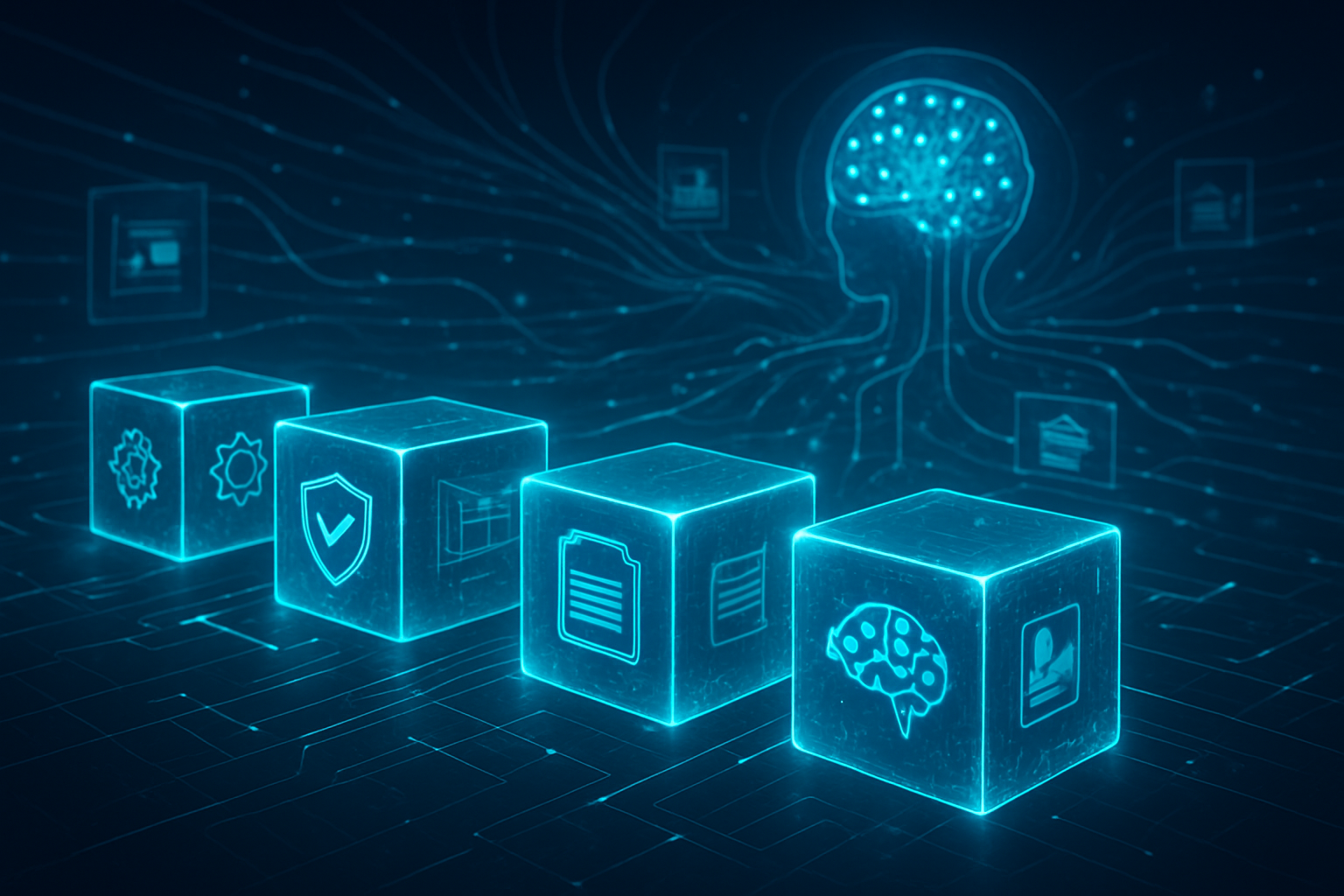
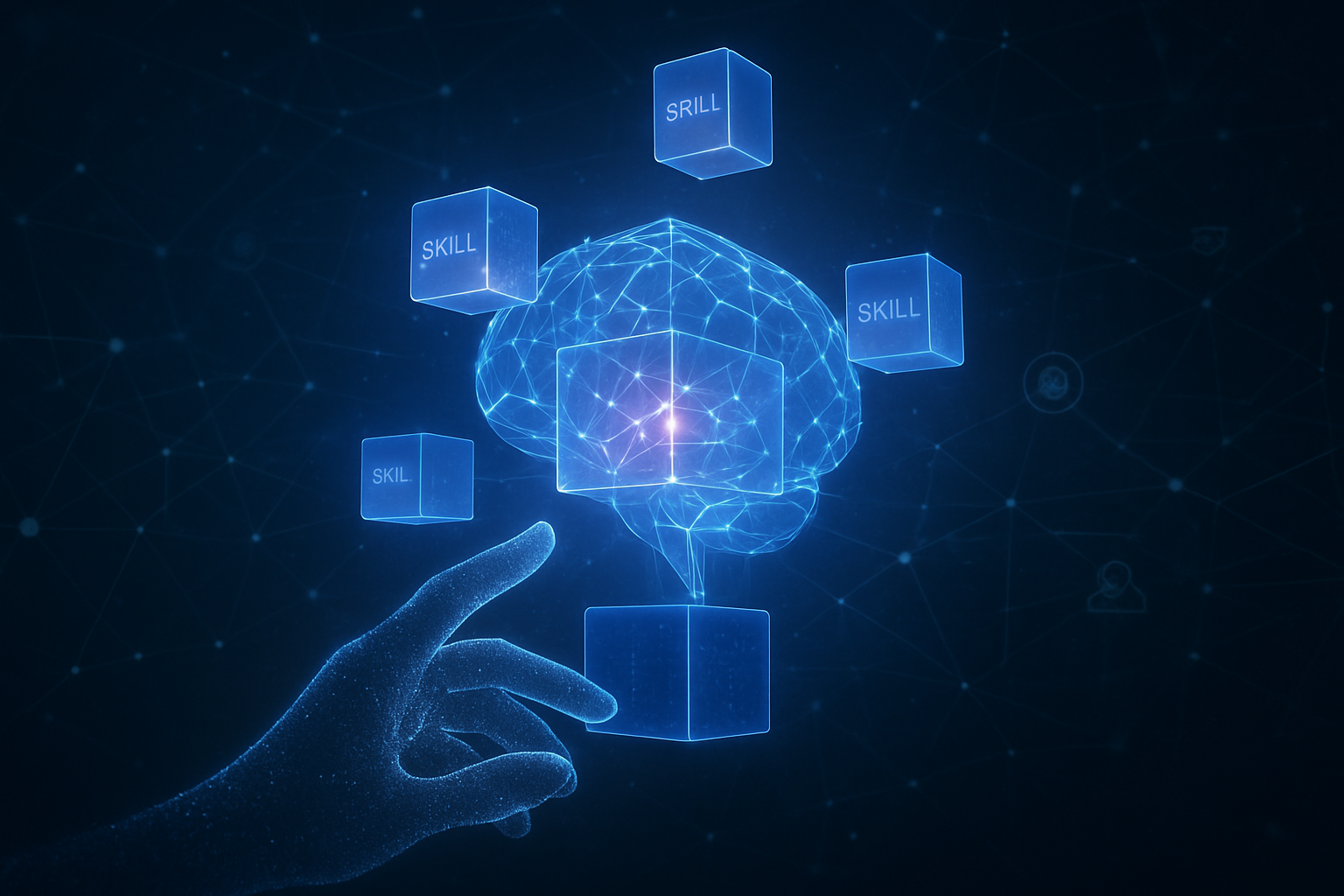
At the heart of the Agent Skills standard is a modular framework known as "Progressive Disclosure." This architecture solves a fundamental technical hurdle in AI development: the "context window bloat" that occurs when an agent is forced to hold too many instructions at once. Instead of stuffing thousands of lines of code and documentation into a model's system prompt, Agent Skills allows for a three-tiered loading process. Level 1 involves lightweight metadata that acts as a "hook," allowing the agent to recognize when a specific skill is needed. Level 2 triggers the dynamic loading of a SKILL.md file—a hybrid of YAML metadata and Markdown instructions—into the active context. Finally, Level 3 enables the execution of deterministic scripts (Python or Javascript) and the referencing of external resources only when required.
This approach differs significantly from previous "Custom GPT" or "Plugin" models, which often relied on opaque, platform-specific backends. The Agent Skills standard utilizes a self-contained filesystem directory structure, making a skill as portable as a text file. Technical specifications require a secure, sandboxed code execution environment where scripts run separately from the model’s main reasoning loop. This ensures that even if a model "hallucinates," the actual execution of the task remains grounded in deterministic code. The AI research community has reacted with cautious optimism, noting that while the standard simplifies agent development, the requirement for robust sandboxing remains a significant infrastructure challenge for smaller providers.
Strategic Impact on the Tech Ecosystem
The strategic implications for the tech landscape are profound, particularly for giants like Microsoft (NASDAQ: MSFT) and Alphabet (NASDAQ: GOOGL). By making Agent Skills an open standard, Anthropic is effectively commoditizing the "skills" layer of the AI stack. This benefits startups and enterprise developers who can now "build once" and deploy their agents across Claude, ChatGPT, or Microsoft Copilot without rewriting their core logic. Microsoft has already announced deep integration of the standard into VS Code and GitHub, while enterprise mainstays like Atlassian (NASDAQ: TEAM) and Salesforce (NYSE: CRM) have begun transitioning their internal agentic workflows to the new framework to avoid vendor lock-in.
For major AI labs, the launch creates a competitive fork in the road. While OpenAI has historically favored a more controlled ecosystem with its GPT Store, the industry-wide pressure for interoperability has forced a defensive adoption of the Agent Skills standard. Market analysts suggest that Anthropic’s enterprise market share has surged in late 2025 precisely because of this "open-first" philosophy. Companies that were previously hesitant to invest heavily in a single model's proprietary ecosystem are now viewing the Agent Skills framework as a safe, future-proof foundation for their AI investments. This disruption is likely to devalue proprietary "agent marketplaces" in favor of open-source skill repositories.
Global Significance and the Rise of the Agentic Web
Beyond the technical and corporate maneuvering, the Agent Skills standard represents a significant milestone in the evolution of the "Agentic Web." We are moving away from an era where users interact with standalone chatbots and toward an ecosystem of interconnected agents that can pass tasks to one another across different platforms. This mirrors the early days of the internet when protocols like HTTP and SMTP broke down the barriers between isolated computer networks. However, this shift is not without its concerns. The ease of sharing "procedural knowledge" raises questions about intellectual property—if a company develops a highly efficient "skill" for financial auditing, the open nature of the standard may make it harder to protect that trade secret.
Furthermore, the widespread adoption of standardized agent execution raises the stakes for AI safety and security. While the standard mandates sandboxing and restricts network access for scripts, the potential for "prompt injection" to trigger unintended skill execution remains a primary concern for cybersecurity experts. Comparisons are being drawn to the "DLL Hell" of early Windows computing; as agents begin to rely on dozens of modular skills from different authors, the complexity of ensuring those skills don't conflict or create security vulnerabilities grows exponentially. Despite these hurdles, the consensus among industry leaders is that standardization is the only viable path toward truly autonomous AI systems.
Future Developments and Use Cases
Looking ahead, the near-term focus will likely shift toward the creation of "Skill Registries"—centralized or decentralized hubs where developers can publish and version-control their Agent Skills. We can expect to see the emergence of specialized "Skill-as-a-Service" providers who focus solely on refining the procedural knowledge for niche industries like legal discovery, molecular biology, or high-frequency trading. As models become more capable of self-correction, the next frontier will be "Self-Synthesizing Skills," where an AI agent can observe a human performing a task and automatically generate the SKILL.md and associated scripts to replicate it.
The long-term challenge remains the governance of these standards. While the Agentic AI Foundation provides a neutral ground for collaboration, the interests of the "Big Tech" sponsors may eventually clash with those of the open-source community. Experts predict that by mid-2026, we will see the first major "Skill Interoperability" lawsuits, which will further define the legal boundaries of AI-generated workflows. For now, the focus remains on adoption, with the goal of making AI agents as ubiquitous and easy to deploy as a standard web application.
Conclusion: A New Era of Interoperable Intelligence
Anthropic's launch of the Agent Skills open standard marks the end of the "Model Wars" and the beginning of the "Standardization Wars." By prioritizing interoperability over proprietary control, Anthropic has fundamentally altered the trajectory of AI development, forcing the industry to move toward a more transparent and modular future. The key takeaway for businesses and developers is clear: the value of AI is shifting from the raw power of the model to the portability and precision of the procedural knowledge it can execute.
In the coming weeks, the industry will be watching closely to see how quickly the "Skill" ecosystem matures. With major players like Amazon (NASDAQ: AMZN) and Meta (NASDAQ: META) expected to announce their own integrations with the standard in early 2026, the era of the walled garden is rapidly coming to a close. As we enter the new year, the Agent Skills framework stands as a testament to the idea that for AI to reach its full potential, it must first learn to speak a common language.
This content is intended for informational purposes only and represents analysis of current AI developments.
TokenRing AI delivers enterprise-grade solutions for multi-agent AI workflow orchestration, AI-powered development tools, and seamless remote collaboration platforms.
For more information, visit https://www.tokenring.ai/.