Tag: Open Standards

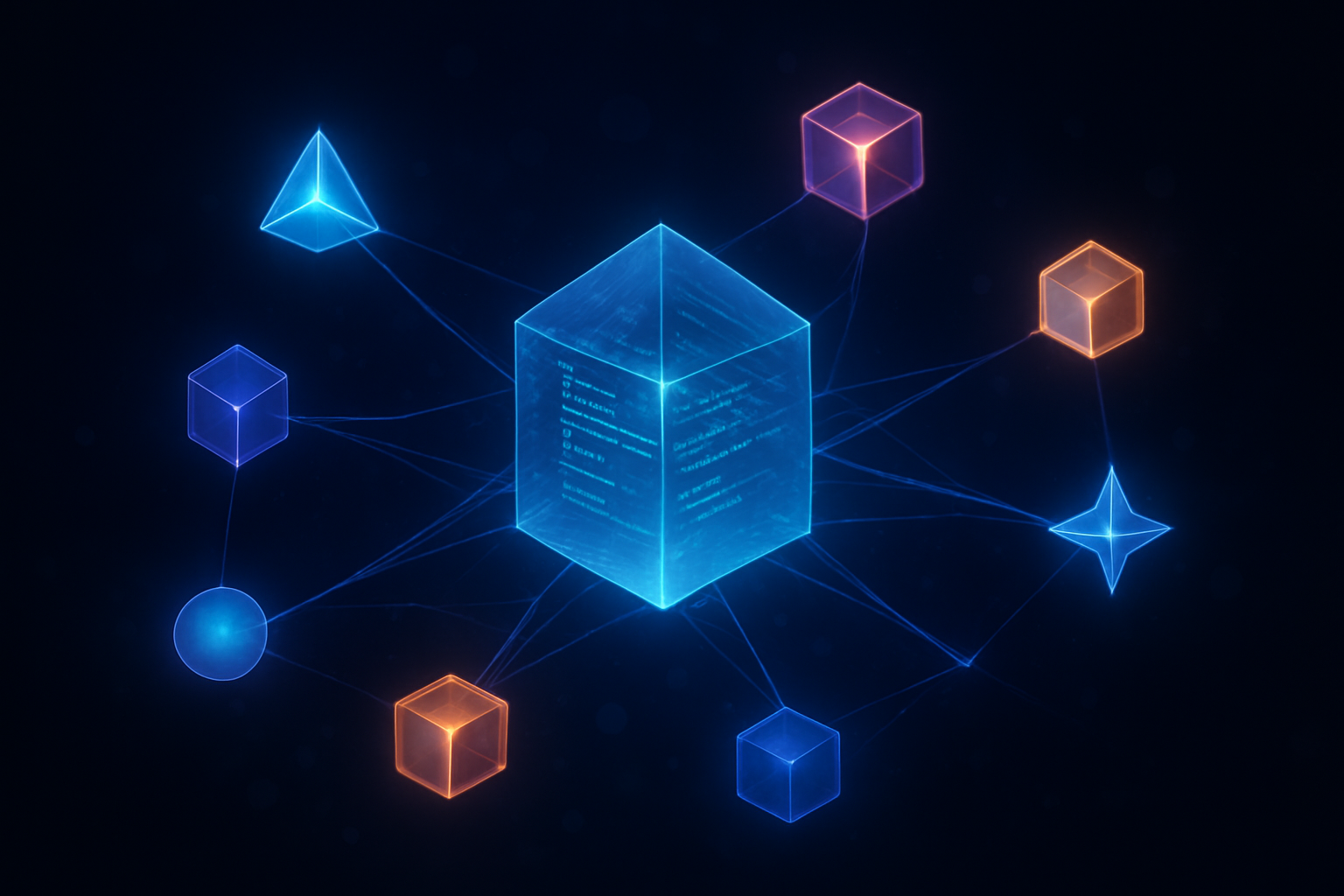
  • Anthropic Launches “Agent Skills” Open Standard: The New Universal Language for AI Interoperability

    Anthropic Launches “Agent Skills” Open Standard: The New Universal Language for AI Interoperability

    In a move that industry analysts are calling the most significant step toward a unified artificial intelligence ecosystem to date, Anthropic has officially launched its "Agent Skills" open standard. Released in December 2025, this protocol establishes a universal language for AI agents, allowing them to communicate, share specialized capabilities, and collaborate across different platforms and model providers. By donating the standard to the newly formed Agentic AI Foundation (AAIF)—a Linux Foundation-backed alliance—Anthropic is effectively attempting to end the "walled garden" era of AI development.

    The immediate significance of this announcement cannot be overstated. For the first time, a specialized workflow designed for a Claude-based agent can be seamlessly understood and executed by an OpenAI (Private) ChatGPT instance or a Microsoft (NASDAQ: MSFT) Copilot. This shift moves the industry away from a fragmented landscape of proprietary "GPTs" and "Actions" toward a cohesive, interoperable "Agentic Web" where the value lies not just in the underlying model, but in the portable skills that agents can carry with them across the digital world.

    The Architecture of Interoperability: How "Agent Skills" Works

    Technically, the Agent Skills standard is built on the principle of "Progressive Disclosure," a design philosophy intended to solve the "context window bloat" that plagues modern AI agents. Rather than forcing a model to ingest thousands of lines of instructions for every possible task, the standard uses a directory-based format centered around a SKILL.md file. This file combines YAML metadata for technical specifications with Markdown for procedural instructions. When an agent encounters a task, it navigates three levels of disclosure: first scanning metadata to see if a skill is relevant, then loading specific instructions, and finally accessing external scripts or resources only when execution is required.

    This approach differs fundamentally from previous attempts at agent orchestration, which often relied on rigid API definitions or model-specific fine-tuning. By decoupling an agent’s capabilities from its core architecture, Agent Skills allows for "Universal Portability." A skill authored for a creative task in Figma can be stored in a GitHub (owned by Microsoft (NASDAQ: MSFT)) repository and utilized by any agent with the appropriate permissions. The standard also introduces an experimental allowed-tools field, which provides a security sandbox by explicitly listing which system-level tools—such as Python or Bash—a specific skill is permitted to invoke.

    Initial reactions from the AI research community have been overwhelmingly positive. Researchers have praised the standard's simplicity, noting that it leverages existing web standards like Markdown and YAML rather than inventing a complex new syntax. "We are finally moving from agents that are 'smarter' to agents that are 'more useful,'" noted one lead researcher at the AAIF launch event. The consensus is that by standardizing how skills are packaged, the industry can finally scale multi-agent systems that work together in real-time without manual "hand-holding" by human developers.

    A Strategic Shift: From Model Wars to Ecosystem Dominance

    The launch of Agent Skills marks a pivotal moment for the major players in the AI race. For Anthropic—backed by significant investments from Amazon (NASDAQ: AMZN) and Alphabet (NASDAQ: GOOGL)—this is a bid to become the "infrastructure layer" of the AI era. By open-sourcing the standard, Anthropic is positioning itself as the neutral ground where all agents can meet. This strategy mirrors the early days of the internet, where companies that defined the protocols (like TCP/IP or HTML) ultimately wielded more long-term influence than those who merely built the first browsers.

    Tech giants are already lining up to support the standard. OpenAI has reportedly begun testing a "Skills Editor" that allows users to export their Custom GPTs into the open Agent Skills format, while Microsoft has integrated the protocol directly into VS Code. This allows developer teams to store "Golden Skills"—verified, secure workflows—directly within their codebases. For enterprise software leaders like Salesforce (NYSE: CRM) and Atlassian (NASDAQ: TEAM), the standard provides a way to make their proprietary data and workflows accessible to any agent an enterprise chooses to deploy, reducing vendor lock-in and increasing the utility of their platforms.

    However, the competitive implications are complex. While the standard promotes collaboration, it also levels the playing field, making it harder for companies to lock users into a specific ecosystem based solely on unique features. Startups in the "Agentic Workflow" space stand to benefit the most, as they can now build specialized skills that are instantly compatible with the massive user bases of the larger model providers. The focus is shifting from who has the largest parameter count to who has the most robust and secure library of "Agent Skills."

    The Wider Significance: Building the Foundation of the Agentic Web

    In the broader AI landscape, the Agent Skills standard is being viewed as the "USB-C moment" for artificial intelligence. Just as a universal charging standard simplified the hardware world, Agent Skills aims to simplify the software world by ensuring that intelligence is modular and transferable. This fits into a 2025 trend where "agentic workflows" have surpassed "chatbot interfaces" as the primary way businesses interact with AI. The standard provides the necessary plumbing for a future where agents from different companies can "hand off" tasks to one another—for example, a travel agent AI booking a flight and then handing the itinerary to a calendar agent to manage the schedule.

    Despite the excitement, the move has raised significant concerns regarding security and safety. If an agent can "download" a new skill on the fly, the potential for malicious skills to be introduced into a workflow is a real threat. The AAIF is currently working on a "Skill Verification" system, similar to a digital signature for software, to ensure that skills come from trusted sources. Furthermore, the ease of cross-platform collaboration raises questions about data privacy: if a Microsoft agent uses an Anthropic skill to process data on a Google server, who is responsible for the security of that data?

    Comparisons are already being made to the launch of the Model Context Protocol (MCP) in late 2024. While MCP focused on how agents connect to data sources, Agent Skills focuses on how they execute tasks. Together, these two standards represent the "dual-stack" of the modern AI era. This development signals that the industry is maturing, moving past the "wow factor" of generative text and into the practicalities of autonomous, cross-functional labor.

    The Road Ahead: What’s Next for AI Agents?

    Looking forward, the next 12 to 18 months will likely see a surge in "Skill Marketplaces." Companies like Zapier and Notion are already preparing to launch directories of pre-certified skills that can be "installed" into any compliant agent. We can expect to see the rise of "Composable AI," where complex enterprise processes—like legal discovery or supply chain management—are broken down into dozens of small, interoperable skills that can be updated and swapped out independently of the underlying model.

    The next major challenge will be "Cross-Agent Arbitration." When two agents from different providers collaborate on a task, how do they decide which one takes the lead, and how is the "compute cost" shared between them? Experts predict that 2026 will be the year of "Agent Economics," where protocols are developed to handle the micro-transactions and resource allocation required for a multi-agent economy to function at scale.

    A New Chapter in AI History

    The release of the Agent Skills open standard by Anthropic is more than just a technical update; it is a declaration of interdependence in an industry that has, until now, been defined by fierce competition and proprietary silos. By creating a common framework for what an agent can do, rather than just what it can say, Anthropic and its partners in the AAIF have laid the groundwork for a more capable, flexible, and integrated digital future.

    As we move into 2026, the success of this standard will depend on adoption and the rigorous enforcement of safety protocols. However, the initial momentum suggests that the "Agentic Web" is no longer a theoretical concept but a rapidly manifesting reality. For businesses and developers, the message is clear: the era of the isolated AI is over. The era of the collaborative agent has begun.


    This content is intended for informational purposes only and represents analysis of current AI developments.

    TokenRing AI delivers enterprise-grade solutions for multi-agent AI workflow orchestration, AI-powered development tools, and seamless remote collaboration platforms.
    For more information, visit https://www.tokenring.ai/.
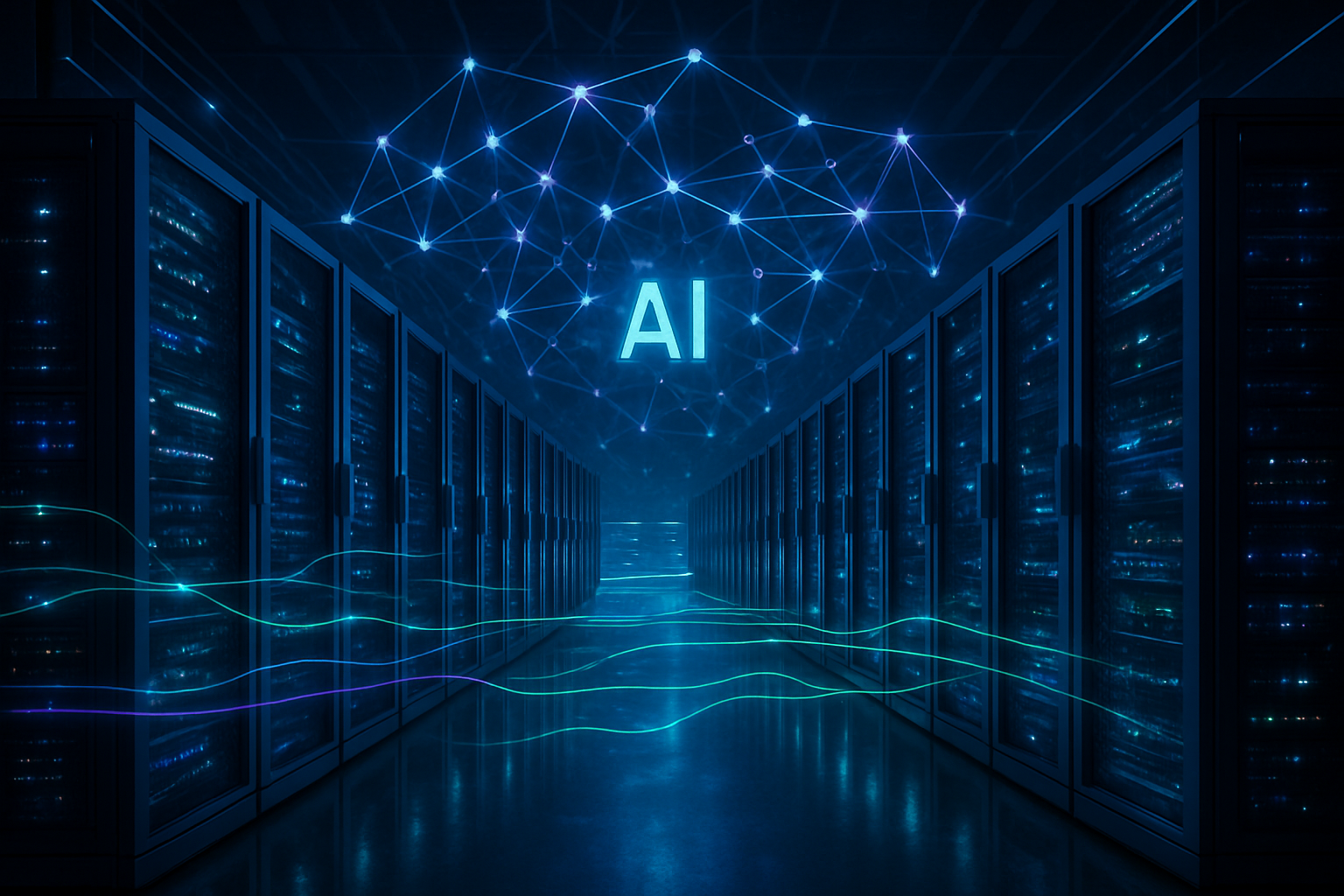
  • AMD Unleashes ‘Helios’ Platform: A New Dawn for Open AI Scalability

    AMD Unleashes ‘Helios’ Platform: A New Dawn for Open AI Scalability

    San Jose, California – October 14, 2025 – Advanced Micro Devices (NASDAQ: AMD) today unveiled its groundbreaking “Helios” rack-scale platform at the Open Compute Project (OCP) Global Summit, marking a pivotal moment in the quest for open, scalable, and high-performance infrastructure for artificial intelligence workloads. Designed to address the insatiable demands of modern AI, Helios represents AMD's ambitious move to democratize AI hardware, offering a powerful, standards-based alternative to proprietary systems and setting a new benchmark for data center efficiency and computational prowess.

    The Helios platform is not merely an incremental upgrade; it is a comprehensive, integrated solution engineered from the ground up to support the next generation of AI and high-performance computing (HPC). Its introduction signals a strategic shift in the AI hardware landscape, emphasizing open standards, robust scalability, and superior performance to empower hyperscalers, enterprises, and research institutions in their pursuit of advanced AI capabilities.

    Technical Prowess and Open Innovation Driving AI Forward

    At the heart of the Helios platform lies a meticulous integration of cutting-edge AMD hardware components and adherence to open industry standards. Built on the new Open Rack Wide (ORW) specification, a standard championed by Meta Platforms (NASDAQ: META) and contributed to the OCP, Helios leverages a double-wide rack design optimized for the extreme power, cooling, and serviceability requirements of gigawatt-scale AI data centers. This open architecture integrates OCP DC-MHS, UALink, and Ultra Ethernet Consortium (UEC) architectures, fostering unprecedented interoperability and significantly mitigating the risk of vendor lock-in.

    The platform is a powerhouse of AMD's latest innovations, combining AMD Instinct GPUs (including the MI350/MI355X series and anticipating future MI400/MI450 and MI500 series), AMD EPYC CPUs (featuring upcoming “Zen 6”-based “Venice” CPUs), and AMD Pensando networking components (such as Pollara 400 and “Vulcano” NICs). This synergistic integration creates a cohesive system capable of delivering exceptional performance for the most demanding AI tasks. AMD projects future Helios iterations with MI400 series GPUs to deliver up to 10 times more performance for inference on Mixture of Experts models compared to previous generations, while the MI350 series already boasts a 4x generational AI compute increase and a staggering 35x generational leap in inferencing capabilities. Furthermore, Helios is optimized for large language model (LLM) serving, supporting frameworks like vLLM and SGLang, and features FlashAttentionV3 for enhanced memory efficiency.

    This open, integrated, and rack-scale design stands in stark contrast to more proprietary, vertically integrated AI systems prevalent in the market. By providing a comprehensive reference platform, AMD aims to simplify and accelerate the deployment of AI and HPC infrastructure for original equipment manufacturers (OEMs), original design manufacturers (ODMs), and hyperscalers. The platform’s quick-disconnect liquid cooling system is crucial for managing the high power density of modern AI accelerators, while its double-wide layout enhances serviceability – critical operational needs in large-scale AI data centers. Initial reactions have been overwhelmingly positive, with OpenAI, Inc. engaging in co-design efforts for future platforms and Oracle Corporation’s (NYSE: ORCL) Oracle Cloud Infrastructure (OCI) announcing plans to deploy a massive AI supercluster powered by 50,000 AMD Instinct MI450 Series GPUs, validating AMD’s strategic direction.

    Reshaping the AI Industry Landscape

    The introduction of the Helios platform is poised to significantly impact AI companies, tech giants, and startups across the ecosystem. Hyperscalers and large enterprises, constantly seeking to scale their AI operations efficiently, stand to benefit immensely from Helios's open, flexible, and high-performance architecture. Companies like OpenAI and Oracle, already committed to leveraging AMD's technology, exemplify the immediate beneficiaries. OEMs and ODMs will find it easier to design and deploy custom AI solutions using the open reference platform, reducing time-to-market and integration complexities.

    Competitively, Helios presents a formidable challenge to established players, particularly Nvidia Corporation (NASDAQ: NVDA), which has historically dominated the AI accelerator market with its tightly integrated, proprietary solutions. AMD's emphasis on open standards, including industry-standard racks and networking over proprietary interconnects like NVLink, aims to directly address concerns about vendor lock-in and foster a more competitive and interoperable AI hardware ecosystem. This strategic move could disrupt existing product offerings and services by providing a viable, high-performance open alternative, potentially leading to increased market share for AMD in the rapidly expanding AI infrastructure sector.

    AMD's market positioning is strengthened by its commitment to an end-to-end open hardware philosophy, complementing its open-source ROCm software stack. This comprehensive approach offers a strategic advantage by empowering developers and data center operators with greater flexibility and control over their AI infrastructure, fostering innovation and reducing total cost of ownership in the long run.

    Broader Implications for the AI Frontier

    The Helios platform's unveiling fits squarely into the broader AI landscape's trend towards more powerful, scalable, and energy-efficient computing. As AI models, particularly LLMs, continue to grow in size and complexity, the demand for underlying infrastructure capable of handling gigawatt-scale data centers is skyrocketing. Helios directly addresses this need, providing a foundational element for building the necessary infrastructure to meet the world's escalating AI demands.

    The impacts are far-reaching. By accelerating the adoption of scalable AI infrastructure, Helios will enable faster research, development, and deployment of advanced AI applications across various industries. The commitment to open standards will encourage a more heterogeneous and diverse AI ecosystem, allowing for greater innovation and reducing reliance on single-vendor solutions. Potential concerns, however, revolve around the speed of adoption by the broader industry and the ability of the open ecosystem to mature rapidly enough to compete with deeply entrenched proprietary systems. Nevertheless, this development can be compared to previous milestones in computing history where open architectures eventually outpaced closed systems due to their flexibility and community support.

    The Road Ahead: Future Developments and Challenges

    Looking ahead, the Helios platform is expected to evolve rapidly. Near-term developments will likely focus on the widespread availability of the MI350/MI355X series GPUs within the platform, followed by the introduction of the more powerful MI400/MI450 and MI500 series. Continued contributions to the Open Compute Project and collaborations with key industry players are anticipated, further solidifying Helios's position as an industry-standard.

    Potential applications and use cases on the horizon are vast, ranging from even larger and more sophisticated LLM training and inference to complex scientific simulations in HPC, and the acceleration of AI-driven analytics across diverse sectors. However, challenges remain. The maturity of the open-source software ecosystem around new hardware platforms, sustained performance leadership in a fiercely competitive market, and the effective management of power and cooling at unprecedented scales will be critical for long-term success. Experts predict that AMD's aggressive push for open architectures will catalyze a broader industry shift, encouraging more collaborative development and offering customers greater choice and flexibility in building their AI supercomputers.

    A Defining Moment in AI Hardware

    AMD's Helios platform is more than just a new product; it represents a defining moment in AI hardware. It encapsulates a strategic vision that prioritizes open standards, integrated performance, and scalability to meet the burgeoning demands of the AI era. The platform's ability to combine high-performance AMD Instinct GPUs and EPYC CPUs with advanced networking and an open rack design creates a compelling alternative for companies seeking to build and scale their AI infrastructure without the constraints of proprietary ecosystems.

    The key takeaways are clear: Helios is a powerful, open, and scalable solution designed for the future of AI. Its significance in AI history lies in its potential to accelerate the adoption of open-source hardware and foster a more competitive and innovative AI landscape. In the coming weeks and months, the industry will be watching closely for further adoption announcements, benchmarks comparing Helios to existing solutions, and the continued expansion of its software ecosystem. AMD has laid down a gauntlet, and the race for the future of AI infrastructure just got a lot more interesting.


    This content is intended for informational purposes only and represents analysis of current AI developments.

    TokenRing AI delivers enterprise-grade solutions for multi-agent AI workflow orchestration, AI-powered development tools, and seamless remote collaboration platforms.
    For more information, visit https://www.tokenring.ai/.