Tag: OpenAI o3

  • The Reasoning Revolution: How OpenAI o3 Shattered the ARC-AGI Barrier and Redefined Intelligence

    The Reasoning Revolution: How OpenAI o3 Shattered the ARC-AGI Barrier and Redefined Intelligence

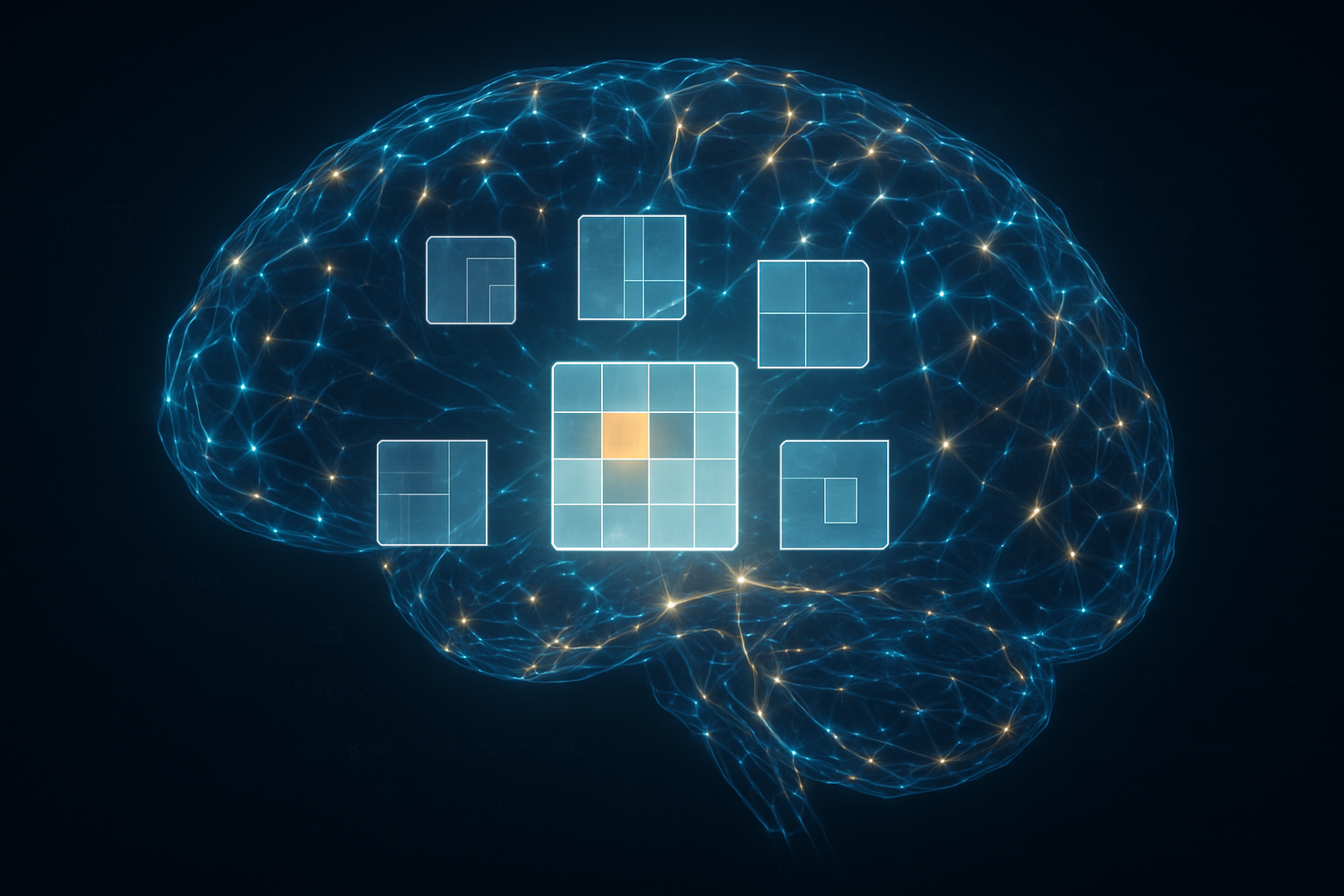
    In a milestone that many researchers predicted was still a decade away, the artificial intelligence landscape has undergone a fundamental shift from "probabilistic guessing" to "verifiable reasoning." At the heart of this transformation is OpenAI’s o3 model, a breakthrough that has effectively ended the era of next-token prediction as the sole driver of AI progress. By achieving a record-breaking 87.5% score on the Abstract Reasoning Corpus (ARC-AGI) benchmark, o3 has demonstrated a level of fluid intelligence that surpasses the average human score of 85%, signaling the definitive arrival of the "Reasoning Era."

    The significance of this development cannot be overstated. Unlike traditional Large Language Models (LLMs) that rely on pattern matching from vast datasets, o3’s performance on ARC-AGI proves it can solve novel, abstract puzzles it has never encountered during training. This leap has transitioned AI from a tool for content generation into a platform for genuine problem-solving, fundamentally changing how enterprises, researchers, and developers interact with machine intelligence as we enter 2026.

    From Prediction to Deliberation: The Technical Architecture of o3

    The core innovation of OpenAI o3 lies in its departure from "System 1" thinking—the fast, intuitive, and often error-prone processing typical of earlier models like GPT-4o. Instead, o3 utilizes what researchers call "System 2" thinking: a slow, deliberate, and logical planning process. This is achieved through a technique known as "test-time compute" or inference scaling. Rather than generating an answer instantly, the model is allocated a "thinking budget" during the response phase, allowing it to explore multiple reasoning paths, backtrack from logical dead ends, and self-correct before presenting a final solution.

    This shift in architecture is powered by large-scale Reinforcement Learning (RL) applied to the model’s internal "Chain of Thought." While previous iterations like the o1 series introduced basic reasoning capabilities, o3 has refined this process to a degree where it can tackle "Frontier Math" and PhD-level science problems with unprecedented accuracy. On the ARC-AGI benchmark—specifically designed by François Chollet to resist memorization—o3’s high-compute configuration reached 87.5%, a staggering jump from the 5% score recorded by GPT-4 in early 2024 and the 32% achieved by the first reasoning models in late 2024.

    Furthermore, o3 introduced "Deliberative Alignment," a safety framework where the model’s hidden reasoning tokens are used to monitor its own logic against safety guidelines. This ensures that even as the model becomes more autonomous and capable of complex planning, it remains bound by strict ethical constraints. The production version of o3 also features multimodal reasoning, allowing it to apply System 2 logic to visual inputs, such as complex engineering diagrams or architectural blueprints, within its hidden thought process.

    The Economic Engine of the Reasoning Era

    The arrival of o3 has sent shockwaves through the tech sector, creating new winners and forcing a massive reallocation of capital. Nvidia (NASDAQ: NVDA) has emerged as the primary beneficiary of this transition. As AI utility shifts from training size to "thinking tokens" during inference, the demand for high-performance GPUs like the Blackwell and Rubin architectures has surged. CEO Jensen Huang’s assertion that "Inference is the new training" has become the industry mantra, as enterprises now spend more on the computational power required for an AI to "think" through a problem than they do on the initial model development.

    Microsoft (NASDAQ: MSFT), OpenAI’s largest partner, has integrated these reasoning capabilities deep into its Copilot stack, offering a "Think Deeper" mode that leverages o3 for complex coding and strategic analysis. However, the sheer demand for the 10GW+ of power required to sustain these reasoning clusters has forced OpenAI to diversify its infrastructure. Throughout 2025, OpenAI signed landmark compute deals with Oracle (NYSE: ORCL) and even utilized Google Cloud under the Alphabet (NASDAQ: GOOGL) umbrella to manage the global rollout of o3-powered autonomous agents.

    The competitive landscape has also been disrupted by the "DeepSeek Shock" of early 2025, where the Chinese lab DeepSeek demonstrated that reasoning could be achieved with higher efficiency. This led OpenAI to release o3-mini and the subsequent o4-mini models, which brought "System 2" capabilities to the mass market at a fraction of the cost. This price war has democratized high-level reasoning, allowing even small startups to build agentic workflows that were previously the exclusive domain of trillion-dollar tech giants.

    A New Benchmark for General Intelligence

    The broader significance of o3’s ARC-AGI performance lies in its challenge to the skepticism surrounding Artificial General Intelligence (AGI). For years, critics argued that LLMs were merely "stochastic parrots" that would fail when faced with truly novel logic. By surpassing the human benchmark on ARC-AGI, o3 has provided the most robust evidence to date that AI is moving toward general-purpose cognition. This marks a turning point comparable to the 1997 defeat of Garry Kasparov by Deep Blue, but with the added dimension of linguistic and visual versatility.

    However, this breakthrough has also amplified concerns regarding the "black box" nature of AI reasoning. While the model’s Chain of Thought allows for better debugging, the sheer complexity of o3’s internal logic makes it difficult for humans to fully verify its steps in real-time. This has led to a renewed focus on AI interpretability and the potential for "reward hacking," where a model might find a technically correct but ethically questionable path to a solution.

    Comparing o3 to previous milestones, the industry sees a clear trajectory: if GPT-3 was the "proof of concept" and GPT-4 was the "utility era," then o3 is the "reasoning era." We are no longer asking if the AI knows the answer; we are asking how much compute we are willing to spend for the AI to find the answer. This transition has turned intelligence into a variable cost, fundamentally altering the economics of white-collar work and scientific research.

    The Horizon: From Reasoning to Autonomous Agency

    Looking ahead to the remainder of 2026, experts predict that the "Reasoning Era" will evolve into the "Agentic Era." The ability of models like o3 to plan and self-correct is the missing piece required for truly autonomous AI agents. We are already seeing the first wave of "Agentic Engineers" that can manage entire software repositories, and "Scientific Discovery Agents" that can formulate and test hypotheses in virtual laboratories. The near-term focus is expected to be on "Project Astra"-style real-world integration, where Alphabet's Gemini and OpenAI’s o-series models interact with physical environments through robotics and wearable devices.

    The next major hurdle remains the "Frontier Math" and "Deep Physics" barriers. While o3 has made significant gains, scoring over 25% on benchmarks that previously saw near-zero results, it still lacks the persistent memory and long-term learning capabilities of a human researcher. Future developments will likely focus on "Continuous Learning," where models can update their knowledge base in real-time without requiring a full retraining cycle, further narrowing the gap between artificial and biological intelligence.

    Conclusion: The Dawn of a New Epoch

    The breakthrough of OpenAI o3 and its dominance on the ARC-AGI benchmark represent more than just a technical achievement; they mark the dawn of a new epoch in human-machine collaboration. By proving that AI can reason through novelty rather than just reciting the past, OpenAI has fundamentally redefined the limits of what is possible with silicon. The transition to the Reasoning Era ensures that the next few years will be defined not by the volume of data we feed into machines, but by the depth of thought they can return to us.

    As we look toward the months ahead, the focus will shift from the models themselves to the applications they enable. From accelerating the transition to clean energy through materials science to solving the most complex bugs in global infrastructure, the "thinking power" of o3 is set to become the most valuable resource on the planet. The age of the reasoning machine is here, and the world will never look the same.


    This content is intended for informational purposes only and represents analysis of current AI developments.

    TokenRing AI delivers enterprise-grade solutions for multi-agent AI workflow orchestration, AI-powered development tools, and seamless remote collaboration platforms.
    For more information, visit https://www.tokenring.ai/.

  • The Horizon is Here: Why AGI Timelines are Collapsing in 2025

    The Horizon is Here: Why AGI Timelines are Collapsing in 2025

    As of December 18, 2025, the debate over Artificial General Intelligence (AGI) has shifted from "if" to a very imminent "when." In a year defined by the transition from conversational chatbots to autonomous reasoning agents, the consensus among the world’s leading AI labs has moved forward with startling speed. What was once considered a goal for the mid-2030s is now widely expected to arrive before the end of the decade, with some experts signaling that the foundational "Minimal AGI" threshold may be crossed as early as 2026.

    The acceleration of these timelines is not merely a product of hype but a reaction to a series of technical breakthroughs in late 2024 and throughout 2025. The emergence of "System 2" reasoning—where models can pause to "think" and self-correct—has shattered previous performance ceilings on complex problem-solving. As we stand at the end of 2025, the industry is no longer just scaling data; it is scaling intelligence through inference-time compute, bringing the era of human-equivalent digital labor into immediate focus.

    The Rise of Reasoning and the Death of the "Stall" Narrative

    The primary driver behind the compressed AGI timeline is the successful implementation of large-scale reasoning models, most notably OpenAI’s o3 and the recently released GPT-5.2. Unlike previous iterations that relied on rapid-fire pattern matching, these new architectures utilize "test-time compute," allowing the model to allocate minutes or even hours of processing power to solve a single problem. This shift has led to a historic breakthrough on the ARC-AGI benchmark, a test designed by Francois Chollet to measure an AI's ability to learn new skills and reason through novel tasks. In late 2024, OpenAI (partnered with Microsoft (NASDAQ: MSFT)) achieved an 87.5% score on ARC-AGI, and by late 2025, newer iterations have reportedly surpassed the 90% mark—effectively matching human-level fluid intelligence.

    Technically, this represents a move away from "System 1" thinking (intuitive, fast, and error-prone) toward "System 2" (deliberative, logical, and self-verifying). This evolution allows AI to handle "out-of-distribution" scenarios—problems it hasn't seen in its training data—which was previously the "holy grail" of human cognitive superiority. Furthermore, the integration of "Agentic Loops" has allowed these models to operate autonomously. Instead of a user prompting an AI for a single answer, the AI now acts as an agent, using tools, writing code, and iterating on its own work to complete multi-week projects in software engineering or scientific research without human intervention.

    The AI research community, which was skeptical of "scaling laws" throughout early 2024, has largely been silenced by these results. Initial reactions to the o3 performance were of shock; researchers noted that the model’s ability to "self-play" through logic puzzles and coding challenges mirrors the way AlphaGo mastered board games. The consensus has shifted: we are no longer limited by the amount of text on the internet, but by the amount of compute we can feed into a model's reasoning process.

    The Trillion-Dollar Race for Minimal AGI

    The compression of AGI timelines has triggered a massive strategic realignment among tech giants. Alphabet Inc. (NASDAQ: GOOGL), through its Google DeepMind division, has pivoted its entire roadmap toward "Project Astra" and the Gemini 2.0 series, focusing on real-time multimodal reasoning. Meanwhile, Anthropic—heavily backed by Amazon.com, Inc. (NASDAQ: AMZN)—has doubled down on its "Claude 4" architecture, which prioritizes safety and "Constitutional AI" to ensure that as models reach AGI-level capabilities, they remain steerable and aligned with human values.

    The market implications are profound. Companies that once provided software-as-a-service (SaaS) are finding their business models disrupted by "Agentic AI" that can perform the tasks the software was designed to manage. NVIDIA Corporation (NASDAQ: NVDA) remains the primary beneficiary of this shift, as the demand for inference-grade hardware has skyrocketed to support the "thinking time" required by reasoning models. The strategic advantage has moved to those who can secure the most energy and compute; the race for AGI is now as much a battle over power grids and data center real estate as it is over algorithms.

    Startups are also feeling the heat. The "wrapper" era is over; any startup not integrating deep reasoning or autonomous agency is being rendered obsolete by the core capabilities of frontier models. Meta Platforms, Inc. (NASDAQ: META) continues to play a wildcard role, with its Llama-4 open-source releases forcing the closed-source labs to accelerate their release schedules to maintain a competitive moat. This "arms race" dynamic is a key reason why timelines have compressed; no major player can afford to be second to AGI.

    Societal Shifts and the "Agentic Workforce"

    The broader significance of AGI arriving in the 2026–2028 window cannot be overstated. We are witnessing the birth of the "Agentic Workforce," where AI agents are beginning to take on roles in legal research, accounting, and software development. Unlike the automation of the 20th century, which replaced physical labor, this shift targets high-level cognitive labor. While this promises a massive surge in global GDP and productivity, it also raises urgent concerns about economic displacement and the "hollowing out" of entry-level white-collar roles.

    Societal concerns have shifted from "hallucinations" to "autonomy." As AI agents gain the ability to move money, write code, and interact with the physical world via computer interfaces, the potential for systemic risk increases. This has led to a surge in international AI governance efforts, with many nations debating "kill switch" legislation and strict licensing for models that exceed certain compute thresholds. The comparison to previous milestones, like the 1969 moon landing or the invention of the internet, is increasingly common, though many experts argue AGI is more akin to the discovery of fire—a fundamental shift in the human condition.

    The "stagnation" fears of 2024 have been replaced by a "velocity" crisis. The speed at which these models are improving is outpacing the ability of legal and educational institutions to adapt. We are now seeing the first generation of "AI-native" companies that operate with a fraction of the headcount previously required, signaling a potential decoupling of economic growth from traditional employment.

    The Road to 2027: What Comes Next?

    Looking toward the near term, the industry is focused on "Embodied AI." While cognitive AGI is nearing the finish line, the challenge remains in giving these "brains" capable "bodies." We expect 2026 to be the year of the humanoid robot scaling law, as companies like Tesla (NASDAQ: TSLA) and Figure AI attempt to apply the same transformer-based reasoning to physical movement and manipulation. If the "reasoning" breakthroughs of 2025 can be successfully ported to robotics, the timeline for a truly general-purpose robot could collapse just as quickly as the timeline for digital AGI did.

    The next major hurdle is "recursive self-improvement." Experts like Shane Legg and Dario Amodei are watching for signs that AI models can significantly improve their own architectures. Once an AI can write better AI code than a human team, we enter the era of the "Intelligence Explosion." Most predictions suggest this could occur within 12 to 24 months of reaching the "Minimal AGI" threshold, potentially placing the arrival of Superintelligence (ASI) in the early 2030s.

    Challenges remain, particularly regarding energy consumption and the "data wall." However, the move toward synthetic data and self-play has provided a workaround for the lack of new human-generated text. The focus for 2026 will likely be on "on-device" reasoning and reducing the cost of inference-time compute to make AGI-level intelligence accessible to everyone, not just those with access to massive server farms.

    Summary of the AGI Horizon

    As 2025 draws to a close, the consensus is clear: AGI is no longer a distant sci-fi fantasy. The transition from GPT-4’s pattern matching to GPT-5.2’s deliberative reasoning has proven that the path to human-level intelligence is paved with compute and architectural refinement. With experts like Sam Altman and Dario Amodei pointing toward the 2026–2028 window, the window for preparation is closing.

    The significance of this moment in AI history is unparalleled. We are transitioning from a world where humans are the only entities capable of complex reasoning to one where intelligence is a scalable, on-demand utility. The long-term impact will touch every facet of life, from how we solve climate change and disease to how we define the value of human labor.

    In the coming weeks and months, watch for the results of the first "Agentic" deployments in large-scale enterprise environments. As these systems move from research labs into the real-world economy, the true velocity of the AGI transition will become undeniable. The horizon is no longer moving away; it has arrived.


    This content is intended for informational purposes only and represents analysis of current AI developments.

    TokenRing AI delivers enterprise-grade solutions for multi-agent AI workflow orchestration, AI-powered development tools, and seamless remote collaboration platforms.
    For more information, visit https://www.tokenring.ai/.