
Tag: OpenAI

  • GitHub Copilot Unleashed: The Dawn of the Multi-Model Agentic Assistant Reshapes Software Development

    GitHub Copilot Unleashed: The Dawn of the Multi-Model Agentic Assistant Reshapes Software Development

    GitHub Copilot, once a revolutionary code completion tool, has undergone a profound transformation, emerging as a faster, smarter, and profoundly more autonomous multi-model agentic assistant. This evolution, rapidly unfolding from late 2024 through mid-2025, marks a pivotal moment for software development, redefining developer workflows and promising an unprecedented surge in productivity. No longer content with mere suggestions, Copilot now acts as an intelligent peer, capable of understanding complex, multi-step tasks, iterating on its own solutions, and even autonomously identifying and rectifying errors. This paradigm shift, driven by advanced agentic capabilities and a flexible multi-model architecture, is set to fundamentally alter how code is conceived, written, and deployed.

    The Technical Leap: From Suggestion Engine to Autonomous Agent

    The core of GitHub Copilot's metamorphosis lies in its newly introduced Agent Mode and specialized Coding Agents, which became generally available by May 2025. In Agent Mode, Copilot can analyze high-level goals, break them down into actionable subtasks, generate or identify necessary files, suggest terminal commands, and even self-heal runtime errors. This enables it to proactively take action based on user prompts, moving beyond reactive assistance to become an autonomous problem-solver. The dedicated Coding Agent, sometimes referred to as "Project Padawan," operates within GitHub's (NASDAQ: MSFT) native control layer, powered by GitHub Actions. It can be assigned tasks such as performing code reviews, writing tests, fixing bugs, and implementing new features, working in secure development environments and pushing commits to draft pull requests for human oversight.

    Further enhancing its capabilities, Copilot Edits, generally available by February 2025, allows developers to use natural language to request changes across multiple files directly within their workspace. The evolution also includes Copilot Workspace, offering agentic features that streamline the journey from brainstorming to functional code through a system of collaborating sub-agents. Beyond traditional coding, a new Site Reliability Engineering (SRE) Agent was introduced in May 2025 to assist cloud developers in automating responses to production alerts, mitigating issues, and performing root cause analysis, thereby reducing operational costs. Copilot also gained capabilities for app modernization, assisting with code assessments, dependency updates, and remediation for legacy Java and .NET applications.

    Crucially, the "multi-model" aspect of Copilot's evolution is a game-changer. By February 2025, GitHub Copilot introduced a model picker, allowing developers to select from a diverse library of powerful Large Language Models (LLMs) based on the specific task's requirements for context, cost, latency, and reasoning complexity. This includes models from OpenAI (e.g., GPT-4.1, GPT-5, o3-mini, o4-mini), Google DeepMind (NASDAQ: GOOGL) (Gemini 2.0 Flash, Gemini 2.5 Pro), and Anthropic (Claude Sonnet 3.7 Thinking, Claude Opus 4.1, Claude 3.5 Sonnet). GPT-4.1 serves as the default for core features, with lighter models for basic tasks and more powerful ones for complex reasoning. This flexible architecture ensures Copilot adapts to diverse development needs, providing "smarter" responses and reducing hallucinations. The "faster" aspect is addressed through enhanced context understanding, allowing for more accurate decisions, and continuous performance improvements in token optimization and prompt caching. Initial reactions from the AI research community and industry experts highlight the shift from AI as a mere tool to a truly collaborative, autonomous agent, setting a new benchmark for developer productivity.

    Reshaping the AI Industry Landscape

    The evolution of GitHub Copilot into a multi-model agentic assistant has profound implications for the entire tech industry, fundamentally reshaping competitive landscapes by October 2025. Microsoft (NASDAQ: MSFT), as the owner of GitHub, stands as the primary beneficiary, solidifying its dominant position in developer tools by integrating cutting-edge AI directly into its extensive ecosystem, including VS Code and Azure AI. This move creates significant ecosystem lock-in, making it harder for developers to switch platforms. The open-sourcing of parts of Copilot’s VS Code extensions further fosters community-driven innovation, reinforcing its strategic advantage.

    For major AI labs like OpenAI, Anthropic, and Google DeepMind (NASDAQ: GOOGL), this development drives increased demand for their advanced LLMs, which form the core of Copilot's multi-model architecture. Competition among these labs shifts from solely developing powerful foundational models to ensuring seamless integration and optimal performance within agentic platforms like Copilot. Cloud providers such as Amazon (NASDAQ: AMZN) Web Services, Google Cloud (NASDAQ: GOOGL), and Microsoft Azure (NASDAQ: MSFT) also benefit from the increased computational demand required to run these advanced AI models and agents, fueling their infrastructure growth. These tech giants are also actively developing their own agentic solutions, such as Google Jules and Amazon’s Agents for Bedrock, to compete in this rapidly expanding market.

    Startups face a dual landscape of opportunities and challenges. While directly competing with comprehensive offerings from tech giants is difficult due to resource intensity, new niches are emerging. Startups can thrive by developing highly specialized AI agents for specific domains, programming languages, or unique development workflows not fully covered by Copilot. Opportunities also abound in building orchestration and management platforms for fleets of AI agents, as well as in AI observability, security, auditing, and explainability solutions, which are critical for autonomous workflows. However, the high computational and data resource requirements for developing and training large, multi-modal agentic AI systems pose a significant barrier to entry for smaller players. This evolution also disrupts existing products and services, potentially superseding specialized code generation tools, automating aspects of manual testing and debugging, and transforming traditional IDEs into command centers for supervising AI agents. The overarching competitive theme is a shift towards integrated, agentic solutions that amplify human capabilities across the entire software development lifecycle, with a strong emphasis on developer experience and enterprise-grade readiness.

    Broader AI Significance and Considerations

    GitHub Copilot's evolution into a faster, smarter, multi-model agentic assistant is a landmark achievement, embodying the cutting edge of AI development and aligning with several overarching trends in the broader AI landscape as of October 2025. This transformation signifies the rise of agentic AI, moving beyond reactive generative AI to proactive, goal-driven systems that can break down tasks, reason, act, and adapt with minimal human intervention. Deloitte predicts that by 2027, 50% of companies using generative AI will launch agentic AI pilots, underscoring this significant industry shift. Furthermore, it exemplifies the expansion of multi-modal AI, where systems process and understand multiple data types (text, code, soon images, and design files) simultaneously, leading to more holistic comprehension and human-like interactions. Gartner forecasts that by 2027, 40% of generative AI solutions will be multimodal, up from just 1% in 2023.

    The impacts are profound: accelerated software development (early studies showed Copilot users completing tasks 55% faster, a figure expected to increase significantly), increased productivity and efficiency by automating complex, multi-file changes and debugging, and a democratization of development by lowering the barrier to entry for programming. Developers' roles will evolve, shifting towards higher-level architecture, problem-solving, and managing AI agents, rather than being replaced. This also leads to enhanced code quality and consistency through automated enforcement of coding standards and integration checks.

    However, this advancement also brings potential concerns. Data protection and confidentiality risks are heightened as AI tools process more proprietary code; inadvertent exposure of sensitive information remains a significant threat. Loss of control and over-reliance on autonomous AI could degrade fundamental coding skills or lead to an inability to identify AI-generated errors or biases, necessitating robust human oversight. Security risks are amplified by AI's ability to access and modify multiple system parts, expanding the attack surface. Intellectual property and licensing issues become more complex as AI generates extensive code that might inadvertently mirror copyrighted work. Finally, bias in AI-generated solutions and challenges with reliability and accuracy for complex, novel problems remain critical areas for ongoing attention.

    Comparing this to previous AI milestones, agentic multi-model Copilot moves beyond expert systems and Robotic Process Automation (RPA) by offering unparalleled flexibility, reasoning, and adaptability. It significantly advances from the initial wave of generative AI (LLMs/chatbots) by applying generative outputs toward specific goals autonomously, acting on behalf of the user, and orchestrating multi-step workflows. While breakthroughs like AlphaGo (2016) demonstrated AI's superhuman capabilities in specific domains, Copilot's agentic evolution has a broader, more direct impact on daily work for millions, akin to how cloud computing and SaaS democratized powerful infrastructure, now democratizing advanced coding capabilities.

    The Road Ahead: Future Developments and Challenges

    The trajectory of GitHub Copilot as a multi-model agentic assistant points towards an increasingly autonomous, intelligent, and deeply integrated future for software development. In the near term, we can expect the continued refinement and widespread adoption of features like the Agent Mode and Coding Agent across more IDEs and development environments, with enhanced capabilities for self-healing and iterative code refinement. The multi-model support will likely expand, incorporating even more specialized and powerful LLMs from various providers, allowing for finer-grained control over model selection based on specific task demands and cost-performance trade-offs. Further enhancements to Copilot Edits and Next Edit Suggestions will make multi-file modifications and code refactoring even more seamless and intuitive. The integration of vision capabilities, allowing Copilot to generate UI code from mock-ups or screenshots, is also on the immediate horizon, moving towards truly multi-modal input beyond text and code.

    Looking further ahead, long-term developments envision Copilot agents collaborating with other agents to tackle increasingly complex development and production challenges, leading to autonomous multi-agent collaboration. We can anticipate enhanced Pull Request support, where Copilot not only suggests improvements but also autonomously manages aspects of the review process. The vision of self-optimizing AI codebases, where AI systems autonomously improve codebase performance over time, is a tangible goal. AI-driven project management, where agents assist in assigning and prioritizing coding tasks, could further automate development workflows. Advanced app modernization capabilities are expected to expand beyond current support to include mainframe modernization, addressing a significant industry need. Experts predict a shift from AI being an assistant to becoming a true "peer-programmer" or even providing individual developers with their "own team" of agents, freeing up human developers for more complex and creative work.

    However, several challenges need to be addressed for this future to fully materialize. Security and privacy remain paramount, requiring robust segmentation protocols, data anonymization, and comprehensive audit logs to prevent data leaks or malicious injections by autonomous agents. Current agent limitations, such as constraints on cross-repository changes or simultaneous pull requests, need to be overcome. Improving model reasoning and data quality is crucial for enhancing agent effectiveness, alongside tackling context limits and long-term memory issues inherent in current LLMs for complex, multi-step tasks. Multimodal data alignment and ensuring accurate integration of heterogeneous data types (text, images, audio, video) present foundational technical hurdles. Maintaining human control and understanding while increasing AI autonomy is a delicate balance, requiring continuous training and robust human-in-the-loop mechanisms. The need for standardized evaluation and benchmarking metrics for AI agents is also critical. Experts predict that while agents gain autonomy, the development process will remain collaborative, with developers reviewing agent-generated outputs and providing feedback for iterative improvements, ensuring a "human-led, tech-powered" approach.

    A New Era of Software Creation

    GitHub Copilot's transformation into a faster, smarter, multi-model agentic assistant represents a paradigm shift in the history of software development. The key takeaways from this evolution, rapidly unfolding in 2025, are the transition from reactive code completion to proactive, autonomous problem-solving through Agent Mode and Coding Agents, and the introduction of a multi-model architecture offering unparalleled flexibility and intelligence. This advancement promises unprecedented gains in developer productivity, accelerated delivery times, and enhanced code quality, fundamentally reshaping the developer experience.

    This development's significance in AI history cannot be overstated; it marks a pivotal moment where AI moves beyond mere assistance to becoming a genuine, collaborative partner capable of understanding complex intent and orchestrating multi-step actions. It democratizes advanced coding capabilities, much like cloud computing democratized infrastructure, bringing sophisticated AI tools to every developer. While the benefits are immense, the long-term impact hinges on effectively addressing critical concerns around data security, intellectual property, potential over-reliance, and the ethical deployment of autonomous AI.

    In the coming weeks and months, watch for further refinements in agentic capabilities, expanded multi-modal input beyond code (e.g., images, design files), and deeper integrations across the entire software development lifecycle, from planning to deployment and operations. The evolution of GitHub Copilot is not just about writing code faster; it's about reimagining the entire process of software creation, elevating human developers to roles of strategic oversight and creative innovation, and ushering in a new era of human-AI collaboration.


    This content is intended for informational purposes only and represents analysis of current AI developments.

    TokenRing AI delivers enterprise-grade solutions for multi-agent AI workflow orchestration, AI-powered development tools, and seamless remote collaboration platforms.
    For more information, visit https://www.tokenring.ai/.

  • AMD Unleashes AI Ambition: Strategic Partnerships and Next-Gen Instinct Accelerators Position Chipmaker as a Formidable NVIDIA Challenger

    AMD Unleashes AI Ambition: Strategic Partnerships and Next-Gen Instinct Accelerators Position Chipmaker as a Formidable NVIDIA Challenger

    Advanced Micro Devices' (NASDAQ: AMD) aggressive push into the AI hardware and software market has culminated in a series of groundbreaking announcements and strategic partnerships, fundamentally reshaping the competitive landscape of the semiconductor industry. With the unveiling of its MI300 series accelerators, the robust ROCm software ecosystem, and pivotal collaborations with industry titans like OpenAI and Oracle (NYSE: ORCL), Advanced Micro Devices (NASDAQ: AMD) is not merely participating in the AI revolution; it's actively driving a significant portion of it. These developments, particularly the multi-year, multi-generation agreement with OpenAI and the massive Oracle Cloud Infrastructure (OCI) deployment, signal a profound validation of AMD's comprehensive AI strategy and its potential to disrupt NVIDIA's (NASDAQ: NVDA) long-held dominance in AI compute.

    Detailed Technical Coverage

    The core of AMD's AI offensive lies in its Instinct MI300 series accelerators and the upcoming MI350 and MI450 generations. The AMD Instinct MI300X, launched in December 2023, stands out with its CDNA3 architecture, featuring an unprecedented 192 GB of HBM3 memory, 5.3 TB/s of peak memory bandwidth, and 153 billion transistors. This dense memory configuration is crucial for handling the massive parameter counts of modern generative AI models, offering leadership efficiency and performance. The accompanying AMD Instinct MI300X Platform integrates eight MI300X OAM devices, pooling 1.5 TB of HBM3 memory and achieving theoretical peak performance of 20.9 PFLOPs (FP8), providing a robust foundation for large-scale AI training and inference.

    Looking ahead, the AMD Instinct MI350 Series, based on the CDNA 4 architecture, is set to introduce support for new low-precision data types like FP4 and FP6, further enhancing efficiency for AI workloads. Oracle has already announced the general availability of OCI Compute with AMD Instinct MI355X GPUs, highlighting the immediate adoption of these next-gen accelerators. Beyond that, the AMD Instinct MI450 Series, slated for 2026, promises even greater capabilities with up to 432 GB of HBM4 memory and an astounding 20 TB/s of memory bandwidth, positioning AMD for significant future deployments with key partners like OpenAI and Oracle.

    AMD's approach significantly differs from traditional monolithic GPU designs by leveraging state-of-the-art die stacking and chiplet technology. This modular design allows for greater flexibility, higher yields, and improved power efficiency, crucial for the demanding requirements of AI and HPC. Furthermore, AMD's unwavering commitment to its open-source ROCm software stack directly challenges NVIDIA's proprietary CUDA ecosystem. The recent ROCm 7.0 Platform release significantly boosts AI inference performance (up to 3.5x over ROCm 6), expands compatibility to Windows and Radeon GPUs, and introduces full support for MI350 series and FP4/FP6 data types. This open strategy aims to foster broader developer adoption and mitigate vendor lock-in, a common pain point for hyperscalers.

    Initial reactions from the AI research community and industry experts have been largely positive, viewing AMD's advancements as a critical step towards diversifying the AI compute landscape. Analysts highlight the OpenAI partnership as a "major validation" of AMD's AI strategy, signaling that AMD is now a credible alternative to NVIDIA. The emphasis on open standards, coupled with competitive performance metrics, has garnered attention from major cloud providers and AI firms eager to reduce their reliance on a single supplier and optimize their total cost of ownership (TCO) for massive AI infrastructure deployments.

    Impact on AI Companies, Tech Giants, and Startups

    AMD's aggressive foray into the AI accelerator market, spearheaded by its Instinct MI300X and MI450 series GPUs and fortified by its open-source ROCm software stack, is sending ripples across the entire AI industry. Tech giants like Microsoft (NASDAQ: MSFT), Meta Platforms (NASDAQ: META), and Oracle (NYSE: ORCL) are poised to be major beneficiaries, gaining a crucial alternative to NVIDIA's (NASDAQ: NVDA) dominant AI hardware. Microsoft Azure already supports AMD ROCm software, integrating it to scale AI workloads, and plans to leverage future generations of Instinct accelerators. Meta is actively deploying MI300X for its Llama 405B models, and Oracle Cloud Infrastructure (OCI) is building a massive AI supercluster with 50,000 MI450 Series GPUs, marking a significant diversification of their AI compute infrastructure. This diversification reduces vendor lock-in, potentially leading to better pricing, more reliable supply chains, and greater flexibility in hardware choices for these hyperscalers.

    The competitive implications for major AI labs and tech companies are profound. For NVIDIA, AMD's strategic partnerships, particularly the multi-year, multi-generation agreement with OpenAI, represent the most direct and significant challenge to its near-monopoly in AI GPUs. While NVIDIA maintains a substantial lead with its mature CUDA ecosystem, AMD's Instinct series offers competitive performance, especially in memory-intensive workloads, often at a more attractive price point. OpenAI's decision to partner with AMD signifies a strategic effort to diversify its chip suppliers and directly influence AMD's hardware and software development, intensifying the competitive pressure on NVIDIA to innovate faster and potentially adjust its pricing strategies.

    This shift also brings potential disruption to existing products and services across the AI landscape. AMD's focus on an open ecosystem with ROCm and its deep software integration efforts (including making OpenAI's Triton language compatible with AMD chips) makes it easier for developers to utilize AMD hardware. This fosters innovation by providing viable alternatives to CUDA, potentially reducing costs and increasing access to high-performance compute. AI companies, especially those building large language models, can leverage AMD's memory-rich GPUs for larger models without extensive partitioning. Startups, often constrained by long waitlists and high costs for NVIDIA chips, can find a credible alternative hardware provider, lowering the barrier to entry for scalable AI infrastructure through AMD-powered cloud instances.

    Strategically, AMD is solidifying its market positioning as a strong contender and credible alternative to NVIDIA, moving beyond a mere "second-source" mentality. The Oracle deal alone is projected to bring substantial revenue and position AMD as a preferred partner for large-scale AI infrastructure. Analysts project significant growth in AMD's AI-related revenues, potentially reaching $20 billion by 2027. This strong positioning is built on a foundation of high-performance hardware, a robust and open software ecosystem, and critical strategic alliances that are reshaping how the industry views and procures AI compute.

    Wider Significance

    AMD's aggressive push into the AI sector, marked by its advanced Instinct GPUs and strategic alliances, fits squarely into the broader AI landscape's most critical trends: the insatiable demand for high-performance compute, the industry's desire for supply chain diversification, and the growing momentum for open-source ecosystems. The sheer scale of the deals, particularly the "6 gigawatt agreement" with OpenAI and Oracle's deployment of 50,000 MI450 Series GPUs, underscores the unprecedented demand for AI infrastructure. This signifies a crucial maturation of the AI market, where major players are actively seeking alternatives to ensure resilience and avoid vendor lock-in, a trend that will profoundly impact the future trajectory of AI development.

    The impacts of AMD's strategy are multifaceted. Increased competition in the AI hardware market will undoubtedly accelerate innovation, potentially leading to more advanced hardware, improved software tools, and better price-performance ratios for customers. This diversification of AI compute power is vital for mitigating risks associated with reliance on a single vendor and ensures greater flexibility in sourcing essential compute. Furthermore, AMD's steadfast commitment to its open-source ROCm platform directly challenges NVIDIA's proprietary CUDA, fostering a more collaborative and open AI development community. This open approach, akin to the rise of Linux against proprietary operating systems, could democratize access to high-performance AI compute, driving novel approaches and optimizations across the industry. The high memory capacity of AMD's GPUs also influences AI model design, allowing larger models to fit onto a single GPU, simplifying development and deployment.

    However, potential concerns temper this optimistic outlook. Supply chain challenges, particularly U.S. export controls on advanced AI chips and reliance on TSMC for manufacturing, pose revenue risks and potential bottlenecks. While AMD is exploring mitigation strategies, these remain critical considerations. The maturity of the ROCm software ecosystem, while rapidly improving, still lags behind NVIDIA's CUDA in terms of overall breadth of optimized libraries and community support. Developers migrating from CUDA may face a learning curve or encounter varying performance. Nevertheless, AMD's continuous investment in ROCm and strategic partnerships are actively bridging this gap. The immense scale of AI infrastructure deals also raises questions about financing and the development of necessary power infrastructure, which could pose risks if economic conditions shift.

    Comparing AMD's current AI strategy to previous AI milestones reveals a similar pattern of technological competition and platform shifts. NVIDIA's CUDA established a proprietary advantage, much like Microsoft's Windows in the PC era. AMD's embrace of open-source ROCm is a direct challenge to this, aiming to prevent a single vendor from completely dictating the future of AI. This "AI supercycle," as AMD CEO Lisa Su describes it, is akin to other major technological disruptions, where massive investments drive rapid innovation and reshape industries. AMD's emergence as a viable alternative at scale marks a crucial inflection point, moving towards a more diversified and competitive landscape, which historically has spurred greater innovation and efficiency across the tech world.

    Future Developments

    AMD's trajectory in the AI market is defined by an aggressive and clearly articulated roadmap, promising continuous innovation in both hardware and software. In the near term (1-3 years), the company is committed to an annual release cadence for its Instinct accelerators. The Instinct MI325X, with 288GB of HBM3E memory, is expected to see widespread system availability in Q1 2025. Following this, the Instinct MI350 Series, based on the CDNA 4 architecture and built on TSMC’s 3nm process, is slated for 2025, introducing support for FP4 and FP6 data types. Oracle Cloud Infrastructure (NYSE: ORCL) is already deploying MI355X GPUs at scale, signaling immediate adoption. Concurrently, the ROCm software stack will see continuous optimization and expansion, ensuring compatibility with a broader array of AI frameworks and applications. AMD's "Helios" rack-scale solution, integrating GPUs, future EPYC CPUs, and Pensando networking, is also expected to move from reference design to volume deployment by 2026.

    Looking further ahead (3+ years), AMD's long-term vision includes the Instinct MI400 Series in 2026, featuring the CDNA-Next architecture and projecting 432GB of HBM4 memory with 20TB/s bandwidth. This generation is central to the massive deployments planned with Oracle (50,000 MI450 chips starting Q3 2026) and OpenAI (1 gigawatt of MI450 computing power by H2 2026). Beyond that, the Instinct MI500X Series and EPYC "Verano" CPUs are planned for 2027, potentially leveraging TSMC's A16 (1.6 nm) process. These advancements will power a vast array of applications, from hyperscale AI model training and inference in data centers and cloud environments to high-performance, low-latency AI inference at the edge for autonomous vehicles, industrial automation, and healthcare. AMD is also expanding its AI PC portfolio with Ryzen AI processors, bringing advanced AI capabilities directly to consumer and business devices.

    Despite this ambitious roadmap, significant challenges remain. NVIDIA's (NASDAQ: NVDA) entrenched dominance and its mature CUDA software ecosystem continue to be AMD's primary hurdle; while ROCm is rapidly evolving, sustained effort is needed to bridge the gap in developer adoption and library support. AMD also faces critical supply chain risks, particularly in scaling production of its advanced chips and navigating geopolitical export controls. Pricing pressure from intensifying competition and the immense energy demands of scaling AI infrastructure are additional concerns. However, experts are largely optimistic, predicting substantial market share gains (up to 30% in next-gen data center infrastructure) and significant revenue growth for AMD's AI segment, potentially reaching $20 billion by 2027. The consensus is that while execution is key, AMD's open ecosystem strategy and competitive hardware position it as a formidable contender in the evolving AI landscape.

    Comprehensive Wrap-up

    Advanced Micro Devices (NASDAQ: AMD) has undeniably emerged as a formidable force in the AI market, transitioning from a challenger to a credible co-leader in the rapidly evolving landscape of AI computing. The key takeaways from its recent strategic maneuvers are clear: a potent combination of high-performance Instinct MI series GPUs, a steadfast commitment to the open-source ROCm software ecosystem, and transformative partnerships with AI behemoths like OpenAI and Oracle (NYSE: ORCL) are fundamentally reshaping the competitive dynamics. AMD's superior memory capacity in its MI300X and future GPUs, coupled with an attractive total cost of ownership (TCO) and an open software model, positions it for substantial market share gains, particularly in the burgeoning inference segment of AI workloads.

    These developments mark a significant inflection point in AI history, introducing much-needed competition into a market largely dominated by NVIDIA (NASDAQ: NVDA). OpenAI's decision to partner with AMD, alongside Oracle's massive GPU deployment, serves as a profound validation of AMD's hardware and, crucially, its ROCm software platform. This establishes AMD as an "essential second source" for high-performance GPUs, mitigating vendor lock-in and fostering a more diversified, resilient, and potentially more innovative AI infrastructure landscape. The long-term impact points towards a future where AI development is less constrained by proprietary ecosystems, encouraging broader participation and accelerating the pace of innovation across the industry.

    Looking ahead, investors and industry observers should closely monitor several key areas. Continued investment and progress in the ROCm ecosystem will be paramount to further close the feature and maturity gap with CUDA and drive broader developer adoption. The successful rollout and deployment of the next-generation MI350 series (expected mid-2025) and MI400 series (2026) will be critical to sustaining AMD's competitive edge and meeting the escalating demand for advanced AI workloads. Keep an eye out for additional partnership announcements with other major AI labs and cloud providers, leveraging the substantial validation provided by the OpenAI and Oracle deals. Tracking AMD's actual market share gains in the AI GPU segment and observing NVIDIA's competitive response, particularly regarding its pricing strategies and upcoming hardware, will offer further insights into the unfolding AI supercycle. Finally, AMD's quarterly earnings reports, especially data center segment revenue and updated guidance for AI chip sales, will provide tangible evidence of the impact of these strategic moves in the coming weeks and months.


    This content is intended for informational purposes only and represents analysis of current AI developments.

    TokenRing AI delivers enterprise-grade solutions for multi-agent AI workflow orchestration, AI-powered development tools, and seamless remote collaboration platforms.
    For more information, visit https://www.tokenring.ai/.
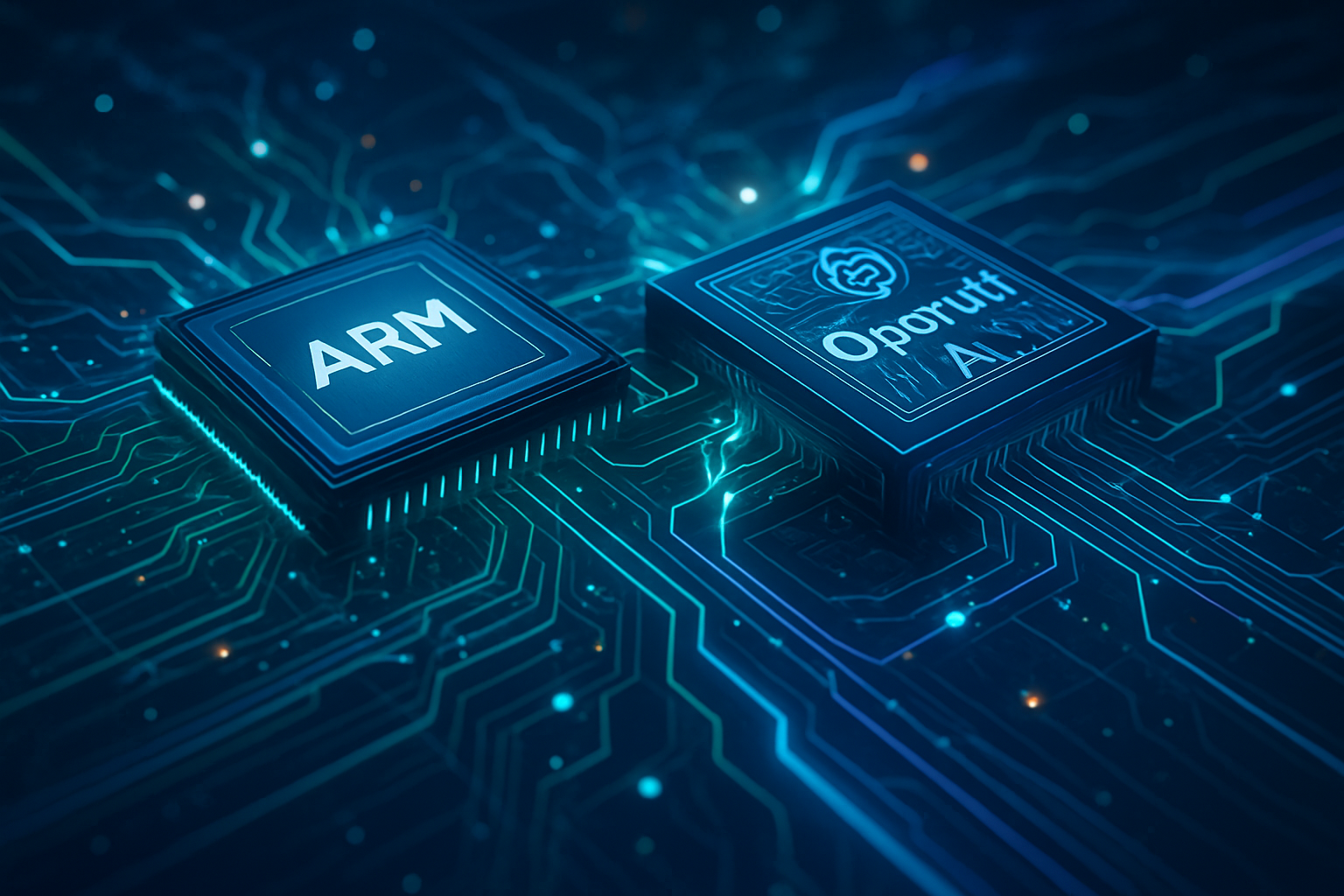
  • OpenAI and Arm Forge Alliance to Reshape AI Chip Landscape

    OpenAI and Arm Forge Alliance to Reshape AI Chip Landscape

    In a groundbreaking strategic move set to redefine the future of artificial intelligence infrastructure, OpenAI, the leading AI research and deployment company, has embarked on a multi-year collaboration with Arm Holdings PLC (NASDAQ: ARM) and Broadcom Inc. (NASDAQ: AVGO) to develop custom AI chips and advanced networking hardware. This ambitious initiative, first reported around October 13, 2025, signals OpenAI's determined push to gain greater control over its computing resources, reduce its reliance on external chip suppliers, and optimize its hardware stack for the increasingly demanding requirements of frontier AI models. The immediate significance of this partnership lies in its potential to accelerate AI development, drive down operational costs, and foster a more diversified and competitive AI hardware ecosystem.

    Technical Deep Dive: OpenAI's Custom Silicon Strategy

    At the heart of this collaboration is a sophisticated technical strategy aimed at creating highly specialized hardware tailored to OpenAI's unique AI workloads. OpenAI is taking the lead in designing a custom AI server chip, reportedly dubbed "Titan XPU," which will be meticulously optimized for inference tasks crucial to large language models (LLMs) like ChatGPT, including text generation, speech synthesis, and code generation. This specialization is expected to deliver superior performance per dollar and per watt compared to general-purpose GPUs.

    Arm's pivotal role in this partnership involves developing a new central processing unit (CPU) chip that will work in conjunction with OpenAI's custom AI server chip. While AI accelerators handle the heavy lifting of machine learning workloads, CPUs are essential for general computing tasks, orchestration, memory management, and data routing within AI systems. This move marks a significant expansion for Arm, traditionally a licensor of chip designs, into actively developing its own CPUs for the data center market. The custom AI chips, including the Titan XPU, are slated to be manufactured using Taiwan Semiconductor Manufacturing Company Limited (NYSE: TSM) (TSMC)'s advanced 3-nanometer process technology, featuring a systolic array architecture and high-bandwidth memory (HBM). For networking, the systems will utilize Ethernet-based solutions, promoting scalability and vendor neutrality, with Broadcom pioneering co-packaged optics to enhance power efficiency and reliability.

    This approach represents a significant departure from previous strategies, where OpenAI primarily relied on off-the-shelf GPUs, predominantly from NVIDIA Corporation (NASDAQ: NVDA). By moving towards vertical integration and designing its own silicon, OpenAI aims to embed the specific learnings from its AI models directly into the hardware, enabling unprecedented efficiency and capability. This strategy mirrors similar efforts by other tech giants like Alphabet Inc. (NASDAQ: GOOGL)'s Google with its Tensor Processing Units (TPUs), Amazon.com Inc. (NASDAQ: AMZN) with Trainium, and Meta Platforms Inc. (NASDAQ: META) with MTIA. Initial reactions from the AI research community and industry experts have been largely positive, viewing this as a necessary, albeit capital-intensive, step for leading AI labs to manage escalating computational costs and drive the next wave of AI breakthroughs.

    Reshaping the AI Industry: Competitive Dynamics and Market Shifts

    The OpenAI-Arm-Broadcom collaboration is poised to send ripples across the entire AI industry, fundamentally altering competitive dynamics and market positioning for tech giants, AI companies, and startups alike.

    Nvidia, currently holding a near-monopoly in high-end AI accelerators, stands to face the most direct challenge. While not an immediate threat to its dominance, OpenAI's move, coupled with similar in-house chip efforts from other major players, signals a long-term trend of diversification in chip supply. This will likely pressure Nvidia to innovate faster, offer more competitive pricing, and potentially engage in deeper collaborations on custom solutions. For Arm, this partnership is a strategic triumph, expanding its influence in the high-growth AI data center market and supporting its transition towards more direct chip manufacturing. SoftBank Group Corp. (TYO: 9984), a major shareholder in Arm and financier of OpenAI's data center expansion, is also a significant beneficiary. Broadcom emerges as a critical enabler of next-generation AI infrastructure, leveraging its expertise in custom chip development and networking systems, as evidenced by the surge in its stock post-announcement.

    Other tech giants that have already invested in custom AI silicon, such as Google, Amazon, and Microsoft Corporation (NASDAQ: MSFT), will see their strategies validated, intensifying the "AI chip race" and driving further innovation. For AI startups, the landscape presents both challenges and opportunities. While developing custom silicon remains incredibly capital-intensive and out of reach for many, the increased demand for specialized software and tools to optimize AI models for diverse custom hardware could create new niches. Moreover, the overall expansion of the AI infrastructure market could lead to opportunities for startups focused on specific layers of the AI stack. This push towards vertical integration signifies that controlling the hardware stack is becoming a strategic imperative for maintaining a competitive edge in the AI arena.

    Wider Significance: A New Era for AI Infrastructure

    This collaboration transcends a mere technical partnership; it signifies a pivotal moment in the broader AI landscape, embodying several key trends and raising important questions about the future. It underscores a definitive shift towards custom Application-Specific Integrated Circuits (ASICs) for AI workloads, moving away from a sole reliance on general-purpose GPUs. This vertical integration strategy, now adopted by OpenAI, is a testament to the increasing complexity and scale of AI models, which demand hardware meticulously optimized for their specific algorithms to achieve peak performance and efficiency.

    The impacts are profound: enhanced performance, reduced latency, and improved energy efficiency for AI workloads will accelerate the training and inference of advanced models, enabling more complex applications. Potential cost reductions from custom hardware could make high-volume AI applications more economically viable. However, concerns also emerge. While challenging Nvidia's dominance, this trend could lead to a new form of market concentration, shifting dependence towards a few large companies with the resources for custom silicon development or towards chip fabricators like TSMC. The immense energy consumption associated with OpenAI's ambitious target of 10 gigawatts of computing power by 2029, and Sam Altman's broader vision of 250 gigawatts by 2033, raises significant environmental and sustainability concerns. Furthermore, the substantial financial commitments involved, reportedly in the multi-billion-dollar range, fuel discussions about the financial sustainability of such massive AI infrastructure buildouts and potential "AI bubble" worries.

    This strategic pivot draws parallels to earlier AI milestones, such as the initial adoption of GPUs for deep learning, which propelled the field forward. Just as GPUs became the workhorse for neural networks, custom ASICs are now emerging as the next evolution, tailored to the specific demands of frontier AI models. The move mirrors the pioneering efforts of cloud providers like Google with its TPUs and establishes vertical integration as a mature and necessary step for leading AI companies to control their destiny. It intensifies the "AI chip wars," moving beyond a single dominant player to a more diversified and competitive ecosystem, fostering innovation across specialized silicon providers.

    The Road Ahead: Future Developments and Expert Predictions

    The OpenAI-Arm AI chip collaboration sets a clear trajectory for significant near-term and long-term developments in AI hardware. In the near term, the focus remains on the successful design, fabrication (via TSMC), and deployment of the custom AI accelerator racks, with initial deployments expected in the second half of 2026 and continuing through 2029 to achieve the 10-gigawatt target. This will involve rigorous testing and optimization to ensure the seamless integration of OpenAI's custom AI server chips, Arm's complementary CPUs, and Broadcom's advanced networking solutions.

    Looking further ahead, the long-term vision involves OpenAI embedding even more specific learnings from its evolving AI models directly into future iterations of these custom processors. This continuous feedback loop between AI model development and hardware design promises unprecedented performance and efficiency, potentially unlocking new classes of AI capabilities. The ambitious goal of reaching 26 gigawatts of compute capacity by 2033 underscores OpenAI's commitment to scaling its infrastructure to meet the exponential growth in AI demand. Beyond hyperscale data centers, experts predict that Arm's Neoverse platform, central to these developments, could also drive generative AI capabilities to the edge, with advanced tasks like text-to-video processing potentially becoming feasible on mobile devices within the next two years.

    However, several challenges must be addressed. The colossal capital expenditure required for a $1 trillion data center buildout targeting 26 gigawatts by 2033 presents an enormous funding gap. The inherent complexity of designing, validating, and manufacturing chips at scale demands meticulous execution and robust collaboration between OpenAI, Broadcom, and Arm. Furthermore, the immense power consumption of such vast AI infrastructure necessitates a relentless focus on energy efficiency, with Arm's CPUs playing a crucial role in reducing power demands for AI workloads. Geopolitical factors and supply chain security also remain critical considerations for global semiconductor manufacturing. Experts largely agree that this partnership will redefine the AI hardware landscape, diversifying the chip market and intensifying competition. If successful, it could solidify a trend where leading AI companies not only train advanced models but also design the foundational silicon that powers them, accelerating innovation and potentially leading to more cost-effective AI hardware in the long run.

    A New Chapter in AI History

    The collaboration between OpenAI and Arm, supported by Broadcom, marks a pivotal moment in the history of artificial intelligence. It represents a decisive step by a leading AI research organization to vertically integrate its operations, moving beyond software and algorithms to directly control the underlying hardware infrastructure. The key takeaways are clear: a strategic imperative to reduce reliance on dominant external suppliers, a commitment to unparalleled performance and efficiency through custom silicon, and an ambitious vision for scaling AI compute to unprecedented levels.

    This development signifies a new chapter where the "AI chip race" is not just about raw power but about specialized optimization and strategic control over the entire technology stack. It underscores the accelerating pace of AI innovation and the immense resources required to build and sustain frontier AI. As we look to the coming weeks and months, the industry will be closely watching for initial deployment milestones of these custom chips, further details on the technical specifications, and the broader market's reaction to this significant shift. The success of this collaboration will undoubtedly influence the strategic decisions of other major AI players and shape the trajectory of AI development for years to come, potentially ushering in an era of more powerful, efficient, and ubiquitous artificial intelligence.


    This content is intended for informational purposes only and represents analysis of current AI developments.

    TokenRing AI delivers enterprise-grade solutions for multi-agent AI workflow orchestration, AI-powered development tools, and seamless remote collaboration platforms.
    For more information, visit https://www.tokenring.ai/.

  • Walmart and OpenAI Forge Historic Partnership: ChatGPT Revolutionizes Online Shopping

    Walmart and OpenAI Forge Historic Partnership: ChatGPT Revolutionizes Online Shopping

    Walmart (NYSE: WMT) has announced a groundbreaking partnership with OpenAI, integrating ChatGPT directly into its online shopping experience. This collaboration, unveiled on Tuesday, October 14, 2025, aims to usher in an "AI-first" era for retail, fundamentally transforming how customers browse, discover, and purchase products. The immediate significance of this alliance lies in its potential to shift online retail from a reactive search-based model to a proactive, personalized, and conversational journey, where AI anticipates and fulfills customer needs.

    This strategic move is designed to empower Walmart and Sam's Club customers to engage with ChatGPT's conversational interface for a myriad of shopping tasks. From receiving personalized meal suggestions and automatically adding ingredients to their cart, to effortlessly restocking household essentials and discovering new products based on nuanced preferences, the integration promises an intuitive and efficient experience. A key enabler of this seamless process is OpenAI's "Instant Checkout" feature, allowing users to complete purchases directly within the chat interface after linking their existing Walmart or Sam's Club accounts. While the initial rollout, expected later this fall, will exclude fresh food items, it will encompass a broad spectrum of products, including apparel, entertainment, and packaged goods from both Walmart's extensive inventory and third-party sellers. This partnership builds upon OpenAI's existing commerce integrations with platforms like Etsy and Shopify, further solidifying conversational AI as a rapidly expanding channel in the digital retail landscape.

    The Technical Backbone: How Walmart is Powering "Agentic Commerce"

    Walmart's integration of generative AI, particularly with OpenAI's ChatGPT, represents a significant leap in its technological strategy, extending across both customer-facing applications and internal operations. This multifaceted approach is designed to foster "adaptive retail" and "agentic commerce," where AI proactively assists customers and streamlines employee tasks.

    At the core of this technical advancement is the ability for customers to engage in "conversational shopping." Through ChatGPT, users can articulate complex needs in natural language, such as "ingredients for a week's worth of meals," prompting the AI to suggest recipes and compile a comprehensive shopping list, which can then be purchased via "Instant Checkout." This feature initially focuses on nonperishable categories, with fresh items slated for future integration. Beyond direct shopping, Walmart is enhancing its search capabilities across its website and mobile apps, leveraging generative AI to understand the context of a customer's query rather than just keywords. For instance, a search for "I need a red top to wear to a party" will yield more relevant and curated results than a generic "red women's blouse." On the customer service front, an upgraded AI assistant now recognizes individual customers, understands their intent, and can execute actions like managing returns, offering a more integrated and transactional support experience. Internally, generative AI is bolstering the "Ask Sam" app for employees, providing immediate, detailed answers on everything from product locations to company policies. A new "My Assistant" app helps associates summarize documents and create content, while an AI tool intelligently prioritizes and recommends tasks for store associates, significantly reducing shift planning time. Real-time translation in 44 languages further empowers associates to assist a diverse customer base.

    Walmart's generative AI strategy is a sophisticated blend of proprietary technology and external partnerships. It utilizes OpenAI's advanced large language models (LLMs), likely including GPT-3 and more recent iterations, accessible through the Microsoft (NASDAQ: MSFT) Azure OpenAI Service, ensuring enterprise-grade security and compliance. Crucially, Walmart has also developed its own system of proprietary Generative AI platforms, notably "Wallaby," a series of retail-specific LLMs trained on decades of Walmart's vast internal data. This allows for highly contextual and tailored responses aligned with Walmart's unique retail environment and values. The company has also launched its own customer-facing generative AI assistant named "Sparky," envisioned as a "super agent" within Walmart's new company-wide AI framework, designed to help shoppers find and compare products, manage reorders, and accept multimodal inputs (text, images, audio, video). Further technical underpinnings include a Content Decision Platform for personalized website customization and a Retina AR Platform for creating 3D assets and immersive commerce experiences.

    This integration marks a significant departure from previous retail AI approaches. Earlier e-commerce AI was largely reactive, offering basic recommendations or simple chatbots for frequently asked questions. Walmart's current strategy embodies "agentic commerce," where AI proactively anticipates needs, plans, and predicts, moving beyond mere response to active assistance. The level of contextual understanding and multi-turn conversational capabilities offered by ChatGPT is far more sophisticated than previous voice ordering or basic chatbot experiments. The ability to complete purchases directly within the chat interface via "Instant Checkout" collapses the traditional sales funnel, transforming inspiration into transaction seamlessly. This holistic enterprise integration of AI, from customer interactions to supply chain and employee tools, positions AI not as a supplementary feature, but as a core driver of the entire business. Initial reactions from the AI research community and industry experts have been overwhelmingly positive, hailing the integration as a "game-changing role" for AI in retail and a "paradigm shift." Data from Similarweb even indicates ChatGPT driving significant referral traffic to retailers, with one in five of Walmart's referral clicks in August 2025 reportedly originating from ChatGPT. Walmart's stock surged following the announcement, reflecting investor optimism. While acknowledging benefits, experts also caution against "AI workslop"—AI-generated content lacking substance—and emphasize the need for clear quality standards. Walmart CEO Doug McMillon has stressed that AI will "change literally every job" at Walmart, transforming roles rather than eliminating them, with significant investment in reskilling the workforce.

    Reshaping the AI and Tech Landscape: Winners, Losers, and Disruptors

    Walmart's (NYSE: WMT) partnership with OpenAI and the integration of ChatGPT is more than just a retail innovation; it's a seismic event poised to send ripple effects across the entire AI and tech industry, redefining competitive dynamics and market positioning. This move towards "agentic commerce" will undoubtedly create beneficiaries, challenge incumbents, and disrupt existing services.

    Walmart stands as a clear winner, strategically positioning itself as a pioneer in "AI-first shopping experiences" and "adaptive retail." By leveraging OpenAI's cutting-edge AI, Walmart aims to create a highly differentiated online shopping journey that boosts customer retention and increases average basket sizes. Its vast proprietary data, gleaned from its extensive physical and digital footprint, provides a powerful engine for its AI models, enhancing demand forecasting and personalization. The profitability of its e-commerce business, with over 20% growth across segments, underscores the efficacy of its AI strategy. OpenAI also reaps substantial benefits, monetizing its advanced AI models and significantly expanding ChatGPT's application beyond general conversation into a direct commerce platform. This partnership solidifies OpenAI's role as a foundational technology provider across diverse industries and positions ChatGPT as a potential central gateway for digital services, unlocking new revenue streams through transaction commissions. Indirectly, Microsoft (NASDAQ: MSFT), a major investor in OpenAI, benefits from the validation of its AI strategy and the potential for increased enterprise adoption of its cloud AI solutions like Azure OpenAI Service. The ripple effect extends to other retailers and brands that proactively adapt to AI shopping agents, optimizing their online presence to integrate with these new interaction models. Data already suggests ChatGPT is driving significant referral traffic to other major retailers, indicating a new avenue for customer acquisition. Furthermore, the burgeoning demand for specialized AI tools in areas like personalization, demand forecasting, supply chain optimization, and generative AI for marketing content will create substantial opportunities for various AI solution providers and startups.

    The competitive implications for major AI labs and tech giants are profound. Amazon (NASDAQ: AMZN), Walmart's primary e-commerce rival, faces a direct challenge to its long-standing dominance in AI-driven retail. By focusing on narrowing the personalization gap, Walmart aims to compete more effectively. While Amazon has its own AI features, such as the Rufus shopping assistant, experts suggest it might need to integrate AI more deeply into its core search experience to truly compete, potentially impacting its significant advertising revenue. Google (NASDAQ: GOOGL), whose business model heavily relies on search-based advertising, could see disruption as "agentic commerce" facilitates direct purchases rather than traditional search. Google will be pressured to enhance its AI assistants with stronger shopping capabilities and leverage its vast data to offer competitive, personalized experiences. The precedent set by the Walmart-OpenAI collaboration will likely compel other major AI labs to seek similar strategic partnerships across industries, intensifying competition in the AI platform space and accelerating the monetization of their advanced models. Traditional e-commerce search and comparison engines face significant disruption as AI agents increasingly handle product discovery and purchase directly, shifting consumer behavior from "scroll searching" to "goal searching." Similarly, affiliate marketing websites face a considerable threat as AI tools like ChatGPT can directly surface product recommendations, potentially undermining existing affiliate marketing structures and revenues.

    The potential disruption to existing products and services is widespread. Traditional e-commerce interfaces, with their static search bars and product listing pages, will be fundamentally altered as users engage with AI to articulate complex shopping goals and receive curated recommendations. Existing customer service platforms will need to evolve to offer more sophisticated, integrated, and transactional AI capabilities, building on Walmart's demonstrated ability to cut customer care resolution times by up to 40%. The models for digital advertising could be reshaped as AI agents facilitate direct discovery and purchase, impacting ad placements and click-through metrics, though Walmart Connect, the company's advertising arm, is already leveraging AI-driven insights. Supply chain management will see further disruption as AI-driven optimization algorithms enhance demand forecasting, route optimization, and warehouse automation, pushing out less intelligent, traditional software providers. In workforce management and training, AI will increasingly automate or augment routine tasks, necessitating new training programs for employees. Finally, content and product catalog creation will be transformed by generative AI, which can improve product data quality, create engaging marketing content, and reduce timelines for processes like fashion production, disrupting traditional manual generation. Walmart's strategic advantage lies in its commitment to "agentic commerce" and its "open ecosystem" approach to AI shopping agents, aiming to become a central hub for AI-mediated shopping, even for non-Walmart purchases. OpenAI, in turn, solidifies its position as a dominant AI platform provider, showcasing the practical, revenue-generating capabilities of its LLMs in a high-stakes industry.

    A Wider Lens: AI's Evolving Role in Society and Commerce

    Walmart's (NYSE: WMT) integration of ChatGPT through its partnership with OpenAI represents a pivotal moment in the broader AI landscape, signaling a profound shift towards more intuitive, personalized, and "agentic" commerce. This move underscores AI's transition from a supplementary tool to a foundational engine driving the retail business, with far-reaching implications for customers, employees, operational efficiency, and the competitive arena.

    This development aligns with several overarching trends in the evolving AI landscape. Firstly, it exemplifies the accelerating shift towards conversational and agentic AI. Unlike earlier e-commerce AI that offered reactive recommendations or basic chatbots, this integration introduces AI that proactively learns, plans, predicts customer needs, and can execute purchases directly within a chat interface. Secondly, it underscores the relentless pursuit of hyper-personalization. By combining OpenAI's advanced LLMs with its proprietary retail-specific LLM, "Wallaby," trained on decades of internal data, Walmart can offer tailored recommendations, curated product suggestions, and unique homepages for every customer. Thirdly, it champions the concept of AI-first shopping experiences, aiming to redefine consumer interaction with online retail beyond traditional search-and-click models. This reflects a broader industry expectation that AI assistants will become a primary interface for shopping. Finally, Walmart's strategy emphasizes end-to-end AI adoption, integrating AI throughout its operations, from supply chain optimization and inventory management to marketing content creation and internal employee tools, demonstrating a comprehensive understanding of AI's enterprise-wide value.

    The impacts of this ChatGPT integration are poised to be substantial. For the customer experience, it promises seamless conversational shopping, allowing users to articulate complex needs in natural language and complete purchases via "Instant Checkout." This translates to enhanced personalization, improved 24/7 customer service, and future immersive discovery through multimodal AI and Augmented Reality (AR) platforms like Walmart's "Retina." For employee productivity and operations, AI tools will streamline workflows, assist with task management, provide enhanced internal support through conversational AI like an upgraded "Ask Sam," and offer real-time translation. Furthermore, AI will optimize supply chain and inventory management, reducing waste and improving availability, and accelerate product development, such as reducing fashion production timelines by up to 18 weeks. From a business outcomes and industry landscape perspective, this integration provides a significant competitive advantage, narrowing the personalization gap with rivals like Amazon (NASDAQ: AMZN) and enhancing customer retention. Generative AI is projected to contribute an additional $400 billion to $660 billion annually to the retail and consumer packaged goods sectors, with Walmart's AI initiatives already demonstrating substantial improvements in customer service resolution times (up to 40%) and operational efficiency. This also signals an evolution of business models, where AI informs and improves every critical decision.

    Despite the transformative potential, several potential concerns warrant attention. Data privacy and security are paramount, as the collection of vast amounts of customer data for personalization raises ethical questions about consent and usage. Ensuring algorithmic bias is minimized is crucial, as AI systems can perpetuate biases present in their training data, potentially leading to unfair recommendations. While Walmart emphasizes AI's role in augmenting human performance, concerns about job displacement persist, necessitating significant investment in employee reskilling and training. The complexity and cost of integrating advanced AI solutions across an enterprise of Walmart's scale are considerable. The potential for AI accuracy issues and "hallucinations" (inaccurate information generation) from LLMs like ChatGPT could impact customer trust if not carefully managed. Lastly, while online, customers may have fewer privacy concerns, in-store AI applications could lead to greater discomfort if perceived as intrusive, and the proliferation of siloed AI systems could replicate inefficiencies, highlighting the need for cohesive AI frameworks.

    In comparison to previous AI milestones, Walmart's ChatGPT integration represents a fundamental leap. Earlier AI in e-commerce was largely confined to basic product recommendations or simple chatbots. This new era transcends those reactive systems, shifting to proactive, agentic AI that anticipates needs and directly executes purchases. The complexity of interaction is vastly superior, enabling sophisticated, multi-turn conversational capabilities for complex shopping tasks. This partnership is viewed as a "game-changing role" for AI in retail, moving it from a supplementary tool to a core driver of the entire business. Some experts predict AI's impact on retail in the coming years will be even more significant than that of big box stores like Walmart and Target (NYSE: TGT) in the 1990s. The emphasis on enterprise-wide integration across customer interactions, internal operations, and the supply chain marks a foundational shift in how the business will operate.

    The Road Ahead: Anticipating Future Developments and Challenges

    Walmart's (NYSE: WMT) aggressive integration of ChatGPT and other generative AI technologies is not merely a tactical adjustment but a strategic pivot aimed at fundamentally reshaping the future of retail. The company is committed to an "AI-first" shopping experience, driven by continuous innovation and adaptation to evolving consumer behaviors.

    In the near-term, building on already implemented and soon-to-launch features, Walmart will continue to refine its generative AI-powered conversational search on its website and apps, allowing for increasingly nuanced natural language queries. The "Instant Checkout" feature within ChatGPT will expand its capabilities, moving beyond single-item purchases to accommodate multi-item carts and more complex shopping scenarios. Internally, the "Ask Sam" app for associates will become even more sophisticated, offering deeper insights and proactive assistance, while corporate tools like "My Assistant" will continue to evolve, enhancing content creation and document summarization. AI-powered customer service chatbots will handle an even broader range of inquiries, further freeing human agents for intricate issues. Furthermore, the company will leverage AI for advanced supply chain and warehouse optimization, improving demand forecasting, inventory management, and waste reduction through robotics and computer vision. AI-powered anti-theft measures and an AI interview coach for job applicants are also part of this immediate horizon.

    Looking further ahead, the long-term developments will center on the realization of true "agentic commerce." This envisions AI assistants that proactively manage recurring orders, anticipate seasonal shopping needs, and even suggest items based on health or dietary goals, becoming deeply embedded in customers' daily lives. Hyper-personalization will reach new heights, with generative AI creating highly customized online homepages and product recommendations tailored to individual interests, behaviors, and purchase history, effectively mimicking a personal shopper. Walmart's AI shopping assistant, "Sparky," is expected to evolve into a truly multimodal assistant, accepting inputs beyond text to include images, voice, and video, offering more immersive and intuitive shopping experiences. Internally, advanced AI-powered task management, real-time translation tools for associates, and agent-to-agent retail protocols will automate complex workflows across the enterprise. AI will also continue to revolutionize product development and marketing, accelerating design processes and enabling hyper-targeted advertising. Walmart also plans further AI integration into digital environments, including proprietary mobile games and experiences on platforms like Roblox (NYSE: RBLX), and has indicated an openness to an industry-standard future where external shopping agents can directly interact with its systems.

    However, this ambitious vision is not without its challenges. Data privacy and security remain paramount, as integrating customer accounts and purchase data with external AI platforms like ChatGPT necessitates robust safeguards and adherence to privacy regulations. Ensuring data accuracy and ethical AI is crucial to maintain customer trust and prevent biased outcomes. Widespread user adoption of AI-powered shopping experiences will be key, requiring seamless integration and intuitive interfaces. The issue of job displacement versus reskilling is a significant concern; while Walmart emphasizes augmentation, the transformation of "every job" necessitates substantial investment in talent development and employee training. The impact on traditional affiliate marketing models also needs to be addressed, as AI's ability to directly recommend products could bypass existing structures.

    Experts predict that Walmart's AI strategy is a "game-changing" move for the retail industry, solidifying AI's role as an essential, not optional, component of e-commerce, with hyper-personalization becoming the new standard. The rise of "agentic commerce" will redefine customer interactions, making shopping more intuitive and proactive. Over half of consumers are expected to use AI assistants for shopping by the end of 2025, highlighting the shift towards conversational AI as a primary interface. Economically, the integration of AI in retail is projected to significantly boost productivity and revenue, potentially adding hundreds of billions annually to the sector through automated tasks and cost savings. Retailers that embrace AI early, like Walmart, are expected to capture greater market share and customer loyalty. The workforce transformation anticipated by Walmart's CEO will lead to a shift in required skills rather than a reduction in overall headcount, necessitating significant reskilling efforts across the enterprise.

    A New Era of Retail: A Comprehensive Wrap-Up

    Walmart's (NYSE: WMT) integration of ChatGPT, a product of its strategic partnership with OpenAI, marks a watershed moment in the retail sector, definitively signaling a shift towards an AI-powered, conversational commerce paradigm. This initiative is a cornerstone of Walmart's broader "Adaptive Retail" strategy, designed to deliver hyper-personalized and exceptionally seamless shopping experiences for its vast customer base and Sam's Club members.

    The key takeaways from this groundbreaking development underscore a fundamental transformation of the online shopping journey. Customers can now engage in truly conversational and personalized shopping, articulating complex needs in natural language within ChatGPT and receiving curated product recommendations directly from Walmart's and Sam's Club's extensive catalogs. This represents a significant evolution from reactive tools to proactive, predictive assistance. The introduction of "Instant Checkout" is pivotal, allowing users to complete purchases directly within the ChatGPT interface, thereby streamlining the buying process and eliminating the need for multi-page navigation. This integration ushers in "agentic commerce," where AI becomes a proactive agent that learns, plans, and predicts customer needs, making shopping inherently more intuitive and efficient. Beyond customer-facing applications, Walmart is deeply embedding ChatGPT Enterprise internally and fostering AI literacy across its workforce through OpenAI Certifications. This comprehensive approach extends AI's transformative impact to critical operational areas such as inventory management, scheduling, supplier coordination, and has already demonstrated significant efficiencies, including reducing fashion production timelines by up to 18 weeks and cutting customer care resolution times by up to 40%. This integration builds upon and enhances Walmart's existing AI tools, like "Sparky," transforming them into more dynamic and predictive shopping aids.

    This development holds significant historical importance in AI history, widely regarded as a "monumental leap" in the evolution of e-commerce. It fundamentally redefines how consumers will interact with online retail, moving beyond traditional search-bar-driven experiences and challenging existing e-commerce paradigms. This partnership positions conversational AI, specifically ChatGPT, as a potential central gateway for digital services, thereby challenging traditional app store models and opening new revenue streams through transaction commissions for OpenAI. It also signifies a democratization of advanced AI in everyday life, making sophisticated capabilities accessible for routine shopping tasks. Competitively, this strategic move is a direct challenge to e-commerce giants like Amazon (NASDAQ: AMZN), aiming to capture greater market share by leveraging emerging consumer behavior changes and vastly improving the user experience.

    The long-term impact of Walmart's ChatGPT integration is expected to be profound, shaping the very fabric of retail and consumer behavior. It will undoubtedly lead to a complete transformation of product discovery and marketing, as AI agents become central to the shopping journey, necessitating an "AI-first approach" from all retailers. Consumer behavior will increasingly gravitate towards greater convenience and personalization, with AI potentially managing a significant portion of shopping tasks, from intricate meal planning to automatic reordering of essentials. This envisions a future where AI agents become more proactive, anticipating needs and potentially even making autonomous purchasing decisions. This integration also underscores a future hybrid retail model, where AI and human decision-makers collaborate to ensure accuracy and maintain a customer-centric experience. Walmart envisions "adaptive stores" and self-optimizing logistics systems driven by AI. The investment in AI-powered personalization by Walmart could set a new global standard for customer experience, influencing other retailers worldwide. Furthermore, continued AI integration will yield even greater efficiencies in supply chain management, demand forecasting, and inventory optimization, reducing waste and ensuring optimal stock availability.

    In the coming weeks and months, several key aspects will be critical to observe. The industry will closely monitor the speed and success of the new feature's rollout and, crucially, how quickly consumers adopt these AI-powered shopping experiences within ChatGPT. User feedback will be paramount in understanding effectiveness and identifying areas for improvement, and new, unanticipated use cases are likely to emerge as users explore the capabilities. The responses and strategies of Walmart's competitors, particularly Amazon, will be a significant indicator of the broader industry impact. The expansion of "Instant Checkout" capabilities to include multi-item carts and more complex shopping scenarios will be a key technical development to watch. Internally, continued progress in Walmart's AI initiatives, including the adoption of ChatGPT Enterprise and the impact of AI literacy programs on employee productivity and innovation, will provide valuable insights into the company's internal transformation. Finally, observing how this specific ChatGPT integration aligns with and accelerates Walmart's overarching "Adaptive Retail" strategy, including its use of Generative AI, Augmented Reality, and Immersive Commerce platforms, will be essential for understanding its holistic impact.


    This content is intended for informational purposes only and represents analysis of current AI developments.

    TokenRing AI delivers enterprise-grade solutions for multi-agent AI workflow orchestration, AI-powered development tools, and seamless remote collaboration platforms.
    For more information, visit https://www.tokenring.ai/.

  • Broadcom and OpenAI Forge Landmark Partnership to Power the Next Era of AI

    Broadcom and OpenAI Forge Landmark Partnership to Power the Next Era of AI

    San Jose, CA & San Francisco, CA – October 14, 2025 – In a move set to redefine the landscape of artificial intelligence infrastructure, semiconductor titan Broadcom Inc. (NASDAQ: AVGO) and leading AI research firm OpenAI yesterday announced a strategic multi-year partnership. This landmark collaboration will see the two companies co-develop and deploy custom AI accelerator chips, directly addressing the escalating global demand for specialized computing power required to train and deploy advanced AI models. The deal signifies a pivotal moment for OpenAI, enabling it to vertically integrate its software and hardware design, while positioning Broadcom at the forefront of bespoke AI silicon manufacturing and deployment.

    The alliance is poised to accelerate the development of next-generation AI, promising unprecedented levels of efficiency and performance. By tailoring hardware specifically to the intricate demands of OpenAI's frontier models, the partnership aims to unlock new capabilities in large language models (LLMs) and other advanced AI applications, ultimately driving AI towards becoming a foundational global utility.

    Engineering the Future: Custom Silicon for Frontier AI

    The core of this transformative partnership lies in the co-development of highly specialized AI accelerators. OpenAI will leverage its deep understanding of AI model architectures and computational requirements to design these bespoke chips and systems. This direct input from the AI developer side ensures that the silicon is optimized precisely for the unique workloads of models like GPT-4 and beyond, a significant departure from relying solely on general-purpose GPUs. Broadcom, in turn, will be responsible for the sophisticated development, fabrication, and large-scale deployment of these custom chips. Their expertise extends to providing the critical high-speed networking infrastructure, including advanced Ethernet switches, PCIe, and optical connectivity products, essential for building the massive, cohesive supercomputers required for cutting-edge AI.

    This integrated approach aims to deliver a holistic solution, optimizing every component from the silicon to the network. Reports even suggest potential involvement from SoftBank's Arm in developing a complementary CPU chip, further emphasizing the depth of this hardware customization. The ambition is immense: a massive deployment targeting 10 gigawatts of computing power. Technical innovations being explored include advanced 3D chip stacking and optical switching, techniques designed to dramatically enhance data transfer speeds and processing capabilities, thereby accelerating model training and inference. This strategy marks a clear shift from previous approaches that often adapted existing hardware to AI needs, instead opting for a ground-up design tailored for unparalleled AI performance and energy efficiency.

    Initial reactions from the AI research community and industry experts, though just beginning to surface given the recency of the announcement, are largely positive. Many view this as a necessary evolution for leading AI labs to manage escalating computational costs and achieve the next generation of AI breakthroughs. The move highlights a growing trend towards vertical integration in AI, where control over the entire technology stack, from algorithms to silicon, becomes a critical competitive advantage.

    Reshaping the AI Competitive Landscape

    This partnership carries profound implications for AI companies, tech giants, and nascent startups alike. For OpenAI, the benefits are multi-faceted: it offers a strategic path to diversify its hardware supply chain, significantly reducing its dependence on dominant market players like Nvidia (NASDAQ: NVDA). More importantly, it promises substantial long-term cost savings and performance optimization, crucial for sustaining the astronomical computational demands of advanced AI research and deployment. By taking greater control over its hardware stack, OpenAI can potentially accelerate its research roadmap and maintain its leadership position in AI innovation.

    Broadcom stands to gain immensely by cementing its role as a critical enabler of cutting-edge AI infrastructure. Securing OpenAI as a major client for custom AI silicon positions Broadcom as a formidable player in a rapidly expanding market, validating its expertise in high-performance networking and chip fabrication. This deal could serve as a blueprint for future collaborations with other AI pioneers, reinforcing Broadcom's strategic advantage in a highly competitive sector.

    The competitive implications for major AI labs and tech companies are significant. This vertical integration strategy by OpenAI could compel other AI leaders, including Alphabet's Google (NASDAQ: GOOGL), Meta Platforms (NASDAQ: META), and Amazon (NASDAQ: AMZN), to double down on their own custom AI chip initiatives. Nvidia, while still a dominant force, may face increased pressure as more AI developers seek bespoke solutions to optimize their specific workloads. This could disrupt the market for off-the-shelf AI accelerators, potentially fostering a more diverse and specialized hardware ecosystem. Startups in the AI hardware space might find new opportunities or face heightened competition, depending on their ability to offer niche solutions or integrate into larger ecosystems.

    A Broader Stroke on the Canvas of AI

    The Broadcom-OpenAI partnership fits squarely within a broader trend in the AI landscape: the increasing necessity for custom silicon to push the boundaries of AI. As AI models grow exponentially in size and complexity, generic hardware solutions become less efficient and more costly. This collaboration underscores the industry's pivot towards specialized, energy-efficient chips designed from the ground up for AI workloads. It signifies a maturation of the AI industry, moving beyond relying solely on repurposed gaming GPUs to engineering purpose-built infrastructure.

    The impacts are far-reaching. By addressing the "avalanche of demand" for AI compute, this partnership aims to make advanced AI more accessible and scalable, accelerating its integration into various industries and potentially fulfilling the vision of AI as a "global utility." However, potential concerns include the immense capital expenditure required for such large-scale custom hardware development and deployment, as well as the inherent complexity of managing a vertically integrated stack. Supply chain vulnerabilities and the challenges of manufacturing at such a scale also remain pertinent considerations.

    Historically, this move can be compared to the early days of cloud computing, where tech giants began building their own custom data centers and infrastructure to gain competitive advantages. Just as specialized infrastructure enabled the internet's explosive growth, this partnership could be seen as a foundational step towards unlocking the full potential of advanced AI, marking a significant milestone in the ongoing quest for artificial general intelligence (AGI).

    The Road Ahead: From Silicon to Superintelligence

    Looking ahead, the partnership outlines ambitious timelines. While the official announcement was made on October 13, 2025, the two companies reportedly began their collaboration approximately 18 months prior, indicating a deep and sustained effort. Deployment of the initial custom AI accelerator racks is targeted to begin in the second half of 2026, with a full rollout across OpenAI's facilities and partner data centers expected to be completed by the end of 2029.

    These future developments promise to unlock unprecedented applications and use cases. More powerful and efficient LLMs could lead to breakthroughs in scientific discovery, personalized education, advanced robotics, and hyper-realistic content generation. The enhanced computational capabilities could also accelerate research into multimodal AI, capable of understanding and generating information across various formats. However, challenges remain, particularly in scaling manufacturing to meet demand, ensuring seamless integration of complex hardware and software systems, and managing the immense power consumption of these next-generation AI supercomputers.

    Experts predict that this partnership will catalyze further investments in custom AI silicon across the industry. We can expect to see more collaborations between AI developers and semiconductor manufacturers, as well as increased in-house chip design efforts by major tech companies. The race for AI supremacy will increasingly be fought not just in algorithms, but also in the underlying hardware that powers them.

    A New Dawn for AI Infrastructure

    In summary, the strategic partnership between Broadcom and OpenAI is a monumental development in the AI landscape. It represents a bold move towards vertical integration, where the design of AI models directly informs the architecture of the underlying silicon. This collaboration is set to address the critical bottleneck of AI compute, promising enhanced performance, greater energy efficiency, and reduced costs for OpenAI's advanced models.

    This deal's significance in AI history cannot be overstated; it marks a pivotal moment where a leading AI firm takes direct ownership of its hardware destiny, supported by a semiconductor powerhouse. The long-term impact will likely reshape the competitive dynamics of the AI hardware market, accelerate the pace of AI innovation, and potentially make advanced AI capabilities more ubiquitous.

    In the coming weeks and months, the industry will be closely watching for further details on the technical specifications of these custom chips, the initial performance benchmarks upon deployment, and how competitors react to this assertive move. The Broadcom-OpenAI alliance is not just a partnership; it's a blueprint for the future of AI infrastructure, promising to power the next wave of artificial intelligence breakthroughs.


    This content is intended for informational purposes only and represents analysis of current AI developments.

    TokenRing AI delivers enterprise-grade solutions for multi-agent AI workflow orchestration, AI-powered development tools, and seamless remote collaboration platforms.
    For more information, visit https://www.tokenring.ai/.

  • Walmart and OpenAI Forge New Frontier in E-commerce with ChatGPT Shopping Integration

    Walmart and OpenAI Forge New Frontier in E-commerce with ChatGPT Shopping Integration

    In a landmark announcement made today, Tuesday, October 14, 2025, retail giant Walmart (NYSE: WMT) has officially partnered with OpenAI to integrate a groundbreaking shopping feature directly into ChatGPT. This strategic collaboration is poised to redefine the landscape of online retail, moving beyond traditional search-and-click models to usher in an era of intuitive, conversational, and "agentic commerce." The immediate significance of this development lies in its potential to fundamentally transform consumer shopping behavior, offering unparalleled convenience and personalized assistance, while simultaneously intensifying the competitive pressures within the e-commerce and technology sectors.

    The essence of this partnership is to embed a comprehensive shopping experience directly within the ChatGPT interface, enabling customers to discover and purchase products from Walmart and Sam's Club through natural language commands. Termed "Instant Checkout," this feature allows users to engage with the AI chatbot for various shopping needs—from planning elaborate meals and restocking household essentials to exploring new products—with Walmart handling the fulfillment. This initiative represents a definitive leap from static search bars to an AI that proactively learns, plans, and predicts customer needs, promising a shopping journey that is not just efficient but also deeply personalized.

    The Technical Blueprint of Conversational Commerce

    The integration of Walmart's vast product catalog and fulfillment capabilities with OpenAI's advanced conversational AI creates a seamless, AI-first shopping experience. At its core, the system leverages sophisticated Natural Language Understanding (NLU) to interpret complex, multi-turn queries, discern user intent, and execute transactional actions. This allows users to articulate their shopping goals in everyday language, such as "Help me plan a healthy dinner for four with chicken," and receive curated product recommendations that can be added to a cart and purchased directly within the chat.

    A critical technical component is the "Instant Checkout" feature, which directly links a user's existing Walmart or Sam's Club account to ChatGPT, facilitating a frictionless transaction process without requiring users to navigate away from the chat interface. This capability is a significant departure from previous AI shopping tools that primarily offered recommendations or directed users to external websites. Furthermore, the system is designed for "multi-media, personalized and contextual" interactions, implying that the AI analyzes user input to provide highly relevant suggestions, potentially leveraging Walmart's internal AI for deeper personalization based on past purchases and browsing history. Walmart CEO Doug McMillon describes this as "agentic commerce in action," where the AI transitions from a reactive tool to a proactive agent that dynamically learns and anticipates customer needs. This integration is also part of Walmart's broader "super agents" framework, with customer-facing agents like "Sparky" designed for personalized recommendations and eventual automatic reordering of staple items.

    This approach dramatically differs from previous e-commerce models. Historically, online shopping has relied on explicit keyword searches and extensive product listings. The ChatGPT integration replaces this with an interactive, conversational interface that aims to understand and predict consumer needs with greater accuracy. Unlike traditional recommendation engines that react to browsing history, this new feature strives for proactive, predictive assistance. While Walmart has previously experimented with voice ordering and basic chatbots, the ChatGPT integration signifies a far more sophisticated level of contextual understanding and multi-turn conversational capabilities for complex shopping tasks. Initial reactions from the AI research community and industry experts highlight this as a "game-changing role" for AI in retail, recognizing its potential to revolutionize online shopping by embedding AI directly into the purchase flow. Data already indicates ChatGPT's growing role in driving referral traffic to retailers, underscoring the potential for in-chat checkout to become a major transactional channel.

    Reshaping the AI and Tech Landscape

    The Walmart-OpenAI partnership carries profound implications for AI companies, tech giants, and startups alike, igniting a new phase of competition and innovation in the AI commerce space. OpenAI, in particular, stands to gain immensely, extending ChatGPT's utility from a general conversational AI to a direct commerce platform. This move, coupled with similar integrations with partners like Shopify, positions ChatGPT as a potential central gateway for digital services, challenging traditional app store models and opening new revenue streams through transaction commissions. This solidifies OpenAI's position as a leading AI platform provider, showcasing the practical, revenue-generating applications of its large language models (LLMs).

    For Walmart (NYSE: WMT), this collaboration accelerates its "people-led, tech-powered" AI strategy, enabling it to offer hyper-personalized, convenient, and engaging shopping experiences. It empowers Walmart to narrow the personalization gap with competitors and enhance customer retention and basket sizes across its vast physical and digital footprint. The competitive implications for major tech giants are significant. Amazon (NASDAQ: AMZN), a long-time leader in AI-driven e-commerce, faces a direct challenge to its dominance. While Amazon has its own AI initiatives like Rufus, this partnership introduces a powerful new conversational shopping interface backed by a major retailer, compelling Amazon to accelerate its own investments in conversational commerce. Google (NASDAQ: GOOGL), whose core business relies on search-based advertising, could see disruption as agentic commerce encourages direct AI interaction for purchases rather than traditional searches. Google will need to further integrate shopping capabilities into its AI assistants and leverage its data to offer competitive, personalized experiences. Microsoft (NASDAQ: MSFT), a key investor in OpenAI, indirectly benefits as the partnership strengthens OpenAI's ecosystem and validates its AI strategy, potentially driving more enterprises to adopt Microsoft's cloud AI solutions.

    The potential for disruption to existing products and services is substantial. Traditional e-commerce search, comparison shopping engines, and even digital advertising models could be fundamentally altered as AI agents handle discovery and purchase directly. The shift from "scroll searching" to "goal searching" could reduce reliance on traditional product listing pages. Moreover, the rise of agentic commerce presents both challenges and opportunities for payment processors, demanding new fraud prevention methods and innovative payment tools for AI-initiated purchases. Customer service tools will also need to evolve to offer more integrated, transactional AI capabilities. Walmart's market positioning is bolstered as a frontrunner in "AI-first shopping experiences," leveraging OpenAI's cutting-edge AI to differentiate itself. OpenAI gains a critical advantage by monetizing its advanced AI models and broadening ChatGPT's application, cementing its role as a foundational technology provider for diverse industries. This collaborative innovation between a retail giant and a leading AI lab sets a precedent for future cross-industry AI collaborations.

    A Broader Lens: AI's March into Everyday Life

    The Walmart-OpenAI partnership transcends a mere business deal; it signifies a pivotal moment in the broader AI landscape, aligning with several major trends and carrying far-reaching societal and economic implications. This collaboration vividly illustrates the transition to "agentic commerce," where AI moves beyond being a reactive tool to a proactive, dynamic agent that learns, plans, and predicts customer needs. This aligns with the trend of conversational AI becoming a primary interface, with over half of consumers expected to use AI assistants for shopping by the end of 2025. OpenAI's strategy to embed commerce directly into ChatGPT, potentially earning commissions, positions AI platforms as direct conduits for transactions, challenging traditional digital ecosystems.

    Economically, the integration of AI in retail is predicted to significantly boost productivity and revenue, with generative AI alone potentially adding hundreds of billions annually to the retail sector. AI automates routine tasks, leading to substantial cost savings in areas like customer service and supply chain management. For consumers, this promises enhanced convenience, making online shopping more intuitive and accessible, potentially evolving human-technology interaction where AI assistants become integral to managing daily tasks.

    However, this advancement is not without its concerns. Data privacy is paramount, as the feature necessitates extensive collection and analysis of personal data, raising questions about transparency, consent, and security risks. The "black box" nature of some AI algorithms further complicates accountability. Ethical AI use is another critical area, with concerns about algorithmic bias perpetuating discrimination in recommendations or pricing. The ability of AI to hyper-personalize also raises ethical questions about potential consumer manipulation and the erosion of human agency as AI agents make increasingly autonomous purchasing decisions. Lastly, job displacement is a significant concern, as AI is poised to automate many routine tasks in retail, particularly in customer service and sales, with estimates suggesting a substantial percentage of retail jobs could be automated in the coming years. While new roles may emerge, a significant focus on employee reskilling and training, as exemplified by Walmart's internal AI literacy initiatives, will be crucial.

    Compared to previous AI milestones in e-commerce, this partnership represents a fundamental leap. Early e-commerce AI focused on basic recommendations and chatbots for FAQs. This new era transcends those reactive systems, moving towards proactive, agentic commerce where AI anticipates needs and executes purchases directly within the chat interface. The seamless conversational checkout and holistic enterprise integration across Walmart's operations signify that AI is no longer a supplementary tool but a core engine driving the entire business, marking a foundational shift in how consumers will interact with commerce.

    The Horizon of AI-Driven Retail

    Looking ahead, the Walmart-OpenAI partnership sets the stage for a dynamic evolution in AI-driven e-commerce. In the near-term, we can expect a refinement of the conversational shopping experience, with ChatGPT becoming even more adept at understanding nuanced requests and providing hyper-personalized product suggestions. The "Instant Checkout" feature will likely be streamlined further, and Walmart's internal AI initiatives, such as deploying ChatGPT Enterprise and training its workforce in AI literacy, will continue to expand, fostering a more AI-empowered retail ecosystem.

    Long-term developments point towards a future of truly "agentic" and immersive commerce. AI agents are expected to become increasingly proactive, learning individual preferences to anticipate needs and even make purchasing decisions autonomously, such as automatically reordering groceries or suggesting new outfits based on calendar events. Potential applications include advanced product discovery through multi-modal AI, where users can upload images to find similar items. Immersive commerce, leveraging Augmented Reality (AR) platforms like Walmart's "Retina," will aim to bring shopping into new virtual environments. Voice-activated shopping is also projected to dominate a significant portion of e-commerce sales, with AI assistants simplifying product discovery and transactions.

    However, several challenges must be addressed for widespread adoption. Integration complexity and high costs remain significant hurdles for many retailers. Data quality, privacy, and security are paramount, demanding transparent AI practices and robust safeguards to build customer trust. The shortage of AI/ML expertise within retail, alongside concerns about job displacement, necessitates substantial investment in talent development and employee reskilling. Experts predict that AI will become an essential rather than optional component of e-commerce, with hyper-personalization becoming the standard. The rise of agentic commerce will lead to smarter, faster, and more self-optimizing online storefronts, while AI will provide deeper insights into market trends and automate various operational tasks. The coming months will be critical to observe the initial rollout, user adoption, competitor responses, and the evolving capabilities of this groundbreaking AI shopping feature.

    A New Chapter in Retail History

    In summary, Walmart's partnership with OpenAI to embed a shopping feature within ChatGPT represents a monumental leap in the evolution of e-commerce. The key takeaways underscore a definitive shift towards conversational, personalized, and "agentic" shopping experiences, powered by seamless "Instant Checkout" capabilities and supported by Walmart's broader, enterprise-wide AI strategy. This development is not merely an incremental improvement but a foundational redefinition of how consumers will interact with online retail.

    This collaboration holds significant historical importance in the realm of AI. It marks one of the most prominent instances of a major traditional retailer integrating advanced generative AI directly into the consumer purchasing journey, moving AI from an auxiliary tool to a central transactional agent. It signals a democratization of AI in everyday life, challenging existing e-commerce paradigms and setting a precedent for future cross-industry AI integrations. The long-term impact on e-commerce will see a transformation in product discovery and marketing, demanding that retailers adapt their strategies to an AI-first approach. Consumer behavior will evolve towards greater convenience and personalization, with AI potentially managing a significant portion of shopping tasks.

    In the coming weeks and months, the industry will closely watch the rollout and adoption rates of this new feature, user feedback on the AI-powered shopping experience, and the specific use cases that emerge. The responses from competitors, particularly Amazon (NASDAQ: AMZN), will be crucial in shaping the future trajectory of AI-driven commerce. Furthermore, data on sales impact and referral traffic, alongside any further enhancements to the AI's capabilities, will provide valuable insights into the true disruptive potential of this partnership. This alliance firmly positions Walmart (NYSE: WMT) and OpenAI at the forefront of a new chapter in retail history, where AI is not just a tool, but a trusted shopping agent.


    This content is intended for informational purposes only and represents analysis of current AI developments.

    TokenRing AI delivers enterprise-grade solutions for multi-agent AI workflow orchestration, AI-powered development tools, and seamless remote collaboration platforms.
    For more information, visit https://www.tokenring.ai/.

  • OpenAI and Broadcom Forge Alliance to Design Custom AI Chips, Reshaping the Future of AI Infrastructure

    OpenAI and Broadcom Forge Alliance to Design Custom AI Chips, Reshaping the Future of AI Infrastructure

    San Jose, CA – October 14, 2025 – In a move set to redefine the landscape of artificial intelligence hardware, OpenAI, a leader in AI research and development, announced on October 13, 2025, a landmark multi-year partnership with semiconductor giant Broadcom (NASDAQ: AVGO). This strategic collaboration aims to design and deploy OpenAI's own custom AI accelerators, signaling a significant shift towards proprietary silicon in the rapidly evolving AI industry. The ambitious goal is to deploy 10 gigawatts of these OpenAI-designed AI accelerators and associated systems by the end of 2029, with initial deployments anticipated in the latter half of 2026.

    This partnership marks OpenAI's decisive entry into in-house chip design, driven by a critical need to gain greater control over performance, availability, and the escalating costs associated with powering its increasingly complex frontier AI models. By embedding insights gleaned from its cutting-edge model development directly into the hardware, OpenAI seeks to unlock unprecedented levels of efficiency, performance, and ultimately, more accessible AI. The collaboration also positions Broadcom as a pivotal player in the custom AI chip market, building on its existing expertise in developing specialized silicon for major cloud providers. This strategic alliance is poised to challenge the established dominance of current AI hardware providers and usher in a new era of optimized, custom-tailored AI infrastructure.

    Technical Deep Dive: Crafting AI Accelerators for the Next Generation

    OpenAI's partnership with Broadcom is not merely a procurement deal; it's a deep technical collaboration aimed at engineering AI accelerators from the ground up, tailored specifically for OpenAI's demanding large language model (LLM) workloads. While OpenAI will spearhead the design of these accelerators and their overarching systems, Broadcom will leverage its extensive expertise in custom silicon development, manufacturing, and deployment to bring these ambitious plans to fruition. The initial target is an astounding 10 gigawatts of custom AI accelerator capacity, with deployment slated to begin in the latter half of 2026 and a full rollout by the end of 2029.

    A cornerstone of this technical strategy is the explicit adoption of Broadcom's Ethernet and advanced connectivity solutions for the entire system, marking a deliberate pivot away from proprietary interconnects like Nvidia's InfiniBand. This move is designed to avoid vendor lock-in and capitalize on Broadcom's prowess in open-standard Ethernet networking, which is rapidly advancing to meet the rigorous demands of large-scale, distributed AI clusters. Broadcom's Jericho3-AI switch chips, specifically engineered to rival InfiniBand, offer enhanced load balancing and congestion control, aiming to reduce network contention and improve latency for the collective operations critical in AI training. While InfiniBand has historically held an advantage in low latency, Ethernet is catching up with higher top speeds (800 Gb/s ports) and features like Lossless Ethernet and RDMA over Converged Ethernet (RoCE), with some tests even showing up to a 10% improvement in job completion for complex AI training tasks.

    Internally, these custom processors are reportedly referred to as "Titan XPU," suggesting an Application-Specific Integrated Circuit (ASIC)-like approach, a domain where Broadcom excels with its "XPU" (accelerated processing unit) line. The "Titan XPU" is expected to be meticulously optimized for inference workloads that dominate large language models, encompassing tasks such as text-to-text generation, speech-to-text transcription, text-to-speech synthesis, and code generation—the backbone of services like ChatGPT. This specialization is a stark contrast to general-purpose GPUs (Graphics Processing Units) from Nvidia (NASDAQ: NVDA), which, while powerful, are designed for a broader range of computational tasks. By focusing on specific inference tasks, OpenAI aims for superior performance per dollar and per watt, significantly reducing operational costs and improving energy efficiency for its particular needs.

    Initial reactions from the AI research community and industry experts have largely acknowledged this as a critical, albeit risky, step towards building the necessary infrastructure for AI's future. Broadcom's stock surged by nearly 10% post-announcement, reflecting investor confidence in its expanding role in the AI hardware ecosystem. While recognizing the substantial financial commitment and execution risks involved, experts view this as part of a broader industry trend where major tech companies are pursuing in-house silicon to optimize for their unique workloads and diversify their supply chains. The sheer scale of the 10 GW target, alongside OpenAI's existing compute commitments, underscores the immense and escalating demand for AI processing power, suggesting that custom chip development has become a strategic imperative rather than an option.

    Shifting Tides: Impact on AI Companies, Tech Giants, and Startups

    The strategic partnership between OpenAI and Broadcom for custom AI chip development is poised to send ripple effects across the entire technology ecosystem, particularly impacting AI companies, established tech giants, and nascent startups. This move signifies a maturation of the AI industry, where leading players are increasingly seeking granular control over their foundational infrastructure.

    Firstly, OpenAI itself (private company) stands to be the primary beneficiary. By designing its own "Titan XPU" chips, OpenAI aims to drastically reduce its reliance on external GPU suppliers, most notably Nvidia, which currently holds a near-monopoly on high-end AI accelerators. This independence translates into greater control over chip availability, performance optimization for its specific LLM architectures, and crucially, substantial cost reductions in the long term. Sam Altman's vision of embedding "what it has learned from developing frontier models directly into the hardware" promises efficiency gains that could lead to faster, cheaper, and more capable models, ultimately strengthening OpenAI's competitive edge in the fiercely contested AI market. The adoption of Broadcom's open-standard Ethernet also frees OpenAI from proprietary networking solutions, offering flexibility and potentially lower total cost of ownership for its massive data centers.

    For Broadcom, this partnership solidifies its position as a critical enabler of the AI revolution. Building on its existing relationships with hyperscalers like Google (NASDAQ: GOOGL) for custom TPUs, this deal with OpenAI significantly expands its footprint in the custom AI chip design and networking space. Broadcom's expertise in specialized silicon and its advanced Ethernet solutions, designed to compete directly with InfiniBand, are now at the forefront of powering one of the world's leading AI labs. This substantial contract is a strong validation of Broadcom's strategy and is expected to drive significant revenue growth and market share in the AI hardware sector.

    The competitive implications for major AI labs and tech companies are profound. Nvidia, while still a dominant force due to its CUDA software ecosystem and continuous GPU advancements, faces a growing trend of "de-Nvidia-fication" among its largest customers. Companies like Google, Amazon (NASDAQ: AMZN), Meta (NASDAQ: META), and Microsoft (NASDAQ: MSFT) are all investing heavily in their own in-house AI silicon. OpenAI joining this cohort signals that even leading-edge AI developers find the benefits of custom hardware – including cost efficiency, performance optimization, and supply chain security – compelling enough to undertake the monumental task of chip design. This could lead to a more diversified AI hardware market, fostering innovation and competition among chip designers.

    For startups in the AI space, the implications are mixed. On one hand, the increasing availability of diversified AI hardware solutions, including custom chips and advanced Ethernet networking, could eventually lead to more cost-effective and specialized compute options, benefiting those who can leverage these new architectures. On the other hand, the enormous capital expenditure and technical expertise required to develop custom silicon create a significant barrier to entry, further consolidating power among well-funded tech giants and leading AI labs. Startups without the resources to design their own chips will continue to rely on third-party providers, potentially facing higher costs or less optimized hardware compared to their larger competitors. This development underscores a strategic advantage for companies with the scale and resources to vertically integrate their AI stack, from models to silicon.

    Wider Significance: Reshaping the AI Landscape

    OpenAI's foray into custom AI chip design with Broadcom represents a pivotal moment, reflecting and accelerating several broader trends within the AI landscape. This move is far more than just a procurement decision; it’s a strategic reorientation that will have lasting impacts on the industry's structure, innovation trajectory, and even its environmental footprint.

    Firstly, this initiative underscores the escalating "compute crunch" that defines the current era of AI development. As AI models grow exponentially in size and complexity, the demand for computational power has become insatiable. The 10 gigawatts of capacity targeted by OpenAI, adding to its existing multi-gigawatt commitments with AMD (NASDAQ: AMD) and Nvidia, paints a vivid picture of the sheer scale required to train and deploy frontier AI models. This immense demand is pushing leading AI labs to explore every avenue for securing and optimizing compute, making custom silicon a logical, if challenging, next step. It highlights that the bottleneck for AI advancement is increasingly shifting from algorithmic breakthroughs to the availability and efficiency of underlying hardware.

    The partnership also solidifies a growing trend towards vertical integration in the AI stack. Major tech giants have long pursued in-house chip design for their cloud infrastructure and consumer devices. Now, leading AI developers are adopting a similar strategy, recognizing that off-the-shelf hardware, while powerful, cannot perfectly meet the unique and evolving demands of their specialized AI workloads. By designing its own "Titan XPU" chips, OpenAI can embed its deep learning insights directly into the silicon, optimizing for specific inference patterns and model architectures in ways that general-purpose GPUs cannot. This allows for unparalleled efficiency gains in terms of performance, power consumption, and cost, which are critical for scaling AI to unprecedented levels. This mirrors Google's success with its Tensor Processing Units (TPUs) and Amazon's Graviton and Trainium/Inferentia chips, signaling a maturing industry where custom hardware is becoming a competitive differentiator.

    Potential concerns, however, are not negligible. The financial commitment required for such a massive undertaking is enormous and largely undisclosed, raising questions about OpenAI's long-term profitability and capital burn rate, especially given its current non-profit roots and for-profit operations. There are significant execution risks, including potential design flaws, manufacturing delays, and the possibility that the custom chips might not deliver the anticipated performance advantages over continuously evolving commercial alternatives. Furthermore, the environmental impact of deploying 10 gigawatts of computing capacity, equivalent to the power consumption of millions of homes, raises critical questions about energy sustainability in the age of hyperscale AI.

    Comparisons to previous AI milestones reveal a clear trajectory. Just as breakthroughs in algorithms (e.g., deep learning, transformers) and data availability fueled early AI progress, the current era is defined by the race for specialized, efficient, and scalable hardware. This move by OpenAI is reminiscent of the shift from general-purpose CPUs to GPUs for parallel processing in the early days of deep learning, or the subsequent rise of specialized ASICs for specific tasks. It represents another fundamental evolution in the foundational infrastructure that underlies AI, moving towards a future where hardware and software are co-designed for optimal performance.

    Future Developments: The Horizon of AI Infrastructure

    The OpenAI-Broadcom partnership heralds a new phase in AI infrastructure development, with several near-term and long-term implications poised to unfold across the industry. This strategic move is not an endpoint but a catalyst for further innovation and shifts in the competitive landscape.

    In the near-term, we can expect a heightened focus on the initial deployment of OpenAI's custom "Titan XPU" chips in the second half of 2026. The performance metrics, efficiency gains, and cost reductions achieved in these early rollouts will be closely scrutinized by the entire industry. Success here could accelerate the trend of other major AI developers pursuing their own custom silicon strategies. Simultaneously, Broadcom's role as a leading provider of custom AI chips and advanced Ethernet networking solutions will likely expand, potentially attracting more hyperscalers and AI labs seeking alternatives to traditional GPU-centric infrastructures. We may also see increased investment in the Ultra Ethernet Consortium, as the industry works to standardize and enhance Ethernet for AI workloads, directly challenging InfiniBand's long-held dominance.

    Looking further ahead, the long-term developments could include a more diverse and fragmented AI hardware market. While Nvidia will undoubtedly remain a formidable player, especially in training and general-purpose AI, the rise of specialized ASICs for inference could create distinct market segments. This diversification could foster innovation in chip design, leading to even more energy-efficient and cost-effective solutions tailored for specific AI applications. Potential applications and use cases on the horizon include the deployment of massively scaled, personalized AI agents, real-time multimodal AI systems, and hyper-efficient edge AI devices, all powered by hardware optimized for their unique demands. The ability to embed model-specific optimizations directly into the silicon could unlock new AI capabilities that are currently constrained by general-purpose hardware.

    However, significant challenges remain. The enormous research and development costs, coupled with the complexities of chip manufacturing, will continue to be a barrier for many. Supply chain vulnerabilities, particularly in advanced semiconductor fabrication, will also need to be carefully managed. The ongoing "AI talent war" will extend to hardware engineers and architects, making it crucial for companies to attract and retain top talent. Furthermore, the rapid pace of AI model evolution means that custom hardware designs must be flexible and adaptable, or risk becoming obsolete quickly. Experts predict that the future will see a hybrid approach, where custom ASICs handle the bulk of inference for specific applications, while powerful, general-purpose GPUs continue to drive the most demanding training workloads and foundational research. This co-existence will necessitate seamless integration between diverse hardware architectures.

    Comprehensive Wrap-up: A New Chapter in AI's Evolution

    OpenAI's partnership with Broadcom to develop custom AI chips marks a watershed moment in the history of artificial intelligence, signaling a profound shift in how leading AI organizations approach their foundational infrastructure. The key takeaway is clear: the era of AI is increasingly becoming an era of custom silicon, driven by the insatiable demand for computational power, the imperative for cost efficiency, and the strategic advantage of deeply integrated hardware-software co-design.

    This development is significant because it represents a bold move by a leading AI innovator to exert greater control over its destiny, reducing dependence on external suppliers and optimizing hardware specifically for its unique, cutting-edge workloads. By targeting 10 gigawatts of custom AI accelerators and embracing Broadcom's Ethernet solutions, OpenAI is not just building chips; it's constructing a bespoke nervous system for its future AI models. This strategic vertical integration is set to redefine competitive dynamics, challenging established hardware giants like Nvidia while elevating Broadcom as a pivotal enabler of the AI revolution.

    In the long term, this initiative will likely accelerate the diversification of the AI hardware market, fostering innovation in specialized chip designs and advanced networking. It underscores the critical importance of hardware in unlocking the next generation of AI capabilities, from hyper-efficient inference to novel model architectures. While challenges such as immense capital expenditure, execution risks, and environmental concerns persist, the strategic imperative for custom silicon in hyperscale AI is undeniable.

    As the industry moves forward, observers should keenly watch the initial deployments of OpenAI's "Titan XPU" chips in late 2026 for performance benchmarks and efficiency gains. The continued evolution of Ethernet for AI, as championed by Broadcom, will also be a key indicator of shifting networking paradigms. This partnership is not just a news item; it's a testament to the relentless pursuit of optimization and scale that defines the frontier of artificial intelligence, setting the stage for a future where AI's true potential is unleashed through hardware precisely engineered for its demands.


    This content is intended for informational purposes only and represents analysis of current AI developments.

    TokenRing AI delivers enterprise-grade solutions for multi-agent AI workflow orchestration, AI-powered development tools, and seamless remote collaboration platforms.
    For more information, visit https://www.tokenring.ai/.

  • Broadcom Unleashes AI Powerhouse: OpenAI Partnership and Thor Ultra Chip Position it as a Formidable Force in the AI Revolution

    Broadcom Unleashes AI Powerhouse: OpenAI Partnership and Thor Ultra Chip Position it as a Formidable Force in the AI Revolution

    Broadcom Inc. (NASDAQ: AVGO) is rapidly solidifying its position as a critical enabler of the artificial intelligence revolution, making monumental strides that are reshaping the semiconductor landscape. With a strategic dual-engine approach combining cutting-edge hardware and robust enterprise software, the company has recently unveiled developments that not only underscore its aggressive pivot into AI but also directly challenge the established order. These advancements, including a landmark partnership with OpenAI and the introduction of a powerful new networking chip, signal Broadcom's intent to become an indispensable architect of the global AI infrastructure. As of October 14, 2025, Broadcom's strategic maneuvers are poised to significantly accelerate the deployment and scalability of advanced AI models worldwide, cementing its role as a pivotal player in the tech sector.

    Broadcom's AI Arsenal: Custom Accelerators, Hyper-Efficient Networking, and Strategic Alliances

    Broadcom's recent announcements showcase a potent combination of bespoke silicon, advanced networking, and critical strategic partnerships designed to fuel the next generation of AI. On October 13, 2025, the company announced a multi-year collaboration with OpenAI, a move that reverberated across the tech industry. This landmark partnership involves the co-development, manufacturing, and deployment of 10 gigawatts of custom AI accelerators and advanced networking systems. These specialized components are meticulously engineered to optimize the performance of OpenAI's sophisticated AI models, with deployment slated to begin in the second half of 2026 and continue through 2029. This agreement marks OpenAI as Broadcom's fifth custom accelerator customer, validating its capabilities in delivering tailored AI silicon solutions.

    Further bolstering its AI infrastructure prowess, Broadcom launched its new "Thor Ultra" networking chip on October 14, 2025. This state-of-the-art chip is explicitly designed to facilitate the construction of colossal AI computing systems by efficiently interconnecting hundreds of thousands of individual chips. The Thor Ultra chip acts as a vital conduit, seamlessly linking vast AI systems with the broader data center infrastructure. This innovation intensifies Broadcom's competitive stance against rivals like Nvidia in the crucial AI networking domain, offering unprecedented scalability and efficiency for the most demanding AI workloads.

    These custom AI chips, referred to as XPUs, are already a cornerstone for several hyperscale tech giants, including Google (NASDAQ: GOOGL), Meta Platforms (NASDAQ: META), and ByteDance. Unlike general-purpose GPUs, Broadcom's custom silicon solutions are tailored for specific AI workloads, providing hyperscalers with optimized performance and superior cost efficiency. This approach allows these tech behemoths to achieve significant advantages in processing power and operational costs for their proprietary AI models. Broadcom's advanced Ethernet-based networking solutions, such as Tomahawk 6, Tomahawk Ultra, and Jericho4 Ethernet switches, are equally critical, supporting the massive bandwidth requirements of modern AI applications and enabling the construction of sprawling AI data centers. The company is also pioneering co-packaged optics (e.g., TH6-Davisson) to further enhance power efficiency and reliability within these high-performance AI networks, a significant departure from traditional discrete optical components. The initial reaction from the AI research community and industry experts has been overwhelmingly positive, viewing these developments as a significant step towards democratizing access to highly optimized AI infrastructure beyond a single dominant vendor.

    Reshaping the AI Competitive Landscape: Broadcom's Strategic Leverage

    Broadcom's recent advancements are poised to significantly reshape the competitive landscape for AI companies, tech giants, and startups alike. The landmark OpenAI partnership, in particular, positions Broadcom as a formidable alternative to Nvidia (NASDAQ: NVDA) in the high-stakes custom AI accelerator market. By providing tailored silicon solutions, Broadcom empowers hyperscalers like OpenAI to differentiate their AI infrastructure, potentially reducing their reliance on a single supplier and fostering greater innovation. This strategic move could lead to a more diversified and competitive supply chain for AI hardware, ultimately benefiting companies seeking optimized and cost-effective solutions for their AI models.

    The launch of the Thor Ultra networking chip further strengthens Broadcom's strategic advantage, particularly in the realm of AI data center networking. As AI models grow exponentially in size and complexity, the ability to efficiently connect hundreds of thousands of chips becomes paramount. Broadcom's leadership in cloud data center Ethernet switches, where it holds a dominant 90% market share, combined with innovations like Thor Ultra, ensures it remains an indispensable partner for building scalable AI infrastructure. This competitive edge will be crucial for tech giants investing heavily in AI, as it directly impacts the performance, cost, and energy efficiency of their AI operations.

    Furthermore, Broadcom's $69 billion acquisition of VMware (NYSE: VMW) in late 2023 has proven to be a strategic masterstroke, creating a "dual-engine AI infrastructure model" that integrates hardware with enterprise software. By combining VMware's enterprise cloud and AI deployment tools with its high-margin semiconductor offerings, Broadcom facilitates secure, on-premise large language model (LLM) deployment. This integration offers a compelling solution for enterprises concerned about data privacy and regulatory compliance, allowing them to leverage AI capabilities within their existing infrastructure. This comprehensive approach provides a distinct market positioning, enabling Broadcom to offer end-to-end AI solutions that span from silicon to software, potentially disrupting existing product offerings from cloud providers and pure-play AI software companies. Companies seeking robust, integrated, and secure AI deployment environments stand to benefit significantly from Broadcom's expanded portfolio.

    Broadcom's Broader Impact: Fueling the AI Revolution's Foundation

    Broadcom's recent developments are not merely incremental improvements but foundational shifts that significantly impact the broader AI landscape and global technological trends. By aggressively expanding its custom AI accelerator business and introducing advanced networking solutions, Broadcom is directly addressing one of the most pressing challenges in the AI era: the need for scalable, efficient, and specialized hardware infrastructure. This aligns perfectly with the prevailing trend of hyperscalers moving towards custom silicon to achieve optimal performance and cost-effectiveness for their unique AI workloads, moving beyond the limitations of general-purpose hardware.

    The company's strategic partnership with OpenAI, a leader in frontier AI research, underscores the critical role that specialized hardware plays in pushing the boundaries of AI capabilities. This collaboration is set to significantly expand global AI infrastructure, enabling the deployment of increasingly complex and powerful AI models. Broadcom's contributions are essential for realizing the full potential of generative AI, which CEO Hock Tan predicts could increase technology's contribution to global GDP from 30% to 40%. The sheer scale of the 10 gigawatts of custom AI accelerators planned for deployment highlights the immense demand for such infrastructure.

    While the benefits are substantial, potential concerns revolve around market concentration and the complexity of integrating custom solutions. As Broadcom strengthens its position, there's a risk of creating new dependencies for AI developers on specific hardware ecosystems. However, by offering a viable alternative to existing market leaders, Broadcom also fosters healthy competition, which can ultimately drive innovation and reduce costs across the industry. This period can be compared to earlier AI milestones where breakthroughs in algorithms were followed by intense development in specialized hardware to make those algorithms practical and scalable, such as the rise of GPUs for deep learning. Broadcom's current trajectory marks a similar inflection point, where infrastructure innovation is now as critical as algorithmic advancements.

    The Horizon of AI: Broadcom's Future Trajectory

    Looking ahead, Broadcom's strategic moves lay the groundwork for significant near-term and long-term developments in the AI ecosystem. In the near term, the deployment of custom AI accelerators for OpenAI, commencing in late 2026, will be a critical milestone to watch. This large-scale rollout will provide real-world validation of Broadcom's custom silicon capabilities and its ability to power advanced AI models at an unprecedented scale. Concurrently, the continued adoption of the Thor Ultra chip and other advanced Ethernet solutions will be key indicators of Broadcom's success in challenging Nvidia's dominance in AI networking. Experts predict that Broadcom's compute and networking AI market share could reach 11% in 2025, with potential to increase to 24% by 2027, signaling a significant shift in market dynamics.

    In the long term, the integration of VMware's software capabilities with Broadcom's hardware will unlock a plethora of new applications and use cases. The "dual-engine AI infrastructure model" is expected to drive further innovation in secure, on-premise AI deployments, particularly for industries with stringent data privacy and regulatory requirements. This could lead to a proliferation of enterprise-grade AI solutions tailored to specific vertical markets, from finance and healthcare to manufacturing. The continuous evolution of custom AI accelerators, driven by partnerships with leading AI labs, will likely result in even more specialized and efficient silicon designs, pushing the boundaries of what AI models can achieve.

    However, challenges remain. The rapid pace of AI innovation demands constant adaptation and investment in R&D to stay ahead of evolving architectural requirements. Supply chain resilience and manufacturing scalability will also be crucial for Broadcom to meet the surging demand for its AI products. Furthermore, competition in the AI chip market is intensifying, with new players and established tech giants all vying for a share. Experts predict that the focus will increasingly shift towards energy efficiency and sustainability in AI infrastructure, presenting both challenges and opportunities for Broadcom to innovate further in areas like co-packaged optics. What to watch for next includes the initial performance benchmarks from the OpenAI collaboration, further announcements of custom accelerator partnerships, and the continued integration of VMware's software stack to create even more comprehensive AI solutions.

    Broadcom's AI Ascendancy: A New Era for Infrastructure

    In summary, Broadcom Inc. (NASDAQ: AVGO) is not just participating in the AI revolution; it is actively shaping its foundational infrastructure. The key takeaways from its recent announcements are the strategic OpenAI partnership for custom AI accelerators, the introduction of the Thor Ultra networking chip, and the successful integration of VMware, creating a powerful dual-engine growth strategy. These developments collectively position Broadcom as a critical enabler of frontier AI, providing essential hardware and networking solutions that are vital for the global AI revolution.

    This period marks a significant chapter in AI history, as Broadcom emerges as a formidable challenger to established leaders, fostering a more competitive and diversified ecosystem for AI hardware. The company's ability to deliver tailored silicon and robust networking solutions, combined with its enterprise software capabilities, provides a compelling value proposition for hyperscalers and enterprises alike. The long-term impact is expected to be profound, accelerating the deployment of advanced AI models and enabling new applications across various industries.

    In the coming weeks and months, the tech world will be closely watching for further details on the OpenAI collaboration, the market adoption of the Thor Ultra chip, and Broadcom's ongoing financial performance, particularly its AI-related revenue growth. With projections of AI revenue doubling in fiscal 2026 and nearly doubling again in 2027, Broadcom is poised for sustained growth and influence. Its strategic vision and execution underscore its significance as a pivotal player in the semiconductor industry and a driving force in the artificial intelligence era.


    This content is intended for informational purposes only and represents analysis of current AI developments.

    TokenRing AI delivers enterprise-grade solutions for multi-agent AI workflow orchestration, AI-powered development tools, and seamless remote collaboration platforms.
    For more information, visit https://www.tokenring.ai/.

  • AI Users Sue Microsoft and OpenAI Over Allegedly Inflated Generative AI Prices

    AI Users Sue Microsoft and OpenAI Over Allegedly Inflated Generative AI Prices

    A significant antitrust class action lawsuit has been filed against technology behemoth Microsoft (NASDAQ: MSFT) and leading AI research company OpenAI, alleging that their strategic partnership has led to artificially inflated prices for generative AI services, most notably ChatGPT. Filed on October 13, 2025, the lawsuit claims that Microsoft's substantial investment and a purportedly secret agreement with OpenAI have stifled competition, forcing consumers to pay exorbitant rates for cutting-edge AI technology. This legal challenge underscores the escalating scrutiny facing major players in the rapidly expanding artificial intelligence market, raising critical questions about fair competition and market dominance.

    The class action, brought by unnamed plaintiffs, posits that Microsoft's multi-billion dollar investment—reportedly $13 billion—came with strings attached: a severe restriction on OpenAI's access to vital computing power. According to the lawsuit, this arrangement compelled OpenAI to exclusively utilize Microsoft's processing, memory, and storage capabilities via its Azure cloud platform. This alleged monopolization of compute resources, the plaintiffs contend, "mercilessly choked OpenAI's compute supply," thereby forcing the company to dramatically increase prices for its generative AI products. The suit claims these prices could be up to 200 times higher than those offered by competitors, all while Microsoft simultaneously developed its own competing generative AI offerings, such as Copilot.

    Allegations of Market Manipulation and Compute Monopolization

    The heart of the antitrust claim lies in the assertion that Microsoft orchestrated a scenario designed to gain an unfair advantage in the burgeoning generative AI market. By allegedly controlling OpenAI's access to the essential computational infrastructure required to train and run large language models, Microsoft effectively constrained the supply side of a critical resource. This control, the plaintiffs contend, made it impossible for OpenAI to leverage more cost-effective compute solutions, fostering price competition and innovation. Initial reactions from the broader AI research community and industry experts, while not specifically tied to this exact lawsuit, have consistently highlighted concerns about market concentration and the potential for a few dominant players to control access to critical AI resources, thereby shaping the entire industry's trajectory.

    Technical specifications and capabilities of generative AI models like ChatGPT demand immense computational power. Training these models involves processing petabytes of data across thousands of GPUs, a resource-intensive endeavor. The lawsuit implies that by making OpenAI reliant solely on Azure, Microsoft eliminated the possibility of OpenAI seeking more competitive pricing or diversified infrastructure from other cloud providers. This differs significantly from an open market approach where AI developers could choose the most efficient and affordable compute options, fostering price competition and innovation.

    Competitive Ripples Across the AI Ecosystem

    This lawsuit carries profound competitive implications for major AI labs, tech giants, and nascent startups alike. If the allegations hold true, Microsoft (NASDAQ: MSFT) stands accused of leveraging its financial might and cloud infrastructure to create an artificial bottleneck, solidifying its position in the generative AI space at the expense of fair market dynamics. This could significantly disrupt existing products and services by increasing the operational costs for any AI company that might seek to partner with or emulate OpenAI's scale without access to diversified compute.

    The competitive landscape for major AI labs beyond OpenAI, such as Anthropic, Google DeepMind (NASDAQ: GOOGL), and Meta AI (NASDAQ: META), could also be indirectly affected. If market leaders can dictate terms through exclusive compute agreements, it sets a precedent that could make it harder for smaller players or even other large entities to compete on an equal footing, especially concerning pricing and speed of innovation. Reports of OpenAI executives themselves considering antitrust action against Microsoft, stemming from tensions over Azure exclusivity and Microsoft's stake, further underscore the internal recognition of potential anti-competitive behavior. This suggests that even within the partnership, concerns about Microsoft's dominance and its impact on OpenAI's operational flexibility and market competitiveness were present, echoing the claims of the current class action.

    Broader Significance for the AI Landscape

    This antitrust class action lawsuit against Microsoft and OpenAI fits squarely into a broader trend of heightened scrutiny over market concentration and potential monopolistic practices within the rapidly evolving AI landscape. The core issue of controlling essential resources—in this case, high-performance computing—echoes historical antitrust battles in other tech sectors, such as operating systems or search engines. The potential for a single entity to control access to the fundamental infrastructure required for AI development raises significant concerns about the future of innovation, accessibility, and diversity in the AI industry.

    Impacts could extend beyond mere pricing. A restricted compute supply could slow down the pace of AI research and development if companies are forced into less optimal or more expensive solutions. This could stifle the emergence of novel AI applications and limit the benefits of AI to a select few who can afford the inflated costs. Regulatory bodies globally, including the US Federal Trade Commission (FTC) and the Department of Justice (DOJ), are already conducting extensive probes into AI partnerships, signaling a collective effort to prevent powerful tech companies from consolidating excessive control. Comparisons to previous AI milestones reveal a consistent pattern: as a technology matures and becomes commercially viable, the battle for market dominance intensifies, often leading to antitrust challenges aimed at preserving a level playing field.

    Anticipating Future Developments and Challenges

    The immediate future will likely see both Microsoft and OpenAI vigorously defending against these allegations. The legal proceedings are expected to be complex and protracted, potentially involving extensive discovery into the specifics of their partnership agreement and financial arrangements. In the near term, the outcome of this lawsuit could influence how other major tech companies structure their AI investments and collaborations, potentially leading to more transparent or less restrictive agreements to avoid similar legal challenges.

    Looking further ahead, experts predict a continued shift towards multi-model support in enterprise AI solutions. The current lawsuit, coupled with existing tensions within the Microsoft-OpenAI partnership, suggests that relying on a single AI model or a single cloud provider for critical AI infrastructure may become increasingly risky for businesses. Potential applications and use cases on the horizon will demand a resilient and competitive AI ecosystem, free from artificial bottlenecks. Key challenges that need to be addressed include establishing clear regulatory guidelines for AI partnerships, ensuring equitable access to computational resources, and fostering an environment where innovation can flourish without being constrained by market dominance. What experts predict next is an intensified focus from regulators on preventing AI monopolies and a greater emphasis on interoperability and open standards within the AI community.

    A Defining Moment for AI Competition

    This antitrust class action against Microsoft and OpenAI represents a potentially defining moment in the history of artificial intelligence, highlighting the critical importance of fair competition as AI technology permeates every aspect of industry and society. The allegations of inflated prices for generative AI, stemming from alleged compute monopolization, strike at the heart of accessibility and innovation within the AI sector. The outcome of this lawsuit could set a significant precedent for how partnerships in the AI space are structured and regulated, influencing market dynamics for years to come.

    Key takeaways include the growing legal and regulatory scrutiny of major AI collaborations, the increasing awareness of potential anti-competitive practices, and the imperative to ensure that the benefits of AI are widely accessible and not confined by artificial market barriers. As the legal battle unfolds in the coming weeks and months, the tech industry will be watching closely. The resolution of this case will not only impact Microsoft and OpenAI but could also shape the future competitive landscape of artificial intelligence, determining whether innovation is driven by open competition or constrained by the dominance of a few powerful players. The implications for consumers, developers, and the broader digital economy are substantial.


    This content is intended for informational purposes only and represents analysis of current AI developments.

    TokenRing AI delivers enterprise-grade solutions for multi-agent AI workflow orchestration, AI-powered development tools, and seamless remote collaboration platforms.
    For more information, visit https://www.tokenring.ai/.

  • OpenAI and Broadcom Forge Multi-Billion Dollar Custom Chip Alliance, Reshaping AI’s Future

    OpenAI and Broadcom Forge Multi-Billion Dollar Custom Chip Alliance, Reshaping AI’s Future

    San Francisco, CA & San Jose, CA – October 13, 2025 – In a monumental move set to redefine the landscape of artificial intelligence infrastructure, OpenAI and Broadcom (NASDAQ: AVGO) today announced a multi-billion dollar strategic partnership focused on developing and deploying custom AI accelerators. This collaboration, unveiled on the current date of October 13, 2025, positions OpenAI to dramatically scale its computing capabilities with bespoke silicon, while solidifying Broadcom's standing as a critical enabler of next-generation AI hardware. The deal underscores a growing trend among leading AI developers to vertically integrate their compute stacks, moving beyond reliance on general-purpose GPUs to gain unprecedented control over performance, cost, and supply.

    The immediate significance of this alliance cannot be overstated. By committing to custom Application-Specific Integrated Circuits (ASICs), OpenAI aims to optimize its AI models directly at the hardware level, promising breakthroughs in efficiency and intelligence. For Broadcom, a powerhouse in networking and custom silicon, the partnership represents a substantial revenue opportunity and a validation of its expertise in large-scale chip development and fabrication. This strategic alignment is poised to send ripples across the semiconductor industry, challenging existing market dynamics and accelerating the evolution of AI infrastructure globally.

    A Deep Dive into Bespoke AI Silicon: Powering the Next Frontier

    The core of this multi-billion dollar agreement centers on the development and deployment of custom AI accelerators and integrated systems. OpenAI will leverage its deep understanding of frontier AI models to design these specialized chips, embedding critical insights directly into the hardware architecture. Broadcom will then take the reins on the intricate development, deployment, and management of the fabrication process, utilizing its mature supply chain and ASIC design prowess. These integrated systems are not merely chips but comprehensive rack solutions, incorporating Broadcom’s advanced Ethernet and other connectivity solutions essential for scale-up and scale-out networking in massive AI data centers.

    Technically, the ambition is staggering: the partnership targets delivering an astounding 10 gigawatts (GW) of specialized AI computing power. To contextualize, 10 GW is roughly equivalent to the electricity consumption of over 8 million U.S. households or five times the output of the Hoover Dam. The rollout of these custom AI accelerator and network systems is slated to commence in the second half of 2026 and reach full completion by the end of 2029. This aggressive timeline highlights the urgent demand for specialized compute resources in the race towards advanced AI.

    This custom ASIC approach represents a significant departure from the prevailing reliance on general-purpose GPUs, predominantly from NVIDIA (NASDAQ: NVDA). While GPUs offer flexibility, custom ASICs allow for unparalleled optimization of performance-per-watt, cost-efficiency, and supply assurance tailored precisely to OpenAI's unique training and inference workloads. By embedding model-specific insights directly into the silicon, OpenAI expects to unlock new levels of capability and intelligence that might be challenging to achieve with off-the-shelf hardware. This strategic pivot marks a profound evolution in AI hardware development, emphasizing tightly integrated, purpose-built silicon. Initial reactions from industry experts suggest a strong endorsement of this vertical integration strategy, aligning OpenAI with other tech giants like Google (NASDAQ: GOOGL), Amazon (NASDAQ: AMZN), and Meta (NASDAQ: META) who have successfully pursued in-house chip design.

    Reshaping the AI and Semiconductor Ecosystem: Winners and Challengers

    This groundbreaking deal will inevitably reshape competitive landscapes across both the AI and semiconductor industries. OpenAI stands to be a primary beneficiary, gaining unprecedented control over its compute infrastructure, optimizing for its specific AI workloads, and potentially reducing its heavy reliance on external GPU suppliers. This strategic independence is crucial for its long-term vision of developing advanced AI models. For Broadcom (NASDAQ: AVGO), the partnership significantly expands its footprint in the booming custom accelerator market, reinforcing its position as a go-to partner for hyperscalers seeking bespoke silicon solutions. The deal also validates Broadcom's Ethernet technology as the preferred networking backbone for large-scale AI data centers, securing substantial revenue and strategic advantage.

    The competitive implications for major AI labs and tech companies are profound. While NVIDIA (NASDAQ: NVDA) remains the dominant force in AI accelerators, this deal, alongside similar initiatives from other tech giants, signals a growing trend of "de-NVIDIAtion" in certain segments. While NVIDIA's robust CUDA software ecosystem and networking solutions offer a strong moat, the rise of custom ASICs could gradually erode its market share in the fastest-growing AI workloads and exert pressure on pricing power. OpenAI CEO Sam Altman himself noted that building its own accelerators contributes to a "broader ecosystem of partners all building the capacity required to push the frontier of AI," indicating a diversified approach rather than an outright replacement.

    Furthermore, this deal highlights a strategic multi-sourcing approach from OpenAI, which recently announced a separate 6-gigawatt AI chip supply deal with AMD (NASDAQ: AMD), including an option to buy a stake in the chipmaker. This diversification strategy aims to mitigate supply chain risks and foster competition among hardware providers. The move also underscores potential disruption to existing products and services, as custom silicon can offer performance advantages that off-the-shelf components might struggle to match for highly specific AI tasks. For smaller AI startups, this trend towards custom hardware by industry leaders could create a widening compute gap, necessitating innovative strategies to access sufficient and optimized processing power.

    The Broader AI Canvas: A New Era of Specialization

    The Broadcom-OpenAI partnership fits squarely into a broader and accelerating trend within the AI landscape: the shift towards specialized, custom AI silicon. This movement is driven by the insatiable demand for computing power, the need for extreme efficiency, and the strategic imperative for leading AI developers to control their core infrastructure. Major players like Google with its TPUs, Amazon with Trainium/Inferentia, and Meta with MTIA have already blazed this trail, and OpenAI's entry into custom ASIC design solidifies this as a mainstream strategy for frontier AI development.

    The impacts are multi-faceted. On one hand, it promises an era of unprecedented AI performance, as hardware and software are co-designed for maximum synergy. This could unlock new capabilities in large language models, multimodal AI, and scientific discovery. On the other hand, potential concerns arise regarding the concentration of advanced AI capabilities within a few organizations capable of making such massive infrastructure investments. The sheer cost and complexity of developing custom chips could create higher barriers to entry for new players, potentially exacerbating an "AI compute gap." The deal also raises questions about the financial sustainability of such colossal infrastructure commitments, particularly for companies like OpenAI, which are not yet profitable.

    This development draws comparisons to previous AI milestones, such as the initial breakthroughs in deep learning enabled by GPUs, or the rise of transformer architectures. However, the move to custom ASICs represents a fundamental shift in how AI is built and scaled, moving beyond software-centric innovations to a hardware-software co-design paradigm. It signifies an acknowledgement that general-purpose hardware, while powerful, may no longer be sufficient for the most demanding, cutting-edge AI workloads.

    Charting the Future: An Exponential Path to AI Compute

    Looking ahead, the Broadcom-OpenAI partnership sets the stage for exponential growth in specialized AI computing power. The deployment of 10 GW of custom accelerators between late 2026 and the end of 2029 is just one piece of OpenAI's ambitious "Stargate" initiative, which envisions building out massive data centers with immense computing power. This includes additional partnerships with NVIDIA for 10 GW of infrastructure, AMD for 6 GW of GPUs, and Oracle (NYSE: ORCL) for a staggering $300 billion deal for 5 GW of cloud capacity. OpenAI CEO Sam Altman reportedly aims for the company to build out 250 gigawatts of compute power over the next eight years, underscoring a future dominated by unprecedented demand for AI computing infrastructure.

    Expected near-term developments include the detailed design and prototyping phases of the custom ASICs, followed by the rigorous testing and integration into OpenAI's data centers. Long-term, these custom chips are expected to enable the training of even larger and more complex AI models, pushing the boundaries of what AI can achieve. Potential applications and use cases on the horizon include highly efficient and powerful AI agents, advanced scientific simulations, and personalized AI experiences that require immense, dedicated compute resources.

    However, significant challenges remain. The complexity of designing, fabricating, and deploying chips at this scale is immense, requiring seamless coordination between hardware and software teams. Ensuring the chips deliver the promised performance-per-watt and remain competitive with rapidly evolving commercial offerings will be critical. Furthermore, the environmental impact of 10 GW of computing power, particularly in terms of energy consumption and cooling, will need to be carefully managed. Experts predict that this trend towards custom silicon will accelerate, forcing all major AI players to consider similar strategies to maintain a competitive edge. The success of this Broadcom partnership will be pivotal in determining OpenAI's trajectory in achieving its superintelligence goals and reducing reliance on external hardware providers.

    A Defining Moment in AI's Hardware Evolution

    The multi-billion dollar chip deal between Broadcom and OpenAI is a defining moment in the history of artificial intelligence, signaling a profound shift in how the most advanced AI systems will be built and powered. The key takeaway is the accelerating trend of vertical integration in AI compute, where leading AI developers are taking control of their hardware destiny through custom silicon. This move promises enhanced performance, cost efficiency, and supply chain security for OpenAI, while solidifying Broadcom's position at the forefront of custom ASIC development and AI networking.

    This development's significance lies in its potential to unlock new frontiers in AI capabilities by optimizing hardware precisely for the demands of advanced models. It underscores that the next generation of AI breakthroughs will not solely come from algorithmic innovations but also from a deep co-design of hardware and software. While it poses competitive challenges for established GPU manufacturers, it also fosters a more diverse and specialized AI hardware ecosystem.

    In the coming weeks and months, the industry will be closely watching for further details on the technical specifications of these custom chips, the progress of their development, and any initial benchmarks that emerge. The financial markets will also be keen to see how this colossal investment impacts OpenAI's long-term profitability and Broadcom's revenue growth. This partnership is more than just a business deal; it's a blueprint for the future of AI infrastructure, setting a new standard for performance, efficiency, and strategic autonomy in the race towards artificial general intelligence.


    This content is intended for informational purposes only and represents analysis of current AI developments.

    TokenRing AI delivers enterprise-grade solutions for multi-agent AI workflow orchestration, AI-powered development tools, and seamless remote collaboration platforms.
    For more information, visit https://www.tokenring.ai/.