
Tag: OpenAI

  • Walmart and OpenAI Forge New Frontier in E-commerce with ChatGPT Shopping Integration

    Walmart and OpenAI Forge New Frontier in E-commerce with ChatGPT Shopping Integration

    In a landmark announcement made today, Tuesday, October 14, 2025, retail giant Walmart (NYSE: WMT) has officially partnered with OpenAI to integrate a groundbreaking shopping feature directly into ChatGPT. This strategic collaboration is poised to redefine the landscape of online retail, moving beyond traditional search-and-click models to usher in an era of intuitive, conversational, and "agentic commerce." The immediate significance of this development lies in its potential to fundamentally transform consumer shopping behavior, offering unparalleled convenience and personalized assistance, while simultaneously intensifying the competitive pressures within the e-commerce and technology sectors.

    The essence of this partnership is to embed a comprehensive shopping experience directly within the ChatGPT interface, enabling customers to discover and purchase products from Walmart and Sam's Club through natural language commands. Termed "Instant Checkout," this feature allows users to engage with the AI chatbot for various shopping needs—from planning elaborate meals and restocking household essentials to exploring new products—with Walmart handling the fulfillment. This initiative represents a definitive leap from static search bars to an AI that proactively learns, plans, and predicts customer needs, promising a shopping journey that is not just efficient but also deeply personalized.

    The Technical Blueprint of Conversational Commerce

    The integration of Walmart's vast product catalog and fulfillment capabilities with OpenAI's advanced conversational AI creates a seamless, AI-first shopping experience. At its core, the system leverages sophisticated Natural Language Understanding (NLU) to interpret complex, multi-turn queries, discern user intent, and execute transactional actions. This allows users to articulate their shopping goals in everyday language, such as "Help me plan a healthy dinner for four with chicken," and receive curated product recommendations that can be added to a cart and purchased directly within the chat.

    A critical technical component is the "Instant Checkout" feature, which directly links a user's existing Walmart or Sam's Club account to ChatGPT, facilitating a frictionless transaction process without requiring users to navigate away from the chat interface. This capability is a significant departure from previous AI shopping tools that primarily offered recommendations or directed users to external websites. Furthermore, the system is designed for "multi-media, personalized and contextual" interactions, implying that the AI analyzes user input to provide highly relevant suggestions, potentially leveraging Walmart's internal AI for deeper personalization based on past purchases and browsing history. Walmart CEO Doug McMillon describes this as "agentic commerce in action," where the AI transitions from a reactive tool to a proactive agent that dynamically learns and anticipates customer needs. This integration is also part of Walmart's broader "super agents" framework, with customer-facing agents like "Sparky" designed for personalized recommendations and eventual automatic reordering of staple items.

    This approach dramatically differs from previous e-commerce models. Historically, online shopping has relied on explicit keyword searches and extensive product listings. The ChatGPT integration replaces this with an interactive, conversational interface that aims to understand and predict consumer needs with greater accuracy. Unlike traditional recommendation engines that react to browsing history, this new feature strives for proactive, predictive assistance. While Walmart has previously experimented with voice ordering and basic chatbots, the ChatGPT integration signifies a far more sophisticated level of contextual understanding and multi-turn conversational capabilities for complex shopping tasks. Initial reactions from the AI research community and industry experts highlight this as a "game-changing role" for AI in retail, recognizing its potential to revolutionize online shopping by embedding AI directly into the purchase flow. Data already indicates ChatGPT's growing role in driving referral traffic to retailers, underscoring the potential for in-chat checkout to become a major transactional channel.

    Reshaping the AI and Tech Landscape

    The Walmart-OpenAI partnership carries profound implications for AI companies, tech giants, and startups alike, igniting a new phase of competition and innovation in the AI commerce space. OpenAI, in particular, stands to gain immensely, extending ChatGPT's utility from a general conversational AI to a direct commerce platform. This move, coupled with similar integrations with partners like Shopify, positions ChatGPT as a potential central gateway for digital services, challenging traditional app store models and opening new revenue streams through transaction commissions. This solidifies OpenAI's position as a leading AI platform provider, showcasing the practical, revenue-generating applications of its large language models (LLMs).

    For Walmart (NYSE: WMT), this collaboration accelerates its "people-led, tech-powered" AI strategy, enabling it to offer hyper-personalized, convenient, and engaging shopping experiences. It empowers Walmart to narrow the personalization gap with competitors and enhance customer retention and basket sizes across its vast physical and digital footprint. The competitive implications for major tech giants are significant. Amazon (NASDAQ: AMZN), a long-time leader in AI-driven e-commerce, faces a direct challenge to its dominance. While Amazon has its own AI initiatives like Rufus, this partnership introduces a powerful new conversational shopping interface backed by a major retailer, compelling Amazon to accelerate its own investments in conversational commerce. Google (NASDAQ: GOOGL), whose core business relies on search-based advertising, could see disruption as agentic commerce encourages direct AI interaction for purchases rather than traditional searches. Google will need to further integrate shopping capabilities into its AI assistants and leverage its data to offer competitive, personalized experiences. Microsoft (NASDAQ: MSFT), a key investor in OpenAI, indirectly benefits as the partnership strengthens OpenAI's ecosystem and validates its AI strategy, potentially driving more enterprises to adopt Microsoft's cloud AI solutions.

    The potential for disruption to existing products and services is substantial. Traditional e-commerce search, comparison shopping engines, and even digital advertising models could be fundamentally altered as AI agents handle discovery and purchase directly. The shift from "scroll searching" to "goal searching" could reduce reliance on traditional product listing pages. Moreover, the rise of agentic commerce presents both challenges and opportunities for payment processors, demanding new fraud prevention methods and innovative payment tools for AI-initiated purchases. Customer service tools will also need to evolve to offer more integrated, transactional AI capabilities. Walmart's market positioning is bolstered as a frontrunner in "AI-first shopping experiences," leveraging OpenAI's cutting-edge AI to differentiate itself. OpenAI gains a critical advantage by monetizing its advanced AI models and broadening ChatGPT's application, cementing its role as a foundational technology provider for diverse industries. This collaborative innovation between a retail giant and a leading AI lab sets a precedent for future cross-industry AI collaborations.

    A Broader Lens: AI's March into Everyday Life

    The Walmart-OpenAI partnership transcends a mere business deal; it signifies a pivotal moment in the broader AI landscape, aligning with several major trends and carrying far-reaching societal and economic implications. This collaboration vividly illustrates the transition to "agentic commerce," where AI moves beyond being a reactive tool to a proactive, dynamic agent that learns, plans, and predicts customer needs. This aligns with the trend of conversational AI becoming a primary interface, with over half of consumers expected to use AI assistants for shopping by the end of 2025. OpenAI's strategy to embed commerce directly into ChatGPT, potentially earning commissions, positions AI platforms as direct conduits for transactions, challenging traditional digital ecosystems.

    Economically, the integration of AI in retail is predicted to significantly boost productivity and revenue, with generative AI alone potentially adding hundreds of billions annually to the retail sector. AI automates routine tasks, leading to substantial cost savings in areas like customer service and supply chain management. For consumers, this promises enhanced convenience, making online shopping more intuitive and accessible, potentially evolving human-technology interaction where AI assistants become integral to managing daily tasks.

    However, this advancement is not without its concerns. Data privacy is paramount, as the feature necessitates extensive collection and analysis of personal data, raising questions about transparency, consent, and security risks. The "black box" nature of some AI algorithms further complicates accountability. Ethical AI use is another critical area, with concerns about algorithmic bias perpetuating discrimination in recommendations or pricing. The ability of AI to hyper-personalize also raises ethical questions about potential consumer manipulation and the erosion of human agency as AI agents make increasingly autonomous purchasing decisions. Lastly, job displacement is a significant concern, as AI is poised to automate many routine tasks in retail, particularly in customer service and sales, with estimates suggesting a substantial percentage of retail jobs could be automated in the coming years. While new roles may emerge, a significant focus on employee reskilling and training, as exemplified by Walmart's internal AI literacy initiatives, will be crucial.

    Compared to previous AI milestones in e-commerce, this partnership represents a fundamental leap. Early e-commerce AI focused on basic recommendations and chatbots for FAQs. This new era transcends those reactive systems, moving towards proactive, agentic commerce where AI anticipates needs and executes purchases directly within the chat interface. The seamless conversational checkout and holistic enterprise integration across Walmart's operations signify that AI is no longer a supplementary tool but a core engine driving the entire business, marking a foundational shift in how consumers will interact with commerce.

    The Horizon of AI-Driven Retail

    Looking ahead, the Walmart-OpenAI partnership sets the stage for a dynamic evolution in AI-driven e-commerce. In the near-term, we can expect a refinement of the conversational shopping experience, with ChatGPT becoming even more adept at understanding nuanced requests and providing hyper-personalized product suggestions. The "Instant Checkout" feature will likely be streamlined further, and Walmart's internal AI initiatives, such as deploying ChatGPT Enterprise and training its workforce in AI literacy, will continue to expand, fostering a more AI-empowered retail ecosystem.

    Long-term developments point towards a future of truly "agentic" and immersive commerce. AI agents are expected to become increasingly proactive, learning individual preferences to anticipate needs and even make purchasing decisions autonomously, such as automatically reordering groceries or suggesting new outfits based on calendar events. Potential applications include advanced product discovery through multi-modal AI, where users can upload images to find similar items. Immersive commerce, leveraging Augmented Reality (AR) platforms like Walmart's "Retina," will aim to bring shopping into new virtual environments. Voice-activated shopping is also projected to dominate a significant portion of e-commerce sales, with AI assistants simplifying product discovery and transactions.

    However, several challenges must be addressed for widespread adoption. Integration complexity and high costs remain significant hurdles for many retailers. Data quality, privacy, and security are paramount, demanding transparent AI practices and robust safeguards to build customer trust. The shortage of AI/ML expertise within retail, alongside concerns about job displacement, necessitates substantial investment in talent development and employee reskilling. Experts predict that AI will become an essential rather than optional component of e-commerce, with hyper-personalization becoming the standard. The rise of agentic commerce will lead to smarter, faster, and more self-optimizing online storefronts, while AI will provide deeper insights into market trends and automate various operational tasks. The coming months will be critical to observe the initial rollout, user adoption, competitor responses, and the evolving capabilities of this groundbreaking AI shopping feature.

    A New Chapter in Retail History

    In summary, Walmart's partnership with OpenAI to embed a shopping feature within ChatGPT represents a monumental leap in the evolution of e-commerce. The key takeaways underscore a definitive shift towards conversational, personalized, and "agentic" shopping experiences, powered by seamless "Instant Checkout" capabilities and supported by Walmart's broader, enterprise-wide AI strategy. This development is not merely an incremental improvement but a foundational redefinition of how consumers will interact with online retail.

    This collaboration holds significant historical importance in the realm of AI. It marks one of the most prominent instances of a major traditional retailer integrating advanced generative AI directly into the consumer purchasing journey, moving AI from an auxiliary tool to a central transactional agent. It signals a democratization of AI in everyday life, challenging existing e-commerce paradigms and setting a precedent for future cross-industry AI integrations. The long-term impact on e-commerce will see a transformation in product discovery and marketing, demanding that retailers adapt their strategies to an AI-first approach. Consumer behavior will evolve towards greater convenience and personalization, with AI potentially managing a significant portion of shopping tasks.

    In the coming weeks and months, the industry will closely watch the rollout and adoption rates of this new feature, user feedback on the AI-powered shopping experience, and the specific use cases that emerge. The responses from competitors, particularly Amazon (NASDAQ: AMZN), will be crucial in shaping the future trajectory of AI-driven commerce. Furthermore, data on sales impact and referral traffic, alongside any further enhancements to the AI's capabilities, will provide valuable insights into the true disruptive potential of this partnership. This alliance firmly positions Walmart (NYSE: WMT) and OpenAI at the forefront of a new chapter in retail history, where AI is not just a tool, but a trusted shopping agent.


    This content is intended for informational purposes only and represents analysis of current AI developments.

    TokenRing AI delivers enterprise-grade solutions for multi-agent AI workflow orchestration, AI-powered development tools, and seamless remote collaboration platforms.
    For more information, visit https://www.tokenring.ai/.

  • OpenAI and Broadcom Forge Alliance to Design Custom AI Chips, Reshaping the Future of AI Infrastructure

    OpenAI and Broadcom Forge Alliance to Design Custom AI Chips, Reshaping the Future of AI Infrastructure

    San Jose, CA – October 14, 2025 – In a move set to redefine the landscape of artificial intelligence hardware, OpenAI, a leader in AI research and development, announced on October 13, 2025, a landmark multi-year partnership with semiconductor giant Broadcom (NASDAQ: AVGO). This strategic collaboration aims to design and deploy OpenAI's own custom AI accelerators, signaling a significant shift towards proprietary silicon in the rapidly evolving AI industry. The ambitious goal is to deploy 10 gigawatts of these OpenAI-designed AI accelerators and associated systems by the end of 2029, with initial deployments anticipated in the latter half of 2026.

    This partnership marks OpenAI's decisive entry into in-house chip design, driven by a critical need to gain greater control over performance, availability, and the escalating costs associated with powering its increasingly complex frontier AI models. By embedding insights gleaned from its cutting-edge model development directly into the hardware, OpenAI seeks to unlock unprecedented levels of efficiency, performance, and ultimately, more accessible AI. The collaboration also positions Broadcom as a pivotal player in the custom AI chip market, building on its existing expertise in developing specialized silicon for major cloud providers. This strategic alliance is poised to challenge the established dominance of current AI hardware providers and usher in a new era of optimized, custom-tailored AI infrastructure.

    Technical Deep Dive: Crafting AI Accelerators for the Next Generation

    OpenAI's partnership with Broadcom is not merely a procurement deal; it's a deep technical collaboration aimed at engineering AI accelerators from the ground up, tailored specifically for OpenAI's demanding large language model (LLM) workloads. While OpenAI will spearhead the design of these accelerators and their overarching systems, Broadcom will leverage its extensive expertise in custom silicon development, manufacturing, and deployment to bring these ambitious plans to fruition. The initial target is an astounding 10 gigawatts of custom AI accelerator capacity, with deployment slated to begin in the latter half of 2026 and a full rollout by the end of 2029.

    A cornerstone of this technical strategy is the explicit adoption of Broadcom's Ethernet and advanced connectivity solutions for the entire system, marking a deliberate pivot away from proprietary interconnects like Nvidia's InfiniBand. This move is designed to avoid vendor lock-in and capitalize on Broadcom's prowess in open-standard Ethernet networking, which is rapidly advancing to meet the rigorous demands of large-scale, distributed AI clusters. Broadcom's Jericho3-AI switch chips, specifically engineered to rival InfiniBand, offer enhanced load balancing and congestion control, aiming to reduce network contention and improve latency for the collective operations critical in AI training. While InfiniBand has historically held an advantage in low latency, Ethernet is catching up with higher top speeds (800 Gb/s ports) and features like Lossless Ethernet and RDMA over Converged Ethernet (RoCE), with some tests even showing up to a 10% improvement in job completion for complex AI training tasks.

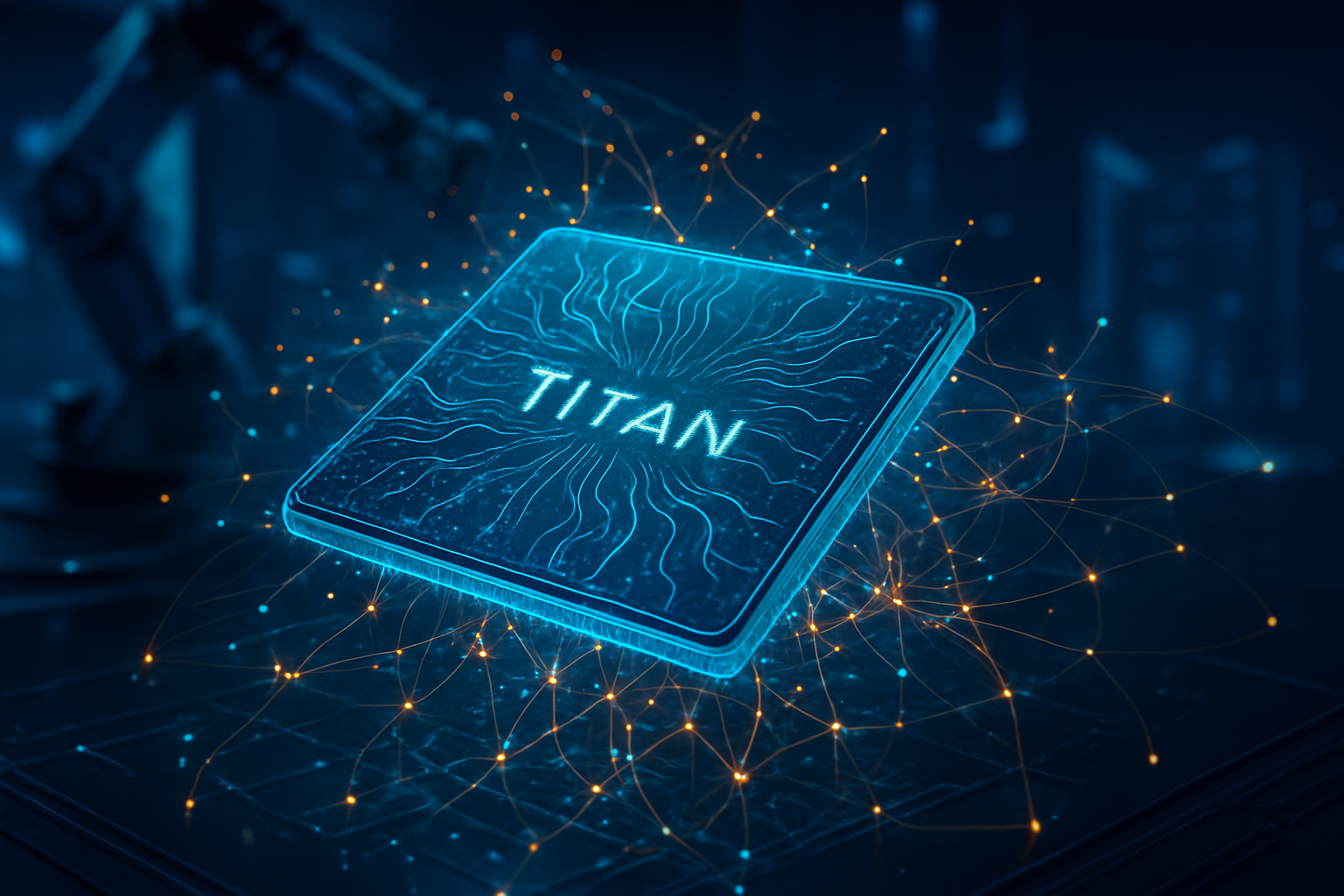
    Internally, these custom processors are reportedly referred to as "Titan XPU," suggesting an Application-Specific Integrated Circuit (ASIC)-like approach, a domain where Broadcom excels with its "XPU" (accelerated processing unit) line. The "Titan XPU" is expected to be meticulously optimized for inference workloads that dominate large language models, encompassing tasks such as text-to-text generation, speech-to-text transcription, text-to-speech synthesis, and code generation—the backbone of services like ChatGPT. This specialization is a stark contrast to general-purpose GPUs (Graphics Processing Units) from Nvidia (NASDAQ: NVDA), which, while powerful, are designed for a broader range of computational tasks. By focusing on specific inference tasks, OpenAI aims for superior performance per dollar and per watt, significantly reducing operational costs and improving energy efficiency for its particular needs.

    Initial reactions from the AI research community and industry experts have largely acknowledged this as a critical, albeit risky, step towards building the necessary infrastructure for AI's future. Broadcom's stock surged by nearly 10% post-announcement, reflecting investor confidence in its expanding role in the AI hardware ecosystem. While recognizing the substantial financial commitment and execution risks involved, experts view this as part of a broader industry trend where major tech companies are pursuing in-house silicon to optimize for their unique workloads and diversify their supply chains. The sheer scale of the 10 GW target, alongside OpenAI's existing compute commitments, underscores the immense and escalating demand for AI processing power, suggesting that custom chip development has become a strategic imperative rather than an option.

    Shifting Tides: Impact on AI Companies, Tech Giants, and Startups

    The strategic partnership between OpenAI and Broadcom for custom AI chip development is poised to send ripple effects across the entire technology ecosystem, particularly impacting AI companies, established tech giants, and nascent startups. This move signifies a maturation of the AI industry, where leading players are increasingly seeking granular control over their foundational infrastructure.

    Firstly, OpenAI itself (private company) stands to be the primary beneficiary. By designing its own "Titan XPU" chips, OpenAI aims to drastically reduce its reliance on external GPU suppliers, most notably Nvidia, which currently holds a near-monopoly on high-end AI accelerators. This independence translates into greater control over chip availability, performance optimization for its specific LLM architectures, and crucially, substantial cost reductions in the long term. Sam Altman's vision of embedding "what it has learned from developing frontier models directly into the hardware" promises efficiency gains that could lead to faster, cheaper, and more capable models, ultimately strengthening OpenAI's competitive edge in the fiercely contested AI market. The adoption of Broadcom's open-standard Ethernet also frees OpenAI from proprietary networking solutions, offering flexibility and potentially lower total cost of ownership for its massive data centers.

    For Broadcom, this partnership solidifies its position as a critical enabler of the AI revolution. Building on its existing relationships with hyperscalers like Google (NASDAQ: GOOGL) for custom TPUs, this deal with OpenAI significantly expands its footprint in the custom AI chip design and networking space. Broadcom's expertise in specialized silicon and its advanced Ethernet solutions, designed to compete directly with InfiniBand, are now at the forefront of powering one of the world's leading AI labs. This substantial contract is a strong validation of Broadcom's strategy and is expected to drive significant revenue growth and market share in the AI hardware sector.

    The competitive implications for major AI labs and tech companies are profound. Nvidia, while still a dominant force due to its CUDA software ecosystem and continuous GPU advancements, faces a growing trend of "de-Nvidia-fication" among its largest customers. Companies like Google, Amazon (NASDAQ: AMZN), Meta (NASDAQ: META), and Microsoft (NASDAQ: MSFT) are all investing heavily in their own in-house AI silicon. OpenAI joining this cohort signals that even leading-edge AI developers find the benefits of custom hardware – including cost efficiency, performance optimization, and supply chain security – compelling enough to undertake the monumental task of chip design. This could lead to a more diversified AI hardware market, fostering innovation and competition among chip designers.

    For startups in the AI space, the implications are mixed. On one hand, the increasing availability of diversified AI hardware solutions, including custom chips and advanced Ethernet networking, could eventually lead to more cost-effective and specialized compute options, benefiting those who can leverage these new architectures. On the other hand, the enormous capital expenditure and technical expertise required to develop custom silicon create a significant barrier to entry, further consolidating power among well-funded tech giants and leading AI labs. Startups without the resources to design their own chips will continue to rely on third-party providers, potentially facing higher costs or less optimized hardware compared to their larger competitors. This development underscores a strategic advantage for companies with the scale and resources to vertically integrate their AI stack, from models to silicon.

    Wider Significance: Reshaping the AI Landscape

    OpenAI's foray into custom AI chip design with Broadcom represents a pivotal moment, reflecting and accelerating several broader trends within the AI landscape. This move is far more than just a procurement decision; it’s a strategic reorientation that will have lasting impacts on the industry's structure, innovation trajectory, and even its environmental footprint.

    Firstly, this initiative underscores the escalating "compute crunch" that defines the current era of AI development. As AI models grow exponentially in size and complexity, the demand for computational power has become insatiable. The 10 gigawatts of capacity targeted by OpenAI, adding to its existing multi-gigawatt commitments with AMD (NASDAQ: AMD) and Nvidia, paints a vivid picture of the sheer scale required to train and deploy frontier AI models. This immense demand is pushing leading AI labs to explore every avenue for securing and optimizing compute, making custom silicon a logical, if challenging, next step. It highlights that the bottleneck for AI advancement is increasingly shifting from algorithmic breakthroughs to the availability and efficiency of underlying hardware.

    The partnership also solidifies a growing trend towards vertical integration in the AI stack. Major tech giants have long pursued in-house chip design for their cloud infrastructure and consumer devices. Now, leading AI developers are adopting a similar strategy, recognizing that off-the-shelf hardware, while powerful, cannot perfectly meet the unique and evolving demands of their specialized AI workloads. By designing its own "Titan XPU" chips, OpenAI can embed its deep learning insights directly into the silicon, optimizing for specific inference patterns and model architectures in ways that general-purpose GPUs cannot. This allows for unparalleled efficiency gains in terms of performance, power consumption, and cost, which are critical for scaling AI to unprecedented levels. This mirrors Google's success with its Tensor Processing Units (TPUs) and Amazon's Graviton and Trainium/Inferentia chips, signaling a maturing industry where custom hardware is becoming a competitive differentiator.

    Potential concerns, however, are not negligible. The financial commitment required for such a massive undertaking is enormous and largely undisclosed, raising questions about OpenAI's long-term profitability and capital burn rate, especially given its current non-profit roots and for-profit operations. There are significant execution risks, including potential design flaws, manufacturing delays, and the possibility that the custom chips might not deliver the anticipated performance advantages over continuously evolving commercial alternatives. Furthermore, the environmental impact of deploying 10 gigawatts of computing capacity, equivalent to the power consumption of millions of homes, raises critical questions about energy sustainability in the age of hyperscale AI.

    Comparisons to previous AI milestones reveal a clear trajectory. Just as breakthroughs in algorithms (e.g., deep learning, transformers) and data availability fueled early AI progress, the current era is defined by the race for specialized, efficient, and scalable hardware. This move by OpenAI is reminiscent of the shift from general-purpose CPUs to GPUs for parallel processing in the early days of deep learning, or the subsequent rise of specialized ASICs for specific tasks. It represents another fundamental evolution in the foundational infrastructure that underlies AI, moving towards a future where hardware and software are co-designed for optimal performance.

    Future Developments: The Horizon of AI Infrastructure

    The OpenAI-Broadcom partnership heralds a new phase in AI infrastructure development, with several near-term and long-term implications poised to unfold across the industry. This strategic move is not an endpoint but a catalyst for further innovation and shifts in the competitive landscape.

    In the near-term, we can expect a heightened focus on the initial deployment of OpenAI's custom "Titan XPU" chips in the second half of 2026. The performance metrics, efficiency gains, and cost reductions achieved in these early rollouts will be closely scrutinized by the entire industry. Success here could accelerate the trend of other major AI developers pursuing their own custom silicon strategies. Simultaneously, Broadcom's role as a leading provider of custom AI chips and advanced Ethernet networking solutions will likely expand, potentially attracting more hyperscalers and AI labs seeking alternatives to traditional GPU-centric infrastructures. We may also see increased investment in the Ultra Ethernet Consortium, as the industry works to standardize and enhance Ethernet for AI workloads, directly challenging InfiniBand's long-held dominance.

    Looking further ahead, the long-term developments could include a more diverse and fragmented AI hardware market. While Nvidia will undoubtedly remain a formidable player, especially in training and general-purpose AI, the rise of specialized ASICs for inference could create distinct market segments. This diversification could foster innovation in chip design, leading to even more energy-efficient and cost-effective solutions tailored for specific AI applications. Potential applications and use cases on the horizon include the deployment of massively scaled, personalized AI agents, real-time multimodal AI systems, and hyper-efficient edge AI devices, all powered by hardware optimized for their unique demands. The ability to embed model-specific optimizations directly into the silicon could unlock new AI capabilities that are currently constrained by general-purpose hardware.

    However, significant challenges remain. The enormous research and development costs, coupled with the complexities of chip manufacturing, will continue to be a barrier for many. Supply chain vulnerabilities, particularly in advanced semiconductor fabrication, will also need to be carefully managed. The ongoing "AI talent war" will extend to hardware engineers and architects, making it crucial for companies to attract and retain top talent. Furthermore, the rapid pace of AI model evolution means that custom hardware designs must be flexible and adaptable, or risk becoming obsolete quickly. Experts predict that the future will see a hybrid approach, where custom ASICs handle the bulk of inference for specific applications, while powerful, general-purpose GPUs continue to drive the most demanding training workloads and foundational research. This co-existence will necessitate seamless integration between diverse hardware architectures.

    Comprehensive Wrap-up: A New Chapter in AI's Evolution

    OpenAI's partnership with Broadcom to develop custom AI chips marks a watershed moment in the history of artificial intelligence, signaling a profound shift in how leading AI organizations approach their foundational infrastructure. The key takeaway is clear: the era of AI is increasingly becoming an era of custom silicon, driven by the insatiable demand for computational power, the imperative for cost efficiency, and the strategic advantage of deeply integrated hardware-software co-design.

    This development is significant because it represents a bold move by a leading AI innovator to exert greater control over its destiny, reducing dependence on external suppliers and optimizing hardware specifically for its unique, cutting-edge workloads. By targeting 10 gigawatts of custom AI accelerators and embracing Broadcom's Ethernet solutions, OpenAI is not just building chips; it's constructing a bespoke nervous system for its future AI models. This strategic vertical integration is set to redefine competitive dynamics, challenging established hardware giants like Nvidia while elevating Broadcom as a pivotal enabler of the AI revolution.

    In the long term, this initiative will likely accelerate the diversification of the AI hardware market, fostering innovation in specialized chip designs and advanced networking. It underscores the critical importance of hardware in unlocking the next generation of AI capabilities, from hyper-efficient inference to novel model architectures. While challenges such as immense capital expenditure, execution risks, and environmental concerns persist, the strategic imperative for custom silicon in hyperscale AI is undeniable.

    As the industry moves forward, observers should keenly watch the initial deployments of OpenAI's "Titan XPU" chips in late 2026 for performance benchmarks and efficiency gains. The continued evolution of Ethernet for AI, as championed by Broadcom, will also be a key indicator of shifting networking paradigms. This partnership is not just a news item; it's a testament to the relentless pursuit of optimization and scale that defines the frontier of artificial intelligence, setting the stage for a future where AI's true potential is unleashed through hardware precisely engineered for its demands.


    This content is intended for informational purposes only and represents analysis of current AI developments.

    TokenRing AI delivers enterprise-grade solutions for multi-agent AI workflow orchestration, AI-powered development tools, and seamless remote collaboration platforms.
    For more information, visit https://www.tokenring.ai/.

  • Broadcom Unleashes AI Powerhouse: OpenAI Partnership and Thor Ultra Chip Position it as a Formidable Force in the AI Revolution

    Broadcom Unleashes AI Powerhouse: OpenAI Partnership and Thor Ultra Chip Position it as a Formidable Force in the AI Revolution

    Broadcom Inc. (NASDAQ: AVGO) is rapidly solidifying its position as a critical enabler of the artificial intelligence revolution, making monumental strides that are reshaping the semiconductor landscape. With a strategic dual-engine approach combining cutting-edge hardware and robust enterprise software, the company has recently unveiled developments that not only underscore its aggressive pivot into AI but also directly challenge the established order. These advancements, including a landmark partnership with OpenAI and the introduction of a powerful new networking chip, signal Broadcom's intent to become an indispensable architect of the global AI infrastructure. As of October 14, 2025, Broadcom's strategic maneuvers are poised to significantly accelerate the deployment and scalability of advanced AI models worldwide, cementing its role as a pivotal player in the tech sector.

    Broadcom's AI Arsenal: Custom Accelerators, Hyper-Efficient Networking, and Strategic Alliances

    Broadcom's recent announcements showcase a potent combination of bespoke silicon, advanced networking, and critical strategic partnerships designed to fuel the next generation of AI. On October 13, 2025, the company announced a multi-year collaboration with OpenAI, a move that reverberated across the tech industry. This landmark partnership involves the co-development, manufacturing, and deployment of 10 gigawatts of custom AI accelerators and advanced networking systems. These specialized components are meticulously engineered to optimize the performance of OpenAI's sophisticated AI models, with deployment slated to begin in the second half of 2026 and continue through 2029. This agreement marks OpenAI as Broadcom's fifth custom accelerator customer, validating its capabilities in delivering tailored AI silicon solutions.

    Further bolstering its AI infrastructure prowess, Broadcom launched its new "Thor Ultra" networking chip on October 14, 2025. This state-of-the-art chip is explicitly designed to facilitate the construction of colossal AI computing systems by efficiently interconnecting hundreds of thousands of individual chips. The Thor Ultra chip acts as a vital conduit, seamlessly linking vast AI systems with the broader data center infrastructure. This innovation intensifies Broadcom's competitive stance against rivals like Nvidia in the crucial AI networking domain, offering unprecedented scalability and efficiency for the most demanding AI workloads.

    These custom AI chips, referred to as XPUs, are already a cornerstone for several hyperscale tech giants, including Google (NASDAQ: GOOGL), Meta Platforms (NASDAQ: META), and ByteDance. Unlike general-purpose GPUs, Broadcom's custom silicon solutions are tailored for specific AI workloads, providing hyperscalers with optimized performance and superior cost efficiency. This approach allows these tech behemoths to achieve significant advantages in processing power and operational costs for their proprietary AI models. Broadcom's advanced Ethernet-based networking solutions, such as Tomahawk 6, Tomahawk Ultra, and Jericho4 Ethernet switches, are equally critical, supporting the massive bandwidth requirements of modern AI applications and enabling the construction of sprawling AI data centers. The company is also pioneering co-packaged optics (e.g., TH6-Davisson) to further enhance power efficiency and reliability within these high-performance AI networks, a significant departure from traditional discrete optical components. The initial reaction from the AI research community and industry experts has been overwhelmingly positive, viewing these developments as a significant step towards democratizing access to highly optimized AI infrastructure beyond a single dominant vendor.

    Reshaping the AI Competitive Landscape: Broadcom's Strategic Leverage

    Broadcom's recent advancements are poised to significantly reshape the competitive landscape for AI companies, tech giants, and startups alike. The landmark OpenAI partnership, in particular, positions Broadcom as a formidable alternative to Nvidia (NASDAQ: NVDA) in the high-stakes custom AI accelerator market. By providing tailored silicon solutions, Broadcom empowers hyperscalers like OpenAI to differentiate their AI infrastructure, potentially reducing their reliance on a single supplier and fostering greater innovation. This strategic move could lead to a more diversified and competitive supply chain for AI hardware, ultimately benefiting companies seeking optimized and cost-effective solutions for their AI models.

    The launch of the Thor Ultra networking chip further strengthens Broadcom's strategic advantage, particularly in the realm of AI data center networking. As AI models grow exponentially in size and complexity, the ability to efficiently connect hundreds of thousands of chips becomes paramount. Broadcom's leadership in cloud data center Ethernet switches, where it holds a dominant 90% market share, combined with innovations like Thor Ultra, ensures it remains an indispensable partner for building scalable AI infrastructure. This competitive edge will be crucial for tech giants investing heavily in AI, as it directly impacts the performance, cost, and energy efficiency of their AI operations.

    Furthermore, Broadcom's $69 billion acquisition of VMware (NYSE: VMW) in late 2023 has proven to be a strategic masterstroke, creating a "dual-engine AI infrastructure model" that integrates hardware with enterprise software. By combining VMware's enterprise cloud and AI deployment tools with its high-margin semiconductor offerings, Broadcom facilitates secure, on-premise large language model (LLM) deployment. This integration offers a compelling solution for enterprises concerned about data privacy and regulatory compliance, allowing them to leverage AI capabilities within their existing infrastructure. This comprehensive approach provides a distinct market positioning, enabling Broadcom to offer end-to-end AI solutions that span from silicon to software, potentially disrupting existing product offerings from cloud providers and pure-play AI software companies. Companies seeking robust, integrated, and secure AI deployment environments stand to benefit significantly from Broadcom's expanded portfolio.

    Broadcom's Broader Impact: Fueling the AI Revolution's Foundation

    Broadcom's recent developments are not merely incremental improvements but foundational shifts that significantly impact the broader AI landscape and global technological trends. By aggressively expanding its custom AI accelerator business and introducing advanced networking solutions, Broadcom is directly addressing one of the most pressing challenges in the AI era: the need for scalable, efficient, and specialized hardware infrastructure. This aligns perfectly with the prevailing trend of hyperscalers moving towards custom silicon to achieve optimal performance and cost-effectiveness for their unique AI workloads, moving beyond the limitations of general-purpose hardware.

    The company's strategic partnership with OpenAI, a leader in frontier AI research, underscores the critical role that specialized hardware plays in pushing the boundaries of AI capabilities. This collaboration is set to significantly expand global AI infrastructure, enabling the deployment of increasingly complex and powerful AI models. Broadcom's contributions are essential for realizing the full potential of generative AI, which CEO Hock Tan predicts could increase technology's contribution to global GDP from 30% to 40%. The sheer scale of the 10 gigawatts of custom AI accelerators planned for deployment highlights the immense demand for such infrastructure.

    While the benefits are substantial, potential concerns revolve around market concentration and the complexity of integrating custom solutions. As Broadcom strengthens its position, there's a risk of creating new dependencies for AI developers on specific hardware ecosystems. However, by offering a viable alternative to existing market leaders, Broadcom also fosters healthy competition, which can ultimately drive innovation and reduce costs across the industry. This period can be compared to earlier AI milestones where breakthroughs in algorithms were followed by intense development in specialized hardware to make those algorithms practical and scalable, such as the rise of GPUs for deep learning. Broadcom's current trajectory marks a similar inflection point, where infrastructure innovation is now as critical as algorithmic advancements.

    The Horizon of AI: Broadcom's Future Trajectory

    Looking ahead, Broadcom's strategic moves lay the groundwork for significant near-term and long-term developments in the AI ecosystem. In the near term, the deployment of custom AI accelerators for OpenAI, commencing in late 2026, will be a critical milestone to watch. This large-scale rollout will provide real-world validation of Broadcom's custom silicon capabilities and its ability to power advanced AI models at an unprecedented scale. Concurrently, the continued adoption of the Thor Ultra chip and other advanced Ethernet solutions will be key indicators of Broadcom's success in challenging Nvidia's dominance in AI networking. Experts predict that Broadcom's compute and networking AI market share could reach 11% in 2025, with potential to increase to 24% by 2027, signaling a significant shift in market dynamics.

    In the long term, the integration of VMware's software capabilities with Broadcom's hardware will unlock a plethora of new applications and use cases. The "dual-engine AI infrastructure model" is expected to drive further innovation in secure, on-premise AI deployments, particularly for industries with stringent data privacy and regulatory requirements. This could lead to a proliferation of enterprise-grade AI solutions tailored to specific vertical markets, from finance and healthcare to manufacturing. The continuous evolution of custom AI accelerators, driven by partnerships with leading AI labs, will likely result in even more specialized and efficient silicon designs, pushing the boundaries of what AI models can achieve.

    However, challenges remain. The rapid pace of AI innovation demands constant adaptation and investment in R&D to stay ahead of evolving architectural requirements. Supply chain resilience and manufacturing scalability will also be crucial for Broadcom to meet the surging demand for its AI products. Furthermore, competition in the AI chip market is intensifying, with new players and established tech giants all vying for a share. Experts predict that the focus will increasingly shift towards energy efficiency and sustainability in AI infrastructure, presenting both challenges and opportunities for Broadcom to innovate further in areas like co-packaged optics. What to watch for next includes the initial performance benchmarks from the OpenAI collaboration, further announcements of custom accelerator partnerships, and the continued integration of VMware's software stack to create even more comprehensive AI solutions.

    Broadcom's AI Ascendancy: A New Era for Infrastructure

    In summary, Broadcom Inc. (NASDAQ: AVGO) is not just participating in the AI revolution; it is actively shaping its foundational infrastructure. The key takeaways from its recent announcements are the strategic OpenAI partnership for custom AI accelerators, the introduction of the Thor Ultra networking chip, and the successful integration of VMware, creating a powerful dual-engine growth strategy. These developments collectively position Broadcom as a critical enabler of frontier AI, providing essential hardware and networking solutions that are vital for the global AI revolution.

    This period marks a significant chapter in AI history, as Broadcom emerges as a formidable challenger to established leaders, fostering a more competitive and diversified ecosystem for AI hardware. The company's ability to deliver tailored silicon and robust networking solutions, combined with its enterprise software capabilities, provides a compelling value proposition for hyperscalers and enterprises alike. The long-term impact is expected to be profound, accelerating the deployment of advanced AI models and enabling new applications across various industries.

    In the coming weeks and months, the tech world will be closely watching for further details on the OpenAI collaboration, the market adoption of the Thor Ultra chip, and Broadcom's ongoing financial performance, particularly its AI-related revenue growth. With projections of AI revenue doubling in fiscal 2026 and nearly doubling again in 2027, Broadcom is poised for sustained growth and influence. Its strategic vision and execution underscore its significance as a pivotal player in the semiconductor industry and a driving force in the artificial intelligence era.


    This content is intended for informational purposes only and represents analysis of current AI developments.

    TokenRing AI delivers enterprise-grade solutions for multi-agent AI workflow orchestration, AI-powered development tools, and seamless remote collaboration platforms.
    For more information, visit https://www.tokenring.ai/.
  • AI Users Sue Microsoft and OpenAI Over Allegedly Inflated Generative AI Prices

    AI Users Sue Microsoft and OpenAI Over Allegedly Inflated Generative AI Prices

    A significant antitrust class action lawsuit has been filed against technology behemoth Microsoft (NASDAQ: MSFT) and leading AI research company OpenAI, alleging that their strategic partnership has led to artificially inflated prices for generative AI services, most notably ChatGPT. Filed on October 13, 2025, the lawsuit claims that Microsoft's substantial investment and a purportedly secret agreement with OpenAI have stifled competition, forcing consumers to pay exorbitant rates for cutting-edge AI technology. This legal challenge underscores the escalating scrutiny facing major players in the rapidly expanding artificial intelligence market, raising critical questions about fair competition and market dominance.

    The class action, brought by unnamed plaintiffs, posits that Microsoft's multi-billion dollar investment—reportedly $13 billion—came with strings attached: a severe restriction on OpenAI's access to vital computing power. According to the lawsuit, this arrangement compelled OpenAI to exclusively utilize Microsoft's processing, memory, and storage capabilities via its Azure cloud platform. This alleged monopolization of compute resources, the plaintiffs contend, "mercilessly choked OpenAI's compute supply," thereby forcing the company to dramatically increase prices for its generative AI products. The suit claims these prices could be up to 200 times higher than those offered by competitors, all while Microsoft simultaneously developed its own competing generative AI offerings, such as Copilot.

    Allegations of Market Manipulation and Compute Monopolization

    The heart of the antitrust claim lies in the assertion that Microsoft orchestrated a scenario designed to gain an unfair advantage in the burgeoning generative AI market. By allegedly controlling OpenAI's access to the essential computational infrastructure required to train and run large language models, Microsoft effectively constrained the supply side of a critical resource. This control, the plaintiffs contend, made it impossible for OpenAI to leverage more cost-effective compute solutions, fostering price competition and innovation. Initial reactions from the broader AI research community and industry experts, while not specifically tied to this exact lawsuit, have consistently highlighted concerns about market concentration and the potential for a few dominant players to control access to critical AI resources, thereby shaping the entire industry's trajectory.

    Technical specifications and capabilities of generative AI models like ChatGPT demand immense computational power. Training these models involves processing petabytes of data across thousands of GPUs, a resource-intensive endeavor. The lawsuit implies that by making OpenAI reliant solely on Azure, Microsoft eliminated the possibility of OpenAI seeking more competitive pricing or diversified infrastructure from other cloud providers. This differs significantly from an open market approach where AI developers could choose the most efficient and affordable compute options, fostering price competition and innovation.

    Competitive Ripples Across the AI Ecosystem

    This lawsuit carries profound competitive implications for major AI labs, tech giants, and nascent startups alike. If the allegations hold true, Microsoft (NASDAQ: MSFT) stands accused of leveraging its financial might and cloud infrastructure to create an artificial bottleneck, solidifying its position in the generative AI space at the expense of fair market dynamics. This could significantly disrupt existing products and services by increasing the operational costs for any AI company that might seek to partner with or emulate OpenAI's scale without access to diversified compute.

    The competitive landscape for major AI labs beyond OpenAI, such as Anthropic, Google DeepMind (NASDAQ: GOOGL), and Meta AI (NASDAQ: META), could also be indirectly affected. If market leaders can dictate terms through exclusive compute agreements, it sets a precedent that could make it harder for smaller players or even other large entities to compete on an equal footing, especially concerning pricing and speed of innovation. Reports of OpenAI executives themselves considering antitrust action against Microsoft, stemming from tensions over Azure exclusivity and Microsoft's stake, further underscore the internal recognition of potential anti-competitive behavior. This suggests that even within the partnership, concerns about Microsoft's dominance and its impact on OpenAI's operational flexibility and market competitiveness were present, echoing the claims of the current class action.

    Broader Significance for the AI Landscape

    This antitrust class action lawsuit against Microsoft and OpenAI fits squarely into a broader trend of heightened scrutiny over market concentration and potential monopolistic practices within the rapidly evolving AI landscape. The core issue of controlling essential resources—in this case, high-performance computing—echoes historical antitrust battles in other tech sectors, such as operating systems or search engines. The potential for a single entity to control access to the fundamental infrastructure required for AI development raises significant concerns about the future of innovation, accessibility, and diversity in the AI industry.

    Impacts could extend beyond mere pricing. A restricted compute supply could slow down the pace of AI research and development if companies are forced into less optimal or more expensive solutions. This could stifle the emergence of novel AI applications and limit the benefits of AI to a select few who can afford the inflated costs. Regulatory bodies globally, including the US Federal Trade Commission (FTC) and the Department of Justice (DOJ), are already conducting extensive probes into AI partnerships, signaling a collective effort to prevent powerful tech companies from consolidating excessive control. Comparisons to previous AI milestones reveal a consistent pattern: as a technology matures and becomes commercially viable, the battle for market dominance intensifies, often leading to antitrust challenges aimed at preserving a level playing field.

    Anticipating Future Developments and Challenges

    The immediate future will likely see both Microsoft and OpenAI vigorously defending against these allegations. The legal proceedings are expected to be complex and protracted, potentially involving extensive discovery into the specifics of their partnership agreement and financial arrangements. In the near term, the outcome of this lawsuit could influence how other major tech companies structure their AI investments and collaborations, potentially leading to more transparent or less restrictive agreements to avoid similar legal challenges.

    Looking further ahead, experts predict a continued shift towards multi-model support in enterprise AI solutions. The current lawsuit, coupled with existing tensions within the Microsoft-OpenAI partnership, suggests that relying on a single AI model or a single cloud provider for critical AI infrastructure may become increasingly risky for businesses. Potential applications and use cases on the horizon will demand a resilient and competitive AI ecosystem, free from artificial bottlenecks. Key challenges that need to be addressed include establishing clear regulatory guidelines for AI partnerships, ensuring equitable access to computational resources, and fostering an environment where innovation can flourish without being constrained by market dominance. What experts predict next is an intensified focus from regulators on preventing AI monopolies and a greater emphasis on interoperability and open standards within the AI community.

    A Defining Moment for AI Competition

    This antitrust class action against Microsoft and OpenAI represents a potentially defining moment in the history of artificial intelligence, highlighting the critical importance of fair competition as AI technology permeates every aspect of industry and society. The allegations of inflated prices for generative AI, stemming from alleged compute monopolization, strike at the heart of accessibility and innovation within the AI sector. The outcome of this lawsuit could set a significant precedent for how partnerships in the AI space are structured and regulated, influencing market dynamics for years to come.

    Key takeaways include the growing legal and regulatory scrutiny of major AI collaborations, the increasing awareness of potential anti-competitive practices, and the imperative to ensure that the benefits of AI are widely accessible and not confined by artificial market barriers. As the legal battle unfolds in the coming weeks and months, the tech industry will be watching closely. The resolution of this case will not only impact Microsoft and OpenAI but could also shape the future competitive landscape of artificial intelligence, determining whether innovation is driven by open competition or constrained by the dominance of a few powerful players. The implications for consumers, developers, and the broader digital economy are substantial.


    This content is intended for informational purposes only and represents analysis of current AI developments.

    TokenRing AI delivers enterprise-grade solutions for multi-agent AI workflow orchestration, AI-powered development tools, and seamless remote collaboration platforms.
    For more information, visit https://www.tokenring.ai/.

  • OpenAI and Broadcom Forge Multi-Billion Dollar Custom Chip Alliance, Reshaping AI’s Future

    OpenAI and Broadcom Forge Multi-Billion Dollar Custom Chip Alliance, Reshaping AI’s Future

    San Francisco, CA & San Jose, CA – October 13, 2025 – In a monumental move set to redefine the landscape of artificial intelligence infrastructure, OpenAI and Broadcom (NASDAQ: AVGO) today announced a multi-billion dollar strategic partnership focused on developing and deploying custom AI accelerators. This collaboration, unveiled on the current date of October 13, 2025, positions OpenAI to dramatically scale its computing capabilities with bespoke silicon, while solidifying Broadcom's standing as a critical enabler of next-generation AI hardware. The deal underscores a growing trend among leading AI developers to vertically integrate their compute stacks, moving beyond reliance on general-purpose GPUs to gain unprecedented control over performance, cost, and supply.

    The immediate significance of this alliance cannot be overstated. By committing to custom Application-Specific Integrated Circuits (ASICs), OpenAI aims to optimize its AI models directly at the hardware level, promising breakthroughs in efficiency and intelligence. For Broadcom, a powerhouse in networking and custom silicon, the partnership represents a substantial revenue opportunity and a validation of its expertise in large-scale chip development and fabrication. This strategic alignment is poised to send ripples across the semiconductor industry, challenging existing market dynamics and accelerating the evolution of AI infrastructure globally.

    A Deep Dive into Bespoke AI Silicon: Powering the Next Frontier

    The core of this multi-billion dollar agreement centers on the development and deployment of custom AI accelerators and integrated systems. OpenAI will leverage its deep understanding of frontier AI models to design these specialized chips, embedding critical insights directly into the hardware architecture. Broadcom will then take the reins on the intricate development, deployment, and management of the fabrication process, utilizing its mature supply chain and ASIC design prowess. These integrated systems are not merely chips but comprehensive rack solutions, incorporating Broadcom’s advanced Ethernet and other connectivity solutions essential for scale-up and scale-out networking in massive AI data centers.

    Technically, the ambition is staggering: the partnership targets delivering an astounding 10 gigawatts (GW) of specialized AI computing power. To contextualize, 10 GW is roughly equivalent to the electricity consumption of over 8 million U.S. households or five times the output of the Hoover Dam. The rollout of these custom AI accelerator and network systems is slated to commence in the second half of 2026 and reach full completion by the end of 2029. This aggressive timeline highlights the urgent demand for specialized compute resources in the race towards advanced AI.

    This custom ASIC approach represents a significant departure from the prevailing reliance on general-purpose GPUs, predominantly from NVIDIA (NASDAQ: NVDA). While GPUs offer flexibility, custom ASICs allow for unparalleled optimization of performance-per-watt, cost-efficiency, and supply assurance tailored precisely to OpenAI's unique training and inference workloads. By embedding model-specific insights directly into the silicon, OpenAI expects to unlock new levels of capability and intelligence that might be challenging to achieve with off-the-shelf hardware. This strategic pivot marks a profound evolution in AI hardware development, emphasizing tightly integrated, purpose-built silicon. Initial reactions from industry experts suggest a strong endorsement of this vertical integration strategy, aligning OpenAI with other tech giants like Google (NASDAQ: GOOGL), Amazon (NASDAQ: AMZN), and Meta (NASDAQ: META) who have successfully pursued in-house chip design.

    Reshaping the AI and Semiconductor Ecosystem: Winners and Challengers

    This groundbreaking deal will inevitably reshape competitive landscapes across both the AI and semiconductor industries. OpenAI stands to be a primary beneficiary, gaining unprecedented control over its compute infrastructure, optimizing for its specific AI workloads, and potentially reducing its heavy reliance on external GPU suppliers. This strategic independence is crucial for its long-term vision of developing advanced AI models. For Broadcom (NASDAQ: AVGO), the partnership significantly expands its footprint in the booming custom accelerator market, reinforcing its position as a go-to partner for hyperscalers seeking bespoke silicon solutions. The deal also validates Broadcom's Ethernet technology as the preferred networking backbone for large-scale AI data centers, securing substantial revenue and strategic advantage.

    The competitive implications for major AI labs and tech companies are profound. While NVIDIA (NASDAQ: NVDA) remains the dominant force in AI accelerators, this deal, alongside similar initiatives from other tech giants, signals a growing trend of "de-NVIDIAtion" in certain segments. While NVIDIA's robust CUDA software ecosystem and networking solutions offer a strong moat, the rise of custom ASICs could gradually erode its market share in the fastest-growing AI workloads and exert pressure on pricing power. OpenAI CEO Sam Altman himself noted that building its own accelerators contributes to a "broader ecosystem of partners all building the capacity required to push the frontier of AI," indicating a diversified approach rather than an outright replacement.

    Furthermore, this deal highlights a strategic multi-sourcing approach from OpenAI, which recently announced a separate 6-gigawatt AI chip supply deal with AMD (NASDAQ: AMD), including an option to buy a stake in the chipmaker. This diversification strategy aims to mitigate supply chain risks and foster competition among hardware providers. The move also underscores potential disruption to existing products and services, as custom silicon can offer performance advantages that off-the-shelf components might struggle to match for highly specific AI tasks. For smaller AI startups, this trend towards custom hardware by industry leaders could create a widening compute gap, necessitating innovative strategies to access sufficient and optimized processing power.

    The Broader AI Canvas: A New Era of Specialization

    The Broadcom-OpenAI partnership fits squarely into a broader and accelerating trend within the AI landscape: the shift towards specialized, custom AI silicon. This movement is driven by the insatiable demand for computing power, the need for extreme efficiency, and the strategic imperative for leading AI developers to control their core infrastructure. Major players like Google with its TPUs, Amazon with Trainium/Inferentia, and Meta with MTIA have already blazed this trail, and OpenAI's entry into custom ASIC design solidifies this as a mainstream strategy for frontier AI development.

    The impacts are multi-faceted. On one hand, it promises an era of unprecedented AI performance, as hardware and software are co-designed for maximum synergy. This could unlock new capabilities in large language models, multimodal AI, and scientific discovery. On the other hand, potential concerns arise regarding the concentration of advanced AI capabilities within a few organizations capable of making such massive infrastructure investments. The sheer cost and complexity of developing custom chips could create higher barriers to entry for new players, potentially exacerbating an "AI compute gap." The deal also raises questions about the financial sustainability of such colossal infrastructure commitments, particularly for companies like OpenAI, which are not yet profitable.

    This development draws comparisons to previous AI milestones, such as the initial breakthroughs in deep learning enabled by GPUs, or the rise of transformer architectures. However, the move to custom ASICs represents a fundamental shift in how AI is built and scaled, moving beyond software-centric innovations to a hardware-software co-design paradigm. It signifies an acknowledgement that general-purpose hardware, while powerful, may no longer be sufficient for the most demanding, cutting-edge AI workloads.

    Charting the Future: An Exponential Path to AI Compute

    Looking ahead, the Broadcom-OpenAI partnership sets the stage for exponential growth in specialized AI computing power. The deployment of 10 GW of custom accelerators between late 2026 and the end of 2029 is just one piece of OpenAI's ambitious "Stargate" initiative, which envisions building out massive data centers with immense computing power. This includes additional partnerships with NVIDIA for 10 GW of infrastructure, AMD for 6 GW of GPUs, and Oracle (NYSE: ORCL) for a staggering $300 billion deal for 5 GW of cloud capacity. OpenAI CEO Sam Altman reportedly aims for the company to build out 250 gigawatts of compute power over the next eight years, underscoring a future dominated by unprecedented demand for AI computing infrastructure.

    Expected near-term developments include the detailed design and prototyping phases of the custom ASICs, followed by the rigorous testing and integration into OpenAI's data centers. Long-term, these custom chips are expected to enable the training of even larger and more complex AI models, pushing the boundaries of what AI can achieve. Potential applications and use cases on the horizon include highly efficient and powerful AI agents, advanced scientific simulations, and personalized AI experiences that require immense, dedicated compute resources.

    However, significant challenges remain. The complexity of designing, fabricating, and deploying chips at this scale is immense, requiring seamless coordination between hardware and software teams. Ensuring the chips deliver the promised performance-per-watt and remain competitive with rapidly evolving commercial offerings will be critical. Furthermore, the environmental impact of 10 GW of computing power, particularly in terms of energy consumption and cooling, will need to be carefully managed. Experts predict that this trend towards custom silicon will accelerate, forcing all major AI players to consider similar strategies to maintain a competitive edge. The success of this Broadcom partnership will be pivotal in determining OpenAI's trajectory in achieving its superintelligence goals and reducing reliance on external hardware providers.

    A Defining Moment in AI's Hardware Evolution

    The multi-billion dollar chip deal between Broadcom and OpenAI is a defining moment in the history of artificial intelligence, signaling a profound shift in how the most advanced AI systems will be built and powered. The key takeaway is the accelerating trend of vertical integration in AI compute, where leading AI developers are taking control of their hardware destiny through custom silicon. This move promises enhanced performance, cost efficiency, and supply chain security for OpenAI, while solidifying Broadcom's position at the forefront of custom ASIC development and AI networking.

    This development's significance lies in its potential to unlock new frontiers in AI capabilities by optimizing hardware precisely for the demands of advanced models. It underscores that the next generation of AI breakthroughs will not solely come from algorithmic innovations but also from a deep co-design of hardware and software. While it poses competitive challenges for established GPU manufacturers, it also fosters a more diverse and specialized AI hardware ecosystem.

    In the coming weeks and months, the industry will be closely watching for further details on the technical specifications of these custom chips, the progress of their development, and any initial benchmarks that emerge. The financial markets will also be keen to see how this colossal investment impacts OpenAI's long-term profitability and Broadcom's revenue growth. This partnership is more than just a business deal; it's a blueprint for the future of AI infrastructure, setting a new standard for performance, efficiency, and strategic autonomy in the race towards artificial general intelligence.


    This content is intended for informational purposes only and represents analysis of current AI developments.

    TokenRing AI delivers enterprise-grade solutions for multi-agent AI workflow orchestration, AI-powered development tools, and seamless remote collaboration platforms.
    For more information, visit https://www.tokenring.ai/.

  • Broadcom and OpenAI Forge Multi-Billion Dollar Alliance to Power Next-Gen AI Infrastructure

    Broadcom and OpenAI Forge Multi-Billion Dollar Alliance to Power Next-Gen AI Infrastructure

    San Jose, CA & San Francisco, CA – October 13, 2025 – In a landmark development set to reshape the artificial intelligence and semiconductor landscapes, Broadcom Inc. (NASDAQ: AVGO) and OpenAI have announced a multi-billion dollar strategic collaboration. This ambitious partnership focuses on the co-development and deployment of an unprecedented 10 gigawatts of custom AI accelerators, signaling a pivotal shift towards specialized hardware tailored for frontier AI models. The deal, which sees OpenAI designing the specialized AI chips and systems in conjunction with Broadcom's development and deployment expertise, is slated to commence deployment in the latter half of 2026 and conclude by the end of 2029.

    OpenAI's foray into co-designing its own accelerators stems from a strategic imperative to embed insights gleaned from the development of its advanced AI models directly into the hardware. This proactive approach aims to unlock new levels of capability, intelligence, and efficiency, ultimately driving down compute costs and enabling the delivery of faster, more efficient, and more affordable AI. For the semiconductor sector, the agreement significantly elevates Broadcom's position as a critical player in the AI hardware domain, particularly in custom accelerators and high-performance Ethernet networking solutions, solidifying its status as a formidable competitor in the accelerated computing race. The immediate aftermath of the announcement saw Broadcom's shares surge, reflecting robust investor confidence in its expanding strategic importance within the burgeoning AI infrastructure market.

    Engineering the Future of AI: Custom Silicon and Unprecedented Scale

    The core of the Broadcom-OpenAI deal revolves around the co-development and deployment of custom AI accelerators designed specifically for OpenAI's demanding workloads. While specific technical specifications of the chips themselves remain proprietary, the overarching goal is to create hardware that is intimately optimized for the architecture of OpenAI's large language models and other frontier AI systems. This bespoke approach allows OpenAI to tailor every aspect of the chip – from its computational units to its memory architecture and interconnects – to maximize the performance and efficiency of its software, a level of optimization not typically achievable with off-the-shelf general-purpose GPUs.

    This initiative represents a significant departure from the traditional model where AI developers primarily rely on standard, high-volume GPUs from established providers like Nvidia. By co-designing its own inference chips, OpenAI is taking a page from hyperscalers like Google and Amazon, who have successfully developed custom silicon (TPUs and Inferentia, respectively) to gain a competitive edge in AI. The partnership with Broadcom, renowned for its expertise in custom silicon (ASICs) and high-speed networking, provides the necessary engineering prowess and manufacturing connections to bring these designs to fruition. Broadcom's role extends beyond mere fabrication; it encompasses the development of the entire accelerator rack, integrating its advanced Ethernet and other connectivity solutions to ensure seamless, high-bandwidth communication within and between the massive clusters of AI chips. This integrated approach is crucial for achieving the 10 gigawatts of computing power, a scale that dwarfs most existing AI deployments and underscores the immense demands of next-generation AI. Initial reactions from the AI research community highlight the strategic necessity of such vertical integration, with experts noting that custom hardware is becoming indispensable for pushing the boundaries of AI performance and cost-effectiveness.

    Reshaping the Competitive Landscape: Winners, Losers, and Strategic Shifts

    The Broadcom-OpenAI deal sends significant ripples through the AI and semiconductor industries, reconfiguring competitive dynamics and strategic positioning. OpenAI stands to be a primary beneficiary, gaining unparalleled control over its AI infrastructure. This vertical integration allows the company to reduce its dependency on external chip suppliers, potentially lowering operational costs, accelerating innovation cycles, and ensuring a stable, optimized supply of compute power essential for its ambitious growth plans, including CEO Sam Altman's vision to expand computing capacity to 250 gigawatts by 2033. This strategic move strengthens OpenAI's ability to deliver faster, more efficient, and more affordable AI models, potentially solidifying its market leadership in generative AI.

    For Broadcom (NASDAQ: AVGO), the partnership is a monumental win. It significantly elevates the company's standing in the fiercely competitive AI hardware market, positioning it as a critical enabler of frontier AI. Broadcom's expertise in custom ASICs and high-performance networking solutions, particularly its Ethernet technology, is now directly integrated into one of the world's leading AI labs' core infrastructure. This deal not only diversifies Broadcom's revenue streams but also provides a powerful endorsement of its capabilities, making it a formidable competitor to other chip giants like Nvidia (NASDAQ: NVDA) and Advanced Micro Devices (NASDAQ: AMD) in the custom AI accelerator space. The competitive implications for major AI labs and tech companies are profound. While Nvidia remains a dominant force, OpenAI's move signals a broader trend among major AI players to explore custom silicon, which could lead to a diversification of chip demand and increased competition for Nvidia in the long run. Companies like Google (NASDAQ: GOOGL) and Amazon (NASDAQ: AMZN) with their own custom AI chips may see this as validation of their strategies, while others might feel pressure to pursue similar vertical integration to maintain parity. The deal could also disrupt existing product cycles, as the availability of highly optimized custom hardware may render some general-purpose solutions less competitive for specific AI workloads, forcing chipmakers to innovate faster and offer more tailored solutions.

    A New Era of AI Infrastructure: Broader Implications and Future Trajectories

    This collaboration between Broadcom and OpenAI marks a significant inflection point in the broader AI landscape, signaling a maturation of the industry where hardware innovation is becoming as critical as algorithmic breakthroughs. It underscores a growing trend of "AI factories" – large-scale, highly specialized data centers designed from the ground up to train and deploy advanced AI models. This deal fits into the broader narrative of AI companies seeking greater control and efficiency over their compute infrastructure, moving beyond generic hardware to purpose-built systems. The impacts are far-reaching: it will likely accelerate the development of more powerful and complex AI models by removing current hardware bottlenecks, potentially leading to breakthroughs in areas like scientific discovery, personalized medicine, and autonomous systems.

    However, this trend also raises potential concerns. The immense capital expenditure required for such custom hardware initiatives could further concentrate power within a few well-funded AI entities, potentially creating higher barriers to entry for startups. It also highlights the environmental impact of AI, as 10 gigawatts of computing power represents a substantial energy demand, necessitating continued innovation in energy efficiency and sustainable data center practices. Comparisons to previous AI milestones, such as the rise of GPUs for deep learning or the development of specialized cloud AI services, reveal a consistent pattern: as AI advances, so too does the need for specialized infrastructure. This deal represents the next logical step in that evolution, moving from off-the-shelf acceleration to deeply integrated, co-designed systems. It signifies that the future of frontier AI will not just be about smarter algorithms, but also about the underlying silicon and networking that brings them to life.

    The Horizon of AI: Expected Developments and Expert Predictions

    Looking ahead, the Broadcom-OpenAI deal sets the stage for several significant developments in the near-term and long-term. In the near-term (2026-2029), we can expect to see the gradual deployment of these custom AI accelerator racks, leading to a demonstrable increase in the efficiency and performance of OpenAI's models. This will likely manifest in faster training times, lower inference costs, and the ability to deploy even larger and more complex AI systems. We might also see a "halo effect" where other major AI players, witnessing the benefits of vertical integration, intensify their efforts to develop or procure custom silicon solutions, further fragmenting the AI chip market. The deal's success could also spur innovation in related fields, such as advanced cooling technologies and power management solutions, essential for handling the immense energy demands of 10 gigawatts of compute.

    In the long-term, the implications are even more profound. The ability to tightly couple AI software and hardware could unlock entirely new AI capabilities and applications. We could see the emergence of highly specialized AI models designed exclusively for these custom architectures, pushing the boundaries of what's possible in areas like real-time multimodal AI, advanced robotics, and highly personalized intelligent agents. However, significant challenges remain. Scaling such massive infrastructure while maintaining reliability, security, and cost-effectiveness will be an ongoing engineering feat. Moreover, the rapid pace of AI innovation means that even custom hardware can become obsolete quickly, necessitating agile design and deployment cycles. Experts predict that this deal is a harbinger of a future where AI companies become increasingly involved in hardware design, blurring the lines between software and silicon. They anticipate a future where AI capabilities are not just limited by algorithms, but by the physical limits of computation, making hardware optimization a critical battleground for AI leadership.

    A Defining Moment for AI and Semiconductors

    The Broadcom-OpenAI deal is undeniably a defining moment in the history of artificial intelligence and the semiconductor industry. It encapsulates a strategic imperative for leading AI developers to gain greater control over their foundational compute infrastructure, moving beyond reliance on general-purpose hardware to purpose-built, highly optimized custom silicon. The sheer scale of the announced 10 gigawatts of computing power underscores the insatiable demand for AI capabilities and the unprecedented resources required to push the boundaries of frontier AI. Key takeaways include OpenAI's bold step towards vertical integration, Broadcom's ascendancy as a pivotal player in custom AI accelerators and networking, and the broader industry shift towards specialized hardware for next-generation AI.

    This development's significance in AI history cannot be overstated; it marks a transition from an era where AI largely adapted to existing hardware to one where hardware is explicitly designed to serve the escalating demands of AI. The long-term impact will likely see accelerated AI innovation, increased competition in the chip market, and potentially a more fragmented but highly optimized AI infrastructure landscape. In the coming weeks and months, industry observers will be watching closely for more details on the chip architectures, the initial deployment milestones, and how competitors react to this powerful new alliance. This collaboration is not just a business deal; it is a blueprint for the future of AI at scale, promising to unlock capabilities that were once only theoretical.


    This content is intended for informational purposes only and represents analysis of current AI developments.

    TokenRing AI delivers enterprise-grade solutions for multi-agent AI workflow orchestration, AI-powered development tools, and seamless remote collaboration platforms.
    For more information, visit https://www.tokenring.ai/.

  • The AI Supercycle: A Trillion-Dollar Reshaping of the Semiconductor Sector

    The AI Supercycle: A Trillion-Dollar Reshaping of the Semiconductor Sector

    The global technology landscape is currently undergoing a profound transformation, heralded as the "AI Supercycle"—an unprecedented period of accelerated growth driven by the insatiable demand for artificial intelligence capabilities. This supercycle is fundamentally redefining the semiconductor industry, positioning it as the indispensable bedrock of a burgeoning global AI economy. This structural shift is propelling the sector into a new era of innovation and investment, with global semiconductor sales projected to reach $697 billion in 2025 and a staggering $1 trillion by 2030.

    At the forefront of this revolution are strategic collaborations and significant market movements, exemplified by the landmark multi-year deal between AI powerhouse OpenAI and semiconductor giant Broadcom (NASDAQ: AVGO), alongside the remarkable surge in stock value for chip equipment manufacturer Applied Materials (NASDAQ: AMAT). These developments underscore the intense competition and collaborative efforts shaping the future of AI infrastructure, as companies race to build the specialized hardware necessary to power the next generation of intelligent systems.

    Custom Silicon and Manufacturing Prowess: The Technical Core of the AI Supercycle

    The AI Supercycle is characterized by a relentless pursuit of specialized hardware, moving beyond general-purpose computing to highly optimized silicon designed specifically for AI workloads. The strategic collaboration between OpenAI and Broadcom (NASDAQ: AVGO) is a prime example of this trend, focusing on the co-development, manufacturing, and deployment of custom AI accelerators and network systems. OpenAI will leverage its deep understanding of frontier AI models to design these accelerators, which Broadcom will then help bring to fruition, aiming to deploy an ambitious 10 gigawatts of specialized AI computing power between the second half of 2026 and the end of 2029. Broadcom's comprehensive portfolio, including advanced Ethernet and connectivity solutions, will be critical in scaling these massive deployments, offering a vertically integrated approach to AI infrastructure.

    This partnership signifies a crucial departure from relying solely on off-the-shelf components. By designing their own accelerators, OpenAI aims to embed insights gleaned from the development of their cutting-edge models directly into the hardware, unlocking new levels of efficiency and capability that general-purpose GPUs might not achieve. This strategy is also mirrored by other tech giants and AI labs, highlighting a broader industry trend towards custom silicon to gain competitive advantages in performance and cost. Broadcom's involvement positions it as a significant player in the accelerated computing space, directly competing with established leaders like Nvidia (NASDAQ: NVDA) by offering custom solutions. The deal also highlights OpenAI's multi-vendor strategy, having secured similar capacity agreements with Nvidia for 10 gigawatts and AMD (NASDAQ: AMD) for 6 gigawatts, ensuring diverse and robust compute infrastructure.

    Simultaneously, the surge in Applied Materials' (NASDAQ: AMAT) stock underscores the foundational importance of advanced manufacturing equipment in enabling this AI hardware revolution. Applied Materials, as a leading provider of equipment to the semiconductor industry, directly benefits from the escalating demand for chips and the machinery required to produce them. Their strategic collaboration with GlobalFoundries (NASDAQ: GFS) to establish a photonics waveguide fabrication plant in Singapore is particularly noteworthy. Photonics, which uses light for data transmission, is crucial for enabling faster and more energy-efficient data movement within AI workloads, addressing a key bottleneck in large-scale AI systems. This positions Applied Materials at the forefront of next-generation AI infrastructure, providing the tools that allow chipmakers to create the sophisticated components demanded by the AI Supercycle. The company's strong exposure to DRAM equipment and advanced AI chip architectures further solidifies its integral role in the ecosystem, ensuring that the physical infrastructure for AI continues to evolve at an unprecedented pace.

    Reshaping the Competitive Landscape: Winners and Disruptors

    The AI Supercycle is creating clear winners and introducing significant competitive implications across the technology sector, particularly for AI companies, tech giants, and startups. Companies like Broadcom (NASDAQ: AVGO) and Applied Materials (NASDAQ: AMAT) stand to benefit immensely. Broadcom's strategic collaboration with OpenAI not only validates its capabilities in custom silicon and networking but also significantly expands its AI revenue potential, with analysts anticipating AI revenue to double to $40 billion in fiscal 2026 and almost double again in fiscal 2027. This move directly challenges the dominance of Nvidia (NASDAQ: NVDA) in the AI accelerator market, fostering a more diversified supply chain for advanced AI compute. OpenAI, in turn, secures dedicated, optimized hardware, crucial for its ambitious goal of developing artificial general intelligence (AGI), reducing its reliance on a single vendor and potentially gaining a performance edge.

    For Applied Materials (NASDAQ: AMAT), the escalating demand for AI chips translates directly into increased orders for its chip manufacturing equipment. The company's focus on advanced processes, including photonics and DRAM equipment, positions it as an indispensable enabler of AI innovation. The surge in its stock, up 33.9% year-to-date as of October 2025, reflects strong investor confidence in its ability to capitalize on this boom. While tech giants like Google (NASDAQ: GOOGL), Amazon (NASDAQ: AMZN), and Microsoft (NASDAQ: MSFT) continue to invest heavily in their own AI infrastructure and custom chips, OpenAI's strategy of partnering with multiple hardware vendors (Broadcom, Nvidia, AMD) suggests a dynamic and competitive environment where specialized expertise is highly valued. This distributed approach could disrupt traditional supply chains and accelerate innovation by fostering competition among hardware providers.

    Startups in the AI hardware space also face both opportunities and challenges. While the demand for specialized AI chips is high, the capital intensity and technical barriers to entry are substantial. However, the push for custom silicon creates niches for innovative companies that can offer highly specialized intellectual property or design services. The overall market positioning is shifting towards companies that can offer integrated solutions—from chip design to manufacturing equipment and advanced networking—to meet the complex demands of hyperscale AI deployment. This also presents potential disruptions to existing products or services that rely on older, less optimized hardware, pushing companies across the board to upgrade their infrastructure or risk falling behind in the AI race.

    A New Era of Global Significance and Geopolitical Stakes

    The AI Supercycle and its impact on the semiconductor sector represent more than just a technological advancement; they signify a fundamental shift in global power dynamics and economic strategy. This era fits into the broader AI landscape as the critical infrastructure phase, where the theoretical breakthroughs of AI models are being translated into tangible, scalable computing power. The intense focus on semiconductor manufacturing and design is comparable to previous industrial revolutions, such as the rise of computing in the latter half of the 20th century or the internet boom. However, the speed and scale of this transformation are unprecedented, driven by the exponential growth in data and computational requirements of modern AI.

    The geopolitical implications of this supercycle are profound. Governments worldwide are recognizing semiconductors as a matter of national security and economic sovereignty. Billions are being injected into domestic semiconductor research, development, and manufacturing initiatives, aiming to reduce reliance on foreign supply chains and secure technological leadership. The U.S. CHIPS Act, Europe's Chips Act, and similar initiatives in Asia are direct responses to this strategic imperative. Potential concerns include the concentration of advanced manufacturing capabilities in a few regions, leading to supply chain vulnerabilities and heightened geopolitical tensions. Furthermore, the immense energy demands of hyperscale AI infrastructure, particularly the 10 gigawatts of computing power being deployed by OpenAI, raise environmental sustainability questions that will require innovative solutions.

    Comparisons to previous AI milestones, such as the advent of deep learning or the rise of large language models, reveal that the current phase is about industrializing AI. While earlier milestones focused on algorithmic breakthroughs, the AI Supercycle is about building the physical and digital highways for these algorithms to run at scale. The current trajectory suggests that access to advanced semiconductor technology will increasingly become a determinant of national competitiveness and a key factor in the global race for AI supremacy. This global significance means that developments like the Broadcom-OpenAI deal and the performance of companies like Applied Materials are not just corporate news but indicators of a much larger, ongoing global technological and economic reordering.

    The Horizon: AI's Next Frontier and Unforeseen Challenges

    Looking ahead, the AI Supercycle promises a relentless pace of innovation and expansion, with near-term developments focusing on further optimization of custom AI accelerators and the integration of novel computing paradigms. Experts predict a continued push towards even more specialized silicon, potentially incorporating neuromorphic computing or quantum-inspired architectures to achieve greater energy efficiency and processing power for increasingly complex AI models. The deployment of 10 gigawatts of AI computing power by OpenAI, facilitated by Broadcom, is just the beginning; the demand for compute capacity is expected to continue its exponential climb, driving further investments in advanced manufacturing and materials.

    Potential applications and use cases on the horizon are vast and transformative. Beyond current large language models, we can anticipate AI making deeper inroads into scientific discovery, materials science, drug development, and climate modeling, all of which require immense computational resources. The ability to embed AI insights directly into hardware will lead to more efficient and powerful edge AI devices, enabling truly intelligent IoT ecosystems and autonomous systems with real-time decision-making capabilities. However, several challenges need to be addressed. The escalating energy consumption of AI infrastructure necessitates breakthroughs in power efficiency and sustainable cooling solutions. The complexity of designing and manufacturing these advanced chips also requires a highly skilled workforce, highlighting the need for continued investment in STEM education and talent development.

    Experts predict that the AI Supercycle will continue to redefine industries, leading to unprecedented levels of automation and intelligence across various sectors. The race for AI supremacy will intensify, with nations and corporations vying for leadership in both hardware and software innovation. What's next is likely a continuous feedback loop where advancements in AI models drive demand for more powerful hardware, which in turn enables the creation of even more sophisticated AI. The integration of AI into every facet of society will also bring ethical and regulatory challenges, requiring careful consideration and proactive governance to ensure responsible development and deployment.

    A Defining Moment in AI History

    The current AI Supercycle, marked by critical developments like the Broadcom-OpenAI collaboration and the robust performance of Applied Materials (NASDAQ: AMAT), represents a defining moment in the history of artificial intelligence. Key takeaways include the undeniable shift towards highly specialized AI hardware, the strategic importance of custom silicon, and the foundational role of advanced semiconductor manufacturing equipment. The market's response, evidenced by Broadcom's (NASDAQ: AVGO) stock surge and Applied Materials' strong rally, underscores the immense investor confidence in the long-term growth trajectory of the AI-driven semiconductor sector. This period is characterized by both intense competition and vital collaborations, as companies pool resources and expertise to meet the unprecedented demands of scaling AI.

    This development's significance in AI history is profound. It marks the transition from theoretical AI breakthroughs to the industrial-scale deployment of AI, laying the groundwork for artificial general intelligence and pervasive AI across all industries. The focus on building robust, efficient, and specialized infrastructure is as critical as the algorithmic advancements themselves. The long-term impact will be a fundamentally reshaped global economy, with AI serving as a central nervous system for innovation, productivity, and societal progress. However, this also brings challenges related to energy consumption, supply chain resilience, and geopolitical stability, which will require continuous attention and global cooperation.

    In the coming weeks and months, observers should watch for further announcements regarding AI infrastructure investments, new partnerships in custom silicon development, and the continued performance of semiconductor companies. The pace of innovation in AI hardware is expected to accelerate, driven by the imperative to power increasingly complex models. The interplay between AI software advancements and hardware capabilities will define the next phase of the supercycle, determining who leads the charge in this transformative era. The world is witnessing the dawn of an AI-powered future, built on the silicon foundations being forged today.


    This content is intended for informational purposes only and represents analysis of current AI developments.

    TokenRing AI delivers enterprise-grade solutions for multi-agent AI workflow orchestration, AI-powered development tools, and seamless remote collaboration platforms.
    For more information, visit https://www.tokenring.ai/.

  • OpenAI Unveils Sora: A New Era of AI-Powered Social Video and the Dawn of “World Simulators”

    OpenAI Unveils Sora: A New Era of AI-Powered Social Video and the Dawn of “World Simulators”

    San Francisco, CA – October 8, 2025 – OpenAI has officially launched its groundbreaking social media application, Sora, on September 30, 2025, marking a pivotal moment in the evolution of generative artificial intelligence and a direct foray into the consumer social media landscape. Powered by the highly anticipated Sora 2 model, this new platform allows users to effortlessly create and share hyper-realistic, AI-generated videos from simple text prompts, fundamentally reshaping content creation and challenging established social media giants.

    The unveiling of Sora, initially available on iOS in the U.S. and Canada, signifies OpenAI’s strategic shift from primarily developing AI tools to becoming a consumer-facing platform builder. This move positions the company as a formidable competitor in the social media space, promising to democratize high-quality video production and usher in an era where imagination-driven creation takes center stage. However, it also ignites urgent conversations around misinformation, job displacement, and the ethical deployment of increasingly powerful AI.

    Unprecedented Realism and "World Modeling": The Technical Prowess of Sora 2

    At the heart of OpenAI’s new social app lies the Sora 2 model, a significant advancement building upon the capabilities of the original Sora. Both models leverage a sophisticated diffusion transformer architecture, a cutting-edge approach that first compresses raw video into a lower-dimensional latent representation, then converts it into "spacetime patches" that act as tokens for a transformer. This allows the AI to treat video as a 3D object, generating coherent and dynamic visual content through iterative denoising.

    Sora 2 distinguishes itself with several key technical enhancements: it can generate longer video clips (30 to 60 seconds), boasts higher fidelity with sharper textures and greater detail, and achieves unprecedented temporal consistency, ensuring objects maintain permanence even when moving in and out of view. Crucially, Sora 2 dramatically improves physical realism and "world modeling," accurately simulating complex interactions like gravity and buoyancy, and even generating different video angles without explicit prompts—a major step towards AI understanding and simulating the physical world. A standout feature is its native synchronized audio, seamlessly embedding dialogue, sound effects, and background music directly into the generated videos, a significant leap from the silent clips of its predecessor. The app also introduces a "Cameo" feature, allowing users to insert their verified likeness and voice into AI-generated scenes after a one-time identity verification, and "Remixing Capabilities" for collaborative content modification.

    Initial reactions from the AI research community and industry experts have been a mix of "awe and apprehension." Many hail Sora 2 as a "game-changer" and a "GPT-3.5 moment for video," praising its technical impressiveness, particularly its unparalleled quality of motion, understanding of object physics, and object permanence. Experts believe it will democratize high-quality video content, revolutionize pre-production in filmmaking, and open new creative possibilities for independent creators. However, significant concerns have been raised regarding the potential for deepfakes and misinformation, job displacement in creative industries, and copyright issues, especially given OpenAI's default allowance of copyrighted content unless rights holders opt out. Despite OpenAI's implementation of C2PA metadata, visible watermarks, and content filters, the challenges of moderation and preventing misuse remain substantial.

    Reshaping the Competitive Landscape: Tech Giants, AI Labs, and the Rise of Sora-Native Startups

    OpenAI’s launch of the Sora app and Sora 2 model has ignited an intense "AI video arms race," forcing a strategic re-evaluation across the technology industry. This move directly positions OpenAI as a competitor in the social media arena, challenging established players and compelling accelerated innovation.

    For tech giants, the implications are profound. Meta Platforms (NASDAQ: META) has responded by rolling out its own short-form AI-generated video app, "Vibes," and continues to develop its "Make-A-Video" model. Alphabet Inc. (NASDAQ: GOOGL), through its Google division, has advanced its text-to-video model, Veo 3, which now supports 1080p output and vertical video, directly competing with Sora. Both Meta and Google leverage their massive user data, established distribution channels, and extensive digital advertising businesses to defend their market share, emphasizing safety measures like invisible watermarks and "AI Info" labels. The competitive focus for these major AI labs is now squarely on achieving superior quality, realism, video length, and controllability, with multimodal capabilities and seamless ecosystem integration becoming crucial strategic advantages.

    Startups face a dual impact. Those directly competing in general text-to-video generation with less advanced models are at significant risk of disruption. Industries like traditional video editing, stock footage, and animation could see many tasks automated, reducing the need for large production teams. Indeed, industry figures like Tyler Perry have already paused studio expansions due to Sora’s capabilities. Conversely, Sora unlocks new opportunities for a wave of "Sora-native" startups. These emerging companies are leveraging Sora’s API (once released) to build automated content creation platforms, AI-native content studios, tools for marketing and social media automation, and entirely new forms of storytelling. Successful startups will likely focus on niche applications, enhancing, managing, or distributing AI-generated content, or offering specialized services by building on top of major models like Sora 2.

    Sora's emergence signifies a major shift towards multimodal AI and the democratization of content creation. By launching a consumer-facing app with features like "Cameo" and community remixing, OpenAI aims to foster a new form of creative social interaction, potentially diversifying its revenue streams beyond subscriptions into the lucrative digital advertising market. How companies navigate the ethical challenges, from deepfakes to copyright, will heavily influence user trust and regulatory scrutiny, critically impacting their market positioning.

    A New AI Milestone: Broader Significance and Societal Crossroads

    Sora 2 is not merely an incremental upgrade; it represents a profound shift in the broader AI landscape, cementing OpenAI's leadership in generative AI and pushing the boundaries of what AI can create. Its ability to generate high-fidelity, long-form video with realistic physics positions it as a "GPT-3.5 moment for video," comparable in its transformative power to GPT-3 for text generation. This breakthrough reinforces the burgeoning trend of multimodal AI, where systems seamlessly integrate and understand various data types—text, images, audio, and video—to deliver richer outputs. OpenAI's strategic move into a TikTok-like social platform also signals a new direction for social media, where AI-generated content could become the primary form of entertainment and interaction.

    Beyond the immediate creative and economic impacts, Sora 2 amplifies significant societal concerns. While deepfakes and job displacement are prominent, the wider implications include the potential for widespread misinformation and disinformation, eroding trust in all visual media. The ease of fabricating convincing videos could be exploited for political manipulation, fraud, harassment, and reputational damage. The use of vast datasets for training, potentially including copyrighted material, raises complex intellectual property challenges, prompting calls for robust legal and ethical frameworks. There's also the concern of "AI slop"—a deluge of generic or low-quality AI-generated content that could homogenize creativity and degrade the information ecosystem. Furthermore, the intensive computational resources required for such advanced models raise questions about their environmental footprint.

    Comparing Sora to previous AI milestones, its impact parallels GPT-3 in democratizing a complex creative process, making sophisticated video generation accessible to the masses, much like GPT-3 did for advanced text generation. While AlphaGo demonstrated superhuman strategic decision-making in a complex game, Sora showcases an unprecedented ability to simulate and create realistic, dynamic content of the physical world, representing a breakthrough in creative content generation and world simulation. Both underscore the rapid and diverse advancements in AI, but Sora's direct impact on visual media and social interaction presents a unique set of opportunities and challenges.

    The Horizon: Future Developments and Expert Predictions

    The trajectory for OpenAI's Sora and the broader AI video generation space is one of rapid evolution, with both near-term and long-term developments promising to reshape industries and redefine human-AI collaboration. In the near term, we can expect wider accessibility, with an Android version and broader web access for Sora anticipated, alongside the crucial release of an API to unlock a vast ecosystem of third-party integrations. OpenAI is also likely to refine its monetization strategies, moving beyond initial free access to tiered subscriptions for higher resolution or longer videos, or potentially integrating advertising within the social app. Core capabilities will continue to improve, enhancing realism, temporal consistency, and the nuance of the "Cameo" feature. OpenAI is actively developing revenue-sharing models and IP controls for rights holders, a critical step for broader industry acceptance.

    Long-term, experts envision Sora evolving into "general-purpose world simulators" capable of understanding and simulating the physical world with high fidelity, potentially accelerating scientific discovery and allowing researchers to test complex hypotheses virtually. Future AI video tools are expected to create more complex, longer-edited narratives with seamless transitions, demonstrating a deeper understanding of cinematic techniques and aesthetics. Hyper-realistic human elements, including improved facial animation and accurate lip-syncing, will further reduce the "uncanny valley" effect. AI video generation is also poised to become a cornerstone of content for Augmented Reality (AR) and Virtual Reality (VR), generating interactive 3D spaces and photorealistic avatars.

    Potential applications span numerous industries: from streamlining VFX and de-aging actors in film production to rapidly creating customized marketing campaigns, developing personalized educational content, and generating dynamic game assets. However, significant challenges remain. Technical limitations include accurately depicting precise physical causality, maintaining narrative coherence over longer sequences, and interpreting highly complex prompts without surreal distortions. Ethically, the fight against deepfakes and misinformation will intensify, requiring robust detection mechanisms and regulatory oversight. Bias in training data, intellectual property infringement, and the potential for job displacement will continue to be critical areas of concern. Experts predict that AI-generated video will soon become the norm, but emphasize the need for creators to merge human elements into AI videos to address limitations and maintain emotional depth, ensuring that the technology enhances, rather than diminishes, human creativity.

    A Defining Moment: Summarizing Sora's Impact and What Lies Ahead

    OpenAI's Sora 2 and its accompanying social app represent a defining moment in the history of artificial intelligence. By democratizing the creation of highly realistic, high-fidelity video content with integrated audio and sophisticated physics modeling, Sora has not only set a new benchmark for generative AI but has also ignited a profound shift in how digital content is conceived, produced, and consumed. It is a powerful testament to the rapid advancements in AI, pushing us closer to the vision of "general-purpose world simulators" and potentially, Artificial General Intelligence (AGI).

    The immediate significance lies in its transformative potential across creative industries—from filmmaking and advertising to education and social media. Sora offers unprecedented efficiency and accessibility, enabling individuals and small teams to produce professional-quality videos with ease. However, this immense power comes with significant ethical and societal responsibilities. The amplified risks of deepfakes, misinformation, job displacement, and complex intellectual property debates necessitate continuous vigilance, robust safety mechanisms, and proactive regulatory frameworks.

    In the coming weeks and months, several critical developments will shape Sora's trajectory. Watch for its wider availability beyond the initial invite-only iOS launch, the release of its API to foster third-party innovation, and the evolution of its monetization strategies. Crucially, how OpenAI addresses the ethical and legal challenges—particularly around content moderation, deepfake detection, and copyright—will be paramount for public trust and widespread adoption. The competitive landscape will continue to intensify, with rival tech giants and AI labs pushing their own innovations, making this an exciting and challenging era for AI video generation. Sora is not just a new app; it's a harbinger of a future where AI deeply integrates into our creative and social lives, demanding thoughtful navigation of its immense potential and profound implications.


    This content is intended for informational purposes only and represents analysis of current AI developments.
    TokenRing AI delivers enterprise-grade solutions for multi-agent AI workflow orchestration, AI-powered development tools, and seamless remote collaboration platforms. For more information, visit https://www.tokenring.ai/.

  • AI’s Cinematic Revolution: Sora 2 and the Blurring Lines of Reality

    AI’s Cinematic Revolution: Sora 2 and the Blurring Lines of Reality

    The digital content landscape is undergoing a seismic shift as OpenAI unveils Sora 2, a groundbreaking AI video generation tool that promises to democratize filmmaking and redefine visual storytelling. Launched in October 2025, Sora 2, alongside a rapidly evolving ecosystem of other AI video generators, is generating immense excitement for its unprecedented capabilities while simultaneously raising profound ethical concerns about the authenticity of digital media and the potential for widespread misinformation. This advancement marks a pivotal moment, ushering in an era where hyper-realistic, complex video narratives can be conjured from simple text prompts, fundamentally altering creative industries and societal interactions.

    A Technical Deep Dive into the Generative Video Frontier

    OpenAI's Sora 2, officially released around September 30, 2025, and initially available to iOS users in the United States and Canada via an invite-only app, represents a monumental leap from its February 2024 predecessor. Hailed as the "GPT-3.5 moment for video," Sora 2 leverages a sophisticated diffusion transformer architecture, employing latent video diffusion processes with transformer-based denoisers and multimodal conditioning to achieve remarkable temporal coherence and visual fidelity.

    The technical prowess of Sora 2 is evident in several key areas:

    • Synchronized Audio Integration: A major upgrade, Sora 2 natively generates synchronized dialogue, background soundscapes, and sound effects that seamlessly match the visuals. This moves beyond silent clips to full audio-visual storytelling, a critical feature previously lacking in many AI video models.
    • Enhanced Physical Accuracy and World Modeling: Sora 2 demonstrates a dramatically improved understanding of real-world physics, accurately modeling complex interactions such as realistic basketball rebounds or paddleboard backflips. This "sharper physics" minimizes the "uncanny valley" effect, making AI-generated content far more coherent and believable.
    • Advanced Controllability and Steerability: The model offers precise control, allowing users to follow intricate, multi-shot instructions while maintaining narrative and environmental consistency across scenes. Users can fine-tune camera movements, shot composition, and stylistic choices, including photorealistic, cinematic, and anime aesthetics.
    • Temporal Consistency: Characters and objects maintain their appearance and behavior consistently throughout the generated video clips, addressing a common challenge in earlier AI video models.
    • "Cameo" Feature: A revolutionary aspect, "Cameo" allows users to insert their verified likeness and voice into AI-generated scenes after a one-time identity verification, adding a new layer of personalization and control.
    • Video Duration and Resolution: Sora 2 can generate videos up to 10 seconds at 720p for free or Plus users, and up to 20 seconds at 1080p for Pro users. The Pro model further extends resolution capabilities to 1792×1024 or 1024×1792.

    Compared to previous approaches, Sora 2's native audio integration and dramatically improved physical accuracy set it apart. Earlier models often struggled with consistent physics, producing visual glitches and requiring manual post-production for sound. Sora 2 is less of a "slot machine" and more of a "genuine creative partner," enabling rapid iteration and creative experimentation without traditional technical constraints.

    Beyond OpenAI, other leading AI video generators are also making significant strides. Google (NASDAQ: GOOGL) has its Veo 3, a formidable rival offering native 4K video with synchronized audio and cinematic quality, accessible via Google AI Pro. Luma AI (private) has updated its Dream Machine to Ray 2, generating stunning 1080p+ clips at 24–120fps with fluid motion. RunwayML (private) continues to be a "gold standard" for professional-grade AI video, with its Gen-4 model offering advanced text-to-video, inpainting, and motion tracking. xAI's (private) Grok Imagine, now free for all users, features image-to-video capabilities powered by its proprietary Aurora engine, creating photorealistic 6-second videos with matching audio. Meta's (NASDAQ: META) "Vibes" feature, launched within its AI app, allows users to create and remix AI-generated videos for sharing across Instagram and Facebook.

    Initial reactions from the AI research community and industry experts have been a mix of "awe and apprehension." Many are "technically impressed" by Sora 2's ability to simulate realistic physics and integrate synchronized audio, calling it a "game-changer." However, concerns about a potential flood of low-quality "AI slop" and the increasing difficulty in distinguishing "deepfake" content from reality are widespread, intensifying the debate on ethical implications.

    Industry Tremors: Reshaping the AI and Tech Landscape

    The emergence of advanced AI video generation tools like OpenAI's Sora 2 is sending ripples throughout the AI industry, tech giants, and startups, creating both unprecedented opportunities and significant competitive pressures. This technology is fundamentally redefining content creation workflows, intensifying competition, disrupting existing services, and forging new strategic advantages.

    Companies like OpenAI (private), Google DeepMind (NASDAQ: GOOGL), and xAI (private) are locked in an "AI video arms race," constantly pushing for higher quality, longer video generation, better physical realism, and more precise control. This fierce competition drives continuous innovation but also demands massive compute resources, leading to strategic partnerships for infrastructure development, such as OpenAI's deals with AMD (NASDAQ: AMD) and Nvidia (NASDAQ: NVDA) for gigawatts of GPUs. The focus is shifting from raw capability to profitability and demonstrating clear return on investment.

    Tech giants stand to benefit significantly by integrating AI video generation into their broader ecosystems. Google (NASDAQ: GOOGL), with its Gemini models, Veo 3, and partnerships with platforms like Invideo AI (private), aims to offer comprehensive AI-powered creative workflows. Microsoft (NASDAQ: MSFT) leverages its cloud infrastructure (Azure) and invests in AI across its offerings, including Copilot Studio. Meta (NASDAQ: META) is pushing into AI video with its "Vibes" feed and acquiring chip startups like Rivos to boost its AI hardware capabilities. These giants benefit from vast proprietary data for training models and immense computing resources, giving them a considerable edge in developing and scaling advanced AI video tools.

    For startups, the landscape is mixed. AI video generation significantly lowers the barrier to entry for content creation, enabling AI-native startups to produce professional-quality marketing videos, explainer videos, and product showcases quickly and affordably. Startups specializing in AI infrastructure, content platforms, and blockchain are seeing increased investment. However, startups directly competing in general text-to-video generation with less advanced models face immense pressure. Businesses in traditional video editing, stock footage, and animation are at risk of disruption as AI tools automate many tasks and reduce the need for large production teams. Successful startups are likely to focus on niche applications, building tools that enhance, manage, or distribute AI-generated content, or offering specialized services leveraging the APIs of major models like Sora 2 and Veo 3.

    The competitive implications are stark. The battle for dominance is centered around quality, realism, video length, and controllability. The ability to offer multimodal capabilities and seamless ecosystem integration provides a significant competitive advantage. Furthermore, how companies address the ethical challenges of deepfakes, misinformation, and copyright infringement will influence user trust and regulatory scrutiny. The disruption extends to traditional video editing software, stock video libraries, and even animation and VFX studios, forcing them to adapt by focusing on human creativity and guiding AI tools. AI is no longer a peripheral technology but a strategic imperative, driving significant investments and shifts in business models across the tech industry.

    Wider Significance: A New Epoch for AI and Content

    The advent of advanced AI video generation, exemplified by OpenAI's Sora 2, is not merely an incremental technological step but a profound shift that reshapes the broader AI landscape and fundamentally alters our relationship with digital content. This "GPT-3.5 moment for video" is a direct manifestation of the burgeoning multimodal AI trend, where AI systems seamlessly integrate and understand text, images, audio, and video to deliver richer insights and more natural interactions. The market for multimodal AI is projected to reach $2.27 billion in 2025, underscoring its pivotal role in the future of AI.

    The impacts of these tools are far-reaching. In creative industries, they promise to revolutionize digital storytelling, making video production faster, more accessible, and highly customizable. Filmmakers can rapidly prototype storyboards and visualize complex scenes, while marketers can generate diverse ad concepts and product demonstrations at a fraction of the traditional cost. Independent creators, empowered by tools like Sora 2's "Cameo" feature, can produce high-quality content for platforms like YouTube (NASDAQ: GOOGL) and TikTok (private), even inserting themselves into AI-generated scenes. New social media paradigms are emerging, with apps like Sora's and Meta's "Vibes" fostering a "remix culture" where users co-create and share AI-generated micro-stories.

    However, the transformative potential is shadowed by significant concerns. The most pressing is the ease with which hyper-realistic AI-generated videos can be used to create deepfakes and spread misinformation. Such content, indistinguishable from reality, threatens to influence elections, damage reputations, and facilitate fraud. Reports of programs capable of removing AI watermarks exacerbate this risk. Copyright and intellectual property issues are also paramount; determining ownership and compensation when AI models generate content in the style of existing artists or inadvertently reproduce copyrighted material remains a complex legal and ethical challenge. Fears of job displacement within creative industries are also widespread, with prominent figures like MrBeast expressing worries about the impact on creators' livelihoods. Furthermore, biases inherent in AI training datasets could lead to the perpetuation of stereotypes in generated content, raising ethical questions about fairness and inclusion. The proliferation of synthetic media also blurs the line between fact and fiction, eroding public trust in digital content.

    Comparing this breakthrough to previous AI milestones highlights its significance. Just as text-to-image models like DALL-E and Midjourney demonstrated AI's ability to create complex visual scenes, AI video generation adds the critical dimensions of time, motion, and consistency across frames, along with synchronized audio. Sora 2's advancements in understanding "world physics" and maintaining temporal coherence represent a profound maturation of the technology, moving beyond the static image to dynamic, multimodal storytelling. This shift necessitates urgent attention to ethical governance, robust detection mechanisms, mandatory transparency, and comprehensive digital literacy initiatives to navigate the transformative effects responsibly.

    The Horizon: Anticipating Future Developments

    The trajectory of AI video generation, propelled by innovations like OpenAI's Sora 2, points towards a future where digital content creation is even more seamless, immersive, and personalized. Experts predict a rapid evolution in both near-term and long-term capabilities, driven by ongoing research and increasing demand across various sectors.

    In the near term (late 2025-2026), expect AI video generation tools to achieve unprecedented levels of realism and control. Models will continue to refine human expressions, natural movements, and cinematic quality, further reducing the "uncanny valley" effect. The synchronized audio capabilities, already a hallmark of Sora 2 and Google Veo 3, will become standard, with enhanced multimodal AI seamlessly integrating text, voice, and image prompts for richer content. Advancements in narrative coherence will enable the creation of longer, more complex storylines with smooth transitions and consistent character representation across multiple shots. OpenAI plans to expand Sora 2 access beyond its current invite-only iOS app to Android, broader web access, and a developer API, further democratizing high-quality video production. AI-powered editing tools will also become more sophisticated, allowing effortless manipulation of videos through text-to-video editing and real-time enhancements.

    Looking further ahead (beyond 2026), AI video generation is poised for deep integration with immersive technologies. It will become a cornerstone of content creation for augmented reality (AR), virtual reality (VR), and the metaverse, enabling the generation of real-time 3D interactive spaces, photorealistic avatars, and instant AI background changes. The industry anticipates real-time video synthesis by 2027, allowing for live-edited content dynamically tailored to viewer reactions, potentially revolutionizing live events and gaming. The development of potentially autonomous creative systems, capable of independent ideation within defined parameters, is also on the horizon, redefining autonomy in creative workflows. Hyper-personalization will reach new heights, with AI enabling truly individualized content customized for specific viewers, including tailored marketing materials and dynamic storylines.

    However, several challenges must be addressed. The heightened realism amplifies the risk of deepfakes and misinformation, necessitating robust detection mechanisms and regulatory frameworks. Copyright and intellectual property issues remain complex, requiring clear guidelines on ownership and fair use. Technical limitations in generating long-form content with consistent narrative depth and fine-grained control for frame-accurate edits still exist. The immense computational costs associated with training and running advanced AI models also pose environmental concerns and drive market consolidation among major tech companies.

    Experts predict a "GPT-3.5 moment for video," signaling a paradigm shift in content creation. Mainstream adoption of generative AI for video is expected in 2025, with companies focusing on cost optimization for scaling. Regulatory scrutiny will intensify, leading to more stringent rules and the widespread adoption of AI watermarking and content verification tools. An "AI video social media war" is anticipated, with AI-native social apps becoming central to social feeds. The future will likely see a strong emphasis on human-AI collaboration, where AI serves as a powerful tool to augment human creativity, freeing up resources for more strategic and creative endeavors.

    The Dawn of a New Visual Era: A Comprehensive Wrap-Up

    The rapid advancements in AI video generation, epitomized by OpenAI's Sora 2 and a constellation of other innovative tools, mark a transformative period in AI history. This "GPT-3.5 moment for video" is fundamentally reshaping how we create, consume, and perceive visual content, heralding the dawn of a new visual era.

    Key takeaways from this development include the unprecedented realism, synchronized audio, and enhanced control offered by models like Sora 2. These capabilities significantly lower the barrier to entry for high-quality video production, empowering a new generation of creators, from independent artists to large enterprises. The industry is witnessing a decisive shift in creative software, with generative AI becoming central to content creation workflows. AI video models are emerging as "general-purpose foundation models for vision," capable of addressing a broad array of visual and spatial problems, pushing us closer to more generalized AI.

    The long-term impact is profound. While concerns about job displacement are valid, AI is more likely to augment human creativity, fostering new roles like "prompt designers" and "AI curators." Social media feeds will be increasingly populated by AI-generated, hyper-personalized content, leading to a "remix culture." However, this also intensifies the ethical challenges surrounding deepfakes, misinformation, and copyright infringement, demanding robust safeguards and clear regulatory frameworks. The legal systems are struggling to keep pace, and the question of ownership for AI-generated works remains murky. Yet, the potential for personalization in education, marketing, and the creation of immersive metaverse experiences is immense.

    In the coming weeks and months, several critical aspects bear watching. The expanded access of Sora 2 beyond its initial invite-only phase, including Android support and the release of its developer API, will unlock a new wave of third-party integrations. Fierce competition among Google (NASDAQ: GOOGL), RunwayML (private), Meta (NASDAQ: META), and xAI (private) will continue to drive innovation in video length, realism, control, and integrated audio. The development of stricter international regulations concerning AI-generated content, coupled with increased adoption of watermarking and content verification tools (like C2PA metadata), will be crucial for addressing ethical risks. We will also observe how traditional creative industries integrate these tools into their pipelines, giving rise to new hybrid workflows. The ongoing battle against "AI slop" and the effectiveness of content moderation systems will be vital for maintaining trust in digital media. Finally, the evolution of monetization strategies for AI video, including subscription models and usage-based pricing, will shape its commercial landscape.

    This period represents a pivotal juncture where technological marvel meets societal responsibility. The future of AI video generation promises an explosion of creativity and unprecedented efficiency, but it also necessitates careful navigation of the ethical complexities to ensure that this powerful technology serves humanity's best interests.


    This content is intended for informational purposes only and represents analysis of current AI developments.

    TokenRing AI delivers enterprise-grade solutions for multi-agent AI workflow orchestration, AI-powered development tools, and seamless remote collaboration platforms. For more information, visit https://www.tokenring.ai/.

  • OpenAI’s AgentKit: Standardizing the Future of AI Agent Development

    OpenAI’s AgentKit: Standardizing the Future of AI Agent Development

    OpenAI has unveiled AgentKit, a groundbreaking toolkit designed to standardize and streamline the development and management of AI agents. Announced on October 6, 2025, during OpenAI's DevDay 2025, this comprehensive suite of tools marks a pivotal moment in the evolution of artificial intelligence, promising to transform AI agents from experimental prototypes into dependable, production-ready applications. AgentKit aims to make the creation of sophisticated, autonomous AI more accessible and efficient, heralding a new era of AI application development.

    The immediate significance of AgentKit lies in its potential to democratize and accelerate the deployment of AI agents across various industries. By offering a unified platform, OpenAI is addressing the traditionally fragmented and complex process of building AI agents, which often required extensive custom coding, manual evaluation, and intricate integrations. This standardization is likened to an industrial assembly line, ensuring consistency and efficiency, and is expected to drastically cut down the time and effort required to bring AI agents from concept to production. Organizations like Carlyle and Box have already reported faster development cycles and improved accuracy using these foundational tools, underscoring AgentKit's transformative potential for enterprise AI.

    The Technical Blueprint: Unpacking AgentKit's Capabilities

    AgentKit consolidates various functionalities and leverages OpenAI's existing API infrastructure, along with new components, to enable the creation of sophisticated AI agents capable of performing multi-step, tool-enabled tasks. This integrated platform builds upon the previously released Responses API and a new, robust Agents SDK, offering a complete set of building blocks for agent development.

    At its core, AgentKit features the Agent Builder, a visual, drag-and-drop canvas that allows developers and even non-developers to design, test, and ship complex multi-agent workflows. It supports composing logic, connecting tools, configuring custom guardrails, and provides features like versioning, inline evaluations, and preview runs. This visual approach can reduce iteration cycles by 70%, allowing agents to go live in weeks rather than quarters. The Agents SDK, a code-first alternative available in Python, Node, and Go, provides type-safe libraries for orchestrating single-agent and multi-agent workflows, with primitives such as Agents (LLMs with instructions and tools), Handoffs (for delegation between agents), Guardrails (for input/output validation), and Sessions (for automatic conversation history management).

    ChatKit simplifies the deployment of engaging user experiences by offering a toolkit for embedding customizable, chat-based agent interfaces directly into applications or websites, handling streaming responses, managing threads, and displaying agent thought processes. The Connector Registry is a centralized administrative panel for securely managing how agents connect to various data sources and external tools like Dropbox, Google Drive, Microsoft Teams, and SharePoint, providing agents with relevant internal and external context. Crucially, AgentKit also introduces Expanded Evals Capabilities, building on existing evaluation tools with new features for rapidly building datasets, trace grading for end-to-end workflow assessments, automated prompt optimization, and support for evaluating models from third-party providers, which can increase agent accuracy by 30%. Furthermore, Reinforcement Fine-Tuning (RFT) is now generally available for OpenAI o4-mini models and in private beta for GPT-5, allowing developers to customize reasoning models, train them for custom tool calls, and set custom evaluation criteria.

    AgentKit distinguishes itself from previous approaches by offering an end-to-end, integrated platform. Historically, building AI agents involved a fragmented toolkit, requiring developers to juggle complex orchestration, custom connectors, manual evaluation, and considerable front-end development. AgentKit unifies these disparate elements, simplifying complex workflows and providing a no-code/low-code development option with the Agent Builder, significantly lowering the barrier to entry. OpenAI emphasizes AgentKit's focus on production readiness, providing robust tools for deployment, performance optimization, and management in real-world scenarios, a critical differentiator from earlier experimental frameworks. The enhanced evaluation and safety features, including configurable guardrails, address crucial concerns around the trustworthiness and safe operation of AI agents. Compared to other existing agent frameworks, AgentKit's strength lies in its tight integration with OpenAI's cutting-edge models and its commitment to a complete, managed ecosystem, reducing the need for developers to piece together disparate components.

    Initial reactions from the AI research community and industry experts have been largely positive. Experts view AgentKit as a "big step toward accessible, modular agent development," enabling rapid prototyping and deployment across various industries. The focus on moving agents from "prototype to production" is seen as a key differentiator, addressing a significant pain point in the industry and signaling OpenAI's strategic move to cater to businesses looking to integrate AI agents at scale.

    Reshaping the AI Landscape: Implications for Companies

    The introduction of OpenAI's AgentKit carries significant competitive implications across the AI landscape, impacting AI companies, tech giants, and startups by accelerating the adoption of autonomous AI and reshaping market dynamics.

    OpenAI itself stands to benefit immensely by solidifying its leadership in agentic AI. AgentKit expands its developer ecosystem, drives increased API usage, and fosters the adoption of its advanced models, transitioning OpenAI from solely a foundational model provider to a comprehensive ecosystem for agent development and deployment. Businesses that adopt AgentKit will benefit from faster development cycles, improved agent accuracy, and simplified management through its visual builder, integrated evaluation, and robust connector setup. AI-as-a-Service (AIaaS) providers are also poised for growth, as the standardization and enhanced tooling will enable them to offer more sophisticated and accessible agent deployment and management services.

    For tech giants such as Microsoft (NASDAQ: MSFT), Google (NASDAQ: GOOGL), Amazon (NASDAQ: AMZN), IBM (NYSE: IBM), and Salesforce (NYSE: CRM), who are already heavily invested in agentic AI with their own platforms (e.g., Google's Vertex AI Agent Builder, Microsoft's Copilot Studio, Amazon's Bedrock Agents), AgentKit intensifies the competition. The battle will focus on which platform becomes the preferred standard, emphasizing developer experience, integration capabilities, and enterprise features. These companies will likely push their own integrated platforms to maintain ecosystem lock-in, while also needing to ensure their existing AI and automation tools can compete with or integrate with AgentKit's capabilities.

    Startups are uniquely positioned to leverage AgentKit. The toolkit significantly lowers the barrier to entry for building sophisticated AI agents, enabling them to automate repetitive tasks, reduce operational costs, and concentrate resources on innovation. While facing increased competition, AgentKit empowers startups to develop highly specialized, vertical AI agent solutions for niche market needs, potentially allowing them to outmaneuver larger companies with more general offerings. The ability to cut operational expenses significantly (e.g., some startups have reduced costs by 45% using AI agents) becomes more accessible with such a streamlined toolkit.

    AgentKit and the broader rise of AI agents are poised to disrupt numerous existing products and services. Traditional Robotic Process Automation (RPA) and workflow automation tools face significant disruption as AI agents, capable of autonomous, adaptive, and decision-making multi-step tasks, offer a more intelligent and flexible alternative. Customer service platforms will be revolutionized, as agents can triage tickets, enrich CRM data, and provide intelligent, consistent support, making human-only support models potentially less competitive. Similarly, Business Intelligence (BI) & Analytics tools and Marketing Automation Platforms will need to rapidly integrate similar agentic capabilities or risk obsolescence, as AI agents can perform rapid data analysis, report generation, and hyper-personalized campaign optimization at scale. AgentKit solidifies OpenAI's position as a leading platform provider for building advanced AI agents, shifting its market positioning from solely foundational models to offering a comprehensive ecosystem for agent development and deployment.

    The Wider Significance: A New Era of AI Autonomy

    AgentKit marks a significant evolution in the broader AI landscape, signaling a shift towards more autonomous, capable, and easily deployable AI agents. This initiative reflects OpenAI's push to build an entire platform, not just underlying models, positioning ChatGPT as an "emergent AI operating system."

    The democratization of AI agent creation is a key societal impact. AgentKit lowers the barrier to entry, making sophisticated AI agents accessible to a wider audience, including non-developers. This could foster a surge in specialized applications across various sectors, from healthcare to education. On the other hand, the increased automation facilitated by AI agents raises concerns about job displacement, particularly for routine or process-driven tasks. However, it also creates opportunities for new roles focused on designing, monitoring, and optimizing these AI systems. As agents become more autonomous, ethical considerations, data governance, and responsible deployment become crucial. OpenAI's emphasis on guardrails and robust evaluation tools reflects an understanding of the need to manage AI's impact thoughtfully and transparently, especially as agents can change data and trigger workflows.

    Within the tech industry, AgentKit signals a shift from developing powerful large language models (LLMs) to creating integrated systems that can perform multi-step, complex tasks by leveraging these models, tools, and data sources. This will foster new product development and market opportunities, and fundamentally alter software engineering paradigms, allowing developers to focus on higher-level logic. The competitive landscape will intensify, as AgentKit enters a field alongside other frameworks from Google (Vertex AI Agent Builder), Microsoft (AutoGen, Copilot Studio), and open-source solutions like LangChain. OpenAI's advantage lies in its amalgamation and integration of various tools into a single, managed platform, reducing integration overhead and simplifying compliance reviews.

    Comparing AgentKit to previous AI milestones reveals an evolutionary step rather than a completely new fundamental breakthrough. While breakthroughs like GPT-3 and GPT-4 demonstrated the immense capabilities of LLMs in understanding and generating human-like text, AgentKit leverages these models but shifts the focus to orchestrating these capabilities to achieve multi-step goals. It moves beyond simple chatbots to true "agents" that can plan steps, choose tools, and iterate towards a goal. Unlike milestones such as AlphaGo, which mastered specific, complex domains, or self-driving cars, which aim for physical world autonomy, AgentKit focuses on bringing similar levels of autonomy and problem-solving to digital workflows and tasks. It is a development tool designed to make existing advanced AI capabilities more accessible and operational, accelerating the adoption and real-world impact of AI agents rather than creating a new AI capability from scratch.

    The Horizon: Future Developments and Challenges

    The launch of AgentKit sets the stage for rapid advancements in AI agent capabilities, with both near-term and long-term developments poised to reshape how we interact with technology.

    In the near term (6-12 months), we can expect enhanced integration with Retrieval-Augmented Generation (RAG) systems, allowing agents to access and utilize larger knowledge bases, and more flexible frameworks for creating custom tools. Improvements in core capabilities will include enhanced memory systems for better long-term context tracking, and more robust error handling and recovery. OpenAI is transitioning from the Assistants API to the new Responses API by 2026, offering simpler integration and improved performance. The "Operator" agent, designed to take actions on behalf of users (like writing code or booking travel), will see expanded API access for developers to build custom computer-using agents. Furthermore, the Agent Builder and Evals features, currently in beta or newly released, will likely see rapid improvements and expanded functionalities.

    Looking further ahead, long-term developments point towards a future of ubiquitous, autonomous agents. OpenAI co-founder and president Greg Brockman envisions "large populations of agents in the cloud," continuously operating and collaborating under human supervision to generate significant economic value. OpenAI's internal 5-stage roadmap places "Agents" as Level 3, followed by "Innovators" (AI that aids invention) and "Organizations" (AI that can perform the work of an entire organization), suggesting increasingly sophisticated, problem-solving AI systems. This aligns with the pursuit of an "Intelligence layer" in partnership with Microsoft, blending probabilistic LLM AI with deterministic software to create reliable "hybrid AI" systems.

    Potential applications and use cases on the horizon are vast. AgentKit is set to unlock significant advancements in software development, automating code generation, debugging, and refactoring. In business automation, agents will handle scheduling, email management, and data analysis. Customer service and support will see agents triage tickets, enrich CRM data, and provide intelligent support, as demonstrated by Klarna (which handles two-thirds of its support tickets with an AgentKit-powered agent). Sales and marketing agents will manage prospecting and content generation, while research and data analysis agents will sift through vast datasets for insights. More powerful personal digital assistants capable of navigating computers, browsing the internet, and learning user preferences are also expected.

    Despite this immense potential, several challenges need to be addressed. The reliability and control of non-deterministic agentic workflows remain a concern, requiring robust safety checks and human oversight to prevent agents from deviating from their intended tasks or prematurely asking for user confirmation. Context and memory management are crucial for agents dealing with large volumes of information, requiring intelligent token usage. Orchestration complexity in designing optimal multi-agent systems, and striking the right balance in prompt engineering, are ongoing design challenges. Safety and ethical concerns surrounding potential misuse, such as fraud or malicious code generation, necessitate continuous refinement of guardrails, granular control over data sharing, and robust monitoring. For enterprise adoption, integration and scalability will demand advanced data governance, auditing, and security tools.

    Experts anticipate a rapid advancement in AI agent capabilities, with Sam Altman highlighting the shift from AI systems that answer questions to those that "do anything for you." Predictions from leading AI figures suggest that Artificial General Intelligence (AGI) could arrive within the next five years, fundamentally changing the capabilities and roles of AI agents. There's also discussion about an "agent store" where users could download specialized agents, though this is not expected in the immediate future. The overarching sentiment emphasizes the importance of human oversight and "human-in-the-loop" systems to ensure AI alignment and mitigate risks as agents take on more complex responsibilities.

    A New Chapter for AI: Wrap-up and What to Watch

    OpenAI's AgentKit represents a significant leap forward in the practical application of artificial intelligence, transitioning the industry from a focus on foundational models to the comprehensive development and deployment of autonomous AI agents. The toolkit, unveiled on October 6, 2025, during DevDay, aims to standardize and streamline the often-complex process of building, deploying, and optimizing AI agents, making sophisticated AI accessible to a much broader audience.

    The key takeaways are clear: AgentKit offers an integrated suite of visual and programmatic tools, including the Agent Builder, Agents SDK, ChatKit, Connector Registry, and enhanced Evals capabilities. These components collectively enable faster development cycles, improved agent accuracy, and simplified management, all while incorporating crucial safety features like guardrails and human-in-the-loop approvals. This marks a strategic move by OpenAI to own the platform for agentic AI development, much like they did for foundational LLMs with the GPT series, solidifying their position as a central player in the next generation of AI applications.

    This development's significance in AI history lies in its pivot from conversational interfaces to active, autonomous systems that can "do anything for you." By enabling agents to interact with digital environments through "computer use" tools, AgentKit bridges the gap between theoretical AI capabilities and practical, real-world task execution. It democratizes agent creation, allowing even non-developers to build effective AI solutions, and pushes the industry towards a future where AI agents are integral to enterprise and personal productivity.

    The long-term impact could be transformative, leading to unprecedented levels of automation and productivity across various sectors. The ease of integrating agents into existing products and connecting to diverse data sources will foster novel applications and highly personalized user experiences. However, this transformative potential also underscores the critical need for continued focus on ethical and safety considerations, robust guardrails, and transparent evaluation to mitigate risks associated with increasingly autonomous AI.

    In the coming weeks and months, several key areas warrant close observation. We should watch for the types of agents and applications that emerge from early adopters, particularly in industries showcasing significant efficiency gains. The evolution of the new Evals capabilities and the development of standardized benchmarks for agentic reliability and accuracy will be crucial indicators of the toolkit's effectiveness. The expansion of the Connector Registry and the integration of more third-party tools will highlight the growing versatility of agents built on AgentKit. As the Agent Builder is currently in beta, expect rapid iterations and new features. Finally, the ongoing balance struck between agent autonomy and human oversight, along with how OpenAI addresses the practical limitations and complexities of the "computer use" tool, will be vital for the sustained success and responsible deployment of this groundbreaking technology.

    This content is intended for informational purposes only and represents analysis of current AI developments.

    TokenRing AI delivers enterprise-grade solutions for multi-agent AI workflow orchestration, AI-powered development tools, and seamless remote collaboration platforms. For more information, visit https://www.tokenring.ai/.