Tag: Optical Interconnects

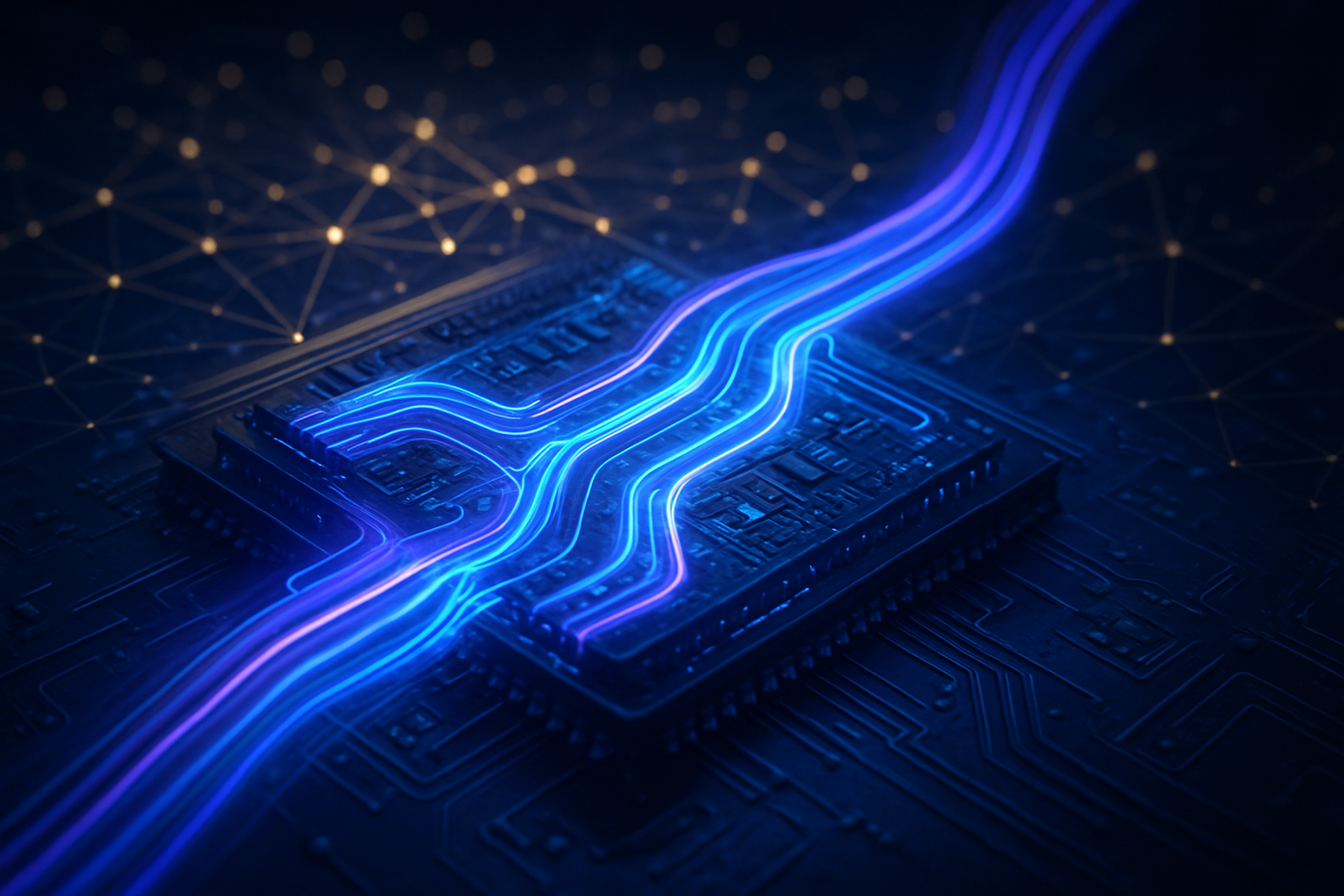
  • Breaking the Copper Wall: The Dawn of the Optical Era in AI Computing

    Breaking the Copper Wall: The Dawn of the Optical Era in AI Computing

    As of January 2026, the artificial intelligence industry has reached a pivotal architectural milestone dubbed the "Transition to the Era of Light." For decades, the movement of data between chips relied on copper wiring, but as AI models scaled to trillions of parameters, the industry hit a physical limit known as the "Copper Wall." At signaling speeds of 224 Gbps, traditional copper interconnects began consuming nearly 30% of total cluster power, with signal degradation so severe that reach was limited to less than a single meter without massive, heat-generating amplification.

    This month, the shift to Silicon Photonics (SiPh) and Co-Packaged Optics (CPO) has officially moved from experimental labs to the heart of the world’s most powerful AI clusters. By replacing electrical signals with laser-driven light, the industry is drastically reducing latency and power consumption, enabling the first "million-GPU" clusters required for the next generation of Artificial General Intelligence (AGI). This leap forward represents the most significant change in computer architecture since the introduction of the transistor, effectively decoupling AI scaling from the physical constraints of electricity.

    The Technological Leap: Co-Packaged Optics and the 5 pJ/bit Milestone

    The technical breakthrough at the center of this shift is the commercialization of Co-Packaged Optics (CPO). Unlike traditional pluggable transceivers that sit at the edge of a server rack, CPO integrates the optical engine directly onto the same package as the GPU or switch silicon. This proximity eliminates the need for power-hungry Digital Signal Processors (DSPs) to drive signals over long copper traces. In early 2026 deployments, this has reduced interconnect energy consumption from 15 picojoules per bit (pJ/bit) in 2024-era copper systems to less than 5 pJ/bit. Technical specifications for the latest optical I/O now boast up to 10x the bandwidth density of electrical pins, allowing for a "shoreline" of multi-terabit connectivity directly at the chip’s edge.

    Intel (NASDAQ: INTC) has achieved a major milestone by successfully integrating the laser and optical amplifiers directly onto the silicon photonics die (PIC) at scale. Their new Optical Compute Interconnect (OCI) chiplet, now being co-packaged with next-gen Xeon and Gaudi accelerators, supports 4 Tbps of bidirectional data transfer. Meanwhile, TSMC (NYSE: TSM) has entered mass production of its "Compact Universal Photonic Engine" (COUPE). This platform uses SoIC-X 3D stacking to bond an electrical die on top of a photonic die with copper-to-copper hybrid bonding, minimizing impedance to levels previously thought impossible. Initial reactions from the AI research community suggest that these advancements have effectively solved the "interconnect bottleneck," allowing for distributed training runs that perform as if they were running on a single, massive unified processor.

    Market Impact: NVIDIA, Broadcom, and the Strategic Re-Alignment

    The competitive landscape of the semiconductor industry is being redrawn by this optical revolution. NVIDIA (NASDAQ: NVDA) solidified its dominance during its January 2026 keynote by unveiling the "Rubin" platform. The successor to the Blackwell architecture, Rubin integrates HBM4 memory and is designed to interface directly with the Spectrum-X800 and Quantum-X800 photonic switches. These switches, developed in collaboration with TSMC, reduce laser counts by 4x compared to legacy modules while offering 5x better power efficiency per 1.6 Tbps port. This vertical integration allows NVIDIA to maintain its lead by offering a complete, light-speed ecosystem from the chip to the rack.

    Broadcom (NASDAQ: AVGO) has also asserted its leadership in high-radix optical switching with the volume shipping of "Davisson," the world’s first 102.4 Tbps Ethernet switch. By employing 16 integrated 6.4 Tbps optical engines, Broadcom has achieved a 70% power reduction over 2024-era pluggable modules. Furthermore, the strategic landscape shifted earlier this month with the confirmed acquisition of Celestial AI by Marvell (NASDAQ: MRVL) for $3.25 billion. Celestial AI’s "Photonic Fabric" technology allows GPUs to access up to 32TB of shared memory with less than 250ns of latency, treating remote memory as if it were local. This move positions Marvell as a primary challenger to NVIDIA in the race to build disaggregated, memory-centric AI data centers.

    Broader Significance: Sustainability and the End of the Memory Wall

    The wider significance of silicon photonics extends beyond mere speed; it is a matter of environmental and economic survival for the AI industry. As data centers began to consume an alarming percentage of the global power grid in 2025, the "power wall" threatened to halt AI progress. Optical interconnects provide a path toward sustainability by slashing the energy required for data movement, which previously accounted for a massive portion of a data center's thermal overhead. This shift allows hyperscalers like Microsoft (NASDAQ: MSFT) and Google (NASDAQ: GOOGL) to continue scaling their infrastructure without requiring the construction of a dedicated power plant for every new cluster.

    Moreover, the transition to light enables a new era of "disaggregated" computing. Historically, the distance between a CPU, GPU, and memory was limited by how far an electrical signal could travel before dying—usually just a few inches. With silicon photonics, high-speed signals can travel up to 2 kilometers with negligible loss. This allows for data center designs where entire racks of memory can be shared across thousands of GPUs, breaking the "memory wall" that has plagued LLM training. This milestone is comparable to the shift from vacuum tubes to silicon, as it fundamentally changes the physical geometry of how we build intelligent machines.

    Future Horizons: Toward Fully Optical Neural Networks

    Looking ahead, the industry is already eyeing the next frontier: fully optical neural networks and optical RAM. While current systems use light for communication and electricity for computation, researchers are working on "photonic computing" where the math itself is performed using the interference of light waves. Near-term, we expect to see the adoption of the Universal Chiplet Interconnect Express (UCIe) standard for optical links, which will allow for "mix-and-match" photonic chiplets from different vendors, such as Ayar Labs’ TeraPHY Gen 3, to be used in a single package.

    Challenges remain, particularly regarding the high-volume manufacturing of laser sources and the long-term reliability of co-packaged components in high-heat environments. However, experts predict that by 2027, optical I/O will be the standard for all data center silicon, not just high-end AI chips. We are moving toward a "Photonic Backbone" for the internet, where the latency between a user’s query and an AI’s response is limited only by the speed of light itself, rather than the resistance of copper wires.

    Conclusion: The Era of Light Arrives

    The move toward silicon photonics and optical interconnects represents a "hard reset" for computer architecture. By breaking the Copper Wall, the industry has cleared the path for the million-GPU clusters that will likely define the late 2020s. The key takeaways are clear: energy efficiency has improved by 3x, bandwidth density has increased by 10x, and the physical limits of the data center have been expanded from meters to kilometers.

    As we watch the coming weeks, the focus will shift to the first real-world benchmarks of NVIDIA’s Rubin and Broadcom’s Davisson systems in production environments. This development is not just a technical upgrade; it is the foundation for the next stage of human-AI evolution. The "Era of Light" has arrived, and with it, the promise of AI models that are faster, more efficient, and more capable than anything previously imagined.


    This content is intended for informational purposes only and represents analysis of current AI developments.

    TokenRing AI delivers enterprise-grade solutions for multi-agent AI workflow orchestration, AI-powered development tools, and seamless remote collaboration platforms.
    For more information, visit https://www.tokenring.ai/.
  • Marvell Bets on Light: The $3.25 Billion Acquisition of Celestial AI and the Future of Optical Fabrics

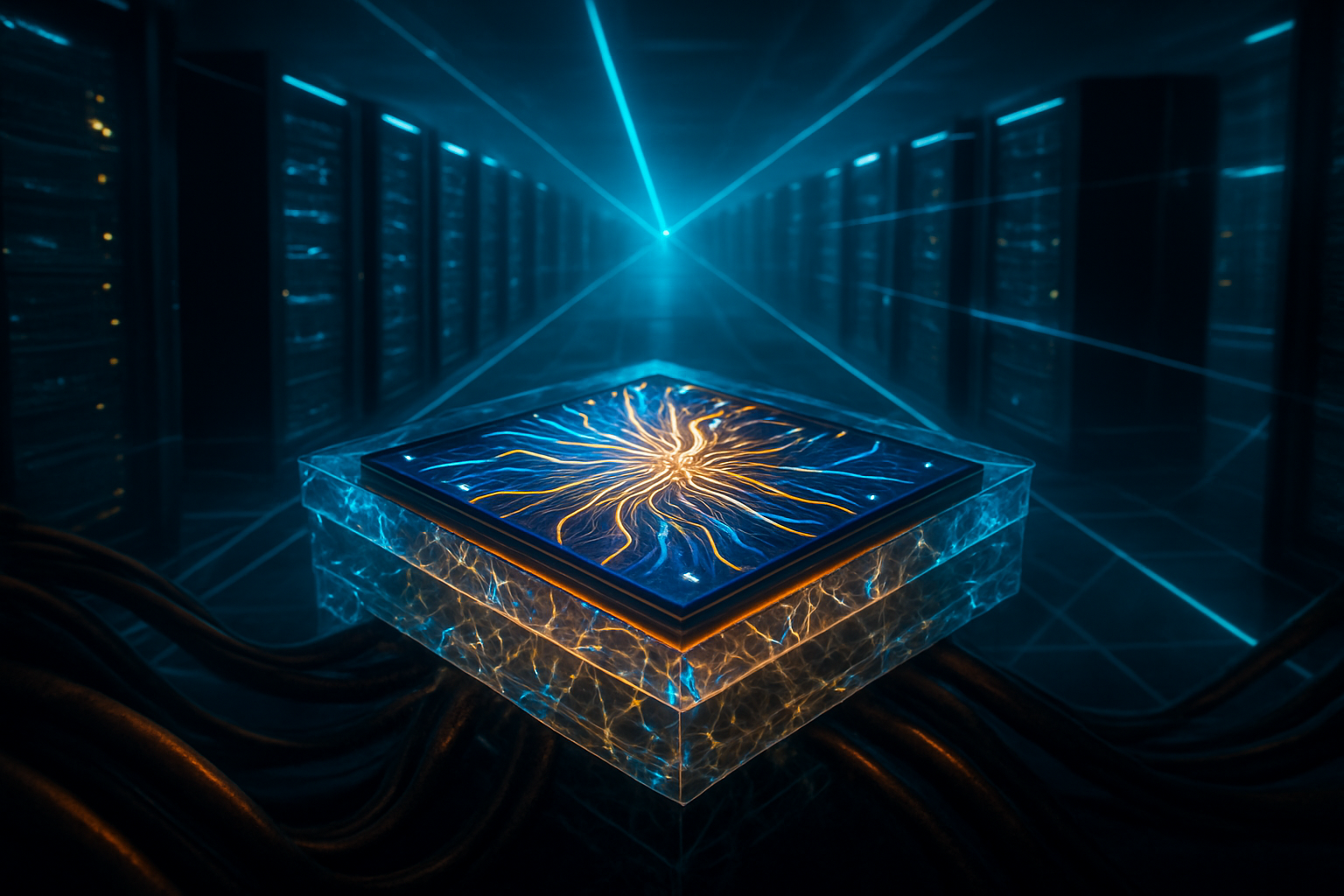
    Marvell Bets on Light: The $3.25 Billion Acquisition of Celestial AI and the Future of Optical Fabrics

    In a move that signals the definitive end of the "copper era" for high-performance computing, Marvell Technology (NASDAQ: MRVL) has announced the acquisition of photonic interconnect pioneer Celestial AI for $3.25 billion. The deal, finalized in late 2025, centers on Celestial AI’s revolutionary "Photonic Fabric" technology, a breakthrough that allows AI accelerators to communicate via light directly from the silicon die. As global demand for AI training capacity pushes data centers toward million-GPU clusters, the acquisition positions Marvell as the primary architect of the optical nervous system required to sustain the next generation of generative AI.

    The significance of this acquisition cannot be overstated. By integrating Celestial AI’s optical chiplets and interposers into its existing portfolio of high-speed networking silicon, Marvell is addressing the "Memory Wall" and the "Power Wall"—the two greatest physical barriers currently facing the semiconductor industry. As traditional copper-based electrical links reach their physical limits at 224G per lane, the transition to optical fabrics is no longer an elective upgrade; it is a fundamental requirement for the survival of the AI scaling laws.

    The End of the Copper Cliff: Technical Breakdown of the Photonic Fabric

    At the heart of the acquisition is Celestial AI’s Photonic Fabric, a technology that replaces traditional electrical "beachfront" I/O with high-density optical signals. While current data centers rely on Active Electrical Cables (AECs) or pluggable optical transceivers, these methods introduce significant latency and power overhead. Celestial AI’s PFLink™ chiplets provide a staggering 14.4 to 16 Terabits per second (Tbps) of optical bandwidth per chiplet—roughly 25 times the bandwidth density of current copper-based solutions. This allows for "scale-up" interconnects that treat an entire rack of GPUs as a single, massive compute node.

    Furthermore, the Photonic Fabric utilizes an Optical Multi-Die Interposer (OMIB™), which enables the disaggregation of compute and memory. In traditional architectures, High Bandwidth Memory (HBM) must be placed in immediate proximity to the GPU to maintain speed, limiting total memory capacity. With Celestial AI’s technology, Marvell can now offer architectures where a single XPU can access a pool of up to 32TB of shared HBM3E or DDR5 memory at nanosecond-class latencies (approximately 250–300 ns). This "optical memory pooling" effectively shatters the memory bottlenecks that have plagued LLM training.

    The efficiency gains are equally transformative. Operating at approximately 2.4 picojoules per bit (pJ/bit), the Photonic Fabric offers a 10x reduction in power consumption compared to the energy-intensive SerDes (Serializer/Deserializer) processes required to drive signals through copper. This reduction is critical as data centers face increasingly stringent thermal and power constraints. Initial reactions from the research community suggest that this shift could reduce the total cost of ownership for AI clusters by as much as 30%, primarily through energy savings and simplified thermal management.

    Shifting the Balance of Power: Market and Competitive Implications

    The acquisition places Marvell in a formidable position against its primary rival, Broadcom (NASDAQ: AVGO), which has dominated the high-end switch and custom ASIC market for years. While Broadcom has focused on Co-Packaged Optics (CPO) and its Tomahawk switch series, Marvell’s integration of the Photonic Fabric provides a more holistic "die-to-die" and "rack-to-rack" optical solution. This deal allows Marvell to offer hyperscalers like Amazon (NASDAQ: AMZN) and Meta (NASDAQ: META) a complete, vertically integrated stack—from the 1.6T Ara optical DSPs to the Teralynx 10 switch silicon and now the Photonic Fabric interconnects.

    For AI giants like NVIDIA (NASDAQ: NVDA), the move is both a challenge and an opportunity. While NVIDIA’s NVLink has been the gold standard for GPU-to-GPU communication, it remains largely proprietary and electrical at the board level. Marvell’s new technology offers an open-standard alternative (via CXL and UCIe) that could allow other chipmakers, such as AMD (NASDAQ: AMD) or Intel (NASDAQ: INTC), to build competitive multi-chip clusters that rival NVIDIA’s performance. This democratization of high-speed interconnects could potentially erode NVIDIA’s "moat" by allowing a broader ecosystem of hardware to perform at the same scale.

    Industry analysts suggest that the $3.25 billion price tag is a steal given the strategic importance of the intellectual property involved. Celestial AI had previously secured backing from heavyweights like Samsung (KRX: 005930) and AMD Ventures, indicating that the industry was already coalescing around its "optical-first" vision. By bringing this technology in-house, Marvell ensures that it is no longer just a component supplier but a platform provider for the entire AI infrastructure layer.

    The Broader Significance: Navigating the Energy Crisis of AI

    Beyond the immediate corporate rivalry, the Marvell-Celestial AI deal addresses a looming crisis in the AI landscape: sustainability. The current trajectory of AI training consumes vast amounts of electricity, with a significant portion of that energy wasted as heat generated by electrical resistance in copper wiring. As we move toward 1.6T and 3.2T networking speeds, the "Copper Cliff" becomes a physical wall; signal attenuation at these frequencies is so high that copper traces can only travel a few inches before the data becomes unreadable.

    By transitioning to an all-optical fabric, the industry can extend the reach of high-speed signals from centimeters to meters—and even kilometers—without significant signal degradation or heat buildup. This allows for the creation of "geographically distributed clusters," where different parts of a single AI training job can be spread across multiple buildings or even cities, linked by Marvell’s COLORZ 800G coherent optics and the new Photonic Fabric.

    This milestone is being compared to the transition from vacuum tubes to transistors or the shift from spinning hard drives to SSDs. It represents a fundamental change in the medium of computation. Just as the internet was revolutionized by the move from copper phone lines to fiber optics, the internal architecture of the computer is now undergoing the same transformation. The "Optical Era" of computing has officially arrived, and it is powered by silicon photonics.

    Looking Ahead: The Roadmap to 2030

    In the near term, expect Marvell to integrate Photonic Fabric chiplets into its 3nm and 2nm custom ASIC roadmaps. We are likely to see the first "Super XPUs"—processors with integrated optical I/O—hitting the market by early 2027. These chips will enable the first true million-GPU clusters, capable of training models with tens of trillions of parameters in a fraction of the time currently required.

    The next frontier will be the integration of optical computing itself. While the Photonic Fabric currently focuses on moving data via light, companies are already researching how to perform mathematical operations using light (optical matrix multiplication). Marvell’s acquisition of Celestial AI provides the foundational packaging and interconnect technology that will eventually support these future optical compute engines. The primary challenge remains the manufacturing yield of complex silicon photonics at scale, but with Marvell’s manufacturing expertise and TSMC’s (NYSE: TSM) advanced packaging capabilities, these hurdles are expected to be cleared within the next 24 months.

    A New Foundation for Artificial Intelligence

    The acquisition of Celestial AI by Marvell Technology marks a historic pivot in the evolution of AI infrastructure. It is a $3.25 billion bet that the future of intelligence is light-based. By solving the dual bottlenecks of bandwidth and power, Marvell is not just building faster chips; it is enabling the physical architecture that will support the next decade of AI breakthroughs.

    As we look toward 2026, the industry will be watching closely to see how quickly Marvell can productize the Photonic Fabric and whether competitors like Broadcom will respond with their own major acquisitions. For now, the message is clear: the era of the copper-bound data center is over, and the race to build the first truly optical AI supercomputer has begun.


    This content is intended for informational purposes only and represents analysis of current AI developments.

    TokenRing AI delivers enterprise-grade solutions for multi-agent AI workflow orchestration, AI-powered development tools, and seamless remote collaboration platforms.
    For more information, visit https://www.tokenring.ai/.
  • The Optical Revolution: Silicon Photonics Shatters the AI Interconnect Bottleneck

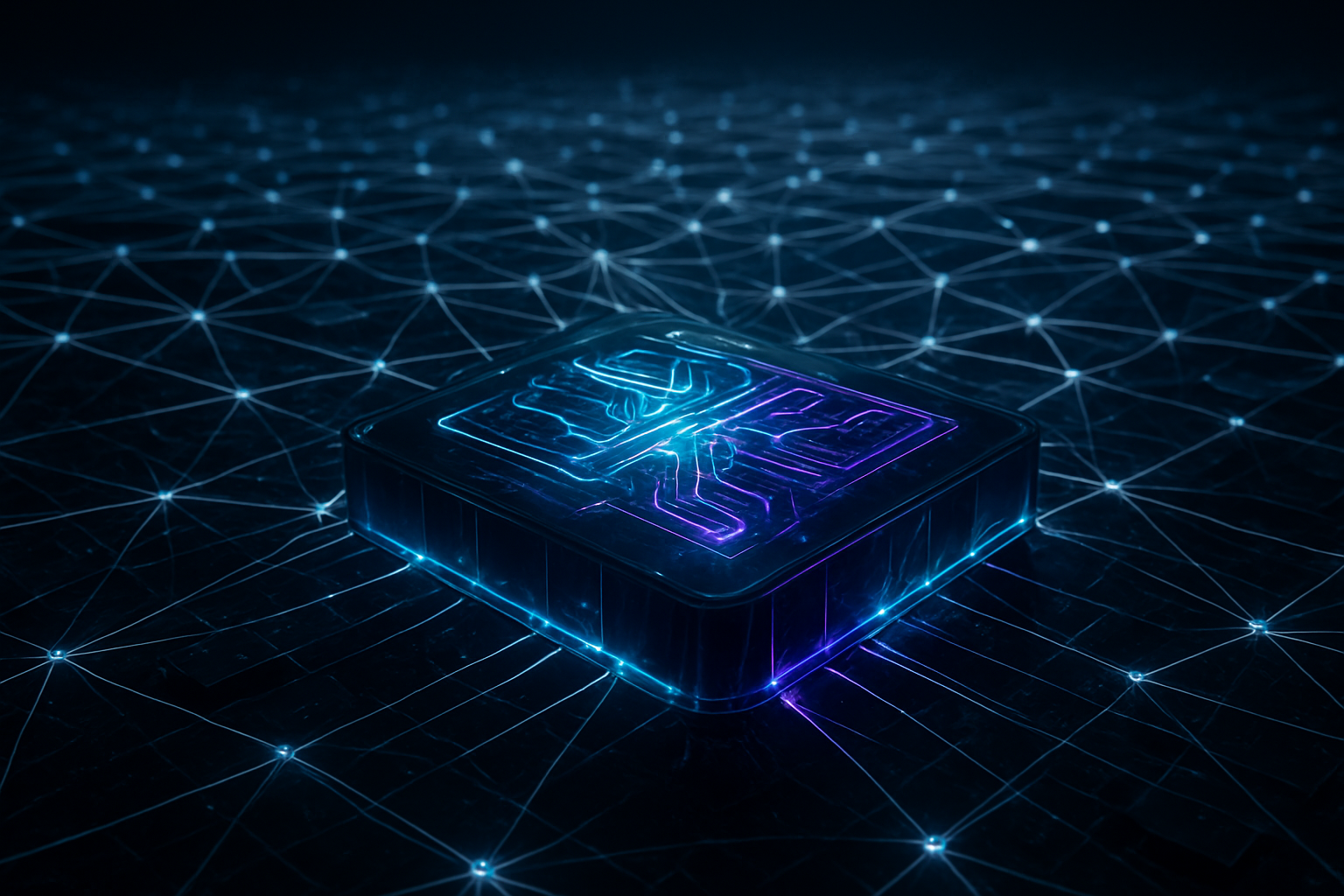
    The Optical Revolution: Silicon Photonics Shatters the AI Interconnect Bottleneck

    As of December 18, 2025, the artificial intelligence industry has reached a pivotal inflection point where the speed of light is no longer a theoretical limit, but a production requirement. For years, the industry has warned of a looming "interconnect bottleneck"—a physical wall where the electrical wires connecting GPUs could no longer keep pace with the massive data demands of trillion-parameter models. This week, that wall was officially dismantled as the tech industry fully embraced silicon photonics, shifting the fundamental medium of AI communication from electrons to photons.

    The significance of this transition cannot be overstated. With the recent announcement that Marvell Technology (NASDAQ: MRVL) has finalized its landmark acquisition of Celestial AI for $3.25 billion, the race to integrate "Photonic Fabrics" into the heart of AI silicon has moved from the laboratory to the center of the global supply chain. By replacing copper traces with microscopic lasers and fiber optics, AI clusters are now achieving bandwidth densities and energy efficiencies that were considered impossible just twenty-four months ago, effectively unlocking the next era of "cluster-scale" computing.

    The End of the Copper Era: Technical Breakthroughs in Optical I/O

    The primary driver behind the shift to silicon photonics is the dual crisis of the "Shoreline Limitation" and the "Power Wall." In traditional GPU architectures, such as the early iterations of the Blackwell series from Nvidia (NASDAQ: NVDA), data must travel through the physical edges (the shoreline) of the chip via electrical pins. As logic density increased, the perimeter of the chip simply ran out of room for more pins. Furthermore, pushing electrical signals through copper at speeds exceeding 200 Gbps requires massive amounts of power for signal retiming. In 2024, nearly 30% of an AI cluster's energy was wasted just moving data between chips; in late 2025, silicon photonics has slashed that "optics tax" by over 80%.

    Technically, this is achieved through Co-Packaged Optics (CPO) and Optical I/O chiplets. Instead of using external pluggable transceivers, companies are now 3D-stacking Photonic Integrated Circuits (PICs) directly onto the GPU or switch die. This allows for "Edgeless I/O," where data can be beamed directly from the center of the chip using light. Leading the charge is Broadcom (NASDAQ: AVGO), which recently began mass-shipping its Tomahawk 6 "Davidson" switch, the industry’s first 102.4 Tbps CPO platform. By integrating optical engines onto the substrate, Broadcom has reduced interconnect power consumption from 30 picojoules per bit (pJ/bit) to less than 5 pJ/bit.

    This shift differs fundamentally from previous networking upgrades. While past transitions moved from 400G to 800G using the same electrical principles, silicon photonics changes the physics of the connection. Startups like Lightmatter have introduced the Passage M1000, a photonic interposer that supports a staggering 114 Tbps of optical bandwidth. This "photonic superchip" allows thousands of individual accelerators to behave as a single, unified processor with near-zero latency, a feat the AI research community has hailed as the most significant hardware breakthrough since the invention of the High Bandwidth Memory (HBM) stack.

    Market Warfare: Who Wins the Photonic Arms Race?

    The competitive landscape of the semiconductor industry is being redrawn by this optical pivot. Nvidia remains the titan to beat, having integrated silicon photonics into its Rubin architecture, slated for wide release in 2026. By leveraging its Spectrum-X networking fabric, Nvidia is moving toward a future where the entire back-end of an AI supercomputer is a seamless web of light. However, the Marvell acquisition of Celestial AI signals a direct challenge to Nvidia’s dominance. Marvell’s new "Photonic Fabric" aims to provide an open, high-bandwidth alternative that allows third-party AI accelerators to compete with Nvidia’s proprietary NVLink on performance and scale.

    Broadcom and Intel (NASDAQ: INTC) are also carving out massive territories in this new market. Broadcom’s lead in CPO technology makes them the indispensable partner for "Hyperscalers" like Google and Meta, who are building custom AI silicon (XPUs) that require optical attaches to scale. Meanwhile, Intel has successfully integrated its Optical Compute Interconnect (OCI) chiplets into its latest Xeon and Gaudi lines. Intel’s milestone of shipping over 8 million PICs demonstrates a manufacturing maturity that many startups still struggle to match, positioning the company as a primary foundry for the photonic era.

    For AI startups and labs, this development is a strategic lifeline. The ability to scale clusters to 100,000+ GPUs without the exponential power costs of copper allows smaller players to train increasingly sophisticated models. However, the high capital expenditure required to transition to optical infrastructure may further consolidate power among the "Big Tech" firms that can afford to rebuild their data centers from the ground up. We are seeing a shift where the "moat" for an AI company is no longer just its algorithm, but the photonic efficiency of its underlying hardware fabric.

    Beyond the Bottleneck: Global and Societal Implications

    The broader significance of silicon photonics extends into the realm of global energy sustainability. As AI energy consumption became a flashpoint for environmental concerns in 2024 and 2025, the move to light-based communication offers a rare "green" win for the industry. By reducing the energy required for data movement by 5x to 10x, silicon photonics is the primary reason the tech industry can continue to scale AI capabilities without triggering a collapse of local power grids. It represents a decoupling of performance growth from energy growth.

    Furthermore, this technology is the key to achieving "Disaggregated Memory." In the electrical era, a GPU could only efficiently access the memory physically located on its board. With the low latency and long reach of light, 2025-era data centers are moving toward pools of memory that can be dynamically assigned to any processor in the rack. This "memory-centric" computing model is essential for the next generation of Large Multimodal Models (LMMs) that require petabytes of active memory to process real-time video and complex reasoning tasks.

    However, the transition is not without its concerns. The reliance on silicon photonics introduces new complexities in the supply chain, particularly regarding the manufacturing of high-reliability lasers. Unlike traditional silicon, these lasers are often made from III-V materials like Indium Phosphide, which are more difficult to integrate and have different failure modes. There is also a geopolitical dimension; as silicon photonics becomes the "secret sauce" of AI supremacy, export controls on photonic design software and manufacturing equipment are expected to tighten, mirroring the restrictions seen in the EUV lithography market.

    The Road Ahead: What’s Next for Optical Computing?

    Looking toward 2026 and 2027, the industry is already eyeing the next frontier: all-optical computing. While silicon photonics currently handles the communication between chips, companies like Ayar Labs and Lightmatter are researching ways to perform certain computations using light itself. This would involve optical matrix-vector multipliers that could process neural network layers at the speed of light with almost zero heat generation. While still in the early stages, the success of optical I/O has provided the commercial foundation for these more radical architectures.

    In the near term, expect to see the "UCIe (Universal Chiplet Interconnect Express) over Light" standard become the dominant protocol for chip-to-chip communication. This will allow a "Lego-like" ecosystem where a customer can pair an Nvidia GPU with a Marvell photonic chiplet and an Intel memory controller, all communicating over a standardized optical bus. The main challenge remains the "yield" of these complex 3D-stacked packages; as manufacturing processes mature throughout 2026, we expect the cost of optical I/O to drop, eventually making it standard even in consumer-grade edge AI devices.

    Experts predict that by 2028, the term "interconnect bottleneck" will be a relic of the past. The focus will shift from how to move data to how to manage the sheer volume of intelligence that these light-speed clusters can generate. The "Optical Era" of AI is not just about faster chips; it is about the creation of a global, light-based neural fabric that can sustain the computational demands of Artificial General Intelligence (AGI).

    A New Foundation for the Intelligence Age

    The transition to silicon photonics marks the end of the "Electrical Bottleneck" that has constrained computer architecture since the 1940s. By successfully replacing copper with light, the AI industry has bypassed a physical limit that many feared would stall the progress of machine intelligence. The developments we have witnessed in late 2025—from Marvell’s strategic acquisitions to Broadcom’s record-breaking switches—confirm that the future of AI is optical.

    As we look forward, the significance of this milestone will likely be compared to the transition from vacuum tubes to transistors. It is a fundamental shift in the physics of information. While the challenges of laser reliability and manufacturing costs remain, the momentum is irreversible. For the coming months, keep a close watch on the deployment of "Rubin" systems and the first wave of 100-Tbps optical switches; these will be the yardsticks by which we measure the success of the photonic revolution.


    This content is intended for informational purposes only and represents analysis of current AI developments.

    TokenRing AI delivers enterprise-grade solutions for multi-agent AI workflow orchestration, AI-powered development tools, and seamless remote collaboration platforms.
    For more information, visit https://www.tokenring.ai/.