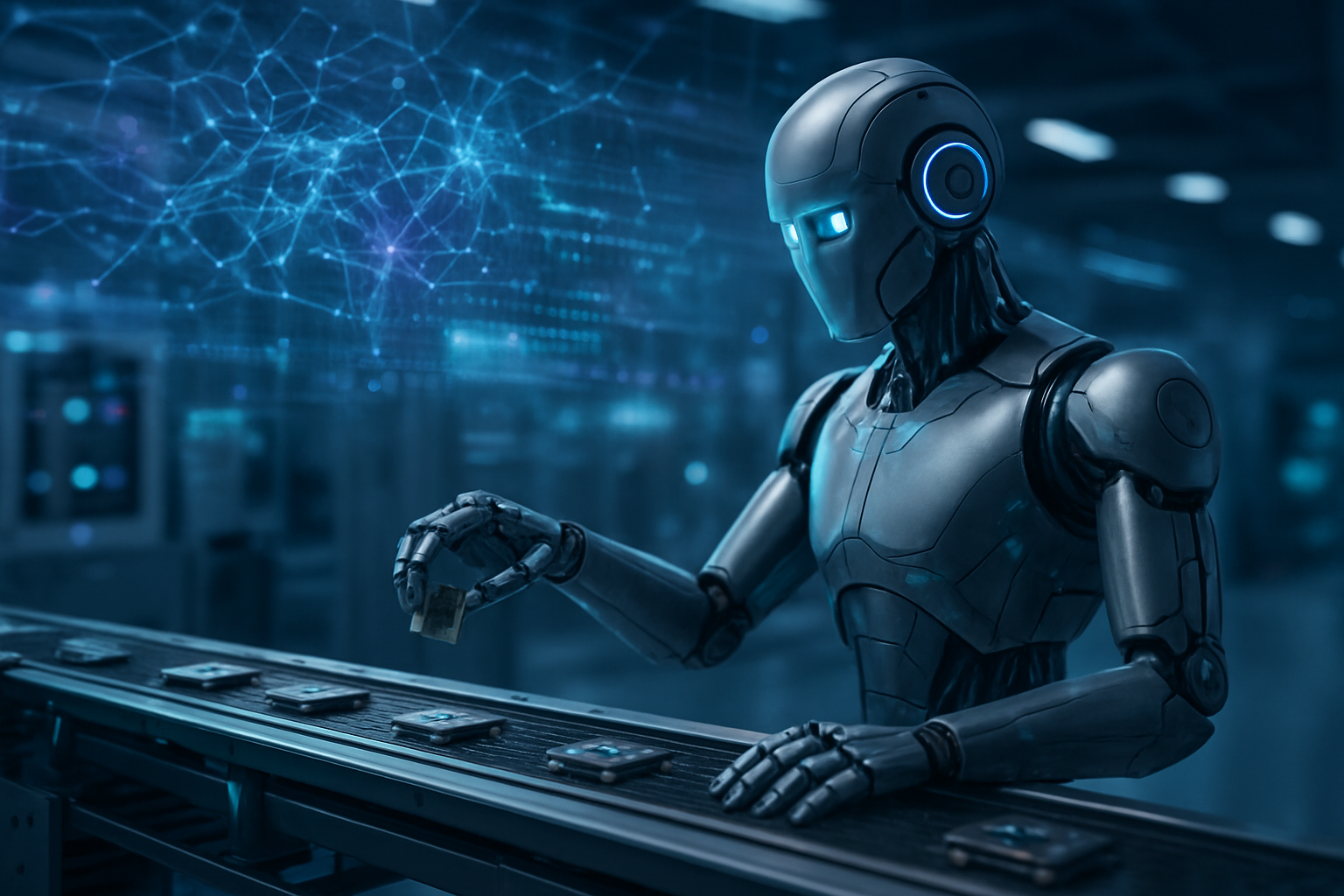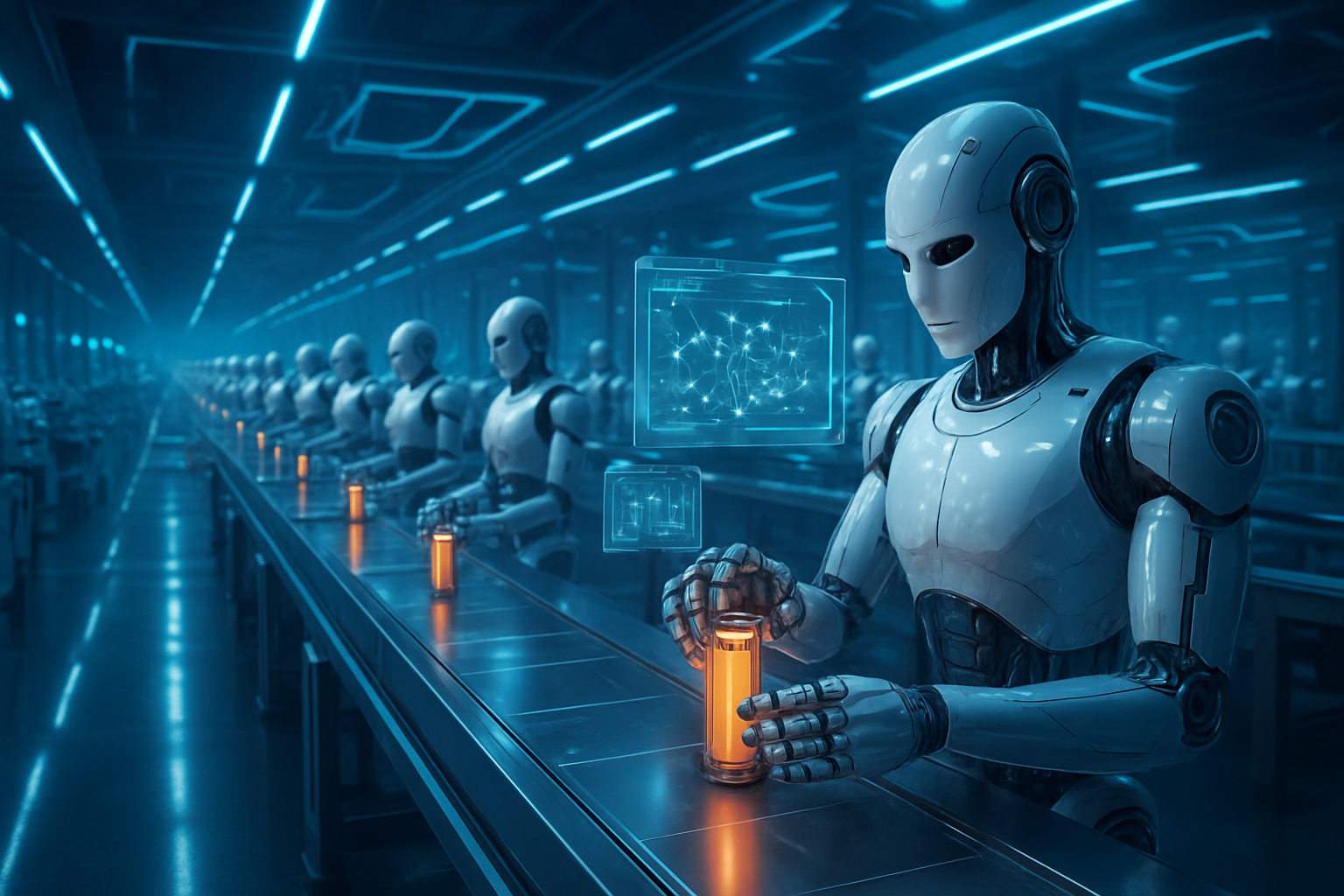
As of January 28, 2026, the era of the humanoid laborer has transitioned from a Silicon Valley fever dream into a hard-coded reality on the factory floor. Tesla (NASDAQ: TSLA) has officially confirmed that over 1,000 units of its Optimus humanoid robot are now actively deployed across its global manufacturing footprint, with the highest concentration operating within the sprawling corridors of Gigafactory Texas. This milestone marks a critical pivot for the electric vehicle pioneer as it shifts from testing experimental prototypes to managing a functional, internal robotic workforce.
The immediate significance of this deployment cannot be overstated. By integrating Optimus into live production environments, Tesla is attempting to solve the "holy grail" of robotics: general-purpose automation in unscripted environments. These robots are no longer just performing staged demos; they are sorting 4680 battery cells and handling logistics kits, providing a real-world stress test for Elon Musk’s ambitious vision of a million-unit-per-year production line. This development signal's a broader industry shift where "Physical AI" is beginning to bridge the gap between digital intelligence and manual labor.
Technical Evolution: From Prototype to Production-Ready Gen 3
The trials currently underway at Gigafactory Texas utilize a mix of the well-known Gen 2 prototypes and the first production-intent "Gen 3" (V3) units. The technical leap between these iterations is substantial. While the Gen 2 featured an impressive 11 degrees of freedom (DOF) in its hands, the Gen 3 models have introduced a revolutionary 22-DOF hand architecture. By relocating the actuators from the hands into the forearms and utilizing a sophisticated tendon-driven system, Tesla has managed to mimic the 27-DOF complexity of the human hand more closely than almost any competitor. This allows the robot to manipulate delicate objects, such as 4680 battery cells, with a level of tactile sensitivity that allows for "fingertip-only" gripping without crushing the components.
Under the hood, the Optimus fleet has been upgraded to the AI5 hardware suite, running a specialized version of the FSD-v15 neural architecture. Unlike traditional industrial robots that follow pre-programmed paths, Optimus utilizes an 8-camera vision-only system to navigate the factory floor autonomously. This "end-to-end" neural network approach allows the robot to process the world as a continuous stream of data, enabling it to adjust to obstacles, varying light conditions, and the unpredictable movements of human coworkers. Weighing in at approximately 57kg (125 lbs)—a 22% reduction from previous iterations—the Gen 3 units can now operate for 6 to 8 hours on a single charge, making them viable for nearly a full factory shift.
Initial reactions from the AI research community have been a mix of awe and cautious pragmatism. Experts have noted that Tesla's move to a tendon-driven hand system solves one of the most difficult engineering hurdles in humanoid robotics: durability versus dexterity. However, some industry analysts point out that while the robots are performing "pick-and-place" and "kitting" tasks with high accuracy, their operational speed remains slower than that of a trained human. The focus for Tesla in early 2026 appears to be reliability and autonomous error correction rather than raw speed, as they prepare for the "S-curve" production ramp.
Competitive Landscape and the Race for the "General-Purpose" Prize
The successful deployment of a 1,000-unit internal fleet places Tesla in a dominant market position, but the competition is heating up. Hyundai (OTC: HYMTF), through its subsidiary Boston Dynamics, recently unveiled the "Electric Atlas," which won "Best Robot" at CES 2026 and is currently being trialed in automotive plants in Georgia. Meanwhile, UBTech Robotics (OTC: UBTRF) has begun deploying its Walker S2 units across smart factories in China. Despite this, Tesla’s strategic advantage lies in its vertical integration; by designing its own actuators, sensors, and AI silicon, Tesla aims to drive the manufacturing cost of Optimus down to approximately $20,000 per unit—a price point that would be disruptive to the entire industrial automation sector.
For tech giants and startups alike, the Optimus trials represent a shift in the competitive focus from LLMs (Large Language Models) to LMMs (Large Movement Models). Companies like Figure AI and 1X Technologies, both backed by OpenAI and Nvidia (NASDAQ: NVDA), are racing to prove their own "Physical AI" capabilities. However, Tesla’s ability to use its own factories as a massive, live-data laboratory gives it a feedback loop that private startups struggle to replicate. If Tesla can prove that Optimus significantly lowers the cost per hour of labor, it could potentially cannibalize the market for specialized, single-task industrial robots, leading to a consolidation of the robotics industry around general-purpose platforms.
The Broader Implications: A New Era of Physical AI
The deployment of Optimus at Giga Texas fits into a broader global trend where AI is moving out of the data center and into the physical world. This transition to "embodied AI" is often compared to the "iPhone moment" for robotics. Just as the smartphone consolidated cameras, phones, and computers into one device, Optimus aims to consolidate dozens of specialized factory tools into one humanoid form factor. This evolution has profound implications for global labor markets, particularly in regions facing aging populations and chronic labor shortages in manufacturing and logistics.
However, the rise of a million-unit robotic workforce is not without its concerns. Critics and labor advocates are closely watching the Giga Texas trials for signs of mass human displacement. While Elon Musk has argued that Optimus will lead to a "future of abundance" where manual labor is optional, the near-term economic friction of transitioning to a robotic workforce remains a topic of intense debate. Furthermore, the safety of having 1,000 autonomous, 125-pound machines moving through human-populated spaces is a primary focus for regulators, who are currently drafting the first comprehensive safety standards for humanoid-human interaction in the workplace.
The Road to Ten Million: What Lies Ahead
Looking toward the remainder of 2026 and into 2027, the focus for Tesla will be the completion of a dedicated "Optimus Giga" factory on the eastern side of its Texas campus. While the current production ramp in Fremont is targeting one million units annually by late 2026, the dedicated Texas facility is being designed for an eventual capacity of ten million units per year. Elon Musk has cautioned that the initial ramp will be "agonizingly slow" due to the novelty of the supply chain, but he expects an exponential increase in output once the "Gen 3" design is fully frozen for mass production.
Near-term developments will likely include the expansion of Optimus into more complex tasks, such as autonomous maintenance of other machines and more intricate assembly work. Experts predict that the first "external" sales of Optimus—intended for other industrial partners—could begin as early as late 2026, with a consumer version aimed at domestic assistance currently slated for a 2027 release. The primary challenges remaining are the refinement of the supply chain for specialized actuators and the further reduction of the robot’s energy consumption to enable 12-plus hours of operation.
Closing Thoughts on a Landmark Achievement
The current trials at Gigafactory Texas represent more than just a corporate milestone; they are a preview of a fundamental shift in how the world produces goods. Tesla’s ability to field 1,000 autonomous humanoids in a live industrial environment proves that the technical barriers to general-purpose robotics are finally falling. While the vision of a "million-unit" production line still faces significant logistical and engineering hurdles, the progress seen in January 2026 suggests that the transition is a matter of "when," not "if."
In the coming weeks and months, the industry will be watching for the official reveal of the "Gen 3" final design and further data on the "cost-per-task" efficiency of the Optimus fleet. As these robots become a permanent fixture of the Texas landscape, they serve as a potent reminder that the most significant impact of AI may not be found in the code it writes, but in the physical work it performs.
This content is intended for informational purposes only and represents analysis of current AI developments.
TokenRing AI delivers enterprise-grade solutions for multi-agent AI workflow orchestration, AI-powered development tools, and seamless remote collaboration platforms.
For more information, visit https://www.tokenring.ai/.