Tag: Organic Farming

  • AI-Powered Agriculture: Revolutionizing the Future of Farming from the Field Up

    AI-Powered Agriculture: Revolutionizing the Future of Farming from the Field Up

    The agricultural sector is on the cusp of a profound transformation, driven by an influx of cutting-edge technological solutions emerging from industry leaders. Recent Organic Grower Summits have served as a critical showcase for these advancements, highlighting how artificial intelligence (AI), robotics, and precision agriculture are poised to revolutionize farming practices, enhance sustainability, and address long-standing challenges in food production. These innovations promise not only to optimize yields and reduce costs but also to significantly lessen the environmental footprint of agriculture, marking a new era for growers worldwide.

    The immediate significance of these developments lies in their potential to fundamentally alter how food is grown, particularly in the organic sector where sustainable and precise methods are paramount. By integrating sophisticated AI and robotic systems, farmers can achieve unprecedented levels of efficiency and accuracy, moving away from broad-spectrum interventions towards highly targeted, plant-level care. This shift is not merely an incremental improvement but a paradigm change, offering tangible benefits from increased profitability for growers to a healthier planet for all.

    Technical Deep Dive: Precision at the Plant Level

    At the forefront of this agricultural revolution are remarkable technical advancements that leverage AI and machine learning to perform tasks with unparalleled precision. Two standout examples from recent summits are Carbon Robotics' LaserWeeder and Niqo Robotics' Niqo Sense AI camera.

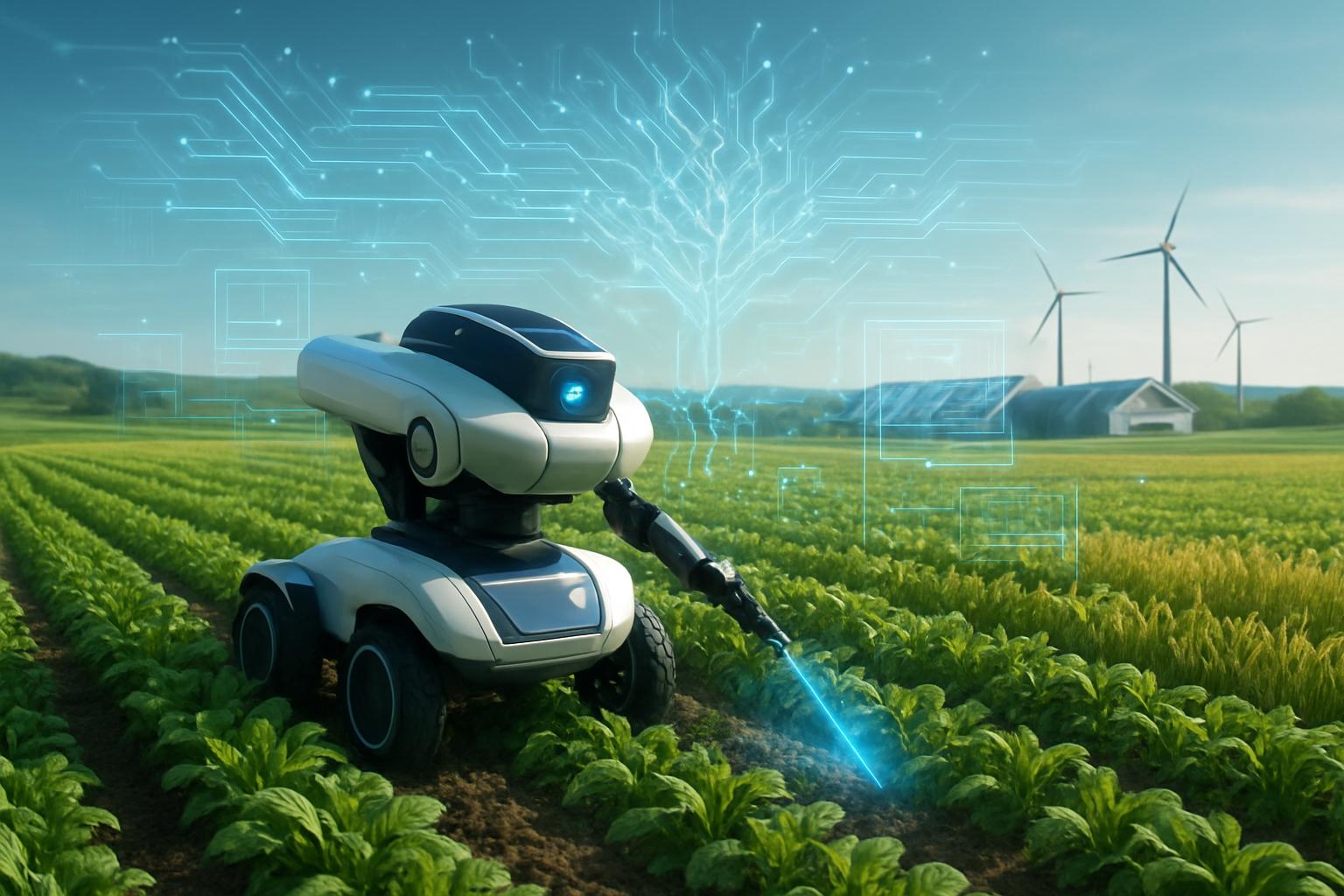
    Carbon Robotics has introduced its LaserWeeder technology, an AI-powered robotic system designed to autonomously identify and eliminate weeds using high-power lasers. The second-generation LaserWeeder G2, for instance, is equipped with 24 diode lasers and 36 high-resolution cameras, all managed by an onboard supercomputer. This sophisticated setup allows it to process up to 10,000 weeds per minute with sub-millimeter accuracy. The system employs advanced computer vision and deep learning algorithms to distinguish between crops and weeds, ensuring only unwanted plants are targeted. This approach drastically reduces the need for manual weeding, which is labor-intensive and costly, and minimizes the use of chemical herbicides, a significant benefit for organic farming and environmental health. Unlike traditional mechanical weeding, which can disturb soil and damage crops, or chemical spraying, which has ecological consequences, laser weeding offers a non-contact, highly selective, and environmentally benign solution. Initial reactions from the agricultural community have been overwhelmingly positive, with growers reporting substantial reductions in weed control costs and improved crop quality.

    Similarly, Niqo Robotics is making strides in precision spraying with its proprietary Niqo Sense AI camera. This technology enables spot spraying of agrochemicals—including pesticides, herbicides, fungicides, and liquid fertilizers—directly at the plant level. By precisely identifying individual plants and their needs, the Niqo Sense system ensures that chemicals are applied only where and when necessary, rather than broadcast across entire fields. This targeted application significantly reduces the overall volume of agrochemicals used, leading to substantial cost savings for farmers and a dramatic reduction in environmental pollution. This differs from previous approaches that relied on uniform application, often leading to chemical waste and runoff. Industry experts view this as a crucial step towards truly sustainable agriculture, allowing for effective pest and disease management with minimal ecological impact.

    Corporate Landscape: Beneficiaries and Competitive Edge

    These AI-driven agricultural solutions are poised to significantly impact a range of companies, from innovative startups to established agribusiness giants. Companies like Carbon Robotics and Niqo Robotics stand to benefit immensely, solidifying their positions as leaders in agricultural robotics and AI. Their proprietary technologies offer a significant competitive advantage, potentially disrupting traditional methods of weed control and crop protection.

    The competitive landscape for major AI labs and tech companies is also shifting. While these specific solutions are currently offered by specialized ag-tech firms, the underlying AI and machine learning capabilities represent a lucrative area for broader tech giants to invest in or acquire. Companies like Wilbur-Ellis Agribusiness, a prominent player in agricultural solutions, are already partnering with growers to deliver tailored solutions in water management, resistance management, and soil health, demonstrating their strategic focus on integrating advanced technologies and sustainable practices. Other notable companies exhibiting at summits, such as Monarch Tractor (focusing on electric, autonomous tractors) and IntelliCulture (providing sustainable innovations), are also well-positioned to capitalize on the growing demand for smart farming tools.

    These developments could potentially disrupt existing product lines for companies heavily invested in conventional agricultural machinery and chemical inputs, pushing them to innovate or risk losing market share. The strategic advantage lies with companies that can seamlessly integrate AI, robotics, and data analytics to offer comprehensive, sustainable, and efficient farming solutions. Market positioning will increasingly favor those who can provide verifiable environmental benefits alongside economic returns for growers.

    Wider Significance: A Shift Towards Intelligent Agriculture

    The emergence of these cutting-edge solutions fits perfectly into the broader AI landscape and the accelerating trend towards intelligent automation across industries. In agriculture, this translates to a profound shift towards precision agriculture and regenerative farming, where data-driven insights and automated systems guide decision-making and execution. These advancements are not isolated; they are part of a larger movement to optimize resource utilization, enhance biodiversity, and build more resilient food systems.

    The impacts are multi-faceted: economically, they offer growers a path to higher profitability through reduced input costs and improved yields; environmentally, they promise a significant reduction in chemical pollution, water consumption, and soil degradation. By enabling more efficient and sustainable practices, these technologies address critical global challenges such as food security and climate change. Potential concerns, however, include the initial capital investment required for these advanced systems, the need for robust connectivity in rural areas, and the potential for a widening digital divide among farmers. Comparisons to previous agricultural milestones, such as the Green Revolution, highlight the transformative potential of AI. While the Green Revolution focused on high-yield crop varieties and synthetic inputs, the AI revolution emphasizes intelligence, precision, and sustainability, aiming for a more harmonious relationship between agriculture and the environment.

    Future Developments: The Horizon of Autonomous Farms

    Looking ahead, the trajectory of agricultural AI suggests an exciting future. Near-term developments are likely to include further refinement of existing technologies, with robots becoming even more adept at complex tasks, and AI systems offering more granular and predictive insights. We can expect to see enhanced integration of various smart farming tools, creating holistic, interconnected farm management systems.

    On the horizon, potential applications and use cases are vast. Fully autonomous farms, where AI-powered robots handle everything from planting and monitoring to harvesting and pest control, are no longer science fiction. AI will play an increasingly critical role in climate-resilient agriculture, predicting weather patterns, optimizing irrigation schedules in response to drought, and identifying disease outbreaks before they become widespread. Challenges that need to be addressed include developing robust and affordable solutions for small and medium-sized farms, ensuring data privacy and security, and fostering a skilled workforce capable of operating and maintaining these advanced systems. Experts predict a future where agriculture is not just more efficient, but also more sustainable, adaptable, and responsive to global demands, with AI as the central nervous system of modern farming.

    Comprehensive Wrap-Up: A New Era for Food Production

    In summary, the cutting-edge AI and robotic solutions showcased by industry leaders at events like the Organic Grower Summit represent a pivotal moment in agricultural history. Key takeaways include the dramatic improvements in precision, efficiency, and sustainability offered by technologies such as AI-powered laser weeding and spot spraying. These developments are not just incremental improvements; they are foundational shifts that will redefine farming practices for decades to come.

    The significance of this development in AI history cannot be overstated. It demonstrates AI's practical application in a critical sector, moving beyond theoretical models to deliver tangible, real-world benefits. The long-term impact will likely include a more resilient food supply, reduced environmental harm, and increased economic viability for farmers, especially those committed to organic and sustainable methods. As we move forward, it will be crucial to watch for further integration of these technologies, the emergence of new AI-driven solutions, and how policymakers and industry stakeholders collaborate to ensure equitable access and training for all growers. The future of food production is becoming intelligently automated, precise, and profoundly sustainable.


    This content is intended for informational purposes only and represents analysis of current AI developments.

    TokenRing AI delivers enterprise-grade solutions for multi-agent AI workflow orchestration, AI-powered development tools, and seamless remote collaboration platforms.
    For more information, visit https://www.tokenring.ai/.
  • The Organic Revolution: AI and Robotics Forge a Sustainable Future for Organic Farming

    The Organic Revolution: AI and Robotics Forge a Sustainable Future for Organic Farming

    The agricultural landscape is on the cusp of a profound transformation, driven by the accelerating integration of Artificial Intelligence (AI) and robotics. This technological surge is particularly vital for organic farming, where the absence of synthetic chemicals necessitates innovative solutions for age-old challenges like weed control and labor intensity. The upcoming Organic Grower Summit (OGS) 2025, scheduled for December 3-4, 2025, in Monterey, California, is set to be a pivotal showcase for these cutting-edge advancements, demonstrating how intelligent machines are not only enhancing efficiency and sustainability but also redefining the very essence of organic cultivation.

    This summit will highlight a new era where precision, automation, and data-driven insights empower organic growers to achieve unprecedented levels of productivity and environmental stewardship. The immediate significance lies in the promise of overcoming persistent hurdles such as labor shortages and the meticulous demands of organic certification, making sustainable farming practices more scalable and economically viable than ever before.

    Technical Deep Dive: Precision Agriculture Takes Center Stage

    The heart of this agricultural revolution lies in the sophisticated technical capabilities of AI and robotics. Among the most prominent solutions expected at OGS 2025 are AI-powered weeding robots and precision spraying systems, which represent a radical departure from traditional farming methods.

    Carbon Robotics' LaserWeeder, for instance, exemplifies the fusion of AI, computer vision, and laser technology. The second-generation LaserWeeder G2, available in modular configurations up to 40 feet, features 24 x 240W diode lasers and 36 high-resolution cameras, all powered by an onboard supercomputer with advanced deep-learning AI models. This system can identify and eliminate up to 10,000 weeds per minute with sub-millimeter accuracy, targeting the meristem using thermal energy. This is a stark contrast to manual weeding, which is labor-intensive and costly, or mechanical cultivation, which can disturb soil health. Crucially, the LaserWeeder offers a chemical-free, no-till solution, perfectly aligning with organic principles and significantly reducing herbicide use and soil disruption. Initial reactions from the agricultural community highlight enthusiasm for its efficiency and sustainability, with promises of up to 80% savings in weed management costs and a rapid return on investment.

    Similarly, Niqo Robotics' Niqo Sense AI camera system is transforming precision spraying. This technology retrofits onto conventional sprayers, using real-time AI with computer vision and deep learning algorithms to identify specific plants and apply agrochemicals (organic-approved ones, in this context) with millimeter-level precision. Equipped with wide-angle, low-distortion, and weather-resistant optics, and powered by a high-performance GPU, Niqo Sense can identify new growth as small as one inch. This differs dramatically from traditional broadcast spraying, which applies chemicals indiscriminately across entire fields, leading to significant waste, environmental pollution, and potential harm to non-target plants. Niqo Sense promises chemical savings of up to 60-90%, minimizing runoff and promoting a healthier ecosystem. Farmers are keen on the cost reduction and environmental benefits, though initial investment costs for such advanced systems remain a consideration for widespread adoption.

    The shift to electric, driver-optional tractors, such as those from Monarch Tractor, further underscores this technical evolution. These machines aim to reduce emissions while maintaining productivity, offering sustainable alternatives to traditional diesel-powered equipment. Together, these technologies represent a leap from descriptive data collection to predictive, prescriptive, and autonomous capabilities, enabling real-time decision-making and execution with unprecedented accuracy.

    Corporate Implications: A New Era of Competition and Collaboration

    The advancements in AI and robotics for organic farming are poised to significantly reshape the competitive landscape for agricultural technology (ag-tech) companies, tech giants, and innovative startups. This burgeoning sector presents both immense opportunities and strategic challenges.

    Established ag-tech players like John Deere (NYSE: DE), AGCO Corporation (NYSE: AGCO), and Trimble Inc. (NASDAQ: TRMB) stand to benefit by integrating AI and automation into their offerings. John Deere, for instance, has been actively acquiring companies like Smart Apply, Inc. and SparkAI Inc. to bolster its intelligent spraying and real-time decision support capabilities. These companies must now diversify their product lines to cater specifically to the unique needs of organic farming, focusing on non-chemical solutions and data-driven platforms. Mahindra Ag North America (MAgNA), a subsidiary of Mahindra & Mahindra Ltd. (NSE: M&M), also offers a range of farming equipment and will need to adapt its portfolio to include more AI and robotics integration. Companies like Wilbur-Ellis Agribusiness are strategically positioned to integrate AI-driven insights into their tailored solutions for water management, soil health, and sustainability.

    Tech giants, including Google (NASDAQ: GOOGL), Microsoft (NASDAQ: MSFT), and Amazon (NASDAQ: AMZN), are increasingly leveraging their extensive AI, machine learning, and cloud computing infrastructures to develop sophisticated agricultural platforms. They are investing heavily in R&D and acquiring promising startups to accelerate their entry into this market, offering comprehensive solutions that combine hardware, software, and cloud services.

    However, it is the agile startups that are often at the forefront of innovation. Companies like Carbon Robotics and Niqo Robotics are creating highly specialized, disruptive solutions. Other notable startups include Orbiba Robotics, which focuses on affordable AI-powered robots for weed management; ecoRobotix, specializing in AI-driven precision spraying and solar-powered weeding robots; and Aigen, developing chemical-free weed removal systems. These startups are often characterized by rapid innovation, niche specialization, and the ability to attract significant funding, including from impact investors, by addressing critical needs in sustainable agriculture. The competitive implications include increased R&D investment across the board, potential consolidation through mergers and acquisitions, and a strong drive for differentiation through specialized, effective, and affordable AI/robotics solutions. The market disruption will see a shift in labor demands, increased profitability for early adopters, and the democratization of precision farming, potentially enabling smaller organic farms to achieve efficiencies previously reserved for large-scale operations.

    Wider Significance: Reshaping Agriculture's Future

    The integration of AI and robotics into organic farming extends far beyond individual farm operations; it represents a profound shift within the broader agricultural and AI landscapes. These developments align with major global trends in precision agriculture, automation, predictive analytics, and climate-smart farming, positioning organic practices at the forefront of sustainable food production.

    Environmentally, the impacts are transformative. AI-powered systems optimize resource use with unprecedented accuracy: smart irrigation can reduce water waste by up to 57%, while AI-driven nutrient management can decrease organic fertilizer use by 25%. Early detection of pests and diseases via image recognition and predictive analytics allows for targeted, natural interventions, potentially reducing the need for organic pesticides by 40-60%. Furthermore, AI tools guide practices that enhance soil health, carbon sequestration, and biodiversity, even identifying areas for wildlife habitats. Economically, these technologies promise increased efficiency, higher yields (up to 30% in some trials), and reduced labor costs, making organic farming more profitable and scalable. Operationally, the automation of tasks, real-time monitoring, and predictive capabilities empower farmers with strategic, data-driven decision-making.

    However, this revolution is not without its concerns. Ethical questions surrounding data privacy and ownership are paramount, as vast amounts of farm data are collected. The potential for a "digital divide" exists, where the high initial investment in AI infrastructure could widen the gap between large agribusinesses and smaller, marginalized farmers. Socially, there are concerns about labor displacement and the erosion of traditional farming knowledge and skills if over-reliance on automation occurs. The "black box" nature of some AI systems also raises issues of transparency and accountability.

    Compared to previous agricultural milestones, such as early mechanization or the first wave of precision agriculture (GPS and GIS), the current AI and robotics era represents a leap from descriptive and diagnostic tools to predictive, prescriptive, and autonomous systems. While past innovations focused on increasing scale and efficiency, today's AI not only collects data but learns from it, makes real-time decisions, and executes tasks with minimal human intervention, fundamentally reshaping farming into a dynamic, sustainable, and highly productive system. This shift is critical for achieving global food security in the face of climate change and a growing population.

    The Horizon: Future Developments and Expert Outlook

    The trajectory of AI and robotics in organic farming points towards a future of increasing autonomy, integration, and intelligence, with both near-term refinements and long-term transformative changes on the horizon.

    In the near term (present to ~2027-2028), we can expect continued refinement of precision farming techniques, with AI systems providing even more granular insights for optimal planting, disease detection, and irrigation. Robotic weeding and pest control will become more prevalent, leveraging advanced computer vision and AI to further reduce chemical reliance and labor. Automated crop monitoring via drones and sensors will provide real-time health analysis, enabling proactive interventions. A significant focus will also be on making affordable robotics accessible to small-scale farmers, as exemplified by companies like Orbiba Robotics, ensuring that the benefits of this technology are widespread.

    Looking further ahead (beyond ~2028), the vision is one of fully autonomous farm operations, where self-operating machinery handles nearly all tasks with minimal human oversight. The development of multimodal AI and "digital twins" – virtual models of farms that simulate behavior and predict outcomes – will revolutionize decision-making and farm resilience. AI will play a crucial role in developing climate-adaptive farming systems, enabling flexible adjustments to unpredictable weather patterns and resource constraints. Furthermore, AI will assist in advanced crop genetics, identifying traits for drought tolerance and increased yields, and promoting biodiversity protection by identifying areas for wildlife habitats. Supply chain optimization and traceability will also be enhanced, with AI forecasting demand and blockchain ensuring transparency from farm to consumer.

    Despite this exciting potential, challenges remain. The high initial investment for AI and robotic systems is a significant barrier, particularly for smaller farms. A substantial technical knowledge gap exists, requiring robust education and training programs for farmers. Integration issues with existing farm infrastructure and diverse data sources also need to be addressed. Experts predict that AI will significantly boost crop yields (potentially 70% by 2030) and dramatically reduce chemical usage, leading to a shift in the farmer's role from manual laborer to strategic manager of smart farms. The future will necessitate a collaborative ecosystem involving governments, research institutions, and technology providers to ensure these advancements are equitable and accessible.

    A New Dawn for Organic Agriculture

    The advancements in AI and robotics, prominently showcased at events like the Organic Grower Summit 2025, signify a new dawn for organic agriculture. The key takeaways are clear: these technologies are crucial for enhancing efficiency, drastically reducing reliance on manual labor, optimizing resource utilization, and fundamentally bolstering the environmental sustainability of organic farming. This represents a monumental shift, positioning organic practices at the forefront of global efforts to achieve food security and combat climate change.

    Historically, organic farming has championed ecological integrity but often grappled with scalability and labor intensity. AI and robotics are now providing the tools to overcome these limitations, enabling organic operations to achieve precision and productivity previously unimaginable. This development is not just another milestone in agricultural technology; it is a transformative inflection point that will redefine how we grow our food, making organic methods more viable, resilient, and economically attractive.

    In the long term, the impact will be profound, fostering a more sustainable and resilient agricultural industry capable of feeding a growing world population with minimal environmental footprint. The emergence of "robot-as-a-service" models and continued innovation will democratize access to these advanced tools, ensuring that small and medium-sized organic farms can also reap the benefits without prohibitive upfront costs.

    As we approach the Organic Grower Summit 2025, the industry will be watching closely for further breakthroughs in robotic weeding, precision spot spraying, electric and autonomous tractors, and integrated IoT and predictive analytics platforms. The discussions on improving the return on investment (ROI) for organic growers through smarter, cheaper robots will be particularly insightful. These coming weeks and months will be critical in observing how these innovations translate into practical, widespread adoption, shaping a future where technology and nature work in harmonious synergy to deliver a truly sustainable food system.


    This content is intended for informational purposes only and represents analysis of current AI developments.

    TokenRing AI delivers enterprise-grade solutions for multi-agent AI workflow orchestration, AI-powered development tools, and seamless remote collaboration platforms.
    For more information, visit https://www.tokenring.ai/.