Tag: Partnership

  • PreciTaste and PAR Technology Corp. Forge Alliance to Revolutionize AI Kitchen Management Onboarding

    PreciTaste and PAR Technology Corp. Forge Alliance to Revolutionize AI Kitchen Management Onboarding

    NEW YORK, NY – December 1, 2025 – In a significant move set to reshape the operational landscape of the foodservice industry, PreciTaste, a leading artificial intelligence (AI) restaurant platform, and PAR Technology Corp. (NYSE: PAR), a global provider of restaurant technology solutions, today announced a strategic partnership. This collaboration aims to dramatically streamline the onboarding process for AI-driven kitchen management solutions, promising enhanced efficiency, reduced waste, and improved profitability for restaurants worldwide.

    The alliance is poised to accelerate the adoption of advanced AI within commercial kitchens, addressing long-standing challenges associated with manual data input and complex technology integrations. By combining PreciTaste's sophisticated AI capabilities with PAR Technology's extensive customer base and robust infrastructure, the partnership is set to make intelligent kitchen management more accessible and easier to implement than ever before. This development comes at a critical time for the foodservice sector, which continues to grapple with thin margins, escalating labor costs, and the persistent demand for consistent quality and value.

    Unpacking the Technical Synergy: A New Era for Kitchen Automation

    The core of this partnership lies in the seamless technical integration designed to simplify how PAR's restaurant customers adopt and leverage PreciTaste's AI-driven tools. A crucial technical detail is the automatic extraction of historical sales data from PAR's systems. This critical data feed directly into PreciTaste's AI engine, enabling highly accurate demand forecasting—a cornerstone of efficient kitchen operations. This automated data exchange eliminates the need for manual data input, which has historically been a significant barrier to the rapid deployment of AI solutions in restaurant environments.

    PreciTaste's suite of offerings, now more readily available through this partnership, includes the Prep Assistant, Planner Assistant, and Station Assistant. The Prep Assistant automates daily ingredient preparation using AI-driven forecasts, ensuring precise food prep and minimizing waste. The Planner Assistant provides AI-driven food forecasting and planning automation to optimize inventory management and production schedules. Perhaps most innovatively, the Station Assistant employs Vision AI to automate cooking, grilling, and baking processes, guaranteeing consistency and quality in food preparation, a critical factor for brand reputation and customer satisfaction. This integrated approach represents a significant leap from previous standalone solutions, which often required extensive manual configuration and lacked the holistic data integration now offered.

    Initial reactions from industry experts highlight the potential for widespread operational improvements. The ability for PreciTaste's AI to predict demand with over 90% accuracy, guiding kitchen staff on precise preparation quantities and timings, is seen as a game-changer. This level of predictive analytics, combined with automated task management, is expected to drastically reduce guesswork, food waste, and labor inefficiencies. The partnership is a testament to the growing trend of specialized AI solutions integrating with established enterprise platforms to deliver more comprehensive and user-friendly products.

    Competitive Implications and Market Dynamics

    This strategic partnership carries substantial competitive implications for both established AI companies and emerging startups in the foodservice technology space. PAR Technology Corp. (NYSE: PAR), with its vast global network of over 120,000 restaurants and retailers, stands to significantly benefit by offering its customers a streamlined path to advanced AI kitchen management. This enhances PAR's value proposition, strengthening its position as a comprehensive foodservice technology provider and potentially attracting new clients seeking integrated, cutting-edge solutions.

    For PreciTaste, the alliance provides unparalleled market access and a formidable distribution channel. By integrating with PAR's ecosystem, PreciTaste can rapidly scale its AI platform across a massive installed base, accelerating its growth and solidifying its leadership in AI-driven kitchen optimization. This move also positions PreciTaste favorably against other AI startups attempting to penetrate the highly competitive restaurant technology market, as it bypasses many of the typical sales and integration hurdles.

    The partnership could disrupt existing products or services that offer less integrated or less automated kitchen management solutions. Companies relying on manual data entry or simpler forecasting models may find themselves at a disadvantage as the industry shifts towards more intelligent, data-driven operations. This collaboration sets a new benchmark for ease of AI adoption, potentially forcing competitors to re-evaluate their integration strategies and product roadmaps to remain competitive. It underscores a strategic advantage for both companies, allowing them to capture a larger share of the evolving foodservice technology market.

    Broader Significance in the AI Landscape

    This partnership between PreciTaste and PAR Technology Corp. fits squarely into the broader AI landscape's trend of specialized AI applications integrating with established industry platforms to deliver tangible business value. It highlights the maturation of AI from experimental technologies to practical, deployment-ready solutions capable of addressing specific industry pain points. The foodservice sector, often seen as a lagard in technological adoption compared to other industries, is now witnessing a significant acceleration in AI integration, driven by the imperative for operational efficiency and cost control.

    The impact extends beyond mere efficiency gains; it touches upon sustainability by drastically reducing food waste, a critical concern globally. By accurately predicting demand, AI can minimize over-preparation, leading to less food ending up in landfills. Furthermore, it addresses labor challenges by optimizing staff deployment and reducing repetitive tasks, allowing human employees to focus on higher-value activities and customer service. Potential concerns, however, might include the initial investment costs for restaurants and the need for staff training to adapt to AI-driven workflows, although the partnership aims to mitigate onboarding complexities.

    Compared to previous AI milestones, this development may not be a foundational research breakthrough, but it represents a crucial step in the practical application and democratization of AI. It mirrors the trend seen in other sectors where AI is moving from niche applications to becoming an embedded component of everyday business operations, making advanced technology accessible to a wider range of users. This focus on seamless integration and user-friendliness is key to widespread AI adoption.

    Charting Future Developments and Horizons

    Looking ahead, the partnership is expected to drive several near-term and long-term developments. In the near term, we can anticipate a rapid uptake of PreciTaste's solutions among PAR's existing customer base, leading to a significant increase in AI-powered kitchens globally. This will provide a wealth of real-world data, enabling PreciTaste to further refine its algorithms and expand the capabilities of its AI assistants. The success of this integration could also pave the way for similar partnerships between AI specialists and other enterprise technology providers across different industries.

    Potential applications and use cases on the horizon include more sophisticated predictive analytics that factor in real-time events like local weather, public holidays, or even social media trends to further optimize demand forecasting. We might also see the integration of AI with supply chain management systems, allowing for automated ingredient ordering and inventory adjustments based on predicted consumption. Further advancements in Vision AI could lead to even more autonomous kitchen stations capable of handling complex cooking tasks with minimal human intervention.

    However, challenges remain. Ensuring data privacy and security, especially with the automatic extraction of sensitive sales data, will be paramount. Additionally, addressing the digital literacy gap among kitchen staff and ensuring a smooth transition to AI-driven workflows will require ongoing training and support. Experts predict that as these integrated AI solutions become more prevalent, the definition of a "smart kitchen" will evolve, encompassing not just automation but also predictive intelligence and proactive management. The focus will shift towards creating fully autonomous and optimized kitchen ecosystems.

    A New Chapter in Foodservice Innovation

    The partnership between PreciTaste and PAR Technology Corp. marks a pivotal moment in the digital transformation of the foodservice industry. The key takeaway is the significant reduction in friction for restaurants looking to adopt advanced AI kitchen management, driven by seamless data integration and a unified platform approach. This development is not merely an incremental improvement; it represents a strategic alignment that will accelerate the industry's shift towards more efficient, data-driven, and sustainable operations.

    In the annals of AI history, this collaboration will likely be remembered as a critical step in democratizing access to complex AI solutions, making them practical and implementable for a wide range of businesses. Its significance lies in translating cutting-edge AI research into tangible operational benefits, addressing pressing industry challenges like food waste, labor costs, and maintaining consistent quality.

    In the coming weeks and months, industry watchers should closely observe the adoption rates among PAR's customer base and the reported improvements in operational metrics. The success of this partnership could serve as a blueprint for future collaborations between AI innovators and established technology providers, further embedding artificial intelligence into the fabric of daily business operations across various sectors. The era of the truly intelligent kitchen has officially begun.


    This content is intended for informational purposes only and represents analysis of current AI developments.

    TokenRing AI delivers enterprise-grade solutions for multi-agent AI workflow orchestration, AI-powered development tools, and seamless remote collaboration platforms.
    For more information, visit https://www.tokenring.ai/.

  • Old Dominion University and Google Launch Groundbreaking AI Incubator, MonarchSphere, Pioneering Future of Education and Innovation

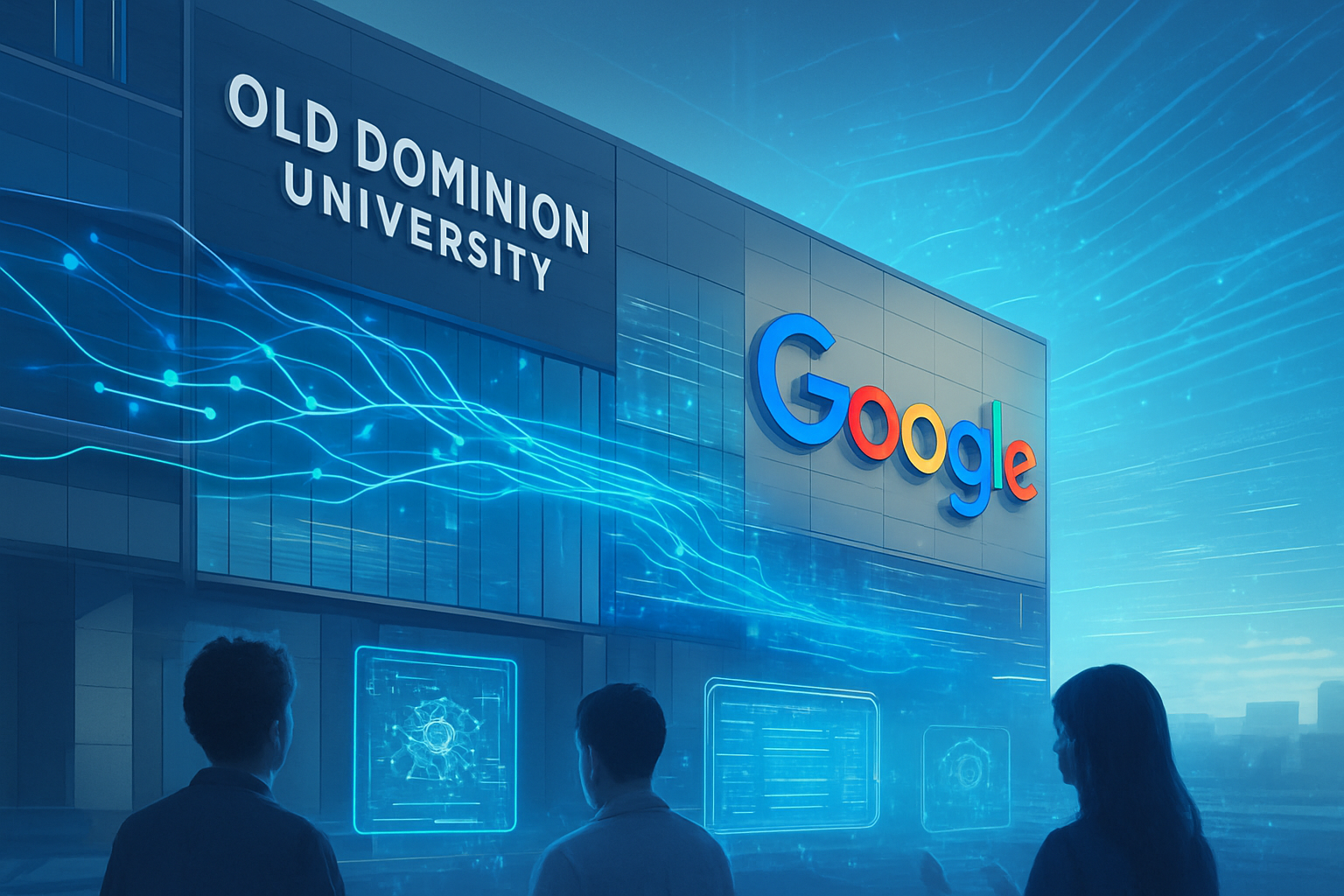
    Old Dominion University and Google Launch Groundbreaking AI Incubator, MonarchSphere, Pioneering Future of Education and Innovation

    Old Dominion University (ODU) and Google Public Sector have officially unveiled "MonarchSphere," a pioneering Artificial Intelligence (AI) incubator set to revolutionize how AI is integrated into higher education, research, and workforce development. Announced on October 29, 2025, at the Google Public Sector Summit in Washington D.C., this multi-year strategic partnership aims to establish ODU as a national leader in AI innovation, leveraging Google Cloud's advanced AI portfolio, including Vertex AI and various Gemini models. The initiative promises to embed AI deeply across the university's academic, research, and operational workflows, creating a unified digital intelligence framework that will dramatically accelerate discovery, personalize learning experiences, and foster significant community and economic development.

    MonarchSphere represents a "first-of-its-kind AI incubator for higher education," signaling a transformative moment for both institutions and the broader educational landscape. This collaboration goes beyond mere technological adoption; it signifies a co-investment and co-development effort designed to equip students, faculty, and regional businesses with cutting-edge AI capabilities. By focusing on ethical and secure AI deployment, ODU and Google (NASDAQ: GOOGL) are setting a new standard for responsible innovation, preparing a future-ready workforce, and addressing complex societal challenges through advanced AI solutions.

    Technical Deep Dive: MonarchSphere's AI Engine and Transformative Capabilities

    The technical backbone of MonarchSphere is Google Cloud's comprehensive AI portfolio, providing ODU with access to a suite of powerful tools and platforms. At its core, the incubator will utilize the Vertex AI platform, a unified machine learning platform that allows for building, deploying, and scaling ML models with greater efficiency. This is complemented by the integration of various Gemini models, Google's most advanced and multimodal AI models, enabling sophisticated natural language processing, code generation, and complex reasoning capabilities. Agentic AI services will also play a crucial role, facilitating the creation of intelligent agents capable of automating tasks and enhancing decision-making across the university.

    This robust technological foundation is designed to accelerate discovery and research significantly. For instance, ODU researchers engaged in genomic AI research, who previously faced weeks of processing time on on-premise clusters, can now complete these complex tasks in a matter of days using Google Cloud's scalable computational power. This substantial reduction in processing time allows for more iterative experimentation and faster breakthroughs. Furthermore, the partnership distinguishes itself from previous university-industry collaborations by its deep co-development model. Google's active role in integrating its cutting-edge AI into ODU's specific academic and operational contexts, rather than just providing access to tools, represents a more profound and tailored approach to technological transfer and innovation. Initial reactions from the AI research community highlight the potential for MonarchSphere to become a blueprint for how universities can effectively leverage commercial AI platforms to drive academic excellence and practical application. Industry experts view this as a strategic move by Google to further entrench its AI ecosystem within future talent pipelines and research environments.

    One of the incubator's most innovative aspects lies in its approach to personalized learning and career advancement. ODU is an early member of the Google AI for Education Accelerator, granting students and faculty no-cost access to Google certificates and AI training directly integrated into the curriculum. Faculty are already piloting Google Colab Enterprise in advanced AI courses, providing students with access to powerful GPUs essential for training deep learning models—a resource often scarce in traditional academic settings. Beyond technical training, MonarchSphere aims to streamline course development and delivery through tools like Gemini Pro and Notebook LM, allowing faculty to efficiently generate course summaries, outlines, and learning materials. The development of an AI course assistant tool for real-time support and feedback in both online and technology-enhanced classrooms further underscores the commitment to transforming pedagogical methods, offering a dynamic and responsive learning environment that differs significantly from static, traditional educational models. This level of AI integration into the daily fabric of university operations and learning is a marked departure from more superficial technology adoption seen in the past.

    Competitive Ripples: Reshaping the AI Landscape for Tech Giants and Startups

    The launch of MonarchSphere through the Old Dominion University (ODU) and Google Public Sector partnership sends significant ripples across the AI industry, impacting tech giants, established AI labs, and burgeoning startups alike. Google (NASDAQ: GOOGL) stands to benefit immensely from this development, solidifying its position as a leading provider of AI infrastructure and services within the public sector and higher education. By deeply embedding Google Cloud, Vertex AI, and Gemini models within ODU's research and educational framework, Google creates a powerful pipeline for future AI talent familiar with its ecosystem. This strategic move strengthens Google's market positioning against competitors like Microsoft (NASDAQ: MSFT) with Azure AI and Amazon (NASDAQ: AMZN) with AWS AI, who are also vying for dominance in academic and government sectors. The co-development model with ODU allows Google to refine its AI offerings in a real-world, diverse academic setting, potentially leading to new product features and optimizations.

    For other major AI labs and tech companies, this partnership sets a new competitive benchmark for university engagement. Companies that have traditionally focused on research grants or specific project collaborations may now need to consider more comprehensive, integrated incubator models to attract top talent and foster innovation. The deep integration of AI into ODU's curriculum and research could create a talent pool exceptionally skilled in Google's AI technologies, potentially giving Google a recruitment advantage. This could prompt other tech giants to accelerate their own university partnership strategies, aiming for similar levels of technological immersion and co-creation. The potential disruption to existing educational technology products or services is also noteworthy; AI-powered course assistants and personalized learning tools developed within MonarchSphere could eventually influence broader ed-tech markets, challenging traditional learning management systems and content providers to enhance their AI capabilities.

    Startups in the AI space, particularly those focused on educational technology, research tools, or regional economic development, might find both opportunities and challenges. While MonarchSphere's focus on community and economic development could open doors for local AI startups to collaborate on projects or pilot solutions, the sheer scale of Google's involvement might also create a higher barrier to entry for smaller players. However, the incubator's mission to foster an AI ecosystem in Hampton Roads could also serve as a magnet for AI talent and investment, potentially creating a vibrant hub that benefits all participants. The strategic advantage for Google lies not just in technology deployment but in shaping the next generation of AI researchers and practitioners, ensuring a long-term alignment with its platform and vision for AI. This partnership signals a growing trend where tech giants are not just selling tools but actively co-creating the future of AI application and education with institutional partners.

    Broader Implications: Shaping the AI Landscape and Addressing Societal Trends

    The MonarchSphere initiative between Old Dominion University and Google transcends a mere academic-corporate partnership; it serves as a significant bellwether for the broader AI landscape and ongoing technological trends. This deep integration of advanced AI into a comprehensive university setting underscores a crucial shift: AI is no longer a specialized field confined to computer science departments but a pervasive technology destined to permeate every discipline, from genomics to humanities, and every operational facet of institutions. This move aligns perfectly with the overarching trend of AI democratization, making powerful tools and platforms accessible to a wider array of users and researchers, thereby accelerating innovation across diverse sectors.

    The impacts of MonarchSphere are multifaceted. Educationally, it heralds a new era of personalized learning and skill development, equipping students with essential AI literacy and practical experience, which is critical for the evolving job market. For research, it promises to break down computational barriers, enabling faster scientific discovery and more ambitious projects. Economically, by extending its benefits to local municipalities and small businesses in Virginia, MonarchSphere aims to foster a regional AI ecosystem, driving operational efficiency and creating new economic opportunities. However, such widespread adoption also brings potential concerns. The ethical and secure use of AI tools is paramount, and ODU's emphasis on privacy, compliance, and responsible design is a critical component that needs continuous vigilance. The partnership’s success in establishing a national example for human-centered AI development will be closely watched, especially regarding issues of algorithmic bias, data security, and the impact on human employment.

    Comparing MonarchSphere to previous AI milestones, its significance lies not in a singular technological breakthrough, but in its systemic approach to integrating existing cutting-edge AI into an entire institutional fabric. While previous milestones might have focused on developing a new model or achieving a specific task (e.g., AlphaGo's victory), MonarchSphere focuses on the application and democratization of these advancements within a complex organizational structure. This makes it comparable in impact to early initiatives that brought widespread internet access or computational resources to universities, fundamentally altering how education and research are conducted. It highlights a growing understanding that the next phase of AI impact will come from its thoughtful and pervasive integration into societal institutions, rather than isolated, headline-grabbing achievements. This partnership could very well set a precedent for how public institutions can effectively collaborate with private tech giants to harness AI's transformative power responsibly and equitably.

    Future Horizons: Expected Developments and Looming Challenges

    The launch of MonarchSphere marks the beginning of a multi-year journey, with significant near-term and long-term developments anticipated. In the near term, we can expect to see the rapid expansion of AI-integrated curricula across various ODU departments, moving beyond initial pilot programs. This will likely include the introduction of new credentials and specialized courses focused on AI applications in fields like healthcare, engineering, and business. The development of the AI course assistant tool will likely mature, offering more sophisticated real-time support and feedback mechanisms, becoming an indispensable part of both online and in-person learning environments. Furthermore, the initial outreach to local municipalities and small businesses will likely translate into tangible AI-driven solutions, demonstrating practical applications and driving regional economic impact.

    Looking further ahead, the long-term vision for MonarchSphere includes positioning ODU as a national thought leader in ethical AI development and governance. This will involve not only the responsible deployment of AI but also significant research into AI ethics, fairness, and transparency, contributing to the global dialogue on these critical issues. Experts predict that the incubator will become a magnet for AI talent, attracting top researchers and students who are eager to work at the intersection of academic rigor and real-world application with Google's cutting-edge technology. Potential applications on the horizon include highly personalized career guidance systems powered by AI, advanced predictive analytics for university operations, and AI-driven solutions for complex urban planning and environmental challenges within the Virginia region.

    However, several challenges need to be addressed for MonarchSphere to fully realize its potential. Ensuring equitable access to AI training and resources across all student demographics, regardless of their prior technical background, will be crucial. Managing the ethical implications of pervasive AI, particularly concerning data privacy and algorithmic bias in personalized learning, will require continuous oversight and robust governance frameworks. Furthermore, staying abreast of the rapidly evolving AI landscape and continuously updating the incubator's technological stack and curriculum will be an ongoing challenge. Experts predict that the success of MonarchSphere will hinge on its ability to foster a culture of continuous learning and adaptation, effectively balancing rapid innovation with responsible development. The integration of AI into such a broad institutional context is uncharted territory, and the lessons learned from ODU's journey will undoubtedly inform similar initiatives worldwide.

    A New Era for AI in Academia: A Comprehensive Wrap-Up

    The partnership between Old Dominion University and Google Public Sector to establish MonarchSphere represents a pivotal moment in the integration of artificial intelligence into higher education and beyond. The key takeaways from this initiative are profound: it establishes a "first-of-its-kind" AI incubator that deeply embeds Google's advanced AI technologies—including Vertex AI and Gemini models—across ODU's research, teaching, and operational workflows. This strategic alliance aims to accelerate discovery, personalize learning experiences for students, and serve as a catalyst for community and economic development in the Hampton Roads region and across Virginia. The co-investment and co-development model signifies a deeper, more collaborative approach than traditional university-industry engagements, setting a new benchmark for how institutions can leverage cutting-edge AI responsibly.

    This development holds immense significance in the history of AI. While individual AI breakthroughs often capture headlines, MonarchSphere's importance lies in its systemic application and democratization of existing advanced AI within a complex, multifaceted institution. It moves beyond theoretical exploration to practical, ethical integration, positioning ODU as a national leader in AI innovation and a model for future-ready higher education. By focusing on human-centered AI development, addressing ethical concerns from the outset, and fostering an AI-literate workforce, the initiative is poised to shape not only the future of education but also the responsible evolution of AI in society.

    Looking ahead, the long-term impact of MonarchSphere will be measured by its ability to consistently produce AI-savvy graduates, drive impactful research, and generate tangible economic benefits for the region. What to watch for in the coming weeks and months includes the rollout of new AI-enhanced courses, the progress of specific research projects leveraging Google Cloud's capabilities, and initial reports on the efficacy of AI tools in streamlining university operations and personalizing student learning. The success of this pioneering incubator will undoubtedly inspire similar collaborations, further accelerating the pervasive integration of AI across various sectors and solidifying its role as a fundamental pillar of modern innovation.


    This content is intended for informational purposes only and represents analysis of current AI developments.

    TokenRing AI delivers enterprise-grade solutions for multi-agent AI workflow orchestration, AI-powered development tools, and seamless remote collaboration platforms.
    For more information, visit https://www.tokenring.ai/.
  • ServiceNow and NTT DATA Forge Global Alliance to Propel Agentic AI into the Enterprise Frontier

    ServiceNow and NTT DATA Forge Global Alliance to Propel Agentic AI into the Enterprise Frontier

    SANTA CLARA, CA & TOKYO, JAPAN – November 6, 2025 – In a landmark move poised to redefine enterprise automation, ServiceNow (NYSE: NOW) and NTT DATA, a global digital business and IT services leader, announced an expanded strategic partnership on November 5, 2025 (or November 6, 2025, depending on reporting), to deliver global Agentic AI solutions. This deepens an existing collaboration, aiming to accelerate AI-led transformation for businesses worldwide by deploying intelligent, autonomous AI agents capable of orchestrating complex workflows with minimal human oversight. The alliance signifies a critical juncture in the evolution of enterprise AI, moving beyond reactive tools to proactive, goal-driven systems that promise unprecedented levels of efficiency, innovation, and strategic agility.

    The expanded partnership designates NTT DATA as a strategic AI delivery partner for ServiceNow, focusing on co-developing and co-selling AI-powered solutions. This initiative is set to scale AI-powered automation across enterprise, commercial, and mid-market segments globally. A key aspect of this collaboration involves NTT DATA becoming a "lighthouse customer" for ServiceNow's AI platform, internally adopting and scaling ServiceNow AI Agents and Global Business Services across its own vast operations. This internal deployment will serve as a real-world testament to the solutions' impact on productivity, efficiency, and customer experience, while also advancing new AI deployment models through ServiceNow's "Now Next AI" program.

    Unpacking the Technical Core: ServiceNow's Agentic AI and NTT DATA's Global Reach

    At the heart of this partnership lies ServiceNow's sophisticated Agentic AI platform, meticulously engineered for trust and scalability within demanding enterprise environments. This platform uniquely unifies artificial intelligence, data, and workflow automation into a single, cohesive architecture. Its technical prowess is built upon several foundational components designed to enable autonomous, intelligent action across an organization.

    Key capabilities include the AI Control Tower, a central management system for governing and optimizing all AI assets, whether native or third-party, ensuring secure and scalable deployment. The AI Agent Fabric facilitates seamless collaboration among specialized AI agents across diverse tasks and departments, crucial for orchestrating complex, multi-step workflows. Complementing this is the Workflow Data Fabric, which provides frictionless data integration through over 240 out-of-the-box connectors, a zero-copy architecture, streaming capabilities via Apache Kafka, and integration with unstructured data sources like SharePoint and Confluence. This ensures AI agents have access to the rich, contextual insights needed for intelligent decision-making. Furthermore, ServiceNow's AI agents are natively integrated into the platform, leveraging billions of data points and millions of automations across customer instances for rapid learning and effective autonomous action. The platform offers thousands of pre-built agents for various functions, alongside an AI Agent Studio for no-code custom agent creation. Underpinning these capabilities is RaptorDB, a high-performance database, and integration with NVIDIA's Nemotron 15B model, which together reduce latency and ensure swift task execution.

    NTT DATA's role as a strategic AI delivery partner is to integrate and leverage these capabilities globally. This involves joint development and deployment of AI-driven solutions, enhancing automation and operational efficiency worldwide. By adopting ServiceNow's AI platform internally, NTT DATA will not only drive its own digital transformation but also gain invaluable insights and expertise to deliver these solutions to its vast client base. Their strategic advisory, implementation, and managed services will ensure organizations realize faster time to value from ServiceNow AI solutions, particularly through initiatives like the "Now Next AI" program, which embeds AI engineering expertise directly into customer enterprise transformation projects.

    This "Agentic AI" paradigm represents a significant leap from previous automation and AI generations. Unlike traditional Robotic Process Automation (RPA), which is rigid and rule-based, Agentic AI operates with autonomy, planning multi-step operations and adapting to dynamic environments without constant human intervention. It also diverges from earlier generative AI or predictive AI, which are primarily reactive, providing insights or content but requiring human or external systems to take action. Agentic AI bridges this gap by autonomously acting on insights, making decisions, planning actions, and executing tasks to achieve a desired goal, possessing persistent memory and the ability to orchestrate complex, collaborative efforts across multiple agents. Industry analysts, including Gartner and IDC, project a rapid increase in enterprise adoption, with Gartner predicting that 33% of enterprise software applications will incorporate agentic AI models by 2028, up from less than 1% in 2024. Experts view this as the "next major evolution" in AI, set to redefine how software interacts with users, making AI proactive, adaptive, and deeply integrated into daily operations.

    Reshaping the AI Landscape: Competitive Implications for Tech Giants and Startups

    The expanded partnership between ServiceNow and NTT DATA is poised to significantly reshape the competitive landscape of enterprise AI automation, sending ripples across tech giants, specialized AI companies, and startups alike. This formidable alliance combines ServiceNow's leading AI platform with NTT DATA's immense global delivery and integration capabilities, creating a powerful, end-to-end solution provider for businesses seeking comprehensive AI-led transformation.

    Direct competitors in the enterprise AI automation space, particularly those offering similar platform capabilities and extensive implementation services, will face intensified pressure. Companies like UiPath (NYSE: PATH) and Automation Anywhere, dominant players in Robotic Process Automation (RPA), are already expanding into more intelligent automation. This partnership directly challenges their efforts to move beyond traditional, rule-based automation towards more autonomous, Agentic AI. Similarly, Pega Systems (NASDAQ: PEGA), known for its low-code and intelligent automation platforms, will find increased competition in orchestrating complex workflows where Agentic AI excels. In the IT Service Management (ITSM) and IT Operations Management (ITOM) domains, where ServiceNow is a leader, competitors such as Jira Service Management (NASDAQ: TEAM), BMC Helix ITSM, Ivanti Neurons for ITSM, and Freshservice (NASDAQ: FRSH), which are also heavily investing in AI, will face a stronger, more integrated offering. Furthermore, emerging Agentic AI specialists like Ema and Beam AI, which are focused on Agentic Process Automation (APA), will contend with a powerful incumbent in the enterprise market.

    For tech giants with broad enterprise offerings, the implications are substantial. Microsoft (NASDAQ: MSFT), with its Dynamics 365, Azure AI, and Power Platform, offers a strong suite of enterprise applications and automation tools. The ServiceNow-NTT DATA partnership will compete directly for large enterprise transformation projects, especially those prioritizing deep integration and end-to-end Agentic AI solutions within a unified platform. While Microsoft's native integration within its own ecosystem is a strength, the specialized, combined expertise of ServiceNow and NTT DATA could offer a compelling alternative. Similarly, Google (NASDAQ: GOOGL), with Google Cloud AI and Workspace, provides extensive AI services. However, this partnership offers a more specialized and deeply integrated Agentic AI solution within the ServiceNow ecosystem, potentially attracting customers who favor a holistic platform for IT and business workflows over a collection of discrete AI services. IBM (NYSE: IBM), a long-standing player in enterprise AI with Watson, and Salesforce (NYSE: CRM), with Einstein embedded in its CRM platform, will also see increased competition. While Salesforce excels in customer-centric AI, the ServiceNow-NTT DATA offering targets broader enterprise automation beyond just CRM, potentially encroaching on Salesforce's adjacent automation opportunities.

    For AI companies and startups, the landscape becomes more challenging. Specialized AI startups focusing solely on Agentic AI or foundational generative AI models might find it harder to secure large enterprise contracts against a comprehensive, integrated offering backed by a global service provider. These smaller players may need to pivot towards strategic partnerships with other enterprise platforms or service providers to remain competitive. Niche automation vendors could struggle if the ServiceNow-NTT DATA partnership provides a more holistic, enterprise-wide Agentic AI solution that subsumes or replaces their specialized offerings. Generalist IT consulting and system integrators that lack deep, specialized expertise in Agentic AI platforms like ServiceNow's, or the global delivery mechanism of NTT DATA, may find themselves at a disadvantage when bidding for major AI-led transformation projects. The partnership signals a market shift towards integrated platforms and comprehensive service delivery, demanding rapid evolution from all players to remain relevant in this accelerating field.

    The Broader AI Canvas: Impacts, Concerns, and Milestones

    The expanded partnership between ServiceNow and NTT DATA in Agentic AI is not merely a corporate announcement; it represents a significant marker in the broader evolution of artificial intelligence, underscoring a pivotal shift towards more autonomous and intelligent enterprise systems. This collaboration highlights the growing maturity of AI, moving beyond individual task automation or reactive intelligence to systems capable of complex decision-making, planning, and execution with minimal human oversight.

    Within the current AI landscape, this alliance reinforces the trend towards integrated, end-to-end AI solutions that combine platform innovation with global implementation scale. The market is increasingly demanding AI that can orchestrate entire business processes, adapt to real-time conditions, and deliver measurable business outcomes. Deloitte forecasts a rapid uptake, with 25% of enterprises currently using generative AI expected to launch agentic AI pilots in 2025, doubling to 50% by 2027. The ServiceNow-NTT DATA partnership directly addresses this demand, positioning both companies to capitalize on the next wave of AI adoption by providing a robust platform and the necessary expertise for responsible AI scaling and deployment across diverse industries and geographies.

    The potential societal and economic impacts of widespread Agentic AI adoption are profound. Economically, Agentic AI is poised to unlock trillions in additional value, with McKinsey estimating a potential contribution of $2.6 trillion to $4.4 trillion annually to the global economy. It promises substantial cost savings, enhanced productivity, and operational agility, with AI agents capable of accelerating business processes by 30% to 50%. This can foster new revenue opportunities, enable hyper-personalized customer engagement, and even reshape organizational structures by flattening hierarchies as AI takes over coordination and routine decision-making tasks. Societally, however, the implications are more nuanced. While Agentic AI will likely transform workforces, automating repetitive roles and increasing demand for skills requiring creativity, complex judgment, and human interaction, it also raises concerns about job displacement and the need for large-scale reskilling initiatives. Ethical dilemmas abound, including questions of accountability for autonomous AI decisions, the potential for amplified biases in training data, and critical issues surrounding data privacy and security as these systems access vast amounts of sensitive information.

    Emerging concerns regarding widespread adoption are multifaceted. Trust remains a primary barrier, stemming from worries about data accuracy, privacy, and the overall reliability of autonomous AI. The "black-box" problem, where it's difficult to understand how AI decisions are reached, raises questions about human oversight and accountability. Bias and fairness are ongoing challenges, as agentic AI can amplify biases from its training data. New security risks emerge, including data exfiltration through agent-driven workflows and "agent hijacking." Integration complexity with legacy systems, a pervasive issue in enterprises, also presents a significant hurdle, demanding sophisticated solutions to bridge data silos. The lack of skilled personnel capable of deploying, managing, and optimizing Agentic AI systems necessitates substantial investment in training and upskilling. Furthermore, the high initial costs, the lack of skilled personnel, and the ongoing maintenance required for AI model degradation pose practical challenges that organizations must address.

    Comparing this development to previous AI milestones reveals a fundamental paradigm shift. Early AI and Robotic Process Automation (RPA) focused on rule-based, deterministic task automation. The subsequent era of intelligent automation, combining RPA with machine learning, allowed for processing unstructured content and data-driven decisions, but these systems largely remained reactive. The recent surge in generative AI, powered by large language models (LLMs), enabled content creation and more natural human-AI interaction, yet still primarily responded to human prompts. Agentic AI, as advanced by the ServiceNow-NTT DATA partnership, is a leap beyond these. It transforms AI from merely enhancing individual productivity to AI as a proactive, goal-driven collaborator. It introduces the capability for systems to plan, reason, execute multi-step workflows, and adapt autonomously. This moves enterprises beyond basic automation to intelligent orchestration, promising unprecedented levels of efficiency, innovation, and resilience. The partnership's focus on responsible AI scaling, demonstrated through NTT DATA's "lighthouse customer" approach, is crucial for building trust and ensuring ethical deployment as these powerful autonomous systems become increasingly integrated into core business processes.

    The Horizon of Autonomy: Future Developments and Challenges

    The expanded partnership between ServiceNow and NTT DATA marks a significant acceleration towards a future where Agentic AI is deeply embedded in the fabric of global enterprises. This collaboration is expected to drive both near-term operational enhancements and long-term strategic transformations, pushing the boundaries of what autonomous systems can achieve within complex business environments.

    In the near term, we can anticipate a rapid expansion of jointly developed and co-sold AI-powered solutions, directly impacting how organizations manage workflows and drive efficiency. NTT DATA's role as a strategic AI delivery partner will see them deploying AI-powered automation at scale across various market segments, leveraging their global reach. Critically, NTT DATA's internal adoption of ServiceNow's AI platform as a "lighthouse customer" will provide tangible, real-world proof of concept, demonstrating the benefits of AI Agents and Global Business Services in enhancing productivity and customer experience. This internal scaling, alongside the "Now Next AI" program, which embeds AI engineering expertise directly into customer transformation projects, will set new benchmarks for AI deployment models.

    Looking further ahead, the long-term vision encompasses widespread AI-powered automation across virtually every industry and geography. This initiative is geared towards accelerating innovation, enhancing productivity, and fostering sustainable growth for enterprises by seamlessly integrating ServiceNow's agentic AI platform with NTT DATA's extensive delivery capabilities and industry-specific knowledge. The partnership aims to facilitate a paradigm shift where AI moves beyond mere assistance to become a genuine orchestrator of business processes, enabling measurable business impact at every stage of an organization's AI journey. This multi-year initiative will undoubtedly play a crucial role in shaping how enterprises deploy and scale AI technologies, solidifying both companies' positions as leaders in digital transformation.

    The potential applications and use cases for Agentic AI on the horizon are vast and transformative. We can expect to see autonomous supply chain orchestration, where AI agents monitor global events, predict demand, re-route shipments, and manage inventory dynamically. Hyper-personalized customer experience and support will evolve, with agents handling complex service requests end-to-end, providing contextual answers, and intelligently escalating issues. In software development, automated code generation and intelligent development assistants will streamline the entire lifecycle. Agentic AI will also revolutionize proactive cybersecurity threat detection and response, autonomously identifying and neutralizing threats. Other promising areas include intelligent financial portfolio management, autonomous manufacturing and quality control, personalized healthcare diagnostics, intelligent legal document analysis, dynamic resource allocation, and predictive sales and marketing optimization. Gartner predicts that by 2029, agentic AI will autonomously resolve 80% of common customer service issues, while 75% of enterprise software engineers will use AI code assistants by 2028.

    However, the path to widespread adoption is not without its challenges. Building trust and addressing ethical risks remain paramount, requiring transparent, explainable AI and robust governance frameworks. Integration complexity with legacy systems continues to be a significant hurdle for many enterprises, demanding sophisticated solutions to bridge data silos. The lack of skilled personnel capable of deploying, managing, and optimizing Agentic AI systems necessitates substantial investment in training and upskilling. Furthermore, balancing the costs of enterprise-grade AI deployment with demonstrable ROI, ensuring data quality and accessibility, and managing AI model degradation and continuous maintenance are critical operational challenges that need to be effectively addressed.

    Experts predict a rapid evolution and significant market growth for Agentic AI, with the market value potentially reaching $47.1 billion by the end of 2030. The integration of agentic AI capabilities into enterprise software is expected to become ubiquitous, with Gartner forecasting 33% by 2028. This will lead to the emergence of hybrid workforces where humans and intelligent agents collaborate seamlessly, and even new roles like "agent managers" to oversee AI operations. The future will likely see a shift towards multi-agent systems for complex, enterprise-wide tasks and the rise of specialized "vertical agents" that can manage entire business processes more efficiently than traditional SaaS solutions. Ultimately, experts anticipate a future where autonomous decision-making by AI agents becomes commonplace, with 15% of day-to-day work decisions potentially made by agentic AI by 2028, fundamentally reshaping how businesses operate and create value.

    A New Era of Enterprise Autonomy: The Road Ahead

    The expanded partnership between ServiceNow and NTT DATA to deliver global Agentic AI solutions represents a pivotal moment in the ongoing evolution of enterprise technology. This collaboration is far more than a simple business agreement; it signifies a strategic alignment to accelerate the mainstream adoption of truly autonomous, intelligent systems that can fundamentally transform how organizations operate. The immediate significance lies in democratizing access to advanced AI capabilities, combining ServiceNow's innovative platform with NTT DATA's extensive global delivery network to ensure that Agentic AI is not just a theoretical concept but a practical, scalable reality for businesses worldwide.

    This development holds immense significance in the history of AI, marking a decisive shift from AI as a reactive tool to AI as a proactive, goal-driven collaborator. Previous milestones focused on automating individual tasks or generating content; Agentic AI, however, introduces the capability for systems to plan, reason, execute multi-step workflows, and adapt autonomously. This moves enterprises beyond basic automation to intelligent orchestration, promising unprecedented levels of efficiency, innovation, and resilience. The partnership's focus on responsible AI scaling, demonstrated through NTT DATA's "lighthouse customer" approach, is crucial for building trust and ensuring ethical deployment as these powerful autonomous systems become increasingly integrated into core business processes.

    Looking ahead, the long-term impact of this partnership will likely be seen in the profound reshaping of enterprise structures, workforce dynamics, and competitive landscapes. As Agentic AI becomes more pervasive, businesses will experience significant cost savings, accelerated decision-making, and the unlocking of new revenue streams through hyper-personalized services and optimized operations. However, this transformation will also necessitate continuous investment in reskilling workforces, developing robust AI governance frameworks, and addressing complex ethical considerations to ensure equitable and beneficial outcomes.

    In the coming weeks and months, the industry will be closely watching for the initial deployments and case studies emerging from this partnership. Key indicators will include the specific types of Agentic AI solutions that gain traction, the measurable business impacts reported by early adopters, and how the "Now Next AI" program translates into tangible enterprise transformations. The competitive responses from other tech giants and specialized AI firms will also be crucial, as they scramble to match the integrated platform-plus-services model offered by ServiceNow and NTT DATA. This alliance is not just about technology; it's about pioneering a new era of enterprise autonomy, and its unfolding will be a defining narrative in the future of artificial intelligence.


    This content is intended for informational purposes only and represents analysis of current AI developments.

    TokenRing AI delivers enterprise-grade solutions for multi-agent AI workflow orchestration, AI-powered development tools, and seamless remote collaboration platforms.
    For more information, visit https://www.tokenring.ai/.

  • WPP and Google Forge $400 Million AI Alliance to Revolutionize Marketing

    WPP and Google Forge $400 Million AI Alliance to Revolutionize Marketing

    London, UK & Mountain View, CA – October 14, 2025 – In a landmark announcement poised to fundamentally reshape the global marketing landscape, WPP (LSE: WPP) and Google (NASDAQ: GOOGL) today unveiled a five-year expanded partnership, committing an unprecedented $400 million to integrate advanced cloud and AI technologies into the core of marketing operations. This strategic alliance aims to usher in a new era of hyper-personalized, real-time campaign creation and execution, drastically cutting down development cycles from months to mere days and unlocking substantial growth for brands worldwide.

    This pivotal collaboration, building upon an earlier engagement in April 2024 that saw Google's Gemini 1.5 Pro models integrated into WPP's AI-powered marketing operating system, WPP Open, signifies a profound commitment to AI-driven transformation. The expanded partnership goes beyond mere efficiency gains, focusing on leveraging generative and agentic AI to revolutionize creative development, production, media strategy, customer experience, and commerce, setting a new benchmark for integrated marketing solutions.

    The AI Engine Room: Unpacking the Technological Core of the Partnership

    At the heart of this transformative partnership lies a sophisticated integration of Google Cloud's cutting-edge AI-optimized technology stack with WPP's extensive marketing expertise. The collaboration is designed to empower brands with unprecedented agility and precision, moving beyond traditional marketing approaches to enable real-time personalization for millions of customers simultaneously.

    A cornerstone of this technical overhaul is WPP Open, the agency's proprietary AI-powered marketing operating system. This platform is now deeply intertwined with Google's advanced AI models, including the powerful Gemini 1.5 Pro for enhanced creativity and content optimization, and early access to nascent technologies like Veo and Imagen for revolutionizing video and image production. These integrations promise to bring unprecedented creative agility to clients, with pilot programs already demonstrating the ability to generate campaign-ready assets in days, achieving up to 70% efficiency gains and a 2.5x acceleration in asset utilization.

    Beyond content generation, the partnership is fostering innovative AI-powered experiences. WPP's design and innovation company, AKQA, is at the forefront, developing solutions like the AKQA Generative Store for personalized luxury retail and AKQA Generative UI for tailored, on-brand page generation. A pilot program within WPP Open is also leveraging virtual persona agents to test and validate creative concepts through over 10,000 simulation cycles, ensuring hyper-relevant content creation. Furthermore, advanced AI agents have shown remarkable success in boosting audience targeting accuracy to 98% and increasing operational efficiency by 80%, freeing up marketing teams to focus on strategic initiatives rather than repetitive tasks. Secure data collaboration is also a key feature, utilizing InfoSum's Bunkers on Google Marketplace, integrated into WPP Open, to enable deeper insights for AI marketing while rigorously protecting privacy.

    Competitive Implications and Market Realignments

    This expanded alliance between WPP and Google is poised to send ripples across the AI, advertising, and marketing industries, creating clear beneficiaries and posing significant competitive challenges. WPP's clients stand to gain an immediate and substantial advantage, receiving validated, effective AI solutions that will enable them to execute highly relevant campaigns with unprecedented speed and scale. This unique offering could solidify WPP's position as a leader in AI-driven marketing, attracting new clients seeking to leverage cutting-edge technology for growth.

    For Google, this partnership further entrenches its position as a dominant force in enterprise AI and cloud solutions. By becoming the primary technology partner for one of the world's largest advertising companies, Google Cloud (NASDAQ: GOOGL) gains a massive real-world testing ground and a powerful endorsement for its AI capabilities. This strategic move could put pressure on rival cloud providers like Amazon Web Services (NASDAQ: AMZN) and Microsoft Azure (NASDAQ: MSFT), as well as other AI model developers, to secure similar high-profile partnerships within the marketing sector. The deep integration of Gemini, Veo, and Imagen into WPP's workflow demonstrates Google's commitment to making its advanced AI models commercially viable and widely adopted.

    Startups in the AI marketing space might face increased competition from this formidable duo. While specialized AI tools will always find niches, the comprehensive, integrated solutions offered by WPP and Google could disrupt existing products or services that provide only a fraction of the capabilities. However, there could also be opportunities for niche AI startups to partner with WPP or Google, providing specialized components or services that complement the broader platform. The competitive landscape will likely see a shift towards more integrated, full-stack AI marketing solutions, potentially leading to consolidation or strategic acquisitions.

    A Broader AI Tapestry: Impacts and Future Trends

    The WPP-Google partnership is not merely a business deal; it is a significant thread woven into the broader tapestry of AI's integration into commerce and creativity. It underscores a prevailing trend in the AI landscape: the move from theoretical applications to practical, enterprise-grade deployments that drive tangible business outcomes. This collaboration exemplifies the shift towards agentic AI, where autonomous agents perform complex tasks, from content generation to audience targeting, with minimal human intervention.

    The impacts are far-reaching. On one hand, it promises an era of unparalleled personalization, where consumers receive highly relevant and engaging content, potentially enhancing brand loyalty and satisfaction. On the other hand, it raises important considerations regarding data privacy, algorithmic bias, and the ethical implications of AI-generated content at scale. While the partnership emphasizes secure data collaboration through InfoSum's Bunkers, continuous vigilance will be required to ensure responsible AI deployment. This development also highlights the increasing importance of human-AI collaboration, with WPP's expanded Creative Technology Apprenticeship program aiming to train over 1,000 early-career professionals by 2030, ensuring a skilled workforce capable of steering these advanced AI tools.

    Comparisons to previous AI milestones are inevitable. While not a foundational AI model breakthrough, this partnership represents a critical milestone in the application of advanced AI to a massive industry. It mirrors the strategic integrations seen in other sectors, such as AI in healthcare or finance, where leading companies are leveraging cutting-edge models to transform operational efficiency and customer engagement. The scale of the investment and the breadth of the intended transformation position this as a benchmark for future AI-driven industry partnerships.

    The Road Ahead: Anticipated Developments and Challenges

    Looking ahead, the WPP-Google partnership is expected to drive several near-term and long-term developments. In the near term, we can anticipate the rapid deployment of custom AI Marketing Agents via WPP Open for specific clients, demonstrating the practical efficacy of the integrated platform. The continuous refinement of AI-powered content creation, particularly with early access to Google's Veo and Imagen models, will likely lead to increasingly sophisticated and realistic marketing assets, blurring the lines between human-created and AI-generated content. The expansion of the Creative Technology Apprenticeship program will also be crucial, addressing the talent gap necessary to fully harness these advanced tools.

    Longer-term, experts predict a profound shift in marketing team structures, with a greater emphasis on AI strategists, prompt engineers, and ethical AI oversight. The partnership's focus on internal operations transformation, integrating Google AI into WPP's workflows for automated data analysis and intelligent resource allocation, suggests a future where AI becomes an omnipresent co-pilot for marketers. Potential applications on the horizon include predictive analytics for market trends with unprecedented accuracy, hyper-personalized interactive experiences at every customer touchpoint, and fully autonomous campaign optimization loops.

    However, challenges remain. Ensuring the ethical and unbiased deployment of AI at scale, particularly in content generation and audience targeting, will require ongoing vigilance and robust governance frameworks. The rapid pace of AI development also means that continuous adaptation and skill development will be paramount for both WPP and its clients. Furthermore, the integration of such complex systems across diverse client needs will present technical and operational hurdles that will need to be meticulously addressed. Experts predict that the success of this partnership will largely depend on its ability to demonstrate clear, measurable ROI for clients, thereby solidifying the business case for deep AI integration in marketing.

    A New Horizon for Marketing: A Comprehensive Wrap-Up

    The expanded partnership between WPP and Google marks a watershed moment in the evolution of marketing, signaling a decisive pivot towards an AI-first paradigm. The $400 million, five-year commitment underscores a shared vision to transcend traditional marketing limitations, leveraging generative and agentic AI to deliver hyper-relevant, real-time campaigns at an unprecedented scale. Key takeaways include the deep integration of Google's advanced AI models (Gemini 1.5 Pro, Veo, Imagen) into WPP Open, the development of innovative AI-powered experiences by AKQA, and a significant investment in talent development through an expanded apprenticeship program.

    This development's significance in AI history lies not in a foundational scientific breakthrough, but in its robust and large-scale application of existing and emerging AI capabilities to a global industry. It serves as a powerful testament to the commercial maturity of AI, demonstrating its potential to drive substantial business growth and operational efficiency across complex enterprises. The long-term impact is likely to redefine consumer expectations for personalized brand interactions, elevate the role of data and AI ethics in marketing, and reshape the skill sets required for future marketing professionals.

    In the coming weeks and months, the industry will be watching closely for the initial results from pilot programs, the deployment of custom AI agents for WPP's clients, and further details on the curriculum and expansion of the Creative Technology Apprenticeship program. The success of this ambitious alliance will undoubtedly influence how other major advertising groups and tech giants approach their own AI strategies, potentially accelerating the widespread adoption of advanced AI across the entire marketing ecosystem.


    This content is intended for informational purposes only and represents analysis of current AI developments.

    TokenRing AI delivers enterprise-grade solutions for multi-agent AI workflow orchestration, AI-powered development tools, and seamless remote collaboration platforms.
    For more information, visit https://www.tokenring.ai/.