The landscape of last-mile delivery is undergoing a profound transformation as DoorDash (NYSE: DASH) and Waymo, Alphabet's (NASDAQ: GOOGL) pioneering autonomous driving technology company, deepen their collaboration with an autonomous vehicle delivery pilot program in Metro Phoenix. This strategic partnership represents a significant leap towards a multi-modal autonomous future for local commerce, integrating Waymo's proven self-driving technology into DoorDash's expansive delivery ecosystem. The immediate significance of this deployment lies in its potential to dramatically reshape the economics and operational efficiency of last-mile logistics, offering a glimpse into a future where AI-driven vehicles become a commonplace sight on our roads, fulfilling everyday needs.
The pilot program, currently underway in Metro Phoenix, enables DoorDash customers to receive orders delivered by fully autonomous Waymo vehicles. Initially focused on deliveries from DashMart, DoorDash's owned and operated convenience, grocery, and retail stores, the initiative is poised for future expansion to include other participating merchants. The process is designed for seamless customer interaction: eligible DoorDash customers in the designated Phoenix service area may be matched with a Waymo autonomous vehicle, with an option to select autonomous delivery during checkout. Upon the vehicle's arrival, customers receive instructions via the DoorDash app to unlock the vehicle's trunk and retrieve their items, ensuring a contact-free experience. This strategic move by DoorDash aims to reduce reliance on human drivers, lower delivery costs, and enhance efficiency, positioning it more competitively against rivals like Uber Eats (NYSE: UBER), which also has a similar delivery arrangement with Waymo. For Waymo, the partnership offers an additional revenue stream and optimizes fleet utilization by deploying vehicles for package deliveries during off-peak times for passenger rides, thereby reducing "deadhead miles."
Unpacking the Autonomous Engine: Waymo Driver's Technical Prowess
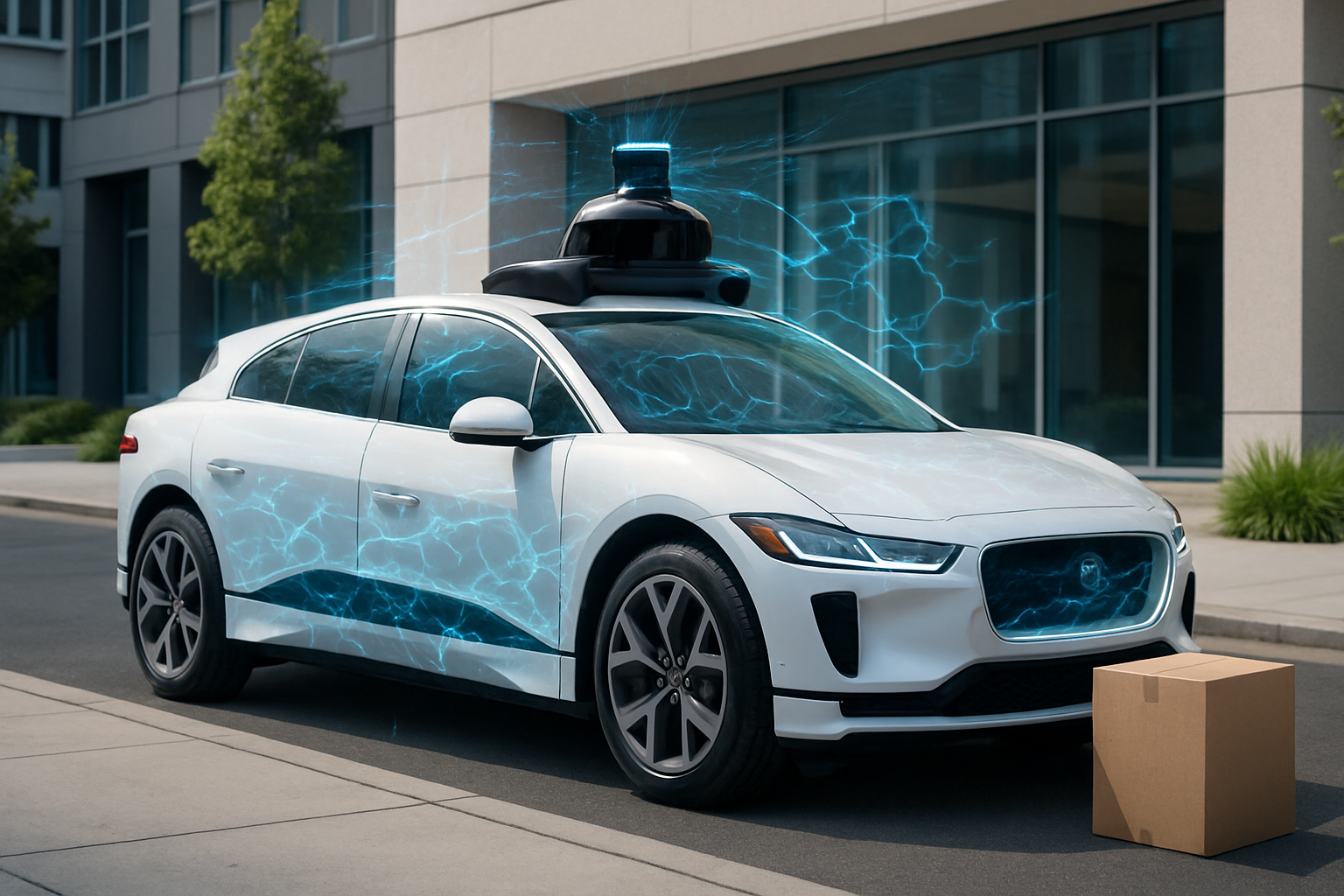
At the heart of this autonomous delivery system is Waymo's highly sophisticated Waymo Driver technology, a culmination of decades of research and development in artificial intelligence and robotics. The Waymo Driver, deployed in vehicles like the Jaguar I-Pace, leverages a redundant and diverse sensor array. The 5th-generation system integrates 360-degree LiDAR, perimeter LiDAR, high-resolution cameras (including long-range and 360-vision systems capable of seeing over 500 meters), and radar. The more recent 6th-generation Waymo Driver further refines this, featuring 13 cameras, 4 LiDAR units, 6 radar units, and external audio receivers (EARs), providing comprehensive, overlapping fields of view up to 500 meters, day and night, and across various weather conditions. This multi-modal sensor fusion is critical for accurately detecting objects, pedestrians, and other vehicles.
Waymo's software architecture, often described as "Sense, Solve, Go," processes vast amounts of sensor data to create a detailed understanding of the environment ("Sense"). Powerful AI and machine learning algorithms then interpret this data, predict the behavior of other road users, and calculate safe, efficient routes in real-time ("Solve"). The deep-learning architecture, VectorNet, specifically uses graph neural networks to predict vehicle trajectories in complex traffic scenarios. Finally, the system executes precise control commands for navigation ("Go"). Waymo heavily relies on high-definition (HD) maps for localization and planning, continually improving its performance by feeding real-world driving data back into its AI models. Recent advancements include the "Waymo Foundation Model," which integrates Waymo's extensive autonomous vehicle domain knowledge with the general world knowledge and reasoning capabilities of Large Language Models (LLMs) and Vision-Language Models (VLMs), enabling more generalized and adaptable AI for autonomous driving.
The integration with DoorDash's platform is facilitated by DoorDash's "Autonomous Delivery Platform," designed to orchestrate various delivery methods. DoorDash's system matches eligible orders with an available Waymo vehicle, and customers interact directly with the vehicle via the DoorDash app. This approach differs significantly from other autonomous delivery attempts, particularly smaller sidewalk robots or drones, by utilizing full-size autonomous cars. This allows for the delivery of larger grocery and retail orders that smaller bots cannot handle and operates within Waymo's extensive Operational Design Domain (ODD) for complex urban and suburban road conditions. While experts praise Waymo's robust, safety-focused approach and "superhuman" driving capabilities, discussions persist regarding the high cost of its sophisticated hardware and the challenges of scaling such comprehensive AV solutions broadly.
Reshaping the AI and Tech Ecosystem: Winners and Challengers
The DoorDash and Waymo partnership sends ripples throughout the AI and tech industry, creating both immense opportunities and intensified competitive pressures. At the forefront of beneficiaries are DoorDash (NYSE: DASH) and Waymo (NASDAQ: GOOGL) themselves. DoorDash gains a critical strategic advantage in the fiercely competitive last-mile delivery market by potentially reducing labor costs, increasing efficiency, and offering a differentiated, cutting-edge service. This move also reinforces DoorDash's image as a technology-driven platform, providing valuable data to refine its AI-powered Autonomous Delivery Platform. Waymo, as a subsidiary of Alphabet, diversifies its revenue streams beyond ride-hailing, leveraging its extensively validated autonomous technology for goods delivery. This increases the utilization of its autonomous fleet, particularly during off-peak hours, and provides further real-world data for its AI models, solidifying Alphabet's position in the broader autonomous driving and logistics sectors.
The competitive implications for major AI labs and tech companies are significant. Uber (NYSE: UBER), which already partners with Waymo for Uber Eats deliveries in Phoenix, now faces a scenario where Waymo is collaborating with both major delivery platforms. This multi-partner strategy by Waymo suggests it aims to be a foundational autonomous technology provider rather than exclusively aligned with one platform, compelling Uber to continue investing heavily in its own autonomous solutions or strengthen existing AV partnerships. Other autonomous driving developers, such as Cruise (a General Motors subsidiary) and Aurora (NASDAQ: AUR), are under increased pressure to secure similar high-profile partnerships with major delivery or logistics providers to scale their technology and demonstrate commercial viability. Even tech giants with in-house AI labs, like Amazon (NASDAQ: AMZN), which is developing its own autonomous capabilities (e.g., drones, Rivian delivery vans), will need to accelerate their efforts to match or surpass the efficiency and reach offered by such collaborations.
This partnership has the potential to disrupt existing products and services across the logistics chain. The most direct impact is on human delivery drivers, as DoorDash explicitly aims to reduce reliance on them, potentially shifting human couriers to more lucrative, long-distance orders while autonomous vehicles handle shorter sprints. This could lead to job displacement or a significant redefinition of delivery work. Traditional delivery models, heavily reliant on human labor, face accelerated disruption as the industry moves towards hybrid or fully autonomous operations. Merchants will also need to adapt their pickup procedures, and the differentiation offered by autonomous delivery could pressure other delivery services that do not adopt similar technologies, potentially leading to market share shifts. Ultimately, this collaboration provides significant market positioning and strategic advantages, including potential cost leadership, enhanced customer experience, and data supremacy, allowing both DoorDash and Waymo to future-proof their business models in a rapidly evolving market.
A New Frontier in AI's March: Wider Significance and Societal Ripples
The DoorDash and Waymo partnership is more than just a business deal; it's a pivotal moment in the broader AI landscape, demonstrating the maturation and practical application of advanced autonomous systems in daily life. This initiative squarely addresses the "last mile" challenge—historically the most expensive and inefficient segment of the delivery process. By deploying full-size autonomous vehicles, the partnership showcases AI's capability to manage complex real-world logistics, from intricate navigation and obstacle avoidance to precise delivery coordination. It fits squarely within the accelerating trend of automation in last-mile logistics, where AI-powered navigation, decision-making, and multi-modal delivery ecosystems are becoming increasingly prevalent.
The societal, economic, and environmental impacts of such a deployment are far-reaching. Societally, autonomous delivery promises increased accessibility for individuals with mobility challenges and enhanced convenience for all consumers with faster, 24/7 delivery options. It also holds the potential for significant safety improvements by eliminating human error, distraction, and fatigue in driving. However, major concerns include the potential for widespread job displacement among human delivery drivers, necessitating proactive discussions around workforce retraining. Public acceptance and trust in AV technology, alongside cybersecurity risks and the need for adaptive urban planning, remain crucial hurdles.
Economically, autonomous vehicles can significantly lower operational costs by reducing labor, fuel consumption (especially with electric ADVs), and maintenance. This translates into increased efficiency and productivity, with vehicles operating around the clock and optimizing routes. Studies suggest that autonomous delivery could generate trillions in economic value through increased productivity and reduced accidents. Environmentally, the shift towards electric autonomous vehicles can significantly reduce greenhouse gas emissions and air pollution, coupled with optimized routing leading to lower fuel usage. However, the environmental footprint of battery production and recycling remains a consideration.
In the grand narrative of AI history, this development stands as a crucial operational milestone. It signifies the transition of advanced AI from experimental labs to commercial services that directly impact consumers. It validates the maturity and robustness of autonomous driving systems in complex, real-world environments and demonstrates the power of AI to orchestrate multi-modal delivery networks. The long-term impact could fundamentally reshape urban logistics, consumer expectations, and the very nature of work in the delivery sector. While questions about job displacement and infrastructure adaptation will persist, the potential for increased accessibility, efficiency, and safety is undeniable.
The Road Ahead: Future Developments and Expert Predictions
The DoorDash and Waymo autonomous delivery partnership, along with the broader autonomous vehicle logistics landscape, is poised for significant evolution in the coming years. In the near term, the partnership is expected to expand its operational footprint beyond initial DashMart deliveries in Metro Phoenix to include a wider array of restaurants and merchants. DoorDash's vision for a "multi-modal autonomous future" means we'll likely see further integration of Waymo's autonomous cars with DoorDash's existing network of human Dashers, sidewalk robots (like DoorDash's "Dot" robot), and drones, all orchestrated by its AI-powered delivery platform. The continued offering of discounted Waymo rides to DashPass members in select cities also hints at a deeper integration of ride-hailing and delivery services.
Longer-term, the partnership is anticipated to scale to more of Waymo's service areas, leveraging Waymo's existing operational hubs in cities like Los Angeles and San Francisco, and upcoming launches in Miami and Washington, D.C. The overarching goal for DoorDash is to automate a substantial portion of its deliveries, meeting surging demand while driving down costs and enhancing efficiency. For Waymo, this means further diversifying its revenue streams and maximizing fleet utilization, particularly during non-peak ride-hailing hours.
Beyond this specific partnership, the autonomous delivery market is projected for explosive growth, with estimates suggesting it could reach billions by 2030 and beyond. Potential applications and use cases are vast, extending beyond food and grocery delivery to e-commerce logistics, healthcare and pharmaceutical delivery, and even specialized tasks in dangerous or difficult environments. The industry will likely see continued diversification of vehicle types, from smaller sidewalk robots to larger self-driving vans and trucks, each optimized for specific delivery needs. Advanced AI and 5G connectivity will further enhance real-time data processing, predictive logistics, and overall system reliability.
However, significant challenges remain for broader adoption and scaling. Regulatory fragmentation across different jurisdictions continues to be a major hurdle, requiring proactive collaboration between companies and legislative bodies. Technological maturity, particularly for unmonitored driverless operations in all public spaces, still needs refinement, and gaining widespread public acceptance and trust in AV safety is paramount. Infrastructure readiness, cybersecurity vulnerabilities, and the high initial operational costs also pose substantial barriers. Experts predict that while autonomous vehicles will become mainstream within a decade, transforming the logistics and supply chain industry, successful deployment will hinge on collaborative ecosystem development involving AV developers, fleet operators, infrastructure providers, city planners, and regulators. The long-term benefits of improved delivery times, reduced emissions, and significant cost reductions are expected to drive these investments.
A Glimpse into Tomorrow: The Autonomous Delivery Revolution
The DoorDash and Waymo partnership in Phoenix represents a tangible and significant step into the future of delivery, cementing the role of artificial intelligence and autonomous vehicles in our daily lives. The key takeaways are clear: this collaboration is a strategic maneuver by DoorDash to enhance efficiency, reduce costs, and maintain a competitive edge, while for Waymo, it's an expansion of its proven autonomous technology into new, lucrative markets. This isn't merely a pilot; it's a blueprint for how AI-driven automation can revolutionize last-mile logistics, making delivery services faster, more reliable, and potentially more sustainable.
In the grand narrative of AI history, this development stands as a crucial operational milestone. It signifies the transition of advanced AI from experimental labs to commercial services that directly impact consumers. It validates the maturity and robustness of autonomous driving systems in complex, real-world environments and demonstrates the power of AI to orchestrate multi-modal delivery networks. The long-term impact could fundamentally reshape urban logistics, consumer expectations, and the very nature of work in the delivery sector. While questions about job displacement and infrastructure adaptation will persist, the potential for increased accessibility, efficiency, and safety is undeniable.
As we move forward, several critical aspects bear watching in the coming weeks and months. The pace and scope of expansion beyond DashMart and Metro Phoenix will be a key indicator of the partnership's success. Feedback from both customers and merchants regarding the user experience of autonomous delivery will be vital, as will the evolution of regulatory frameworks to accommodate these new services. Furthermore, observing how competitors in the autonomous driving and delivery spaces react and adapt will shed light on the intensifying race to dominate this transformative market. The DoorDash and Waymo collaboration is not just delivering goods; it's delivering a vision of the future, one autonomous mile at a time.
This content is intended for informational purposes only and represents analysis of current AI developments.
TokenRing AI delivers enterprise-grade solutions for multi-agent AI workflow orchestration, AI-powered development tools, and seamless remote collaboration platforms.
For more information, visit https://www.tokenring.ai/.