Tag: Physical Intelligence

  • The Brain for Every Machine: Physical Intelligence Unleashes ‘World Models’ to Decouple AI from Hardware

    The Brain for Every Machine: Physical Intelligence Unleashes ‘World Models’ to Decouple AI from Hardware

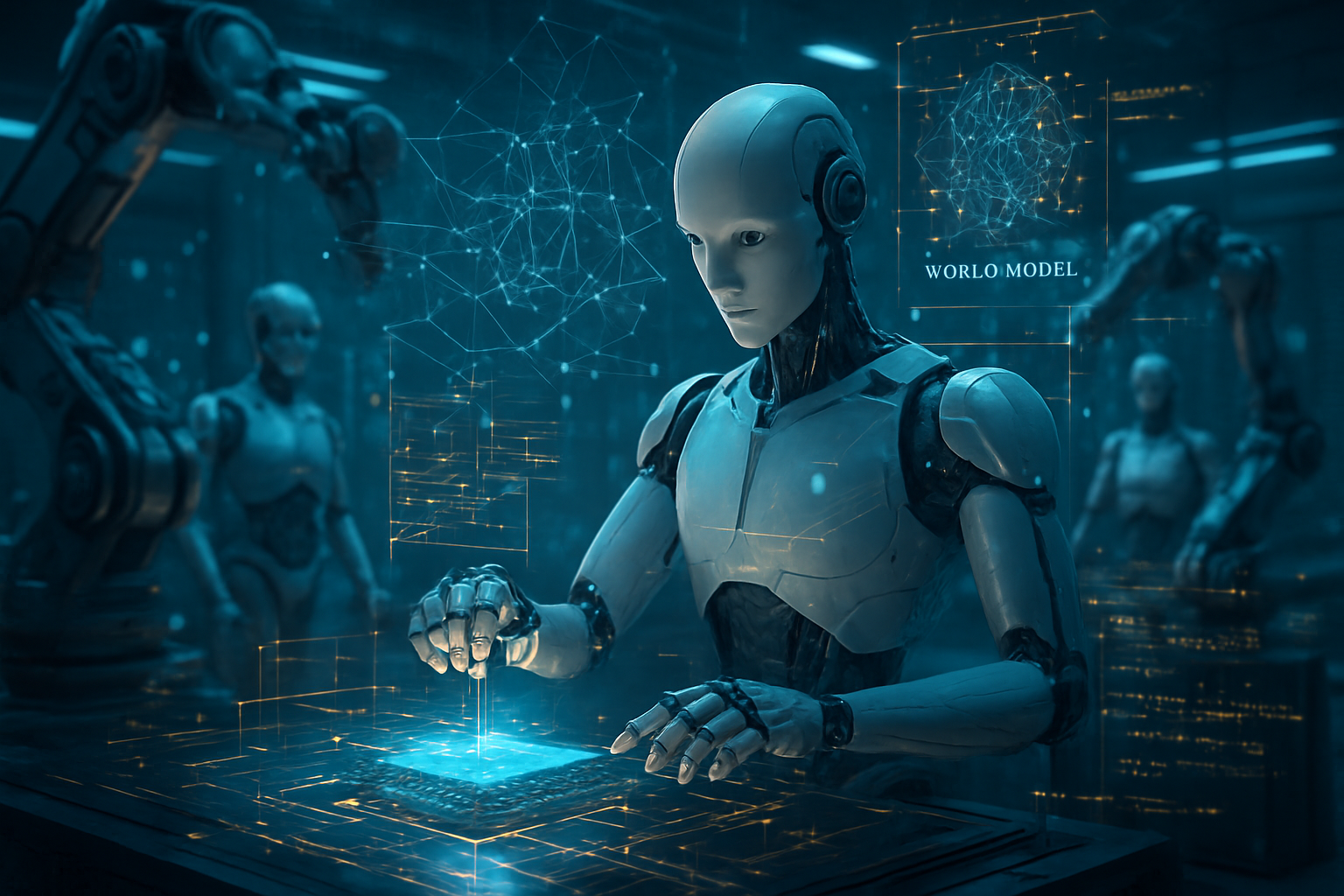
    SAN FRANCISCO — January 14, 2026 — In a breakthrough that marks a fundamental shift in the robotics industry, the San Francisco-based startup Physical Intelligence (often stylized as Pi) has unveiled the latest iteration of its "World Models," proving that the "brain" of a robot can finally be separated from its "body." By developing foundation models that understand the laws of physics through pure data rather than rigid programming, Pi is positioning itself as the creator of a universal operating system for anything with a motor. This development follows a massive $400 million Series A funding round led by Jeff Bezos and OpenAI, which was eclipsed only months ago by a staggering $600 million Series B led by Alphabet Inc. (NASDAQ: GOOGL), valuing the company at $5.6 billion.

    The significance of Pi’s advancement lies in its ability to grant robots a "common sense" understanding of the physical world. Unlike traditional robots that require thousands of lines of code to perform a single, repetitive task in a controlled environment, Pi’s models allow machines to generalize. Whether it is a multi-jointed industrial arm, a mobile warehouse unit, or a high-end humanoid, the same "pi-zero" ($\pi_0$) model can be deployed to help the robot navigate messy, unpredictable human spaces. This "Physical AI" breakthrough suggests that the era of task-specific robotics is ending, replaced by a world where robots can learn to fold laundry, assemble electronics, or even operate complex machinery simply by observing and practicing.

    The Architecture of Action: Inside the $\pi_0$ Foundation Model

    At the heart of Physical Intelligence’s technology is the $\pi_0$ model, a Vision-Language-Action (VLA) architecture that differs significantly from the Large Language Models (LLMs) developed by companies like Microsoft (NASDAQ: MSFT) or NVIDIA (NASDAQ: NVDA). While LLMs predict the next word in a sentence, $\pi_0$ predicts the next movement in a physical trajectory. The model is built upon a vision-language backbone—leveraging Google’s PaliGemma—which provides the robot with semantic knowledge of the world. It doesn't just see a "cylinder"; it understands that it is a "Coke can" that can be crushed or opened.

    The technical breakthrough that separates Pi from its predecessors is a method known as "flow matching." Traditional robotic controllers often struggle with the "jerky" nature of discrete commands. Pi’s flow-matching architecture allows the model to output continuous, high-frequency motor commands at 50Hz. This enables the fluid, human-like dexterity seen in recent demonstrations, such as a robot delicately peeling a grape or assembling a cardboard box. Furthermore, the company’s "Recap" method (Reinforcement Learning with Experience & Corrections) allows these models to learn from their own mistakes in real-time, effectively "practicing" a task until it reaches 99.9% reliability without human intervention.

    Industry experts have reacted with a mix of awe and caution. "We are seeing the 'GPT-3 moment' for robotics," noted one researcher from the Stanford AI Lab. While previous attempts at universal robot brains were hampered by the "data bottleneck"—the difficulty of getting enough high-quality robotic training data—Pi has bypassed this by using cross-embodiment learning. By training on data from seven different types of robot hardware simultaneously, the $\pi_0$ model has developed a generalized understanding of physics that applies across the board, making it the most robust "world model" currently in existence.

    A New Power Dynamic: Hardware vs. Software in the AI Arms Race

    The rise of Physical Intelligence creates a massive strategic shift for tech giants and robotics startups alike. By focusing solely on the software "brain" rather than the "hardware" body, Pi is effectively building the "Android" of the robotics world. This puts the company in direct competition with vertically integrated firms like Tesla (NASDAQ: TSLA) and Figure, which are developing both their own humanoid hardware and the AI that controls it. If Pi’s models become the industry standard, hardware manufacturers may find themselves commoditized, forced to use Pi's software to remain competitive in a market that demands extreme adaptability.

    The $400 million investment from Jeff Bezos and the $600 million infusion from Alphabet’s CapitalG signal that the most powerful players in tech are hedging their bets. Alphabet and OpenAI’s participation is particularly telling; while OpenAI has historically focused on digital intelligence, their backing of Pi suggests a recognition that "Physical AI" is the next necessary frontier for General Artificial Intelligence (AGI). This creates a complex web of alliances where Alphabet and OpenAI are both funding a potential rival to the internal robotics efforts of companies like Amazon (NASDAQ: AMZN) and NVIDIA.

    For startups, the emergence of Pi’s foundation models is a double-edged sword. On one hand, smaller robotics firms no longer need to build their own AI from scratch, allowing them to bring specialized hardware to market faster by "plugging in" to Pi’s brain. On the other hand, the high capital requirements to train these multi-billion parameter world models mean that only a handful of "foundational" companies—Pi, NVIDIA, and perhaps Meta (NASDAQ: META)—will control the underlying intelligence of the global robotic fleet.

    Beyond the Digital: The Socio-Economic Impact of Physical AI

    The wider significance of Pi’s world models cannot be overstated. We are moving from the automation of cognitive labor—writing, coding, and designing—to the automation of physical labor. Analysts at firms like Goldman Sachs (NYSE: GS) have long predicted a multi-trillion dollar market for general-purpose robotics, but the missing link has always been a model that understands physics. Pi’s models fill this gap, potentially disrupting industries ranging from healthcare and eldercare to construction and logistics.

    However, this breakthrough brings significant concerns. The most immediate is the "black box" nature of these world models. Because $\pi_0$ learns physics through data rather than hardcoded laws (like gravity or friction), it can sometimes exhibit unpredictable behavior when faced with scenarios it hasn't seen before. Critics argue that a robot "guessing" how physics works is inherently more dangerous than a robot following a pre-programmed safety script. Furthermore, the rapid advancement of Physical AI reignites the debate over labor displacement, as tasks previously thought to be "automation-proof" due to their physical complexity are now within the reach of a foundation-model-powered machine.

    Comparing this to previous milestones, Pi’s world models represent a leap beyond the "AlphaGo" era of narrow reinforcement learning. While AlphaGo mastered a game with fixed rules, Pi is attempting to master the "game" of reality, where the rules are fluid and the environment is infinite. This is the first time we have seen a model demonstrate "spatial intelligence" at scale, moving beyond the 2D world of screens into the 3D world of atoms.

    The Horizon: From Lab Demos to the "Robot Olympics"

    Looking forward, Physical Intelligence is already pushing toward what it calls "The Robot Olympics," a series of benchmarks designed to test how well its models can adapt to entirely new robot bodies on the fly. In the near term, we expect to see Pi release its "FAST tokenizer," a technology that could speed up the training of robotic foundation models by a factor of five. This would allow the company to iterate on its world models at the same breakneck pace we currently see in the LLM space.

    The next major challenge for Pi will be the "sim-to-real" gap. While their models have shown incredible performance in laboratory settings and controlled pilot programs, the real world is infinitely more chaotic. Experts predict that the next two years will see a massive push to collect "embodied" data from the real world, potentially involving fleets of thousands of robots acting as data-collection agents for the central Pi brain. We may soon see "foundation model-ready" robots appearing in homes and hospitals, acting as the physical hands for the digital intelligence we have already grown accustomed to.

    Conclusion: A New Era for Artificial Physical Intelligence

    Physical Intelligence has successfully transitioned the robotics conversation from "how do we build a better arm" to "how do we build a better mind." By securing over $1 billion in total funding from the likes of Jeff Bezos and Alphabet, and by demonstrating a functional VLA model in $\pi_0$, the company has proven that the path to AGI must pass through the physical world. The decoupling of robotic intelligence from hardware is a watershed moment that will likely define the next decade of technological progress.

    The key takeaways are clear: foundation models are no longer just for text and images; they are for action. As Physical Intelligence continues to refine its "World Models," the tech industry must prepare for a future where any piece of hardware can be granted a high-level understanding of its surroundings. In the coming months, the industry will be watching closely to see how Pi’s hardware partners deploy these models in the wild, and whether this "Android of Robotics" can truly deliver on the promise of a generalist machine.


    This content is intended for informational purposes only and represents analysis of current AI developments.

    TokenRing AI delivers enterprise-grade solutions for multi-agent AI workflow orchestration, AI-powered development tools, and seamless remote collaboration platforms.
    For more information, visit https://www.tokenring.ai/.
  • The ‘Universal Brain’ for Robotics: How Physical Intelligence’s $400M Bet Redefined the Future of Automation

    The ‘Universal Brain’ for Robotics: How Physical Intelligence’s $400M Bet Redefined the Future of Automation

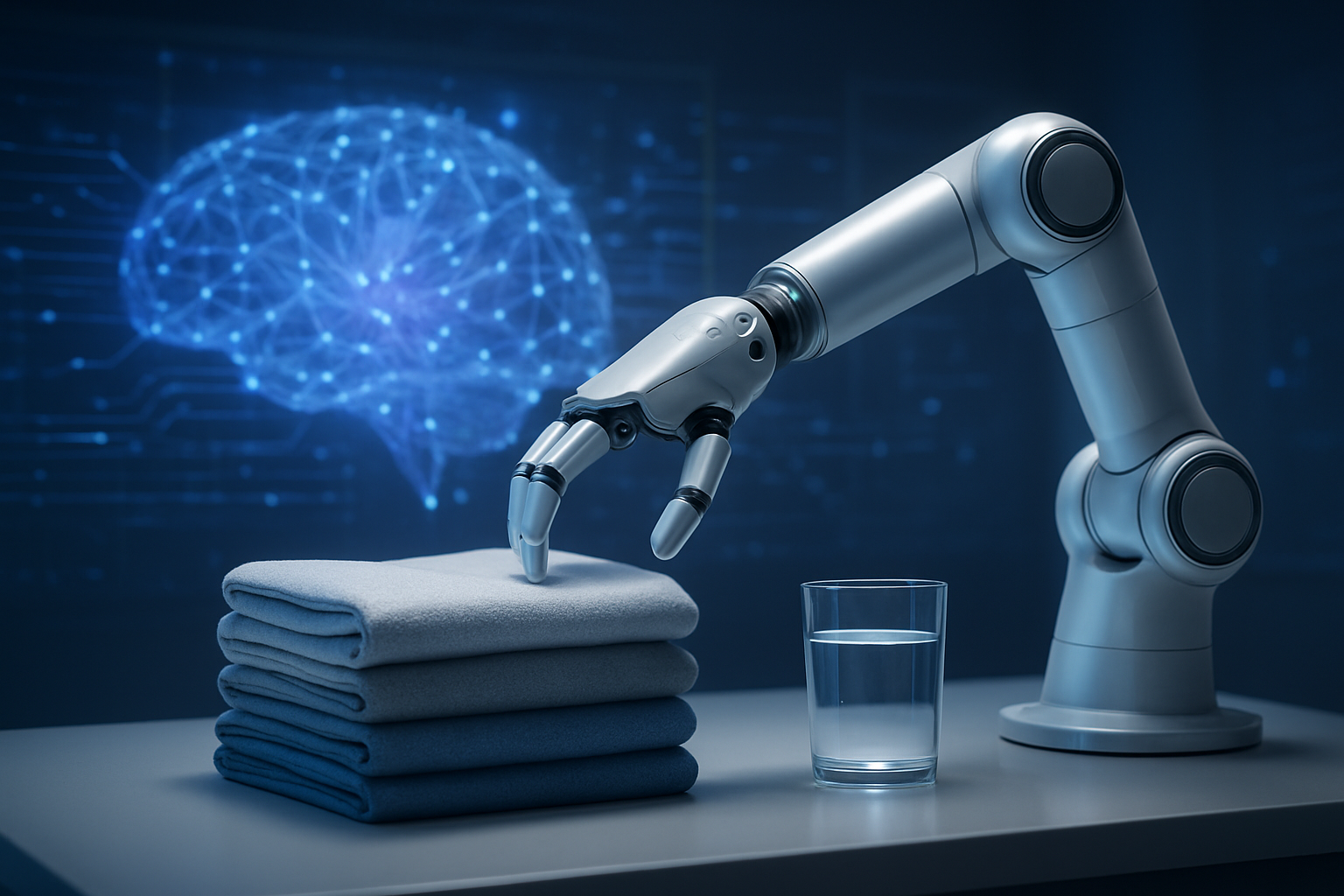
    Looking back from the vantage point of January 2026, the trajectory of artificial intelligence has shifted dramatically from the digital screens of chatbots to the physical world of autonomous motion. This transformation can be traced back to a pivotal moment in late 2024, when Physical Intelligence (Pi), a San Francisco-based startup, secured a staggering $400 million in Series A funding. At a valuation of $2.4 billion, the round signaled more than just investor confidence; it marked the birth of the "Universal Foundation Model" for robotics, a breakthrough that promised to do for physical movement what GPT did for human language.

    The funding round, which drew high-profile backing from Amazon.com, Inc. (NASDAQ: AMZN) founder Jeff Bezos, OpenAI, Thrive Capital, and Lux Capital, positioned Pi as the primary architect of a general-purpose robotic brain. By moving away from the "one-robot, one-task" paradigm that had defined the industry for decades, Physical Intelligence set out to create a single software system capable of controlling any robot, from industrial arms to advanced humanoids, across an infinite variety of tasks.

    The Architecture of Action: Inside the $\pi_0$ Foundation Model

    At the heart of Physical Intelligence’s success is $\pi_0$ (Pi-zero), a Vision-Language-Action (VLA) model that represents a fundamental departure from previous robotic control systems. Unlike traditional approaches that relied on rigid, hand-coded logic or narrow reinforcement learning for specific tasks, $\pi_0$ is a generalist. It was built upon a 3-billion parameter vision-language model, PaliGemma, developed by Alphabet Inc. (NASDAQ: GOOGL), which Pi augmented with a specialized 300-million parameter "action expert" module. This hybrid architecture allows the model to understand visual scenes and natural language instructions while simultaneously generating high-frequency motor commands.

    Technically, $\pi_0$ distinguishes itself through a method known as flow matching. This generative modeling technique allows the AI to produce smooth, continuous trajectories for robot limbs at a frequency of 50Hz, enabling the fluid, life-like movements seen in Pi’s demonstrations. During its initial unveiling, the model showcased remarkable versatility, autonomously folding laundry, bagging groceries, and clearing tables. Most impressively, the model exhibited "emergent behaviors"—unprogrammed actions like shaking a plate to clear crumbs into a bin before stacking it—demonstrating a level of physical reasoning previously unseen in the field.

    This "cross-embodiment" capability is perhaps Pi’s greatest technical achievement. By training on over 10,000 hours of diverse data across seven different robot types, $\pi_0$ proved it could control hardware it had never seen before. This effectively decoupled the intelligence of the robot from its mechanical body, allowing a single "brain" to be downloaded into a variety of machines to perform complex, multi-stage tasks without the need for specialized retraining.

    A New Power Dynamic: The Strategic Shift in the AI Arms Race

    The $400 million investment into Physical Intelligence sent shockwaves through the tech industry, forcing major players to reconsider their robotics strategies. For companies like Tesla, Inc. (NASDAQ: TSLA), which has long championed a vertically integrated approach with its Optimus humanoid, Pi’s hardware-agnostic software represents a formidable challenge. While Tesla builds the entire stack from the motors to the neural nets, Pi’s strategy allows any hardware manufacturer to "plug in" a world-class brain, potentially commoditizing the hardware market and shifting the value toward the software layer.

    The involvement of OpenAI and Jeff Bezos highlights a strategic hedge against the limitations of pure LLMs. As digital AI markets became increasingly crowded, the physical world emerged as the next great frontier for data and monetization. By backing Pi, OpenAI—supported by Microsoft Corp. (NASDAQ: MSFT)—ensured it remained at the center of the robotics revolution, even as it focused its internal resources on reasoning and agentic workflows. Meanwhile, for Bezos and Amazon, the technology offers a clear path toward the fully autonomous warehouse, where robots can handle the "long tail" of irregular items and unpredictable tasks that currently require human intervention.

    For the broader startup ecosystem, Pi’s rise established a new "gold standard" for robotics software. It forced competitors like Sanctuary AI and Figure to accelerate their software development, leading to a "software-first" era in robotics. The release of OpenPi in early 2025 further cemented this dominance, as the open-source community adopted Pi’s framework as the standard operating system for robotic research, much like the Linux of the physical world.

    The "GPT-3 Moment" for the Physical World

    The emergence of Physical Intelligence is frequently compared to the "GPT-3 moment" for robotics. Just as GPT-3 proved that scaling language models could lead to unexpected capabilities in reasoning and creativity, $\pi_0$ proved that large-scale VLA models could master the nuances of the physical environment. This shift has profound implications for the global labor market and industrial productivity. For the first time, the "Moravec’s Paradox"—the discovery that high-level reasoning requires little computation but low-level sensorimotor skills require enormous resources—began to crumble.

    However, this breakthrough also brought new concerns to the forefront. The ability for robots to perform diverse tasks like clearing tables or folding laundry raises immediate questions about the future of service-sector employment. Unlike the industrial robots of the 20th century, which were confined to safety cages in car factories, Pi-powered robots are designed to operate alongside humans in homes, hospitals, and restaurants. This proximity necessitates a new framework for safety and ethics in AI, as the consequences of a "hallucination" in the physical world are far more dangerous than a factual error in a text response.

    Furthermore, the data requirements for these models are immense. While LLMs can scrape the internet for text, Physical Intelligence had to pioneer "robot data collection" at scale. This led to the creation of massive "data farms" where hundreds of robots perform repetitive tasks to feed the model's hunger for experience. As of 2026, the race for "physical data" has become as competitive as the race for high-quality text data was in 2023.

    The Horizon: From Task-Specific to Fully Agentic Robots

    As we move into 2026, the industry is eagerly awaiting the release of $\pi_1$, Physical Intelligence’s next-generation model. While $\pi_0$ mastered individual tasks, $\pi_1$ is expected to introduce "long-horizon reasoning." This would allow a robot to receive a single, vague command like "Clean the kitchen" and autonomously sequence dozens of sub-tasks—from loading the dishwasher to wiping the counters and taking out the trash—without human guidance.

    The near-term future also holds the promise of "edge deployment," where these massive models are compressed to run locally on robot hardware, reducing latency and increasing privacy. Experts predict that by the end of 2026, we will see the first widespread commercial pilots of Pi-powered robots in elderly care facilities and hospitality, where the ability to handle soft, delicate objects and navigate cluttered environments is essential.

    The primary challenge remaining is "generalization to the unknown." While Pi’s models have shown incredible adaptability, the sheer variety of the physical world remains a hurdle. A robot that can fold a shirt in a lab must also be able to fold a rain jacket in a dimly lit mudroom. Solving these "edge cases" of reality will be the focus of the next decade of AI development.

    A New Chapter in Human-Robot Interaction

    The $400 million funding round of 2024 was the catalyst that turned the dream of general-purpose robotics into a multi-billion dollar reality. Physical Intelligence has successfully demonstrated that the key to the future of robotics lies not in the metal and motors, but in the neural networks that govern them. By creating a "Universal Foundation Model," they have provided the industry with a common language for movement and interaction.

    As we look toward the coming months, the focus will shift from what these robots can do to how they are integrated into society. With the expected launch of $\pi_1$ and the continued expansion of the OpenPi ecosystem, the barrier to entry for advanced robotics has never been lower. We are witnessing the transition of AI from a digital assistant to a physical partner, a shift that will redefine our relationship with technology for generations to come.


    This content is intended for informational purposes only and represents analysis of current AI developments.

    TokenRing AI delivers enterprise-grade solutions for multi-agent AI workflow orchestration, AI-powered development tools, and seamless remote collaboration platforms.
    For more information, visit https://www.tokenring.ai/.
  • Analog Devices Unleashes CodeFusion Studio 2.0: Revolutionizing Embedded AI Development with Open-Source Simplicity

    Analog Devices Unleashes CodeFusion Studio 2.0: Revolutionizing Embedded AI Development with Open-Source Simplicity

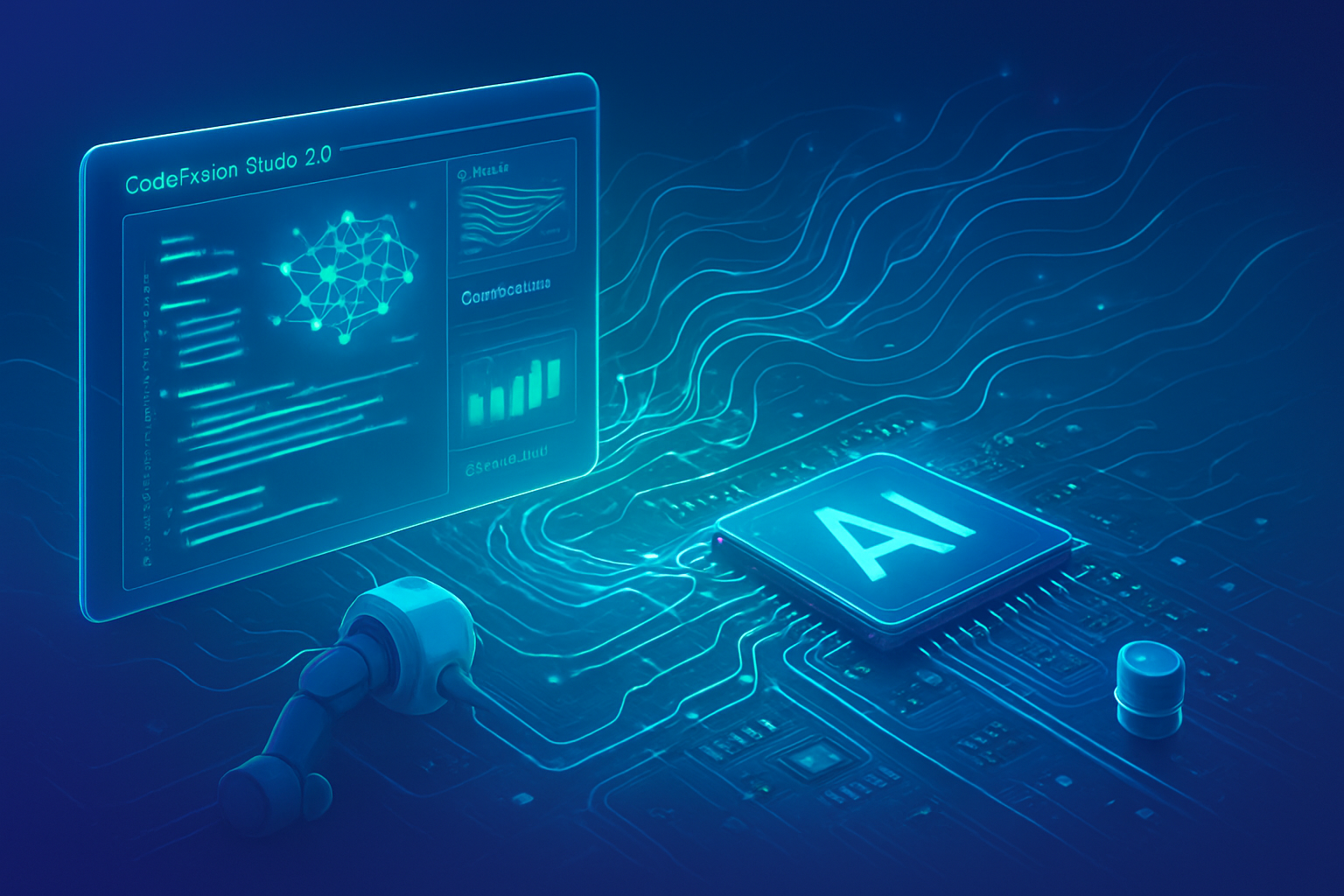
    In a pivotal move for the embedded artificial intelligence landscape, Analog Devices (NASDAQ: ADI) has announced the release of CodeFusion Studio 2.0 in early November 2025. This significant upgrade to its open-source embedded development platform is engineered to dramatically streamline the creation and deployment of AI-enabled embedded systems, heralding a new era of accessibility for embedded AI. By unifying what were previously fragmented and complex AI workflows into a seamless, developer-friendly experience, CodeFusion Studio 2.0 is set to accelerate innovation at the edge, making sophisticated AI integration more attainable for engineers and developers across various industries.

    Analog Devices' strategic focus with CodeFusion Studio 2.0 is to "remove friction from AI development," a critical step toward realizing their vision of "Physical Intelligence"—systems capable of perceiving, reasoning, and acting locally within real-world constraints. This release underscores the growing industry trend towards democratizing AI by providing robust, open-source tools that simplify complex tasks, ultimately empowering a broader community to build and deploy intelligent edge devices with unprecedented speed and confidence.

    Technical Deep Dive: CodeFusion Studio 2.0's Architecture and Innovations

    CodeFusion Studio 2.0 is built upon the familiar and extensible foundation of Microsoft's (NASDAQ: MSFT) Visual Studio Code, offering developers a powerful integrated development environment (IDE). Its technical prowess lies in its comprehensive support for end-to-end AI workflows, allowing developers to "bring their own models" (BYOM) via a graphical user interface (GUI) or command-line interface (CLI). These models can then be efficiently deployed across Analog Devices' diverse portfolio of processors and microcontrollers, spanning from low-power edge devices to high-performance Digital Signal Processors (DSPs).

    A core innovation is the platform's integrated AI/ML tooling, which includes a model compatibility checker to verify models against ADI processors and microcontrollers. Performance profiling tools, based on a new Zephyr Real-Time Operating System (RTOS)-based modular framework, provide runtime AI/ML profiling, including layer-by-layer analysis. This granular insight into latency, memory, and power consumption enables the generation of highly optimized, inference-ready code directly within the IDE. This approach significantly differs from previous fragmented methods where developers often had to juggle multiple IDEs and proprietary toolchains, struggling with compatibility and optimization across heterogeneous systems.

    The updated CodeFusion Studio System Planner further enhances the technical capabilities by supporting multi-core applications and offering broader device compatibility. It provides unified configuration tools for complex system setups, allowing visual allocation of memory, peripherals, pins, clocks, and inter-core data flows across multiple cores and devices. Coupled with integrated debugging features like GDB and Core Dump Analysis, CodeFusion Studio 2.0 offers a unified workspace that simplifies configuration, building, and debugging across all cores with shared memory maps and consistent build dependencies. Initial reactions from industry observers and ADI executives, such as Rob Oshana (SVP of Software and Digital Platforms), have been highly optimistic, emphasizing the platform's potential to accelerate time-to-market and empower developers.

    Market Ripples: Impact on AI Companies, Tech Giants, and Startups

    The introduction of CodeFusion Studio 2.0 is set to create significant ripples across the AI industry, benefiting a wide spectrum of players from nimble startups to established tech giants. For AI companies and startups, particularly those focused on edge AI, the platform offers a critical advantage: accelerated time-to-market. By simplifying and unifying the AI development workflow, it lowers the barrier to entry, allowing these innovators to quickly validate and deploy their AI-driven products. This efficiency translates into significant cost savings and allows smaller entities to compete more effectively by focusing on AI innovation rather than wrestling with complex embedded system integrations.

    For major tech giants and AI labs, CodeFusion Studio 2.0 provides a scalable solution for deploying AI across Analog Devices' extensive hardware portfolio. Its Visual Studio Code foundation eases integration into existing enterprise development pipelines, while specialized optimization tools ensure maximum performance and efficiency for their edge AI applications. This enables these larger organizations to differentiate their products with superior embedded intelligence. The platform's ability to unify fragmented workflows also frees up valuable engineering resources, allowing them to focus on higher-level AI model development and strategic application-specific solutions.

    Competitively, CodeFusion Studio 2.0 intensifies the race in the edge AI market. It could prompt other semiconductor companies and toolchain providers to enhance their offerings, leading to a more integrated and developer-friendly ecosystem across the industry. The platform's deep integration with Analog Devices' silicon could create a strategic advantage for ADI, fostering ecosystem "lock-in" for developers who invest in its capabilities. Potential disruptions include a decreased demand for fragmented embedded development toolchains and specialized embedded AI integration consulting, as more tasks become manageable within the unified studio. Analog Devices (NASDAQ: ADI) is strategically positioning itself as a leader in "Physical Intelligence," differentiating its focus on real-world, localized AI and strengthening its market position as a key enabler for intelligent edge solutions.

    Broader Horizon: CodeFusion Studio 2.0 in the AI Landscape

    CodeFusion Studio 2.0 arrives at a time when embedded AI, or edge AI, is experiencing explosive growth. The broader AI landscape in 2025 is characterized by a strong push towards decentralizing intelligence, moving processing power and decision-making capabilities closer to the data source—the edge. This shift is driven by demands for lower latency, enhanced privacy, greater autonomy, and reduced bandwidth and energy consumption. CodeFusion Studio 2.0 directly supports these trends by enabling real-time decision-making on local devices, crucial for applications in industrial automation, healthcare, and autonomous systems. Its optimization tools and support for a wide range of ADI hardware, from low-power MCUs to high-performance DSPs, are critical for deploying AI models within the strict resource and energy constraints of embedded systems.

    The platform's open-source nature aligns with another significant trend in embedded engineering: the increasing adoption of open-source tools. By leveraging Visual Studio Code and incorporating a Zephyr-based modular framework, Analog Devices promotes transparency, flexibility, and community collaboration, helping to reduce toolchain fragmentation. This open approach is vital for fostering innovation and avoiding vendor lock-in, enabling developers to inspect, modify, and distribute the underlying code, thereby accelerating the proliferation of intelligent edge devices.

    While CodeFusion Studio 2.0 is not an algorithmic breakthrough like the invention of neural networks, it represents a pivotal enabling milestone for the practical deployment of AI. It builds upon the advancements in machine learning and deep learning, taking the theoretical power of AI models and making their efficient deployment on constrained embedded devices a practical reality. Potential concerns, however, include the risk of de facto vendor lock-in despite its open-source claims, given its deep optimization for ADI hardware. The complexity of multi-core orchestration and the continuous need to keep pace with rapid AI advancements also pose challenges. Security and privacy in AI-driven embedded systems remain paramount, requiring robust measures that extend beyond the development platform itself.

    The Road Ahead: Future of Embedded AI with CodeFusion Studio 2.0

    The future for CodeFusion Studio 2.0 and embedded AI is dynamic, marked by continuous innovation and expansion. In the near term, Analog Devices (NASDAQ: ADI) is expected to further refine the platform's AI workflow integration, enhancing model compatibility and optimization tools for even greater efficiency. Expanding hardware support for newly released ADI silicon and improving debugging capabilities for complex multi-core systems will also be key focuses. As an open-source platform, increased community contributions are anticipated, leading to extended functionalities and broader use cases.

    Long-term developments will be guided by ADI's vision of "Physical Intelligence," pushing for deeper hardware-software integration and expanded support for emerging AI frameworks and runtime environments. Experts predict a shift towards more advanced automated optimization techniques, potentially leveraging AI itself to fine-tune model architectures and deployment configurations. The platform is also expected to evolve to support agentic AI, enabling autonomous AI agents on embedded systems for complex tasks. This will unlock potential applications in areas like predictive maintenance, quality control in manufacturing, advanced driver-assistance systems (ADAS), wearable health monitoring, and smart agriculture, where real-time, local AI processing is critical.

    However, several challenges persist. The inherent limitations of computational power, memory, and energy in embedded systems necessitate ongoing efforts in model optimization and hardware acceleration. Real-time processing, security, and the need for rigorous validation of AI outputs remain critical concerns. A growing skills gap in engineers proficient in both AI and embedded systems also needs addressing. Despite these challenges, experts predict the dominance of edge AI, with more devices processing AI locally. They foresee the rise of self-learning and adaptive embedded systems, specialized AI hardware (like NPUs), and the continued standardization of open-source frameworks. The ultimate goal is to enable AI to become more pervasive, intelligent, and autonomous, profoundly impacting industries and daily life.

    Conclusion: A New Era for Embedded Intelligence

    Analog Devices' (NASDAQ: ADI) CodeFusion Studio 2.0 marks a pivotal moment in the evolution of embedded AI. By offering a unified, open-source, and developer-first platform, ADI is effectively dismantling many of the traditional barriers to integrating artificial intelligence into physical devices. The key takeaways are clear: streamlined AI workflows, robust performance optimization, a unified development experience, and a strong commitment to open-source principles. This development is not merely an incremental update; it represents a significant step towards democratizing embedded AI, making sophisticated "Physical Intelligence" more accessible and accelerating its deployment across a multitude of applications.

    In the grand tapestry of AI history, CodeFusion Studio 2.0 stands as an enabler—a tool-chain breakthrough that operationalizes the theoretical advancements in AI models for real-world, resource-constrained environments. Its long-term impact will likely be seen in the proliferation of smarter, more autonomous, and energy-efficient edge devices, driving innovation across industrial, consumer, and medical sectors. It sets a new benchmark for how semiconductor companies integrate software solutions with their hardware, fostering a more holistic and user-friendly ecosystem.

    In the coming weeks and months, the industry will be closely watching developer adoption rates, the emergence of compelling real-world use cases, and how Analog Devices continues to build out the CodeFusion Studio 2.0 ecosystem with further integrations and updates. The response from competitors and the continued evolution of ADI's "Physical Intelligence" roadmap will also be crucial indicators of the platform's long-term success and its role in shaping the future of embedded intelligence.


    This content is intended for informational purposes only and represents analysis of current AI developments.

    TokenRing AI delivers enterprise-grade solutions for multi-agent AI workflow orchestration, AI-powered development tools, and seamless remote collaboration platforms.
    For more information, visit https://www.tokenring.ai/.