Tag: Physics

  • The Silicon Laureates: How the 2024 Nobel Prizes Rewrote the Rules of Scientific Discovery

    The Silicon Laureates: How the 2024 Nobel Prizes Rewrote the Rules of Scientific Discovery

    The year 2024 marked a historic inflection point in the history of science, as the Royal Swedish Academy of Sciences awarded Nobel Prizes in both Physics and Chemistry to pioneers of artificial intelligence. This dual recognition effectively ended the debate over whether AI was merely a sophisticated tool or a fundamental branch of scientific inquiry. By bestowing its highest honors on Geoffrey Hinton and John Hopfield for the foundations of neural networks, and on Demis Hassabis and John Jumper for cracking the protein-folding code with AlphaFold, the Nobel committee signaled that the "Information Age" had evolved into the "AI Age," where the most complex mysteries of the universe are now being solved by silicon and code.

    The immediate significance of these awards cannot be overstated. For decades, AI research was often siloed within computer science departments, distinct from the "hard" sciences like physics and biology. The 2024 prizes dismantled these boundaries, acknowledging that the mathematical frameworks governing how machines learn are as fundamental to our understanding of the physical world as thermodynamics or molecular biology. Today, as we look back from early 2026, these awards are viewed as the official commencement of a new scientific epoch—one where human intuition is systematically augmented by machine intelligence to achieve breakthroughs that were previously deemed impossible.

    The Physics of Learning and the Geometry of Life

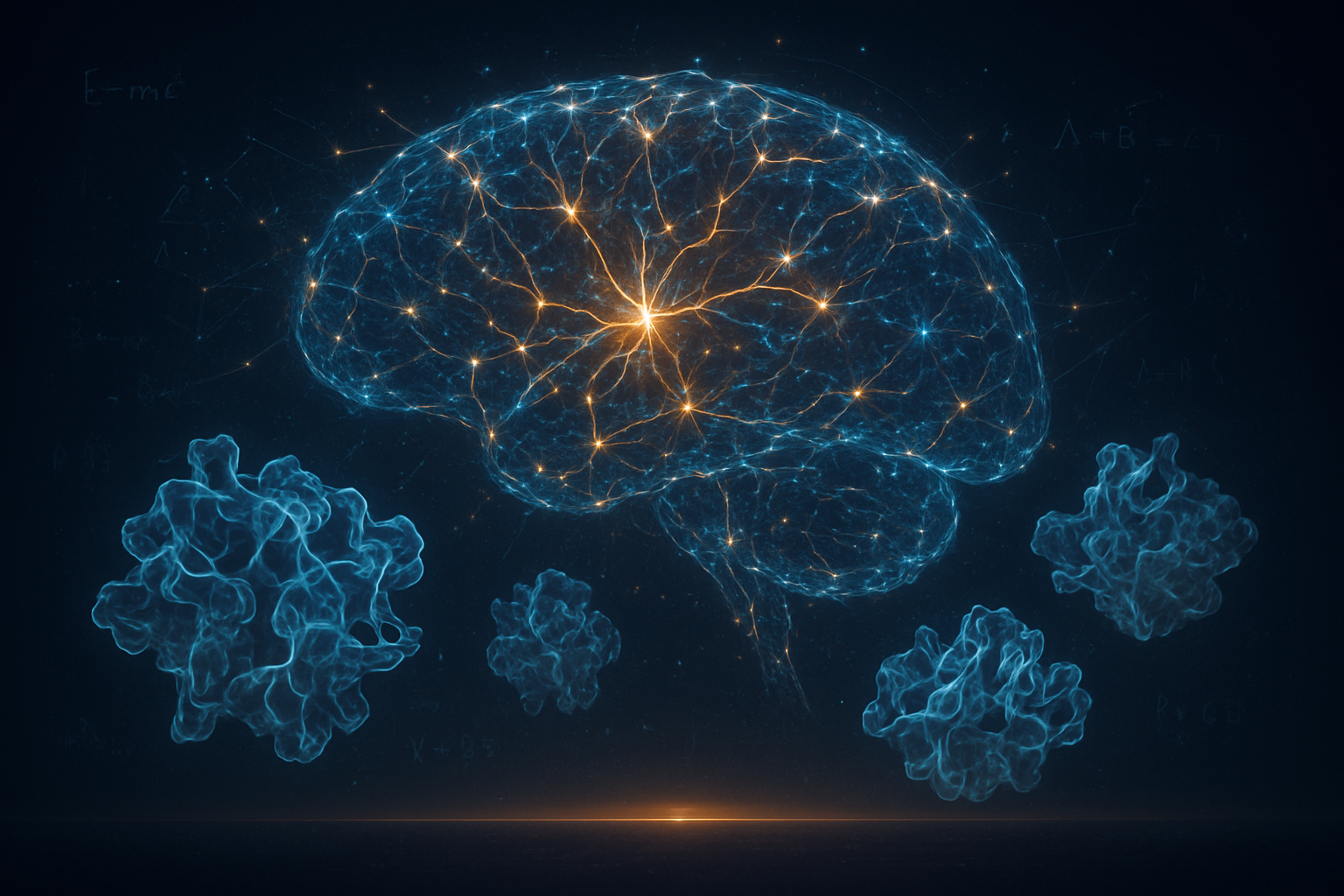
    The 2024 Nobel Prize in Physics was awarded to John J. Hopfield and Geoffrey E. Hinton for foundational discoveries in machine learning. Their work was rooted not in software engineering, but in statistical mechanics. Hopfield developed the Hopfield Network, a model for associative memory that treats data patterns like physical systems seeking their lowest energy state. Hinton expanded this with the Boltzmann Machine, introducing stochasticity and "hidden units" that allowed networks to learn complex internal representations. This architecture, inspired by the Boltzmann distribution in thermodynamics, provided the mathematical bedrock for the Deep Learning revolution that powers every modern AI system today. By recognizing this work, the Nobel committee validated the idea that information is a physical property and that the laws governing its processing are a core concern of physics.

    In Chemistry, the prize was shared by Demis Hassabis and John Jumper of Google DeepMind, owned by Alphabet (NASDAQ:GOOGL), alongside David Baker of the University of Washington. Hassabis and Jumper were recognized for AlphaFold 2, an AI system that solved the "protein folding problem"—a grand challenge in biology for over 50 years. By predicting the 3D structure of nearly all known proteins from their amino acid sequences, AlphaFold provided a blueprint for life that has accelerated biological research by decades. David Baker’s contribution focused on de novo protein design, using AI to build entirely new proteins that do not exist in nature. These breakthroughs transitioned chemistry from a purely experimental science to a predictive and generative one, where new molecules can be designed on a screen before they are ever synthesized in a lab.

    A Corporate Renaissance in the Laboratory

    The recognition of Hassabis and Jumper, in particular, highlighted the growing dominance of corporate research labs in the global scientific landscape. Alphabet (NASDAQ:GOOGL) through its DeepMind division, demonstrated that a concentrated fusion of massive compute power, top-tier talent, and specialized AI architectures could solve problems that had stumped academia for half a century. This has forced a strategic pivot among other tech giants. Microsoft (NASDAQ:MSFT) has since aggressively expanded its "AI for Science" initiative, while NVIDIA (NASDAQ:NVDA) has solidified its position as the indispensable foundry of this revolution, providing the H100 and Blackwell GPUs that act as the modern-day "particle accelerators" for AI-driven chemistry and physics.

    This shift has also sparked a boom in the biotechnology sector. The 2024 Nobel wins acted as a "buy signal" for the market, leading to a surge in funding for AI-native drug discovery companies like Isomorphic Labs and Xaira Therapeutics. Traditional pharmaceutical giants, such as Eli Lilly and Company (NYSE:LLY) and Novartis (NYSE:NVS), have been forced to undergo digital transformations, integrating AI-driven structural biology into their core R&D pipelines. The competitive landscape is no longer defined just by chemical expertise, but by "data moats" and the ability to train large-scale biological models. Companies that failed to adopt the "AlphaFold paradigm" by early 2026 are finding themselves increasingly marginalized in an industry where drug candidate timelines have been slashed from years to months.

    The Ethical Paradox and the New Scientific Method

    The 2024 awards also brought the broader implications of AI into sharp focus, particularly through the figure of Geoffrey Hinton. Often called the "Godfather of AI," Hinton’s Nobel win was marked by a bittersweet irony; he had recently resigned from Google to speak more freely about the existential risks posed by the very technology he helped create. His win forced the scientific community to grapple with a profound paradox: the same neural networks that are curing diseases and uncovering new physics could also pose catastrophic risks if left unchecked. This has led to a mandatory inclusion of "AI Safety" and "Ethics in Algorithmic Discovery" in scientific curricula globally, a trend that has only intensified through 2025 and into 2026.

    Beyond safety, the "AI Nobels" have fundamentally altered the scientific method itself. We are moving away from the traditional hypothesis-driven approach toward a data-driven, generative model. In this new landscape, AI is not just a calculator; it is a collaborator. This has raised concerns about the "black box" nature of AI—while AlphaFold can predict a protein's shape, it doesn't always explain the underlying physical steps of how it folds. The tension between predictive power and fundamental understanding remains a central debate in 2026, with many scientists arguing that we must ensure AI remains a tool for human enlightenment rather than a replacement for it.

    The Horizon of Discovery: Materials and Climate

    Looking ahead, the near-term developments sparked by these Nobel-winning breakthroughs are moving into the realm of material science and climate mitigation. We are already seeing the first AI-designed superconductors and high-efficiency battery materials entering pilot production—a direct result of the scaling laws first explored by Hinton and the structural prediction techniques perfected by Hassabis and Jumper. In the long term, experts predict the emergence of "Closed-Loop Labs," where AI systems not only design experiments but also direct robotic systems to conduct them, analyze the results, and refine their own models without human intervention.

    However, significant challenges remain. The energy consumption required to train these "Large World Models" is immense, leading to a push for more "energy-efficient" AI architectures inspired by the very biological systems AlphaFold seeks to understand. Furthermore, the democratization of these tools is a double-edged sword; while any lab can now access protein structures, the ability to design novel toxins or pathogens using the same technology remains a critical security concern. The next several years will be defined by the global community’s ability to establish "Bio-AI" guardrails that foster innovation while preventing misuse.

    A Watershed Moment in Human History

    The 2024 Nobel Prizes in Physics and Chemistry were more than just awards; they were a collective realization that the map of human knowledge is being redrawn by machine intelligence. By recognizing Hinton, Hopfield, Hassabis, and Jumper, the Nobel committees acknowledged that AI has become the foundational infrastructure of modern science. It is the microscope of the 21st century, allowing us to see patterns in the subatomic and biological worlds that were previously invisible to the naked eye and the human mind.

    As we move further into 2026, the legacy of these prizes is clear: AI is no longer a sub-discipline of computer science, but a unifying language across all scientific fields. The coming weeks and months will likely see further breakthroughs in AI-driven nuclear fusion and carbon capture, as the "Silicon Revolution" continues to accelerate. The 2024 laureates didn't just win a prize; they validated a future where the partnership between human and machine is the primary engine of progress, forever changing how we define "discovery" itself.


    This content is intended for informational purposes only and represents analysis of current AI developments.

    TokenRing AI delivers enterprise-grade solutions for multi-agent AI workflow orchestration, AI-powered development tools, and seamless remote collaboration platforms.
    For more information, visit https://www.tokenring.ai/.
  • The Silicon Laureates: How the 2024 Nobel Prizes Cemented AI as the New Language of Science

    The Silicon Laureates: How the 2024 Nobel Prizes Cemented AI as the New Language of Science

    The announcement of the 2024 Nobel Prizes in Physics and Chemistry sent a shockwave through the global scientific community, signaling a definitive end to the "AI Winter" and the beginning of what historians are already calling the "Silicon Enlightenment." By honoring the architects of artificial neural networks and the pioneers of AI-driven molecular biology, the Royal Swedish Academy of Sciences did more than just recognize individual achievement; it officially validated artificial intelligence as the most potent instrument for discovery in human history. This double-header of Nobel recognition has transformed AI from a controversial niche of computer science into the foundational infrastructure of modern physical and life sciences.

    The immediate significance of these awards cannot be overstated. For decades, the development of neural networks was often viewed by traditionalists as "mere engineering" or "statistical alchemy." The 2024 prizes effectively dismantled these perceptions. In the year and a half since the announcements, the "Nobel Halo" has accelerated a massive redirection of capital and talent, moving the focus of the tech industry from consumer-facing chatbots to "AI for Science" (AI4Science). This pivot is reshaping everything from how we develop life-saving drugs to how we engineer the materials for a carbon-neutral future, marking a historic validation for a field that was once fighting for academic legitimacy.

    From Statistical Physics to Neural Architectures: The Foundational Breakthroughs

    The 2024 Nobel Prize in Physics was awarded to John Hopfield and Geoffrey Hinton for their "foundational discoveries and inventions that enable machine learning with artificial neural networks." This choice highlighted the deep, often overlooked roots of AI in the principles of statistical physics. John Hopfield’s 1982 development of the Hopfield Network utilized the behavior of atomic spins in magnetic materials to create a form of "associative memory," where a system could reconstruct a complete pattern from a fragment. This was followed by Geoffrey Hinton’s Boltzmann Machine, which applied statistical mechanics to recognize and generate patterns, effectively teaching machines to "learn" autonomously.

    Technically, these advancements represent a departure from the "expert systems" of the 1970s, which relied on rigid, hand-coded rules. Instead, the models developed by Hopfield and Hinton allowed systems to reach a "lowest energy state" to find solutions—a concept borrowed directly from thermodynamics. Hinton’s subsequent work on the Backpropagation algorithm provided the mathematical engine that drives today’s Deep Learning, enabling multi-layered neural networks to extract complex features from vast datasets. This shift from "instruction-based" to "learning-based" computing is what made the current AI explosion possible.

    The reaction from the scientific community was a mix of awe and introspection. While some traditional physicists questioned whether AI truly fell under the umbrella of their discipline, others argued that the mathematics of entropy and energy landscapes are the very heart of physics. Hinton himself, who notably resigned from Alphabet Inc. (NASDAQ: GOOGL) in 2023 to speak freely about the risks of the technology he helped create, used his Nobel platform to voice "existential regret." He warned that while AI provides incredible benefits, the field must confront the possibility of these systems eventually outsmarting their creators.

    The Chemistry of Computation: AlphaFold and the End of the Folding Problem

    The 2024 Nobel Prize in Chemistry was awarded to David Baker, Demis Hassabis, and John Jumper for a feat that had eluded biologists for half a century: predicting the three-dimensional structure of proteins. Demis Hassabis and John Jumper, leaders at Google DeepMind, a subsidiary of Alphabet Inc., developed AlphaFold2, an AI system that solved the "protein folding problem." By early 2026, AlphaFold has predicted the structures of nearly all 200 million proteins known to science—a task that would have taken hundreds of millions of years using traditional experimental methods like X-ray crystallography.

    David Baker’s contribution complemented this by moving from prediction to creation. Using his software Rosetta and AI-driven de novo protein design, Baker demonstrated the ability to engineer entirely new proteins that do not exist in nature. These "spectacular proteins" are currently being used to design new enzymes, sensors, and even components for nano-scale machines. This development has effectively turned biology into a programmable medium, allowing scientists to "code" physical matter with the same precision we once reserved for software.

    This technical milestone has triggered a competitive arms race among tech giants. Nvidia Corporation (NASDAQ: NVDA) has positioned its BioNeMo platform as the "operating system for AI biology," providing the specialized hardware and models needed for other firms to replicate DeepMind’s success. Meanwhile, Microsoft Corporation (NASDAQ: MSFT) has pivoted its AI research toward "The Fifth Paradigm" of science, focusing on materials and climate discovery through its MatterGen model. The Nobel recognition of AlphaFold has forced every major AI lab to prove its worth not just in generating text, but in solving "hard science" problems that have tangible physical outcomes.

    A Paradigm Shift in the Global AI Landscape

    The broader significance of the 2024 Nobel Prizes lies in their timing during the transition from "General AI" to "Specialized Physical AI." Prior milestones, such as the victory of AlphaGo or the release of ChatGPT, focused on games and human language. The Nobels, however, rewarded AI's ability to interface with the laws of nature. This has led to a surge in "AI-native" biotech and material science startups. For instance, Isomorphic Labs, another Alphabet subsidiary, recently secured over $2.9 billion in deals with pharmaceutical leaders like Eli Lilly and Company (NYSE: LLY) and Novartis AG (NYSE: NVS), leveraging Nobel-winning architectures to find new drug candidates.

    However, the rapid "AI-fication" of science is not without concerns. The "black box" nature of many deep learning models remains a hurdle for scientific reproducibility. While a model like AlphaFold 3 (released in late 2024) can predict how a drug molecule interacts with a protein, it cannot always explain why it works. This has led to a push for "AI for Science 2.0," where models are being redesigned to incorporate known physical laws (Physics-Informed Neural Networks) to ensure that their discoveries are grounded in reality rather than statistical hallucinations.

    Furthermore, the concentration of these breakthroughs within a few "Big Tech" labs—most notably Google DeepMind—has raised questions about the democratization of science. If the most powerful tools for discovering new materials or medicines are proprietary and require billion-dollar compute clusters, the gap between "science-rich" and "science-poor" nations could widen significantly. The 2024 Nobels marked the moment when the "ivory tower" of academia officially merged with the data centers of Silicon Valley.

    The Horizon: Self-Driving Labs and Personalized Medicine

    Looking toward the remainder of 2026 and beyond, the trajectory set by the 2024 Nobel winners points toward "Self-Driving Labs" (SDLs). These are autonomous research facilities where AI models like AlphaFold and MatterGen design experiments that are then executed by robotic platforms without human intervention. The results are fed back into the AI, creating a "closed-loop" discovery cycle. Experts predict that this will reduce the time to discover new materials—such as high-efficiency solid-state batteries for EVs—from decades to months.

    In the realm of medicine, we are seeing the rise of "Programmable Biology." Building on David Baker’s Nobel-winning work, startups like EvolutionaryScale are using generative models to simulate millions of years of evolution in weeks to create custom antibodies. The goal for the next five years is personalized medicine at the protein level: designing a unique therapeutic molecule tailored to an individual’s specific genetic mutations. The challenges remain immense, particularly in clinical validation and safety, but the computational barriers that once seemed insurmountable have been cleared.

    Conclusion: A Turning Point in Human History

    The 2024 Nobel Prizes will be remembered as the moment the scientific establishment admitted that the human mind can no longer keep pace with the complexity of modern data without digital assistance. The recognition of Hopfield, Hinton, Hassabis, Jumper, and Baker was a formal acknowledgement that the scientific method itself is evolving. We have moved from the era of "observe and hypothesize" to an era of "model and generate."

    The key takeaway for the industry is that the true value of AI lies not in its ability to mimic human conversation, but in its ability to reveal the hidden patterns of the universe. As we move deeper into 2026, the industry should watch for the first "AI-designed" drugs to enter late-stage clinical trials and the rollout of new battery chemistries that were first "dreamed" by the descendants of the 2024 Nobel-winning models. The silicon laureates have opened a door that can never be closed, and the world on the other side is one where the limitations of human intellect are no longer the limitations of human progress.


    This content is intended for informational purposes only and represents analysis of current AI developments.

    TokenRing AI delivers enterprise-grade solutions for multi-agent AI workflow orchestration, AI-powered development tools, and seamless remote collaboration platforms.
    For more information, visit https://www.tokenring.ai/.
  • The Silicon Laureates: How 2024’s ‘Nobel Prize Moment’ Rewrote the Laws of Scientific Discovery

    The Silicon Laureates: How 2024’s ‘Nobel Prize Moment’ Rewrote the Laws of Scientific Discovery

    The history of science is often measured in centuries, yet in October 2024, the timeline of human achievement underwent a tectonic shift that is only now being fully understood in early 2026. By awarding the Nobel Prizes in both Physics and Chemistry to pioneers of artificial intelligence, the Royal Swedish Academy of Sciences did more than honor five individuals; it formally integrated AI into the bedrock of the natural sciences. The dual recognition of John Hopfield and Geoffrey Hinton in Physics, followed immediately by Demis Hassabis, John Jumper, and David Baker in Chemistry, signaled the end of the "human-alone" era of discovery and the birth of a new, hybrid scientific paradigm.

    This "Nobel Prize Moment" served as the ultimate validation for a field that, only a decade ago, was often dismissed as mere "pattern matching." Today, as we look back from the vantage point of January 2026, those awards are viewed as the starting gun for an industrial revolution in the laboratory. The immediate significance was profound: it legitimized deep learning as a rigorous scientific instrument, comparable in impact to the invention of the microscope or the telescope, but with the added capability of not just seeing the world, but predicting its fundamental behaviors.

    From Neural Nets to Protein Folds: The Technical Foundations

    The 2024 Nobel Prize in Physics recognized the foundational work of John Hopfield and Geoffrey Hinton, who bridged the gap between statistical physics and computational learning. Hopfield’s 1982 development of the "Hopfield network" utilized the physics of magnetic spin systems to create associative memory—allowing machines to recover distorted patterns. Geoffrey Hinton expanded this using statistical physics to create the Boltzmann machine, a stochastic model that could learn the underlying probability distribution of data. This transition from deterministic systems to probabilistic learning was the spark that eventually ignited the modern generative AI boom.

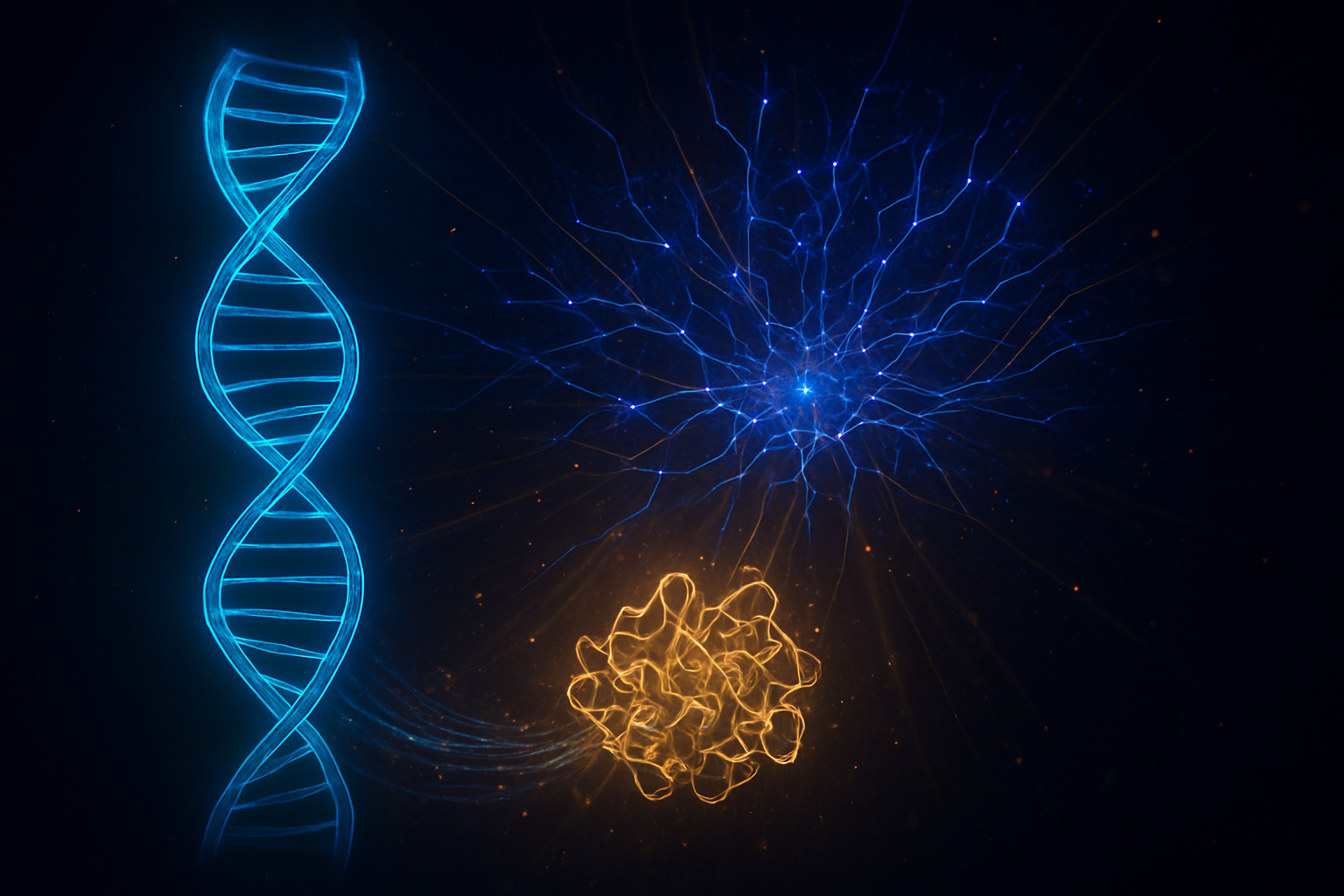
    In the realm of Chemistry, the prize awarded to Demis Hassabis and John Jumper of Google DeepMind, alongside David Baker, focused on the "protein folding problem"—a grand challenge that had stumped biologists for 50 years. AlphaFold, the AI system developed by Hassabis and Jumper, uses deep learning to predict a protein’s 3D structure from its linear amino acid sequence with near-perfect accuracy. While traditional methods like X-ray crystallography or cryo-electron microscopy could take months or years and cost hundreds of thousands of dollars to solve a single structure, AlphaFold can do so in minutes. To date, it has predicted nearly all 200 million known proteins, a feat that would have taken centuries using traditional experimental methods.

    The technical brilliance of these achievements lies in their shift from "direct observation" to "predictive modeling." David Baker’s work with the Rosetta software furthered this by enabling "de novo" protein design—the creation of entirely new proteins that do not exist in nature. This allowed scientists to move from studying the biological world as it is, to designing biological tools as they should be to solve specific problems, such as neutralizing new viral strains or breaking down environmental plastics. Initial reactions from the research community were a mix of awe and debate, as traditionalists grappled with the reality that computer science had effectively "colonized" the Nobel categories of Physics and Chemistry.

    The TechBio Gold Rush: Industry and Market Implications

    The Nobel validation triggered a massive strategic pivot among tech giants and specialized AI laboratories. Alphabet Inc. (NASDAQ: GOOGL) leveraged the win to transform its research-heavy DeepMind unit into a commercial powerhouse. By early 2025, its subsidiary Isomorphic Labs had secured over $2.9 billion in milestone-based deals with pharmaceutical titans like Eli Lilly (NYSE: LLY) and Novartis (NYSE: NVS). The "Nobel Halo" allowed Alphabet to position itself not just as a search company, but as the world's premier "TechBio" platform, drastically reducing the time and capital required for drug discovery.

    Meanwhile, NVIDIA (NASDAQ: NVDA) cemented its status as the indispensable infrastructure of this new era. Following the 2024 awards, NVIDIA’s market valuation soared past $5 trillion by late 2025, driven by the explosive demand for its Blackwell and Rubin GPU architectures. These chips are no longer seen merely as AI trainers, but as "digital laboratories" capable of running exascale molecular simulations. NVIDIA’s launch of specialized microservices like BioNeMo and its Earth-2 climate modeling initiative created a "software moat" that has made it nearly impossible for biotech startups to operate without being locked into the NVIDIA ecosystem.

    The competitive landscape saw a fierce "generative science" counter-offensive from Microsoft (NASDAQ: MSFT) and OpenAI. In early 2025, Microsoft Research unveiled MatterGen, a model that generates new inorganic materials with specific desired properties—such as heat resistance or electrical conductivity—rather than merely screening existing ones. This has directly disrupted traditional materials science sectors, with companies like BASF and Johnson Matthey now using Azure Quantum Elements to design proprietary battery chemistries in a fraction of the historical time. The arrival of these "generative discovery" tools has created a clear divide: companies with an "AI-first" R&D strategy are currently seeing up to 3.5 times higher ROI than their traditional competitors.

    The Broader Significance: A New Scientific Philosophy

    Beyond the stock tickers and laboratory benchmarks, the Nobel Prize Moment of 2024 represented a philosophical shift in how humanity understands the universe. It confirmed that the complexities of biology and materials science are, at their core, information problems. This has led to the rise of "AI4Science" (AI for Science) as the dominant trend of the mid-2020s. We have moved from an era of "serendipitous discovery"—where researchers might stumble upon a new drug or material—to an era of "engineered discovery," where AI models map the entire "possibility space" of a problem before a single test tube is even touched.

    However, this transition has not been without its concerns. Geoffrey Hinton, often called the "Godfather of AI," used his Nobel platform to sound an urgent alarm regarding the existential risks of the very technology he helped create. His warnings about machines outsmarting humans and the potential for "uncontrolled" autonomous agents have sparked intense regulatory debates throughout 2025. Furthermore, the "black box" nature of some AI discoveries—where a model provides a correct answer but cannot explain its reasoning—has forced a reckoning within the scientific method, which has historically prioritized "why" just as much as "what."

    Comparatively, the 2024 Nobels are being viewed in the same light as the 1903 and 1911 prizes awarded to Marie Curie. Just as those awards marked the transition into the atomic age, the 2024 prizes marked the transition into the "Information Age of Matter." The boundaries between disciplines are now permanently blurred; a chemist in 2026 is as likely to be an expert in equivariant neural networks as they are in organic synthesis.

    Future Horizons: From Digital Models to Physical Realities

    Looking ahead through the remainder of 2026 and beyond, the next frontier is the full integration of AI with physical laboratory automation. We are seeing the rise of "Self-Driving Labs" (SDLs), where AI models not only design experiments but also direct robotic systems to execute them and analyze the results in a continuous, closed-loop cycle. Experts predict that by 2027, the first fully AI-designed drug will enter Phase 3 clinical trials, potentially reaching the market in record-breaking time.

    In the near term, the impact on materials science will likely be the most visible to consumers. The discovery of new solid-state electrolytes using models like MatterGen has put the industry on a path toward electric vehicle batteries that are twice as energy-dense as current lithium-ion standards. Pilot production for these "AI-designed" batteries is slated for late 2026. Additionally, the "NeuralGCM" hybrid climate models are now providing hyper-local weather and disaster predictions with a level of accuracy that was computationally impossible just 24 months ago.

    The primary challenge remaining is the "governance of discovery." As AI allows for the rapid design of new proteins and chemicals, the risk of dual-use—where discovery is used for harm rather than healing—has become a top priority for global regulators. The "Geneva Protocol for AI Discovery," currently under debate in early 2026, aims to create a framework for tracking the synthesis of AI-generated biological designs.

    Conclusion: The Silicon Legacy

    The 2024 Nobel Prizes were the moment AI officially grew up. By honoring the pioneers of neural networks and protein folding, the scientific establishment admitted that the future of human knowledge is inextricably linked to the machines we have built. This was not just a recognition of past work; it was a mandate for the future. AI is no longer a "supporting tool" like a calculator; it has become the primary driver of the scientific engine.

    As we navigate the opening months of 2026, the key takeaway is that the "Nobel Prize Moment" has successfully moved AI from the realm of "tech hype" into the realm of "fundamental infrastructure." The most significant impact of this development is not just the speed of discovery, but the democratization of it—allowing smaller labs with high-end GPUs to compete with the massive R&D budgets of the past. In the coming months, keep a close watch on the first clinical data from Isomorphic Labs and the emerging "AI Treaty" discussions in the UN; these will be the next markers in a journey that began when the Nobel Committee looked at a line of code and saw the future of physics and chemistry.


    This content is intended for informational purposes only and represents analysis of current AI developments.

    TokenRing AI delivers enterprise-grade solutions for multi-agent AI workflow orchestration, AI-powered development tools, and seamless remote collaboration platforms.
    For more information, visit https://www.tokenring.ai/.
  • The Nobel Validation: How Hinton and Hopfield’s Physics Prize Defined the AI Era

    The Nobel Validation: How Hinton and Hopfield’s Physics Prize Defined the AI Era

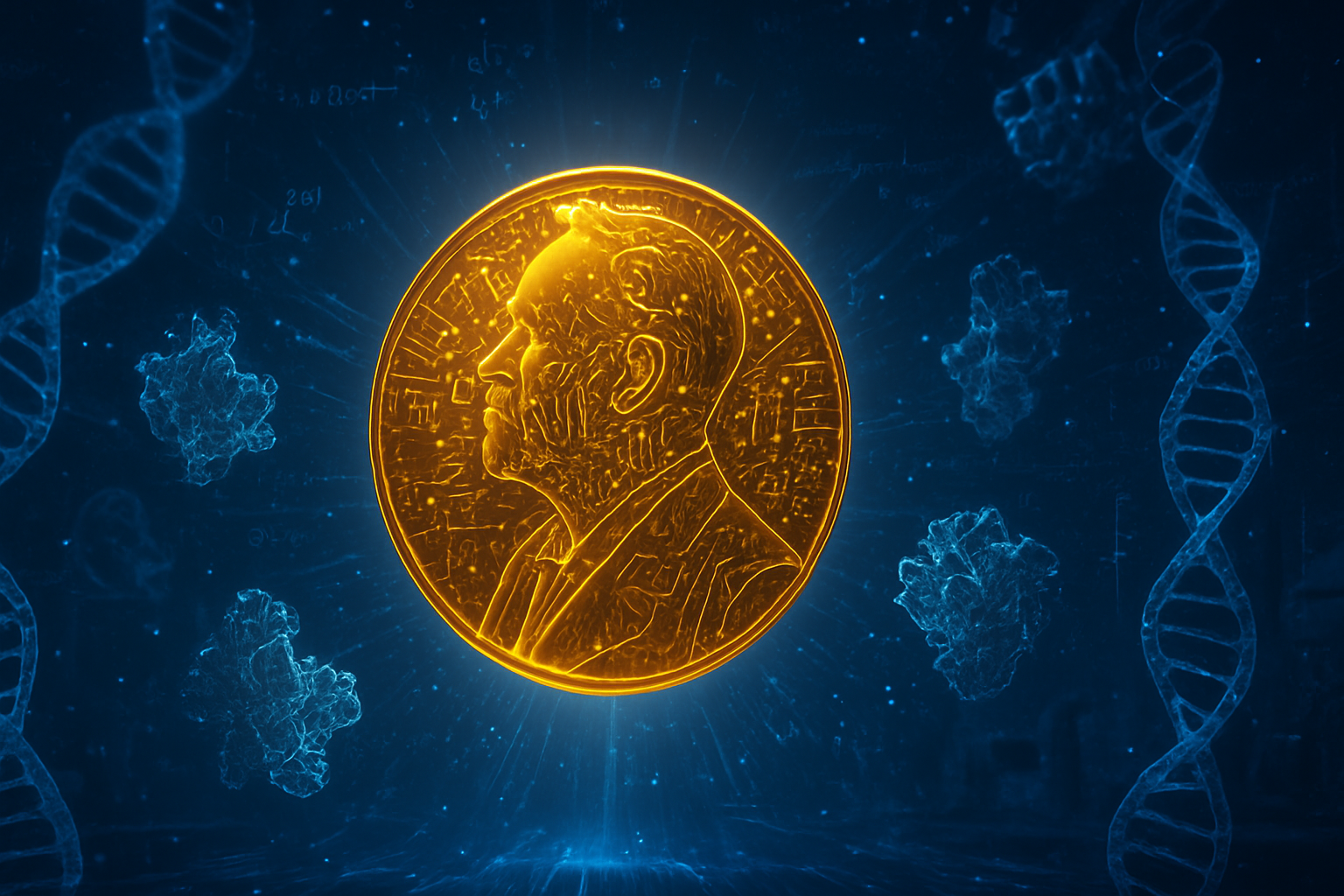
    The awarding of the 2024 Nobel Prize in Physics to Geoffrey Hinton and John Hopfield was more than a tribute to two legendary careers; it was the moment the global scientific establishment officially recognized artificial intelligence as a fundamental branch of physical science. By honoring their work on artificial neural networks, the Royal Swedish Academy of Sciences signaled that the "black boxes" driving today’s digital revolution are deeply rooted in the laws of statistical mechanics and energy landscapes. This historic win effectively bridged the gap between the theoretical physics of the 20th century and the generative AI explosion of the 21st, validating decades of research that many once dismissed as a computational curiosity.

    As we move into early 2026, the ripples of this announcement are still being felt across academia and industry. The prize didn't just celebrate the past; it catalyzed a shift in how we perceive the risks and rewards of the technology. For Geoffrey Hinton, often called the "Godfather of AI," the Nobel platform provided a global megaphone for his increasingly urgent warnings about AI safety. For John Hopfield, it was a validation of his belief that biological systems and physical models could unlock the secrets of associative memory. Together, their win underscored a pivotal truth: the tools we use to build "intelligence" are governed by the same principles that describe the behavior of atoms and magnetic spins.

    The Physics of Thought: From Spin Glasses to Boltzmann Machines

    The technical foundation of the 2024 Nobel Prize lies in the ingenious application of statistical physics to the problem of machine learning. In the early 1980s, John Hopfield developed what is now known as the Hopfield Network, a type of recurrent neural network that serves as a model for associative memory. Hopfield drew a direct parallel between the way neurons fire and the behavior of "spin glasses"—physical systems where atomic spins interact in complex, disordered ways. By defining an "Energy Function" for his network, Hopfield demonstrated that a system of interconnected nodes could "relax" into a state of minimum energy, effectively recovering a stored memory from a noisy or incomplete input. This was a radical departure from the deterministic, rule-based logic that dominated early computer science, introducing a more biological, "energy-driven" approach to computation.

    Building upon this physical framework, Geoffrey Hinton introduced the Boltzmann Machine in 1985. Named after the physicist Ludwig Boltzmann, this model utilized the Boltzmann distribution—a fundamental concept in thermodynamics that describes the probability of a system being in a certain state. Hinton’s breakthrough was the introduction of "hidden units" within the network, which allowed the machine to learn internal representations of data that were not directly visible. Unlike the deterministic Hopfield networks, Boltzmann machines were stochastic, meaning they used probability to find the most likely patterns in data. This capability to not only remember but to classify and generate new data laid the essential groundwork for the deep learning models that power today’s large language models (LLMs) and image generators.

    The Royal Swedish Academy's decision to award these breakthroughs in the Physics category was a calculated recognition of AI's methodological roots. They argued that without the mathematical tools of energy minimization and thermodynamic equilibrium, the architectures that define modern AI would never have been conceived. Furthermore, the Academy highlighted that neural networks have become indispensable to physics itself—enabling discoveries in particle physics at CERN, the detection of gravitational waves, and the revolutionary protein-folding predictions of AlphaFold. This "Physics-to-AI-to-Physics" loop has become the dominant paradigm of scientific discovery in the mid-2020s.

    Market Validation and the "Prestige Moat" for Big Tech

    The Nobel recognition of Hinton and Hopfield acted as a massive strategic tailwind for the world’s leading technology companies, particularly those that had spent billions betting on neural network research. NVIDIA (NASDAQ: NVDA), in particular, saw its long-term strategy validated on the highest possible stage. CEO Jensen Huang had famously pivoted the company toward AI after Hinton’s team used NVIDIA GPUs to achieve a breakthrough in the 2009 ImageNet competition. The Nobel Prize essentially codified NVIDIA’s hardware as the "scientific instrument" of the 21st century, placing its H100 and Blackwell chips in the same historical category as the particle accelerators of the previous century.

    For Alphabet Inc. (NASDAQ: GOOGL), the win was bittersweet but ultimately reinforcing. While Hinton had left Google in 2023 to speak freely about AI risks, his Nobel-winning work was the bedrock upon which Google Brain and DeepMind were built. The subsequent Nobel Prize in Chemistry awarded to DeepMind’s Demis Hassabis and John Jumper for AlphaFold further cemented Google’s position as the world's premier AI research lab. This "double Nobel" year created a significant "prestige moat" for Google, helping it maintain a talent advantage over rivals like OpenAI and Microsoft (NASDAQ: MSFT). While OpenAI led in consumer productization with ChatGPT, Google reclaimed the title of the undisputed leader in foundational scientific breakthroughs.

    Other tech giants like Meta Platforms (NASDAQ: META) also benefited from the halo effect. Meta’s Chief AI Scientist Yann LeCun, a contemporary and frequent collaborator of Hinton, has long advocated for the open-source dissemination of these foundational models. The Nobel win validated the "FAIR" (Fundamental AI Research) approach, suggesting that AI is a public scientific good rather than just a proprietary corporate product. For investors, the prize provided a powerful counter-narrative to "AI bubble" fears; by framing AI as a fundamental scientific shift rather than a fleeting software trend, the Nobel Committee helped stabilize long-term market sentiment toward AI infrastructure and research-heavy companies.

    The Warning from the Podium: Safety and Existential Risk

    Despite the celebratory nature of the award, the 2024 Nobel Prize was marked by a somber and unprecedented warning from the laureates themselves. Geoffrey Hinton used his newfound platform to reiterate his fears that the technology he helped create could eventually "outsmart" its creators. Since his win, Hinton has become a fixture in global policy debates, frequently appearing before government bodies to advocate for strict AI safety regulations. By early 2026, his warnings have shifted from theoretical possibilities to what he calls the "2026 Breakpoint"—a predicted surge in AI capabilities that he believes will lead to massive job displacement in fields as complex as software engineering and law.

    Hinton’s advocacy has been particularly focused on the concept of "alignment." He has recently proposed a radical new approach to AI safety, suggesting that humans should attempt to program "maternal instincts" into AI models. His argument is that we cannot control a superintelligence through force or "kill switches," but we might be able to ensure our survival if the AI is designed to genuinely care for the welfare of less intelligent beings, much like a parent cares for a child. This philosophical shift has sparked intense debate within the AI safety community, contrasting with more rigid, rule-based alignment strategies pursued by labs like Anthropic.

    John Hopfield has echoed these concerns, though from a more academic perspective. He has frequently compared the current state of AI development to the early days of nuclear fission, noting that we are "playing with fire" without a complete theoretical understanding of how these systems actually work. Hopfield has spent much of late 2025 advocating for "curiosity-driven research" that is independent of corporate profit motives. He argues that if the only people who understand the inner workings of AI are those incentivized to deploy it as quickly as possible, society loses its ability to implement meaningful guardrails.

    The Road to 2026: Regulation and Next-Gen Architectures

    As we look toward the remainder of 2026, the legacy of the Hinton-Hopfield Nobel win is manifesting in the enforcement of the EU AI Act. The August 2026 deadline for the Act’s most stringent regulations is rapidly approaching, and Hinton’s testimony has been a key factor in keeping these rules on the books despite intense lobbying from the tech sector. The focus has shifted from "narrow AI" to "General Purpose AI" (GPAI), with regulators demanding transparency into the very "energy landscapes" and "hidden units" that the Nobel laureates first described forty years ago.

    In the research world, the "Nobel effect" has led to a resurgence of interest in Energy-Based Models (EBMs) and Neuro-Symbolic AI. Researchers are looking beyond the current "transformer" architecture—which powers models like GPT-4—to find more efficient, physics-inspired ways to achieve reasoning. The goal is to create AI that doesn't just predict the next word in a sequence but understands the underlying "physics" of the world it is describing. We are also seeing the emergence of "Agentic Science" platforms, where AI agents are being used to autonomously run experiments in materials science and drug discovery, fulfilling the Nobel Committee's vision of AI as a partner in scientific exploration.

    However, challenges remain. The "Third-of-Compute" rule advocated by Hinton—which would require AI labs to dedicate 33% of their hardware resources to safety research—has faced stiff opposition from startups and venture capitalists who argue it would stifle innovation. The tension between the "accelerationists," who want to reach AGI as quickly as possible, and the "safety-first" camp led by Hinton, remains the defining conflict of the AI industry in 2026.

    A Legacy Written in Silicon and Statistics

    The 2024 Nobel Prize in Physics will be remembered as the moment the "AI Winter" was officially forgotten and the "AI Century" was formally inaugurated. By honoring Geoffrey Hinton and John Hopfield, the Academy did more than recognize two brilliant minds; it acknowledged that the quest to understand intelligence is a quest to understand the physical universe. Their work transformed the computer from a mere calculator into a learner, a classifier, and a creator.

    As we navigate the complexities of 2026, from the displacement of labor to the promise of new medical cures, the foundational principles of Hopfield Networks and Boltzmann Machines remain as relevant as ever. The significance of this development lies in its duality: it is both a celebration of human ingenuity and a stark reminder of our responsibility. The long-term impact of their work will not just be measured in the trillions of dollars added to the global economy, but in whether we can successfully "align" these powerful physical systems with human values. For now, the world watches closely as the enforcement of new global regulations and the next wave of physics-inspired AI models prepare to take the stage in the coming months.


    This content is intended for informational purposes only and represents analysis of current AI developments.

    TokenRing AI delivers enterprise-grade solutions for multi-agent AI workflow orchestration, AI-powered development tools, and seamless remote collaboration platforms.
    For more information, visit https://www.tokenring.ai/.
  • The Year AI Conquered the Nobel: How 2024 Redefined the Boundaries of Science

    The Year AI Conquered the Nobel: How 2024 Redefined the Boundaries of Science

    The year 2024 will be remembered as the moment artificial intelligence transcended its reputation as a Silicon Valley novelty to become the bedrock of modern scientific discovery. In an unprecedented "double win" that sent shockwaves through the global research community, the Nobel Committees in Stockholm awarded both the Physics and Chemistry prizes to pioneers of AI. This historic recognition signaled a fundamental shift in the hierarchy of knowledge, cementing machine learning not merely as a tool for automation, but as a foundational scientific instrument capable of solving problems that had baffled humanity for generations.

    The dual awards served as a powerful validation of the "AI for Science" movement. By honoring the theoretical foundations of neural networks in Physics and the practical application of protein folding in Chemistry, the Nobel Foundation acknowledged that the digital and physical worlds are now inextricably linked. As we look back from early 2026, it is clear that these prizes were more than just accolades; they were the starting gun for a new era where the "industrialization of discovery" has become the primary driver of technological and economic value.

    The Physics of Information: From Spin Glasses to Neural Networks

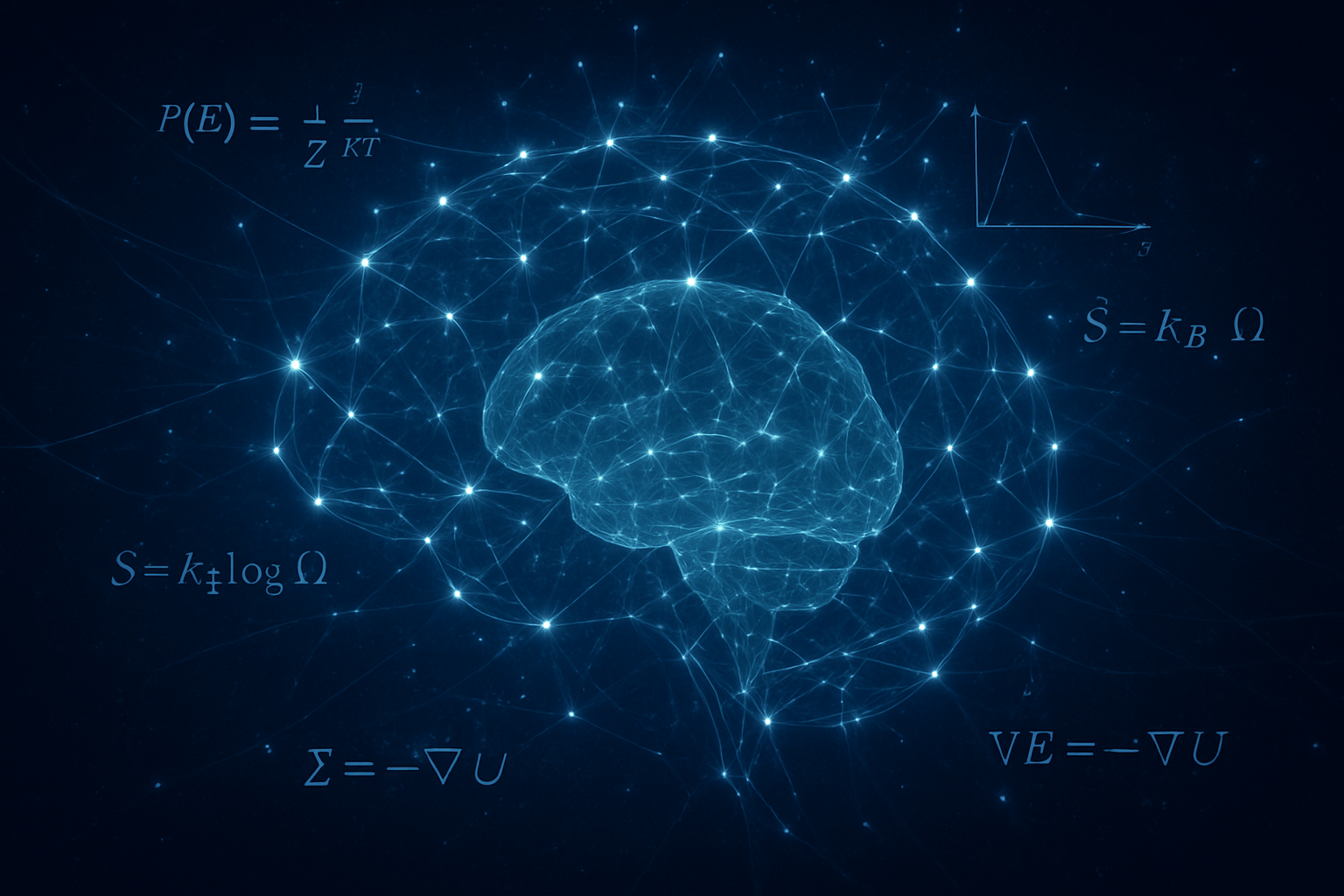
    The 2024 Nobel Prize in Physics was awarded to John Hopfield and Geoffrey Hinton for foundational discoveries that enable machine learning with artificial neural networks. While the decision initially sparked debate among traditionalists, the technical justification was rooted in the deep mathematical parallels between statistical mechanics and information theory. John Hopfield’s 1982 breakthrough, the Hopfield Network, utilized the concept of "energy landscapes"—a principle borrowed from the study of magnetic spins in physics—to create a form of associative memory. By modeling neurons as "up or down" states similar to atomic spins, Hopfield demonstrated that a system could "remember" patterns by settling into a state of minimum energy.

    Geoffrey Hinton, often hailed as the "Godfather of AI," expanded this work by introducing the Boltzmann Machine. This model incorporated stochasticity (randomness) and the Boltzmann distribution—a cornerstone of thermodynamics—to allow networks to learn and generalize from data rather than just store it. Hinton’s use of "simulated annealing," where the system is "cooled" to find a global optimum, allowed these networks to escape local minima and find the most accurate representations of complex datasets. This transition from deterministic memory to probabilistic learning laid the groundwork for the deep learning revolution that powers today’s generative AI.

    The reaction from the scientific community was a mixture of awe and healthy skepticism. Figures like Max Tegmark of MIT championed the award as a recognition that AI is essentially "the physics of information." However, some purists argued that the work belonged more to computer science or mathematics. Despite the debate, the consensus by 2026 is that the award was a prescient acknowledgement of how physics-based architectures have become the "telescopes" of the 21st century, allowing scientists to see patterns in massive datasets—from CERN’s particle collisions to the discovery of exoplanets—that were previously invisible to the human eye.

    Cracking the Biological Code: AlphaFold and the Chemistry of Life

    Just days after the Physics announcement, the Nobel Prize in Chemistry was awarded to David Baker, Demis Hassabis, and John Jumper. This prize recognized a breakthrough that many consider the most significant application of AI in history: solving the "protein folding problem." For over 50 years, biologists struggled to predict how a string of amino acids would fold into a three-dimensional shape—a shape that determines a protein’s function. Hassabis and Jumper, leading the team at Google DeepMind, a subsidiary of Alphabet Inc. (NASDAQ: GOOGL), developed AlphaFold 2, an AI system that achieved near-experimental accuracy in predicting these structures.

    Technically, AlphaFold 2 represented a departure from traditional convolutional neural networks, utilizing a transformer-based architecture known as the "Evoformer." This allowed the model to process evolutionary information and spatial interactions simultaneously, iteratively refining the physical coordinates of atoms until a stable structure was reached. The impact was immediate and staggering: DeepMind released the AlphaFold Protein Structure Database, containing predictions for nearly all 200 million proteins known to science. This effectively collapsed years of expensive laboratory work into seconds of computation, democratizing structural biology for millions of researchers worldwide.

    While Hassabis and Jumper were recognized for prediction, David Baker was honored for "computational protein design." Using his Rosetta software and later AI-driven tools, Baker’s lab at the University of Washington demonstrated the ability to create entirely new proteins that do not exist in nature. This "de novo" design capability has opened the door to synthetic enzymes that can break down plastics, new classes of vaccines, and targeted drug delivery systems. Together, these laureates transformed chemistry from a descriptive science into a predictive and generative one, providing the blueprint for the "programmable biology" we are seeing flourish in 2026.

    The Industrialization of Discovery: Tech Giants and the Nobel Effect

    The 2024 Nobel wins provided a massive strategic advantage to the tech giants that funded and facilitated this research. Alphabet Inc. (NASDAQ: GOOGL) emerged as the clear winner, with the Chemistry prize serving as a definitive rebuttal to critics who claimed the company had fallen behind in the AI race. By early 2026, Google DeepMind has successfully transitioned from a research-heavy lab to a "Science-AI platform," securing multi-billion dollar partnerships with global pharmaceutical giants. The Nobel validation allowed Google to re-position its AI stack—including Gemini and its custom TPU hardware—as the premier ecosystem for high-stakes scientific R&D.

    NVIDIA (NASDAQ: NVDA) also reaped immense rewards from the "Nobel effect." Although not directly awarded, the company’s hardware was the "foundry" where these discoveries were forged. Following the 2024 awards, NVIDIA’s market capitalization surged toward the $5 trillion mark by late 2025, as the company shifted its marketing focus from "generative chatbots" to "accelerated computing for scientific discovery." Its Blackwell and subsequent Rubin architectures are now viewed as essential laboratory infrastructure, as indispensable to a modern chemist as a centrifuge or a microscope.

    Microsoft (NASDAQ: MSFT) responded by doubling down on its "agentic science" initiative. Recognizing that the next Nobel-level breakthrough would likely come from AI agents that can autonomously design and run experiments, Microsoft invested heavily in its "Stargate" supercomputing projects. By early 2026, the competitive landscape has shifted: the "AI arms race" is no longer just about who has the best chatbot, but about which company can build the most accurate "world model" capable of predicting physical reality, from material science to climate modeling.

    Beyond the Chatbot: AI as the Third Pillar of Science

    The wider significance of the 2024 Nobel Prizes lies in the elevation of AI to the "third pillar" of the scientific method, joining theory and experimentation. For centuries, science relied on human-derived hypotheses tested through physical trials. Today, AI-driven simulation and prediction have created a middle ground where "in silico" experiments can narrow down millions of possibilities to a handful of high-probability candidates. This shift has moved AI from being a "plagiarism machine" or a "homework helper" in the public consciousness to being a "truth engine" for the physical world.

    However, this transition has not been without concerns. Geoffrey Hinton used his Nobel platform to reiterate his warnings about AI safety, noting that we are moving into an era where we may "no longer understand the internal logic" of the tools we rely on for survival. There is also a growing "compute-intensity divide." As of 2026, a significant gap has emerged between "AI-rich" institutions that can afford the massive GPU clusters required for AlphaFold-scale research and "AI-poor" labs in developing nations. This has sparked a global movement toward "AI Sovereignty," with nations like the UAE and South Korea investing in national AI clouds to ensure they are not left behind in the race for scientific discovery.

    Comparisons to previous milestones, such as the discovery of the DNA double helix or the invention of the transistor, are now common. Experts argue that while the transistor gave us the ability to process information, AI gives us the ability to process complexity. The 2024 prizes recognized that human cognition has reached a limit in certain fields—like the folding of a protein or the behavior of a billion-parameter system—and that our future progress depends on a partnership with non-human intelligence.

    The 2026 Horizon: From Prediction to Synthesis

    Looking ahead through the rest of 2026, the focus is shifting from predicting what exists to synthesizing what we need. The "AlphaFold moment" in biology is being replicated in material science. We are seeing the emergence of "AlphaMat" and similar systems that can predict the properties of new crystalline structures, leading to the discovery of room-temperature superconductors and high-density batteries that were previously thought impossible. These near-term developments are expected to shave decades off the transition to green energy.

    The next major challenge being addressed is "Closed-Loop Discovery." This involves AI systems that not only predict a new molecule but also instruct robotic "cloud labs" to synthesize and test it, feeding the results back into the model without human intervention. Experts predict that by 2027, we will see the first FDA-approved drug that was entirely designed, optimized, and pre-clinically tested by an autonomous AI system. The primary hurdle remains the "veracity problem"—ensuring that AI-generated hypotheses are grounded in physical law rather than "hallucinating" scientific impossibilities.

    A Legacy Written in Silicon and Proteins

    The 2024 Nobel Prizes were a watershed moment that marked the end of AI’s "infancy" and the beginning of its "industrial era." By honoring Hinton, Hopfield, Hassabis, and Jumper, the Nobel Committee did more than just recognize individual achievement; they redefined the boundaries of what constitutes a "scientific discovery." They acknowledged that in a world of overwhelming data, the algorithm is as vital as the experiment.

    As we move further into 2026, the long-term impact of this double win is visible in every sector of the economy. AI is no longer a separate "tech" category; it is the infrastructure upon which modern biology, physics, and chemistry are built. The key takeaway for the coming months is to watch for the "Nobel Effect" to move into the regulatory and educational spheres, as universities overhaul their curricula to treat "AI Literacy" as a core requirement for every scientific discipline. The age of the "AI-Scientist" has arrived, and the world will never be the same.


    This content is intended for informational purposes only and represents analysis of current AI developments.

    TokenRing AI delivers enterprise-grade solutions for multi-agent AI workflow orchestration, AI-powered development tools, and seamless remote collaboration platforms.
    For more information, visit https://www.tokenring.ai/.
  • AI Unlocks Cosmic Secrets: Revolutionizing Discovery in Physics and Cosmology

    AI Unlocks Cosmic Secrets: Revolutionizing Discovery in Physics and Cosmology

    Artificial Intelligence (AI) is ushering in an unprecedented era of scientific discovery, fundamentally transforming how researchers in fields like cosmology and physics unravel the universe's most profound mysteries. By leveraging sophisticated algorithms and machine learning techniques, AI is proving instrumental in sifting through colossal datasets, identifying intricate patterns, and formulating hypotheses that would otherwise remain hidden to human observation. This technological leap is not merely an incremental improvement; it represents a paradigm shift, significantly accelerating the pace of discovery and pushing the boundaries of human knowledge about the cosmos.

    The immediate significance of AI's integration into scientific research is multifaceted. It dramatically speeds up data processing, allowing scientists to analyze information from telescopes, particle accelerators, and simulations in a fraction of the time previously required. This efficiency not only uncovers novel insights but also minimizes human error, optimizes experimental designs, and ultimately reduces the cost and resources associated with groundbreaking research. From mapping dark matter to detecting elusive gravitational waves and classifying distant galaxies with remarkable accuracy, AI is becoming an indispensable collaborator in humanity's quest to understand the fundamental fabric of reality.

    Technical Deep Dive: AI's Precision in Unveiling the Universe

    AI's role in scientific discovery is marked by its ability to process, interpret, and derive insights from datasets of unprecedented scale and complexity, far surpassing traditional methods. This is particularly evident in fields like exoplanet detection, dark matter mapping, gravitational wave analysis, and particle physics at CERN's Large Hadron Collider (LHC).

    In exoplanet detection, AI, leveraging deep learning models such as Convolutional Neural Networks (CNNs) and Random Forest Classifiers (RFCs), analyzes stellar light curves to identify subtle dips indicative of planetary transits. These models are trained on vast datasets encompassing various celestial phenomena, enabling them to distinguish true planetary signals from astrophysical noise and false positives with over 95% accuracy. Unlike traditional methods that often rely on manual inspection, specific statistical thresholds, or labor-intensive filtering, AI learns to recognize intrinsic planetary features, even for planets with irregular orbits that might be missed by conventional algorithms like the Box-Least-Squares (BLS) method. NASA's ExoMiner, for example, not only accelerates discovery but also provides explainable AI insights into its decisions. The AI research community views this as a critical advancement, essential for managing the deluge of data from missions like Kepler, TESS, and the James Webb Space Telescope.

    For dark matter mapping, AI is revolutionizing our ability to infer the distribution and quantity of this elusive cosmic component. Researchers at ETH Zurich developed a deep learning model that, when trained on cosmological simulations, can estimate the amount of dark matter in the universe with 30% greater accuracy than traditional statistical analyses. Another algorithm, "Inception," from EPFL, can differentiate between the effects of self-interacting dark matter and active galactic nuclei with up to 80% accuracy, even amidst observational noise. These AI models do not rely on pre-assigned shapes or functional forms for dark matter distribution, allowing for non-parametric inference across various galaxy types. This marks a significant departure from previous methods that were often limited by predefined physical models and struggled to extract maximum information from cosmological maps. Experts laud AI's potential to accelerate dark matter research and reduce uncertainties in cosmological parameters, though challenges remain in validating algorithms with real data and ensuring model interpretability.

    In gravitational wave analysis, AI, particularly deep learning models, is being integrated for signal detection, classification, and rapid parameter estimation. Algorithms like DINGO-BNS (Deep INference for Gravitational-wave Observations from Binary Neutron Stars) can characterize merging neutron star systems in approximately one second, a stark contrast to the hours required by the fastest traditional methods. While traditional detection relies on computationally intensive matched filtering against vast template banks, AI offers superior efficiency and the ability to extract features without explicit likelihood evaluations. Simulation-based inference (SBI) using deep neural architectures learns directly from simulated events, implicitly handling complex noise structures. This allows AI to achieve similar sensitivity to matched filtering but at orders of magnitude faster speeds, making it indispensable for next-generation observatories like the Einstein Telescope and Cosmic Explorer. The gravitational-wave community views AI as a powerful "intelligent augmentation," crucial for real-time localization of sources and multi-messenger astronomy.

    Finally, at the Large Hadron Collider (LHC), AI, especially machine learning and deep learning, is critical for managing the staggering data rates—40 million collisions per second. AI algorithms are deployed in real-time trigger systems to filter interesting events, perform physics object reconstruction, and ensure detector alignment and calibration within strict latency requirements. Unlike historical methods that relied on manually programmed selection criteria and subsequent human review, modern AI bypasses conventional reconstruction steps, directly processing raw detector data for end-to-end particle reconstruction. This enables anomaly detection to search for unpredicted new particles without complete labeling information, significantly enhancing sensitivity to exotic physics signatures. Particle physicists, early adopters of ML, have formed collaborations like the Inter-experimental Machine Learning (IML) Working Group, recognizing AI's transformative role in handling "big data" challenges and potentially uncovering new fundamental physics.

    Corporate Orbit: AI's Reshaping of the Tech Landscape

    The integration of AI into scientific discovery, particularly in cosmology and physics, is creating a new frontier for innovation and competition, significantly impacting both established tech giants and agile startups. Companies across the AI hardware, software, and cloud computing spectrum stand to benefit immensely, while specialized scientific AI platforms are emerging as key players.

    AI Hardware Companies are at the foundational layer, providing the immense computational power required for AI's complex models. NVIDIA (NASDAQ: NVDA) remains a dominant force with its GPUs and CUDA platform, essential for accelerating scientific AI training and inference. Its collaborations, such as with Synopsys, underscore its strategic positioning in physics simulations and materials exploration. Competitors like AMD (NASDAQ: AMD) are also making significant strides, partnering with national laboratories to deliver AI supercomputers tailored for scientific computing. Intel (NASDAQ: INTC) continues to offer advanced CPUs, GPUs, and specialized AI chips, while private companies like Graphcore and Cerebras are pushing the boundaries with purpose-built AI processors for complex workloads. Google (NASDAQ: GOOGL), through its custom Tensor Processing Units (TPUs), also plays a crucial role in its internal AI initiatives.

    In the realm of AI Software and Cloud Computing, the major players are providing the platforms and tools that democratize access to advanced AI capabilities. Google (NASDAQ: GOOGL) offers a comprehensive suite via Google Cloud Platform (GCP) and Google DeepMind, with services like TensorFlow and Vertex AI, and research aimed at solving tough scientific problems. Microsoft (NASDAQ: MSFT) with Azure, and Amazon (NASDAQ: AMZN) with Amazon Web Services (AWS), provide extensive cloud resources and machine learning platforms like Azure Machine Learning and Amazon SageMaker, critical for scaling scientific AI research. IBM (NYSE: IBM) also contributes with its AI chips and a strong focus on quantum computing, a specialized area of physics. Furthermore, specialized cloud AI platforms from companies like Saturn Cloud and Nebius Cloud are emerging to offer cost-effective, on-demand access to high-performance GPUs for AI/ML teams.

    A new wave of Specialized Scientific AI Platforms and Startups is directly addressing the unique challenges of scientific research. Companies like PhysicsX (private) are leveraging AI to engineer physical systems across industries, embedding intelligence from design to operations. PhysicsAI (private) focuses on deep learning in spacetime for simulations and synthetic data generation. Schrödinger Inc (NASDAQ: SDGR) utilizes physics-based computational platforms for drug discovery and materials science, demonstrating AI's direct application in physics principles. Startups like Lila Sciences are developing "scientific superintelligence platforms" and "fully autonomous labs," aiming to accelerate hypothesis generation and experimental design. These companies are poised to disrupt traditional research paradigms by offering highly specialized, AI-driven solutions that augment human creativity and streamline the scientific workflow.

    The competitive landscape is evolving into a race for "scientific superintelligence," with major AI labs like OpenAI and Google DeepMind increasingly focusing on developing AI systems capable of generating novel scientific ideas. Success will hinge on deep domain integration, where AI expertise is effectively combined with profound scientific knowledge. Companies with vast scientific datasets and robust AI infrastructure will establish significant competitive moats. This shift also portends a disruption of traditional R&D processes, accelerating discovery timelines and potentially rendering slower, more costly methods obsolete. The rise of "Science as a Service" through cloud-connected autonomous laboratories, powered by AI and robotics, could democratize access to cutting-edge experimental capabilities globally. Strategically, companies that develop end-to-end AI platforms, specialize in specific scientific domains, prioritize explainable AI (XAI) for trust, and foster collaborative ecosystems will gain a significant market advantage, ultimately shaping the future of scientific exploration.

    Wider Significance: AI's Transformative Role in the Scientific Epoch

    The integration of AI into scientific discovery is not merely a technical advancement; it represents a profound shift within the broader AI landscape, leveraging cutting-edge developments in machine learning, deep learning, natural language processing (NLP), and generative AI. This convergence is driving a data-centric approach to science, where AI efficiently processes vast datasets to identify patterns, generate hypotheses, and simulate complex scenarios. The trend is towards cross-disciplinary applications, with AI acting as a generalist tool that bridges specialized fields, democratizing access to advanced research capabilities, and fostering human-AI collaboration.

    The impacts of this integration are profound. AI is significantly accelerating research timelines, enabling breakthroughs in fields ranging from drug discovery to climate modeling. It can generate novel hypotheses, design experiments, even automate aspects of laboratory work, leading to entirely new avenues of inquiry. For instance, AI algorithms have found solutions for quantum entanglement experiments that previously stumped human scientists for weeks. AI excels at predictive modeling, forecasting everything from disease outbreaks to cosmic phenomena, and is increasingly seen as a partner capable of autonomous research, from data analysis to scientific paper drafting.

    However, this transformative power comes with significant concerns. Data bias is a critical issue; AI models, trained on existing data, can inadvertently reproduce and amplify societal biases, potentially leading to discriminatory outcomes in applications like healthcare. The interpretability of many advanced AI models, often referred to as "black boxes," poses a challenge to scientific transparency and reproducibility. Understanding how an AI arrives at a conclusion is crucial for validating its findings, especially in high-stakes scientific endeavors.

    Concerns also arise regarding job displacement for scientists. As AI automates tasks from literature reviews to experimental design, the evolving role of human scientists and the long-term impact on the scientific workforce remain open questions. Furthermore, academic misconduct and research integrity face new challenges with AI's ability to generate content and manipulate data, necessitating new guidelines for attribution and validation. Over-reliance on AI could also diminish human understanding of underlying mechanisms, and unequal access to advanced AI resources could exacerbate existing inequalities within the scientific community.

    Comparing this era to previous AI milestones reveals a significant leap. Earlier AI systems were predominantly rule-driven and narrowly focused. Today's AI, powered by sophisticated machine learning, learns from massive datasets, enabling unprecedented accuracy in pattern recognition, prediction, and generation. While early AI struggled with tasks like handwriting recognition, modern AI has rapidly surpassed human capabilities in complex perception and, crucially, in generating original content. The invention of Generative Adversarial Networks (GANs) in 2014, for example, paved the way for current generative AI. This shift moves AI from being a mere assistive tool to a collaborative, and at times autonomous, partner in scientific discovery, capable of contributing to original research and even authoring papers.

    Ethical considerations are paramount. Clear guidance is needed on accountability and responsibility when AI systems make errors or contribute significantly to scientific findings. The "black-box" nature of some AI models clashes with scientific principles of transparency and reproducibility, demanding new ethical norms. Maintaining trust in science requires addressing biases, ensuring interpretability, and preventing misconduct. Privacy protection in handling vast datasets, often containing sensitive information, is also critical. Ultimately, the development and deployment of AI in science must consider broader societal impacts, including equity and access, to ensure that AI serves as a responsible and transformative force in the pursuit of knowledge.

    Future Developments: The Horizon of AI-Driven Science

    The trajectory of AI in scientific discovery points towards an increasingly autonomous and collaborative future, promising to redefine the pace and scope of human understanding in cosmology and physics. Both near-term and long-term developments envision AI as a transformative force, from augmenting human research to potentially leading independent scientific endeavors.

    In the near term, AI will solidify its role as a powerful force multiplier. We can expect a proliferation of hybrid models where human scientists and AI collaborate intimately, with AI handling the labor-intensive aspects of research. Enhanced data analysis will continue to be a cornerstone, with AI algorithms rapidly identifying patterns, classifying celestial bodies with high accuracy (e.g., 98% for galaxies, 96% for exoplanets), and sifting through the colossal data streams from telescopes and experiments like the LHC. Faster simulations will become commonplace, as AI models learn from prior simulations to make accurate predictions with significantly reduced computational cost, crucial for complex physical systems in astrophysics and materials science. A key development is the rise of autonomous labs, which combine AI with robotic platforms to design, execute, and analyze experiments independently. These "self-driving labs" are expected to dramatically cut the time and cost for discovering new materials and automate entire research cycles. Furthermore, AI will play a critical role in quantum computing, identifying errors, predicting noise patterns, and optimizing quantum error correction codes, essential for advancing beyond the current "noisy intermediate-scale quantum" (NISQ) era.

    Looking further ahead, long-term developments envision increasingly autonomous AI systems capable of creative and critical contributions to the scientific process. Fully autonomous scientific agents could continuously learn from vast scientific databases, identify novel research questions, design and execute experiments, analyze results, and publish findings with minimal human intervention. In cosmology and physics, AI is expected to enable more precise cosmological measurements, potentially halving uncertainties in estimating parameters like dark matter and dark energy. Future upgrades to the LHC in the 2030s, coupled with advanced AI, are poised to enable unprecedented measurements, such as observing Higgs boson self-coupling, which could unlock fundamental insights into the universe. AI will also facilitate the creation of high-resolution simulations of the universe more cheaply and quickly, allowing scientists to test theories and compare them to observational data at unprecedented levels of detail. The long-term synergy between AI and quantum computing is also profound, with quantum computing potentially supercharging AI algorithms to tackle problems far beyond classical capabilities, potentially leading to a "singularity" in computational power.

    Despite this immense potential, several challenges need to be addressed. Data quality and bias remain critical, as AI models are only as good as the data they are trained on, and biased datasets can lead to misleading conclusions. Transparency and explainability are paramount, as the "black-box" nature of many deep learning models can hinder trust and critical evaluation of AI-generated insights. Ethical considerations and human oversight become even more crucial as AI systems gain autonomy, particularly concerning accountability for errors and the potential for unintended consequences, such as the accidental creation of hazardous materials in autonomous labs. Social and institutional barriers, including data fragmentation and infrastructure inequities, must also be overcome to ensure equitable access to powerful AI tools.

    Experts predict an accelerated evolution of AI in scientific research. Near-term, increased collaboration and hybrid intelligence will define the scientific landscape, with humans focusing on strategic direction and ethical oversight. Long-term, AI is predicted to evolve into an independent agent, capable of generating hypotheses and potentially co-authoring Nobel-worthy research. Some experts are bullish about the timeline for Artificial General Intelligence (AGI), predicting its arrival around 2040, or even earlier by some entrepreneurs, driven by continuous advancements in computing power and quantum computing. This could lead to superhuman predictive capabilities, where AI models can forecast research outcomes with greater accuracy than human experts, guiding experimental design. The vision of globally connected autonomous labs working in concert to generate and test new hypotheses in real-time promises to dramatically accelerate scientific progress.

    Comprehensive Wrap-Up: Charting the New Era of Discovery

    The integration of AI into scientific discovery represents a truly revolutionary period, fundamentally reshaping the landscape of innovation and accelerating the pace of knowledge acquisition. Key takeaways highlight AI's unparalleled ability to process vast datasets, identify intricate patterns, and automate complex tasks, significantly streamlining research in fields like cosmology and physics. This transformation moves AI beyond a mere computational aid to a "co-scientist," capable of generating hypotheses, designing experiments, and even drafting research papers, marking a crucial step towards Artificial General Intelligence (AGI). Landmark achievements, such as AlphaFold's protein structure predictions, underscore AI's historical significance and its capacity for solving previously intractable problems.

    In the long term, AI is poised to become an indispensable and standard component of the scientific research process. The rise of "AI co-scientists" will amplify human ingenuity, allowing researchers to pursue more ambitious questions and accelerate their agendas. The role of human scientists will evolve towards defining meaningful research questions, providing critical evaluation, and contextualizing AI-generated insights. This symbiotic relationship is expected to lead to an unprecedented acceleration of discoveries across all scientific domains. However, continuous development of robust ethical guidelines, regulatory frameworks, and comprehensive training will be essential to ensure responsible use, prevent misuse, and maximize the societal benefits of AI in science. The concept of "human-aware AI" that can identify and overcome human cognitive biases holds the potential to unlock discoveries far beyond our current conceptual grasp.

    In the coming weeks and months, watch for continued advancements in AI's ability to analyze cosmological datasets for more precise constraints on dark matter and dark energy, with frameworks like SimBIG already halving uncertainties. Expect further improvements in AI for classifying cosmic events, such as exploding stars and black holes, with increased transparency in their explanations. In physics, AI will continue to be a creative partner in experimental design, potentially proposing unconventional instrument designs for gravitational wave detectors. AI will remain crucial for particle physics discoveries at the LHC and will drive breakthroughs in materials science and quantum systems, leading to the autonomous discovery of new phases of matter. A significant focus will also be on developing AI systems that are not only accurate but also interpretable, robust, and ethically aligned with scientific goals, ensuring that AI remains a trustworthy and transformative partner in our quest to understand the universe.


    This content is intended for informational purposes only and represents analysis of current AI developments.

    TokenRing AI delivers enterprise-grade solutions for multi-agent AI workflow orchestration, AI-powered development tools, and seamless remote collaboration platforms.
    For more information, visit https://www.tokenring.ai/.