
Tag: power efficiency

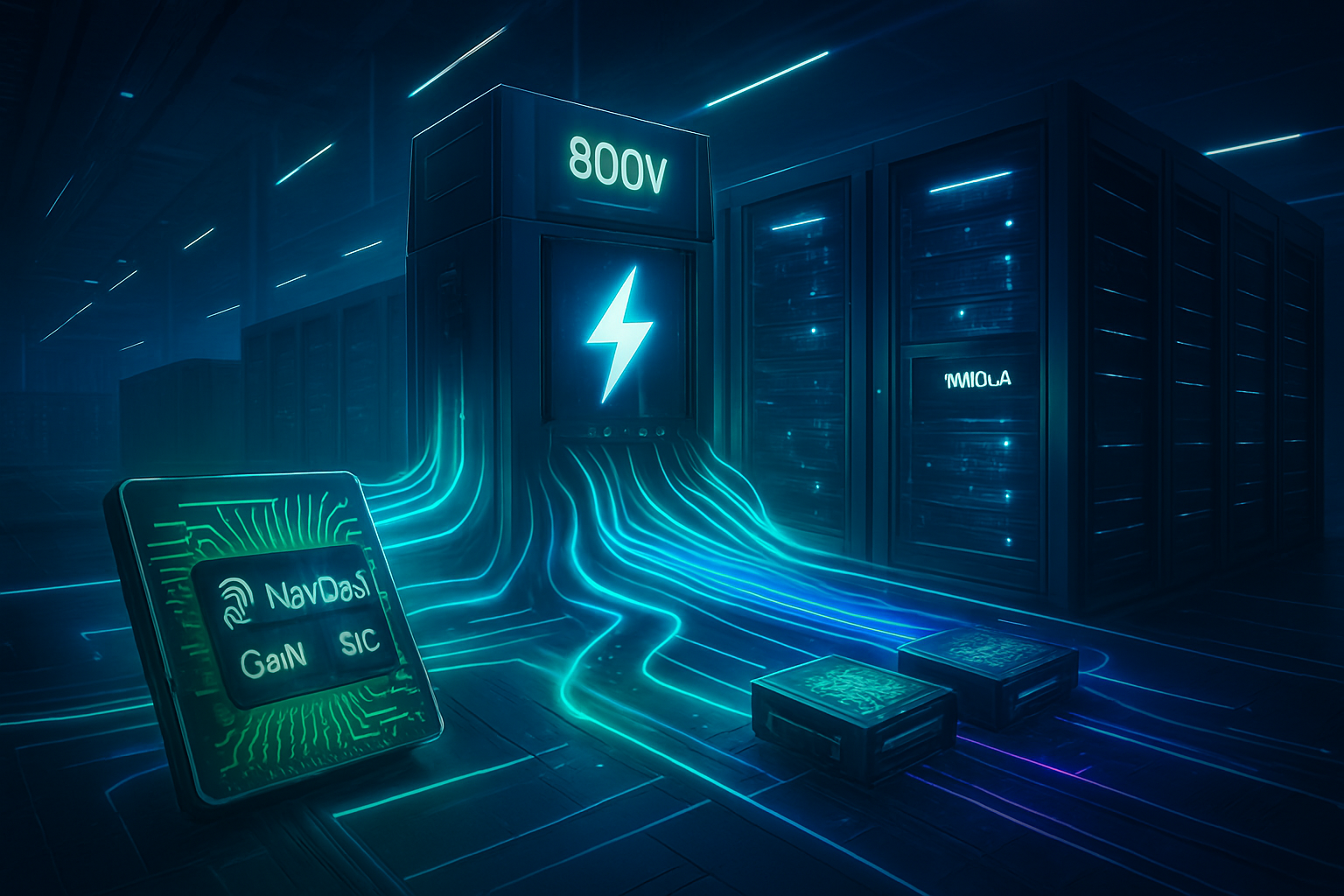
  • Navitas Electrifies NVIDIA’s AI Factories with 800-Volt Power Revolution

    Navitas Electrifies NVIDIA’s AI Factories with 800-Volt Power Revolution

    In a landmark collaboration poised to redefine the power backbone of artificial intelligence, Navitas Semiconductor (NASDAQ: NVTS) is strategically integrating its cutting-edge gallium nitride (GaN) and silicon carbide (SiC) power technologies into NVIDIA's (NASDAQ: NVDA) visionary 800-volt (VDC) AI factory ecosystem. This pivotal alliance is not merely an incremental upgrade but a fundamental architectural shift, directly addressing the escalating power demands of AI and promising unprecedented gains in energy efficiency, performance, and scalability for data centers worldwide. By supplying the high-power, high-efficiency chips essential for fueling the next generation of AI supercomputing platforms, including NVIDIA's upcoming Rubin Ultra GPUs and Kyber rack-scale systems, Navitas is set to unlock the full potential of AI.

    As AI models grow exponentially in complexity and computational intensity, traditional 54-volt power distribution systems in data centers are proving increasingly insufficient for the multi-megawatt rack densities required by cutting-edge AI factories. Navitas's wide-bandgap semiconductors are purpose-built to navigate these extreme power challenges. This integration facilitates direct power conversion from the utility grid to 800 VDC within data centers, eliminating multiple lossy conversion stages and delivering up to a 5% improvement in overall power efficiency for NVIDIA's infrastructure. This translates into substantial energy savings, reduced operational costs, and a significantly smaller carbon footprint, while simultaneously unlocking the higher power density and superior thermal management crucial for maximizing the performance of power-hungry AI processors that now demand 1,000 watts or more per chip.

    The Technical Core: Powering the AI Future with GaN and SiC

    Navitas Semiconductor's strategic integration into NVIDIA's 800-volt AI factory ecosystem is rooted in a profound technical transformation of power delivery. The collaboration centers on enabling NVIDIA's advanced 800-volt High-Voltage Direct Current (HVDC) architecture, a significant departure from the conventional 54V in-rack power distribution. This shift is critical for future AI systems like NVIDIA's Rubin Ultra and Kyber rack-scale platforms, which demand unprecedented levels of power and efficiency.

    Navitas's contribution is built upon its expertise in wide-bandgap semiconductors, specifically its GaNFast™ (gallium nitride) and GeneSiC™ (silicon carbide) power semiconductor technologies. These materials inherently offer superior switching speeds, lower resistance, and higher thermal conductivity compared to traditional silicon, making them ideal for the extreme power requirements of modern AI. The company is developing a comprehensive portfolio of GaN and SiC devices tailored for the entire power delivery chain within the 800VDC architecture, from the utility grid down to the GPU.

    Key technical offerings include 100V GaN FETs optimized for the lower-voltage DC-DC stages on GPU power boards. These devices feature advanced dual-sided cooled packages, enabling ultra-high power density and superior thermal management—critical for next-generation AI compute platforms. These 100V GaN FETs are manufactured using a 200mm GaN-on-Si process through a strategic partnership with Power Chip, ensuring scalable, high-volume production. Additionally, Navitas's 650V GaN portfolio includes new high-power GaN FETs and advanced GaNSafe™ power ICs, which integrate control, drive, sensing, and built-in protection features to enhance robustness and reliability for demanding AI infrastructure. The company also provides high-voltage SiC devices, ranging from 650V to 6,500V, designed for various stages of the data center power chain, as well as grid infrastructure and energy storage applications.

    This 800VDC approach fundamentally improves energy efficiency by enabling direct conversion from 13.8 kVAC utility power to 800 VDC within the data center, eliminating multiple traditional AC/DC and DC/DC conversion stages that introduce significant power losses. NVIDIA anticipates up to a 5% improvement in overall power efficiency by adopting this 800V HVDC architecture. Navitas's solutions contribute to this by achieving Power Factor Correction (PFC) peak efficiencies of up to 99.3% and reducing power losses by 30% compared to existing silicon-based solutions. Initial reactions from the AI research community and industry experts have been overwhelmingly positive, recognizing this as a crucial step in overcoming the power delivery bottlenecks that have begun to limit AI scaling. The ability to support AI processors demanding over 1,000W each, while reducing copper usage by an estimated 45% and lowering cooling expenses, marks a significant departure from previous power architectures.

    Competitive Implications and Market Dynamics

    Navitas Semiconductor's integration into NVIDIA's 800-volt AI factory ecosystem carries profound competitive implications, poised to reshape market dynamics for AI companies, tech giants, and startups alike. NVIDIA, as a dominant force in AI hardware, stands to significantly benefit from this development. The enhanced energy efficiency and power density enabled by Navitas's GaN and SiC technologies will allow NVIDIA to push the boundaries of its GPU performance even further, accommodating the insatiable power demands of future AI accelerators like the Rubin Ultra. This strengthens NVIDIA's market leadership by offering a more sustainable, cost-effective, and higher-performing platform for AI development and deployment.

    Other major AI labs and tech companies heavily invested in large-scale AI infrastructure, such as Alphabet (NASDAQ: GOOGL), Meta Platforms (NASDAQ: META), Amazon (NASDAQ: AMZN), and Microsoft (NASDAQ: MSFT), which operate massive data centers, will also benefit indirectly. As NVIDIA's platforms become more efficient and scalable, these companies can deploy more powerful AI models with reduced operational expenditures related to energy consumption and cooling. This development could potentially disrupt existing products or services that rely on less efficient power delivery systems, accelerating the transition to wide-bandgap semiconductor solutions across the data center industry.

    For Navitas Semiconductor, this partnership represents a significant strategic advantage and market positioning. By becoming a core enabler for NVIDIA's next-generation AI factories, Navitas solidifies its position as a critical supplier in the burgeoning high-power AI chip market. This moves Navitas beyond its traditional mobile and consumer electronics segments into the high-growth, high-margin data center and enterprise AI space. The validation from a tech giant like NVIDIA provides Navitas with immense credibility and a competitive edge over other power semiconductor manufacturers still heavily reliant on older silicon technologies.

    Furthermore, this collaboration could catalyze a broader industry shift, prompting other AI hardware developers and data center operators to explore similar 800-volt architectures and wide-bandgap power solutions. This could create new market opportunities for Navitas and other companies specializing in GaN and SiC, while potentially challenging traditional power component suppliers to innovate rapidly or risk losing market share. Startups in the AI space that require access to cutting-edge, efficient compute infrastructure will find NVIDIA's enhanced offerings more attractive, potentially fostering innovation by lowering the total cost of ownership for powerful AI training and inference.

    Broader Significance in the AI Landscape

    Navitas's integration into NVIDIA's 800-volt AI factory ecosystem represents more than just a technical upgrade; it's a critical inflection point in the broader AI landscape, addressing one of the most pressing challenges facing the industry: sustainable power. As AI models like large language models and advanced generative AI continue to scale in complexity and parameter count, their energy footprint has become a significant concern. This development fits perfectly into the overarching trend of "green AI" and the drive towards more energy-efficient computing, recognizing that the future of AI growth is inextricably linked to its power consumption.

    The impacts of this shift are multi-faceted. Environmentally, the projected 5% improvement in power efficiency for NVIDIA's infrastructure, coupled with reduced copper usage and cooling demands, translates into substantial reductions in carbon emissions and resource consumption. Economically, lower operational costs for data centers will enable greater investment in AI research and deployment, potentially democratizing access to high-performance computing by making it more affordable. Societally, a more energy-efficient AI infrastructure can help mitigate concerns about the environmental impact of AI, fostering greater public acceptance and support for its continued development.

    Potential concerns, however, include the initial investment required for data centers to transition to the new 800-volt architecture, as well as the need for skilled professionals to manage and maintain these advanced power systems. Supply chain robustness for GaN and SiC components will also be crucial as demand escalates. Nevertheless, these challenges are largely outweighed by the benefits. This milestone can be compared to previous AI breakthroughs that addressed fundamental bottlenecks, such as the development of specialized AI accelerators (like GPUs themselves) or the advent of efficient deep learning frameworks. Just as these innovations unlocked new levels of computational capability, Navitas's power solutions are now addressing the energy bottleneck, enabling the next wave of AI scaling.

    This initiative underscores a growing awareness across the tech industry that hardware innovation must keep pace with algorithmic advancements. Without efficient power delivery, even the most powerful AI chips would be constrained. The move to 800VDC and wide-bandgap semiconductors signals a maturation of the AI industry, where foundational infrastructure is now receiving as much strategic attention as the AI models themselves. It sets a new standard for power efficiency in AI computing, influencing future data center designs and energy policies globally.

    Future Developments and Expert Predictions

    The strategic integration of Navitas Semiconductor into NVIDIA's 800-volt AI factory ecosystem heralds a new era for AI infrastructure, with significant near-term and long-term developments on the horizon. In the near term, we can expect to see the rapid deployment of NVIDIA's next-generation AI platforms, such as the Rubin Ultra GPUs and Kyber rack-scale systems, leveraging these advanced power technologies. This will likely lead to a noticeable increase in the energy efficiency benchmarks for AI data centers, setting new industry standards. We will also see Navitas continue to expand its portfolio of GaN and SiC devices, specifically tailored for high-power AI applications, with a focus on higher voltage ratings, increased power density, and enhanced integration features.

    Long-term developments will likely involve a broader adoption of 800-volt (or even higher) HVDC architectures across the entire data center industry, extending beyond just AI factories to general-purpose computing. This paradigm shift will drive innovation in related fields, such as advanced cooling solutions and energy storage systems, to complement the ultra-efficient power delivery. Potential applications and use cases on the horizon include the development of "lights-out" data centers with minimal human intervention, powered by highly resilient and efficient GaN/SiC-based systems. We could also see the technology extend to edge AI deployments, where compact, high-efficiency power solutions are crucial for deploying powerful AI inference capabilities in constrained environments.

    However, several challenges need to be addressed. The standardization of 800-volt infrastructure across different vendors will be critical to ensure interoperability and ease of adoption. The supply chain for wide-bandgap materials, while growing, will need to scale significantly to meet the anticipated demand from a rapidly expanding AI industry. Furthermore, the industry will need to invest in training the workforce to design, install, and maintain these advanced power systems.

    Experts predict that this collaboration is just the beginning of a larger trend towards specialized power electronics for AI. They foresee a future where power delivery is as optimized and customized for specific AI workloads as the processors themselves. "This move by NVIDIA and Navitas is a clear signal that power efficiency is no longer a secondary consideration but a primary design constraint for next-generation AI," says Dr. Anya Sharma, a leading analyst in AI infrastructure. "We will see other chip manufacturers and data center operators follow suit, leading to a complete overhaul of how we power our digital future." The expectation is that this will not only make AI more sustainable but also enable even more powerful and complex AI models that are currently constrained by power limitations.

    Comprehensive Wrap-up: A New Era for AI Power

    Navitas Semiconductor's strategic integration into NVIDIA's 800-volt AI factory ecosystem marks a monumental step in the evolution of artificial intelligence infrastructure. The key takeaway is clear: power efficiency and density are now paramount to unlocking the next generation of AI performance. By leveraging Navitas's advanced GaN and SiC technologies, NVIDIA's future AI platforms will benefit from significantly improved energy efficiency, reduced operational costs, and enhanced scalability, directly addressing the burgeoning power demands of increasingly complex AI models.

    This development's significance in AI history cannot be overstated. It represents a proactive and innovative solution to a critical bottleneck that threatened to impede AI's rapid progress. Much like the advent of GPUs revolutionized parallel processing for AI, this power architecture revolutionizes how that processing is efficiently fueled. It underscores a fundamental shift in industry focus, where the foundational infrastructure supporting AI is receiving as much attention and innovation as the algorithms and models themselves.

    Looking ahead, the long-term impact will be a more sustainable, powerful, and economically viable AI landscape. Data centers will become greener, capable of handling multi-megawatt rack densities with unprecedented efficiency. This will, in turn, accelerate the development and deployment of more sophisticated AI applications across various sectors, from scientific research to autonomous systems.

    In the coming weeks and months, the industry will be closely watching for several key indicators. We should anticipate further announcements from NVIDIA regarding the specific performance and efficiency gains achieved with the Rubin Ultra and Kyber systems. We will also monitor Navitas's product roadmap for new GaN and SiC solutions tailored for high-power AI, as well as any similar strategic partnerships that may emerge from other major tech companies. The success of this 800-volt architecture will undoubtedly set a precedent for future data center designs, making it a critical development to track in the ongoing story of AI innovation.


    This content is intended for informational purposes only and represents analysis of current AI developments.

    TokenRing AI delivers enterprise-grade solutions for multi-agent AI workflow orchestration, AI-powered development tools, and seamless remote collaboration platforms.
    For more information, visit https://www.tokenring.ai/.
  • GlobalFoundries Forges Ahead: A Masterclass in Post-Moore’s Law Semiconductor Strategy

    GlobalFoundries Forges Ahead: A Masterclass in Post-Moore’s Law Semiconductor Strategy

    In an era where the relentless pace of Moore's Law has perceptibly slowed, GlobalFoundries (NASDAQ: GFS) has distinguished itself through a shrewd and highly effective strategic pivot. Rather than engaging in the increasingly cost-prohibitive race for bleeding-edge process nodes, the company has cultivated a robust business model centered on mature, specialized technologies, unparalleled power efficiency, and sophisticated system-level innovation. This approach has not only solidified its position as a critical player in the global semiconductor supply chain but has also opened lucrative pathways in high-growth, function-driven markets where reliability and tailored features are paramount. GlobalFoundries' success story serves as a compelling blueprint for navigating the complexities of the modern semiconductor landscape, demonstrating that innovation extends far beyond mere transistor shrinks.

    Engineering Excellence Beyond the Bleeding Edge

    GlobalFoundries' technical prowess is best exemplified by its commitment to specialized process technologies that deliver optimized performance for specific applications. At the heart of this strategy is the 22FDX (22nm FD-SOI) platform, a cornerstone offering FinFET-like performance with exceptional energy efficiency. This platform is meticulously optimized for power-sensitive and cost-effective devices, enabling the efficient single-chip integration of critical components such as RF, transceivers, baseband processors, and power management units. This contrasts sharply with the leading-edge strategy, which often prioritizes raw computational power at the expense of energy consumption and specialized functionalities, making 22FDX ideal for IoT, automotive, and industrial applications where extended battery life and operational reliability in harsh environments are crucial.

    Further bolstering its power management capabilities, GlobalFoundries has made significant strides in Gallium Nitride (GaN) and Bipolar-CMOS-DMOS (BCD) technologies. BCD technology, supporting voltages up to 200V, targets high-power applications in data centers and electric vehicle battery management. A strategic acquisition of Tagore Technology's GaN expertise in 2024, followed by a long-term partnership with Navitas Semiconductor (NASDAQ: NVTS) in 2025, underscores GF's aggressive push to advance GaN technology for high-efficiency, high-power solutions vital for AI data centers, performance computing, and energy infrastructure. These advancements represent a divergence from traditional silicon-based power solutions, offering superior efficiency and thermal performance, which are increasingly critical for reducing the energy footprint of modern electronics.

    Beyond foundational process nodes, GF is heavily invested in system-level innovation through advanced packaging and heterogeneous integration. This includes a significant focus on Silicon Photonics (SiPh), exemplified by the acquisition of Advanced Micro Foundry (AMF) in 2025. This move dramatically enhances GF's capabilities in optical interconnects, targeting AI data centers, high-performance computing, and quantum systems that demand faster, more energy-efficient data transfer. The company anticipates SiPh to become a $1 billion business before 2030, planning a dedicated R&D Center in Singapore. Additionally, the integration of RISC-V IP allows customers to design highly customizable, energy-efficient processors, particularly beneficial for edge AI where power consumption is a key constraint. These innovations represent a "more than Moore" approach, achieving performance gains through architectural and integration advancements rather than solely relying on transistor scaling.

    Reshaping the AI and Tech Landscape

    GlobalFoundries' strategic focus has profound implications for a diverse range of companies, from established tech giants to agile startups. Companies in the automotive sector (e.g., NXP Semiconductors (NASDAQ: NXPI), with whom GF collaborated on next-gen 22FDX solutions) are significant beneficiaries, as GF's mature nodes and specialized features provide the robust, long-lifecycle, and reliable chips essential for advanced driver-assistance systems (ADAS) and electric vehicle management. The IoT and smart mobile device industries also stand to gain immensely from GF's power-efficient platforms, enabling longer battery life and more compact designs for a proliferation of connected devices.

    In the realm of AI, particularly edge AI, GlobalFoundries' offerings are proving to be a game-changer. While leading-edge foundries cater to the massive computational needs of cloud AI training, GF's specialized solutions empower AI inference at the edge, where power, cost, and form factor are critical. This allows for the deployment of AI in myriad new applications, from smart sensors and industrial automation to advanced consumer electronics. The company's investments in GaN for power management and Silicon Photonics for high-speed interconnects directly address the burgeoning energy demands and data bottlenecks of AI data centers, providing crucial infrastructure components that complement the high-performance AI accelerators built on leading-edge nodes.

    Competitively, GlobalFoundries has carved out a unique niche, differentiating itself from industry behemoths like Taiwan Semiconductor Manufacturing Company (TSMC) (NYSE: TSM) and Samsung Electronics (KRX: 005930). Instead of direct competition at the smallest geometries, GF focuses on being a "systems enabler" through its differentiated technologies and robust manufacturing. Its status as a "Trusted Foundry" by the U.S. Department of Defense (DoD), underscored by significant contracts and CHIPS and Science Act funding (including a $1.5 billion investment in 2024), provides a strategic advantage in defense and aerospace, a market segment where security and reliability outweigh the need for the absolute latest node. This market positioning allows GF to thrive by serving critical, high-value segments that demand specialized solutions rather than generic high-volume, bleeding-edge chips.

    Broader Implications for Global Semiconductor Resilience

    GlobalFoundries' strategic success resonates far beyond its balance sheet, significantly impacting the broader AI landscape and global semiconductor trends. Its emphasis on mature nodes and specialized solutions directly addresses the growing demand for diversified chip functionalities beyond pure scaling. As AI proliferates into every facet of technology, the need for application-specific integrated circuits (ASICs) and power-efficient edge devices becomes paramount. GF's approach ensures that innovation isn't solely concentrated at the most advanced nodes, fostering a more robust and varied ecosystem where different types of chips can thrive.

    This strategy also plays a crucial role in global supply chain resilience. By maintaining a strong manufacturing footprint in North America, Europe, and Asia, and focusing on essential technologies, GlobalFoundries helps to de-risk the global semiconductor supply chain, which has historically been concentrated in a few regions and dependent on a limited number of leading-edge foundries. The substantial investments from the U.S. CHIPS Act, including a projected $16 billion U.S. chip production spend with $13 billion earmarked for expanding existing fabs, highlight GF's critical role in national security and the domestic manufacturing of essential semiconductors. This geopolitical significance elevates GF's contributions beyond purely commercial considerations, making it a cornerstone of strategic independence for various nations.

    While not a direct AI breakthrough, GF's strategy serves as a foundational enabler for the widespread deployment of AI. Its specialized chips facilitate the transition of AI from theoretical models to practical, energy-efficient applications at the edge and in power-constrained environments. This "more than Moore" philosophy, focusing on integration, packaging, and specialized materials, represents a significant evolution in semiconductor innovation, complementing the raw computational power offered by leading-edge nodes. The industry's positive reaction, evidenced by numerous partnerships and government investments, underscores a collective recognition that the future of computing, particularly AI, requires a multi-faceted approach to silicon innovation.

    The Horizon of Specialized Semiconductor Innovation

    Looking ahead, GlobalFoundries is poised for continued expansion and innovation within its chosen strategic domains. Near-term developments will likely see further enhancements to its 22FDX platform, focusing on even lower power consumption and increased integration capabilities for next-generation IoT and automotive applications. The company's aggressive push into Silicon Photonics is expected to accelerate, with the Singapore R&D Center playing a pivotal role in developing advanced optical interconnects that will be indispensable for future AI data centers and high-performance computing architectures. The partnership with Navitas Semiconductor signals ongoing advancements in GaN technology, targeting higher efficiency and power density for AI power delivery and electric vehicle charging infrastructure.

    Long-term, GlobalFoundries anticipates its serviceable addressable market (SAM) to grow approximately 10% per annum through the end of the decade, with GF aiming to grow at or faster than this rate due to its differentiated technologies and global presence. Experts predict a continued shift towards specialized solutions and heterogeneous integration as the primary drivers of performance and efficiency gains, further validating GF's strategic pivot. The company's focus on essential technologies positions it well for emerging applications in quantum computing, advanced communications (e.g., 6G), and next-generation industrial automation, all of which demand highly customized and reliable silicon.

    Challenges remain, primarily in sustaining continuous innovation within mature nodes and managing the significant capital expenditures required for fab expansions, even for established processes. However, with robust government backing (e.g., CHIPS Act funding) and strong, long-term customer relationships, GlobalFoundries is well-equipped to navigate these hurdles. The increasing demand for secure, reliable, and energy-efficient chips across a broad spectrum of industries suggests a bright future for GF's "more than Moore" strategy, cementing its role as an indispensable enabler of technological progress.

    GlobalFoundries: A Pillar of the Post-Moore's Law Era

    GlobalFoundries' strategic success in the post-Moore's Law era is a compelling narrative of adaptation, foresight, and focused innovation. By consciously stepping back from the leading-edge node race, the company has not only found a sustainable and profitable path but has also become a critical enabler for numerous high-growth sectors, particularly in the burgeoning field of AI. Key takeaways include the immense value of mature nodes for specialized applications, the indispensable role of power efficiency in a connected world, and the transformative potential of system-level innovation through advanced packaging and integration like Silicon Photonics.

    This development signifies a crucial evolution in the semiconductor industry, moving beyond a singular focus on transistor density to a more holistic view of chip design and manufacturing. GlobalFoundries' approach underscores that innovation can manifest in diverse forms, from material science breakthroughs to architectural ingenuity, all contributing to the overall advancement of technology. Its role as a "Trusted Foundry" and recipient of significant government investment further highlights its strategic importance in national security and economic resilience.

    In the coming weeks and months, industry watchers should keenly observe GlobalFoundries' progress in scaling its Silicon Photonics and GaN capabilities, securing new partnerships in the automotive and industrial IoT sectors, and the continued impact of its CHIPS Act investments on U.S. manufacturing capacity. GF's journey serves as a powerful reminder that in the complex world of semiconductors, a well-executed, differentiated strategy can yield profound and lasting success, shaping the future of AI and beyond.


    This content is intended for informational purposes only and represents analysis of current AI developments.

    TokenRing AI delivers enterprise-grade solutions for multi-agent AI workflow orchestration, AI-powered development tools, and seamless remote collaboration platforms.
    For more information, visit https://www.tokenring.ai/.

  • Navitas Semiconductor Soars on Nvidia Boost: Powering the AI Revolution with GaN and SiC

    Navitas Semiconductor Soars on Nvidia Boost: Powering the AI Revolution with GaN and SiC

    Navitas Semiconductor (NASDAQ: NVTS) has experienced a dramatic surge in its stock value, climbing as much as 27% in a single day and approximately 179% year-to-date, following a pivotal announcement on October 13, 2025. This significant boost is directly attributed to its strategic collaboration with Nvidia (NASDAQ: NVDA), positioning Navitas as a crucial enabler for Nvidia's next-generation "AI factory" computing platforms. The partnership centers on a revolutionary 800-volt (800V) DC power architecture, designed to address the unprecedented power demands of advanced AI workloads and multi-megawatt rack densities required by modern AI data centers.

    The immediate significance of this development lies in Navitas Semiconductor's role in providing advanced Gallium Nitride (GaN) and Silicon Carbide (SiC) power chips specifically engineered for this high-voltage architecture. This validates Navitas's wide-bandgap (WBG) technology for high-performance, high-growth markets like AI data centers, marking a strategic expansion beyond its traditional focus on consumer fast chargers. The market has reacted strongly, betting on Navitas's future as a key supplier in the rapidly expanding AI infrastructure market, which is grappling with the critical need for power efficiency.

    The Technical Backbone: GaN and SiC Fueling AI's Power Needs

    Navitas Semiconductor is at the forefront of powering artificial intelligence infrastructure with its advanced GaN and SiC technologies, which offer significant improvements in power efficiency, density, and performance compared to traditional silicon-based semiconductors. These wide-bandgap materials are crucial for meeting the escalating power demands of next-generation AI data centers and Nvidia's AI factory computing platforms.

    Navitas's GaNFast™ power ICs integrate GaN power, drive, control, sensing, and protection onto a single chip. This monolithic integration minimizes delays and eliminates parasitic inductances, allowing GaN devices to switch up to 100 times faster than silicon. This results in significantly higher operating frequencies, reduced switching losses, and smaller passive components, leading to more compact and lighter power supplies. GaN devices exhibit lower on-state resistance and no reverse recovery losses, contributing to power conversion efficiencies often exceeding 95% and even up to 97%. For high-voltage, high-power applications, Navitas leverages its GeneSiC™ technology, acquired through GeneSiC. SiC boasts a bandgap nearly three times that of silicon, enabling operation at significantly higher voltages and temperatures (up to 250-300°C junction temperature) with superior thermal conductivity and robustness. SiC is particularly well-suited for high-current, high-voltage applications like power factor correction (PFC) stages in AI server power supplies, where it can achieve efficiencies over 98%.

    The fundamental difference from traditional silicon lies in the material properties of Gallium Nitride (GaN) and Silicon Carbide (SiC) as wide-bandgap semiconductors compared to traditional silicon (Si). GaN and SiC, with their wider bandgaps, can withstand higher electric fields and operate at higher temperatures and switching frequencies with dramatically lower losses. Silicon, with its narrower bandgap, is limited in these areas, resulting in larger, less efficient, and hotter power conversion systems. Navitas's new 100V GaN FETs are optimized for the lower-voltage DC-DC stages directly on GPU power boards, where individual AI chips can consume over 1000W, demanding ultra-high density and efficient thermal management. Meanwhile, 650V GaN and high-voltage SiC devices handle the initial high-power conversion stages, from the utility grid to the 800V DC backbone.

    Initial reactions from the AI research community and industry experts are overwhelmingly positive, emphasizing the critical importance of wide-bandgap semiconductors. Experts consistently highlight that power delivery has become a significant bottleneck for AI's growth, with AI workloads consuming substantially more power than traditional computing. The shift to 800 VDC architectures, enabled by GaN and SiC, is seen as crucial for scaling complex AI models, especially large language models (LLMs) and generative AI. This technological imperative underscores that advanced materials beyond silicon are not just an option but a necessity for meeting the power and thermal challenges of modern AI infrastructure.

    Reshaping the AI Landscape: Corporate Impacts and Competitive Edge

    Navitas Semiconductor's advancements in GaN and SiC power efficiency are profoundly impacting the artificial intelligence industry, particularly through its collaboration with Nvidia (NASDAQ: NVDA). These wide-bandgap semiconductors are enabling a fundamental architectural shift in AI infrastructure, moving towards higher voltage and significantly more efficient power delivery, which has wide-ranging implications for AI companies, tech giants, and startups.

    Nvidia (NASDAQ: NVDA) and other AI hardware innovators are the primary beneficiaries. As the driver of the 800 VDC architecture, Nvidia directly benefits from Navitas's GaN and SiC advancements, which are critical for powering its next-generation AI computing platforms like the NVIDIA Rubin Ultra, ensuring GPUs can operate at unprecedented power levels with optimal efficiency. Hyperscale cloud providers and tech giants such as Alphabet (NASDAQ: GOOGL), Microsoft (NASDAQ: MSFT), Amazon (NASDAQ: AMZN), and Meta Platforms (NASDAQ: META) also stand to gain significantly. The efficiency gains, reduced cooling costs, and higher power density offered by GaN/SiC-enabled infrastructure will directly impact their operational expenditures and allow them to scale their AI compute capacity more effectively. For Navitas Semiconductor (NASDAQ: NVTS), the partnership with Nvidia provides substantial validation for its technology and strengthens its market position as a critical supplier in the high-growth AI data center sector, strategically shifting its focus from lower-margin consumer products to high-performance AI solutions.

    The adoption of GaN and SiC in AI infrastructure creates both opportunities and challenges for major players. Nvidia's active collaboration with Navitas further solidifies its dominance in AI hardware, as the ability to efficiently power its high-performance GPUs (which can consume over 1000W each) is crucial for maintaining its competitive edge. This puts pressure on competitors like Advanced Micro Devices (NASDAQ: AMD) and Intel (NASDAQ: INTC) to integrate similar advanced power management solutions. Companies like Navitas and Infineon (OTCQX: IFNNY), which also develops GaN/SiC solutions for AI data centers, are becoming increasingly important, shifting the competitive landscape in power electronics for AI. The transition to an 800 VDC architecture fundamentally disrupts the market for traditional 54V power systems, making them less suitable for the multi-megawatt demands of modern AI factories and accelerating the shift towards advanced thermal management solutions like liquid cooling.

    Navitas Semiconductor (NASDAQ: NVTS) is strategically positioning itself as a leader in power semiconductor solutions for AI data centers. Its first-mover advantage and deep collaboration with Nvidia (NASDAQ: NVDA) provide a strong strategic advantage, validating its technology and securing its place as a key enabler for next-generation AI infrastructure. This partnership is seen as a "proof of concept" for scaling GaN and SiC solutions across the broader AI market. Navitas's GaNFast™ and GeneSiC™ technologies offer superior efficiency, power density, and thermal performance—critical differentiators in the power-hungry AI market. By pivoting its focus to high-performance, high-growth sectors like AI data centers, Navitas is targeting a rapidly expanding and lucrative market segment, with its "Grid to GPU" strategy offering comprehensive power delivery solutions.

    The Broader AI Canvas: Environmental, Economic, and Historical Significance

    Navitas Semiconductor's advancements in Gallium Nitride (GaN) and Silicon Carbide (SiC) technologies, particularly in collaboration with Nvidia (NASDAQ: NVDA), represent a pivotal development for AI power efficiency, addressing the escalating energy demands of modern artificial intelligence. This progress is not merely an incremental improvement but a fundamental shift enabling the continued scaling and sustainability of AI infrastructure.

    The rapid expansion of AI, especially large language models (LLMs) and other complex neural networks, has led to an unprecedented surge in computational power requirements and, consequently, energy consumption. High-performance AI processors, such as Nvidia's H100, already demand 700W, with next-generation chips like the Blackwell B100 and B200 projected to exceed 1,000W. Traditional data center power architectures, typically operating at 54V, are proving inadequate for the multi-megawatt rack densities needed by "AI factories." Nvidia is spearheading a transition to an 800 VDC power architecture for these AI factories, which aims to support 1 MW server racks and beyond. Navitas's GaN and SiC power semiconductors are purpose-built to enable this 800 VDC architecture, offering breakthrough efficiency, power density, and performance from the utility grid to the GPU.

    The widespread adoption of GaN and SiC in AI infrastructure offers substantial environmental and economic benefits. Improved energy efficiency directly translates to reduced electricity consumption in data centers, which are projected to account for a significant and growing portion of global electricity use, potentially doubling by 2030. This reduction in energy demand lowers the carbon footprint associated with AI operations, with Navitas estimating its GaN technology alone could reduce over 33 gigatons of carbon dioxide by 2050. Economically, enhanced efficiency leads to significant cost savings for data center operators through lower electricity bills and reduced operational expenditures. The increased power density allowed by GaN and SiC means more computing power can be housed in the same physical space, maximizing real estate utilization and potentially generating more revenue per data center. The shift to 800 VDC also reduces copper usage by up to 45%, simplifying power trains and cutting material costs.

    Despite the significant advantages, challenges exist regarding the widespread adoption of GaN and SiC technologies. The manufacturing processes for GaN and SiC are more complex than those for traditional silicon, requiring specialized equipment and epitaxial growth techniques, which can lead to limited availability and higher costs. However, the industry is actively addressing these issues through advancements in bulk production, epitaxial growth, and the transition to larger wafer sizes. Navitas has established a strategic partnership with Powerchip for scalable, high-volume GaN-on-Si manufacturing to mitigate some of these concerns. While GaN and SiC semiconductors are generally more expensive to produce than silicon-based devices, continuous improvements in manufacturing processes, increased production volumes, and competition are steadily reducing costs.

    Navitas's GaN and SiC advancements, particularly in the context of Nvidia's 800 VDC architecture, represent a crucial foundational enabler rather than an algorithmic or computational breakthrough in AI itself. Historically, AI milestones have often focused on advances in algorithms or processing power. However, the "insatiable power demands" of modern AI have created a looming energy crisis that threatens to impede further advancement. This focus on power efficiency can be seen as a maturation of the AI industry, moving beyond a singular pursuit of computational power to embrace responsible and sustainable advancement. The collaboration between Navitas (NASDAQ: NVTS) and Nvidia (NASDAQ: NVDA) is a critical step in addressing the physical and economic limits that could otherwise hinder the continuous scaling of AI computational power, making possible the next generation of AI innovation.

    The Road Ahead: Future Developments and Expert Outlook

    Navitas Semiconductor (NASDAQ: NVTS), through its strategic partnership with Nvidia (NASDAQ: NVDA) and continuous innovation in GaN and SiC technologies, is playing a pivotal role in enabling the high-efficiency and high-density power solutions essential for the future of AI infrastructure. This involves a fundamental shift to 800 VDC architectures, the development of specialized power devices, and a commitment to scalable manufacturing.

    In the near term, a significant development is the industry-wide shift towards an 800 VDC power architecture, championed by Nvidia for its "AI factories." Navitas is actively supporting this transition with purpose-built GaN and SiC devices, which are expected to deliver up to 5% end-to-end efficiency improvements. Navitas has already unveiled new 100V GaN FETs optimized for lower-voltage DC-DC stages on GPU power boards, and 650V GaN as well as high-voltage SiC devices designed for Nvidia's 800 VDC AI factory architecture. These products aim for breakthrough efficiency, power density, and performance, with solutions demonstrating a 4.5 kW AI GPU power supply achieving a power density of 137 W/in³ and PSUs delivering up to 98% efficiency. To support high-volume demand, Navitas has established a strategic partnership with Powerchip for 200 mm GaN-on-Si wafer fabrication.

    Longer term, GaN and SiC are seen as foundational enablers for the continuous scaling of AI computational power, as traditional silicon technologies reach their inherent physical limits. The integration of GaN with SiC into hybrid solutions is anticipated to further optimize cost and performance across various power stages within AI data centers. Advanced packaging technologies, including 2.5D and 3D-IC stacking, will become standard to overcome bandwidth limitations and reduce energy consumption. Experts predict that AI itself will play an increasingly critical role in the semiconductor industry, automating design processes, optimizing manufacturing, and accelerating the discovery of new materials. Wide-bandbandgap semiconductors like GaN and SiC are projected to gradually displace silicon in mass-market power electronics from the mid-2030s, becoming indispensable for applications ranging from data centers to electric vehicles.

    The rapid growth of AI presents several challenges that Navitas's technologies aim to address. The soaring energy consumption of AI, with high-performance GPUs like Nvidia's upcoming B200 and GB200 consuming 1000W and 2700W respectively, exacerbates power demands. This necessitates superior thermal management solutions, which increased power conversion efficiency directly reduces. While GaN devices are approaching cost parity with traditional silicon, continuous efforts are needed to address cost and scalability, including further development in 300 mm GaN wafer fabrication. Experts predict a profound transformation driven by the convergence of AI and advanced materials, with GaN and SiC becoming indispensable for power electronics in high-growth areas. The industry is undergoing a fundamental architectural redesign, moving towards 400-800 V DC power distribution and standardizing on GaN- and SiC-enabled Power Supply Units (PSUs) to meet escalating power demands.

    A New Era for AI Power: The Path Forward

    Navitas Semiconductor's (NASDAQ: NVTS) recent stock surge, directly linked to its pivotal role in powering Nvidia's (NASDAQ: NVDA) next-generation AI data centers, underscores a fundamental shift in the landscape of artificial intelligence. The key takeaway is that the continued exponential growth of AI is critically dependent on breakthroughs in power efficiency, which wide-bandgap semiconductors like Gallium Nitride (GaN) and Silicon Carbide (SiC) are uniquely positioned to deliver. Navitas's collaboration with Nvidia on an 800V DC power architecture for "AI factories" is not merely an incremental improvement but a foundational enabler for the future of high-performance, sustainable AI.

    This development holds immense significance in AI history, marking a maturation of the industry where the focus extends beyond raw computational power to encompass the crucial aspect of energy sustainability. As AI workloads, particularly large language models, consume unprecedented amounts of electricity, the ability to efficiently deliver and manage power becomes the new frontier. Navitas's technology directly addresses this looming energy crisis, ensuring that the physical and economic constraints of powering increasingly powerful AI processors do not impede the industry's relentless pace of innovation. It enables the construction of multi-megawatt AI factories that would be unfeasible with traditional power systems, thereby unlocking new levels of performance and significantly contributing to mitigating the escalating environmental concerns associated with AI's expansion.

    The long-term impact is profound. We can expect a comprehensive overhaul of data center design, leading to substantial reductions in operational costs for AI infrastructure providers due to improved energy efficiency and decreased cooling needs. Navitas's solutions are crucial for the viability of future AI hardware, ensuring reliable and efficient power delivery to advanced accelerators like Nvidia's Rubin Ultra platform. On a societal level, widespread adoption of these power-efficient technologies will play a critical role in managing the carbon footprint of the burgeoning AI industry, making AI growth more sustainable. Navitas is now strategically positioned as a critical enabler in the rapidly expanding and lucrative AI data center market, fundamentally reshaping its investment narrative and growth trajectory.

    In the coming weeks and months, investors and industry observers should closely monitor Navitas's financial performance, particularly its Q3 2025 results, to assess how quickly its technological leadership translates into revenue growth. Key indicators will also include updates on the commercial deployment timelines and scaling of Nvidia's 800V HVDC systems, with widespread adoption anticipated around 2027. Further partnerships or design wins for Navitas with other hyperscalers or major AI players would signal continued momentum. Additionally, any new announcements from Nvidia regarding its "AI factory" vision and future platforms will provide insights into the pace and scale of adoption for Navitas's power solutions, reinforcing the critical role of GaN and SiC in the unfolding AI revolution.


    This content is intended for informational purposes only and represents analysis of current AI developments.

    TokenRing AI delivers enterprise-grade solutions for multi-agent AI workflow orchestration, AI-powered development tools, and seamless remote collaboration platforms.
    For more information, visit https://www.tokenring.ai/.

  • The Atomic Gauntlet: Semiconductor Industry Confronts Quantum Limits in the Race for Next-Gen AI

    The Atomic Gauntlet: Semiconductor Industry Confronts Quantum Limits in the Race for Next-Gen AI

    The relentless march of technological progress, long epitomized by Moore's Law, is confronting its most formidable adversaries yet within the semiconductor industry. As the world demands ever faster, more powerful, and increasingly efficient electronic devices, the foundational research and development efforts are grappling with profound challenges: the intricate art of miniaturization, the critical imperative for enhanced power efficiency, and the fundamental physical limits that govern the behavior of matter at the atomic scale. Overcoming these hurdles is not merely an engineering feat but a scientific quest, defining the future trajectory of artificial intelligence, high-performance computing, and a myriad of other critical technologies.

    The pursuit of smaller, more potent chips has pushed silicon-based technology to its very boundaries. Researchers and engineers are navigating a complex landscape where traditional scaling methodologies are yielding diminishing returns, forcing a radical rethinking of materials, architectures, and manufacturing processes. The stakes are incredibly high, as the ability to continue innovating in semiconductor technology directly impacts everything from the processing power of AI models to the energy consumption of global data centers, setting the pace for the next era of digital transformation.

    Pushing the Boundaries: Technical Hurdles in the Nanoscale Frontier

    The drive for miniaturization, a cornerstone of semiconductor advancement, has ushered in an era where transistors are approaching atomic dimensions, presenting a host of unprecedented technical challenges. At the forefront is the transition to advanced process nodes, such as 2nm and beyond, which demand revolutionary lithography techniques. High-numerical-aperture (high-NA) Extreme Ultraviolet (EUV) lithography, championed by companies like ASML (NASDAQ: ASML), represents the bleeding edge, utilizing shorter wavelengths of light to etch increasingly finer patterns onto silicon wafers. However, the complexity and cost of these machines are staggering, pushing the limits of optical physics and precision engineering.

    At these minuscule scales, quantum mechanical effects, once theoretical curiosities, become practical engineering problems. Quantum tunneling, for instance, causes electrons to "leak" through insulating barriers that are only a few atoms thick, leading to increased power consumption and reduced reliability. This leakage current directly impacts power efficiency, a critical metric for modern processors. To combat this, designers are exploring new transistor architectures. Gate-All-Around (GAA) FETs, or nanosheet transistors, are gaining traction, with companies like Samsung (KRX: 005930) and TSMC (NYSE: TSM) investing heavily in their development. GAA FETs enhance electrostatic control over the transistor channel by wrapping the gate entirely around it, thereby mitigating leakage and improving performance.

    Beyond architectural innovations, the industry is aggressively exploring alternative materials to silicon. While silicon has been the workhorse for decades, its inherent physical limits are becoming apparent. Researchers are investigating materials such as graphene, carbon nanotubes, gallium nitride (GaN), and silicon carbide (SiC) for their superior electrical properties, higher electron mobility, and ability to operate at elevated temperatures and efficiencies. These materials hold promise for specialized applications, such as high-frequency communication (GaN) and power electronics (SiC), and could eventually complement or even replace silicon in certain parts of future integrated circuits. The integration of these exotic materials into existing fabrication processes, however, presents immense material science and manufacturing challenges.

    Corporate Chessboard: Navigating the Competitive Landscape

    The immense challenges in semiconductor R&D have profound implications for the global tech industry, creating a high-stakes competitive environment where only the most innovative and financially robust players can thrive. Chip manufacturers like Intel (NASDAQ: INTC), NVIDIA (NASDAQ: NVDA), and AMD (NASDAQ: AMD) are directly impacted, as their ability to deliver next-generation CPUs and GPUs hinges on the advancements made by foundry partners such as TSMC (NYSE: TSM) and Samsung Foundry (KRX: 005930). These foundries, in turn, rely heavily on equipment manufacturers like ASML (NASDAQ: ASML) for the cutting-edge lithography tools essential for producing advanced nodes.

    Companies that can successfully navigate these technical hurdles stand to gain significant strategic advantages. For instance, NVIDIA's dominance in AI and high-performance computing is inextricably linked to its ability to leverage the latest semiconductor process technologies to pack more tensor cores and memory bandwidth into its GPUs. Any breakthrough in power efficiency or miniaturization directly translates into more powerful and energy-efficient AI accelerators, solidifying their market position. Conversely, companies that lag in adopting or developing these advanced technologies risk losing market share and competitive edge.

    The escalating costs of R&D for each new process node, now running into the tens of billions of dollars, are also reshaping the industry. This financial barrier favors established tech giants with deep pockets, potentially consolidating power among a few key players and making it harder for startups to enter the fabrication space. However, it also spurs innovation in chip design, where companies can differentiate themselves through novel architectures and specialized accelerators, even if they don't own their fabs. The disruption to existing products is constant; older chip designs become obsolete faster as newer, more efficient ones emerge, pushing companies to maintain aggressive R&D cycles and strategic partnerships.

    Broader Horizons: The Wider Significance of Semiconductor Breakthroughs

    The ongoing battle against semiconductor physical limits is not just an engineering challenge; it's a pivotal front in the broader AI landscape and a critical determinant of future technological progress. The ability to continue scaling transistors and improving power efficiency directly fuels the advancement of artificial intelligence, enabling the training of larger, more complex models and the deployment of AI at the edge in smaller, more power-constrained devices. Without these semiconductor innovations, the rapid progress seen in areas like natural language processing, computer vision, and autonomous systems would slow considerably.

    The impacts extend far beyond AI. More efficient and powerful chips are essential for sustainable computing, reducing the energy footprint of data centers, which are massive consumers of electricity. They also enable the proliferation of the Internet of Things (IoT), advanced robotics, virtual and augmented reality, and next-generation communication networks like 6G. The potential concerns, however, are equally significant. The increasing complexity and cost of chip manufacturing raise questions about global supply chain resilience and the concentration of advanced manufacturing capabilities in a few geopolitical hotspots. This could lead to economic and national security vulnerabilities.

    Comparing this era to previous AI milestones, the current semiconductor challenges are akin to the foundational breakthroughs that enabled the first digital computers or the development of the internet. Just as those innovations laid the groundwork for entirely new industries, overcoming the current physical limits in semiconductors will unlock unprecedented computational power, potentially leading to AI capabilities that are currently unimaginable. The race to develop neuromorphic chips, optical computing, and quantum computing also relies heavily on fundamental advancements in materials science and fabrication techniques, demonstrating the interconnectedness of these scientific pursuits.

    The Road Ahead: Future Developments and Expert Predictions

    The horizon for semiconductor research and development is teeming with promising, albeit challenging, avenues. In the near term, we can expect to see the continued refinement and adoption of Gate-All-Around (GAA) FETs, with companies like Intel (NASDAQ: INTC) projecting their implementation in upcoming process nodes. Further advancements in high-NA EUV lithography will be crucial for pushing beyond 2nm. Beyond silicon, the integration of 2D materials like molybdenum disulfide (MoS2) and tungsten disulfide (WS2) into transistor channels is being actively explored for their ultra-thin properties and excellent electrical characteristics, potentially enabling new forms of vertical stacking and increased density.

    Looking further ahead, the industry is increasingly focused on 3D integration techniques, moving beyond planar scaling to stack multiple layers of transistors and memory vertically. This approach, often referred to as "chiplets" or "heterogeneous integration," allows for greater density and shorter interconnects, significantly boosting performance and power efficiency. Technologies like hybrid bonding are essential for achieving these dense 3D stacks. Quantum computing, while still in its nascent stages, represents a long-term goal that will require entirely new material science and fabrication paradigms, distinct from classical semiconductor manufacturing.

    Experts predict a future where specialized accelerators become even more prevalent, moving away from general-purpose computing towards highly optimized chips for specific AI tasks, cryptography, or scientific simulations. This diversification will necessitate flexible manufacturing processes and innovative packaging solutions. The integration of photonics (light-based computing) with electronics is also a major area of research, promising ultra-fast data transfer and reduced power consumption for inter-chip communication. The primary challenges that need to be addressed include perfecting the manufacturing processes for these novel materials and architectures, developing efficient cooling solutions for increasingly dense chips, and managing the astronomical R&D costs that threaten to limit innovation to a select few.

    The Unfolding Revolution: A Comprehensive Wrap-up

    The semiconductor industry stands at a critical juncture, confronting fundamental physical limits that demand radical innovation. The key takeaways from this ongoing struggle are clear: miniaturization is pushing silicon to its atomic boundaries, power efficiency is paramount amidst rising energy demands, and overcoming these challenges requires a paradigm shift in materials, architectures, and manufacturing. The transition to advanced lithography, new transistor designs like GAA FETs, and the exploration of alternative materials are not merely incremental improvements but foundational shifts that will define the next generation of computing.

    This era represents one of the most significant periods in AI history, as the computational horsepower required for advanced artificial intelligence is directly tied to progress in semiconductor technology. The ability to continue scaling and optimizing chips will dictate the pace of AI development, from advanced autonomous systems to groundbreaking scientific discoveries. The competitive landscape is intense, favoring those with the resources and vision to invest in cutting-edge R&D, while also fostering an environment ripe for disruptive design innovations.

    In the coming weeks and months, watch for announcements from leading foundries like TSMC (NYSE: TSM) and Samsung (KRX: 005930) regarding their progress on 2nm and 1.4nm process nodes, as well as updates from Intel (NASDAQ: INTC) on its roadmap for GAA FETs and advanced packaging. Keep an eye on breakthroughs in materials science and the increasing adoption of chiplet architectures, which will play a crucial role in extending Moore's Law well into the future. The atomic gauntlet has been thrown, and the semiconductor industry's response will shape the technological landscape for decades to come.


    This content is intended for informational purposes only and represents analysis of current AI developments.

    TokenRing AI delivers enterprise-grade solutions for multi-agent AI workflow orchestration, AI-powered development tools, and and seamless remote collaboration platforms. For more information, visit https://www.tokenring.ai/.