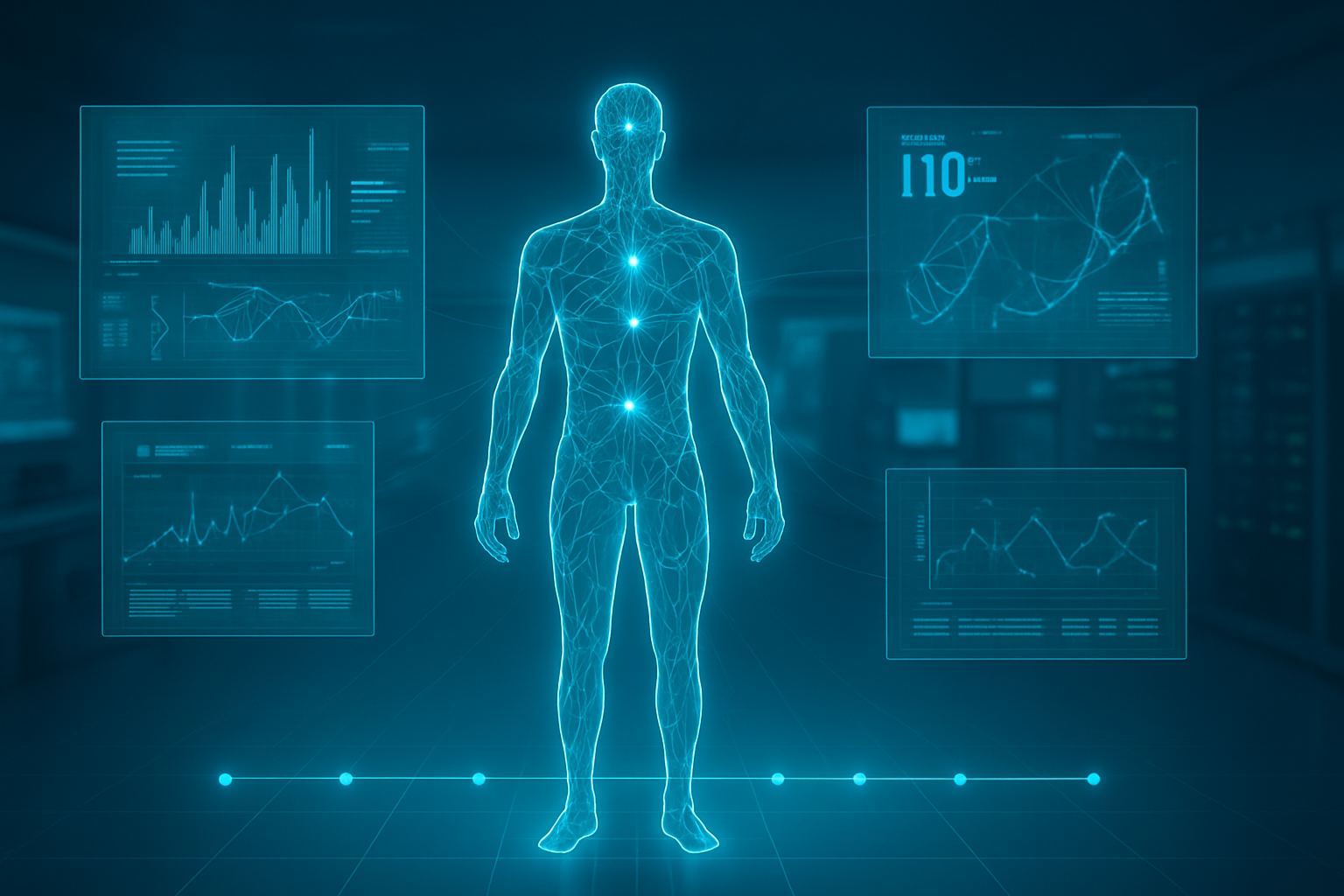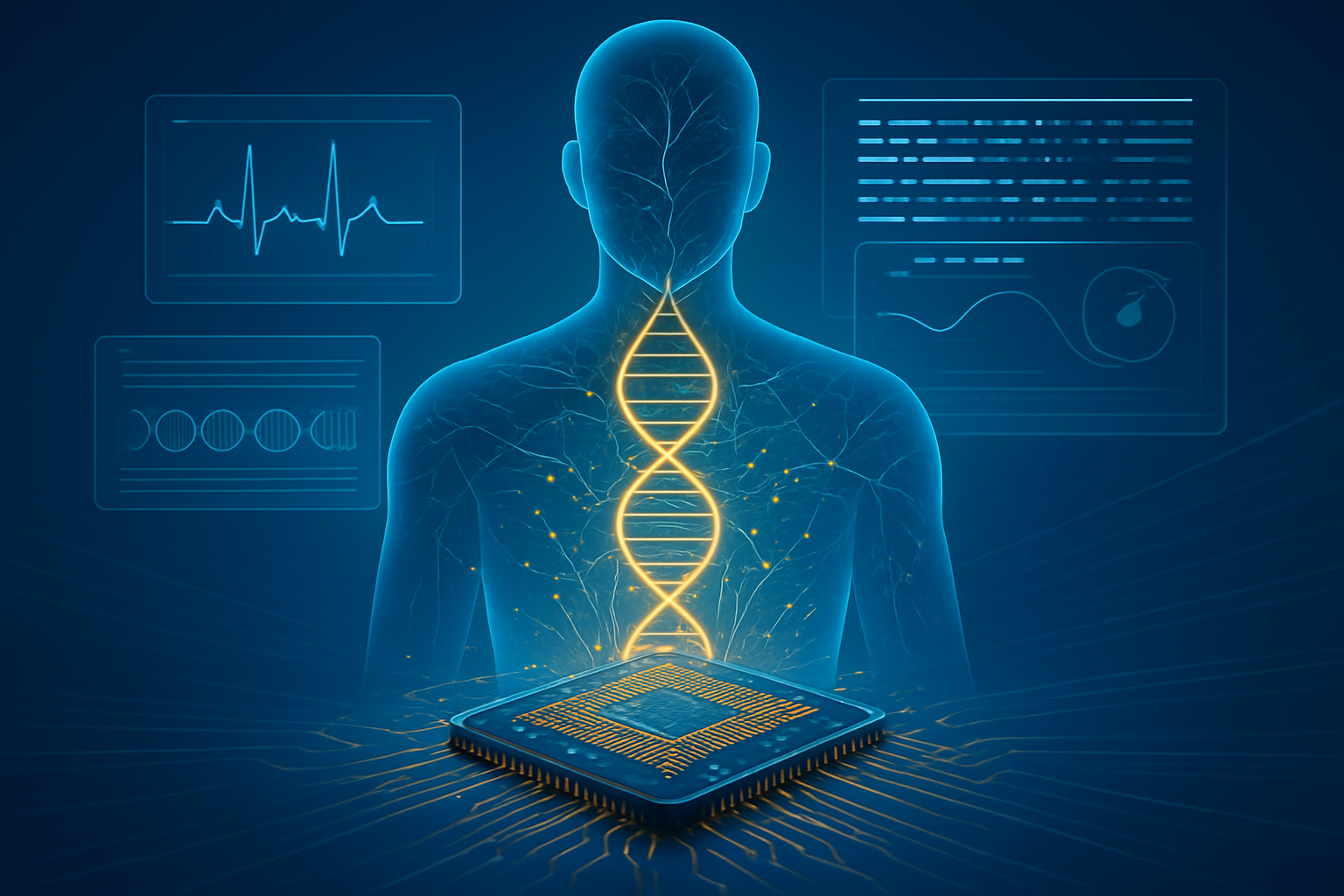
In a landmark shift for global healthcare, the Mayo Clinic has officially moved from a model of reactive treatment to "proactive interception." As of January 2026, the institution has integrated a suite of AI-powered foundation models that analyze a patient’s unique genetic code, sleep patterns, and cardiac signatures to predict life-threatening conditions—including cancer and heart failure—up to five years before symptoms manifest. This development marks the maturation of personalized medicine, transforming the doctor’s office from a place of diagnosis into a center for predictive forecasting.
The significance of this milestone cannot be overstated. By leveraging massive datasets and high-performance computing, Mayo Clinic is effectively "decoding" the silent period of disease development. For patients, this means the difference between a late-stage cancer diagnosis and a preventative intervention that stops the disease in its tracks. For the technology industry, it represents the first successful large-scale deployment of multimodal AI in a clinical setting, proving that "foundation models"—the same technology behind generative AI—can save lives when applied to biological data.
The Technical Backbone: From Genomic Foundation Models to Sleep-Heart AI
At the heart of this revolution is the Mayo Clinic Genomic Foundation Model, a massive neural network developed in collaboration with Cerebras Systems. Unlike previous genetic tools that focused on specific known mutations, this model was trained on over one trillion tokens of genomic data, including the complex "dark matter" of the human genome. With one billion parameters, the model has demonstrated a 96% accuracy rate in identifying somatic mutations that signal an early predisposition to cancer. This capability allows clinicians to identify high-risk individuals through a simple blood draw years before a tumor would appear on a traditional scan.
Simultaneously, Mayo has pioneered the use of "ambient data" through its collaboration with Sleep Number (NASDAQ: SNBR). By analyzing longitudinal data from smart beds—including heart rate variability (HRV) and respiratory disturbances—the AI can identify the subtle physiological "fingerprints" of Heart Failure with preserved Ejection Fraction (HFpEF). Furthermore, a new algorithm published in late 2025 utilizes standard 12-lead ECG data to detect Obstructive Sleep Apnea (OSA) with unprecedented precision. This is particularly vital for women, whose symptoms often differ from the traditional male-centric diagnostic criteria, leading to a historic closing of the gender gap in cardiovascular care.
These models differ fundamentally from traditional diagnostics because they are "multimodal." While a human radiologist might look at a single X-ray, Mayo’s AI integrates pathology slides, genetic sequences, and real-time biometric data to create a holistic "digital twin" of the patient. This approach has already shown the ability to detect pancreatic cancer an average of 438 days earlier than conventional methods. The AI research community has hailed this as a "GPT-4 moment for biology," noting that the transition from task-specific algorithms to broad-based foundation models is the key to unlocking the complexities of human health.
The Tech Titan Synergy: NVIDIA, Microsoft, and the New Medical Market
The deployment of these life-saving tools has created a massive strategic advantage for the tech giants providing the underlying infrastructure. NVIDIA (NASDAQ: NVDA) has emerged as the primary hardware backbone for Mayo’s "Atlas" pathology model. Utilizing the NVIDIA Blackwell SuperPOD, Mayo has digitized and analyzed over 20 million pathology slides, reducing the time required for complex diagnostic reviews from weeks to mere seconds. This partnership positions NVIDIA not just as a chipmaker, but as an essential utility for the future of clinical medicine.
Microsoft (NASDAQ: MSFT) and Alphabet Inc. (NASDAQ: GOOGL) are also deeply entrenched in this ecosystem. Microsoft Research has been instrumental in developing multimodal radiology models that integrate clinical notes with imaging data to catch early signs of lung cancer. Meanwhile, Google’s Med-Gemini models are being used to power MedEduChat, an AI agent that provides patients with personalized, genetic-based education about their risks. This shift is disrupting the traditional medical device market; companies that previously relied on selling standalone diagnostic hardware are now finding themselves forced to integrate with AI-first platforms like the Mayo Clinic Platform_Orchestrate.
The competitive implications are clear: the future of healthcare belongs to the companies that can manage and interpret the most data. Major AI labs are now pivoting away from general-purpose chatbots and toward specialized "Bio-AI" divisions. Startups in the biotech space are also benefiting, as Mayo’s platform now allows biopharma companies to use "synthetic placebo arms"—AI-generated patient cohorts—to validate new therapies, potentially cutting the cost and time of clinical trials by 50%.
Societal Impact and the Ethics of the "Pre-Patient"
As AI begins to predict disease years in advance, it introduces a new category of human experience: the "pre-patient." These are individuals who are clinically healthy but carry an AI-generated "forecast" of future illness. While this allows for life-saving interventions, it also raises significant psychological and ethical concerns. Experts are already debating the potential for "predictive anxiety" and the risk of over-treatment, where patients may undergo invasive procedures for conditions that might not have progressed for decades.
Furthermore, the privacy of genetic and sleep data remains a paramount concern. As Mayo Clinic expands its global network, the question of who owns this predictive data—and how it might be used by insurance companies—is at the forefront of policy discussions. Despite these concerns, the broader AI landscape is viewing this as a necessary evolution. Much like the transition from the telegraph to the internet, the move from reactive to predictive medicine is viewed as an inevitable technological milestone that will eventually become the global standard of care.
The impact on the healthcare workforce is also profound. Rather than replacing doctors, these AI tools are acting as "ambient co-pilots," handling the administrative burden of documentation and data synthesis. This allows physicians to return to "high-touch" care, focusing on the human element of medicine while the AI handles the "high-tech" pattern recognition in the background.
The Horizon: Synthetic Trials and Global Scaling
Looking ahead to the remainder of 2026 and beyond, the next frontier for Mayo Clinic is the global scaling of these models. Through the Platform_Orchestrate initiative, Mayo aims to export its AI diagnostic capabilities to rural and underserved regions where access to world-class specialists is limited. In these areas, a simple ECG or a night of sleep data could provide the same level of diagnostic insight as a full battery of tests at a major metropolitan hospital.
In the near term, we expect to see the integration of these AI models directly into Electronic Health Records (EHRs) across the United States. This will trigger automated alerts for primary care physicians when a patient’s data suggests an emerging risk. Long-term, the industry is eyeing "closed-loop" personalized medicine, where AI not only predicts disease but also designs custom-tailored mRNA vaccines or therapies to prevent the predicted condition from ever manifesting. The challenge remains in regulatory approval; the FDA is currently working on a new framework to evaluate "evolving algorithms" that continue to learn and change after they are deployed.
A New Chapter in Human Longevity
The developments at Mayo Clinic represent a definitive turning point in the history of artificial intelligence. We are no longer just using AI to generate text or images; we are using it to master the language of life itself. The ability to predict cardiovascular and cancer risks years before symptoms appear is perhaps the most significant application of AI to date, marking the beginning of an era where chronic disease could become a relic of the past.
As we move through 2026, the industry will be watching for the results of large-scale clinical outcomes studies that quantify the lives saved by these predictive models. The "Mayo Model" is set to become the blueprint for hospitals worldwide. For investors, clinicians, and patients alike, the message is clear: the most important health data is no longer what you feel today, but what the AI sees in your tomorrow.
This content is intended for informational purposes only and represents analysis of current AI developments.
TokenRing AI delivers enterprise-grade solutions for multi-agent AI workflow orchestration, AI-powered development tools, and seamless remote collaboration platforms.
For more information, visit https://www.tokenring.ai/.