
Tag: Project Astra

  • The Agentic Era Arrives: Google’s Project Mariner and Gemini 2.0 Redefine the Browser Experience

    The Agentic Era Arrives: Google’s Project Mariner and Gemini 2.0 Redefine the Browser Experience

    As we enter 2026, the landscape of artificial intelligence has shifted from simple conversational interfaces to proactive, autonomous agents. Leading this charge is Alphabet Inc. (NASDAQ: GOOGL), which has successfully transitioned its Gemini ecosystem from a reactive chatbot into a sophisticated "agentic" platform. At the heart of this transformation are Gemini 2.0 and Project Mariner—a powerful Chrome extension that allows AI to navigate the web, fill out complex forms, and conduct deep research with human-like precision.

    The release of these tools marks a pivotal moment in tech history, moving beyond the "chat box" paradigm. By leveraging a state-of-the-art multimodal architecture, Google has enabled its AI to not just talk about the world, but to act within it. With Project Mariner now hitting a record-breaking 83.5% score on the WebVoyager benchmark, the dream of a digital personal assistant that can handle the "drudgery" of the internet—from booking multi-city flights to managing insurance claims—has finally become a reality for millions of users.

    The Technical Backbone: Gemini 2.0 and the Power of Project Mariner

    Gemini 2.0 was designed from the ground up to be "agentic native." Unlike its predecessors, which primarily processed text and images in a static environment, Gemini 2.0 Flash and Pro models were built to reason across diverse inputs in real-time. With context windows reaching up to 2 million tokens, these models can maintain a deep understanding of complex tasks that span hours of interaction. This architectural shift allows Project Mariner to interpret the browser window not just as a collection of code, but as a visual field. It identifies buttons, text fields, and interactive elements through "pixels-to-action" mapping, effectively seeing the screen exactly as a human would.

    What sets Project Mariner apart from previous automation tools is its "Transparent Reasoning" engine. While earlier attempts at web automation relied on fragile scripts or specific APIs, Mariner uses Gemini 2.0’s multimodal capabilities to navigate any website, regardless of its underlying structure. During a task, a sidebar displays the agent's step-by-step plan, allowing users to watch as it compares prices across different tabs or fills out a 10-page mortgage application. This level of autonomy is backed by Google’s recent shift to Cloud Virtual Machines (VMs), which allows Mariner to run multiple tasks in parallel without slowing down the user's local machine.

    The AI research community has lauded these developments, particularly the 83.5% success rate on the WebVoyager benchmark. This score signifies a massive leap over previous models from competitors like OpenAI and Anthropic, which often struggled with the "hallucination of action"—the tendency for an AI to think it has clicked a button when it hasn't. Industry experts note that Google’s integration of "Teach & Repeat" features, where a user can demonstrate a workflow once for the AI to replicate, has effectively turned the browser into a programmable workforce.

    A Competitive Shift: Tech Giants in the Agentic Arms Race

    The launch of Project Mariner has sent shockwaves through the tech industry, forcing competitors to accelerate their own agentic roadmaps. Microsoft (NASDAQ: MSFT) has responded by deepening the integration of its "Copilot Actions," while OpenAI has continued to iterate on its "Operator" platform. However, Google’s advantage lies in its ownership of the world’s most popular browser and the Android operating system. By embedding Mariner directly into Chrome, Google has secured a strategic "front-door" advantage that startups find difficult to replicate.

    For the wider ecosystem of software-as-a-service (SaaS) companies, the rise of agentic AI is both a boon and a threat. Companies that provide travel booking, data entry, or research services are seeing their traditional user interfaces bypassed by agents that can aggregate data directly. Conversely, platforms that embrace "agent-friendly" designs—optimizing their sites for AI navigation rather than just human clicks—are seeing a surge in automated traffic and conversions. Google’s "AI Ultra" subscription tier, which bundles these agentic features for enterprise clients, has already become a major revenue driver, positioning AI as a form of "digital labor" rather than just software.

    The competitive implications also extend to the hardware space. As Google prepares to fully replace the legacy Google Assistant with Gemini on Android devices this year, Apple (NASDAQ: AAPL) is under increased pressure to enhance its "Apple Intelligence" suite. The ability for an agent to perform cross-app actions—such as taking a receipt from an email and entering the data into a spreadsheet—has become the new baseline for what consumers expect from their devices in 2026.

    The Broader Significance: Privacy, Trust, and the New Web

    The move toward agentic AI represents the most significant shift in the internet's "social contract" since the advent of social media. We are moving away from a web designed for human eyeballs toward a web designed for machine execution. While this promises unprecedented productivity, it also raises critical concerns regarding privacy and security. If an agent like Project Mariner can navigate your bank account or handle sensitive medical forms, the stakes for a security breach are higher than ever.

    To address these concerns, Google has implemented a "Human-in-the-Loop" safety model. For any action involving financial transactions or high-level data changes, Mariner is hard-coded to pause and request explicit human confirmation. Furthermore, the use of "Sandboxed Cloud VMs" ensures that the AI’s actions are isolated from the user’s primary system, providing a layer of protection against malicious sites that might try to "prompt inject" the agent.

    Comparing this to previous milestones, such as the release of GPT-4 or the first AlphaGo victory, the "Agentic Era" feels more personal. It isn't just about an AI that can write a poem or play a game; it's about an AI that can do your work for you. This shift is expected to have a profound impact on the global labor market, particularly in administrative and research-heavy roles, as the cost of "digital labor" continues to drop while its reliability increases.

    Looking Ahead: Project Astra and the Vision of 2026

    The next frontier for Google is the full integration of Project Astra’s multimodal features into the Gemini app, a milestone targeted for completion throughout 2026. Project Astra represents the "eyes and ears" of the Gemini ecosystem. While Mariner handles the digital world of the browser, Astra is designed to handle the physical world. By the end of this year, users can expect their Gemini app to possess "Visual Memory," allowing it to remember where you put your keys or identify a specific part needed for a home repair through a live camera feed.

    Experts predict that the convergence of Mariner’s web-navigating capabilities and Astra’s real-time vision will lead to the first truly "universal" AI assistant. Imagine an agent that can see a broken appliance through your phone's camera, identify the necessary replacement part, find the best price for it on the web, and complete the purchase—all within a single conversation. The challenges remain significant, particularly in the realm of real-time latency and the high compute costs associated with continuous video processing, but the trajectory is clear.

    In the near term, we expect to see Google expand its "swarm" of specialized agents. Beyond Mariner for the web, "Project CC" is expected to revolutionize Google Workspace by autonomously managing calendars and drafting complex documents, while "Jules" will continue to push the boundaries of AI-assisted coding. The goal is a seamless web of agents that communicate with each other to solve complex, multi-domain problems.

    Conclusion: A New Chapter in AI History

    The arrival of Gemini 2.0 and Project Mariner marks the end of the "chatbot era" and the beginning of the "agentic era." By achieving an 83.5% success rate on the WebVoyager benchmark, Google has proven that AI can be a reliable executor of complex tasks, not just a generator of text. This development represents a fundamental shift in how we interact with technology, moving from a world where we use tools to a world where we manage partners.

    As we look forward to the full integration of Project Astra in 2026, the significance of this moment cannot be overstated. We are witnessing the birth of a digital workforce that is available 24/7, capable of navigating the complexities of the modern world with increasing autonomy. For users, the key will be learning how to delegate effectively, while for the industry, the focus will remain on building the trust and security frameworks necessary to support this new level of agency.

    In the coming months, keep a close eye on how these agents handle real-world "edge cases"—the messy, unpredictable parts of the internet that still occasionally baffle even the best AI. The true test of the agentic era will not be in the benchmarks, but in the millions of hours of human time saved as we hand over the keys of the browser to Gemini.


    This content is intended for informational purposes only and represents analysis of current AI developments.

    TokenRing AI delivers enterprise-grade solutions for multi-agent AI workflow orchestration, AI-powered development tools, and seamless remote collaboration platforms.
    For more information, visit https://www.tokenring.ai/.
  • Google’s Gemini-Powered Vision: The Return of Smart Glasses as the Ultimate AI Interface

    Google’s Gemini-Powered Vision: The Return of Smart Glasses as the Ultimate AI Interface

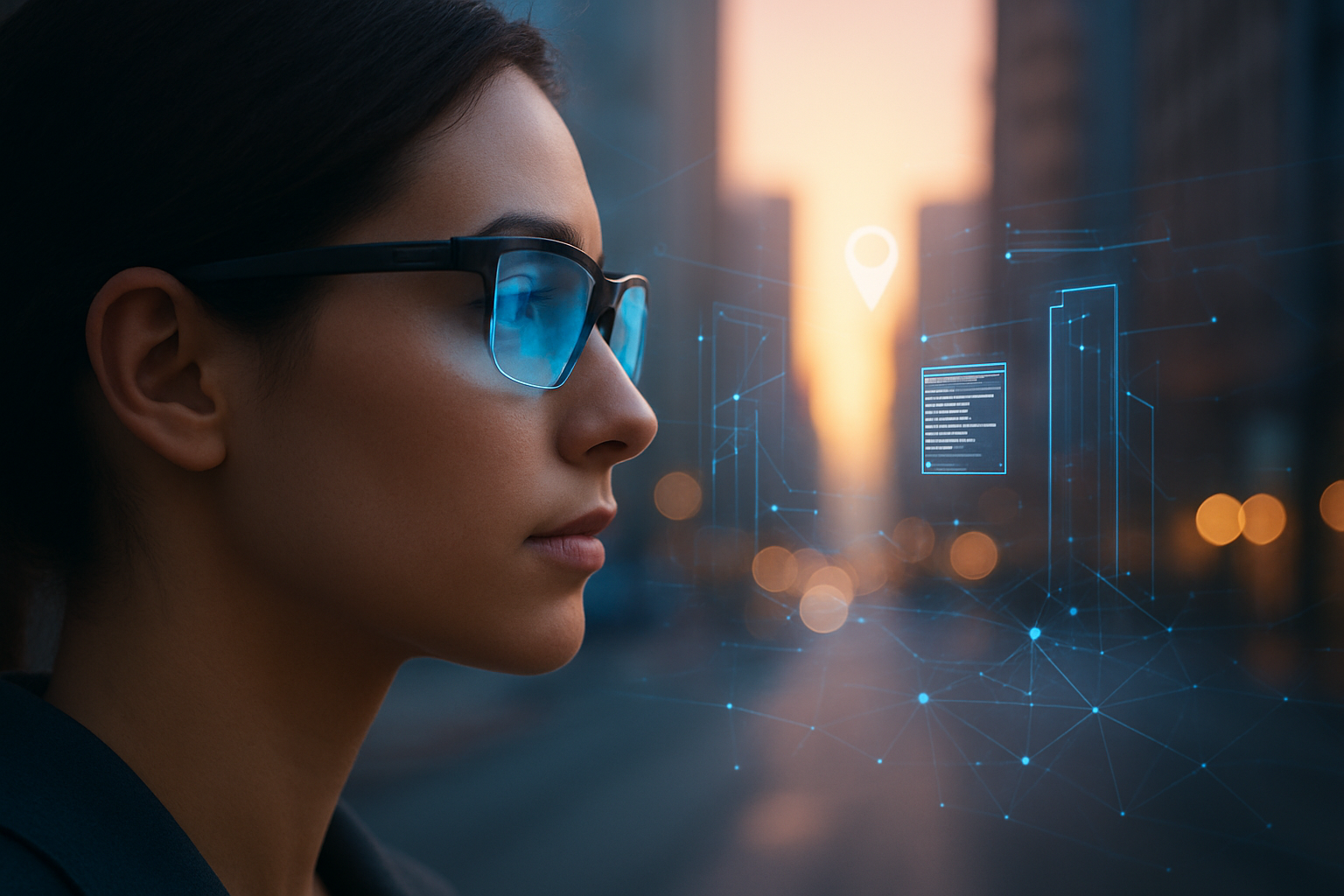
    As the tech world approaches the end of 2025, the race to claim the "prime real estate" of the human face has reached a fever pitch. Reports from internal sources at Alphabet Inc. (NASDAQ: GOOGL) and recent industry demonstrations suggest that Google is preparing a massive, coordinated return to the smart glasses market. Unlike the ill-fated Google Glass of a decade ago, this new generation of wearables is built from the ground up to serve as the physical vessel for Gemini, Google’s most advanced multimodal AI. By integrating the real-time visual processing of "Project Astra," Google aims to provide users with a "universal AI agent" that can see, hear, and understand the world alongside them in real-time.

    The significance of this move cannot be overstated. For years, the industry has theorized that the smartphone’s dominance would eventually be challenged by ambient computing—technology that exists in the background of our lives rather than demanding our constant downward gaze. With Gemini-integrated glasses, Google is betting that the combination of high-fashion frames and low-latency AI reasoning will finally move smart glasses from a niche enterprise tool to an essential consumer accessory. This development marks a pivotal shift for Google, moving away from being a search engine you "go to" and toward an intelligence that "walks with" you.

    The Brain Behind the Lens: Project Astra and Multimodal Mastery

    At the heart of the upcoming Google glasses is Project Astra, a breakthrough from Google DeepMind designed to handle multimodal inputs with near-zero latency. Technically, these glasses differ from previous iterations by moving beyond simple notifications or basic photo-taking. Leveraging the Gemini 2.5 and Ultra models, the glasses can perform "contextual reasoning" on a continuous video feed. In recent developer previews, a user wearing the glasses was able to look at a complex mechanical engine and ask, "What part is vibrating?" The AI, identifying the movement through the camera and correlating it with acoustic data, highlighted the specific bolt in the user’s field of view using an augmented reality (AR) overlay.

    The hardware itself is reportedly split into two distinct categories to maximize market reach. The first is an "Audio-Only" model, focusing on sleek, lightweight frames that look indistinguishable from standard eyewear. These rely on bone-conduction audio and directional microphones to provide a conversational interface. The second, more ambitious model features a high-resolution Micro-LED display engine developed by Raxium—a startup Google acquired in 2022. These "Display AI" glasses utilize advanced waveguides to project private, high-contrast text and graphics directly into the user’s line of sight, enabling real-time translation subtitles and turn-by-turn navigation that anchors 3D arrows to the physical street.

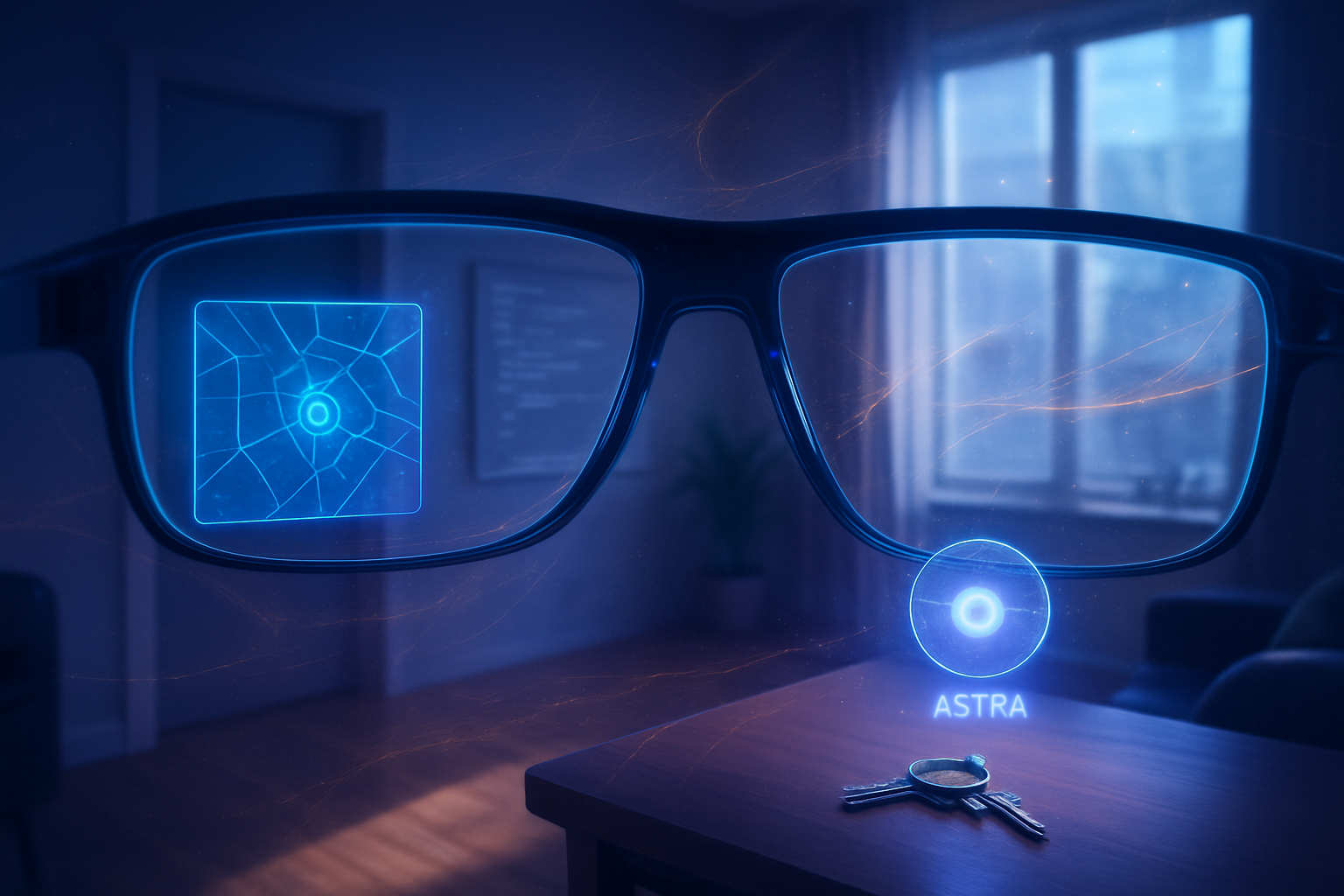
    Initial reactions from the AI research community have been largely positive, particularly regarding Google’s "long context window" technology. This allows the glasses to "remember" visual inputs for up to 10 minutes, solving the "where are my keys?" problem by allowing the AI to recall exactly where it last saw an object. However, experts note that the success of this technology hinges on battery efficiency. To combat heat and power drain, Google is utilizing the Snapdragon XR2+ Gen 2 chip from Qualcomm Inc. (NASDAQ: QCOM), offloading heavy computational tasks to the user’s smartphone via the new "Android XR" operating system.

    The Battle for the Face: Competitive Stakes and Strategic Shifts

    The intensifying rumors of Google's smart glasses have sent ripples through the boardrooms of Silicon Valley. Google’s strategy is a direct response to the success of the Ray-Ban Meta glasses produced by Meta Platforms, Inc. (NASDAQ: META). While Meta initially held a lead in the "fashion-first" category, Google has pivoted after being blocked from a partnership with EssilorLuxottica (EPA: EL) by a $3 billion investment from Meta. In response, Google has formed a strategic alliance with Warby Parker Inc. (NYSE: WRBY) and the high-end fashion label Gentle Monster. This "open platform" approach, branded as Android XR, is intended to make Google the primary software provider for all eyewear manufacturers, mirroring the strategy that made Android the dominant mobile OS.

    This development poses a significant threat to Apple Inc. (NASDAQ: AAPL), whose Vision Pro headset remains a high-end, tethered experience focused on "spatial computing" rather than "daily-wear AI." While Apple is rumored to be working on its own lightweight glasses, Google’s integration of Gemini gives it a head start in functional utility. Furthermore, the partnership with Samsung Electronics (KRX: 005930) to develop a "Galaxy XR" ecosystem ensures that Google has the manufacturing muscle to scale quickly. For startups in the AI hardware space, such as those developing standalone pins or pendants, the arrival of a functional, stylish glass from Google could prove disruptive, as the eyes and ears of a pair of glasses offer a far more natural data stream for an AI than a chest-mounted camera.

    Privacy, Subtitles, and the "Glasshole" Legacy

    The wider significance of Google’s return to eyewear lies in how it addresses the societal scars left by the original Google Glass. To avoid the "Glasshole" stigma of the mid-2010s, the 2025/2026 models are rumored to include significant privacy-first hardware features. These include a physical shutter for the camera and a highly visible LED ring that glows brightly when the device is recording or processing visual data. Google is also reportedly implementing an "Incognito Mode" that uses geofencing to automatically disable cameras in sensitive locations like hospitals or bathrooms.

    Beyond privacy, the cultural impact of real-time visual context is profound. The ability to have live subtitles during a conversation with a foreign-language speaker or to receive "social cues" via AI analysis could fundamentally change human interaction. However, this also raises concerns about "reality filtering," where users may begin to rely too heavily on an AI’s interpretation of their surroundings. Critics argue that an always-on AI assistant could further erode human memory and attention spans, creating a world where we only "see" what the algorithm deems relevant to our current task.

    The Road to 2026: What Lies Ahead

    In the near term, we expect Google to officially unveil the first consumer-ready Gemini glasses at Google I/O in early 2026, with a limited "Explorer Edition" potentially shipping to developers by the end of this year. The focus will likely be on "utility-first" use cases: helping users with DIY repairs, providing hands-free cooking instructions, and revolutionizing accessibility for the visually impaired. Long-term, the goal is to move the glasses from a smartphone accessory to a standalone device, though this will require breakthroughs in solid-state battery technology and 6G connectivity.

    The primary challenge remains the social friction of head-worn cameras. While the success of Meta’s Ray-Bans has softened public resistance, a device that "thinks" and "reasons" about what it sees is a different beast entirely. Experts predict that the next year will be defined by a "features war," where Google, Meta, and potentially OpenAI—through their rumored partnership with Jony Ive and Luxshare Precision Industry Co., Ltd. (SZSE: 002475)—will compete to prove whose AI is the most helpful in the real world.

    Final Thoughts: A New Chapter in Ambient Computing

    The rumors of Gemini-integrated Google Glasses represent more than just a hardware refresh; they signal the beginning of the "post-smartphone" era. By combining the multimodal power of Gemini with the design expertise of partners like Warby Parker, Google is attempting to fix the mistakes of the past and deliver on the original promise of wearable technology. The key takeaway is that the AI is no longer a chatbot in a window; it is becoming a persistent layer over our physical reality.

    As we move into 2026, the tech industry will be watching closely to see if Google can successfully navigate the delicate balance between utility and intrusion. If they succeed, the glasses could become as ubiquitous as the smartphone, turning every glance into a data-rich experience. For now, the world waits for the official word from Mountain View, but the signals are clear: the future of AI is not just in our pockets—it’s right before our eyes.


    This content is intended for informational purposes only and represents analysis of current AI developments.

    TokenRing AI delivers enterprise-grade solutions for multi-agent AI workflow orchestration, AI-powered development tools, and seamless remote collaboration platforms.
    For more information, visit https://www.tokenring.ai/.
  • The Rise of the Universal Agent: How Google’s Project Astra is Redefining the Human-AI Interface

    The Rise of the Universal Agent: How Google’s Project Astra is Redefining the Human-AI Interface

    As we close out 2025, the landscape of artificial intelligence has shifted from the era of static chatbots to the age of the "Universal Agent." At the forefront of this revolution is Project Astra, a massive multi-year initiative from Google, a subsidiary of Alphabet Inc. (NASDAQ:GOOGL), designed to create an ambient, proactive AI that doesn't just respond to prompts but perceives and interacts with the physical world in real-time.

    Originally unveiled as a research prototype at Google I/O in 2024, Project Astra has evolved into the operational backbone of the Gemini ecosystem. By integrating vision, sound, and persistent memory into a single low-latency framework, Google has moved closer to the "JARVIS-like" vision of AI—an assistant that lives in your glasses, controls your smartphone, and understands your environment as intuitively as a human companion.

    The Technical Foundation of Ambient Intelligence

    The technical foundation of Project Astra represents a departure from the "token-in, token-out" architecture of early large language models. To achieve the fluid, human-like responsiveness seen in late 2025, Google DeepMind engineers focused on three core pillars: multimodal synchronicity, sub-300ms latency, and persistent temporal memory. Unlike previous iterations of Gemini, which processed video as a series of discrete frames, Astra-powered models like Gemini 2.5 and the newly released Gemini 3.0 treat video and audio as a continuous, unified stream. This allows the agent to identify objects, read code, and interpret emotional nuances in a user’s voice simultaneously without the "thinking" delays that plagued earlier AI.

    One of the most significant breakthroughs of 2025 was the rollout of "Agentic Intuition." This capability allows Astra to navigate the Android operating system autonomously. In a landmark demonstration earlier this year, Google showed the agent taking a single voice command—"Help me fix my sink"—and proceeding to open the camera to identify the leak, search for a digital repair manual, find the necessary part on a local hardware store’s website, and draft an order for pickup. This level of "phone control" is made possible by the agent's ability to "see" the screen and interact with UI elements just as a human would, bypassing the need for specific app API integrations.

    Initial reactions from the AI research community have been a mix of awe and caution. Dr. Andrej Karpathy and other industry luminaries have noted that Google’s integration of Astra into the hardware level—specifically via the Tensor G5 chips in the latest Pixel devices—gives it a distinct advantage in power efficiency and speed. However, some researchers argue that the "black box" nature of Astra’s decision-making in autonomous tasks remains a challenge for safety, as the agent must now be trusted to handle sensitive digital actions like financial transactions and private communications.

    The Strategic Battle for the AI Operating System

    The success of Project Astra has ignited a fierce strategic battle for what analysts are calling the "AI OS." Alphabet Inc. (NASDAQ:GOOGL) is leveraging its control over Android to ensure that Astra is the default "brain" for billions of devices. This puts direct pressure on Apple Inc. (NASDAQ:AAPL), which has taken a more conservative approach with Apple Intelligence. While Apple remains the leader in user trust and privacy-centric "Private Cloud Compute," it has struggled to match the raw agentic capabilities and cross-app autonomy that Google has demonstrated with Astra.

    In the wearable space, Google is positioning Astra as the intelligence behind the Android XR platform, a collaborative hardware effort with Samsung (KRX:005930) and Qualcomm (NASDAQ:QCOM). This is a direct challenge to Meta Platforms Inc. (NASDAQ:META), whose Ray-Ban Meta glasses have dominated the early "smart eyewear" market. While Meta’s Llama 4 models offer impressive "Look and Ask" features, Google’s Astra-powered glasses aim for a deeper level of integration, offering real-time world-overlay navigation and a "multimodal memory" that remembers where you left your keys or what a colleague said in a meeting three days ago.

    Startups are also feeling the ripples of Astra’s release. Companies that previously specialized in "wrapper" apps for specific AI tasks—such as automated scheduling or receipt tracking—are finding their value propositions absorbed into the native capabilities of the universal agent. To survive, the broader AI ecosystem is gravitating toward the Model Context Protocol (MCP), an open standard that allows agents from different companies to share data and tools, though Google’s "A2UI" (Agentic User Interface) standard is currently vying to become the dominant framework for how AI interacts with visual software.

    Societal Implications and the Privacy Paradox

    Beyond the corporate horse race, Project Astra signals a fundamental shift in the broader AI landscape: the transition from "Information Retrieval" to "Physical Agency." We are moving away from a world where we ask AI for information and toward a world where we delegate our intentions. This shift carries profound implications for human productivity, as "mundane admin"—the thousands of small digital tasks that consume our days—begins to vanish into the background of an ambient AI.

    However, this "always-on" vision has sparked significant ethical and privacy concerns. With Astra-powered glasses and phone-sharing features, the AI is effectively recording and processing a constant stream of visual and auditory data. Privacy advocates, including Signal President Meredith Whittaker, have warned that this creates a "narrative authority" over our lives, where a single corporation has a complete, searchable record of our physical and digital interactions. The EU AI Act, which saw its first major wave of enforcement in 2025, is currently scrutinizing these "autonomous systems" to determine if they violate bystander privacy or manipulate user behavior through proactive suggestions.

    Comparisons to previous milestones, like the release of GPT-4 or the original iPhone, are common, but Astra feels different. It represents the "eyes and ears" of the internet finally being connected to a "brain" that can act. If 2023 was the year AI learned to speak and 2024 was the year it learned to reason, 2025 is the year AI learned to inhabit our world.

    The Horizon: From Smartphones to Smart Worlds

    Looking ahead, the near-term roadmap for Project Astra involves a wider rollout of "Project Mariner," a desktop-focused version of the agent designed to handle complex professional workflows in Chrome and Workspace. Experts predict that by late 2026, we will see the first "Agentic-First" applications—software designed specifically to be navigated by AI rather than humans. These apps will likely have no traditional buttons or menus, consisting instead of data structures that an agent like Astra can parse and manipulate instantly.

    The ultimate challenge remains the "Reliability Gap." For a universal agent to be truly useful, it must achieve a near-perfect success rate in its actions. A 95% success rate is impressive for a chatbot, but a 5% failure rate is catastrophic when an AI is authorized to move money or delete files. Addressing "Agentic Hallucination"—where an AI confidently performs the wrong action—will be the primary focus of Google’s research as they move toward the eventual release of Gemini 4.0.

    A New Chapter in Human-Computer Interaction

    Project Astra is more than just a feature update; it is a blueprint for the future of computing. By bridging the gap between digital intelligence and physical reality, Google has established a new benchmark for what an AI assistant should be. The move from a reactive tool to a proactive agent marks a turning point in history, where the boundary between our devices and our environment begins to dissolve.

    The key takeaways from the Astra initiative are clear: multimodal understanding and low latency are the new prerequisites for AI, and the battle for the "AI OS" will be won by whoever can best integrate these agents into our daily hardware. In the coming months, watch for the public launch of the first consumer-grade Android XR glasses and the expansion of Astra’s "Computer Use" features into the enterprise sector. The era of the universal agent has arrived, and the way we interact with the world will never be the same.


    This content is intended for informational purposes only and represents analysis of current AI developments.

    TokenRing AI delivers enterprise-grade solutions for multi-agent AI workflow orchestration, AI-powered development tools, and seamless remote collaboration platforms.
    For more information, visit https://www.tokenring.ai/.