Tag: Project Stargate

  • The 10-Gigawatt Giga-Project: Inside the $500 Billion ‘Project Stargate’ Reshaping the Path to AGI

    The 10-Gigawatt Giga-Project: Inside the $500 Billion ‘Project Stargate’ Reshaping the Path to AGI

    In a move that has fundamentally rewritten the economics of the silicon age, OpenAI, SoftBank Group Corp. (TYO: 9984), and Oracle Corp. (NYSE: ORCL) have solidified their alliance under "Project Stargate"—a breathtaking $500 billion infrastructure initiative designed to build the world’s first 10-gigawatt "AI factory." As of late January 2026, the venture has transitioned from a series of ambitious blueprints into the largest industrial undertaking in human history. This massive infrastructure play represents a strategic bet that the path to artificial super-intelligence (ASI) is no longer a matter of algorithmic refinement alone, but one of raw, unprecedented physical scale.

    The significance of Project Stargate cannot be overstated; it is a "Manhattan Project" for the era of intelligence. By combining OpenAI’s frontier models with SoftBank’s massive capital reserves and Oracle’s distributed cloud expertise, the trio is bypassing traditional data center constraints to build a global compute fabric. With an initial $100 billion already deployed and sites breaking ground from the plains of Texas to the fjords of Norway, Stargate is intended to provide the sheer "compute-force" necessary to train GPT-6 and the subsequent models that experts believe will cross the threshold into autonomous reasoning and scientific discovery.

    The Engineering of an AI Titan: 10 Gigawatts and Custom Silicon

    Technically, Project Stargate is less a single building and more a distributed network of "Giga-clusters" designed to function as a singular, unified supercomputer. The flagship site in Abilene, Texas, alone is slated for a 1.2-gigawatt capacity, featuring ten massive 500,000-square-foot facilities. To achieve the 10-gigawatt target—a power load equivalent to ten large nuclear reactors—the project has pioneered new frontiers in power density. These facilities utilize NVIDIA Corp. (NASDAQ: NVDA) Blackwell GB200 racks, with a rapid transition planned for the "Vera Rubin" architecture by late 2026. Each rack consumes upwards of 130 kW, necessitating a total abandonment of traditional air cooling in favor of advanced closed-loop liquid cooling systems provided by specialized partners like LiquidStack.

    This infrastructure is not merely a graveyard for standard GPUs. While NVIDIA remains a cornerstone partner, OpenAI has aggressively diversified its compute supply to mitigate bottlenecks. Recent reports confirm a $10 billion agreement with Cerebras Systems and deep co-development projects with Broadcom Inc. (NASDAQ: AVGO) and Advanced Micro Devices, Inc. (NASDAQ: AMD) to integrate up to 6 gigawatts of custom Instinct-series accelerators. This multi-vendor strategy ensures that Stargate remains resilient against supply chain shocks, while Oracle’s (NYSE: ORCL) Cloud Infrastructure (OCI) provides the orchestration layer, allowing these disparate hardware blocks to communicate with the near-zero latency required for massive-scale model parallelization.

    Market Shocks: The Rise of the Infrastructure Super-Alliance

    The formation of Stargate LLC has sent shockwaves through the technology sector, particularly concerning the long-standing partnership between OpenAI and Microsoft Corp. (NASDAQ: MSFT). While Microsoft remains a vital collaborator, the $500 billion Stargate venture marks a clear pivot toward a multi-cloud, multi-benefactor future for Sam Altman’s firm. For SoftBank (TYO: 9984), the project represents a triumphant return to the center of the tech universe; Masayoshi Son, serving as Chairman of Stargate LLC, is leveraging his ownership of Arm Holdings plc (NASDAQ: ARM) to ensure that vertical integration—from chip architecture to the power grid—remains within the venture's control.

    Oracle (NYSE: ORCL) has arguably seen the most significant strategic uplift. By positioning itself as the "Infrastructure Architect" for Stargate, Oracle has leapfrogged competitors in the high-performance computing (HPC) space. Larry Ellison has championed the project as the ultimate validation of Oracle’s distributed cloud vision, recently revealing that the company has secured permits for three small modular reactors (SMRs) to provide dedicated carbon-free power to Stargate nodes. This move has forced rivals like Google (NASDAQ: GOOGL) and Amazon (NASDAQ: AMZN) to accelerate their own nuclear-integrated data center plans, effectively turning the AI race into an energy-acquisition race.

    Sovereignty, Energy, and the New Global Compute Order

    Beyond the balance sheets, Project Stargate carries immense geopolitical and societal weight. The sheer energy requirement—10 gigawatts—has sparked a national conversation regarding the stability of the U.S. electrical grid. Critics argue that the project’s demand could outpace domestic energy production, potentially driving up costs for consumers. However, the venture’s proponents, including leadership from Abu Dhabi’s MGX, argue that Stargate is a national security imperative. By anchoring the bulk of this compute within the United States and its closest allies, OpenAI and its partners aim to ensure that the "intelligence transition" is governed by democratic values.

    The project also marks a milestone in the "OpenAI for Countries" initiative. Stargate is expanding into sovereign nodes, such as a 1-gigawatt cluster in the UAE and a 230-megawatt hydropowered site in Narvik, Norway. This suggests a future where compute capacity is treated as a strategic national reserve, much like oil or grain. The comparison to the Manhattan Project is apt; Stargate is an admission that the first entity to achieve super-intelligence will likely be the one that can harness the most electricity and the most silicon simultaneously, effectively turning industrial capacity into cognitive power.

    The Horizon: GPT-7 and the Era of Scientific Discovery

    In the near term, the immediate application for this 10-gigawatt factory is the training of GPT-6 and GPT-7. These models are expected to move beyond text and image generation into "world-model" simulations, where AI can conduct millions of virtual scientific experiments in seconds. Larry Ellison has already hinted at a "Healthcare Stargate" initiative, which aims to use the massive compute fabric to design personalized mRNA cancer vaccines and simulate complex protein folding at a scale previously thought impossible. The goal is to reduce the time for drug discovery from years to under 48 hours.

    However, the path forward is not without significant hurdles. As of January 2026, the project is navigating a global shortage of high-voltage transformers and ongoing regulatory scrutiny regarding SoftBank’s (TYO: 9984) attempts to acquire more domestic data center operators like Switch. Furthermore, the integration of small modular reactors (SMRs) remains a multi-year regulatory challenge. Experts predict that the next 18 months will be defined by "the battle for the grid," as Stargate LLC attempts to secure the interconnections necessary to bring its full 10-gigawatt vision online before the decade's end.

    A New Chapter in AI History

    Project Stargate represents the definitive end of the "laptop-era" of AI and the beginning of the "industrial-scale" era. The $500 billion commitment from OpenAI, SoftBank (TYO: 9984), and Oracle (NYSE: ORCL) is a testament to the belief that artificial general intelligence is no longer a "if," but a "when," provided the infrastructure can support it. By fusing the world’s most advanced software with the world’s most ambitious physical build-out, the partners are attempting to build the engine that will drive the next century of human progress.

    In the coming months, the industry will be watching closely for the completion of the "Lighthouse" campus in Wisconsin and the first successful deployments of custom OpenAI-designed silicon within the Stargate fabric. If successful, this 10-gigawatt AI factory will not just be a data center, but the foundational infrastructure for a new form of civilization—one powered by super-intelligence and sustained by the largest investment in technology ever recorded.


    This content is intended for informational purposes only and represents analysis of current AI developments.

    TokenRing AI delivers enterprise-grade solutions for multi-agent AI workflow orchestration, AI-powered development tools, and seamless remote collaboration platforms. For more information, visit https://www.tokenring.ai/.
  • America First in the Silicon Age: The Launch of the 2026 US AI Action Plan

    America First in the Silicon Age: The Launch of the 2026 US AI Action Plan

    On January 16, 2026, the United States federal government officially entered the most aggressive phase of its domestic technology strategy with the implementation of the "Winning the Race: America’s AI Action Plan." This landmark initiative represents a fundamental pivot in national policy, shifting from the safety-centric regulatory frameworks of the previous several years toward a doctrine of "Sovereign AI Infrastructure." By prioritizing domestic supply chain security and massive capital mobilization, the plan aims to ensure that the U.S. remains the undisputed epicenter of artificial intelligence development for the next century.

    The announcement marks the culmination of a flurry of executive actions and trade agreements finalized in the first weeks of 2026. Central to this strategy is the belief that AI compute is no longer just a commercial commodity but a critical national resource. To secure this resource, the government has launched a multi-front campaign involving 25% tariffs on imported high-end silicon, a historic $250 billion semiconductor trade deal with Taiwan, and the federal designation of "Winning Sites" for massive AI data centers. This "America First" approach signals a new era of industrial policy, where the federal government and tech giants are deeply intertwined in the pursuit of computational dominance.

    Securing the Stack: Tariffs, Trade, and the New American Foundry

    The technical core of the 2026 US AI Action Plan focuses on "resharing" the entire AI stack, from raw silicon to frontier models. On January 14, a landmark proclamation under Section 232 of the Trade Expansion Act imposed a 25% tariff on high-end AI chips produced abroad, specifically targeting the H200 and newer architectures from NVIDIA Corporation (NASDAQ:NVDA) and the MI325X from Advanced Micro Devices, Inc. (NASDAQ:AMD). To mitigate the immediate cost to domestic AI scaling, the plan includes a strategic exemption: these tariffs do not apply to chips imported specifically for use in U.S.-based data centers, effectively forcing manufacturers to choose between higher costs or building on American soil.

    Complementing the tariffs is the historic US-Taiwan Semiconductor Trade Deal signed on January 15. This agreement facilitates a staggering $250 billion in direct investment from Taiwanese firms, led by Taiwan Semiconductor Manufacturing Company (NYSE:TSM), to build advanced AI and energy production capacity within the United States. To support this massive reshoring effort, the U.S. government has pledged $250 billion in federal credit guarantees, significantly lowering the financial risk for domestic chip manufacturing and advanced packaging facilities.

    Technically, this differs from the 2023 National AI Initiative by moving beyond research grants and into large-scale infrastructure deployment. A prime example is "Lux," the first dedicated "AI Factory for Science" deployed by the Department of Energy at Oak Ridge National Laboratory. This $1 billion supercomputer, a public-private partnership involving AMD, Oracle Corporation (NYSE:ORCL), and Hewlett Packard Enterprise (NYSE:HPE), utilizes the latest AMD Instinct MI355X GPUs. Unlike previous supercomputers designed for general scientific simulation, Lux is architected specifically for training and running large-scale foundation models, marking a shift toward sovereign AI capabilities.

    The Rise of Project Stargate and the Industry Reshuffle

    The industry implications of the 2026 Action Plan are profound, favoring companies that align with the "Sovereign AI" vision. The most ambitious project under this new framework is "Project Stargate," a $500 billion joint venture between OpenAI, SoftBank Group Corp. (TYO:9984), Oracle, and the UAE-based MGX. This initiative aims to build a nationwide network of advanced AI data centers. The first flagship facility is set to break ground in Abilene, Texas, benefiting from streamlined federal permitting and land leasing policies established in the July 2025 Executive Order on Accelerating Federal Permitting of Data Center Infrastructure.

    For tech giants like Microsoft Corporation (NASDAQ:MSFT) and Oracle, the plan provides a significant competitive advantage. By partnering with the federal government on "Winning Sites"—such as the newly designated federal land in Paducah, Kentucky—these companies gain access to expedited energy connections and tax incentives that are unavailable to foreign competitors. The Department of Energy’s Request for Offer (RFO), due January 30, 2026, has sparked a bidding war among cloud providers eager to operate on federal land where nuclear and natural gas energy sources are being fast-tracked to meet the immense power demands of AI.

    However, the plan also introduces strategic challenges. The new Department of Commerce regulations published on January 13 allow the export of advanced chips like the Nvidia H200 to international markets, but only after exporters certify that domestic supply orders are prioritized first. This "America First" supply chain mandate ensures that U.S. labs always have first access to the fastest silicon, potentially creating a "compute gap" between domestic firms and their global rivals.

    A Geopolitical Pivot: From Safety to Dominance

    The 2026 US AI Action Plan represents a stark departure from the 2023 Executive Order (EO 14110), which focused heavily on AI safety, ethics, and mandatory reporting of red-teaming results. The new plan effectively rescinds many of these requirements, arguing that "regulatory unburdening" is essential to win the global AI race. The focus has shifted from "Safe and Trustworthy AI" to "American AI Dominance." This has sparked debate within the AI research community, as safety advocates worry that the removal of oversight could lead to the deployment of unpredictable frontier models.

    Geopolitically, the plan treats AI compute as a national security asset on par with nuclear energy or oil reserves. By leveraging federal land and promoting "Energy Dominance"—including the integration of small modular nuclear reactors (SMRs) and expanded gas production for data centers—the U.S. is positioning itself as the only nation capable of supporting the multi-gigawatt power requirements of future AGI systems. This "Sovereign AI" trend is a direct response to similar moves by China and the EU, but the scale of the U.S. investment—measured in the hundreds of billions—dwarfs previous milestones.

    Comparisons are already being drawn to the Manhattan Project and the Space Race. Unlike those state-run initiatives, however, the 2026 plan relies on a unique hybrid model where the government provides the land, the permits, and the trade protections, while the private sector provides the capital and the technical expertise. This public-private synergy is designed to outpace state-directed economies by harnessing the market incentives of Silicon Valley.

    The Road to 2030: Future Developments and Challenges

    In the near term, the industry will be watching the rollout of the four federal "Winning Sites" for data center infrastructure. The January 30 deadline for the Paducah, KY site will serve as a bellwether for the level of private sector interest in the government’s land-leasing model. If successful, experts predict similar initiatives for federal lands in the Southwest, where solar and geothermal energy could be paired with AI infrastructure.

    Long-term, the challenge remains the massive energy demand. While the plan fast-tracks nuclear and gas, the environmental impact and the timeline for building new power plants could become a bottleneck by 2028. Furthermore, while the tariffs are designed to force reshoring, the complexity of the semiconductor supply chain means that "total independence" is likely years away. The success of the US-Taiwan deal will depend on whether TSM can successfully transfer its most advanced manufacturing processes to U.S. soil without significant delays.

    Experts predict that if the 2026 Action Plan holds, the U.S. will possess over 60% of the world’s Tier-1 AI compute capacity by 2030. This would create a "gravitational pull" for global talent, as the best researchers and engineers flock to the locations where the most powerful models are being trained.

    Conclusion: A New Chapter in the History of AI

    The launch of the 2026 US AI Action Plan is a defining moment in the history of technology. It marks the point where AI policy moved beyond the realm of digital regulation and into the world of hard infrastructure, global trade, and national sovereignty. By securing the domestic supply chain and building out massive sovereign compute capacity, the United States is betting its future on the idea that computational power is the ultimate currency of the 21st century.

    Key takeaways from this month's announcements include the aggressive use of tariffs to force domestic manufacturing, the shift toward a "deregulated evaluation" framework to speed up innovation, and the birth of "Project Stargate" as a symbol of the immense capital required for the next generation of AI. In the coming weeks, all eyes will be on the Department of Energy as it selects the first private partners for its federally-backed AI factories. The race for AI dominance has entered a new, high-stakes phase, and the 2026 Action Plan has set the rules of the game.


    This content is intended for informational purposes only and represents analysis of current AI developments.

    TokenRing AI delivers enterprise-grade solutions for multi-agent AI workflow orchestration, AI-powered development tools, and seamless remote collaboration platforms.
    For more information, visit https://www.tokenring.ai/.

  • Beyond the Silicon Frontier: Microsoft and OpenAI Break Ground on the $100 Billion ‘Stargate’ Supercomputer

    Beyond the Silicon Frontier: Microsoft and OpenAI Break Ground on the $100 Billion ‘Stargate’ Supercomputer

    As of January 15, 2026, the landscape of artificial intelligence has moved beyond the era of mere software iteration and into a period of massive physical infrastructure. At the heart of this transformation is "Project Stargate," the legendary $100 billion supercomputer initiative spearheaded by Microsoft (NASDAQ:MSFT) and OpenAI. What began as a roadmap to house millions of specialized AI chips has now materialized into a series of "AI Superfactories" across the United States, marking the largest capital investment in a single computing project in human history.

    This monumental collaboration represents more than just a data center expansion; it is an architectural bet on the arrival of Artificial General Intelligence (AGI). By integrating advanced liquid cooling, dedicated nuclear power sources, and a proprietary networking fabric, Microsoft and OpenAI are attempting to create a monolithic computing entity capable of training next-generation frontier models that are orders of magnitude more powerful than the GPT-4 and GPT-5 architectures that preceded them.

    The Architecture of a Giant: 10 Gigawatts and Millions of Chips

    Technically, Project Stargate has moved into Phase 5 of its multi-year development cycle. While Phase 4 saw the activation of the "Fairwater" campus in Wisconsin and the "Stargate I" facility in Abilene, Texas, the current phase involves the construction of the primary Stargate core. Unlike traditional data centers that serve thousands of different applications, Stargate is designed as a "monolithic" entity where the entire facility functions as one cohesive computer. To achieve this, the project is moving away from the industry-standard InfiniBand networking—which struggled to scale beyond hundreds of thousands of chips—in favor of an ultra-high-speed, custom Ethernet fabric designed to interconnect millions of specialized accelerators simultaneously.

    The chip distribution for the 2026 roadmap reflects a diversified approach to silicon. While NVIDIA (NASDAQ:NVDA) remains the primary provider with its Blackwell (GB200 and GB300) and the newly shipping "Vera Rubin" architectures, Microsoft has successfully integrated its own custom silicon, the Maia 100 and the recently mass-produced "Braga" (Maia 2) accelerators. These chips are specifically tuned for OpenAI’s workloads, reducing the "compute tax" associated with general-purpose hardware. To keep these millions of processors from melting, the facilities utilize advanced closed-loop liquid cooling systems, which have become a regulatory necessity to eliminate the massive water consumption typically associated with such high-density heat loads.

    This approach differs significantly from previous supercomputing clusters, which were often modular and geographically dispersed. Stargate’s primary innovation is its energy density and interconnectivity. The roadmap targets a staggering 10-gigawatt power capacity by 2030—roughly the energy consumption of New York City. Industry experts have noted that the sheer scale of the project has forced a shift in AI research from "algorithm-first" to "infrastructure-first," where the physical constraints of power and heat now dictate the boundaries of intelligence.

    Market Shifting: The Era of the AI Super-Consortium

    The implications for the technology sector are profound, as Project Stargate has triggered a "trillion-dollar arms race" among tech giants. Microsoft’s early $100 billion commitment has solidified its position as the dominant cloud provider for frontier AI, but the partnership has evolved. As of late 2025, OpenAI transitioned into a for-profit Public Benefit Corporation (PBC), allowing it to seek additional capital from a wider pool of investors. This led to the involvement of Oracle (NYSE:ORCL), which is now providing physical data center construction expertise, and SoftBank (OTC:SFTBY), which has contributed to a broader $500 billion "national AI fabric" initiative that grew out of the original Stargate roadmap.

    Competitors have been forced to respond with equally audacious infrastructure plays. Google (NASDAQ:GOOGL) has accelerated its TPU v7 roadmap to match the Blackwell-Rubin scale, while Meta (NASDAQ:META) continues to build out its own massive clusters to support open-source research. However, the Microsoft-OpenAI alliance maintains a strategic advantage through its deep integration of custom hardware and software. By controlling the stack from the specialized "Braga" chips up to the model architecture, they can achieve efficiencies that startups and smaller labs simply cannot afford, potentially creating a "compute moat" that defines the next decade of the industry.

    The Wider Significance: AI as National Infrastructure

    Project Stargate is frequently compared to the Manhattan Project or the Apollo program, reflecting its status as a milestone of national importance. In the broader AI landscape, the project signals that the "scaling laws"—the observation that more compute and data consistently lead to better performance—have not yet hit a ceiling. However, this progress has brought significant concerns regarding energy consumption and environmental impact. The shift toward a 10-gigawatt requirement has turned Microsoft into a major energy player, exemplified by its 20-year deal with Constellation Energy (NASDAQ:CEG) to revive the Three Mile Island nuclear facility to provide clean baseload power.

    Furthermore, the project has sparked intense debate over the centralization of power. With a $100 billion-plus facility under the control of two private entities, critics argue that the path to AGI is being privatized. This has led to increased regulatory scrutiny and a push for "sovereign AI" initiatives in Europe and Asia, as nations realize that computing power has become the 21st century's most critical strategic resource. The success or failure of Stargate will likely determine whether the future of AI is a decentralized ecosystem or a handful of "super-facilities" that serve as the world's primary cognitive engines.

    The Horizon: SMRs and the Pursuit of AGI

    Looking ahead, the next two to three years will focus on solving the "power bottleneck." While solar and battery storage are being deployed at the Texas sites, the long-term viability of Stargate Phase 5 depends on the successful deployment of Small Modular Reactors (SMRs). OpenAI’s involvement with Helion Energy is a key part of this strategy, with the goal of providing on-site fusion or advanced fission power to keep the clusters running without straining the public grid. If these energy breakthroughs coincide with the next leap in chip efficiency, the cost of "intelligence" could drop to a level where real-time, high-reasoning AI is available for every human activity.

    Experts predict that by 2028, the Stargate core will be fully operational, facilitating the training of models that can perform complex scientific discovery, autonomous engineering, and advanced strategic planning. The primary challenge remains the physical supply chain: the sheer volume of copper, high-bandwidth memory, and specialized optical cables required for a "million-chip cluster" is currently stretching global manufacturing to its limits. How Microsoft and OpenAI manage these logistical hurdles will be as critical to their success as the code they write.

    Conclusion: A Monument to the Intelligence Age

    Project Stargate is more than a supercomputer; it is a monument to the belief that human-level intelligence can be engineered through massive scale. As we stand in early 2026, the project has already reshaped the global energy market, the semiconductor industry, and the geopolitical balance of technology. The key takeaway is that the era of "small-scale" AI experimentation is over; we have entered the age of industrial-scale intelligence, where success is measured in gigawatts and hundreds of billions of dollars.

    In the coming months, the industry will be watching for the first training runs on the Phase 4 clusters and the progress of the Three Mile Island restoration. If Stargate delivers on its promise, it will be remembered as the infrastructure that birthed a new era of human capability. If it falters under the weight of its own complexity or energy demands, it will serve as a cautionary tale of the limits of silicon. Regardless of the outcome, the gate has been opened, and the race toward the frontier of intelligence has never been more intense.


    This content is intended for informational purposes only and represents analysis of current AI developments.

    TokenRing AI delivers enterprise-grade solutions for multi-agent AI workflow orchestration, AI-powered development tools, and seamless remote collaboration platforms. For more information, visit https://www.tokenring.ai/.
  • The $500 Billion Bet: Microsoft and OpenAI’s ‘Project Stargate’ Ushers in the Era of AI Superfactories

    The $500 Billion Bet: Microsoft and OpenAI’s ‘Project Stargate’ Ushers in the Era of AI Superfactories

    As of January 2026, the landscape of global infrastructure has been irrevocably altered by the formal expansion of Project Stargate, a massive joint venture between Microsoft Corp. (NASDAQ: MSFT) and OpenAI. What began in 2024 as a rumored $100 billion supercomputer project has ballooned into a staggering $500 billion initiative aimed at building a series of "AI Superfactories." This project represents the most significant industrial undertaking since the Manhattan Project, designed specifically to provide the computational foundation necessary to achieve and sustain Artificial General Intelligence (AGI).

    The immediate significance of Project Stargate lies in its unprecedented scale and its departure from traditional data center architecture. By consolidating massive capital from global partners and securing gigawatts of dedicated power, the initiative aims to solve the two greatest bottlenecks in AI development: silicon availability and energy constraints. The project has effectively shifted the AI race from a battle of algorithms to a war of industrial capacity, positioning the Microsoft-OpenAI alliance as the primary gatekeeper of the world’s most advanced synthetic intelligence.

    The Architecture of Intelligence: Phase 5 and the Million-GPU Milestone

    At the heart of Project Stargate is the "Phase 5" supercomputer, a single facility estimated to cost upwards of $100 billion—roughly ten times the cost of the James Webb Space Telescope. Unlike the general-purpose data centers of the previous decade, Phase 5 is architected as a specialized industrial complex designed to house millions of next-generation GPUs. These facilities are expected to utilize Nvidia’s (NASDAQ: NVDA) latest "Vera Rubin" platform, which began shipping in late 2025. These chips offer a quantum leap in tensor processing power and energy efficiency, integrated via a proprietary liquid-cooling infrastructure that allows for compute densities previously thought impossible.

    This approach differs fundamentally from existing technology in its "compute-first" design. While traditional data centers are built to serve a variety of cloud workloads, the Stargate Superfactories are monolithic entities where the entire building is treated as a single computer. The networking fabric required to connect millions of GPUs with low latency has necessitated the development of new optical interconnects and custom silicon. Industry experts have noted that the sheer scale of Phase 5 will allow OpenAI to train models with parameters in the tens of trillions, moving far beyond the capabilities of GPT-4 or its immediate successors.

    Initial reactions from the AI research community have been a mix of awe and trepidation. Leading researchers suggest that the Phase 5 system will provide the "brute force" necessary to overcome current plateaus in reasoning and multi-modal understanding. However, some experts warn that such a concentration of power could lead to a "compute divide," where only a handful of entities have the resources to push the frontier of AI, potentially stifling smaller-scale academic research.

    A Geopolitical Power Play: The Strategic Alliance of Tech Titans

    The $500 billion initiative is supported by a "Multi-Pillar Grid" of strategic partners, most notably Oracle Corp. (NYSE: ORCL) and SoftBank Group Corp. (OTC: SFTBY). Oracle has emerged as the lead infrastructure builder, signing a multi-year agreement valued at over $300 billion to develop up to 4.5 gigawatts of Stargate capacity. Oracle’s ability to rapidly deploy its Oracle Cloud Infrastructure (OCI) in modular configurations has been critical to meeting the project's aggressive timelines, with the flagship "Stargate I" site in Abilene, Texas, already operational.

    SoftBank, under the leadership of Masayoshi Son, serves as the primary financial engine and energy strategist. Through its subsidiary SB Energy, SoftBank is providing the "powered infrastructure"—massive solar arrays and battery storage systems—needed to bridge the gap until permanent nuclear solutions are online. This alliance creates a formidable competitive advantage, as it secures the entire supply chain from capital and energy to chips and software. For Microsoft, the project solidifies its Azure platform as the indispensable layer for enterprise AI, while OpenAI secures the exclusive "lab" environment needed to test its most advanced models.

    The implications for the rest of the tech industry are profound. Competitors like Alphabet Inc. (NASDAQ: GOOGL) and Amazon.com Inc. (NASDAQ: AMZN) are now forced to accelerate their own infrastructure investments to avoid being outpaced by Stargate’s sheer volume of compute. This has led to a "re-industrialization" of the United States, as tech giants compete for land, water, and power rights in states like Michigan, Ohio, and New Mexico. Startups, meanwhile, are increasingly finding themselves forced to choose sides in a bifurcated cloud ecosystem dominated by these mega-clusters.

    The 5-Gigawatt Frontier: Powering the Future of Compute

    Perhaps the most daunting aspect of Project Stargate is its voracious appetite for electricity. A single Phase 5 campus is projected to require up to 5 gigawatts (GW) of power—enough to light up five million homes. To meet this demand without compromising carbon-neutrality goals, the consortium has turned to nuclear energy. Microsoft has already moved to restart the Three Mile Island nuclear facility, now known as the Crane Clean Energy Center, to provide dedicated baseload power. Furthermore, the project is pioneering the use of Small Modular Reactors (SMRs) to create self-contained "energy islands" for its data centers.

    This massive power requirement has transformed national energy policy, sparking debates over the "Compute-Energy Nexus." Regulators are grappling with how to balance the energy needs of AI Superfactories with the requirements of the public grid. In Michigan, the approval of a 1.4-gigawatt site required a complex 19-year power agreement that includes significant investments in local grid resilience. While proponents argue that this investment will modernize the U.S. electrical grid, critics express concern over the environmental impact of such concentrated energy use and the potential for AI projects to drive up electricity costs for consumers.

    Comparatively, Project Stargate makes previous milestones, like the building of the first hyper-scale data centers in the 2010s, look modest. It represents a shift where "intelligence" is treated as a utility, similar to water or electricity. This has raised significant concerns regarding digital sovereignty and antitrust. The EU and various U.S. regulatory bodies are closely monitoring the Microsoft-OpenAI-Oracle alliance, fearing that a "digital monoculture" could emerge, where the infrastructure for global intelligence is controlled by a single private entity.

    Beyond the Silicon: The Future of Global AI Infrastructure

    Looking ahead, Project Stargate is expected to expand beyond the borders of the United States. Plans are already in motion for a 5 GW hub in the UAE in partnership with MGX, and a 500 MW site in the Patagonia region of Argentina to take advantage of natural cooling and wind energy. In the near term, we can expect the first "Stargate-trained" models to debut in late 2026, which experts predict will demonstrate capabilities in autonomous scientific discovery and advanced robotic orchestration that are currently impossible.

    The long-term challenge for the project will be maintaining its financial and operational momentum. While Wall Street currently views Stargate as a massive fiscal stimulus—contributing an estimated 1% to U.S. GDP growth through construction and high-tech jobs—the pressure to deliver "AGI-level" returns on a $500 billion investment is immense. There are also technical hurdles to address, particularly in the realm of data scarcity; as compute grows, the need for high-quality synthetic data to train these massive models becomes even more critical.

    Predicting the next steps, industry analysts suggest that the "Superfactory" model will become the standard for any nation or corporation wishing to remain relevant in the AI era. We may see the emergence of "Sovereign AI Clouds," where countries build their own versions of Stargate to ensure their national security and economic independence. The coming months will be defined by the race to bring the Michigan and New Mexico sites online, as the world watches to see if this half-trillion-dollar gamble will truly unlock the gates to AGI.

    A New Industrial Revolution: Summary and Final Thoughts

    Project Stargate represents a definitive turning point in the history of technology. By committing $500 billion to the creation of AI Superfactories and a Phase 5 supercomputer, Microsoft, OpenAI, Oracle, and SoftBank are betting that the path to AGI is paved with unprecedented amounts of silicon and power. The project’s reliance on nuclear energy and specialized industrial design marks the end of the "software-only" era of AI and the beginning of a new, hardware-intensive industrial revolution.

    The key takeaways are clear: the scale of AI development has moved beyond the reach of all but the largest global entities; energy has become the new currency of the tech world; and the strategic alliances formed today will dictate the hierarchy of the 2030s. While the economic and technological benefits could be transformative, the risks of centralizing such immense power cannot be ignored.

    In the coming months, observers should watch for the progress of the Three Mile Island restart and the breaking of ground at the Michigan site. These milestones will serve as the true litmus test for whether the ambitious vision of Project Stargate can be realized. As we stand at the dawn of 2026, one thing is certain: the era of the AI Superfactory has arrived, and the world will never be the same.


    This content is intended for informational purposes only and represents analysis of current AI developments.

    TokenRing AI delivers enterprise-grade solutions for multi-agent AI workflow orchestration, AI-powered development tools, and seamless remote collaboration platforms.
    For more information, visit https://www.tokenring.ai/.
  • OpenAI Appoints Former UK Chancellor George Osborne to Lead Global Policy in Aggressive Diplomacy Pivot

    OpenAI Appoints Former UK Chancellor George Osborne to Lead Global Policy in Aggressive Diplomacy Pivot

    In a move that underscores the increasingly geopolitical nature of artificial intelligence, OpenAI has announced the appointment of George Osborne, the former UK Chancellor of the Exchequer, as Managing Director and Head of "OpenAI for Countries." Announced on December 16, 2025, the appointment signals a profound shift in OpenAI’s strategy, moving away from purely technical development toward aggressive international diplomacy and the pursuit of massive global infrastructure projects. Osborne, a seasoned political veteran who served as the architect of the UK's economic policy for six years, will lead OpenAI’s efforts to partner with national governments to build sovereign AI capabilities and secure the physical foundations of Artificial General Intelligence (AGI).

    The appointment comes at a critical juncture as OpenAI transitions from a software-centric lab into a global industrial powerhouse. By bringing Osborne into a senior leadership role, OpenAI is positioning itself to navigate the complex "Great Divergence" in global AI regulation—balancing the innovation-first environment of the United States with the stringent, risk-based frameworks of the European Union. This move is not merely about policy advocacy; it is a strategic maneuver to align OpenAI’s $500 billion "Project Stargate" with the national interests of dozens of countries, effectively making OpenAI a primary architect of the world’s digital and physical infrastructure in the coming decade.

    The Architect of "OpenAI for Countries" and Project Stargate

    George Osborne’s role as the head of the "OpenAI for Countries" initiative represents a significant departure from traditional tech policy roles. Rather than focusing solely on lobbying or compliance, Osborne is tasked with managing partnerships with approximately 50 nations that have expressed interest in building localized AI ecosystems. This initiative is inextricably linked to Project Stargate, a massive joint venture between OpenAI, Microsoft (NASDAQ: MSFT), SoftBank (OTC: SFTBY), and Oracle (NYSE: ORCL). Stargate aims to build a global network of AI supercomputing clusters, with the flagship "Phase 5" site in Texas alone requiring an estimated $100 billion and up to 5 gigawatts of power—enough to fuel five million homes.

    Technically, the "OpenAI for Countries" model differs from previous approaches by emphasizing data sovereignty and localized compute. Instead of offering a one-size-fits-all API, OpenAI is now proposing "sovereign clouds" where national data remains within borders and models are fine-tuned on local languages and cultural nuances. This requires unprecedented coordination with national energy grids and telecommunications providers, a task for which Osborne’s experience in managing a G7 economy is uniquely suited. Initial reactions from the AI research community have been polarized; while some praise the focus on localization and infrastructure, others express concern that the pursuit of "Gigacampuses" prioritizes raw scale over safety and algorithmic efficiency.

    Industry experts note that this shift represents the "industrialization of AGI." The technical specifications for these sites include the deployment of millions of specialized AI chips, including the latest architectures from NVIDIA (NASDAQ: NVDA) and proprietary silicon designed by OpenAI. By appointing a former finance minister to lead this charge, OpenAI is signaling that the path to AGI is now as much about securing power purchase agreements and sovereign wealth fund investments as it is about training transformer models.

    A New Era of Corporate Statecraft

    The appointment of Osborne places OpenAI at the center of a new era of corporate statecraft, directly challenging the influence of other tech giants. Meta (NASDAQ: META) has long employed former UK Deputy Prime Minister Sir Nick Clegg to lead its global affairs, and Anthropic recently brought on former UK Prime Minister Rishi Sunak in an advisory capacity. However, Osborne’s role is notably more operational, focusing on the "hard" infrastructure of AI. This move is expected to give OpenAI a significant advantage in securing multi-billion-dollar deals with sovereign wealth funds, particularly in the Middle East and Southeast Asia, where government-led infrastructure projects are the norm.

    Competitive implications are stark. Major AI labs like Google, owned by Alphabet (NASDAQ: GOOGL), and Apple (NASDAQ: AAPL) have traditionally relied on established diplomatic channels, but OpenAI’s aggressive "country-by-country" strategy could shut competitors out of emerging markets. By promising national governments their own "sovereign AGI," OpenAI is creating a lock-in effect that goes beyond software. If a nation builds its power grid and data centers specifically to host OpenAI’s infrastructure, the cost of switching to a competitor becomes prohibitive. This strategy positions OpenAI not just as a service provider, but as a critical utility provider for the 21st century.

    Furthermore, Osborne’s deep connections in the financial world—honed through his time at the investment bank Evercore and his advisory role at Coinbase—will be vital for the "co-investment" model OpenAI is pursuing. By leveraging local national capital to fund Stargate-style projects, OpenAI can scale its physical footprint without overextending its own balance sheet. This financial engineering is a strategic masterstroke that allows the company to maintain its lead in the compute arms race against well-capitalized rivals.

    The Geopolitics of AGI and the "Revolving Door"

    The wider significance of Osborne’s appointment lies in the normalization of AI as a tool of national security and geopolitical influence. As the world enters 2026, the "AI Bill of Rights" era has largely given way to a "National Power" era. OpenAI is increasingly positioning its technology as a "democratic" alternative to models coming out of autocratic regimes. Osborne’s role is to ensure that AI is built on "democratic rails," a narrative that aligns OpenAI with the strategic interests of the U.S. and its allies. This shift marks a definitive end to the era of AI as a neutral, borderless technology.

    However, the move has not been without controversy. Critics have pointed to the "revolving door" between high-level government office and Silicon Valley, raising ethical concerns about the influence of former policymakers on global regulations. In the UK, the appointment has been met with sharp criticism from political opponents who cite Osborne’s legacy of austerity measures. There are concerns that his focus on "expanding prosperity" through AI may clash with the reality of his past economic policies. Moreover, the focus on massive infrastructure projects has sparked environmental concerns, as the energy demands of Project Stargate threaten to collide with national net-zero targets.

    Comparisons are being drawn to previous milestones in corporate history, such as the expansion of the East India Company or the early days of the oil industry, where corporate interests and state power became inextricably linked. The appointment of a former Chancellor to lead a tech company’s "country" strategy suggests that OpenAI views itself as a quasi-state actor, capable of negotiating treaties and building the foundational infrastructure of the modern world.

    Future Developments and the Road to 2027

    Looking ahead, the near-term focus for Osborne and the "OpenAI for Countries" team will be the delivery of pilot sites in Nigeria and the UAE, both of which are expected to go live in early 2026. These projects will serve as the blueprint for dozens of other nations. If successful, we can expect a flurry of similar announcements across South America and Southeast Asia, with Argentina and Indonesia already in advanced talks. The long-term goal remains the completion of the global Stargate network by 2030, providing the exascale compute necessary for what OpenAI describes as "self-improving AGI."

    However, significant challenges remain. The European Union’s AI Act is entering its most stringent enforcement phase in 2026, and Osborne will need to navigate a landscape where "high-risk" AI systems face massive fines for non-compliance. Additionally, the global energy crisis continues to pose a threat to the expansion of data centers. OpenAI’s pursuit of "behind-the-meter" nuclear solutions, including the potential restart of decommissioned reactors, will require navigating a political and regulatory minefield that would baffle even the most experienced diplomat.

    Experts predict that Osborne’s success will be measured by his ability to decouple OpenAI’s infrastructure from the volatile swings of national politics. If he can secure long-term, bipartisan support for AI "Gigacampuses" in key territories, he will have effectively insulated OpenAI from the regulatory headwinds that have slowed down other tech giants. The next few months will be a trial by fire as the first international Stargate sites break ground.

    A Transformative Pivot for the AI Industry

    The appointment of George Osborne is a watershed moment for OpenAI and the broader tech industry. It marks the transition of AI from a scientific curiosity and a software product into the most significant industrial project of the century. By hiring a former Chancellor to lead its global policy, OpenAI has signaled that it is no longer just a participant in the global economy—it is an architect of it. The move reflects a realization that the path to AGI is paved with concrete, copper, and political capital.

    Key takeaways from this development include the clear prioritization of infrastructure over pure research, the shift toward "sovereign AI" as a geopolitical strategy, and the increasing convergence of tech leadership and high-level statecraft. As we move further into 2026, the success of the "OpenAI for Countries" initiative will likely determine which companies dominate the AGI era and which nations are left behind in the digital divide.

    In the coming weeks, industry watchers should look for the first official "Country Agreements" to be signed under Osborne’s leadership. These documents will likely be more than just service contracts; they will be the foundational treaties of a new global order defined by the distribution of intelligence and power. The era of the AI diplomat has officially arrived.


    This content is intended for informational purposes only and represents analysis of current AI developments.

    TokenRing AI delivers enterprise-grade solutions for multi-agent AI workflow orchestration, AI-powered development tools, and seamless remote collaboration platforms.
    For more information, visit https://www.tokenring.ai/.
  • AMD and OpenAI Announce Landmark Strategic Partnership: 1-Gigawatt Facility and 10% Equity Stake Project

    AMD and OpenAI Announce Landmark Strategic Partnership: 1-Gigawatt Facility and 10% Equity Stake Project

    In a move that has sent shockwaves through the global technology sector, Advanced Micro Devices (NASDAQ: AMD) and OpenAI have finalized a strategic partnership that fundamentally redefines the artificial intelligence hardware landscape. The deal, announced in late 2025, centers on a massive deployment of AMD’s next-generation MI450 accelerators within a dedicated 1-gigawatt (GW) data center facility. This unprecedented infrastructure project is not merely a supply agreement; it includes a transformative equity arrangement granting OpenAI a warrant to acquire up to 160 million shares of AMD common stock—effectively a 10% ownership stake in the chipmaker—tied to the successful rollout of the new hardware.

    This partnership represents the most significant challenge to the long-standing dominance of NVIDIA (NASDAQ: NVDA) in the AI compute market. By securing a massive, guaranteed supply of high-performance silicon and a direct financial interest in the success of its primary hardware vendor, OpenAI is insulating itself against the supply chain bottlenecks and premium pricing that have characterized the H100 and Blackwell eras. For AMD, the deal provides a massive $30 billion revenue infusion for the initial phase alone, cementing its status as a top-tier provider of the foundational infrastructure required for the next generation of artificial general intelligence (AGI) models.

    The MI450 Breakthrough: A New Era of Compute Density

    The technical cornerstone of this alliance is the AMD Instinct MI450, a chip that industry analysts are calling AMD’s "Milan moment" for the AI era. Built on a cutting-edge 3nm-class process using advanced CoWoS-L packaging, the MI450 is designed specifically to handle the massive parameter counts of OpenAI's upcoming models. Each GPU boasts an unprecedented memory capacity ranging from 288 GB to 432 GB of HBM4 memory, delivering a staggering 18 TB/s of sustained bandwidth. This allows for the training of models that were previously memory-bound, significantly reducing the overhead of data movement across clusters.

    In terms of raw compute, the MI450 delivers approximately 50 PetaFLOPS of FP4 performance per card, placing it in direct competition with NVIDIA’s Rubin architecture. To support this density, AMD has introduced the Helios rack-scale system, which clusters 128 GPUs into a single logical unit using the new UALink connectivity and an Ethernet-based Infinity Fabric. This "IF128" configuration provides 6,400 PetaFLOPS of compute per rack, though it comes with a significant power requirement, with each individual GPU drawing between 1.6 kW and 2.0 kW.

    Initial reactions from the AI research community have been overwhelmingly positive, particularly regarding AMD’s commitment to open software ecosystems. While NVIDIA’s CUDA has long been the industry standard, OpenAI has been a primary driver of the Triton programming language, which allows for high-performance kernel development across different hardware backends. The tight integration between OpenAI’s software stack and AMD’s ROCm platform on the MI450 suggests that the "CUDA moat" may finally be narrowing, as developers find it increasingly easy to port state-of-the-art models to AMD hardware without performance penalties.

    The 1-gigawatt facility itself, located in Abilene, Texas, as part of the broader "Project Stargate" initiative, is a marvel of modern engineering. This facility is the first of its kind to be designed from the ground up for liquid-cooled, high-density AI clusters at this scale. By dedicating the entire 1 GW capacity to the MI450 rollout, OpenAI is creating a homogeneous environment that simplifies orchestration and maximizes the efficiency of its training runs. The facility is expected to be fully operational by the second half of 2026, marking a new milestone in the physical scale of AI infrastructure.

    Market Disruption and the End of the GPU Monoculture

    The strategic implications for the tech industry are profound, as this deal effectively ends the "GPU monoculture" that has favored NVIDIA for the past three years. By diversifying its hardware providers, OpenAI is not only reducing its operational risks but also gaining significant leverage in future negotiations. Other major AI labs, such as Anthropic and Google (NASDAQ: GOOGL), are likely to take note of this successful pivot, potentially leading to a broader industry shift toward AMD and custom silicon solutions.

    NVIDIA, while still the market leader, now faces a competitor that is backed by the most influential AI company in the world. The competitive landscape is shifting from a battle of individual chips to a battle of entire ecosystems and supply chains. Microsoft (NASDAQ: MSFT), which remains OpenAI’s primary cloud partner, is also a major beneficiary, as it will host a significant portion of this AMD-powered infrastructure within its Azure cloud, further diversifying its own hardware offerings and reducing its reliance on a single vendor.

    Furthermore, the 10% stake option for OpenAI creates a unique "vendor-partner" hybrid model that could become a blueprint for future tech alliances. This alignment of interests ensures that AMD’s product roadmap will be heavily influenced by OpenAI’s specific needs for years to come. For startups and smaller AI companies, this development is a double-edged sword: while it may lead to more competitive pricing for AI compute in the long run, it also risks a scenario where the most advanced hardware is locked behind exclusive partnerships between the largest players in the industry.

    The financial markets have reacted with cautious optimism for AMD, seeing the deal as a validation of their long-term AI strategy. While the dilution from OpenAI’s potential 160 million shares is a factor for current shareholders, the guaranteed $100 billion in projected revenue over the next four years is a powerful counter-argument. The deal also places pressure on other chipmakers like Intel (NASDAQ: INTC) to prove their relevance in the high-end AI accelerator market, which is increasingly being dominated by a duopoly of NVIDIA and AMD.

    Energy, Sovereignty, and the Global AI Landscape

    On a broader scale, the 1-gigawatt facility highlights the escalating energy demands of the AI revolution. The sheer scale of the Abilene site—equivalent to the power output of a large nuclear reactor—underscores the fact that AI progress is now as much a challenge of energy production and distribution as it is of silicon design. This has sparked renewed discussions about "AI Sovereignty," as nations and corporations scramble to secure the massive amounts of power and land required to host these digital titans.

    This milestone is being compared to the early days of the Manhattan Project or the Apollo program in terms of its logistical and financial scale. The move toward 1 GW sites suggests that the era of "modest" data centers is over, replaced by a new paradigm of industrial-scale AI campuses. This shift brings with it significant environmental and regulatory concerns, as local grids struggle to adapt to the massive, constant loads required by MI450 clusters. OpenAI and AMD have addressed this by committing to carbon-neutral power sources for the Texas site, though the long-term sustainability of such massive power consumption remains a point of intense debate.

    The partnership also reflects a growing trend of vertical integration in the AI industry. By taking an equity stake in its hardware provider and co-designing the data center architecture, OpenAI is moving closer to the model pioneered by Apple (NASDAQ: AAPL), where hardware and software are developed in tandem for maximum efficiency. This level of integration is seen as a prerequisite for achieving the next major breakthroughs in model reasoning and autonomy, as the hardware must be perfectly tuned to the specific architectural quirks of the neural networks it runs.

    However, the deal is not without its critics. Some industry observers have raised concerns about the concentration of power in a few hands, noting that an OpenAI-AMD-Microsoft triad could exert undue influence over the future of AI development. There are also questions about the "performance-based" nature of the equity warrant, which could incentivize AMD to prioritize OpenAI’s needs at the expense of its other customers. Comparisons to previous milestones, such as the initial launch of the DGX-1 or the first TPU, suggest that while those were technological breakthroughs, the AMD-OpenAI deal is a structural breakthrough for the entire industry.

    The Horizon: From MI450 to AGI

    Looking ahead, the roadmap for the AMD-OpenAI partnership extends far beyond the initial 1 GW rollout. Plans are already in place for the MI500 series, which is expected to debut in 2027 and will likely feature even more advanced 2nm processes and integrated optical interconnects. The goal is to scale the total deployed capacity to 6 GW by 2029, a scale that was unthinkable just a few years ago. This trajectory suggests that OpenAI is betting its entire future on the belief that more compute will continue to yield more capable and intelligent systems.

    Potential applications for this massive compute pool include the development of "World Models" that can simulate physical reality with high fidelity, as well as the training of autonomous agents capable of long-term planning and scientific discovery. The challenges remain significant, particularly in the realm of software orchestration at this scale and the mitigation of hardware failures in clusters containing hundreds of thousands of GPUs. Experts predict that the next two years will be a period of intense experimentation as OpenAI learns how to best utilize this unprecedented level of heterogeneous compute.

    As the first tranche of the equity warrant vests upon the completion of the Abilene facility, the industry will be watching closely to see if the MI450 can truly match the reliability and software maturity of NVIDIA’s offerings. If successful, this partnership will be remembered as the moment the AI industry matured from a wild-west scramble for chips into a highly organized, vertically integrated industrial sector. The race to AGI is now a race of gigawatts and equity stakes, and the AMD-OpenAI alliance has just set a new pace.

    Conclusion: A New Foundation for the Future of AI

    The partnership between AMD and OpenAI is more than just a business deal; it is a foundational shift in the hierarchy of the technology world. By combining AMD’s increasingly competitive silicon with OpenAI’s massive compute requirements and software expertise, the two companies have created a formidable alternative to the status quo. The 1-gigawatt facility in Texas stands as a physical monument to this ambition, representing a scale of investment and technical complexity that few other entities on Earth can match.

    Key takeaways from this development include the successful diversification of the AI hardware supply chain, the emergence of the MI450 as a top-tier accelerator, and the innovative use of equity to align the interests of hardware and software giants. As we move into 2026, the success of this alliance will be measured not just in stock prices or benchmarks, but in the capabilities of the AI models that emerge from the Abilene super-facility. This is a defining moment in the history of artificial intelligence, signaling the transition to an era of industrial-scale compute.

    In the coming months, the industry will be focused on the first "power-on" tests in Texas and the subsequent software optimization reports from OpenAI’s engineering teams. If the MI450 performs as promised, the ripple effects will be felt across every corner of the tech economy, from energy providers to cloud competitors. For now, the message is clear: the path to the future of AI is being paved with AMD silicon, powered by gigawatts of energy, and secured by a historic 10% stake in the future of computing.


    This content is intended for informational purposes only and represents analysis of current AI developments.

    TokenRing AI delivers enterprise-grade solutions for multi-agent AI workflow orchestration, AI-powered development tools, and seamless remote collaboration platforms.
    For more information, visit https://www.tokenring.ai/.

  • The $500 Billion Frontier: Project Stargate Begins Its Massive Texas Deployment

    The $500 Billion Frontier: Project Stargate Begins Its Massive Texas Deployment

    As 2025 draws to a close, the landscape of global computing is being fundamentally rewritten by "Project Stargate," a monumental $500 billion infrastructure initiative led by OpenAI and Microsoft (NASDAQ: MSFT). This ambitious venture, which has transitioned from a secretive internal proposal to a multi-national consortium, represents the largest capital investment in a single technology project in human history. At its core is the mission to build the physical foundation for Artificial General Intelligence (AGI), starting with a massive $100 billion "Gigacampus" currently rising from the plains of Abilene, Texas.

    The scale of Project Stargate is difficult to overstate. While early reports in 2024 hinted at a $100 billion supercomputer, the initiative has since expanded into a $500 billion global roadmap through 2029, involving a complex web of partners including SoftBank Group Corp. (OTC: SFTBY), Oracle Corporation (NYSE: ORCL), and the Abu Dhabi-based investment firm MGX. As of December 31, 2025, the first data hall in the Texas deployment is coming online, marking the official transition of Stargate from a blueprint to a functional powerhouse of silicon and steel.

    The Abilene Gigacampus: Engineering a New Era of Compute

    The centerpiece of Stargate’s initial $100 billion phase is the Abilene Gigacampus, located at the Lancium Crusoe site in Texas. Spanning 1,200 acres, the facility is designed to house 20 massive data centers, each approximately 500,000 square feet. Technical specifications for the "Phase 5" supercomputer housed within these walls are staggering: it is engineered to support millions of specialized AI chips. While NVIDIA Corporation (NASDAQ: NVDA) Blackwell and Rubin architectures remain the primary workhorses, the site increasingly integrates custom silicon, including Microsoft’s Azure Maia chips and proprietary OpenAI-designed processors, to optimize for the specific requirements of distributed AGI training.

    Unlike traditional data centers that resemble windowless industrial blocks, the Abilene campus features "human-centered" architecture. Reportedly inspired by the aesthetic of Studio Ghibli, the design integrates green spaces and park-like environments, a request from OpenAI CEO Sam Altman to make the infrastructure feel integrated with the landscape rather than a purely industrial refinery. Beneath this aesthetic exterior lies a sophisticated liquid cooling infrastructure capable of managing the immense heat generated by millions of GPUs. By the end of 2025, the Texas site has reached a 1-gigawatt (GW) capacity, with plans to scale to 5 GW by 2029.

    This technical approach differs from previous supercomputers by focusing on "hyper-scale distributed training." Rather than a single monolithic machine, Stargate utilizes a modular, high-bandwidth interconnect fabric that allows for the seamless orchestration of compute across multiple buildings. Initial reactions from the AI research community have been a mix of awe and skepticism; while experts at the Frontier Model Forum praise the unprecedented compute density, some climate scientists have raised concerns about the sheer energy density required to sustain such a massive operation.

    A Shift in the Corporate Power Balance

    Project Stargate has fundamentally altered the strategic relationship between Microsoft and OpenAI. While Microsoft remains a lead strategic partner, the project’s massive capital requirements led to the formation of "Stargate LLC," a separate entity where OpenAI and SoftBank each hold a 40% stake. This shift allowed OpenAI to diversify its infrastructure beyond Microsoft’s Azure, bringing in Oracle to provide the underlying cloud architecture and data center management. For Oracle, this has been a transformative moment, positioning the company as a primary beneficiary of the AI infrastructure boom alongside traditional leaders.

    The competitive implications for the rest of Big Tech are profound. Amazon.com, Inc. (NASDAQ: AMZN) has responded with its own $125 billion "Project Rainier," while Meta Platforms, Inc. (NASDAQ: META) is pouring $72 billion into its "Hyperion" project. However, the $500 billion total commitment of the Stargate consortium currently dwarfs these individual efforts. NVIDIA remains the primary hardware beneficiary, though the consortium's move toward custom silicon signals a long-term strategic advantage for Arm Holdings (NASDAQ: ARM), whose architecture underpins many of the new custom AI chips being deployed in the Abilene facility.

    For startups and smaller AI labs, the emergence of Stargate creates a significant barrier to entry for training the world’s largest models. The "compute divide" is widening, as only a handful of entities can afford the $100 billion-plus price tag required to compete at the frontier. This has led to a market positioning where OpenAI and its partners aim to become the "utility provider" for the world’s intelligence, essentially leasing out slices of Stargate’s massive compute to other enterprises and governments.

    National Security and the Energy Challenge

    Beyond the technical and corporate maneuvering, Project Stargate represents a pivot toward treating AI infrastructure as a matter of national security. In early 2025, the U.S. administration issued emergency declarations to expedite grid upgrades and environmental permits for the project, viewing American leadership in AGI as a critical geopolitical priority. This has allowed the consortium to bypass traditional bureaucratic hurdles that often delay large-scale energy projects by years.

    The energy strategy for Stargate is as ambitious as the compute itself. To power the eventual 20 GW global requirement, the partners have pursued an "all of the above" energy policy. A landmark 20-year deal was signed to restart the Three Mile Island nuclear reactor to provide dedicated carbon-free power to the network. Additionally, the project is leveraging off-grid renewable solutions through partnerships with Crusoe Energy. This focus on nuclear and dedicated renewables is a direct response to the massive strain that AI training puts on public grids, a challenge that has become a central theme in the 2025 AI landscape.

    Comparisons are already being made between Project Stargate and the Manhattan Project or the Apollo program. However, unlike those government-led initiatives, Stargate is a private-sector endeavor with global reach. This has sparked intense debate regarding the governance of such a powerful resource. Potential concerns include the environmental impact of such high-density power usage and the concentration of AGI-level compute in the hands of a single private consortium, even one with a "capped-profit" structure like OpenAI.

    The Horizon: From Texas to the World

    Looking ahead to 2026 and beyond, the Stargate initiative is set to expand far beyond the borders of Texas. Satellite projects have already been announced for Patagonia, Argentina, and Norway, sites chosen for their access to natural cooling and abundant renewable energy. These "satellite gates" will be linked via high-speed subsea fiber to the central Texas hub, creating a global, decentralized supercomputer.

    The near-term goal is the completion of the "Phase 5" supercomputer by 2028, which many experts predict will provide the necessary compute to achieve a definitive version of AGI. On the horizon are applications that go beyond simple chat interfaces, including autonomous scientific discovery, real-time global economic modeling, and advanced robotics orchestration. The primary challenge remains the supply chain for specialized components and the continued stability of the global energy market, which must evolve to meet the insatiable demand of the AI sector.

    A Historical Turning Point for AI

    Project Stargate stands as a testament to the sheer scale of ambition in the AI industry as of late 2025. By committing half a trillion dollars to infrastructure, Microsoft, OpenAI, and their partners have signaled that they believe the path to AGI is paved with massive amounts of compute and energy. The launch of the first data hall in Abilene is not just a construction milestone; it is the opening of a new chapter in human history where intelligence is treated as a scalable, industrial resource.

    As we move into 2026, the tech world will be watching the performance of the Abilene Gigacampus closely. Success here will validate the consortium's "hyper-scale" approach and likely trigger even more aggressive investment from competitors like Alphabet Inc. (NASDAQ: GOOGL) and xAI. The long-term impact of Stargate will be measured not just in FLOPs or gigawatts, but in the breakthroughs it enables—and the societal shifts it accelerates.


    This content is intended for informational purposes only and represents analysis of current AI developments.

    TokenRing AI delivers enterprise-grade solutions for multi-agent AI workflow orchestration, AI-powered development tools, and seamless remote collaboration platforms.
    For more information, visit https://www.tokenring.ai/.
  • Masayoshi Son’s Grand Gambit: SoftBank Completes $6.5 Billion Ampere Acquisition to Forge the Path to Artificial Super Intelligence

    Masayoshi Son’s Grand Gambit: SoftBank Completes $6.5 Billion Ampere Acquisition to Forge the Path to Artificial Super Intelligence

    In a move that fundamentally reshapes the global semiconductor landscape, SoftBank Group Corp (TYO: 9984) has officially completed its $6.5 billion acquisition of Ampere Computing. This milestone marks the final piece of Masayoshi Son’s ambitious "Vertical AI" puzzle, integrating the high-performance cloud CPUs of Ampere with the architectural foundations of Arm Holdings (NASDAQ: ARM) and the specialized acceleration of Graphcore. By consolidating these assets, SoftBank has transformed from a sprawling investment firm into a vertically integrated industrial powerhouse capable of designing, building, and operating the infrastructure required for the next era of computing.

    The significance of this consolidation cannot be overstated. For the first time, a single entity controls the intellectual property, the processor design, and the AI-specific accelerators necessary to challenge the current market dominance of established titans. This strategic alignment is the cornerstone of Son’s "Project Stargate," a $500 billion infrastructure initiative designed to provide the massive computational power and energy required to realize his vision of Artificial Super Intelligence (ASI)—a form of AI he predicts will be 10,000 times smarter than the human brain within the next decade.

    The Silicon Trinity: Integrating Arm, Ampere, and Graphcore

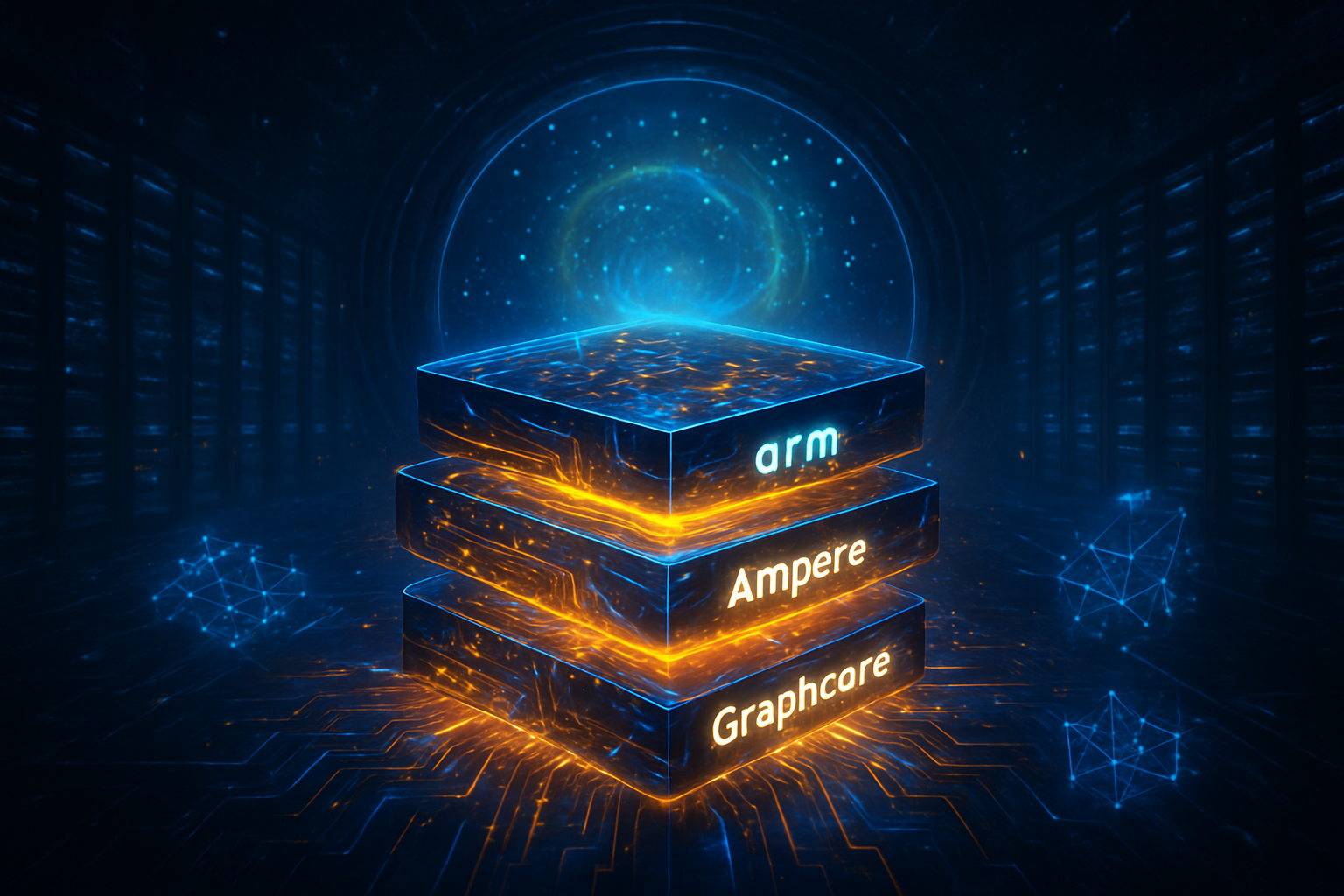
    The technical core of SoftBank’s new strategy lies in the seamless integration of three distinct but complementary technologies. At the base is Arm, whose energy-efficient instruction set architecture (ISA) serves as the blueprint for modern mobile and data center chips. Ampere Computing, now a wholly-owned subsidiary, utilizes this architecture to build "cloud-native" CPUs that boast significantly higher core counts and better power efficiency than traditional x86 processors from Intel and AMD. By pairing these with Graphcore’s Intelligence Processing Units (IPUs)—specialized accelerators designed specifically for the massive parallel processing required by large language models—SoftBank has created a unified "CPU + Accelerator" stack.

    This vertical integration differs from previous approaches by eliminating the "vendor tax" and hardware bottlenecks associated with mixing disparate technologies. Traditionally, data center operators would buy CPUs from one vendor and GPUs from another, often leading to inefficiencies in data movement and software optimization. SoftBank’s unified architecture allows for a "closed-loop" system where the Ampere CPU and Graphcore IPU are co-designed to communicate with unprecedented speed, all while running on the highly optimized Arm architecture. This synergy is expected to reduce the total cost of ownership for AI data centers by as much as 30%, a critical factor as the industry grapples with the escalating costs of training trillion-parameter models.

    Initial reactions from the AI research community have been a mix of awe and cautious optimism. Dr. Elena Rossi, a senior silicon architect at the AI Open Institute, noted that "SoftBank is effectively building a 'Sovereign AI' stack. By controlling the silicon from the ground up, they can bypass the supply chain constraints that have plagued the industry for years." However, some experts warn that the success of this integration will depend heavily on software. While NVIDIA (NASDAQ: NVDA) has its robust CUDA platform, SoftBank must now convince developers to migrate to its proprietary ecosystem, a task that remains the most significant technical hurdle in its path.

    A Direct Challenge to the NVIDIA-AMD Duopoly

    The completion of the Ampere deal places SoftBank in a direct collision course with NVIDIA and Advanced Micro Devices (NASDAQ: AMD). For the past several years, NVIDIA has enjoyed a near-monopoly on AI hardware, with its H100 and B200 chips becoming the gold standard for AI training. However, SoftBank’s new vertical stack offers a compelling alternative for hyperscalers who are increasingly wary of NVIDIA’s high margins and closed ecosystem. By offering a fully integrated solution, SoftBank can provide customized hardware-software packages that are specifically tuned for the workloads of its partners, most notably OpenAI.

    This development is particularly disruptive for the burgeoning market of AI startups and sovereign nations looking to build their own AI capabilities. Companies like Oracle Corp (NYSE: ORCL), a former lead investor in Ampere, stand to benefit from a more diversified hardware market, potentially gaining access to SoftBank’s high-efficiency chips to power their cloud AI offerings. Furthermore, SoftBank’s decision to liquidate its entire $5.8 billion stake in NVIDIA in late 2025 to fund this transition signals a definitive end to its role as a passive investor and its emergence as a primary competitor.

    The strategic advantage for SoftBank lies in its ability to capture revenue across the entire value chain. While NVIDIA sells chips, SoftBank will soon be selling everything from the IP licensing (via Arm) to the physical chips (via Ampere/Graphcore) and even the data center capacity itself through its "Project Stargate" infrastructure. This "full-stack" approach mirrors the strategy that allowed Apple to dominate the smartphone market, but on a scale that encompasses the very foundations of global intelligence.

    Project Stargate and the Quest for ASI

    Beyond the silicon, the Ampere acquisition is the engine driving "Project Stargate," a massive $500 billion joint venture between SoftBank, OpenAI, and a consortium of global investors. Announced earlier this year, Stargate aims to build a series of "hyperscale" data centers across the United States, starting with a 10-gigawatt facility in Texas. These sites are not merely data centers; they are the physical manifestation of Masayoshi Son’s vision for Artificial Super Intelligence. Son believes that the path to ASI requires a level of compute and energy density that current infrastructure cannot provide, and Stargate is his answer to that deficit.

    This initiative represents a significant shift in the AI landscape, moving away from the era of "model-centric" development to "infrastructure-centric" dominance. As models become more complex, the primary bottleneck has shifted from algorithmic ingenuity to the sheer availability of power and specialized silicon. By acquiring DigitalBridge in December 2025 to manage the physical assets—including fiber networks and power substations—SoftBank has ensured it controls the "dirt and power" as well as the "chips and code."

    However, this concentration of power has raised concerns among regulators and ethicists. The prospect of a single corporation controlling the foundational infrastructure of super-intelligence brings about questions of digital sovereignty and monopolistic control. Critics argue that the "Stargate" model could create an insurmountable barrier to entry for any organization not aligned with the SoftBank-OpenAI axis, effectively centralizing the future of AI in the hands of a few powerful players.

    The Road Ahead: Power, Software, and Scaling

    In the near term, the industry will be watching the first deployments of the integrated Ampere-Graphcore systems within the Stargate data centers. The immediate challenge will be the software layer—specifically, the development of a compiler and library ecosystem that can match the ease of use of NVIDIA’s CUDA. SoftBank has already begun an aggressive hiring spree, poaching hundreds of software engineers from across Silicon Valley to build out its "Izanagi" software platform, which aims to provide a seamless interface for training models across its new hardware stack.

    Looking further ahead, the success of SoftBank’s gambit will depend on its ability to solve the energy crisis facing AI. The 7-to-10 gigawatt targets for Project Stargate are unprecedented, requiring the development of dedicated modular nuclear reactors (SMRs) and massive battery storage systems. Experts predict that if SoftBank can successfully integrate its new silicon with sustainable, high-density power, it will have created a blueprint for "Sovereign AI" that nations around the world will seek to replicate.

    The ultimate goal remains the realization of ASI by 2035. While many in the industry remain skeptical of Son’s aggressive timeline, the sheer scale of his capital deployment—over $100 billion committed in 2025 alone—has forced even the harshest critics to take his vision seriously. The coming months will be a critical testing ground for whether the Ampere-Arm-Graphcore trinity can deliver on its performance promises.

    A New Era of AI Industrialization

    The acquisition of Ampere Computing and its integration into the SoftBank ecosystem marks the beginning of the "AI Industrialization" era. No longer content with merely funding the future, Masayoshi Son has taken the reins of the production process itself. By vertically integrating the entire AI stack—from the architecture and the silicon to the data center and the power grid—SoftBank has positioned itself as the indispensable utility provider for the age of intelligence.

    This development will likely be remembered as a turning point in AI history, where the focus shifted from software breakthroughs to the massive physical scaling of intelligence. As we move into 2026, the tech world will be watching closely to see if SoftBank can execute on this Herculean task. The stakes could not be higher: the winner of the infrastructure race will not only dominate the tech market but will likely hold the keys to the most powerful technology ever devised by humanity.

    For now, the message from SoftBank is clear: the age of the general-purpose investor is over, and the age of the AI architect has begun.


    This content is intended for informational purposes only and represents analysis of current AI developments.

    TokenRing AI delivers enterprise-grade solutions for multi-agent AI workflow orchestration, AI-powered development tools, and seamless remote collaboration platforms.
    For more information, visit https://www.tokenring.ai/.
  • Oracle’s Cloud Empire Ascends: $300B OpenAI Deal Fuels $166B FY30 OCI Revenue Vision

    Oracle’s Cloud Empire Ascends: $300B OpenAI Deal Fuels $166B FY30 OCI Revenue Vision

    Redwood Shores, CA – October 16, 2025 – Oracle Corporation (NYSE: ORCL) has sent shockwaves through the technology world with its audacious projection of reaching $166 billion in Oracle Cloud Infrastructure (OCI) revenue by fiscal year 2030. This ambitious target, announced today, comes on the heels of a monumental $300 billion AI cloud computing and data center agreement with OpenAI, reported in late September 2025. The unprecedented deal, one of the largest technology infrastructure partnerships ever disclosed, is set to dramatically reshape the competitive landscape of the cloud and artificial intelligence sectors, solidifying Oracle's position as a critical enabler of the AI revolution.

    The sheer scale of these announcements underscores a pivotal moment for Oracle, transforming its market perception from a legacy enterprise software provider to a dominant force in high-performance AI infrastructure. The $300 billion, five-year contract with OpenAI, slated to commence in 2027, is a testament to the insatiable demand for computational power required by next-generation generative AI models. This strategic move has already ignited a significant surge in Oracle's valuation, briefly elevating its Chairman, Larry Ellison, to the status of the world's richest person, and signaling a new era of growth driven by the burgeoning AI economy.

    The Dawn of Gigawatt-Scale AI Infrastructure

    The core of Oracle's recent triumph lies in its ability to provide specialized, high-performance cloud infrastructure tailored for intensive AI workloads. The $300 billion OpenAI agreement is not merely a financial transaction; it's a commitment to deliver approximately 4.5 gigawatts of computing capacity, a figure comparable to the electricity output of multiple Hoover Dams. This colossal infrastructure will be instrumental in powering OpenAI's most advanced generative AI models, addressing the critical bottleneck of compute availability that has become a defining challenge for AI innovators.

    Central to this partnership is Oracle's support for "Project Stargate," OpenAI's ambitious initiative to build a next-generation AI supercomputing facility designed for gigawatt-scale energy consumption. Oracle's competitive pricing for powerful GPU infrastructure, combined with its burgeoning global data center footprint, proved to be a decisive factor in securing this landmark deal. This approach differentiates Oracle from traditional hyperscalers like Amazon Web Services (AWS) (NASDAQ: AMZN), Microsoft Azure (NASDAQ: MSFT), and Google Cloud (NASDAQ: GOOGL), by offering a dedicated and highly optimized environment for AI training and inference at an unparalleled scale. While other cloud providers offer robust AI services, Oracle's recent focus on securing massive, dedicated AI compute contracts marks a significant strategic pivot, emphasizing raw power and scale over a broader, generalized cloud offering. Initial reactions from the AI research community highlight the necessity of such colossal infrastructure to push the boundaries of AI, with many experts noting that the future of advanced AI hinges on the availability of such specialized compute resources.

    Reshaping the AI Competitive Landscape

    This monumental deal and Oracle's aggressive revenue projections carry profound implications for AI companies, tech giants, and startups alike. Oracle itself stands to be the primary beneficiary, cementing its role as a critical infrastructure backbone for the most demanding AI workloads. The deal provides OpenAI with guaranteed access to the vast computational resources it needs to maintain its leadership in generative AI development, allowing it to focus on model innovation rather than infrastructure procurement.

    For other major cloud providers—Amazon (NASDAQ: AMZN), Microsoft (NASDAQ: MSFT), and Google (NASDAQ: GOOGL)—the Oracle-OpenAI partnership presents a formidable competitive challenge. While Microsoft already has a deep partnership with OpenAI, Oracle's ability to secure such a massive, dedicated infrastructure contract demonstrates its growing prowess in the high-stakes AI cloud race. This could force other hyperscalers to re-evaluate their own AI infrastructure strategies, potentially leading to increased investments in specialized GPU clusters and more aggressive pricing to attract AI-centric clients. Startups and smaller AI labs might also look to OCI for access to powerful compute, especially if Oracle continues to offer competitive pricing and dedicated resources. The deal underscores the increasing capital intensity of AI development, where access to vast, affordable compute is becoming a significant barrier to entry and a key determinant of competitive advantage.

    The Broader Implications for the AI Era

    Oracle's strategic maneuvers fit squarely into the broader narrative of the AI landscape: the relentless pursuit of computational power. As AI models grow exponentially in size and complexity, the demand for underlying infrastructure has skyrocketed, creating an "AI compute crunch." This deal highlights that the future of AI innovation is not just about algorithms but also about the physical infrastructure that supports them. It signals a new phase where access to gigawatt-scale computing will differentiate the leaders from the laggards.

    The impacts extend beyond mere computing power. The massive energy requirements for such data centers raise significant environmental concerns, prompting discussions around sustainable AI and the development of energy-efficient hardware and cooling solutions. While the immediate focus is on performance, the long-term sustainability of such infrastructure will become a critical talking point. Comparisons to previous AI milestones, such as the rise of specialized AI chips or the development of massive training datasets, show that infrastructure has always been a quiet but foundational driver of progress. This Oracle-OpenAI deal elevates infrastructure to a front-and-center role, akin to the early days of the internet when network backbone capacity was paramount. However, concerns about the profitability of these massive AI infrastructure deals have also emerged, with reports indicating lower gross margins on Nvidia chip rental revenue for Oracle compared to its overall business. This suggests a delicate balance between aggressive growth and sustainable financial returns.

    Charting the Future of AI Infrastructure

    Looking ahead, the Oracle-OpenAI deal and Oracle's ambitious OCI projections portend several key developments. In the near term, we can expect Oracle to significantly accelerate its data center expansion efforts, with capital expenditure expected to exceed $25 billion annually to build out the revenue-generating equipment needed to support these massive contracts. This expansion will likely include further investments in advanced cooling technologies and renewable energy sources to mitigate the environmental impact of gigawatt-scale computing.

    Longer term, this partnership could catalyze a trend of more strategic, multi-billion-dollar infrastructure deals between cloud providers and leading AI labs, as the demand for specialized AI compute continues unabated. The challenges that need to be addressed include maintaining profitability amidst high hardware costs (especially Nvidia GPUs), ensuring energy efficiency, and developing new management tools for such colossal, distributed AI workloads. Experts predict that the race for AI compute will intensify, pushing the boundaries of data center design and prompting innovations in chip architecture, networking, and software orchestration. The success of "Project Stargate" will also be closely watched as a blueprint for future AI supercomputing facilities.

    A New Chapter in Oracle's Legacy

    In summary, Oracle's recent announcements mark a historic inflection point, firmly establishing the company as a pivotal player in the global AI ecosystem. The $300 billion OpenAI deal is a clear demonstration of the immense capital and infrastructure required to push the frontiers of artificial intelligence, underscores the critical role of cloud providers in enabling the next generation of AI breakthroughs. Oracle's aggressive FY30 OCI revenue target of $166 billion, fueled by such mega-deals, signals a profound transformation and a renewed competitive vigor.

    The long-term impact of this development will be closely tied to Oracle's ability to execute on its massive expansion plans, manage the profitability of its AI cloud business, and continue attracting other major AI customers. The competitive dynamics among hyperscalers will undoubtedly heat up, with a renewed focus on specialized AI infrastructure. As the AI industry continues its rapid evolution, the availability of robust, scalable, and cost-effective compute will remain the ultimate arbiter of innovation. All eyes will be on Oracle in the coming weeks and months as it embarks on this ambitious journey to power the future of artificial intelligence.


    This content is intended for informational purposes only and represents analysis of current AI developments.

    TokenRing AI delivers enterprise-grade solutions for multi-agent AI workflow orchestration, AI-powered development tools, and seamless remote collaboration platforms.
    For more information, visit https://www.tokenring.ai/.