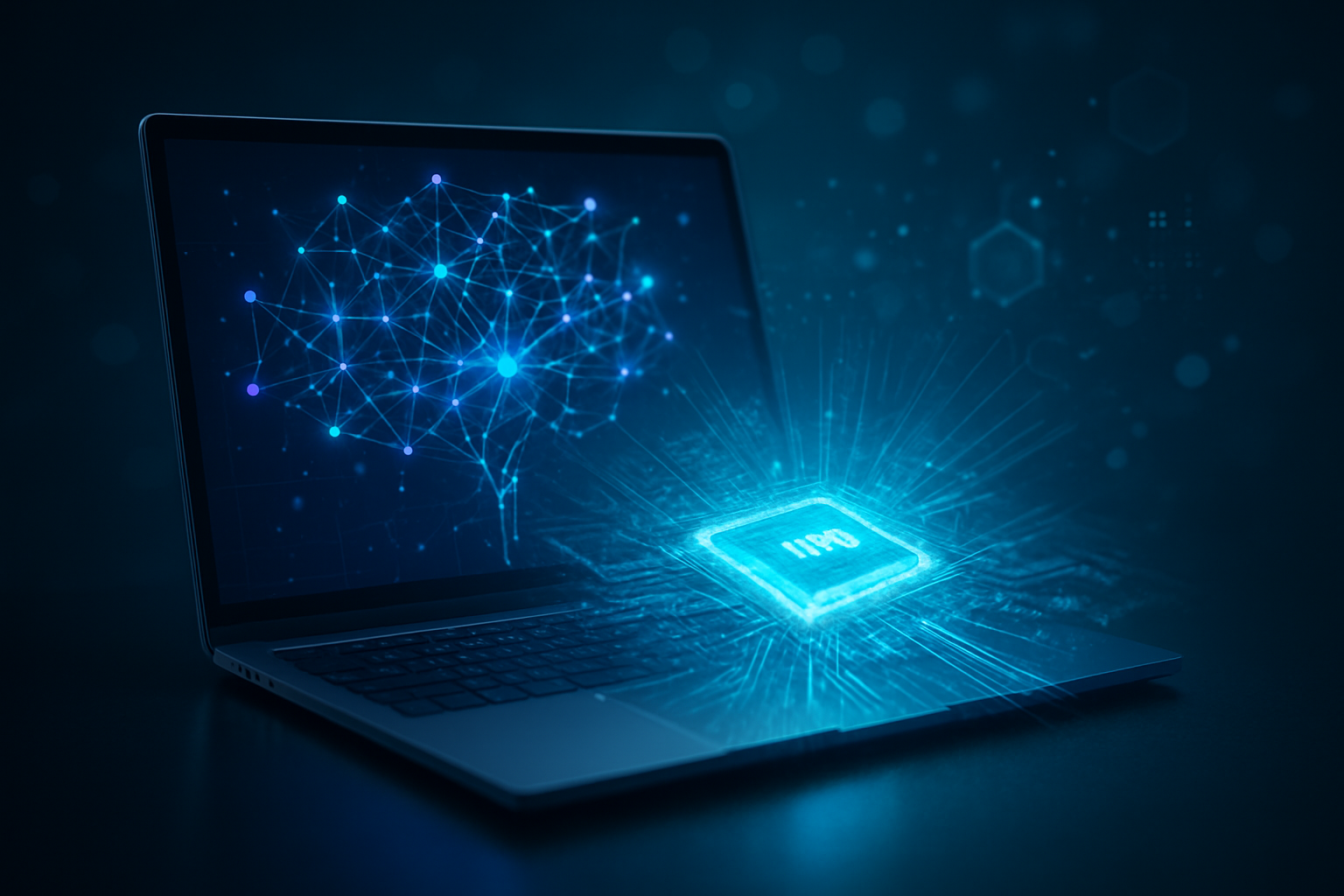
Tag: Qualcomm Snapdragon X Elite

  • The Local Intelligence Revolution: How 2024 and 2025 Defined the Era of the AI PC

    The Local Intelligence Revolution: How 2024 and 2025 Defined the Era of the AI PC

    As of early 2026, the computing landscape has undergone its most significant architectural shift since the transition to mobile. In a whirlwind 24-month period spanning 2024 and 2025, the "AI PC" moved from a marketing buzzword to the industry standard, fundamentally altering how humans interact with silicon. Driven by a fierce "TOPS war" between Intel, AMD, and Qualcomm, the center of gravity for artificial intelligence has shifted from massive, energy-hungry data centers to the thin-and-light laptops sitting on our desks.

    This revolution was catalyzed by the introduction of the Neural Processing Unit (NPU), a dedicated engine designed specifically for the low-power, high-velocity math required by modern AI models. Led by Microsoft (NASDAQ: MSFT) and its "Copilot+ PC" initiative, the industry established a new baseline for performance: any machine lacking a dedicated NPU capable of at least 40 Trillion Operations Per Second (TOPS) was effectively relegated to the legacy era. By the end of 2025, AI PCs accounted for nearly 40% of all global PC shipments, signaling the end of the "Connected AI" era and the birth of "On-Device Intelligence."

    The Silicon Arms Race: Lunar Lake, Ryzen AI, and the Snapdragon Surge

    The technical foundation of the AI PC era was built on three distinct hardware pillars. Qualcomm (NASDAQ: QCOM) fired the first shot in mid-2024 with the Snapdragon X Elite. Utilizing its custom ARM-based Oryon cores, Qualcomm achieved 45 TOPS of NPU performance, delivering multi-day battery life that finally gave Windows users the efficiency parity they had envied in Apple’s M-series chips. This was a watershed moment, marking the first time ARM-based architecture became a dominant force in the premium Windows laptop market.

    Intel (NASDAQ: INTC) responded in late 2024 with its Lunar Lake (Core Ultra 200V) architecture. In a radical departure from its traditional design, Intel moved memory directly onto the chip package to reduce latency and power consumption. Lunar Lake’s NPU hit 48 TOPS, but its true achievement was efficiency; the chips' "Skymont" efficiency cores proved so powerful that they could handle standard productivity tasks while consuming 40% less power than previous generations. Meanwhile, AMD (NASDAQ: AMD) pushed the raw performance envelope with the Ryzen AI 300 series (Strix Point). Boasting up to 55 TOPS, AMD’s silicon focused on creators and power users, integrating its high-end Radeon 890M graphics to provide a comprehensive package that often eliminated the need for entry-level dedicated GPUs.

    This shift differed from previous hardware cycles because it wasn't just about faster clock speeds; it was about specialized instruction sets. Unlike a General Purpose CPU or a power-hungry GPU, the NPU allows a laptop to run complex AI tasks—like real-time eye contact correction in video calls or local language translation—in the background without draining the battery or causing the cooling fans to spin up. Industry experts noted that this transition represented the "Silicon Renaissance," where hardware was finally being built to accommodate the specific needs of transformer-based neural networks.

    Disrupting the Cloud: The Industry Impact of Edge AI

    The rise of the AI PC has sent shockwaves through the tech ecosystem, particularly for cloud AI giants. For years, companies like OpenAI and Google (NASDAQ: GOOGL) dominated the AI landscape by hosting models in the cloud and charging subscription fees for access. However, as 2025 progressed, the emergence of high-performance Small Language Models (SLMs) like Microsoft’s Phi-3 and Meta’s Llama 3.2 changed the math. These models, optimized to run natively on NPUs, proved "good enough" for 80% of daily tasks like email drafting, document summarization, and basic coding assistance.

    This shift toward "Local Inference" has put immense pressure on cloud providers. As routine AI tasks moved to the edge, the cost-to-serve for cloud models became an existential challenge. In 2025, we saw the industry bifurcate: the cloud is now reserved for "Frontier AI"—massive models used for scientific discovery and complex reasoning—while the AI PC has claimed the market for personal and corporate productivity. Professional software developers were among the first to capitalize on this. Adobe (NASDAQ: ADBE) integrated NPU support across its Creative Cloud suite, allowing features like Premiere Pro’s "Enhance Speech" and "Audio Category Tagging" to run locally, freeing up the GPU for 4K rendering. Blackmagic Design followed suit, optimizing DaVinci Resolve to run its neural engine up to 4.7 times faster on Qualcomm's Hexagon NPU.

    For hardware manufacturers, this era has been a boon. The "Windows 10 Cliff"—the October 2025 end-of-support deadline for the aging OS—forced a massive corporate refresh. Businesses, eager to "future-proof" their fleets, overwhelmingly opted for AI-capable hardware. This cycle effectively established 16GB of RAM as the new industry minimum, as AI models require significant memory overhead to remain resident in the system.

    Privacy, Obsolescence, and the "Recall" Controversy

    Despite the technical triumphs, the AI PC era has not been without significant friction. The most prominent controversy centered on Microsoft’s Recall feature. Originally intended as a "photographic memory" for your PC, Recall took encrypted screenshots of a user’s activity every few seconds, allowing for a searchable history of everything they had done. The backlash from the cybersecurity community in late 2024 was swift and severe, citing the potential for local data to be harvested by malware. Microsoft was ultimately forced to make the feature strictly opt-in and tie its security to the Microsoft Pluton security processor, but the incident highlighted a growing tension: local AI offers better privacy than the cloud, but it also creates a rich, localized target for bad actors.

    There are also growing environmental concerns. The rapid pace of AI innovation has compressed the typical 4-to-5-year PC refresh cycle into 18 to 24 months. As consumers and enterprises scramble to upgrade to NPU-equipped machines, the industry is facing a potential e-waste crisis. Estimates suggest that generative AI hardware could add up to 2.5 million tonnes of e-waste annually by 2030. The production of these specialized chips, which utilize rare earth metals and advanced packaging techniques, carries a heavy carbon footprint, leading to calls for more aggressive "right to repair" legislation and better recycling programs for AI-era silicon.

    The Horizon: From AI PCs to Agentic Assistants

    Looking toward the remainder of 2026, the focus is shifting from "AI as a feature" to "AI as an agent." The next generation of silicon, including Intel’s Panther Lake and Qualcomm’s Snapdragon X2 Elite, is rumored to target 80 to 100 TOPS. This jump in power will enable "Agentic PCs"—systems that don't just wait for prompts but proactively manage a user's workflow. Imagine a PC that notices you have a meeting in 10 minutes, automatically gathers relevant documents, summarizes the previous thread, and prepares a draft agenda without being asked.

    Software frameworks like Ollama and LM Studio are also democratizing access to local AI, allowing even non-technical users to run private, open-source models with a single click. As SLMs continue to shrink in size while growing in intelligence, the gap between "local" and "cloud" capabilities will continue to narrow. We are entering an era where your personal data never has to leave your device, yet you have the reasoning power of a supercomputer at your fingertips.

    A New Chapter in Computing History

    The 2024-2025 period will be remembered as the era when the personal computer regained its "personal" designation. By moving AI from the anonymous cloud to the intimate confines of local hardware, the industry has solved some of the most persistent hurdles to AI adoption: latency, cost, and (largely) privacy. The "Big Three" of Intel, AMD, and Qualcomm have successfully reinvented the PC architecture, turning it into an active collaborator rather than a passive tool.

    Key takeaways from this era include the absolute necessity of the NPU in modern computing and the surprisingly fast adoption of ARM architecture in the Windows ecosystem. As we move forward, the challenge will be managing the environmental impact of this hardware surge and ensuring that the software ecosystem continues to evolve beyond simple chatbots. The AI PC isn't just a new category of laptop; it is a fundamental rethinking of what happens when we give silicon the ability to think for itself.


    This content is intended for informational purposes only and represents analysis of current AI developments.

    TokenRing AI delivers enterprise-grade solutions for multi-agent AI workflow orchestration, AI-powered development tools, and seamless remote collaboration platforms.
    For more information, visit https://www.tokenring.ai/.
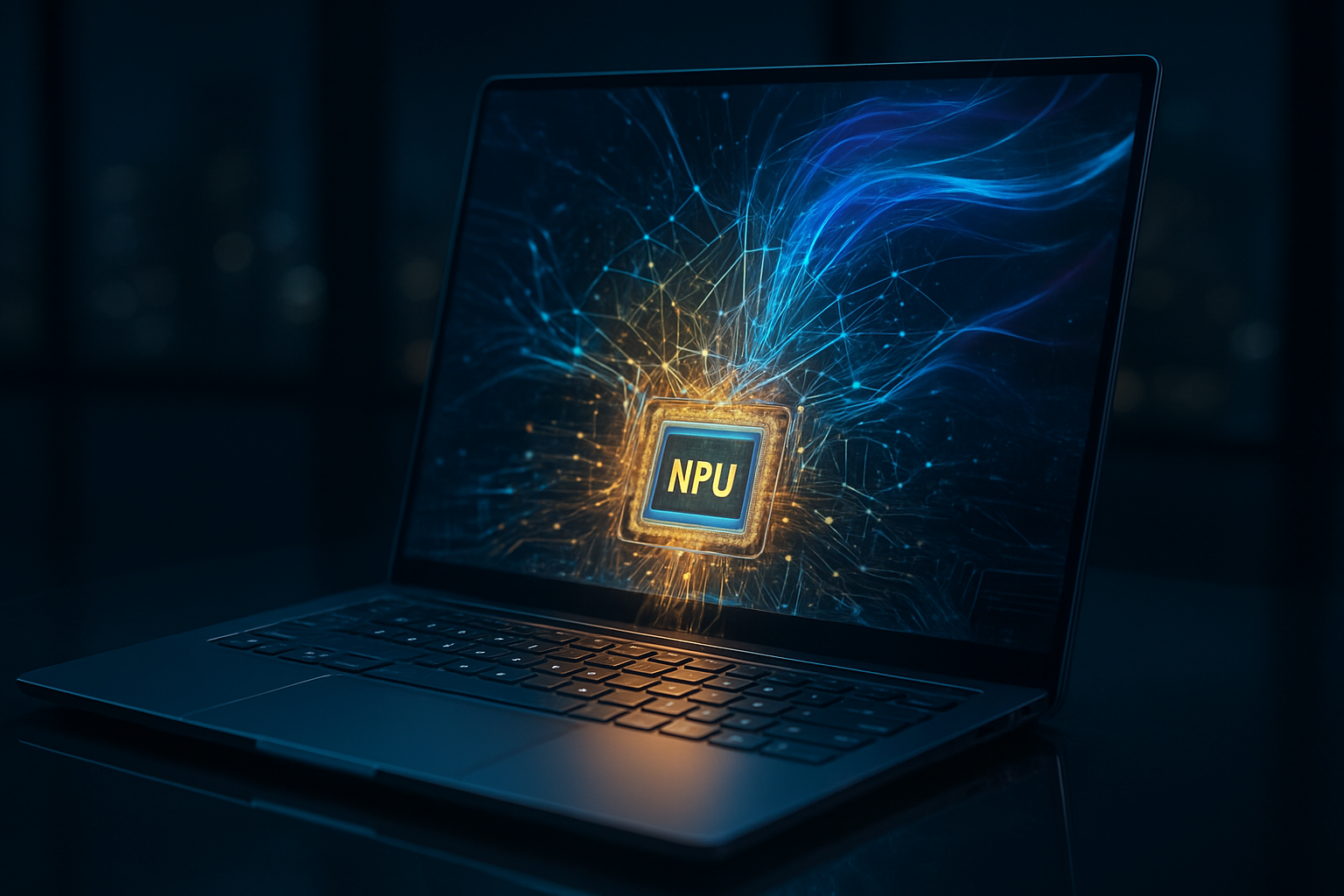
  • The Silent Takeover: How the AI PC Revolution Redefined Computing in 2025

    The Silent Takeover: How the AI PC Revolution Redefined Computing in 2025

    As we cross into 2026, the landscape of personal computing has been irrevocably altered. What began in 2024 as a marketing buzzword—the "AI PC"—has matured into the dominant architecture of the modern laptop. By the close of 2025, AI-capable PCs accounted for approximately 43% of all global shipments, representing a staggering 533% year-over-year growth. This shift has moved artificial intelligence from the distant, expensive servers of the cloud directly onto the silicon sitting on our laps, fundamentally changing how we interact with our digital lives.

    The significance of this development cannot be overstated. For the first time in decades, the fundamental "brain" of the computer has evolved beyond the traditional CPU and GPU duo to include a dedicated Neural Processing Unit (NPU). This hardware pivot, led by giants like Intel (NASDAQ: INTC) and Qualcomm (NASDAQ: QCOM), has not only enabled high-speed generative AI to run locally but has also finally closed the efficiency gap that once allowed Apple’s M-series to dominate the premium market.

    The Silicon Arms Race: TOPS, Efficiency, and the NPU

    The technical heart of the AI PC revolution lies in the "TOPS" (Trillion Operations Per Second) arms race. Throughout 2024 and 2025, a fierce competition erupted between Intel’s Lunar Lake (Core Ultra 200V series), Qualcomm’s Snapdragon X Elite, and AMD (NASDAQ: AMD) with its Ryzen AI 300 series. While traditional processors were judged by clock speeds, these new chips are measured by their NPU performance. Intel’s Lunar Lake arrived with a 48 TOPS NPU, while Qualcomm’s Snapdragon X Elite delivered 45 TOPS, both meeting the stringent requirements for Microsoft (NASDAQ: MSFT) Copilot+ certification.

    What makes this generation of silicon different is the radical departure from previous x86 designs. Intel’s Lunar Lake, for instance, adopted an "Arm-like" efficiency by integrating memory directly onto the chip package and utilizing advanced TSMC nodes. This allowed Windows laptops to achieve 17 to 20 hours of real-world battery life—a feat previously exclusive to the MacBook Air. Meanwhile, Qualcomm’s Hexagon NPU became the gold standard for "Agentic AI," allowing for the execution of complex, multi-step workflows without the latency or privacy risks of sending data to the cloud.

    Initial reactions from the research community were a mix of awe and skepticism. While tech analysts at firms like IDC and Gartner praised the "death of the hot and loud Windows laptop," many questioned whether the "AI" features were truly necessary. Reviewers from The Verge and AnandTech noted that while features like Microsoft’s "Recall" and real-time translation were impressive, the real victory was the massive leap in performance-per-watt. By late 2025, however, the skeptics were largely silenced as professional software suites began to demand NPU acceleration as a baseline requirement.

    A New Power Dynamic: Intel, Qualcomm, and the Arm Threat

    The AI PC revolution has triggered a massive strategic shift among tech giants. Qualcomm (NASDAQ: QCOM), long a king of mobile, successfully leveraged the Snapdragon X Elite to become a Tier-1 player in the Windows ecosystem. This move challenged the long-standing "Wintel" duopoly and forced Intel (NASDAQ: INTC) to reinvent its core architecture. While x86 still maintains roughly 85-90% of the total market volume due to enterprise compatibility and vPro management features, the "Arm threat" has pushed Intel to innovate faster than it has in the last decade.

    Software companies have also seen a dramatic shift in their product roadmaps. Adobe (NASDAQ: ADBE) and Blackmagic Design (creators of DaVinci Resolve) have integrated NPU-specific optimizations that allow for generative video editing and "Magic Mask" tracking to run 2.4x faster than on 2023-era hardware. This shift benefits companies that can optimize for local silicon, reducing their reliance on expensive cloud-based AI processing. For startups, the "local-first" AI movement has lowered the barrier to entry, allowing them to build AI tools that run on a user's own hardware rather than incurring massive API costs from OpenAI or Google.

    The competitive implications extend to Apple (NASDAQ: AAPL) as well. After years of having no real competition in the "thin and light" category, the MacBook Air now faces Windows rivals that match its battery life and offer specialized AI hardware that is, in some cases, more flexible for developers. The result is a market where hardware differentiation is once again a primary driver of sales, breaking the stagnation that had plagued the PC industry for years.

    Privacy, Sovereignty, and the "Local-First" Paradigm

    The wider significance of the AI PC lies in the democratization of data sovereignty. By running Large Language Models (LLMs) like Llama 3 or Mistral locally, users no longer have to choose between AI productivity and data privacy. This has been a critical breakthrough for the enterprise sector, where "cloud tax" and data leakage concerns were major hurdles to AI adoption. In 2025, "Local RAG" (Retrieval-Augmented Generation) became a standard feature, allowing an AI to index a user's private documents and emails without a single byte ever leaving the device.

    However, this transition has not been without its concerns. The introduction of features like Microsoft’s "Recall"—which takes periodic snapshots of a user’s screen to enable a "photographic memory" for the PC—sparked intense privacy debates throughout late 2024. While the processing is local and encrypted, the sheer amount of sensitive data being aggregated on one device remains a target for sophisticated malware. This has forced a complete rethink of OS-level security, leading to the rise of "AI-driven" antivirus that uses the NPU to detect anomalous behavior in real-time.

    Compared to previous milestones like the transition to mobile or the rise of the cloud, the AI PC revolution is a "re-centralization" of computing. It signals a move away from the hyper-centralized cloud model of the 2010s and back toward the "Personal" in Personal Computer. The ability to generate images, summarize meetings, and write code entirely offline is a landmark achievement in the history of technology, comparable to the introduction of the graphical user interface.

    The Road to 2026: Agentic AI and Beyond

    Looking ahead, the next phase of the AI PC revolution is already coming into focus. In late 2025, Qualcomm announced the Snapdragon X2 Elite, featuring a staggering 80 TOPS NPU designed specifically for "Agentic AI." Unlike the current generation of AI assistants that wait for a prompt, these next-gen agents will be autonomous, capable of "seeing" the screen and executing complex tasks like "organizing a travel itinerary based on my emails and booking the flights" without human intervention.

    Intel is also preparing its "Panther Lake" architecture for 2026, which is expected to push total platform TOPS toward the 180 mark. These advancements will likely enable even larger local models—moving from 7-billion parameter models to 30-billion or more—further closing the gap between local performance and massive cloud models like GPT-4. The challenge remains in software optimization; while the hardware is ready, the industry still needs more "killer apps" that make the NPU indispensable for the average consumer.

    A New Era of Personal Computing

    The AI PC revolution of 2024-2025 will be remembered as the moment the computer became an active collaborator rather than a passive tool. By integrating high-performance NPUs and achieving unprecedented levels of efficiency, Intel, Qualcomm, and AMD have redefined what we expect from our hardware. The shift toward local generative AI has addressed the critical issues of privacy and latency, paving the way for a more secure and responsive digital future.

    As we move through 2026, watch for the expansion of "Agentic AI" and the continued decline of cloud-only AI services for everyday tasks. The "AI PC" is no longer a futuristic concept; it is the baseline. For the tech industry, the lesson of the last two years is clear: the future of AI isn't just in the data center—it's in your backpack.


    This content is intended for informational purposes only and represents analysis of current AI developments.

    TokenRing AI delivers enterprise-grade solutions for multi-agent AI workflow orchestration, AI-powered development tools, and seamless remote collaboration platforms.
    For more information, visit https://www.tokenring.ai/.
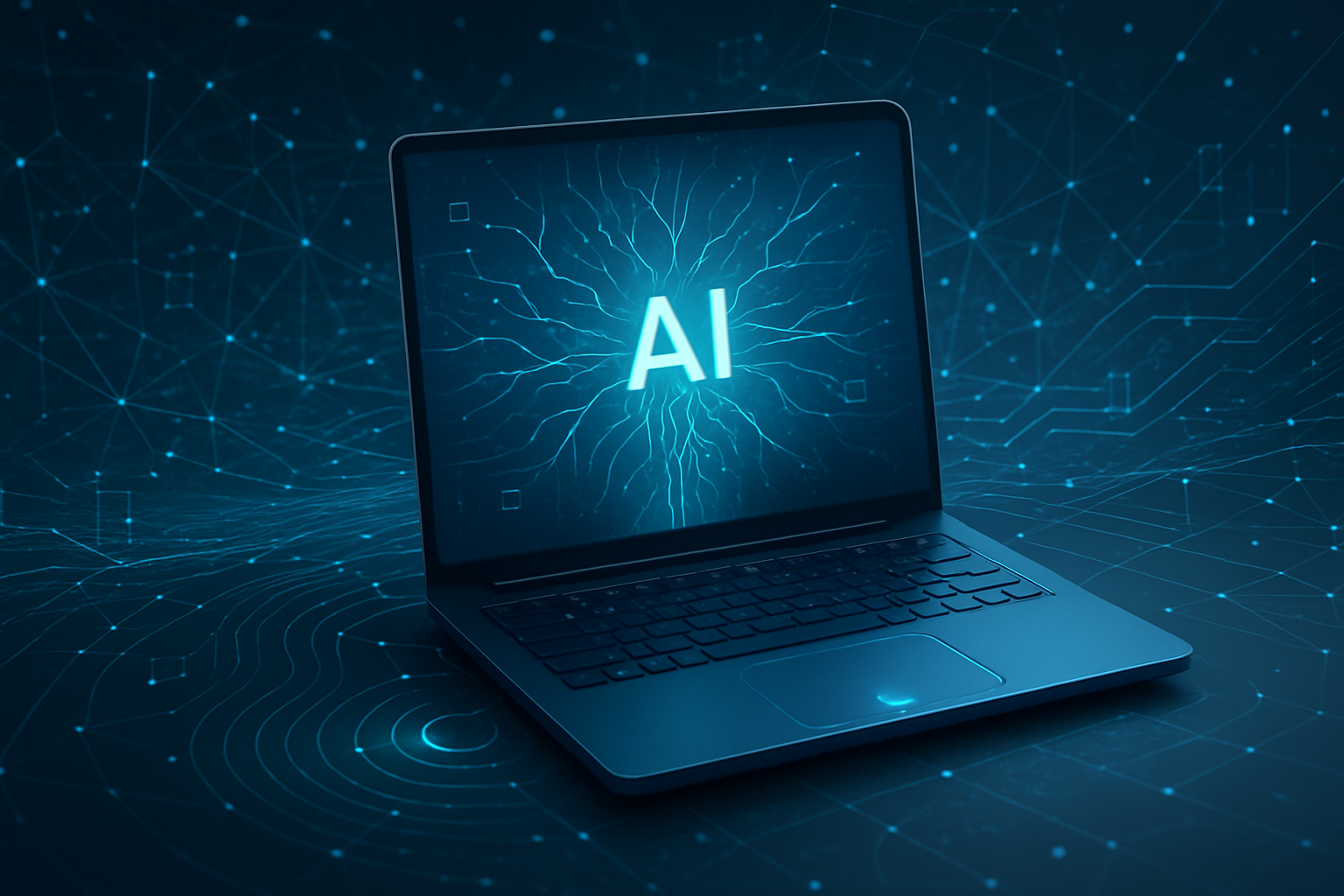
  • The Dawn of On-Device Intelligence: How AI PCs Are Reshaping the Computing Landscape

    The Dawn of On-Device Intelligence: How AI PCs Are Reshaping the Computing Landscape

    The computing world stands at the precipice of a new era, heralded by the rapid emergence of Artificial Intelligence Personal Computers (AI PCs). These aren't just faster machines; they represent a fundamental shift in how personal computing operates, moving sophisticated AI processing from distant cloud servers directly onto the user's device. This profound decentralization of intelligence promises to redefine productivity, enhance privacy, and unlock a new spectrum of personalized experiences, fundamentally reshaping the personal computing landscape as we know it by late 2025.

    At the heart of this transformation lies the integration of specialized hardware, primarily the Neural Processing Unit (NPU), working in concert with optimized CPUs and GPUs. This dedicated AI acceleration allows AI PCs to execute complex AI workloads locally, offering substantial advantages in performance, efficiency, and data security over traditional computing paradigms. The immediate significance is clear: AI PCs are poised to become the new standard, driving a massive upgrade cycle and fostering an ecosystem where intelligent, responsive, and private AI capabilities are not just features, but foundational elements of the personal computing experience.

    The Engineering Marvel: Diving Deep into AI PC Architecture

    The distinguishing feature of an AI PC lies in its architectural enhancements, most notably the Neural Processing Unit (NPU). This dedicated chip or component is purpose-built to accelerate machine learning (ML) workloads and AI algorithms with remarkable efficiency. Unlike general-purpose CPUs or even parallel-processing GPUs, NPUs are optimized for the specific mathematical operations vital to neural networks, performing matrix multiplication at extremely low power in a massively parallel fashion. This allows NPUs to handle AI tasks efficiently, freeing up the CPU for multitasking and the GPU for graphics and traditional computing. NPU performance is measured in Trillions of Operations Per Second (TOPS), with Microsoft (NASDAQ: MSFT) mandating at least 40 TOPS for a device to be certified as a Copilot+ PC.

    Leading chip manufacturers are locked in a "TOPS war" to deliver increasingly powerful NPUs. Qualcomm's (NASDAQ: QCOM) Snapdragon X Elite and X Plus platforms, for instance, boast a Hexagon NPU delivering 45 TOPS, with the entire platform offering up to 75 TOPS of AI compute. These ARM-based SoCs, built on a 4nm TSMC process, emphasize power efficiency and multi-day battery life. Intel's (NASDAQ: INTC) Core Ultra Lunar Lake processors, launched in September 2024, feature an NPU 4 architecture delivering up to 48 TOPS from the NPU alone, with a total platform AI performance of up to 120 TOPS. Their upcoming Panther Lake (Core Ultra Series 3), slated for late 2025, promises an NPU 5 with up to 50 TOPS and a staggering 180 platform TOPS. AMD's (NASDAQ: AMD) Ryzen AI 300 series ("Strix Point"), unveiled at Computex 2024, features the XDNA 2 NPU, offering a substantial 50 TOPS of AI performance, a 5x generational gain over its predecessor. These processors integrate new Zen 5 CPU cores and RDNA 3.5 graphics.

    The fundamental difference lies in how these components handle AI tasks. CPUs are versatile but less efficient for parallel AI computations. GPUs excel at parallel processing but consume significant power. NPUs, however, are designed for extreme power efficiency (often 1-10W for AI tasks) and specialized operations, making them ideal for sustained, real-time AI inference on-device. This offloading of AI workloads leads to longer battery life (up to 20-30% longer during AI-enhanced workflows), reduced heat, and improved overall system performance. Initial reactions from the AI research community and industry experts have been overwhelmingly positive, highlighting the transformative potential of on-device AI for enhanced privacy, reduced latency, and the ability to run sophisticated AI models like large language models (LLMs) and diffusion models directly on the PC without cloud reliance. While hardware is rapidly advancing, experts stress the critical need for continued investment in software support and developer tooling to fully leverage NPU capabilities.

    Reshaping the Tech Industry: Competitive Dynamics and Strategic Plays

    The advent of AI PCs is not merely an evolutionary step; it's a disruptive force reshaping competitive dynamics across the tech industry, benefiting established giants and creating fertile ground for innovative startups. The market is projected to grow exponentially, with some forecasts estimating the global AI PC market to reach USD 128.7 billion by 2032 and comprise over half of the PC market by 2026.

    Microsoft (NASDAQ: MSFT) stands as a primary beneficiary, deeply embedding AI into Windows with its Copilot+ PC initiative. By setting stringent hardware requirements (40+ TOPS NPU), Microsoft is driving innovation and ensuring a standardized, high-performance AI experience. Features like "Recall," "Cocreator," and real-time translation are exclusive to these new machines, positioning Microsoft to compete directly with AI advancements from other tech giants and revitalize the PC ecosystem. Its collaboration with various manufacturers and the launch of its own Surface Copilot+ PC models underscore its aggressive market positioning.

    Chipmakers are at the epicenter of this transformation. Qualcomm (NASDAQ: QCOM) has emerged as a formidable contender, with its Snapdragon X Elite/Plus platforms leading the first wave of ARM-based AI PCs for Windows, challenging the traditional x86 dominance with superior power efficiency and battery life. Intel (NASDAQ: INTC) and AMD (NASDAQ: AMD) are vigorously defending their market share, rapidly advancing their Core Ultra and Ryzen AI processors, respectively, with increasing NPU TOPS performance and extensive developer programs to optimize software. NVIDIA (NASDAQ: NVDA), while dominant in data center AI, is also playing a significant role by partnering with PC manufacturers to integrate its RTX GPUs, accelerating AI applications, games, and creative workflows on high-end AI PCs.

    This shift creates a vibrant environment for AI software developers and startups. They can now create innovative local AI solutions, benefiting from enhanced development environments and potentially reducing long-term operational costs associated with cloud resources. However, it also presents challenges, requiring optimization for heterogeneous hardware architectures and adapting to a "hybrid AI" strategy that intelligently distributes workloads between the cloud and the PC. The rise of AI PCs is expected to disrupt cloud-centric AI models by allowing more tasks to be processed on-device, offering enhanced privacy, lower latency, and potential cost savings. It also redefines traditional PC usage, moving beyond incremental upgrades to fundamentally change user interaction through proactive assistance and real-time data analysis, potentially shifting developer roles towards higher-level design and user experience.

    A New Computing Paradigm: Wider Significance and Societal Implications

    The emergence of AI PCs signifies more than just a technological upgrade; it represents a crucial inflection point in the broader AI landscape and holds profound implications for society. By bringing powerful AI capabilities directly to the "edge"—the user's device—AI PCs are central to the growing trend of decentralized intelligence, addressing critical limitations of cloud-centric AI such as network latency, data privacy concerns, and escalating operational costs. This development fosters a "hybrid AI" approach, where on-device AI handles immediate, privacy-sensitive tasks and smaller models, while cloud AI continues to provide the computational power for training large models and managing massive datasets.

    The impacts on society are multifaceted. AI PCs are poised to dramatically enhance productivity, with studies suggesting potential boosts of up to 30% through intelligent automation. They streamline workflows, accelerate creative processes, and enable real-time communication enhancements like live captioning and translation in video calls, all processed locally without taxing core system resources. This democratization of AI makes advanced capabilities more accessible, fostering new applications and personalized user experiences that learn and adapt to individual behavior. Businesses are already reporting significant reductions in device management time and IT visits due to enhanced local AI capabilities for threat detection and automation.

    However, this transformative power comes with potential concerns. While on-device processing generally enhances privacy by keeping sensitive data local, the overall expansion of AI capabilities leads to an unprecedented increase in data collection and analysis, raising questions about data usage and consent. The widespread adoption of AI, even on personal devices, fuels anxieties about job displacement, particularly in roles involving repetitive cognitive and manual tasks. While AI is expected to create new jobs, the transition could disproportionately affect economically disadvantaged groups. Ethical AI considerations—including bias and fairness in algorithms, transparency and explainability of AI decisions, and accountability when AI systems err—become even more critical as AI becomes ubiquitous. Furthermore, the initial higher cost of AI PCs could exacerbate the digital divide, and the rapid refresh cycles driven by AI advancements raise environmental concerns regarding e-waste.

    Historically, the introduction of AI PCs is comparable to the original personal computer revolution, which brought computing power from mainframes to individual desks. It echoes the impact of the GPU, which transformed graphics and later deep learning, by introducing a dedicated hardware accelerator (the NPU) purpose-built for the next generation of AI workloads. Like the internet and mobile computing, AI PCs are making advanced AI ubiquitous and personal, fundamentally altering how we interact with our machines. The year 2025 is widely recognized as "The Year of AI PCs," a turning point where these devices are expected to redefine the fundamental limits of computing, akin to the impact of the graphical user interface or the advent of the internet itself.

    The Horizon of Intelligence: Future Developments and Expert Predictions

    The journey of AI PCs is only just beginning, with both near-term and long-term developments promising to further revolutionize personal computing. In the immediate future (2025-2027), we will see the widespread integration of increasingly powerful NPUs across all device types. Industry projections anticipate AI PCs comprising around 50% of shipments by 2027 and 80% of PC sales by 2028. Hardware advancements will continue to push NPU performance, with next-generation chips targeting even higher TOPS. Memory technologies like LPCAMM2 will evolve to support these complex workloads with greater speed and efficiency.

    On the software front, a "massive mobilization of the PC ecosystem" is underway. Silicon providers like Intel are heavily investing in AI PC acceleration programs to empower developers, aiming to deliver hundreds of new AI features across numerous Independent Software Vendor (ISV) applications. By 2026, experts predict that 60% of new software will require AI hardware for full functionality, signifying a rapid evolution of the application landscape. This will lead to ubiquitous multimodal generative AI capabilities by 2026, capable of creating text, images, audio, and video directly on the device.

    Looking further ahead (beyond 2027), AI PCs are expected to drive a major hardware and semiconductor cycle that could ultimately lead to "Personal Access Points" incorporating quantum computing and neural interfaces, shifting human-computer interaction from keyboards to thought-controlled AR/VR systems. Human-like AI, with intelligence levels comparable to humans, is expected to emerge by 2030, revolutionizing decision-making and creative processes. Potential applications and use cases on the horizon are vast, including hyper-personalized productivity assistants, real-time communication and collaboration tools with advanced translation, sophisticated content creation and media editing powered by on-device generative AI, enhanced security features, and intelligent gaming optimization. Autonomous AI agents, capable of performing complex tasks independently, are also expected to become far more common in workflows by 2027.

    However, several challenges need addressing. Robust software optimization and ecosystem development are crucial, requiring ISVs to rapidly embrace local AI features. Power consumption remains a concern for complex models, necessitating continued advancements in energy-efficient architectures and model optimization techniques (e.g., pruning, quantization). Security and privacy, while enhanced by local processing, still demand robust measures to prevent data breaches or tampering. Furthermore, educating users and businesses about the tangible value of AI PC capabilities is vital for widespread adoption, as some currently perceive them as a "gimmick." Experts largely agree that on-device intelligence will continue its rapid evolution, driven by the clear benefits of local AI processing: better performance, improved privacy, and lower lifetime costs. The future of AI PCs is not just about raw power, but about providing highly personalized, secure, and efficient computing experiences that adapt proactively to user needs.

    A New Chapter in Computing: The Enduring Significance of AI PCs

    The 'Dawn of On-Device Intelligence' ushered in by AI PCs marks a definitive new chapter in the history of personal computing. This paradigm shift, characterized by the integration of dedicated NPUs and optimized hardware, is profoundly transforming how we interact with technology. The key takeaways are clear: AI PCs deliver unparalleled productivity, enhanced security and privacy through local processing, superior performance with longer battery life, and a new generation of advanced, personalized user experiences.

    Assessing its significance, the AI PC era is not merely an incremental upgrade but a foundational re-architecture of computing. It decentralizes AI power, moving sophisticated capabilities from centralized cloud data centers to the individual device. This parallels historic milestones like the advent of the personal computer itself or the transformative impact of GPUs, democratizing advanced AI and embedding it into the fabric of daily digital life. The year 2025 is widely acknowledged as a pivotal moment, with AI PCs poised to redefine the very limits of what personal computing can achieve.

    The long-term impact is set to be transformative. AI PCs are projected to become the new standard, fundamentally altering productivity, personalizing consumer behavior through adaptive intelligence, and seamlessly integrating into smart environments. They are envisioned as devices that "never stop learning," augmenting human capabilities and fostering innovation across all sectors. While challenges such as software optimization, power efficiency, and ethical considerations remain, the trajectory points towards a future where intelligent, responsive, and private AI is an inherent part of every personal computing experience.

    In the coming weeks and months, up to October 2025, several critical developments bear watching. Expect accelerated market growth, with AI PCs projected to capture a significant portion of global PC shipments. Hardware innovation will continue at a rapid pace, with Intel's Panther Lake and other next-generation chips pushing the boundaries of NPU performance and overall platform AI acceleration. The software ecosystem will expand dramatically, driven by Microsoft's Copilot+ PC initiative, Apple Intelligence, and increased investment from software vendors to leverage on-device AI. We will also witness the emergence of more sophisticated AI agents capable of autonomous task execution directly on the PC. Finally, the competitive dynamics between x86 (Intel, AMD) and ARM (Qualcomm) architectures will intensify, shaping the market landscape for years to come. The AI PC is here, and its evolution will be a defining story of our technological age.


    This content is intended for informational purposes only and represents analysis of current AI developments.

    TokenRing AI delivers enterprise-grade solutions for multi-agent AI workflow orchestration, AI-powered development tools, and seamless remote collaboration platforms.
    For more information, visit https://www.tokenring.ai/.