Tag: Quantum Computing

  • US-Taiwan Alliance Forges a New Era in Secure AI, 5G/6G, and Quantum Computing

    US-Taiwan Alliance Forges a New Era in Secure AI, 5G/6G, and Quantum Computing

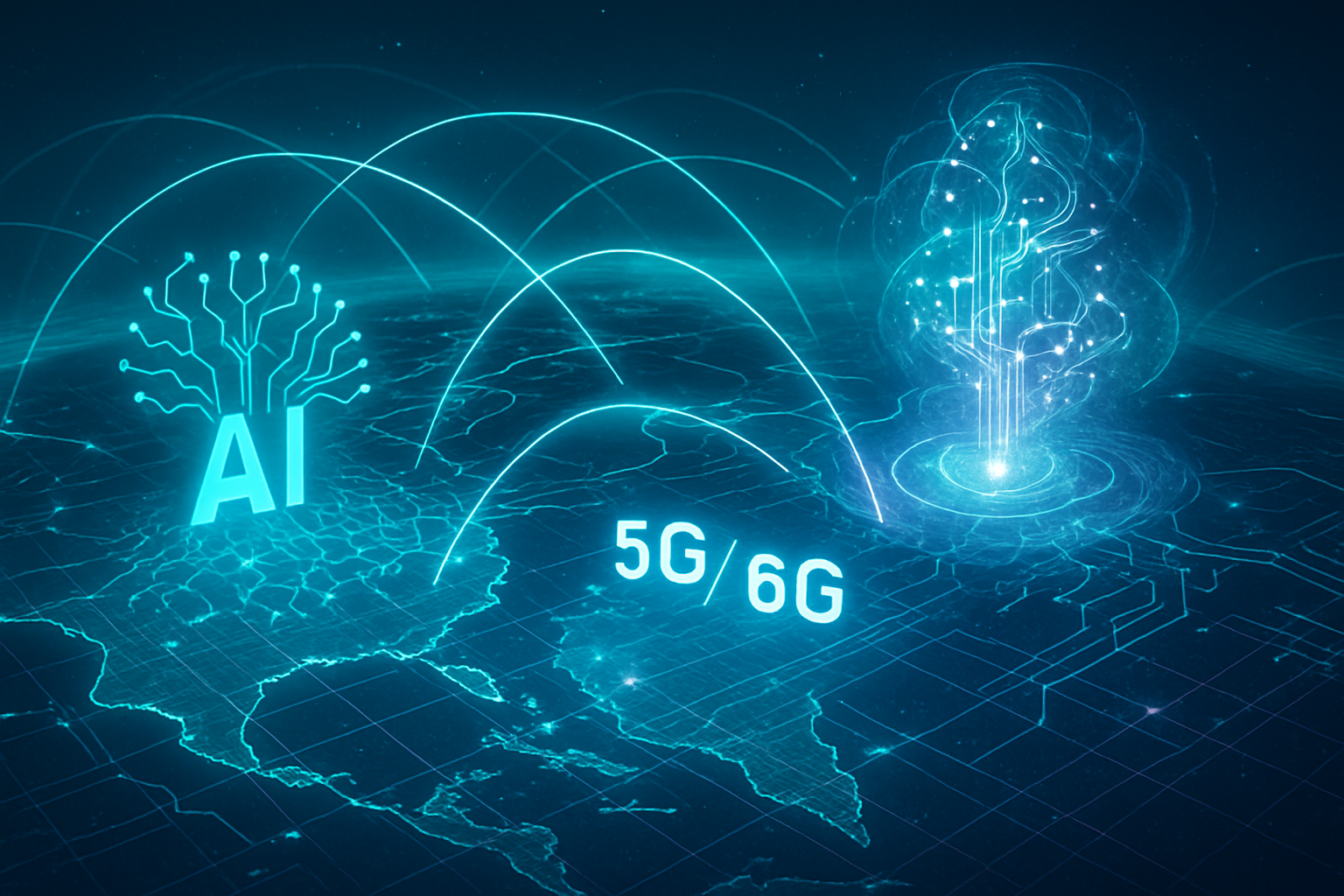
    The United States and Taiwan are solidifying a strategic technological alliance, marking a pivotal moment in global innovation and geopolitical strategy. This partnership, focusing intently on secure 5G/6G networks, advanced Artificial Intelligence (AI), and groundbreaking Quantum Computing, is designed to enhance supply chain resilience, foster next-generation technological leadership, and counter the influence of authoritarian regimes. This collaboration is particularly significant given Taiwan's indispensable role in advanced semiconductor manufacturing, which underpins much of the world's high-tech industry. The alliance aims to create a robust, democratic technology ecosystem, ensuring that critical future technologies are developed and deployed with shared values of transparency, open competition, and the rule of law.

    Deepening Technical Synergies in Critical Future Tech

    The US-Taiwan collaboration in secure 5G/6G, AI, and Quantum Computing represents a sophisticated technical partnership, moving beyond traditional engagements to prioritize resilient supply chains and advanced research.

    In secure 5G/6G networks, the alliance is championing Open Radio Access Network (Open RAN) architectures to diversify suppliers and reduce reliance on single vendors. Taiwanese hardware manufacturers are crucial in this effort, supplying components for Open RAN deployments globally. Research into 6G technologies is already underway, focusing on AI-native networks, Non-Terrestrial Networks (NTN), Integrated Sensing and Communications (ISAC), and Reconfigurable Intelligent Surfaces (RIS). Taiwan's Industrial Technology Research Institute (ITRI) leads the FORMOSA-6G initiative, encompassing AI-RAN and chip development. A significant push is also seen in Low Earth Orbit (LEO) satellite communications, with Taiwan investing in a "2+4" satellite configuration to enhance communication resilience, particularly against potential disruptions to submarine cables. The Ministry of Digital Affairs (MODA) is encouraging US telecom software and cloud service providers to partner with Taiwanese firms for 5G Private Network Projects. This approach differs from previous ones by explicitly excluding untrusted vendors and focusing on open, interoperable architectures.

    For Artificial Intelligence (AI), the cooperation leverages Taiwan's semiconductor manufacturing prowess and the US's high-performance computing expertise. Key technical areas include Heterogeneous Integration and Advanced Packaging for AI chips, with collaborations between ITRI, the Artificial Intelligence on Chip Taiwan Alliance (AITA), and the UCLA Center for Heterogeneous Integration and Performance Scaling (CHIPS). These efforts are vital for improving die-to-die (D2D) interconnection bandwidth, critical for high-bandwidth applications like 8K imaging and 5G communications. Taiwan's "Taiwan Artificial Intelligence Action Plan 2.0" and "Ten Major AI Infrastructure Projects" aim to establish the island as an AI powerhouse by 2040. Taiwanese companies like Taiwan Semiconductor Manufacturing Company (TSMC) (NYSE: TSM), Foxconn (TWSE: 2317), Quanta (TWSE: 2382), Pegatron (TWSE: 4938), and Wistron (TWSE: 3231) dominate AI server production, and there's a strategic push to shift some AI hardware manufacturing closer to North America to mitigate geopolitical risks. This collaboration ensures Taiwan's unrestricted access to US AI technology, a stark contrast to restrictions faced by other nations.

    In Quantum Computing, the alliance builds on Taiwan's robust semiconductor foundation. Taiwan has already introduced its first five-qubit superconducting quantum computer and researchers at National Tsing Hua University have developed a photonic quantum computer that operates at room temperature, a significant advancement over traditional cryogenic systems. The National Science and Technology Council (NSTC) has established the "National Quantum Team" with a substantial investment to accelerate quantum capabilities, including quantum algorithms and communication. The Taiwan Semiconductor Research Institute (TSRI) is also spearheading a project to fast-track quantum computer subsystem development. US companies like NVIDIA (NASDAQ: NVDA) are forming quantum computing alliances with Taiwanese firms such as Quanta Computing, Compal Electronics (TWSE: 2324), and Supermicro (NASDAQ: SMCI) for hardware testing and optimization. This focus on developing practical, energy-efficient quantum systems, alongside strong international collaboration, aims to position Taiwan as a key player in the global quantum ecosystem.

    Industry Impact: Reshaping Competition and Driving Innovation

    The US-Taiwan tech alliance has profound implications for the global AI and tech industry, creating a landscape of both immense opportunity and heightened competition.

    Taiwan Semiconductor Manufacturing Company (TSMC) (NYSE: TSM) stands as the primary beneficiary. As the world's largest contract chipmaker, its unparalleled advanced manufacturing capabilities (3nm, 2nm, and upcoming 1.6nm processes) are indispensable for AI accelerators, GPUs, and high-performance computing. TSMC's significant investments in the US, including an additional $100 billion in its Arizona operations, aim to bolster the US semiconductor sector while maintaining its core manufacturing strength in Taiwan. This ensures continued access to cutting-edge chip technology for US tech giants.

    Major US tech companies with deep ties to TSMC, such as NVIDIA (NASDAQ: NVDA), Apple (NASDAQ: AAPL), Advanced Micro Devices (AMD) (NASDAQ: AMD), and Qualcomm (NASDAQ: QCOM), are reinforced in their market positions. Their reliance on TSMC for advanced AI accelerators, GPUs, CPUs, and mobile chips is solidified by this alliance, guaranteeing access to leading-edge technology and high yield rates. Google (NASDAQ: GOOGL) also benefits, with its extensive footprint in Taiwan and reliance on TSMC for its AI accelerators. Microsoft (NASDAQ: MSFT) is actively engaging with Taiwanese companies through initiatives like its Azure AI Foundry, fostering co-development, particularly in AI healthcare solutions. Intel (NASDAQ: INTC), through its OpenLab with Quanta Computer Inc. (TWSE: 2382) and strategic investments, is also positioning itself in the 6G and AI PC markets.

    For Taiwanese hardware manufacturers and AI software enablers like ASE Technology Holding Co. Ltd. (NYSE: ASX), MediaTek Inc. (TWSE: 2454), Quanta Computer Inc. (TWSE: 2382), Inventec Corp. (TWSE: 2356), and Delta Electronics, Inc. (TWSE: 2308), the alliance opens doors to increased demand for AI-related technology and strategic collaboration. Taiwan's "IC Taiwan Grand Challenge" in 2025 further aims to foster an IC startup cluster focused on AI chips and high-speed transmission technologies.

    However, the alliance also presents competitive implications and potential disruptions. The emphasis on a "democratic semiconductor supply chain" could lead to technological bipolarity, creating a more fragmented global tech ecosystem. Companies seeking rapid diversification away from Taiwan for advanced chip manufacturing may face higher costs, as US-based manufacturing is estimated to be 30-50% more expensive. Geopolitical risks in the Taiwan Strait remain a significant concern; any disruption could have a devastating impact on the global economy, potentially affecting trillions of dollars in global GDP. Trade conflicts, tariffs, and talent shortages in both the US and Taiwan also pose ongoing challenges. Taiwan's rejection of a "50-50 chip sourcing plan" with the US underscores its intent to protect its "silicon shield" and domestic technological leadership, highlighting potential friction points even within the alliance.

    Broader Implications: Geopolitics, Trends, and the Future of AI

    The US-Taiwan tech alliance for secure 5G/6G, AI, and Quantum Computing extends far beyond bilateral relations, reshaping the broader AI landscape and global geopolitical trends. Taiwan's strategic importance, rooted in its control of over 90% of advanced semiconductor manufacturing (under 7nm), makes it an indispensable player in the global economy and a critical component in the US strategy to counter China's technological rise.

    This alliance profoundly impacts secure 5G/6G. Both nations are committed to developing and deploying networks based on principles of free and fair competition, transparency, and the rule of law. Taiwan's active participation in the US "Clean Network" initiative and its focus on open, interoperable architectures serve as a direct challenge to state-controlled technology models. By strengthening its position in the global 5G supply chain through smart semiconductors and collaborating on resilient infrastructure, Taiwan contributes to a more secure and diversified global telecommunications ecosystem.

    For AI, Taiwan's role is foundational. The alliance ensures a critical supply of high-end chips necessary for training massive AI models and powering edge devices. Companies like NVIDIA (NASDAQ: NVDA) and Google (NASDAQ: GOOGL) are heavily reliant on Taiwan Semiconductor Manufacturing Company (TSMC) (NYSE: TSM) for their AI accelerators. Taiwan's projected control of up to 90% of AI server manufacturing capacity by 2025 underscores its indispensable role in the AI revolution. This partnership fosters a "democratic AI alignment," aiming to develop AI in accordance with democratic values and establishing "trustworthy AI" by ensuring the integrity of data and hardware.

    In Quantum Computing, Taiwan is rapidly emerging as a significant player, building on its semiconductor foundation. Its development of a five-qubit superconducting quantum computer and a room-temperature photonic quantum computer represents major breakthroughs. The substantial investments in the "National Quantum Team" and collaborations with US companies like NVIDIA (NASDAQ: NVDA) aim to accelerate joint research, development, and standardization efforts in this critical field, essential for future secure communications and advanced computation.

    The alliance fits into a broader trend of geopolitical balancing in AI development, where partnerships reflect strategic national interests. Taiwan's "silicon shield" strategy, leveraging its indispensable role in the global tech supply chain, acts as a deterrent against potential aggression. The US CHIPS Act, while aiming to boost domestic production, still relies heavily on Taiwan's expertise, illustrating the complex interdependence. This dynamic contributes to a more regionalized global tech ecosystem, where "trusted technology" based on shared democratic values is prioritized.

    However, potential concerns persist. The concentration of advanced semiconductor manufacturing in Taiwan makes the global supply chain vulnerable to geopolitical instability. The intensified US-China tensions, fueled by this deepened alliance, could increase the risk of conflict. Taiwan's rejection of a "50-50 chip sourcing plan" with the US highlights its determination to protect its technological preeminence and "silicon shield," potentially leading to friction even within the alliance. Furthermore, the economic sovereignty of Taiwan and the potential for rising manufacturing costs due to diversification efforts are ongoing considerations.

    Comparisons to previous AI milestones and technological competitions reveal recurring patterns. Similar to the dot-com boom, AI's economic integration is expanding rapidly. The current race for AI dominance mirrors historical "format wars" (e.g., VHS vs. Betamax), where strategic alliances and ecosystem building are crucial for establishing industry standards. The US-Taiwan alliance is fundamentally about shaping the foundational hardware ecosystem for AI, ensuring it aligns with the interests of democratic nations.

    The Road Ahead: Expected Developments and Emerging Challenges

    The US-Taiwan tech alliance is poised for dynamic evolution, with both near-term and long-term developments shaping the future of secure 5G/6G, AI, and Quantum Computing.

    In the near term (2025-2027), intensified collaboration and strategic investments are expected. The US will continue to encourage Taiwanese semiconductor companies, particularly Taiwan Semiconductor Manufacturing Company (TSMC) (NYSE: TSM), to invest in US manufacturing capacity, building on existing commitments like the $100 billion expansion in Arizona. However, Taiwan will firmly maintain its "silicon shield," prioritizing domestic technological dominance. Taiwan's "AI Action Plan 2.0" and "Ten Major AI Infrastructure Projects" will accelerate AI infrastructure and research, aiming for over $510 billion in economic value by 2040 through initiatives like the Taiwan-Texas AI Innovation Forum and Foxconn's (TWSE: 2317) AI Robotics Industry Grand Alliance. Secure 5G/6G network deployment will deepen, building on the "Clean Network" initiative, with US-based chip designer Qualcomm (NASDAQ: QCOM) joining Taiwan's 5G technology development alliance. Foundational quantum computing initiatives will see Taiwan's "National Quantum Team" progress its $259 million investment, with companies like NVIDIA (NASDAQ: NVDA) forming quantum computing alliances with Taiwanese firms for hardware testing and optimization.

    Looking at long-term developments (beyond 2027), the alliance aims for deeper integration and strategic autonomy. While Taiwan will retain its indispensable role in advanced chip production, the US seeks to significantly increase its domestic chip capacity, potentially reaching 20% globally by the end of the decade, fostering a shared US-Taiwan resilience. Taiwan aspires to become a global AI powerhouse by 2040, focusing on silicon photonics, quantum computing, and AI robotics to establish "Sovereign AI." Both nations will work to lead in 6G and next-generation communication standards, critical for national security and economic prosperity. The advanced quantum ecosystem will see sustained investments in practical quantum computing systems, reliable quantum communication networks, and talent cultivation, with quantum science being a top US R&D priority for 2027.

    Potential applications stemming from this alliance are vast. Secure communications will be enhanced through 5G/6G networks, crucial for critical infrastructure and military operations. Advanced AI capabilities powered by Taiwanese semiconductors will accelerate scientific discovery, nuclear energy research, quantum science, and autonomous systems like drones and robotics. Cybersecurity and national defense will benefit from quantum computing applications and AI integration into defense technologies, providing resilience against future cyberthreats.

    However, challenges persist. Geopolitical tensions in the Taiwan Strait and China's aggressive expansion in semiconductors remain significant risks, potentially impacting the "silicon shield." "America First" policies and potential tariffs on Taiwan-made chips could create friction, although experts advocate for cooperation over tariffs. Balancing supply chain diversification with efficiency, safeguarding Taiwan's technological edge and intellectual property, and addressing growing energy demands for new fabs and AI data centers are ongoing hurdles.

    Expert predictions suggest that technology cooperation and supply chain resilience will remain paramount in US-Taiwan economic relations. The alliance is viewed as critical for maintaining American technological leadership and ensuring Taiwan's security. While the US will boost domestic chip capacity, Taiwan is predicted to retain its indispensable role as the world's epicenter for advanced chip production, vital for the global AI revolution.

    A Strategic Imperative: Concluding Thoughts

    The US-Taiwan alliance for secure 5G/6G, AI, and Quantum Computing represents a monumental strategic pivot in the global technological landscape. At its core, this partnership is a concerted effort to forge a resilient, democratic technology ecosystem, underpinned by Taiwan's unparalleled dominance in advanced semiconductor manufacturing. Key takeaways include the unwavering commitment to "Clean Networks" for 5G/6G, ensuring secure and open telecommunications infrastructure; the deep integration of Taiwan's chip manufacturing prowess with US AI innovation, driving advancements in AI accelerators and servers; and significant joint investments in quantum computing research and development, positioning both nations at the forefront of this transformative field.

    This development holds profound significance in AI history. It marks a decisive move towards "democratic AI alignment," where the development and deployment of critical technologies are guided by shared values of transparency, ethical governance, and human rights, in direct contrast to authoritarian models. The alliance is a proactive strategy for "de-risking" global supply chains, fostering resilience by diversifying manufacturing and R&D within trusted partnerships, rather than a full decoupling. By championing secure networks and hardware integrity, it implicitly defines and promotes "trustworthy AI," setting a precedent for future global standards. Furthermore, it creates interconnected innovation hubs, pooling intellectual capital and manufacturing capabilities to accelerate AI breakthroughs.

    The long-term impact of this alliance is poised to reorder geopolitical dynamics and drive significant economic transformation. It reinforces Taiwan's strategic importance, potentially enhancing its security through its indispensable technological contributions. While fostering a more diversified global technology supply chain, Taiwan is expected to maintain its central role as a high-value R&D and advanced manufacturing hub. This collaboration will accelerate technological advancement in AI, quantum computing, and 6G, setting global standards through joint development of secure protocols and applications. Ultimately, both the US and Taiwan are pursuing "technological sovereignty," aiming to control and develop critical technologies with trusted partners, thereby reducing dependence on potential adversaries.

    In the coming weeks and months, several critical indicators bear watching. The outcomes of future U.S.-Taiwan Economic Prosperity Partnership Dialogues (EPPD) will reveal new initiatives or investment pledges. Progress on tariff negotiations and the implementation of Taiwan's proposed "Taiwan model" for a high-tech strategic partnership, which aims to expand US production without relocating Taiwan's core supply chains, will be crucial. Updates on Taiwan Semiconductor Manufacturing Company's (TSMC) (NYSE: TSM) Arizona fabs and other US CHIPS Act investments will signal the pace of semiconductor supply chain resilience. Developments in Taiwan's AI policy and regulatory frameworks, particularly their alignment with international AI governance principles, will shape the ethical landscape. Finally, milestones from Taiwan's "National Quantum Team" and NVIDIA's (NASDAQ: NVDA) quantum computing alliances, alongside any growing momentum for a broader "T7" alliance of democratic tech powers, will underscore the evolving trajectory of this pivotal technological partnership.

    This content is intended for informational purposes only and represents analysis of current AI developments.

    TokenRing AI delivers enterprise-grade solutions for multi-agent AI workflow orchestration, AI-powered development tools, and seamless remote collaboration platforms.
    For more information, visit https://www.tokenring.ai/.
  • MicroCloud Hologram Unveils Groundbreaking Quantum Neural Network, Signaling a New Era for AI Performance

    MicroCloud Hologram Unveils Groundbreaking Quantum Neural Network, Signaling a New Era for AI Performance

    Shanghai, China – October 2, 2025 – MicroCloud Hologram Inc. (NASDAQ: HOLO) announced on June 10, 2025, the unveiling of its Deep Quantum Neural Network (DQNN) architecture, a significant leap forward in quantum computing and artificial intelligence. This breakthrough positions the company as a formidable player in the nascent, yet rapidly accelerating, field of Quantum AI, promising to redefine the boundaries of computational efficiency and AI capabilities. The DQNN is designed to optimize quantum computing efficiency and lay a robust foundation for future Quantum AI applications, moving towards the elusive goal of universal quantum computing.

    The immediate significance of this announcement reverberated through the tech and financial sectors, with MicroCloud Hologram's stock experiencing a notable rally. The innovation is heralded for its potential to overcome critical bottlenecks that have long plagued quantum neural networks, particularly concerning limited depth scalability and noise resilience. By introducing an architecture capable of robust learning from noisy data and processing real quantum information with enhanced stability, MicroCloud Hologram is charting a course towards more practical and deployable quantum AI solutions.

    Technical Deep Dive: Unpacking MicroCloud Hologram's DQNN Architecture

    MicroCloud Hologram's DQNN represents a paradigm shift from traditional QNNs, which often merely simulate classical neural network structures. At its core, the DQNN employs qubits as neurons and unitary operations as perceptrons, a design that facilitates hierarchical training and actively reduces quantum errors. This architecture is uniquely built to directly process real quantum data, leveraging quantum superposition and entanglement to deliver computational power inaccessible to classical systems, and offering enhanced stability in inherently noisy quantum environments.

    A standout technical innovation is the DQNN's optimization strategy. Instead of relying on loss function minimization—a common practice in classical and some quantum neural networks—the DQNN maximizes fidelity. This fidelity-based approach allows the network to converge to optimal solutions with fewer training steps, thereby significantly reducing the quantum resources required for training. This strategy has demonstrated remarkable robustness, effectively managing the inherent noise and errors prevalent in current Noisy Intermediate-Scale Quantum (NISQ) computers, making it suitable for near-term quantum hardware.

    Furthermore, the DQNN directly addresses the persistent challenge of limited depth scalability. MicroCloud Hologram asserts that the required qubit resources for their DQNN scale with the network's width rather than its depth. This crucial design choice makes the implementation of increasingly complex networks feasible on existing quantum processors, a significant advancement over previous QNNs that struggled with increasing complexity as network depth grew. Benchmark tests conducted by the company indicate that the DQNN can accurately learn unknown quantum operations, maintain stable performance even with noisy data inputs, and exhibit strong generalization capabilities from limited training data. The company has also developed quantum supervised learning methods that show quantum speedup in classification tasks and impressive resilience against errors from limited sampling statistics.

    Initial reactions from the broader AI research community are still developing, with many adopting a wait-and-see approach for independent validation. However, financial news outlets and industry analysts have largely viewed MicroCloud Hologram's announcements positively, highlighting the potential implications for the company's market position and stock performance. While the company's claims emphasize groundbreaking advancements, the scientific community awaits broader peer review and detailed independent analyses.

    Industry Tremors: How DQNN Reshapes the AI Landscape

    The unveiling of MicroCloud Hologram's DQNN is poised to send ripples across the AI industry, impacting established tech giants, specialized AI labs, and agile startups alike. This advancement, particularly its noise-resistant capabilities and resource efficiency, presents both opportunities for collaboration and intensified competitive pressures.

    MicroCloud Hologram (NASDAQ: HOLO) itself stands as the primary beneficiary. These breakthroughs solidify its position as a significant player in quantum AI, potentially enhancing its existing holographic technology services, LiDAR solutions, digital twin technology, and intelligent vision systems. Industries that heavily rely on high-precision data analysis and optimization, such as quantum chemistry, drug discovery, finance, materials science, and cybersecurity, are also poised to benefit immensely. Companies within these sectors that adopt or partner with MicroCloud Hologram could gain a substantial competitive edge. Furthermore, major cloud quantum computing platforms like AWS Braket (NASDAQ: AMZN), Azure Quantum (NASDAQ: MSFT), and Google Quantum AI (NASDAQ: GOOGL) could integrate or offer the DQNN, expanding their service portfolios and attracting more users.

    For tech giants heavily invested in quantum computing and AI, such as Alphabet (NASDAQ: GOOGL), IBM (NYSE: IBM), Microsoft (NASDAQ: MSFT), and NVIDIA (NASDAQ: NVDA), MicroCloud Hologram's DQNN creates increased pressure to accelerate their own quantum neural network research and development, especially in practical, near-term quantum applications. These companies may view this advancement as an opportunity for strategic collaboration or even acquisition to integrate the DQNN into their existing quantum ecosystems (e.g., IBM's Qiskit, Google's Cirq, Microsoft's Azure Quantum). The development also reinforces the industry's focus on hybrid classical-quantum solutions, where DQNN could optimize the quantum components. NVIDIA, a leader in GPUs, will likely see its role in developing classical-quantum integration layers further influenced by such quantum AI advancements.

    Quantum AI startups, including QpiAI, Xanadu, Multiverse Computing, SandboxAQ, and 1QBit, will face heightened competition. They will need to demonstrate superior noise reduction, resource efficiency, or application-specific advantages to maintain their competitive standing. However, MicroCloud Hologram's success also validates the immense potential of quantum AI, potentially attracting more investment into the broader sector. For general AI startups, the DQNN could eventually offer more powerful tools for complex data processing, optimization, and advanced pattern recognition, though access to quantum hardware and expertise remains a significant barrier.

    The DQNN's capabilities could lead to significant disruption. Its ability to improve training stability and robustness with noisy data could yield more accurate and efficient AI models, potentially outperforming classical machine learning models that struggle with high computational costs and generalization. Enhanced data analysis and clustering, powered by quantum-assisted technologies, could revolutionize fields like financial modeling and bioinformatics. Furthermore, MicroCloud Hologram's reported success in quantum-enhanced holographic imaging, claiming a 40-decibel improvement in signal-to-noise ratio, could redefine the limits of imaging technologies, impacting autonomous systems and industrial diagnostics. While the company's technological prowess is evident, its market positioning is nuanced. As a smaller company with a market cap of $21.47 million, MicroCloud Hologram faces financial challenges and stock volatility, making its quantum ventures high-risk, high-reward bets.

    Wider Significance: A Quantum Leap in the AI Evolution

    MicroCloud Hologram's DQNN unveiling fits squarely into the broader AI landscape as a tangible effort to transcend the inherent limitations of classical computing. As traditional deep neural networks approach fundamental limits in computational power and efficiency, quantum neural networks like the DQNN represent a paradigm shift. By leveraging quantum mechanics, they promise exponential speedups and enhanced computational power for specific problems that remain intractable for classical supercomputers.

    This development aligns with current AI trends that prioritize more powerful models, often requiring massive datasets and computational resources. Quantum AI offers a potential pathway to accelerate these processes, enabling faster data processing, improved optimization, and more effective pattern recognition. The field's increasing embrace of hybrid quantum-classical approaches further underscores the DQNN's relevance, especially its emphasis on noise resistance and efficient resource scaling, which are critical for current NISQ devices. This makes quantum AI more viable in the near term and addresses the demand for more robust and resilient AI systems.

    The broader impacts of this breakthrough are potentially transformative. QNNs could revolutionize sectors such as healthcare (faster drug discovery, personalized medicine), finance (more accurate risk modeling), logistics (optimized supply chains), and materials science (accelerated discovery of new materials). The enhanced data processing and optimization capabilities could drastically reduce training times for AI models and enable the handling of larger, more complex datasets. Moreover, advancements like MicroCloud Hologram's Quantum Tensor Network Neural Network (QTNNN) and Quantum Convolutional Neural Networks (QCNNs) could significantly accelerate scientific research and impact specific AI subfields, such as quantum natural language processing.

    However, this quantum leap is not without its concerns. Hardware limitations remain a primary bottleneck, with current quantum computers struggling with limited qubit counts, high error rates, and stability issues. Algorithmic challenges persist, including the "barren plateau" problem where gradients vanish in large QNNs. Ethical and societal implications are also paramount; the transformative power of quantum AI raises concerns about enhanced surveillance, cybersecurity risks, equitable access to technology, and potential job displacement. The "black box" nature of many advanced AI models, including quantum systems, also poses challenges for interpretability and accountability. From a commercial standpoint, MicroCloud Hologram, despite its technological prowess, faces financial hurdles, highlighting the inherent risks in pioneering such advanced, uncommercialized technologies.

    Comparing the DQNN to previous AI milestones reveals its foundational significance. While classical deep learning models like AlphaGo and GPT models have achieved superhuman performance in specific domains, they operate within the confines of classical computing. The DQNN, by contrast, seeks a more fundamental shift, leveraging quantum principles to process real quantum data. It doesn't aim to directly replace these classical systems for all their current applications but rather to enable new classes of AI applications, particularly in fields like materials science and drug discovery, that are currently beyond the reach of even the most powerful classical AI, thereby representing a foundational shift in computational capability.

    The Quantum Horizon: Charting Future Developments

    The unveiling of MicroCloud Hologram's DQNN marks a pivotal moment, but it is merely a waypoint on the extensive journey of quantum AI. Future developments, both near-term and long-term, promise to continually reshape the technological landscape.

    In the near term (1-5 years), we can expect continued advancements in quantum hardware, focusing on qubit stability, connectivity, and error rates. Innovations like diamond-based quantum systems, offering room-temperature operation, could become increasingly relevant. MicroCloud Hologram itself plans to further optimize its DQNN architecture and validate its quantum supervised learning methods on larger-scale, more fault-tolerant quantum computers as they become available. Early industrial adoption will likely focus on foundational research and niche use cases where quantum advantage can be clearly demonstrated, even if "practically useful" quantum computing for widespread application remains 5 to 10 years away, as some experts predict. The race to develop quantum-resistant cryptography will also intensify to secure digital infrastructure against future quantum threats.

    Looking to the long term (5-20+ years), the impact of quantum AI is predicted to be profound and pervasive. Quantum AI is expected to lead to more powerful and adaptable AI models capable of learning from highly complex, high-dimensional data, potentially enabling machines to reason with unprecedented sophistication. This could unlock solutions to grand challenges in areas like drug discovery, climate modeling, and fundamental physics. The quantum technology market is forecasted for explosive growth, with some estimates reaching $72 billion by 2035 and potentially $1 trillion by 2030. Some experts even envision a "quantum singularity," where quantum AI systems become the primary drivers of technological progress. The development of a quantum internet, enabling ultra-secure communications, also looms on the horizon.

    The potential applications and use cases are vast and transformative. In healthcare, DQNNs could accelerate drug discovery, enable personalized medicine, and enhance medical imaging analysis. In finance, they could revolutionize risk analysis, portfolio optimization, and fraud detection, processing vast real-time market data with unprecedented accuracy. Chemistry and materials science stand to gain immensely from simulating chemical reactions and properties with extreme precision. Logistics could see optimized traffic flow, real-time global routing, and enhanced supply chain efficiency. Furthermore, quantum AI will play a dual role in cybersecurity, both posing threats to current encryption and offering powerful solutions through new quantum-resistant methods.

    However, significant challenges must be addressed. The primary hurdle remains the limitations of current quantum hardware, characterized by noisy qubits and high error rates. Algorithmic design is complex, with issues like "barren plateaus" hindering learning. Data encoding and availability for quantum systems are still nascent, and seamless hybrid system integration between quantum and classical processors remains a technical challenge. A critical need for a skilled quantum workforce and standardization practices also persists. Finally, the immense power of quantum AI necessitates careful consideration of ethical and societal implications, including privacy, equitable access, and potential misuse.

    Experts predict a rapid acceleration in the quantum AI field, with some anticipating a "ChatGPT moment" for quantum computing as early as 2025. Julian Kelly, director of Google Quantum AI hardware (NASDAQ: GOOGL), estimates "practically useful" quantum computing could be 5 to 10 years away. The next decade is expected to witness a profound merger of AI and quantum technologies, leading to transformative advancements. While the era of the unknown in quantum is over and the race is kicking off, experts emphasize the importance of thoughtful regulation, international cooperation, and ethical foresight to responsibly govern the power of quantum AI.

    Comprehensive Wrap-up: A New Chapter in AI History

    MicroCloud Hologram's (NASDAQ: HOLO) Deep Quantum Neural Network (DQNN) represents a compelling and crucial stride towards practical quantum AI. Its noise-resistant architecture, fidelity-based optimization, and width-based scalability are key takeaways that address fundamental limitations of earlier quantum computing approaches. By enabling the efficient processing of real quantum data on existing hardware, the DQNN is helping to bridge the gap between theoretical quantum advantage and tangible, real-world applications.

    This development holds significant importance in AI history, marking a potential turning point where quantum mechanics begins to fundamentally redefine computational capabilities rather than merely simulating classical systems. It signals a move towards overcoming the computational ceilings faced by classical AI, promising exponential speedups and the ability to tackle problems currently beyond our reach. The DQNN, along with MicroCloud Hologram's suite of related quantum AI innovations, could serve as a catalyst for industrial adoption of quantum computing, pushing it from the realm of scientific curiosity into practical implementation across diverse sectors.

    The long-term impact is poised to be transformative, affecting everything from personalized medicine and financial modeling to materials science and cybersecurity. Quantum-enhanced imaging, improved data processing, and more efficient optimization algorithms are just a few examples of how these advancements could reshape industries. However, realizing this potential will depend on overcoming persistent challenges related to quantum hardware limitations, algorithmic complexities, and the crucial need for a skilled workforce.

    In the coming weeks and months, the industry will be closely watching for several key indicators. Further optimization and scaling announcements from MicroCloud Hologram will be essential to gauge the DQNN's readiness for more complex problems. The emergence of commercial partnerships and real-world applications will signal its market viability. Furthermore, MicroCloud Hologram's financial performance, particularly its ability to translate quantum innovations into sustainable profitability, will be critical. Continued R&D announcements and the broader strategic investments by the company will also provide deeper insights into their evolving capabilities and long-term vision.

    MicroCloud Hologram's DQNN is not just another incremental update; it's a foundational step in the evolution of AI. Its journey from research to widespread application will be a defining narrative in the coming years, shaping the future of technology and potentially unlocking solutions to some of humanity's most complex challenges.


    This content is intended for informational purposes only and represents analysis of current AI developments.

    TokenRing AI delivers enterprise-grade solutions for multi-agent AI workflow orchestration, AI-powered development tools, and seamless remote collaboration platforms. For more information, visit https://www.tokenring.ai/.
  • Silicon Quantum Computing Hits Major Milestone: 99% Fidelity Achieved in Industrial Production

    Silicon Quantum Computing Hits Major Milestone: 99% Fidelity Achieved in Industrial Production

    Sydney, Australia & Leuven, Belgium – October 2, 2025 – A groundbreaking achievement in quantum computing has sent ripples through the tech world, as a collaboration between UNSW Sydney nano-tech startup Diraq and European nanoelectronics institute imec announced a pivotal breakthrough on September 24, 2025. For the first time, industrially manufactured silicon quantum dot qubits have consistently demonstrated over 99% fidelity in two-qubit operations, a critical benchmark that signals a viable path toward scalable and fault-tolerant quantum computers.

    This development is not merely an incremental improvement but a fundamental leap, directly addressing one of the most significant hurdles in quantum computing: the ability to produce high-quality quantum chips using established semiconductor manufacturing processes. By proving that high fidelity can be maintained outside of specialized lab environments and within commercial foundries on 300mm wafers, Diraq and imec have laid down a robust foundation for leveraging the trillion-dollar silicon industry to build the quantum machines of the future. This breakthrough significantly accelerates the timeline for practical quantum computing, moving it closer to a reality where its transformative power can be harnessed across various sectors.

    Technical Deep Dive: Precision at Scale

    The core of this monumental achievement lies in the successful demonstration of two-qubit gate fidelities exceeding 99% using silicon quantum dot qubits manufactured through industrial processes. This level of accuracy is paramount, as it surpasses the minimum threshold required for effective quantum error correction, a mechanism essential for mitigating the inherent fragility of quantum information and building robust quantum computers. Prior to this, achieving such high fidelity was largely confined to highly controlled laboratory settings, making the prospect of mass production seem distant.

    What sets this breakthrough apart is its direct applicability to existing semiconductor manufacturing infrastructure. Diraq's qubit designs, fabricated at imec's advanced facilities, are compatible with the same processes used to produce conventional computer chips. This contrasts sharply with many other quantum computing architectures that rely on exotic materials or highly specialized fabrication techniques, which are often difficult and expensive to scale. The ability to utilize 300mm wafers – the standard in modern chip manufacturing – means that the quantum chips can be produced in high volumes, drastically reducing per-qubit costs and paving the way for processors with millions, potentially billions, of qubits.

    Initial reactions from the quantum research community and industry experts have been overwhelmingly positive, bordering on euphoric. Dr. Michelle Simmons, a leading figure in quantum computing research, remarked, "This is the 'Holy Grail' for silicon quantum computing. It validates years of research and provides a clear roadmap for scaling. The implications for fault-tolerant quantum computing are profound." Experts highlight that by demonstrating industrial scalability and high fidelity simultaneously, Diraq and imec have effectively de-risked a major aspect of silicon-based quantum computer development, shifting the focus from fundamental material science to engineering challenges. This achievement also stands in contrast to other qubit modalities, such as superconducting qubits, which, while advanced, face different scaling challenges due to their larger physical size and complex cryogenic requirements.

    Industry Implications: A New Era for Tech Giants and Startups

    This silicon-based quantum computing breakthrough is poised to reshape the competitive landscape for both established tech giants and nascent AI companies and startups. Companies heavily invested in semiconductor manufacturing and design, such as Intel (NASDAQ: INTC), TSMC (NYSE: TSM), and Samsung (KRX: 005930), stand to benefit immensely. Their existing fabrication capabilities and expertise in silicon processing become invaluable assets, potentially allowing them to pivot or expand into quantum chip production with a significant head start. Diraq, as a startup at the forefront of this technology, is also positioned for substantial growth and strategic partnerships.

    The competitive implications for major AI labs and tech companies like Google (NASDAQ: GOOGL), IBM (NYSE: IBM), and Microsoft (NASDAQ: MSFT), all of whom have significant quantum computing initiatives, are substantial. While many have explored various qubit technologies, this breakthrough strengthens the case for silicon as a leading contender for fault-tolerant quantum computers. Companies that have invested in silicon-based approaches will see their strategies validated, while others might need to re-evaluate their roadmaps or seek partnerships to integrate this advanced silicon technology.

    Potential disruption to existing products or services is still some years away, as fault-tolerant quantum computers are yet to be fully realized. However, the long-term impact could be profound, enabling breakthroughs in materials science, drug discovery, financial modeling, and AI optimization that are currently intractable for even the most powerful supercomputers. This development gives companies with early access to or expertise in silicon quantum technology a significant strategic advantage, allowing them to lead in the race to develop commercially viable quantum applications and services. The market positioning for those who can leverage this industrial scalability will be unparalleled, potentially defining the next generation of computing infrastructure.

    Wider Significance: Reshaping the AI and Computing Landscape

    This breakthrough in silicon quantum computing fits squarely into the broader trend of accelerating advancements in artificial intelligence and high-performance computing. While quantum computing is distinct from classical AI, its ultimate promise is to provide computational power far beyond what is currently possible, which will, in turn, unlock new frontiers for AI. Complex AI models, particularly those involving deep learning, optimization, and large-scale data analysis, could see unprecedented acceleration and capability enhancements once fault-tolerant quantum computers become available.

    The impacts of this development are multifaceted. Economically, it paves the way for a new industry centered around quantum chip manufacturing and quantum software development, creating jobs and fostering innovation. Scientifically, it opens up new avenues for fundamental research in quantum physics and computer science. However, potential concerns also exist, primarily around the "quantum advantage" and its implications for cryptography, national security, and the ethical development of immensely powerful computing systems. The ability to break current encryption standards is a frequently cited concern, necessitating the development of post-quantum cryptography.

    Comparisons to previous AI milestones, such as the development of deep learning or the rise of large language models, highlight the foundational nature of this quantum leap. While those milestones advanced specific applications within AI, this quantum breakthrough provides a new type of computing substrate that could fundamentally alter the capabilities of all computational fields, including AI. It's akin to the invention of the transistor for classical computing, setting the stage for an entirely new era of technological progress. The significance cannot be overstated; it's a critical step towards realizing the full potential of quantum information science.

    Future Developments: A Glimpse into Tomorrow's Computing

    In the near-term, experts predict a rapid acceleration in the development of larger-scale silicon quantum processors. The immediate focus will be on integrating more qubits onto a single chip while maintaining and further improving fidelity. We can expect to see prototypes with tens and then hundreds of industrially manufactured silicon qubits emerge within the next few years. Long-term, the goal is fault-tolerant quantum computers with millions of physical qubits, capable of running complex quantum algorithms for real-world problems.

    Potential applications and use cases on the horizon are vast and transformative. In materials science, quantum computers could simulate new molecules and materials with unprecedented accuracy, leading to breakthroughs in renewable energy, battery technology, and drug discovery. For finance, they could optimize complex portfolios and model market dynamics with greater precision. In AI, quantum algorithms could revolutionize machine learning by enabling more efficient training of neural networks, solving complex optimization problems, and enhancing data analysis.

    Despite the excitement, significant challenges remain. Scaling up to millions of qubits while maintaining coherence and connectivity is a formidable engineering task. Developing sophisticated quantum error correction codes and the necessary control electronics will also be crucial. Furthermore, the development of robust quantum software and algorithms that can fully leverage these powerful machines is an ongoing area of research. Experts predict that the next decade will be characterized by intense competition and collaboration, driving innovation in both hardware and software. We can anticipate significant investments from governments and private enterprises, fostering an ecosystem ripe for further breakthroughs.

    Comprehensive Wrap-Up: A Defining Moment for Quantum

    This breakthrough by Diraq and imec in achieving over 99% fidelity in industrially manufactured silicon quantum dot qubits marks a defining moment in the history of quantum computing. The key takeaway is clear: silicon, leveraging the mature semiconductor industry, has emerged as a front-runner for scalable, fault-tolerant quantum computers. This development fundamentally de-risks a major aspect of quantum hardware production, paving a viable and cost-effective path to the quantum era.

    The significance of this development cannot be overstated. It moves quantum computing out of the purely academic realm and firmly into the engineering and industrial domain, accelerating the timeline for practical applications. This milestone is comparable to the early days of classical computing when the reliability and scalability of transistors became evident. It sets the stage for a new generation of computational power that will undoubtedly redefine industries, scientific research, and our understanding of the universe.

    In the coming weeks and months, watch for announcements regarding further scaling efforts, new partnerships between quantum hardware developers and software providers, and increased investment in silicon-based quantum research. The race to build the first truly useful fault-tolerant quantum computer has just received a powerful new impetus, and the world is watching eagerly to see what innovations will follow this pivotal achievement.

    This content is intended for informational purposes only and represents analysis of current AI developments.

    TokenRing AI delivers enterprise-grade solutions for multi-agent AI workflow orchestration, AI-powered development tools, and seamless remote collaboration platforms.
    For more information, visit https://www.tokenring.ai/.
  • AI Meets Quantum: Building Unbreakable Post-Quantum Security

    AI Meets Quantum: Building Unbreakable Post-Quantum Security

    The convergence of Artificial Intelligence (AI) and Quantum Computing is rapidly redefining the landscape of cybersecurity, presenting both formidable challenges and unprecedented opportunities. Far from being a futuristic concept, "AI Meets Quantum, Building Unbreakable Post-Quantum Security" has become a pressing reality, necessitating immediate and strategic action from governments, industries, and individuals alike. As of October 2, 2025, significant progress is being made, alongside growing concerns about the accelerating threat posed by quantum adversaries.

    This critical intersection is driven by the looming "Q-Day," the point at which cryptographically relevant quantum computers (CRQCs) could render current public-key encryption methods, the bedrock of modern digital security, obsolete. In response, a global race is underway to develop and deploy Post-Quantum Cryptography (PQC) solutions. AI is emerging as an indispensable tool in this endeavor, not only in designing and optimizing these quantum-resistant algorithms but also in managing their complex deployment and defending against sophisticated, AI-powered cyberattacks in an increasingly quantum-influenced world.

    The Technical Crucible: AI Forges Quantum-Resistant Defenses

    The integration of AI into the realm of post-quantum cryptography fundamentally alters traditional security approaches, introducing dynamic, optimized, and automated capabilities crucial for future-proofing digital infrastructure. This synergy is particularly vital as the industry transitions from theoretical PQC research to practical deployment.

    AI plays a multifaceted role in the design and optimization of PQC algorithms. Machine learning (ML) models, including evolutionary algorithms and neural networks, are employed to explore vast parameter spaces for lattice-based or code-based schemes, refining key sizes, cipher configurations, and other cryptographic parameters. This AI-driven tuning aims to achieve an optimal balance between the often-conflicting demands of security, efficiency, and performance for computationally intensive PQC algorithms. For instance, AI-powered simulations of quantum environments allow researchers to rapidly test and refine quantum encryption protocols by modeling factors like photon interactions and channel noise, accelerating the development of robust quantum-resistant algorithms.

    In analyzing PQC solutions, AI serves as a double-edged sword. On the offensive side, AI, especially transformer models, has demonstrated the ability to attack "toy versions" of lattice-based cryptography, even with minimal training data. Researchers at Meta AI (NASDAQ: META) and KTH have shown that artificial neural networks can exploit side-channel vulnerabilities in PQC implementations, such as Kyber, by analyzing power consumption traces to extract secret keys. This highlights that even mathematically sound PQC algorithms can be compromised if their implementations leak information that AI can exploit. Defensively, AI is crucial for real-time threat detection, identifying anomalies that might signal quantum-enabled attacks by analyzing vast streams of network traffic and system logs.

    For deploying and managing PQC, AI enables "cryptographic agility," allowing systems to dynamically adjust cryptographic settings or switch between different PQC algorithms (or hybrid classical/PQC schemes) in real-time based on detected threats or changing network conditions. A Reinforcement Learning-based Adaptive PQC Selector (RLA-PQCS) framework, for example, can select optimal PQC algorithms like Kyber, Dilithium, Falcon, and SPHINCS+ based on operational conditions, ensuring both strength and efficiency. Furthermore, AI-driven techniques address the complexity of larger PQC key sizes by automating and optimizing key generation, distribution, and rotation. Companies like SuperQ Quantum are launching AI tools, such as Super™ PQC Analyst, to diagnose infrastructure for PQC readiness and recommend concrete mitigation strategies.

    This AI-driven approach differs from previous, largely human-driven PQC development by introducing adaptability, automation, and intelligent optimization. Instead of static protocols, AI enables continuous learning, real-time adjustments, and automated responses to evolving threats. This "anticipatory and adaptive" nature allows for dynamic cryptographic management, exploring parameter spaces too vast for human cryptographers and leading to more robust or efficient designs. Initial reactions from the AI research community and industry experts, up to late 2025, acknowledge both the immense potential for adaptive cybersecurity and significant risks, including the "harvest now, decrypt later" threat and the acceleration of cryptanalysis through AI. There's a consensus that AI is crucial for defense, advocating for "fighting technology fire with technology fire" to create resilient, adaptive cybersecurity environments.

    Corporate Chessboard: Companies Vie for Quantum Security Leadership

    The intersection of AI, Quantum, and cybersecurity is creating a dynamic competitive landscape, with tech giants, specialized startups, and major AI labs strategically positioning themselves to lead in building quantum-safe solutions. The global post-quantum cryptography (PQC) market is projected to surge from USD 0.42 billion in 2025 to USD 2.84 billion by 2030, at a Compound Annual Growth Rate (CAGR) of 46.2%.

    Among tech giants, IBM (NYSE: IBM) is a long-standing leader in quantum computing, actively integrating PQC into its cybersecurity solutions, including Hardware Security Modules (HSMs) and key management systems. Google (NASDAQ: GOOGL), through Google Quantum AI, focuses on developing transformative quantum computing technologies and participates in PQC initiatives. Microsoft (NASDAQ: MSFT) with Azure Quantum, offers cloud-based platforms for quantum algorithm development and is a partner in Quantinuum, which provides quantum software solutions for cybersecurity. Amazon Web Services (AWS) (NASDAQ: AMZN) is integrating advanced quantum processors into its Braket service and developing its proprietary quantum chip, Ocelot, while leading with enterprise-grade quantum-safe hardware and software. Thales (EPA: HO) is embedding PQC into its HSMs and co-authored the Falcon algorithm, a NIST-selected PQC standard. Palo Alto Networks (NASDAQ: PANW) is also a major player, offering enterprise-grade quantum-safe hardware and software solutions.

    Startups and specialist PQC companies are carving out niches with innovative solutions. PQShield (UK) provides hardware, firmware, and SDKs for embedded devices and mobile, focusing on encryption systems resistant to quantum attacks. ID Quantique (Switzerland) is a leader in quantum-safe crypto, offering quantum cybersecurity products, often leveraging Quantum Key Distribution (QKD). ISARA (Canada) specializes in quantum computer-resistant software, providing crypto-flexible and quantum-safe tools for cryptographic inventory and risk assessment. QuSecure (US) offers a post-quantum cryptography software solution, QuProtect R3, with cryptographic agility, controls, and insights, partnering with companies like Accenture (NYSE: ACN) for PQC migration. SEALSQ (NASDAQ: LAES) is developing AI-powered security chips that embed PQC encryption at the hardware level, crucial for future IoT and 5G environments. A consortium of CyberSeQ (Germany), Quantum Brilliance (Australia-Germany), and LuxProvide (Luxembourg) announced a partnership in October 2025 to advance PQC with certified randomness, with CyberSeQ specifically delivering AI-powered cybersecurity solutions.

    The competitive landscape is marked by the dominance of established players like NXP Semiconductor (NASDAQ: NXPI), Thales, AWS, Palo Alto Networks, and IDEMIA, which collectively hold a significant market share. These companies leverage existing client bases and cloud infrastructure. However, startups offer agility and specialization, often partnering with larger entities. The disruption to existing products and services will be profound, necessitating a massive upgrade cycle for hardware, software, and protocols across all sectors. The combination of AI and quantum computing introduces new sophisticated attack vectors, demanding a "two-pronged defense strategy: quantum resilience and AI-enabled cybersecurity." This complexity is also driving demand for new services like PQC-as-a-service and specialized consulting, creating new market opportunities.

    Wider Significance: Reshaping Digital Trust and Global Order

    The intersection of AI, Quantum, and cybersecurity for building post-quantum security is not merely another technological advancement; it is a critical frontier that redefines digital trust, national security, and the very fabric of our interconnected world. Developments leading up to October 2025 underscore the urgency and transformative nature of this convergence.

    The primary significance stems from the existential threat of quantum computers to current public-key cryptography. Shor's algorithm, if executed on a sufficiently powerful quantum computer, could break widely used encryption methods like RSA and ECC, which secure everything from online banking to classified government communications. This "Q-Day" scenario drives the "harvest now, decrypt later" concern, where adversaries are already collecting encrypted data, anticipating future quantum decryption capabilities. In response, the National Institute of Standards and Technology (NIST) has finalized several foundational PQC algorithms, marking a global shift towards quantum-resistant solutions.

    This development fits into the broader AI landscape as a defining characteristic of the ongoing digital revolution and technological convergence. AI is no longer just a tool for automation or data analysis; it is becoming an indispensable co-architect of foundational digital security. Quantum computing is poised to "supercharge" AI's analytical capabilities, particularly for tasks like risk analysis and identifying complex cyberattacks currently beyond classical systems. This could lead to a "next stage of AI" that classical computers cannot achieve. The rise of Generative AI (GenAI) and Agentic AI further amplifies this, enabling automated threat detection, response, and predictive security models. This era is often described as a "second quantum revolution," likened to the nuclear revolution, with the potential to reshape global order and societal structures.

    However, this transformative potential comes with significant societal and ethical impacts and potential concerns. The most immediate threat is the potential collapse of current encryption, which could undermine global financial systems, secure communications, and military command structures. Beyond this, quantum sensing technologies could enable unprecedented levels of surveillance, raising profound privacy concerns. The dual-use nature of AI and quantum means that advancements for defense can also be weaponized, leading to an "AI arms race" where sophisticated AI systems could outpace human ability to understand and counter their strategies. This could exacerbate existing technological divides, creating unequal access to advanced security and computational power, and raising ethical questions about control, accountability, and bias within AI models. The disruptive potential necessitates robust governance and regulatory frameworks, emphasizing international collaboration to mitigate these new threats.

    Compared to previous AI milestones, this development addresses an existential threat to foundational security that was not present with earlier advancements like expert systems or early machine learning. While those breakthroughs transformed various industries, they did not inherently challenge the underlying security mechanisms of digital communication. The current era's shift from "if" to "when" for quantum's impact, exemplified by Google's (NASDAQ: GOOGL) achievement of "quantum supremacy" in 2019, underscores its unique significance. This is a dual-purpose innovation, where AI is both a tool for creating quantum-resistant defenses and a formidable weapon for quantum-enhanced cyberattacks, demanding a proactive and adaptive security posture.

    Future Horizons: Navigating the Quantum-AI Security Landscape

    The synergistic convergence of AI, Quantum, and cybersecurity is charting a course for unprecedented advancements and challenges in the coming years. Experts predict a rapid evolution in how digital assets are secured against future threats.

    In the near-term (up to ~2030), the focus is heavily on Post-Quantum Cryptography (PQC) standardization and deployment. NIST has finalized several foundational PQC algorithms, including ML-KEM, ML-DSA, and SLH-DSA, with additional standards for FALCON (FN-DSA) and HQC expected in 2025. This marks a critical transition from research to widespread deployment, becoming a regulatory compliance imperative. The European Union, for instance, aims for critical infrastructure to transition to PQC by the end of 2030. AI will continue to bolster classical defenses while actively preparing for the quantum era, identifying vulnerable systems and managing cryptographic assets for PQC transition. Hybrid cryptographic schemes, combining traditional and PQC algorithms, will become a standard transitional strategy to ensure security and backward compatibility.

    Looking long-term (beyond ~2030), widespread PQC adoption and "crypto-agility" will be the norm, with AI dynamically managing cryptographic choices based on evolving threats. AI-enhanced Quantum Key Distribution (QKD) and quantum-secured networks will see increased deployment in high-security environments, with AI optimizing these systems and monitoring for eavesdropping. Critically, Quantum Machine Learning (QML) will emerge as a powerful tool for cybersecurity, leveraging quantum computers to accelerate threat detection, vulnerability analysis, and potentially even break or bolster cryptographic systems by identifying patterns invisible to classical ML. Comprehensive AI-driven post-quantum security frameworks will provide automated threat response, optimized key management, and continuous security assurance against both classical and quantum attacks.

    Potential applications and use cases on the horizon include intelligent threat detection and response, with AI (potentially quantum-enhanced) identifying sophisticated AI-driven malware, deepfake attacks, and zero-day exploits at unprecedented speeds. Quantum-resilient critical infrastructure, secure IoT, and 6G communications will rely heavily on PQC algorithms and AI systems for monitoring and management. Automated vulnerability discovery and remediation, optimized cryptographic key management, and enhanced supply chain security will also become standard practices.

    However, significant challenges need to be addressed. The uncertainty of "Q-Day" makes strategic planning difficult, although the consensus is "when," not "if." The complexity and cost of PQC migration are monumental, requiring comprehensive asset inventories, prioritization, and significant investment. Hardware limitations and scalability of current quantum technologies remain hurdles, as does a critical talent gap in quantum computing, AI, and PQC expertise. The dual-use nature of AI and quantum means the same capabilities for defense can be weaponized, leading to an "AI vs. AI at quantum speed" arms race. Standardization and interoperability across different vendors and nations also present ongoing challenges, alongside ethical and societal implications regarding surveillance, privacy, and the potential for deepfake-driven misinformation.

    Experts predict that 2025 will be a critical year for accelerating PQC deployment, especially following the finalization of key NIST standards. There will be a surge in sophisticated, AI-driven cyberattacks, necessitating a strong focus on crypto-agility and hybrid solutions. While large-scale quantum computers are still some years away, early stages of quantum-enhanced AI for defense are already being explored in experimental cryptanalysis and QML applications. Governments worldwide will continue to invest billions in quantum technologies, recognizing their strategic importance, and increased collaboration between governments, academia, and industry will be crucial for developing robust quantum-safe solutions.

    The Quantum-AI Imperative: A Call to Action

    The intersection of AI, Quantum, and cybersecurity presents a complex landscape of opportunities and threats that demands immediate attention and strategic foresight. The imperative to build "unbreakable post-quantum security" is no longer a distant concern but a pressing reality, driven by the impending threat of cryptographically relevant quantum computers.

    Key takeaways include AI's indispensable role in designing, analyzing, and deploying PQC solutions, from optimizing algorithms and detecting vulnerabilities to enabling cryptographic agility and automated threat response. This marks a profound shift in AI's historical trajectory, elevating it from a computational enhancer to a co-architect of foundational digital trust. However, the dual-use nature of these technologies means that AI also poses a significant threat, capable of accelerating sophisticated cyberattacks and exploiting even post-quantum algorithms. The "harvest now, decrypt later" threat remains an immediate and active risk, underscoring the urgency of PQC migration.

    The significance of this development in AI history is immense. It moves AI beyond merely solving problems to actively future-proofing our digital civilization against an existential cyber threat. This era marks a "second quantum revolution," fundamentally reshaping global power dynamics, military capabilities, and various industries. Unlike previous AI milestones, this convergence directly addresses a foundational security challenge to the entire digital world, demanding a proactive rather than reactive security posture.

    The long-term impact will be a profound reshaping of cybersecurity, characterized by continuous crypto-agility and AI-driven security operations that autonomously detect and mitigate threats. Maintaining trust in critical infrastructure, global commerce, and governmental operations hinges on the successful, collaborative, and continuous development and implementation of quantum-resistant security measures, with AI playing a central, often unseen, role.

    In the coming weeks and months, watch for several critical developments. Product launches such as SuperQ Quantum's full PQC Module suite and SEALSQ's Quantum Shield QS7001 chip (mid-November 2025) will bring tangible PQC solutions to market. Key industry events like the IQT Quantum + AI Summit (October 20-21, 2025) and the PQC Forum (October 27, 2025) will highlight current strategies and practical implementation challenges. Governmental initiatives, like the White House's designation of AI and quantum as top research priorities for fiscal year 2027, signal sustained commitment. Continued progress in quantum computing hardware from companies like Rigetti and IonQ, alongside collaborative initiatives such as the Quantum Brilliance, CyberSeQ, and LuxProvide partnership, will further advance practical PQC deployment. Finally, the ongoing evolution of the threat landscape, with increased AI-powered cyberattacks and risks associated with ubiquitous AI tools, will keep the pressure on for rapid and effective quantum-safe solutions. The coming period is crucial for observing how these theoretical advancements translate into tangible, deployed security solutions and how organizations globally respond to the "start now" call to action for quantum safety.


    This content is intended for informational purposes only and represents analysis of current AI developments.

    TokenRing AI delivers enterprise-grade solutions for multi-agent AI workflow orchestration, AI-powered development tools, and seamless remote collaboration platforms. For more information, visit https://www.tokenring.ai/.
  • Quantum-Semiconductor Synergy: Ushering in a New Era of AI Computational Power

    Quantum-Semiconductor Synergy: Ushering in a New Era of AI Computational Power

    The convergence of quantum computing and semiconductor technology is poised to redefine the landscape of artificial intelligence, promising to unlock computational capabilities previously unimaginable. This groundbreaking intersection is not merely an incremental upgrade but a fundamental shift, laying the groundwork for a new generation of intelligent systems that can tackle the world's most complex problems. By bridging the gap between these two advanced fields, researchers and engineers are paving the way for a future where AI can operate with unprecedented speed, efficiency, and problem-solving prowess.

    The immediate significance of this synergy lies in its potential to accelerate the development of practical quantum hardware, enabling hybrid quantum-classical systems, and revolutionizing AI's ability to process vast datasets and solve intricate optimization challenges. This integration is critical for moving quantum computing from theoretical promise to tangible reality, with profound implications for everything from drug discovery and material science to climate modeling and advanced manufacturing.

    The Technical Crucible: Forging a New Computational Paradigm

    The foundational pillars of this technological revolution are quantum computing and semiconductors, each bringing unique capabilities to the table. Quantum computing harnesses the enigmatic principles of quantum mechanics, utilizing qubits instead of classical bits. Unlike bits that are confined to a state of 0 or 1, qubits can exist in a superposition of both states simultaneously, allowing for exponential increases in computational power through quantum parallelism. Furthermore, entanglement—a phenomenon where qubits become interconnected and instantaneously influence each other—enables more complex computations and rapid information exchange. Quantum operations are performed via quantum gates arranged in quantum circuits, though challenges like decoherence (loss of quantum states) remain significant hurdles.

    Semiconductors, conversely, are the unsung heroes of modern electronics, forming the bedrock of every digital device. Materials like silicon, germanium, and gallium arsenide possess a unique ability to control electrical conductivity. This control is achieved through doping, where impurities are introduced to create N-type (excess electrons) or P-type (excess "holes") semiconductors, precisely tailoring their electrical properties. The band structure of semiconductors, with a small energy gap between valence and conduction bands, allows for this controlled conductivity, making them indispensable for transistors, microchips, and all contemporary computing hardware.

    The integration of these two advanced technologies is multi-faceted. Semiconductors are crucial for the physical realization of quantum computers, with many qubits being constructed from semiconductor materials like silicon or quantum dots. This allows quantum hardware to leverage well-established semiconductor fabrication techniques, such as CMOS technology, which is vital for scaling up qubit counts and improving performance. Moreover, semiconductors provide the sophisticated control circuitry, error correction mechanisms, and interfaces necessary for quantum processors to communicate with classical systems, enabling the development of practical hybrid quantum-classical architectures. These hybrid systems are currently the most viable path to harnessing quantum advantages for AI tasks, ensuring seamless data exchange and coordinated processing.

    This synergy also creates a virtuous cycle: quantum algorithms can significantly enhance AI models used in the design and optimization of advanced semiconductor architectures, leading to the development of faster and more energy-efficient classical AI chips. Conversely, advancements in semiconductor technology, particularly in materials like silicon, are paving the way for quantum systems that can operate at higher temperatures, moving away from the ultra-cold environments typically required. This breakthrough is critical for the commercialization and broader adoption of quantum computing for various applications, including AI, and has generated considerable excitement within the AI research community and industry experts, who see it as a fundamental step towards achieving true artificial general intelligence. Initial reactions emphasize the potential for unprecedented computational speed and the ability to tackle problems currently deemed intractable, sparking a renewed focus on materials science and quantum engineering.

    Impact on AI Companies, Tech Giants, and Startups: A New Competitive Frontier

    The integration of quantum computing and semiconductors is poised to fundamentally reshape the competitive landscape for AI companies, tech giants, and startups, ushering in an era of "quantum-enhanced AI." Major players like IBM (a leader in quantum computing, aiming for 100,000 qubits by 2033), Alphabet (Google) (known for achieving "quantum supremacy" with Sycamore and aiming for a 1 million-qubit quantum computer by 2029), and Microsoft (offering Azure Quantum, a comprehensive platform with access to quantum hardware and development tools) are at the forefront of developing quantum hardware and software. These giants are strategically positioning themselves to offer quantum capabilities as a service, democratizing access to this transformative technology. Meanwhile, semiconductor powerhouses like Intel are actively developing silicon-based quantum computing, including their 12-qubit silicon spin chip, Tunnel Falls, demonstrating a direct bridge between traditional semiconductor fabrication and quantum hardware.

    The competitive implications are profound. Companies that invest early and heavily in specialized materials, fabrication techniques, and scalable quantum chip architectures will gain a significant first-mover advantage. This includes both the development of the quantum hardware itself and the sophisticated software and algorithms required for quantum-enhanced AI. For instance, Nvidia is collaborating with firms like Orca (a British quantum computing firm) to pioneer hybrid systems that merge quantum and classical processing, aiming for enhanced machine learning output quality and reduced training times for large AI models. This strategic move highlights the shift towards integrated solutions that leverage the best of both worlds.

    Potential disruption to existing products and services is inevitable. The convergence will necessitate the development of specialized semiconductor chips optimized for AI and machine learning applications that can interact with quantum processors. This could disrupt the traditional AI chip market, favoring companies that can integrate quantum principles into their hardware designs. Startups like Diraq, which designs and manufactures quantum computing and semiconductor processors based on silicon quantum dots and CMOS techniques, are directly challenging established norms by focusing on error-corrected quantum computers. Similarly, Conductor Quantum is using AI software to create qubits in semiconductor chips, aiming to build scalable quantum computers, indicating a new wave of innovation driven by this integration.

    Market positioning and strategic advantages will hinge on several factors. Beyond hardware development, companies like SandboxAQ (an enterprise software company integrating AI and quantum technologies) are focusing on developing practical applications in life sciences, cybersecurity, and financial services, utilizing Large Quantitative Models (LQMs). This signifies a strategic pivot towards delivering tangible, industry-specific solutions powered by quantum-enhanced AI. Furthermore, the ability to attract and retain professionals with expertise spanning quantum computing, AI, and semiconductor knowledge will be a critical competitive differentiator. The high development costs and persistent technical hurdles associated with qubit stability and error rates mean that only well-resourced tech giants and highly focused, well-funded startups may be able to overcome these barriers, potentially leading to strategic alliances or market consolidation in the race to commercialize this groundbreaking technology.

    Wider Significance: Reshaping the AI Horizon with Quantum Foundations

    The integration of quantum computing and semiconductors for AI represents a pivotal shift with profound implications for technology, industries, and society at large. This convergence is set to unlock unprecedented computational power and efficiency, directly addressing the limitations of classical computing that are increasingly apparent as AI models grow in complexity and data intensity. This synergy is expected to enhance computational capabilities, leading to faster data processing, improved optimization algorithms, and superior pattern recognition, ultimately allowing for the training of more sophisticated AI models and the handling of massive datasets currently intractable for classical systems.

    This development fits perfectly into the broader AI landscape and trends, particularly the insatiable demand for greater computational power and the growing imperative for energy efficiency and sustainability. As deep learning and large language models push classical hardware to its limits, quantum-semiconductor integration offers a vital pathway to overcome these bottlenecks, providing exponential speed-ups for certain tasks. Furthermore, with AI data centers becoming significant consumers of global electricity, quantum AI offers a promising solution. Research suggests quantum-based optimization frameworks could reduce energy consumption in AI data centers by as much as 12.5% and carbon emissions by 9.8%, as quantum AI models can achieve comparable performance with significantly fewer parameters than classical deep neural networks.

    The potential impacts are transformative, extending far beyond pure computational gains. Quantum-enhanced AI (QAI) can revolutionize scientific discovery, accelerating breakthroughs in materials science, drug discovery (such as mRNA vaccines), and molecular design by accurately simulating quantum systems. This could lead to the creation of novel materials for more efficient chips or advancements in personalized medicine. In industries, QAI can optimize financial strategies, enhance healthcare diagnostics, streamline logistics, and fortify cybersecurity through quantum-safe cryptography. It promises to enable "autonomous enterprise intelligence," allowing businesses to make real-time decisions faster and solve previously impossible problems.

    However, significant concerns and challenges remain. Technical limitations, such as noisy qubits, short coherence times, and difficulties in scaling up to fault-tolerant quantum computers, are substantial hurdles. The high costs associated with specialized infrastructure, like cryogenic cooling, and a critical shortage of talent in quantum computing and quantum AI also pose barriers to widespread adoption. Furthermore, while quantum computing offers solutions for cybersecurity, its advent also poses a threat to current data encryption technologies, necessitating a global race to develop and implement quantum-resistant algorithms. Ethical considerations regarding the use of advanced AI, potential biases in algorithms, and the need for robust regulatory frameworks are also paramount.

    Comparing this to previous AI milestones, such as the deep learning revolution driven by GPUs, quantum-semiconductor integration represents a more fundamental paradigm shift. While classical AI pushed the boundaries of what could be done with binary bits, quantum AI introduces qubits, which can exist in multiple states simultaneously, enabling exponential speed-ups for complex problems. This is not merely an amplification of existing computational power but a redefinition of the very nature of computation available to AI. While deep learning's impact is already pervasive, quantum AI is still nascent, often operating with "Noisy Intermediate-Scale Quantum Devices" (NISQ). Yet, even with current limitations, some quantum machine learning algorithms have demonstrated superior speed, accuracy, and energy efficiency for specific tasks, hinting at a future where quantum advantage unlocks entirely new types of problems and solutions beyond the reach of classical AI.

    Future Developments: A Horizon of Unprecedented Computational Power

    The future at the intersection of quantum computing and semiconductors for AI is characterized by a rapid evolution, with both near-term and long-term developments promising to reshape the technological landscape. In the near term (1-5 years), significant advancements are expected in leveraging existing semiconductor capabilities and early-stage quantum phenomena. Compound semiconductors like indium phosphide (InP) are becoming critical for AI data centers, offering superior optical interconnects that enable data transfer rates from 1.6Tb/s to 3.2Tb/s and beyond, essential for scaling rapidly growing AI models. These materials are also integral to the rise of neuromorphic computing, where optical waveguides can replace metallic interconnects for faster, more efficient neural networks. Crucially, AI itself is being applied to accelerate quantum and semiconductor design, with quantum machine learning modeling semiconductor properties more accurately and generative AI tools automating complex chip design processes. Progress in silicon-based quantum computing is also paramount, with companies like Diraq demonstrating high fidelity in two-qubit operations even in mass-produced silicon chips. Furthermore, the immediate threat of quantum computers breaking current encryption methods is driving a near-term push to embed post-quantum cryptography (PQC) into semiconductors to safeguard AI operations and sensitive data.

    Looking further ahead (beyond 5 years), the vision includes truly transformative impacts. The long-term goal is the development of "quantum-enhanced AI chips" and novel architectures that could redefine computing, leveraging quantum principles to deliver exponential speed-ups for specific AI workloads. This will necessitate the creation of large-scale, error-corrected quantum computers, with ambitious roadmaps like Google Quantum AI's aim for a million physical qubits with extremely low logical qubit error rates. Experts predict that these advancements, combined with the commercialization of quantum computing and the widespread deployment of edge AI, will contribute to a trillion-dollar semiconductor market by 2030, with the quantum computing market alone anticipated to reach nearly $7 billion by 2032. Innovation in new materials and architectures, including the convergence of x86 and ARM with specialized GPUs, the rise of open-source RISC-V processors, and the exploration of neuromorphic computing, will continue to push beyond conventional silicon.

    The potential applications and use cases are vast and varied. Beyond optimizing semiconductor manufacturing through advanced lithography simulations and yield optimization, quantum-enhanced AI will deliver breakthrough performance gains and reduce energy consumption for AI workloads, enhancing AI's efficiency and transforming model design. This includes improving inference speeds and reducing power consumption in AI models through quantum dot integration into photonic processors. Other critical applications include revolutionary advancements in drug discovery and materials science by simulating molecular interactions, enhanced financial modeling and optimization, robust cybersecurity solutions, and sophisticated capabilities for robotics and autonomous systems. Quantum dots, for example, are set to revolutionize image sensors for consumer electronics and machine vision.

    However, significant challenges must be addressed for these predictions to materialize. Noisy hardware and qubit limitations, including high error rates and short coherence times, remain major hurdles. Achieving fault-tolerant quantum computing requires vastly improved error correction and scaling to millions of qubits. Data handling and encoding — efficiently translating high-dimensional data into quantum states — is a non-trivial task. Manufacturing and scalability also present considerable difficulties, as achieving precision and consistency in quantum chip fabrication at scale is complex. Seamless integration of quantum and classical computing, along with overcoming economic viability concerns and a critical talent shortage, are also paramount. Geopolitical tensions and the push for "sovereign AI" further complicate the landscape, necessitating updated, harmonized international regulations and ethical considerations.

    Experts foresee a future where quantum, AI, and classical computing form a "trinity of compute," deeply intertwined and mutually beneficial. Quantum computing is predicted to emerge as a crucial tool for enhancing AI's efficiency and transforming model design as early as 2025, with some experts even suggesting a "ChatGPT moment" for quantum computing could be within reach. Advancements in error mitigation and correction in the near term will lead to a substantial increase in computational qubits. Long-term, the focus will be on achieving fault tolerance and exploring novel approaches like diamond technology for room-temperature quantum computing, which could enable smaller, portable quantum devices for data centers and edge applications, eliminating the need for complex cryogenic systems. The semiconductor market's growth, driven by "insatiable demand" for AI, underscores the critical importance of this intersection, though global collaboration will be essential to navigate the complexities and uncertainties of the quantum supply chain.

    Comprehensive Wrap-up: A New Dawn for AI

    The intersection of quantum computing and semiconductor technology is not merely an evolutionary step but a revolutionary leap, poised to fundamentally reshape the landscape of Artificial Intelligence. This symbiotic relationship leverages the unique capabilities of quantum mechanics to enhance semiconductor design, manufacturing, and, crucially, the very execution of AI algorithms. Semiconductors, the bedrock of modern electronics, are now becoming the vital enablers for building scalable, efficient, and practical quantum hardware, particularly through silicon-based qubits compatible with existing CMOS manufacturing processes. Conversely, quantum-enhanced AI offers novel solutions to accelerate design cycles, refine manufacturing processes, and enable the discovery of new materials for the semiconductor industry, creating a virtuous cycle of innovation.

    Key takeaways from this intricate convergence underscore its profound implications. Quantum computing offers the potential to solve problems that are currently intractable for classical AI, accelerating machine learning algorithms and optimizing complex systems. The development of hybrid quantum-classical architectures is crucial for near-term progress, allowing quantum processors to handle computationally intensive tasks while classical systems manage control and error correction. Significantly, quantum machine learning (QML) has already demonstrated a tangible advantage in specific, complex tasks, such as modeling semiconductor properties for chip design, outperforming traditional classical methods. This synergy promises a computational leap for AI, moving beyond the limitations of classical computing.

    This development marks a profound juncture in AI history. It directly addresses the computational and scalability bottlenecks that classical computers face with increasingly complex AI and machine learning tasks. Rather than merely extending Moore's Law, quantum-enhanced AI could "revitalize Moore's Law or guide its evolution into new paradigms" by enabling breakthroughs in design, fabrication, and materials science. It is not just an incremental improvement but a foundational shift that will enable AI to tackle problems previously considered impossible, fundamentally expanding its scope and capabilities across diverse domains.

    The long-term impact is expected to be transformative and far-reaching. Within 5-10 years, quantum-accelerated AI is projected to become a routine part of front-end chip design, back-end layout, and process control in the semiconductor industry. This will lead to radical innovation in materials and devices, potentially discovering entirely new transistor architectures and post-CMOS paradigms. The convergence will also drive global competitive shifts, with nations and corporations effectively leveraging quantum technology gaining significant advantages in high-performance computing, AI, and advanced chip production. Societally, this will lead to smarter, more interconnected systems, enhancing productivity and innovation in critical sectors while also addressing the immense energy consumption of AI through more efficient chip design and cooling technologies. Furthermore, the development of post-quantum semiconductors and cryptography will be essential to ensure robust security in the quantum era.

    In the coming weeks and months, several key areas warrant close attention. Watch for commercial launches and wider availability of quantum AI accelerators, as well as advancements in hybrid system integrations, particularly those demonstrating rapid communication speeds between GPUs and silicon quantum processors. Continued progress in automating qubit tuning using machine learning will be crucial for scaling quantum computers. Keep an eye on breakthroughs in silicon quantum chip fidelity and scalability, which are critical for achieving utility-scale quantum computing. New research and applications of quantum machine learning that demonstrate clear advantages over classical methods, especially in niche, complex problems, will be important indicators of progress. Finally, observe governmental and industrial investments, such as national quantum missions, and developments in post-quantum cryptography integration into semiconductor solutions, as these signal the strategic importance and rapid evolution of this field. The intersection of quantum computing and semiconductors for AI is not merely an academic pursuit but a rapidly accelerating field with tangible progress already being made, promising to unlock unprecedented computational power and intelligence in the years to come.

    This content is intended for informational purposes only and represents analysis of current AI developments.

    TokenRing AI delivers enterprise-grade solutions for multi-agent AI workflow orchestration, AI-powered development tools, and seamless remote collaboration platforms.
    For more information, visit https://www.tokenring.ai/.